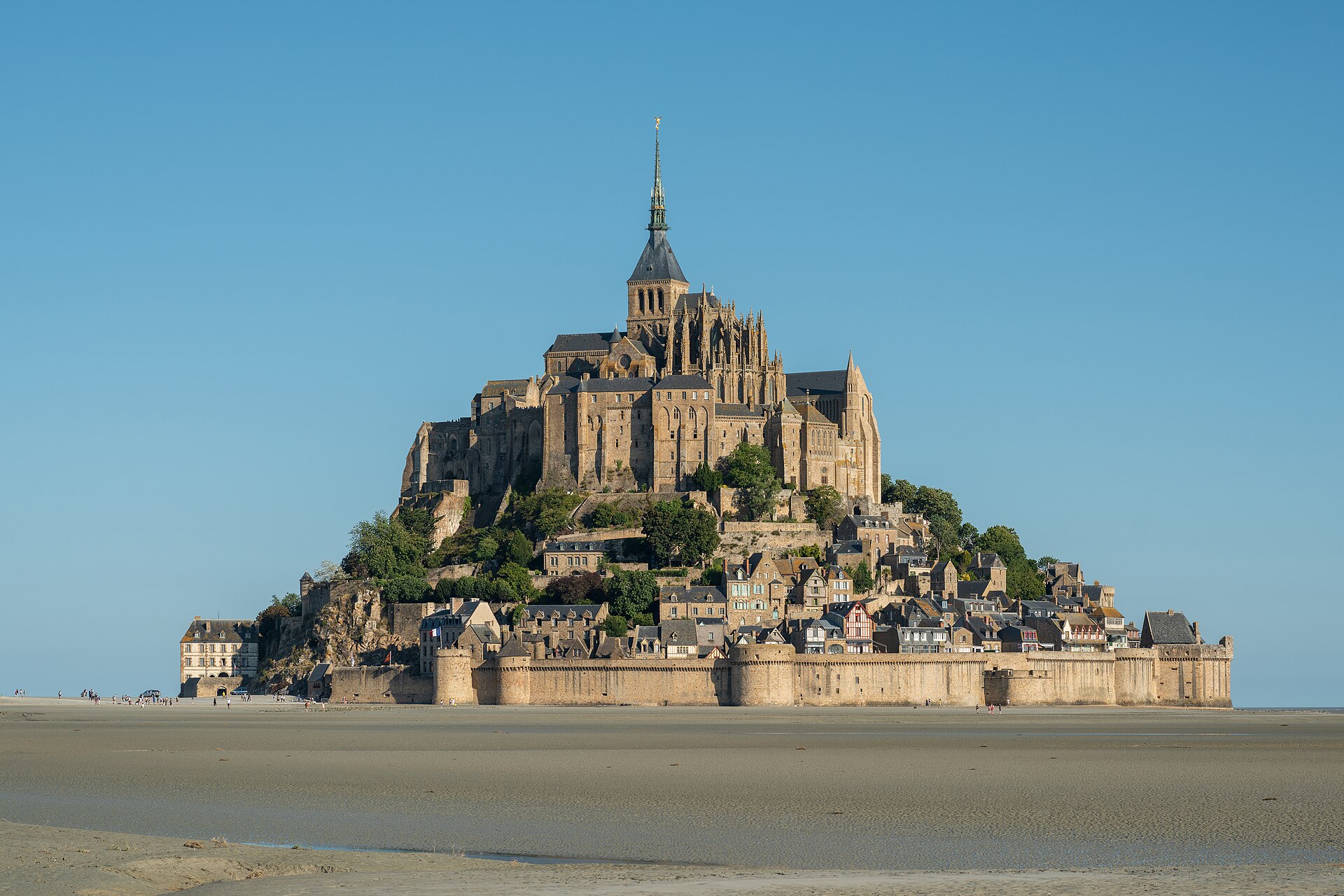
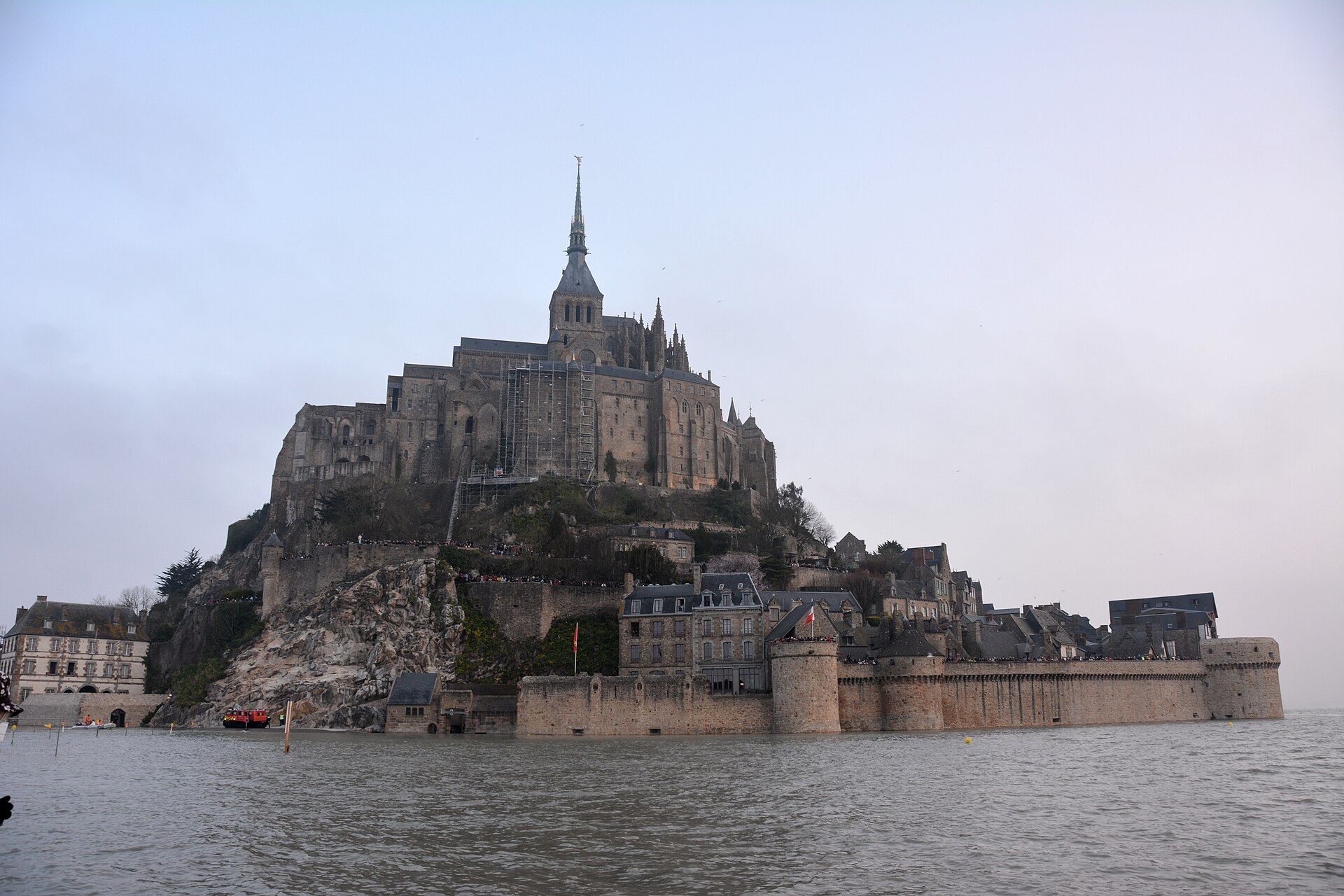
Rising like a vision from the sands where Normandy meets Brittany, Mont Saint-Michel is one of the most extraordinary sights in the world. A steep rocky island crowned by a soaring Gothic abbey, ringed by ramparts and a huddle of medieval houses, it seems to float between the sea and the sky, appearing and disappearing as the greatest tides in Europe sweep in and out around it. For more than a thousand years it has drawn pilgrims, and today it draws millions of visitors, all seeking the same thing: the sight of a place that hardly seems to belong to the ordinary world.
Mont Saint-Michel is many things at once. It is a great abbey, one of the wonders of medieval architecture, its Gothic buildings climbing the rock in defiance of gravity. It is a pilgrimage site of immense age and importance, dedicated to the archangel Michael. And it is a mighty fortress, ringed with walls and towers that made it, during the long agony of the Hundred Years War, the one great stronghold of the region that the English could never take.
So this is a story of faith and of war, of monks and soldiers, of tides and quicksand and miraculous escapes. It is the story of a rock that became one of the holiest and most beautiful places in Christendom, and one of the most impregnable. Let’s cross the sands to Mont Saint-Michel and discover how a lonely island became a marvel of the medieval world.
In This Article
- An Island Between the Tides
- The Archangel and the Bishop
- The Benedictine Abbey
- Building Toward Heaven
- La Merveille, the Marvel
- The Cloister Between Sky and Sea
- The Fortress That Held
- Walls Against the Sea and the Enemy
- The Village on the Rock
- Chapels, Crypts and Hidden Spaces
- Pilgrims and Prisoners
- Rescue and Restoration
- Visiting Mont Saint-Michel
An Island Between the Tides
The setting of Mont Saint-Michel is unlike that of any other great monument. It stands on a small rocky island in a vast bay where the tides are among the strongest and fastest in the whole of Europe. Twice a day the sea rushes in across the flat sands at astonishing speed, surrounding the mount and turning it into a true island, before retreating again to leave it stranded amid miles of glistening mud and sand.
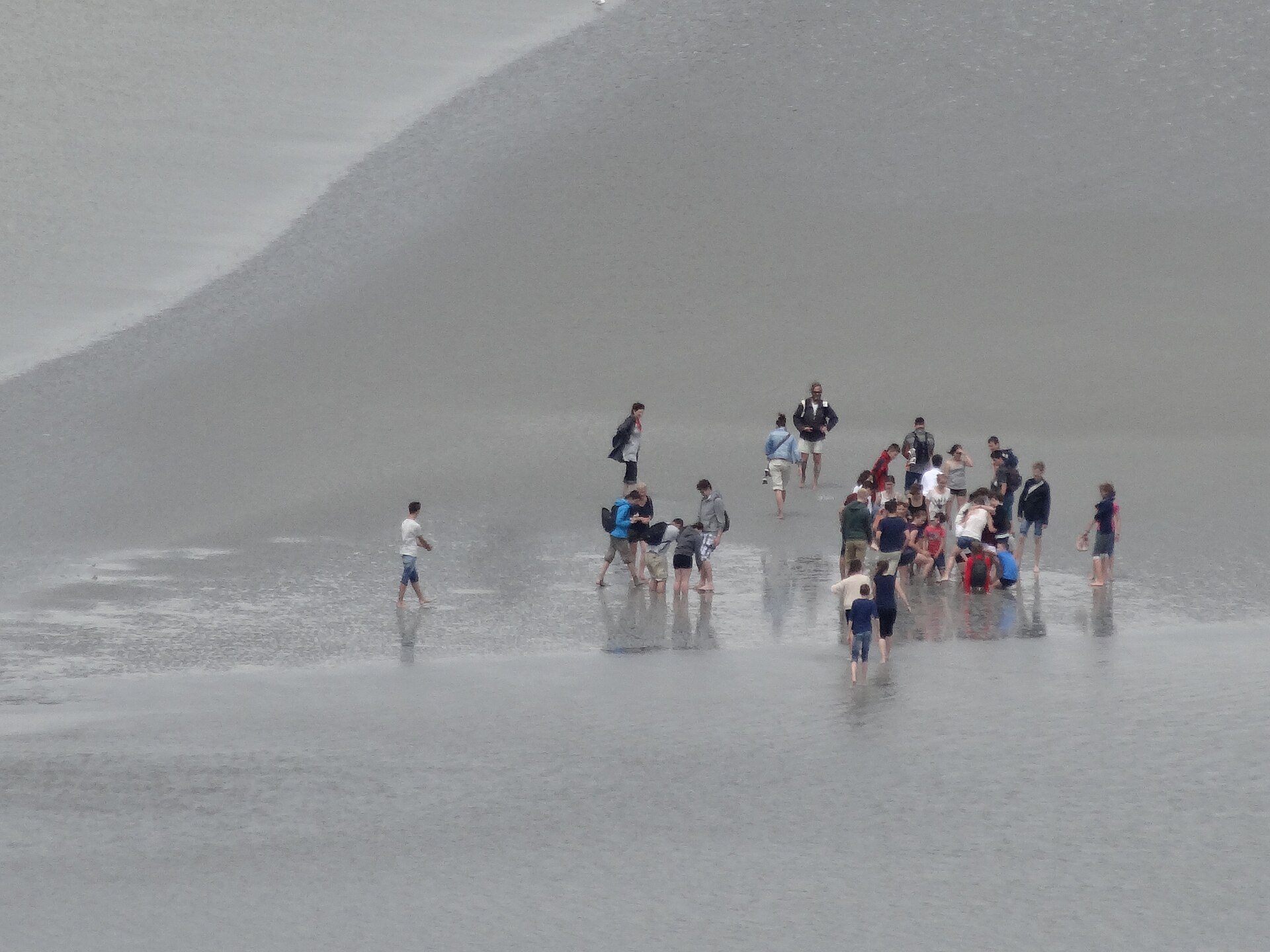
These tides have shaped the whole history and character of the place. For centuries, pilgrims had to time their crossing carefully, hurrying over the sands between the tides, and many were caught and drowned by the returning sea or swallowed by the treacherous quicksands that lurk in the bay. The dangers of the crossing only added to the sense that reaching Mont Saint-Michel was a spiritual as well as a physical journey, a pilgrimage in the fullest sense.
To see the mount rise from the sands, whether surrounded by the sea at high tide or standing amid the vast wet flats when the water has withdrawn, is to understand why people have always felt this to be a place apart. It is a rock caught between the elements, between land and sea, earth and sky, and that in-between quality has given it, from the very beginning, an aura of the sacred and the strange.
The bay of Mont Saint-Michel is famous for the speed of its tides, which the old saying claimed came in as fast as a galloping horse. While that is an exaggeration, the reality is dangerous enough: the flat sands mean the water spreads with startling rapidity, and unwary walkers can quickly find themselves cut off. Added to this peril are the quicksands, patches of waterlogged sand that can trap and swallow the unlucky, giving the bay a fearsome reputation across the centuries.
These natural dangers were, paradoxically, part of the mount’s protection. The same tides and sands that made pilgrimage perilous also made military attack extremely difficult, for an army could not easily approach or besiege a rock that was surrounded by the sea twice a day and by treacherous sands the rest of the time. Nature itself stood guard around Mont Saint-Michel, and this natural defence was as important as any wall in keeping the island secure.
The Archangel and the Bishop
The story of Mont Saint-Michel begins, according to legend, in the early eighth century, with a bishop and a dream. Aubert, the bishop of the nearby town of Avranches, is said to have been visited in his sleep by the archangel Michael, who commanded him to build a church on the rocky island then known as Mont Tombe. Aubert hesitated, doubting the vision, until, the story goes, the archangel pressed a finger to his skull, leaving a mark, to convince him it was no dream.
Obeying at last, Aubert founded a small oratory on the rock, dedicated to Saint Michael, and so began the long history of the mount as a holy place. The archangel Michael, the great warrior of heaven who in Christian tradition leads the armies of God against the powers of evil, was a fitting patron for a rock that would one day become both a shrine and a fortress, a place of both prayer and war.
From these small beginnings, the fame of Mont Saint-Michel grew steadily. Pilgrims began to come to venerate the archangel, and the little church was expanded and rebuilt as the centuries passed. What had started as a lonely oratory on a remote rock was set on the path to becoming one of the greatest centres of pilgrimage in all of medieval Europe, a journey that would transform the island utterly.
The relic said to be the skull of Bishop Aubert, complete with the hole made by the archangel’s finger, was long preserved and venerated at nearby Avranches, lending a tangible object to the founding legend. Whatever the truth of the story, it captured something essential about the place: the sense that Mont Saint-Michel was founded by divine command, singled out by heaven itself as a place where the sacred touched the earth.
The Benedictine Abbey
In the tenth century, the mount entered a new phase of its history when a community of Benedictine monks was established there, under the patronage of the dukes of Normandy. The Benedictines were the great monastic order of the age, devoted to prayer, study and work, and their arrival transformed Mont Saint-Michel into a major religious centre, a powerhouse of faith and learning perched on its rock in the sea.
Under the monks, the mount became famous as a place of scholarship, its scriptorium producing beautiful illuminated manuscripts and its library growing so rich that the island earned the nickname of the City of Books. Here, amid the sound of the sea and the rush of the tides, monks copied and studied the works of the ancient world and the Christian tradition, keeping learning alive in an often violent age.
The Benedictines would remain at the heart of Mont Saint-Michel for centuries, shaping its buildings, its reputation and its role in the wider world. It was under their guidance that the great abbey was raised, campaign after campaign of building climbing ever higher up the rock, until the whole island had become a single, soaring monument to faith. The monks made Mont Saint-Michel what it is, and their spirit still seems to pervade the place.
The dukes of Normandy, and later the kings of France, were generous patrons of the abbey, for its fame and its strategic position made it a place of great importance to whoever ruled the region. Their support funded the successive campaigns of building that raised the abbey ever higher, and their protection helped the community to flourish. The history of Mont Saint-Michel is thus intertwined with the history of Normandy and of France itself, a holy place caught up in the ambitions of dukes and kings.
The monks of Mont Saint-Michel followed the ancient Rule of Saint Benedict, dividing their days between prayer, study and labour in a disciplined rhythm that had shaped Western monasticism for centuries. On their remote and dramatic rock, cut off from the world by the tides, they pursued this life of devotion with a special intensity, and the very isolation of the mount seemed to make it an ideal place for the contemplative life they had chosen.
Building Toward Heaven
The greatest wonder of Mont Saint-Michel is the sheer audacity of its building. To raise a great abbey on the top of a steep, rocky island, where there was little flat ground and every stone had to be hauled up from below, was an engineering feat of extraordinary ambition. The builders responded to the challenge with breathtaking ingenuity, constructing the abbey on a series of platforms and crypts that seem to grow out of the rock itself.
The abbey church stands at the very summit, its foundations resting on massive crypts and chapels built up around the peak of the rock to create a level platform where none existed. Below and around it, the buildings of the monastery climb the slopes, level upon level, in a dizzying vertical arrangement quite unlike the sprawling abbeys of the plains. Everything at Mont Saint-Michel reaches upward, toward the spire and the archangel who crowns it.
The result is one of the most remarkable buildings in the world, a place where architecture and landscape merge into a single soaring form. The abbey does not simply sit on the rock; it completes it, turning the natural pyramid of the island into a man-made mountain of stone reaching toward heaven. To climb through its levels is to experience one of the great architectural adventures that the Middle Ages have left us.
The engineering challenges of building on the mount were matched by the difficulty of simply getting materials to the site. Stone had to be brought across the treacherous bay, often by boat at high tide, and then hauled up the steep slopes of the rock, an immense labour repeated over centuries of construction. That the builders persevered through such obstacles, campaign after campaign, is a testament to the power of the faith that drove them and to the wealth and determination of the abbey’s patrons.
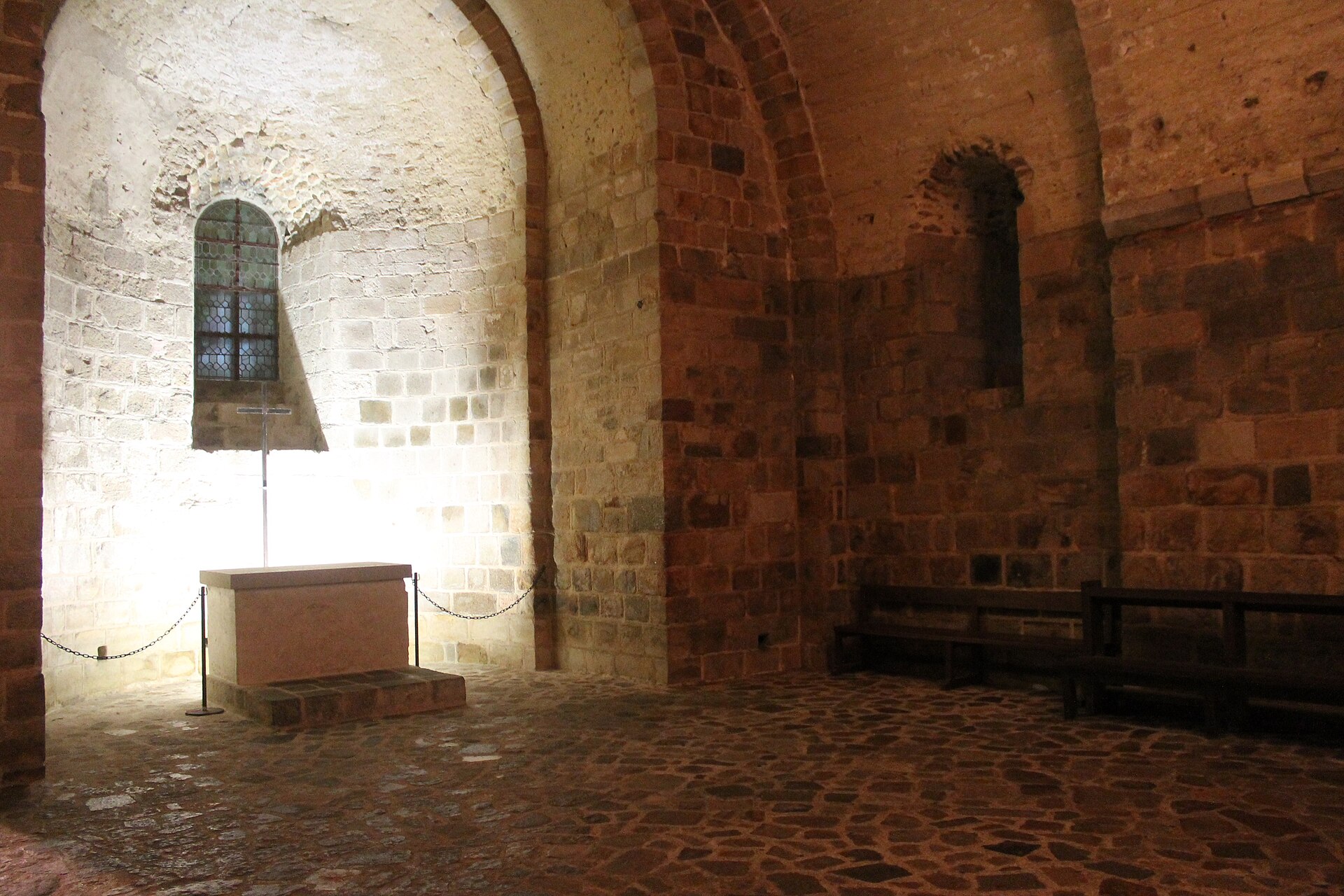
La Merveille, the Marvel
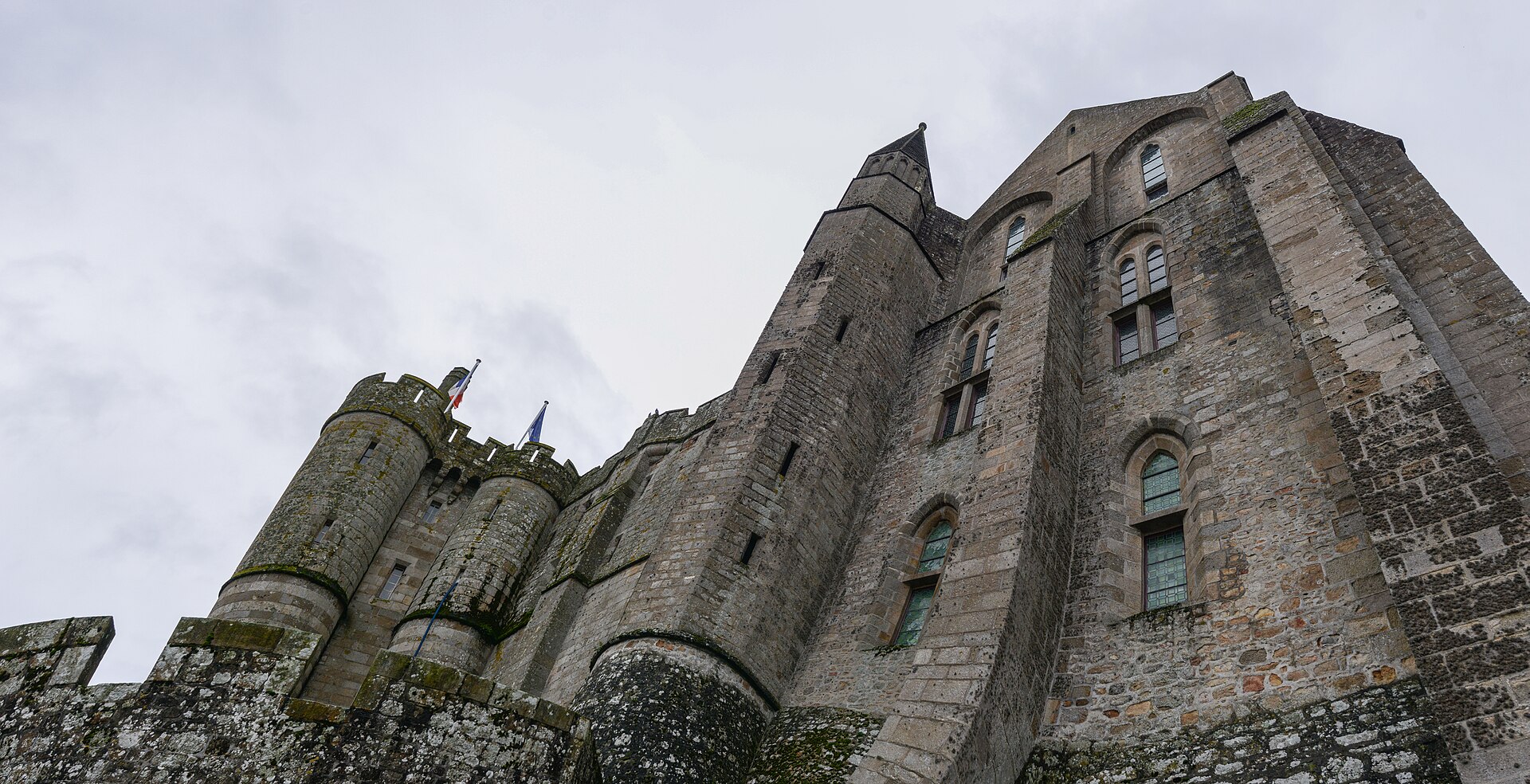
The crowning glory of the medieval abbey is the group of buildings known as La Merveille, the Marvel, raised on the northern side of the rock in the thirteenth century. This masterpiece of Gothic architecture rises in three great storeys up the sheer face of the mount, containing the halls, chambers and cloister that housed the life of the monastery, and it is rightly regarded as one of the supreme achievements of medieval building.
Within the Merveille are some of the most beautiful spaces in all of medieval architecture. There is a great refectory where the monks ate in silence, lit by tall narrow windows; a magnificent hall where guests and pilgrims were received; and, at the very top, the exquisite cloister, an enclosed garden of slender columns seemingly suspended between the sky and the sea. To move through these spaces is to ascend through the whole life of the monastery, from the world of the guest to the world of prayer.
That such refined and elegant architecture could be raised in so difficult and exposed a place is a large part of what makes the Merveille so astonishing. Here, clinging to a rock in a tidal bay, the builders created spaces of serene beauty and perfect proportion, worthy of the greatest cathedrals of the age. The Merveille is the heart of the abbey and the supreme expression of the faith and skill that built Mont Saint-Michel.
The building of La Merveille in the thirteenth century was made possible in part by royal patronage, after the mount came under the control of the French crown. This support allowed the monks to undertake construction on a scale and of a quality that rivalled the great cathedrals then rising across France, and the Merveille stands as a northern, Gothic counterpart to those masterpieces, all the more remarkable for its impossible setting on the rock.
The three storeys of the Merveille were arranged to reflect the hierarchy of the monastic world, with the more worldly functions on the lower levels and the most sacred and contemplative spaces, culminating in the cloister, at the top. To climb through the building was thus to ascend not only physically but spiritually, rising from the world of the body toward the world of the spirit, a journey embodied in stone.
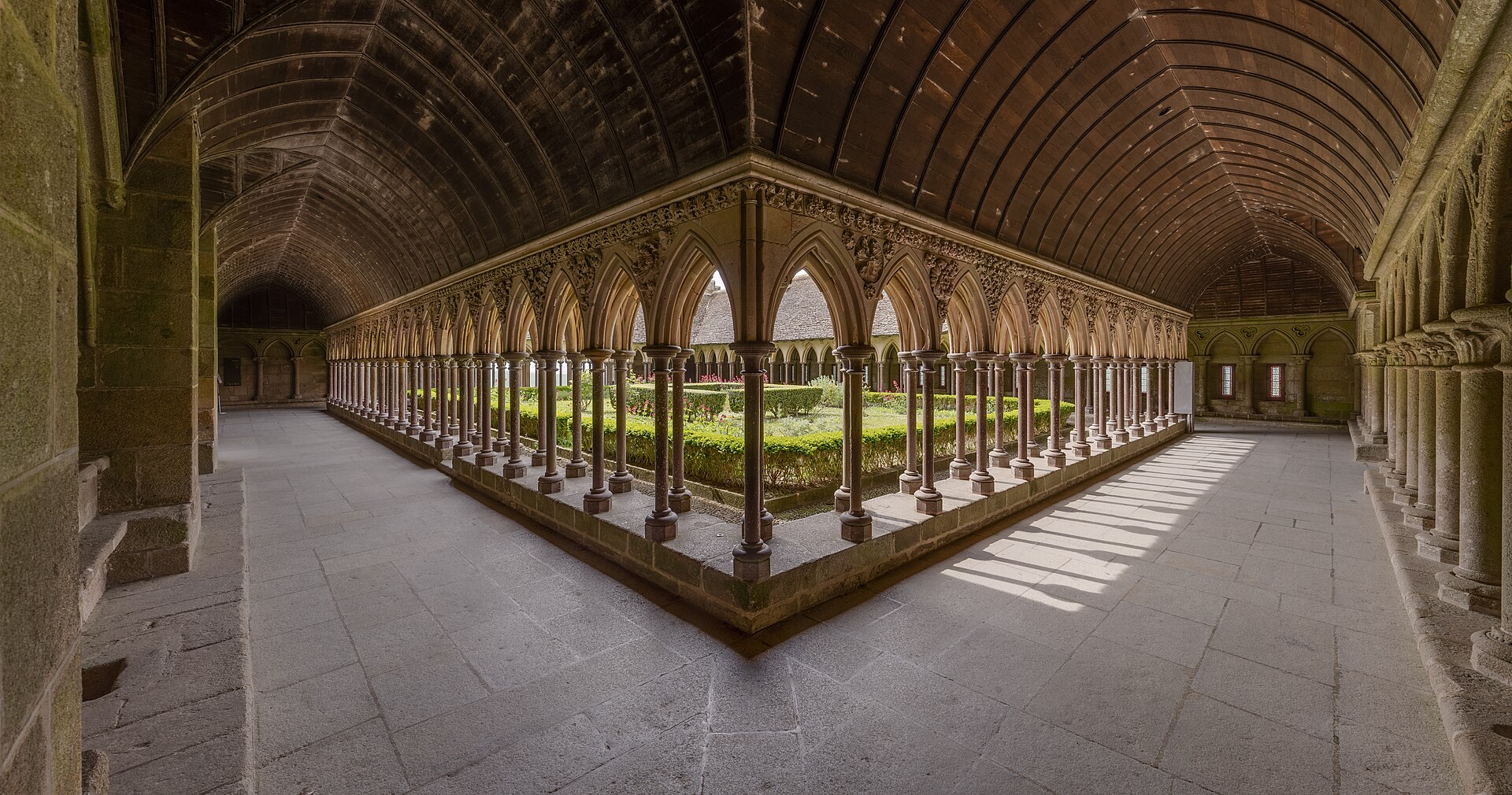
The Cloister Between Sky and Sea
Of all the wonders of La Merveille, the cloister is perhaps the most magical. Set at the very top of the great three-storey structure, it is a rectangular garden surrounded by a covered walkway of slender double columns, arranged in a subtle staggered pattern that creates an effect of endless, shifting rhythm. It was here that the monks walked in meditation, sheltered from the wind, with only the sky above and, beyond the walls, the vastness of the sea.
The cloister was the spiritual heart of the monastery, a place of quiet and contemplation removed from the world. Its position at the summit of the Merveille, seemingly floating above the bay, gives it an extraordinary atmosphere, at once enclosed and open, intimate and infinite. The delicate carving of its columns and the play of light through its arcades make it one of the loveliest spaces in medieval architecture.
To stand in the cloister today is to feel something of the peace the monks sought here, high above the rush of the tides and the bustle of the pilgrims below. It is a place designed for the soul, a garden of stone suspended between earth and heaven, and it embodies, better than any other single space, the whole spirit of Mont Saint-Michel as a place where the material and the spiritual worlds seem to meet.
The double rows of columns in the cloister were arranged in a staggered, offset pattern rather than lined up directly opposite one another, a subtle refinement that gives the arcades a sense of depth and movement as the eye travels along them. This sophistication of design, in so remote and difficult a location, is one of the many touches that reveal the extraordinary skill and ambition of the builders of La Merveille, who spared no effort even in the details.

The Fortress That Held
For all its holiness, Mont Saint-Michel was also a mighty fortress, and never was this more important than during the long and terrible Hundred Years War between England and France. As the English overran Normandy and much of northern France, Mont Saint-Michel became a bastion of French resistance, its natural strength and its added fortifications making it a stronghold that the enemy could not overcome.
The English besieged the mount more than once, cutting it off and trying to starve or storm the defenders into surrender, but the island held. Ringed by the sea and its walls, defended by a determined garrison, and supplied with difficulty across the treacherous sands, Mont Saint-Michel proved impregnable. Throughout the whole long war, it remained the one great point in the region that the English never managed to capture.
This heroic resistance gave Mont Saint-Michel a special place in the story of France and in the memory of the war. At a time when so much of the country lay under enemy occupation, the sight of the archangel’s rock standing firm and free was a powerful symbol of hope and defiance. The fortress that held became a legend, and the archangel Michael, the warrior of heaven, seemed a fitting protector for a stronghold that would not fall.
The successful defence of Mont Saint-Michel during the Hundred Years War became a source of enormous national pride. A small garrison of French knights held the rock against everything the English could throw at it, and their resistance, at a time when the French cause often seemed hopeless, took on a symbolic importance far beyond its strategic value. The unconquered mount stood as living proof that France could not be wholly subdued.
According to tradition, a group of knights who defended the mount during the war were honoured for their courage, and the memory of their stand became part of the legend of the place. The combination of the warrior archangel as patron and the heroic defence of the garrison gave Mont Saint-Michel a martial glory to match its spiritual fame, so that it was celebrated both as a holy shrine and as an invincible fortress, the two roles reinforcing one another.
The archangel Michael, to whom the mount was dedicated, was in Christian tradition the leader of the heavenly host, the warrior who casts down the forces of evil. There was thus a deep fittingness in the mount being both a shrine to this warrior of heaven and an earthly fortress that would not fall. To the medieval mind, the successful defence of the rock could seem like a sign of the archangel’s own protection, heaven and earth combining to keep his holy place free.

Walls Against the Sea and the Enemy
The fortifications that made Mont Saint-Michel so formidable were added and strengthened over the centuries, especially as the threat of war grew. Stout walls were built around the base of the rock, studded with towers and gates, enclosing the village that had grown up beneath the abbey and turning the whole island into a defended place. These ramparts, which visitors still walk today, were the outer shell that kept the enemy at bay.
The defences had to contend not only with human enemies but with the sea itself, for the same tides that protected the mount also battered its walls. The builders had to make their fortifications strong enough to withstand both the assaults of armies and the relentless pounding of the water, a double challenge that few other fortresses ever faced. The result was a set of defences perfectly adapted to their extraordinary setting.
From the ramparts, the views over the bay are magnificent, sweeping out across the sands or the sea toward the distant shore. But these walls were built for grimmer purposes, and standing on them it is easy to imagine the tense days of the sieges, when the defenders watched the sands for the approach of the enemy and trusted in their walls, their courage, and the protection of the archangel to see them through.
The gates of the town, set into the ramparts, were strongly defended and controlled all access to the mount, funnelling visitors and would-be attackers alike through carefully guarded passages. Beyond them lay the single street climbing to the abbey, so that an enemy who somehow forced the outer defences would still face a long and deadly ascent. The whole island was, in effect, a single great fortress, its every level contributing to the defence.

The Village on the Rock
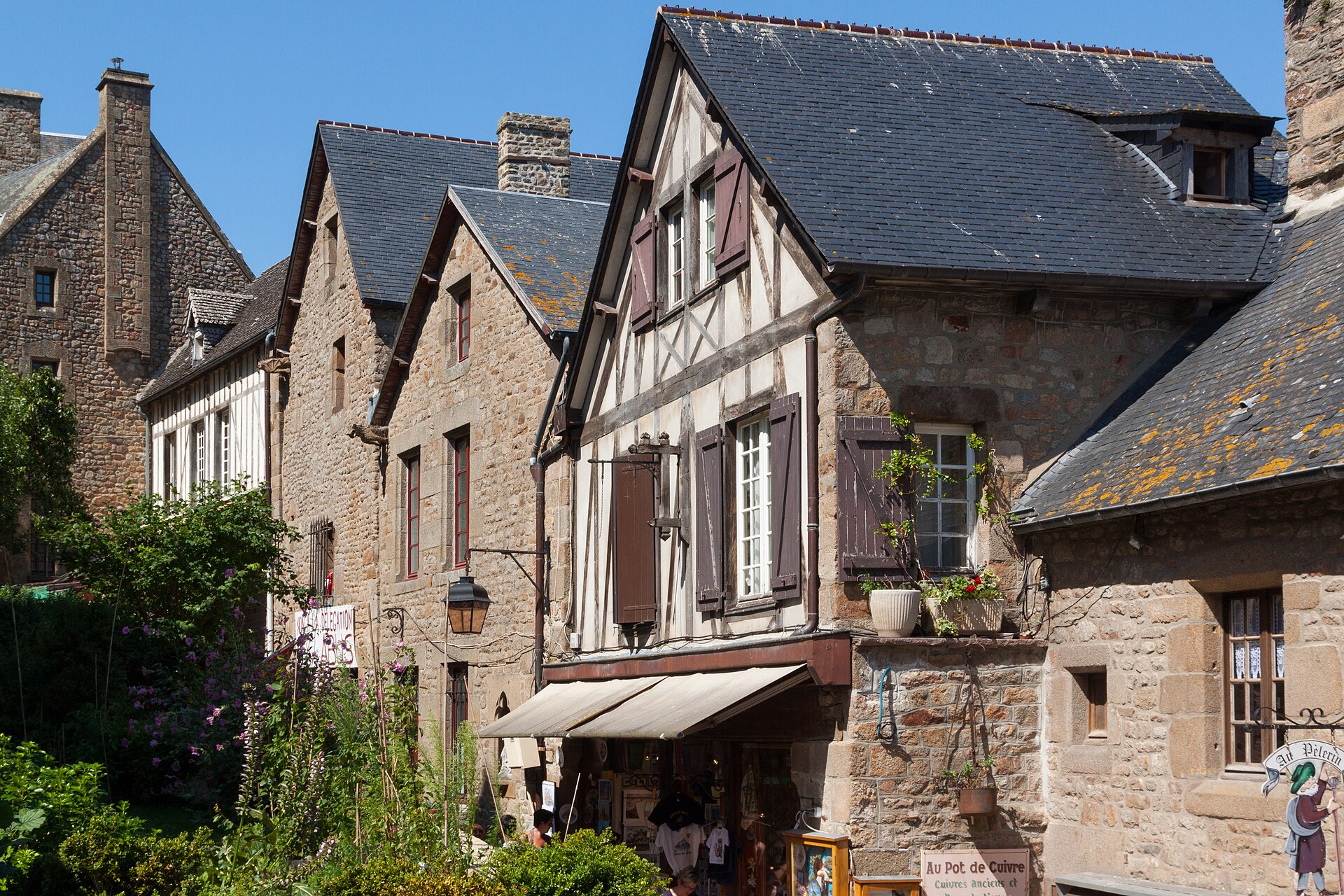
Mont Saint-Michel was never only an abbey. Beneath the great monastery, clinging to the lower slopes of the rock within the shelter of the walls, grew up a small town, a huddle of houses, inns and shops that served the monks and, above all, the endless streams of pilgrims who came to the shrine. This village, climbing the rock along a single winding street, is an essential part of the character of the mount.
The main street, the Grande Rue, winds steeply up from the town gate toward the abbey, lined with old houses that once offered food, lodging and souvenirs to weary pilgrims, much as they offer them to visitors today. For centuries this narrow lane has echoed with the footsteps of travellers making the final ascent to the shrine, and it retains a bustling, intimate character quite different from the soaring calm of the abbey above.
The life of this little community was completely bound up with the abbey and the pilgrimage. The villagers lived by serving the pilgrims, and their fortunes rose and fell with the fame of the shrine. To walk up the Grande Rue today, crowded and lively, is to follow in the footsteps of a thousand years of pilgrims, and to feel the enduring human bustle that has always surrounded the holy rock.
Life in the little town beneath the abbey was cramped and often hard, squeezed onto the narrow terraces of the rock within the shelter of the walls. Space was so precious that houses were built tall and close, climbing the slope in tiers, and the single main street served as the artery of the whole community. Yet the constant flow of pilgrims brought a living, and at the great festivals of the archangel the town would have been packed to bursting with visitors from near and far.
Chapels, Crypts and Hidden Spaces
Beyond the great church and the Merveille, Mont Saint-Michel is honeycombed with smaller chapels, crypts and chambers, tucked into every level of the rock. Among them is the chapel of Saint-Étienne, associated with the care of the dead, and a series of crypts whose massive pillars were built to bear the enormous weight of the buildings above. Exploring these spaces, the visitor discovers the hidden structure that makes the whole soaring edifice possible.
These lower and inner spaces reveal the sheer complexity of the abbey, a building assembled over many centuries and constantly adapted to the demands of its impossible site. Crypts support churches, stairways link level to level, and chapels are fitted into every available corner, so that the whole mount is a three-dimensional puzzle of interlocking spaces. Few buildings reward exploration so richly, or hold so many surprises.
There is a particular atmosphere to these deeper spaces, cool and dim and ancient, far from the crowds on the ramparts and the Grande Rue. Here, in the crypts and chapels built up around the heart of the rock, one feels most strongly the great age of the place and the immense effort of faith and labour that raised it. They are the hidden foundations, both literally and spiritually, of the marvel above.
The massive pillars of the great crypts, some of them enormously thick, are among the most impressive engineering features of the whole abbey, for it was these that bore the crushing weight of the church above and made the whole audacious structure possible. To stand among them is to appreciate the sheer physical achievement of the medieval builders, who understood, without the aid of modern science, exactly how to distribute the immense loads of their soaring creation.
Pilgrims and Prisoners
For most of its history, Mont Saint-Michel was above all a place of pilgrimage, drawing the faithful from across Europe to venerate the archangel Michael. In the Middle Ages these pilgrimages could be enormous, with great crowds making the dangerous crossing of the sands to reach the shrine. Even children came, in waves of youthful pilgrimage, and the mount’s fame as a holy place spread far and wide.
But the fortunes of the abbey rose and fell, and in the centuries after the Middle Ages the monastic life at Mont Saint-Michel gradually declined. After the French Revolution, in one of the strangest chapters of its history, the great abbey was turned into a prison, and for many decades the holy rock served as a place of confinement, its cells holding political prisoners and criminals where monks had once prayed.
This period as a prison was an undignified fate for so sacred a place, and it caused damage and neglect to the ancient buildings. Yet, as with so many great monuments, its use as a prison also kept it in existence through a difficult age, and eventually a movement arose to rescue the abbey, to end its use as a prison and to restore it to something like its former glory. The archangel’s rock was to have another life.
The medieval pilgrimages to Mont Saint-Michel included, most remarkably, the movements known as the pilgrimages of the shepherds and even of children, when great numbers of young people are said to have set out for the mount, sometimes against the wishes of their families. These waves of youthful devotion, however we understand them, testify to the extraordinary hold that the shrine of the archangel had on the medieval imagination across the whole of Europe.

Rescue and Restoration
In the later nineteenth century, Mont Saint-Michel was saved. The prison was closed, the abbey was recognised as one of the great historic monuments of France, and a long campaign of restoration began to repair the damage of the centuries and to bring back the splendour of the medieval buildings. The mount was reborn as a treasured symbol of the nation’s heritage and a magnet for visitors from around the world.
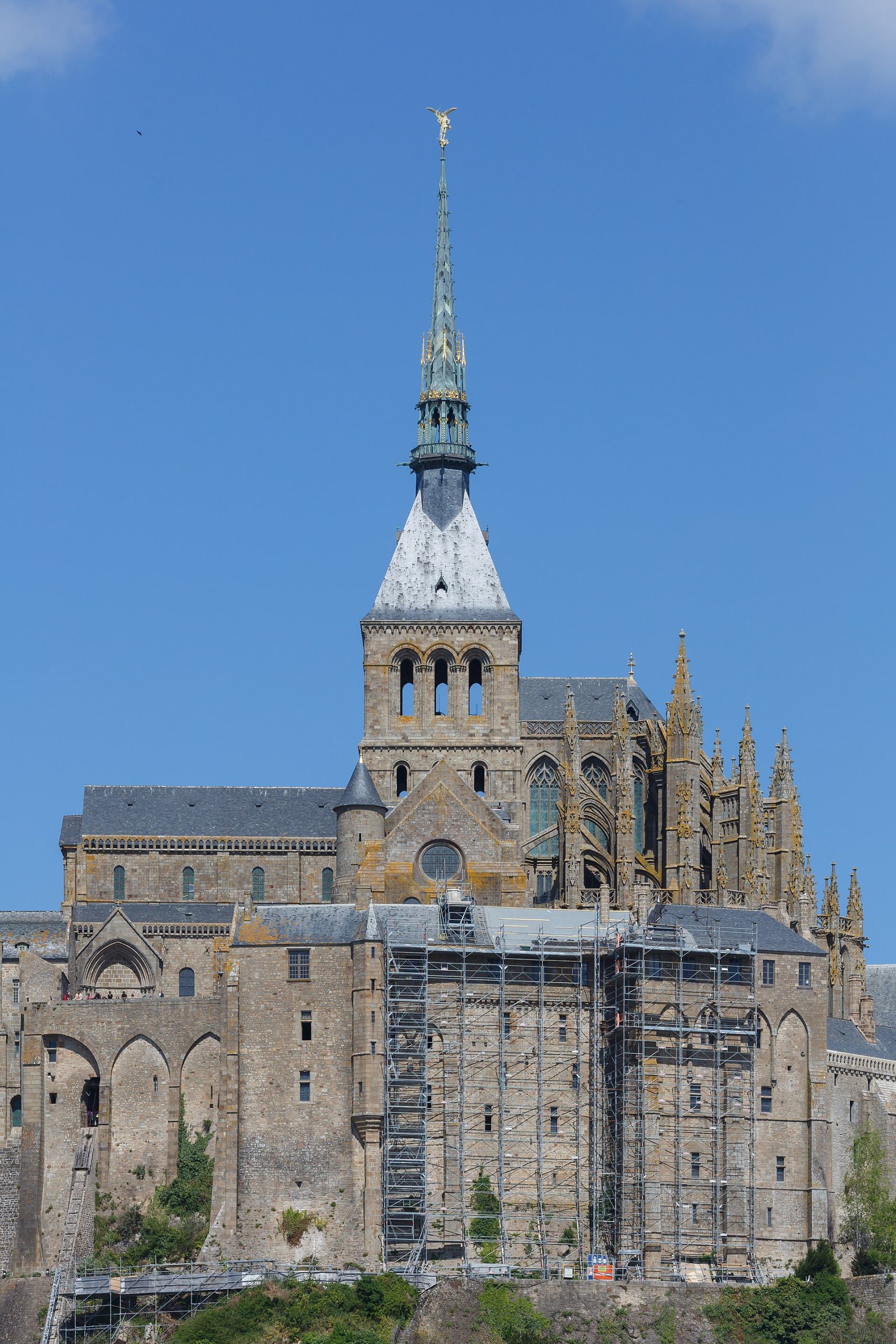
The restoration also gave the abbey its crowning touch: a tall spire was raised above the church, topped by a gilded statue of the archangel Michael himself, sword in hand, gleaming above the whole island. This golden figure, visible from far across the bay, restored to the mount its ancient character as the rock of the archangel, and it remains the crowning image of Mont Saint-Michel to this day.
In more recent times, great efforts have been made to protect the mount’s extraordinary setting, including works to restore the flow of the tides around the island and to keep it, as far as possible, the true sea-girt rock of legend. Recognised by UNESCO as a World Heritage Site, Mont Saint-Michel is now one of the most visited and most cherished monuments in France, its long story of faith, war and rescue drawing millions to marvel at it each year.
The nineteenth-century campaign to save Mont Saint-Michel was part of a wider awakening of interest in the medieval past, when writers, artists and scholars came to value the great monuments that earlier generations had neglected or despised. Mont Saint-Michel, with its dramatic setting and its rich history, became a powerful symbol of this new appreciation of the Middle Ages, and its rescue was celebrated as the salvation of one of the supreme treasures of French civilisation.
Visiting Mont Saint-Michel
Today Mont Saint-Michel is one of the most visited places in all of France, welcoming several million people a year, and it richly deserves its fame. Reached now by a graceful causeway and shuttle across the bay, the mount offers the visitor an unforgettable experience: the climb up the Grande Rue through the medieval village, the ascent to the great abbey and the Merveille, the walk along the ramparts, and everywhere the astonishing views over the bay and its shifting tides.
To make the most of a visit, it is worth learning the times of the tides, for the mount is at its most dramatic when the sea sweeps in to surround it, a spectacle that draws crowds to the ramparts to watch. The abbey itself deserves unhurried exploration, from the soaring church at the summit to the hidden crypts below, and the whole island rewards those who linger after the day-trippers have gone, when the mount grows quiet and its ancient magic returns.
You will find Mont Saint-Michel on the coast of Normandy, close to the border with Brittany, in the far northwest of France. For exact directions, here is a map link to guide you there: 48.6361, -1.5115. Cross the bay, climb the sacred rock, and stand at last beneath the golden archangel, in one of the most wonderful places that faith and human skill have ever created.
The mount is beautiful in every season and every light, from the soft mists of morning to the golden glow of evening, when the low sun sets the abbey ablaze against the sky. Many visitors find the most magical moments come at dusk and after dark, when the day-trippers have departed and the illuminated abbey stands reflected in the wet sands, restoring to the mount the sense of otherworldly wonder that has drawn pilgrims to it for more than a thousand years.
The Wonder of the West
Mont Saint-Michel is a place that seems to gather up everything that is most extraordinary about the medieval world. It is a shrine and a fortress, a monastery and a village, a marvel of architecture and a stronghold of resistance, all crowded onto a single rock in a bay of the greatest tides in Europe. For more than a thousand years it has stood between the sea and the sky, drawing pilgrims and defying enemies, its golden archangel gleaming above the sands.
To see it rise from the bay, whether ringed by the sea or stranded amid the vast wet sands, is to understand why people have always felt it to be one of the wonders of the world. Faith raised it, war tested it, and the tides have guarded it, and through it all Mont Saint-Michel has kept its power to astonish. Of all the castles and strongholds of France, none is more magical, and few are more beautiful, than the archangel’s rock rising from the sea.
You May Like
Mafra, the Palace a King Built From a Vow


One thought on “Mont Saint-Michel: The Fortress-Abbey of the Sea”