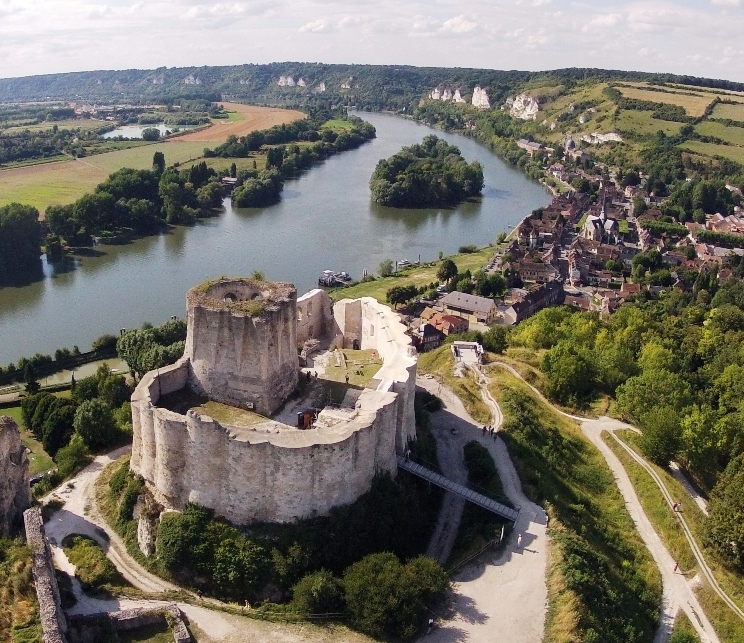
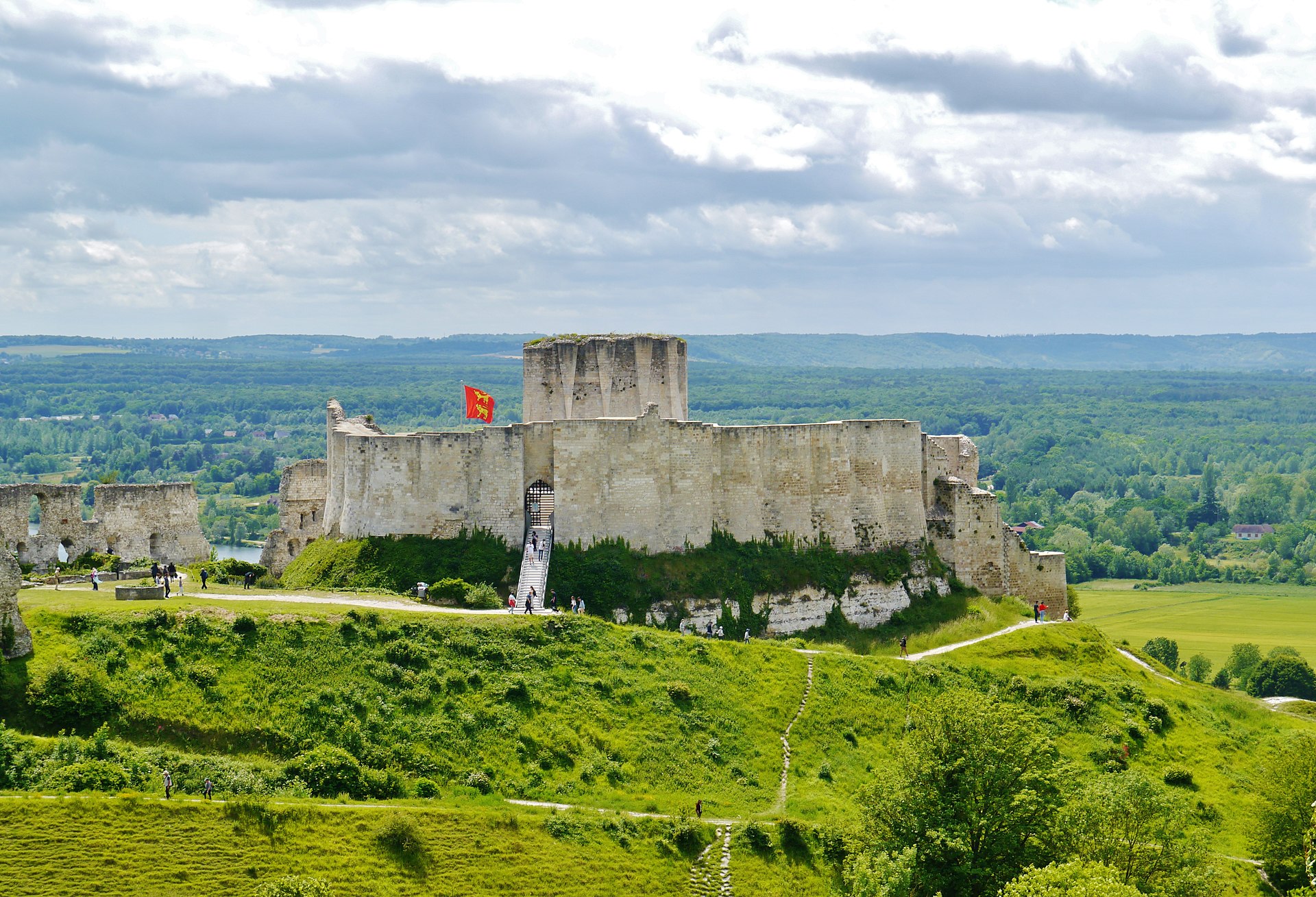
On a white chalk cliff high above a great loop of the River Seine, in the heart of Normandy, stand the broken but still mighty walls of Château Gaillard. Even in ruin, it is an awe-inspiring sight, its pale stone rising sheer from the rock, commanding the river and the valley for miles. This was the masterpiece of one of the most famous warriors of the Middle Ages, King Richard the Lionheart, and it was built to be the strongest castle in the world.
Richard raised Château Gaillard in a headlong rush, in little more than a year, pouring a fortune into it, because it was meant to be the shield of his Norman lands against his great rival, the king of France. He filled it with every trick of the military engineer’s art, the newest and cleverest defences of the age, and when it was finished he is said to have gazed on it with fierce pride and called it his beautiful, his saucy castle.
Yet within a few years of Richard’s death, this supposedly impregnable fortress fell, after one of the most famous sieges of the Middle Ages, and its loss brought down with it the whole Norman inheritance of the English kings. Grand, doomed and dramatic, Château Gaillard is a castle whose story is as vivid as its ruins. Let’s climb the cliff above the Seine and discover the fortress of the Lionheart.
In This Article
- A Castle Above the Seine
- Richard the Lionheart’s Masterpiece
- Built in a Single Year
- A Fortress of Three Rings
- The Scalloped Walls
- The Great Keep
- The Lionheart’s Boast
- The Great Siege
- How the Castle Fell
- The Loss of Normandy
- Ruin and Slighting
- The Ruins Today
- Visiting Château Gaillard
A Castle Above the Seine
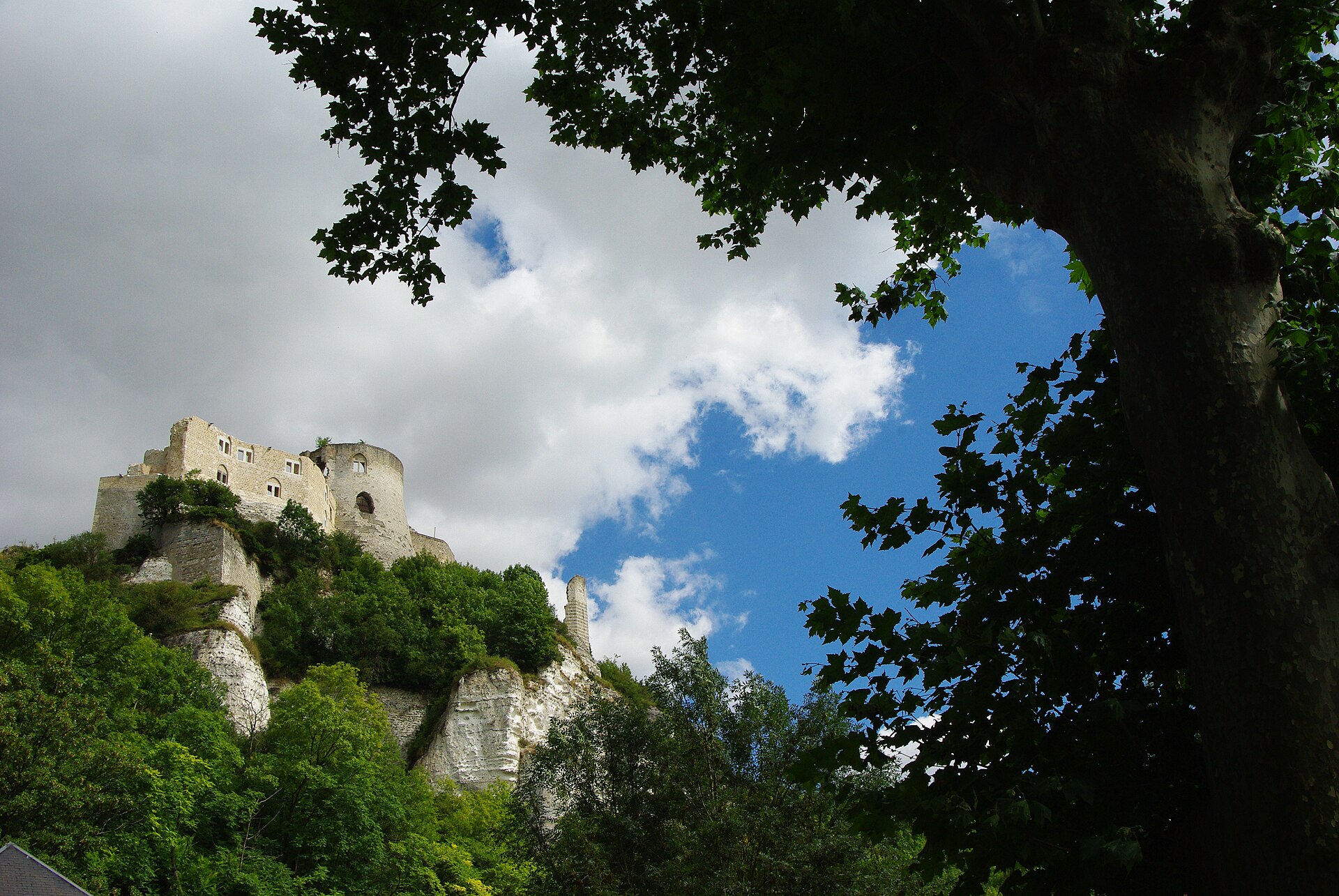
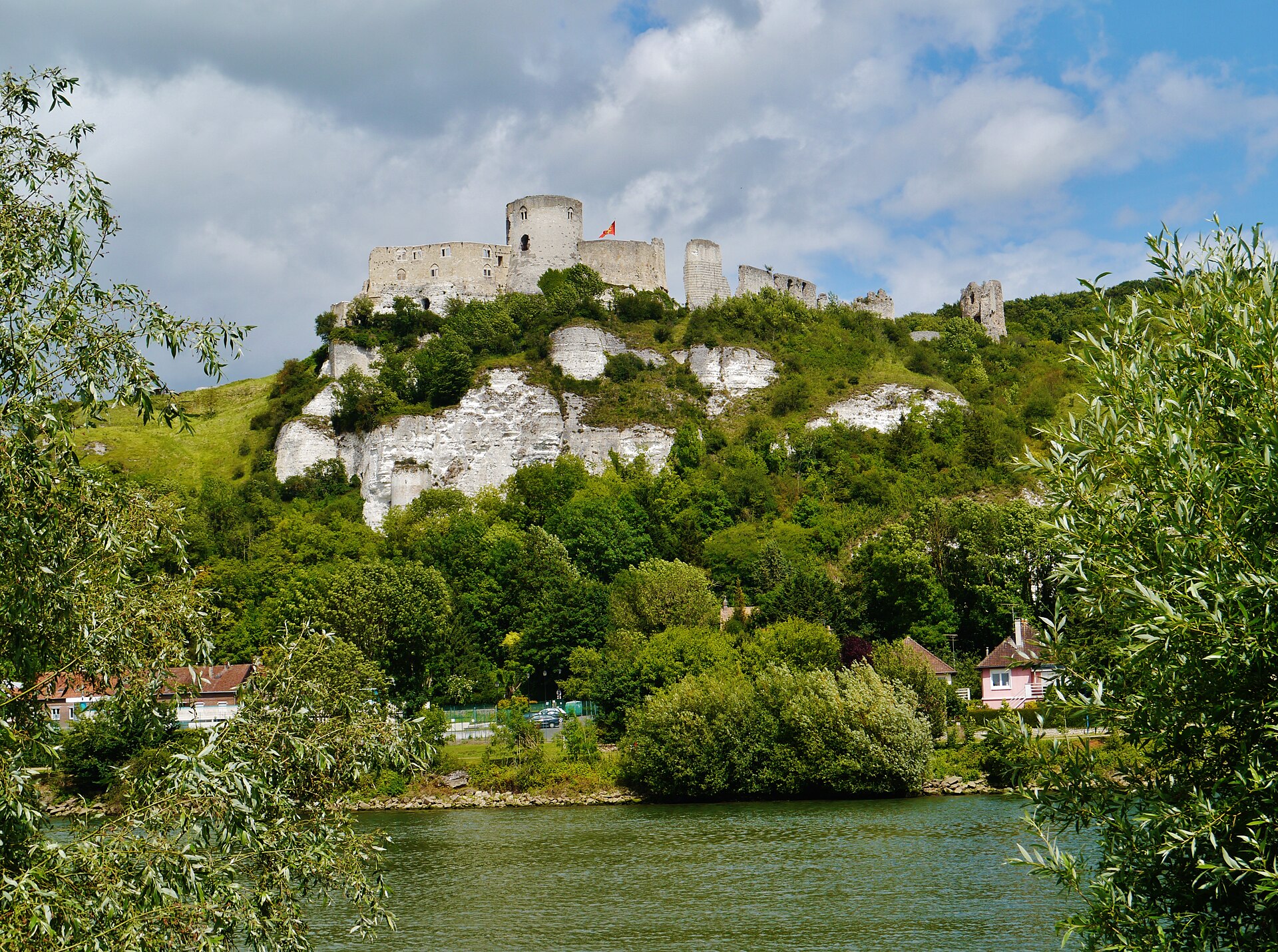
The setting of Château Gaillard is as dramatic as its history. The castle stands on a high spur of white chalk that rises steeply above the River Seine, at a point where the great river makes a wide loop, near the town of Les Andelys. From this commanding height, the fortress looked down on the river far below, controlling all movement along this vital waterway between Paris and the sea.
This was no accident of siting but a deliberate act of strategy. The Seine was the great highway into the heart of Normandy, and whoever controlled this stretch of it held the key to the whole region. By planting his fortress on the cliff above the river, Richard the Lionheart created a barrier that any enemy advancing on his Norman lands from the direction of Paris would have to overcome, a stone stopper in the neck of the valley.
Even today, the position takes the breath away. The ruined walls perch on the very edge of the cliff, the river winding far below, the countryside spread out on every side. To stand among them is to understand at once why Richard chose this spot, and why the castle mattered so much. It is one of the most spectacularly sited fortresses in all of France, a fitting home for the legend of the Lionheart.
The chalk of the cliff on which the castle stands was both a blessing and a curse to its builders. It provided a magnificent natural platform, high and steep, but it was also soft enough to be cut and, crucially, to be mined, a fact that would play its part in the castle’s eventual fall. The same rock that raised the fortress so proudly above the river also offered a way for a determined enemy to bring its walls down.
Richard the Lionheart’s Masterpiece
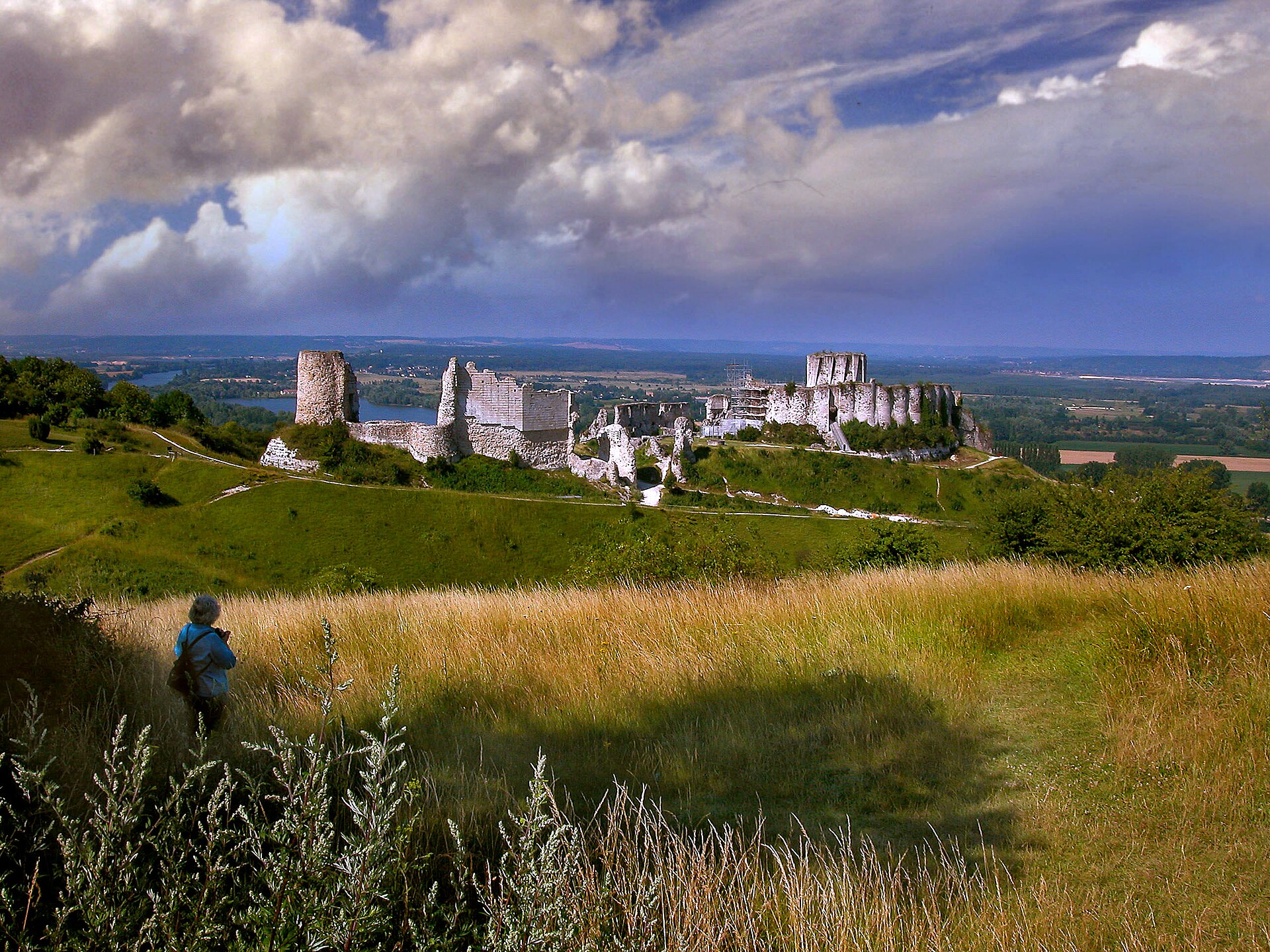
Château Gaillard was the creation of King Richard I of England, the famous Lionheart, one of the greatest warriors and military minds of the entire Middle Ages. A veteran of the Crusades who had seen the mightiest fortifications of the East, Richard brought all his experience and all his genius to bear on the building of this castle, determined to make it the strongest fortress of the age.
The circumstances of its building were urgent. Richard had returned from crusade and captivity to find his rival, King Philip Augustus of France, encroaching on his Norman lands, and he needed a great fortress to hold the line of the Seine. He chose the cliff at Les Andelys, and drove the construction forward at astonishing speed, spending vast sums and pushing his builders relentlessly, so that the whole enormous castle rose in little more than a single year.
For Richard, Château Gaillard was more than a fortress; it was a personal statement, a work of pride as much as of war. He is famously said to have watched over its building with intense pride and to have boasted of his beautiful castle. When it was complete, he had created what many considered the most advanced and powerful fortress in Western Europe, the supreme expression of the military art of his day and the masterpiece of a king who lived and breathed war.
Richard was in many ways the ideal medieval king to build such a castle. He had spent much of his life at war, on crusade in the Holy Land and in constant conflict in France, and he was widely regarded as the finest soldier of his age. He understood fortification not as an abstract art but from hard personal experience of besieging and defending strongholds, and this practical knowledge is written into every clever detail of Château Gaillard.
The building of the castle also broke a formal agreement Richard had made not to fortify the site, a measure of how determined he was to hold the Seine at any cost. In pressing ahead regardless, he showed the same bold, uncompromising character that marked his whole career. Château Gaillard was, in a sense, Richard himself rendered in stone: aggressive, brilliant, magnificent and utterly committed to victory.
The name Gaillard itself, an old French word suggesting something bold, lively or saucy, perfectly captured the spirit in which Richard built it. This was a fortress with attitude, flung down as a challenge before the king of France, and its very name proclaimed the confidence and defiance of the Lionheart. Few castles carry so much of their builder’s personality in a single word.

Built in a Single Year
One of the most remarkable things about Château Gaillard is the speed with which it was built. Great medieval castles usually took many years, even decades, to complete, but Richard drove the work on his masterpiece forward at a furious pace, and the main structure was finished in little more than a year, an astonishing achievement for a fortress of such size and complexity.
This speed was made possible by Richard’s willingness to spend money without limit. The building of Château Gaillard cost an enormous sum, far more than Richard spent on all his castles in England put together, and the resources poured into it reflected the desperate importance he attached to holding the Seine. Money, and the king’s relentless will, conjured the great fortress out of the chalk in record time.
The haste of its building, however, did nothing to diminish its strength or sophistication. If anything, the fact that the whole castle was designed and built as a single, unified project, rather than growing piecemeal over generations, gave it a coherence and a cleverness of design that older, more haphazard fortresses lacked. Château Gaillard was a fortress conceived as a whole by a master of war, and it showed.
The organisation required to build so vast a structure in so short a time was itself a remarkable achievement, demanding armies of labourers, masons and carters, and the constant supply of stone, timber, lime and tools. That Richard could summon and sustain such an effort speaks to the wealth and administrative reach of the Angevin monarchy at its height, as well as to the king’s own driving determination to see the work done.
Contemporaries were astonished by the speed of the work, and the rapid rise of so great a fortress only added to the castle’s fame and to Richard’s reputation as a builder without equal. In an age when the construction of a major castle was normally the work of a generation, to conjure one from the rock in a single year seemed almost miraculous, a fitting achievement for the most celebrated king of the day.
A Fortress of Three Rings
The design of Château Gaillard was strikingly advanced for its day, incorporating ideas that Richard had seen in the great fortifications of the Crusader East and refining them into a new whole. The castle was arranged as a series of separate strongholds, one within another, so that an attacker who captured the outer defences would find himself facing a fresh and stronger line, and then another beyond that.
There were three main enclosures, separated by deep ditches cut into the rock. First came an outer bailey, a triangular strongpoint guarding the approach along the ridge; then a middle bailey containing the main buildings; and finally the inner bailey, the heart of the castle, protected by its own walls and containing the great keep. Each was designed to be defended independently, so that the fall of one need not mean the fall of the whole.
This concentric arrangement, with its layered defences, represented the cutting edge of castle design and would influence fortress-building for generations. It multiplied the obstacles an attacker had to overcome and gave the defenders every advantage, allowing a relatively small garrison to hold out against a much larger besieging force. It was a fortress designed by a soldier who understood exactly how sieges were won and lost.
The concentric principle behind Château Gaillard, of defences within defences, was one that Richard had seen taken to great heights in the fortresses of the Crusader states in the East, and he was among the first to apply it so thoroughly in Western Europe. In this, as in so much else, the castle was ahead of its time, anticipating the great concentric castles that would be built across Europe in the following century.
The genius of the layered design was that it multiplied not just the physical obstacles but the time and cost of any siege. Each enclosure that had to be stormed or undermined bought the defenders more time and inflicted more losses on the attackers, in the hope that relief would arrive or the besiegers would lose heart before the innermost defences fell. That Château Gaillard held out for months against Philip’s determined army was a vindication of this principle, even though it fell in the end.
The Scalloped Walls
Among the most distinctive features of Château Gaillard are the walls of its inner bailey, which are not straight but built in a series of rounded, scalloped projections, like a row of half-cylinders set side by side. This unusual design was another of the castle’s clever innovations, and it served an important defensive purpose that reflected the sophistication of Richard’s military thinking.
The curved, corrugated shape of the walls made them far stronger and harder to attack than flat walls would have been. The rounded surfaces helped to deflect missiles and were more resistant to the picks and battering rams of attackers, while the projecting curves allowed defenders to cover the base of the wall from many angles, leaving few blind spots for an enemy to exploit. It was an ingenious solution to the perennial problem of protecting a wall’s foot.
These scalloped walls are one of the features that mark Château Gaillard out as a fortress ahead of its time. Later castle-builders would develop such ideas further, but here, at the very end of the twelfth century, Richard’s engineers were already experimenting with the shapes and forms that would define the great fortresses of the coming age. Even in ruin, these curved walls speak of the restless military genius that created them.
The engineering thought behind the scalloped walls reflects a deep understanding of how walls were actually attacked and brought down. The great enemy of any wall was the miner, who dug beneath its foundations to collapse it, and the corner, where two walls met, was especially vulnerable. By rounding the walls into a series of curves, Richard’s engineers eliminated the weak corners and made the whole surface more resistant to both undermining and bombardment.
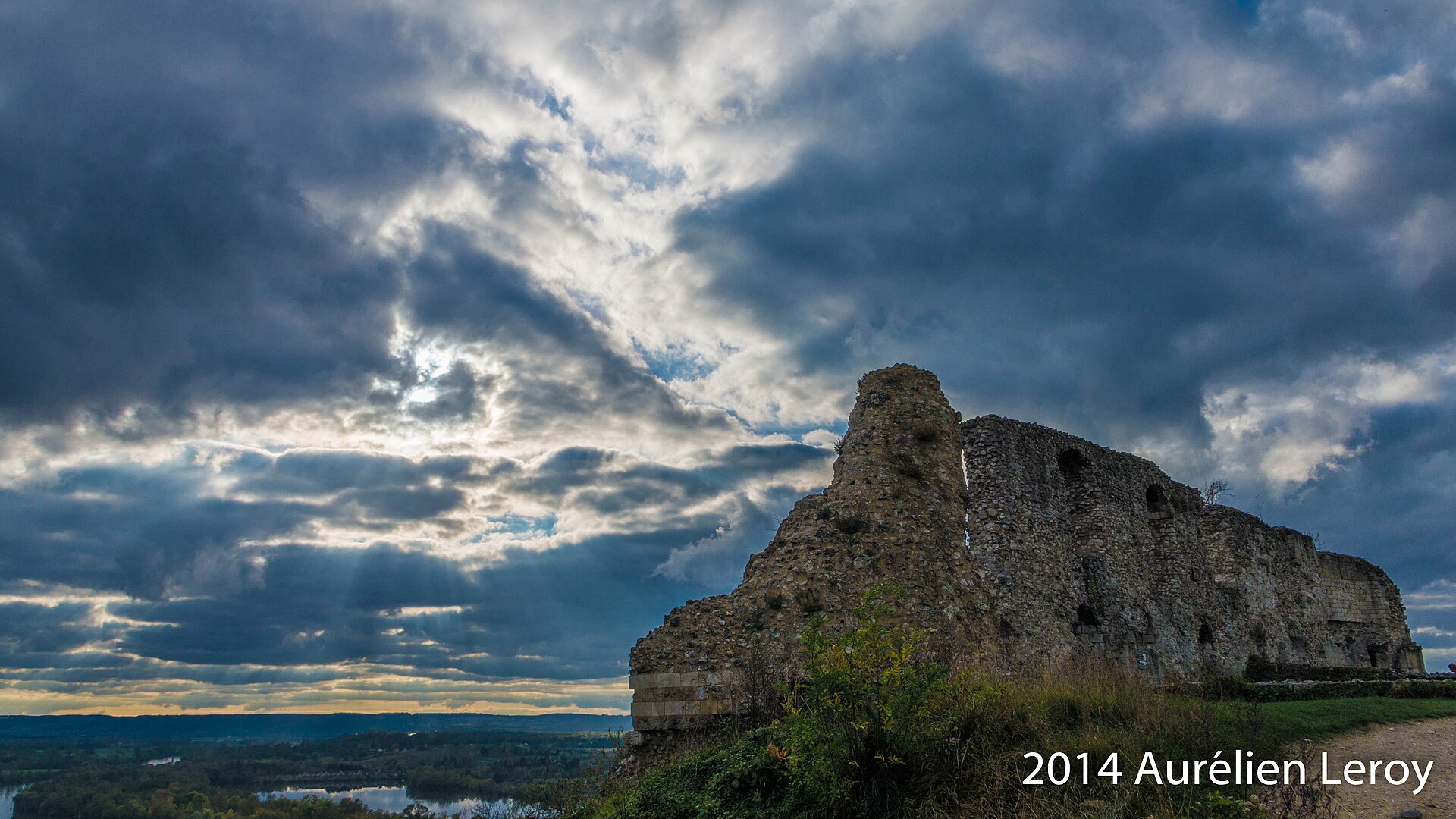
The Great Keep
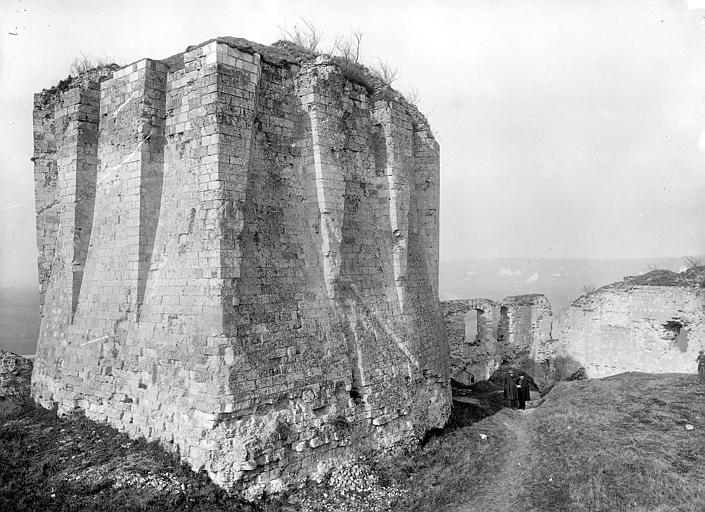
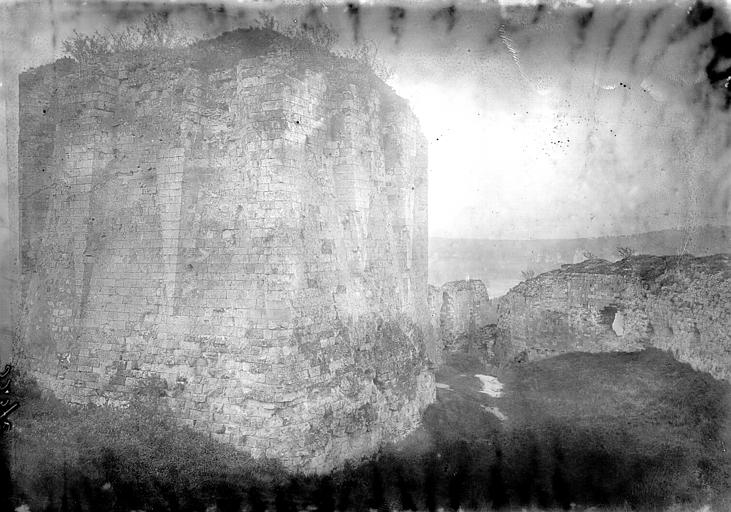
At the very heart of Château Gaillard, within the innermost bailey, stood the great keep, the ultimate stronghold and last refuge of the castle. This mighty tower was the strongest point of the whole fortress, designed to hold out even if every other defence had fallen, and its massive walls were built to withstand any assault that a medieval army could bring against them.
The keep incorporated the latest defensive features, including projecting galleries at the top, an early form of the machicolations that would become standard in later castles, from which defenders could drop missiles directly onto anyone at the base of the tower. Its walls were immensely thick, and on the side facing the most likely direction of attack they were given a sloping, beak-like shape to help deflect missiles and undermining. Every detail was calculated for maximum strength.
The keep was the symbol and the substance of the castle’s power, the place where the defenders would make their final stand. To see its ruined mass today, still rearing up at the core of the fortress, is to appreciate the sheer scale and solidity of what Richard built. This was meant to be the strongest tower of the strongest castle in the world, the unbreakable heart of the Lionheart’s masterpiece.
The projecting galleries at the top of the keep, an early form of machicolation, were among the castle’s most advanced features. They allowed defenders to command the very base of the tower, dropping stones or other missiles straight down onto any attacker who reached the wall, and they solved one of the oldest problems in castle defence. Such galleries would later become a standard feature of castle-building, but at Château Gaillard they were still a striking novelty.
The Lionheart’s Boast
Richard the Lionheart loved his new castle with a fierce, almost personal passion, and the stories of his pride in it have become part of its legend. He is said to have called it his beautiful castle, and to have boasted that he could hold it even if its walls were made of butter, a defiant answer to his rival Philip Augustus, who had reportedly sworn to take it even if its walls were made of iron.
This exchange of boasts between the two great kings captures the fierce rivalry that lay behind the building of Château Gaillard. For Richard, the castle was both a strategic necessity and a matter of personal honour, a challenge flung down before his enemy. He had poured his fortune, his genius and his pride into it, and he was supremely confident that it could never be taken.
Yet Richard would not live long to enjoy his masterpiece. In 1199, only a short time after the castle was completed, he was killed by a crossbow bolt while besieging a far smaller and less important stronghold, struck down almost carelessly in a minor campaign. The greatest castle-builder of his age died before his greatest castle was ever truly tested, leaving Château Gaillard to his far less capable brother, and to its fate.
The death of Richard the Lionheart, killed almost by accident at a minor siege, was one of the great might-have-beens of medieval history. Had he lived, it is hard to imagine his masterpiece falling as it did under his hapless brother, for Richard would surely have moved heaven and earth to relieve it. His premature death removed the one man whose skill and reputation might have saved both the castle and the Norman inheritance.

The Great Siege
The supreme test of Château Gaillard came in the years after Richard’s death, when King Philip Augustus of France, seizing his chance against Richard’s weak successor King John, launched a great campaign to conquer Normandy. In 1203 he brought his army to the cliff above the Seine and laid siege to the fortress that Richard had built to stop him. The siege that followed became one of the most famous of the whole Middle Ages.
Philip’s army surrounded the castle and settled in for a long blockade, cutting it off from relief and beginning the slow, grinding work of a medieval siege. The defenders, under a determined commander, held out with great courage, and the immense strength of Richard’s fortress made the French task enormously difficult. Month after month the siege dragged on through the winter, the attackers unable to break in and the defenders unable to drive them off.
The siege was marked by terrible suffering, above all for the civilians who had crowded into the castle for safety. As supplies ran low, the garrison expelled these useless mouths, but Philip refused to let them pass through his lines, and many were trapped in the ditch between the armies through the bitter winter, where numbers of them died of cold and hunger. It was a grim reminder of the human cost that lay behind the great sieges of the age.
Philip Augustus was a very different kind of ruler from Richard, less a warrior than a patient, calculating statesman, and the siege of Château Gaillard showed his methodical genius at work. Rather than throw his men against the walls in costly assaults, he settled in for a long blockade, building his own siege works and slowly tightening his grip, content to let time and hunger do much of his work for him.
The contrast between the two kings is captured in the whole story of the castle: Richard, the brilliant soldier, who built it in a burst of energy and confidence, and Philip, the shrewd strategist, who took it by patience and persistence. In the end, it was Philip’s methodical approach that prevailed, and his capture of Richard’s supposedly impregnable masterpiece was the crowning achievement of his long campaign to break the power of the English kings in France.
The plight of the civilians trapped in the ditch during the siege remains one of the most harrowing stories of medieval warfare. Caught between the mercy of neither side, these unfortunate people, expelled from the castle to save its supplies but barred from passing through the besiegers’ lines, endured terrible suffering through the winter cold. It is a stark reminder that the great sieges of the age, for all their tactical brilliance, were also scenes of immense human misery.
How the Castle Fell
In the end, Château Gaillard fell not to a single great assault but to persistence and ingenuity. After failing to break the outer defences by direct attack, the French set about undermining them, digging beneath the walls to bring them down, and gradually forced their way into the outer bailey. But the strongest defences still lay ahead, and the middle bailey seemed as formidable as ever.
Then came one of the most famous episodes in the history of medieval siege warfare. According to the traditional account, a small group of French soldiers found a way into the middle bailey by climbing up through a latrine chute or an unguarded window of the chapel, which projected from the walls. Once inside, they created panic and opened the way for their comrades, and the defenders were forced to fall back into the inner bailey and the keep.
With the outer defences lost, the end could not be long delayed. The French pressed their attack, undermining the walls of the inner bailey, and at last the great fortress that Richard had believed impregnable was taken. The garrison, reduced and exhausted, could hold out no longer, and Château Gaillard fell to the king of France in 1204, only a few years after it had been built to keep him out forever.
The story of the French soldiers entering through the chapel has become one of the most famous anecdotes of medieval warfare, a vivid illustration of how even the mightiest defences could be undone by a single overlooked weakness. Whether the exact details are true or embroidered by later chroniclers, the essential lesson is sound: a castle is only as strong as its weakest point, and a chapel window or a drain could prove as fatal as any breach in the main walls.
It is worth remembering, too, that the fall of the castle owed much to the failures of King John. Richard’s brother lacked both the military skill and the political support to relieve the siege, and his inability to come to the castle’s aid left the garrison to its fate. However strong the walls, a besieged fortress needed the prospect of relief to keep hope alive, and when no relief came, even the bravest defenders could not hold out forever.

The Loss of Normandy
The fall of Château Gaillard was far more than the loss of a single castle. Richard had built it as the keystone of the defence of Normandy, and once it had fallen, the whole Norman position collapsed. Within months, Philip Augustus had overrun the rest of the duchy, and Normandy, which had been ruled by the descendants of William the Conqueror and joined to the crown of England for well over a century, was lost to the kings of England forever.
This was one of the great turning points in medieval history. The loss of Normandy, and of much of the rest of the Angevin lands in France, shattered the vast empire that Richard’s father Henry II had built and that stretched from Scotland to the Pyrenees. The English crown was driven back across the Channel, and the balance of power in France shifted decisively toward the French king. Château Gaillard’s fall marked the beginning of the end of the Angevin empire.
It is a striking irony that the very castle Richard built to prevent this disaster should have been the place where it began. Had Château Gaillard held, the history of England and France might have been very different. Its fall stands as a lesson that no fortress, however mighty, is truly impregnable, and that the strength of a castle depends in the end on the courage, supply and leadership of those who hold it.
The consequences of the loss of Normandy echoed through English and French history for centuries. Cut off from their ancestral lands across the Channel, the kings of England were forced to become more truly English, and the tensions between the two crowns over the remaining English possessions in France would eventually erupt into the Hundred Years War. In this long perspective, the fall of Château Gaillard was not an ending but the start of a new and even greater conflict.

Ruin and Slighting
After its capture, Château Gaillard remained an important fortress for centuries, changing hands at times of war and continuing to guard the Seine. But its days of greatness were over, and in the troubled centuries that followed it gradually declined. Like many great castles, it eventually became a liability as much as an asset, a strongpoint that an enemy might seize and use.
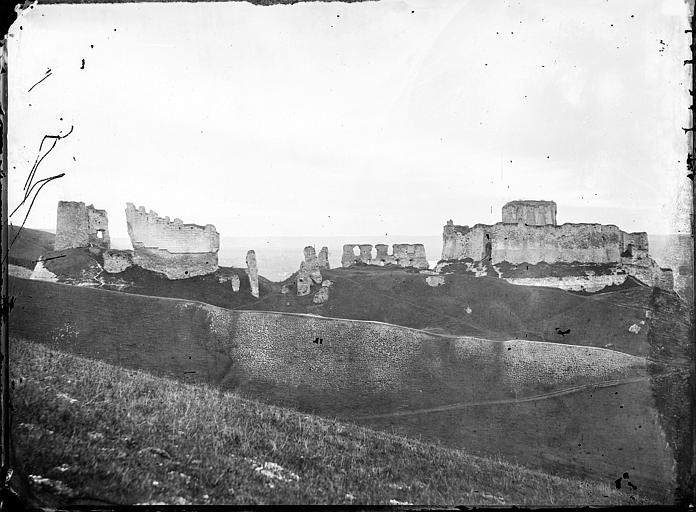
For this reason, the castle was eventually deliberately dismantled, or slighted, its defences broken down so that they could never again be used against the crown. This deliberate destruction, carried out to prevent the fortress from being held by rebels or invaders, reduced Richard’s masterpiece to the ruin we see today. The great walls were breached, the buildings pulled down, and the mighty castle left to crumble on its cliff.
Yet even in ruin, Château Gaillard remained too impressive to disappear entirely. Enough of its walls and its great keep survived to give a vivid impression of its former strength, and over time it came to be valued as a monument to the age of Richard the Lionheart and to the dramatic history of medieval Normandy. The ruins that stand today are the battered but eloquent remains of what was once the strongest castle in the world.
The practice of slighting, deliberately destroying a castle’s defences, was common throughout the history of fortification, whenever a ruler feared that a stronghold might fall into the wrong hands. It is one of the great ironies of castle history that so many mighty fortresses were destroyed not by their enemies in war but by their own masters in peace, dismantled to ensure that they could never be used against the crown. Château Gaillard shared this fate with countless other great castles.
The Ruins Today
Today the ruins of Château Gaillard are one of the most impressive and evocative castle sites in France, drawing visitors who come to marvel at the remains of Richard the Lionheart’s masterpiece and to enjoy the spectacular views from its cliff. Though broken and incomplete, the walls and the great keep still convey the scale and ambition of the original fortress, and the site has lost none of its dramatic power.
Standing among the ruins, high above the loop of the Seine, it is easy to imagine the castle in its prime, and to picture the great siege that raged here eight hundred years ago. The layout of the concentric defences can still be traced, the scalloped walls of the inner bailey still stand, and the keep still rears up at the heart of it all, a mighty stump of the tower that was meant to be unbreakable.
The views alone are worth the climb, sweeping out over the river, the town of Les Andelys, and the wide Norman countryside. It is a place that rewards both the historian, who can read in its stones the whole drama of Richard, Philip and the loss of Normandy, and the simple lover of beautiful and dramatic places, who can enjoy one of the finest viewpoints in all of Normandy.
For all that has been lost, there is a particular power in a great ruin that a complete and restored building can never quite match. The broken walls and open sky, the sense of a mighty work half-returned to nature, stir the imagination and speak of the passage of time in a way that is deeply affecting. Château Gaillard, ruined on its cliff, is romantic as well as historic, and that combination is a large part of its enduring appeal.
The town of Les Andelys at the foot of the cliff is itself worth exploring, a pleasant Norman town on the banks of the Seine, and it makes a natural base for a visit to the castle. Between the ruins on their height and the river winding below, the whole setting is one of the most memorable in Normandy, a place where history and landscape combine to unforgettable effect.
Visiting Château Gaillard
Today Château Gaillard is open to visitors, and it makes a magnificent destination for anyone exploring Normandy or following the trail of Richard the Lionheart. The ruins stand on the cliff above the pretty town of Les Andelys, and the climb up to them, though steep, is rewarded by some of the finest views in the whole region, out over the Seine and its wide, looping valley.
At the site, visitors can explore the remains of the great fortress, trace the layout of its concentric defences, stand beneath the ruined keep, and learn the dramatic story of its building, its siege and its fall. Information boards and guided tours help to bring the ruins to life, and it takes only a little imagination to picture the mighty castle as it once was, and the great siege that decided the fate of Normandy.
You will find Château Gaillard at Les Andelys, in the Eure department of Normandy, in the north of France, within easy reach of Paris and of the other great sites of the region. For exact directions, here is a map link to guide you there: 49.2367, 1.4067. Climb the chalk cliff above the Seine, stand among the ruins of the strongest castle in the world, and feel the presence of the Lionheart who built it.

Castles Nearby
The Strongest Castle in the World
Château Gaillard is a castle of superlatives and of ironies. It was built by the greatest warrior-king of his age, in record time and at vast expense, to be the strongest fortress in the world, and for a few short years it was exactly that. Its concentric defences, its scalloped walls and its mighty keep represented the very summit of the military art of the Middle Ages, the masterpiece of Richard the Lionheart.
And yet, within a few years of its building, it fell, and its fall brought down the whole Norman empire of the English kings. Ruined and slighted, it stands today on its cliff above the Seine as a monument both to the genius that built it and to the truth that no fortress is ever truly impregnable. Grand, dramatic and doomed, Château Gaillard remains one of the most powerful and moving castle ruins in all of France, forever bound to the legend of the Lionheart.
You May Like

Mafra, the Palace a King Built From a Vow


One thought on “Château Gaillard: Richard the Lionheart’s Doomed Masterpiece”