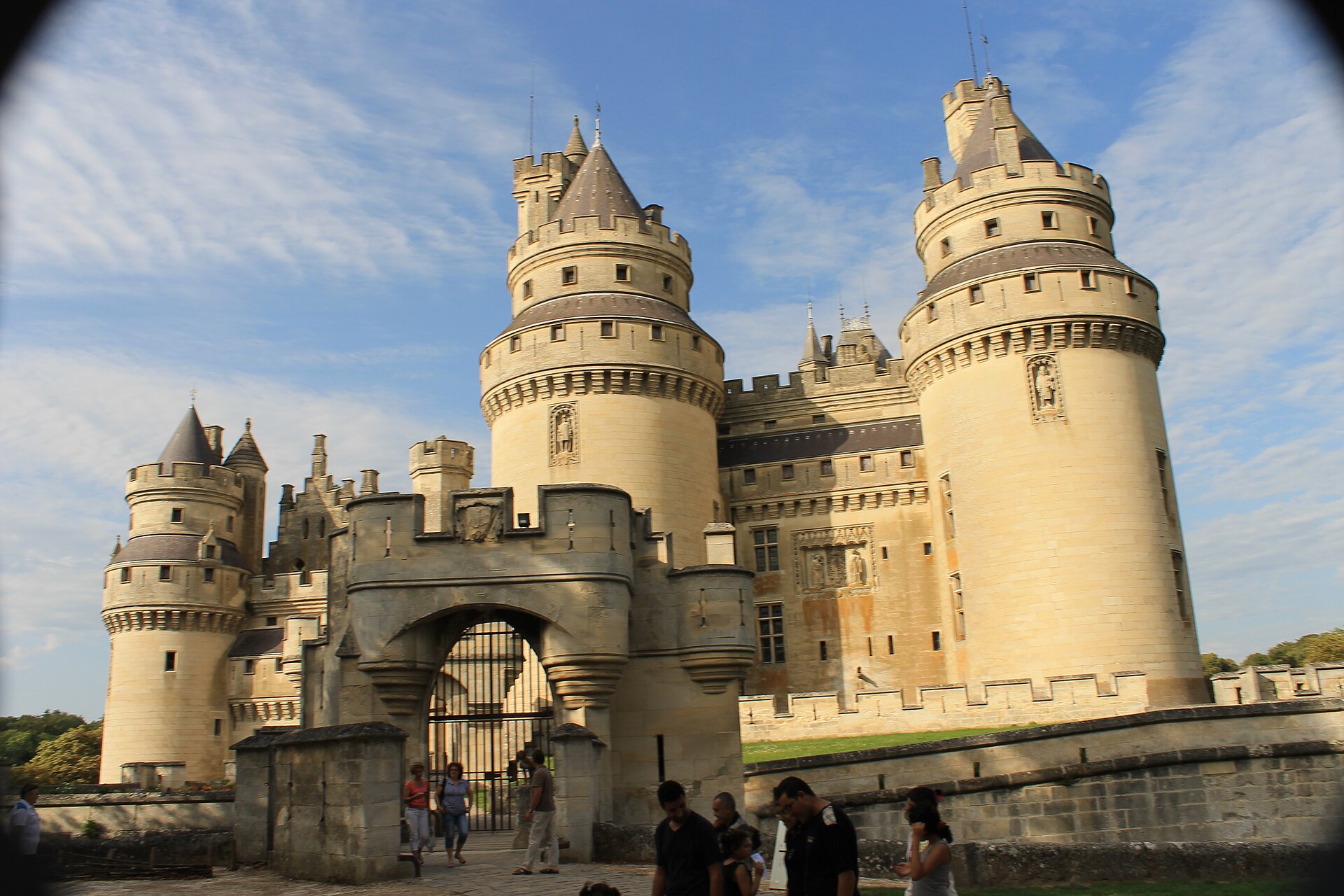
Some castles look exactly like the castle of a fairy tale, with soaring towers, pointed roofs, battlements and drawbridges, all arranged in perfect romantic splendour. The Chateau de Pierrefonds, rising above a little town in the forests north of Paris, is one of these, so complete and so idealised that it seems to have stepped straight out of a storybook or a film. And in a sense, that is exactly what it is.
For the Pierrefonds we see today is not quite a genuine medieval castle, nor quite a modern invention, but something stranger and more fascinating: a great medieval fortress, ruined for centuries, that was brought back to life in the nineteenth century by one of the most famous architects in France, who rebuilt it not as it had actually been but as he imagined a perfect medieval castle ought to be. It is a real castle and a dream of a castle at the same time.
The result is one of the most spectacular and most photographed castles in France, a place that has become a favourite backdrop for films and television, and a monument to the romantic love of the Middle Ages that swept through the nineteenth century. Let us cross the drawbridge into Pierrefonds and discover the extraordinary story of a fortress that died and was reborn as a fairy tale.
In This Article
- A Fortress of the Middle Ages
- Dismantled by a Cardinal
- An Emperor’s Fancy
- Viollet-le-Duc’s Dream Castle
- The Eight Great Towers
- Across the Drawbridge
- The Courtyard and the Keep
- The Hall of the Heroines
- Halls, Guards and Chivalry
- The Chapel and the Details
- A Castle for a Prince, a Statue for an Architect
- A Castle Made for the Screen
- Visiting the Château de Pierrefonds
A Fortress of the Middle Ages
The story of Pierrefonds begins, as so many castle stories do, in the Middle Ages. Around the very end of the fourteenth century and the beginning of the fifteenth, a great fortress was built here for Louis of Orleans, the brother of the French king Charles VI. Louis was one of the most powerful men in France, and his castle was designed to reflect his enormous wealth and status, a stronghold worthy of a prince of the blood royal.
The original Pierrefonds was a formidable fortress, built on a spur of rock above the surrounding country, ringed by mighty walls and defended by eight great towers, each named after a hero of legend and history. Within its walls stood the lodgings, halls and chapel of a princely household, and its defences incorporated the most advanced military thinking of the age. This was a serious castle, built for war as well as for show.
Louis of Orleans did not live to enjoy his castle for long. He was assassinated in the streets of Paris in a notorious political murder, victim of the bitter feuds that divided the French royal family in this troubled period. But his great fortress lived on, a monument to his ambition and a stronghold that would play its part in the wars and rebellions of the following centuries, before meeting a dramatic fate of its own.
Louis of Orleans was a central figure in one of the most dramatic periods of French history, a time when the king, Charles VI, suffered from bouts of madness that left the government of France to be fought over by rival factions of the royal family. Louis led one of these factions, and his rivalry with his cousin the Duke of Burgundy would erupt, after Louis’s murder, into a devastating civil war that tore France apart and opened the way for English conquest in the Hundred Years War.
The castle Louis built at Pierrefonds was part of a network of strongholds through which he sought to secure his power in the region north of Paris. Its great strength and its proximity to the capital made it a significant piece on the chessboard of French politics, and this very importance would later make it a target for a crown determined to prevent any over-mighty subject from challenging royal authority from behind strong walls.
The site of Pierrefonds had been fortified before Louis of Orleans built his great castle, for its natural strength on a rocky spur made it an obvious place for a stronghold. But it was Louis who raised it to grandeur, creating a fortress on a scale befitting one of the richest and most powerful princes in France, and it is his ambitious vision that lies, however transformed, beneath the castle we see today.
Dismantled by a Cardinal
The medieval castle of Pierrefonds met its end in the early seventeenth century, and its destruction was an act of state. In an age when the French crown was working to break the power of the great nobles and to stamp out rebellion, a strong castle in the wrong hands was a dangerous thing. Pierrefonds had become associated with resistance to royal authority, and the powerful Cardinal Richelieu, the great minister who did so much to build up the power of the monarchy, decided it had to go.
On the orders of the crown, the castle was dismantled, its defences deliberately broken down so that they could never again be used against the king. This slighting reduced the once-mighty fortress to a ruin, its walls breached, its towers cracked open, its buildings left to decay. For the next two centuries, Pierrefonds was a romantic ruin, a great broken shell standing above its little town, slowly crumbling amid the forests.
Yet even in ruin, Pierrefonds retained a powerful and melancholy beauty. Its shattered walls and roofless towers, overgrown and abandoned, became exactly the kind of picturesque medieval ruin that the nineteenth century would come to love. Where an earlier age had seen only a useless and dangerous fortress to be pulled down, a new age would see a treasure to be rescued, and the ruin of Pierrefonds was about to be given an extraordinary second life.
The slighting of Pierrefonds was part of a wider campaign by Cardinal Richelieu and the French crown against the fortified castles of the nobility, many of which were dismantled in this period to prevent them from becoming centres of rebellion. It was a deliberate policy of centralisation, aimed at ensuring that no subject could defy the king from behind strong walls, and it changed the face of the French countryside, reducing many a proud fortress to ruin.
For Pierrefonds, however, this destruction was not quite the end. The ruin was substantial enough, and picturesque enough, that it survived as a romantic landmark rather than vanishing entirely, and its very state of ruin would eventually make it attractive to a later age that valued such things. In a sense, the cardinal’s act of destruction helped to create the conditions for the castle’s extraordinary rebirth two centuries later.
An Emperor’s Fancy
The rescue of Pierrefonds came about through the enthusiasm of a most unexpected patron: the Emperor Napoleon III, ruler of France in the middle of the nineteenth century. Like many people of his age, the emperor was fascinated by the Middle Ages, and he was drawn to the romantic ruin of Pierrefonds, which he acquired with the idea of restoring it. What began as a modest plan to preserve a picturesque ruin grew into one of the most ambitious building projects of the century.
To carry out the work, the emperor turned to the most famous restorer of medieval buildings in France, the architect Eugene Viollet-le-Duc, who had already made his name repairing the great cathedrals and fortresses of the country, including the walls of Carcassonne. Viollet-le-Duc was a man of enormous energy, deep knowledge and strong opinions, and at Pierrefonds he was given an extraordinary opportunity to put his ideas about medieval architecture into practice on a grand scale.
The result was not a simple restoration but a magnificent reinvention. Rather than merely stabilising the ruin, Viollet-le-Duc set out to rebuild the castle in full, raising its walls and towers, adding roofs, halls and interiors, and creating a complete and splendid medieval fortress where there had been only a broken shell. It was a project that would occupy him for decades and produce one of the most remarkable buildings in France.
Napoleon III’s interest in Pierrefonds was part of a wider fascination with the medieval past that ran through the nineteenth century, expressed in art, literature, architecture and politics alike. Rulers and writers across Europe looked back to the Middle Ages for inspiration, and the restoration of medieval buildings became a way of connecting the present with a romanticised national past. Pierrefonds was one of the grandest expressions of this movement anywhere in Europe.
The emperor’s patronage gave Viollet-le-Duc the resources to undertake a project of extraordinary ambition, and the two men’s shared vision of a resurrected medieval castle drove the work forward over many years. Even after the fall of Napoleon III, the restoration continued, a testament to the hold that the dream of Pierrefonds had come to exert, and to the determination that so remarkable a project should be carried through to completion.
Viollet-le-Duc’s Dream Castle
Eugene Viollet-le-Duc is one of the most important and controversial figures in the history of architecture. He was a passionate scholar of the Middle Ages who devoted his life to studying and restoring medieval buildings, and his writings shaped the way generations understood Gothic architecture. But he was also a creative artist with his own strong vision, and he believed that a restorer should not merely preserve a building but bring it to a state of completeness that it might never actually have possessed.
At Pierrefonds, freed from the constraints of a purely factual restoration by the ruined state of the castle, Viollet-le-Duc gave his imagination free rein. He studied what remained of the medieval fortress and used it as the basis for his work, but he also filled in the gaps with his own ideas of what a perfect medieval castle should look like, drawing on his vast knowledge and his romantic vision to create an idealised whole.
The result is a building that is medieval in inspiration but nineteenth-century in execution, a fascinating blend of historical scholarship and creative fantasy. Critics have long debated whether Viollet-le-Duc’s approach was a legitimate restoration or a romantic reinvention, and the argument continues to this day. But whatever one thinks of the principle, the result is undeniably magnificent, a castle of extraordinary beauty and completeness that could only have been created by a master.
Viollet-le-Duc’s ideas about restoration were set out in his voluminous writings, which became enormously influential across Europe and beyond. He argued that to restore a building was not simply to repair it but to re-establish it in a complete state that might never have existed at any one moment in its history, a philosophy that gave the restorer great creative freedom and that has been fiercely debated ever since. Pierrefonds is the supreme built expression of these controversial ideas.
His approach stood in stark contrast to the view, championed by other thinkers of the age, that ancient buildings should be conserved as they survived, ruins and all, with minimal intervention. The clash between these two philosophies, restoration versus conservation, was one of the great debates of nineteenth-century culture, and Pierrefonds stands squarely on one side of it, a monument to the belief that the past could and should be brought back to glorious, complete life.
Whatever the theoretical debates, there is no denying the sheer quality and beauty of what Viollet-le-Duc achieved at Pierrefonds. Even those who question his methods generally admire the results, for the castle is a masterpiece of design, craftsmanship and imagination. It stands as one of the greatest monuments of nineteenth-century architecture, all the more remarkable for being cast in the forms of the Middle Ages.

The Eight Great Towers
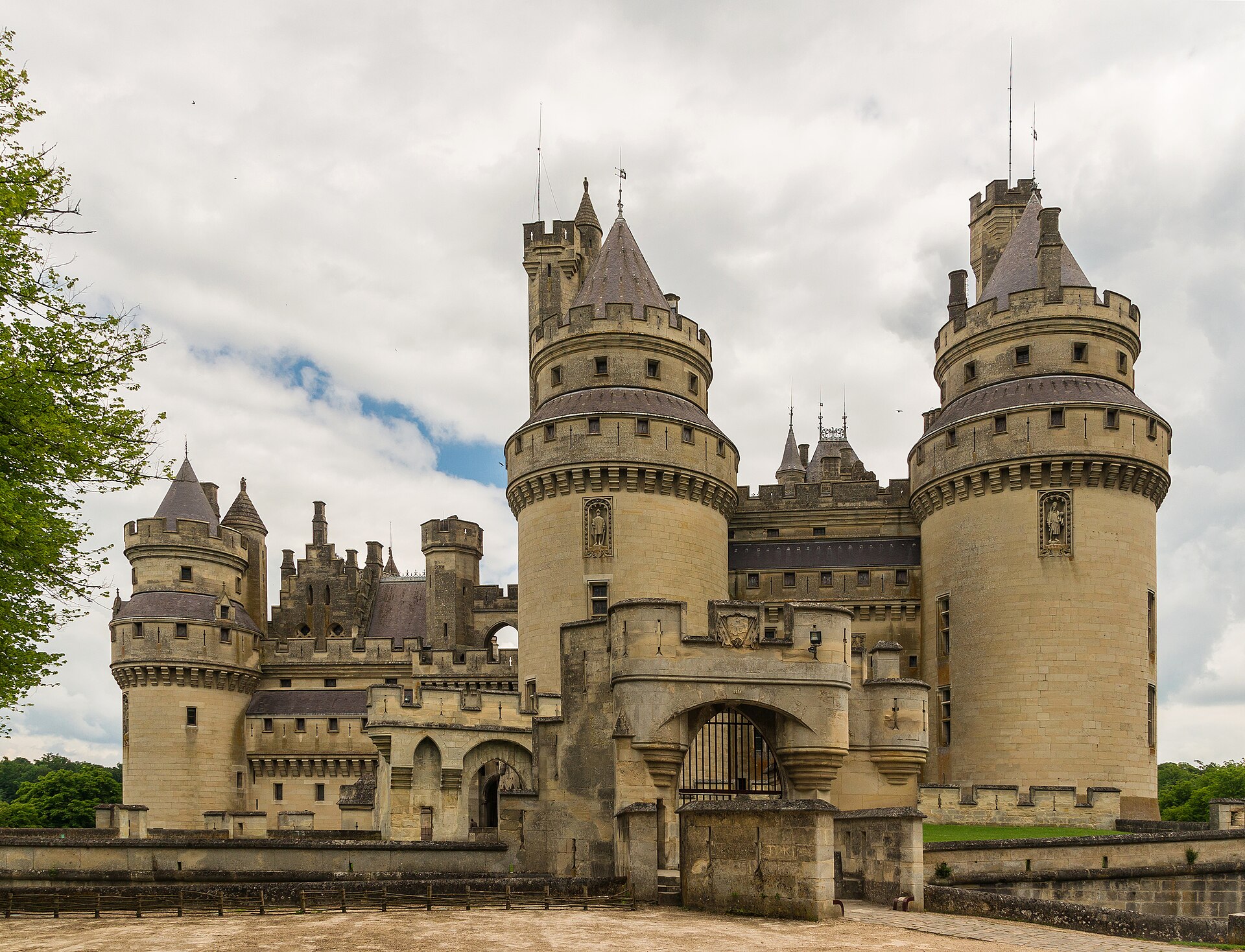
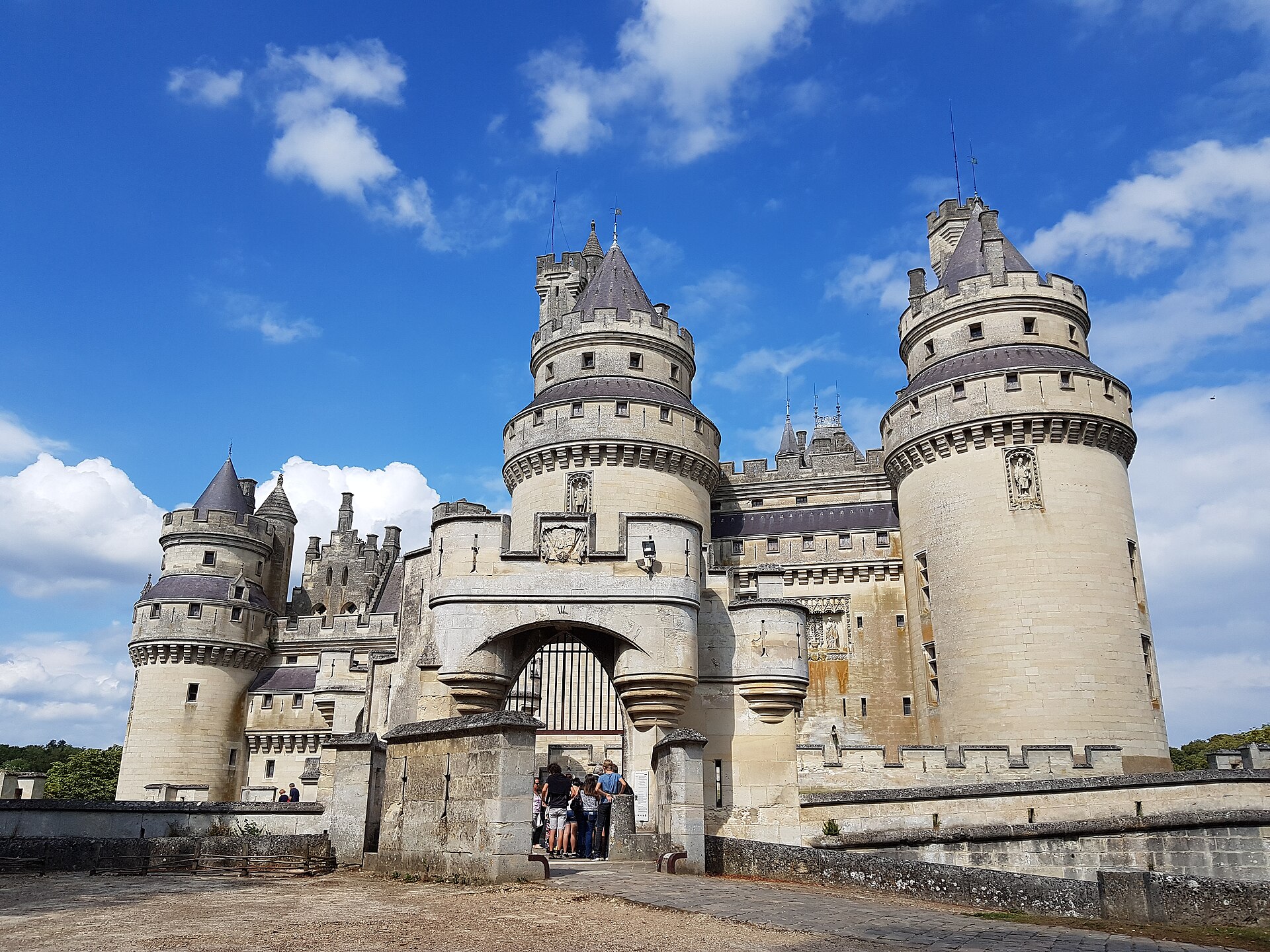
The defining feature of Pierrefonds is its ring of mighty towers, eight great cylinders of stone rising around the walls, each crowned with a tall, pointed conical roof. These towers give the castle its unmistakable fairy-tale silhouette, and they are among the most spectacular of Viollet-le-Duc’s creations, combining the massive strength of a medieval fortress with the romantic elegance of the nineteenth century’s idea of the Middle Ages.
In keeping with medieval tradition, the towers were named after heroes, the great warriors of legend and history whom the Middle Ages honoured as models of chivalry. Their names, and the statues and decorations that adorn them, reflect the whole culture of medieval knighthood that so fascinated Viollet-le-Duc and his contemporaries. The towers are not just defences but a celebration of the heroic ideal of the Middle Ages.
Rising above the walls with their pointed roofs and their crown of battlements, the towers of Pierrefonds are the very image of a storybook castle. It is these towers, more than anything else, that have made Pierrefonds so beloved by film-makers and photographers, for they embody the popular idea of what a medieval castle should look like more perfectly, perhaps, than any genuine medieval fortress ever did.
The naming of the towers after heroes followed a genuine medieval tradition, for the Middle Ages loved to associate their buildings and their chivalry with the great figures of legend and history, the so-called Worthies who served as models of knightly virtue. In reviving this tradition at Pierrefonds, Viollet-le-Duc was drawing on real medieval practice, even as he elaborated it with the romantic enthusiasm of his own age.
The pointed conical roofs that crown the towers are among the features that give Pierrefonds its fairy-tale character, and they reflect Viollet-le-Duc’s vision of the northern French castle as much as any strict historical model. Whether or not the medieval towers were roofed in exactly this way, the effect is unforgettable, and it has become the defining image not just of Pierrefonds but, for many people, of the storybook castle itself.

Across the Drawbridge
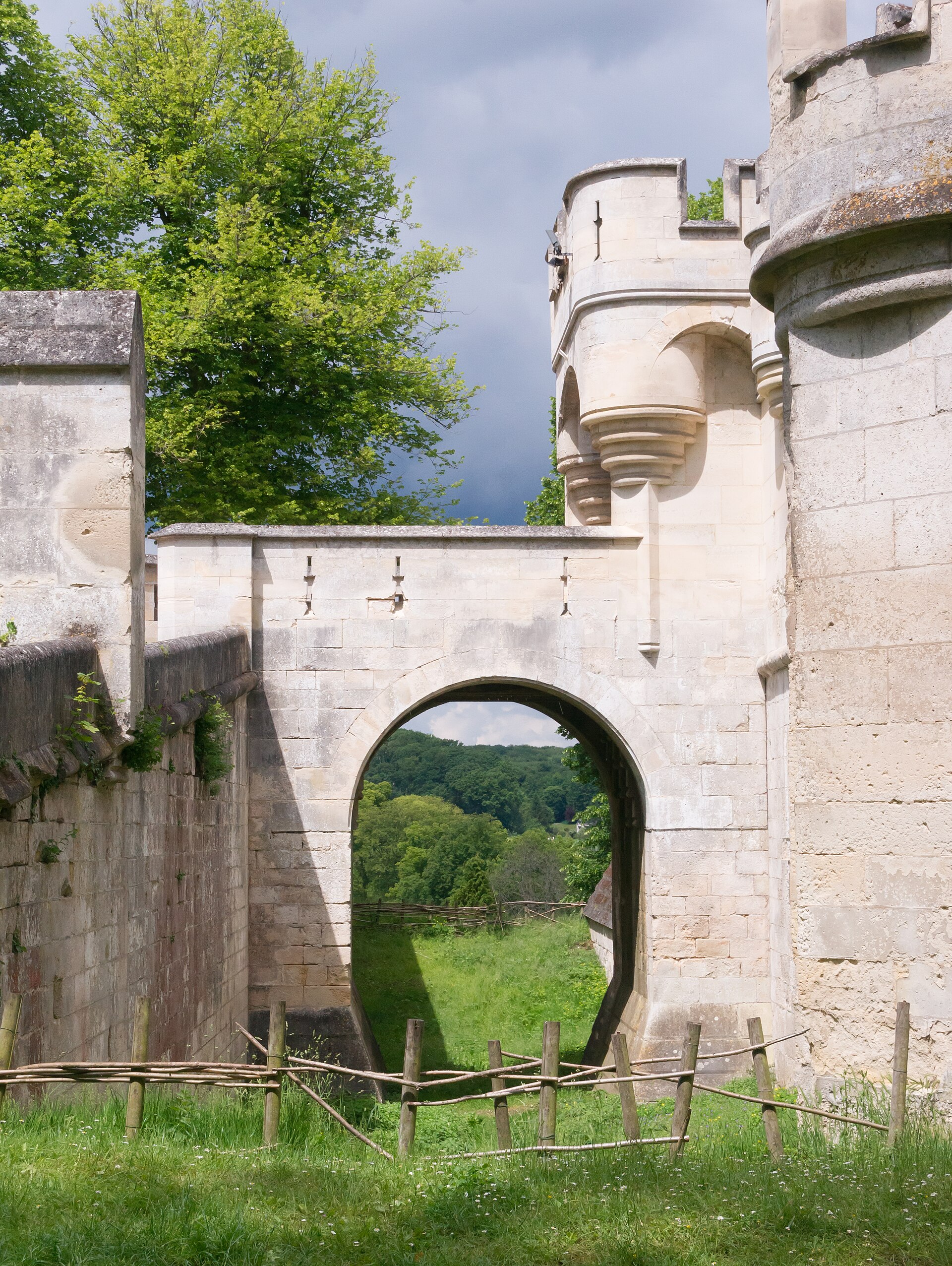
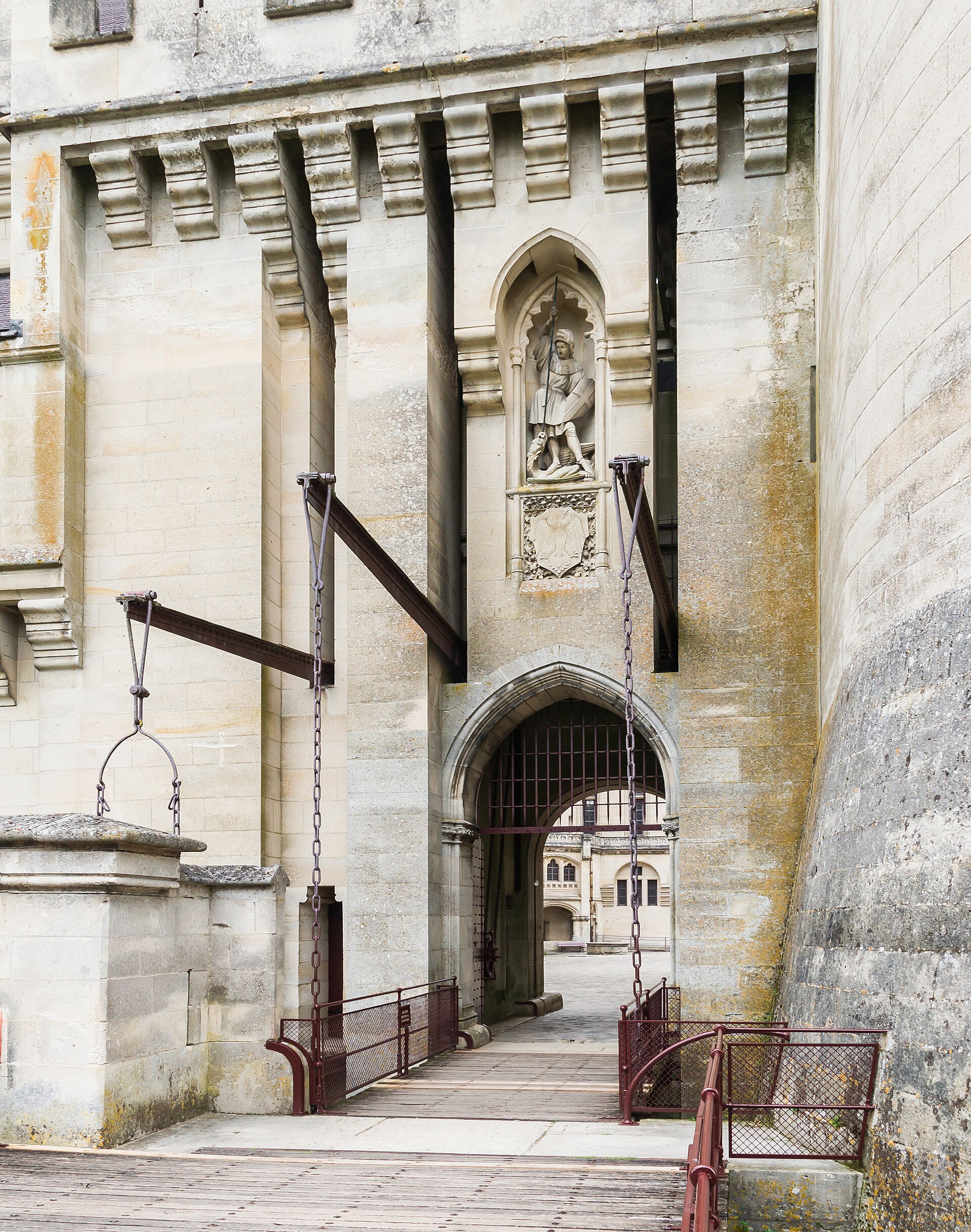
Entry into Pierrefonds is across a drawbridge and through a fortified gateway, a dramatic introduction to the castle that immediately establishes its medieval character. The drawbridge, the gate, the towers that flank it, all combine to create the sense of entering a genuine medieval stronghold, exactly as Viollet-le-Duc intended. Every detail was designed to transport the visitor into an idealised vision of the age of chivalry.
The defences of the entrance, like those of the whole castle, are based on real medieval military architecture, but they are also, in a sense, a stage set, designed to create an effect as much as to withstand an attack. Viollet-le-Duc understood the drama of a great castle, the way its gates and towers could impress and overawe, and he used all his knowledge to heighten that drama at Pierrefonds.
To cross the drawbridge into the castle is to cross a threshold not just of stone but of time and imagination, entering a world that is part history and part dream. It is this quality, the sense of stepping into a perfect medieval fantasy, that makes Pierrefonds so enchanting, and that has drawn to it not only ordinary visitors but the makers of films and television series in search of the ideal storybook castle.
The whole approach to the castle, up from the town and across the drawbridge, was carefully orchestrated by Viollet-le-Duc to build a sense of drama and anticipation. He understood, as the medieval builders had, that a great castle should impress and even intimidate those who approached it, and he used every device of towers, gates and defences to heighten the effect. The result is an arrival that thrills the visitor and sets the stage for the wonders within.
The Courtyard and the Keep
Within the walls, Pierrefonds opens out into a courtyard surrounded by the buildings of the castle, dominated by the great keep, the strongest and most important part of the fortress. Here, in the heart of the castle, Viollet-le-Duc lavished his attention on the details, covering the buildings with carved decoration and creating an ensemble of great richness and beauty, a stone dream of the Middle Ages.
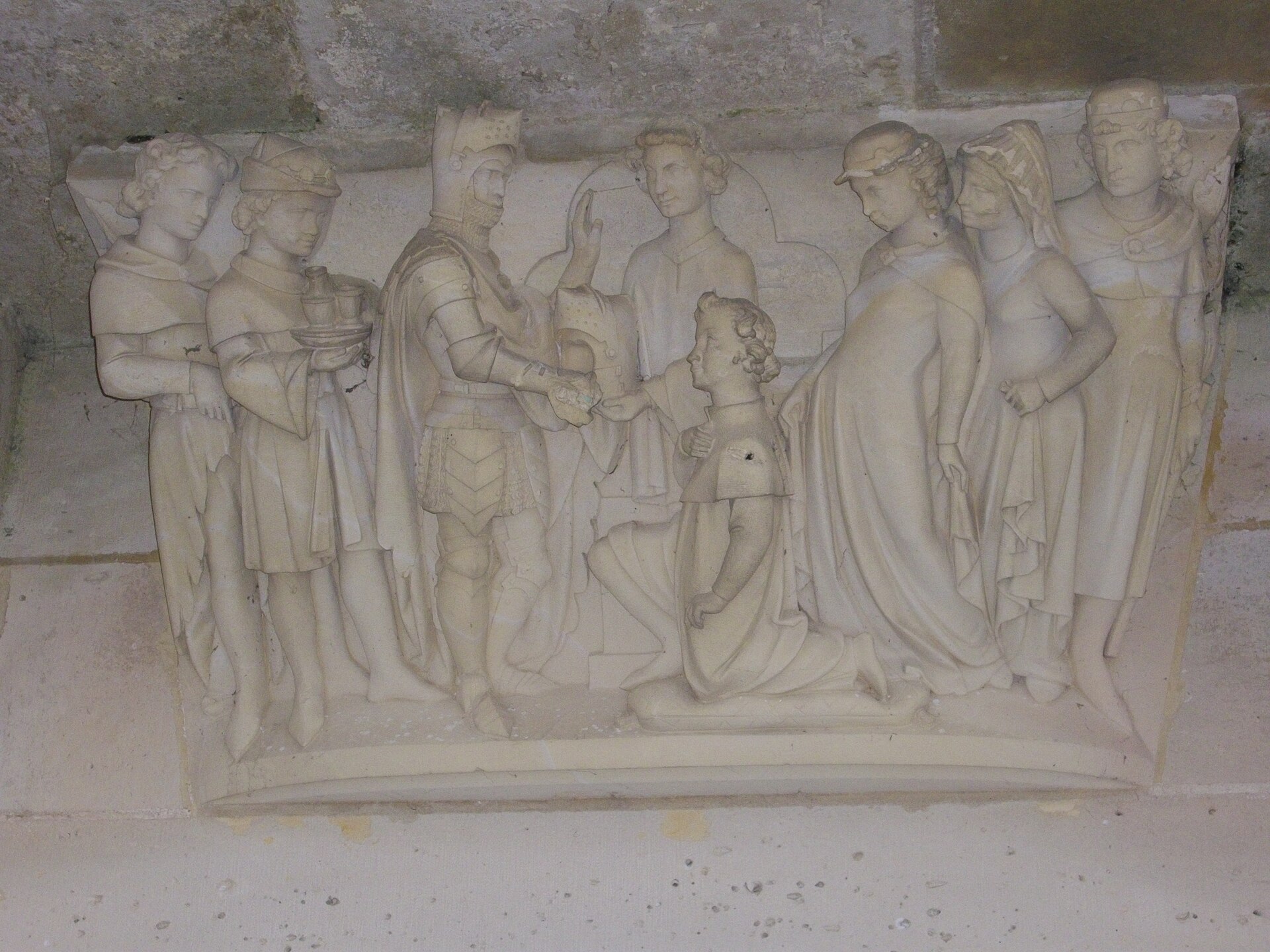
The courtyard is the setting for some of the castle’s most spectacular features, including a grand staircase and richly decorated facades adorned with statues, carvings and all the ornament that Viollet-le-Duc loved. Look closely and you will find, among the medieval-style decoration, playful and personal touches, including carved cats set into the roofline, a nod to the architect’s own affection for the creatures. These little details reveal the human personality behind the grand design.
From the courtyard, the visitor can begin to explore the interiors of the castle, the great halls and chambers that Viollet-le-Duc created within the walls. It is here, in the decorated rooms of the castle, that his vision of the Middle Ages reaches its fullest and most colourful expression, and that the true ambition of his reinvention of Pierrefonds becomes clear.
The carved cats and other whimsical creatures that Viollet-le-Duc worked into the fabric of Pierrefonds are a delightful reminder that even so serious and scholarly an architect had a playful side. These personal touches, hidden among the grand medieval decoration, invite the visitor to look closely and to share in the architect’s evident enjoyment of his work. They give the great castle a warmth and a human character that a purely academic reconstruction could never have possessed.
The Hall of the Heroines
The grandest of the interiors at Pierrefonds is the great hall, and among its most celebrated features is the room known as the Salle des Preuses, the Hall of the Heroines. This magnificent space, one of the largest and most splendid rooms in the castle, is decorated with statues and imagery celebrating the great women warriors of legend, the female counterparts to the male heroes honoured elsewhere in the castle.
The hall is a masterpiece of nineteenth-century decorative art in the medieval style, its walls and fireplace adorned with sculpted figures, its whole design intended to evoke the great halls of the Middle Ages while surpassing them in richness and completeness. It is a room built for feasts and ceremonies, or at least for the idea of them, a stage for the imagined life of a medieval court.
In rooms like this, Viollet-le-Duc’s Pierrefonds reveals itself most clearly as a work of the imagination, a recreation of the Middle Ages more perfect and more colourful than the reality ever was. The Hall of the Heroines is not a museum piece but a work of art in its own right, a nineteenth-century vision of medieval splendour that is magnificent precisely because it is a dream.
The celebration of legendary women warriors in the Salle des Preuses reflects the medieval tradition of the Nine Worthies and their female counterparts, figures held up as models of valour and virtue. In devoting so grand a room to these heroines, Viollet-le-Duc was again drawing on genuine medieval ideas, while giving them a scale and a splendour that expressed the romantic enthusiasm of his own century for the chivalric ideal.
Halls, Guards and Chivalry
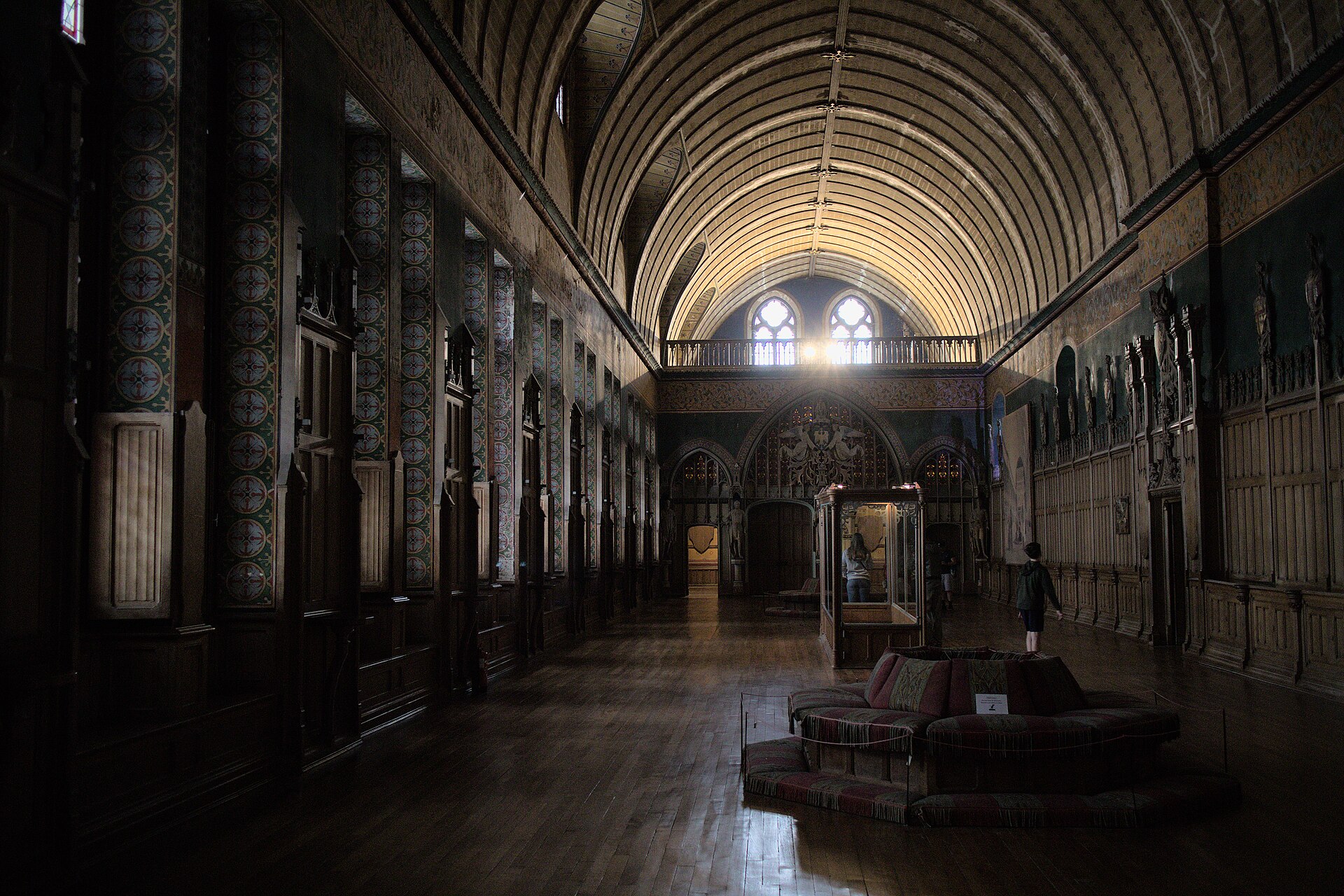
Beyond the great hall, Pierrefonds contains a whole series of splendid rooms, each decorated in the rich medieval style that Viollet-le-Duc made his own. There are guard rooms and chambers, galleries and passages, all brought to life with carving, colour and imagery drawn from the world of medieval chivalry. To move through them is to move through an idealised vision of the life of a great medieval castle.
The decoration throughout the castle is a celebration of the heroic and chivalric ideals that the nineteenth century so admired in the Middle Ages. Knights and heroes, coats of arms and mottoes, scenes of legend and history, all combine to create an atmosphere of romance and nobility. Viollet-le-Duc was not simply reconstructing a building but recreating a whole imagined world, the golden age of chivalry as his own age dreamed it.
This wholehearted embrace of the romance of the Middle Ages is part of what makes Pierrefonds so appealing and so distinctive. It is not a cold, scholarly restoration but a warm, colourful, living recreation, full of the enthusiasm and imagination of its creator. In its halls and chambers, the visitor can lose themselves in a vision of the Middle Ages that is all the more enjoyable for being, in part, a beautiful fiction.
The rich polychrome decoration, the vivid colours and patterns that cover the walls and ceilings of the castle’s rooms, is one of the aspects of Viollet-le-Duc’s work that most surprises visitors expecting the bare grey stone of a typical ruin. Yet in this he was true to the Middle Ages, which loved bright colour and covered their great buildings in painted decoration. The colourful interiors of Pierrefonds restore something that centuries of weathering have stripped from most genuine medieval buildings.

The Chapel and the Details
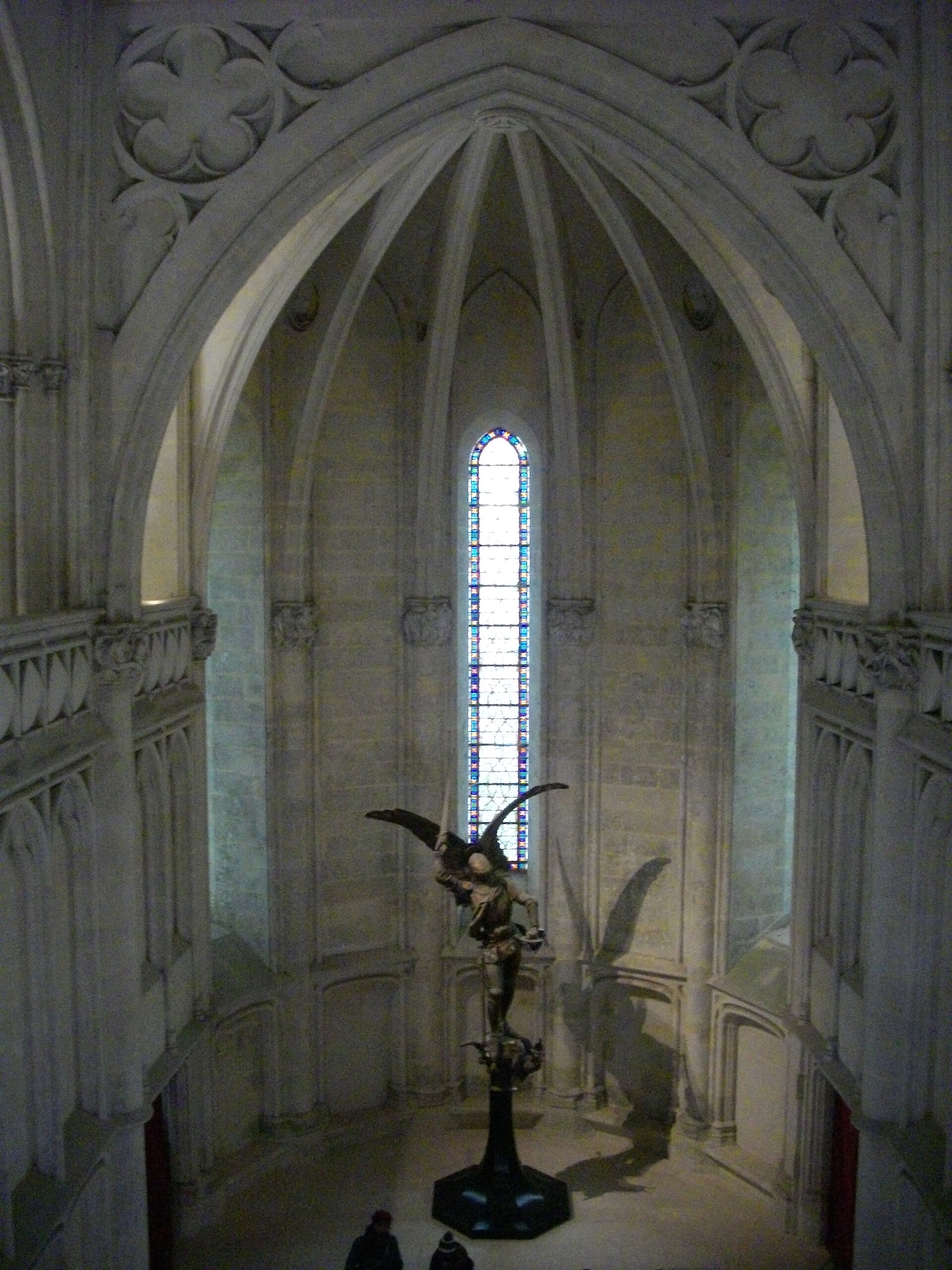
Among the interiors of Pierrefonds is a chapel, richly decorated in the medieval style, where the imagined household of the castle would have worshipped. Like the rest of the castle, it is a work of Viollet-le-Duc’s imagination as much as of historical reconstruction, its architecture and decoration designed to evoke the religious life of a great medieval household in idealised form.
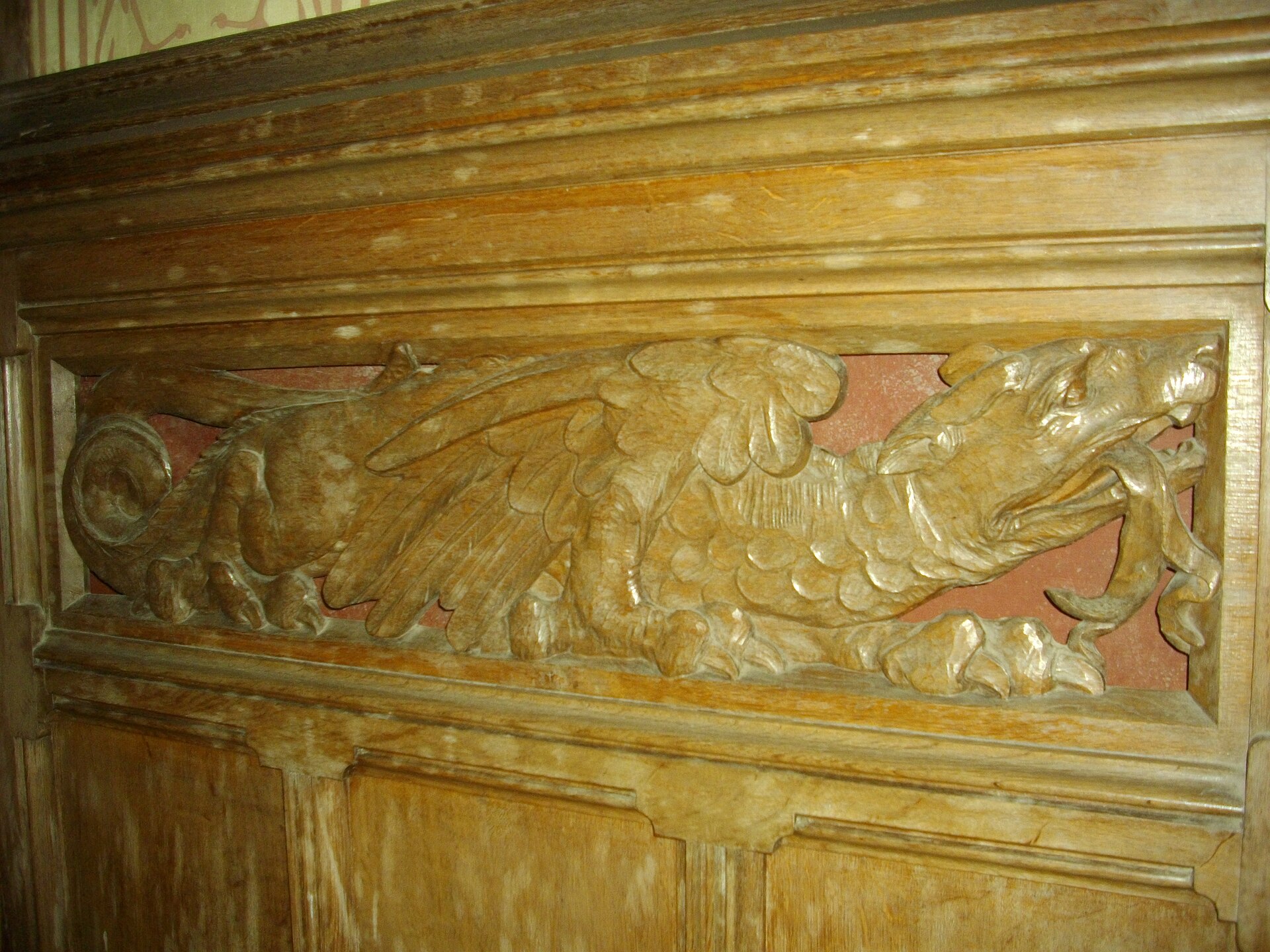
It is in the details, throughout the castle, that Viollet-le-Duc’s genius and personality shine most clearly. Every surface offers something to discover: carved figures and foliage, painted decoration, ingenious ironwork, and the countless small touches through which the architect brought his vision to life. He was a master of the decorative arts as well as of architecture, and Pierrefonds is a showcase of his skill in every medium.
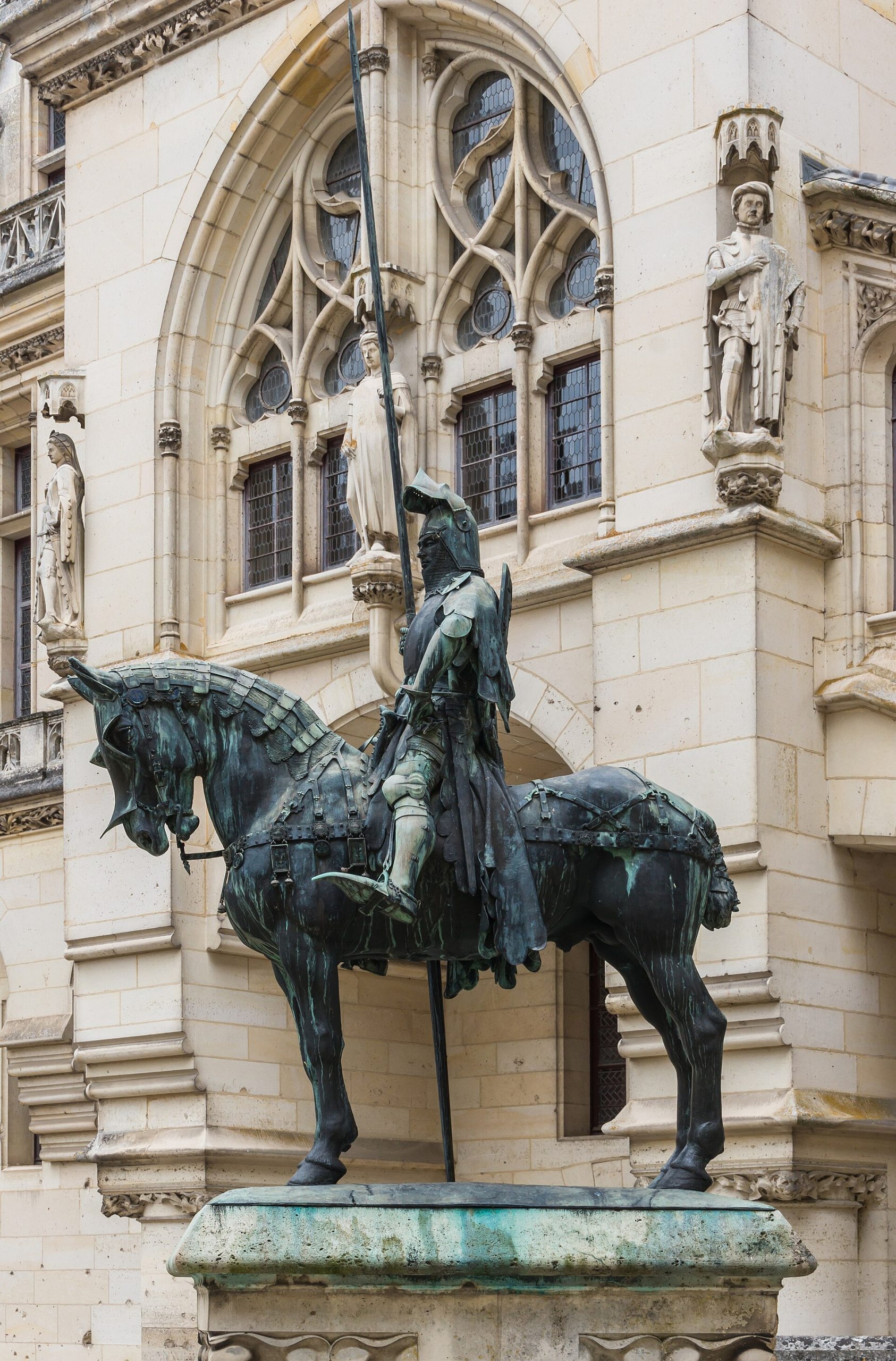
Some of these details are deeply personal, including a famous statue in which Viollet-le-Duc portrayed himself, and the carved cats and other playful touches scattered through the building. Through such details, the architect signed his work and revealed something of himself, so that Pierrefonds is not only a vision of the Middle Ages but a portrait of the remarkable man who created it, one of the great figures of nineteenth-century art.
Viollet-le-Duc’s mastery extended to every craft involved in the building, from stone-carving and painting to metalwork and carpentry, and he designed or oversaw the design of countless individual elements throughout the castle. This total control gave Pierrefonds a remarkable unity of vision, so that the whole building, down to its smallest details, expresses a single coherent idea of the Middle Ages, filtered through one extraordinary imagination.
A Castle for a Prince, a Statue for an Architect
Throughout Pierrefonds, the memory of the two great figures behind the castle is kept alive: Louis of Orleans, the medieval prince who built the original fortress, and Eugene Viollet-le-Duc, the architect who raised it again from ruin. Statues and images of Louis of Orleans recall the castle’s medieval origins and the princely ambition that first raised it above the forests of the north.
Viollet-le-Duc, too, left his own image in the castle, most famously in a statue in which he depicted himself in the guise of a medieval pilgrim, and in a bust that honours his achievement. It was highly unusual for a restorer to insert himself so openly into his work, but it was characteristic of Viollet-le-Duc’s confidence and of his sense that Pierrefonds was as much his own creation as a restoration of someone else’s.
In honouring both men, the castle reflects its double nature, medieval and modern, real and reimagined. Louis of Orleans built a fortress; Viollet-le-Duc built a dream of a fortress on its ruins. Together, across a gap of nearly five centuries, they created the extraordinary building we see today, a castle that belongs both to the age of chivalry and to the romantic imagination of the nineteenth century.
The insertion of the architect’s own image into the castle, in the guise of a medieval pilgrim, was a bold and revealing gesture. It proclaimed Viollet-le-Duc’s sense of himself not as a humble restorer but as a creator in his own right, a modern master taking his place among the builders of the Middle Ages. Few architects have signed their work so personally or so confidently, and it is entirely in keeping with the extraordinary, self-assured spirit of the whole project.
A Castle Made for the Screen
In our own time, Pierrefonds has found a new kind of fame as a favourite location for films and television. Its perfect, storybook silhouette, its complete and splendid interiors, and its lack of the awkward gaps and ruins that mar so many genuine medieval castles make it an ideal setting for tales of knights and kings, and film-makers have flocked to it in search of the perfect medieval backdrop.
Most famously, the castle served as the principal setting for a popular television series retelling the legends of King Arthur and the wizard Merlin, its towers and courtyards standing in for the fabled kingdom of Camelot. For millions of viewers around the world, Pierrefonds became the very image of Arthur’s castle, a fitting role for a building that was itself, in a sense, created as a dream of the age of chivalry.
There is a certain rightness in this. Viollet-le-Duc built Pierrefonds as an idealised vision of the Middle Ages, a castle more perfect than any that ever really existed, and now it serves as the setting for stories that are themselves idealised visions of the medieval world. The dream castle has become the home of dreams, and its fame has spread far beyond the forests of France to audiences across the globe.
The suitability of Pierrefonds for film and television lies precisely in its idealised completeness. Genuine medieval castles are often fragmentary, altered by later centuries, or cluttered with the evidence of real historical use, whereas Pierrefonds offers a pure, unbroken vision of the storybook Middle Ages. For film-makers seeking to conjure a world of knights and legends, it is close to perfect, a ready-made Camelot standing in the forests of northern France.
Visiting the Château de Pierrefonds
Today the Chateau de Pierrefonds is cared for by the national monuments service and is open to visitors throughout the year, and it makes a magnificent and easy excursion from Paris. Rising above its pretty little town at the edge of a great forest, the castle offers the visitor a complete and spectacular medieval fantasy, from the drawbridge and towers to the great halls and richly decorated interiors within.
A visit allows you to explore the courtyard and the keep, the great Hall of the Heroines and the other splendid rooms, the chapel and the walkways along the walls, all the while discovering the countless details through which Viollet-le-Duc brought his vision to life. Displays and information help to tell the double story of the castle, medieval and nineteenth-century, and to explain the extraordinary achievement of its reinvention.
You will find Pierrefonds in the Oise department, in the Hauts-de-France region north of Paris, close to the historic town of Compiegne and easily reached from the capital for a day trip. For exact directions, here is a map link to guide you there: 49.3453, 2.9808. Cross the drawbridge, climb among the towers, and step into one of the most perfect and enchanting castles that the love of the Middle Ages has ever produced.
The little town of Pierrefonds at the foot of the castle is a charming place in its own right, with its lake and its old houses, and it grew in popularity as a fashionable resort in the nineteenth century, partly on the strength of the castle’s fame. Together, the town and the great château on its rock make a delightful destination, and the surrounding forest of Compiègne offers beautiful walks and drives for those who wish to linger in the area.

Castles Nearby
A Dream of the Middle Ages
The Chateau de Pierrefonds is unlike any other castle in France, for it is at once genuinely old and genuinely new, a medieval fortress and a nineteenth-century dream. Built by a prince, dismantled by a cardinal, ruined for centuries and then raised again by a visionary architect, it embodies not one age but two, and the meeting of the two has produced something wholly extraordinary: a perfect storybook castle that is also a real place, standing above its town at the edge of the forest.
To visit it is to enter a beautiful fantasy of the Middle Ages, more complete and more colourful than the reality ever was, and to encounter the imagination of one of the great architects of the nineteenth century. Magnificent, romantic and just a little unreal, Pierrefonds is a castle that reminds us that the Middle Ages live on not only in genuine old stones but in the dreams of every age that has looked back on them with longing and wonder.
You May Like

Mafra, the Palace a King Built From a Vow


One thought on “Château de Pierrefonds: The Medieval Castle Reborn as a Dream”