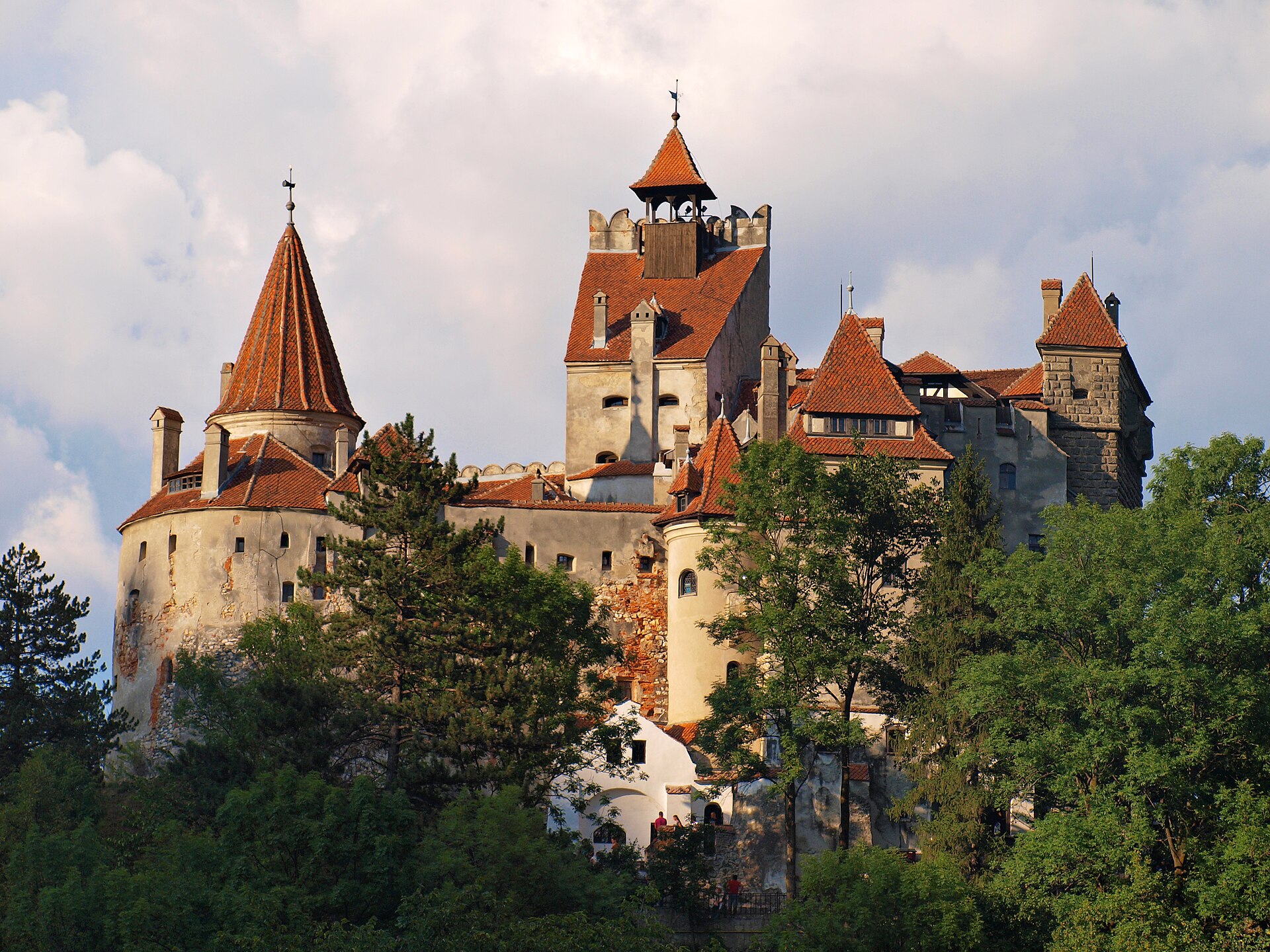
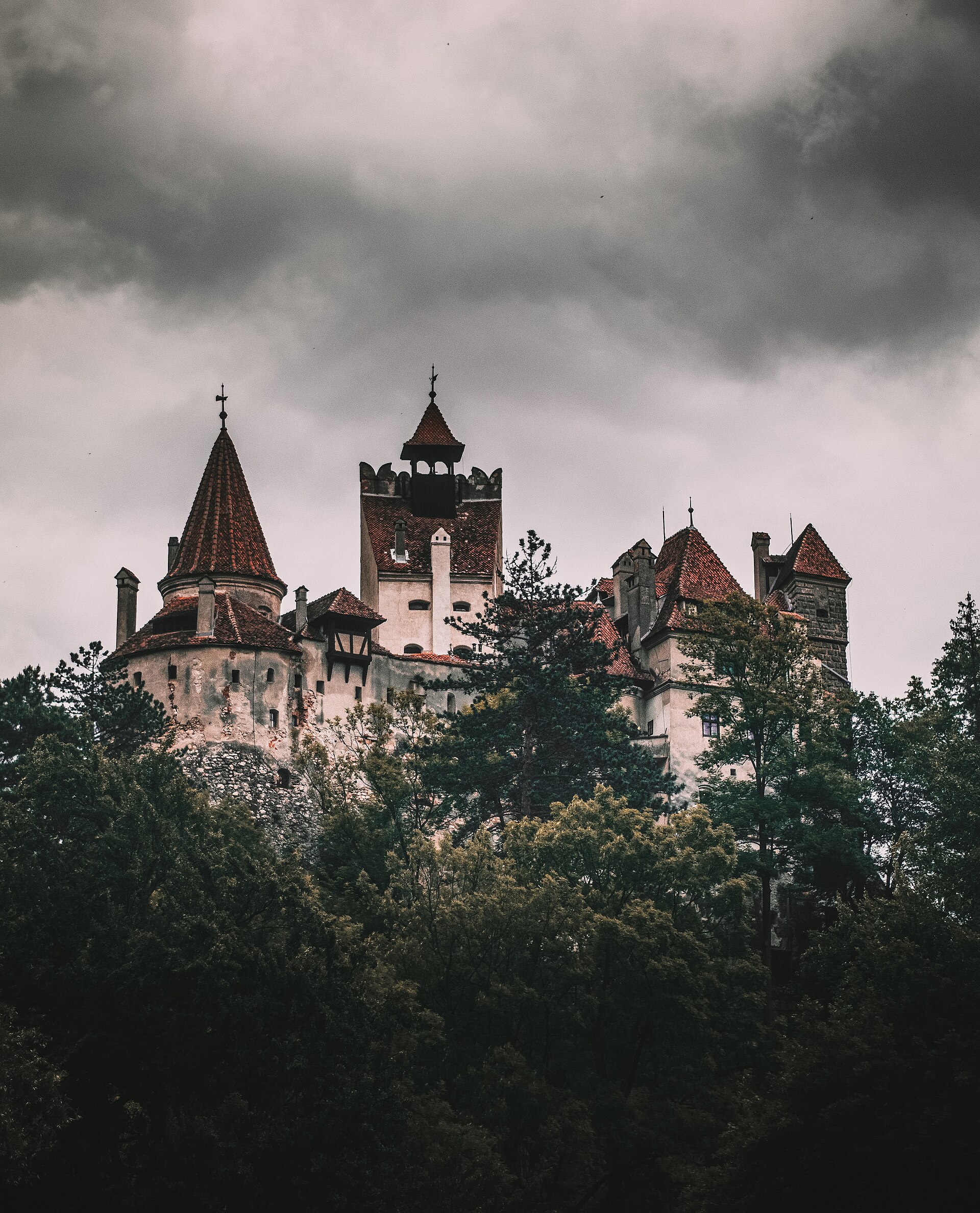
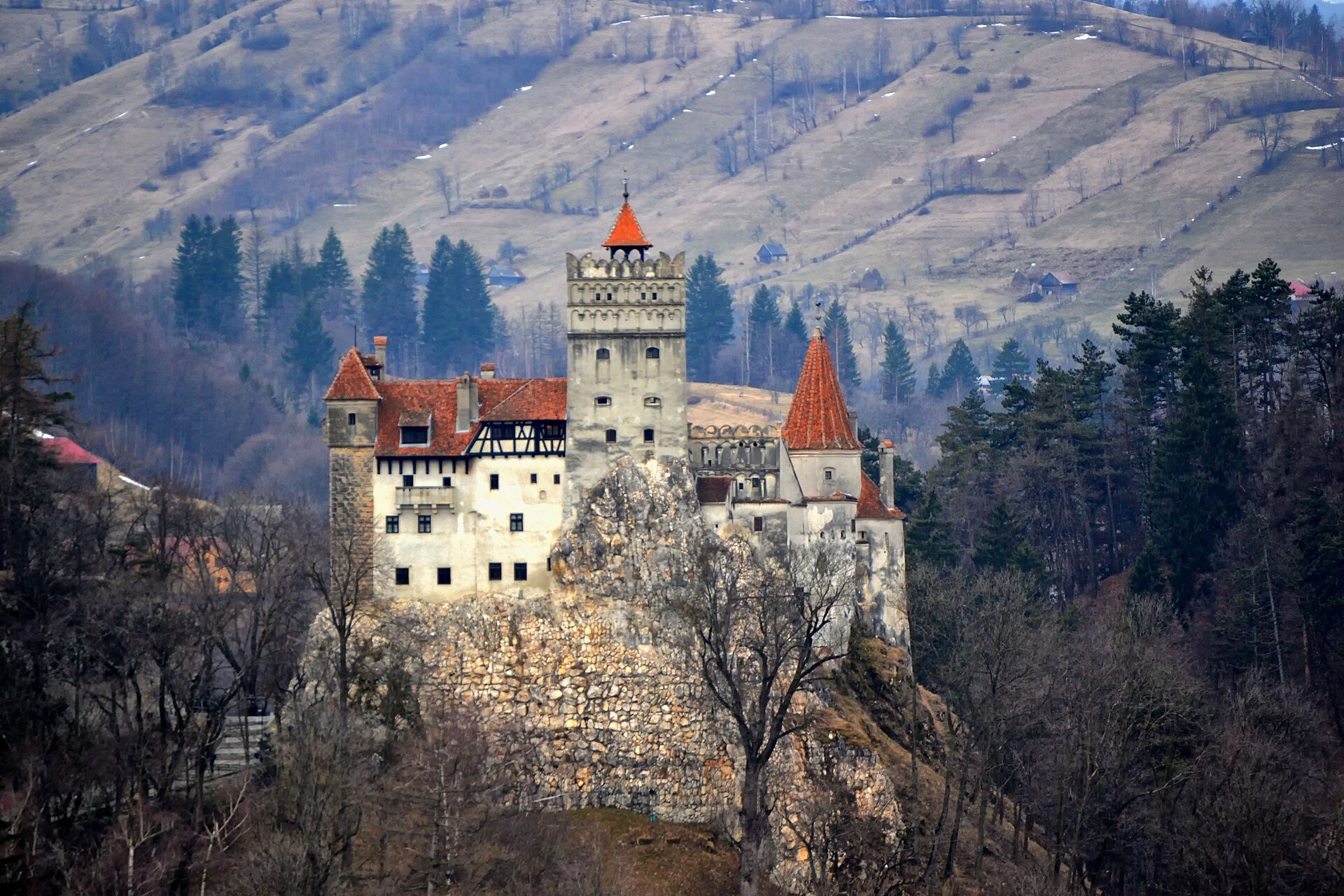
No castle on earth carries a heavier freight of legend than this one. Perched on a rocky bluff above a mountain pass in Transylvania, its pale walls and red roofs rising out of the forest, Bran Castle is known to millions around the world by another name entirely: Dracula’s Castle. It is one of the most famous castles on the planet, a place of pilgrimage for lovers of the gothic and the ghostly, drawn by the dark magnetism of the vampire count.
And yet the truth of Bran is stranger and, in its way, richer than the legend. The connection to Bram Stoker’s Dracula is tenuous at best, and the link to the historical Vlad the Impaler thinner still, but the real history of the castle, as a frontier fortress, a customs post and, most beautifully, the beloved home of a Romanian queen, is a wonderful story in its own right, too often overshadowed by the myth of the vampire.
So let us climb the rock and separate the legend from the life. We will explore the real medieval fortress guarding its mountain pass, weigh its shadowy links to vampires and impaling princes, and discover the gentler, truer story of Queen Marie of Romania, who turned this grim border castle into a fairy-tale royal retreat. Bran is a place where history and legend are braided together so tightly that pulling them apart becomes half the pleasure.
In This Article
- The Castle the World Calls Dracula’s
- A Fortress to Guard a Mountain Pass
- The Impaler and the Thin Thread of Truth
- How a Novel Made a Castle Famous
- A Warren of Courts and Corners
- The Well and Its Secret
- Narrow Stairs and Hidden Ways
- Centuries on the Frontier
- The Queen Who Fell in Love With Bran
- A Royal Home in the Mountains
- Selling the Vampire
- The Castle Comes Alive at Night
- Two Castles on One Rock
The Castle the World Calls Dracula’s
There is no point pretending otherwise: most people come to Bran because of Dracula. The castle has been marketed, imagined and beloved for generations as the lair of Bram Stoker’s immortal vampire count, and its silhouette, all steep roofs and turrets rising from a wooded crag in Transylvania, matches so perfectly the gothic castle of the imagination that the association feels almost inevitable. Bran looks exactly like where Dracula ought to live.
The setting does much of the work. Transylvania itself, that mountainous heart of Romania ringed by the Carpathians, has become in the popular mind a byword for the eerie and the supernatural, a land of dark forests, howling wolves and old superstitions. A castle here, on a lonely rock above a misty pass, cannot help but summon thoughts of the vampire, and Bran leans into that atmosphere with theatrical relish.
But the honest visitor soon discovers that the Dracula connection is largely a modern overlay, a marketing triumph built on the flimsiest of historical threads. The real Bran is something else, older, gentler and in many ways more interesting: a genuine medieval frontier fortress with a long and colourful history that has nothing to do with vampires and everything to do with trade, war and, eventually, a queen who loved it.
So we will honour the legend, because it is half the fun, but we will also look past it to the truth. If you want to find this famous rock before you visit, here are the coordinates for the castle above its Transylvanian pass. Drop a pin, and prepare to separate the vampire from the very real history.
A Fortress to Guard a Mountain Pass
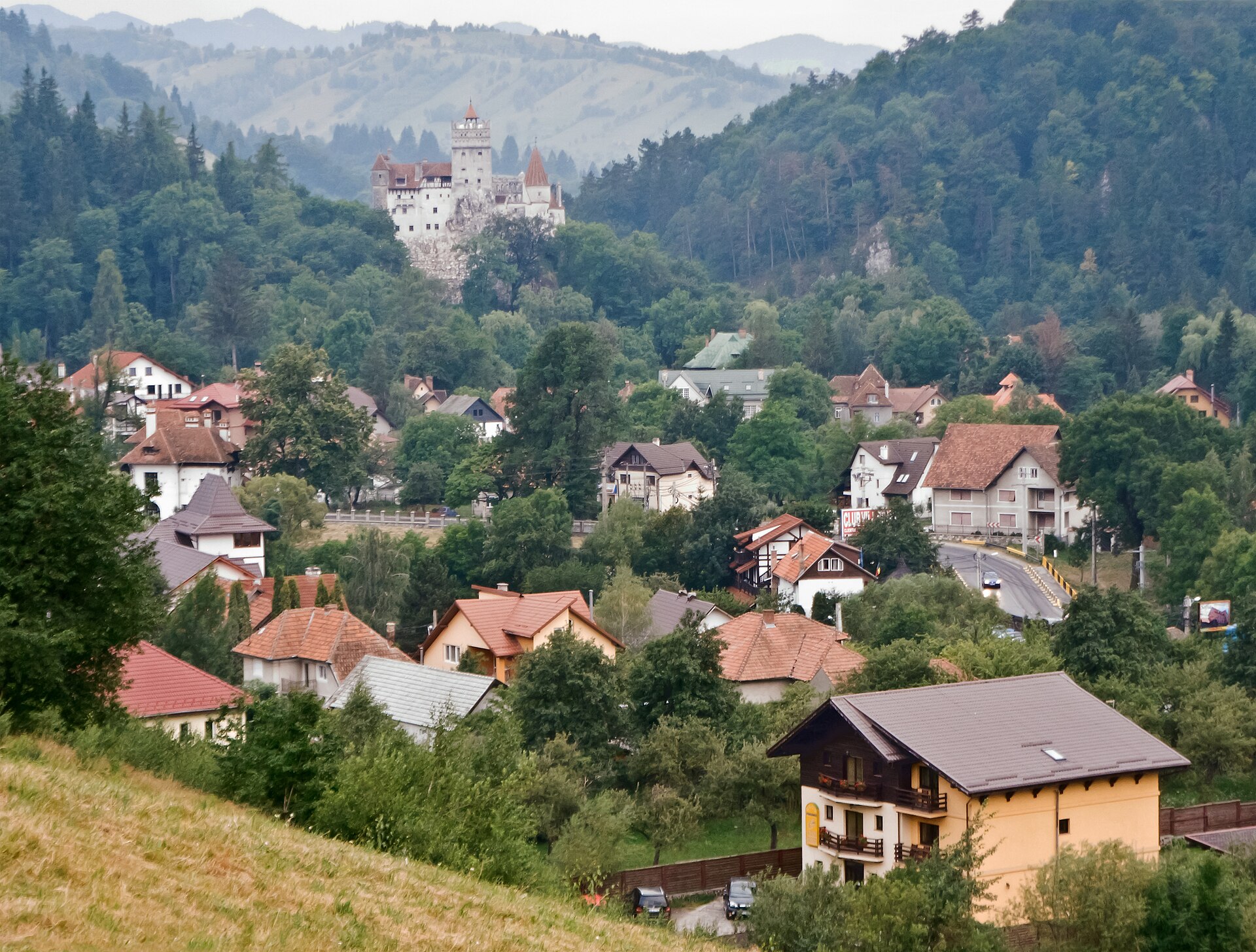
The real reason Bran exists has nothing to do with the supernatural and everything to do with geography. The castle stands guard over a strategic mountain pass, the Bran Gorge, that cuts through the Carpathians between the region of Transylvania and the plains of Wallachia to the south. Whoever held this pass controlled a vital route for trade and armies alike, and that is why a fortress was raised here.
The story begins in the early thirteenth century, when the Teutonic Knights, the crusading military order, are associated with an early fortification in the area. But the castle we know today was built in stone from 1377, when King Louis I of Hungary granted the Saxon townsmen of nearby Kronstadt, modern Brașov, the right to construct a fortress here at their own expense, to defend the frontier and control the pass.
For centuries thereafter, Bran functioned above all as a customs post and a border stronghold. Merchants passing through the mountains between Transylvania and Wallachia had to stop here and pay their dues, and the castle grew rich and important as a toll station on a busy trade route. Its role was commercial and military, a gatekeeper of the mountains, taxing the goods and watching for the armies that came through the pass.
This is the true foundation of Bran: not a vampire’s lair but a hardheaded piece of frontier infrastructure, built by prosperous Saxon burghers to protect their trade and their territory. The romance of Dracula came centuries later, but the castle’s real medieval life was one of tolls and tariffs, guards and garrisons, the unglamorous but vital business of controlling a crucial road through the mountains.
The Saxons who built Bran were part of a wider community of German colonists who had been invited into Transylvania centuries earlier and who founded prosperous fortified towns across the region. Their fortress-building skill is visible throughout Transylvania in the famous fortified churches, and Bran belongs firmly to that hard-headed, well-organized frontier culture rather than to any world of dark legend.
The Impaler and the Thin Thread of Truth
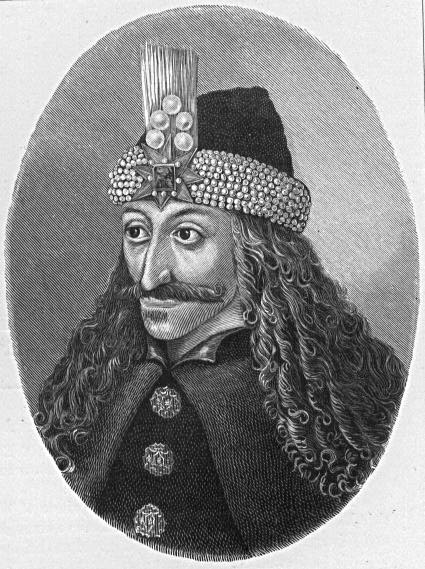
To understand the Dracula myth we have to meet the man behind it: Vlad III, prince of Wallachia, known to history as Vlad the Impaler and, from his father’s membership of the Order of the Dragon, as Vlad Dracula. He was a real and formidable fifteenth-century ruler, famous, or infamous, for the extreme cruelty with which he punished his enemies, above all by impalement, and for his fierce resistance to the Ottoman Turks.
Vlad was, by the standards of any age, a terrifying figure, and the tales of his atrocities spread across Europe in his own lifetime. It was his byname, Dracula, and his fearsome reputation that the Irish writer Bram Stoker borrowed centuries later for his fictional vampire, though Stoker took little else from the real prince and never set foot in Transylvania himself. The literary count and the historical warlord share a name and little more.
And here is the awkward truth for the legend: Vlad the Impaler’s connection to Bran Castle specifically is extremely thin. There is no good evidence that he ever ruled from Bran or was imprisoned here for any significant time, and the castle played no important part in his life. The idea that Bran was Vlad’s stronghold, or the model for Dracula’s castle, is essentially a modern invention, however commercially successful.
None of this makes Vlad any less fascinating, but it does mean that standing at Bran and imagining the Impaler stalking its halls is, historically speaking, a fantasy. The real Vlad ruled elsewhere, and the real Bran taxed merchants and guarded a pass. The vampire, the warlord and the castle were only bound together long afterward, by a novelist’s imagination and a tourist industry’s genius.
It is one of history’s great ironies that Vlad, who spent his life fighting to defend his land against invaders, is remembered chiefly as a fictional monster who never existed, while his genuine and consequential career as a ruler is largely forgotten. The legend has almost entirely swallowed the man, and Bran has been caught up in that strange act of historical erasure.
How a Novel Made a Castle Famous
If Vlad barely touched Bran, how did the castle become Dracula’s? The answer lies in a chain of associations that grew long after the novel was written. Bram Stoker published Dracula in 1897, setting his vampire count in a nameless castle in the Transylvanian mountains, described only from books and maps the author consulted from afar. Stoker never visited Romania, and never named Bran.
But when tourists, inspired by the novel and its countless film adaptations, began seeking out Dracula’s castle in the twentieth century, they needed a real building to visit, and Bran fit the bill almost too perfectly. Its dramatic setting on a crag, its gothic silhouette, its location in Transylvania and its vague resemblance to Stoker’s descriptions made it the obvious candidate, and the identification, once made, proved unstoppable.
So Bran became Dracula’s Castle by a kind of popular acclamation, a role it was handed by tourists and travel writers rather than by history. The Romanian tourism industry, sensibly, embraced the association, and today the castle wears its vampire fame openly, with gift shops and Halloween events playing gleefully on the legend. The myth has become part of the castle’s identity, whatever the historians say.
There is no shame in this. Bran is far from the only place to be adopted by a famous story, and the Dracula connection has brought the castle worldwide fame and the resources to preserve it. The trick, for the thoughtful visitor, is to enjoy the gothic thrill while remembering that it is a modern layer laid over a much older and quite different reality. This short tour lets you wander the famous halls for yourself.

A Warren of Courts and Corners
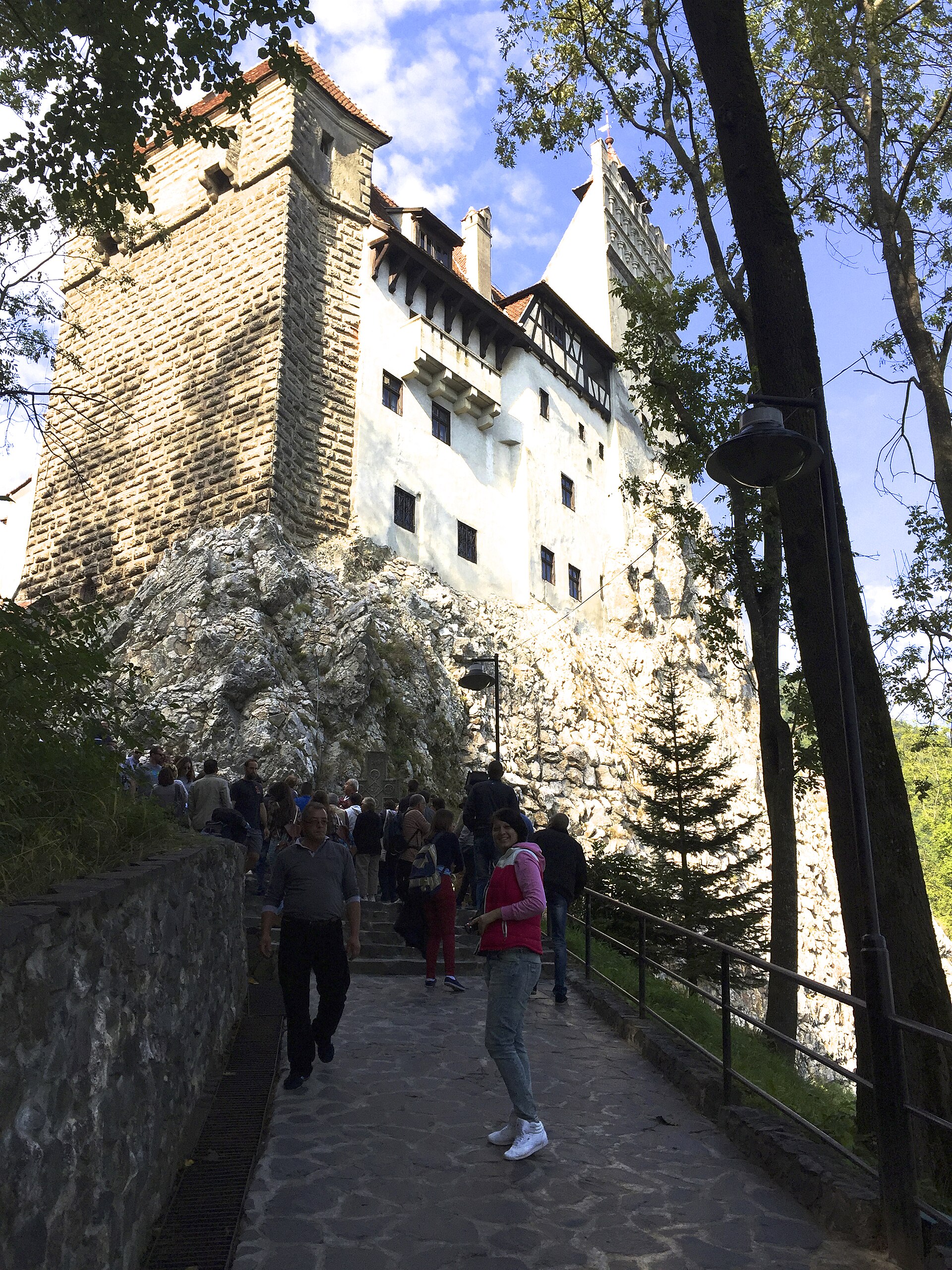
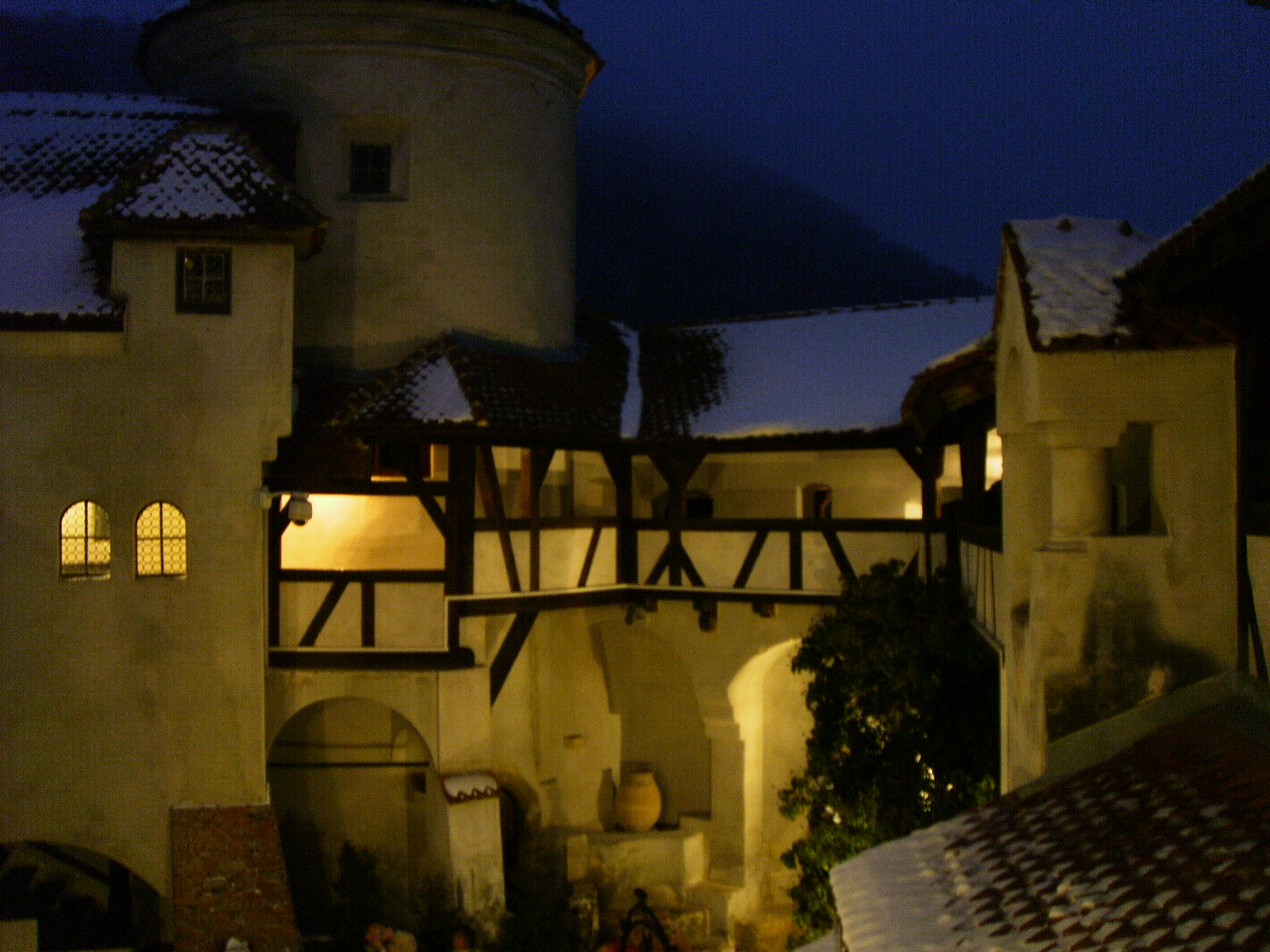
Climb up into Bran and the first thing that strikes you is how compact and irregular it is. Unlike the vast sprawling ruins of some castles, Bran is a tight, tall, intricate structure fitted onto its narrow crag, and its small inner courtyard is ringed by towers, wooden balconies and ranges of rooms stacked at every level. It is a warren, a place of unexpected corners and sudden changes of level.
This irregularity is a direct result of the site. Because the castle had to fit the shape of the rock it stands on, its builders could not lay out a neat symmetrical plan, and instead the rooms and passages twist and climb to follow the stone. The result is a building of great charm and atmosphere, where every turn brings a new view, a hidden stair or a balcony looking out over the forested hills.
The compactness also reflects the castle’s function. Bran was never a great palace or a mighty royal fortress but a relatively modest border stronghold and customs post, and its size matched its purpose. It needed to house a garrison, control the pass and shelter its defenders, not to overawe with sheer scale, and its intimate dimensions give it a very different feel from the grander castles of the region.
Wandering the courtyard and the rooms that open off it, you feel the human scale of the place, the sense of a real working castle rather than a monument. It is easy to imagine the guards, merchants and officials who once filled these tight spaces, and the very irregularity that makes Bran so atmospheric for the modern visitor is a faithful record of how a real frontier fortress had to adapt itself to a difficult and dramatic site.
The Well and Its Secret
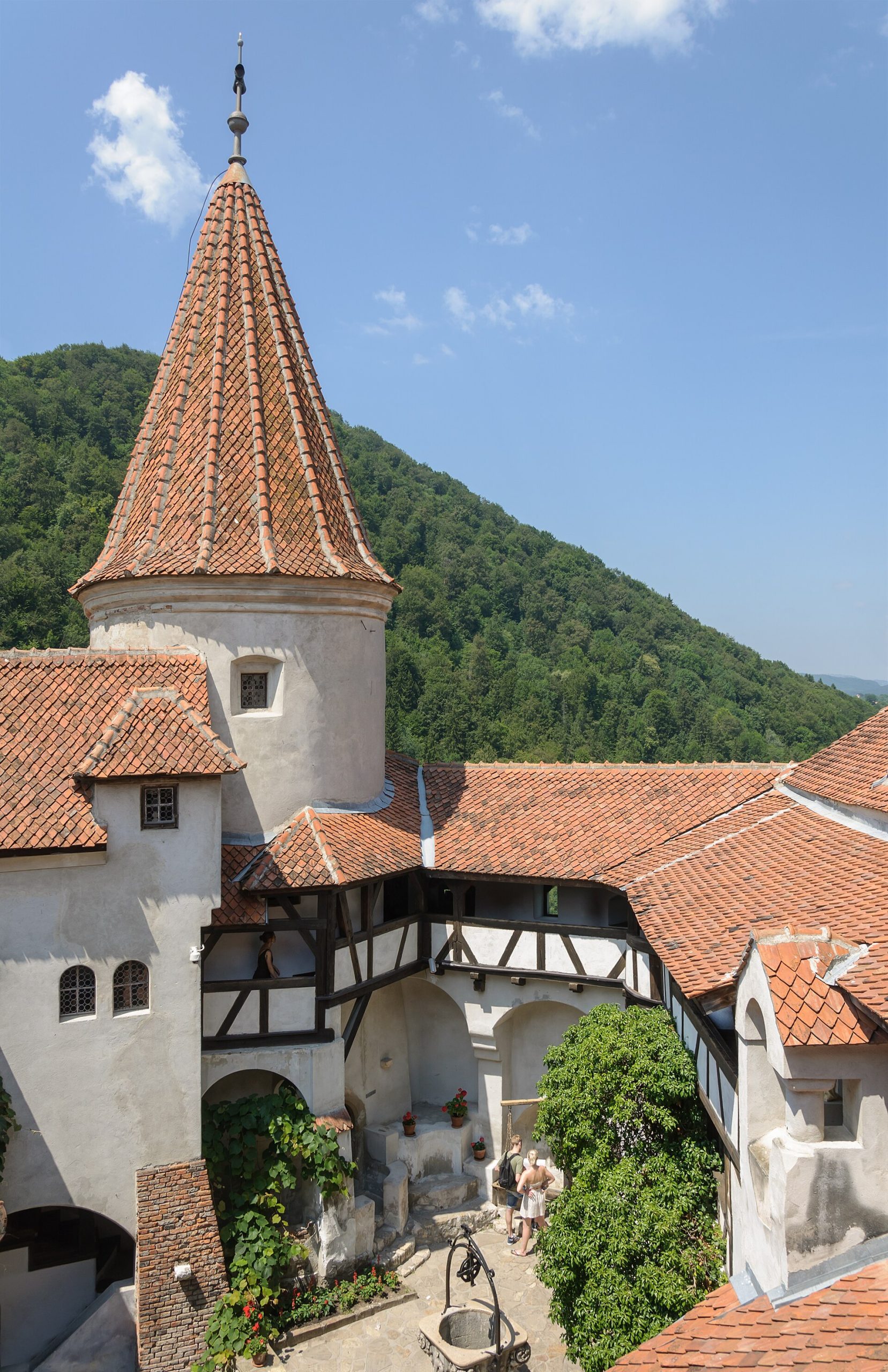
Every atmospheric castle needs a mysterious well, and Bran obliges. In the courtyard, a deep shaft descends into the rock, and around it have gathered the inevitable legends of secret passages, hidden chambers and buried treasure, the kind of stories that cling to any old fortress with a dark hole in its heart. Whether the well ever concealed anything more than water is a matter for the imagination.
In fact the well and the rock beneath the castle did later gain a genuine secret of sorts. In the twentieth century, during the castle’s royal period, a lift was installed in the well shaft, connecting the castle above to the park below, a very practical piece of modernization dressed up, inevitably, in tales of hidden passages. The romance of the secret tunnel and the reality of a convenient elevator sit side by side at Bran.
This blending of legend and practicality is characteristic of the whole castle. Bran is a place where genuine history, everyday function and layers of story have become so entangled that visitors, and even guides, cannot always tell them apart, and honestly the confusion is part of the charm. The well is real, the lift is real, and the legends are real as legends, all coexisting in the same dark shaft.
So peer down the well if you visit, and enjoy the shiver of the stories, but remember that the truth is often stranger and more human than the legend. A medieval water source became a modern elevator wrapped in tales of secret passages, and that odd, layered history is far more characteristic of the real Bran than any vampire ever could be.
Narrow Stairs and Hidden Ways
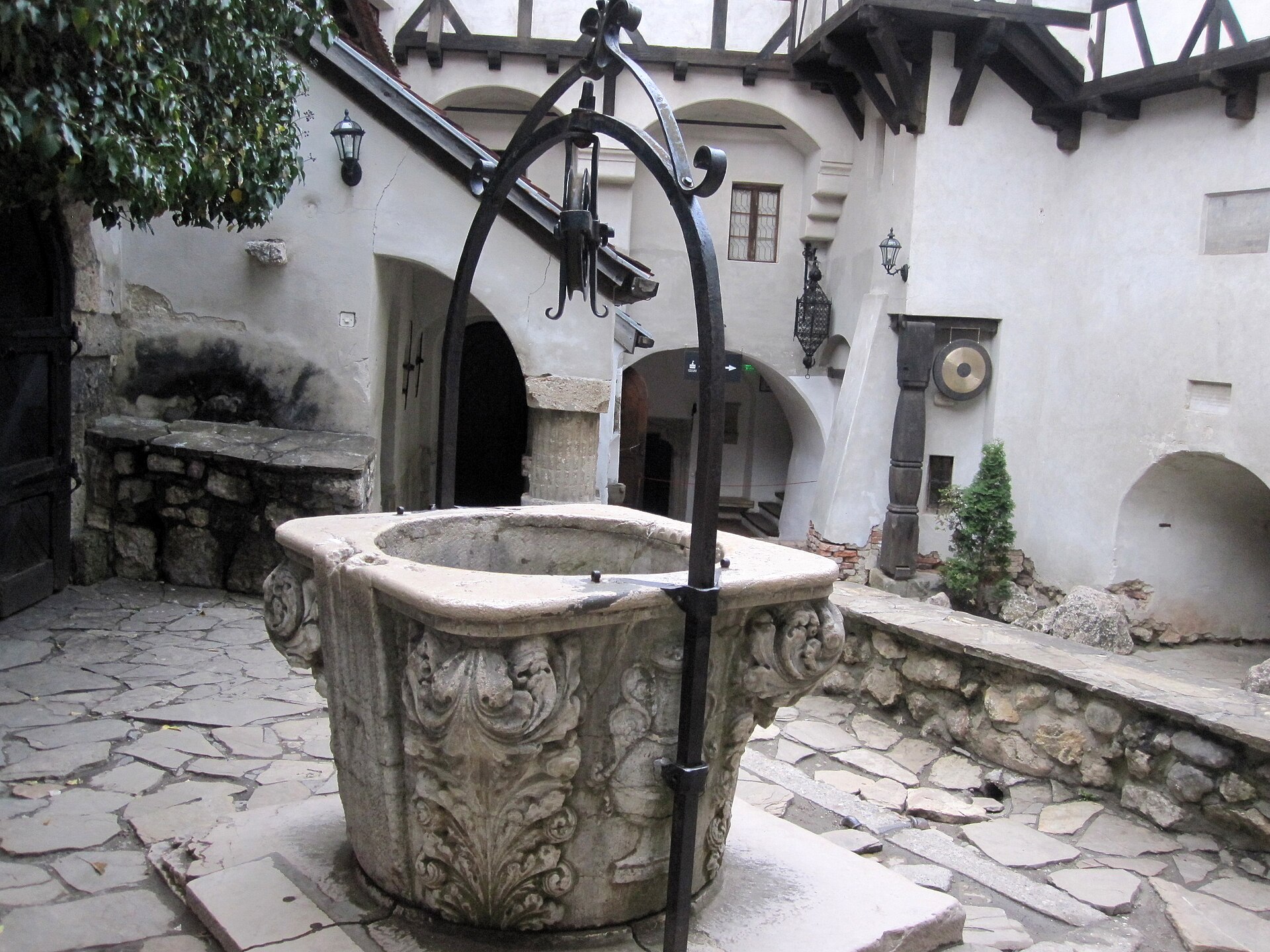
Part of Bran’s gothic appeal lies in the way you move through it, up steep and narrow staircases that thread between its stacked levels, along tight passages and through low doorways, always climbing and turning. The castle’s vertical, cramped interior gives every visit a sense of adventure, of penetrating deeper and higher into a mysterious structure, and it is easy to see why the place feeds the imagination.
Among its features is a genuine hidden staircase, a secret passage concealed within the walls that connects different floors of the castle. Such devices were practical in origin, allowing discreet movement or escape, but they are exactly the kind of detail that fuels the legend, and the secret stair is a favourite with visitors thrilled to walk a real hidden passage in a castle famous for its mysteries.
The whole interior has this quality of concealment and surprise, of a building that does not reveal itself all at once but unfolds through a sequence of small, atmospheric spaces. In a large, open castle you always know roughly where you are; in Bran you are pleasantly lost, climbing between levels, discovering rooms and passages that seem to have been fitted into the rock wherever there was space.
This labyrinthine quality is the accidental gift of a castle built on a difficult site for a practical purpose, but it happens to be perfect for a place of legend. The narrow stairs and hidden ways of Bran would delight any lover of gothic fiction, and whether or not a vampire ever climbed them, they give the modern visitor exactly the shivery, exploratory thrill that the castle’s fame promises.
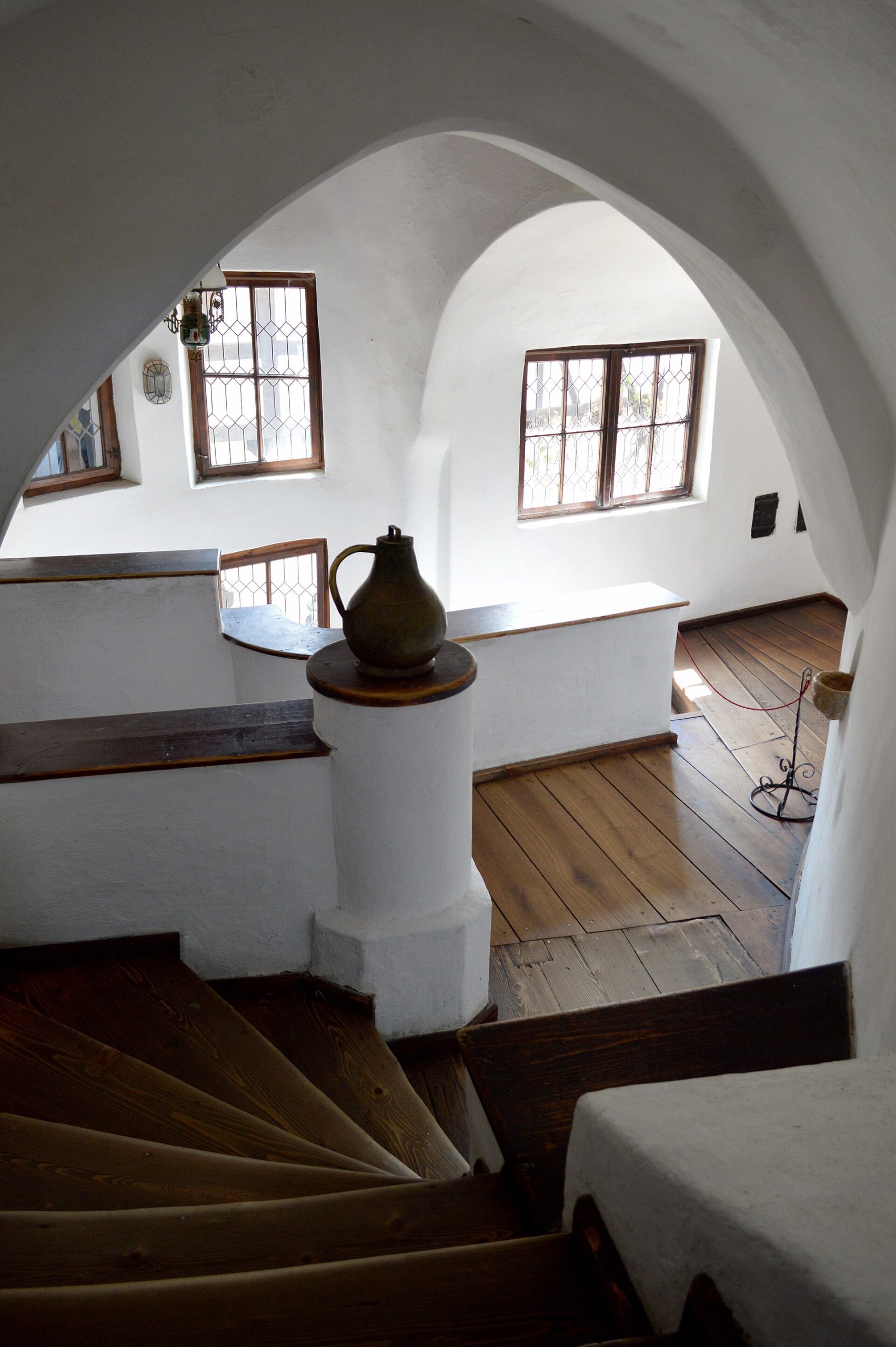
The castle’s vertical plan means that a visit is genuinely a climb, rewarding those who make the effort with ever-better views from its upper balconies and terraces out over the village, the pass and the wooded slopes of the Carpathians beyond. The higher you go, the more the real landscape that shaped the fortress reveals itself.
Centuries on the Frontier
Before it was a royal home or a vampire attraction, Bran spent centuries doing the hard, practical work of a frontier fortress. Through the late medieval and early modern periods it changed hands and roles, held at various times by the Hungarian crown, the princes of Transylvania and the city of Brașov, always guarding the pass and levying tolls, always watching the contested mountain border.
The castle saw real military action too. Perched on its strategic pass, it was involved in the endless struggles that convulsed this frontier region, where the interests of Hungary, the independent-minded princes of Transylvania and the expanding Ottoman Empire collided. Bran was garrisoned, besieged and fought over as the fortunes of these powers ebbed and flowed across the mountains.
For much of the early modern period the castle belonged to the Saxon city of Brașov, whose merchants had built it and who valued it as the guardian of their trade route. Under their stewardship Bran continued its customs work, a reliable source of revenue and a bulwark of the city’s interests, its military importance gradually declining as borders shifted and the Ottoman threat receded.
By the nineteenth century, with the pass no longer a vital military frontier, Bran had lost much of its old strategic purpose and fell into a quieter existence. It might have declined into a picturesque ruin like so many other border castles, its long working life as a customs post and stronghold simply fading away, had history not handed it, in the twentieth century, an unexpected and delightful new role.
The Queen Who Fell in Love With Bran
The most charming chapter in Bran’s history began in 1920, when the people of Brașov gave the old castle as a gift to Queen Marie of Romania, the beloved and charismatic consort of King Ferdinand. Marie, a granddaughter of Queen Victoria and a woman of great taste and energy, fell deeply in love with Bran and set about transforming the grim border fortress into a comfortable and elegant royal retreat.
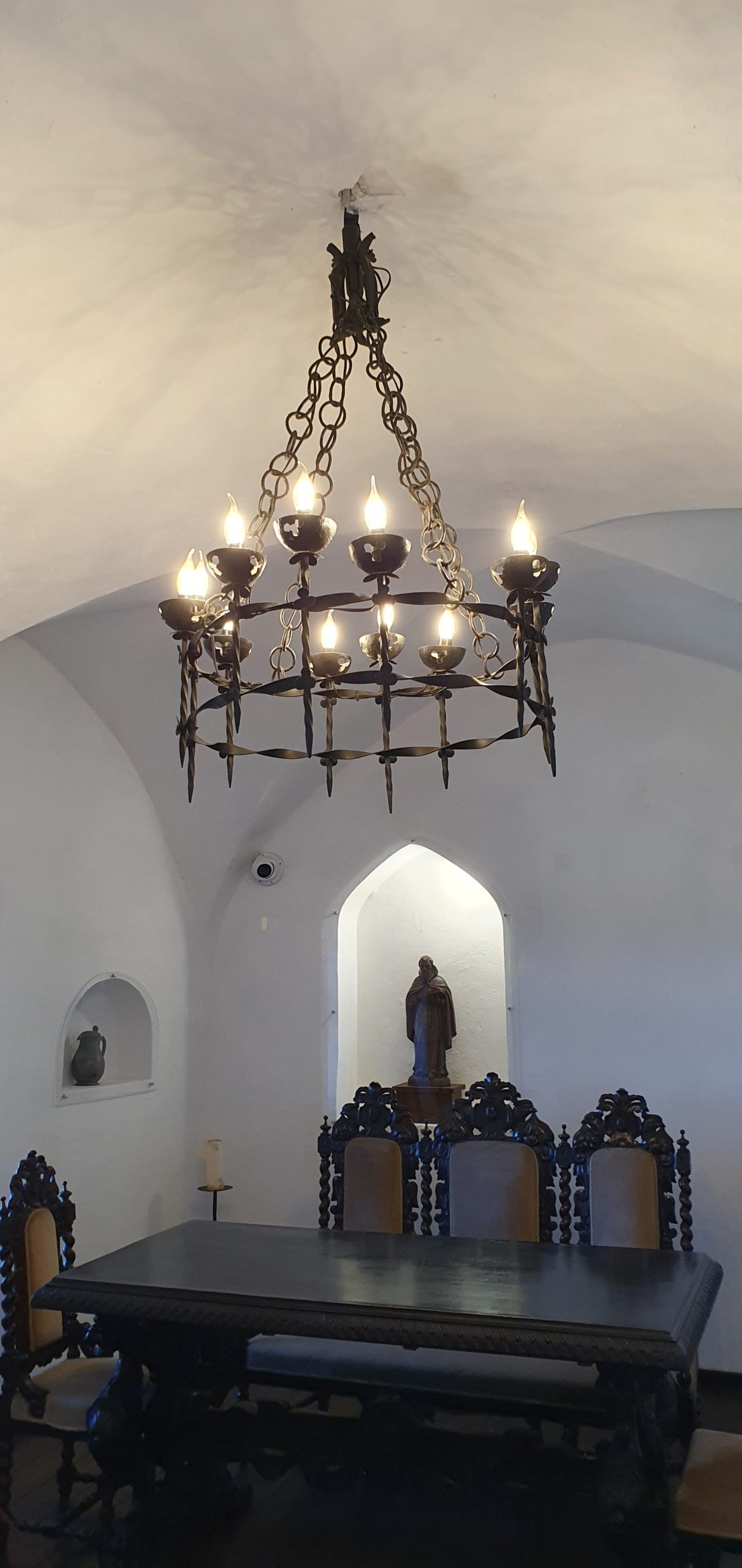
Under her direction, the castle was sympathetically restored and modernized, its rooms furnished with a warm mixture of antique furniture, folk art and personal treasures, its comforts improved with the discreet installation of modern conveniences. Marie had a real gift for creating atmosphere, and she turned the tight, austere spaces of the medieval fortress into intimate, characterful rooms full of light and life.
For Marie, Bran was not a state palace but a personal sanctuary, a place she genuinely loved and where she spent happy times. Her affection for the castle was profound; so much so that, after her death, her heart was, according to her wishes, placed in a small chapel near the castle, a poignant testament to how deeply this romantic queen was bound to the fortress on the rock.
It is Marie’s Bran, far more than Dracula’s, that visitors actually walk through today. The interiors you admire, the furnishings, the atmosphere of a lived-in and loved home, are largely her creation, the fruit of one remarkable woman’s affection for an old castle. The vampire may draw the crowds, but it is the queen who gives the interior of Bran its real warmth and soul.

Marie was one of the most remarkable royal women of her age, a writer, a nurse in the First World War, and a skilled diplomat who helped secure Romania’s interests at the Paris peace talks. That such a formidable and cultured figure chose Bran as her personal refuge tells you a great deal about the castle’s romantic charm, quite apart from any vampire.
A Royal Home in the Mountains
Under Queen Marie and the Romanian royal family, Bran enjoyed its golden age as a private home. The castle became a favourite summer retreat, where the queen and later her daughter, Princess Ileana, spent time away from the formality of court, enjoying the mountain air, the gardens laid out below the castle and the peace of the Transylvanian countryside.
Princess Ileana, who inherited Marie’s love of the castle, continued to care for Bran and even used it to house a hospital during the Second World War, tending the wounded in the shadow of the ancient walls. The royal family’s connection to Bran was warm and genuine, and for a few decades the old customs fortress knew a happiness and domesticity it had never experienced in all its centuries as a border stronghold.
That royal idyll ended abruptly when the communist regime took power in Romania after the war, seizing the castle from the royal family, who were forced into exile, and turning it into a state museum. For decades Bran belonged to the communist state, its royal owners dispossessed, its rooms opened to the public but its family story suppressed beneath the growing legend of Dracula.
After the fall of communism, in a remarkable act of restitution, the castle was eventually returned to the heirs of the royal family, the descendants of Princess Ileana, who now run it as a private museum open to the public. So Bran has come full circle, from royal gift to communist confiscation and back to the family that loved it, its true history as a cherished home reasserting itself alongside the vampire fame.

The story of Bran’s confiscation and return mirrors the larger tragedy and recovery of Romania itself in the twentieth century, from monarchy through dictatorship to democracy. In that sense the castle is not just a home but a witness, its changing ownership tracing the fate of a whole nation across a turbulent century.
Selling the Vampire
There is no denying that the Dracula legend, however inaccurate, is the engine of Bran’s modern fame and fortune. Millions of visitors come each year, many of them drawn primarily by the promise of Dracula’s Castle, and the surrounding village has grown a thriving industry of stalls and shops selling vampire kitsch, from plastic fangs to garlic garlands to lurid souvenirs of the count.
Some purists find this commercialization regrettable, a cheapening of a genuine historical monument by a myth that barely touches it. And there is a real tension between the serious history of Bran, its Saxon builders, its royal queen, and the carnival of vampire tourism that surrounds it. The castle sometimes seems to be two places at once, a real historic house and a gothic theme park, uneasily sharing the same rock.
Yet the pragmatic view is that the legend has been the castle’s salvation. The fame and revenue brought by Dracula have funded Bran’s preservation and made it one of the most visited attractions in Romania, sustaining the very history that the myth overshadows. Without the vampire, Bran might be just another obscure border fortress; with him, it is world-famous and well cared for.
The best approach, perhaps, is to enjoy both Brans at once, to savour the gothic thrill and the vampire fun while also seeking out the deeper truths of the customs post and the queen. The legend and the history need not be enemies, and a visitor who holds both in mind gets the richest possible experience, the shiver of the myth and the satisfaction of the real story underneath.
Travel writers sometimes advise disappointed visitors to look beyond the souvenir stalls and give the real castle a chance, and the advice is sound. Those who arrive expecting a horror show and instead take the time to learn about the queen and the customs post often leave saying that the true Bran exceeded the legend they came for.
The Castle Comes Alive at Night
If Bran belongs to the queen by day, it belongs to Dracula by night. After dark, floodlit against the mountain sky, its steep roofs and turrets throwing dramatic shadows, the castle becomes fully the gothic apparition of legend, and it is at night that its vampire fame feels most deserved. This is when the imagination takes over and the count seems to stir in the shadows.
The castle has embraced this nocturnal identity with gusto, hosting atmospheric events, especially around Halloween, when Bran becomes the epicentre of vampire celebration. There have been famous themed parties and even, on occasion, the chance to spend the night in the castle, sleeping in a coffin, marketing stunts that play knowingly on the Dracula myth and delight the legions of fans who make the pilgrimage.
These events are pure theatre, of course, and everyone involved knows it, but they tap into something real, the enduring human appetite for the thrill of the gothic, the pleasure of a good scare in an atmospheric setting. Bran provides the perfect stage, a real medieval castle in a real Transylvanian landscape, and the fun is all the better for the genuine history beneath the fake fangs.
Whether lit for a Halloween party or simply glowing against the night, Bran after dark is an unforgettable sight, and it explains, better than any argument, why the Dracula legend attached itself here and nowhere else. Some places simply look the part, and Bran, on its crag in the Carpathian night, looks the part of the vampire’s castle so perfectly that the world was never going to let it be anything else.
There is a curious harmony in the fact that a castle built to guard against very real dangers, brigands, armies, the Ottoman advance, should end up famous for an imaginary one. The fears have changed from the historical to the supernatural, but the castle still answers a deep human need to give our anxieties a shape and a setting, and Bran obliges perfectly.
Two Castles on One Rock
In the end, Bran is really two castles sharing a single rock. There is the historical Bran, the Saxon-built customs fortress guarding its mountain pass, fought over by kings and princes, and then lovingly transformed into a royal home by a queen who left her heart nearby. And there is the legendary Bran, Dracula’s Castle, home of the imagination’s most famous vampire, a place of gothic thrills and Halloween theatre.
Both are real in their way, and both are worth your time. The thoughtful visitor comes for one and discovers the other, arriving perhaps for the vampire and leaving enchanted by the queen, or coming for the history and enjoying, despite themselves, the shiver of the legend. Bran rewards curiosity, and the more you learn about its true past, the more interesting its famous myth becomes.
Today the castle is one of the most visited attractions in all of Romania, run as a private museum by the royal heirs and drawing pilgrims from every corner of the world. It has survived its centuries as a fortress, its royal idyll, its communist confiscation and its transformation into a global icon, and it wears all these histories at once, layered like the rooms stacked up its rock.
So climb the crag, walk the narrow stairs, peer down the well and through the queen’s windows at the Carpathian hills, and let both castles work on you. Bran is proof that a place can be famous for the wrong reasons and still be wonderful for the right ones, and that sometimes the truest way to enjoy a legend is to discover the even better history hiding just behind it.
For all the debate about myth and history, most visitors leave Bran simply happy, having climbed a beautiful castle in a beautiful setting and touched, however lightly, several fascinating stories at once. Perhaps that is the truest measure of the place: not whether Dracula was here, but whether it rewards the journey, and it does.
Castles Nearby
- Bojnice Castle: The Fairy-Tale Dream a Count Built in Stone
- Spis Castle: The Vast White Ruin That Crowns a Slovak Hill
Why the World Still Climbs to Dracula’s Castle
Few castles have been so thoroughly claimed by a story that was never really theirs, and few have hidden so rich a true history behind that borrowed fame. Bran is Dracula’s Castle to the world, and it always will be, but the traveller who looks past the fangs and the gift shops finds something far more moving: a real frontier fortress, a queen’s beloved home, a place layered with genuine centuries of Transylvanian life.
That doubleness is Bran’s gift. You can enjoy the shiver of the legend and the warmth of the history in the same visit, climbing the same narrow stairs that thrill the vampire fans and admiring the same rooms a real queen made her own. The myth and the truth do not cancel each other out; they enrich each other, and Bran is more fascinating for carrying both.
So go to Transylvania and climb the famous rock. Enjoy the gothic thrill, by all means, but seek out Queen Marie’s windows and the Saxon merchants’ walls and the customs post’s long vigil over the pass. Bran Castle is proof that the truth behind a great legend can be every bit as captivating as the legend itself, and that the best way to honour Dracula’s Castle is to discover the real one underneath.
You May Like
Mafra, the Palace a King Built From a Vow


One thought on “Bran Castle: The Real History Behind Dracula’s Fortress”