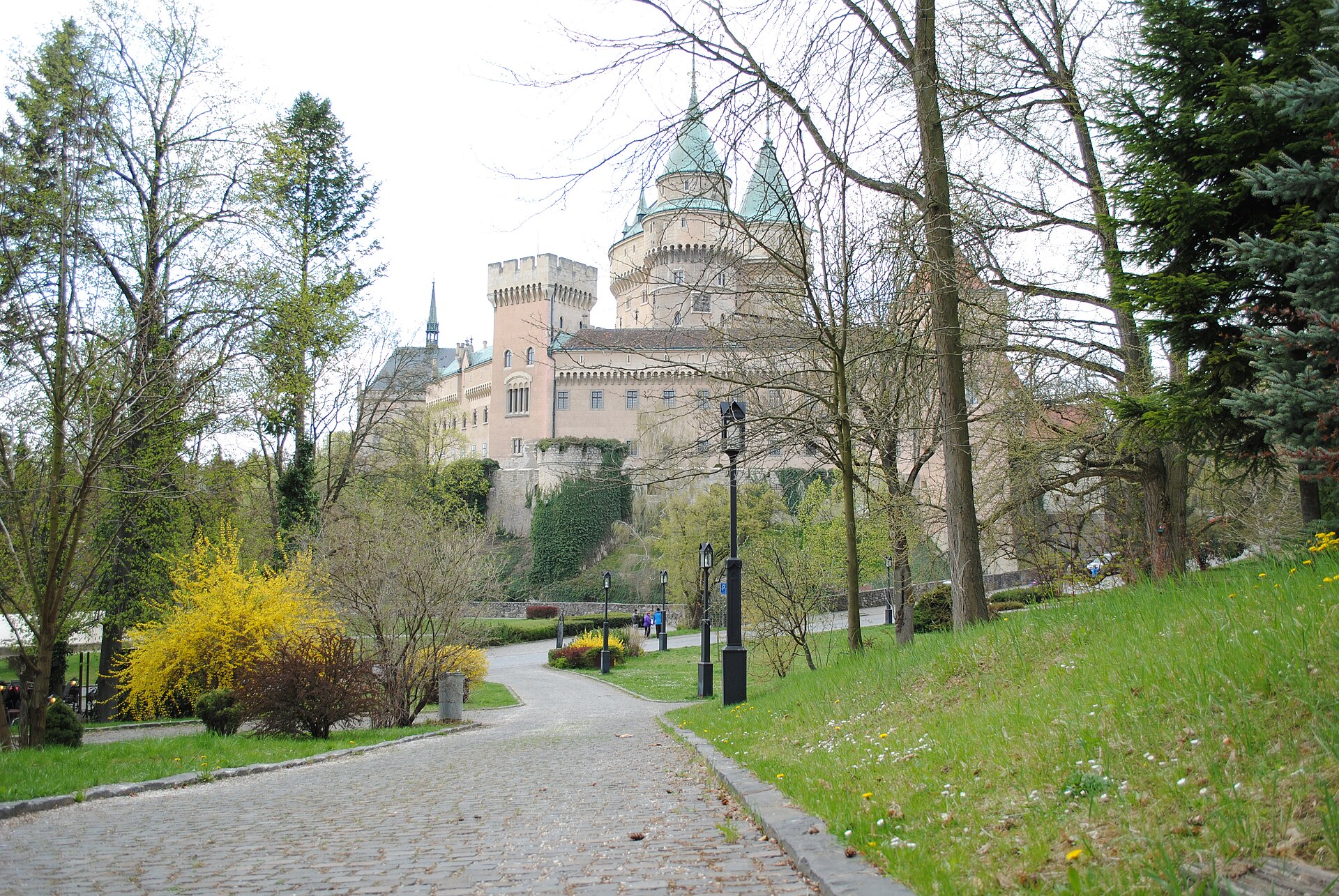
If you asked Slovaks to name their most beautiful castle, a great many would answer without hesitation: Bojnice. Rising above a leafy park in the country’s west, all pale walls, pointed turrets and steep romantic roofs, it looks exactly like the castle of a fairy tale, the kind of place a child would draw if you asked them to imagine a princess’s home. It is, by a wide margin, the most visited castle in Slovakia, and once you see it you understand why.
But Bojnice hides a secret behind its storybook face. The dreamlike Romantic castle you see today, so obviously inspired by the great châteaux of the French Loire, is largely the creation of a single obsessed nobleman at the turn of the twentieth century, who rebuilt an older, plainer fortress into the vision of the Middle Ages he carried in his imagination. Bojnice is medieval to its bones, but the beautiful skin it wears is a romantic dream.
That tension, between the real old castle underneath and the idealized fantasy laid over it, is what makes Bojnice so fascinating. Come with me into the park and up to the gates, and let us explore both the ancient fortress and the passionate count who transformed it, along with the golden halls, the underground cave, the ghost festival and the art treasures that make this the most beloved castle in the land.

In This Article
- A Fairy Tale Above a Spa Town
- Nine Centuries of Older Castles
- The Count Who Dreamed a Castle
- Turrets Borrowed From the Loire
- Courtyards and a Very Deep Well
- The Glow of the Golden Hall
- Grand Rooms and a Collector’s Treasures
- A Medieval Masterpiece on the Walls
- The Cave Beneath the Castle
- The Whole Romance From Above
- A Park, a Zoo and an Ancient Linden
- Ghosts, Films and the Most Visited Castle
- The Count’s Enduring Dream
A Fairy Tale Above a Spa Town
Bojnice sits in the gentle hills of western Slovakia, in the Upper Nitra region, rising above a small and famous spa town of the same name. The setting could hardly be more charming: below the castle spread landscaped parks and gardens, the streets of a resort town known for its healing thermal springs, and beyond them the wooded hills roll away into the distance. It is a soft, green, welcoming landscape, and the castle crowns it like an ornament.
The town has been a spa destination for centuries, its warm mineral waters drawing visitors seeking rest and cure, and this gentle, leisured atmosphere still colours the whole place. Bojnice is not a grim frontier stronghold in a harsh landscape but a castle of pleasure and beauty set in a park, a place people come to enjoy rather than to fear, and that has shaped its character profoundly.
The castle stands on a travertine hill, formed over ages by the same mineral-rich waters that feed the spa, and this geological quirk gives Bojnice one of its strangest features, a natural cave in the rock beneath the castle, of which more later. For now, simply picture the scene: the pale romantic castle on its hill, the spa town at its feet, the park all around, a composition of almost theatrical prettiness.
If you want to find this lovely spot before you visit, here are the coordinates for the castle above the spa town. Zoom in and you will see the parkland wrapping around the hill, the resort streets nearby, and the unmistakable turreted silhouette of the most beautiful castle in Slovakia.
Nine Centuries of Older Castles
Long before its romantic makeover, Bojnice was a real and ancient fortress. The first castle on the hill is recorded as far back as the eleventh century, when it was a wooden stronghold, and it was gradually rebuilt in stone over the following centuries as it passed through the hands of powerful owners. Beneath the fairy-tale surface, in other words, lies a genuine medieval castle with a history nearly a thousand years long.
Among its most notable early associates was Matthias Corvinus, the great Renaissance king of Hungary, who held Bojnice in the fifteenth century and favoured the castle, reportedly enjoying its pleasant setting and, by tradition, dictating some of his correspondence beneath a great linden tree in the grounds that still bears his name. To have been a haunt of one of the most celebrated kings of Central Europe is no small distinction.
Later the castle came to the Thurzó family, wealthy magnates who rebuilt it substantially in the Renaissance style, and later still, in the seventeenth century, to the Pálffy family, who would own it for generations and, ultimately, transform it utterly. Through all these hands Bojnice remained a working noble residence and stronghold, accumulating the layers of history that its final owner would build upon.
So it is important, faced with the dreamy Romantic castle of today, to hold on to this deeper truth: Bojnice is not a nineteenth-century folly built from nothing, but a real medieval and Renaissance fortress with genuine ancient bones. The romantic reconstruction did not invent the castle; it reimagined and reclothed one that had already stood on its hill for the better part of a thousand years.
Ownership of a castle like Bojnice was a mark of the highest standing in the old Kingdom of Hungary, and the roll of its lords reads like a directory of the realm’s great families. Each brought their own ambitions and rivalries, and the castle passed among them through the marriages, purchases, royal grants and occasional confiscations that were the ordinary currency of aristocratic power.
The Count Who Dreamed a Castle
The Bojnice we admire today is, above all, the creation of one remarkable man: Count Ján Pálffy, who inherited the castle in the later nineteenth century and devoted the last decades of his life, and a great deal of his fortune, to transforming it. A cultivated, widely travelled aristocrat and passionate collector of art, Pálffy had a vision of what a castle should be, and he set out to make Bojnice match the dream in his head.
That dream was drawn from the great Romantic castles of France, above all the magnificent châteaux of the Loire valley, with their slender towers, steep roofs and fairy-tale silhouettes. Between roughly 1888 and 1910 Pálffy directed a sweeping reconstruction that reshaped the older fortress into this romantic ideal, adding turrets and ornament and remodelling the interiors into a sumptuous evocation of the medieval and Renaissance past.
Pálffy was no mere dilettante slapping decoration onto old walls. He studied historic buildings, employed skilled craftsmen, and involved himself intensely in every detail, and he filled the castle with the fruits of his lifelong collecting: paintings, tapestries, furniture and objets d’art gathered from across Europe. Bojnice was to be both a romantic vision and a worthy setting for a great art collection.
Sadly, Pálffy did not live to see his masterpiece entirely finished; he died in 1907, before the last works were complete, and the reconstruction was carried on after him. But the castle stands as the fulfilment of his singular obsession, one man’s decades-long love letter to the romance of the Middle Ages, realized in stone on a hill in Slovakia. Few buildings so completely express the vision of a single passionate individual.
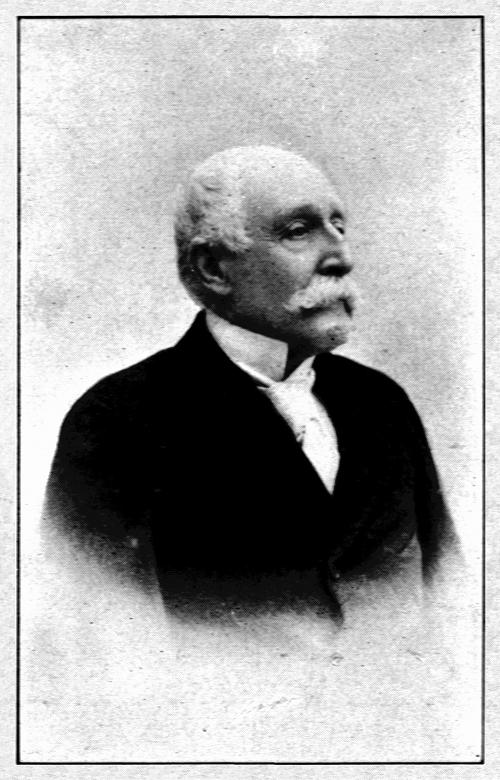
Pálffy spent much of his life abroad, in Paris, Vienna and Italy, absorbing the art and architecture of Europe, and he brought that cosmopolitan education home to Bojnice. In a sense the castle is the distillation of everything he had seen and loved, a personal museum of European romance assembled by a man who had spent decades wandering the continent’s palaces and galleries with an obsessive, discerning eye.
Turrets Borrowed From the Loire
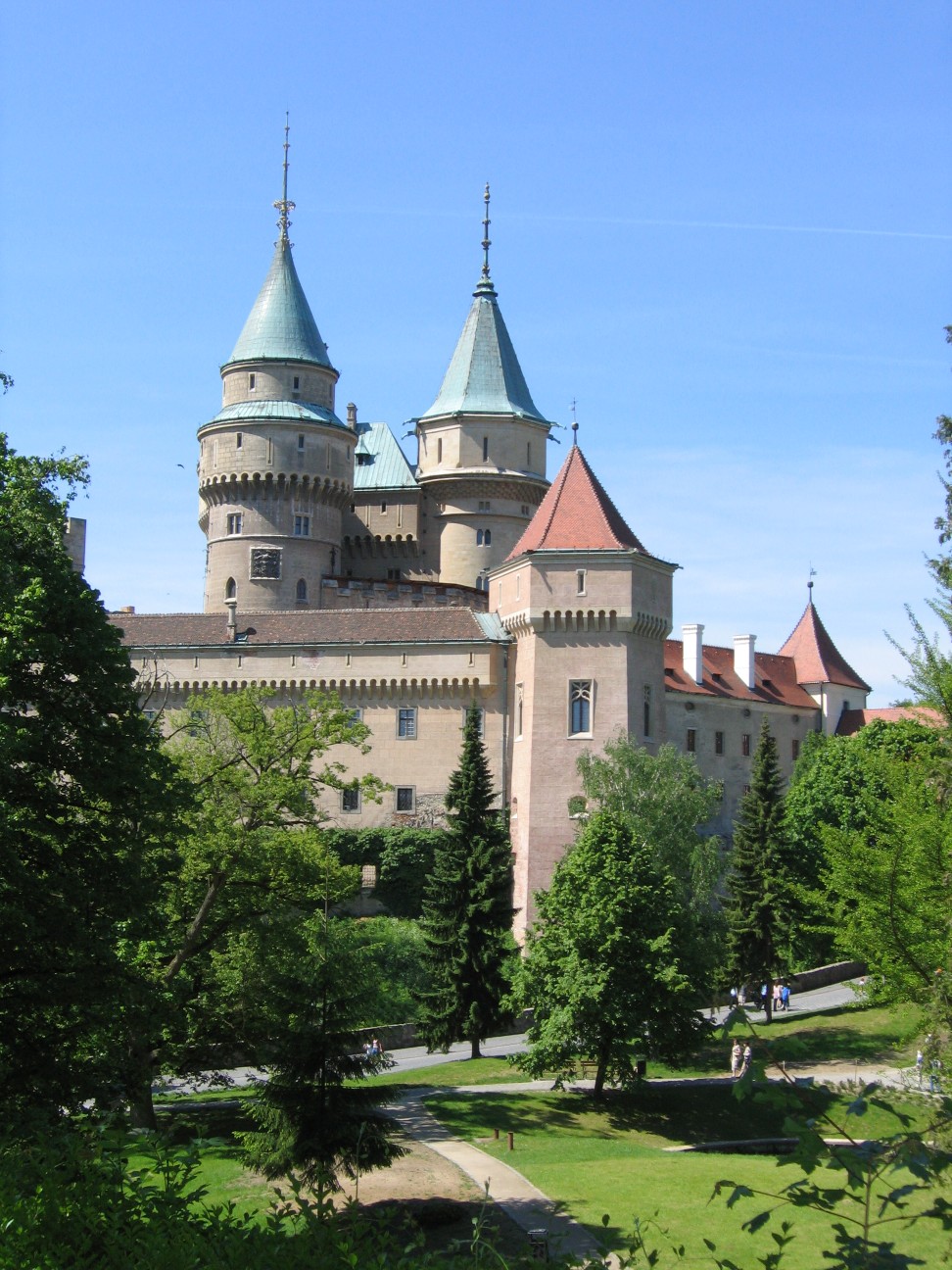
Step back and look at the exterior of Bojnice, and the French inspiration is unmistakable. The cluster of slender round towers with their tall conical roofs, the steep pitches, the pale walls and delicate ornament, all consciously evoke the great Renaissance châteaux of the Loire, buildings like Chambord and its cousins that Count Pálffy so admired. Bojnice is a piece of the French romantic imagination transplanted to the hills of Slovakia.
What makes the effect so successful is the marriage of that romantic vision with the castle’s genuine medieval structure. Because there was a real fortress underneath, with real towers and walls following the shape of the hill, the reconstruction has a solidity and authenticity that a purely invented folly would lack. The turrets rise from true foundations, and the silhouette, however idealized, sits convincingly on its ancient rock.
The result is a building that photographs like a dream and yet feels substantial in person, neither a stage set nor a dry restoration but something in between, a real castle reimagined at the height of the Romantic age. It captures perfectly the nineteenth century’s love affair with the Middle Ages, its longing for a more picturesque, chivalric past, made concrete in stone and slate.
It is worth remembering that this romantic historicism was a Europe-wide movement in Pálffy’s day, the same impulse that produced Neuschwanstein in Bavaria and a hundred other fantasy castles. Bojnice is Slovakia’s great contribution to that movement, and arguably one of its most graceful, a place where the dream of the Middle Ages was laid so lovingly over the reality that the two have become inseparable.

Some purists have grumbled over the years that the reconstruction sacrificed too much genuine old fabric to romantic fantasy, and there is a real debate to be had about how a historic building should be treated. But most visitors, faced with the sheer loveliness of the result, find such objections melting away, and Bojnice has long since been embraced as a masterpiece in its own right rather than judged as a restoration.
Courtyards and a Very Deep Well
Pass through the gates and you enter a sequence of courtyards, the heart of the castle’s daily life, arranged around the contours of the hill. Here the romantic reconstruction and the older fortress meet most visibly, arcades and stairways and decorated facades enclosing intimate spaces that feel both grand and welcoming, the transition point between the outside world and the sumptuous interiors within.
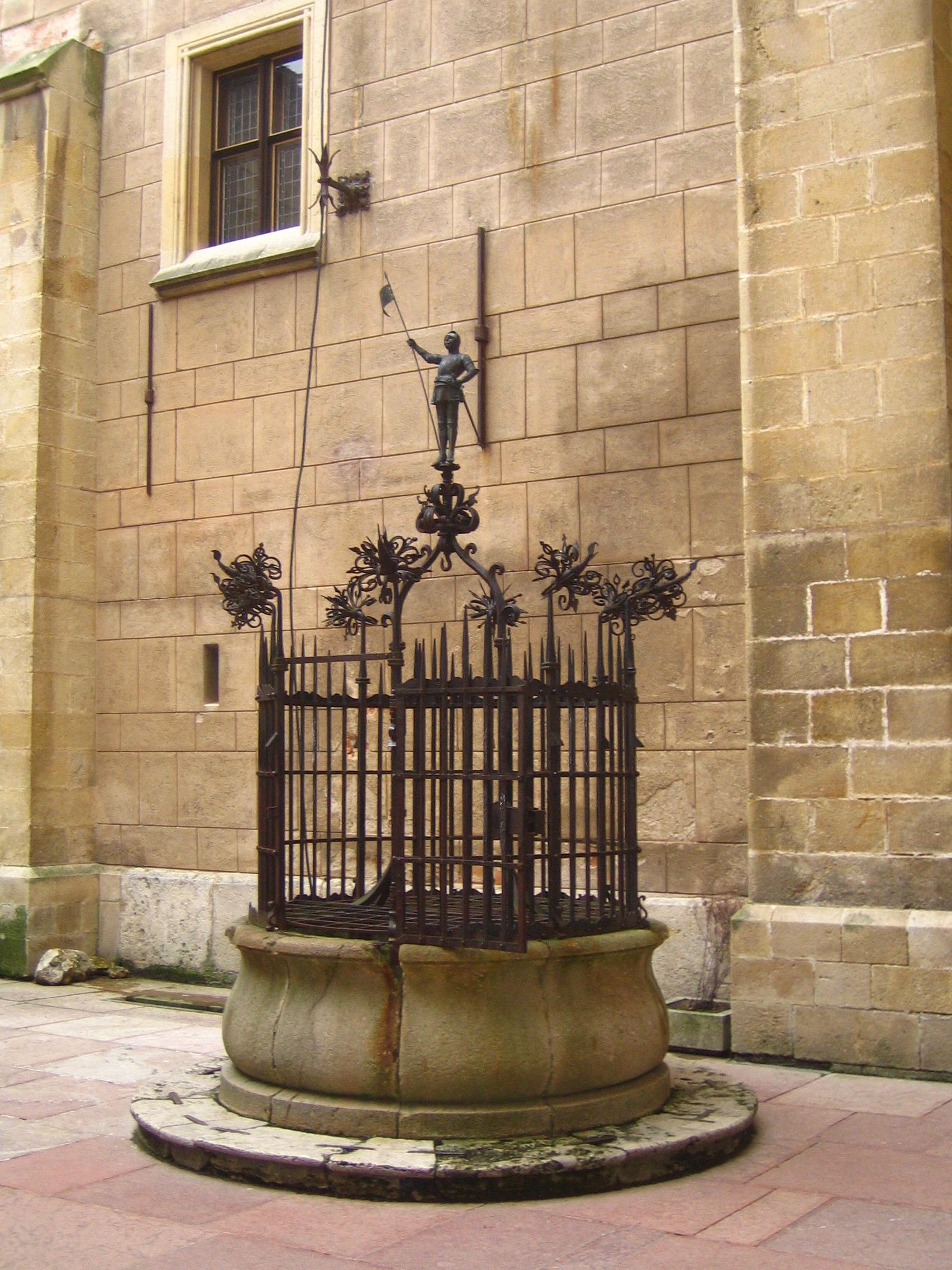
A famous feature of the courtyards is the castle well, sunk deep into the travertine rock of the hill. Reliable access to water was, as ever, the difference between a fortress that could hold out and one that could be quickly starved into surrender, and the well at Bojnice reaches down through the rock to secure that vital supply. It is one of those practical details that reminds you the romantic castle was built on a real working fortress.
The travertine itself is central to Bojnice’s story. This porous stone, deposited over ages by the mineral springs, forms the hill the castle stands on, and its peculiar nature created the hollow spaces and the cave beneath the castle. The well, the cave and the very ground of the fortress are all products of the same geology, the slow work of warm mineral water on stone over thousands of years.
Standing in the courtyards, with the towers rising around you and the well descending into the rock below, you feel the layered reality of Bojnice, a romantic dream resting on a medieval fortress resting, in turn, on a strange and beautiful geological foundation. Few castles are so intimately bound up with the very stone they stand on.
The Glow of the Golden Hall
Of all the sumptuous interiors Count Pálffy created, none is more celebrated than the Golden Hall, the Zlatá sála, whose astonishing ceiling is one of the treasures of the castle. Look up and you are met by an intricate expanse of carved and richly gilded woodwork, glowing with gold, a masterpiece of craftsmanship that took years of patient labour by skilled artisans to complete.
The hall exemplifies Pálffy’s whole approach: no expense spared, no detail overlooked, in the pursuit of a romantic ideal of aristocratic splendour. The gilded ceiling was designed to dazzle, to announce the wealth and taste of the castle’s owner and to transport visitors into a fantasy of medieval and Renaissance magnificence, and it succeeds completely. It is the kind of room that makes people fall silent and simply stare upward.
Rooms like this are why Bojnice is treasured not just as a beautiful shell but as a total work of art, inside and out. Pálffy did not merely restore a castle; he composed an entire romantic environment, room by room, in which architecture, carving, painting and collected treasures all work together to create a unified mood of enchantment. The Golden Hall is the brilliant centrepiece of that composition.
To stand beneath that golden ceiling is to understand what Pálffy was reaching for, a beauty so complete and so immersive that the modern world falls away and you feel yourself stepping into the idealized past he loved. Whether or not any real medieval hall ever looked quite so perfect hardly matters; the Golden Hall is a triumph of romantic imagination made real in gold and wood.
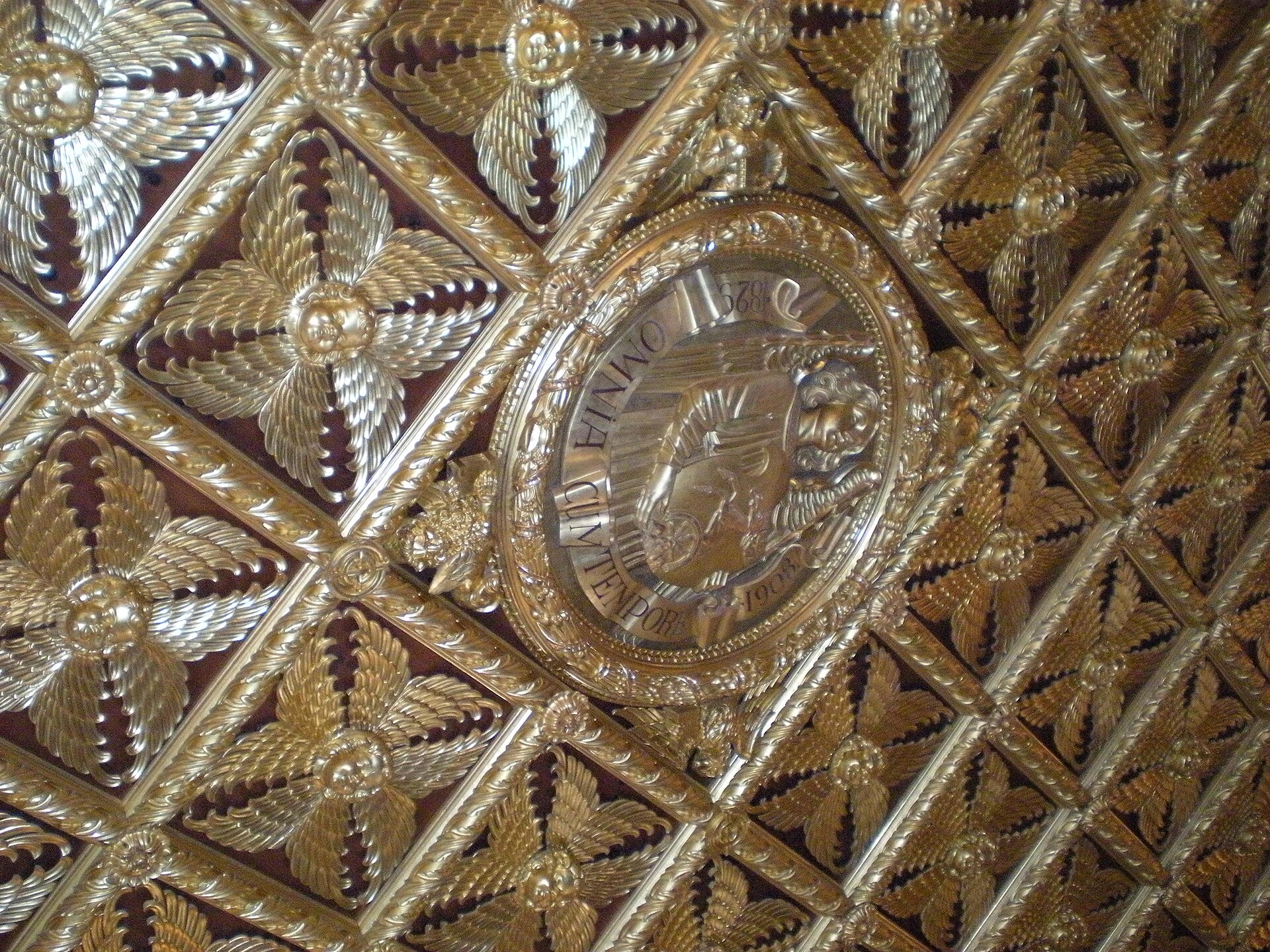
The craftsmanship on display also speaks to a wider truth about Pálffy’s Bojnice, that it was built at the last great moment before mass production, when skilled hands could still be gathered in numbers to lavish years of patient work on a single ceiling. In that sense the castle is a monument not just to one man’s taste but to a whole vanishing world of craft.
Grand Rooms and a Collector’s Treasures
Beyond the Golden Hall, the castle unfolds as a succession of richly appointed rooms and grand staircases, each one part of Count Pálffy’s total vision. Wood-panelled chambers, decorated halls, intimate studies and sweeping stairways lead one into another, furnished with the tapestries, paintings, furniture and objects that Pálffy gathered over a lifetime of passionate collecting across Europe.
Pálffy was a serious and knowledgeable collector, and Bojnice was conceived in part as a fitting home for his treasures. He acquired works of real quality, and the castle today functions as a museum, the Slovak National Museum’s Bojnice division, displaying not only Pálffy’s own collections but wider holdings of art and historical artefacts. The romantic castle is thus also a genuine treasure-house.
Walking these rooms, you sense the personality of the man behind them everywhere, in the choice of objects, the arrangement of spaces, the loving attention to atmosphere. This was not a house assembled by a committee but the deeply personal creation of one connoisseur, and it retains the intimacy of a private vision even as it welcomes millions of public visitors.
There is a particular pleasure in a castle that is also a cabinet of wonders, where every room offers not just architecture but things to look at and stories to uncover, from old master paintings to curious antiquities. Bojnice rewards slow, attentive visiting, and the deeper you go into its collections, the more you appreciate the cultivated, acquisitive, romantic mind that assembled them all.

A Medieval Masterpiece on the Walls
Among all the treasures gathered at Bojnice, one stands out as a work of genuine international importance: the Bojnice altarpiece, a fourteenth-century panel painting attributed to the circle of the great Florentine master Nardo di Cione, dating from around 1345 to 1360. It is a rare and precious survival of early Italian Renaissance painting, and its presence in a Slovak castle is a testament to Count Pálffy’s reach and taste as a collector.
Such a work belongs to the very dawn of the Renaissance, to the generation that began to lift European painting out of the flat conventions of the Middle Ages toward new depth, feeling and naturalism. To have an example of this pivotal moment, from the Florence of the fourteenth century, hanging in Bojnice, is extraordinary, and it makes the castle a place of pilgrimage for lovers of medieval and early Renaissance art.
The altarpiece is a reminder that Pálffy’s collecting was not merely decorative but reached toward objects of real art-historical significance. He was buying at the highest level, competing with museums and other great collectors, and pieces like this raise Bojnice above the level of a beautiful curiosity into the ranks of serious repositories of European art.
Standing before this small, glowing panel, so much older even than the medieval fortress that surrounds it, you feel the depth of time layered at Bojnice. A fourteenth-century Italian masterpiece, in a medieval Slovak castle, romantically rebuilt in the nineteenth century, displayed to visitors in the twenty-first: few places compress so many centuries of European culture into a single room.
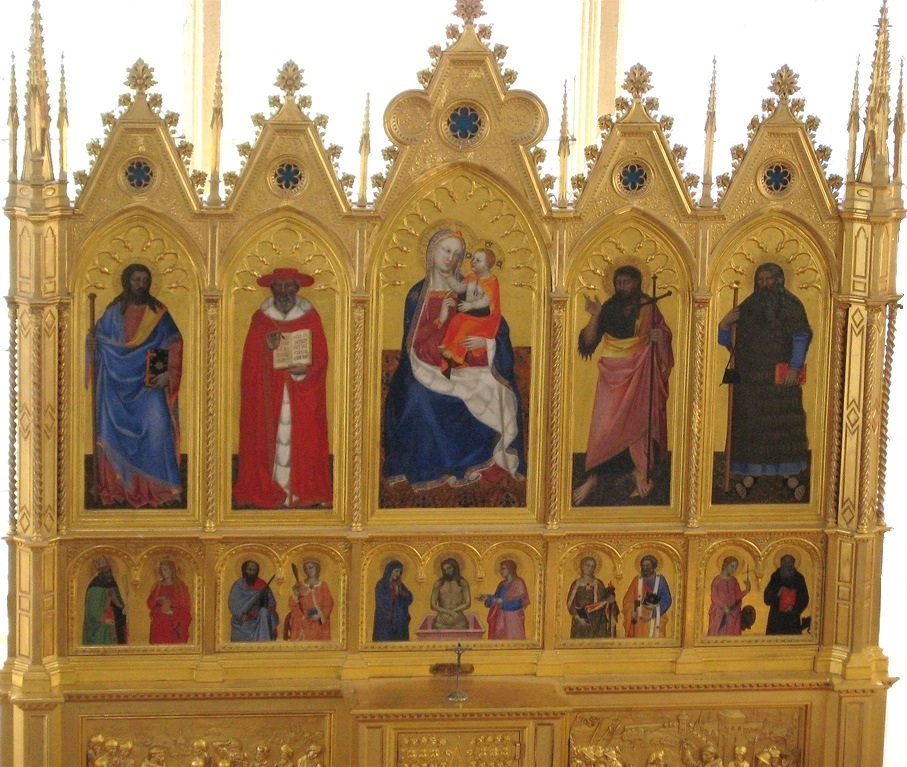
That such a fragile object has survived nearly seven centuries, and travelled from Renaissance Italy to a castle in Slovakia, is itself a small miracle, and it invites reflection on the long, unpredictable journeys that works of art make through history. The panel has outlived kingdoms and empires to end up glowing quietly on a Bojnice wall.
The Cave Beneath the Castle
One of Bojnice’s most unexpected wonders lies not above ground but below it. Directly beneath the castle, hidden in the travertine rock of the hill, is a natural cave, a genuine geological cavern formed over ages by the same mineral waters that built the hill and feed the town’s famous spa. Few castles anywhere can boast a real cave in their very foundations.
The Bojnice cave is part of the castle tour, and descending into it is a strange and memorable experience, passing from the gilded romantic halls above into the cool, damp, natural rock below. It is a vivid reminder of the geological forces that shaped the site, the slow deposition of travertine that raised the hill and hollowed out these underground spaces over thousands of years.
The cave adds yet another layer to the already rich palimpsest of Bojnice. Here, beneath the medieval fortress and the romantic reconstruction, lies the raw earth itself, the natural foundation on which all the human history was built. To visit it is to complete the journey through the castle’s layers, from Pálffy’s fantasy at the top to the living rock at the bottom.
There is something fitting about a fairy-tale castle that turns out to have a real cave beneath it, as if the storybook needed one final touch of enchantment. The cave connects Bojnice to the deep natural history of its hill, and reminds us that even the most artful human creation here rests, quite literally, on the strange and beautiful work of water and stone.
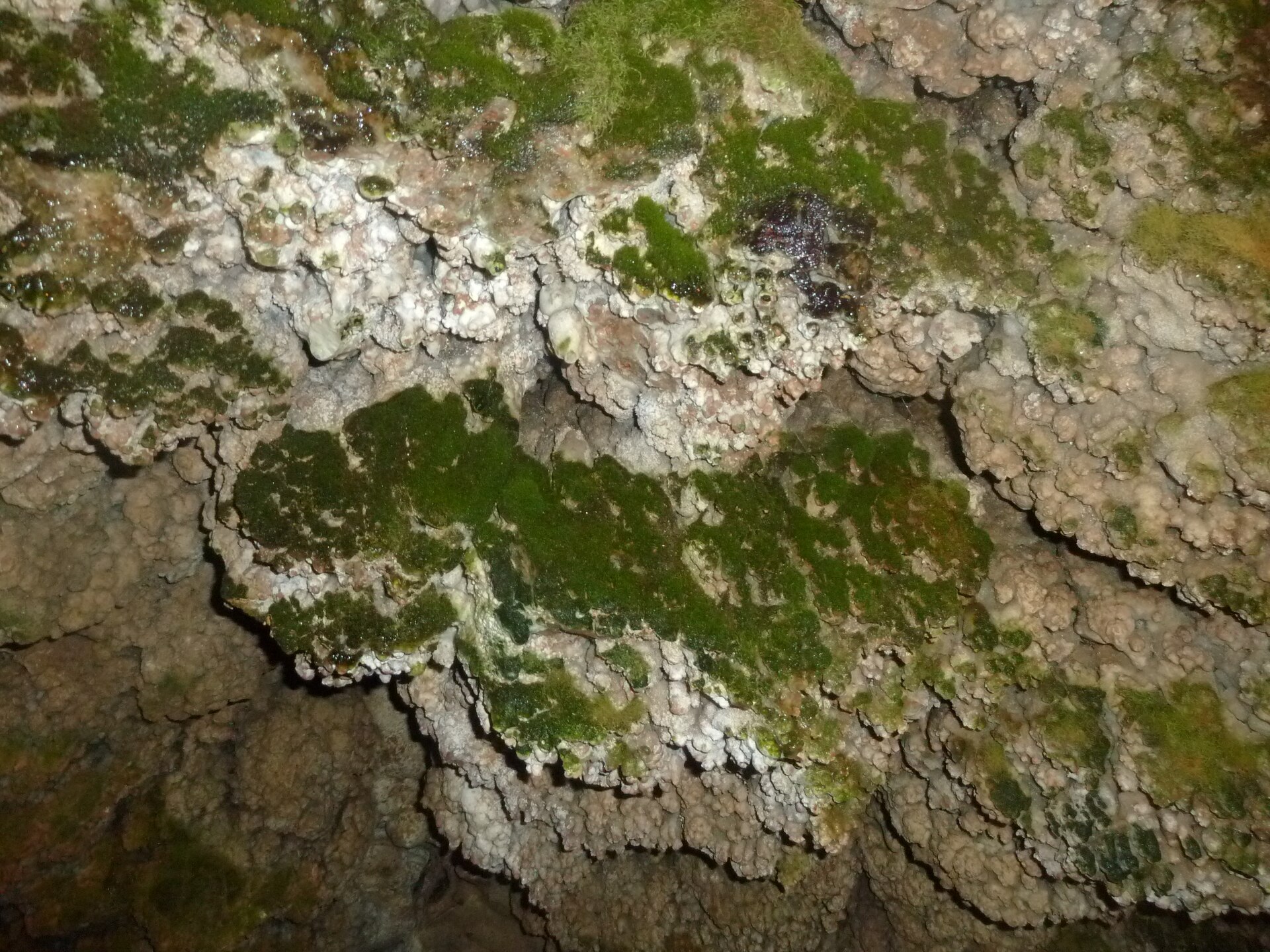
Guides like to point out how the temperature drops and the air grows damp as you descend, the sensory shift underlining the passage from the human world above to the natural one below. For many visitors, especially children, this subterranean stretch is the most thrilling part of the whole tour, a real cave hidden inside a fairy-tale castle.
The Whole Romance From Above
Seen from above, Bojnice reveals just how completely its designers achieved the romantic silhouette they were after. The clustered towers with their pointed roofs, the ranges of steep-pitched buildings, the way the whole composition sits amid its green park, all combine into an image of almost impossible prettiness, the platonic ideal of a fairy-tale castle realized in real stone and slate.
The aerial view also shows how the romantic reconstruction was fitted to the older fortress and the shape of the travertine hill. The plan is not a free invention but a real castle’s footprint, dressed in nineteenth-century romance, and from above you can trace how the towers and wings follow the contours of the rock, grounding the fantasy in genuine medieval structure.
Around the castle, the extent of the park and the town becomes clear, the landscaped grounds and the spa resort cradling the hill, so that the whole scene reads as a single designed composition of castle, garden and town. Bojnice was always meant to be beautiful from every angle, and the view from the air confirms that its makers succeeded triumphantly.
To appreciate all of this short of a helicopter, the next best thing is to see the castle and its park filmed and walked through, and this tour does exactly that, circling the romantic towers and wandering the grounds. It captures, far better than any still image, the way Bojnice turns and glitters from every angle, the most photogenic castle in Slovakia showing off from all sides.

A Park, a Zoo and an Ancient Linden
The pleasures of Bojnice extend well beyond the castle walls into the surrounding grounds, which are among the loveliest of any castle in Slovakia. The landscaped park that wraps around the hill is a delight in every season, from spring blossom to winter snow, and it forms the perfect romantic foil to the turreted castle rising above it.
Within the grounds lies another notable attraction, the Bojnice Zoo, which holds the distinction of being the oldest zoo in Slovakia, founded in the early twentieth century. This combination of castle, park and zoo makes Bojnice a full day out for families, and helps explain why it draws such enormous numbers of visitors, appealing to those who come for history, for beauty and for a pleasant day among the animals and gardens alike.
The grounds also hold living history in the form of the great linden tree associated with King Matthias Corvinus, said to date back centuries and to have shaded the king himself. Such ancient trees are treasured links to the deep past, and the King Matthias linden of Bojnice is among the most famous in the country, a green monument to go with the stone one on the hill.
All of this makes Bojnice a place of leisure and delight in a way that few great castles manage. It is not a solemn monument to be visited and left, but a whole romantic landscape to be enjoyed, castle and cave and park and zoo and ancient tree together, a destination designed, in the end, to give pleasure, exactly as its spa-town setting suggests.
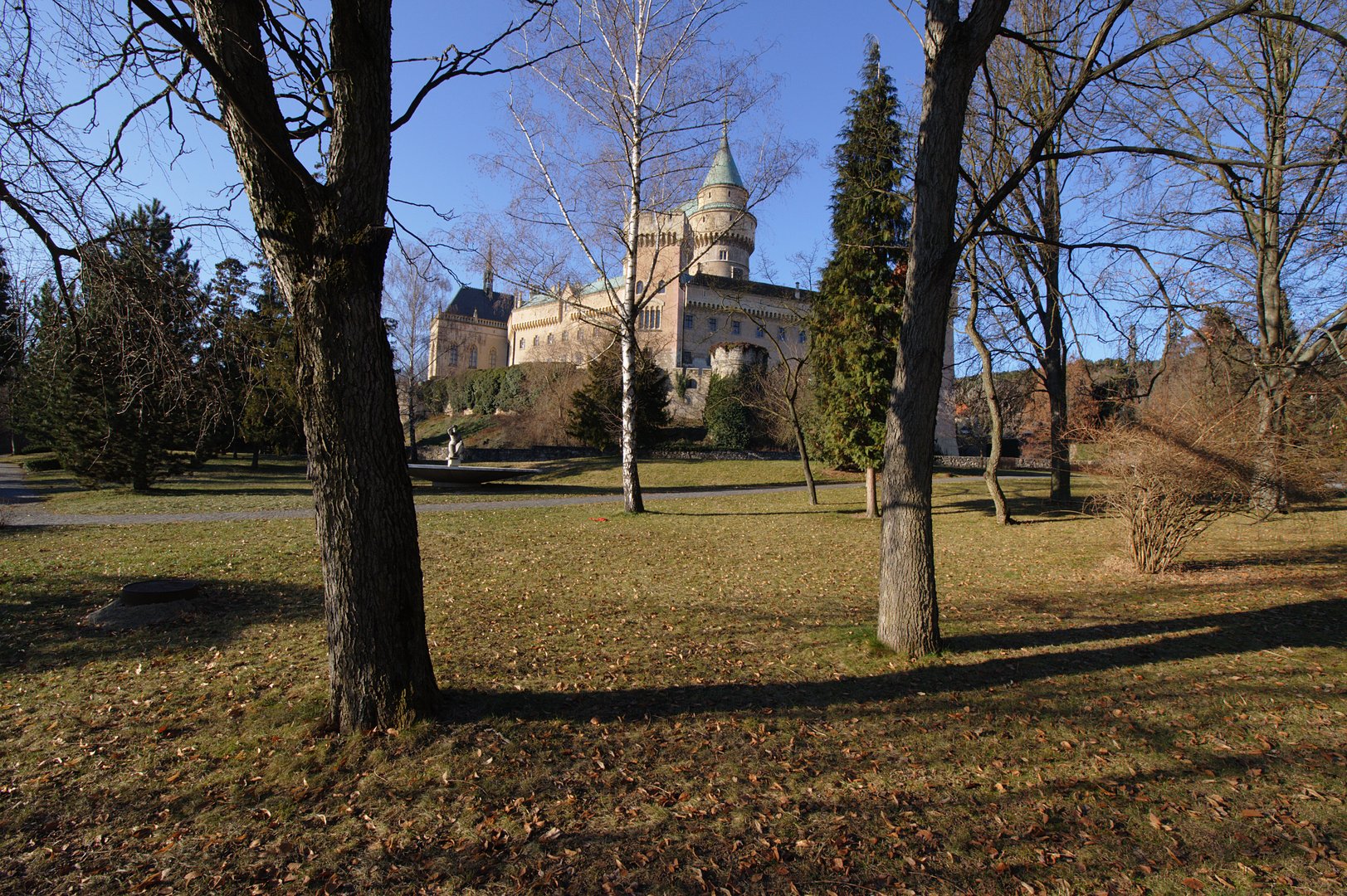
In winter, when snow settles on the turrets and the bare trees of the park, Bojnice takes on a hushed, almost enchanted quality, while in high summer the gardens fill with families and the whole place hums with life. Part of the castle’s genius is that it rewards a visit in any season, each bringing out a different facet of its romantic character.
Ghosts, Films and the Most Visited Castle
Bojnice’s romantic drama makes it the perfect stage for spectacle, and the castle has leaned into that role with enthusiasm. Its most famous event is the International Festival of Ghosts and Spirits, a hugely popular annual celebration in which the castle is given over to costumed performers, theatrical hauntings and eerie night-time tours, drawing crowds from across the country and beyond. On these occasions the fairy-tale castle becomes a gothic playground.
The festival is a large part of why Bojnice consistently ranks as the most visited castle in Slovakia, attracting hundreds of thousands of visitors every year. Few castles have so successfully turned their romantic atmosphere into living entertainment, and the ghost festival has become a beloved tradition, a yearly reminder that a castle can be not just a monument but a place of communal fun and imagination.
Bojnice’s photogenic qualities have also made it a favourite of filmmakers, and its towers and halls have appeared in numerous films and fairy-tale productions, especially the beloved fantasy films of Central Europe. Like Spiš to the east, Bojnice offers directors a ready-made dream of a castle, and many viewers have seen its walls on screen without knowing where they were looking.
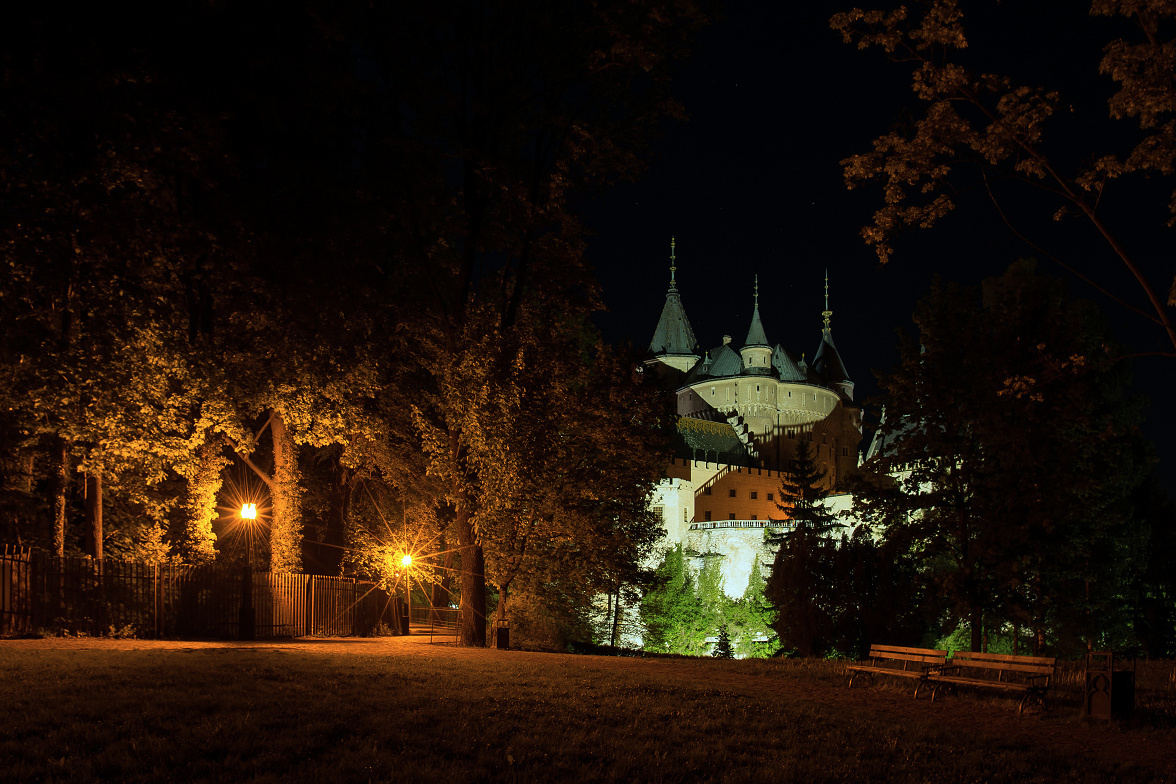
By night, floodlit for the festival or simply lit against the dark, Bojnice is at its most magical, its pale towers glowing, its silhouette sharp against the sky, every inch the enchanted castle of a story. It is in these moments that Count Pálffy’s vision feels most fully realized, a romantic dream of the Middle Ages brought to glowing life on a Slovak hill.
For the local town, the flood of visitors the castle attracts has been transformative, sustaining the spa, the restaurants and the shops, so that the fortunes of Bojnice town and Bojnice castle remain as tightly bound together today as they were in the Middle Ages, only now the currency is tourism rather than lordship.
The Count’s Enduring Dream
When Count Ján Pálffy died in 1907, he left behind not just an unfinished castle but a set of wishes about its future, and a will that became the subject of long legal disputes. He had poured his heart and fortune into Bojnice, and he cared deeply about what would become of it and his collections. In time the castle passed into state ownership, and it is now a national cultural monument, preserved for all.
That public ownership has, in a sense, fulfilled the deepest logic of Pálffy’s dream. He built a thing of beauty at enormous personal cost, and now that beauty belongs to everyone, visited and loved by millions who will never know the details of his life but who respond instinctively to the romantic vision he made real. The private obsession has become a shared national treasure.
There is a lesson in Bojnice about the power of a single determined imagination. One man, in love with the romance of the past and blessed with wealth and taste, could take an old fortress and transform it into one of the most beautiful castles in Europe, a place that gives pleasure to everyone who sees it. Not many individuals leave behind so lovely a monument to their inner vision.
So Bojnice endures, the count’s dream in stone, drawing more visitors than any other castle in Slovakia. It is a reminder that castles are not only about war and power but also about beauty and imagination, and that sometimes the most enchanting fortress of all is one built not to keep enemies out, but simply to make a dream of the Middle Ages come true.

It is worth pausing, at the end, on the sheer improbability of it all: that a single nobleman’s private passion should have produced a building now counted among the treasures of a nation, visited by millions and printed on countless postcards. Bojnice stands as proof that individual vision, pursued with enough devotion, can outlast its creator and enrich the world for generations.
Castles Nearby
- Spis Castle: The Vast White Ruin That Crowns a Slovak Hill
- Hochosterwitz Castle: The Fortress of Fourteen Gates
Why Slovakia’s Prettiest Castle Draws the Crowds
Bojnice is a different kind of castle from the grim fortresses that fill most of these stories, and that is exactly its charm. It was shaped, in its final and most beautiful form, not by the fear of siege but by the love of beauty, one man’s determination to make a real medieval castle match the romantic dream in his imagination. The result is a place that delights rather than intimidates.
And yet the romance rests on real depth. Beneath Pálffy’s turrets lies a genuine fortress nearly a thousand years old, favoured by kings, rebuilt by great families, standing on a hill hollowed by a natural cave. Bojnice is not a fake but a true castle transfigured, its ancient bones dressed in nineteenth-century romance, and the two together make something richer than either could alone.
So if you travel through Slovakia, do not miss the country’s most beloved castle. Wander its park, descend into its cave, stand beneath the golden ceiling and before the medieval altarpiece, and let the fairy-tale towers work their magic. Bojnice is proof that a castle can be more than a monument to war, that it can also be a monument to imagination, and few places make that case so beautifully.
You May Like
Buda Castle: The Crown of Budapest Above the Danube


One thought on “Bojnice Castle: The Fairy-Tale Dream a Count Built in Stone”