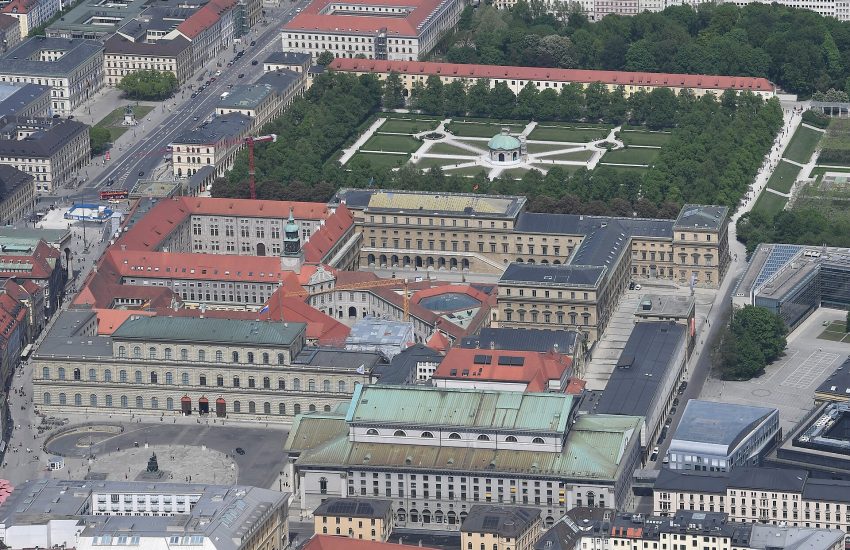
Most of the castles in this series were born of war, raised to guard a pass or overawe a region, their beauty almost accidental. Peleş is different. It was built in an age of peace, for pure pleasure and prestige, by a king who wanted a summer palace worthy of a new nation, and it is quite possibly the most beautiful royal residence in all of Eastern Europe. Set among the wooded slopes of the Carpathian Mountains, it is less a fortress than a fairy tale made real.
Completed at the turn of the twentieth century for Carol I, the first king of modern Romania, Peleş is a masterpiece of Neo-Renaissance architecture, a riot of turrets, timber-framed gables and carved stone rising against a backdrop of dark forest and mountain. Inside, it is even more astonishing: a labyrinth of sumptuous rooms, each decorated in a different historical style, filled with the finest art, and equipped, remarkably for its day, with every modern convenience the age could offer.
So come with me up into the mountains above the resort town of Sinaia, and let us explore the palace that a king built to crown his kingdom. We will meet Carol I and his vision, wander the Hall of Honor and the great armory, marvel at the technological wonders hidden behind the antique splendour, and discover why Peleş is regarded as the jewel of Romania and one of the loveliest castles in Europe.
In This Article
- A Palace in the Carpathian Forest
- Forty Years in the Making
- The King Who Built a Kingdom
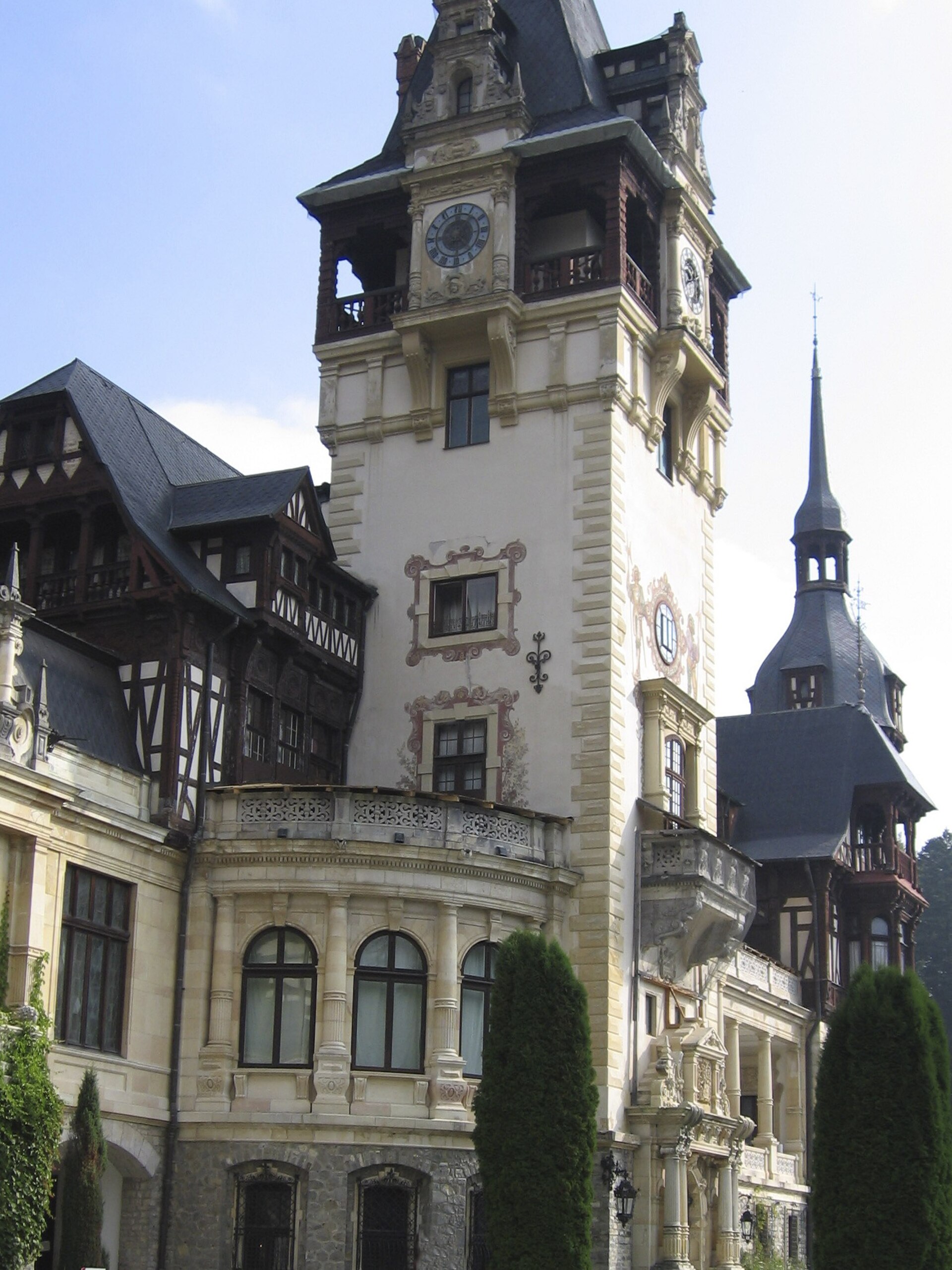
- A Riot of Towers and Timber
- The Hall of Honor
- A Hundred Rooms, a Hundred Worlds
- The Florentine Room and Its Companions
- The Great Armory
- The Library and Its Secret Door
- Music, Art and a Poet Queen
- A Castle Ahead of Its Time
- Terraces, Statues and Mountain Air
- From Royal Home to National Treasure
A Palace in the Carpathian Forest
Peleş sits in one of the most beautiful settings imaginable, cradled among the steep, forested slopes of the Carpathian Mountains just outside the elegant resort town of Sinaia, some way north of Bucharest. The dark green of the surrounding pines, the mountain peaks rising behind, the clear air and the sound of the Peleş stream that gives the castle its name, all combine to make the approach a genuine delight, a journey into a mountain idyll.
The location was chosen with great care, and it was no accident. King Carol I, who built the castle, fell in love with this stretch of the Carpathians during his travels and selected it deliberately as the site for his summer residence, drawn by the beauty of the mountains, the healthful air and the resemblance, perhaps, to the wooded hills of his native Germany. The setting was part of the vision from the very beginning.
Sinaia itself grew up in part because of the royal presence, developing from a small settlement around an old monastery into a fashionable mountain resort, the Pearl of the Carpathians, as the aristocracy followed their king into the hills. The castle and the town rose together, and today Sinaia remains a popular destination, its fortunes still bound up with the magnificent palace on the slope above.
If you want to find this mountain jewel before you visit, here are the coordinates for the castle above Sinaia. Zoom out and you will see how deep in the Carpathians it lies, surrounded by forest and peaks, a royal palace set not in a capital or a plain but in the heart of the mountains, exactly as its royal builder intended.
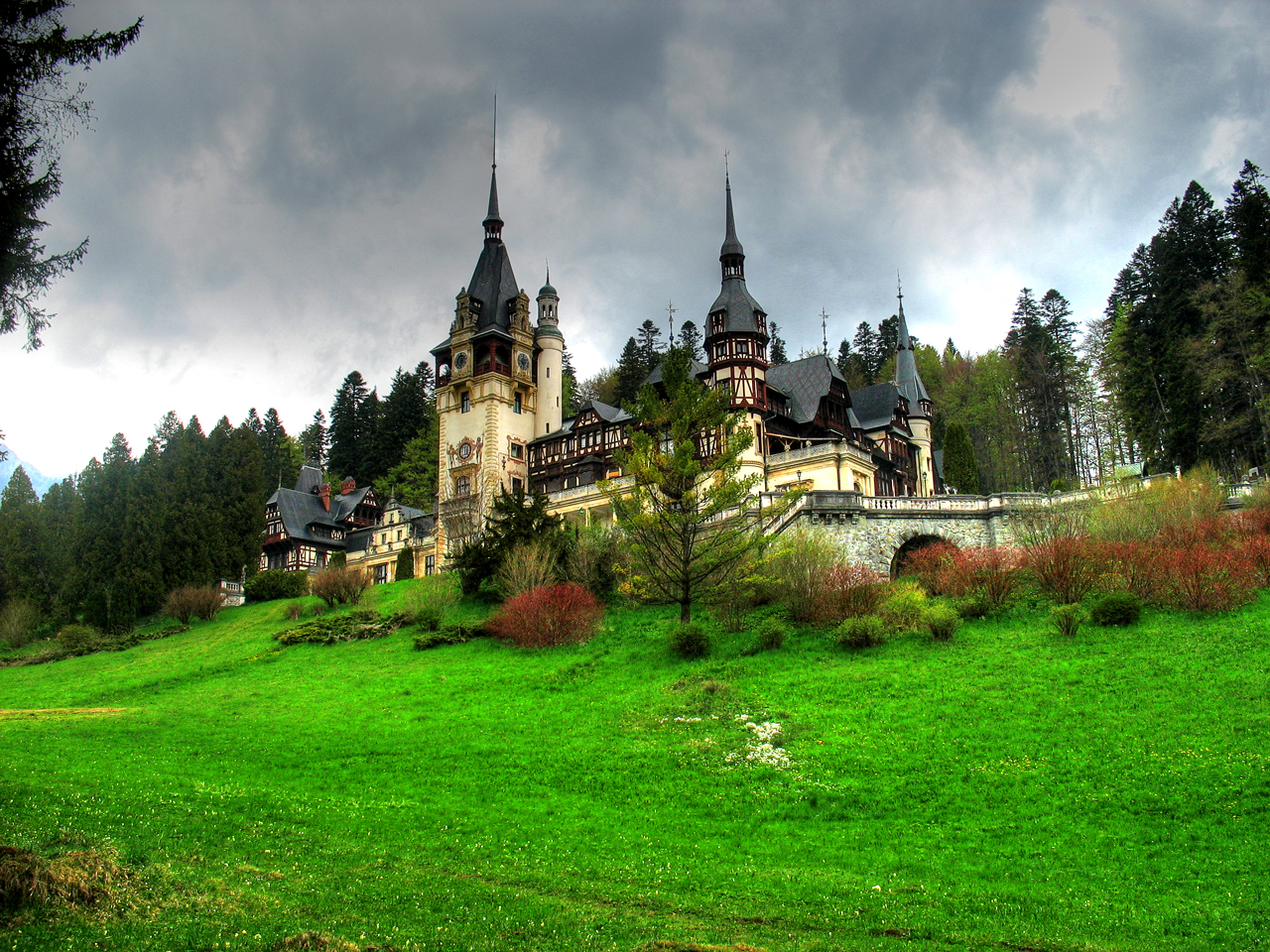
The mountain air and scenery that drew King Carol still draw visitors today, and many combine a visit to the castle with walks in the surrounding forests and mountains. The setting is inseparable from the experience, and Peles without its Carpathian backdrop would be a lesser thing entirely.
Forty Years in the Making
Peleş was not thrown up in a hurry. Work began in 1873, and the castle was developed, expanded and refined over some four decades, with the main structure completed in 1883 and further additions and elaborations continuing until 1914, the year of Carol I’s death. The result of this long, patient effort is a building of extraordinary richness and finish, worked over until every detail satisfied its exacting royal patron.
A succession of architects shaped the castle. The initial designs came from the German architect Wilhelm von Doderer, and the work was later carried forward by Johannes Schultz and, crucially, by the Czech architect Karel Liman, who oversaw much of the later development and gave the castle much of its final form. Under their direction, an army of craftsmen from across Europe laboured on the stone, wood and decoration.
The scale of the undertaking was immense. The castle rose in the German Neo-Renaissance style, with elements of many other historical modes woven in, its facade a lavish composition of stone and timber framing, carved gables, towers and ornament. Building on a mountain slope, with the finest materials brought from far and wide, was hugely expensive, a measure of the importance the king attached to the project.
That long gestation is part of what makes Peleş so satisfying. This was not a quick statement but a life’s work, a castle refined over forty years into a jewel of craftsmanship, every surface considered, every detail finished to the highest standard. When you admire the facade today, you are looking at the accumulated labour of decades and the taste of a king who was never quite finished perfecting his mountain palace.
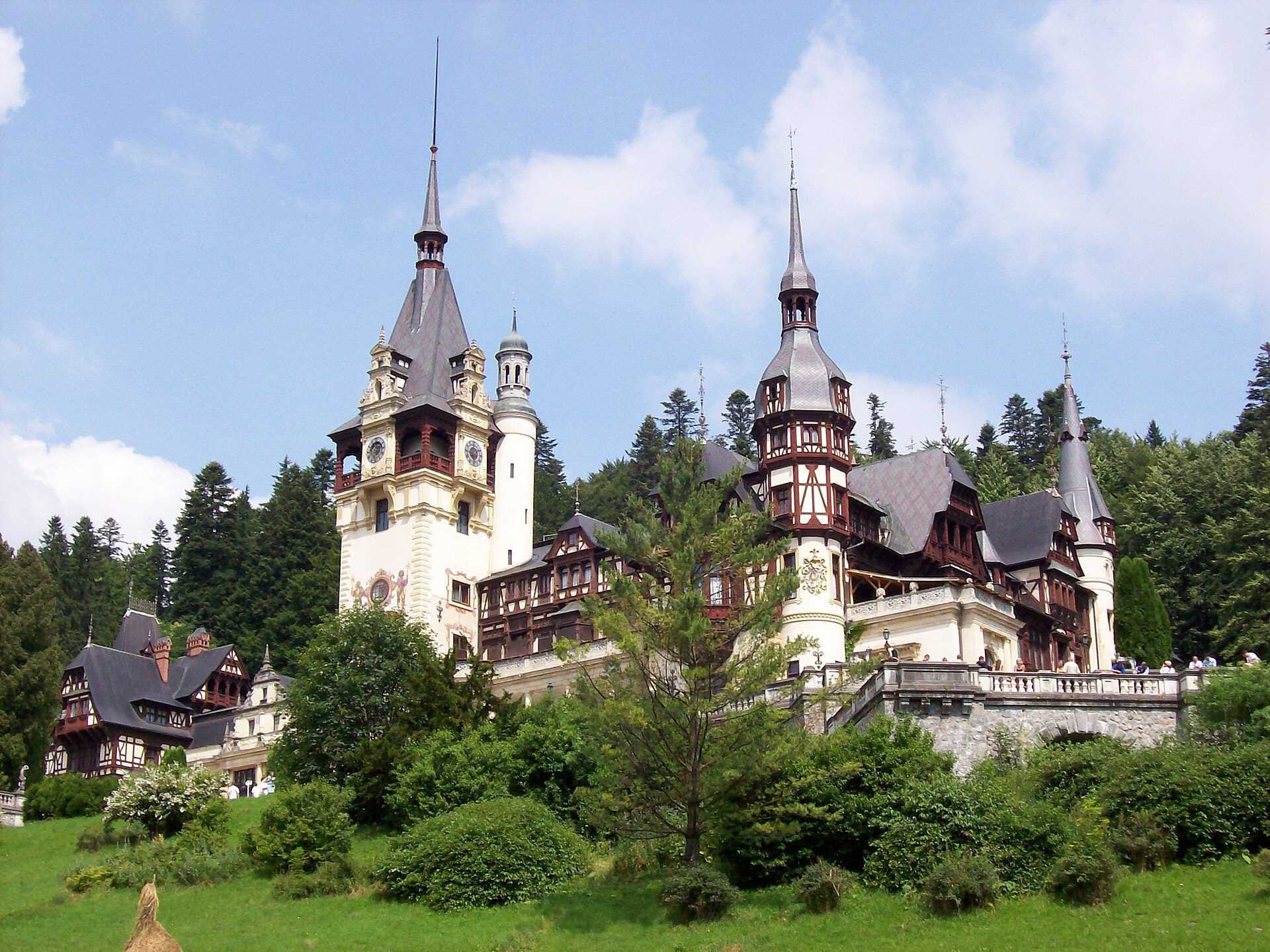
The workforce that built Peles was itself remarkably cosmopolitan, drawing craftsmen and labourers of many nationalities to the mountain site, so that the castle was in a real sense a European collaboration. That international character is fitting for a palace built by a German-born king to European standards in the heart of Romania.
The King Who Built a Kingdom
At the heart of the Peleş story stands King Carol I, one of the most consequential figures in modern Romanian history. Born a German prince of the house of Hohenzollern-Sigmaringen, he was invited to rule the young Romanian state in 1866, and he presided over the country’s emergence as a fully independent kingdom, being crowned its first king in 1881. Peleş was, in a sense, the architectural expression of that achievement.
Carol was a serious, disciplined and far-sighted ruler, and he understood the power of symbols. A magnificent royal residence would proclaim the permanence and dignity of the new monarchy and dynasty, rooting the foreign-born king and his line in the soil of their adopted country. Peleş was to be the summer seat of the crown, a statement that Romania now had a royal house to rival the ancient monarchies of Europe.
He involved himself closely in every aspect of the castle, from its siting to its decoration, and it reflected his own tastes and background, its German Renaissance style a nod to his origins, its lavish culture a mark of his ambitions for Romania. For Carol, building Peleş was not self-indulgence but statecraft, the creation of a fitting stage for the monarchy he was determined to establish on firm foundations.
It is fitting that Carol died at Peleş, in the castle he had spent forty years creating, in 1914, on the eve of the First World War. The palace was, in every sense, his life’s work and his monument, the physical embodiment of his reign and his vision for Romania. To walk through Peleş is to walk through the mind and ambition of the king who built a kingdom and crowned it with this mountain palace.

Carol’s long reign, nearly half a century, gave Romania a period of stability and modernization in which the state grew in confidence and standing, and Peles rose in step with the nation itself. The castle and the kingdom matured together, so that the palace became a kind of barometer of Romania’s ascent among the powers of Europe.
A Riot of Towers and Timber
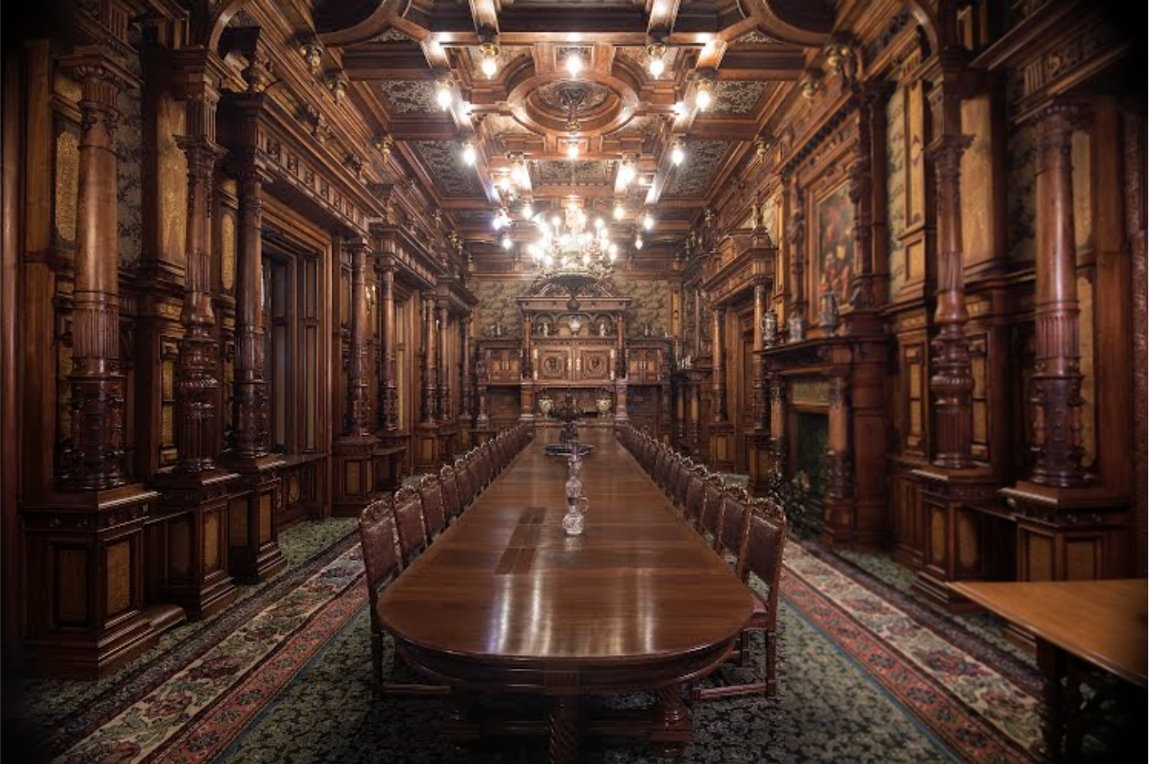
Peleş is enormous and elaborate, a sprawling composition of more than one hundred and sixty rooms arranged behind a facade of dizzying intricacy. The style is predominantly German Neo-Renaissance, with its characteristic timber framing, steep roofs and carved gables, but the castle draws freely on a whole range of historical influences, blending them into a rich, romantic whole that is very much of its late nineteenth-century moment.
The exterior alone rewards long study. Towers and turrets rise at every angle, balconies and loggias project from the walls, and the timber framing and stonework are covered in carving, sculpture and ornament of astonishing quality. Statues and reliefs adorn the facades, and the whole building has a jewel-box intricacy, as if every surface had been worked by a master craftsman, which, indeed, much of it was.
This is architecture as pure display, unconstrained by the demands of defence that shaped older castles. Peleş never had to withstand a siege or guard a frontier, and so its builders were free to lavish all their skill on beauty and comfort, producing not a grim fortress but an exquisite palace, a celebration of craftsmanship and wealth in the service of royal splendour.
The effect, especially against the backdrop of dark forest and mountain, is spectacular and slightly unreal, a building that seems to have stepped out of a Romantic painting or a fairy tale. Peleş is the architecture of the imagination given free rein, the dream of a storybook castle realized without compromise by a king who had the wealth, the taste and the four decades needed to make it perfect.
The Hall of Honor
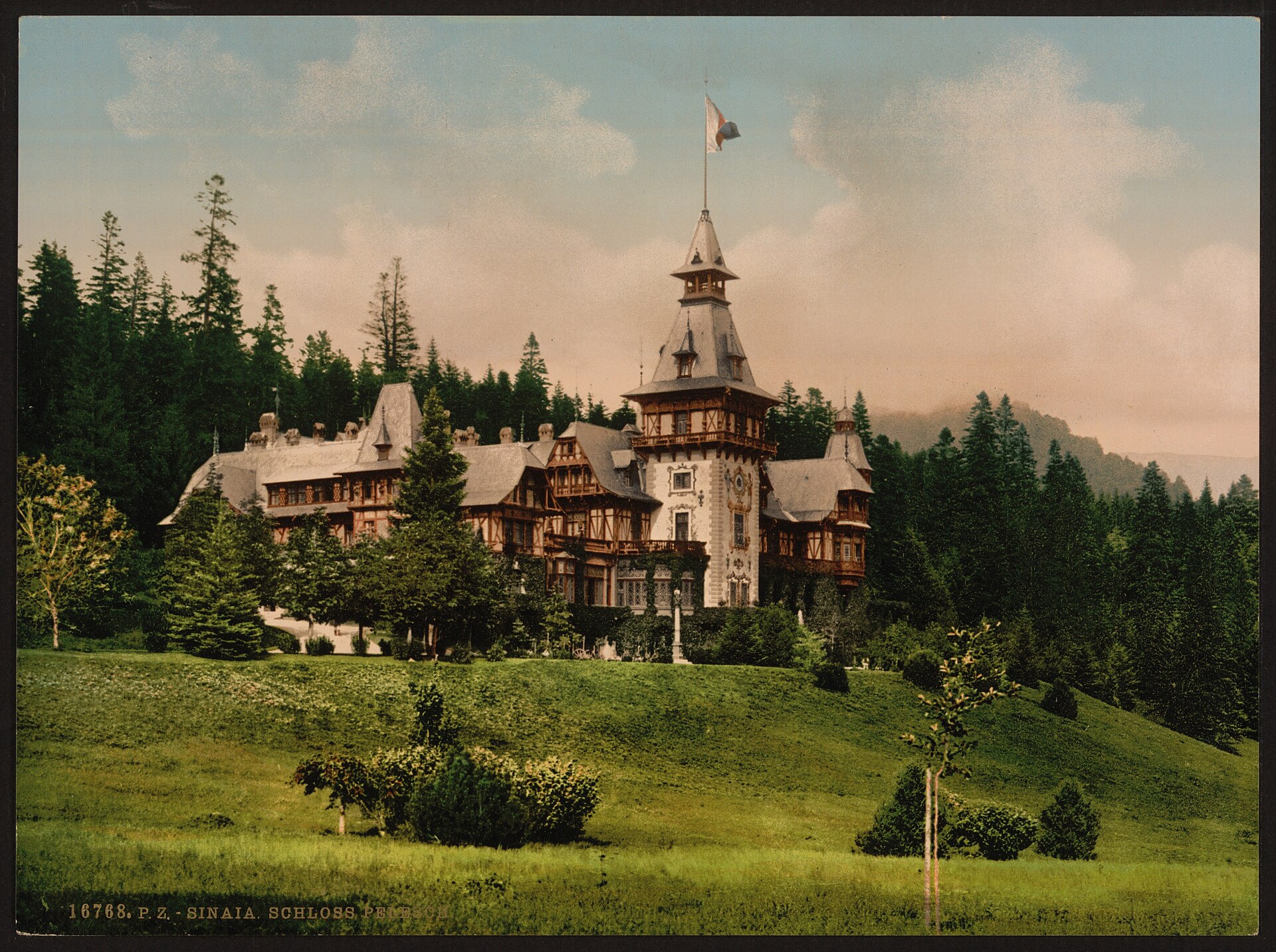
If Peleş has a single showpiece, it is the Hall of Honor, the magnificent central hall around which the castle is organized. This soaring, galleried space is panelled from floor to ceiling in intricately carved walnut, its walls alive with sculpted figures, reliefs and ornament, and it takes the breath away with the sheer density and quality of its craftsmanship. It is one of the most beautiful interiors in Europe.
The hall’s crowning marvel is its ceiling, a great retractable glass roof that could be opened, by an ingenious mechanism, to let in the mountain air and light or to reveal the sky above. This combination of the antique and the mechanical, a hall that looks medieval yet opens at the touch of a modern device, perfectly captures the dual nature of Peleş, a palace of historical fantasy equipped with cutting-edge technology.
The Hall of Honor was the ceremonial heart of the castle, the space through which visitors passed and gathered, designed to impress upon them the wealth, taste and dignity of the Romanian crown. Every carved panel and sculpted figure was part of that message, a demonstration that the young kingdom could command craftsmanship to rival anything in the old courts of Europe.
To stand in the Hall of Honor, surrounded by that ocean of carved walnut and looking up at the glass ceiling framing the mountain sky, is to understand at once why Peleş is so treasured. This is decorative art at its most ambitious and accomplished, a room that took years of skilled labour and that still, more than a century later, silences visitors with its beauty and its craft.
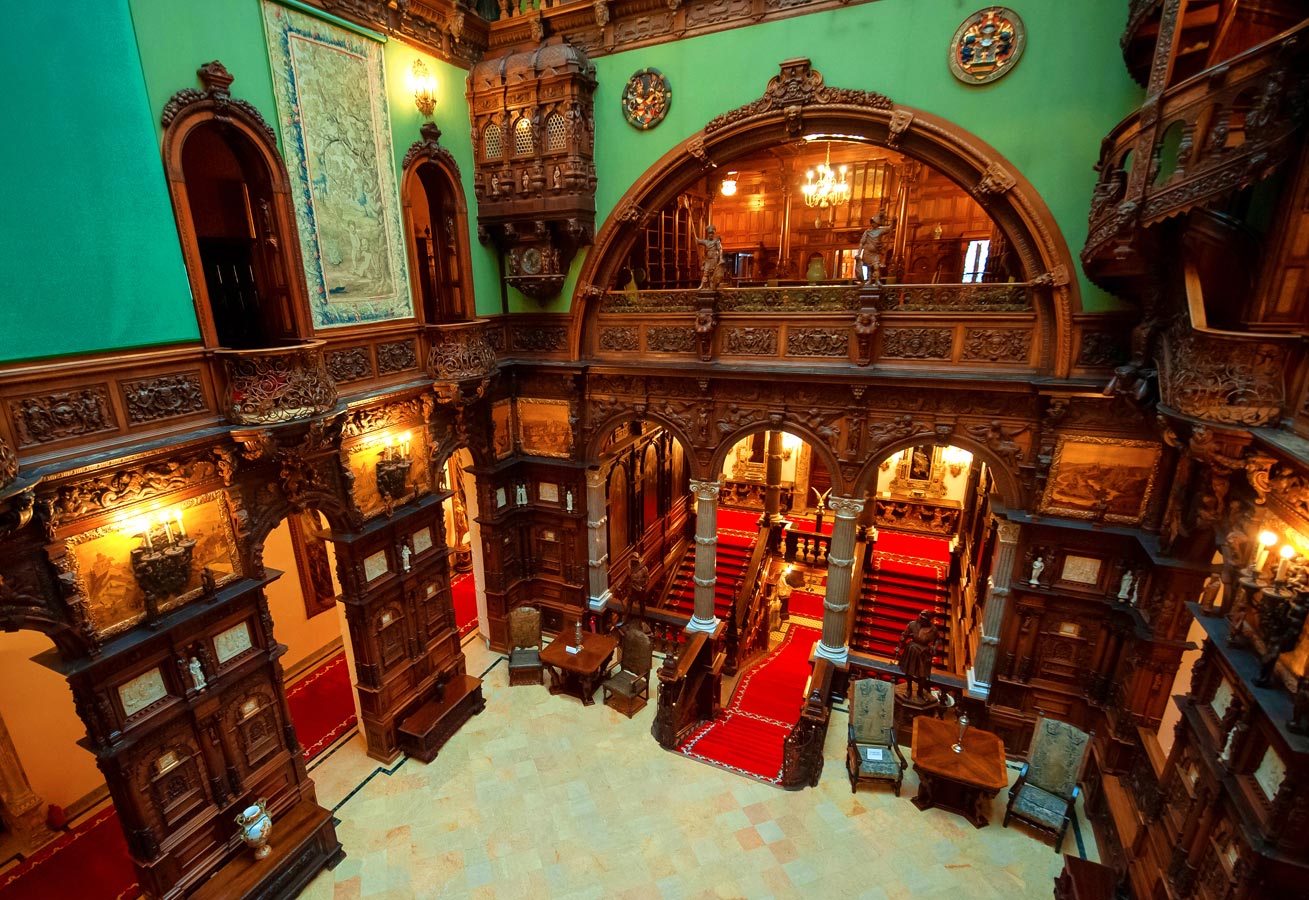
The walnut carving alone is said to have occupied craftsmen for years, and its density repays slow looking, revealing figures, foliage and scenes worked into every panel. It is the kind of room that seems to grow richer the longer you study it, an inexhaustible feast of the woodcarver’s art.
A Hundred Rooms, a Hundred Worlds
Beyond the Hall of Honor, Peleş unfolds as a seemingly endless succession of rooms, and the marvel is that each one is different. Rather than impose a single style throughout, the castle’s designers gave each major room its own distinct historical or national character, so that moving through the palace is like travelling through the decorative traditions of the world, one astonishing room at a time.
There are rooms in the Italian Renaissance manner and rooms in the German style, an Oriental salon rich with the atmosphere of the Ottoman and Islamic worlds, a Moorish room, a Turkish parlour, halls devoted to particular arts and crafts, and much more. Each is decorated with meticulous authenticity, its furniture, textiles, woodwork and ornament chosen to evoke its chosen world completely, a total immersion in a particular style.
This eclectic approach was very much in the spirit of the age, which delighted in historical revival and the collecting of styles, but at Peleş it was carried out with a thoroughness and a budget that few could match. The rooms are not pastiche but the work of serious craftsmen using the finest materials, and each stands as a small masterpiece of its particular idiom.
The cumulative effect is overwhelming in the best way. A tour of Peleş is a tour of the decorative imagination of the nineteenth century at its most confident and lavish, room after room of perfectly realized fantasy, and the visitor emerges dazzled, having wandered from Renaissance Italy to the Ottoman East to the German forest without ever leaving a single castle in the Carpathian mountains.
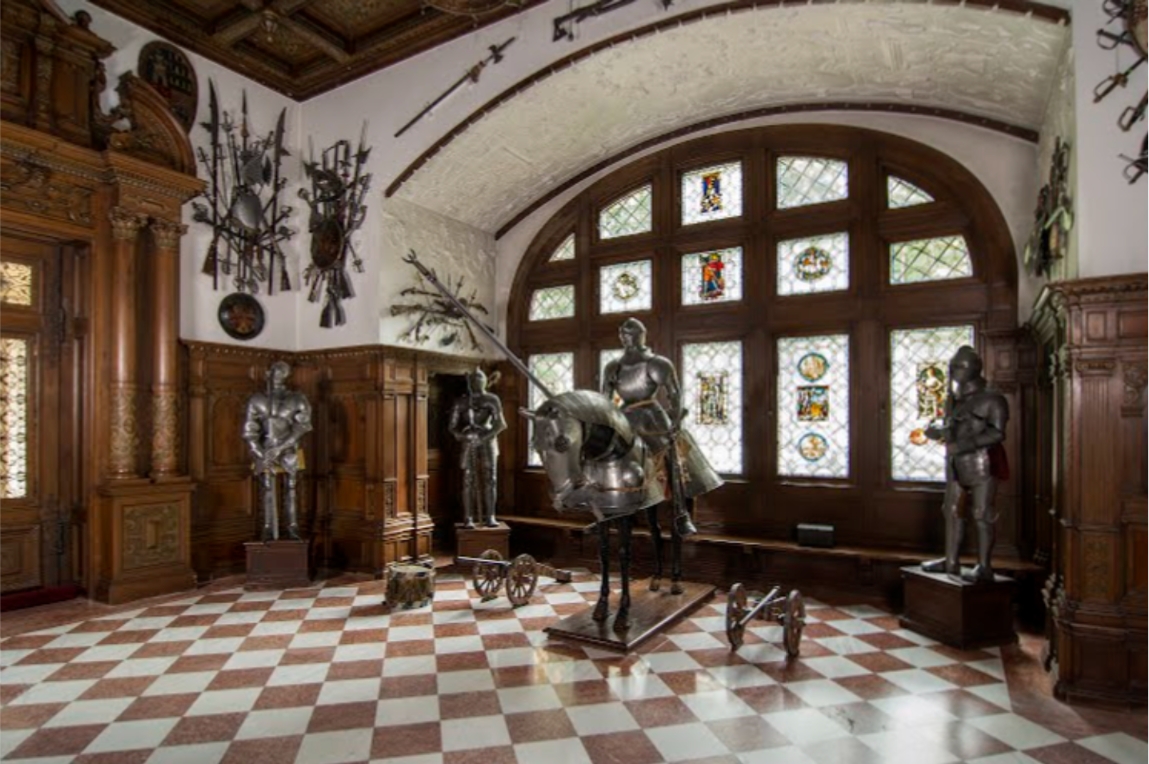
Guided tours typically show only a portion of the castle’s rooms, and even that selection can leave visitors reeling from the sheer accumulation of beauty. To see everything would take far longer than a single visit allows, and many who come once find themselves returning to explore rooms they missed the first time.
The Florentine Room and Its Companions
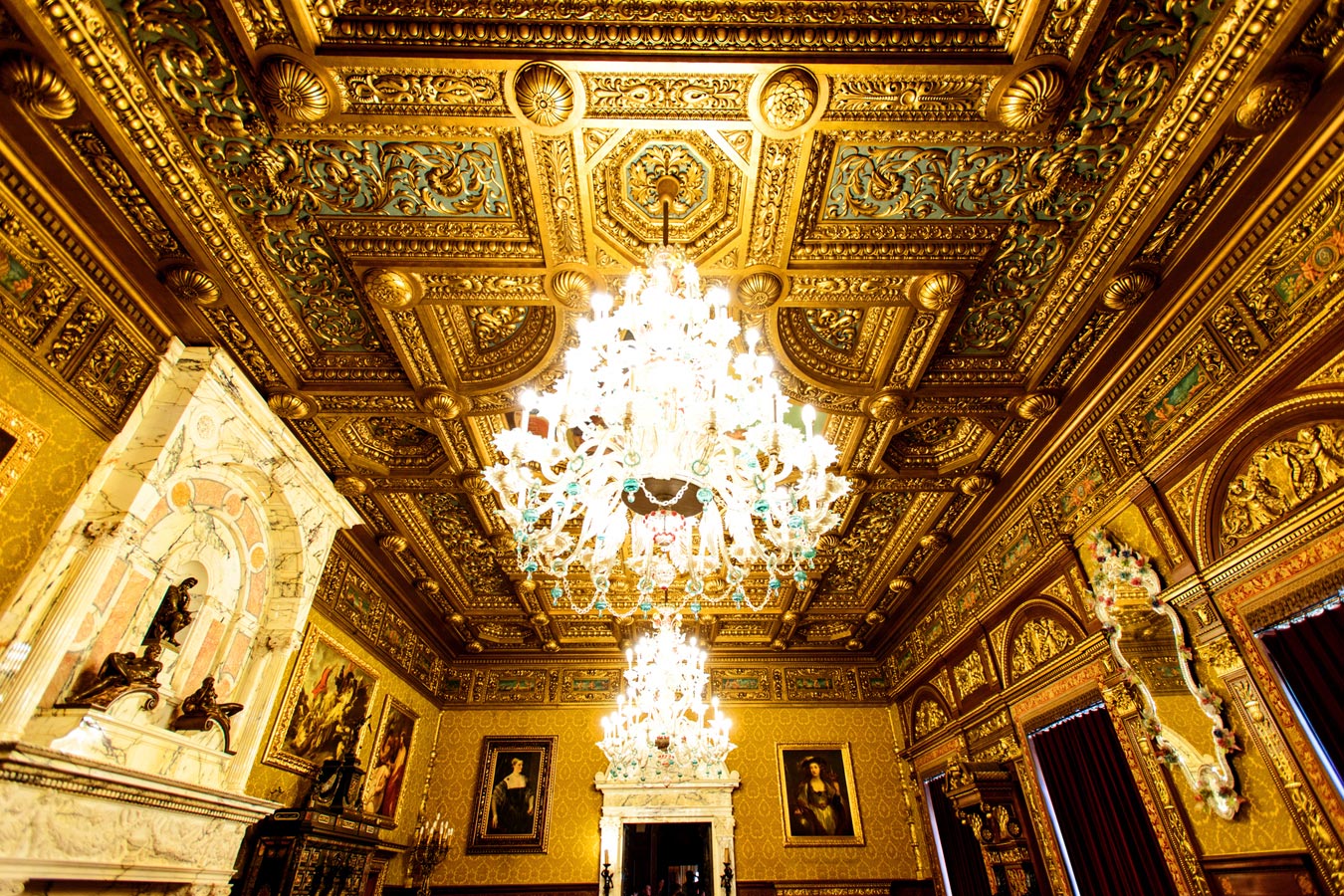
Among the most dazzling of the themed rooms is the Florentine Room, a salon evoking the Italian Renaissance at its most opulent, with a magnificent gilded ceiling, richly decorated walls, and an atmosphere of golden splendour that recalls the palaces of the Medici. It is a room designed to glow, and it stands as one of the highlights of any tour of the castle’s interior.
Rooms like the Florentine were not merely decorative exercises but reflections of a cultivated royal taste steeped in the art and history of Europe. King Carol and his queen were serious patrons and collectors, and the castle’s interiors expressed their deep engagement with European high culture, their desire to gather the finest artistic traditions under one magnificent roof in their mountain home.
The craftsmanship in these rooms is uniformly superb. The gilding, the carved and painted ceilings, the inlaid woodwork, the fine furniture and the textiles all represent the top level of European decorative art of the period, executed by specialists brought in for the purpose. No shortcut was taken, no expense spared, in the pursuit of perfection in each chosen style.
Walking from the Florentine Room to its many companions, each a different jewel, you begin to grasp the ambition of Peleş as a whole. This was to be not just a comfortable royal residence but a treasure-house of art and craftsmanship, a place where every room was a work of art in itself, and where the collective effect proclaimed the cultural aspirations of a king and a kingdom reaching for greatness.
The Great Armory
For all its palatial luxury, Peleş also houses a collection that recalls the harder world of the castles in the rest of this series: its great armory, one of the most important collections of arms and armor in Romania and among the largest in the region. Here, in dedicated halls, are gathered thousands of weapons and pieces of armor spanning centuries and continents.
The collection reflects King Carol’s own interests and the collecting passions of the age. Suits of full plate armor stand in gleaming ranks, walls bristle with swords, halberds, maces and firearms, and there are pieces of great rarity and craftsmanship, including elaborately decorated parade armor and weapons from across Europe and beyond, even fine examples of Eastern and Ottoman arms.
An armory in a palace built in peacetime might seem incongruous, but it made perfect sense to the nineteenth-century royal mind. Such collections celebrated the martial heritage and chivalric romance that the age so admired, connecting the modern monarchy to the warrior traditions of the past, and they were also simply magnificent to behold, a display of history and craftsmanship in steel.
For many visitors the armory is a highlight, a chance to see medieval and Renaissance warfare made tangible in room after room of gleaming metal. It provides a fascinating counterpoint to the delicate salons elsewhere in the castle, a reminder that even a palace of pure luxury like Peleş paid homage, in its collections, to the long and often violent history of the castles and knights that had come before.
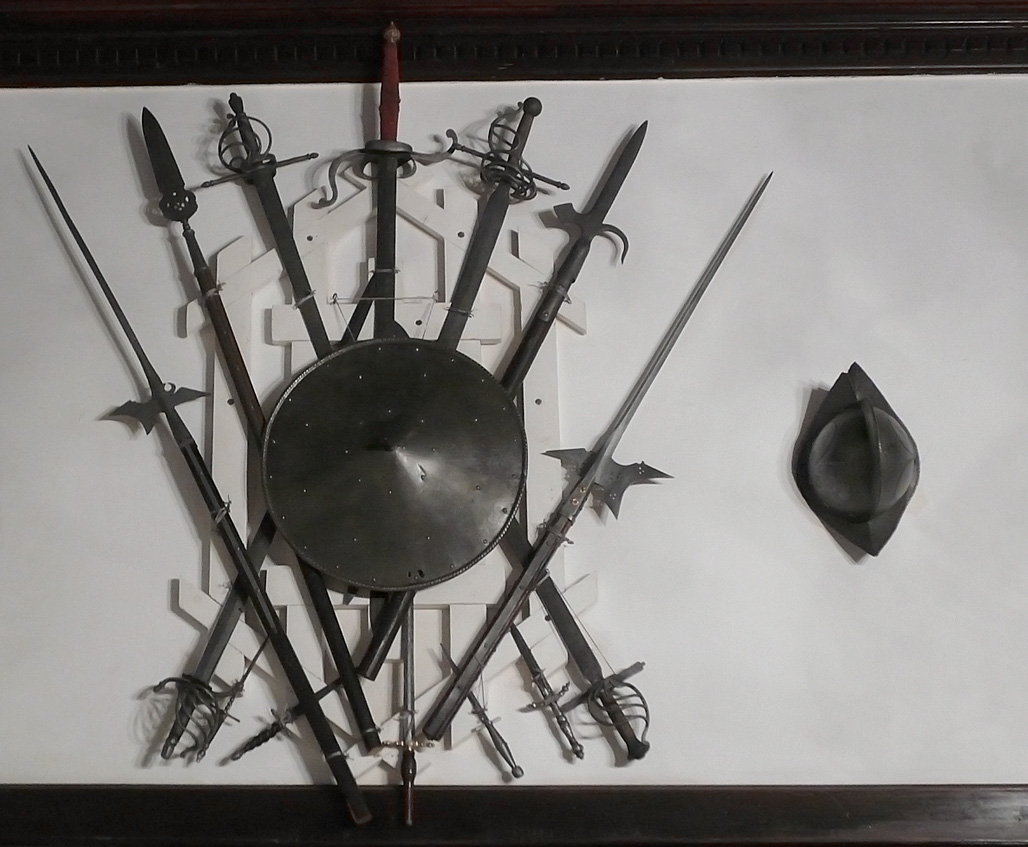
Some of the armour on display is of a size and elaboration that speaks of parade and prestige rather than the battlefield, gleaming ceremonial pieces that were meant to be seen and admired. Others are grimly practical, the actual tools of medieval and Renaissance war, and together they trace the whole spectrum of arms from function to spectacle.
The Library and Its Secret Door
Among the most beloved rooms in Peleş is the royal library, a warm and elegant space lined with finely bound books, dark carved wood and comfortable furnishings, the private retreat of a scholarly king. Carol I was a cultivated and studious man, and the library reflects that side of him, a place of quiet learning amid the ceremonial splendour of the palace.
The library holds a delightful secret that visitors always love: a hidden door, disguised as a section of the bookshelves, that allowed the king to slip discreetly from the library to other parts of the castle. Such concealed passages, beloved of storybooks, were a genuine feature of grand residences, and the secret door at Peleş adds a touch of intrigue and playfulness to the scholarly room.
The presence of so fine a library speaks to the character of the court that Carol and his queen created. This was a cultured, intellectual milieu, deeply engaged with European literature, art and ideas, and the library was its symbol, a sign that the Romanian monarchy aspired to be not just wealthy and powerful but learned and refined, a patron of the mind as well as of the arts.
To stand in the library, surrounded by its books and its dark carved wood, with the secret door hidden among the shelves, is to feel the private personality of the castle. Away from the grand public halls, this is where the king could read and think in peace, and it reminds us that Peleş, for all its scale and splendour, was also a real home, shaped by the tastes and habits of the people who lived in it.
Music, Art and a Poet Queen
The cultural life of Peleş owed much to King Carol’s queen, Elisabeth of Wied, a gifted and romantic woman who wrote poetry and prose under the pen name Carmen Sylva. Deeply artistic and a lover of music, literature and the arts, she gave the court at Peleş a creative, cultivated atmosphere, gathering musicians, writers and artists around her in the mountain palace.
The music room and the other cultural spaces of the castle were the setting for this artistic life. Concerts and recitals, readings and gatherings filled the palace with music and conversation, and the queen’s own literary work, celebrated in her day, gave Peleş a reputation as a place of romance and creativity, a court where the arts were genuinely loved and fostered.
Elisabeth’s presence added a note of poetry, quite literally, to the character of Peleş. Where Carol brought discipline, statecraft and a passion for building, she brought imagination, melancholy and art, and together they created a court that was both a serious seat of monarchy and a haven of culture, reflecting the two sides of the castle itself, the grand and the intimate, the powerful and the beautiful.
The rooms devoted to music and art remind us that Peleş was not only a monument to royal power but a living centre of culture. In these spaces, real music was played and real poetry written, and the romantic, artistic spirit of the poet queen still seems to linger, giving the magnificent palace a warmth and a soul beyond its dazzling surfaces.

Queen Elisabeth’s writings, translated and admired across Europe in her lifetime, helped shape a romantic image of Romania abroad, and her patronage extended to musicians and artists whose careers she fostered. The cultural glow she gave the court was one of the monarchy’s quieter but real achievements.
A Castle Ahead of Its Time
Here is the great paradox of Peleş, and one of its most fascinating aspects: behind its facade of antique, storybook romance, the castle was one of the most technologically advanced buildings of its era. Far from being a mere exercise in nostalgia, Peleş was a showcase of the latest modern conveniences, a palace that looked to the medieval past but lived firmly in the cutting-edge present.
The castle is often cited as one of the first in Europe to be fully powered by electricity, generated by its own power plant fed by the mountain streams, so that its rooms could be brilliantly lit at the touch of a switch while other palaces still relied on candles and gas. It also boasted central heating, running water, an elevator, and even, remarkably, a central vacuum-cleaning system built into the walls.
Perhaps most charmingly, the castle had its own theatre with a small cinema, and films were among the entertainments enjoyed by the royal family and their guests, an astonishingly modern amenity for a mountain palace of the late nineteenth century. The retractable glass ceiling of the Hall of Honor was operated by an electric motor, another marriage of the antique and the mechanical.
This combination of historical fantasy and modern technology is the essence of Peleş and of its age. The nineteenth century loved the romance of the past but embraced the wonders of progress, and Peleş embodies both impulses perfectly, a castle that looks like a medieval dream but functioned like a model of modern engineering. It was, in the truest sense, a palace ahead of its time.
Visitors are often astonished to learn just how modern the castle was, expecting a purely historical monument and discovering instead a pioneer of domestic technology. It is a useful reminder that the people of the past were not simply backward dwellers in a dim age but eager adopters of every new marvel their era could provide.
Terraces, Statues and Mountain Air
The beauty of Peleş does not stop at its walls. Before the castle spread elegant Italianate terraces, stepping down the mountain slope in a series of balustraded levels adorned with statues, fountains and ornamental gardens. These formal terraces provide the perfect foreground to the castle, a graceful transition between the wild forest around and the intricate architecture of the palace itself.
The terraces are dotted with fine sculpture, marble figures and decorative urns that lend a note of classical refinement to the mountain setting, and fountains bring the sound of water to the gardens. Laid out to be enjoyed on foot, they offer changing views of the castle and the surrounding peaks, and they were an integral part of the royal family’s pleasure in their summer home.
There is a wonderful contrast at Peleş between the cultivated formality of the terraces and the untamed grandeur of the Carpathians beyond. The gardens impose a moment of Italian order on the edge of the wilderness, and the effect, with the statues and fountains set against the dark forest and the mountain peaks, is enchanting, a meeting of art and nature that few settings can match.
To stroll the terraces, whether in the green of summer or the snow of winter, is one of the great pleasures of a visit, and it completes the experience of the castle as a total work of art, architecture, interior, collection and garden all conceived together. This short tour lets you wander the grounds and see how beautifully the palace sits amid its terraces and its mountains.
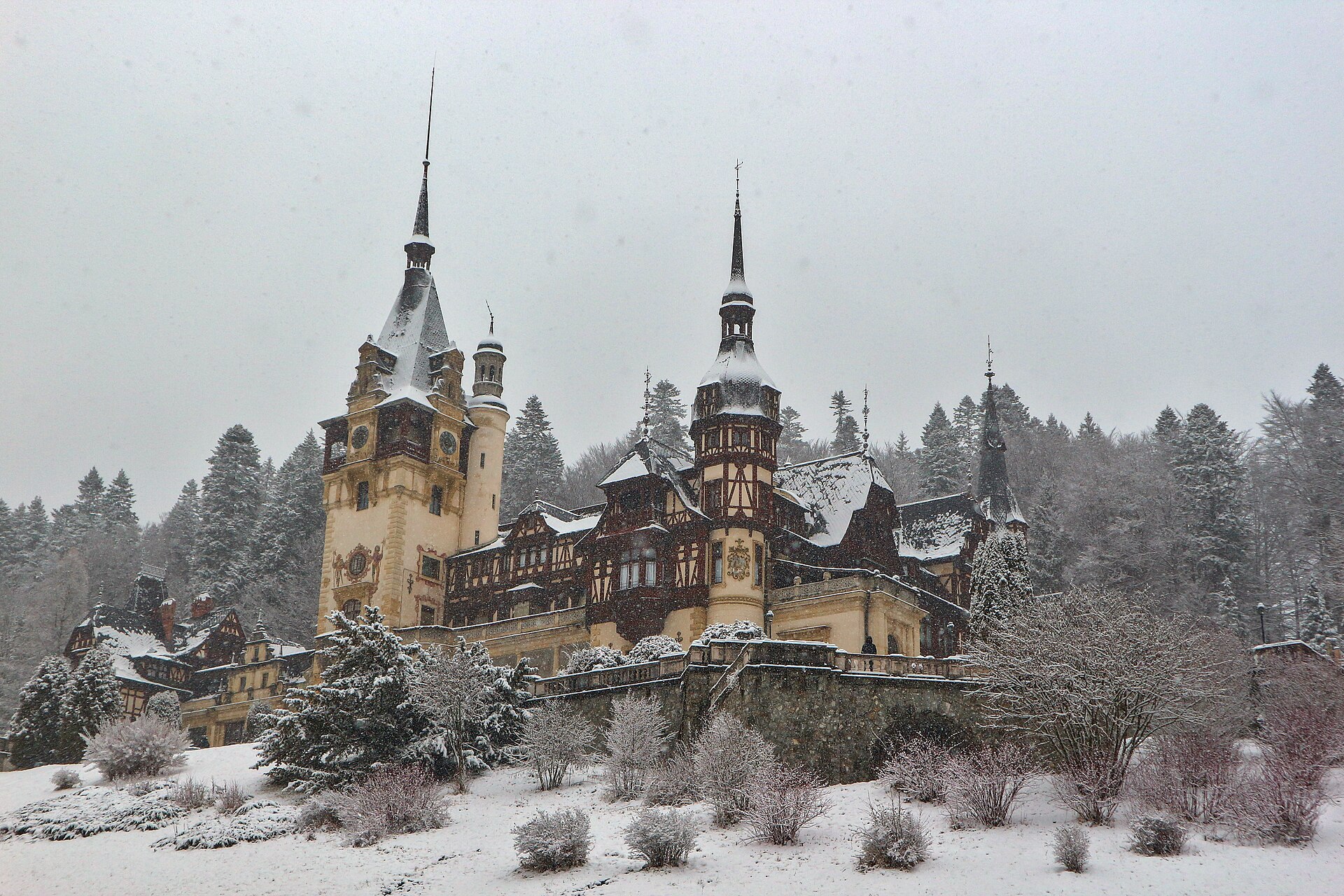
In winter the terraces take on a different magic, the statues capped with snow, the fountains stilled, the dark forest and white peaks framing the castle in a scene of crystalline beauty. Many visitors consider snowy Sinaia the most enchanting time to see Peles, when the mountain palace looks most like the fairy tale it resembles.
From Royal Home to National Treasure
After King Carol I died at Peleş in 1914, the castle remained a beloved royal residence through the reigns that followed, cherished by the Romanian royal family as their summer home in the mountains. Nearby, the smaller castle of Pelişor was built for Carol’s heir, Ferdinand, and his wife Queen Marie, the same queen who so loved Bran, creating a whole royal enclave in the Carpathians.
The idyll ended in 1947, when Romania’s communist regime abolished the monarchy and forced King Michael into exile. Peleş, like the crown’s other properties, was seized by the state, and for a time it was preserved as a museum, though there were periods when it was closed and even, under the dictator Ceauşescu, largely shut away from the public, its future uncertain.
After the fall of communism in 1989, Peleş entered a new era. The castle was reopened and celebrated as one of Romania’s greatest cultural treasures, and in time it was the subject of restitution to the former royal family, with arrangements made to keep it open to the public as a museum. Its story thus echoes that of Bran, from royal home to communist seizure to a complex modern settlement.
Today Peleş is one of the most visited and most admired sites in Romania, drawing crowds from around the world to marvel at its splendour. It stands as the crowning monument of the Romanian monarchy, a symbol of the nation’s late nineteenth-century ambitions, and simply as one of the most beautiful castles anywhere, a royal dream in the Carpathians that survived the fall of kings to enchant a new age.
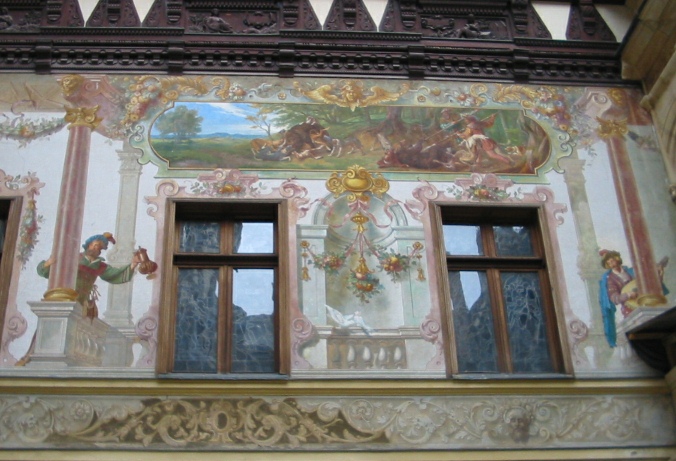
The careful preservation of Peles through all these upheavals means that visitors today see the castle very much as the royal family knew it, its rooms furnished, its treasures in place, its atmosphere intact. Few former royal residences have survived the twentieth century so completely, which makes Peles all the more precious as a window into a vanished world.
Castles Nearby
- Corvin Castle: The Fairy-Tale Fortress a Warrior Built
- Bran Castle: The Real History Behind Dracula’s Fortress
Why Peles Feels Like the Dream of a King
Peleş is the odd one out among great castles, and gloriously so. It never guarded a pass or withstood a siege; it was built in peace, for beauty, by a king who wanted to give his young nation a palace worthy of the oldest monarchies of Europe. And in that ambition it succeeded completely, producing one of the most beautiful royal residences on the continent, a jewel set in the Carpathian forest.
What lingers, after the dazzle of the carved walnut and the gilded ceilings, is the strange harmony of the place: a castle that looks like a medieval dream yet hummed with electricity, that gathered the styles of the whole world into one mountain palace, that was at once a serious seat of monarchy and a haven of art and poetry. Peleş is the nineteenth century’s romance with the past and its faith in progress, fused into a single perfect building.
So end your journey through the castles of Central Europe here, in the mountains above Sinaia, before the terraces and towers of Peleş. Walk its hundred rooms, marvel at its craft and its cleverness, and remember the king who dreamed it into being. Peleş proves that a castle need not be born of war to be magnificent, and that sometimes the most beautiful fortress of all is the one built purely for the love of beauty itself.
You May Like
Mafra, the Palace a King Built From a Vow