High on a great limestone hill above the fairy-tale spires and red roofs of Tallinn stands one of the most historically significant castles in all of the Baltic. Toompea Castle has crowned this height for nearly eight centuries, and from it the rulers of Estonia, Danish, German, Swedish, Russian, and at last Estonian, have governed the land below. Its mighty tower, Tall Hermann, flies the flag of independent Estonia today, raised each morning to the national anthem, a powerful symbol of sovereignty visible across the capital.
Toompea is a castle unlike almost any other, for it is not a ruin or a museum but the living seat of a nation’s government, home to the Estonian parliament to this day. Its long and dramatic history mirrors the whole story of Estonia, a small and resilient nation that endured centuries of foreign rule before winning its own freedom. From the legend of the hero buried beneath the hill to the pink palace of a Russian empress and the flag that now flies from the ancient tower, Toompea holds the entire history of Estonia within its walls. In this article you will explore all of it. Come and discover the castle at the heart of Tallinn.
What makes Toompea so compelling is that its history is not sealed away in the past but continues to unfold in the present. This is a castle that is still doing what it has always done, serving as the seat from which Estonia is governed, and its ancient walls still shelter the making of the nation’s future. To visit is to step into a story that stretches unbroken from the age of legend to the living democracy of today, all gathered upon a single hill above the beautiful old town of Tallinn.

In This Article
- The Castle on the Hill of Tallinn
- Toompea, the Hill of Legends
- The Danes and the Falling Flag
- Tall Hermann, the Watchful Tower
- The Knights of the Order
- A Crossroads of Empires
- Catherine the Great’s Pink Palace
- The Many Faces of the Castle
- Whoever Flies the Flag Rules Estonia
- A Symbol of Estonian Independence
- The Seat of the Estonian Parliament
- Exploring Toompea Today
- Finding Toompea Castle
- Castles Nearby
The Castle on the Hill of Tallinn
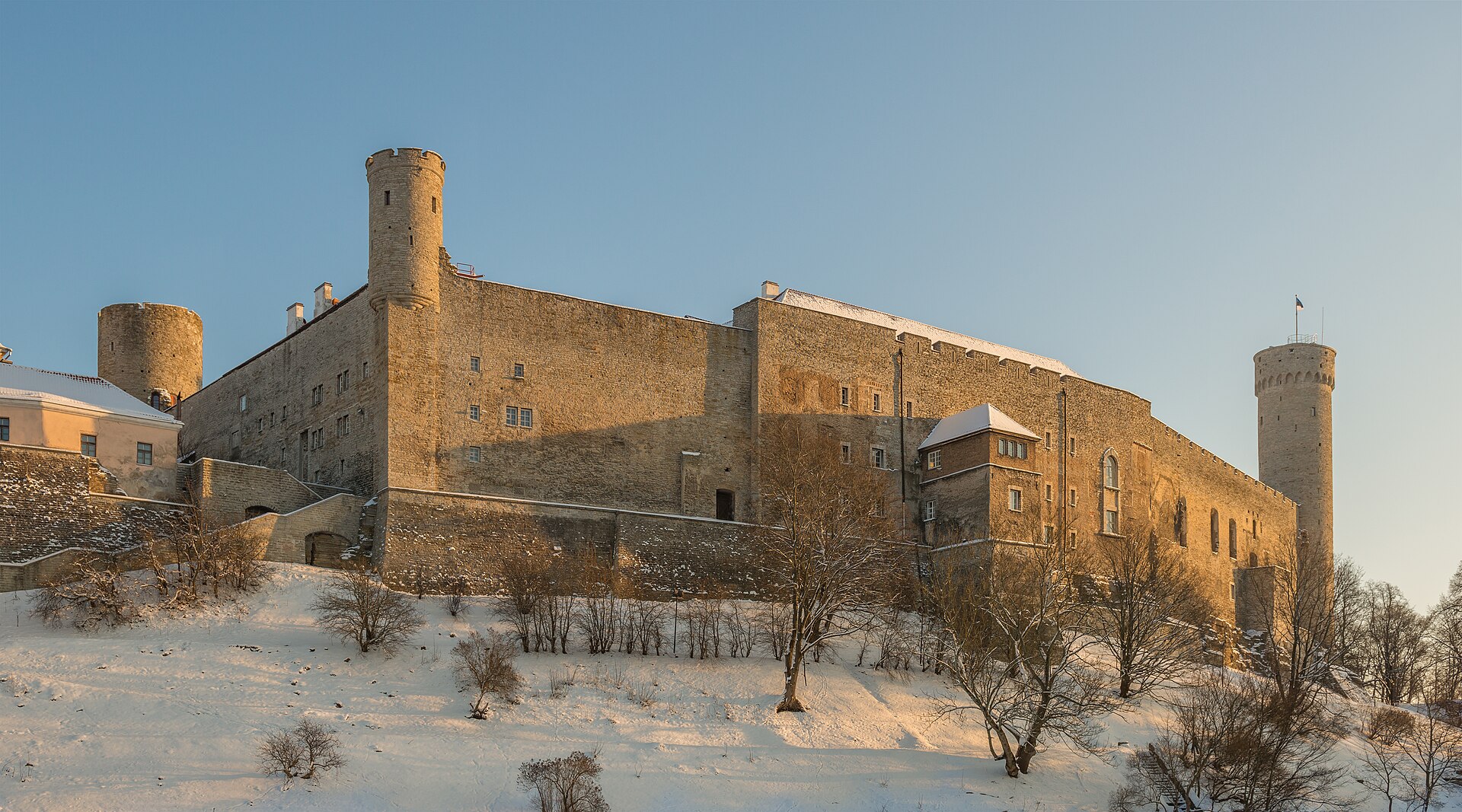
Rising above the fairy-tale spires and red roofs of Tallinn’s old town, on a great limestone hill that dominates the Estonian capital, stands one of the most historically important castles in all of the Baltic. Toompea Castle has crowned this height for the better part of eight centuries, and from it the rulers of Estonia, whoever they happened to be, have governed the land below. Today its most famous feature, the tall tower known as Tall Hermann, flies the blue, black, and white flag of independent Estonia, a powerful symbol visible across the city.
Toompea is a castle unlike any other in this series, for it is not a romantic ruin or a museum but the living seat of a nation’s government, home to the Estonian parliament to this day. Its long and dramatic history mirrors the history of Estonia itself, a small country that has been ruled in turn by Danes, German knights, Swedes, and Russians before finally winning its own independence. To understand Toompea is to understand the whole story of Estonia, written in stone upon a hill. This is the tale of the castle that has always been the seat of power in Tallinn.
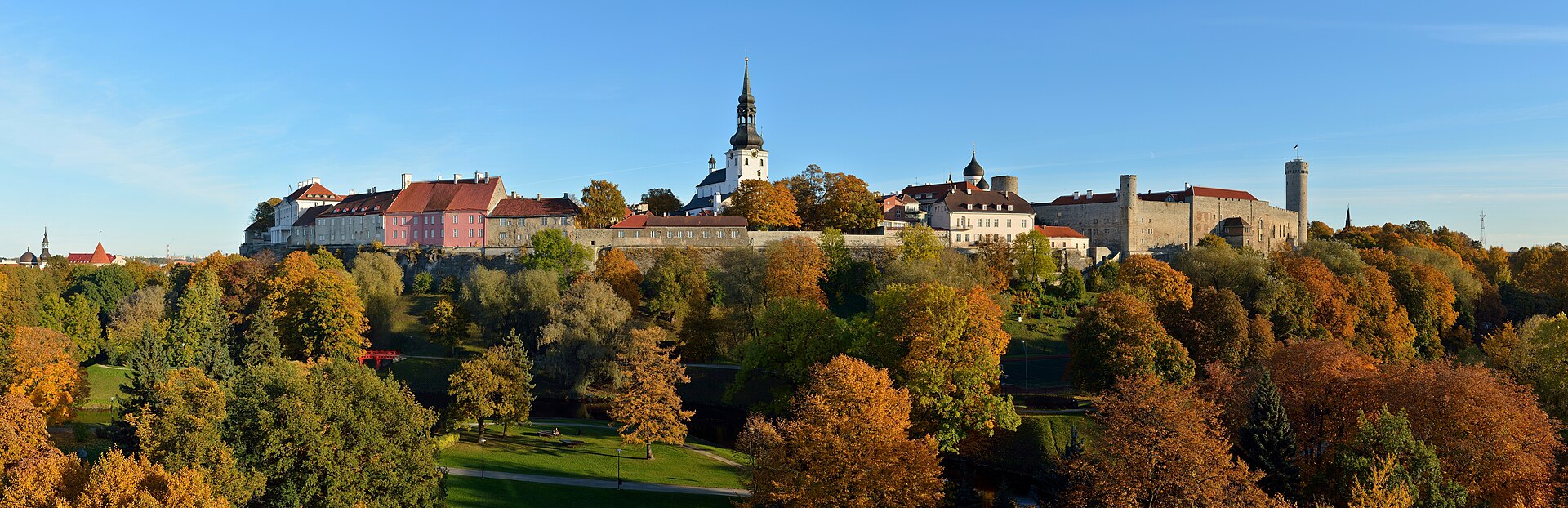
There is something deeply fitting about the way Toompea rises above the rest of Tallinn, physically embodying the idea of authority set apart and above. The upper town of Toompea, gathered around the castle, was for centuries the domain of the nobility and the rulers, while the lower town below was the world of the merchants and craftsmen. That ancient division between the hill of power and the town of trade is still legible in the layout of Tallinn today, and the castle at the summit remains the crown of the whole city.
The name Toompea itself comes from the German for cathedral hill, a reminder that this height was also the religious centre of the upper town, crowned not only by the castle but by the great cathedral that gives the hill its name. Power spiritual and temporal have long met on this summit, and the interweaving of church and state, of fortress and cathedral, adds yet another layer to the rich meaning of the place. It is this density of history and significance, gathered on a single hill, that makes Toompea so endlessly rewarding to explore.
Toompea, the Hill of Legends
The hill on which the castle stands is wrapped in ancient legend, for according to Estonian folklore Toompea is no ordinary height but the burial mound of a mythical hero of the nation’s earliest days. The story tells that the great hero Kalev was laid to rest here by his grieving widow, who is said to have carried the stones to build his mound with her own hands, and that the hill of Toompea is the monument she raised over him. It is a beautiful legend, and it speaks of the deep significance this place has held in the Estonian imagination since time immemorial.
Long before the coming of foreign conquerors, the hill was a stronghold of the ancient Estonians, a natural fortress rising above the surrounding land. Its steep limestone sides made it an ideal place of defence, and it was here that the people of the region gathered to protect themselves in times of danger. This deep and legendary past gives Toompea a resonance that goes far beyond its stone walls, for it has been a place of power and meaning to the people of Estonia since the very earliest times, long before the first medieval castle rose upon its heights.
Legends like that of the hero beneath the hill are precious because they reveal how a people understood and cherished their own land long before the age of written history. For the Estonians, Toompea was never just a strategic height but a place woven into the deepest layers of their national mythology, a sacred site charged with meaning. That this legendary hill should also have become the literal seat of Estonian power gives it a resonance that unites myth and history, and it helps explain the profound place Toompea holds in the Estonian heart.

The Danes and the Falling Flag
The medieval history of Toompea begins in earnest with the arrival of the Danes in the early thirteenth century, during the great northern crusade that brought Estonia under Christian and foreign rule. In the year 1219, the Danish king led a campaign into Estonia and seized the hill of Toompea, and it was here, according to one of the most famous legends of the north, that the Danish national flag was born. The tale relates that during a desperate battle a red banner bearing a white cross fell from the sky, inspiring the Danes to victory.
This legend of the falling flag, whatever its historical truth, links Toompea forever to the origins of the Danish national symbol, and it is a mark of the hill’s importance in the wider history of the Baltic. The name of the Estonian capital, Tallinn, is itself often said to derive from a phrase meaning the Danish town or castle, a lasting reminder of this period of Danish rule. Under the Danes, a stone castle began to take shape on the hill, replacing the ancient Estonian stronghold and beginning the long history of Toompea as a medieval fortress and seat of foreign power over Estonia.
The Danish period left a lasting imprint on Tallinn far beyond the castle itself, shaping the early development of the town and giving it, according to tradition, its very name. The story of the falling flag, meanwhile, has become one of the most famous foundation legends in all of Europe, cherished in Denmark as the origin of the oldest national flag still in use. That so momentous a legend should be attached to this Estonian hill is a measure of Toompea’s importance in the great crusading drama that reshaped the whole of the medieval Baltic.
Tall Hermann, the Watchful Tower
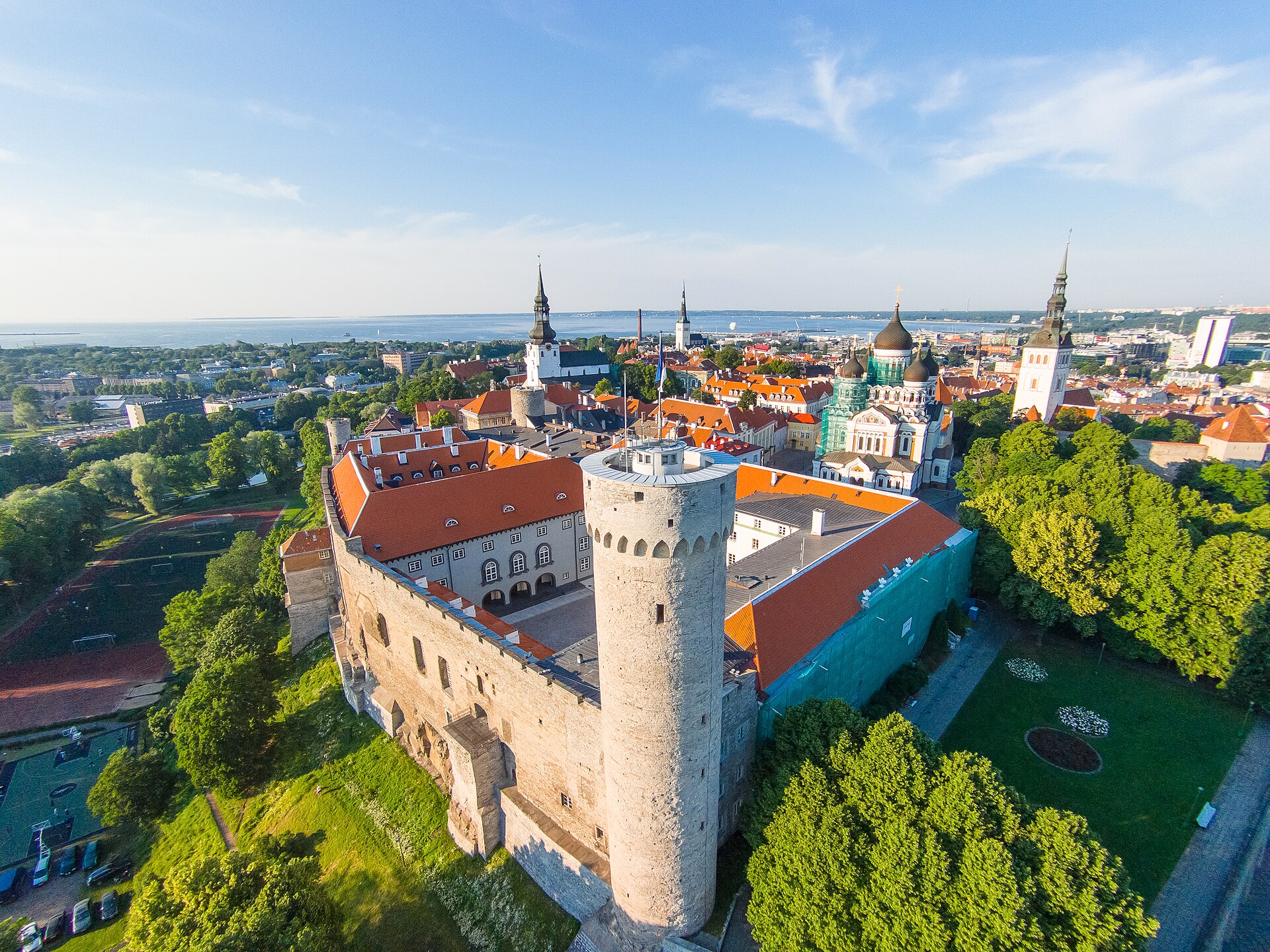
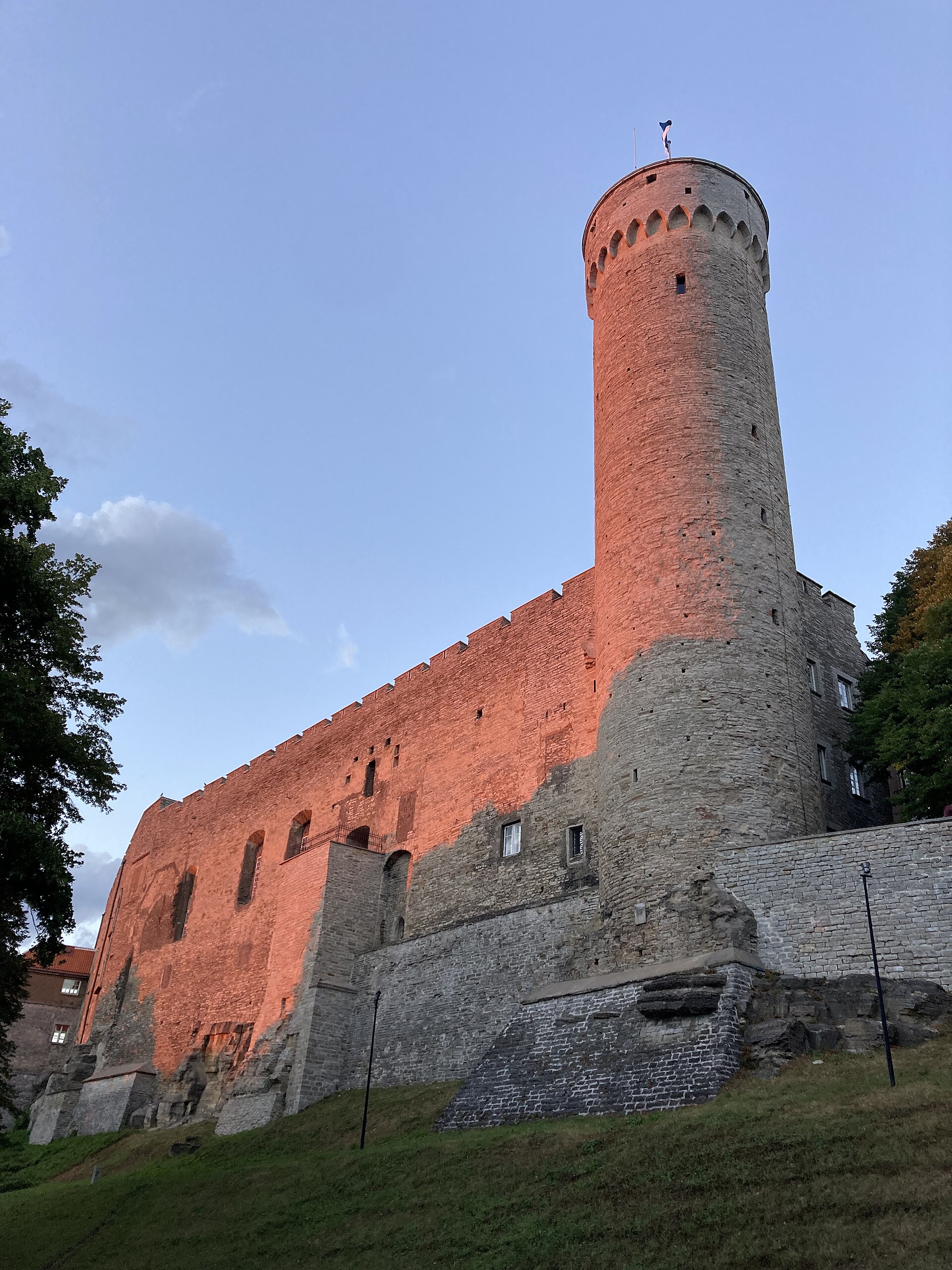
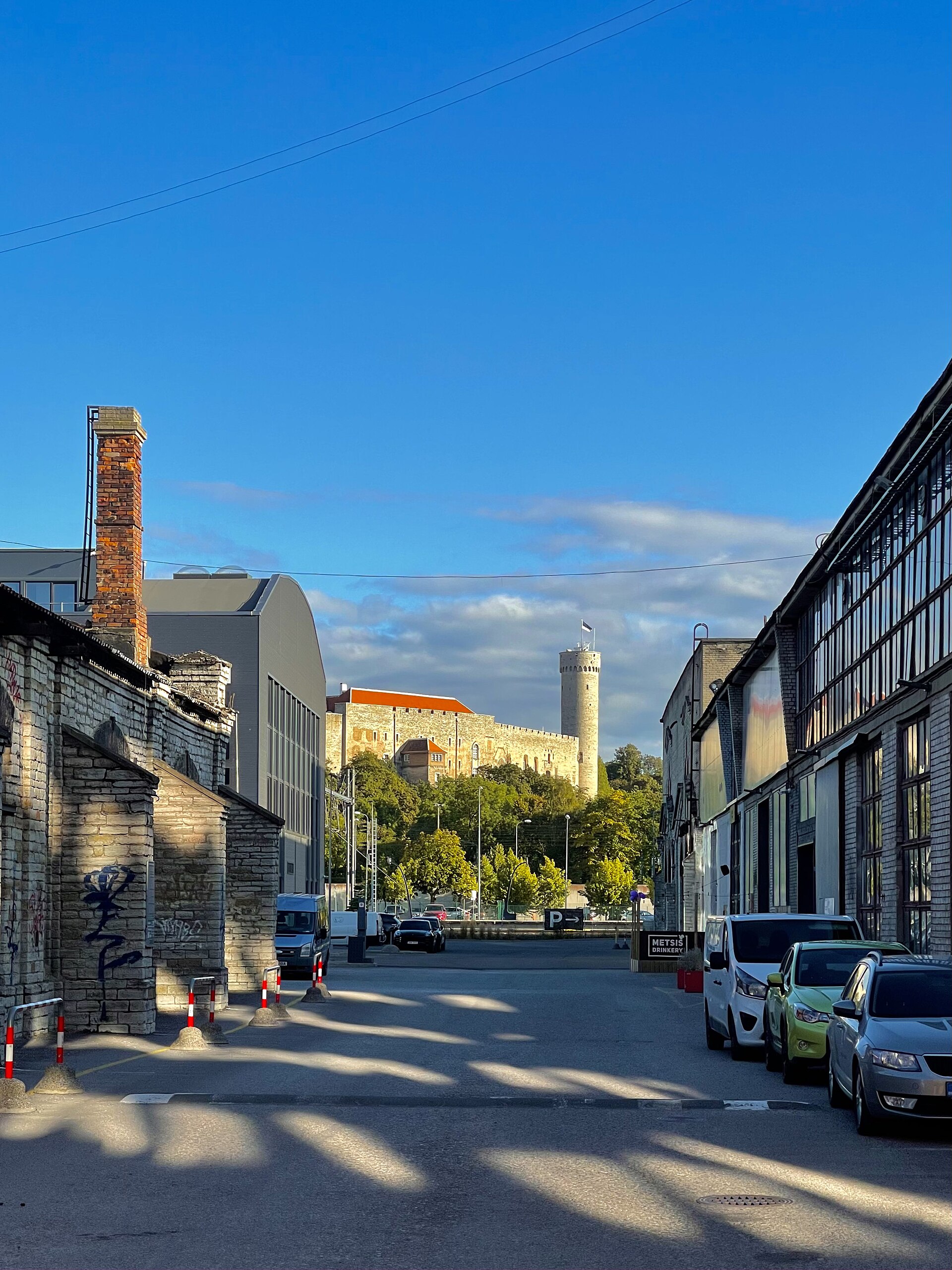
The most famous and beloved feature of Toompea Castle is its great tower, known as Tall Hermann, a mighty structure that rises high above the hill and can be seen from across Tallinn. Built and heightened over the medieval centuries, this soaring tower served as the castle’s principal stronghold and lookout, commanding the surrounding city and countryside and standing as a symbol of the power that ruled from the hill. Its tall, square form is one of the defining images of the Estonian capital.
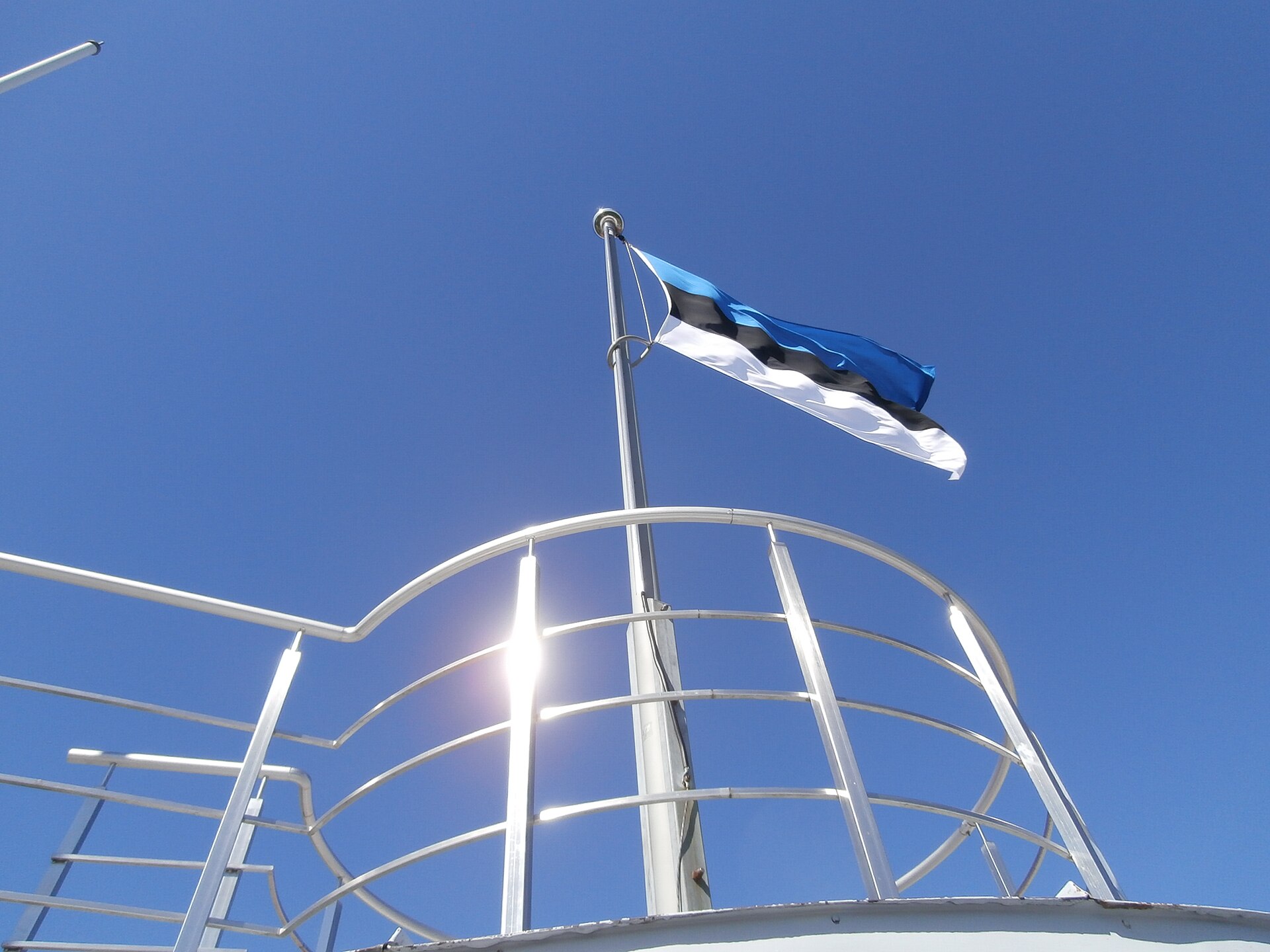
Tall Hermann has taken on a profound significance in the life of the Estonian nation, for it is from the top of this tower that the national flag is flown. Each morning the flag is raised to the sound of the national anthem, and each evening it is lowered, a daily ritual that marks the tower as the very heart of Estonian sovereignty. To see the blue, black, and white flag flying from Tall Hermann is to see the symbol of a free and independent Estonia, and the tower has become one of the most cherished emblems of the nation, watching over the capital as it has for centuries.
The daily raising and lowering of the flag on Tall Hermann is one of the most moving rituals in Estonian public life, a simple ceremony that carries an enormous weight of meaning. In the quiet of the early morning, as the national anthem plays and the flag climbs the tower, the whole long story of Estonia’s struggle for freedom seems to be gathered into a single act. For Estonians, the sight of their flag on Tall Hermann is a daily reaffirmation of everything their nation has endured and everything it has at last achieved.

The Knights of the Order
In the middle of the fourteenth century, Toompea passed from Danish hands into those of the Livonian Order, the branch of the Teutonic Knights that dominated much of the eastern Baltic. Under the knights, the castle was extensively rebuilt and transformed into a powerful convent-fortress, a type of stronghold that combined the functions of a monastery and a military base and that was characteristic of the crusading orders. This gave Toompea much of the form it would carry through the following centuries.
The Livonian Order was one of the great powers of the medieval Baltic, ruling large territories and maintaining a network of formidable castles, and Toompea became one of its key strongholds in the region. Under the knights, the fortress was strengthened and its towers, including Tall Hermann, raised to their commanding height. The rule of the Order marked one of the longest and most formative periods in the castle’s history, and much of the medieval Toompea that survives today owes its character to these warrior monks who held the hill for so long and shaped it into a mighty fortress.
The convent-fortresses of the Livonian Order were among the most sophisticated military and religious buildings of the medieval Baltic, designed to house a community of warrior monks in a stronghold that was at once monastery and castle. In transforming Toompea into such a fortress, the knights gave it a new coherence and strength, and they tied it into their wider network of power across the region. The long rule of the Order was a defining era for Toompea, and its influence can still be traced in the medieval bones of the castle that survive to this day.
A Crossroads of Empires
The history of Toompea is a history of changing masters, for the castle passed in turn through the hands of nearly every great power that contested the eastern Baltic. After the Danes and the Livonian Order came the Swedes, who ruled Estonia through much of the seventeenth century and left their own mark upon the hill, and after the Swedes came the Russians, who took control in the early eighteenth century and would rule Estonia for two hundred years. Each of these powers governed the land from Toompea, and each altered the castle to suit its own needs and tastes.
This succession of rulers made Toompea a true crossroads of empires, a place where the great forces of northern European history met and left their imprint. The castle you see today is a palimpsest of all these ages, its fabric shaped by Danish, German, Swedish, and Russian hands across the centuries. Few places anywhere so vividly embody the fate of a small nation caught between larger powers, and the layered history written into the walls of Toompea tells the whole dramatic story of Estonia’s long struggle under foreign rule.
The frequent changes of ruler at Toompea were not mere transfers of a building but moments of profound significance for the people of Estonia, each marking a new chapter in their long experience of foreign domination. Danes, knights, Swedes, and Russians each brought their own laws, languages, and customs to the land they governed from this hill, and the Estonian people had to endure and adapt to them all. The castle thus stands as a witness to one of the central facts of Estonian history, the long centuries during which the nation was ruled by others from the seat of power on Toompea.
Catherine the Great’s Pink Palace
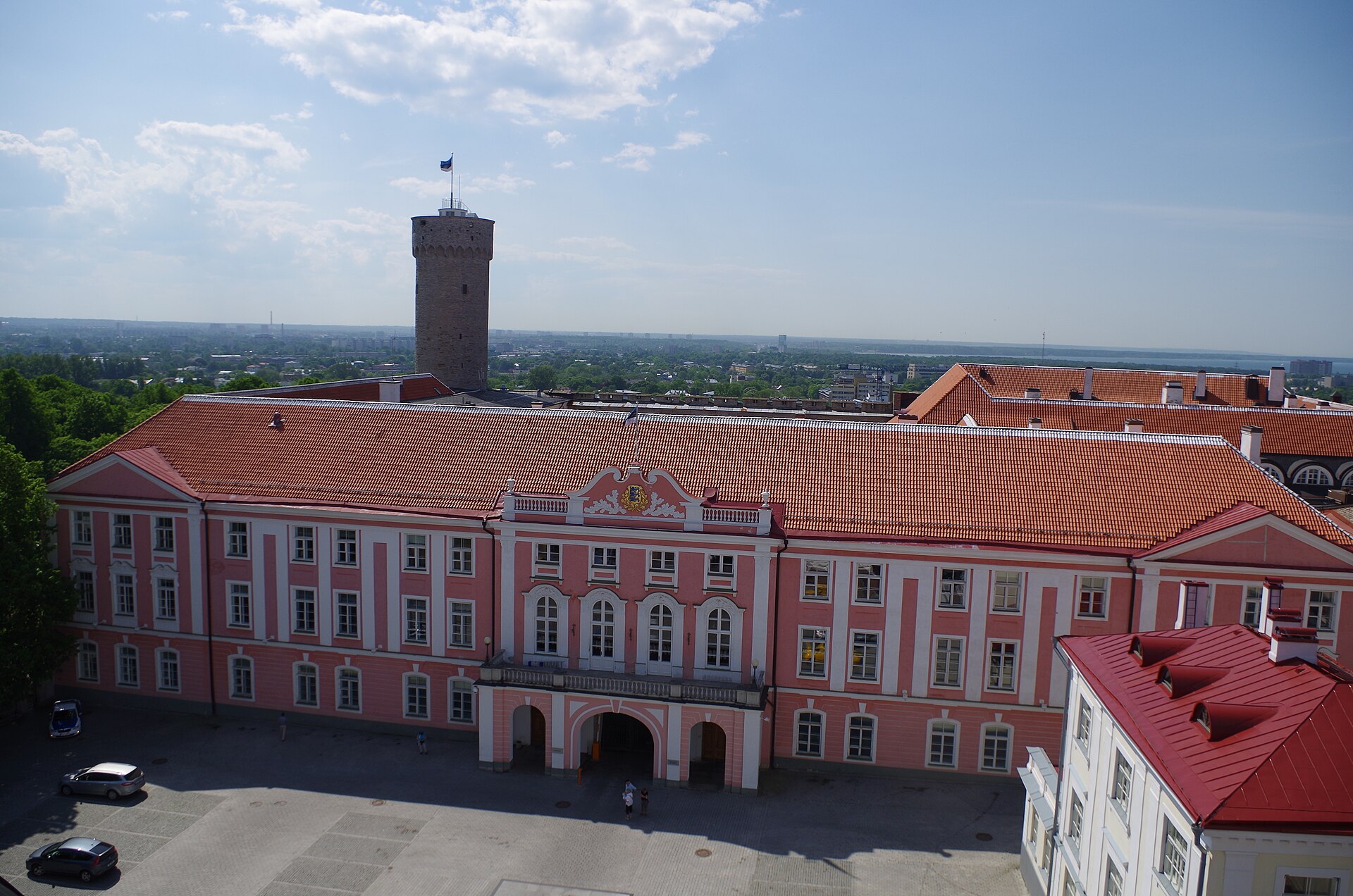
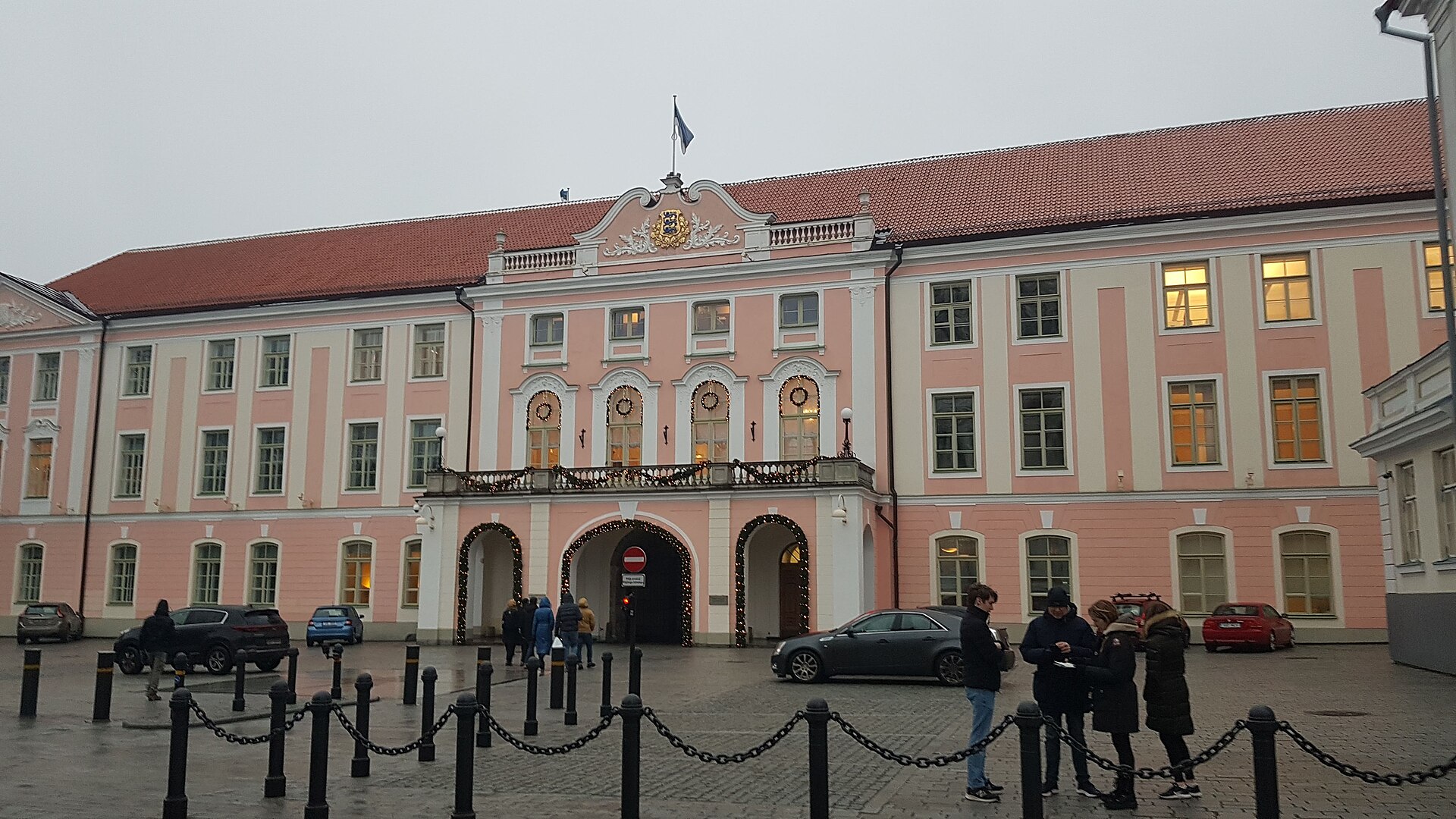
One of the most surprising and delightful features of Toompea is the elegant pink palace that forms one face of the castle, a graceful baroque building that seems to belong to a different world from the stern medieval fortress behind it. This handsome palace was built in the later eighteenth century under the rule of the Russian empress Catherine the Great, who ordered a fine new residence for the governor of the province to be added to the ancient castle. Its warm pink walls and classical elegance make a striking contrast with the grey medieval stonework.
The pink palace reflects the tastes of imperial Russia at the height of its power, when a great empress sought to adorn her far-flung provinces with buildings worthy of her rule. It transformed one side of Toompea from a purely military fortress into an elegant seat of government, and it remains one of the most attractive and photographed parts of the castle today. The juxtaposition of the medieval tower and the baroque palace, of grim fortress and graceful residence, captures perfectly the way Toompea has accumulated the styles and ambitions of many different ages upon its single hill.
The contrast between the pink baroque palace and the grim medieval fortress is one of the most memorable sights at Toompea, and it perfectly encapsulates the layered nature of the place. Standing before it, you can see in a single view the meeting of two utterly different worlds, the hard military architecture of the crusading Middle Ages and the refined imperial elegance of the Age of Enlightenment. This visible dialogue between the ages is one of the great charms of Toompea, and it makes the castle a wonderful place to contemplate the sheer sweep of the history it has witnessed.
It is worth taking a moment to walk around the castle and see how utterly different it appears from each side, for from one direction it presents the face of a medieval fortress and from another the elegant front of an imperial palace. This dramatic contrast is not a flaw but a feature, the honest expression of a building shaped by many hands across many ages. Few castles anywhere reward this kind of circumnavigation so richly, and doing so is one of the best ways to grasp the extraordinary layered history of Toompea.
The Many Faces of the Castle
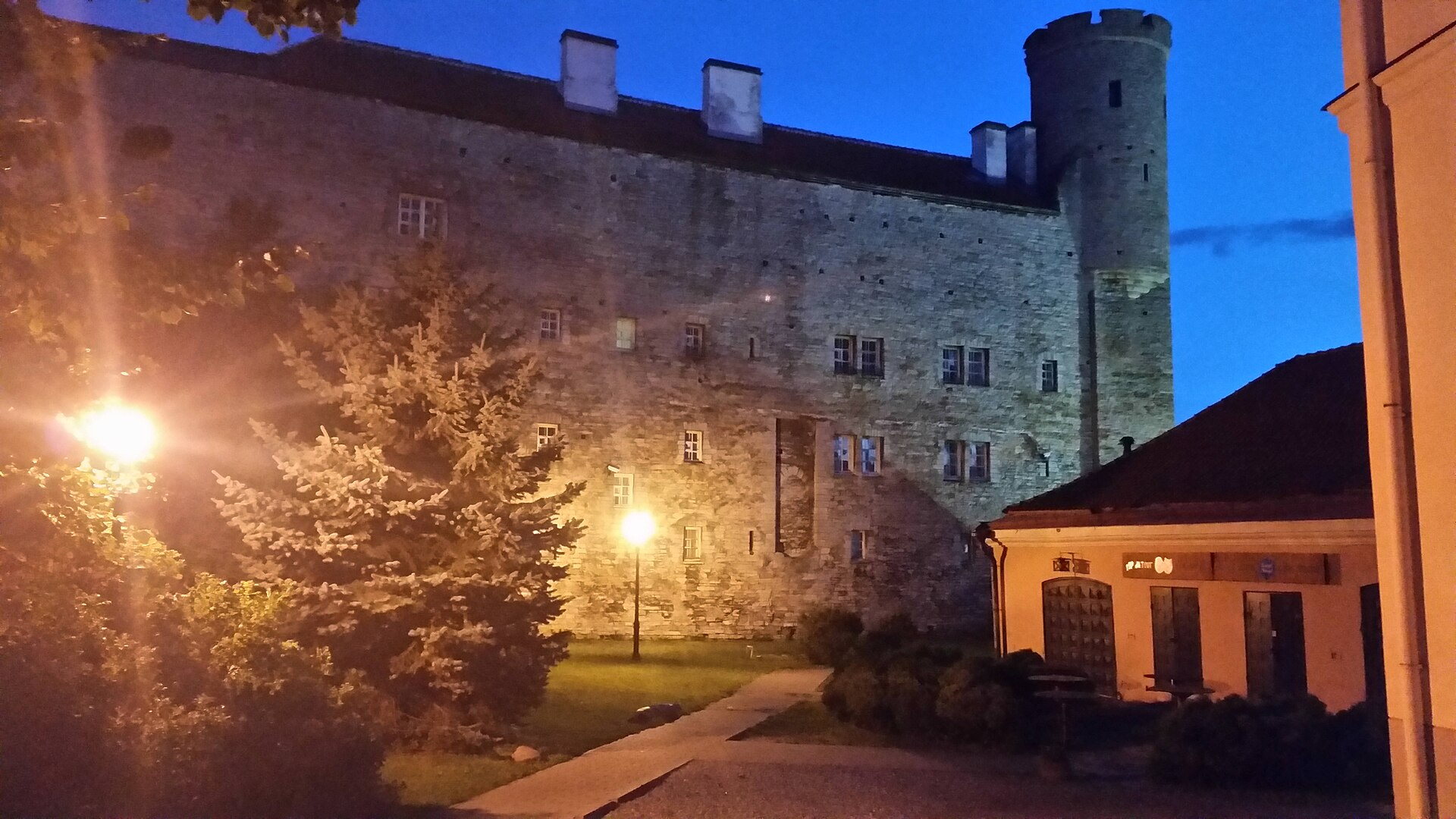
Because it has been rebuilt and added to by so many different rulers across so many centuries, Toompea today presents a fascinating mixture of architectural styles and periods. On one side rises the mighty medieval tower and the ancient stonework of the fortress, while on another stands the elegant pink baroque palace of the Russian era, and elsewhere are buildings and additions from yet other periods. The result is a complex that tells its long story through its very variety, each part representing a different chapter in the castle’s history.
This layering of styles, far from being a jumble, is one of the things that makes Toompea so interesting to explore, for it allows the visitor to trace the whole succession of powers that have ruled from the hill. Where else can you see, in a single castle, the work of Danish crusaders, German knights, and Russian emperors standing side by side? The many faces of Toompea are a visible record of Estonia’s complex history, and they give the castle a richness and depth that few other buildings can match, a whole national story told in stone and brick and stucco.
For the visitor, this architectural variety turns a tour of Toompea into a journey through the centuries, each part of the complex opening a window onto a different age. Rather than a single unified monument, Toompea is a living record of change, a place where the whole history of Estonia can be read in stone. This quality of accumulation, of successive ages building upon one another rather than sweeping the past away, is precisely what gives the castle its extraordinary depth, and it rewards the curious visitor with endless discoveries.
Whoever Flies the Flag Rules Estonia
There is a powerful tradition attached to Tall Hermann that captures the whole meaning of Toompea in a single image, for it is said that whoever flies their flag from the top of the great tower is the true ruler of Estonia. Across the centuries, as one power succeeded another, the changing of the flag on Tall Hermann marked the changing of the masters of the land, from the Danes and the knights to the Swedes and the Russians. The tower has thus been not just a fortress but the very symbol of sovereignty over Estonia.
This tradition took on its deepest meaning in the twentieth century, when Estonia struggled for and finally won its independence. Through the dark years of occupation, the flags of foreign powers flew from Tall Hermann, and the restoration of the Estonian flag to the tower became a cherished symbol of national freedom. Today the blue, black, and white flag of the Republic of Estonia flies proudly from the summit, raised each dawn and lowered each dusk, a daily affirmation that the Estonian people at last rule their own land from the ancient seat of power on Toompea hill.
This tradition, that whoever flies their flag from Tall Hermann rules Estonia, transformed the tower from a mere fortification into the ultimate symbol of national sovereignty. Through every change of power, the flag on the tower announced to all who held the land, and its raising or lowering marked the great turning points of Estonian history. In few places is the link between a physical monument and the abstract idea of sovereignty made so concrete and so moving, and it is this that gives Tall Hermann its unique place in the life of the nation.
Estonians speak of this tradition with real feeling, for it captures in a single vivid image the whole meaning of their long history. To lower a foreign flag from Tall Hermann and raise the Estonian one in its place was, at the decisive moments of the twentieth century, to declare the rebirth of the nation itself. The tower has thus witnessed not only the coming of foreign rulers but the triumphant return of Estonian sovereignty, and that is why it holds so cherished a place in the national imagination.
A Symbol of Estonian Independence
For the modern Estonian nation, Toompea and its tower have become potent symbols of independence and identity, bound up with the story of the country’s long road to freedom. Estonia is a small nation that endured centuries of foreign rule and, in the twentieth century, decades of occupation, and the recovery of its independence was a hard-won triumph. Toompea, as the historic seat of power and the place where the national flag flies, stands at the very heart of that story.
The raising of the Estonian flag over Tall Hermann is far more than a ceremonial gesture, for it embodies the sovereignty that the Estonian people fought so long to achieve. In moments of national significance, the eyes of Estonia turn to the tower, and the flag flying there speaks of freedom hard won and jealously guarded. To visit Toompea is thus to visit not just a historic castle but a living symbol of a nation’s independence, a place where the past and the present of Estonia come together in the most meaningful of ways.
The story of Estonia’s independence is one of remarkable resilience, of a small nation that held fast to its identity and its hopes through long years of adversity and emerged at last as a free and democratic state. Toompea, with its flag and its parliament, has become the physical embodiment of that achievement, a place where the sovereignty of the Estonian people is made visible and real. For anyone seeking to understand modern Estonia and the value it places on its hard-won freedom, there is no more meaningful place than the castle on Toompea hill.
The Seat of the Estonian Parliament
Unlike so many historic castles that have become museums or ruins, Toompea remains at the very centre of national life, for it is today the home of the Riigikogu, the parliament of Estonia. The elected representatives of the Estonian people gather within the castle to govern the nation, making Toompea a working seat of democratic government and one of the most important political buildings in the country. The ancient fortress that was once the seat of foreign conquerors now houses the freely elected parliament of an independent nation.
There is a deep and fitting symbolism in this, for the hill that was for so long the seat of powers imposed upon Estonia from outside has become the home of Estonia’s own self-government. The chamber where the parliament meets was created in a distinctive style within the historic castle, and the building continues to serve the daily business of the nation. To know that laws are made and the country governed within these ancient walls gives Toompea a living importance that few castles can match, connecting its long history directly to the democratic present of the Estonian state.
The choice to house the parliament within the ancient castle was a deliberate and powerful statement, reclaiming the historic seat of power for the self-government of the Estonian people. Where once foreign governors had ruled, now the elected representatives of the nation gather, and the daily business of democracy unfolds within walls that have witnessed eight centuries of history. This continuity of function, the hill remaining the seat of power even as the nature of that power was transformed, gives Toompea a living significance that connects its distant past directly to its democratic present.
Exploring Toompea Today
A visit to Toompea today is a rich and rewarding experience, set within one of the most beautiful old towns in all of Europe. The castle itself, as the seat of the parliament, can be visited, and guided tours allow you to explore its historic interiors and learn the long story of the hill and the nation. From the ancient tower to the elegant pink palace, the castle offers a fascinating journey through Estonian history within a single remarkable complex.
The wider Toompea hill is equally rewarding to explore, for it is crowded with historic buildings, churches, and famous viewpoints that look out over the red roofs and spires of the lower old town toward the sea. Wandering the cobbled streets of this upper town, with the castle at its heart, is one of the great pleasures of a visit to Tallinn. Between the castle, the tower, the churches, and the magnificent views, Toompea offers an experience that combines deep history with breathtaking beauty, and it stands at the very heart of everything that makes Tallinn so special.
The upper town of Toompea rewards slow and unhurried exploration, for around every corner there is another historic building, another beautiful church, or another sudden view out over the lower town and the sea beyond. The famous viewpoints on the edge of the hill offer some of the finest panoramas in all of the Baltic, looking out over a sea of red roofs and green spires. Taking the time to wander this ancient upper town, with the castle at its heart, is one of the true delights of any visit to Tallinn, and it leaves an unforgettable impression.
Because Tallinn’s old town is so compact and so beautifully preserved, a visit to Toompea flows naturally into a wider exploration of one of Europe’s finest medieval cities. From the castle you can wander down into the lower town, with its market square, its guild halls, and its ancient churches, all within a few minutes’ walk. This seamless blend of the castle and the surrounding old town makes Toompea not an isolated monument but the crowning centrepiece of a whole magnificent historic city.
Finding Toompea Castle
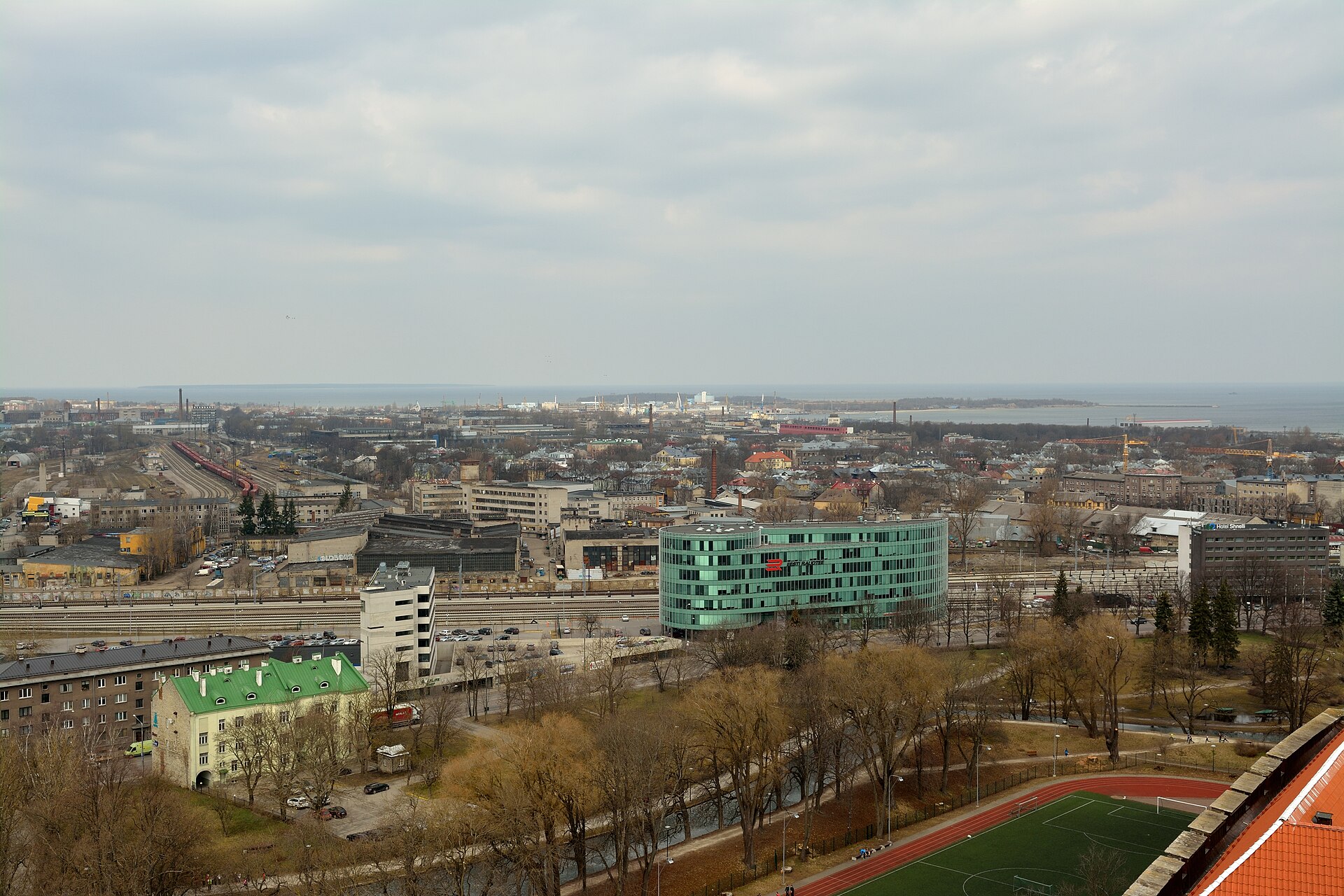
Toompea Castle could hardly be easier to find, for it crowns the great hill at the very heart of Tallinn’s old town, one of the best-preserved medieval old towns in all of Europe and a UNESCO World Heritage Site. Tallinn is a compact and wonderfully walkable city, and the castle is easily reached on foot through the charming streets of the old town, a climb up to the upper town of Toompea that is a delight in itself.
Tallinn is well connected by air and sea, and its beautiful old town is one of the great treasures of the Baltic, so a visit to Toompea fits naturally into any exploration of the Estonian capital. The castle pairs wonderfully with the many other attractions of the old town, from its medieval churches and merchant houses to its famous viewpoints and city walls. Here are the exact coordinates so you can find your way to the ancient seat of power on Toompea hill.

Castles Nearby
If Toompea has drawn you into the history of the Baltic, two more great fortresses of the region make a fine next stop.
- Turaida Castle in Latvia is the red brick fortress of the Archbishop of Riga.
- Trakai Island Castle in Lithuania is the fairy-tale island stronghold of the grand dukes.
The Seat of Power on Toompea Hill
Few castles anywhere embody the history of a nation as completely as Toompea. For nearly eight centuries this hill has been the seat of power in Estonia, ruled in turn by every great force that contested the eastern Baltic, and its layered walls tell the whole story of a small nation caught between empires. From the legendary burial mound of an ancient hero to the medieval fortress of crusaders and knights, from the pink palace of a Russian empress to the parliament of a free republic, Toompea has been at the centre of Estonian history through every twist and turn.
That is what makes a visit to Toompea so moving. You are not just admiring a historic castle but standing at the very heart of a nation’s life, in the place where Estonia has always been governed and where its flag now flies as the symbol of hard-won freedom. To see the blue, black, and white banner flying from Tall Hermann is to see the triumph of a people who endured so much to rule their own land at last. Toompea is the seat of power on the hill of Tallinn, and it remains one of the most meaningful and moving places in all of the Baltic.
If your travels take you to Estonia, a visit to Toompea is essential. Climb the hill through the enchanting streets of Tallinn’s old town, stand beneath the great tower of Tall Hermann, and take in the meeting of medieval fortress and imperial palace that tells the whole story of the nation. Watch, if you can, for the flag flying from the tower, and remember all that it represents. The castle on Toompea hill has been the heart of Estonia for eight centuries, and it is ready to share that extraordinary story with everyone who comes to visit.
You May Like
The Moscow Kremlin: The Great Red Fortress at the Heart of Russia


One thought on “Toompea Castle: The Ancient Seat of Power in Tallinn”