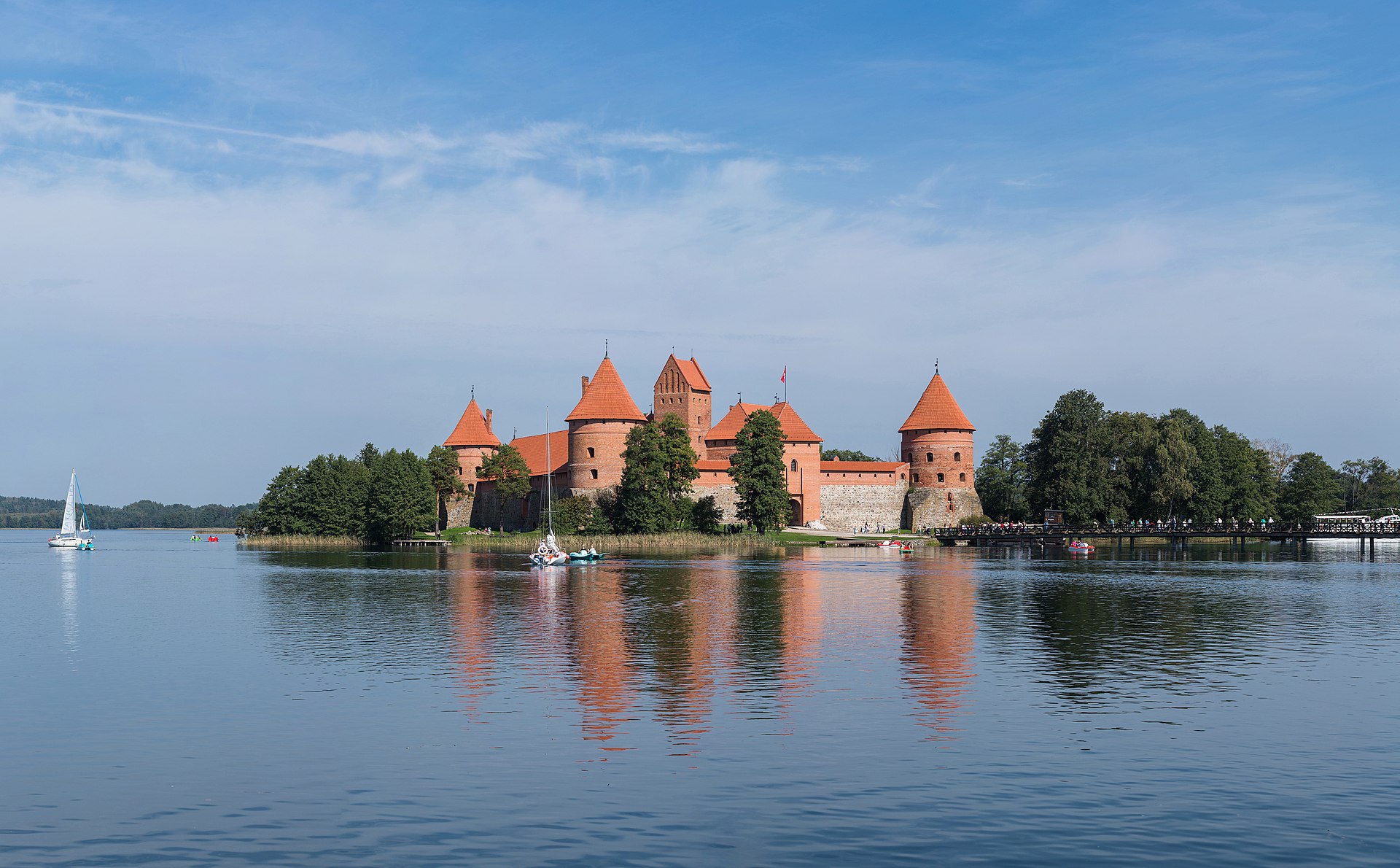
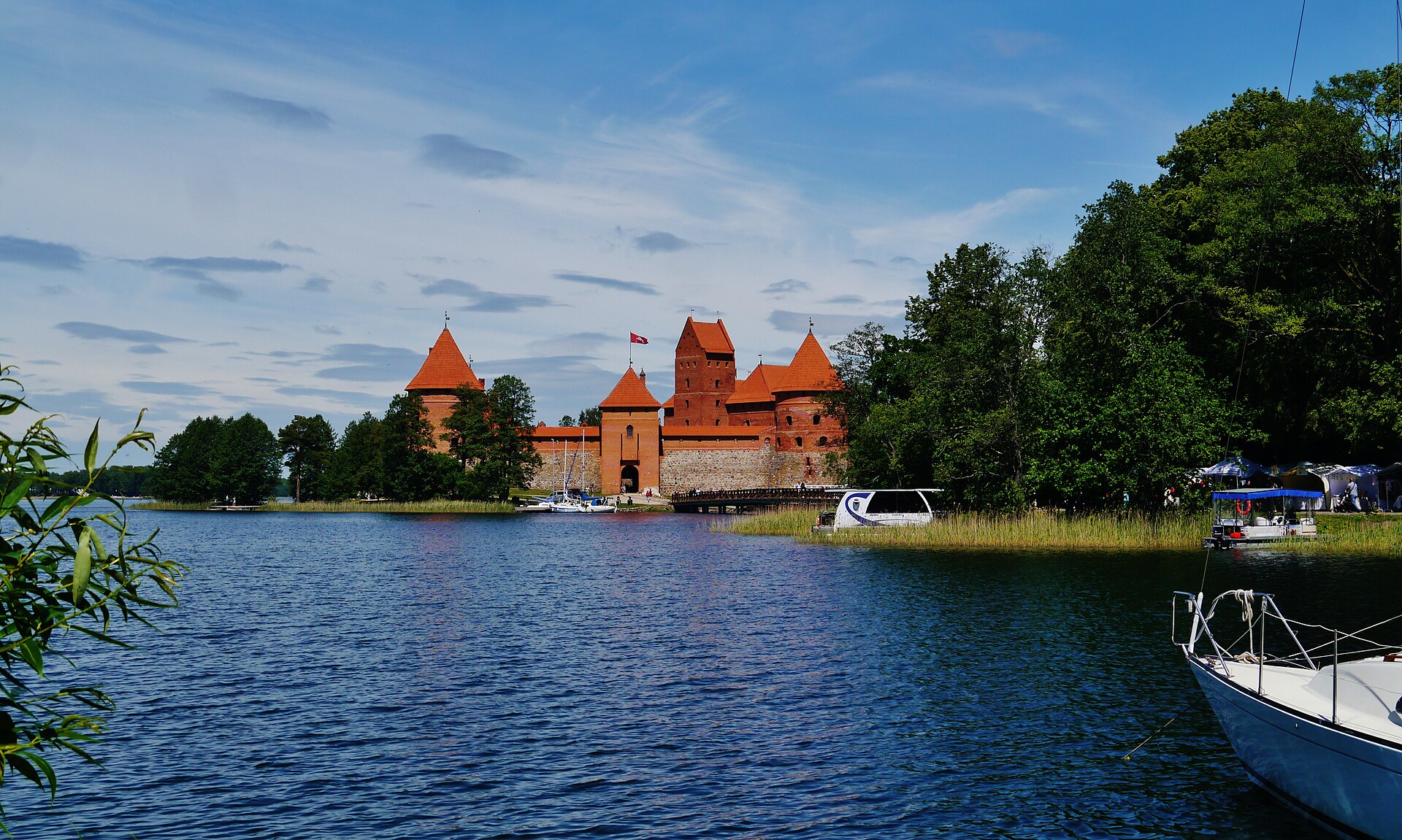
On a small island in a shining Lithuanian lake, reached by a wooden footbridge and doubled in the still water below, stands one of the most magical castles in all of Eastern Europe. Trakai Island Castle rises in warm red brick, crowned with towers and steep roofs, looking for all the world like a fortress conjured from a fairy tale. Yet it is entirely real, and once it was the mighty stronghold of the grand dukes who ruled Lithuania when the Grand Duchy was one of the largest and most powerful states in all of Europe.
Trakai is a place where the heroic age of medieval Lithuania comes vividly to life. Begun by the warrior duke Kęstutis and completed by his son, the great Vytautas, the island castle guarded the heart of the realm through the long and bitter wars against the Teutonic Knights, before slipping into centuries of decline and ruin and finally being reborn through a great modern restoration. In this article you will follow the whole of that dramatic story, from ducal palace to romantic ruin to national treasure. Come and discover the fairy-tale castle on the lake.
What makes Trakai so special is the way it unites natural beauty with deep national meaning. It is at once one of the most photogenic castles in the world and one of the most important historical monuments of an entire nation, a place that delights the eye even as it stirs the imagination with the story of a vanished golden age. Few castles anywhere manage to be so beautiful and so meaningful at the same time, and that rare combination is what draws visitors from across the globe to this quiet corner of the Lithuanian lakeland.
In This Article
- The Fairy-Tale Castle on the Lake
- A Capital of the Grand Duchy
- Kęstutis and the First Castle
- Vytautas the Great Completes the Work
- A Gothic Fortress of Red Brick
- Guarding Against the Teutonic Knights
- A Splendid Ducal Residence
- From Glory to Decline
- Prison, Ruin, and Neglect
- The Great Restoration
- The Trakai History Museum
- Exploring Trakai Today
- Finding Trakai Island Castle
- Castles Nearby
The Fairy-Tale Castle on the Lake
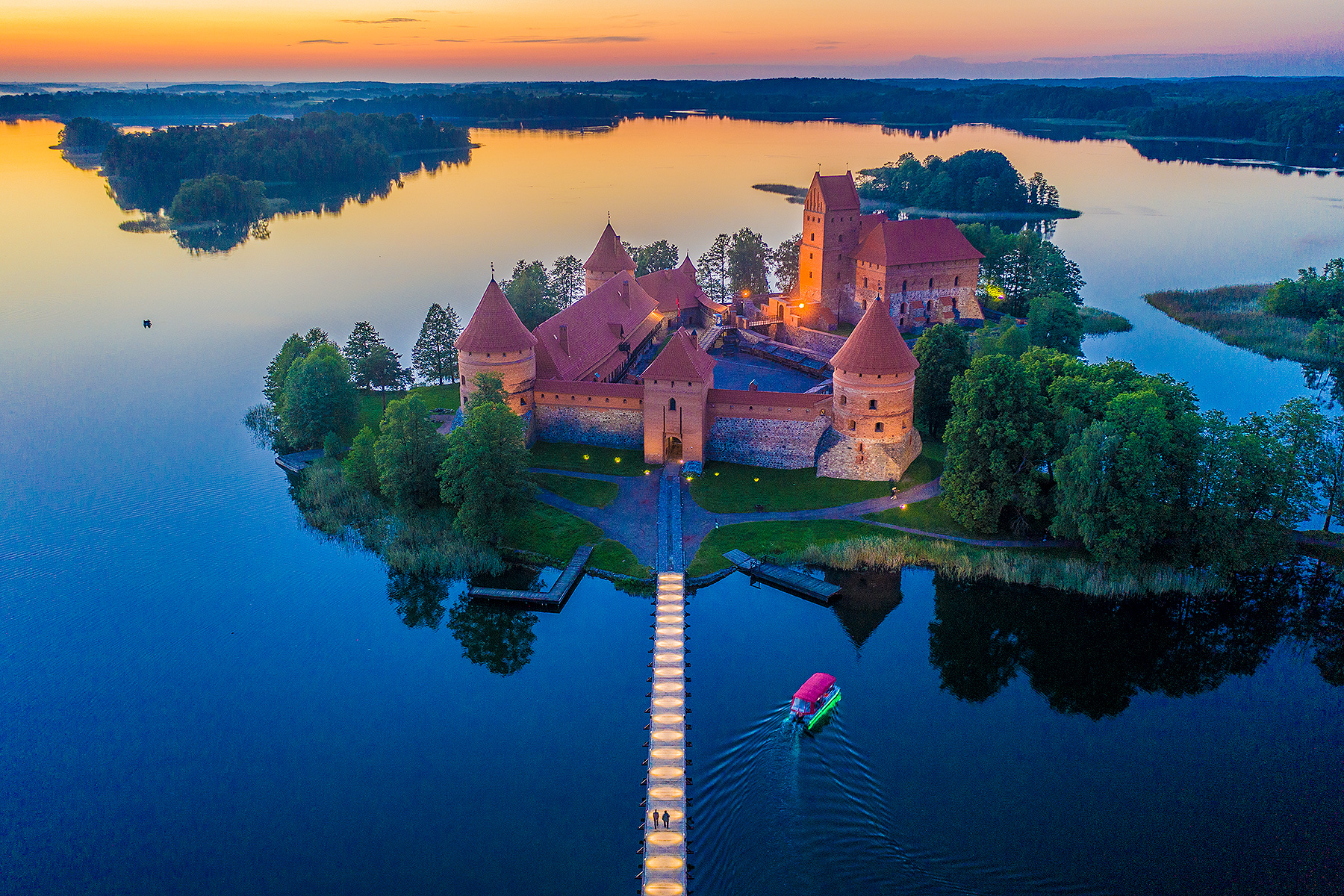
There are few sights in all of Eastern Europe as purely magical as Trakai Island Castle rising from the still waters of a Lithuanian lake. Built of warm red brick and crowned with towers and steep roofs, the castle sits on its own small island, reached by a wooden footbridge, its reflection doubling in the water below so that it seems to float between lake and sky. It is the kind of place that looks as though it has stepped straight from the pages of a fairy tale, and yet it is entirely real, one of the great treasures of Lithuania and of the whole Baltic region.
Trakai is more than just a beautiful sight, however, for it was once the mighty stronghold of the grand dukes who ruled Lithuania at the height of its power, when the Grand Duchy was one of the largest states in all of Europe. From this island fortress the rulers of Lithuania governed a vast realm and defended their land against powerful enemies. To visit Trakai is to step into that heroic age, into the world of the medieval Lithuanian state at its most glorious. This is the story of the fairy-tale castle on the lake, the island stronghold of the grand dukes.
There is a reason Trakai has become one of the most photographed and beloved places in all of Lithuania. The combination of the red-brick castle, the encircling water, and the wide northern sky creates a scene of rare and haunting beauty that changes with every shift of the light and every turn of the season. In the mists of early morning, the glow of a summer evening, or the crisp air of a snowy winter, the island castle takes on a different mood each time, and each is more enchanting than the last. It is a place that rewards not just a glance but a long and lingering look.
A Capital of the Grand Duchy
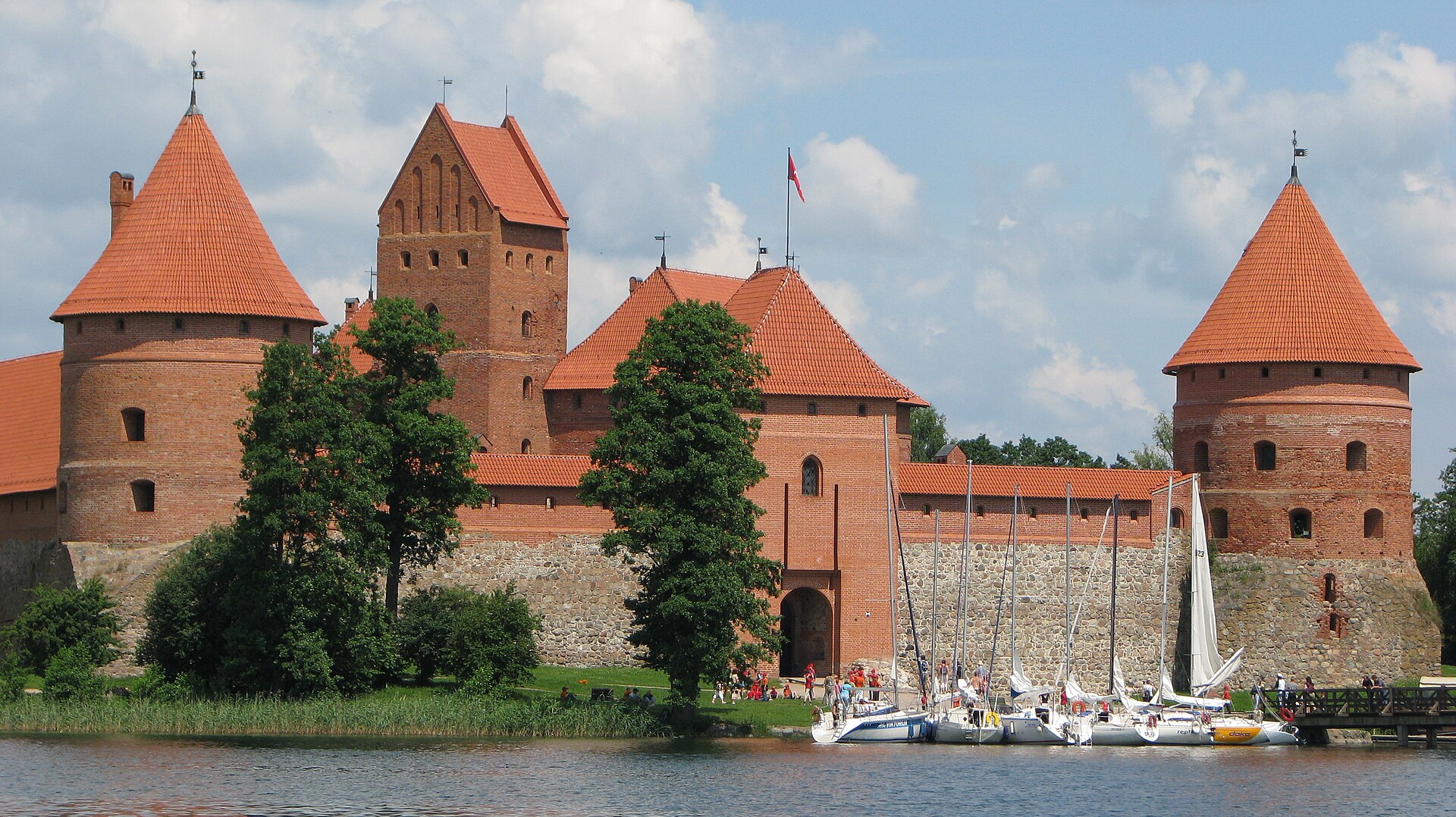
To understand Trakai Castle you have to understand the extraordinary state it once served. In the Middle Ages, the Grand Duchy of Lithuania grew into one of the largest and most powerful countries in Europe, its territory stretching across vast lands from the Baltic toward the Black Sea. This was a formidable state, pagan for much of its early history and fiercely independent, and it needed strongholds worthy of its power. Trakai, set among the lakes not far from Vilnius, became one of its most important seats.
The area around Trakai was a favoured centre of the grand dukes, and the town and its castles lay at the very heart of the Lithuanian state during its rise to greatness. The island castle was the jewel of this complex, a secure and splendid residence from which the rulers could govern and defend their realm. In an age when Lithuania was locked in a long and bitter struggle for survival against powerful enemies to the west, a stronghold like Trakai was of vital importance, both as a fortress and as a symbol of the wealth and ambition of the grand dukes who built it.
The Grand Duchy of Lithuania is one of the great forgotten powers of European history, a vast and formidable state that for a time rivalled the greatest kingdoms of the continent. That such a power should have left behind so magical a monument as Trakai is a wonderful thing, for the castle gives a tangible form to a chapter of history that is too often overlooked. To stand within its walls is to be reminded that this quiet corner of the Baltic was once the heart of a mighty realm, and that reminder gives the beauty of the place an added depth and meaning.
The town of Trakai grew up alongside the castles as a centre of the grand dukes’ power, and the whole area was carefully developed as a seat worthy of a great state. This concentration of strongholds and settlement among the lakes made Trakai one of the key places of the medieval Grand Duchy, a hub of authority second only to Vilnius itself. Appreciating this wider historical importance helps explain why so much effort went into building and defending the island castle, for it was no isolated outpost but a central pillar of the Lithuanian realm.
Kęstutis and the First Castle
The story of the island castle begins with one of the great warrior rulers of medieval Lithuania, Grand Duke Kęstutis, who in the fourteenth century made Trakai a centre of his power and began the great work of fortifying the lakes. Kęstutis was a formidable figure, famous for his long struggle against the Teutonic Knights, the crusading order that pressed relentlessly upon Lithuania from the west, and he understood the strategic value of the Trakai lakes as a place of defence.
Under Kęstutis, the fortification of Trakai took shape, with strongholds rising to guard the approaches and command the waters. The island site was chosen with a keen military eye, for a castle surrounded by lake was immensely difficult to attack, protected on all sides by water that no army could easily cross. The work Kęstutis began would be carried on and completed by his successors, but it was he who first grasped the potential of this watery landscape and set in motion the creation of one of the greatest island fortresses of the medieval north.
The struggle against the Teutonic Knights that shaped Kęstutis and his fortifications was one of the defining conflicts of the medieval north, a decades-long war of raid and counter-raid that tested the endurance of the Lithuanian people to the utmost. In building his strongholds at Trakai, Kęstutis was not indulging in vanity but responding to a mortal threat, creating the defences his nation needed to survive. Understanding that hard military context helps us appreciate the island castle not merely as a beautiful object but as a vital instrument in the survival of a state and a people.

Vytautas the Great Completes the Work
The island castle reached its full glory under the son of Kęstutis, Grand Duke Vytautas the Great, one of the most celebrated rulers in all of Lithuanian history. Vytautas presided over the Grand Duchy at the very peak of its power and extent, and he completed the great work of building the island castle in the early fifteenth century, transforming it into a magnificent residence and stronghold worthy of his rank and ambitions.
Vytautas is remembered as a national hero in Lithuania, the ruler under whom the Grand Duchy reached its greatest size and influence, and Trakai is intimately bound up with his legend. It was from here and its sister strongholds that he governed his vast realm, and the island castle became closely associated with his name and his glory. The completion of the castle under Vytautas marked the high point of its history, when it stood as a proud symbol of a Lithuania that was one of the great powers of Europe, ruled by one of its most formidable princes.
The reign of Vytautas the Great is remembered as the golden age of Lithuania, a time when the Grand Duchy reached from the Baltic almost to the Black Sea and its ruler dealt as an equal with emperors and kings. That Trakai should be so closely associated with this towering figure gives the castle a special place in the Lithuanian national imagination. It is not just a fortress but a symbol of the nation at its zenith, a monument to an age when Lithuania stood among the greatest powers of Europe, and that symbolic weight is part of what makes it so cherished today.
It is worth remembering, too, that the completion of the castle came at a moment of supreme confidence for Lithuania, when the nation had every reason to build for the ages. The great fortress on the lake was an expression of that confidence, a statement in brick and stone that the Grand Duchy was here to stay and meant to be reckoned with. Something of that proud spirit still radiates from the walls today, and it is one of the reasons the castle continues to stir such strong feelings among the people of Lithuania.
A Gothic Fortress of Red Brick
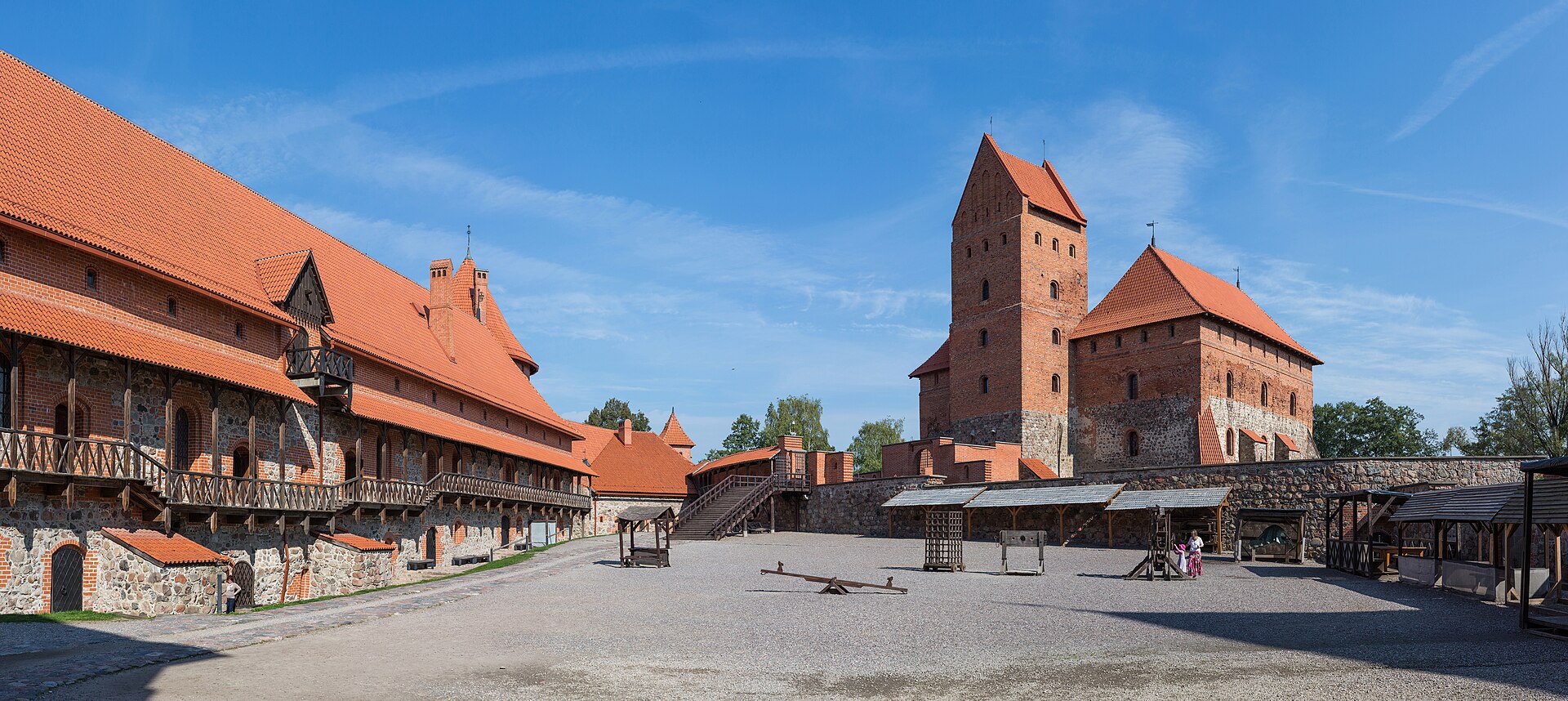
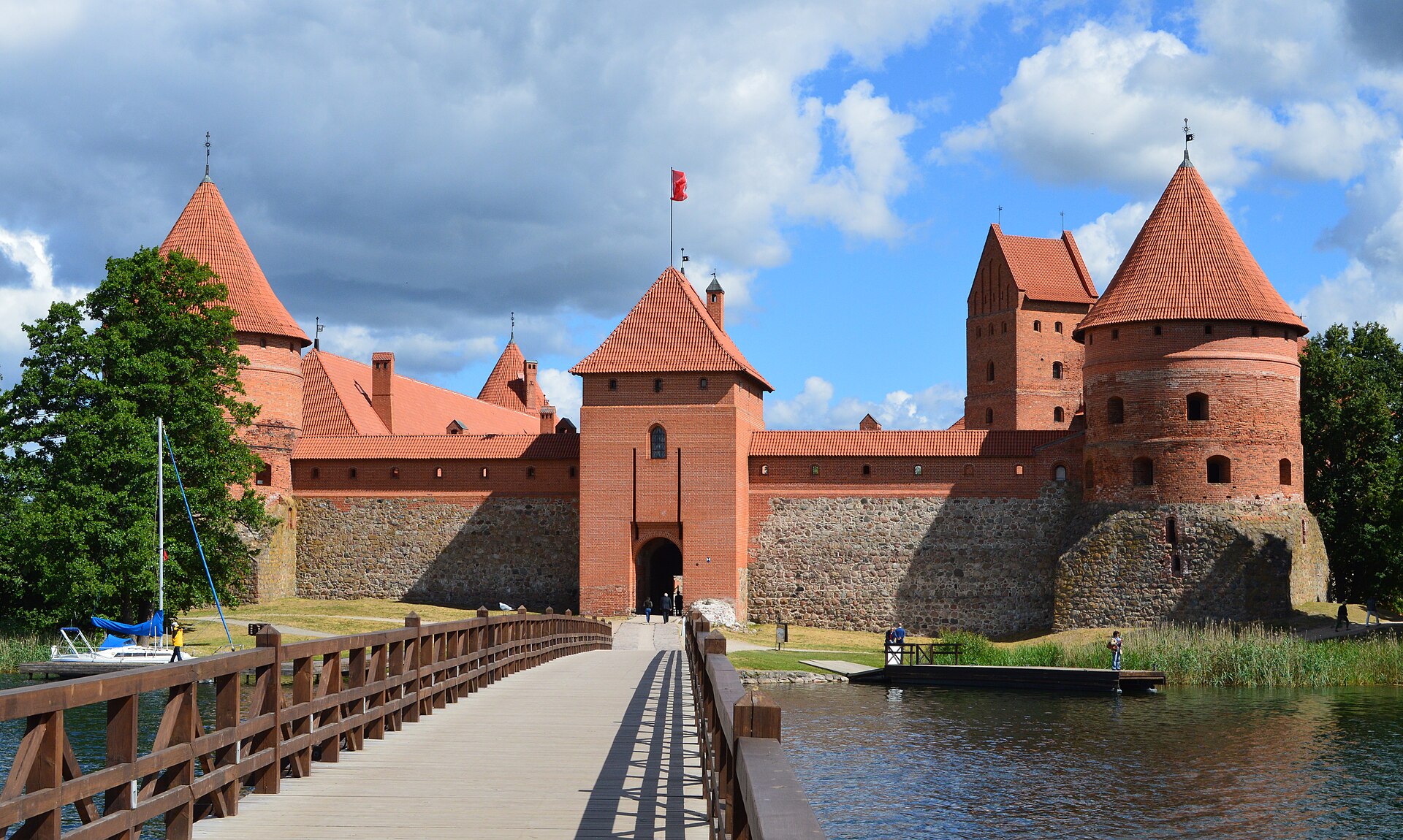
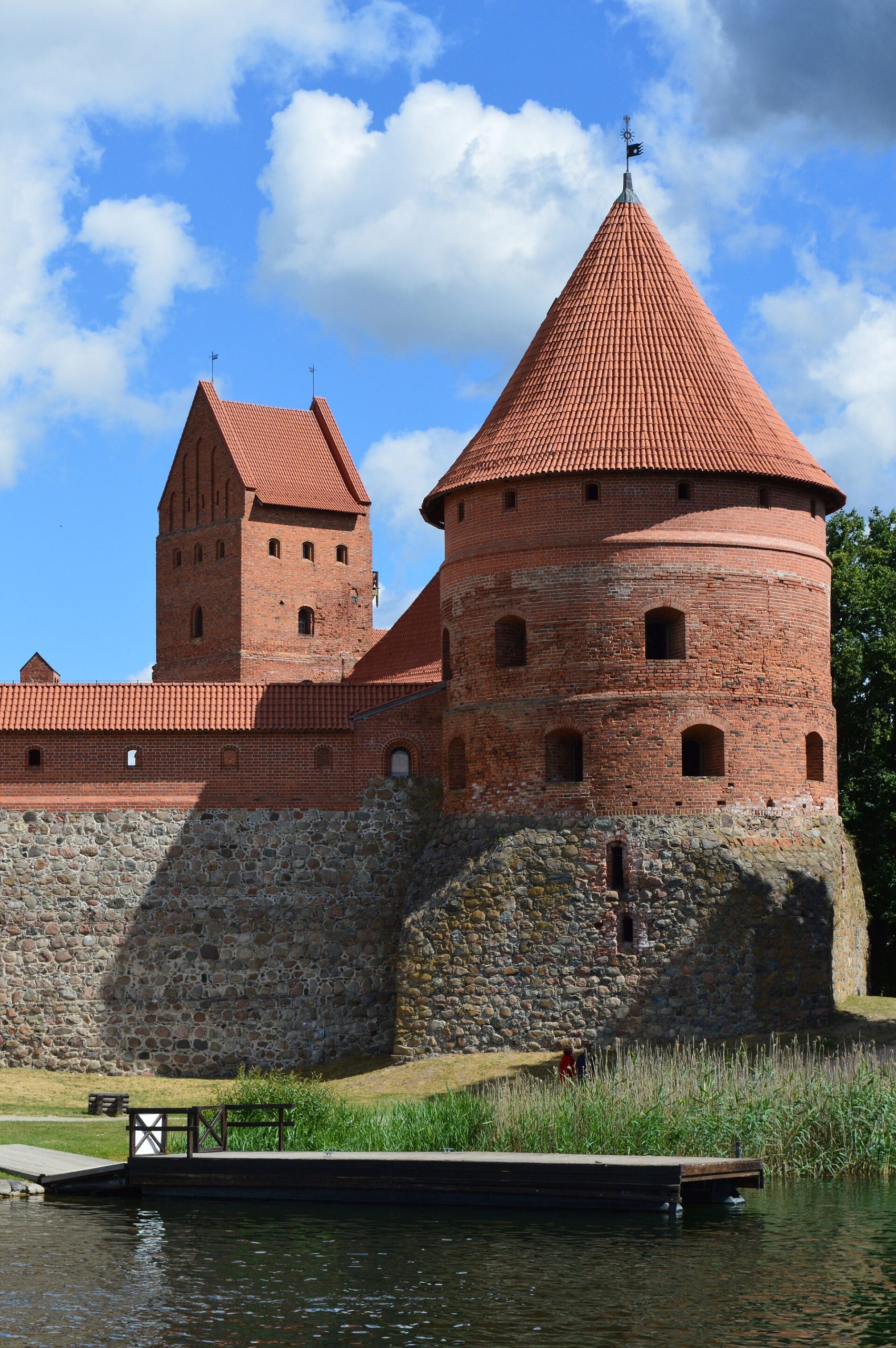
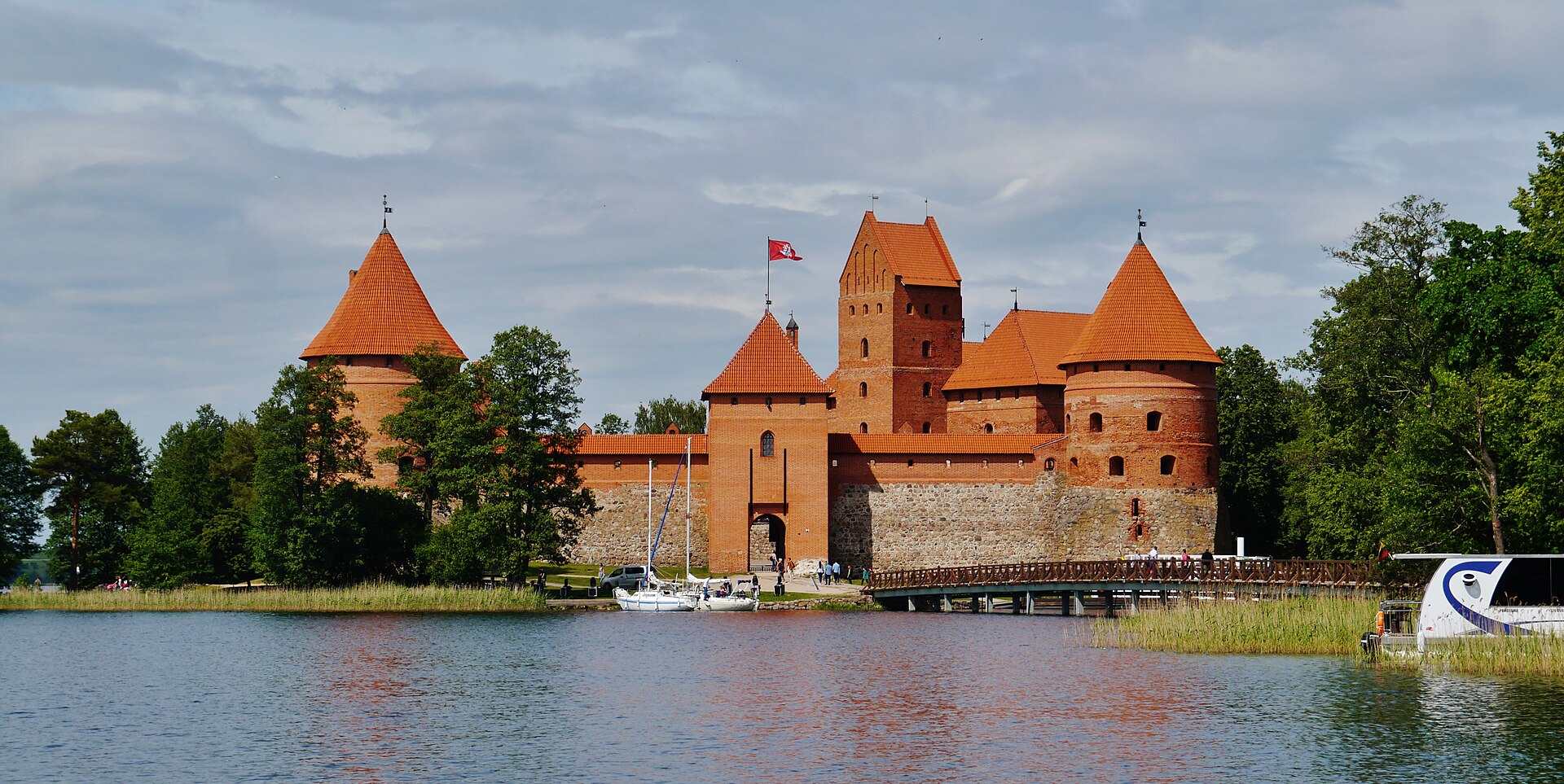
Trakai Island Castle is a superb example of the Gothic brick architecture that flourished across the lands around the Baltic in the Middle Ages. Built of warm red brick, the castle combines the stern strength of a fortress with a certain elegance, its towers, gables, and steep roofs creating the picturesque silhouette that so delights visitors today. This was serious military architecture, designed to withstand siege, but it was also a residence for a great prince, and its builders gave it a dignity and beauty befitting its royal owners.
The castle is divided into distinct parts, with a powerful ducal palace at its heart, set apart within the defences, and an outer section enclosed by strong walls and towers. This arrangement provided both security and the space for the elaborate life of a ducal court. The red brick from which it is built links Trakai to a whole family of great brick fortresses and churches across the Baltic region, the products of an age when this material was the mark of wealth and power. Standing before its walls today, you can appreciate both the military purpose and the architectural artistry that went into its creation.
The brick Gothic style of Trakai connects it to a wider architectural world that stretched all around the Baltic Sea, from the great fortresses of the Teutonic Knights to the churches and town halls of the Hanseatic cities. In this shared language of red brick, built by skilled masons who carried their craft across the region, we can read the deep connections that bound together the lands of the medieval north. Trakai is a distinctly Lithuanian monument, yet it also belongs to this larger family of Baltic brick architecture, and that dual identity adds to its interest for anyone who studies it closely.
The division of the castle into a heavily defended inner palace and an outer bailey reflects a sophisticated understanding of the art of fortification. Should an enemy somehow breach the outer defences, the ducal palace at the core remained a formidable stronghold in its own right, a last redoubt where the defenders could hold out. This layering of defences, common to the finest castles of the age, shows that Trakai was designed by builders who knew their craft well, and it is fascinating to trace these military ideas as you move through the different parts of the castle today.
Guarding Against the Teutonic Knights
For much of its early history, Trakai stood on the front line of one of the great struggles of medieval Europe, the long and bitter war between Lithuania and the Teutonic Knights. This crusading military order, based to the west, waged a relentless campaign against the pagan Lithuanians, mounting raid after raid deep into their territory in the name of Christianity and conquest. Against this constant threat, strong fortresses like Trakai were essential to the survival of the Lithuanian state.
The island setting made Trakai particularly formidable as a defence, for its surrounding waters presented a barrier that was extraordinarily difficult for an attacking army to overcome. The castle was a place of refuge and resistance, a stronghold from which the Lithuanians could defy their enemies. The long war with the Teutonic Knights finally turned decisively in Lithuania’s favour at a great battle in the early fifteenth century, a crushing victory that broke the power of the order. With that triumph, the immediate threat that had shaped Trakai’s early life at last receded, and the castle’s role began to change.
The great victory that finally broke the power of the Teutonic Knights was one of the largest and most decisive battles of medieval Europe, and it changed the course of the region’s history. For Trakai and the Lithuania it defended, that triumph marked the end of the existential threat that had shaped the castle’s early life. The fortress that had stood ready to resist the crusaders had, in a sense, fulfilled its purpose, and the peace that followed allowed the character of the place to shift gradually from embattled stronghold toward princely residence and, in time, cherished monument.

A Splendid Ducal Residence
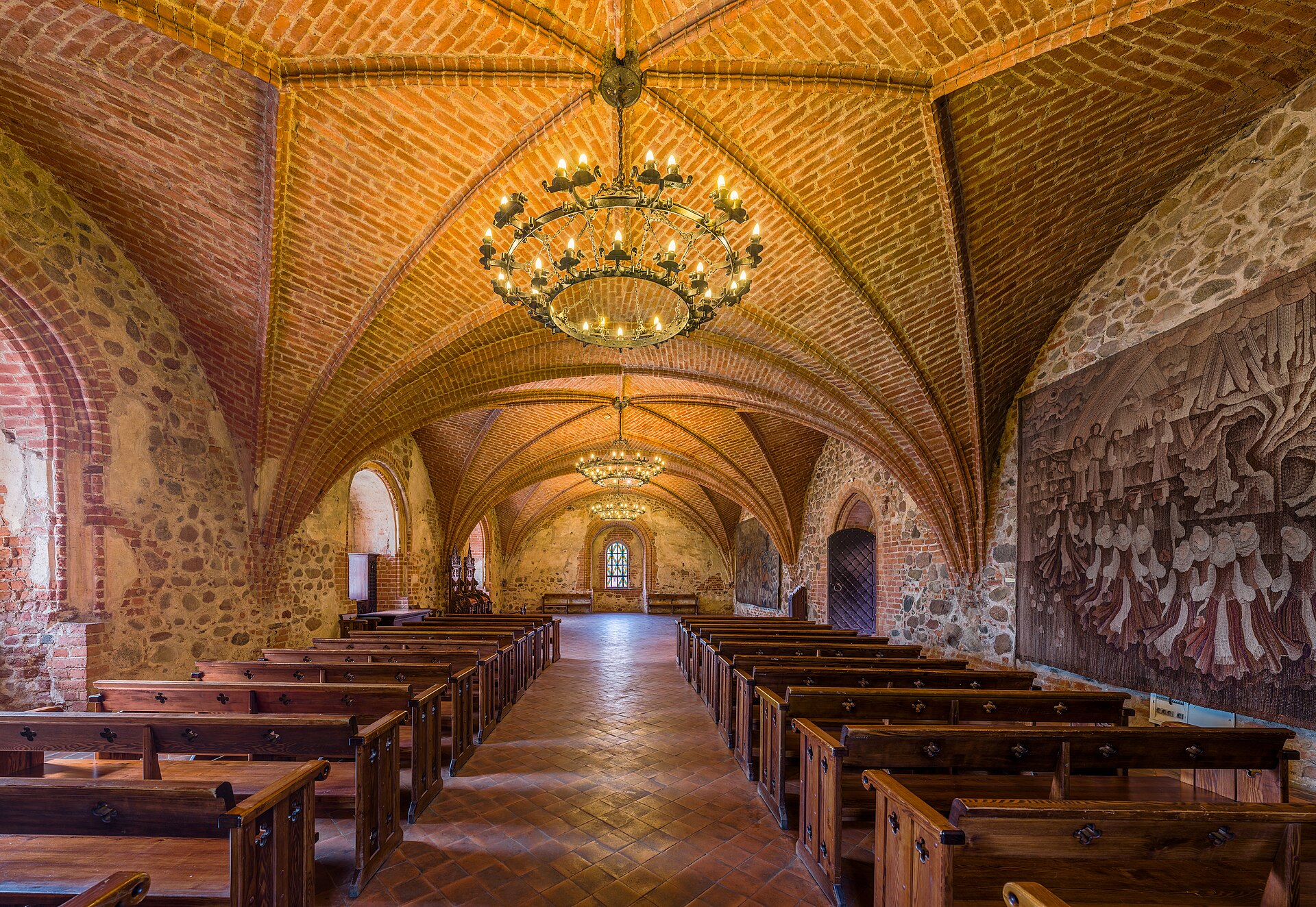
Beyond its military strength, Trakai was above all a residence, the splendid home of the grand dukes of Lithuania, and at its heart stood a fine ducal palace. Here, within the protection of the walls and water, the rulers of Lithuania lived in a style befitting their power, surrounded by the comforts and ceremony of a great medieval court. The palace was richly appointed, and it included handsome halls and chambers, along with a chapel for the spiritual life of the ducal household.
Life in the island palace would have combined the business of ruling a vast realm with the pleasures and rituals of court life. Here the grand dukes received envoys, held councils, and entertained guests, and here the great decisions affecting the fate of the Grand Duchy were made. The survival and restoration of these residential spaces allows visitors today to glimpse something of that world, to imagine the life of the court that once filled these rooms with activity. Trakai was not just a fortress but a palace, and it is that dual character, at once defensive and domestic, that gives it so much of its fascination.
The chapel at the heart of the ducal palace is a reminder of the profound religious transformations that Lithuania underwent in this period, as the last pagan state in Europe embraced Christianity. That great change reshaped the nation’s place in the world, and it is fitting that a place of worship should stand at the very centre of the castle from which the newly Christian grand dukes ruled. The presence of the chapel amid the halls of power speaks of the intertwining of faith and rule that characterised the medieval world, and it adds a note of quiet spirituality to the martial grandeur of the fortress.
From Glory to Decline
The great days of Trakai did not last forever. After the age of Vytautas and the decisive defeat of the Teutonic Knights, the strategic importance of the island castle gradually declined. With its greatest enemy broken and the frontiers of the Grand Duchy pushed outward, the fortress that had guarded the heart of Lithuania was no longer on the front line, and its military role diminished. The grand dukes came less often, and the castle slowly slipped from the centre of national life.
As the centuries passed and the fortunes of Lithuania changed, Trakai found itself increasingly on the margins. The Grand Duchy entered into ever closer union with neighbouring Poland, and the focus of power shifted elsewhere. The once-mighty stronghold, deprived of the purpose for which it had been built, began the long decline that would eventually reduce it to a romantic ruin. It is a familiar story among the great castles of Europe, the slow fading of a fortress once its age of glory has passed, and Trakai would follow that path for centuries before its eventual rescue.
The decline of Trakai is a poignant reminder that the fortunes of even the greatest strongholds are tied to the wider currents of history. A castle built to serve a particular need in a particular age can find itself suddenly obsolete when that age passes, and no amount of strength or beauty can preserve its original purpose once the world has moved on. Trakai’s slow fading from the centre of Lithuanian life mirrors the broader story of the Grand Duchy itself, and there is a certain melancholy poetry in the way the island fortress slipped so gradually from glory into quiet decay.
Prison, Ruin, and Neglect
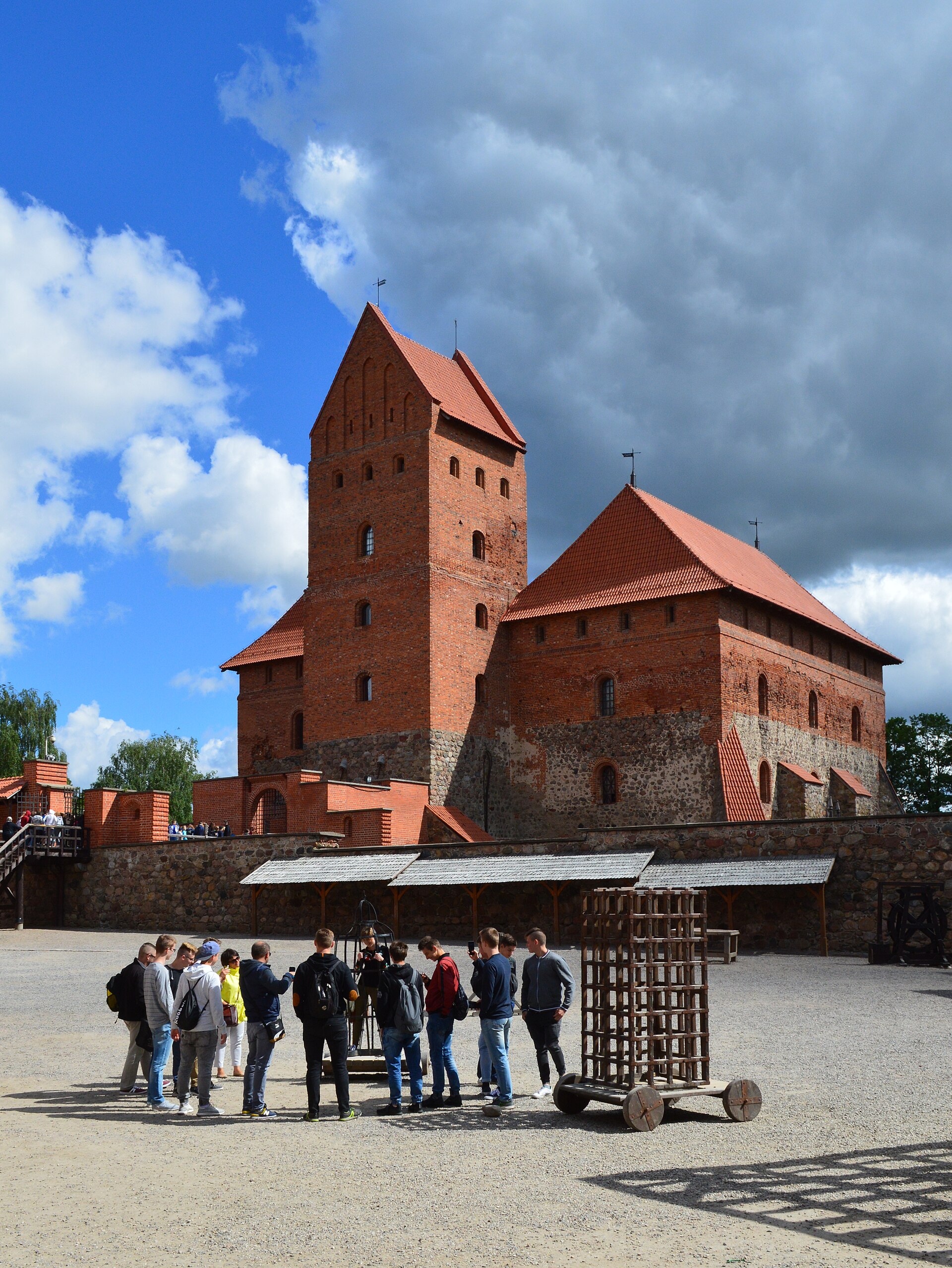
In the long centuries of its decline, Trakai was put to humbler uses far removed from its origins as a ducal palace. At various times it served as a prison and as a place to keep records and archives, practical purposes for a building that had lost its royal splendour. But without the care and investment that had created it, the castle inevitably began to decay, its roofs and walls suffering from the passage of time and the harshness of the northern climate.
By the later centuries, the once-glorious island castle had fallen into serious ruin, its buildings crumbling and its former magnificence reduced to picturesque decay. War and neglect took their toll, and what had been the proud stronghold of the grand dukes became a romantic ruin standing forlorn upon its island. For a long time it seemed that Trakai might be lost altogether, left to slowly dissolve into the lake that surrounded it. Yet the very beauty of its setting and the power of its history would ultimately inspire the great effort that saved it.
The humbling of Trakai, from ducal palace to prison and archive and finally to ruin, is a story repeated in the histories of countless great castles across Europe. Yet in Trakai’s case, the very completeness of its fall may have helped to preserve its essential character, for a building left as a ruin is at least spared the endless remodelling that transforms so many living palaces beyond recognition. When the time came to rescue it, the ruined castle still held the bones of its medieval self, waiting to be brought back to life by those who valued what it had once been.
The Great Restoration
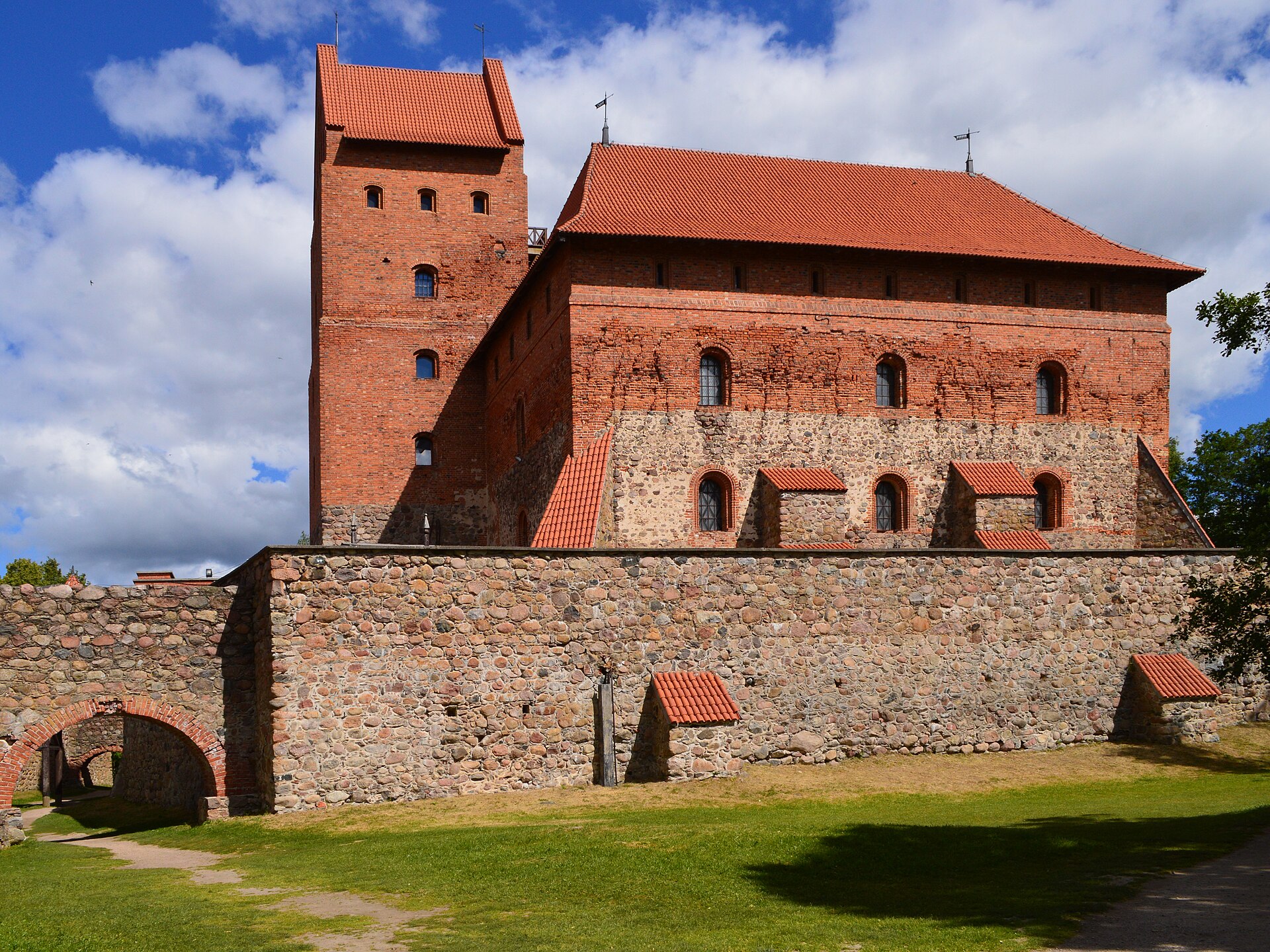
The rescue of Trakai came in the twentieth century, when a great programme of restoration and reconstruction brought the ruined castle back to life. Drawing on careful research and archaeology, restorers set about rebuilding the fortress, raising its fallen walls and towers once more and recreating the appearance it had worn in its medieval prime. It was an ambitious and painstaking undertaking, and the results transformed a crumbling ruin into the magnificent castle that draws visitors from around the world today.
The restoration of Trakai was not without its challenges and debates, as such major reconstructions always are, but the outcome has been widely embraced as a triumph. Where once there had been only picturesque decay, there now stands a complete and splendid castle, allowing visitors to experience something of the grandeur of the age of Vytautas. The reconstruction gave Lithuania back one of its most important national monuments, a powerful symbol of the medieval greatness of the Grand Duchy, and it ensured that the fairy-tale castle on the lake would endure for generations to come.
Debates over how far to reconstruct a ruined monument, and how to balance authenticity with restoration, are among the most difficult in the whole field of heritage, and the rebuilding of Trakai took a bold approach in raising the castle so fully from its ruins. Whatever the scholarly arguments, the result has given millions of visitors the chance to experience the grandeur of medieval Lithuania in a way that a mere ruin never could. The restored castle stands as both a monument to the past and a testament to the modern nation’s determination to reclaim and celebrate its history.

The Trakai History Museum
Today the restored island castle is home to the Trakai History Museum, which uses the magnificent spaces of the fortress to tell the story of the castle, the town, and the wider region across the centuries. Exhibitions within the walls display objects and artefacts that bring the history of the place vividly to life, from the age of the grand dukes to more recent times, and help visitors understand the many layers of the castle’s long and dramatic story.
The museum makes wonderful use of the castle’s atmospheric rooms and halls, and a visit combines the pleasure of exploring a genuine medieval fortress with the interest of a well-presented historical collection. Wandering through the ducal palace and the other spaces, you encounter both the architecture of the castle itself and the treasures gathered within it, gaining a rich understanding of the place and its significance. The museum ensures that Trakai is not merely a beautiful shell but a living centre of history and learning, where the deep past of Lithuania is preserved and shared.
A museum set within the very walls it interprets has a power that no ordinary gallery can match, for here the building and its collections illuminate one another at every turn. As you study an exhibit and then look up at the medieval architecture around you, the past becomes doubly present, and the story the museum tells gains an immediacy that stays with you. The Trakai History Museum makes the most of this happy union of setting and subject, and it ensures that a visit is as educational as it is enchanting, deepening the wonder that the castle inspires.
Exploring Trakai Today
A visit to Trakai today is an unforgettable experience, beginning with the magical approach across the wooden footbridges that link the island to the shore. As you cross the water and the great red castle rises before you, you feel the full romance of the place, and the sense of stepping back into the medieval world only deepens as you pass through the gates and into the courtyards beyond. The setting, surrounded by the shining waters of the lake, is simply breathtaking.
Once inside, you can explore the ducal palace, climb into the towers, wander the courtyards, and take in the exhibitions of the history museum, piecing together the long story of the castle as you go. The whole island invites exploration, and the views out over the lake from the walls and windows are magnificent. Beyond the castle itself, the town of Trakai and its beautiful lakeland setting offer further pleasures, from boat trips on the water to the distinctive local culture of the area. Few castles anywhere offer so complete and enchanting an experience as Trakai.
The wider Trakai region has its own distinctive charms that reward those who linger, including the presence of the Karaite community, a small and ancient people who settled here long ago and who have given the town a unique cultural flavour all their own. Between the castle, the lakes, the town, and its living traditions, Trakai offers far more than a single monument, and a visit here can easily fill a full and memorable day. It is this richness, the way the great castle sits within a whole living landscape of history and culture, that makes Trakai so rewarding to explore.
In the warmer months the lake around the castle comes alive with small boats, and there are few more delightful ways to appreciate Trakai than from the water, watching the red walls and towers glide past against the sky. The castle looks magnificent from every angle, but seen from a boat on the lake it achieves a special kind of magic, seeming to float free upon the water. It is experiences like these, blending history with the simple pleasures of a beautiful landscape, that make a day at Trakai linger so fondly in the memory.
Finding Trakai Island Castle
Trakai Island Castle is wonderfully easy to reach, lying only a short distance west of Vilnius, the capital of Lithuania, which makes it one of the most popular and rewarding day trips in the whole country. The journey from Vilnius is quick and straightforward by road or rail, carrying you out of the city and into the beautiful lakeland region where the castle awaits. For anyone visiting the Lithuanian capital, a trip to Trakai is very nearly essential.
The castle sits within a stunning natural setting of lakes and forests, and it pairs beautifully with the wider attractions of the Trakai area, from the historic town to the surrounding waters and countryside. You can easily spend a full and happy day here, exploring the castle, enjoying the lake, and soaking up the unique atmosphere of this remarkable place. Here are the exact coordinates so you can find your way to the fairy-tale castle on the lake.
Castles Nearby
If Trakai has enchanted you, two more great fortresses of Eastern Europe make a fine next stop.
- Malbork Castle in Poland, the vast brick fortress of the Teutonic Knights, was the great rival of medieval Lithuania.
- Wawel Castle in Kraków was the royal seat of the Polish crown that later united with Lithuania.
The Island Stronghold of the Grand Dukes
Few castles anywhere combine such beauty and such history as Trakai. Rising from its island in a shining lake, it is one of the most romantic sights in all of Europe, and yet behind that fairy-tale appearance lies the story of a great medieval state at the height of its power. This was the stronghold of Kęstutis and Vytautas, the guardian of Lithuania in its heroic age, a fortress that defied the Teutonic Knights and then, after centuries of ruin, rose again through the determination of a nation to reclaim its past.
That is what makes a visit to Trakai so moving. You are not just admiring a picturesque castle on a lake but standing at the very heart of medieval Lithuania, in the place from which the grand dukes ruled one of the greatest realms of their age. To cross the footbridges, to pass through the gates, and to explore the ducal palace is to enter the golden age of the Grand Duchy and to feel the pride and the endurance of the Lithuanian nation. Trakai is the island stronghold of the grand dukes, and it remains one of the true wonders of the Baltic world.
If your travels take you to Lithuania, a visit to Trakai is not to be missed. Make the short journey from Vilnius, cross the wooden bridges to the island, and step into the world of the grand dukes amid the shining waters of the lake. Explore the ducal palace, climb the towers, and take in the museum and the magnificent views, and give yourself time simply to stand and marvel at the beauty of the place. The fairy-tale castle on the lake has enchanted all who have seen it for centuries, and it is ready to work its magic on you.
You May Like
Mafra, the Palace a King Built From a Vow


One thought on “Trakai Island Castle: The Fairy-Tale Fortress of the Lithuanian Grand Dukes”