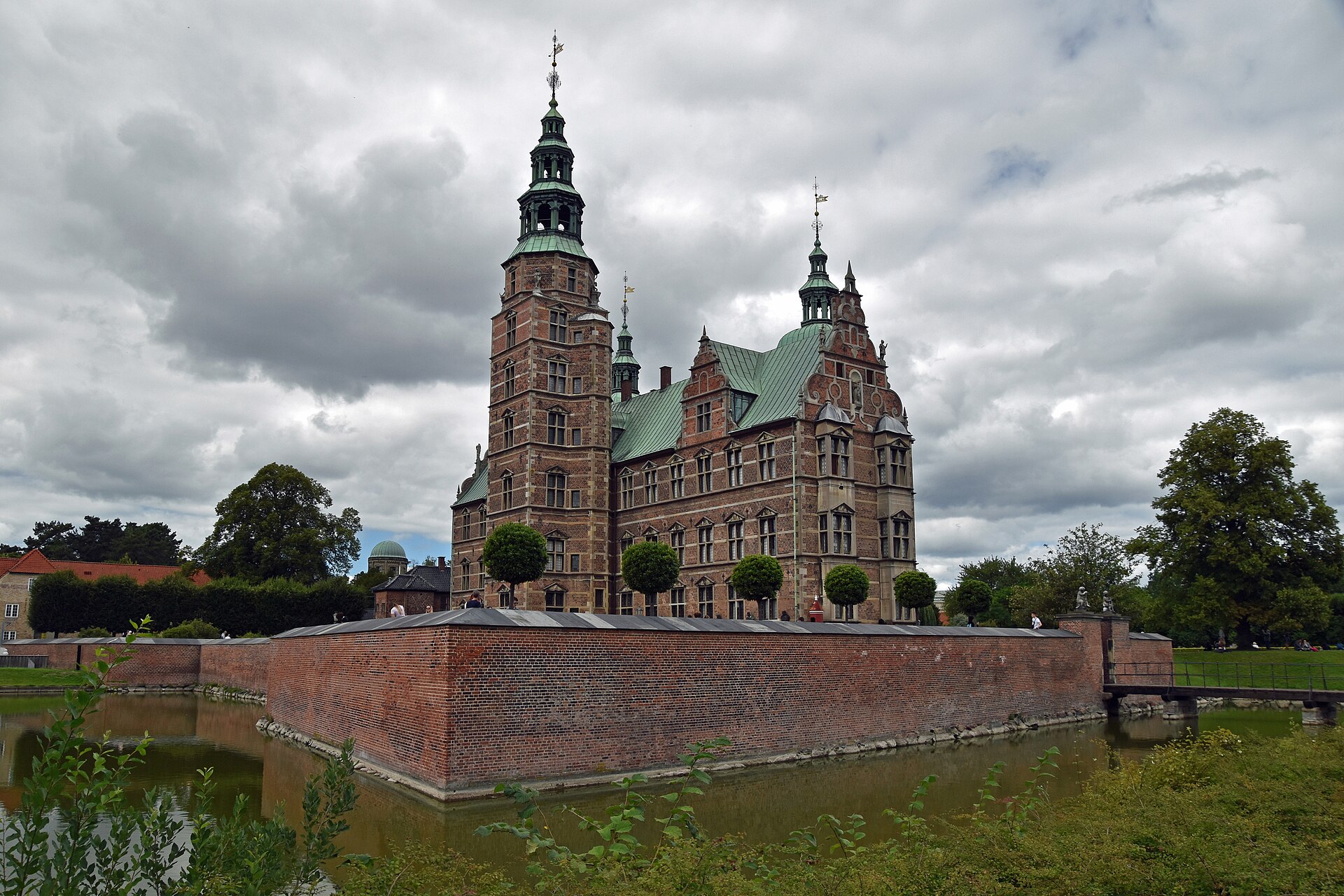
In the middle of Copenhagen, rising from the oldest royal garden in the city, stands a castle that looks as though it has been lifted straight from the pages of a fairy tale. Rosenborg is a jewel of the Dutch Renaissance, a delightful cluster of red brick, pale stone, and green copper spires set among the clipped hedges and lawns of the King’s Garden. Built four centuries ago by Denmark’s greatest royal builder, it is one of the most charming and best-loved castles in all of Scandinavia, and a step inside it is a step into the golden age of the Danish monarchy.
But Rosenborg is much more than a pretty building, for it is also the treasure house of the Danish crown. Within its walls are kept the crown jewels and the royal regalia, the crowns of the kings themselves, along with a dazzling collection of precious objects gathered across the centuries. From the intimate rooms where kings once lived to the magnificent Long Hall with its silver lions and coronation thrones, and down at last to the glittering Treasury, Rosenborg offers an unforgettable journey through the world of Danish royalty. In this article you will explore all of its wonders. Come and discover the Renaissance jewel of Copenhagen.
What makes Rosenborg so rewarding is the way it combines so many different pleasures within one compact and beautiful place. It is at once a fairy-tale castle, a preserved royal home, a museum of exquisite treasures, and the setting for a beloved public garden, and it holds the supreme symbols of the Danish monarchy at its glittering heart. Few places let you move so easily from architectural delight to royal intimacy to sheer dazzling splendour, all in the space of a single unforgettable visit.

In This Article
- A Renaissance Jewel in the Heart of Copenhagen
- Christian IV, the Building King
- From Summerhouse to Royal Castle
- The Dutch Renaissance Style
- The King’s Garden
- A Royal Home for a Century
- Inside the Royal Apartments
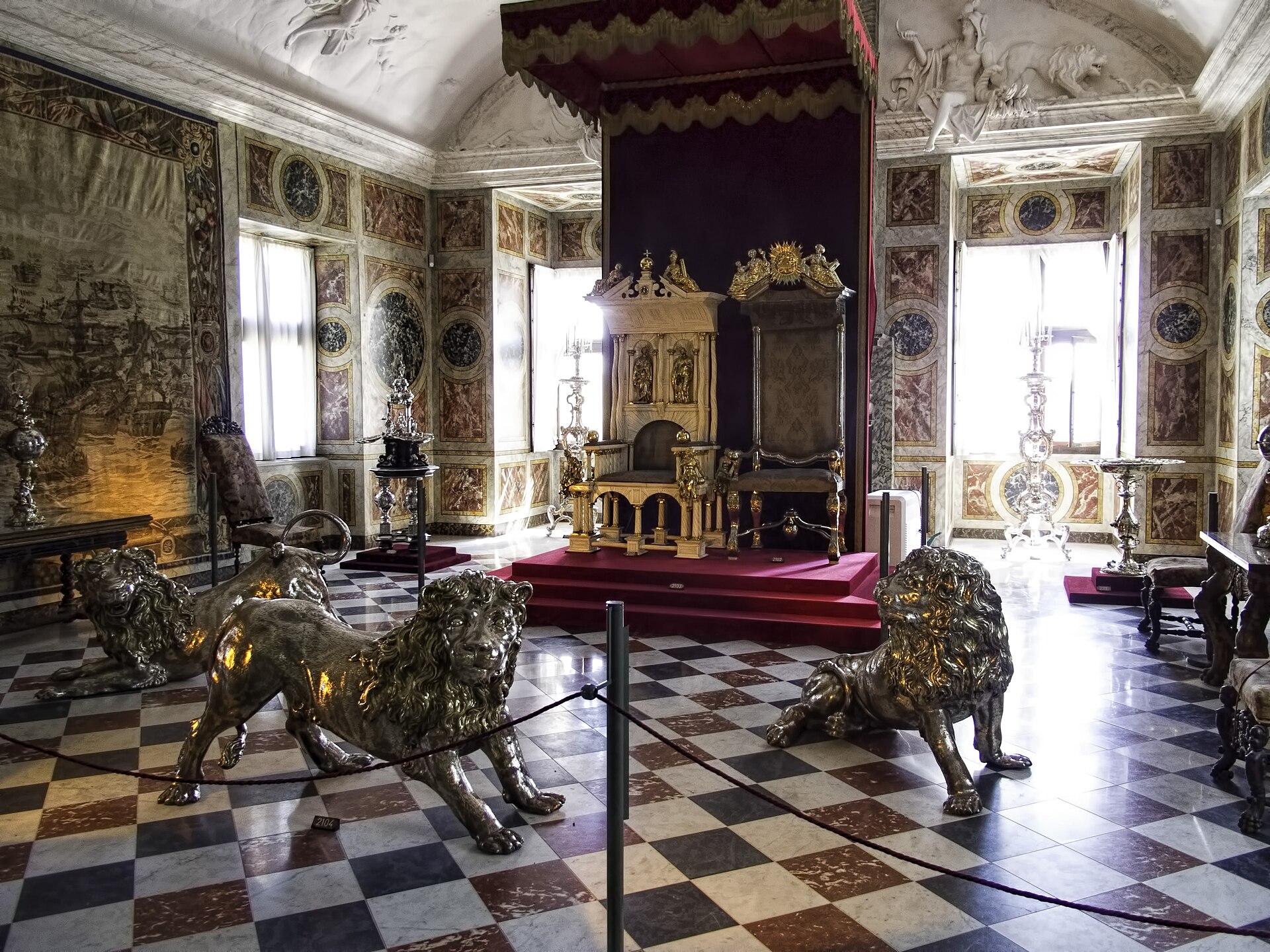
- The Long Hall and the Coronation Thrones
- The Three Silver Lions
- Treasures of the Danish Kings
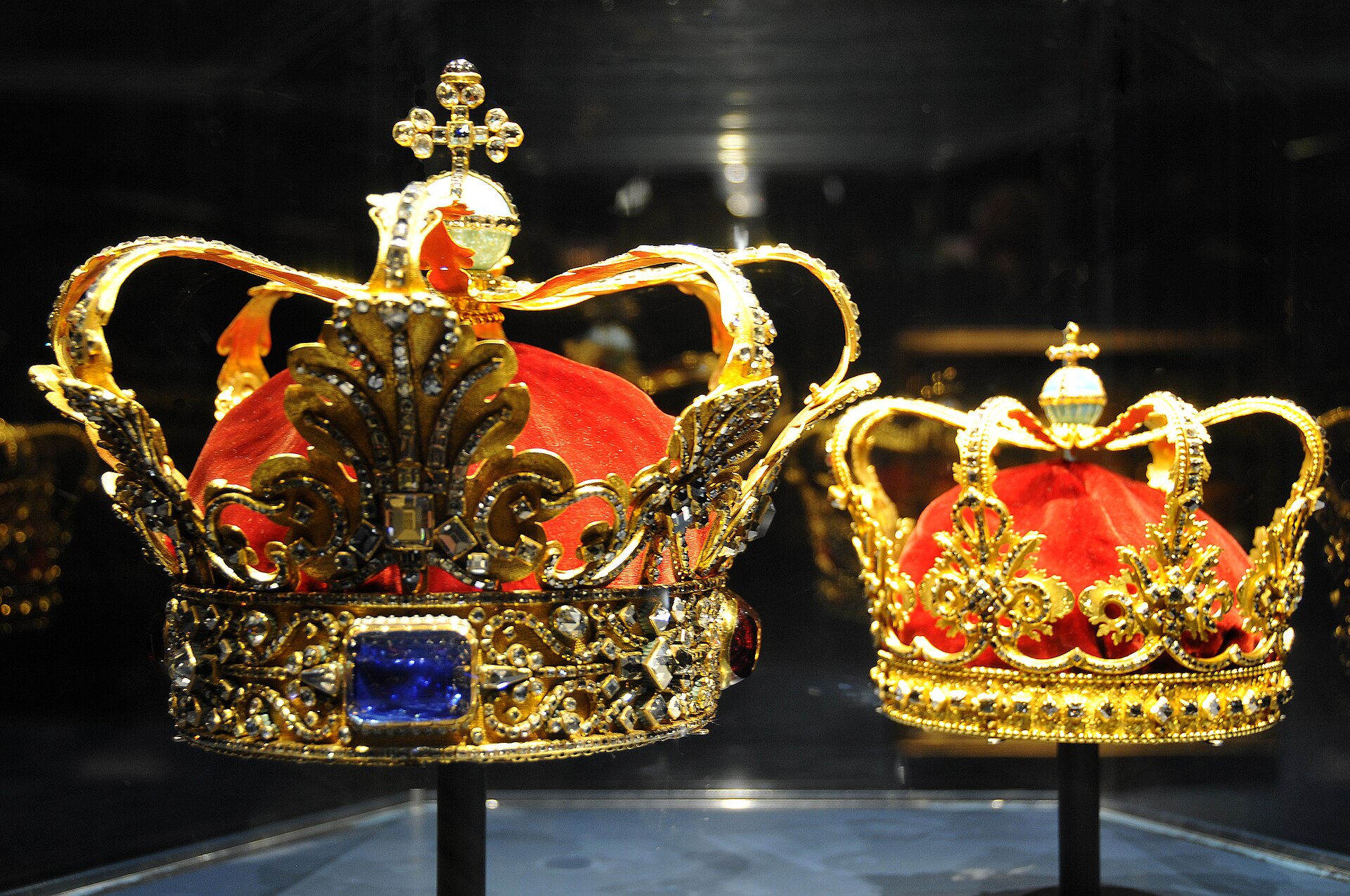
- The Crown Jewels and the Royal Regalia
- The Treasury Beneath the Castle
- Finding Rosenborg Castle
- Castles Nearby
A Renaissance Jewel in the Heart of Copenhagen
In the very heart of Copenhagen, rising from a beautiful royal garden of clipped hedges and flowering beds, stands one of the most enchanting castles in all of Scandinavia. Rosenborg is a jewel of the Dutch Renaissance style, a fairy-tale confection of red brick, copper roofs, spires, and towers that looks almost too pretty to be real. Set amid the greenery of the King’s Garden in the middle of a bustling modern capital, it offers a moment of pure magic, a step out of the twenty-first century and into the golden age of Danish royalty.
Yet Rosenborg is far more than a pretty face. Behind its charming facade lies a treasure house without equal in Denmark, for the castle holds the Danish crown jewels and the royal regalia, along with a dazzling collection of objects gathered by the kings of Denmark across the centuries. To visit is to walk through the private world of the Danish monarchy, from the intimate rooms where kings once lived to the glittering treasury where the crowns themselves are kept. This is the story of Rosenborg, the Renaissance jewel at the heart of Copenhagen.
There is a special pleasure in coming upon Rosenborg unexpectedly, as many visitors do, while wandering through the green expanse of the King’s Garden. One moment you are among the trees and lawns, and the next the castle reveals itself, its spires and gables rising above the hedges like something conjured from a dream. This surprise, this sense of stumbling upon a hidden treasure in the middle of a modern city, is part of what makes Rosenborg so beloved, and it never quite loses its magic no matter how many times you visit.
Christian IV, the Building King
Rosenborg owes its existence to the most famous builder in the history of Denmark, King Christian the Fourth, who ruled for the first half of the seventeenth century and left an extraordinary architectural legacy across his kingdom. Christian was a monarch of boundless energy and ambition, passionate about architecture and determined to adorn his realm with magnificent buildings, and Rosenborg was one of his most personal and beloved projects. The castle bears the unmistakable stamp of his taste and his vision.
Christian the Fourth is a towering figure in Danish history, and his building projects transformed Copenhagen and the wider kingdom. Under his direction rose towers, palaces, churches, and whole new districts, and his reign is remembered as a great age of Danish architecture despite the military misfortunes that clouded its later years. Rosenborg was, in a sense, his private pleasure, a place created for his own enjoyment rather than for affairs of state, and something of the king’s own character seems to linger in its intimate and delightful spaces. To understand Rosenborg is to understand the man who made it.
Christian the Fourth reigned for an astonishing length of time, longer than almost any other Danish monarch, and his personality stamped itself upon his age in a way few rulers ever manage. He was ambitious, cultured, and endlessly energetic, throwing himself into everything from warfare and shipbuilding to town planning and the arts. Not all of his ventures succeeded, and his wars in particular brought hardship to Denmark, but his building projects endure as a glorious legacy, and Rosenborg is among the most delightful of them all, a lasting monument to a truly larger-than-life king.
It is fitting that a king so devoted to building should be remembered above all through his buildings, and Rosenborg is perhaps the most personal of them all. Where his great fortresses and public works served the state, this castle served the king himself, a place of private pleasure that reflects his character more intimately than any of his grander projects. In wandering Rosenborg, we come as close as we can to the spirit of Christian the Fourth, the restless, creative, larger-than-life monarch who shaped so much of the Denmark we see today.
From Summerhouse to Royal Castle
Rosenborg did not begin as the castle we see today but grew from far humbler origins. Christian the Fourth first built here in the early seventeenth century a modest summerhouse or garden pavilion, a pleasant retreat set among the grounds he was laying out on what were then the outskirts of Copenhagen. It was intended as a place of relaxation and pleasure, somewhere the king could escape the formality of his main residences and enjoy the delights of his garden.
Over the following years, however, the building was steadily expanded and elaborated, growing storey by storey and wing by wing until it had become a fully fledged royal castle. What had started as a simple pleasure house was transformed into the elegant Renaissance palace that stands today, complete with towers, spires, and richly appointed rooms. This gradual evolution from summerhouse to castle is part of Rosenborg’s charm, and it explains the building’s intimate, human scale, for at its heart it was always meant to be a place of enjoyment rather than a grand seat of power.
This organic growth from a small pavilion into a full castle gives Rosenborg a quality quite different from palaces built all at once to a single grand plan. Instead of overwhelming symmetry, it has a certain charming irregularity, a sense of having grown naturally over time to meet the changing wishes of its royal owner. That quality of accumulation, of a building shaped by love and use rather than by a single sweeping vision, contributes greatly to the castle’s warm and welcoming character, and it is one of the things that sets Rosenborg apart from grander but colder royal residences.
The Dutch Renaissance Style
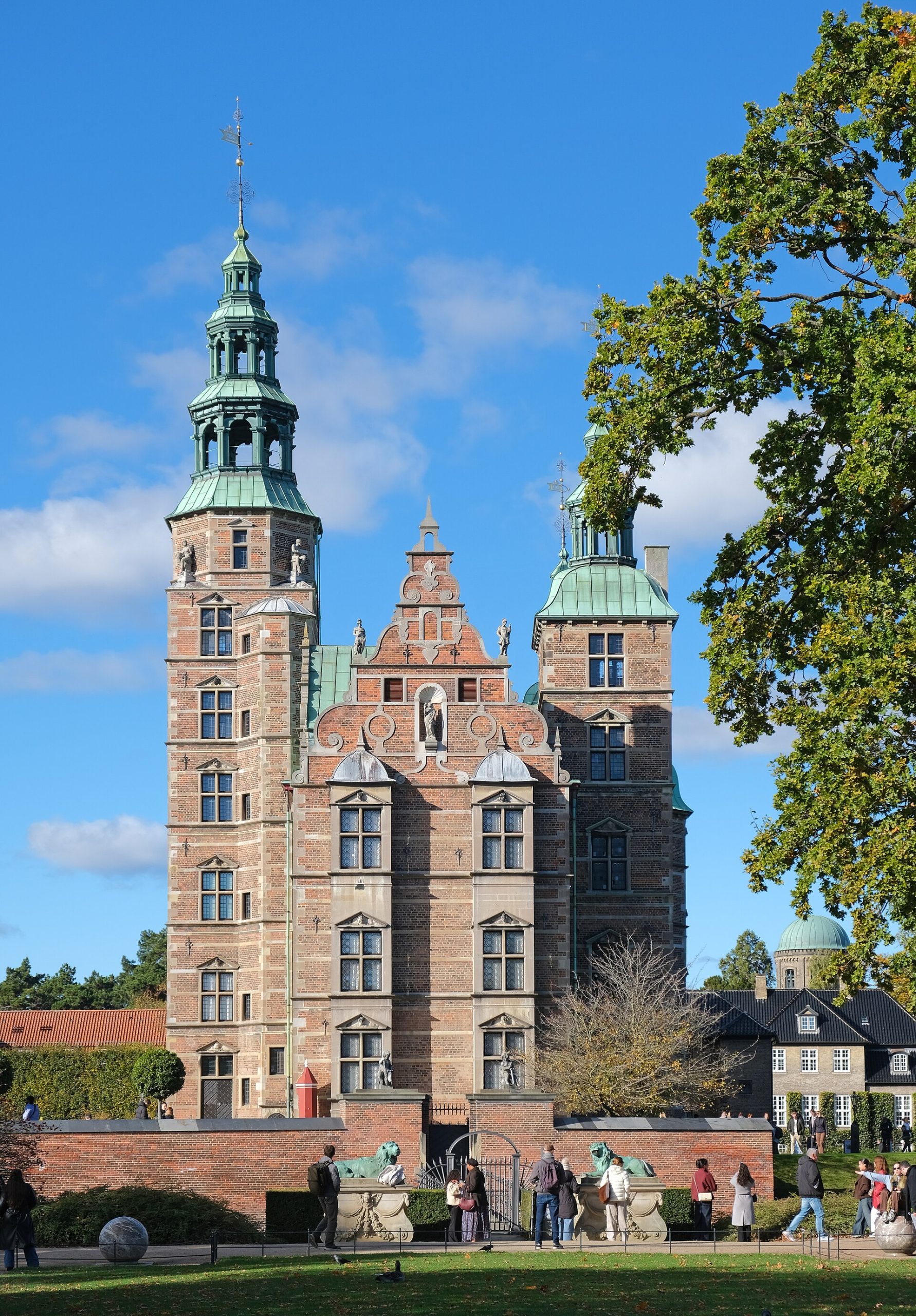
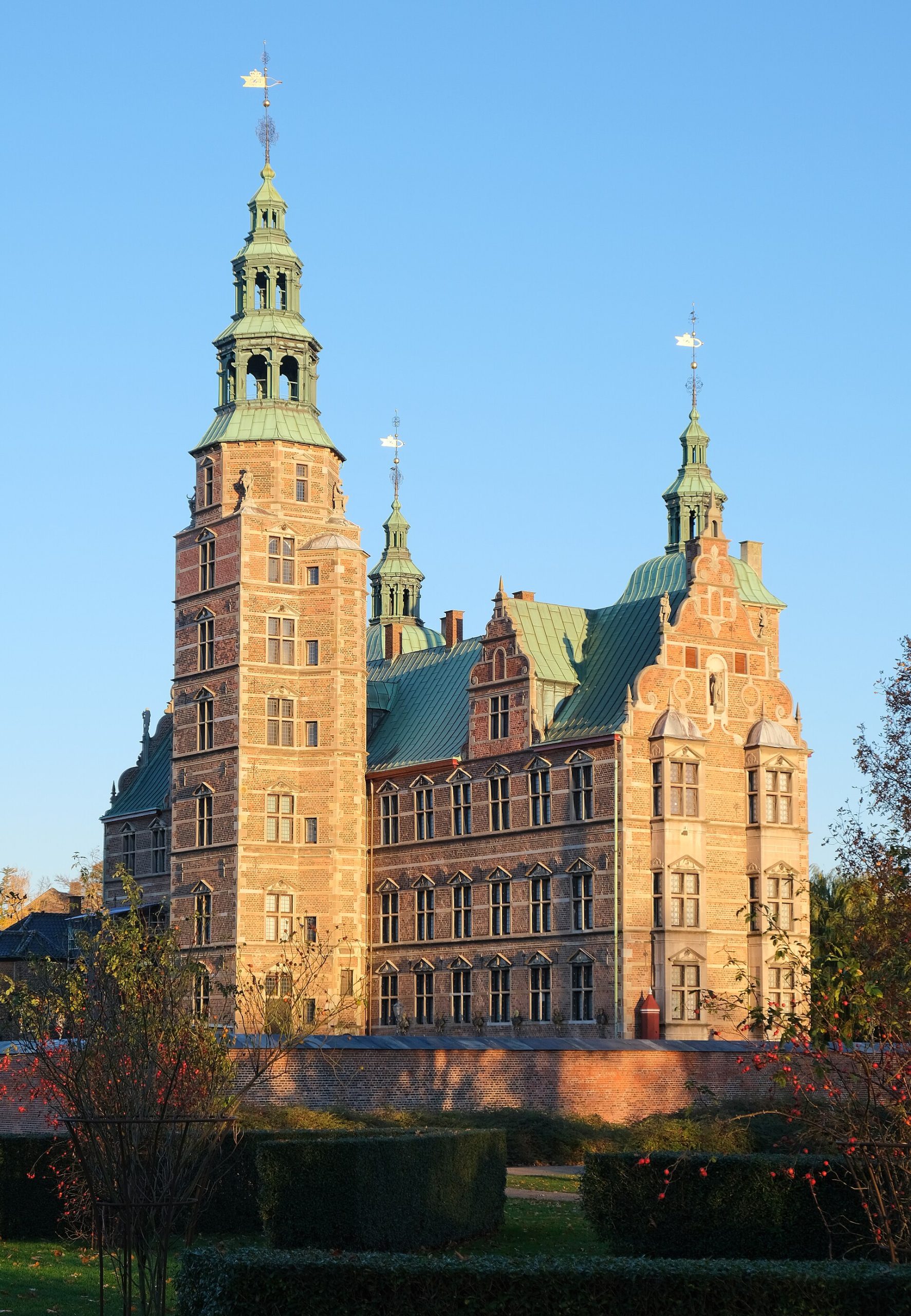
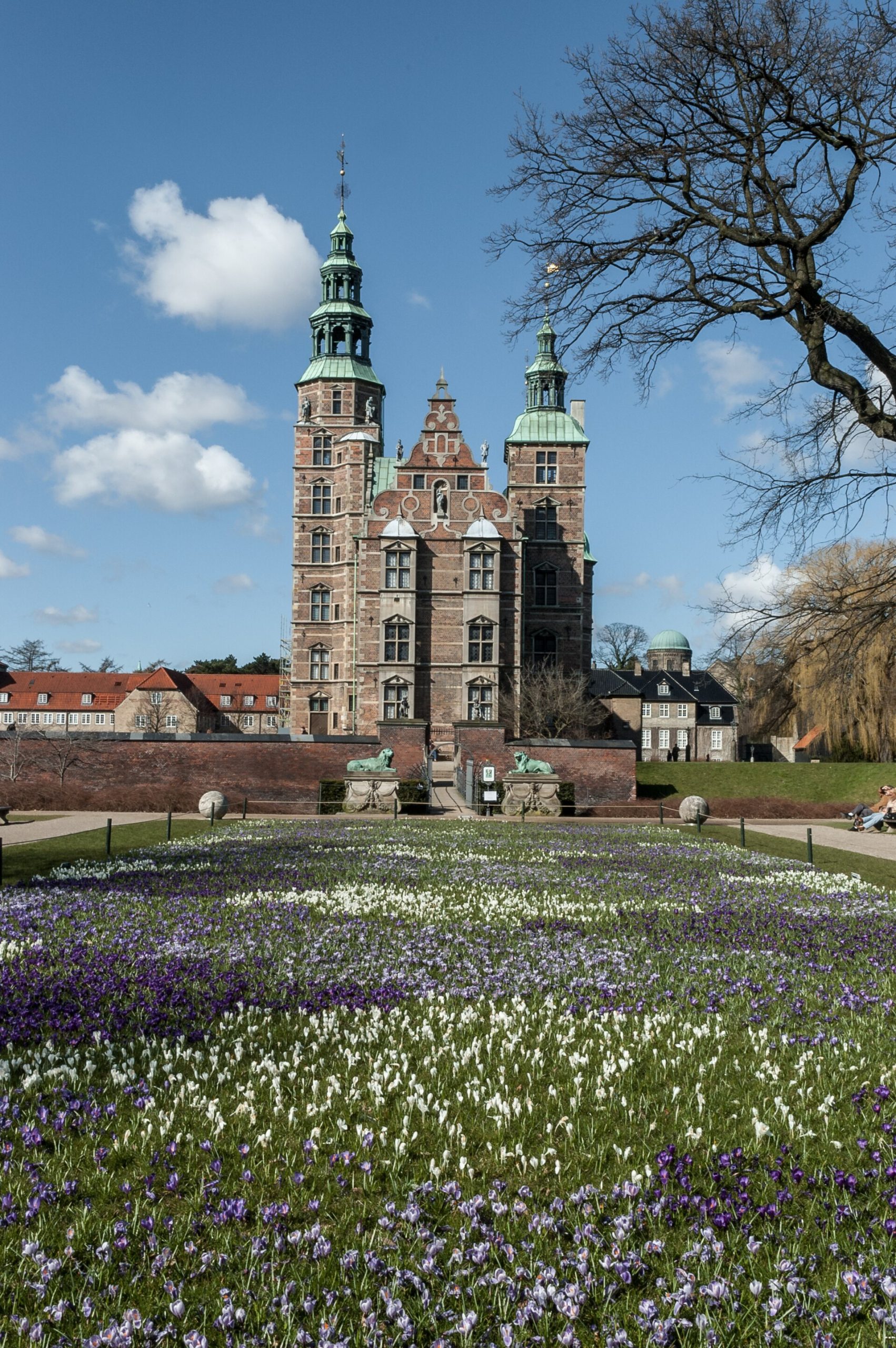
Rosenborg is one of the finest examples in Denmark of the Dutch Renaissance architectural style that was so fashionable in northern Europe in the age of Christian the Fourth. This style, with its warm red brick offset by pale sandstone details, its ornamented gables, and its distinctive towers topped with copper spires that have weathered to a soft green, gives the castle its unmistakable and much-loved appearance. It is a look that speaks of the close cultural and trading ties between Denmark and the Netherlands in this period.
The result is a building of great character and charm, at once dignified and playful. The interplay of red and pale stone, the rhythm of the windows, and the picturesque silhouette of the roofline all combine to create something that delights the eye from every angle. Rosenborg wears its architectural style with wonderful confidence, and it stands as a superb monument to the taste of its age. Among the many buildings that Christian the Fourth raised in this manner, Rosenborg is perhaps the most perfectly preserved and the most purely enjoyable to behold.
The Dutch Renaissance style was more than a passing fashion, for it reflected the deep connections that bound Denmark to the wider world of the North Sea and the Baltic in this era. Dutch architects, craftsmen, and ideas flowed into Denmark, and Danish wealth and ambition drew upon them to create buildings of real sophistication. In choosing this style for his favourite castle, Christian the Fourth was aligning his kingdom with the most vibrant currents of northern European culture, and the enduring beauty of Rosenborg is testimony to how successfully he did so.
The King’s Garden
Rosenborg is inseparable from the beautiful garden that surrounds it, the Kongens Have or King’s Garden, which is the oldest royal garden in Copenhagen and one of the most beloved green spaces in the whole city. Laid out by Christian the Fourth as the setting for his new pleasure house, the garden has been a place of royal and public enjoyment for centuries, and today it is a favourite spot for the people of Copenhagen to stroll, relax, and escape the bustle of the city.
The garden is a delight in every season, with its avenues of trees, its formal beds, its lawns, and its statues providing an ever-changing display of beauty. In summer it fills with people picnicking and enjoying the sunshine, while in other seasons it offers quieter pleasures. The relationship between the castle and its garden is one of the keys to Rosenborg’s charm, for the two were conceived together as a single vision of pleasure and beauty. To visit the castle without wandering its garden would be to miss half the experience, for together they form one of the loveliest corners of the Danish capital.
The King’s Garden has evolved over the centuries, but it has never lost its essential character as a place of pleasure and repose at the heart of the city. Generations of Copenhageners have grown up wandering its paths, and it holds a special place in the affections of the people of the capital. That a garden laid out by a king four hundred years ago should still be so loved and so well used today is a lovely example of continuity, a green thread linking the Copenhagen of Christian the Fourth to the vibrant modern city that surrounds it now.
In the warmer months the garden becomes a stage for concerts, events, and countless small gatherings, its lawns dotted with people enjoying the northern sunshine. This lively public use, unfolding beneath the spires of a four-hundred-year-old royal castle, creates a wonderful contrast between the historic and the everyday, and it captures something essential about the way Copenhagen wears its rich past so lightly and so joyfully. The King’s Garden is not a museum piece but a living, breathing part of the city.
A Royal Home for a Century
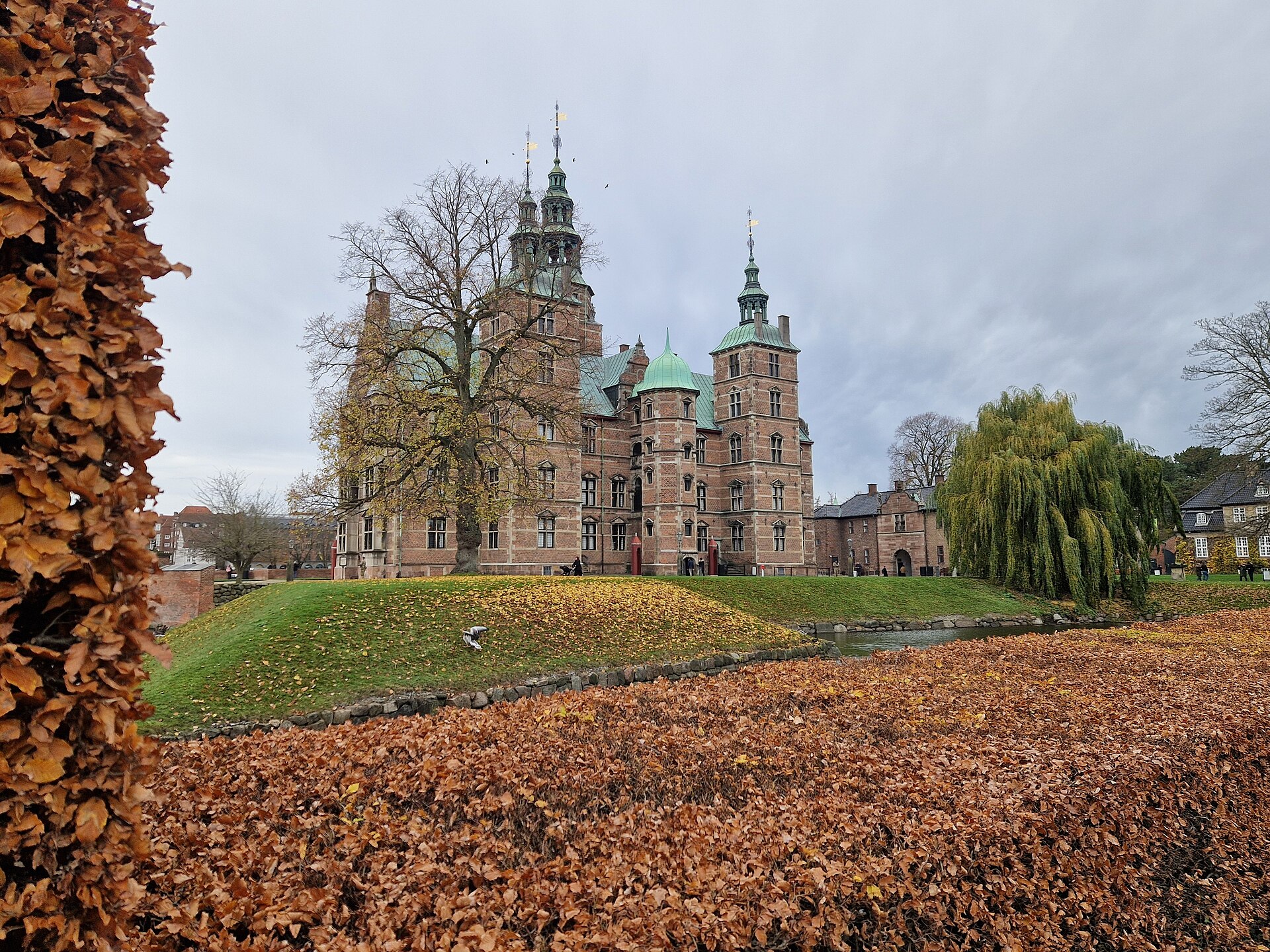
For roughly a century after it was built, Rosenborg served as a genuine royal residence, a home where the kings of Denmark and their families lived and enjoyed themselves. Christian the Fourth was especially attached to the castle, and it was here, according to tradition, that he chose to spend his final days and died. For several generations the castle remained in active royal use, its rooms furnished and lived in, a favoured retreat close to the heart of the capital.
In time, however, the royal family came to prefer other, grander palaces, and Rosenborg gradually ceased to be a regular residence. Yet rather than being abandoned or demolished, as so many disused palaces were, Rosenborg was preserved, and its rooms were kept much as they had been in the days of the kings who had lived there. This decision to conserve the castle rather than modernise it was of enormous importance, for it meant that Rosenborg came down to later ages as a remarkably complete record of royal life across the seventeenth and early eighteenth centuries, ready to become the museum it is today.
The decision to preserve rather than modernise Rosenborg was, in hindsight, one of the most fortunate in the history of Danish heritage. Had the castle been continually updated to suit changing tastes, as so many royal residences were, its priceless seventeenth-century character would have been lost. Instead, it was allowed to remain a kind of living memorial to the age that created it, and that far-sighted conservation is the reason we can experience Rosenborg today so much as it was in the days of the kings who lived there.

Inside the Royal Apartments
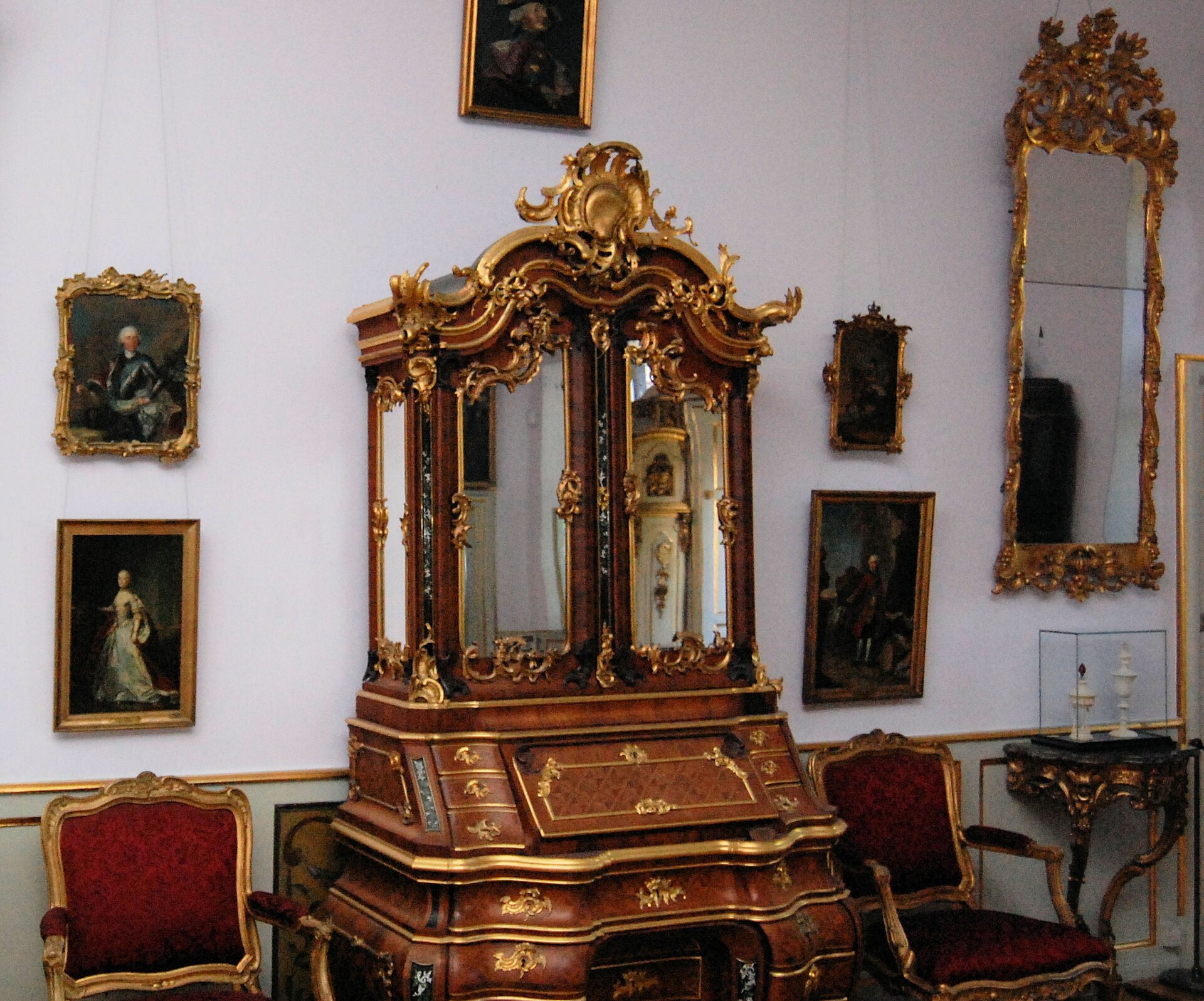
Stepping inside Rosenborg is one of the great pleasures of a visit to Copenhagen, for the castle preserves a series of rooms furnished and decorated much as they were in the days when kings lived here. Moving through the royal apartments, you pass through chambers rich with history, their walls hung with paintings and tapestries, their spaces filled with furniture, objects, and personal belongings that once surrounded the Danish monarchs. It is an intimate and vivid encounter with the world of royalty.
Each room has its own character and its own stories to tell, from private chambers to more formal spaces, and together they build up a detailed picture of court life across the seventeenth and early eighteenth centuries. The preservation of so much original material makes the experience far more immediate than that of an empty palace, for here the past feels close enough to touch. Wandering these rooms, you can almost imagine the kings and queens who once lived among these very objects, and that sense of intimacy is one of the things that makes Rosenborg so special among the great castles of the north.
The intimacy of these rooms is one of the things that visitors remember most fondly about Rosenborg. Unlike the vast and impersonal state apartments of some great palaces, the chambers here feel human in scale, spaces where you can genuinely imagine daily life unfolding. This sense of closeness to the royal past, of being admitted into the private world of the monarchy rather than merely viewing its public face, gives a visit to Rosenborg a warmth and immediacy that many grander places entirely lack, and it is a large part of the castle’s enduring appeal.
Among the many pleasures of the royal apartments are the small, personal touches that survive, the objects and details that speak of individual kings and their tastes and habits. It is these human elements, as much as the grand furnishings, that bring the past to life, reminding us that the monarchs who lived here were real people with their own passions and quirks. Rosenborg excels at conveying this human dimension of royalty, and it is one of the reasons the castle lingers so fondly in the memory of those who visit it.
The Long Hall and the Coronation Thrones
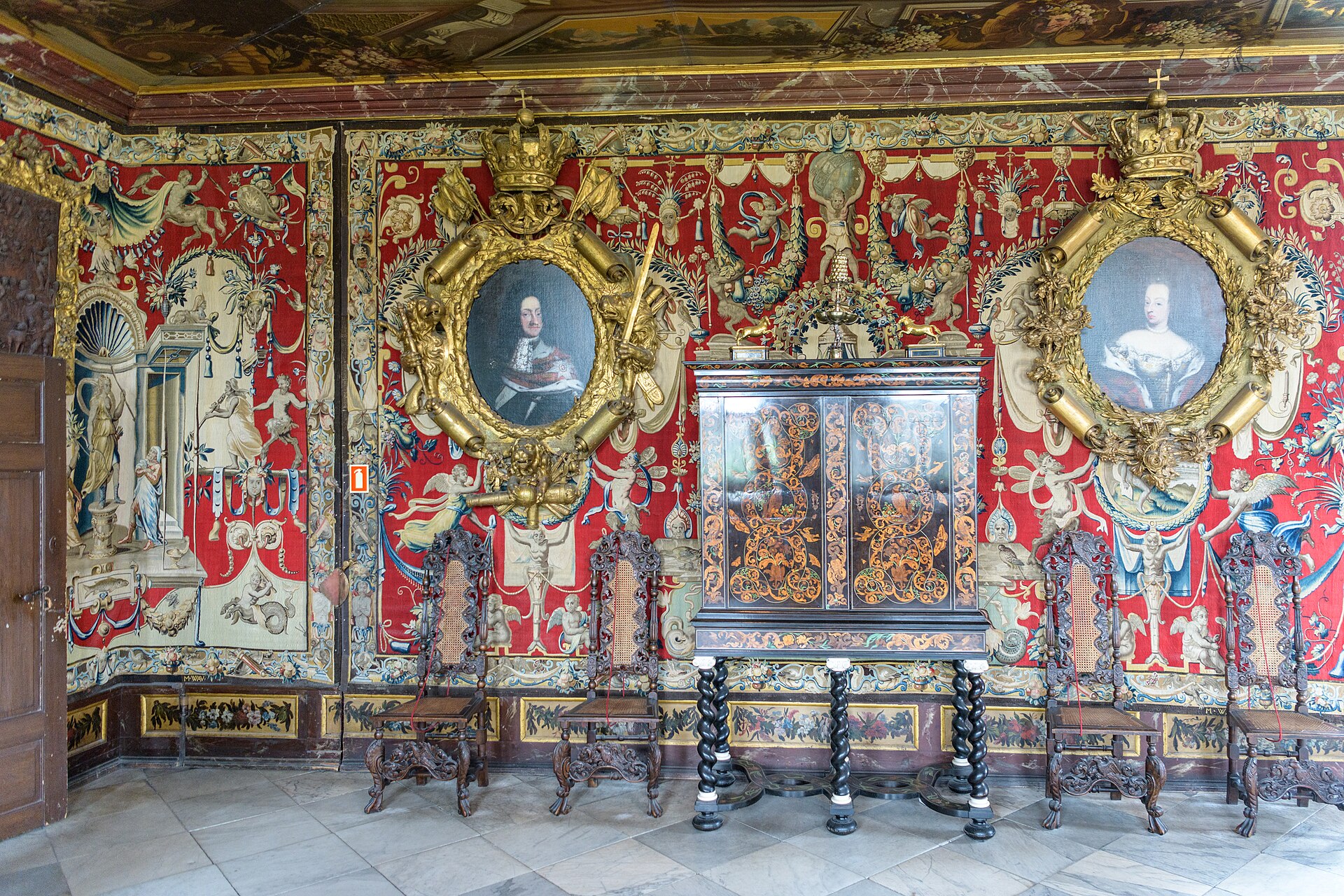
The grandest space in all of Rosenborg is the magnificent Long Hall, a great room running the length of the castle’s top floor that was created as a splendid setting for royal ceremony and celebration. Richly decorated and filled with treasures, it is one of the most impressive royal interiors in Denmark, and it takes the breath away as you enter. This was where the monarchy displayed its magnificence, a space designed to overwhelm visitors with the wealth and majesty of the Danish crown.
At the heart of the Long Hall stand the coronation thrones of the Danish monarchs, extraordinary objects of great symbolic power. The king’s throne, according to legend made from the horn of the narwhal, that mysterious sea creature whose spiral tusk was once believed to come from the unicorn, is a marvel of craftsmanship and meaning. Around these thrones the whole life of the monarchy once revolved, and to stand before them today is to feel the deep continuity of the Danish crown, one of the oldest in the world, reaching back across the centuries.
The story attached to the narwhal-horn throne is a wonderful example of how legend and craftsmanship intertwine in a place like Rosenborg. In an age when the narwhal’s spiral tusk was believed to be the horn of the mythical unicorn, a material of almost magical properties, to build a throne from it was to surround the monarchy with an aura of wonder and power. Whether or not the tale is taken literally, it captures perfectly the way in which the Danish crown sought to clothe itself in mystery and majesty, and it adds an irresistible touch of enchantment to the Long Hall.
The Three Silver Lions
Guarding the coronation thrones in the Long Hall stand three of the most remarkable objects in the whole of Rosenborg, three life-sized lions cast in solid silver. These magnificent beasts, gleaming and powerful, have stood watch over the Danish thrones for centuries, and they are among the most treasured possessions of the Danish crown. Their presence adds enormously to the majesty of the great hall, symbols of royal power and protection rendered in precious metal.
The silver lions carry a deep significance in Danish royal tradition, and they have played their part in the most solemn moments of the monarchy, including the ceremonies surrounding the deaths and lyings-in-state of kings. To see them standing guard in the Long Hall is to encounter the Danish monarchy at its most magnificent and its most symbolic, and they are one of the unforgettable sights of a visit to Rosenborg. Few objects anywhere express so vividly the wealth, artistry, and ancient dignity of a royal house as these three shining lions.
Objects like the silver lions remind us that the treasures of Rosenborg are not merely beautiful but deeply meaningful, bound up with the rituals and symbolism of monarchy. Every great royal house surrounded itself with such emblems, tangible expressions of power, continuity, and divine favour, and the Danish crown was no exception. To understand the lions is to understand something of how monarchy presented itself to the world, and their enduring presence in the Long Hall is a powerful link to the ceremonies and beliefs of the Danish kings across the centuries.
Treasures of the Danish Kings
Beyond its rooms and its famous halls, Rosenborg is above all a treasure house, home to one of the most dazzling collections of royal objects to be found anywhere in Europe. Across the centuries the kings of Denmark gathered here an extraordinary array of precious things, and the castle now serves as the setting for the Royal Danish Collections, a wealth of art and craftsmanship that tells the story of the monarchy through its most beautiful possessions.
The collection is astonishing in its variety and its splendour, encompassing precious objects of gold and silver, jewellery, fine glass and porcelain, ornate weapons, intricate clocks and automata, and countless other marvels crafted by the finest artists and artisans of their day. Each piece has its own story, and together they form a glittering record of royal taste, wealth, and patronage across many generations. Wandering among these treasures, you get a vivid sense of the sophistication and magnificence of the Danish court, and of the care with which its finest possessions have been preserved for us to admire today.
Collections like this one were more than displays of wealth, for they reflected the curiosity and cultivation of the royal collectors who assembled them. To gather beautiful and marvellous objects from across the world was to demonstrate not only riches but taste, learning, and connection to the wider currents of art and craftsmanship. The Royal Danish Collections at Rosenborg thus tell us a great deal about the minds and interests of the kings who created them, and wandering among the treasures, you sense the personalities and passions that lie behind this glittering accumulation.
Take your time in these rooms if you can, for the sheer richness of the collections rewards slow and careful looking. Each cabinet and case holds objects worth pausing over, and the more closely you look, the more the artistry and ingenuity of their makers reveal themselves. From tiny intricate details to grand showpieces, the treasures of Rosenborg reward the patient visitor with an ever-deepening sense of wonder at the skill and imagination of the craftsmen who served the Danish crown across the ages.

The Crown Jewels and the Royal Regalia
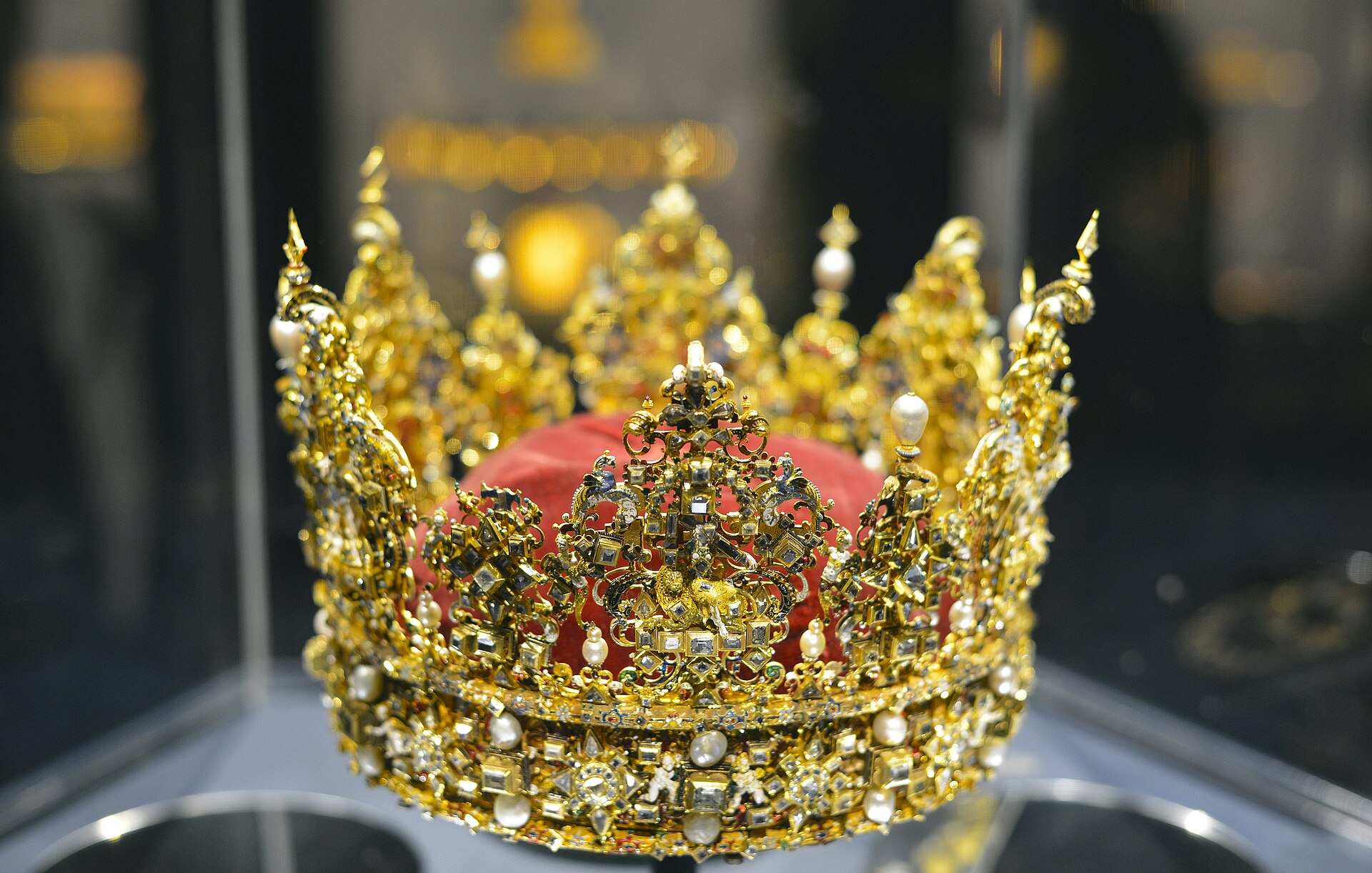
The greatest treasures of all at Rosenborg are the Danish crown regalia and crown jewels, kept in the castle as the ultimate symbols of the monarchy. Here are preserved the crowns of the Danish kings, magnificent objects of gold, enamel, and precious stones that were used in the most solemn ceremonies of state. The crown of Christian the Fourth, richly ornamented and dazzling in its detail, is among the supreme masterpieces of the goldsmith’s art from its age, a fitting emblem for the great building king who created Rosenborg.
Alongside the crowns are the other symbols of royal authority, the sceptres, orbs, and swords of state that together made up the regalia used at coronations and other great occasions. And there are the crown jewels themselves, sets of magnificent jewellery still considered the property of the state and worn by the Danish queen on the grandest occasions to this day. To stand before these objects is to be in the presence of the living symbols of one of the oldest monarchies in the world, and it is a genuinely awe-inspiring experience, the crowning glory of any visit to Rosenborg.
The continued use of the crown jewels by the Danish royal family to this day gives them a living significance that mere museum pieces can never possess. These are not relics of a vanished monarchy but the working symbols of one that endures, worn on the greatest occasions of state and thus connecting the present royal house directly to its long line of predecessors. That living continuity, stretching back across the centuries and reaching into the present day, is part of what makes standing before the crown jewels of Denmark such a moving and memorable experience.
The crown of Christian the Fourth in particular repays close attention, for it is a masterpiece of the goldsmith’s craft, encrusted with detail and rich with symbolism, every element carrying meaning about the nature and duties of kingship. Made for the very monarch who created Rosenborg, it seems especially at home within these walls, and it stands as a fitting emblem of the great building king whose vision and energy gave Denmark this most delightful of castles. To see it is to complete the story of the man and the palace alike.

The Treasury Beneath the Castle
The crown jewels and regalia are displayed in the Treasury, a specially secured chamber located beneath the castle where these irreplaceable objects can be kept safe and shown to the public. Descending into the Treasury is a memorable moment, a passage from the elegant rooms above into the hushed, protected space where the most precious possessions of the Danish crown are gathered together in glittering array. The setting adds to the sense of occasion, giving the display an atmosphere of reverence appropriate to such treasures.
Here, behind thick walls and secure glass, the crowns and jewels glow under careful lighting, drawing gasps from visitors who come from all over the world to see them. The Treasury brings together in one place the very heart of the Danish royal collections, and it is the climax toward which a visit to Rosenborg naturally builds. Having wandered the royal apartments and marvelled at the Long Hall and its silver lions, you descend at last to the Treasury to behold the crowns themselves, and it is a fitting and unforgettable conclusion to the journey through this remarkable castle.
The careful protection of these treasures reflects both their immense value and their profound importance to the Danish nation. They are, in a very real sense, irreplaceable, embodying the history and identity of one of the world’s oldest monarchies, and the security that surrounds them is a measure of how precious they are. Yet for all the protection, the Treasury remains wonderfully accessible, allowing anyone who visits to come face to face with the crowns of Denmark, a democratic openness that lets these ancient royal symbols be shared with and enjoyed by all.
Finding Rosenborg Castle
Rosenborg Castle could hardly be more central or more easy to reach, standing right in the heart of Copenhagen within its beautiful King’s Garden, only a short walk from the main shopping streets and the other great sights of the Danish capital. Copenhagen is a wonderfully walkable and well-connected city, and the castle is easily accessible on foot, by bicycle, or by the city’s efficient metro and public transport, making it a simple and rewarding addition to any visit.
The castle and its garden make a perfect centrepiece for exploring Copenhagen, and they pair beautifully with the many other attractions of this vibrant city, from its palaces and museums to its harbour and famous streets. You can easily spend a happy few hours at Rosenborg exploring the castle, marvelling at the crown jewels, and relaxing in the King’s Garden, before continuing on to discover the rest of the capital. Here are the exact coordinates so you can find your way to this Renaissance jewel in the heart of Copenhagen.
Castles Nearby
If Rosenborg has captivated you, two more Danish castles of King Christian IV make a perfect next stop.
- Kronborg Castle, the fortress of Hamlet, guards the sound north of Copenhagen.
- Frederiksborg Castle is Christian IV’s magnificent Renaissance palace on the water.
The Treasure House of the Danish Crown
Few castles anywhere pack so much delight and so much treasure into so compact and charming a package as Rosenborg. Built by a king for his own pleasure, it has the intimate, human scale of a place made to be enjoyed rather than to overawe, and yet within its walls it holds the very crowns of Denmark, the glittering symbols of one of the oldest monarchies in the world. To wander from its cosy royal apartments to its magnificent Long Hall and down into its Treasury is to experience the whole enchantment of the Danish crown in a single afternoon.
That is what makes Rosenborg such a joy to visit. Set in its beautiful garden in the heart of a great city, it offers beauty, history, and wonder in equal measure, from the charm of its Renaissance architecture to the awe of standing before the crown jewels themselves. It is a place that delights everyone who comes, whether they are drawn by the fairy-tale castle, the royal treasures, or simply the pleasure of the King’s Garden. Rosenborg is the treasure house of the Danish crown, and it remains one of the most magical places in all of Copenhagen.
If your travels take you to Copenhagen, Rosenborg deserves a place at the very top of your list. Wander through the King’s Garden to the castle, explore its royal rooms and its magnificent Long Hall, and descend at last to the Treasury to stand before the crowns of Denmark themselves. It is a visit that combines beauty, history, and wonder in the happiest possible way, and it leaves everyone who makes it with a lasting sense of enchantment. The treasure house of the Danish crown has been delighting visitors for centuries, and it is ready to work its magic on you.
You May Like
Mafra, the Palace a King Built From a Vow