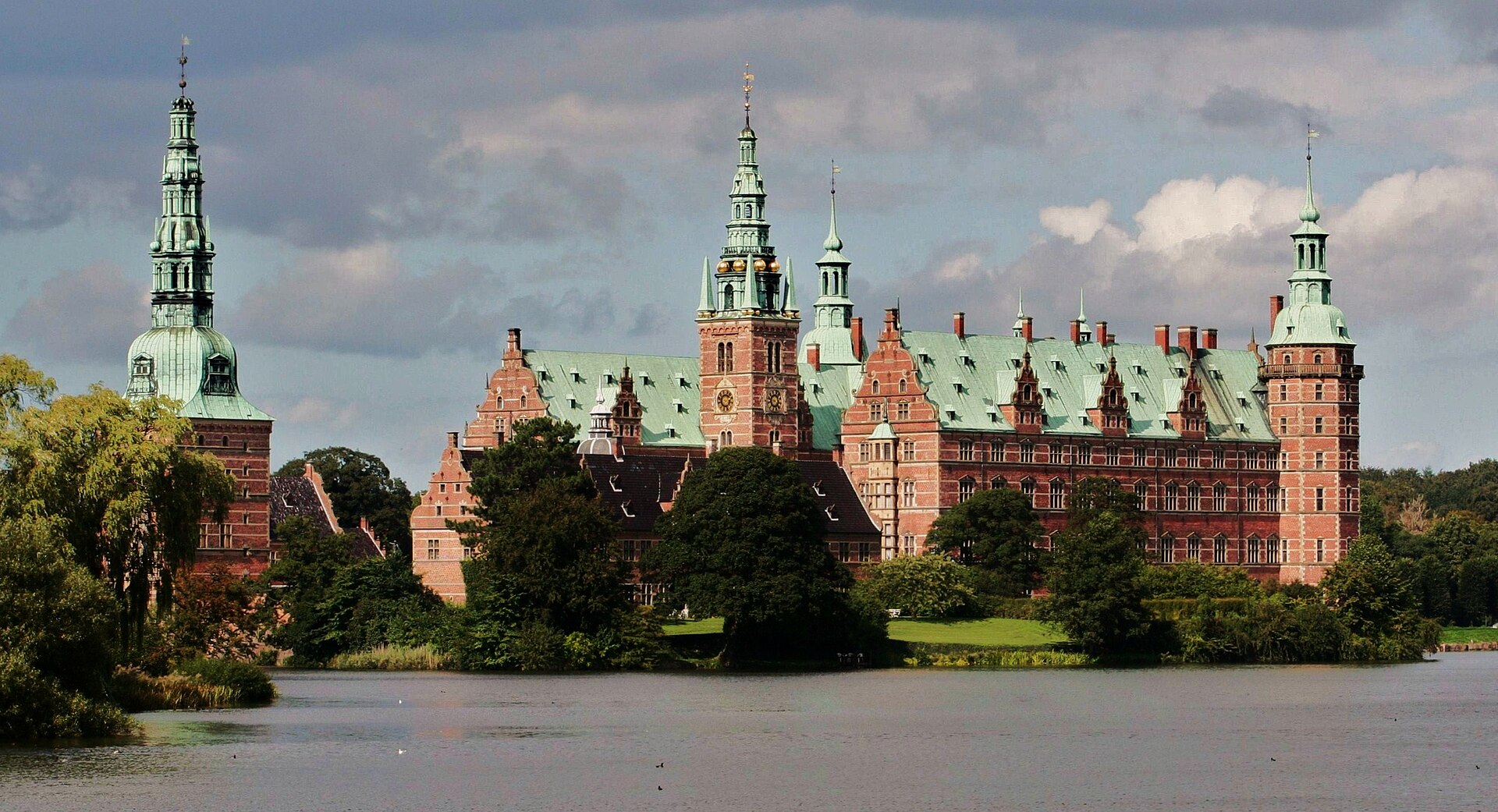
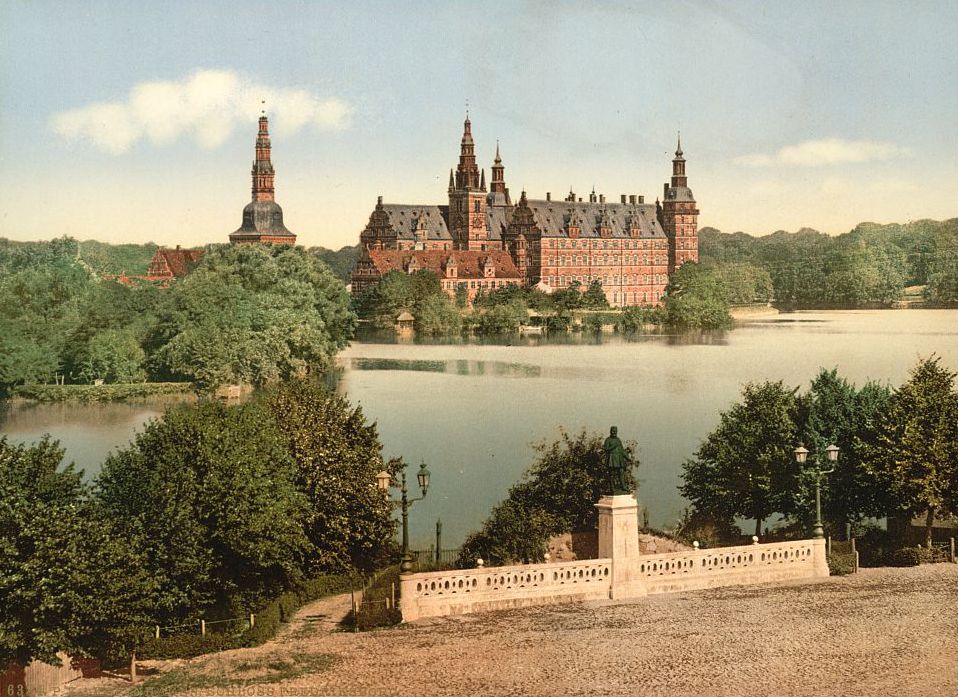
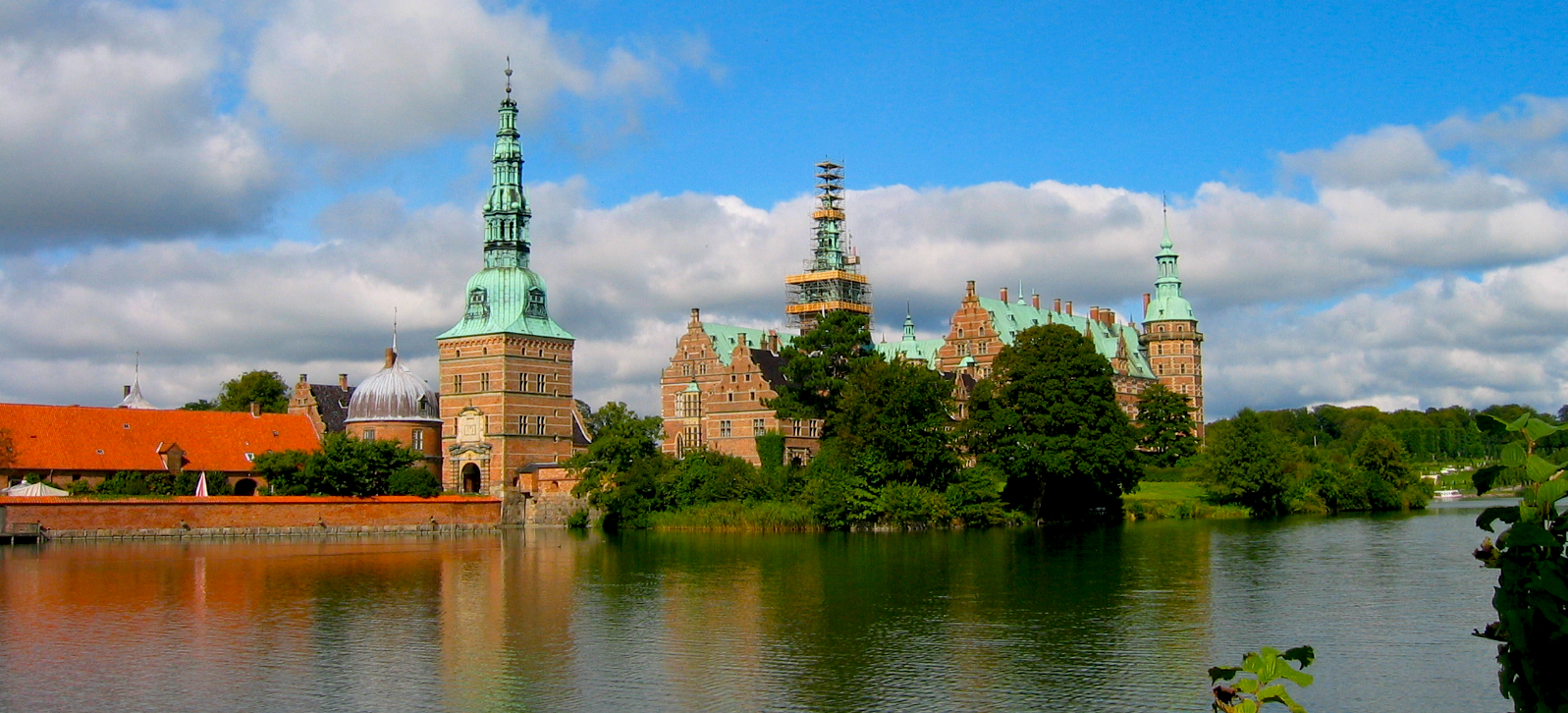
If Kronborg is the fortress of the Danish golden age, Frederiksborg is its dream palace. Rising on three small islands in the middle of a lake at Hillerød, north of Copenhagen, this magnificent castle of red brick and copper spires seems to float upon the water like something conjured out of a fairy tale. It is the largest Renaissance palace in all of Scandinavia, and quite possibly the most beautiful.
Where Kronborg was built to guard a strait and collect tolls, Frederiksborg was built for pure magnificence, the grand residence of a king who loved building above almost all things. It was the creation of Christian IV, the great builder-king of Denmark, and it became the coronation church and treasure-house of the Danish monarchy, a showcase of royal splendour set amid gardens and water.
So come with me north from Copenhagen to the lake at Hillerød, and let us explore the floating palace of Christian IV. We will cross its bridges from island to island, stand in its glittering coronation church, walk its great hall and its Baroque gardens, and discover how, after a devastating fire, this royal dream was saved and reborn as the museum of a nation’s history. Frederiksborg is the fairest castle in Denmark, and one of the loveliest in the world.
In This Article
- A Palace Floating on a Lake
- The Great Builder-King
- Red Brick and Copper Spires
- Across the Bridges to the Gate
- The Islands in the Lake
- The Coronation Church
- The Great Hall of the Knights
- The Royal Apartments
- Neptune Rising in the Courtyard
- The Baroque Gardens
- The Great Fire of 1859
- The Brewer Who Saved a Palace
- The Portrait Gallery of a Nation
A Palace Floating on a Lake
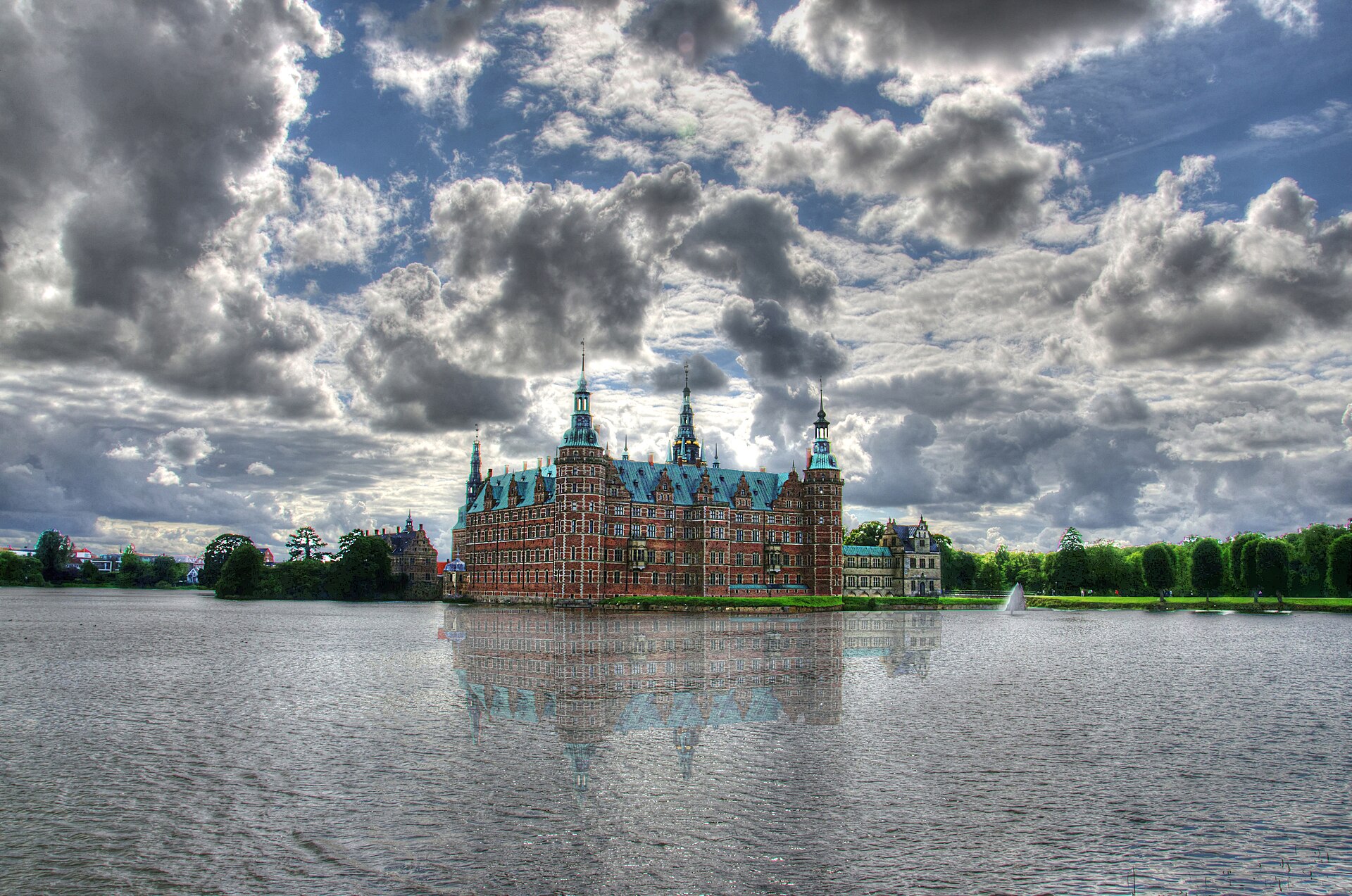
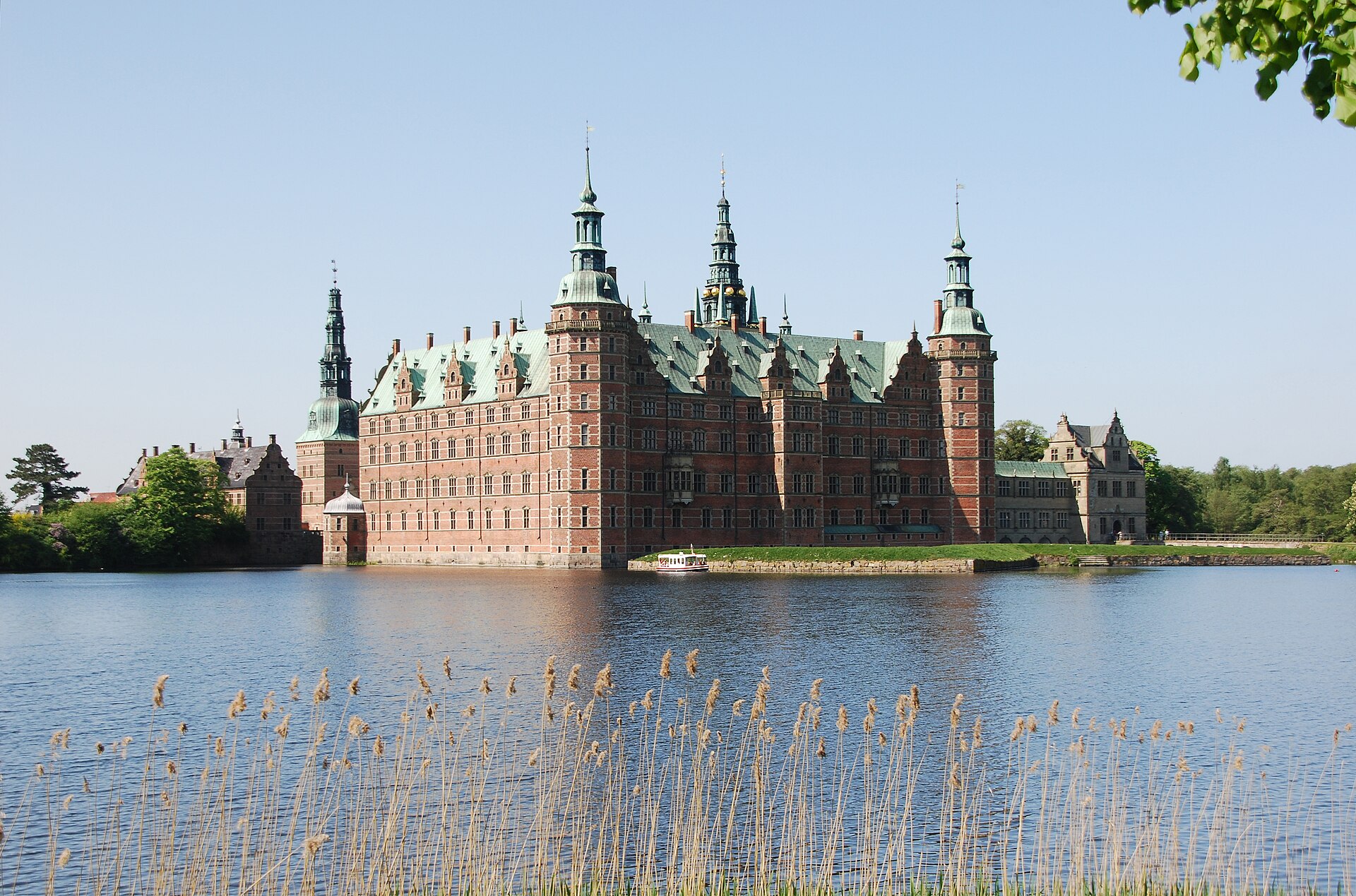
The first sight of Frederiksborg is unforgettable. Rising directly from the waters of a lake at Hillerød, some thirty kilometers north of Copenhagen, the great red-brick palace with its copper spires and towers seems to float upon the surface, doubled in the reflection below. Built across three small islands in the lake, it is the largest Renaissance castle in Scandinavia and one of the most romantic buildings in Europe.
The setting is the making of it. Where most great palaces stand on solid ground, Frederiksborg is embraced by water on every side, its islands linked by bridges, its walls rising sheer from the lake. This watery setting lends the castle a dreamlike, fairy-tale quality, and it also served a practical purpose, for the lake provided both beauty and a measure of protection, isolating the royal residence on its islands.
Frederiksborg was conceived not as a fortress but as a grand residence and a monument to royal magnificence, and everything about it, from its scale to its setting to its ornament, was designed to enchant and impress. It is the supreme expression of the Danish Renaissance, a palace built at the height of the kingdom’s wealth and confidence to proclaim the glory of the crown.
If you want to find this floating palace before you visit, here are the coordinates for the castle on its lake at Hillerød. Zoom in and you will see the three islands and their bridges, the great palace spread across the water, the formal gardens rising on the far shore, an entire royal landscape composed around the lake in the woods of North Zealand.
The town of Hillerød grew up around the royal palace much as other towns grew around great castles, its fortunes long tied to the presence of the court and, later, to the stream of visitors drawn to the museum, so that palace and town remain bound together to this day.
The Great Builder-King
Frederiksborg is above all the creation of one man: King Christian IV of Denmark, who reigned for the first half of the seventeenth century and who is remembered as the greatest builder in all of Danish history. A monarch of boundless energy and ambition, Christian left magnificent buildings across his kingdom, and Frederiksborg was among the grandest and most beloved of all his projects.
There had been an earlier castle on the site, associated with Christian’s father Frederick II, from whom the castle takes its name, meaning Frederick’s castle. But it was Christian IV who, in the first two decades of the seventeenth century, rebuilt it entirely on a magnificent new scale, creating the great Renaissance palace we see today across its three islands, a residence worthy of his soaring vision of Danish kingship.
Christian threw himself into the project with characteristic passion, involving himself in the details of design and construction, and he spared no expense in making Frederiksborg a showcase of the finest Renaissance craftsmanship. The result was a palace of extraordinary richness, its every surface adorned, its rooms filled with treasures, a monument to the wealth and cultural ambition of Denmark at its zenith.
For Christian IV, Frederiksborg was both a beloved residence and a statement of royal grandeur, and it became one of the principal seats of the Danish crown. The reign of Christian IV was a high point of Danish power and culture, and Frederiksborg, rising on its lake, was the architectural embodiment of that golden age, the dream palace of a king who loved nothing better than to build.
Christian IV reigned for nearly sixty years, one of the longest reigns in European history, and his passion for building left Copenhagen and Denmark transformed, dotted with towers, palaces and whole districts of his creation. Frederiksborg, begun in his ambitious youth, stands as perhaps the crowning achievement of this extraordinary architectural legacy.
Red Brick and Copper Spires
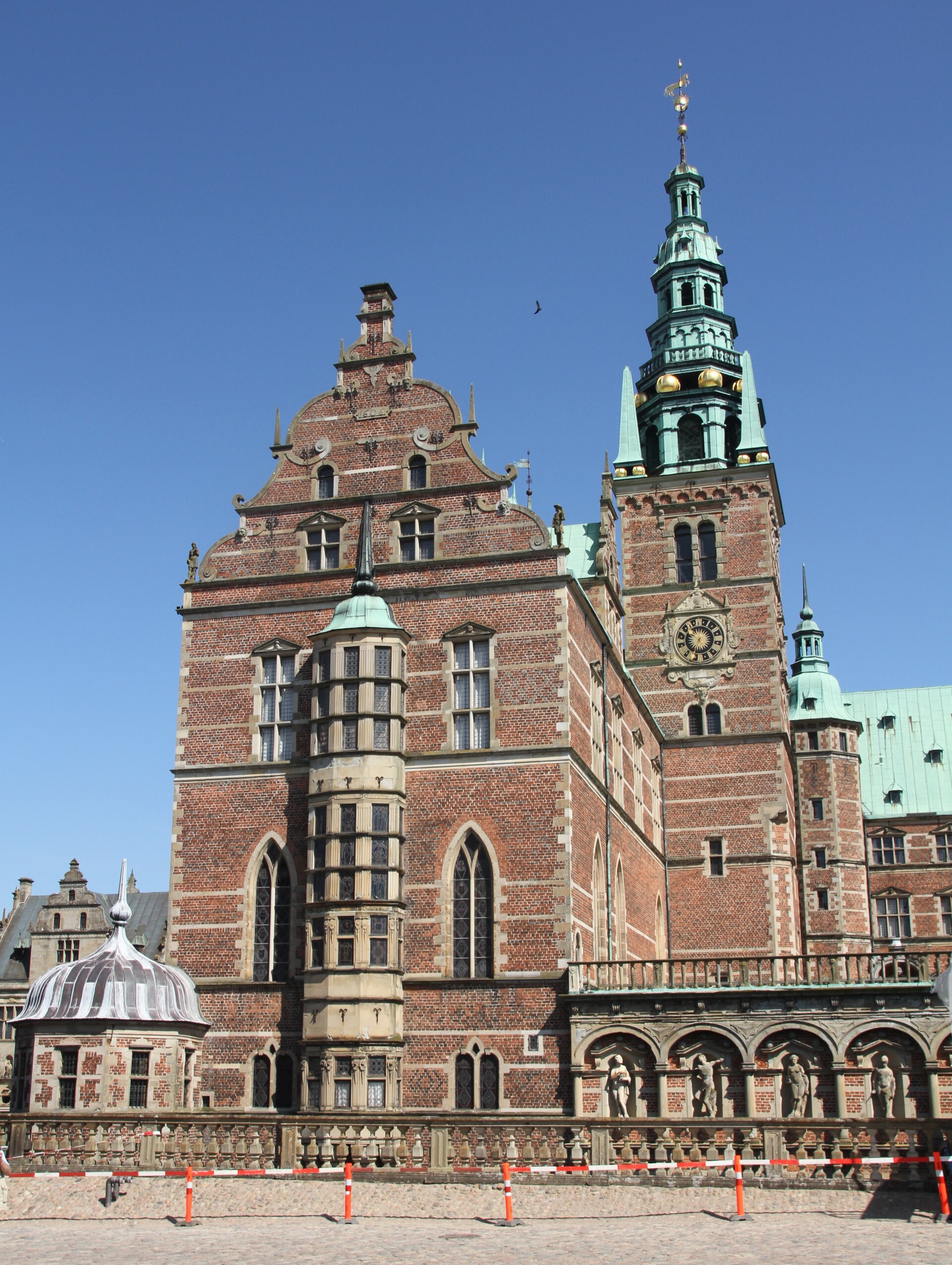
The style of Frederiksborg is the rich, ornate Renaissance of Northern Europe, heavily influenced, like Kronborg, by the architecture of the Netherlands, then the leading centre of building fashion in the north. The palace is built of warm red brick, dressed with pale sandstone and crowned with copper roofs and spires, a colour combination that gives it its distinctive and beautiful appearance.
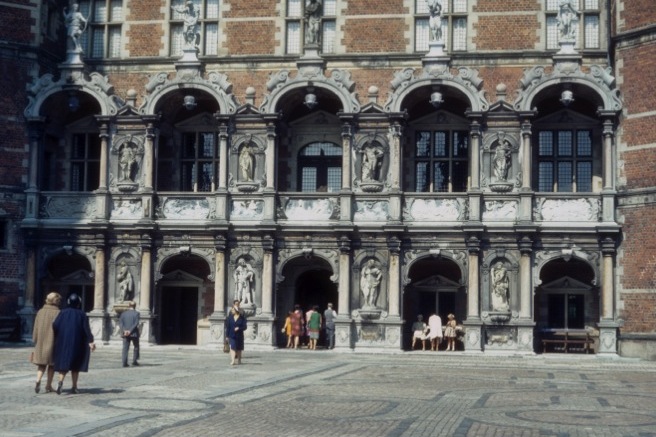
The facades are richly decorated, with ornamented gables, carved sandstone details, statues and towers, creating a complex and lively silhouette that delights the eye from every angle. This is Renaissance architecture at its most exuberant and decorative, a world away from the austere fortresses of the Middle Ages, designed above all to charm and to display the taste and wealth of the crown.
The courtyards, enclosed by the wings of the palace, are the elegant heart of the composition, harmonious spaces framed by the richly worked facades. Here the international Renaissance style is displayed in all its refinement, marking Frederiksborg as a building fully in step with the latest currents of European art, the product of a cosmopolitan and ambitious royal court.
This Dutch-influenced Danish Renaissance style would prove enormously influential, and Frederiksborg stands as its supreme monument, the largest and most magnificent example of the mode in all of Scandinavia. Its red brick and copper spires, rising above the lake, became one of the defining images of Danish royal architecture, imitated and admired for centuries after.
So admired was the style of Frederiksborg that it gave its name to a whole revival, the so-called Frederiksborg style, which inspired countless later buildings across Scandinavia in the nineteenth and early twentieth centuries, as architects returned to Christian IV’s red brick and copper as a model of national architecture.
Across the Bridges to the Gate
Approaching Frederiksborg is a ceremonial experience in itself, for the palace can only be reached by crossing from island to island over a series of bridges, passing through ornate gateways as you go. This sequence of bridges and gates draws the visitor gradually inward, across the water, through the outer islands to the great palace on the innermost island, building anticipation with every step.
The gate towers and portals are richly decorated in the Renaissance manner, adorned with carved stone and heraldry, and they mark the transitions from one part of the complex to another. In an age when arrival was a matter of ceremony, this processional approach across the bridges was designed to impress upon visitors the majesty of the palace they were entering and the wealth of the king who built it.
The arrangement across three islands was both aesthetic and practical. It gave the palace its magical floating character, dividing the complex into distinct zones separated by water, while the bridges and gates provided points of control and display. The outer islands held service and approach functions, leading to the grand royal residence and church on the principal island.
Crossing the bridges today, with the lake all around and the palace rising ahead, you experience the arrival much as visitors have for four centuries, a slow, beautiful approach over the water to the heart of the royal dream. It is one of the finest processional approaches to any castle in Europe, turning the simple act of arrival into a piece of theatre worthy of the palace it leads to.
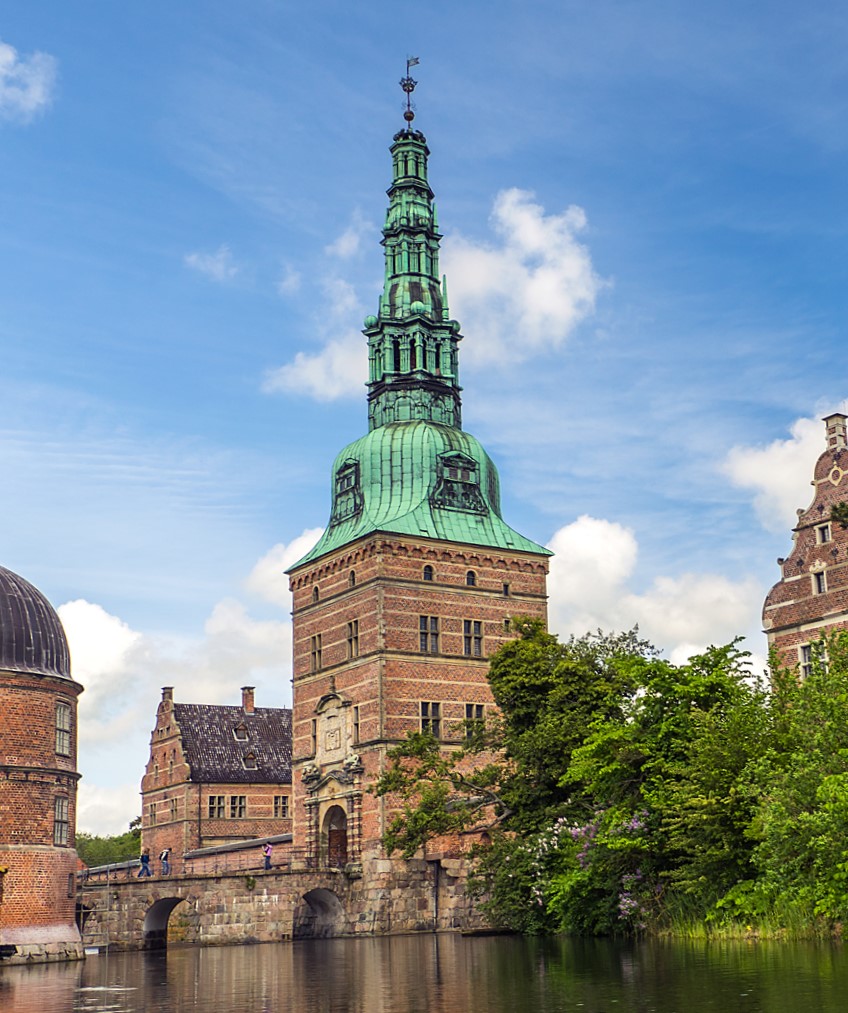
In earlier centuries the approach would have been experienced very differently by different visitors, the humble entering on foot and the great arriving in carriages or by boat across the lake, but for all of them the sequence of water, bridge and gate served to heighten the sense of passing from the ordinary world into the presence of the king.
The Islands in the Lake
The three islands on which Frederiksborg is built are the key to its unique character, and the way the palace is composed across them is a masterstroke of design. The buildings rise directly from the water, their walls reflected in the lake, so that the whole palace seems to grow out of the water rather than to stand beside it, an effect that no landbound castle can match.
This watery setting was not merely decorative but deeply symbolic and practical. The lake set the royal residence apart, lending it seclusion and dignity, and the reflections doubled its magnificence, so that the palace appeared twice as grand, once in stone and once in water. The play of light on the lake and the walls gives Frederiksborg a constantly changing beauty through the hours and seasons.
The bridges that link the islands are integral to the composition, their arches spanning the water between the different parts of the palace, and the whole ensemble of buildings, bridges and water was conceived as a single unified work of art. Few palaces anywhere are so completely integrated with their setting, so that the lake is not a backdrop to Frederiksborg but an essential part of it.
To stand on one of the bridges, with the water on either side and the great palace rising from its islands, is to understand why Frederiksborg is so often called a fairy-tale castle. The combination of the ornate Renaissance architecture and the mirror of the lake creates an effect of pure enchantment, a royal dream made real in brick and copper and water in the woods of North Zealand.
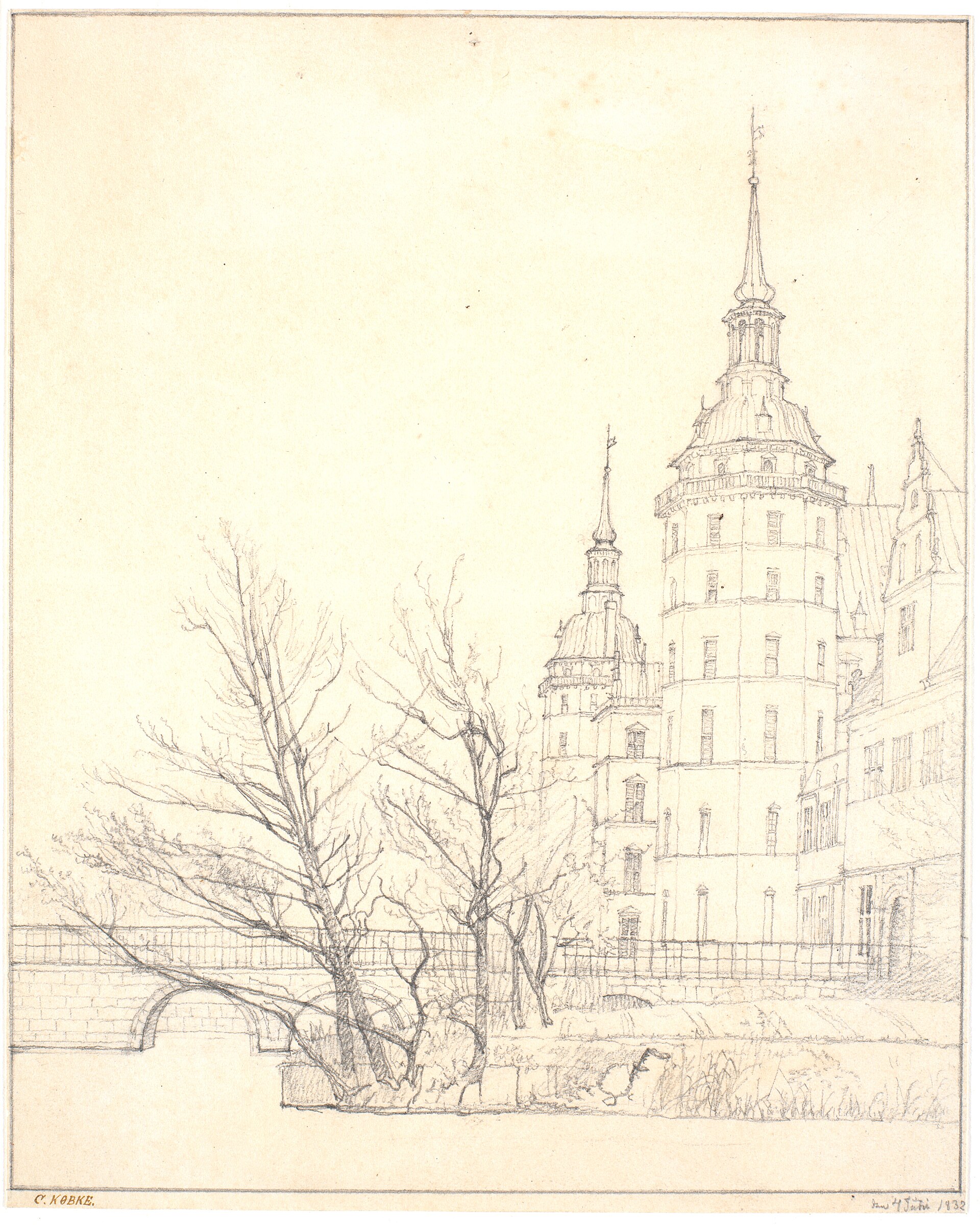
The reflections in the still water of the lake have made Frederiksborg one of the most photographed and painted buildings in Denmark, and generations of artists have been drawn to capture the palace mirrored in the water, a subject whose beauty seems inexhaustible through the changing light of the seasons.
The Coronation Church
At the heart of Frederiksborg lies one of its greatest treasures, the castle church, a magnificent chapel that became the coronation and anointing church of the kings of Denmark. For a long period, Danish monarchs were solemnly anointed here, in this glittering interior, and the church remains one of the most splendid and historically important spaces in the whole palace.
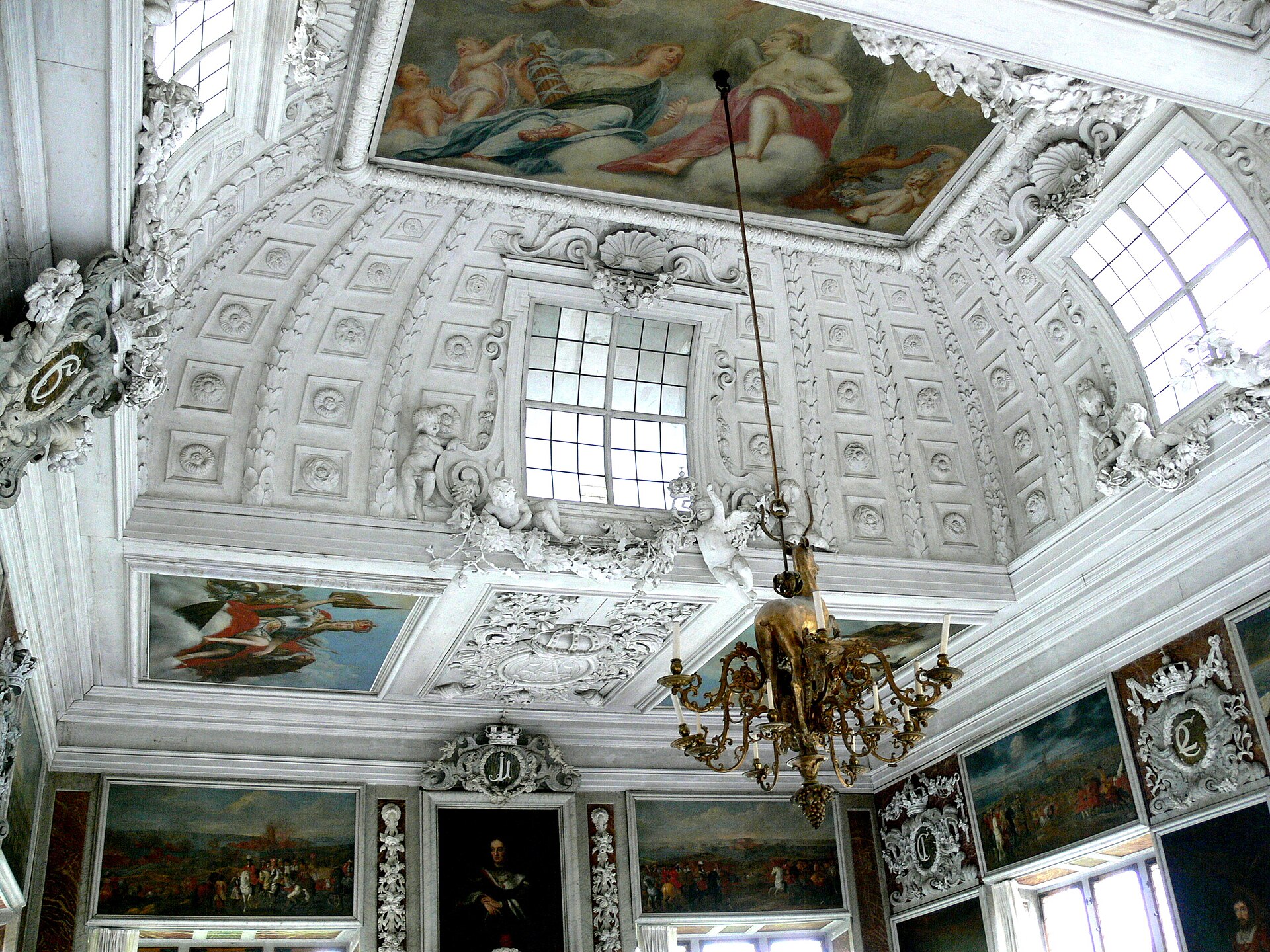
The interior is breathtaking, richly decorated with gilding, ebony and silver, fine carving and painting, and dominated by a spectacular organ and pulpit. It is a jewel-box of devotional and royal splendour, a space designed to overwhelm with beauty and to lend the sacred ceremonies of Danish kingship a setting of appropriate magnificence. Remarkably, much of this decoration survived the disasters that later befell the palace.
Above the church runs a gallery, and the walls are hung with the coats of arms of knights of the Danish royal orders of chivalry, turning the space into a kind of heraldic hall of honour as well as a place of worship. The combination of religious splendour and chivalric display made the church the ceremonial heart of the palace, where the sacred and the royal met.
Because the church survived when much of the rest of the palace was later destroyed by fire, it preserves, more completely than almost any other space, the original splendour of Christian IV’s Frederiksborg. To stand within it today, surrounded by its gleaming decoration and the arms of the knights, is to experience the palace as its builder intended, at the height of its Renaissance glory.
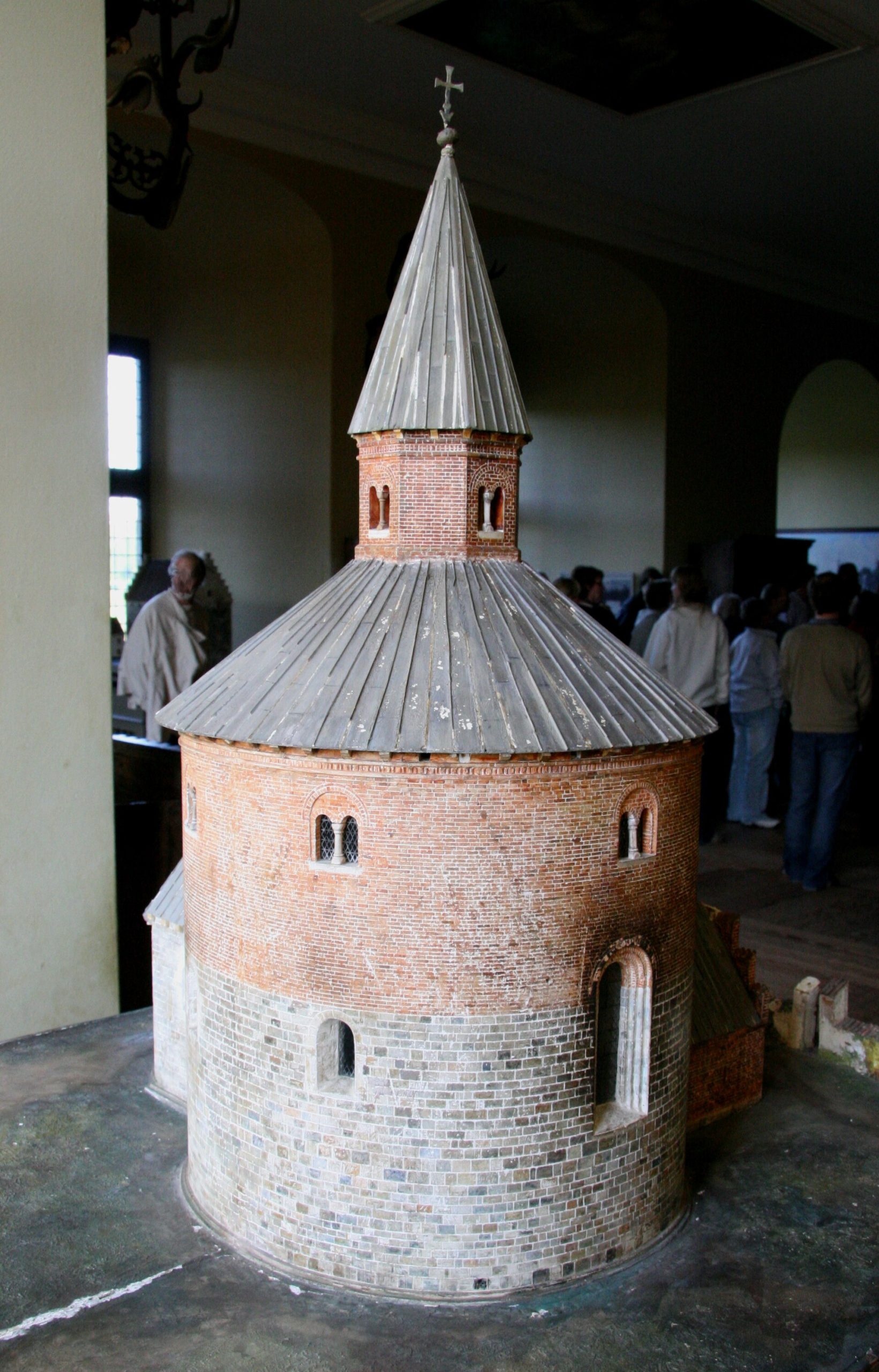
The tradition of anointing Danish kings here lent the church a central place in the constitutional as well as the religious life of the kingdom, for the ceremony of anointing was a solemn confirmation of the monarch’s sacred authority, and its setting at Frederiksborg bound the palace to the very legitimacy of the crown.
The Great Hall of the Knights
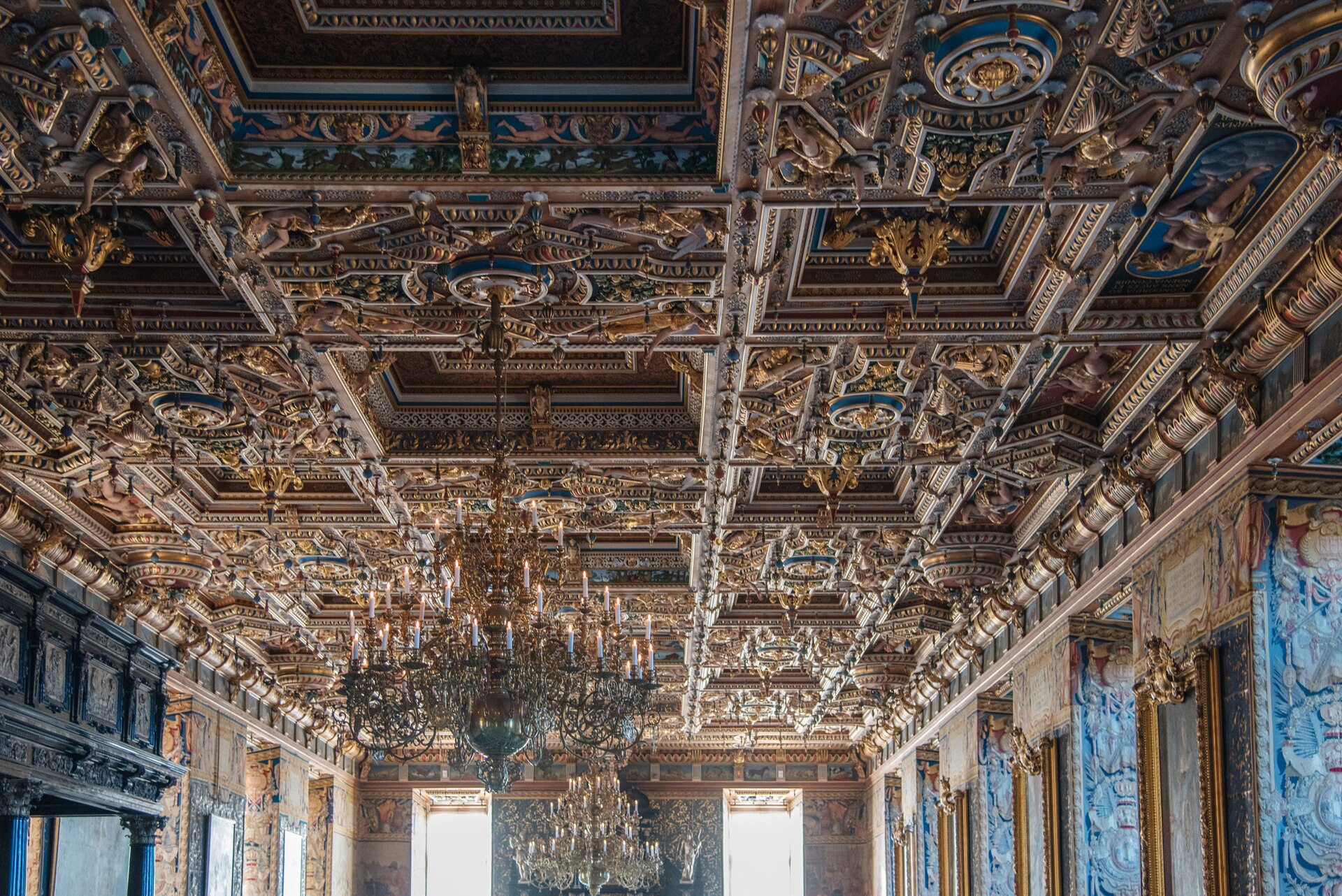
The grandest secular room in Frederiksborg is its Great Hall, the Riddersalen or Hall of the Knights, a vast and sumptuous space that served as the ballroom and banqueting hall of the royal court. Here the most splendid festivities of Christian IV’s reign took place, feasts and dances and ceremonies conducted beneath a magnificent decorated ceiling amid walls hung with tapestries and adorned with carving.
The hall was designed to display the magnificence of the Danish crown to its own nobility and to visiting dignitaries, a stage on which the wealth and culture of the kingdom could be shown to full effect. Its scale, its rich decoration and its splendid ceiling made it one of the finest Renaissance halls in Northern Europe, a fitting setting for the grandest occasions of the court.
Like so much of the palace, the Great Hall was ravaged by the later fire and had to be recreated, but the reconstruction has restored its grandeur, and it once again evokes the splendour of Christian IV’s festivities. Walking its length, one imagines the hall filled with candlelight, music and dancing courtiers, the beating heart of the social life of the Danish golden age.
Rooms like the Great Hall remind us that Frederiksborg was, above all, a palace of pleasure and display, built not to withstand sieges but to host magnificence. In the Riddersalen the whole purpose of the castle is concentrated, a space created purely for beauty, ceremony and the celebration of royal power, and even in its recreated form it retains that spirit of festive grandeur.
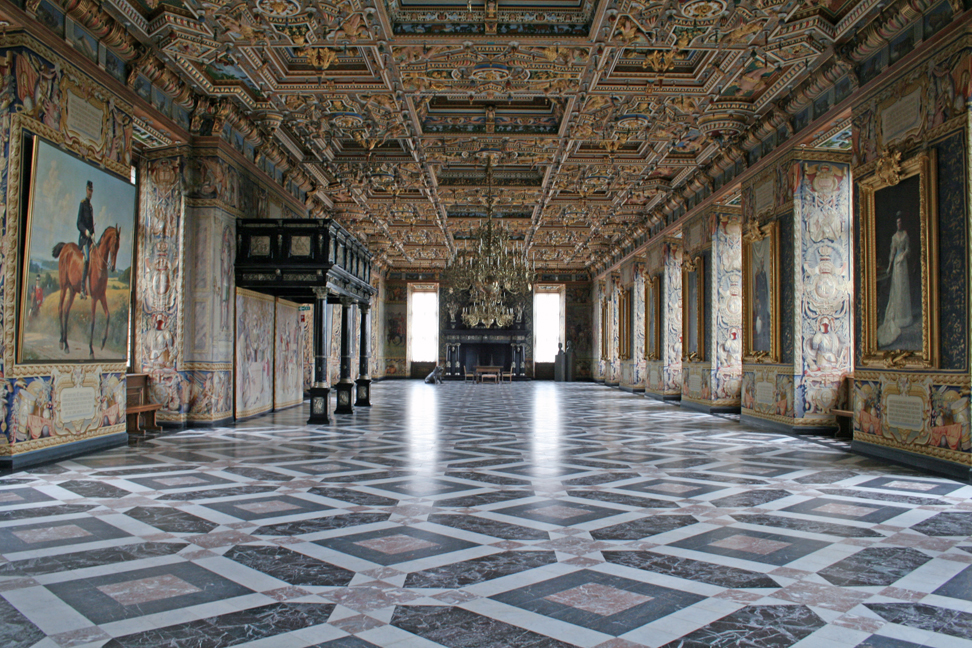
The recreated ceiling of the hall, with its rich coffering and decoration, was among the most demanding tasks of the post-fire reconstruction, and its successful restoration stands as a triumph of nineteenth-century craftsmanship in the service of preserving a Renaissance vision.
The Royal Apartments
Beyond the great public spaces, Frederiksborg holds a sequence of state rooms and royal apartments, including the audience chambers where the king received visitors and conducted the ceremonial business of monarchy. These rooms, richly decorated and furnished, reflect the taste and the rituals of the Danish court, the more intimate settings in which royal power was exercised day to day.
The audience chamber in particular was a space of carefully calibrated ceremony, where the relationship between the monarch and those who came before him was expressed through the arrangement of the room, its decoration and the rituals of approach. Such rooms were the theatres of everyday kingship, less grand than the great hall but no less charged with the meaning of royal authority.
The decoration of these rooms, with their fine woodwork, paintings, furniture and ornament, displays the same Renaissance and later taste that runs throughout the palace, adapted to the more intimate scale of the private and semi-private royal spaces. Together they build a picture of the daily life of the court, the setting in which the business of the kingdom was transacted.
Moving through these apartments, one gains a sense of the human dimension of Frederiksborg, of the kings and courtiers who actually lived and worked here amid all the splendour. Behind the magnificent facade and the great ceremonial halls lay these working rooms of monarchy, and they complete the picture of the palace as a living seat of royal power as well as a monument of art.
Neptune Rising in the Courtyard
In the main courtyard of Frederiksborg stands one of its most admired ornaments, the Neptune Fountain, a magnificent bronze fountain crowned by the figure of the sea god Neptune. A masterpiece of Renaissance sculpture, it was created for Christian IV to adorn the courtyard of his great palace, a fitting symbol of Danish maritime power at the centre of the royal residence.
The fountain has its own dramatic history, for the original was carried off as war booty by the Swedes during their seventeenth-century invasions, one of the treasures plundered from Denmark in those bitter conflicts. The fountain that stands in the courtyard today is a careful recreation, restoring to the palace the splendid centrepiece that its builder intended.
Fountains like this were important features of Renaissance palaces, combining art, engineering and symbolism. The figure of Neptune, god of the sea, was especially appropriate for the crown of a great seafaring nation like Denmark, whose power and wealth flowed from its command of the surrounding waters, and the fountain thus carried a meaning beyond its considerable beauty.
Set at the heart of the courtyard, the Neptune Fountain draws the eye and gives a focus to the whole composition of the palace, its bronze figures gleaming against the red brick of the facades. It is one of the details that make Frederiksborg so rewarding to explore, a work of art at the centre of a work of art, restoring to the courtyard the splendour that war had stolen away.
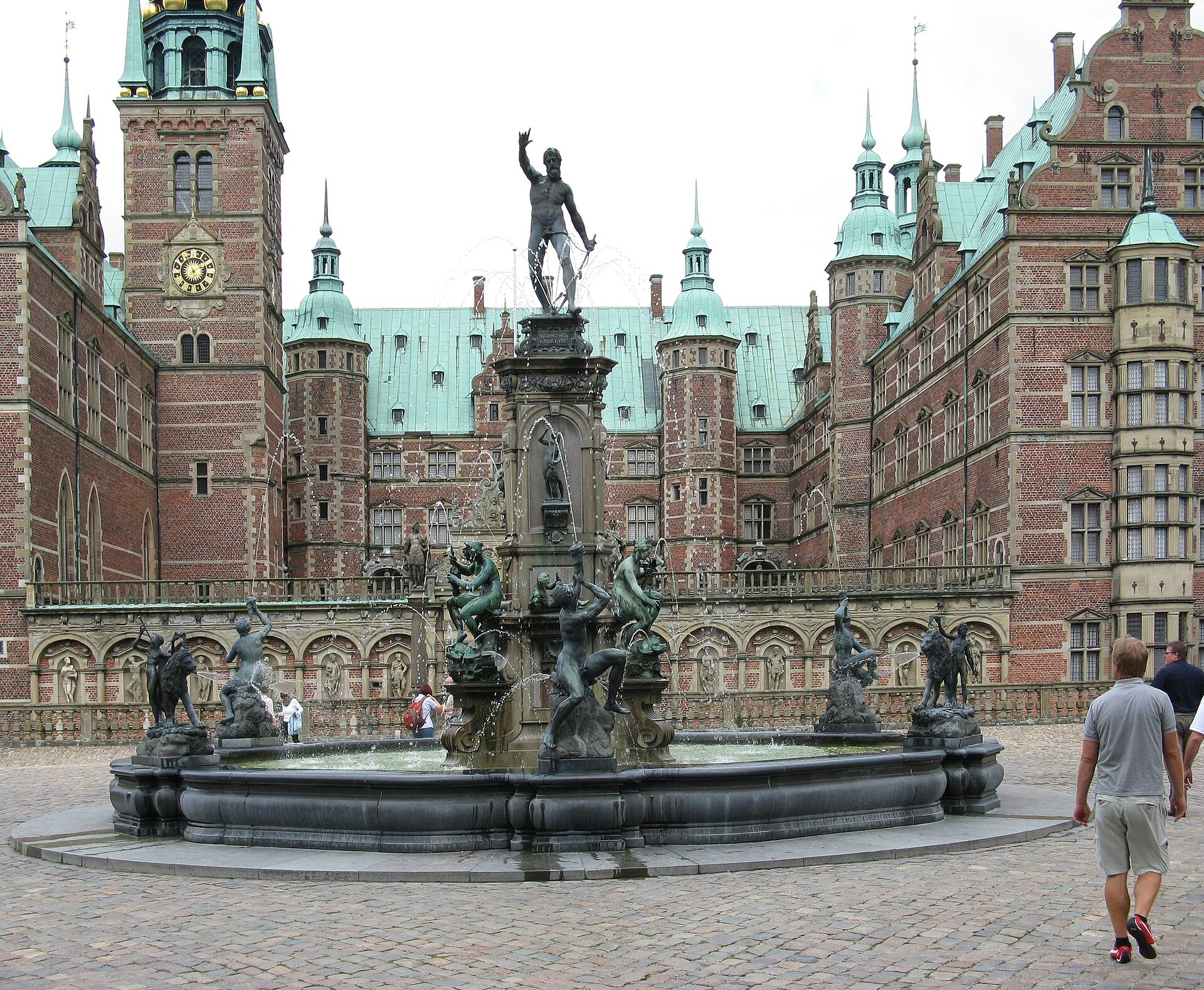
The theft of the original fountain by the Swedes was long remembered in Denmark as a symbol of the losses of those wars, and its recreation for the courtyard was thus an act of restoration in more than one sense, returning to Frederiksborg not only a work of art but a piece of national pride.
The Baroque Gardens
The beauty of Frederiksborg does not end at the water’s edge. Across the lake from the palace rise the Baroque gardens, a magnificent formal landscape laid out in terraces climbing the slope, with cascades of water, clipped hedges, geometric parterres and long axial vistas, all arranged to be admired from the palace and to frame it in turn from the heights.
These gardens, developed in the grand Baroque style influenced by the great gardens of France, represent a different era and aesthetic from the Renaissance palace itself, added in the following century when formal gardens were the height of royal fashion. Their symmetry, their controlled cascades of water and their sweeping perspectives create a magnificent setting for the palace and a delightful place to walk.
The relationship between the palace and the gardens is carefully composed, the formal landscape aligned on the axis of the palace so that the two form a single grand ensemble across the lake. From the upper terraces of the gardens, the view back across the water to the floating palace is one of the finest prospects in Denmark, the whole royal landscape laid out in a single sweep.
Restored and maintained as one of the great historic gardens of Scandinavia, the Baroque gardens of Frederiksborg are a delight in every season, and they complete the experience of the palace as a total work of art, uniting architecture, water and landscape. This short tour lets you wander the gardens and see how beautifully they frame the floating palace across the lake.
The great cascade, with its stepped basins carrying water down the terraced slope, is the centrepiece of the garden’s design, and when it flows the whole composition comes alive with the movement and sound of water, echoing on land the watery setting of the palace itself across the lake.
The Great Fire of 1859
The gravest disaster in the history of Frederiksborg struck in 1859, when a catastrophic fire broke out in the palace and swept through it, gutting large parts of the great Renaissance castle. The fire destroyed much of the interior and its treasures, and it was a shattering blow, threatening the loss of one of Denmark’s most beloved and magnificent royal buildings.
The cause was mundane, a fire that started, by tradition, from an improperly maintained chimney or stove on a cold winter night, but the consequences were immense. As the flames spread through the historic palace, priceless decorations, furnishings and works of art were consumed, and the building that Christian IV had raised with such love and expense was left a blackened ruin across its islands.
Remarkably, the castle church largely survived the flames, preserving its glittering interior, but so much else was lost that the future of the palace hung in the balance. A gutted royal castle might easily have been left as a picturesque ruin, or demolished, its site cleared, and for a time the fate of Frederiksborg was genuinely uncertain in the aftermath of the disaster.
That Frederiksborg was not lost but rebuilt, and reborn in a new and inspired form, is one of the great stories of Danish cultural history. Out of the ashes of the 1859 fire would come not only a restored palace but a new national institution, thanks to the vision and generosity of one remarkable man, whose intervention would transform disaster into a lasting gift to the nation.
The shock of the fire had one lasting benefit for the wider cause of heritage, for it helped to awaken a national consciousness of the value of historic buildings and the need to protect them, a sentiment that Jacobsen’s rescue of the palace both expressed and encouraged.
The Brewer Who Saved a Palace
The saviour of Frederiksborg was an unlikely hero: Jacob Christian Jacobsen, the founder of the Carlsberg brewery and one of the great philanthropists of nineteenth-century Denmark. A passionate patriot and lover of history, Jacobsen was determined that the burned palace should not be lost, and he stepped forward to fund its rebuilding, pouring his brewing fortune into the restoration of the national treasure.
But Jacobsen’s vision went further than mere restoration. He proposed that the rebuilt palace should become the home of a new institution, the Museum of National History, a museum devoted to telling the story of Denmark through portraits, paintings and historical objects. In 1878 this museum was founded at Frederiksborg, giving the reborn palace a magnificent new purpose as a treasure-house of the nation’s history.
Under Jacobsen’s patronage, the palace was rebuilt in careful reconstruction of its Renaissance splendour, and its rooms were filled with a superb collection of portraits and historical paintings, tracing the whole sweep of Danish history from the Middle Ages to the modern age. Frederiksborg thus rose from the fire not just restored but transformed, a royal palace become a national museum.
The generosity and vision of the Carlsberg brewer gave Frederiksborg its modern identity and secured its future, and it remains a model of enlightened philanthropy in the service of national heritage. Thanks to Jacobsen, the fire of 1859 led not to the loss of the palace but to its rebirth as one of the great cultural institutions of Denmark, a gift from a brewer to his nation.
Jacobsen’s museum was deliberately modelled in part on the great national portrait galleries of other countries, but he gave it a distinctively Danish character, and by placing it in the reborn royal palace he ensured that the story of the nation would be told in its most magnificent historic setting. It was philanthropy on a scale and of a vision rarely matched.
The Portrait Gallery of a Nation
Today Frederiksborg is home to the Museum of National History, one of the finest museums in Denmark, and its rooms hold the largest and most important collection of portraits and historical paintings in the country. Wandering the restored halls and chambers, the visitor is led through the whole story of Denmark, told through the faces and events depicted on its walls, a portrait gallery of an entire nation.
The collection traces Danish history from the medieval period through the Renaissance and the great age of Christian IV, the wars and triumphs and personalities of the centuries, down to the modern era, and it continues to add contemporary portraits, so that the record remains living and open-ended. To walk the museum is to walk through the memory of a nation, chamber by chamber, century by century.
This makes Frederiksborg a doubly rewarding place to visit, for one comes both to admire the magnificent restored palace, with its church, hall and gardens, and to explore the rich collection of art and history it now contains. The building and its contents reinforce each other, the royal setting lending grandeur to the national story, the collection filling the palace with meaning.
Frederiksborg today stands as one of the great sights of Denmark, a floating Renaissance palace reborn from fire as the treasure-house of a nation’s memory. Between the beauty of the building, the splendour of the church and gardens, and the richness of the historical collection, it offers one of the most complete and rewarding experiences of any castle in Scandinavia, a fairy-tale palace with the soul of a nation.
The museum continues to commission portraits of leading Danes of the present day, from monarchs and politicians to scientists, artists and cultural figures, so that the collection is never finished but grows with the nation, a living record that each generation adds to in turn.
Castles Nearby
- Kronborg Castle: Hamlet’s Fortress on the Danish Sound
- Malbork Castle: The World’s Largest Brick Fortress of Warrior-Monks
Why Frederiksborg Feels Like a Fairy Tale
Frederiksborg is the answer to anyone who thinks a castle must be grim to be great. Built not for war but for beauty, floating on its lake in the woods of North Zealand, it is a pure expression of royal magnificence, the dream palace of a king who loved to build, and the largest and loveliest Renaissance castle in all of Scandinavia.
Its story is one of splendour, disaster and rebirth: the golden age of Christian IV, the catastrophe of the 1859 fire, and the inspired generosity of a brewer who not only rebuilt the palace but gave it a new soul as the museum of a nation. Few castles have died and been reborn so completely, or emerged from the ashes with so rich a new purpose.
So make the short journey north from Copenhagen to the lake at Hillerød, and let Frederiksborg cast its spell. Cross its bridges, stand in its glittering church, walk its great hall and its Baroque gardens, and lose yourself in its portrait galleries of Danish history. Frederiksborg is the fairest castle in Denmark and one of the most enchanting in the world, a royal fairy tale floating upon the water.
You May Like
Mafra, the Palace a King Built From a Vow


One thought on “Frederiksborg Castle: Denmark’s Floating Renaissance Palace”