Rising above the Moskva River in the very centre of Moscow, its mighty red walls and towers enclosing a glittering treasure house of golden-domed cathedrals and grand palaces, stands the most famous fortress in all of Russia. The Moscow Kremlin is far more than a castle. It is the ancient heart of the Russian state, the citadel from which the country has been ruled for the better part of a thousand years, a place whose very name has become a byword for Russian power. To stand before its walls is to stand at the centre of a great nation’s history.
Yet at its core the Kremlin is a fortress, a triangular stronghold of towering brick raised on a hill above the river, and within its walls lies one of the most extraordinary historic ensembles on earth. Here are the cathedral where the tsars were crowned, the tombs of the grand princes, the soaring bell tower that once ruled the Moscow skyline, and the great palace of the emperors, all gathered behind walls built by Italian masters for a Russian prince. In this article you will explore the whole of it. Come and discover the Moscow Kremlin, the fortress at the heart of Russia.
What makes the Kremlin so endlessly fascinating is the way it unites so many roles and so many ages within a single set of walls. It is a fortress and a cathedral close, a royal palace and a seat of government, medieval in its origins yet living still in the present day. Few places anywhere let you experience so much of a nation’s history in one location, and the sheer density of meaning gathered upon this hill above the Moskva River is what gives the Moscow Kremlin its unmatched power to impress and to move.

In This Article
- The Fortress at the Heart of Russia
- What a Kremlin Really Is
- From Wooden Fort to White Stone
- Ivan the Great and the Italian Masters
- The Red Walls and Their Swallowtail Battlements
- Cathedral Square, the Sacred Centre
- The Cathedral of Coronations
- Golden Domes and the Tombs of Princes
- The Ivan the Great Bell Tower
- The Grand Kremlin Palace
- The Seat of Rulers Through the Ages
- The Kremlin Through the Modern Age
- Finding the Moscow Kremlin
- Castles Nearby
The Fortress at the Heart of Russia
Rising above the Moskva River in the very centre of Moscow, its great red walls and towers enclosing a treasure house of cathedrals and palaces, stands the most famous fortress in all of Russia and one of the most important in the world. The Moscow Kremlin is far more than a castle. It is the ancient heart of the Russian state, the citadel from which the country has been ruled for centuries, a place whose very name has become a synonym for Russian power itself. To stand before its walls is to stand at the centre of a thousand years of history.
For all its fame as a seat of government, the Kremlin is at its core a fortress, a triangular stronghold of towering brick walls and mighty towers set upon a hill above the river. Within those walls lies an extraordinary ensemble of golden-domed cathedrals, grand palaces, and ancient monuments, gathered across the centuries into one of the most remarkable historic sites on earth. It is a fortress, a religious centre, a royal residence, and a seat of state all at once. In this article you will explore the whole of it, from its medieval origins to its golden cathedrals and red-starred towers. This is the story of the Moscow Kremlin, the fortress at the heart of Russia.
The sheer scale of the Kremlin can be difficult to grasp until you stand before it, for this is not a single castle but a whole walled city, a fortress large enough to contain cathedrals, palaces, squares, and gardens within its bounds. Set upon its hill at the confluence of the river and a smaller stream, it commands the surrounding city and has done so for centuries. The combination of military might, religious splendour, and political power gathered within these walls is unlike anything else in the world, and it is what gives the Kremlin its unique and overwhelming presence.
What a Kremlin Really Is
Before exploring the Moscow Kremlin itself, it helps to understand what the word actually means, for a kremlin is not unique to Moscow. In the Russian language, the word refers to a fortified citadel, the walled stronghold at the heart of a medieval Russian town, and many old Russian cities have or once had a kremlin of their own. These fortresses were the cores around which the towns grew, places of refuge and defence, of government and worship, where the ruler, the church, and the people could shelter behind strong walls in times of danger.
The Moscow Kremlin is simply the greatest and most famous of all these citadels, the one that grew with the city that would come to dominate all of Russia. As Moscow rose from a minor town to the capital of a great empire, its kremlin grew in importance and grandeur to match, until it became the very symbol of Russian statehood. But it began, like all kremlins, as a practical fortress, a walled refuge on a defensible hill, and understanding that humble origin is the key to appreciating the extraordinary complex it would eventually become.
The tradition of the kremlin as the heart of a Russian town speaks of a whole way of life in the medieval Russian lands, where the walled citadel provided the fixed point around which everything else revolved. Within its walls stood the ruler’s residence, the chief churches, and the seats of authority, while the town of merchants and craftsmen spread out beyond. This pattern, repeated across the Russian lands, made the kremlin the very embodiment of a town’s identity and independence, and the Moscow Kremlin carried this ancient idea to its ultimate and most magnificent expression.
From Wooden Fort to White Stone
The origins of the Moscow Kremlin reach back to the middle of the twelfth century, when the first wooden fortifications were raised on the hill above the Moskva River, marking the birth of the settlement that would become the greatest city in Russia. In those early centuries the Kremlin was a simple stronghold of timber, vulnerable to fire and attack, and it suffered greatly in the wars and invasions that swept across the Russian lands, including the devastating Mongol assaults that shaped so much of medieval Russian history.
A great step forward came in the fourteenth century, when the wooden walls were replaced with fortifications of white limestone, giving Moscow the proud nickname of the white-stone city. This was the age when Moscow was rising to lead the Russian lands in their long struggle against the Mongol yoke, and the strengthening of the Kremlin reflected the growing power and ambition of its princes. The white-stone Kremlin was a formidable fortress for its day, and it served as the stronghold of Moscow through a crucial period, but it too would eventually give way to something even grander, the great red-brick Kremlin that still stands today.
The rebuilding of the Kremlin in ever stronger materials tracked the rise of Moscow itself from a minor outpost to the leading power of the Russian lands. Each new set of walls was both a response to the dangers of the age and a statement of Moscow’s growing ambition, and the progression from timber to white stone to red brick is in a sense the story of Russia’s own consolidation written in fortification. To understand this evolution is to understand how a small principality on the edge of the Mongol world grew into the heart of a mighty state.

Ivan the Great and the Italian Masters
The Moscow Kremlin as we know it, with its mighty red-brick walls and towers, was created at the end of the fifteenth century during the reign of one of the greatest of all Russian rulers, Grand Prince Ivan the Third, known as Ivan the Great. Ivan gathered the Russian lands under Moscow’s leadership, threw off the last of the Mongol domination, and transformed his principality into a powerful state, and he wanted a fortress and a capital worthy of this new greatness. To build it, he turned to the finest architects of the age.
Remarkably, the master builders Ivan summoned to raise his new Kremlin came from Italy, from the world of the Renaissance, and these Italian architects brought with them the most advanced ideas in fortification and design. Between the 1480s and the 1490s they rebuilt the Kremlin walls and towers in red brick, creating the magnificent fortress that survives to this day. The involvement of Italian masters gave the Moscow Kremlin some surprising features that link it, across all of Europe, to the castles of Renaissance Italy, and it stands as a fascinating meeting of Russian power and Italian genius.
The presence of Italian Renaissance architects at the heart of Moscow is one of the most fascinating facts in the whole history of the Kremlin, a reminder that even in this age Russia was connected to the wider currents of European culture. These masters brought not only their technical skill in the building of fortifications but the aesthetic sensibilities of their homeland, and the fusion of Italian expertise with Russian purpose and tradition produced something entirely new. The result was a fortress that was both thoroughly Russian in spirit and subtly Italian in detail, a unique meeting of two great worlds.
It is worth pausing to reflect on how bold a decision it was for Ivan the Great to entrust the building of his capital’s fortress to foreigners from a distant land. It speaks of a ruler confident enough to seek out the very best, wherever it might be found, and to bend it to the service of his own vision for Russia. That confidence, that willingness to draw on the wider world while remaining wholly Russian in purpose, is one of the qualities that made Ivan the Great such a pivotal figure, and the Kremlin he created stands as its enduring monument.

The Red Walls and Their Swallowtail Battlements
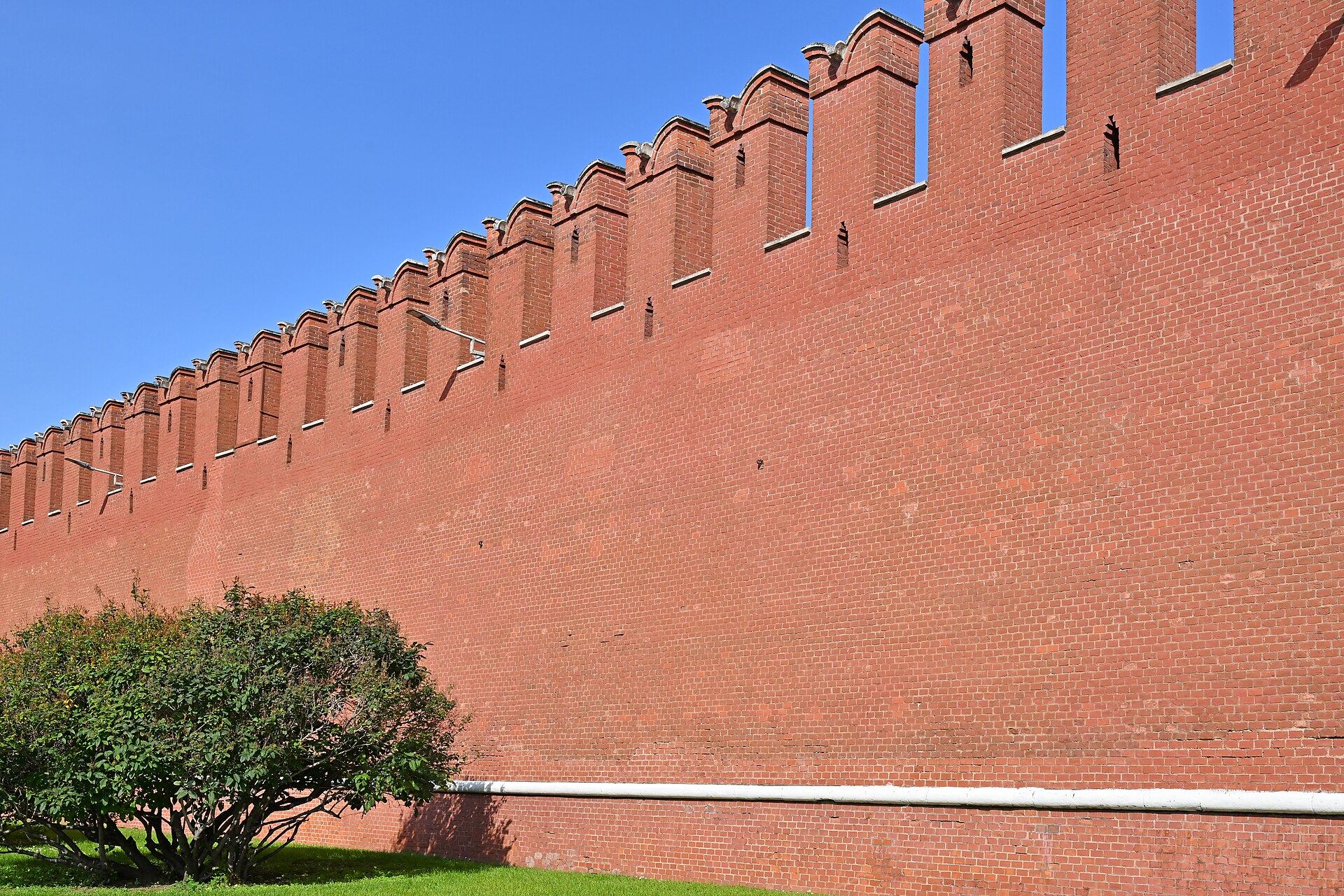
The great walls of the Moscow Kremlin are among the most recognisable fortifications in the world, stretching for more than two kilometres around the triangular fortress and studded with twenty towers of varying shapes and heights. Built of red brick by Ivan’s Italian architects, they are both immensely strong and strikingly beautiful, and they enclose the whole sacred and royal heart of Russia within their protective embrace. Walking beside them, you feel the sheer scale and ambition of the fortress that Ivan the Great created.
One of the most distinctive features of the walls is the shape of their battlements, the merlons along the top being formed in a swallowtail pattern, split into two points like the tail of a swallow. This design is not native to Russia at all but comes from Italy, where it crowned the castles of certain great families, and its presence on the Moscow Kremlin is a direct and visible legacy of the Italian architects who built the walls. It is one of the small details that reveal the surprising international origins of this most Russian of monuments, a touch of Renaissance Italy standing guard over the heart of Moscow.
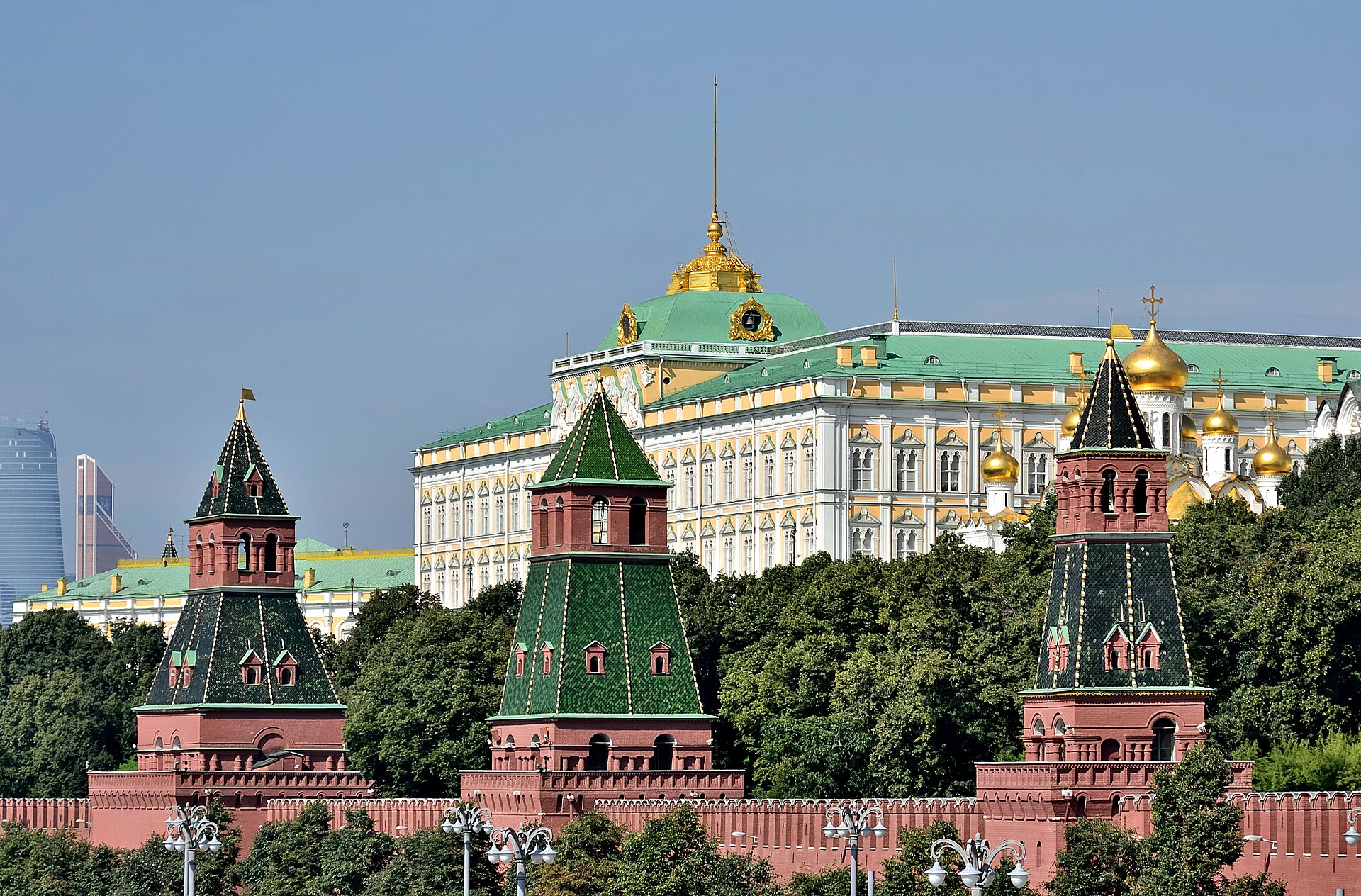
The twenty towers that punctuate the walls are each distinct, varying in height, shape, and design, and several of them are famous in their own right, crowned with tall tented roofs and, in the modern age, with the glowing red stars. The most celebrated of all is the great gate tower on the Red Square side, whose chiming clock has long marked the passing of time for the whole nation. Together these towers give the Kremlin walls their varied and dramatic silhouette, and they are among the most recognisable structures in all of Russia, instantly evoking the fortress and the country it represents.

Cathedral Square, the Sacred Centre
Within the protecting walls of the Kremlin lies its spiritual and ceremonial heart, the magnificent Cathedral Square, ringed by a breathtaking ensemble of golden-domed churches and towers. This square is one of the most beautiful and historically significant spaces in all of Russia, the place where the great events of church and state were celebrated across the centuries, from coronations and royal weddings to funerals and religious festivals. To step into it is to be surrounded on every side by the glittering domes and ancient walls of Russia’s holiest shrines.
The cathedrals that surround the square were built, like the walls, largely during the great rebuilding under Ivan the Great and his successors, and several of them were also the work of Italian and Russian masters combining their skills. Together they form an incomparable architectural ensemble, a gathering of the most sacred churches of the Russian state in a single, harmonious space. Cathedral Square was the setting for the most solemn moments in the life of the nation, and it remains the glowing heart of the Kremlin, a place of extraordinary beauty and deep historical meaning.
The gathering of so many great cathedrals into a single square within the fortress reflects the profound union of church and state that lay at the heart of the Russian monarchy. Here, in the most protected and sacred space of the realm, the spiritual and temporal power of Russia were joined, and the great ceremonies that bound them together were performed. To stand in Cathedral Square, surrounded by the golden domes and ancient walls, is to feel the weight of that union and the deep religious foundations upon which the Russian state was built.
For the visitor today, Cathedral Square remains the highlight of any tour of the Kremlin, a space of almost overwhelming beauty where the golden domes of the great cathedrals crowd against the sky. Standing at its centre, turning slowly to take in the churches on every side, you are surrounded by the accumulated splendour of centuries of Russian faith and power. It is one of those rare places where the grandeur of history is made physically present, and it leaves an impression that no visitor ever forgets.

The Cathedral of Coronations
The greatest of the churches on Cathedral Square is the Assumption Cathedral, also known as the Dormition Cathedral, the most important church in the whole of medieval and early modern Russia. Built in the later fifteenth century by an Italian architect working in the Russian tradition, it became the principal cathedral of the Russian state and the setting for its most sacred ceremonies. Above all, it was here that the rulers of Russia were crowned, from the grand princes of Moscow to the tsars and emperors of later ages.
For centuries, the coronation of a Russian monarch took place within these walls, amid magnificent ceremony and surrounded by glittering icons and frescoes. The cathedral was thus the very heart of Russian sacred kingship, the place where earthly and heavenly authority were joined in the person of the ruler. Its importance to the Russian state can hardly be overstated, and it stands today as one of the supreme monuments of Russian religious architecture, its interior a dazzling world of gold and colour that speaks of the profound union of church and crown that shaped Russian history.
The choice of an Italian architect to build so quintessentially Russian a church is a wonderful example of the openness of Ivan the Great’s Russia to foreign talent, harnessed always in the service of Russian tradition. The architect studied the great churches of the older Russian cities before designing the cathedral, so that the finished building, though built by a foreigner, was thoroughly Russian in form and spirit. This blending of native tradition and foreign skill runs throughout the Kremlin, and nowhere is it more triumphantly realised than in this great coronation church.

Golden Domes and the Tombs of Princes
Around Cathedral Square stand other great churches, each with its own role in the life of the Russian state. The Archangel Cathedral served as the burial place of the rulers of Moscow, and within it lie the tombs of the grand princes and tsars of Russia across many generations, a solemn gathering of the nation’s rulers in death. To walk among these tombs is to move through the whole dynastic history of medieval and early modern Russia, from the princes who first raised Moscow to greatness to the tsars who forged an empire.
Nearby stands the Annunciation Cathedral, which served as the private chapel of the rulers and their families, a more intimate church where the personal religious life of the court was conducted. With its cluster of golden domes and its richly decorated interior, it completes the trio of great cathedrals that dominate the square. Together with the Assumption Cathedral, these churches embody the three great functions of sacred monarchy, coronation, burial, and private worship, and their glittering domes rising above the Kremlin walls form one of the most iconic sights in all of Russia.
The presence of the royal tombs within the Kremlin adds a solemn and moving dimension to the fortress, for here the rulers who governed Russia in life lie gathered together in death. To move among their tombs is to sense the long unbroken line of Russian rulers and the continuity of the state they served, a continuity that the Kremlin itself embodies in stone. These cathedrals, with their coronations, their burials, and their private devotions, contained the whole sacred life of the monarchy within the protecting walls of the fortress.
The Ivan the Great Bell Tower
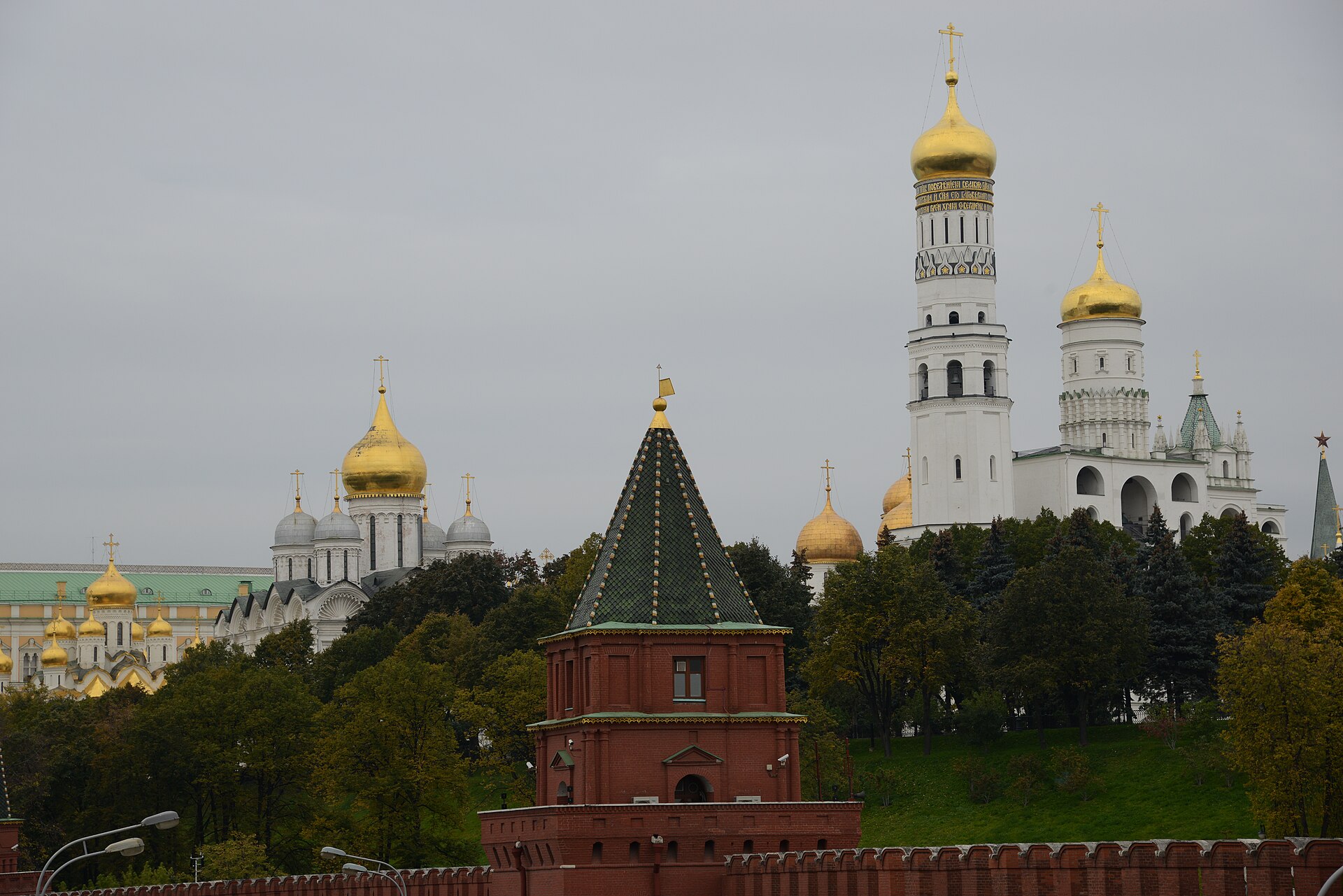
Soaring above Cathedral Square and once the tallest structure in all of Moscow stands the magnificent Ivan the Great Bell Tower, a towering column of white and gold that dominates the Kremlin skyline. Built and heightened over the sixteenth and early seventeenth centuries, this great bell tower served the cathedrals below, its bells ringing out across the city to mark the hours, summon the faithful, and celebrate the great events of church and state. For centuries it was the highest point in Moscow, and by tradition no building in the city was permitted to rise above it.
The bell tower is not only a beautiful monument but a symbol of the Kremlin’s dominance over the city that grew around it, its golden dome visible from far across Moscow. Near its base stand some of the most famous treasures of the Kremlin, including a colossal bell and a giant cannon, marvels of Russian craftsmanship on a scale that astonishes every visitor. The Ivan the Great Bell Tower, rising above the golden domes of the cathedrals, is one of the defining images of the Moscow Kremlin, a soaring expression of the power and faith that built this extraordinary place.
The colossal bell and giant cannon that stand near the bell tower are among the most astonishing objects in the Kremlin, marvels of casting on a scale that defies belief. Neither was ever used for its intended purpose, yet both stand as monuments to the ambition and craftsmanship of the Russia that made them, testaments to a nation that thought and built on the grandest of scales. They have become beloved sights of the Kremlin in their own right, and they capture perfectly the spirit of grandeur that pervades the whole fortress.

The Grand Kremlin Palace
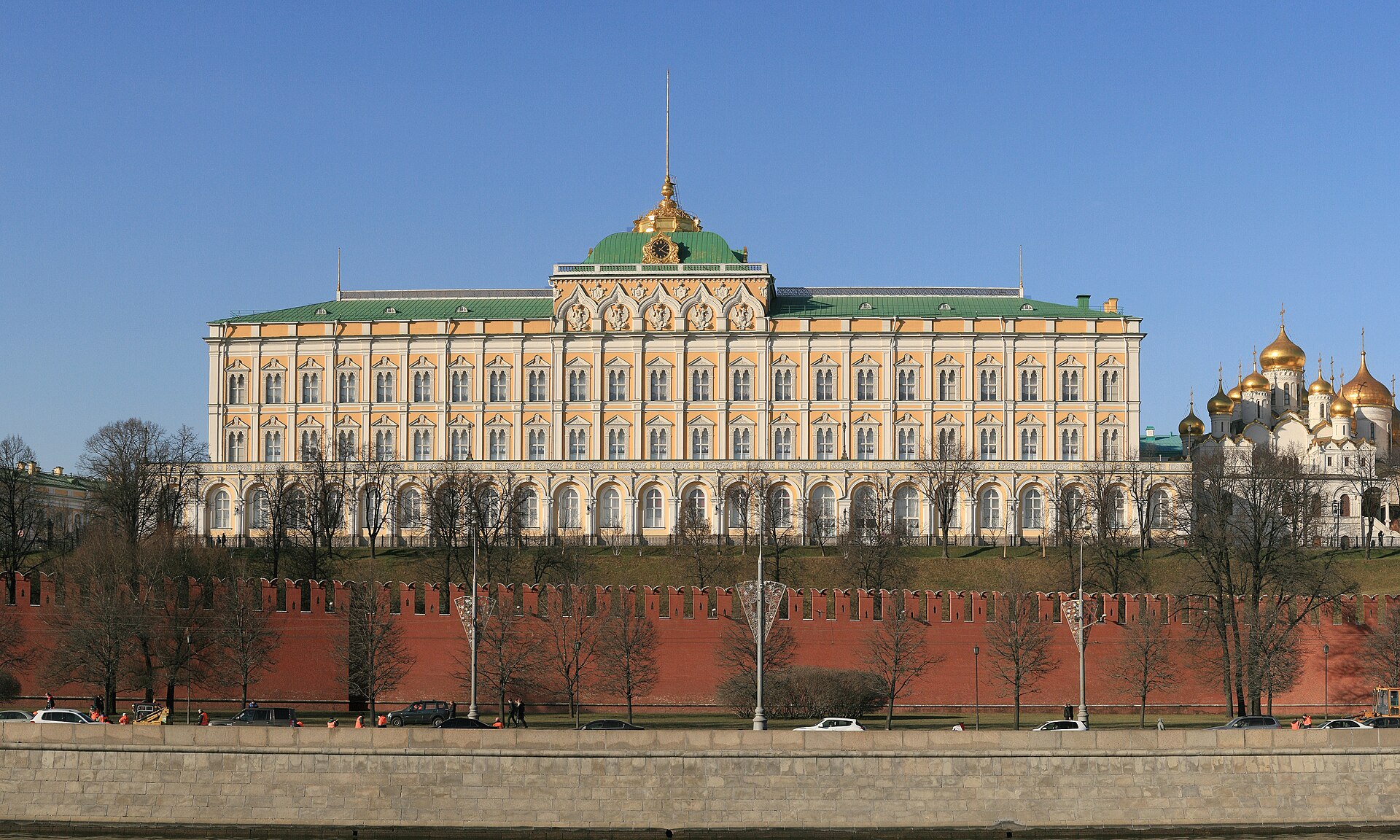
Alongside its ancient cathedrals, the Kremlin contains grand palaces, the greatest of which is the Grand Kremlin Palace, an immense and magnificent residence built in the nineteenth century as the Moscow home of the Russian emperors. Constructed during the reign of the tsars to serve as an imperial palace worthy of a great empire, it stretches along the Kremlin hill above the river, its long facade one of the most familiar sights of the fortress. Within, it contains a series of vast and sumptuous halls of breathtaking splendour.
The great halls of the palace were named for the highest orders of the Russian empire and decorated with corresponding magnificence, creating some of the grandest ceremonial interiors in the world. These were the settings for the most important state occasions, for receptions, ceremonies, and celebrations of imperial power. The Grand Kremlin Palace represents the Kremlin in its role as the residence of the rulers of Russia, and it continues to serve as a place of state ceremony to this day, its opulent halls still used for the most solemn and significant occasions of the Russian state.
The building of so grand a palace in the nineteenth century, long after the Kremlin’s origins as a medieval fortress, shows how the citadel continued to grow and change to meet the needs of each new age. Rather than being frozen as a relic, the Kremlin remained a living seat of power, and each era added its own contribution to the ensemble. The Grand Kremlin Palace, for all its imperial splendour, sits in harmony with the ancient cathedrals and walls around it, a further layer in the extraordinary accumulation of Russian history contained within the fortress.
The Seat of Rulers Through the Ages
Throughout its long history, the defining role of the Moscow Kremlin has been as the seat of power in Russia, the place from which the country has been governed across the centuries. From the grand princes of medieval Moscow who first made it their stronghold, through the tsars who ruled a vast empire from within its walls, to the governments of the modern age, the Kremlin has stood at the centre of Russian political life. Its very name has become shorthand for the Russian government and the seat of authority in the country.
There was a long interlude, it is true, when the capital of Russia moved elsewhere and the Kremlin lost its place as the seat of the ruling court, but even then it retained its symbolic importance as the ancient and sacred heart of the nation, and the coronations of the emperors continued to take place within its cathedrals. In time the seat of government returned to Moscow and to the Kremlin, restoring the fortress to its central role in the life of the state. Few buildings anywhere have been so continuously bound up with the power and governance of a great nation, and that role is the key to the Kremlin’s enduring significance.
The continuity of the Kremlin as the seat of Russian power, across so many centuries and so many changes of dynasty and regime, is one of the most remarkable facts of its history. Empires have risen and fallen, capitals have shifted, and the very nature of Russian government has been transformed again and again, yet through it all the Kremlin has remained the symbolic and often the actual heart of the state. Few fortresses anywhere have played so central and so enduring a role in the life of a great nation across so vast a span of time.

The Kremlin Through the Modern Age
The twentieth century brought great changes to the Moscow Kremlin, as it did to all of Russia. When the capital returned to Moscow, the Kremlin once again became the seat of the country’s government, and it took on new symbols to match the new age. Most famously, great red stars were placed atop several of the Kremlin’s tallest towers, glowing red against the night sky, and these illuminated stars have become one of the most recognisable features of the fortress, replacing the imperial emblems that had crowned the towers before them.
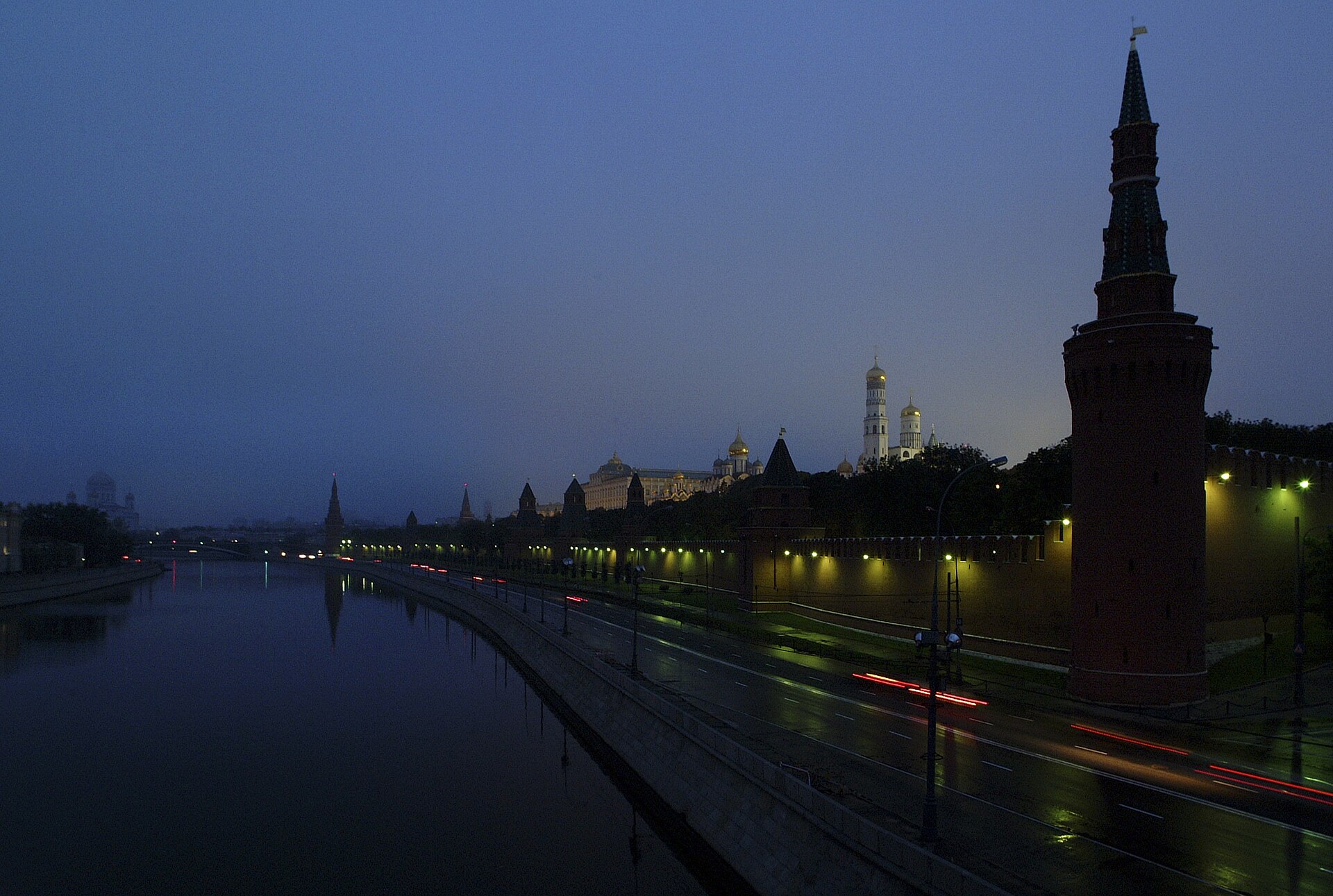
Through all the dramatic events of the modern era, the Kremlin has remained the political heart of Russia, its ancient walls enclosing the offices of the state even as the world beyond them was transformed. The fortress that Ivan the Great built to house the power of medieval Muscovy has continued, across every change of regime and century, to serve as the seat of Russian authority. Seen at night, its red walls floodlit and its stars glowing above the towers, the Kremlin presents an unforgettable image, a fortress that has stood at the centre of Russian power for the better part of a thousand years and stands there still.
The image of the floodlit Kremlin at night, its red walls glowing and its stars shining above the towers, has become one of the most familiar and evocative sights in the world, instantly recognisable as the symbol of Russia itself. Whether seen by day, when the golden domes blaze in the sunlight above the red walls, or by night, when the whole fortress is dramatically illuminated, the Kremlin never fails to impress. It is a place that has embodied the power and history of a great nation for centuries, and it continues to do so with undimmed grandeur today.
Finding the Moscow Kremlin
The Moscow Kremlin stands in the very heart of the Russian capital, on a hill above the Moskva River and bounded on one side by the famous Red Square, making it one of the easiest of all the world’s great fortresses to find. Moscow is a vast and vibrant metropolis, well connected by air and by its celebrated metro system, and the Kremlin, at the city’s centre, is the natural focus of any visit to the Russian capital.
The fortress and its surroundings form an unforgettable ensemble, for beside the Kremlin lies Red Square with its own famous monuments, and the whole area is one of the great historic centres of the world, recognised as a UNESCO World Heritage Site. A visit to the Kremlin can easily be combined with the wider wonders of central Moscow, making for a rich and memorable experience. Here are the exact coordinates so you can find your way to the great fortress at the heart of Russia.

Castles Nearby
If the Moscow Kremlin has drawn you into the history of Eastern Europe, two more great fortresses of the region make a fine next stop.
- Toompea Castle in Tallinn is another ancient seat of power on the Baltic frontier.
- Trakai Island Castle in Lithuania is the fairy-tale island stronghold of the grand dukes.
The Fortress at the Heart of Russia
Few places anywhere gather so much history, power, and beauty into a single fortress as the Moscow Kremlin. Within its great red walls, built by Italian masters for a Russian prince, lie the coronation cathedral of the tsars, the tombs of the grand princes, the soaring bell tower that long ruled the skyline, and the grand palace of the emperors, an ensemble unmatched in all of Russia. For the better part of a thousand years this citadel has been the heart of the Russian state, the place where the nation’s rulers have governed and where its greatest ceremonies have been held.
That is what makes the Kremlin so extraordinary. It is at once a fortress, a holy place, a royal residence, and a seat of government, and it has been all of these things continuously across the centuries, through every turn of Russia’s long and dramatic history. To walk within its walls, among the golden domes and ancient monuments, is to move through the whole story of a great nation, from its medieval origins to the present day. The Moscow Kremlin is the fortress at the heart of Russia, and it remains one of the most powerful and unforgettable places in all the world.
If you ever have the chance to visit Moscow, the Kremlin is the one place above all others not to be missed. Pass through its gates into the great fortress, walk the glittering Cathedral Square, gaze up at the soaring bell tower, and marvel at the ensemble of golden domes and red walls that has stood at the heart of Russia for so long. It is an experience of history and grandeur unlike any other, and it leaves every visitor with an unforgettable sense of the depth and drama of the Russian past.
You May Like
Mafra, the Palace a King Built From a Vow


2 thoughts on “The Moscow Kremlin: The Great Red Fortress at the Heart of Russia”