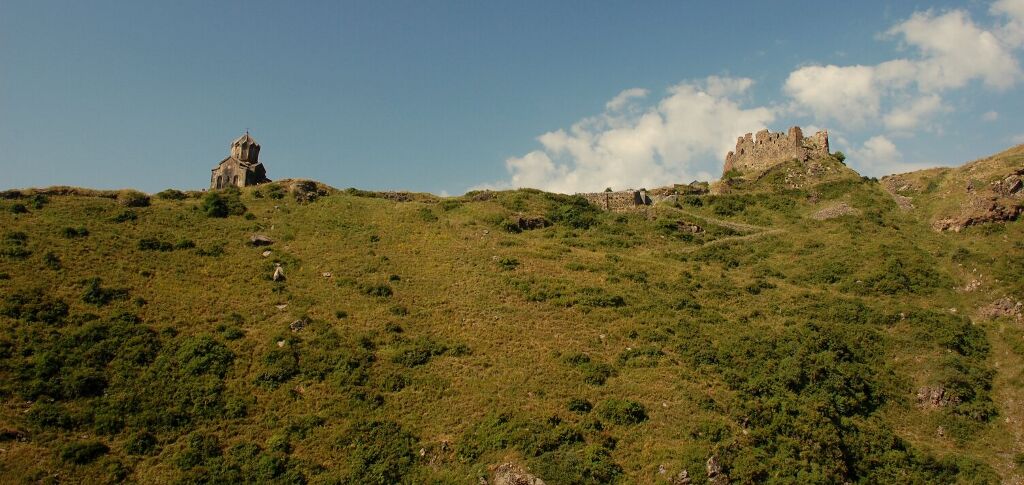
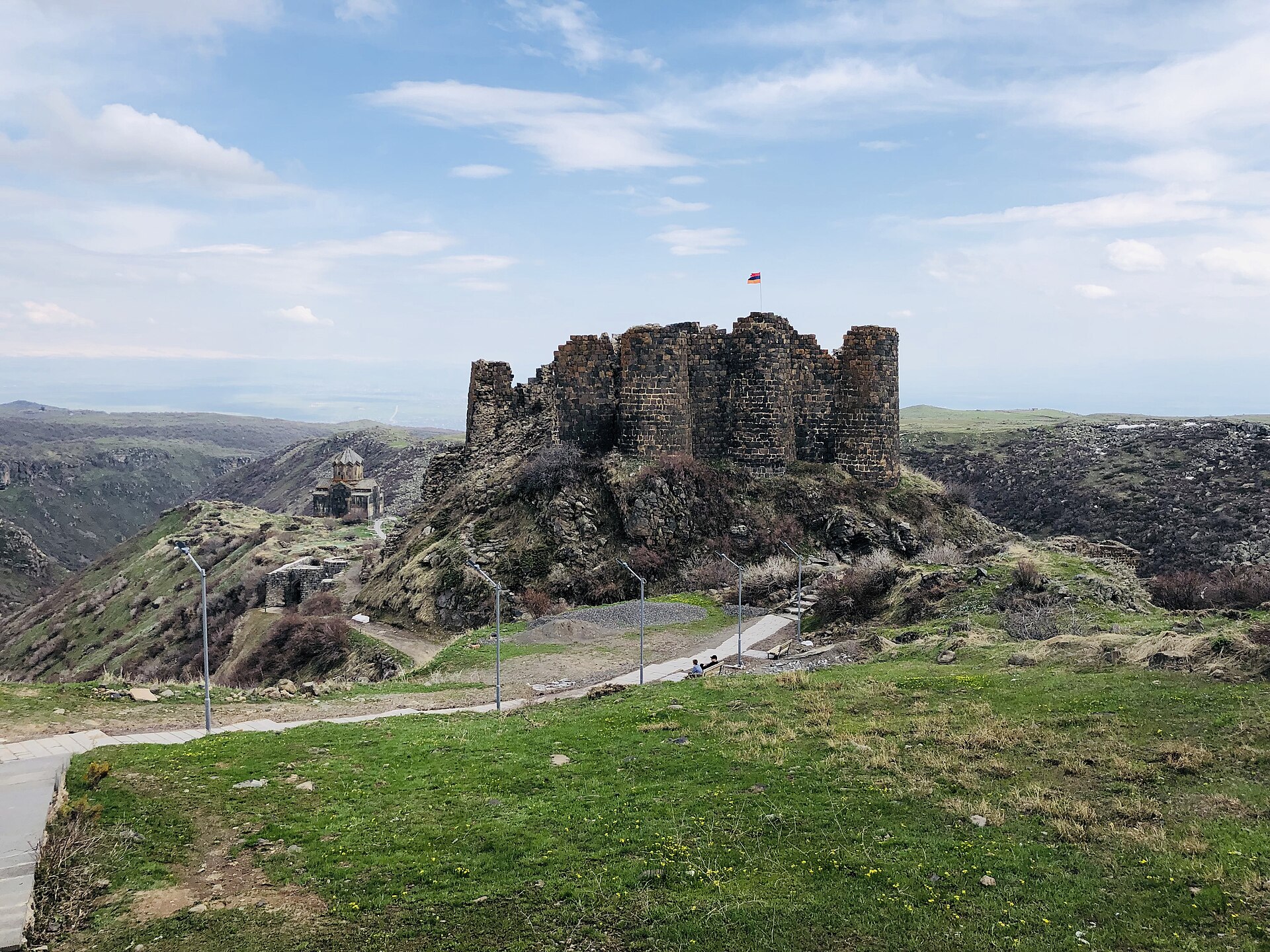
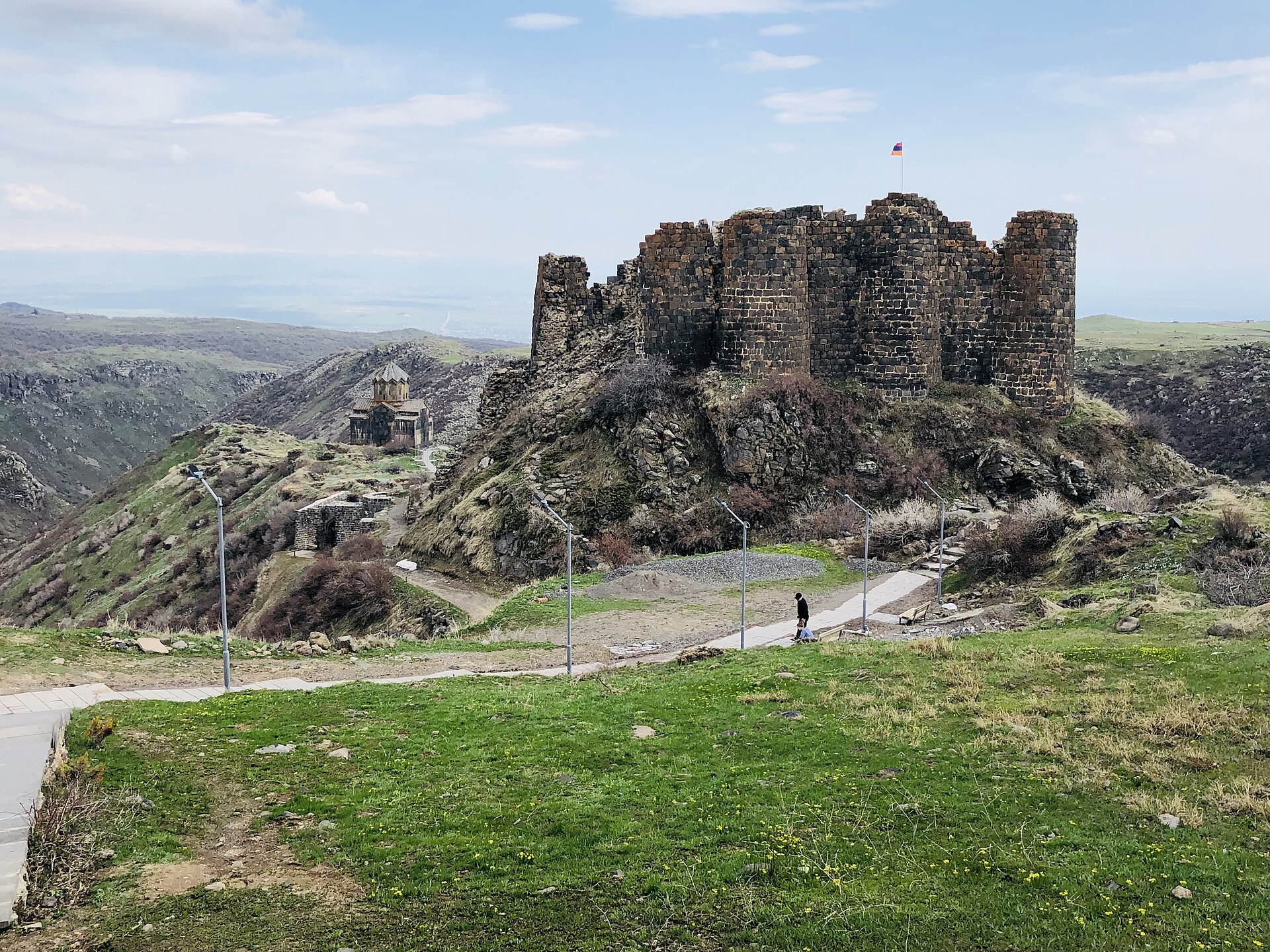
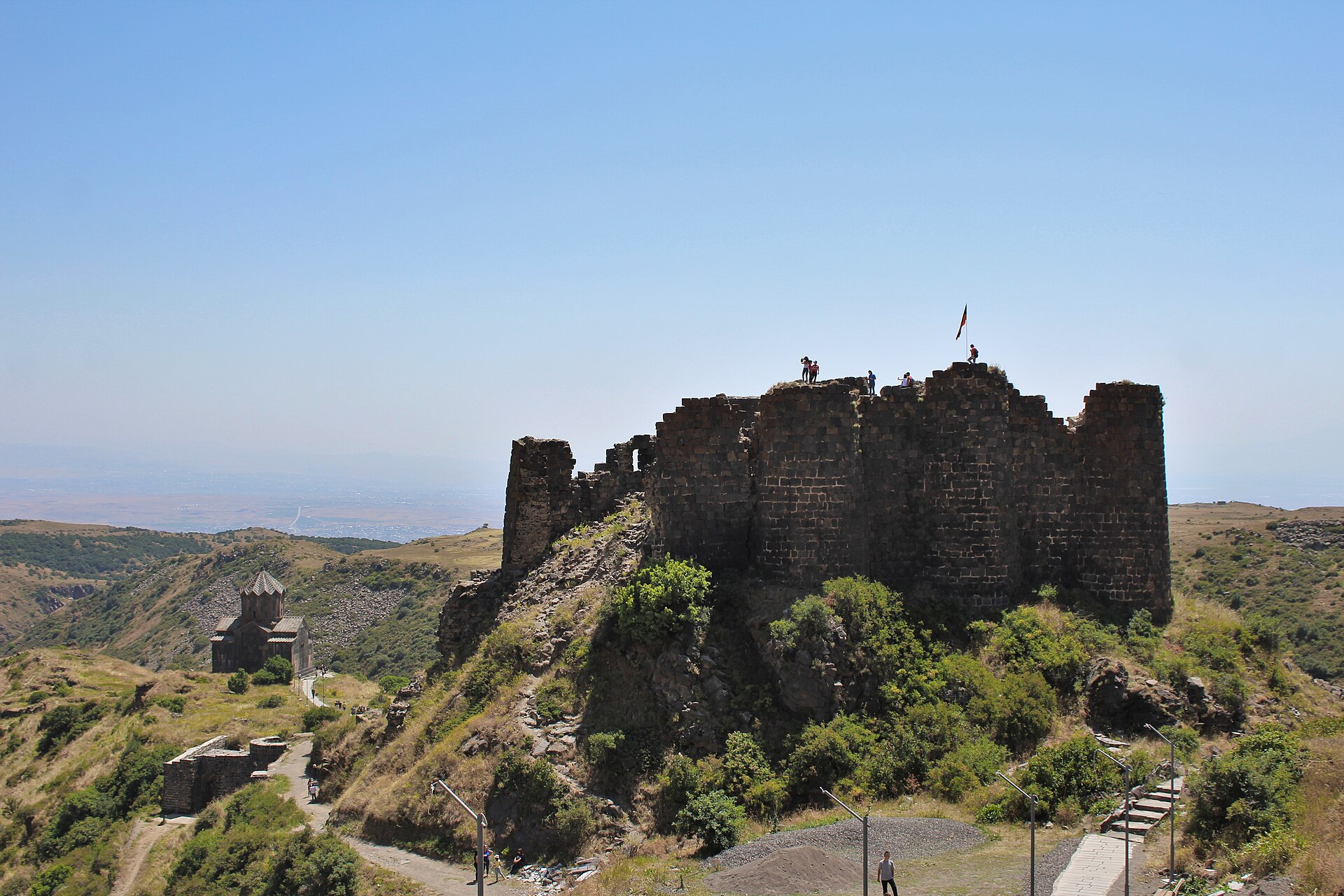
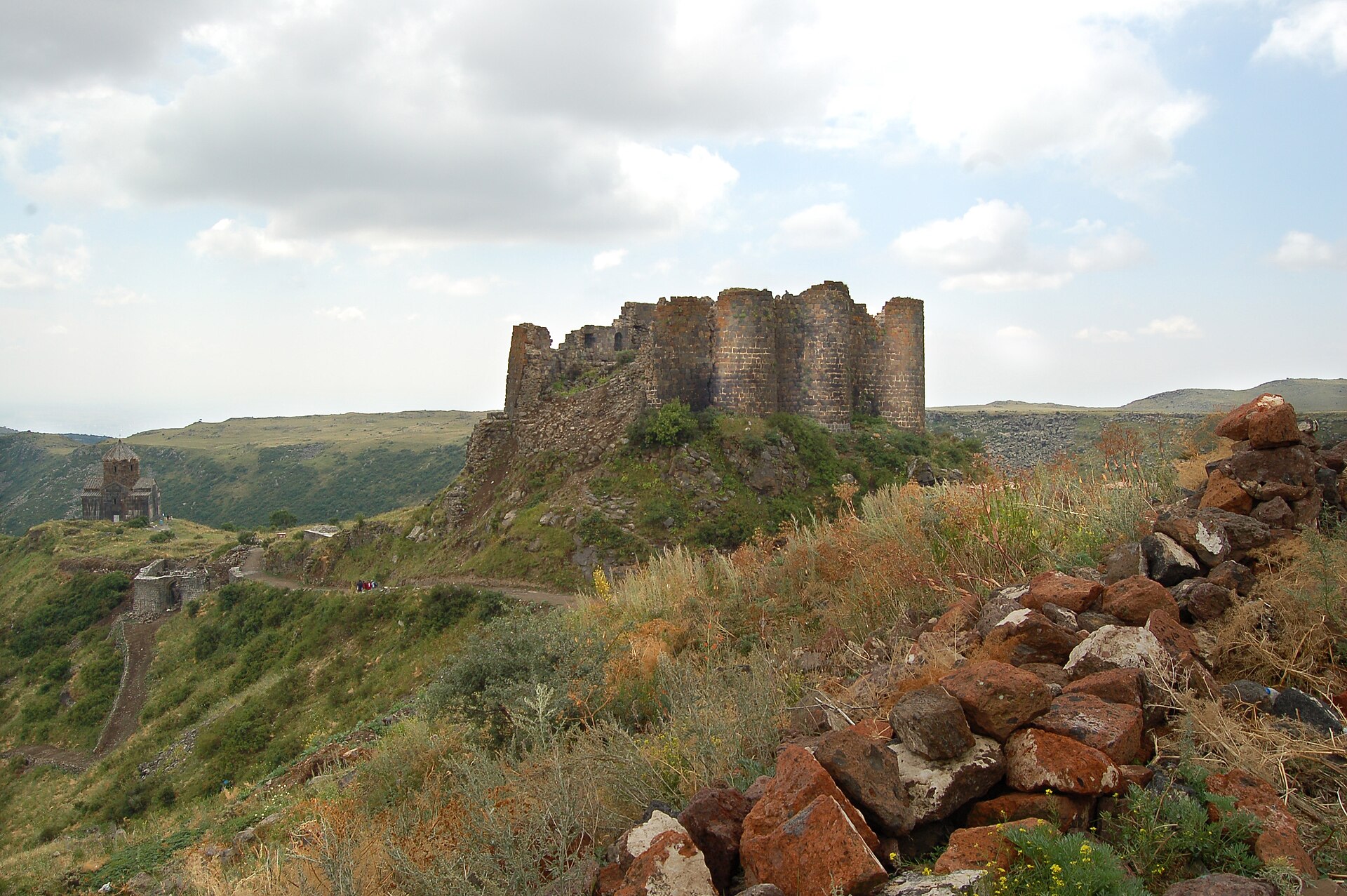
High upon the southern slopes of Mount Aragats, the great extinct volcano that is the highest mountain in Armenia, at an altitude where the clouds themselves come to rest upon the hills, there stands one of the most romantic and dramatically sited of all the fortresses of the Caucasus. Its name is Amberd, which means the fortress in the clouds, and it richly deserves the title, for it perches upon a rocky promontory more than two thousand meters above the sea, guarded on three sides by deep river canyons and commanding a tremendous sweep of the Armenian highlands.
In this article you are invited to explore the history and the architecture of this remarkable stronghold, from its origins in the age of the Armenian princes, through its golden age under the great Pahlavuni dynasty, down through the invasions of Byzantines and Seljuks and Mongols that finally brought it low. Amberd is a fortress with a church, a bathhouse, and a secret passage to the river, a complete medieval world set upon a mountain, and it offers a vivid window into the proud and ancient civilization of Armenia.
In This Article
- A Stronghold on Mount Aragats
- Where Two Rivers Meet
- The Kamsarakan Princes
- The Pahlavuni Dynasty and Vahram
- The Three-Storied Castle
- The Vahramashen Church
- The Ancient Bathhouse
- Clay Pipes and the Secret Passage
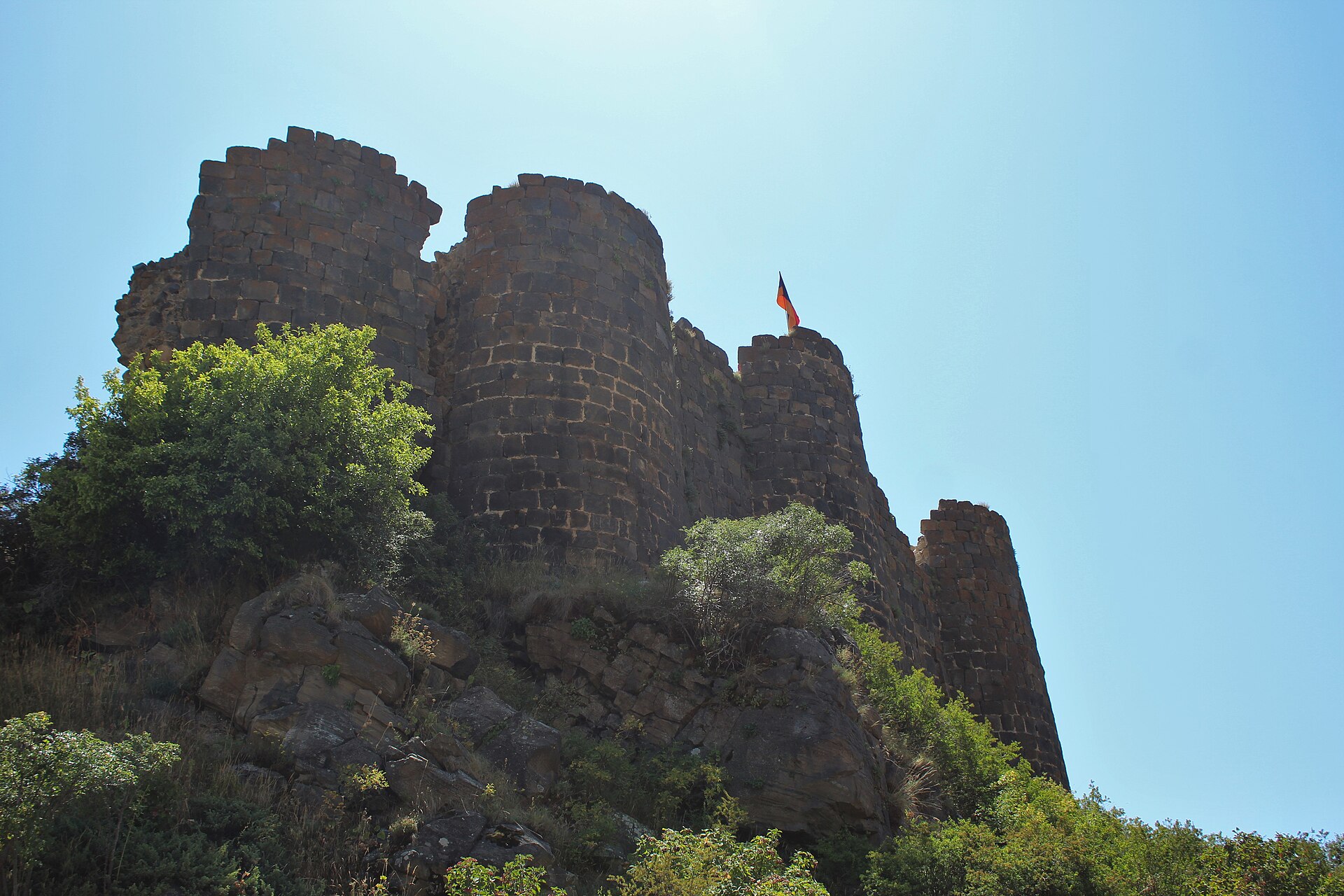
- Basalt Walls and Inclined Towers
- Byzantines and Seljuks
- The Zakaryan Liberation
- The Mongols and the End
- Amberd Today
- Castles Nearby
- The Fortress in the Clouds
A Stronghold on Mount Aragats
The setting of Amberd is one of the most spectacular of any castle in the world, for it stands high upon the southern flanks of Mount Aragats, the towering four-peaked volcano that is the highest mountain in all of Armenia. At an altitude of some two thousand three hundred meters above the sea, the fortress occupies a wild and lofty landscape of alpine meadows and rocky slopes, a world apart from the plains far below, where the air is thin and clear and the clouds drift among the hills.
It was this remote and elevated position that gave Amberd its name, the fortress in the clouds, and that made it so formidable a stronghold. To reach it, an attacker would have to climb high into the mountains, and to besiege it, an army would have to endure the harsh conditions of the highlands. The fortress commanded the approaches to the mountain and the routes that passed below, and from its walls the garrison could survey a vast territory, watching for the approach of any enemy from far off.
Mount Aragats, upon whose slopes Amberd stands, is one of the great natural landmarks of Armenia, a massive ancient volcano whose four peaks encircle a great crater, and it has been regarded with reverence since the earliest times. To build a fortress upon its flanks was to plant a stronghold in a landscape of tremendous power and beauty, and the setting lends Amberd a grandeur that few castles anywhere can match. In summer the meadows around the fortress are carpeted with alpine flowers, while in winter the whole region lies deep beneath the snow, and the fortress in the clouds becomes truly a place apart from the world below.
The road to Amberd today climbs high into the mountains from the Armenian plain, passing through a landscape that grows wilder and more beautiful with every kilometer, until at last the fortress and its church come into view upon their promontory. For much of the year the site is accessible only with difficulty, for the snows lie deep upon Mount Aragats and the high roads are closed, and this seasonal isolation only adds to the sense of remoteness and grandeur that surrounds the fortress. Amberd is a place that must be sought out, and it rewards the effort richly.
Where Two Rivers Meet
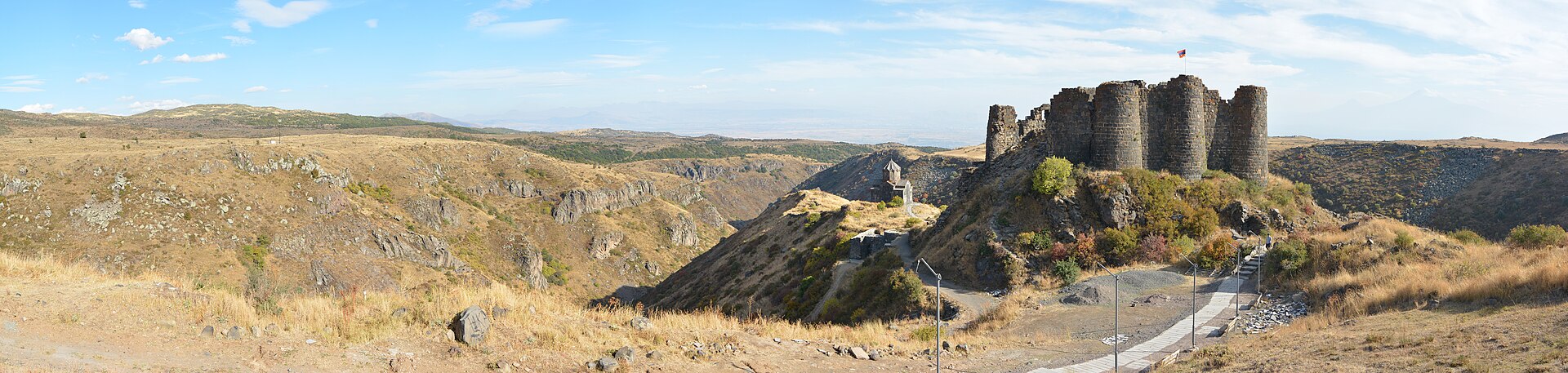
The natural strength of Amberd lay in its position upon a rocky promontory at the confluence of two mountain rivers, the Arkashen and the Amberd, whose deep canyons guard the fortress on three of its four sides. These gorges fall away sheer from the walls, forming a natural moat of tremendous depth that no attacker could hope to cross, so that the defenders needed to fortify heavily only the one side where the promontory joined the slope of the mountain.
This use of the natural terrain is characteristic of the finest medieval fortresses, which drew their strength as much from the ground on which they stood as from the walls that crowned it. At Amberd the marriage of fortress and landscape is especially complete, for the walls seem to rise directly out of the cliffs, and the whole forms a single defensive system in which nature and human art are indistinguishable. The rivers that gave the fortress its protection also gave it, as we shall see, its water and its name.
The two rivers that guard Amberd, the Arkashen and the Amberd, have carved their canyons deep into the volcanic rock over countless ages, and it is to the second of these that the fortress owes its name, for Amberd means, in a sense, the fortress of the Amberd river as much as the fortress in the clouds. Standing upon the walls and looking down into the dizzying depths of the gorges, one understands at once why no enemy ever attempted to storm the fortress from these sides. Nature herself had made them impregnable, and the builders had only to close the single remaining approach.
The name of the fortress, Amberd, is often translated as the fortress in the clouds, a poetic description that captures the way the mist and cloud so often wreathe the promontory at this great altitude. On many days the fortress does indeed seem to float among the clouds, appearing and vanishing as the weather shifts, and the effect is one of extraordinary beauty and mystery. It is easy to see how such a place, high and remote and often veiled in cloud, came to hold so strong a grip upon the imagination of the Armenian people.
The Kamsarakan Princes
The origins of Amberd reach back to the early Middle Ages, for the first castle and walls upon the promontory are thought to have been raised around the seventh century by the Kamsarakan family, one of the great noble houses of medieval Armenia. In those days Armenia was divided among a number of powerful princely dynasties, each holding its own lands and fortresses, and Amberd was one of the strongholds by which the Kamsarakans secured their power in the region of Aragatsotn.
The Armenian nobility of this age were the heirs of a very ancient civilization, one of the oldest Christian nations in the world, and their fortresses were the anchors of a proud and independent culture set amid the great empires that surrounded it. Amberd, from its earliest days, was a seat of this princely power, a fortress from which a noble house governed its domain and defended it against the many enemies that threatened the Armenian lands. The Kamsarakans laid the foundations upon which all the later glory of Amberd was built.
The Kamsarakan family, who first fortified the promontory, were one of the most distinguished of the ancient Armenian noble houses, tracing their lineage back into the depths of Armenian history and playing a leading role in the affairs of the nation for many generations. That they should have chosen this lofty and defensible site for one of their strongholds speaks of their strategic wisdom, for the position they selected would serve as a fortress for some seven hundred years. The foundations they laid proved enduring, and every later lord of Amberd built upon the work that the Kamsarakans had begun.
The Pahlavuni Dynasty and Vahram
In the tenth century the fortress passed into the hands of another great Armenian noble house, the Pahlavuni, who received it from the Bagratuni kings who then ruled over much of Armenia. Under the Pahlavuni princes Amberd reached the height of its glory, and it is above all with one member of this family that the fortress is associated, the great prince and general Vahram Pahlavuni, who flourished in the first half of the eleventh century.
Vahram Pahlavuni was one of the most powerful and capable figures of his age, a commander of the Armenian armies and a great builder, and it was he who transformed Amberd into the magnificent complex whose remains we admire today. He reinforced the walls of the fortress, established its famous bathhouse, and, most gloriously of all, raised the beautiful church that still stands beside the castle. Under his hand Amberd became not merely a stronghold but a princely residence of real splendor, worthy of one of the leading men of the Armenian kingdom.
The Pahlavuni were among the most powerful families of the Bagratuni period, the great age of the medieval Armenian kingdom, and they produced not only soldiers and statesmen but churchmen and scholars of the first rank. Vahram Pahlavuni himself was celebrated as a warrior who defended the Armenian kingdom in its hour of need, and his patronage of Amberd was part of a wider program of building and cultural sponsorship that has left its mark across Armenia. In raising the church and the bathhouse and strengthening the walls, he created at Amberd a monument to the confidence and the achievement of the Armenian golden age.
The golden age of Amberd under the Pahlavuni coincided with the last great flowering of the independent Armenian kingdom, and the fortress stands as one of the finest surviving monuments of that brilliant but tragically brief period. Within a generation of Vahram’s death the Armenian kingdom would be extinguished by the Byzantines and the Seljuks, and the age of the great princely houses would come to an end. Amberd, with its church and its bathhouse and its strong walls, preserves the memory of that lost world at the very height of its achievement.
The Three-Storied Castle
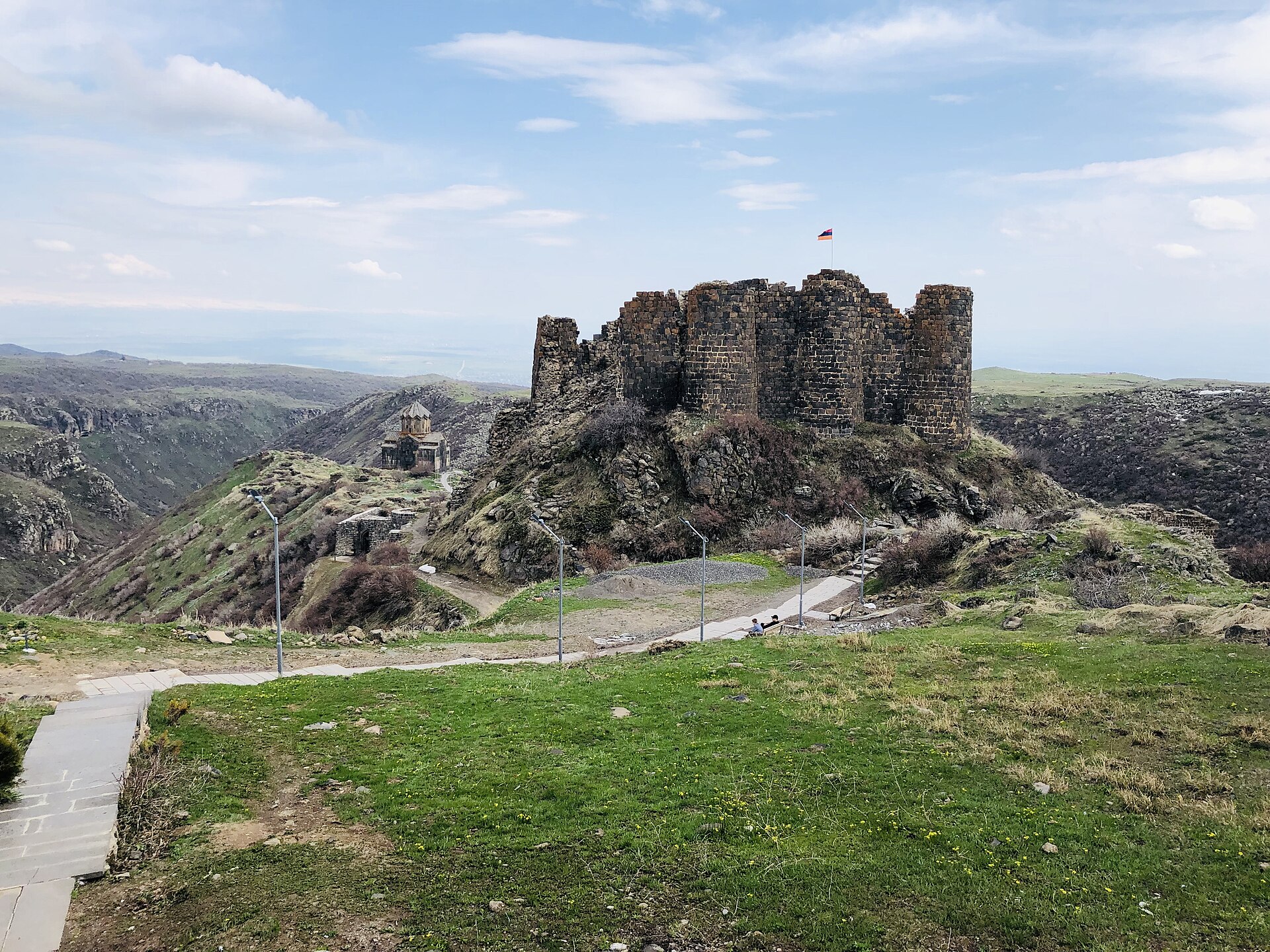
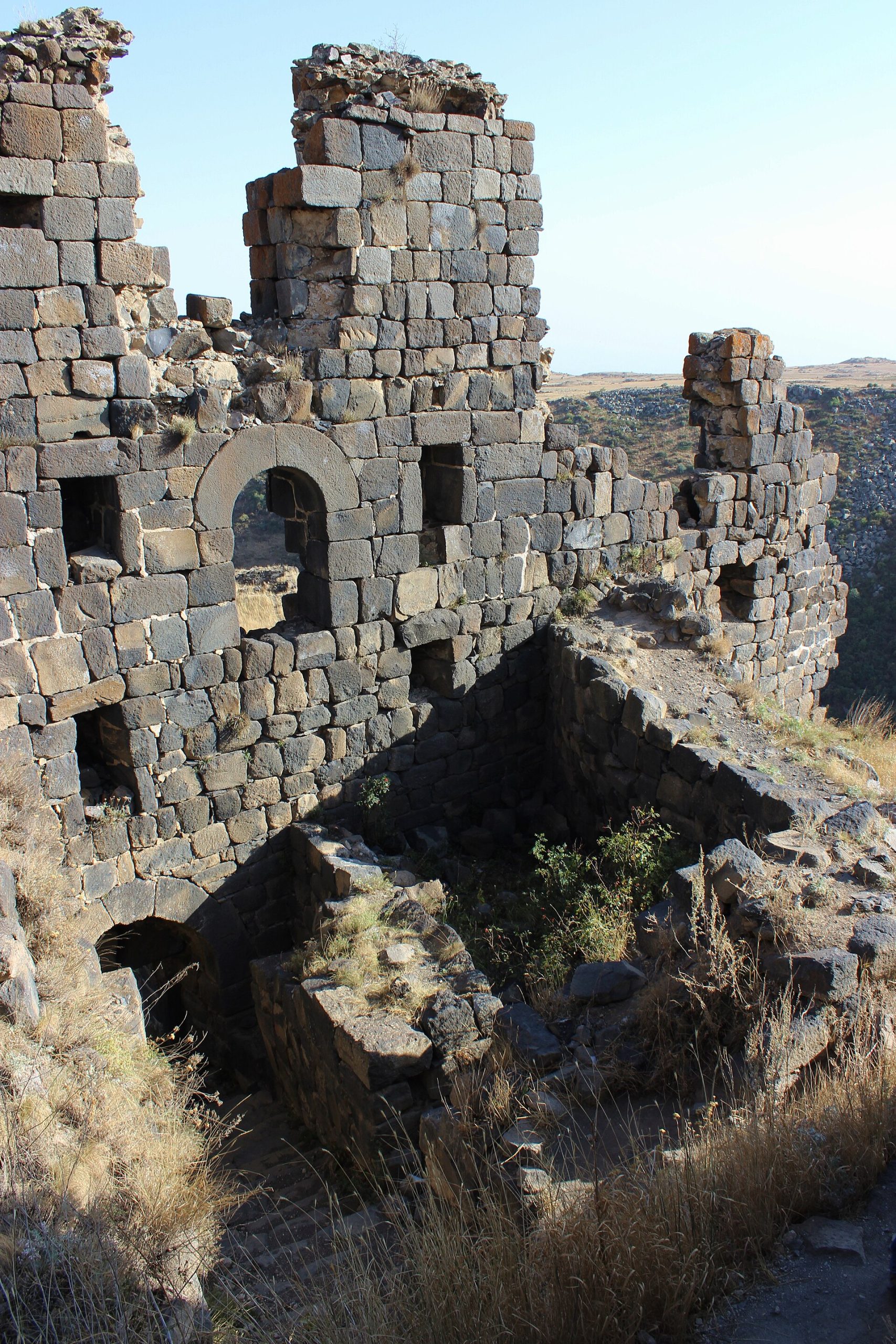
The castle of Amberd, the heart of the whole complex, was a substantial building that rose three stories in height, containing many rooms arranged one above another within its strong walls. Though it now stands in ruins, enough survives to show that it was once a residence of considerable comfort and even luxury, its chambers adorned with elegantly carved decorations and, according to the accounts, with ornaments of bronze, gold, and silver.
This combination of strength and splendor reflects the dual nature of Amberd as both a military stronghold and a princely home. The lords who held the fortress lived here in a state befitting their rank, surrounded by the fine things that their wealth and position could command, even as they relied upon the massive walls to keep them safe from their enemies. The three-storied castle was the centerpiece of this world, a place where the business of war and the pleasures of noble life went on side by side high above the Armenian plains.
The luxury of the castle’s interior, with its carved decorations and its ornaments of precious metals, may seem surprising in so remote and martial a setting, but it reflects the wealth and the sophistication of the Armenian nobility of the age. These were not rough frontier warlords but the cultivated leaders of an ancient civilization, and their residences, even in the mountains, were furnished with a refinement befitting their rank. The ruined chambers of Amberd, bare and roofless today, once glowed with color and gleamed with metal, the setting for a noble life of considerable splendor.
The three stories of the castle would have been connected by internal stairways and would have housed the many functions of a great noble residence, from storerooms and quarters for servants and soldiers on the lower levels to the fine chambers of the lord and his family above. Such vertical arrangement was common in mountain fortresses, where space upon the promontory was limited and building upward was the natural solution. The ruined shell that survives today can only hint at the busy and comfortable life that once filled these now silent rooms.
The Vahramashen Church
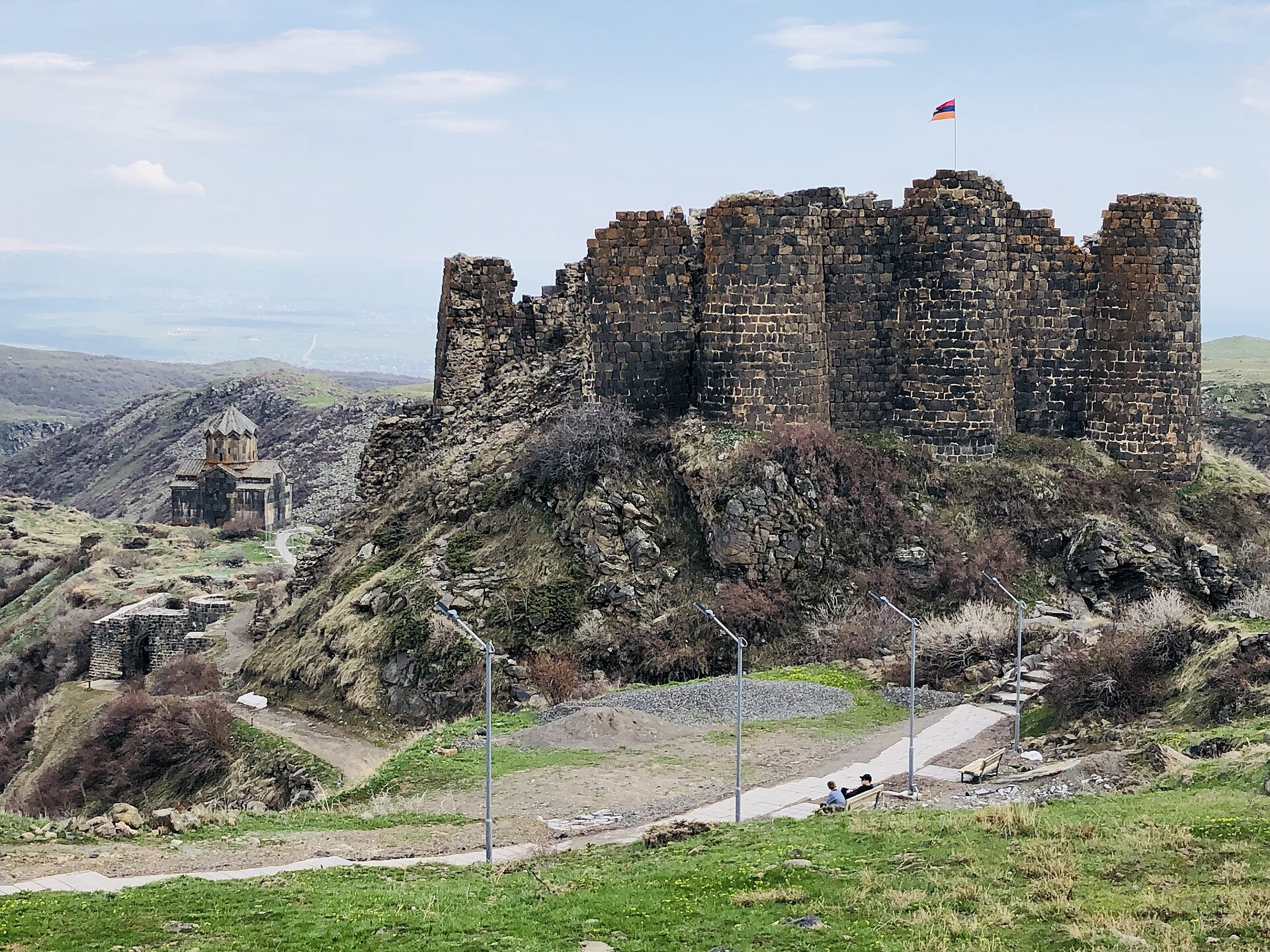
The crowning glory of Amberd, and the part of the complex that survives most nearly intact, is the church that Vahram Pahlavuni built beside the fortress in the year 1026. Known as the Vahramashen Church, from the name of its founder, it is a jewel of medieval Armenian architecture, a compact and beautifully proportioned building of reddish stone, crowned with the conical dome that is so characteristic of the Armenian style. It stands upon the very edge of the promontory, with the canyons falling away beyond it.
The church is a superb example of the Armenian architectural tradition, one of the oldest and most distinctive in all of Christendom, and its survival, almost perfect after a thousand years, is a small miracle given all that the fortress around it has suffered. To come upon it, standing alone and serene upon its mountain promontory against the backdrop of the great peak of Aragats, is one of the most moving experiences that Armenia has to offer. It is a monument to the deep and ancient Christian faith of the Armenian people.
The Armenian church, of which the Vahramashen at Amberd is so fine an example, developed a distinctive architectural style over many centuries, marked by its compact plan, its pointed conical dome resting upon a drum, and its use of finely worked stone. This style is one of the oldest and most original in all of Christian architecture, and it influenced the development of church building far beyond the borders of Armenia. The church at Amberd, small but perfectly formed, is a distillation of this great tradition, and its survival makes it one of the most precious of all the monuments of the fortress.
The Vahramashen Church has become, in a sense, the true symbol of Amberd, for while the castle has crumbled into ruin, the church stands almost as it did a thousand years ago, a testament to the skill of its builders and the endurance of the Armenian architectural tradition. Photographs of the church, standing alone against the backdrop of Mount Aragats, have made Amberd famous around the world, and it is for the sake of the church as much as the fortress that many visitors make the long journey up the mountain. It is one of the great treasures of Armenian Christianity.
The Ancient Bathhouse
Among the most fascinating features of Amberd is its bathhouse, established by Vahram Pahlavuni and counted among the oldest surviving bathhouses in all of Armenia. Built in the tenth or eleventh century, it was a structure of real sophistication, featuring twin domed rooms and a system of heating that speaks of a high level of comfort and engineering skill in the medieval Armenian world.
The bathhouse was warmed by a hypocaust system, in which hot air from underground fires was drawn through pipes running beneath the floors and within the walls, heating the rooms above. This was the same principle that the Romans had used in their baths, and its presence at Amberd, high in the mountains of Armenia, testifies to the continuity of ancient traditions of civilized living. That the lords of Amberd should have enjoyed the luxury of a heated bath in so remote and lofty a stronghold is a striking reminder of the refinement of their culture.
The presence of so sophisticated a bathhouse at Amberd tells us much about the daily life of the fortress and the culture of those who dwelt there. Bathing was not merely a matter of cleanliness but a social and even a ceremonial activity in the medieval world, and the provision of a fine heated bath was a mark of civilization and status. That the lords of Amberd went to the trouble and expense of building and heating such a structure high in the mountains shows how far they carried the amenities of settled life into even the most remote of their strongholds.
Archaeologists who have studied the bathhouse have been struck by the quality of its construction and the completeness of its heating system, which ranks it among the most important surviving examples of medieval Armenian domestic architecture. The twin domed chambers, the channels for hot air, and the arrangements for water all testify to a mature and confident building tradition. That such a structure should survive at all, after the destruction the fortress has suffered, is a piece of great good fortune for those who wish to understand the daily life of the medieval Armenian nobility.
Clay Pipes and the Secret Passage
A fortress in the mountains, however strong its walls, could not survive a siege without a secure supply of water, and the builders of Amberd solved this vital problem with remarkable ingenuity. A pipeline of terracotta, running some four or five kilometers from the springs high on the slopes of Mount Aragats, carried fresh water down to reservoirs within the fortress, ensuring that the garrison would never go thirsty even if the enemy held the surrounding country.
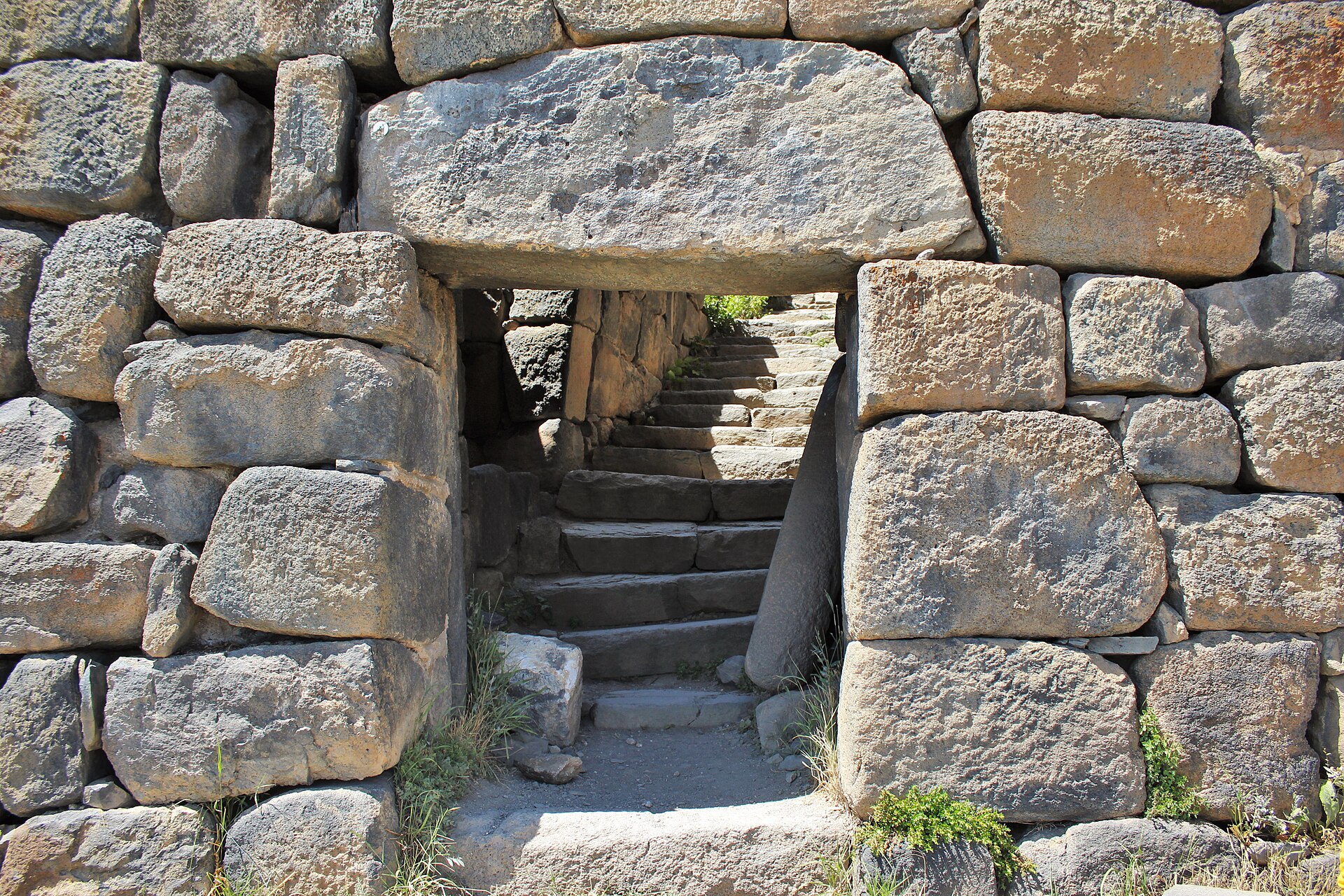
As a further safeguard, the defenders cut a secret covered passageway that descended from the fortress down the cliff to the Arkashen river far below, so that even if the pipeline were cut, water could still be fetched from the river in safety. These hidden waterworks were among the most important of all the defences of Amberd, for they made the fortress proof against the slow strangulation of a siege. The care and skill with which they were built reveal the sophistication of the medieval Armenian engineers who designed the stronghold.
The waterworks of Amberd rank among the most impressive achievements of medieval Armenian engineering, and they were absolutely central to the fortress’s ability to withstand a siege. To bring water several kilometers through terracotta pipes across mountainous terrain, and to cut a hidden passage down a cliff to the river, required both great skill and great labor, and it reflects the seriousness with which the defenders regarded the threat of blockade. In an age when many a strong fortress fell not to assault but to thirst, these hidden waterworks were worth more than any number of towers.
It is worth reflecting on the sheer ingenuity required to supply a mountain fortress with water in the Middle Ages, for the problem was one of the most difficult that any castle-builder faced. At Amberd the solution combined two independent systems, the long pipeline from the springs and the secret passage to the river, so that the failure of one would not doom the garrison. This redundancy, this careful provision against every eventuality, is the mark of a truly sophisticated approach to fortification, and it helps to explain how Amberd was able to hold out for so long against its many enemies.
Basalt Walls and Inclined Towers
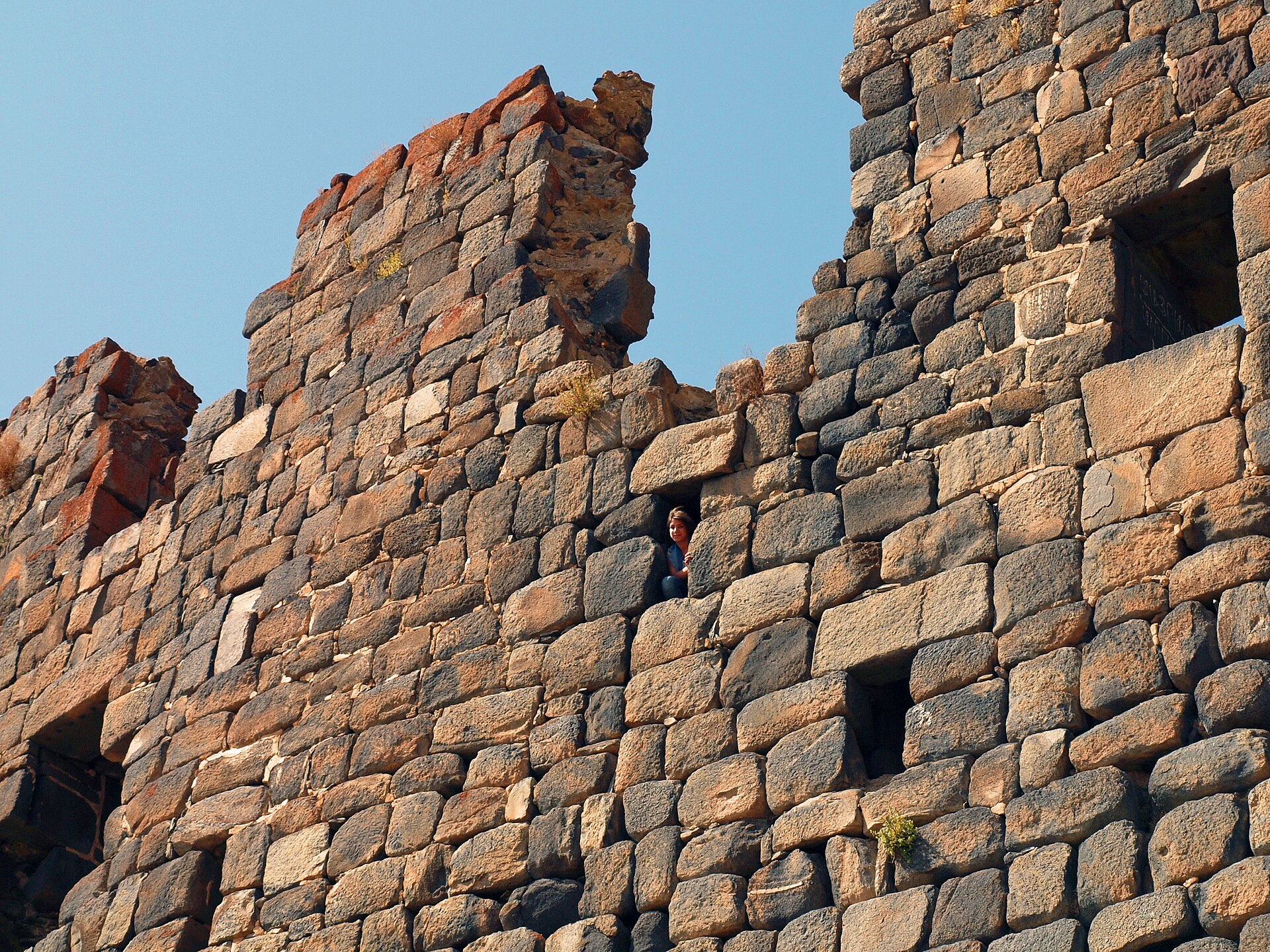
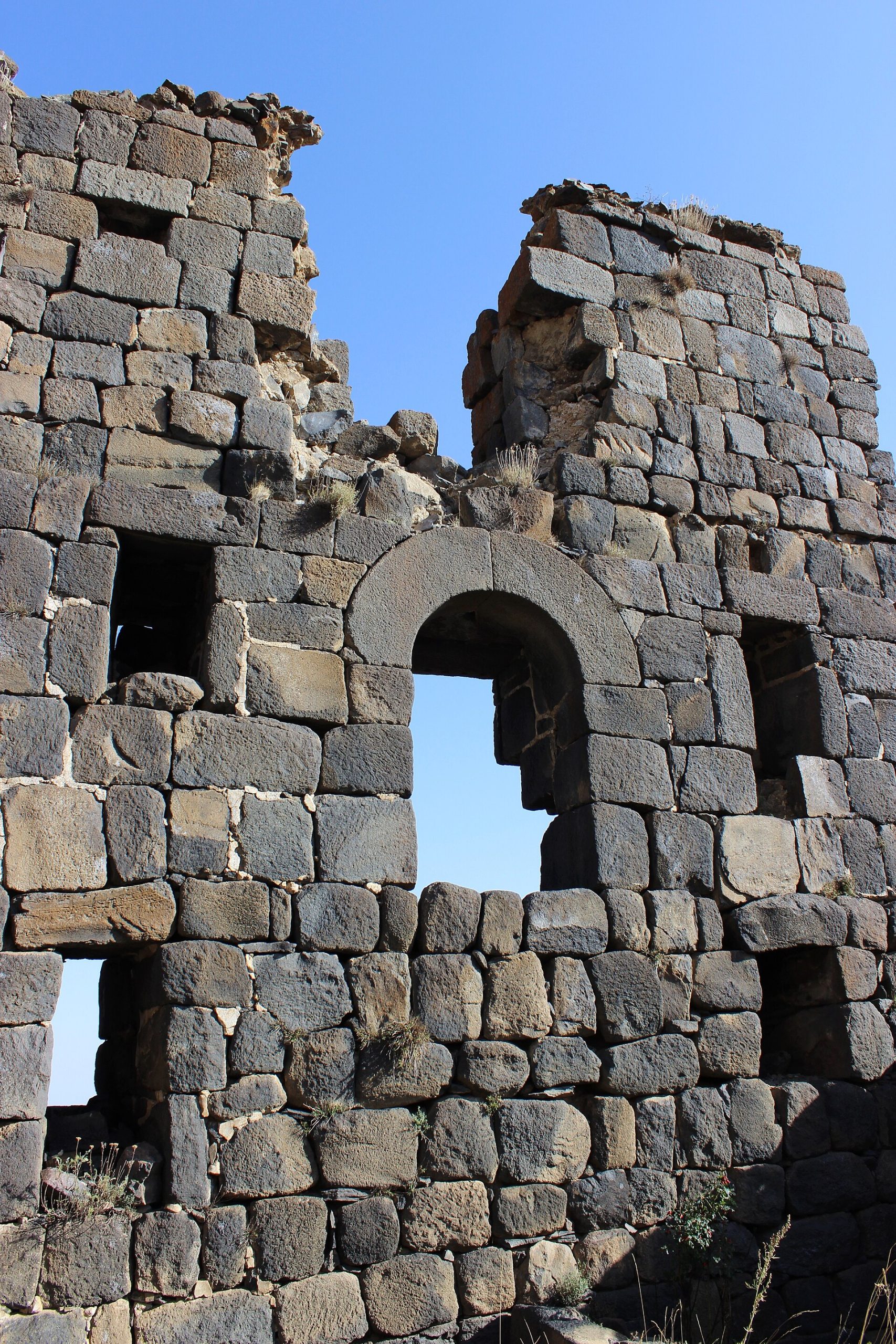
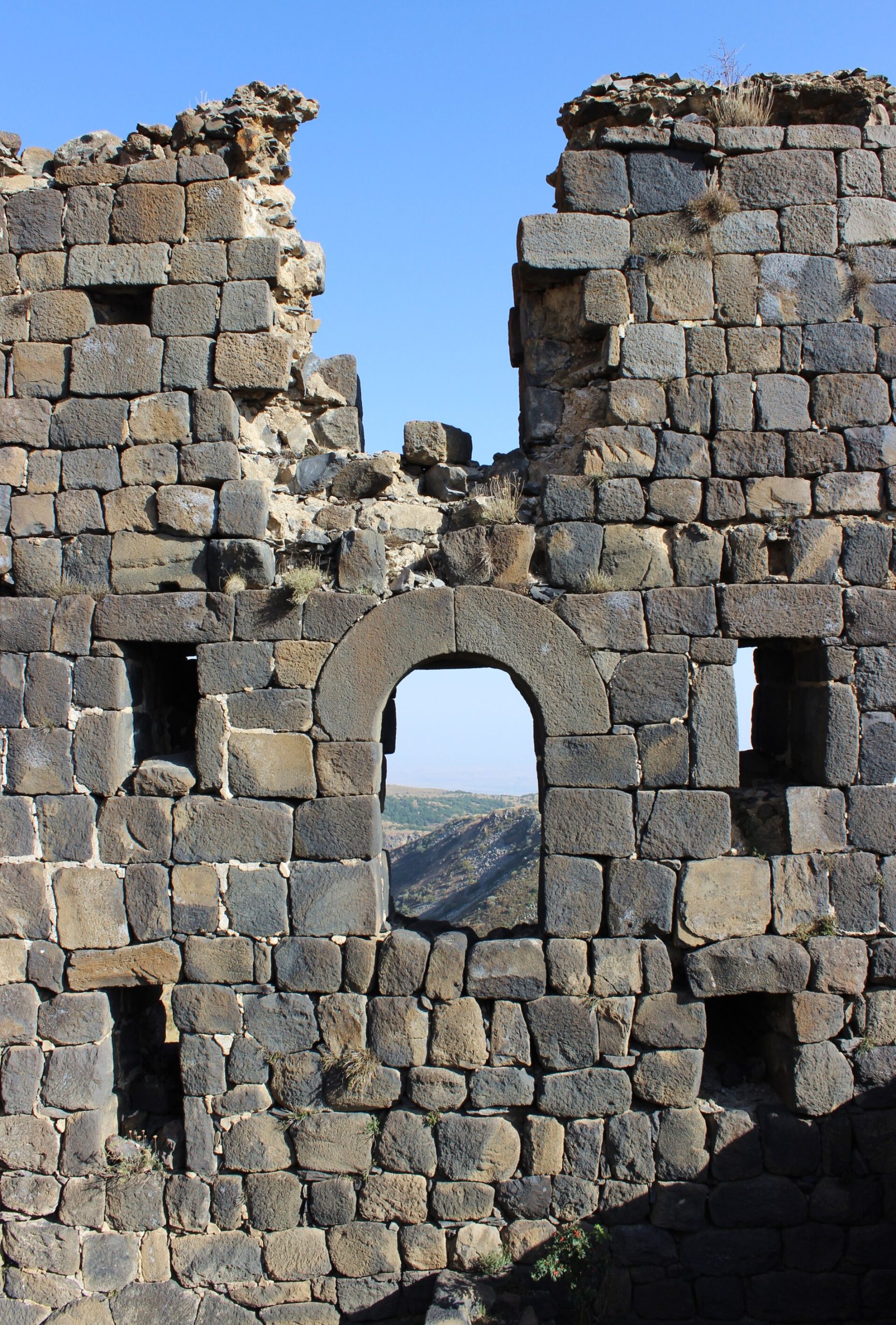
The defences of Amberd were built of the dark basalt stone of the region, the hard volcanic rock thrown up by Mount Aragats itself, and the walls and towers of the fortress present a grim and massive aspect that suits their wild mountain setting. The whole complex covered an area of some fifteen hundred square meters, a compact but powerful stronghold designed to make the most of its naturally strong position upon the promontory.
A distinctive feature of the fortifications was the inclined design of the towers, whose sloping faces gave them added strength and a defensive advantage against attack. This sloping form, a kind of glacis built into the towers themselves, helped to deflect missiles and to make the walls harder to undermine or to scale. Combined with the natural defences of the canyons, these strong basalt walls made Amberd one of the most formidable fortresses in all of medieval Armenia, a stronghold that could defy all but the most determined and powerful of enemies.
The use of basalt, the dark volcanic stone of Mount Aragats, gives the fortifications of Amberd a somber and powerful character that is entirely in keeping with their wild setting. This is a hard and heavy stone, difficult to work but immensely strong, and the walls built from it have endured for many centuries despite all the assaults of enemies and the erosion of time. The dark mass of the basalt against the green of the summer meadows or the white of the winter snow makes Amberd one of the most visually striking of all the fortresses of the Caucasus.
Byzantines and Seljuks
The eleventh century, which had seen the golden age of Amberd under Vahram Pahlavuni, also brought the fortress into the path of great and destructive forces. In the year 1047 the Byzantine empire, expanding into Armenia, captured the fortress, bringing the age of independent Armenian princely rule at Amberd toward its end. The Byzantines, though fellow Christians, were often harsh masters, and their advance weakened the Armenian kingdoms just as a far more terrible enemy was approaching from the east.
That enemy was the Seljuk Turks, whose armies burst upon the Near East in the middle of the eleventh century and swept all before them. In the decade of the 1070s the Seljuks conquered Amberd, as they conquered so much of Armenia, and the fortress passed under the control of these new masters. The coming of the Seljuks was a catastrophe for medieval Armenia, and it marked the beginning of centuries of foreign domination for the Armenian lands. Amberd, once the proud seat of Armenian princes, had fallen into the hands of the conquerors from the steppe.
The fall of Amberd to the Byzantines and then to the Seljuks was part of the great tragedy that overtook medieval Armenia in the eleventh century, when the ancient kingdoms were extinguished one by one and the Armenian people entered upon a long night of foreign rule. The loss of such strongholds as Amberd, which had been the anchors of Armenian independence, was a heavy blow, and it scattered the Armenian nobility and drove many Armenians into exile. The fortress that had symbolized the strength of the Armenian princes became a possession of their conquerors.
The Battle of Manzikert in 1071, fought not far to the west of Amberd, sealed the fate of Byzantine Armenia and opened the whole region to Seljuk conquest, and it forms the backdrop to the fall of Amberd in that same decade. The collapse of Byzantine power in the east left the Armenian lands exposed to the full force of the Turkish advance, and fortresses like Amberd, however strong, could not hold out indefinitely against so overwhelming a tide. The eleventh century thus saw Amberd pass, within a single generation, from the summit of its glory to subjection under foreign rule.
The Zakaryan Liberation
The Armenian lands did not remain forever under Seljuk rule, for in the late twelfth century a great revival came from the north, led by the resurgent Christian kingdom of Georgia and by the remarkable Armenian noble brothers Zakare and Ivane Zakaryan, who served the Georgian crown. In the year 1196 these brothers liberated Amberd from its Muslim rulers, part of a wider campaign that freed much of Armenia and inaugurated a new flowering of Armenian culture under Zakaryan leadership.
The liberation of Amberd was a moment of great symbolic importance, the recovery of an ancient Armenian stronghold from foreign hands. Under the Zakaryans and their vassals the fortress entered upon a new period of activity, and in the early thirteenth century a general named Vache Vachutyan became its lord and added new defences to the old walls. For a time it seemed that the glory of medieval Armenia might be restored, and Amberd shared in this brief but brilliant revival before the coming of a new and final catastrophe.
The Zakaryan brothers, Zakare and Ivane, were among the great heroes of medieval Armenian history, warriors who fought to free their homeland from foreign domination and who presided over a remarkable, if brief, revival of Armenian culture and power. Their liberation of Amberd and of so many other Armenian strongholds gave the nation a last flowering of glory before the coming of the Mongols, and it produced some of the finest works of Armenian art and architecture. Amberd was fortunate to share, however briefly, in this shining chapter of the Armenian story.
The Mongols and the End
The revival of Armenia under the Zakaryans was cut short, as so much else was in that age, by the coming of the Mongols. In the year 1236 the Mongol armies fell upon Amberd, as they fell upon countless other strongholds across Asia, and they conquered and severely damaged the fortress. The blow was a grievous one, and though Amberd was not immediately abandoned, it never fully recovered from the destruction that the Mongols wrought upon its walls and buildings.
The final end came with the terrible invasions of Tamerlane, the dreaded Timur, in the 1380s, after which the fortress was abandoned altogether and left to fall into the ruin in which it stands today. The long story of Amberd, which had begun with the Kamsarakan princes some seven centuries before, thus came to a close amid the general catastrophe that overwhelmed medieval Armenia in the late Middle Ages. The fortress in the clouds fell silent, its halls empty, its walls crumbling, its church standing alone upon the promontory.
The abandonment of Amberd after the invasions of Timur marks the end of the medieval greatness of the fortress, but not the end of its meaning, for it has lived on ever since in the memory and the affection of the Armenian people. The ruined walls and the surviving church became a symbol of all that Armenia had achieved and all that it had lost, a monument to a vanished age of independence and splendor. In its very desolation, Amberd came to embody the tragic and heroic history of the Armenian nation, which has endured so much and yet has never been extinguished.
The fate of Amberd was shared by countless other monuments of medieval Armenia, which suffered grievously in the invasions of the Mongols and of Timur, and the ruin of the fortress is part of a larger story of loss that runs through Armenian history. Yet it is a remarkable fact that so much has survived, and that a nation which endured such repeated catastrophes should have preserved so rich a heritage of art and architecture. Amberd, ruined but still standing, is a symbol both of what was lost and of what endured, of the resilience of a people who refused to be destroyed.
Amberd Today
Though it has stood abandoned for more than six centuries, Amberd remains one of the most beautiful and evocative of all the medieval monuments of Armenia, and it draws visitors from all over the world to its lonely promontory upon the slopes of Mount Aragats. The ruins of the fortress, the canyons that guard it, and above all the perfect little church that still stands beside it, combine to create a scene of extraordinary romance and grandeur, one that lingers long in the memory of all who see it.
The site is a place of pilgrimage for Armenians, who cherish it as a monument to the greatness of their medieval civilization and to the deep Christian faith that has sustained their nation through so many centuries of hardship. For the visitor from abroad, it offers an unforgettable encounter with a proud and ancient culture in one of the most spectacular natural settings imaginable, a fortress and a church set together against the backdrop of Armenia’s highest mountain.
To stand at Amberd on a clear day, with the great peak of Aragats rising behind and the canyons falling away on every side, is to feel the full power of the place, a power that comes from the union of a dramatic natural setting with a deep and ancient history. It is a place that speaks directly to the heart, and that stays with the visitor long after the journey is over. In Amberd, the story of medieval Armenia, its glory and its tragedy, its faith and its endurance, is written in stone upon a mountain, for all who come to read it.
If you would like to see exactly where this remarkable fortress stands upon the map, you can find it here:
View on Google Maps: 40.3897, 44.2286
From its promontory high upon Mount Aragats, ringed by canyons and crowned by clouds, Amberd has kept its silent watch over the Armenian highlands for well over a thousand years.
Castles Nearby
If Amberd has drawn you to the great fortresses of the Caucasus and the medieval Near East, you may enjoy these other remarkable strongholds:
- Narikala Fortress: The Ancient Citadel of Tbilisi
- The Citadel of Aleppo: Four Thousand Years on a Single Hill
The Fortress in the Clouds
Amberd stands today as one of the most evocative monuments of medieval Armenia, a fortress and a church set together upon a lonely mountain promontory, ringed by canyons and crowned by clouds. Though it has stood in ruins for centuries, abandoned since the terrible invasions of the late Middle Ages, it retains a powerful grandeur, and the church beside it still stands almost perfect, a thousand years after it was built. To visit Amberd is to encounter the soul of old Armenia in one of its most beautiful and dramatic settings.
If you should travel to Armenia, the journey up the slopes of Mount Aragats to Amberd is one of the great experiences the country has to offer. The road climbs through wild and beautiful highland scenery to the fortress on its promontory, and from the walls the view over the canyons and the distant plains is breathtaking. Amberd is a place where history and landscape are joined in perfect harmony, a fortress in the clouds that no traveler to Armenia should fail to see.
Whether you come for the history, for the architecture of the church, or simply for the sublime beauty of the mountain setting, Amberd will reward your journey, and you will carry away the memory of this fortress in the clouds, standing guard upon the slopes of Mount Aragats as it has done for more than a thousand years.
You May Like
Mafra, the Palace a King Built From a Vow