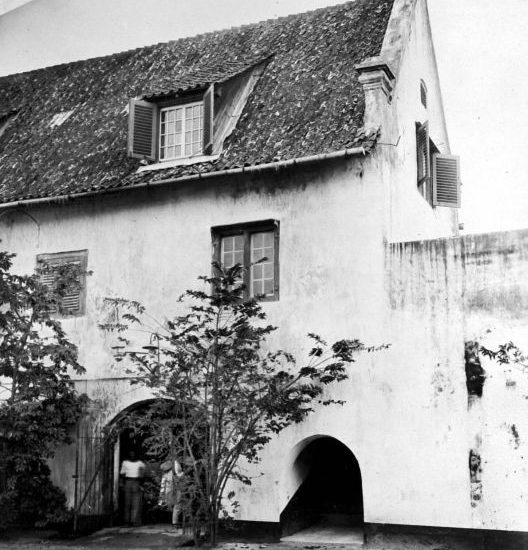
Some monuments are great in size, and some are great in significance, and Fort San Pedro in the city of Cebu belongs firmly to the second kind. The oldest and smallest triangular bastion fort in the Philippines, it can be explored in minutes, yet it marks nothing less than the birthplace of the entire Spanish colonial era in the islands, the point from which an empire grew.
You come expecting a fortress and find a compact triangle of coral stone, its ramparts lined with old cannon, its three bastions guarding a small but hugely significant interior. Here the conquistador Legazpi founded the first Spanish settlement in the archipelago, and from this modest strongpoint Spanish power, and the Catholic faith, spread across the whole of the Philippines.
This is the story of Fort San Pedro, from the arrival of Magellan and the founding by Legazpi, through its centuries defending the coast and its capture in the great revolution, to its rebirth as a museum in the heart of Cebu. Come and walk its coral walls with me, and stand at the small triangle of stone where the colonial Philippines began.
In This Article
- The Oldest Fort in the Philippines
- The Conquistador Who Began It All
- Cebu, the Cradle of the Colonial Philippines
- Before the Fort: Magellan and the First Encounter
- The Coral Stone and the Old Cannon
- The Cross That Came With the Sword
- Small in Size, Vast in Significance
- The Little Triangle of Coral Stone
- Guarding the Coast Against the Raiders
- The Fort in the Philippine Revolution
- Through the American Era and the War
- The Fort Reborn as a Historical Park
- Exploring the Birthplace of Colonial Cebu
The Oldest Fort in the Philippines
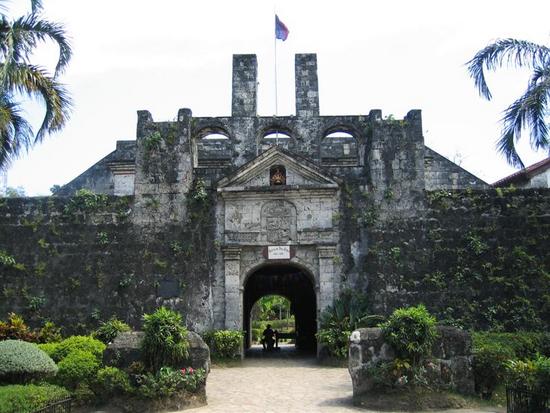
In the city of Cebu, in the central Philippines, stands the oldest and smallest triangular bastion fort in the entire country, a modest but historically momentous stronghold called Fort San Pedro. Small enough to walk around in a matter of minutes, it nonetheless holds a place of the greatest significance in the history of the Philippines, for it marks the very beginning of Spanish colonization in the archipelago.
The fort is a compact triangle of coral-stone walls, with three bastions at its corners, its ramparts lined with old cannon pointing out toward the sea and the city. Though it lacks the grand scale of many colonial fortresses, its historical weight is immense, for it was here, at this spot, that the Spanish first established themselves in the islands that would become the Philippines.
To visit Fort San Pedro is to stand at the birthplace of Spanish colonial rule in the archipelago, the nucleus from which a colonial empire would grow to span the islands for more than three centuries. The little fort was the seed of that vast enterprise, the first foothold from which the Spanish extended their power across the Philippines.
Come and explore this compact and venerable fortress, and you will encounter the very origin of the Spanish Philippines, the oldest fort in the country and the point from which one of the great colonial stories of Asia began. It is a small monument with a very large history, the birthplace of the colonial era in the islands.
Part of the charm of Fort San Pedro lies precisely in its intimacy, the way its small scale allows the visitor to take it in as a whole and to feel a close, personal connection to its history. Where the great fortresses overwhelm, this little fort invites, drawing you into its compact world and its enormous story with a directness that larger monuments cannot match.
For all its small size, the fort has stood at the center of nearly every major chapter of Philippine history since the coming of the Spanish, a silent witness to conquest, faith, revolution, and independence. To stand within its coral walls is to stand at a kind of still point around which the whole modern history of the islands has turned.
The Conquistador Who Began It All
The founder of Fort San Pedro was the Spanish conquistador Miguel Lopez de Legazpi, the same figure who would later found the fort at Manila, and whose expedition established permanent Spanish rule in the Philippines. Arriving in the islands in the 1560s, Legazpi chose Cebu as the site of the first Spanish settlement, and he began the construction of the fort in 1565.

Legazpi’s arrival marked the true beginning of the Spanish colonial era in the Philippines, the moment when Spain established a lasting presence in the islands that Magellan had reached decades earlier but where no permanent settlement had taken hold. The fort at Cebu was the anchor of this first settlement, the strongpoint from which the Spanish secured their new foothold.
The first fort was a modest structure of wood, a rough frontier fortification thrown up to defend the new and vulnerable settlement against local resistance and other threats. It was the humble beginning of what would become, over the centuries, the substantial stone fortress that survives today, rebuilt and strengthened as Spanish rule took deeper root.
From this small beginning at Cebu, Spanish power would spread across the archipelago, and Legazpi himself would move on to establish the colonial capital at Manila. But it was here, at Fort San Pedro in Cebu, that the whole enterprise began, and the fort stands as the monument to that founding moment, the birthplace of the Spanish Philippines.
Legazpi is remembered as the founder of the Spanish Philippines, the man whose expedition established the lasting European presence that Magellan’s voyage had failed to secure, and his legacy is written across the islands, from the fort at Cebu to the great city of Manila. Fort San Pedro is the first and oldest of his foundations, the very beginning of the colonial enterprise he set in motion.
Cebu, the Cradle of the Colonial Philippines
Cebu holds a special place in the history of the Philippines as the site of the first Spanish settlement and the cradle of the colonial era in the islands. Long before Manila rose to prominence, it was Cebu that served as the initial center of Spanish power, and the settlement that grew around Fort San Pedro was the first European town in the archipelago.

The choice of Cebu was natural, for it had long been an important center of trade and settlement in the pre-colonial Philippines, a hub of the maritime commerce of the region. The Spanish, arriving in search of a foothold, established themselves at this existing center, and the fort became the strongpoint of their new colonial settlement.
It was at Cebu, too, that some of the earliest and most significant encounters between the Spanish and the peoples of the Philippines took place, including the beginnings of the Christianization that would transform the islands. The settlement around the fort was the first center from which Spanish culture, religion, and power radiated out across the archipelago.
Though the colonial capital would soon move north to Manila, Cebu retained its significance as the birthplace of the Spanish Philippines and an important center in its own right. Fort San Pedro stands at the heart of this historic city, the monument to its role as the cradle of the colonial era, the place where the whole Spanish enterprise in the islands first took root.
The role of Cebu as the first center of Spanish power gives the city a historical primacy that it has never lost, and its people take great pride in their city’s status as the cradle of the colonial Philippines. Fort San Pedro is the tangible symbol of this primacy, the monument that anchors Cebu’s claim to be the birthplace of the nation’s colonial history.
Before the Fort: Magellan and the First Encounter
The story of the Spanish in Cebu did not begin with Legazpi and his fort, for decades earlier the islands had witnessed one of the most famous encounters in the history of exploration, the arrival of Ferdinand Magellan. In the early sixteenth century, Magellan reached the Philippines in the course of the first voyage to circumnavigate the globe, and it was at Cebu that some of the most significant events of that voyage unfolded.

At Cebu, Magellan encountered the local ruler and, in a momentous episode, introduced Christianity to the islands, an event still commemorated in the city. But Magellan’s expedition also met with disaster nearby, when the explorer was killed in a battle with local forces, a defeat that has become a celebrated episode in the history of Filipino resistance to foreign incursion.
Magellan’s arrival did not lead to permanent Spanish settlement, for the survivors of his expedition sailed on, and it would be more than four decades before Legazpi returned to establish a lasting Spanish presence. But the memory of that first encounter lingered, and Cebu held a special place as the site where Europeans had first come to the islands.
When Legazpi arrived to found his fort, he came to a place already marked by this earlier history, the site of the first European encounter with the islands. Fort San Pedro thus stands in a landscape rich with the memory of Magellan and the beginnings of the long and complex relationship between the Philippines and the wider world, a relationship that the fort itself would do so much to shape.
The killing of Magellan near Cebu, at the hands of the local chieftain and his warriors, has become one of the most celebrated episodes in Filipino history, remembered as an early instance of resistance to foreign domination. The site and the story are honored to this day, and they lend the history of Cebu a dramatic depth that reaches back even before the founding of the fort.
The Coral Stone and the Old Cannon
The fabric of Fort San Pedro rewards close attention, for its walls are built of coral stone, the material quarried from the reefs and used throughout the colonial architecture of the region, giving the fort its distinctive texture and appearance. The coral-stone walls rise several meters high and are substantially thick, enclosing the small triangular interior in a solid and durable rampart.

Along the ramparts are mounted a number of old cannon, still resting in their emplacements, pointing out toward the sea and the surrounding city as they did in the days when the fort guarded the coast against raiders. These guns are among the most evocative features of the fort, tangible reminders of its military purpose and of the centuries during which it stood in defense of the settlement.
The restoration of the fort in the modern era used coral stone in keeping with the original construction, preserving the authentic character of the fortress and ensuring that its appearance remained true to its historic fabric. This careful attention to materials has kept Fort San Pedro a genuine and evocative monument rather than a mere modern reconstruction.
To walk the coral walls and examine the old cannon is to connect directly with the long history of the fort, to touch the very fabric with which it was built and to see the weapons with which it was defended. In its coral stone and its mounted guns, the fort preserves the authentic texture of the colonial past, the physical reality of the oldest fortress in the Philippines.
The durability of the coral stone is one reason the fort has survived so well through the centuries and the various uses to which it has been put, its walls enduring where more fragile structures would have crumbled. In choosing this local material, the builders created a fortress well suited to its tropical setting, one that has weathered the storms and the years to come down to us largely intact.
The Cross That Came With the Sword
The founding of Fort San Pedro was bound up not only with the establishment of Spanish political power but with the spread of the Catholic faith, for the sword and the cross came together to the Philippines. Cebu was the site of the beginnings of the Christianization of the islands, a process that would ultimately make the Philippines one of the great centers of the Catholic faith in Asia.

From the settlement around the fort, the work of conversion spread, and Cebu became an early center of the Church in the islands, home to some of the oldest Christian institutions in the country. The fort and the faith grew together, the military strongpoint and the religious mission both radiating out from the first Spanish settlement to transform the archipelago.
The Christianization of the Philippines was one of the most profound and lasting legacies of the Spanish colonial era, reshaping the culture and identity of the islands in ways that endure powerfully to this day. Fort San Pedro, as the anchor of the first Spanish settlement, stands at the very beginning of this momentous transformation, the strongpoint from which the new faith, as much as the new power, first took hold.
To understand the fort fully, then, is to remember that it was part of an enterprise that was religious as much as military and political, the beginning of a Christianization that would define the Philippines for centuries. The little fort at Cebu was the seed not only of Spanish rule but of the Catholic Philippines, a legacy that far outlasted the colonial regime the fort was built to serve.
Cebu is home to some of the most venerable religious relics and institutions in the Philippines, treasures associated with the earliest days of Christianity in the islands, and these lie close to the fort in the historic heart of the city. Together they mark Cebu as the cradle of the Catholic faith in the archipelago, a role inseparable from its status as the first Spanish settlement.
Small in Size, Vast in Significance
There is a striking contrast at the heart of Fort San Pedro between its modest physical size and its immense historical significance, and this contrast is part of what makes the fort so memorable. It is the smallest fort of its kind in the Philippines, a compact triangle that can be explored in minutes, and yet it is also the oldest, the birthplace of the entire colonial era in the islands.

This combination of small scale and vast importance sets the fort apart from the great fortresses whose grandeur matches their significance. Fort San Pedro impresses not through size or spectacle but through the sheer weight of the history it embodies, the momentous events that began at this small triangle of coral stone.
There is a lesson in this about the nature of historical significance, which does not always correspond to physical grandeur, and about the way a modest monument can carry an enormous burden of meaning. Fort San Pedro is a place where the visitor must supply, through knowledge and imagination, the historical weight that its small physical presence only hints at.
To appreciate the fort, then, is to look past its modest size to the vast history it represents, to see in this little triangle of stone the beginning of one of the great colonial stories of Asia. Small in size but vast in significance, Fort San Pedro rewards the visitor who understands what it truly is, the venerable birthplace of the colonial Philippines.
This quality of carrying an outsized historical weight in a modest physical frame gives Fort San Pedro a special place among the fortresses of the world, a reminder that the significance of a monument is measured not in acres but in the events it has witnessed. In this the little fort stands as a lesson in how to read the past, looking beyond scale to meaning.
The Little Triangle of Coral Stone
Fort San Pedro is distinguished by its compact triangular design, a form that sets it apart from the more common square or star-shaped forts and that makes it, despite its small size, a fine example of colonial military architecture. The triangle has three bastions, one at each corner, and this economical design allowed the small fort to defend itself effectively despite its modest dimensions.

Two sides of the triangle faced the sea, lined with cannon to command the harbor and repel any attack from the water, while the third, landward side was originally defended by a wooden palisade. This arrangement reflected the primary threats the fort was built to counter, raiders and enemies arriving by sea, against whom the seaward guns were the main defense.
The three bastions each bore a name drawn from Catholic tradition, and they projected from the corners of the triangle to allow defenders to cover the walls with flanking fire in the manner of the bastioned fort. The walls themselves, built of coral stone, rose several meters high, enclosing the small but well-defended interior of the fort.
The fort we see today is largely the stone structure of the eighteenth century, which replaced the earlier wooden fort, and it was restored in the modern era using coral stone in keeping with its historic fabric. Its compact triangular form, with the old cannon still mounted on its ramparts, makes it a charming and evocative example of the colonial fort, small in scale but rich in history.
View on Google Maps (10.2922, 123.9058)
The economy of the triangular design, achieving effective defense with minimal walls and just three bastions, reflects a practical adaptation to the modest resources and specific needs of the frontier settlement. It was a form well suited to a small but strategically vital strongpoint, and its survival makes Fort San Pedro a rare and valuable example of the triangular bastion fort.
Guarding the Coast Against the Raiders
Throughout the long colonial era, Fort San Pedro served its essential purpose of defending the settlement at Cebu against the threats that came from the sea. Chief among these were the raids of seafaring peoples from the southern islands, whose swift attacks along the coasts were a constant danger to the Spanish settlements and their inhabitants throughout the centuries of colonial rule.
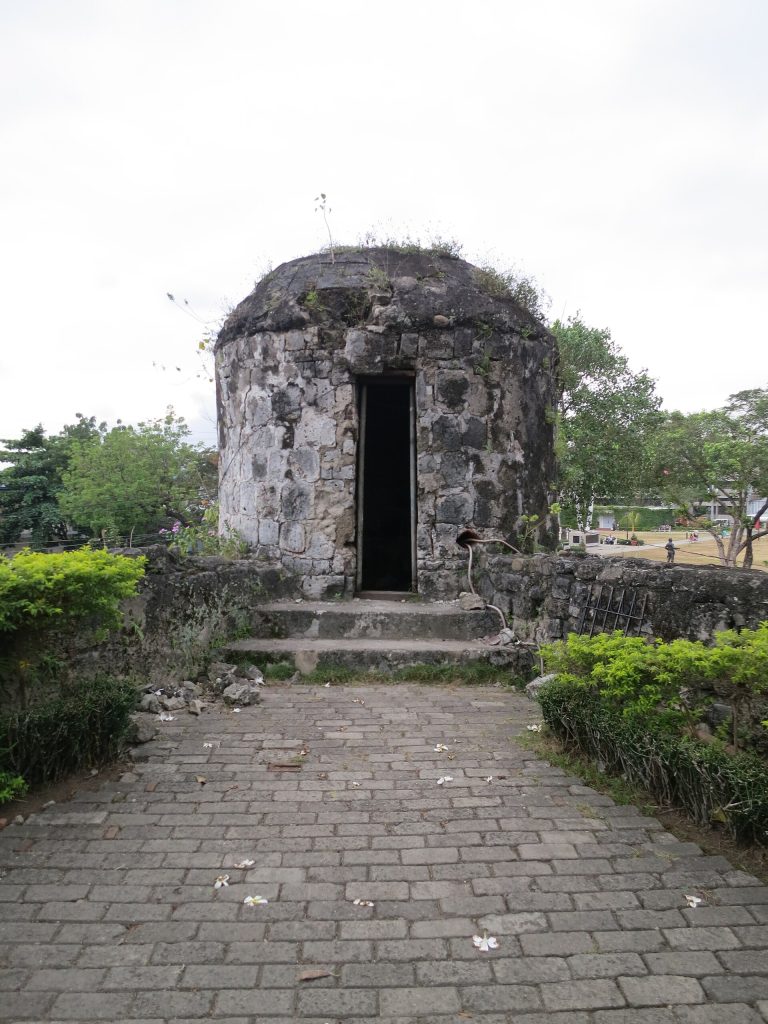
The fort’s seaward cannon and stout walls made it a refuge and a strongpoint against these raids, a place where the settlement could shelter and from which its defenders could repel attack. The old guns that still line its ramparts are a reminder of this defensive purpose, the weapons with which the fort guarded the coast and its people across the generations.
The threat of coastal raiding shaped much of the military history of the colonial Philippines, and forts like San Pedro were the answer to it, the fixed points of defense around which the vulnerable coastal settlements could organize their protection. The little fort at Cebu played this role faithfully for centuries, a guardian of the coast against the perennial danger from the sea.
This long service as a coastal defense is one of the enduring themes of the fort’s history, its cannon and walls standing watch over the harbor of Cebu through the centuries. To see the old guns still mounted in their emplacements is to be reminded of the fort’s essential function, the defense of the settlement and the coast that was its reason for being.
The peoples of the southern seas who raided the colonial settlements were formidable seafarers, and their raids were a persistent feature of colonial life for centuries, making coastal defense a constant preoccupation. Fort San Pedro was Cebu’s answer to this threat, the strongpoint that gave the settlement security against the danger that came, again and again, from the water.
The Fort in the Philippine Revolution
As the Spanish colonial era drew toward its end, Fort San Pedro was caught up in the great upheaval of the Philippine Revolution, the uprising through which the Filipino people sought to throw off Spanish rule. In the momentous year of 1898, as Spanish power crumbled across the archipelago, the fort was captured by Filipino revolutionaries, a symbolic and significant blow against the colonial regime.

The seizure of the oldest Spanish fort in the country by the revolutionaries was a moment rich in meaning, the taking of the very birthplace of Spanish colonial rule by the people rising against it. The fort that had marked the beginning of the colonial era now witnessed the beginning of its end, a fitting turn in the long history of the fortress.
The Philippine Revolution was one of the great episodes in the history of the islands, the assertion of Filipino national aspirations against three centuries of Spanish rule, and the capture of Fort San Pedro was part of this national awakening. The fort thus holds a place not only in the story of Spanish colonization but in the story of Filipino resistance and the birth of the nation.
The end of Spanish rule did not, however, bring independence, for the Philippines soon passed under American control, and the fort, like the country, entered a new colonial era. Yet the capture of Fort San Pedro by the revolutionaries remains a proud moment in the national memory, the taking of the oldest colonial fort by the people determined to be free.
The revolution that swept the Philippines at the end of the nineteenth century was one of the first great anti-colonial uprisings in Asia, the assertion of a national identity forged in part under the very colonial rule it sought to overthrow. That Fort San Pedro, the birthplace of that rule, should fall to the revolutionaries was a moment of powerful symbolism in this national awakening.
Through the American Era and the War
With the coming of American rule at the close of the nineteenth century, Fort San Pedro entered yet another chapter in its long history, pressed into service by the new colonial power. Under the Americans, the fort was used for military purposes, becoming a barracks and serving the needs of the new regime, its old Spanish walls now flying a different flag.

The fort’s role continued to evolve through the American era, and when the Second World War brought the Japanese occupation to the Philippines, Fort San Pedro found itself caught up once more in the turmoil of the times. During the war, the fort served various purposes, and in its long history it had by now sheltered and served a succession of very different masters.
This passage of the fort through the hands of successive regimes, Spanish, revolutionary, American, and Japanese, reflects the tumultuous history of the Philippines itself across these centuries, the changing powers that ruled the islands. Through it all, the little fort endured, its coral walls witnessing the whole sweep of the nation’s modern history.
By the time peace returned and the Philippines finally achieved its independence, Fort San Pedro had served for nearly four centuries, through the entire colonial history of the islands and beyond. The fort that Legazpi had founded at the very beginning of Spanish rule had outlasted that rule and all the regimes that followed, enduring into the era of the independent Philippine nation.
The successive uses of the fort by the Americans and the Japanese added yet more layers to its long history, and by the end of the Second World War it had served, in one capacity or another, through nearly four centuries and under a remarkable succession of powers. Few small monuments anywhere have witnessed so much, or served so many masters, across so long a span of time.
The Fort Reborn as a Historical Park
In the modern era, the significance of Fort San Pedro as the oldest fort in the Philippines and the birthplace of the colonial era led to its restoration and preservation as a historical treasure. In the 1970s, the fort was carefully restored, using coral stone in keeping with its original construction, and it was given a new life as a historical park and museum.

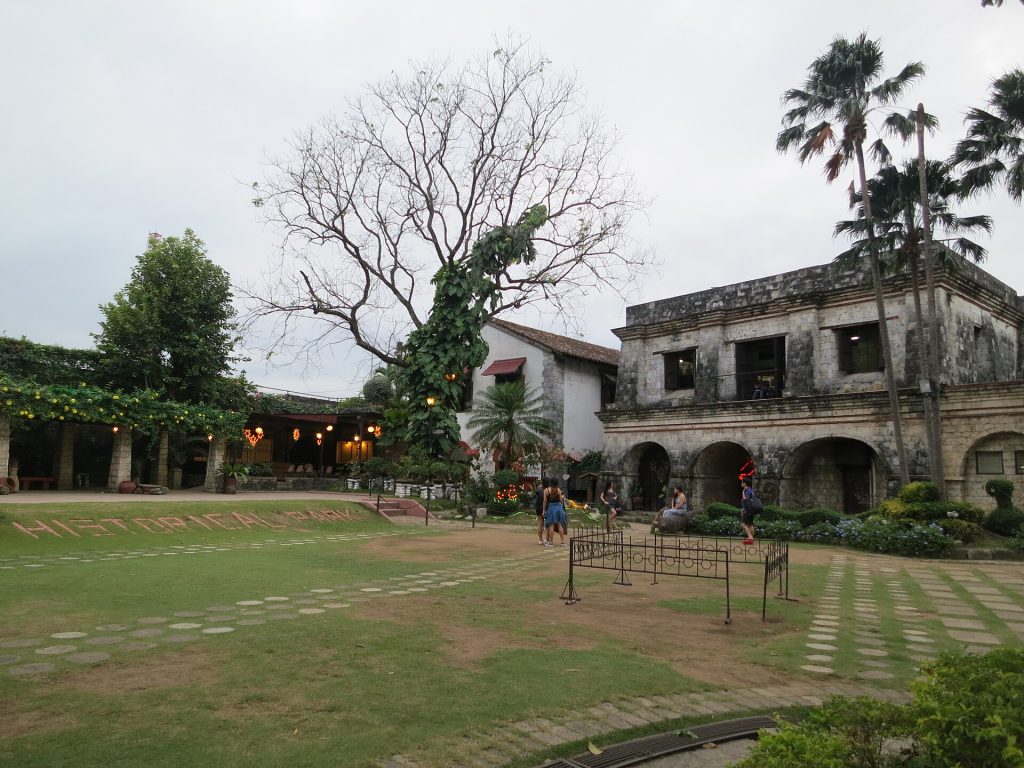
Today the fort functions as a peaceful historical park in the heart of Cebu, its walls and bastions preserved, its old cannon still mounted, its interior housing a museum that tells the story of the fort and of the early Spanish presence in the islands. It has become one of the most visited historical sites in Cebu, a place where the deep history of the Philippines can be encountered.
The transformation of the fort from a military stronghold into a museum and park reflects the wider process by which the monuments of the colonial past have been reclaimed and preserved as part of the heritage of the independent Philippines. The fort that was built to secure Spanish rule now serves the Filipino people as a window into their own complex history.
Set amid a pleasant plaza in the historic district of Cebu, the restored fort offers visitors a chance to explore the oldest fortress in the country and to reflect on the momentous history it embodies. Its careful preservation ensures that this small but hugely significant monument, the birthplace of the colonial Philippines, endures for future generations to encounter and understand.
The reclaiming of the fort as a museum and park reflects a mature engagement with the complexities of the colonial past, neither erasing the monuments of that era nor celebrating them uncritically, but preserving them as places of learning and reflection. Fort San Pedro today invites visitors to confront the whole layered history of the Philippines, from conquest through revolution to independence.
Exploring the Birthplace of Colonial Cebu
Visiting Fort San Pedro is a rewarding and manageable experience, for the fort is small enough to be explored thoroughly in a single relaxed visit, yet rich enough in history to reward close attention. Located in the historic heart of Cebu, near the waterfront, it is easily reached and makes an essential stop for anyone exploring the history of the city and the islands.

Walk the compact ramparts of the triangular fort, examining the three bastions and the old cannon still mounted in their emplacements, and take in the views over the surrounding plaza and city. The scale of the fort makes it easy to grasp its whole design, the triangular plan and the arrangement of the bastions clear and legible as you walk the walls.
Explore the interior and the museum housed within the fort, which tells the story of the early Spanish presence in the islands and the long history of the fortress, adding depth and context to your visit. Take the time to reflect on the momentous events that this small fort has witnessed, from the founding of the colonial era to the revolution that sought to end it.
Come to Fort San Pedro, then, ready to encounter the oldest fort in the Philippines and the very birthplace of the colonial era in the islands, a compact and venerable stronghold rich in history. Walk its coral walls, contemplate its old cannon, and reflect on the vast history that began at this small triangle of stone, the seed from which the Spanish Philippines grew.
The plaza around the fort is a pleasant place in its own right, a green and open space in the heart of the historic district, and a visit to the fort combines naturally with the exploration of the other historic sites of old Cebu nearby. Together they make the historic core of the city a rewarding destination for anyone drawn to the deep history of the Philippines.
Come with a sense of history and a little imagination, and the modest fort will open up to reveal its vast significance, the momentous events that began within and around its coral walls. Fort San Pedro asks little of the visitor in time or effort, but it rewards those who understand its story with a profound sense of connection to the very origins of the Philippine nation.
Castles Nearby
If Fort San Pedro has kindled your love of colonial-era fortresses, continue your journey with these remarkable sites:
You May Like
The Imperial Citadel of Thang Long: A Thousand Years of Power