Some fortresses are remembered for the battles fought at their walls, but Fort Santiago is remembered above all for what happened within them. Standing at the mouth of the Pasig River, at the corner of the old walled city of Intramuros in Manila, this weathered Spanish stronghold has been a colonial citadel, a guardian of the greatest trade route on earth, a prison of horrors, and the place where a nation’s greatest hero spent his final hours before death.
You come to it expecting an old fort and find instead a place that holds the whole soul of a nation, layered with pride and suffering, power and sacrifice, beauty and darkness all together. Its gardens are peaceful now, but its dungeons remember terrible things, and its grounds are hallowed by the footsteps of a martyr whose death helped to birth the Philippines.
This is the story of Fort Santiago, from the Spanish conquistador who founded it and the galleon treasure it guarded, through the martyrdom of Jose Rizal and the horrors of war, to its rebirth as a shrine of freedom. Come and walk its grounds with me, and encounter one of the most moving historical places in all of Southeast Asia.
In This Article
- The Gate Where History Waits to Meet You
- The Fortress That Founded a Colonial Capital
- Within the Walls: The City That Fort Santiago Guarded
- The Long History of Captivity in the Stones
- How a Colonial Fort Became a Symbol of Freedom
- Guardian of the Greatest Trade Route on Earth
- Reading the Old Stones of the Triangle Fort
- The Year the British Flag Flew Over Manila
- The Hero’s Last Footsteps to the Sea
- A New Empire Raises Its Flag
- The Darkest Chapter Within the Walls
- Raising a Shrine From the Ruins
- Wandering the Grounds of Memory
The Gate Where History Waits to Meet You
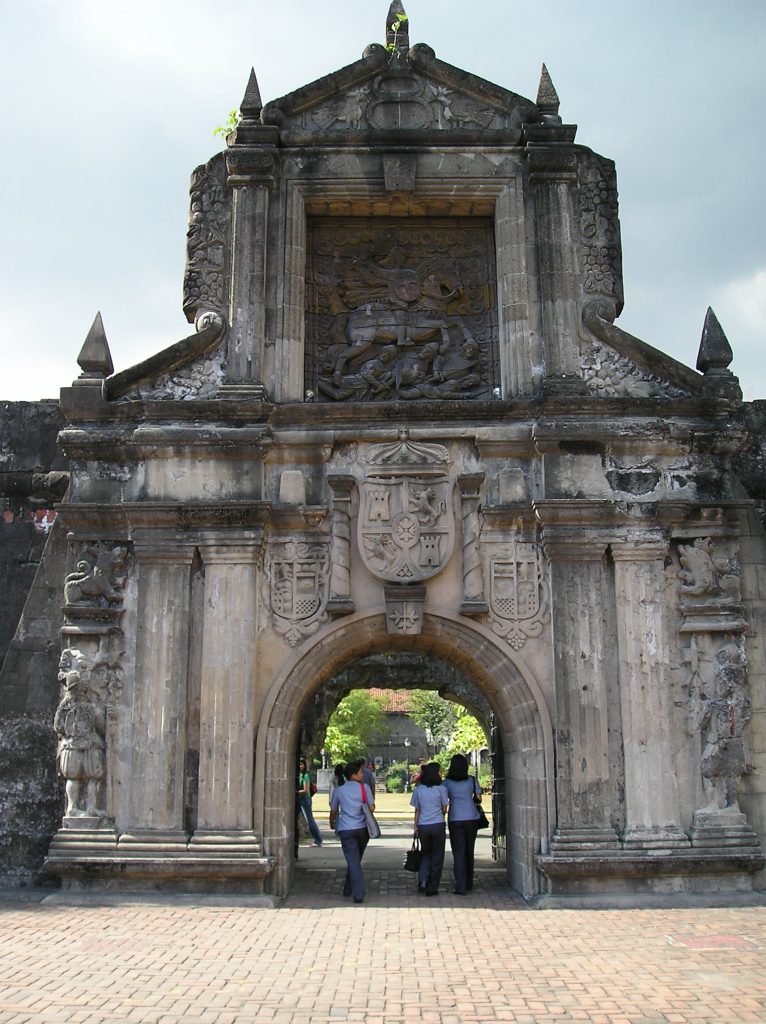
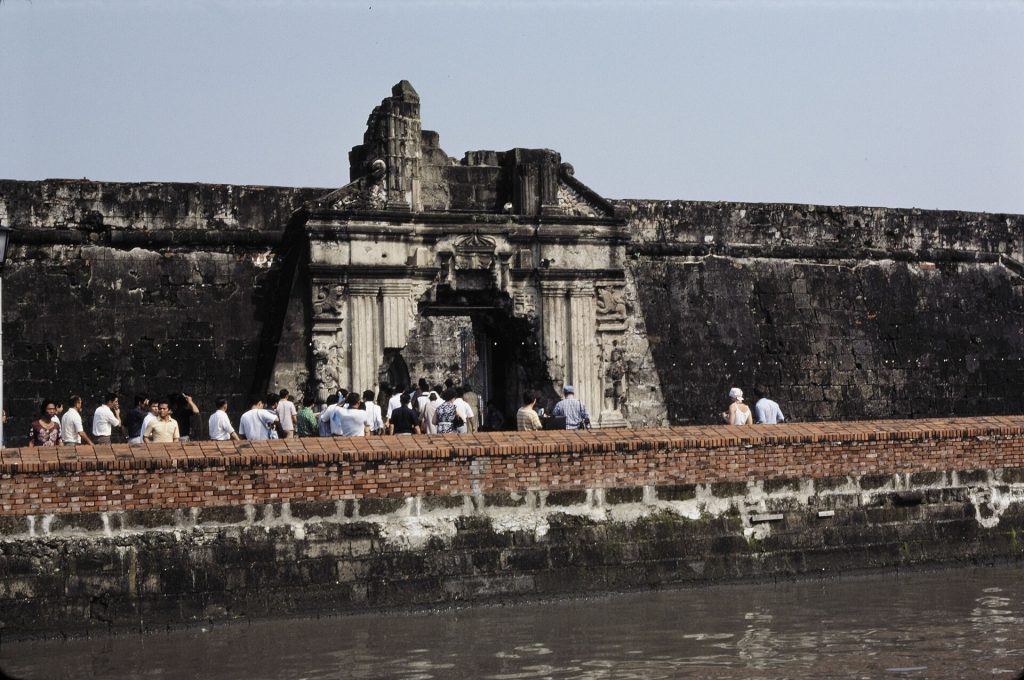
You will not soon forget your first sight of the great gate of Fort Santiago, its weathered stone façade rising above you crowned with the carved image of Saint James, the warrior saint for whom the fortress is named. Above the arch, the relief shows the saint on horseback, sword raised, and the whole face of the gate seems to carry the weight of the centuries of Spanish rule that this fortress once anchored. To pass beneath it is to step out of modern Manila and into a much older and darker story.
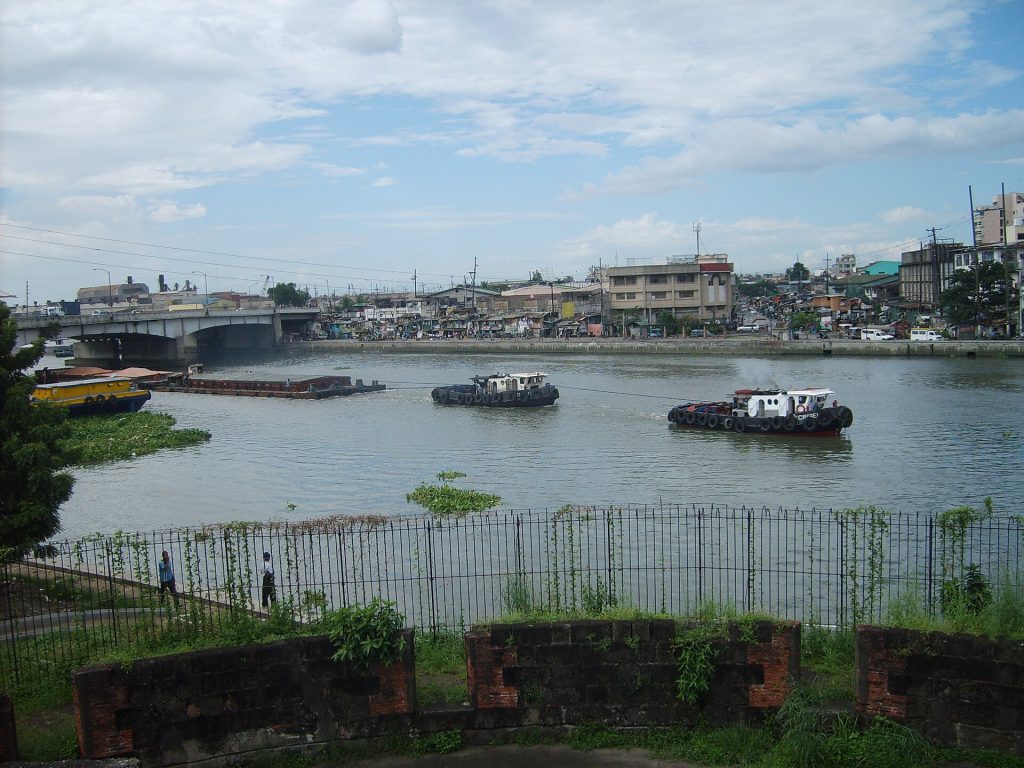
Fort Santiago stands at the mouth of the Pasig River, at the very corner of the ancient walled city of Intramuros, and for more than three centuries it was the key that locked the whole of the Spanish Philippines. From this stone triangle the colonial masters of the islands watched the river and the bay, guarded the treasure of the galleon trade, and held the power of an empire that stretched clear across the Pacific to Mexico and Spain.
But the fort is more than a monument to colonial power. It is a place soaked in memory and in suffering, a fortress that has been a citadel, a prison, and a place of death, and that carries all of those identities at once. For the people of the Philippines it is hallowed ground, the place where their greatest national hero spent his final hours, and a shrine to the long and painful struggle for freedom.
As you walk through the gate and into the grounds, let the layers of the story settle over you. Here beauty and horror lie close together, the tranquil gardens and old stone walls sharing the same ground as dungeons where men died in the dark. Few places compress so much history, and so much of a nation’s soul, into so small a compass as this old Spanish fort at the mouth of the river.
There is a particular atmosphere to the place that no photograph conveys, a stillness that seems to hold the memory of everything that has happened here. Modern Manila roars just beyond the walls, but within them time seems to slow, and the old stones invite a kind of quiet attention. Give yourself over to that mood, and the fort will begin to tell you its story.
The Fortress That Founded a Colonial Capital
The story of Fort Santiago begins in 1571, when the Spanish conquistador Miguel Lopez de Legazpi established a fortification at the mouth of the Pasig River, at the site of an existing native settlement. From this act sprang the city of Manila, which would become the capital of the Spanish Philippines and one of the great ports of the colonial world. The fort and the city were born together, and their fates were bound from the start.
The first fortification was a humble affair of palm logs and earth, and it did not last long. Chinese raiders under the pirate Limahong attacked and damaged the early defenses, demonstrating all too clearly the need for something stronger. The Spanish responded by rebuilding in stone, and between 1590 and 1593 they raised the durable fortress of volcanic tuff whose weathered walls still stand today, quarried from the earth near Manila and fitted into a mighty triangular stronghold.
The fort anchored the walled city of Intramuros, the fortified Spanish enclave whose name means simply within the walls. Intramuros was a city apart, home to the colonial government, the great churches, and the Spanish elite, sealed off from the surrounding native and Chinese quarters by its ramparts. Fort Santiago was the strongpoint of this walled city, guarding the vital river mouth and the entrance to the whole colonial capital.
For a young empire reaching across the vastness of the Pacific, this fortress was the essential anchor, the fixed point from which Spanish power radiated out across the islands. Its guns commanded the river and the approaches to the city, and behind its walls lay the machinery of colonial rule. To hold Fort Santiago was to hold Manila, and to hold Manila was to hold the Philippines.
Within the Walls: The City That Fort Santiago Guarded
To understand Fort Santiago, you must understand Intramuros, the walled city it guarded, for the two were inseparable. Intramuros, whose name means within the walls, was the fortified heart of Spanish Manila, a city enclosed by ramparts and moats and reserved for the colonial elite, the government, and the great institutions of the church. Fort Santiago stood at its corner, the strongpoint that anchored the whole fortified enclave.
Within the walls of Intramuros rose a Spanish colonial city in miniature, with its grand churches, its plazas, its schools and government buildings, and the homes of the Spanish aristocracy. It was a world sealed off from the sprawling native and Chinese districts beyond the walls, a privileged enclave that embodied the hierarchy and exclusivity of colonial rule. The gates of the city were closed at night, and the ordinary people of Manila lived outside them.
For more than three centuries, Intramuros was the seat of Spanish power in the Philippines and one of the great fortified cities of the colonial world. Its walls, several kilometers in circumference, enclosed the machinery of an empire, and Fort Santiago was the fortress that made those walls a true stronghold, guarding the vital river mouth and standing ready to defend the city against any assault.
The near-total destruction of Intramuros in the Second World War was a catastrophe for the historic city, and much of what stood within the walls was lost forever. Yet the walls themselves, and Fort Santiago at their corner, have been substantially preserved and restored, so that a visitor today can still trace the outline of the old walled city and feel something of what it was to live within the ramparts of Spanish Manila.
The Long History of Captivity in the Stones
Long before the horrors of the Second World War, Fort Santiago had a dark reputation as a prison, and captivity is one of the enduring threads of its history. Across the Spanish and American eras, the fortress held prisoners within its walls, and its dungeons and cells became notorious as places from which some who entered never emerged. The strength that made the fort a good defense also made it a formidable prison.
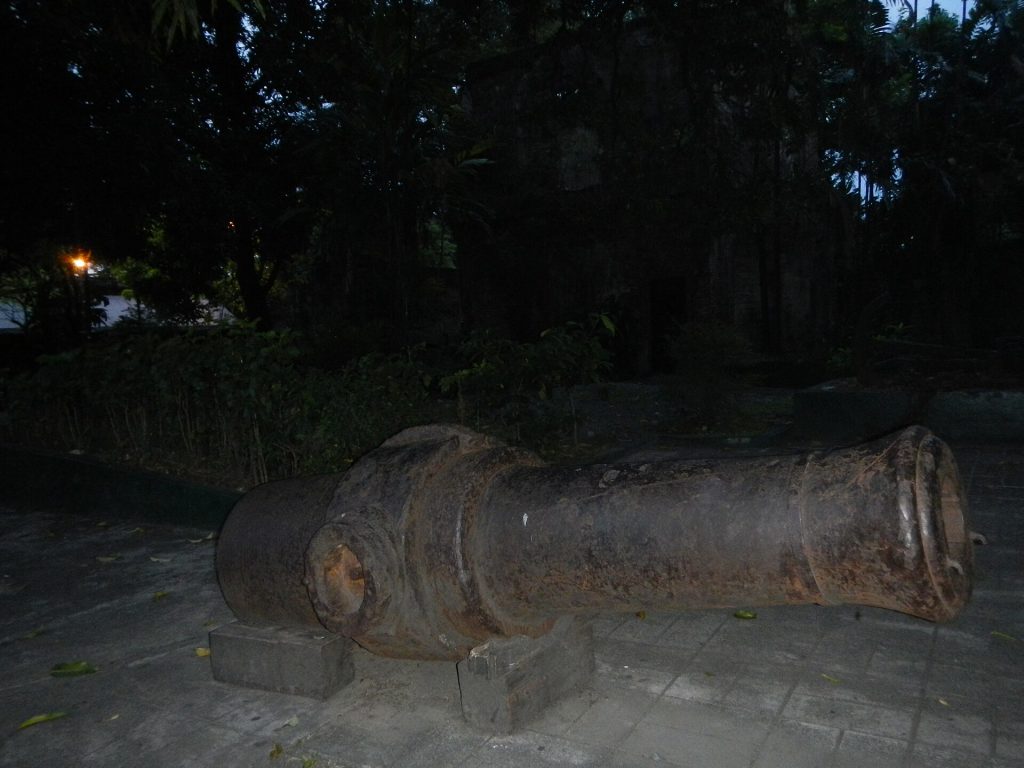
The most famous of its many prisoners was, of course, Jose Rizal, but he was far from the only one. Over the centuries, rebels, criminals, political prisoners, and enemies of the ruling power were confined within these walls, and the fort accumulated a grim aura as a place of confinement and, too often, of death. Its cells held people whose only crime, in some cases, was to have opposed the power that held the fortress.
The dungeons of Fort Santiago, some located near or below the level of the river, were particularly feared, dark and damp chambers where prisoners endured harsh conditions. In later years these spaces would witness the worst atrocities of the wartime occupation, but their use as places of confinement stretched back through the whole history of the fort, a continuity of captivity written into the very stones.
This history of imprisonment gives Fort Santiago a solemn and haunted quality that sets it apart from a purely military fortress. It was a place of power exercised not only outward against enemies but inward against captives, and the memory of all those who suffered within its walls, from anonymous prisoners of the colonial centuries to the martyred hero and the victims of the war, lends the fort its deep and sorrowful resonance.
The Manila galleon trade has a strong claim to be considered the first truly global trade route, linking four continents in a single circuit of silver and silk that ran for two and a half centuries. That Fort Santiago stood at its Asian hub gives the fortress a significance far beyond the Philippines, for it was a guardian of one of the hinges on which the early modern world turned.
How a Colonial Fort Became a Symbol of Freedom
There is a profound irony at the heart of Fort Santiago’s story, and it is worth pausing to consider. This fortress was built by a colonial power to project and defend its rule over the Philippines, and for centuries it served exactly that purpose, the very symbol of foreign domination over the islands. Yet today it is cherished by the Filipino people as a national shrine, a sacred site of their own history and identity.
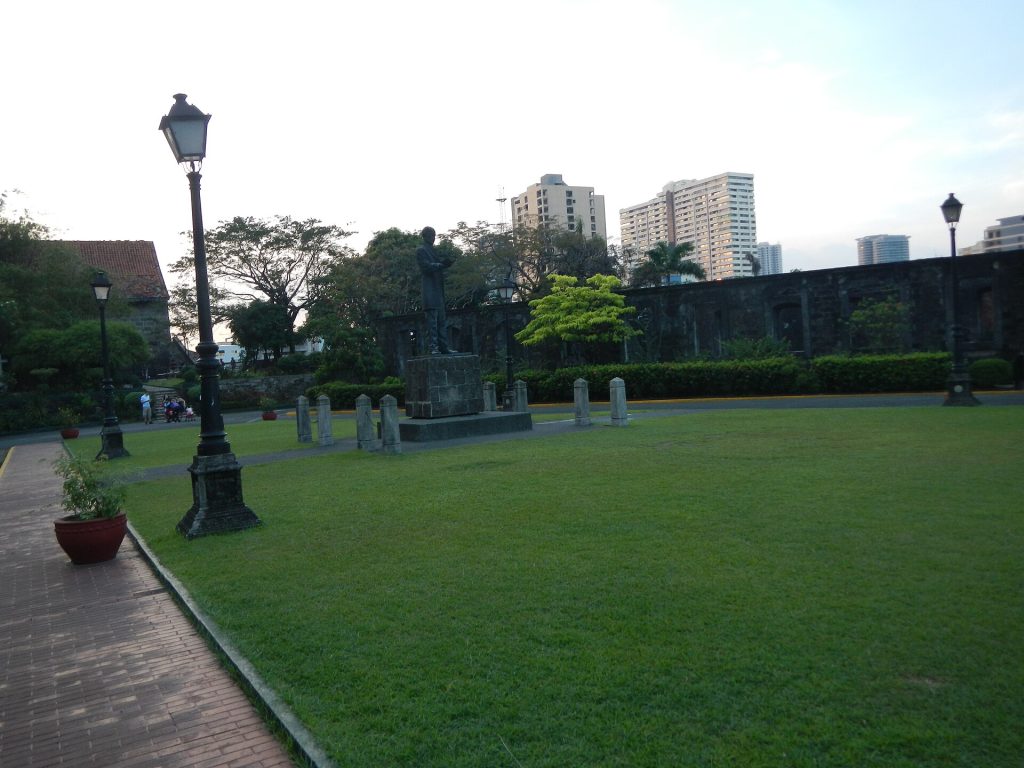
The transformation was wrought above all by the sacrifice of Rizal, whose martyrdom within these walls turned the fortress of colonial power into a shrine of national freedom. The place where the hero spent his final hours became hallowed ground, and the fort was reimagined not as a monument to Spain but as a monument to the Filipino struggle for liberty. Meaning was inverted; the symbol of oppression became the symbol of resistance.
This capacity of a place to be reclaimed, to have its meaning transformed by the people whose history it holds, is one of the most moving aspects of Fort Santiago. The Filipino people did not tear down the fortress of their former masters but instead made it their own, filling it with new meaning drawn from their own struggle and sacrifice. The stones remained, but their story was rewritten.
So Fort Santiago stands today as a shrine of freedom, a place where the whole painful history of colonial rule and the long fight for independence is remembered and honored. It is a lesson in how a nation can confront and reclaim even the instruments of its own oppression, transforming them into monuments to the freedom that was finally won. Few fortresses anywhere carry so rich and so redemptive a meaning.
Guardian of the Greatest Trade Route on Earth
For more than two centuries, Fort Santiago stood guard over one of the most extraordinary commercial enterprises in human history, the Manila galleon trade. Great ships sailed from Manila across the Pacific to Acapulco in Mexico, carrying the silks, porcelain, and spices of Asia, and returned laden with the silver of the Americas. This trade route, which endured for some two hundred and fifty years, connected Asia, the Americas, and Europe in a single vast circuit of commerce.
Manila was the pivot of this global trade, the point where the goods of China and the wider East were gathered to be shipped across the ocean, and Fort Santiago was its guardian. The immense wealth that flowed through the port made the city a tempting target, and the fortress existed in large part to protect this treasure and the ships that carried it. The galleons were the lifeblood of the colony, and the fort was their shield.
The trade transformed Manila into a cosmopolitan crossroads, drawing merchants and settlers from across Asia and beyond, and making the city one of the great meeting points of the early modern world. Chinese traders, Japanese Christians, Mexican soldiers, and Spanish officials all mingled in its streets, and the goods and silver that passed through its port helped to weave the first threads of a truly global economy.
Fort Santiago watched over all of this from its position at the river mouth, its guns ready to defend the wealth of the colony against pirates, rivals, and enemies. The fortune of the galleon trade and the strength of the fortress were two sides of the same coin, and for as long as the great ships sailed, the fort remained the indispensable guardian of the richest trade route on earth.
Restored today, these walls and ramparts allow you to walk where colonial soldiers once stood watch, gazing out over the same river and the same approaches they were built to guard. The continuity is striking, a direct physical link across the centuries to the men who manned this fortress, and it lends the experience of walking the walls a vividness that few reconstructed sites can match.
Reading the Old Stones of the Triangle Fort
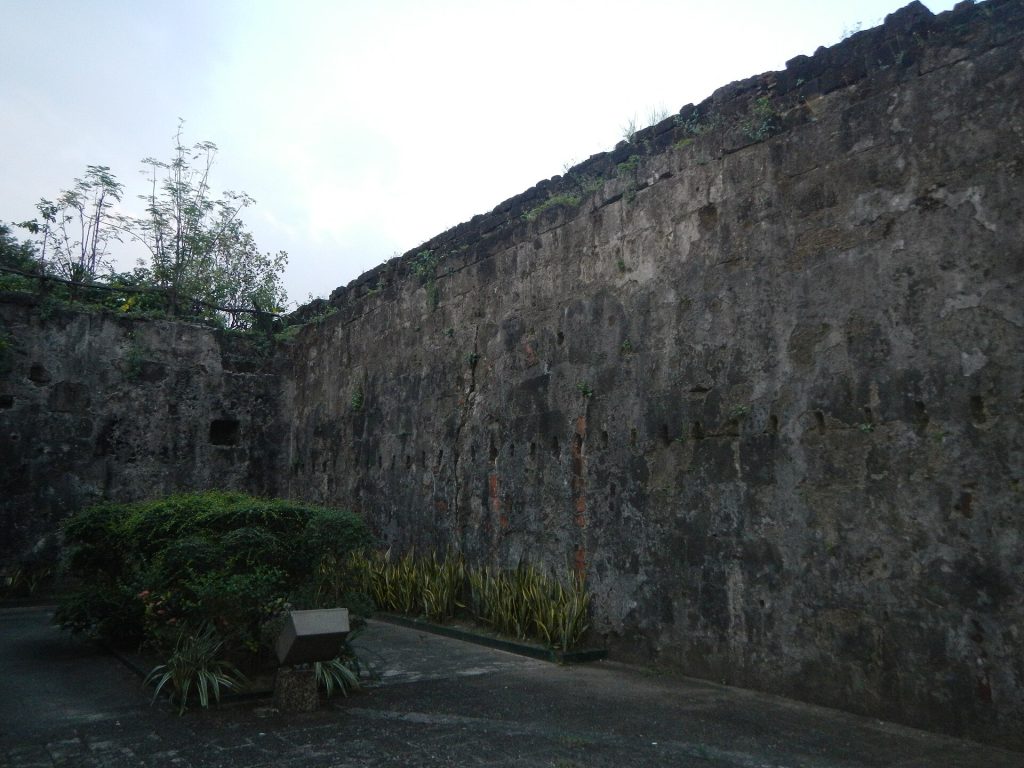
The fortress itself rewards close attention, for its old stones tell the story of its purpose. Roughly triangular in shape, its walls rise from the earth in weathered volcanic tuff, thick and high, designed to withstand the cannon of an age when this was the cutting edge of military engineering. The perimeter stretches for hundreds of yards, enclosing the strongpoint that guarded the corner of Intramuros where the river met the bay.
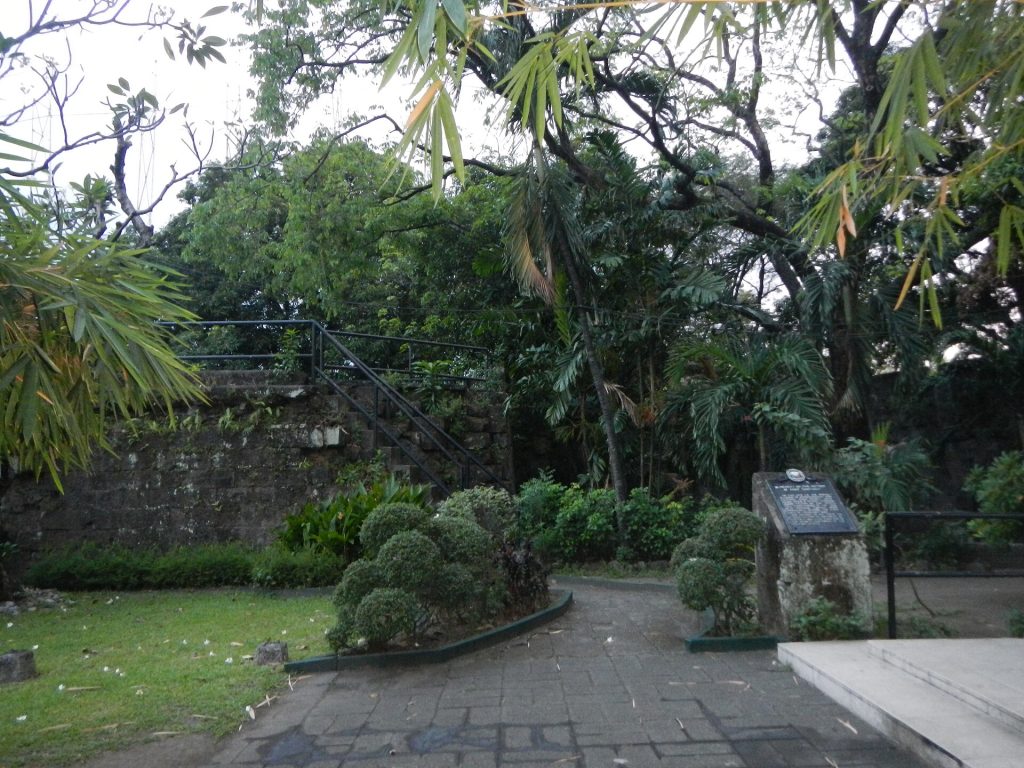
The walls stand many feet high and several feet thick, their stone quarried from the volcanic deposits near Manila and dressed to face the world with a stern colonial dignity. The grand southern façade, facing the city, rises highest of all and bears the great gate with its carving of Saint James, the ceremonial and defensive entrance to the fort. From the ramparts, defenders could command the river and the approaches in every direction.
Over the long centuries the fort was adapted and strengthened, its defenses updated as the technology of war evolved, its bastions and batteries positioned to cover the vital waterways. It was never merely a symbolic structure but a working fortress, garrisoned and armed, ready to defend the capital against whatever threat might come from the sea or the river. Its strength was real, and it was tested more than once.
Walking the walls today, you can trace the logic of the design, the way the fort commands the water, the thickness of the stone, the positions from which guns could sweep the approaches. It is a fine example of the Spanish colonial fortress, built to project and protect an empire across an ocean, and its weathered stones carry the authentic weight of the centuries of power they once upheld.
The Year the British Flag Flew Over Manila
For all its strength, Fort Santiago did not prove impregnable, and in 1762 it fell to an unexpected enemy. As part of the global conflict known as the Seven Years’ War, a British expedition arrived off Manila and laid siege to the city. The Spanish defenders resisted, but the British forces, under their commander, pressed the attack, and the walled city and its fortress were captured, bringing Manila under British rule.
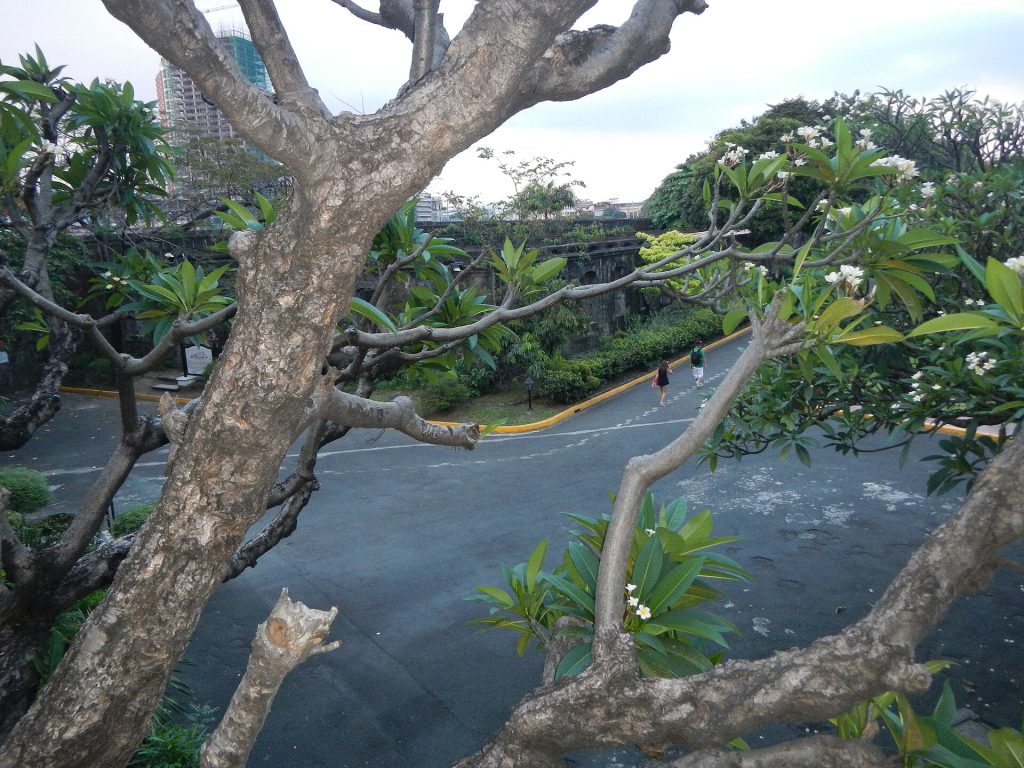
The British occupation lasted until 1764, a brief but startling interruption in the long centuries of Spanish control. For those two years the flag of Britain flew over the capital of the Spanish Philippines, and the fort that had guarded the galleon trade served new masters. It was a humbling episode for Spain, a demonstration that even the strongest colonial fortress could fall when the tides of a global war reached the distant Pacific.
When the war ended, Manila was returned to Spain, and Fort Santiago resumed its role as the anchor of Spanish power in the islands. But the memory of the British capture lingered as a reminder that the fortress, however mighty, existed within a wider world of competing empires whose struggles could reach across oceans to shake even so remote a colonial capital.
The episode also revealed something about the nature of colonial power in this age, the way distant possessions could change hands as pieces in the great games of European rivalry, their peoples’ fates decided by wars fought half a world away. Fort Santiago, for two strange years, was a trophy in one such game, before returning to the empire it had been built to serve.
The brief British interlude also left its mark on the wider history of the region, disrupting Spanish control and emboldening local aspirations in ways that echoed long after the flag came down. It was a reminder that colonial power, however entrenched it appeared behind stone walls, was always contingent, always subject to the shifting fortunes of a wider and more dangerous world.
The Hero’s Last Footsteps to the Sea
Of all the stories that cling to Fort Santiago, none is more sacred to the Filipino people than that of Jose Rizal, the writer, physician, and patriot who became the great hero of the Philippine nation. In 1896, as the Philippine revolution against Spanish rule gathered force, Rizal was imprisoned within these walls, held in the fortress in the final days before his execution. His words and his example had done much to awaken the national consciousness, and for that the colonial authorities condemned him.
In his cell within Fort Santiago, in the last hours before his death, Rizal composed his final and most beloved poem, a farewell to his country of extraordinary beauty and power, which he concealed and passed to his family. On the morning of his execution he walked out from the fort to the nearby field where he was shot, and his death, far from crushing the revolution, transformed him into a martyr whose memory would inspire the struggle for freedom.
Today the path of Rizal’s final walk from his cell is marked in the grounds of the fort with brass footprints set into the ground, tracing the last steps of the hero toward the place of his death. To follow those footprints is a deeply moving experience, a physical retracing of the final journey of a man whose sacrifice helped to give birth to a nation, and it draws visitors from across the Philippines and the world.
Within the fort, the Rizal Shrine preserves relics and mementos of the hero, including belongings and the story of his final hours, and it has made Fort Santiago a place of pilgrimage as much as of history. The fortress that was built to uphold colonial power became, through Rizal’s sacrifice, a shrine to the freedom that would one day overthrow that power, and that transformation is the deepest layer of its meaning.
Standing in these grounds and reflecting on what happened here, you feel the full weight of the twentieth century’s violence pressing on a place that had already seen so much. The atrocities of the war are commemorated with a restraint that only deepens their impact, and the contrast between the peaceful gardens and the horrors they memorialize is among the most affecting things about a visit to the fort.
A New Empire Raises Its Flag
The revolution and the war that followed brought yet another change of masters to Fort Santiago. In 1898, in the course of the Spanish-American War, the United States took control of the Philippines, and the American flag was raised over the old Spanish fortress. After more than three centuries, Spanish rule in the islands came to an end, and a new colonial power took up residence within the walls that Spain had built.
Under American rule, Fort Santiago served as a military headquarters, its old Spanish stones now housing the apparatus of a different empire. The fortress that had guarded the galleon trade and imprisoned Rizal now flew a new flag and served new purposes, a reminder of how these old strongholds endure across the rise and fall of the powers that hold them, adapting to each new age while carrying the memory of all that came before.
The transition from Spanish to American rule was a fraught and often violent chapter in Philippine history, marked by the bitter Philippine-American War as Filipinos who had fought for freedom from Spain found themselves resisting a new colonial power. Through these upheavals the old fort endured, its stones witnessing the latest turn in the long story of foreign rule over the islands.
Fort Santiago in the American era was a working military installation, but it also began its slow transformation into a place of memory, as the significance of its history, and above all of Rizal’s martyrdom, came increasingly to be recognized. The fortress was accumulating the layers of meaning that would eventually make it a national shrine, even as it continued to serve the practical purposes of empire.
The Darkest Chapter Within the Walls
The Second World War brought to Fort Santiago the darkest chapter in its long and often grim history. During the Japanese occupation of the Philippines, the fortress was used as a prison and a place of interrogation and execution, and terrible things happened within its walls. The old dungeons, some of them below the level of the river, became scenes of suffering and death for many who were held there.
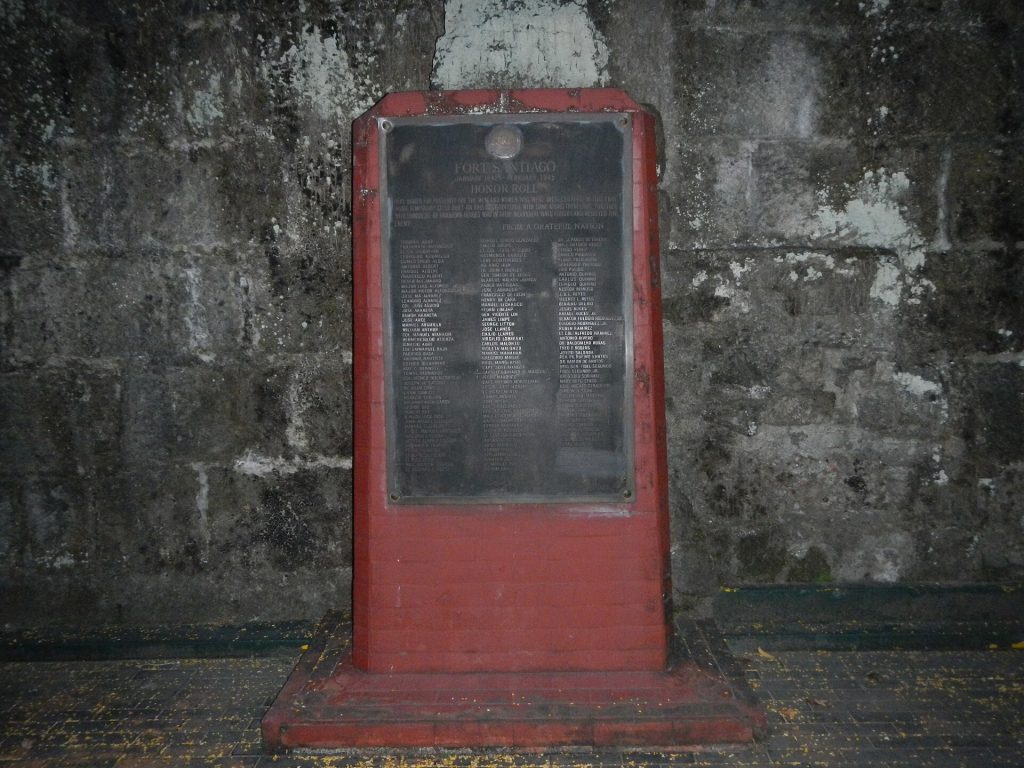
Among the worst of these horrors, large numbers of prisoners, both military captives and civilians, died within the fort under the Japanese, some in the flooded dungeons where the rising river drowned those confined below. The exact toll of these atrocities is difficult to reckon, but the memory of the suffering that took place here is preserved with solemn care, and markers within the grounds commemorate the victims of those terrible years.
When the tide of war turned and American and Filipino forces fought to retake Manila in 1945, the battle for the city was catastrophic. Intramuros and Fort Santiago were subjected to intense bombardment, and much of the historic walled city was reduced to rubble in the ferocious fighting. The fortress that had stood for centuries was left grievously damaged, its old stones shattered by the violence of modern war.
The battle for Manila was one of the most destructive of the entire Pacific war, and the devastation of Intramuros and its fortress was a wound to the historic heart of the city from which it would take decades to recover. Fort Santiago emerged from the war scarred and broken, a ruin haunted by the memory of the atrocities committed within it and the destruction visited upon it, its long history seemingly ended in fire and rubble.
The brass footprints tracing Rizal’s final walk are among the most quietly powerful memorials anywhere, for they invite you not merely to observe but to participate, to place your own feet where the hero placed his in his last moments. Few historical sites offer so intimate a connection to a pivotal moment, and following those footprints toward the place of execution is an experience that stays with visitors long after they leave.
Raising a Shrine From the Ruins
Yet Fort Santiago did not remain a ruin. In the years after the war, the significance of the fortress, and above all its association with Rizal and the struggle for freedom, ensured that it would be restored and preserved. It was declared a shrine of freedom, and restoration work began to raise the shattered fortress from its wartime ruin, carefully rebuilding its walls and gates and reclaiming its historic grounds.
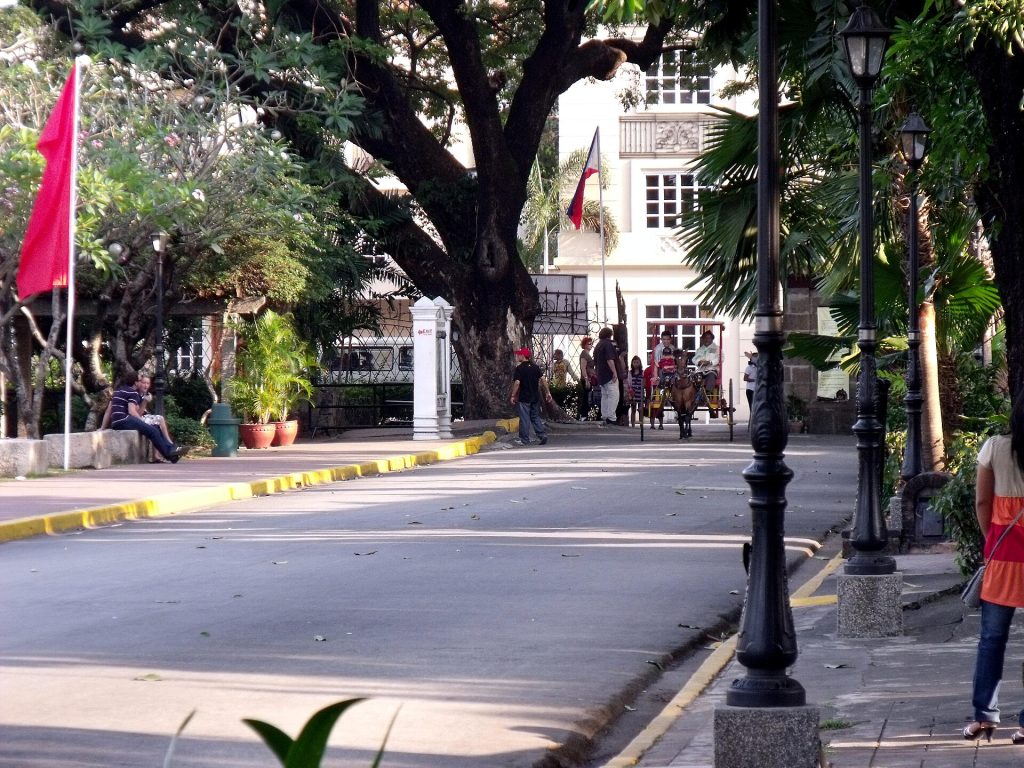
The restoration transformed Fort Santiago from a war-torn ruin into a historical park, its old stones repaired, its gardens replanted, and its grounds made into a place of memory and reflection. The great gate with its carving of Saint James was restored to its former dignity, and the fortress once again presented its stern and beautiful face to the city, a survivor of centuries of history and of the near-total destruction of the war.
Since the modern era, the fort and the wider walled city of Intramuros have been under dedicated management aimed at preserving and interpreting their history, and Fort Santiago has become one of the most visited and beloved historical sites in the Philippines. It stands now as a monument to the whole sweep of the nation’s colonial past and to the freedom that was won at such cost.
The rebuilding of Fort Santiago is itself a kind of statement, an insistence that the history embodied in these stones, painful as much of it is, must be remembered and honored rather than allowed to vanish. From colonial citadel to prison of horrors to national shrine, the fortress has been reborn as a place where the Filipino people can confront and reclaim their own past, and that rebirth is among the most meaningful chapters in its long story.
Wandering the Grounds of Memory
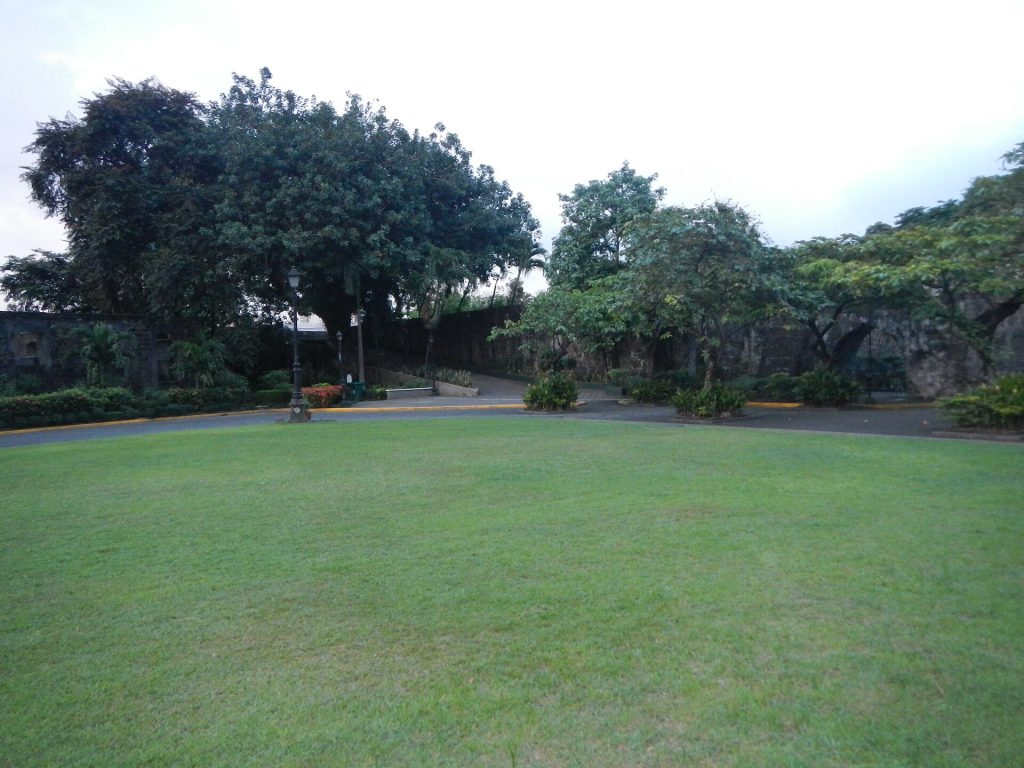
To visit Fort Santiago today is to move through a landscape where history and tranquility meet in a way that is quietly powerful. The grounds are laid out as a park, with lawns, gardens, and old stone structures, and there is a peacefulness to the place that sits in poignant contrast to the darkness of much of its history. You can wander among the ruins and restored buildings, following the story of the fort at your own pace.
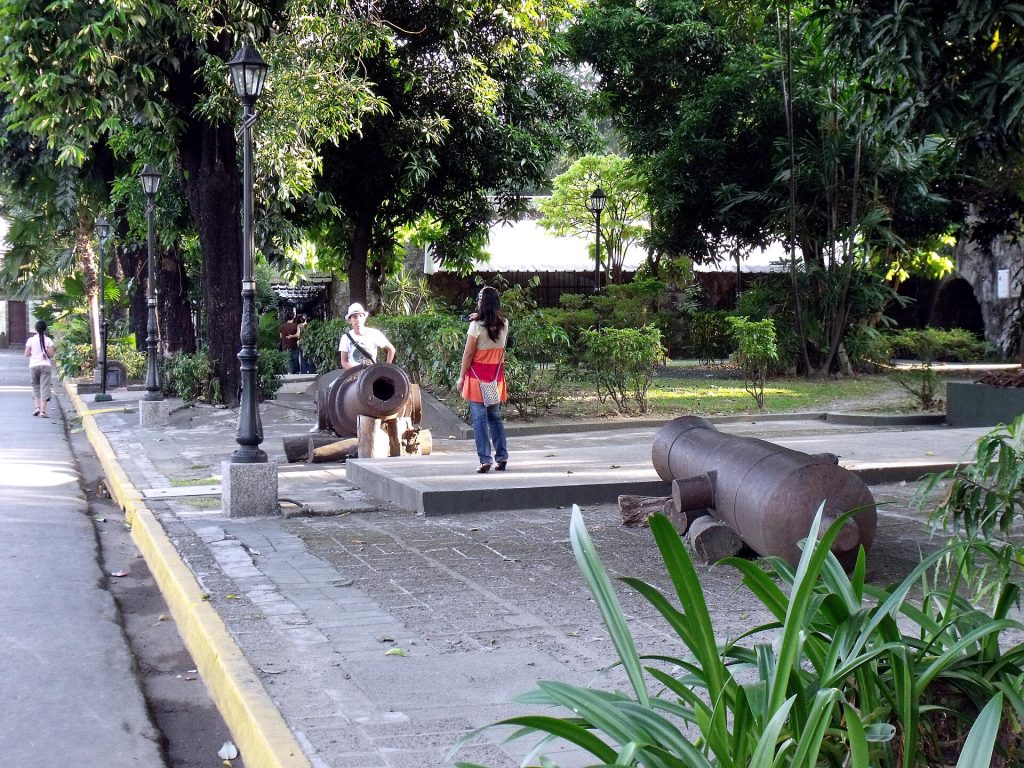
Do not miss the great gate, of course, with its carving of Saint James, nor the Rizal Shrine that preserves the memory of the hero’s final hours and the relics of his life. Follow the brass footprints that trace his last walk, and let the significance of that final journey settle over you as you follow in the steps of the man whose sacrifice helped to birth a nation. It is the emotional heart of any visit.
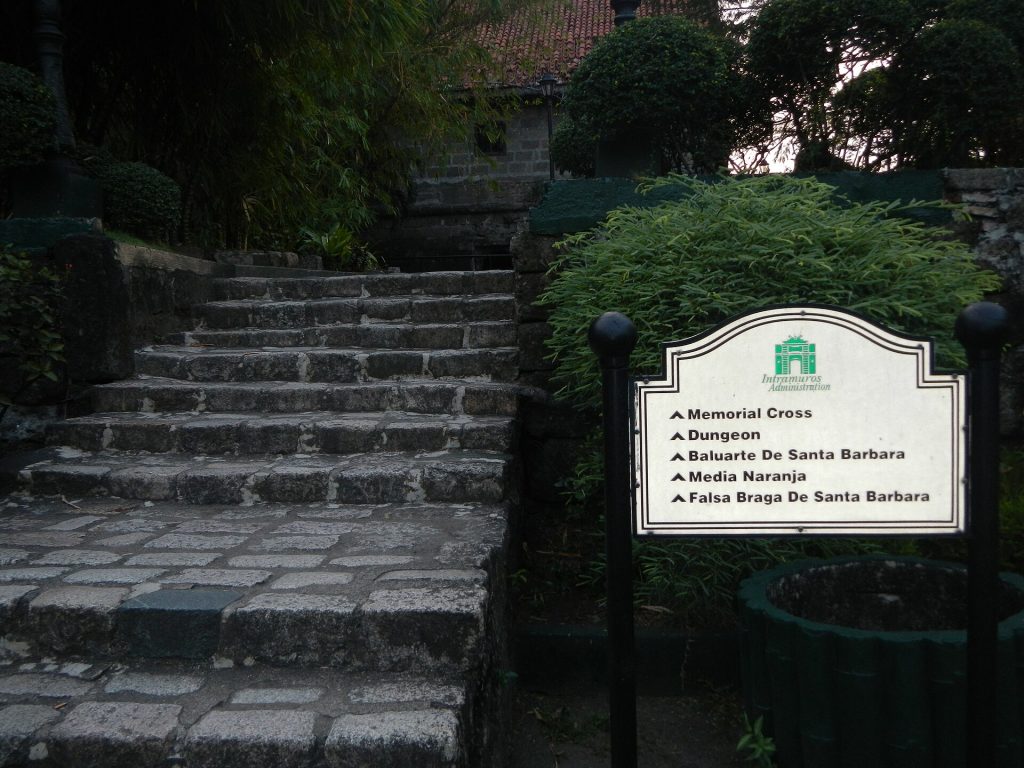
Explore the walls and the ramparts, look out over the Pasig River as the Spanish sentinels once did, and seek out the somber markers that commemorate the victims of the wartime atrocities. The dungeons and the memorials remind you of the suffering that took place here, and they lend the beauty of the gardens a deeper and more solemn dimension, so that the visit becomes an act of remembrance as well as sightseeing.
Take your time, and let Fort Santiago speak to you in all its many voices, the colonial pride of its founders, the horror of its darkest years, the sacrifice of its martyr, and the resilience of a people who reclaimed it as their own. It is a small place, but it holds a vast history, and few sites anywhere offer so moving an encounter with the soul and struggle of a nation as this old fortress at the mouth of the river.
View on Google Maps (14.5943, 120.9695)
It is worth reflecting, too, on how the reclaiming of Fort Santiago mirrors the larger story of the Philippines itself, a nation that emerged from centuries of colonial rule to claim its own identity and destiny. The fort, made a shrine to that emergence, stands as a physical embodiment of the journey from subjugation to self-determination, and that is why it holds so cherished a place in the heart of the country.
Castles Nearby
If Fort Santiago has stirred your love of Asia’s great fortifications, continue your journey with these magnificent sites:
You May Like
Mafra, the Palace a King Built From a Vow


2 thoughts on “Fort Santiago: The Shrine of Freedom at Manila’s River Mouth”