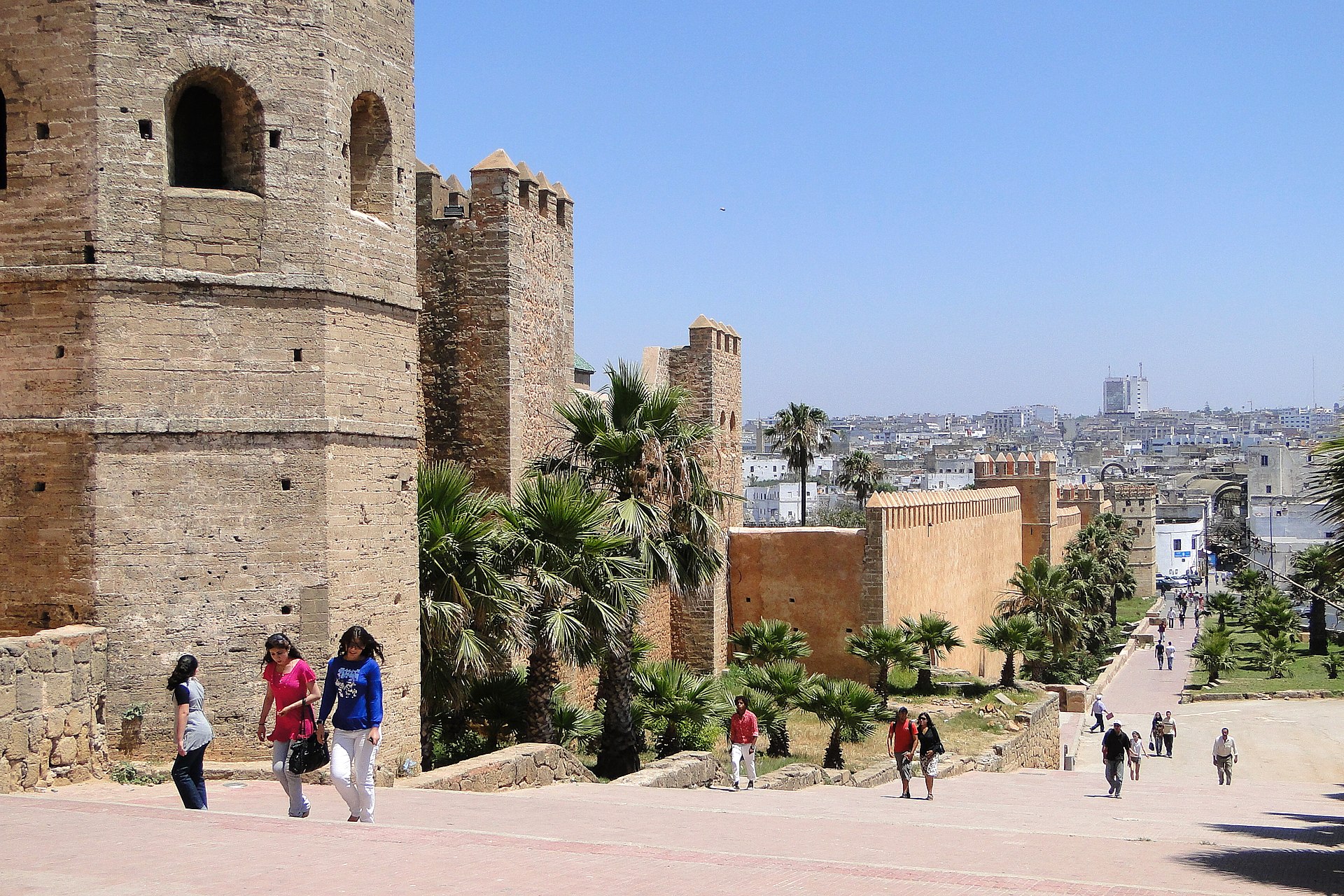
Stand on the edge of the old city of Rabat, where the Bou Regreg river slides out to meet the Atlantic, and look up. Crowning the bluff above the water is a walled citadel of ochre-red ramparts, and inside it a maze of narrow lanes painted in dazzling blue and white. This is the Kasbah of the Udayas, one of the most atmospheric fortified quarters in all of Morocco, a place where nine centuries of history are packed into a few sloping streets above the sea.
A kasbah is a fortress, and this one has been guarding the mouth of the river since the age of the great Berber empires. Sultans built it, corsairs ruled from it, Andalusian refugees filled its houses, and today ordinary families still live behind its painted doors. It is at once a monument, a living neighbourhood, and a viewpoint over one of the most beautiful stretches of the Moroccan coast, and it costs nothing to wander in.
In this guide you will trace the whole story of the kasbah: its origins as a holy warrior’s outpost, its rebuilding by the mighty Almohads, the magnificent gate that still guards its entrance, the pirates who turned it into the capital of a rogue republic, the tranquil Andalusian garden hidden within its walls, and its place today as part of a UNESCO World Heritage city. Lace up comfortable shoes, because this is a place best understood on foot.
Before you go in, hold one thing in mind: this is a fortress that has never really stopped living. Where so many great castles are empty shells preserved for tourists, the Kasbah of the Udayas is still a working neighbourhood, its lanes full of residents as well as visitors. That living continuity, layered on top of nine centuries of dramatic history, is exactly what makes it feel so different from a museum, and so unforgettable.
In This Article
- A Holy Warrior’s Outpost by the Sea
- The Almohads Build a Citadel
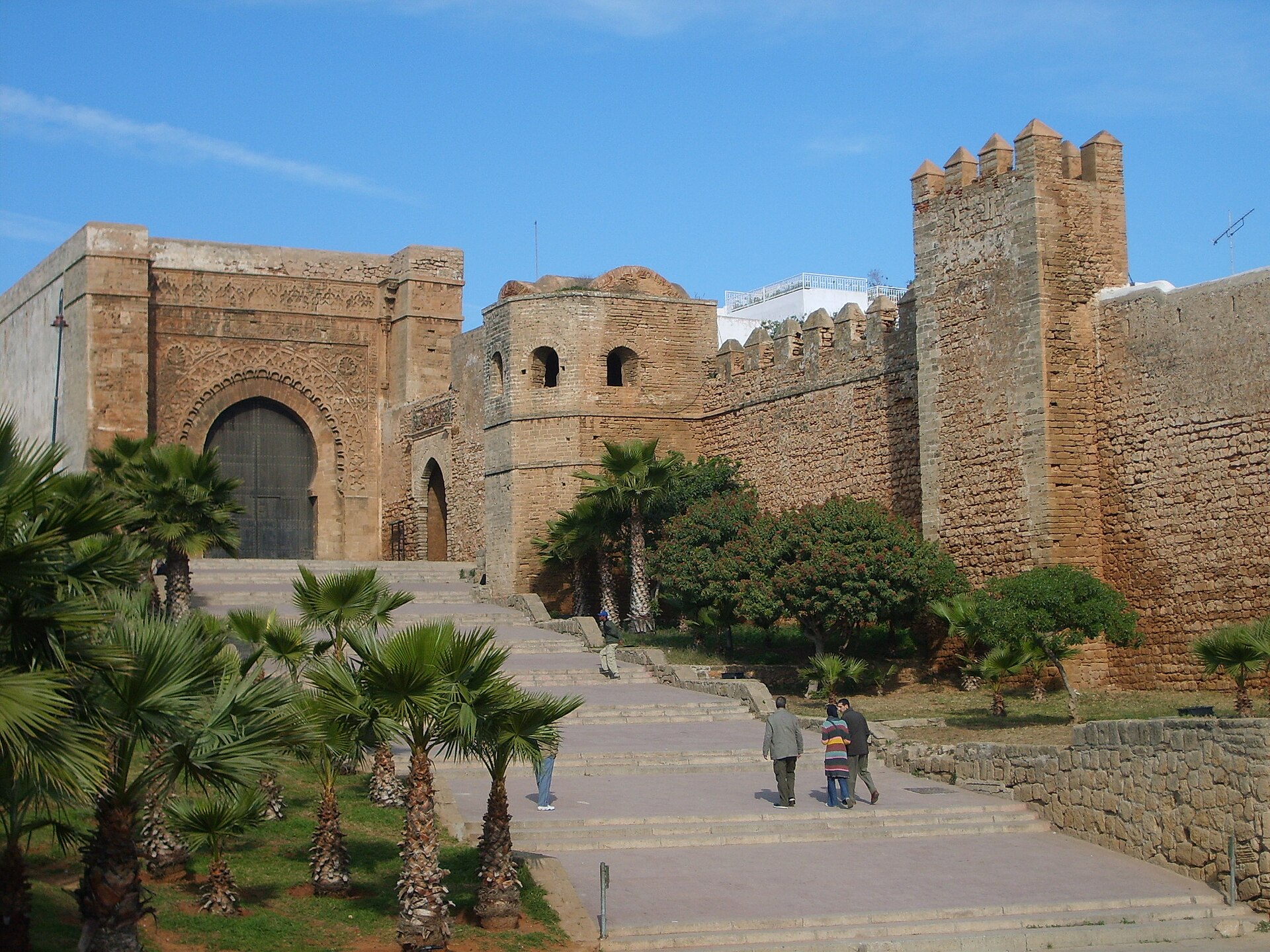
- The Magnificent Gate of Bab Oudaia
- Refugees from Spain and a Nest of Corsairs
- The Platform, the Sqala, and the Tower of the Corsairs
- The Oldest Mosque in Rabat
- Sultans, a Palace, and a Museum
- A Tranquil Andalusian Garden
- The Blue-and-White Streets
- Reading the Walls: A Guide to the Architecture
- Part of a World Heritage Capital
- Beyond the Kasbah: What Else to See
- Visiting the Kasbah of the Udayas
A Holy Warrior’s Outpost by the Sea
The story of the kasbah begins not with a palace but with a religious frontier post. In the early medieval period this commanding spot at the river mouth was the site of a ribat, a kind of fortified monastery where devout Muslim warriors combined prayer with the defence of the frontier. The word ribat is the root of Rabat’s own name, so the city itself is named for this idea of a spiritual and military stronghold.
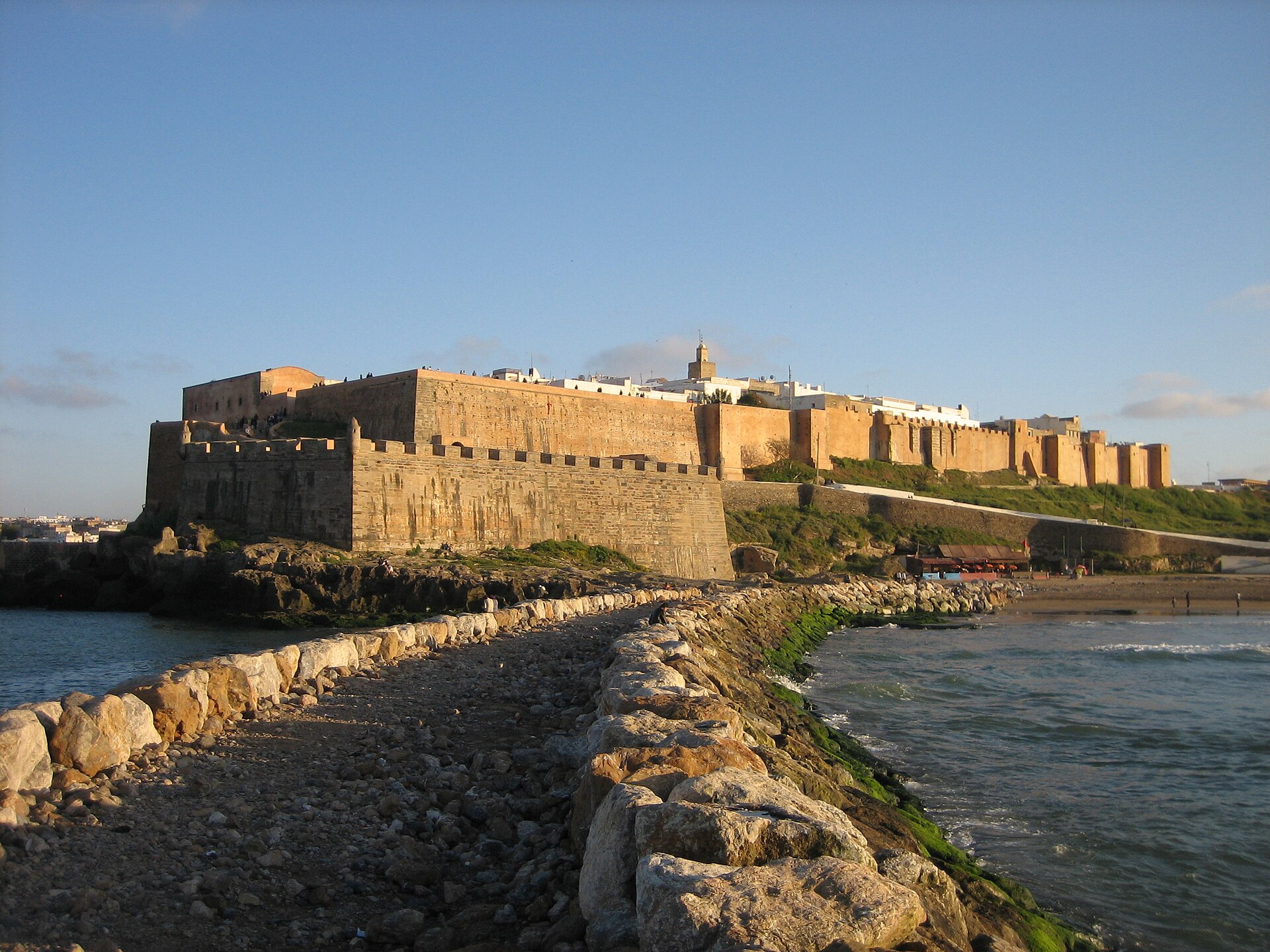
The location was chosen for obvious reasons. Perched on a bluff at the mouth of the Bou Regreg, it commanded both the river and the approaches from the Atlantic, controlling the sea gate to the interior. For anyone concerned with defending this coast, whether against raiders from the ocean or rivals along the shore, this was the natural place to plant a fortress, and successive rulers did exactly that.
By the time the great Berber dynasties rose to power in the twelfth century, the site already carried this deep association with frontier defence and holy war. The kasbah you see today was built on top of that older layer of meaning, and understanding its origins as a ribat helps explain why it feels less like a mere castle and more like a self-contained sacred citadel above the waves.
The very idea of the ribat shaped the culture of these coastal fortresses. They were places where piety and vigilance went hand in hand, garrisoned by men who saw the defence of the frontier as a religious duty. That spirit lingered long after the original monastic function faded, giving Morocco’s kasbahs a character quite distinct from the purely secular castles of Christian Europe, and it is worth carrying that sense with you as you explore.
Rabat and its neighbour Salé grew up on either side of the river as a pair of frontier towns, and for centuries their fortunes were intertwined. The kasbah, guarding the river mouth, was the strongpoint of this twin-town estuary, and much of the drama of the region’s history, trade, piracy, defence, played out in the narrow stretch of water it overlooked. Keeping that geography in mind makes sense of nearly everything that happened here.
The Almohads Build a Citadel
The kasbah took on its enduring form under the Almohads, the powerful Berber dynasty that ruled a vast empire stretching across North Africa and into Spain in the twelfth century. After they swept away the earlier Almoravid rulers, the Almohad caliph Abd al-Mu’min built a new kasbah on the site around the middle of the twelfth century, complete with a palace and a mosque, turning the old frontier post into a proper royal fortress.
His successors thought even bigger. The caliph Yaqub al-Mansur, one of the most ambitious builders of the age, envisioned making Rabat a grand imperial capital, and the kasbah was to be its citadel. Though his wider dream of a great capital was never fully realised, the fortifications and monumental works of this period gave the kasbah the scale and grandeur that still impress visitors today.
What you are looking at, then, is a piece of high imperial architecture from one of the most powerful states of the medieval Islamic world. The Almohads ruled from the Atlantic to the deserts and mountains of the Maghreb and deep into Andalusia, and the kasbah at Rabat was one node in that far-flung empire, built to project the authority and the faith of a dynasty at the height of its power.
The Almohad legacy reaches far beyond Rabat, and recognising its fingerprints elsewhere enriches a visit here. The same dynasty raised the Koutoubia in Marrakesh, the Giralda in Seville, and the unfinished Hassan Tower just across the valley, all sharing a distinctive visual language. Seen in that company, the kasbah is not an isolated curiosity but part of a coherent and confident imperial architecture that once stamped itself across two continents.
It is worth remembering just how briefly, in the grand scheme of things, such empires held together, and how much they left behind. The Almohad state fragmented within a few generations, yet the stones they laid at Rabat still stand, still impress, and still shape how millions of people picture Morocco. There is a lesson in that about the durability of great architecture compared with the political power that produces it.
The Magnificent Gate of Bab Oudaia
If you approach the kasbah from the old town, you meet its single most celebrated feature: the great gate known as Bab Oudaia. Built in the closing years of the twelfth century under Yaqub al-Mansur, it is widely regarded as one of the finest examples of Almohad monumental architecture anywhere, and it is worth slowing right down to take it in properly.
The gate is a masterpiece of decorative stone carving. Around its horseshoe arch runs a band of intricate interlacing geometric patterns, framed by a border carrying a Quranic inscription, the whole composition set within a rectangular frame in a way that would influence Moroccan gate design for centuries. It was designed not merely to defend but to awe, announcing to anyone who approached that they were entering a place of power and refinement.
Notice how the gate blends its two purposes. It is genuinely defensive, with a bent entrance passage inside that would have hampered any attacker, yet its outer face is pure ceremony and art. This marriage of the military and the beautiful is characteristic of the best Moroccan architecture, and Bab Oudaia is the perfect introduction to a fortress that is as much about display as about defence.
Spend a few minutes simply looking at how the carving is organised, and the sophistication becomes clear. The design works outward in concentric bands, each with its own pattern and rhythm, drawing the eye toward the arch at the centre. It is a composition as carefully balanced as any painting, and the fact that it was executed in hard stone, to survive eight centuries of weather, makes the achievement all the more impressive.
It is telling that the gate was never really needed for a desperate last stand, yet was lavished with such artistry all the same. In Almohad thinking, a great gate was a statement of legitimacy and sophistication as much as a defensive necessity, a way of impressing subjects and visitors alike. Bab Oudaia has been doing precisely that for more than eight hundred years, and it still stops modern visitors in their tracks exactly as intended.
Refugees from Spain and a Nest of Corsairs
The kasbah’s most colourful chapter began in the early seventeenth century, when it was transformed by refugees from across the sea. As the Christian reconquest of Spain reached its climax, Muslims and converts were expelled from the Iberian peninsula, and a wave of these Andalusian refugees, including a group of Moriscos from the town of Hornachos, settled in the kasbah and the surrounding area.
These newcomers brought their skills, their Iberian culture, and, for some, a burning desire for revenge against the country that had cast them out. Turning the kasbah and the Bou Regreg estuary into a base, they launched a career of piracy that made them famous and feared across the seas. The independent-minded community here became the heart of the so-called Republic of Salé, effectively a corsair state.
From this fortress the raiders known to European sailors as the Salé Rovers set out to prey on Christian shipping across the Atlantic and beyond, seizing cargoes and captives and building a formidable reputation. For a time the little walled town above the river was one of the most notorious pirate havens in the world, a rogue maritime republic operating largely beyond the control of any sultan.
The arrival of the Andalusians permanently changed the character of the kasbah and of Rabat itself. They brought a refined urban culture, distinctive crafts, music, and cuisine, and a strong sense of collective identity forged in exile. Much of what feels most sophisticated about the old city traces back to this infusion of Iberian Muslim culture, and the kasbah remained the symbolic heart of that transplanted Andalusian world.
The word Udayas in the fortress’s name comes from a later chapter still, when in the nineteenth century a tribe known as the Udaya was settled in the kasbah after being expelled from Fez. It is a small but telling detail: even the name by which we know the place today records yet another movement of people into these walls, layering one community’s story over all those that came before.
The Platform, the Sqala, and the Tower of the Corsairs
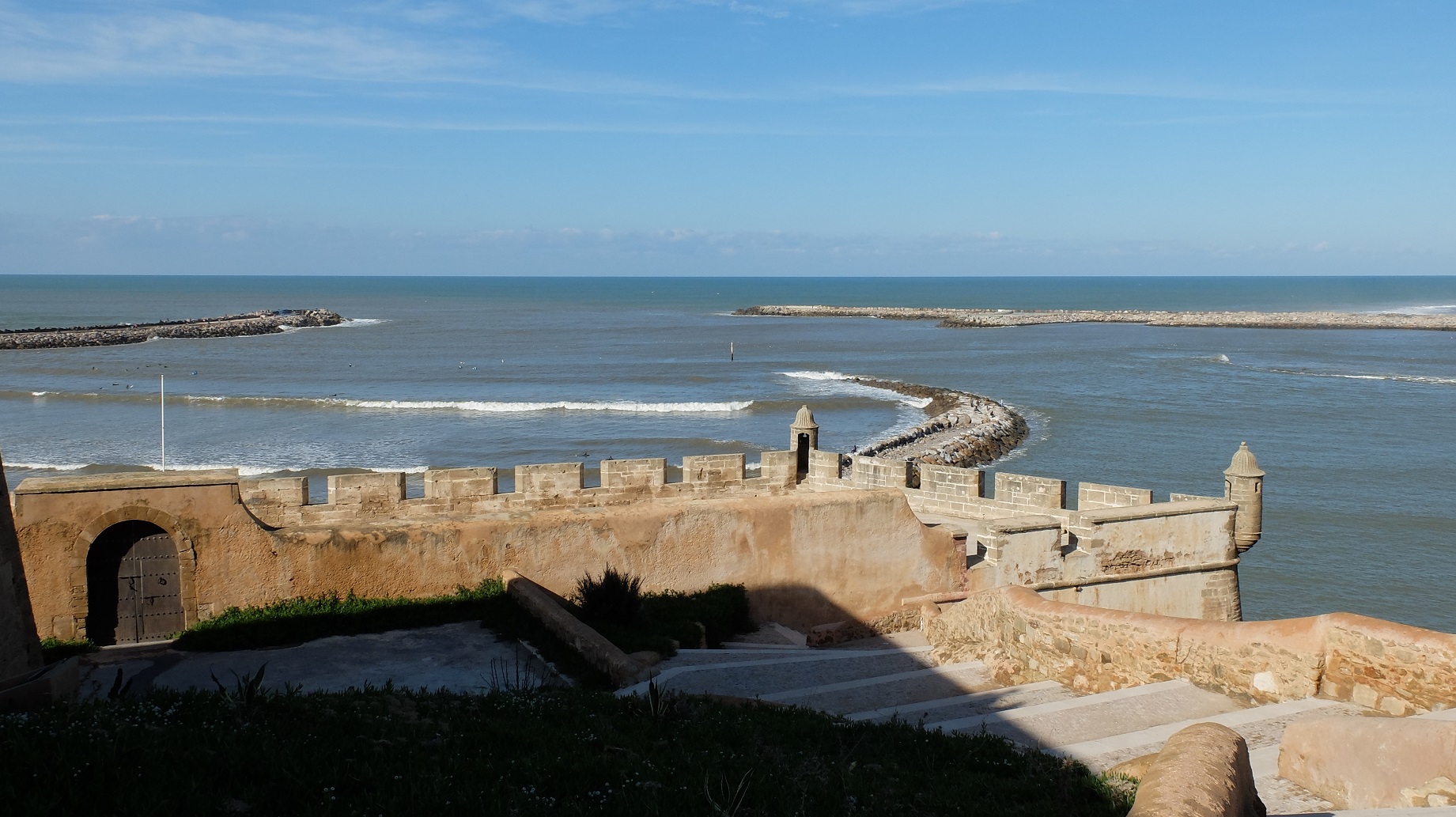
The pirate era left its own distinctive marks on the kasbah, and you can still trace them today. To serve their maritime activities, the corsair community built new defensive and practical works, including a raised platform used for signalling and, later, structures such as a warehouse and a gun platform known as a sqala, along with the feature remembered as the Tower of the Corsairs.
These additions turned the medieval royal citadel into a working naval base. From its walls, lookouts could watch for returning ships or approaching danger, cannon could command the river mouth, and the machinery of a piratical economy, the storing of plunder and the defence of the harbour, could be carried on in relative security. The kasbah adapted, as fortresses always do, to the needs of whoever held it.
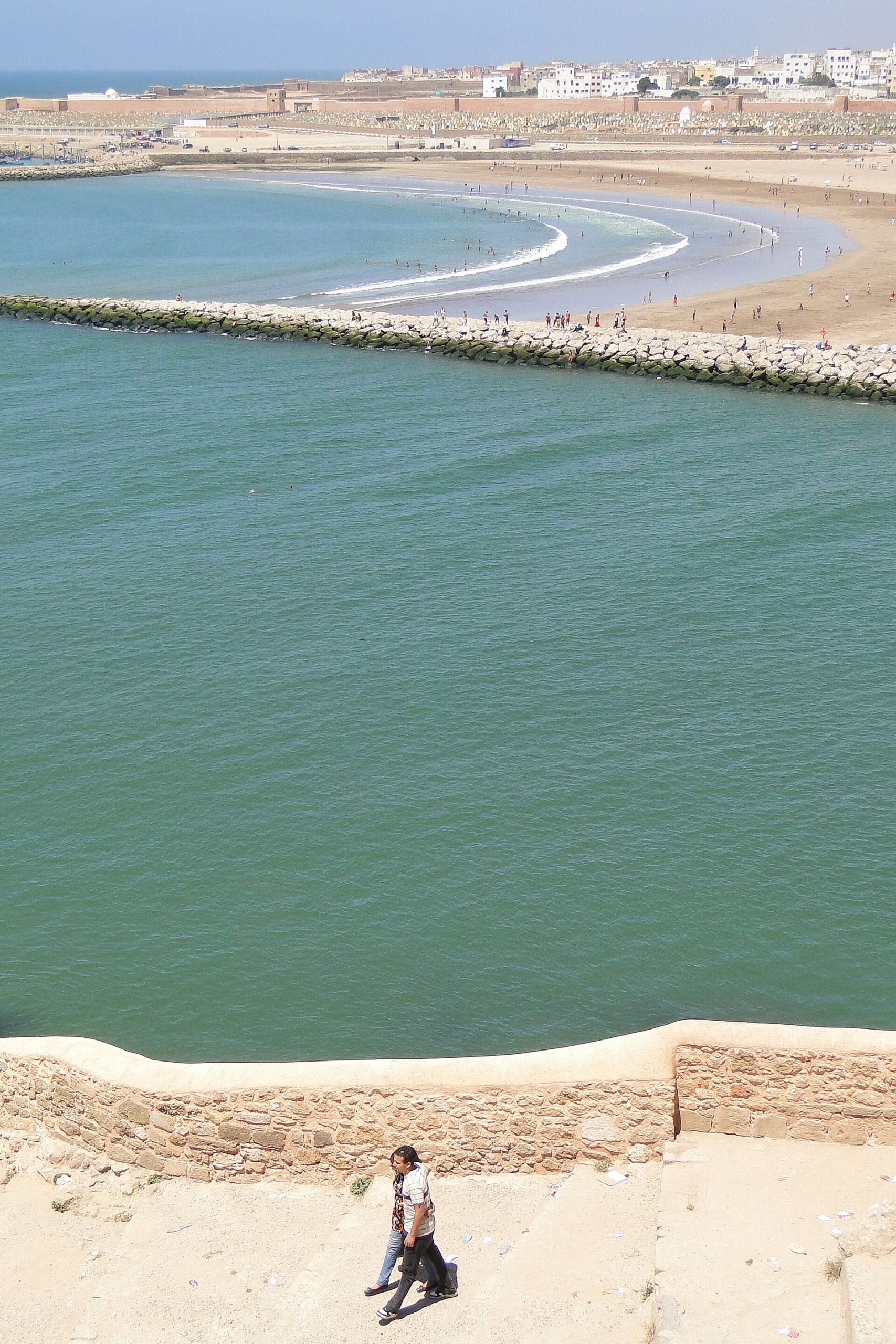
Walking the ramparts today, with the Atlantic breaking below and the river sliding past, it is easy to picture this maritime past. The same walls that once repelled or launched raiders now offer visitors a magnificent panorama, but the defensive platforms and gun positions are a reminder that this was, for a vivid stretch of history, a genuine stronghold of sea raiders.
Piracy here was not mere lawlessness but a organised, quasi-official enterprise with its own rules, leaders, and economy. Captured ships and captives were brought back to the estuary, cargoes were sold, and ransoms were negotiated, all supporting the community that lived behind these walls. Understanding this helps you see the corsairs less as simple villains and more as a desperate, resourceful society making a living from the sea in a violent age.
The legacy of this maritime past still colours how the kasbah is remembered. Tales of the Salé Rovers, of captives and ransoms and daring raids, have become part of the romance of the place, embellished over the centuries into legend. Standing on the sqala with the wind off the sea, it takes very little imagination to people the estuary once more with the swift ships and hard men who made this fortress feared across the ocean.
The Oldest Mosque in Rabat
Tucked within the kasbah’s lanes stands the Old Mosque, known in Arabic as the Jama’ al-‘Atiqa, which holds the distinction of being the oldest mosque in Rabat. Its origins go back to the Almohad rebuilding of the kasbah in the mid-twelfth century, making it a direct link to the era when this was a royal citadel of a great empire.
Like many buildings that have served a community for the better part of a thousand years, the mosque has been repaired and remodelled over the centuries, with significant restoration in later periods. That layering is part of its character; it is not a museum piece frozen at a single date but a living place of worship that has been kept in use and in repair by generations of the kasbah’s inhabitants.
For the visitor, the mosque is a reminder that the kasbah has always been more than a fortress. It was, and remains, a real community with its own religious and social life, and the presence of the city’s oldest mosque at its heart underlines how central this walled quarter has been to the spiritual as well as the strategic history of Rabat.
The survival and continuous use of the Old Mosque speaks to the resilience of the kasbah as a community. Empires rose and fell, corsairs came and went, sultans and colonial administrators imposed their will, yet the daily rhythm of prayer at the heart of the quarter continued through it all. Few things convey the deep continuity of life in the kasbah as powerfully as its oldest place of worship still fulfilling its original purpose.
Sultans, a Palace, and a Museum
After the wild days of the corsair republic, the kasbah was brought firmly back under royal control. In the later seventeenth century the Alawi sultans, the dynasty that still reigns in Morocco today, took charge, and the powerful sultan Moulay Ismail left his own mark by building a palace or pavilion within the walls, adding another architectural layer to the already ancient site.
That royal building did not remain a palace forever. In the early twentieth century, during the period of the French Protectorate, it was converted into a museum, and for many years it displayed collections relating to Moroccan arts and crafts. The transformation of a sultan’s residence into a public museum neatly captures how the kasbah’s buildings have been continually repurposed to suit each new age.
This constant reuse is one of the kasbah’s charms. Almost nothing here served only a single function across the centuries. Frontier post became royal citadel became pirate base became sultan’s palace became museum and residential quarter, each era building on and adapting what came before, so that the whole place is a physical record of Morocco’s layered history.
Moulay Ismail is one of the towering figures of Moroccan history, a ruler famed for his long reign, his formidable will, and his prodigious building projects across the country. His decision to build within the kasbah reflected its enduring strategic and symbolic value, and his pavilion added a note of Alawi royal grandeur to a site that had already served Almoravids, Almohads, Andalusians, and corsairs in turn.
The museum’s later closure and refurbishment, and its eventual reopening, are the most recent chapter in this long saga of reuse, proving that the kasbah’s story is still being written. Each generation finds a new purpose for these old walls and rooms, and the visitor today benefits from centuries of that ongoing care and reinvention. It is a place that has been continuously loved and used, and it shows.
A Tranquil Andalusian Garden
For all its martial history, the kasbah holds a corner of pure serenity: the Andalusian Garden. Laid out in the early twentieth century in a style evoking the classical gardens of Muslim Spain, it offers a shaded, fragrant retreat from the sun-baked streets, with citrus trees, flowering bougainvillea, and quiet walkways enclosed by the old walls.
Though the garden itself is a relatively modern creation from the era of the French Protectorate, it draws deliberately on a much older Andalusian tradition, echoing the kasbah’s deep historical ties to Muslim Spain and the refugees who once settled here. It is a fitting tribute, turning the memory of that lost Andalusian world into a living, growing space you can stroll through today.
Visitors often find the garden the emotional heart of a visit. After exploring ramparts and gates and picturing pirates and sultans, you can sit in the dappled shade among the orange trees and simply enjoy the peace. It is a reminder that these fortified places were never only about war; they were also homes, and the people who lived in them valued beauty and rest as much as anyone.
Gardens hold a special place in the culture of the Islamic west, evoking paradise and offering respite from a harsh climate. By planting an Andalusian-style garden within the kasbah, the twentieth-century restorers were tapping into that ancient ideal and honouring the specific Andalusian heritage of this place. The result feels entirely at home within the walls, as though it had always been there waiting to be rediscovered.
The Blue-and-White Streets
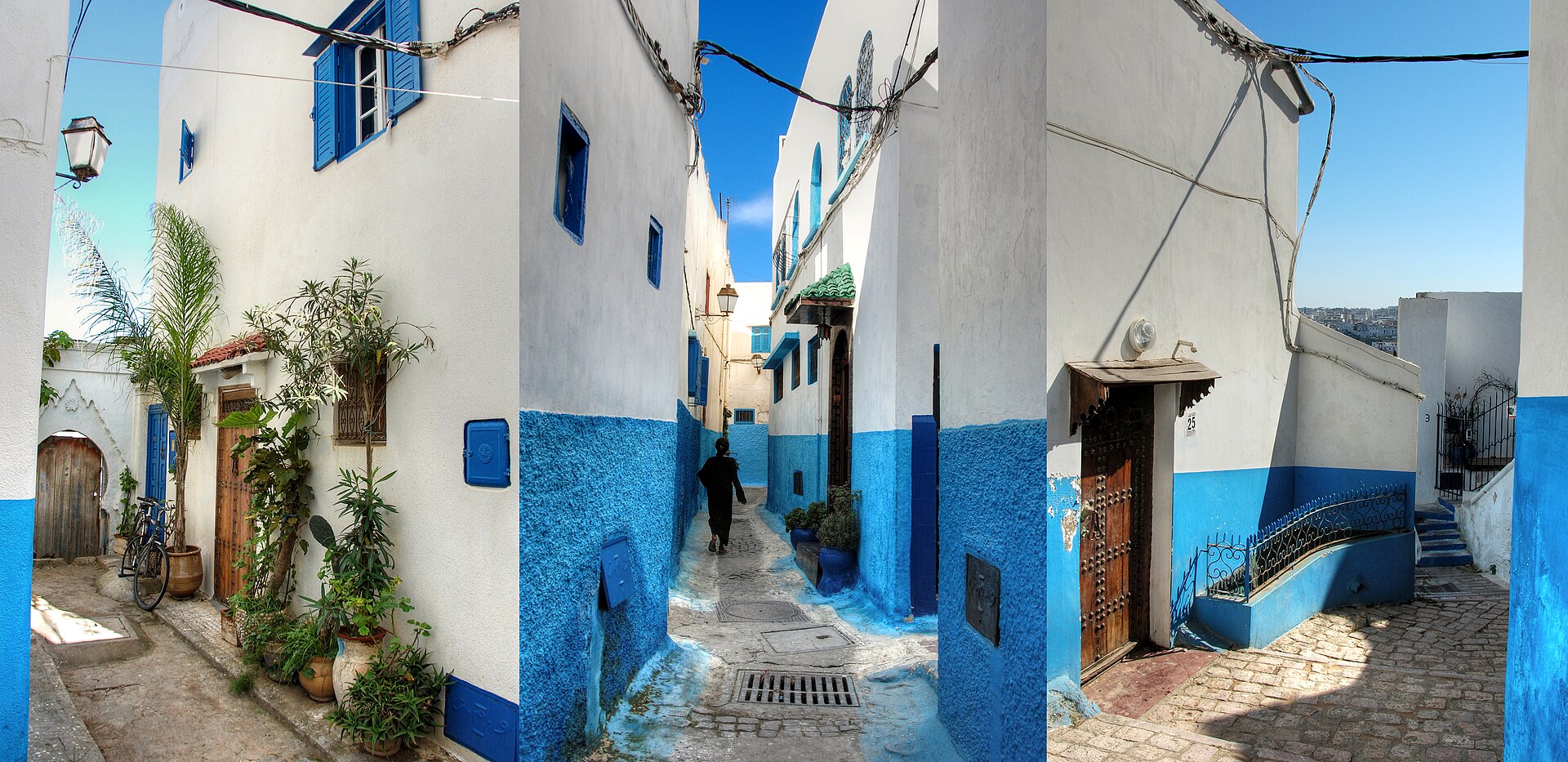
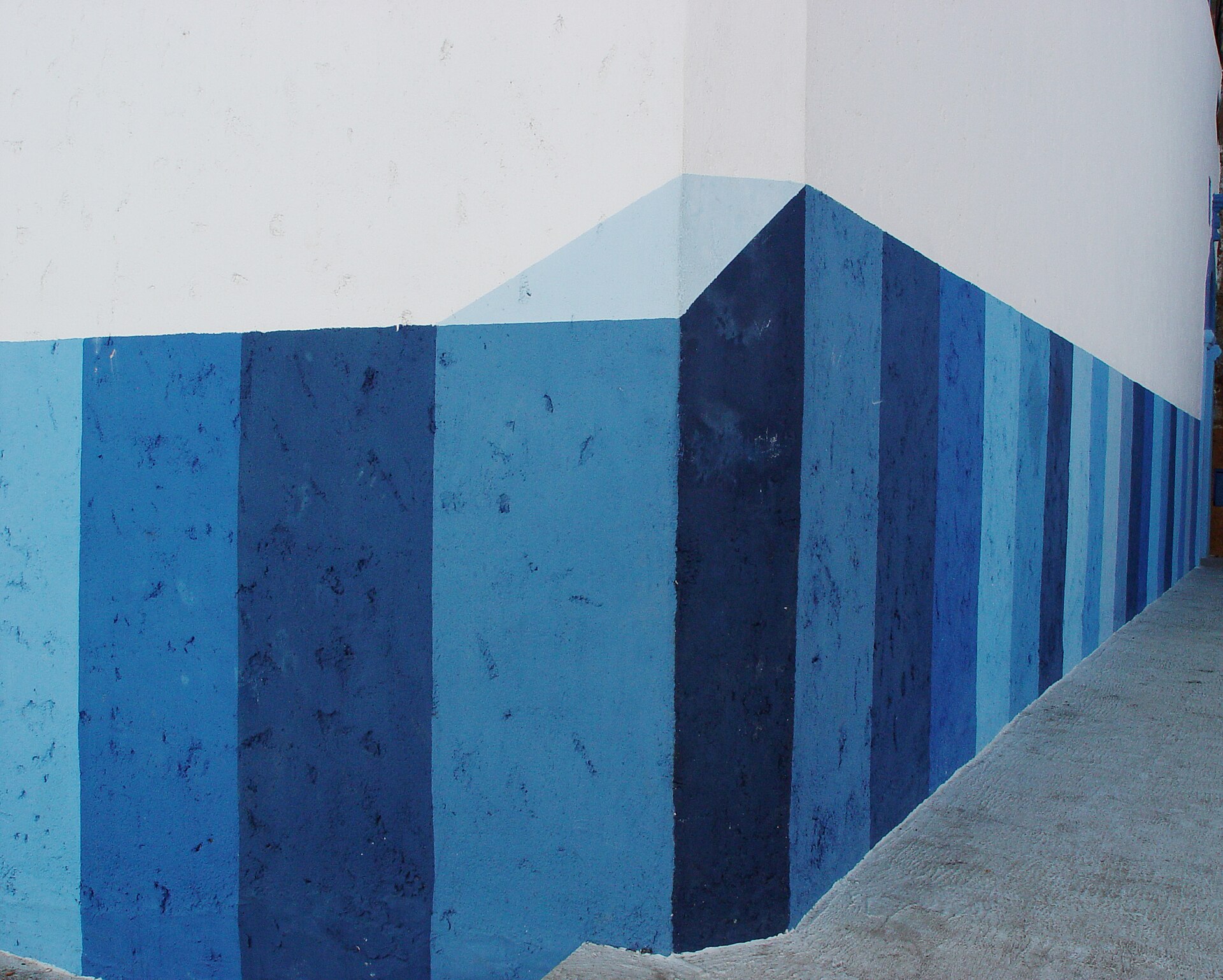
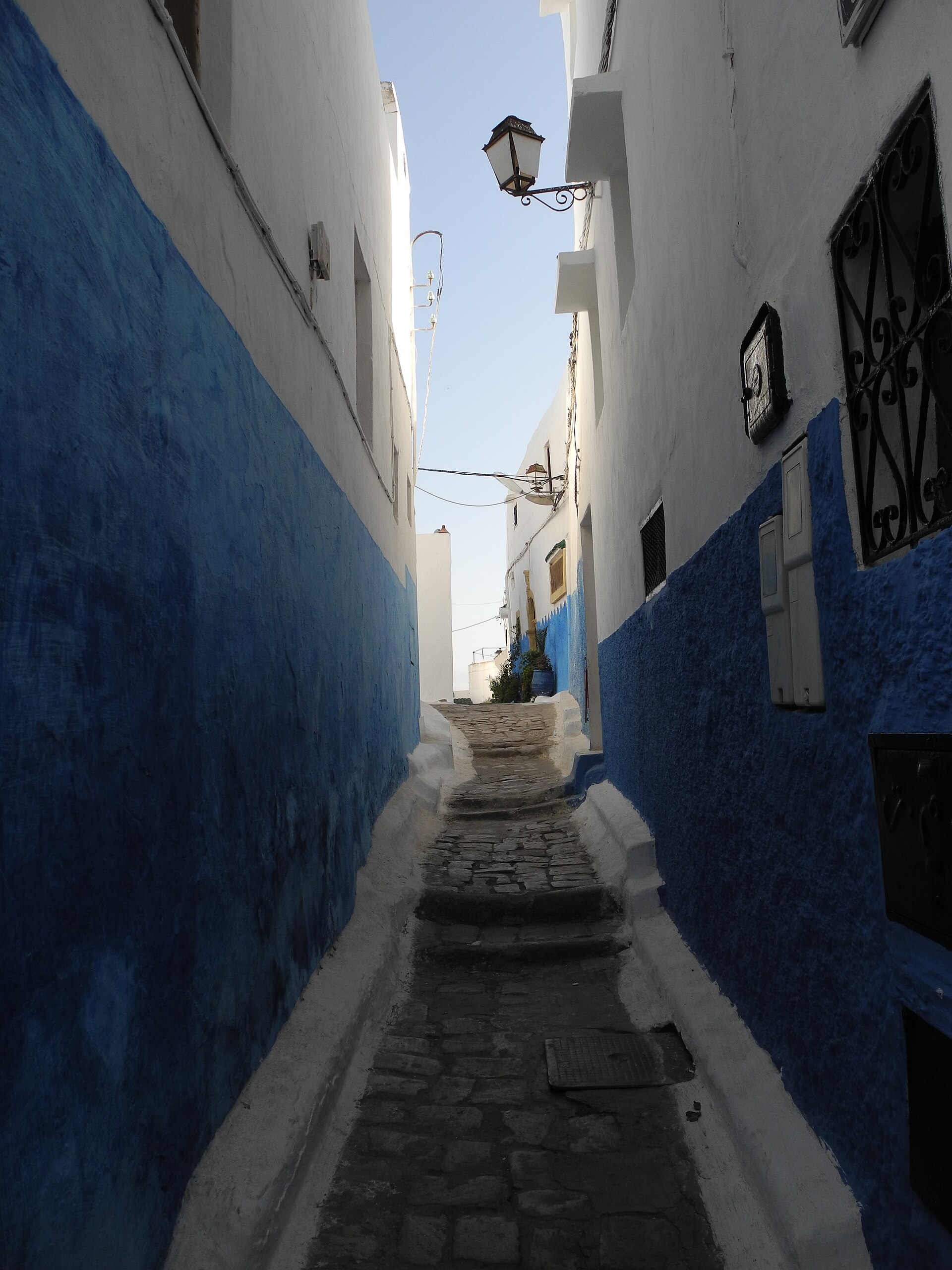
Perhaps the most photographed feature of the kasbah is not a monument at all but the colour of its houses. The narrow residential lanes are painted in a striking scheme of white walls and vivid blue, usually up to about waist or shoulder height, creating a cool, luminous effect as you wind through the tight streets. It is one of the most enchanting townscapes in Morocco.
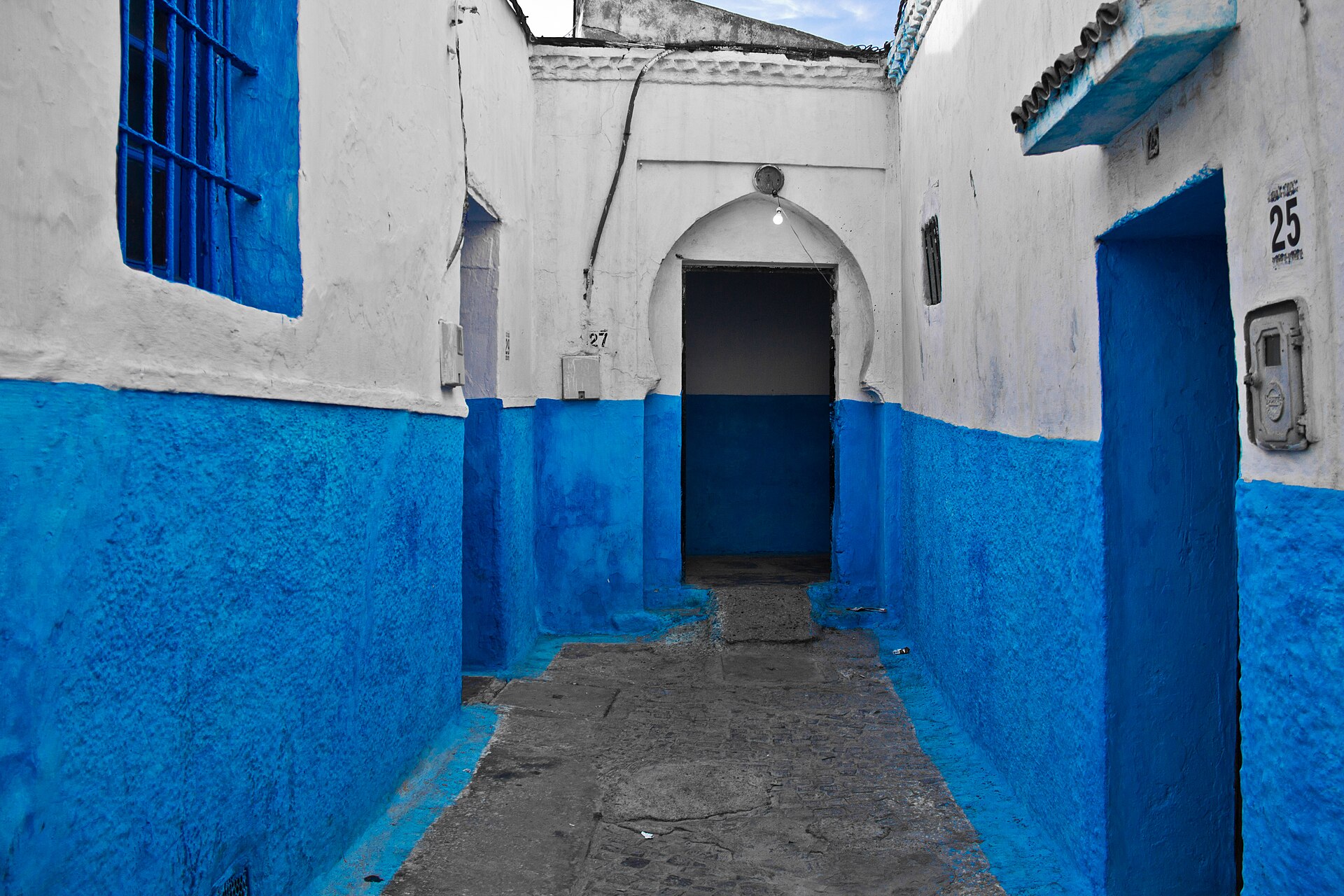
The blue-and-white palette is a tradition shared with other towns of the region, and various explanations are offered for it, from keeping interiors cool to repelling insects to simple aesthetic pride. Whatever its origins, the effect is undeniable, and the play of the two colours against the ochre of the ramparts and the blue of the sky and sea beyond is a large part of the kasbah’s visual magic.
Remember, though, that this is a living neighbourhood, not a stage set. Real families live behind these painted doors, going about their daily lives amid the constant flow of visitors. The kasbah rewards a respectful, unhurried wander, an eye open for the small details of ordinary life, cats dozing in doorways, laundry strung across the lanes, that make it feel so alive.
The colours also change character through the day, which is part of why the kasbah rewards more than a single quick visit. In the flat light of midday the blues can look bright and crisp, while at dawn and dusk they soften and glow, and the shadows in the lanes deepen. Photographers and painters have long been drawn here for exactly this quality, the way ordinary walls become extraordinary under shifting light.
There is also a gentle etiquette to photographing such a lived-in place, and observing it makes for a richer visit. A smile, a greeting, a moment of genuine human contact before raising a camera goes a long way, and often opens the door to the small, warm encounters that end up being the most treasured memories of a trip. The kasbah gives most generously to those who treat it as the home it is.
Reading the Walls: A Guide to the Architecture
Take a moment to read the kasbah as a piece of architecture, and its history opens up in the stonework. The great red ramparts are built in the massive, sober style of Almohad military engineering, designed for strength and dominance. Against this austere framework, the decorative flourishes, above all the carved gate, provide the artistic counterpoint, showing the same culture’s love of intricate ornament.
The dominant vocabulary is unmistakably Moroccan and Andalusian: the horseshoe arch, the geometric interlace, the harmonious proportions that this architectural tradition perfected over centuries. These were not arbitrary choices but the mature expression of a sophisticated building culture that stretched across the western Islamic world, from Rabat to Marrakesh to the palaces of Granada.
Layered on top are the additions of later ages, the corsairs’ platforms, the sultan’s pavilion, the twentieth-century garden and restorations, each in its own idiom. Learning to distinguish these layers turns a walk through the kasbah into a lesson in Moroccan history, and it deepens the pleasure of a visit enormously to notice how many different centuries you are passing through in a single afternoon.
There is real pleasure to be had in playing detective with the stonework. A change in the coursing of the stone, a blocked-up opening, a patch of newer masonry, each tells a small story of adaptation and repair. The kasbah has never been a static object but a structure endlessly modified by its users, and the more closely you look, the more of that long human effort you begin to see written in its walls.
Part of a World Heritage Capital
The kasbah does not stand alone in its significance. In 2012 the modern capital, under the title of Rabat, a modern capital and historic city, a shared heritage, was inscribed on the UNESCO World Heritage List, and the Kasbah of the Udayas is one of the jewels within that designation, recognised alongside the city’s other great monuments and its distinctive blend of old and new.
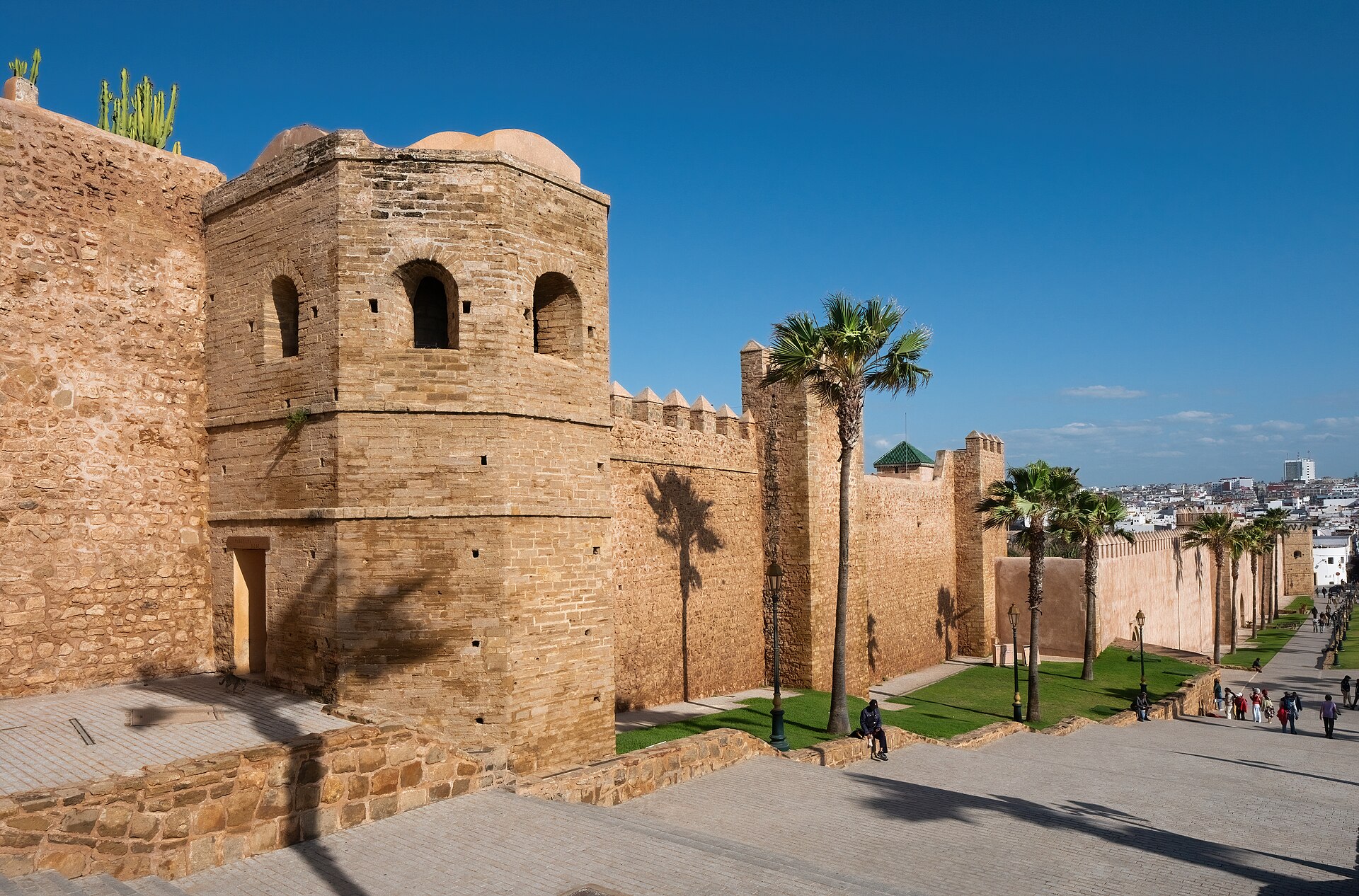
UNESCO’s recognition celebrated Rabat as a place where a deep Islamic and Almohad past coexists with a planned modern city, an unusual and instructive combination. The kasbah, as the oldest and most evocative fragment of that ancient layer, is central to the story the listing tells, embodying the Almohad heritage and the long, rich history of the site above the Bou Regreg.
For the visitor, the World Heritage status is both a promise and an invitation. It signals that this is a place of genuine, internationally acknowledged importance, worth the care taken to preserve it, and it encourages you to see the kasbah not in isolation but as part of a larger historic city that rewards exploration well beyond the fortress walls.
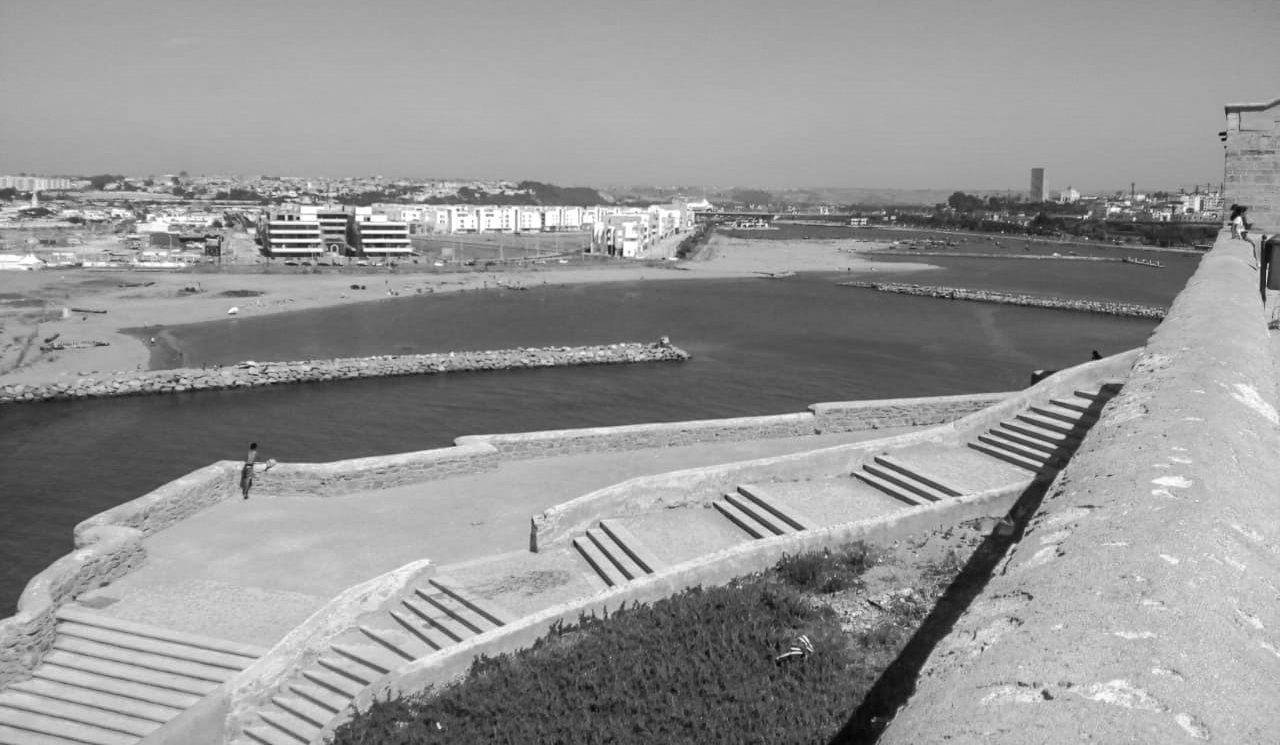
The pairing of ancient citadel and modern capital that so impressed UNESCO is something you can feel directly on the kasbah’s ramparts. Look one way and you see medieval walls, a centuries-old mosque, and a river once ruled by corsairs; turn around and the contemporary city and its newer landmarks rise beyond. Standing at that meeting point of eras is one of the quiet pleasures of a visit, and it captures Rabat’s distinctive character in a glance.
Beyond the Kasbah: What Else to See
A visit to the kasbah pairs naturally with the other great sights of historic Rabat, and it would be a shame to see the fortress without them. Just across the way lie the atmospheric ruins and gardens of the Chellah, a walled complex layered with Roman and medieval remains, and the striking Hassan Tower, the unfinished minaret of what was intended to be one of the largest mosques in the world.
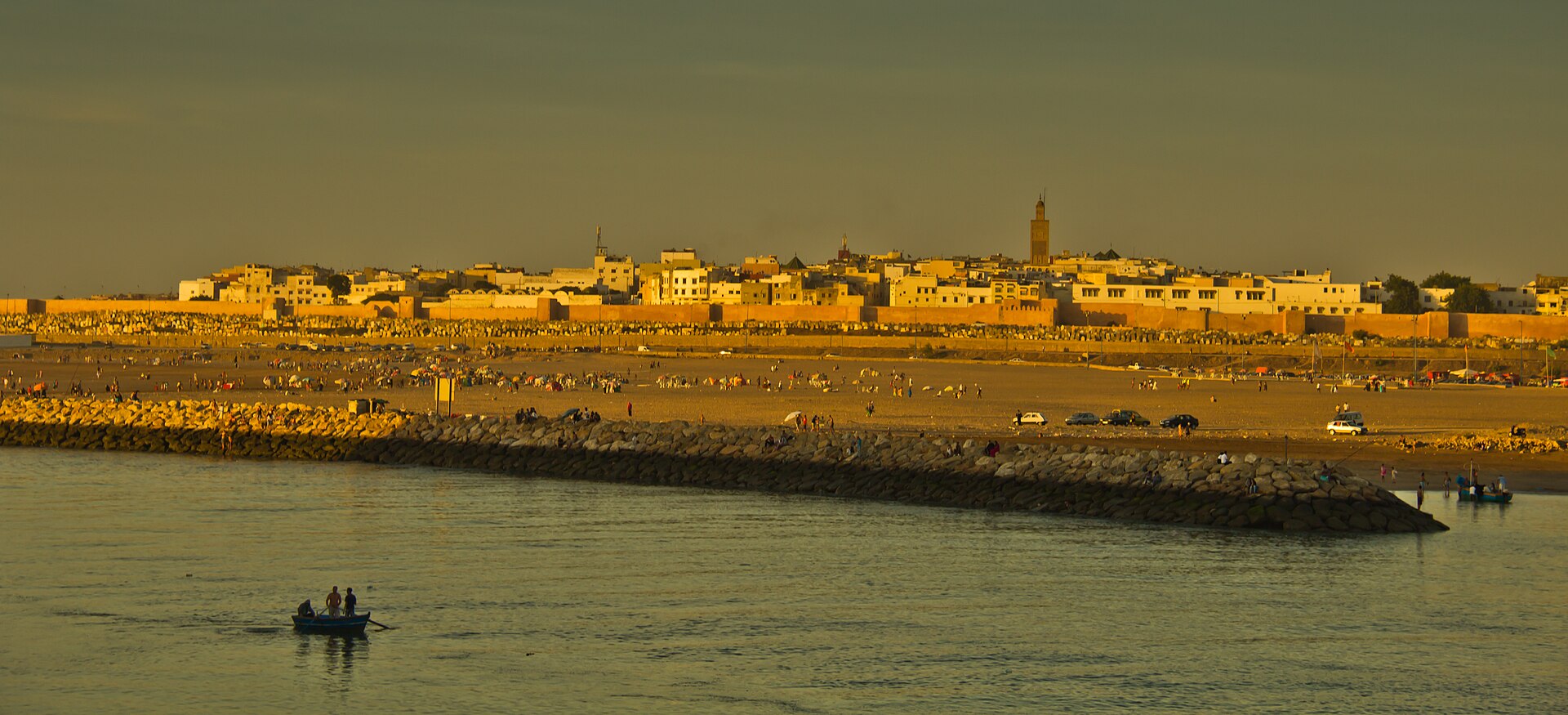
The kasbah also looks directly across the Bou Regreg to the city of Salé, historically its twin and partner in the corsair enterprise. Gazing across the water, you can picture the two banks as a single maritime community, bound together by trade, piracy, and a shared Andalusian heritage, and a boat trip across the river adds another dimension to understanding the place.
Taken together, these sights make Rabat a rewarding destination for anyone interested in the long sweep of Moroccan history. The kasbah is the perfect starting point, a compact, vivid, walkable introduction to the themes, Almohad power, Andalusian influence, maritime adventure, that run through the whole city and much of the country beyond.
The proximity of so much history in one compact city is part of Rabat’s appeal, and it is easy to underestimate before you arrive. Unlike the sprawling imperial cities of Fez or Marrakesh, Rabat presents its treasures on a manageable scale, and the kasbah, the Hassan Tower, the Chellah, and the river crossing to Salé can all be woven into a single unhurried day of exploration for the willing traveller.
If your schedule allows, try to see the kasbah both from within and from a distance. Viewed up close it is a warren of intimate lanes and hidden corners; seen from across the river or the ocean shore it resolves into a dramatic silhouette of red walls crowning the bluff. Holding both views in mind gives you the fullest sense of what the fortress is, at once a cosy neighbourhood and a commanding stronghold above the sea.
Visiting the Kasbah of the Udayas
The good news for travellers is that visiting the kasbah is refreshingly simple and, for the main quarter, free. You can wander in through the great gate or the other entrances and explore the streets, the ramparts, and the viewpoints at your own pace, with the Andalusian Garden and the museum area as added attractions to seek out along the way.
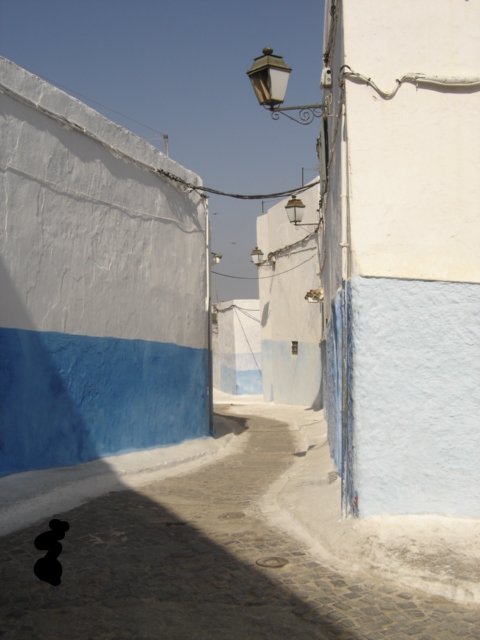
Aim to come with time to spare and no fixed agenda. The pleasure here lies in wandering, in following a blue-and-white lane to see where it leads, in pausing on the ramparts to watch the surf and the river traffic, and in finding a quiet café terrace with a view over the water. Early morning and late afternoon offer the kindest light and the most comfortable temperatures for exploring.
View 34.0306, -6.8356 on Google Maps
A few practical courtesies go a long way. Dress modestly out of respect for the residents, ask before photographing people, and remember that behind the picturesque facades are real homes. Consider engaging a local guide to bring the layers of history to life, and take your time; the Kasbah of the Udayas is not a place to rush, but one to savour slowly, with the sound of the Atlantic never far away.
One final piece of advice: build in time simply to sit and absorb. Some of the most memorable moments in the kasbah come not from ticking off features but from lingering, a mint tea on a terrace above the estuary, the sound of the surf and the call to prayer drifting together on the air. Places like this reveal themselves slowly, and the kasbah gives most to the visitor who is willing to slow down and receive it.
And do venture out onto the terraces facing the ocean, where generations have gathered to watch the sun go down over the Atlantic. It is a simple pleasure, but a profound one, to stand where corsairs once scanned the horizon for prizes and holy warriors once kept their watch, and to see the same restless sea they saw, indifferent to all the empires that have come and gone behind these ancient red walls.
Castles Nearby
You May Like
Mafra, the Palace a King Built From a Vow