Stand at the tip of the old city of San Juan, where the land runs out into the Atlantic, and you find yourself dwarfed by one of the mightiest fortresses in the Americas. Castillo San Felipe del Morro, known to almost everyone simply as El Morro, rises in six great tiers of golden-grey stone from the rocks at the harbour mouth, its walls up to six metres thick, its guns commanding the sea for miles. For more than four centuries it has stood guard over the gateway to Puerto Rico.
This was no ordinary fort. El Morro was a linchpin of the entire Spanish empire in the New World, built to protect one of the most important harbours in the Caribbean from the pirates, privateers, and rival empires who coveted the riches flowing through these waters. English fleets, Dutch armadas, and famous sea captains all hurled themselves against these walls, and again and again El Morro held.
In this guide you will explore the whole story of this extraordinary fortress: why the Spanish built it, how it grew over two and a half centuries into the colossus you see today, the great sieges it withstood, the clever design of its bastions and sentry boxes, its dramatic change of hands to the United States, and its life today as a beloved World Heritage Site. Bring a hat and good shoes, because El Morro is best explored slowly, level by level.
A note on names before you begin. Puerto Ricans call it simply El Morro, from the Spanish word for a headland or promontory, and that is the name you will hear everywhere on the island. The full title, Castillo San Felipe del Morro, honours a Spanish king, but to the people who live in its shadow it is above all their Morro, a fixture of the San Juan skyline as familiar and beloved as an old friend.

In This Article
- The Key to the Caribbean
- The First Fortifications
- Sir Francis Drake Is Turned Away
- The Dutch Assault of 1625
- Two Centuries of Building
- Bastions, Ramps, and Fields of Fire
- The Iconic Sentry Boxes
- The Lighthouse at the Summit
- Life in the Fortress
- From Spanish to American Hands
- From Fortress to Park
- A World Heritage Fortress
- Visiting El Morro
The Key to the Caribbean
To understand why the Spanish poured so much effort into this one fortress, you have to understand what San Juan meant to their empire. In the age of the Spanish treasure fleets, vast quantities of silver and gold flowed from the mines of Mexico and Peru back to Spain, and the ships carrying that wealth needed safe harbours along the way. San Juan, with its superb natural bay, was one of the first and most important.
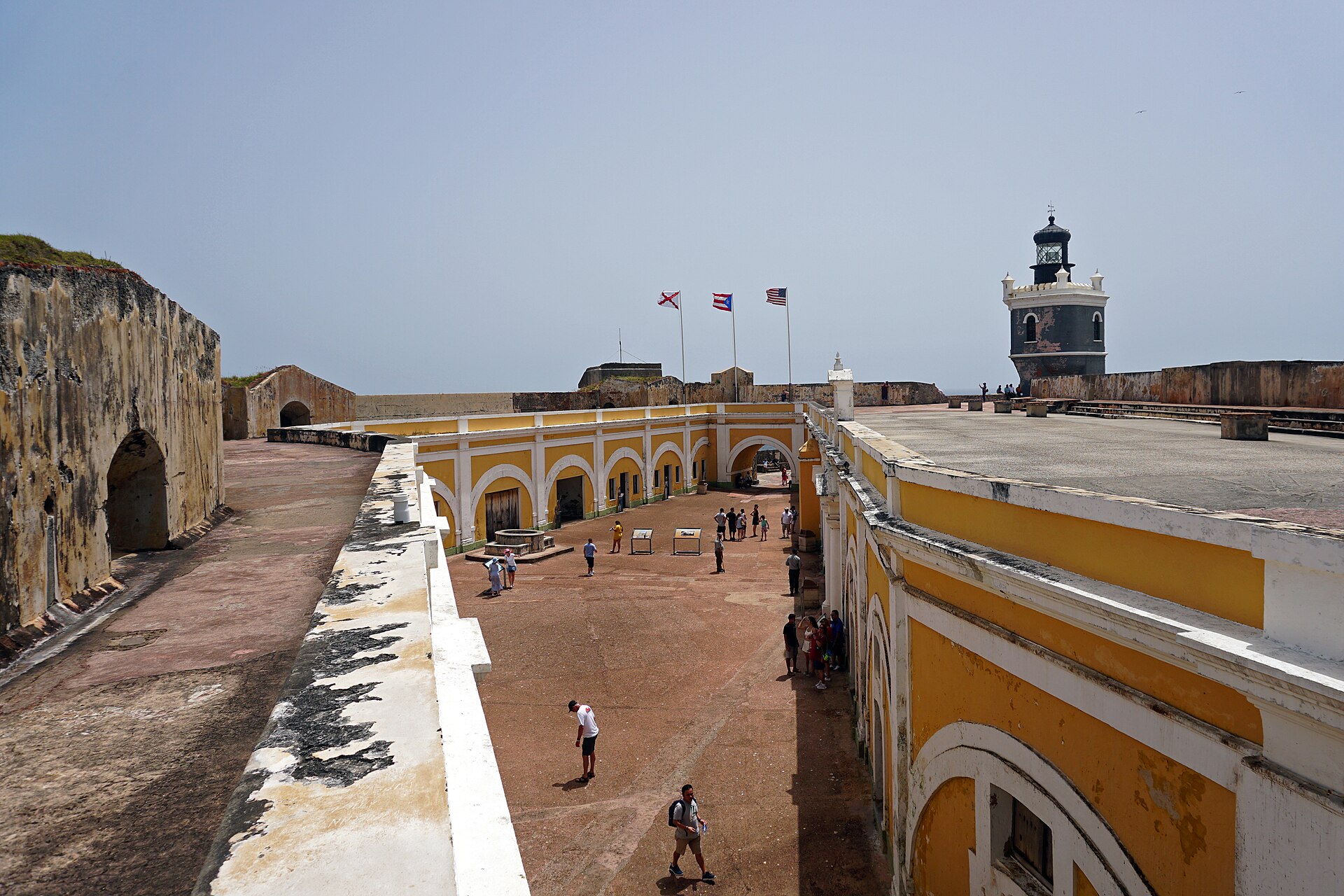
Puerto Rico sat at the very edge of the Caribbean, one of the first landfalls for ships crossing the Atlantic and a strategic sentinel guarding the approaches to the whole region. Whoever controlled San Juan controlled a gateway to the Spanish Main, and the Spanish crown understood that losing it would open the door to their enemies and threaten the lifeline of treasure on which the empire depended.
That is why El Morro was built where it stands, on the rocky headland at the mouth of San Juan Bay. Its guns could rake any hostile ship trying to force the narrow entrance to the harbour, turning the approach into a deadly gauntlet. The fortress was, in effect, a great stone lock on the door of the Caribbean, and the Spanish were determined that no enemy should ever pick it.
The wider system of Spanish treasure fleets depended on a chain of fortified ports strung across the Caribbean and the Gulf, from Havana to Cartagena to San Juan, each one a link that had to hold. Within that chain San Juan played the role of an eastern sentinel, often the first fortified harbour a fleet crossing from Spain would reach, which made its security a matter of imperial strategy rather than mere local concern.
Ships returning to Spain would often gather into great convoys for mutual protection, and the fortified harbours were the safe havens where they could assemble, resupply, and shelter from both storms and enemies. In this system San Juan was far too valuable to leave lightly defended, and the scale of El Morro is best understood as a measure of just how much the Spanish crown had riding on the safety of these Caribbean waters.
The First Fortifications
The story of El Morro begins in the first half of the sixteenth century, not long after the Spanish had established themselves on the island. Recognising the vulnerability of their new port, they began building fortifications at the harbour mouth, and the initial work on a fort at this commanding headland was under way by 1539, laying the foundations of what would grow into a mighty stronghold.
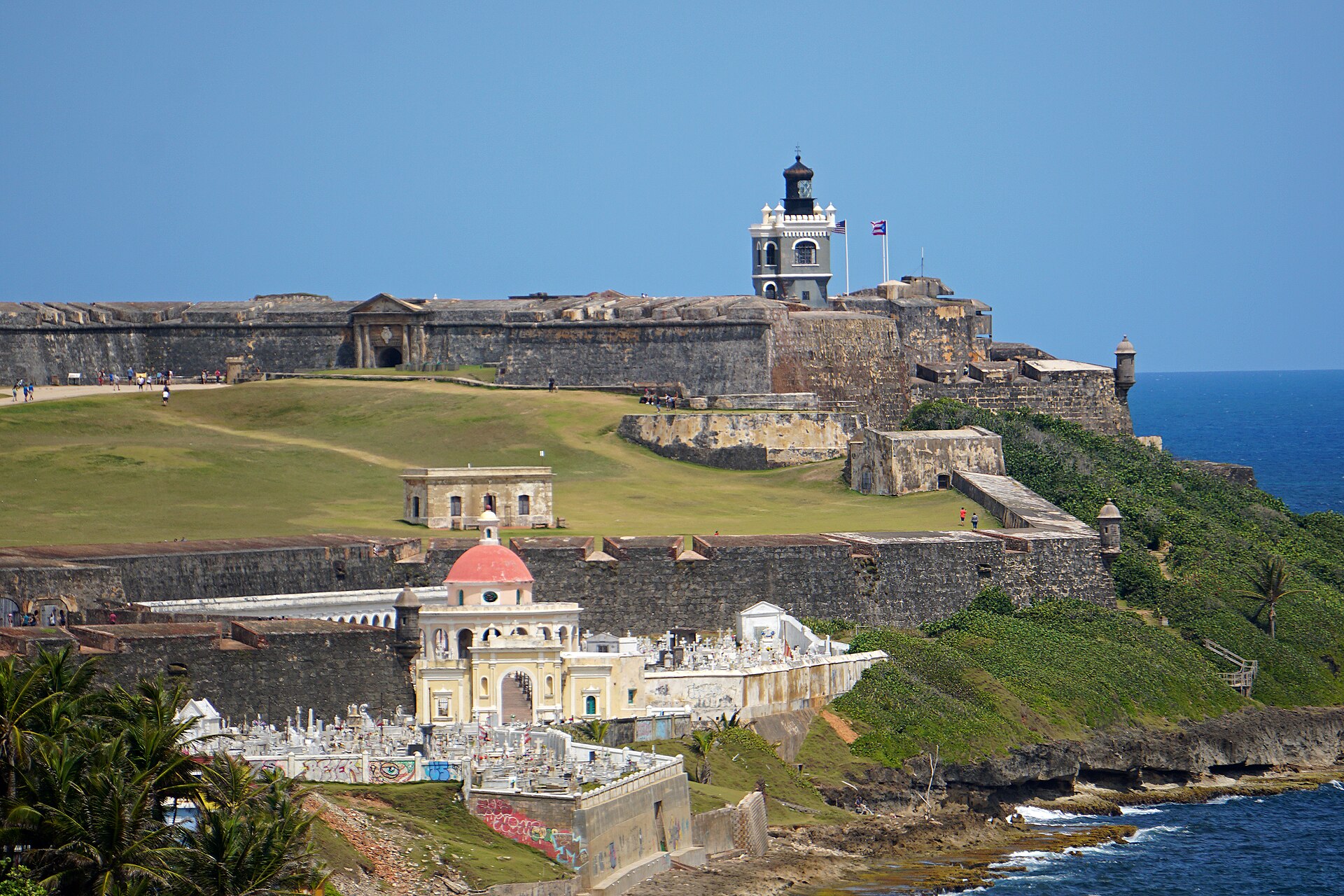
These early defences were far more modest than the vast fortress that stands today. They consisted of the first walls and a tower to watch and guard the entrance to the bay, a beginning rather than a finished work. But the choice of location was inspired, and everything that followed over the next two centuries was built upon and around this original core at the tip of the islet.
The fortress was named San Felipe del Morro in honour of King Philip II of Spain, the monarch under whom the Spanish empire reached a peak of its power and ambition. The name links this Caribbean stronghold directly to the grand strategy of imperial Spain, a reminder that this was not a local project but part of a vast, coordinated effort to defend a global empire.
It is worth pausing to imagine the scene when work first began, with Spanish engineers and labourers, many of them likely enslaved or conscripted, hauling stone to this windswept headland to raise the first defences. From these modest beginnings would grow one of the greatest fortresses of the age, but at the outset it was a gamble on the future importance of a young colonial port at the edge of a new world.
The decision to fortify San Juan so heavily reflected hard experience elsewhere in the Caribbean, where undefended Spanish settlements had been sacked and burned by raiders. The crown had learned that wealth without protection was simply an invitation to plunder, and El Morro was the emphatic answer to that lesson on the island of Puerto Rico, a declaration that this port, at least, would be made to endure.
Sir Francis Drake Is Turned Away
The value of El Morro was proven dramatically before it was even finished. In 1595 one of the most feared names in the age of sea power appeared off San Juan: Sir Francis Drake, the English privateer and scourge of the Spanish, arrived with a fleet intent on seizing the port and its riches. It was exactly the kind of assault the fortress had been built to repel.
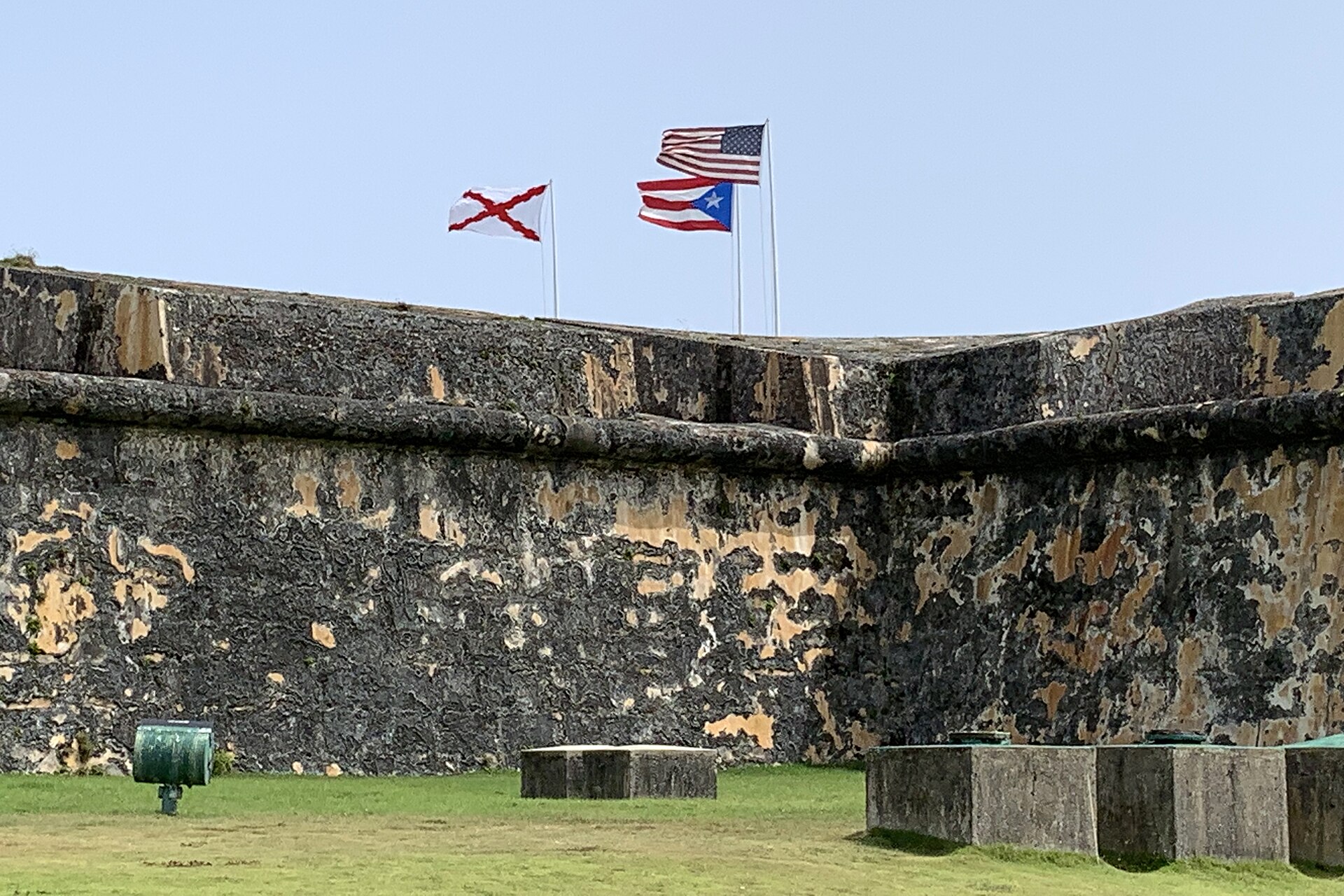
Drake’s attack failed. The guns of El Morro and the other defences of San Juan poured fire on the English ships as they tried to force the harbour, and the great captain who had terrorised Spanish possessions across the world was driven off, unable to break through. For the Spanish it was a triumphant vindication of the money and effort they had invested in fortifying the port.
The repulse of Drake sent a powerful message across the Caribbean. San Juan was not a soft target to be plundered at will, but a hard, well-defended fortress that could turn back even the most famous of raiders. The victory helped cement the port’s reputation and confirmed the wisdom of the Spanish decision to make El Morro one of the strongest points in their entire New World empire.
Drake’s appearance off San Juan was part of a long duel between Spain and England for mastery of the seas and the wealth of the Americas. For decades English privateers had preyed on Spanish shipping and raided Spanish ports, and the defence of San Juan was a key episode in that struggle. Turning back so celebrated an adversary was therefore not just a local success but a moment of real significance in the wider war at sea.
The famous overland assault that followed a few years later, when English forces briefly occupied the city, showed that the harbour defences alone could not guarantee safety, and it too fed into the long process of strengthening San Juan. Each attack, whether repelled at sea or pressed home by land, taught the Spanish something new about the vulnerabilities of their prized port and drove the next round of fortification.
The Dutch Assault of 1625
If Drake’s defeat showed the fortress at its best, a later attack revealed its limits and led to its greatest expansion. In 1625 a powerful Dutch fleet under Boudewijn Hendricksz descended on San Juan, and this time the attackers managed to land and lay siege to the city, occupying the town and pressing hard against the defenders who held out within El Morro itself.
The Dutch could not take the fortress, whose garrison stubbornly held on, but before they finally withdrew they set fire to much of the city of San Juan, causing terrible destruction. It was a sobering lesson: El Morro might be impregnable, but an enemy who got past the harbour could still ravage the town it was meant to protect. The Spanish resolved that this must never happen again.
The response to the Dutch attack was a massive program of new fortification. In the decades that followed, San Juan was ringed with a great circuit of city walls and additional strongholds, transforming the whole town into one of the most heavily defended cities in the Americas. El Morro was the anchor of this system, but it was now part of a far larger and more formidable network of defences.
The burning of the city by the frustrated Dutch left a lasting scar on the collective memory of San Juan and hardened the determination of its rulers never to be so exposed again. In this sense the Dutch attack, though a Spanish victory in that the fortress held, acted as a catalyst, spurring the transformation of San Juan from a port with a strong fort into a comprehensively fortified city ringed with walls and bastions.
The pattern of these assaults, English and Dutch and later others, reveals just how contested the Caribbean was in this era, a sea where the ambitions of rival European empires collided constantly. San Juan sat squarely in the middle of that contest, and the repeated attacks on El Morro were simply the local expression of a much larger and longer struggle for control of the riches of the New World.
Two Centuries of Building
El Morro as you see it today was not built all at once but grew over an astonishing span of roughly two and a half centuries. From the first sixteenth-century works, through the great expansions prompted by attacks like the Dutch assault, to major reconstruction in the eighteenth century, the fortress was continually enlarged, strengthened, and modernised to keep pace with the evolving art of war.

The design that gave the fortress much of its final form was the work of skilled military engineers, and a major redesign in the late sixteenth century by the engineers Juan de Tejada and Bautista Antonelli set the template for its development. Later, in the eighteenth century, further extensive rebuilding raised the fortress to its full, imposing height and completed much of what survives today.
The result of all this labour is a structure of extraordinary scale and sophistication. Rising through six levels from the water’s edge to its highest ramparts, with walls of tremendous thickness, El Morro represents the accumulated military knowledge of generations of Spanish engineers. It is not the product of a single vision but of a long, patient effort to make the harbour mouth of San Juan truly unassailable.
Following the long arc of El Morro’s construction is like reading a history of military engineering itself, as each phase reflects the tactics and technology of its time. Walls were thickened, batteries repositioned, and levels added in response to ever more powerful artillery, so that the finished fortress is a layered record of how warfare evolved across the sixteenth, seventeenth, and eighteenth centuries.
Bastions, Ramps, and Fields of Fire
Walk through El Morro and you are moving through a masterpiece of the military engineering of its age. The fortress is built on the principles of the bastioned trace, the system developed in Europe to cope with gunpowder artillery, in which angled bastions project outward so that defenders can sweep every wall and approach with overlapping fields of fire, leaving an attacker nowhere to hide.
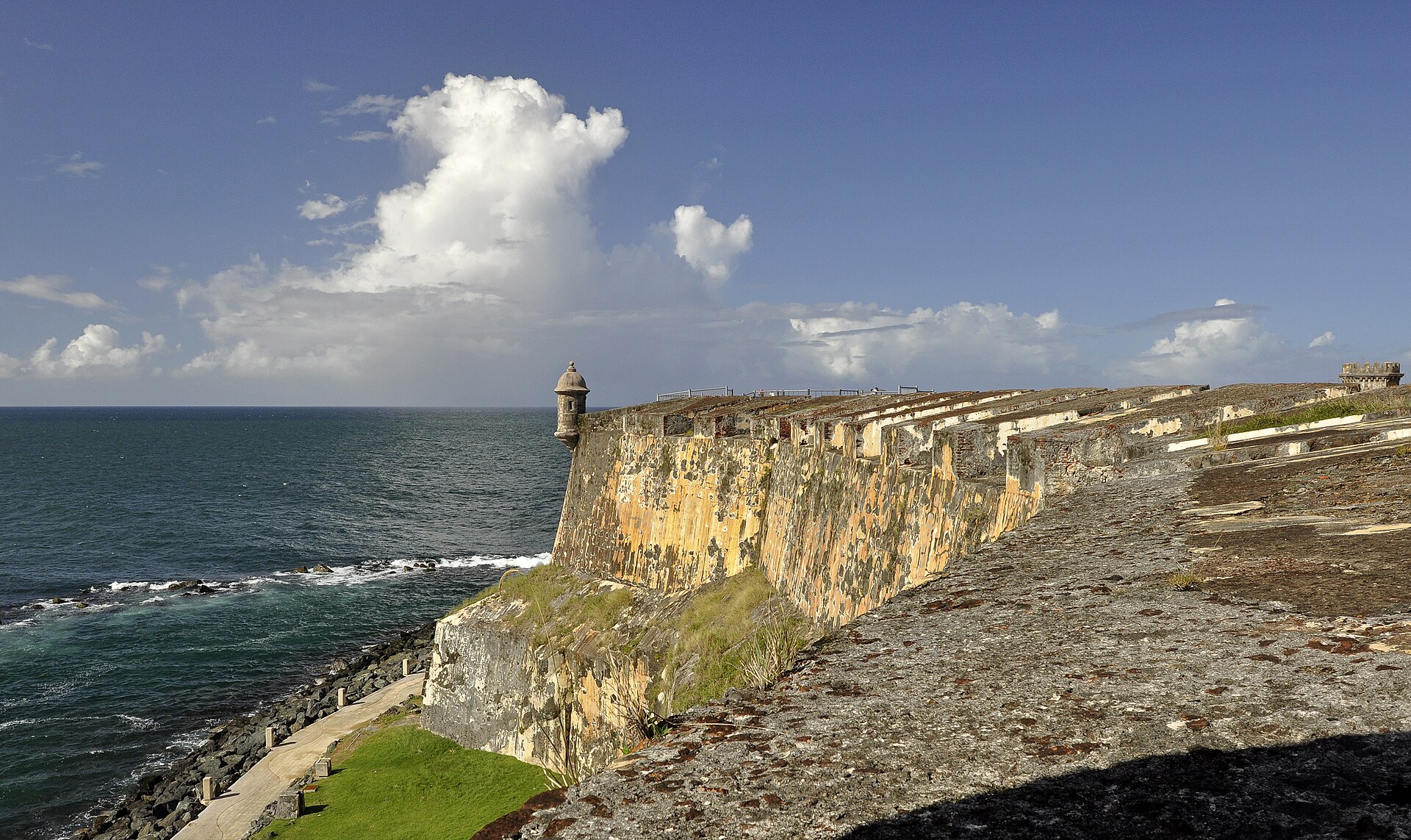
The six levels of the fortress are cleverly arranged to command both the sea and the land approaches. Guns on the lower batteries could fire almost at the waterline against ships trying to enter the bay, while higher levels commanded the surrounding area and provided secure quarters, storerooms, and magazines. Ramps allowed cannon and supplies to be moved between levels, and the whole complex was designed to function as a self-contained fighting machine.
Everything about the design speaks of a fortress meant to withstand a long siege. The immense thickness of the walls, some five to six metres through, could absorb the pounding of enemy cannon, while the layout ensured that the defenders always held the advantage. To study El Morro’s plan is to receive a lesson in how early modern engineers turned stone and geometry into an almost impregnable stronghold.
The genius of the bastioned design lies in eliminating the blind spots that had doomed the tall, thin walls of medieval castles once cannon appeared. By projecting angular bastions and carefully siting the batteries, the engineers ensured that any attacker faced converging fire from multiple directions at once. El Morro is a textbook example of these principles applied on a grand scale and adapted brilliantly to its rocky coastal site.
For all its might, the fortress was never simply a passive wall; it was designed to fight back aggressively, its guns able to punish any enemy foolish enough to come within range. The combination of a superb natural position at the harbour mouth and centuries of refined engineering made El Morro not just hard to take but genuinely dangerous to attack, which is a large part of why it succeeded so consistently in its purpose.
The Iconic Sentry Boxes
Of all the features of El Morro, none is more beloved or more recognisable than the garitas, the small domed sentry boxes that project from the walls at strategic corners. Perched over the sea, these little stone turrets allowed sentinels to keep watch over the approaches while sheltered from the weather and from enemy fire, and their distinctive shape has become a symbol of Puerto Rico itself.
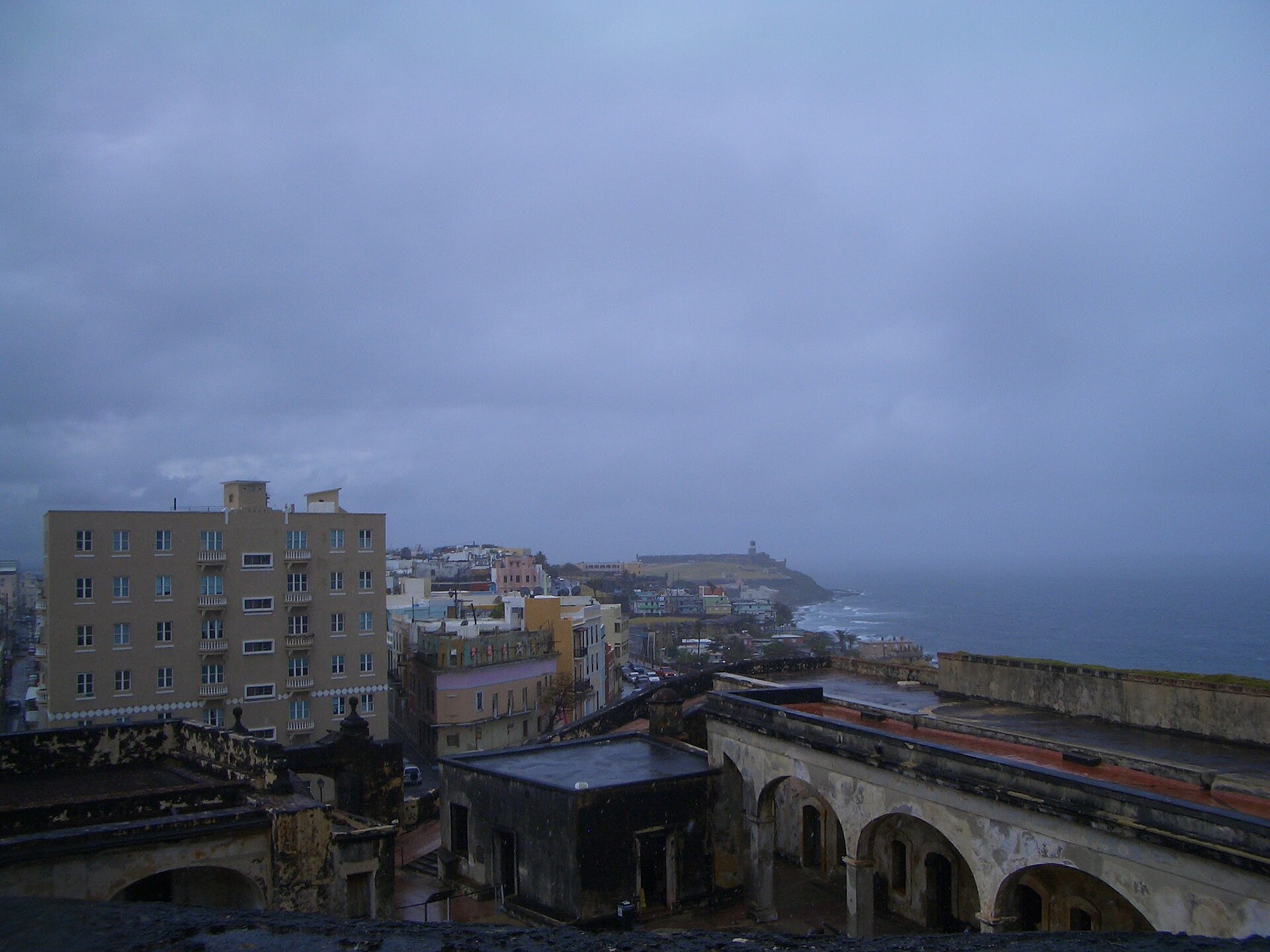
There is real charm as well as function in these structures. Round or many-sided, capped with a domed roof, and set dramatically against the blue of the sea and sky, the garitas are irresistible to photographers and have appeared on everything from postcards to license plates. One in particular, poised at a far corner of the fortress, is among the most photographed spots in all of Puerto Rico.
Yet behind their picturesque appearance lay a deadly serious purpose. From these boxes, guards scanned the horizon for the sails of approaching enemies, giving the fortress precious early warning of any threat. The garitas embody the whole character of El Morro, at once beautiful and formidable, a work of practical war that has become, over the centuries, a cherished emblem of an island’s identity.
So powerful is the garita as a symbol that it has come to stand for Puerto Rico far beyond the walls of El Morro, evoking the island’s history, resilience, and distinctive identity. To see one silhouetted against the Atlantic is to encounter an image that Puerto Ricans carry in their hearts, a small stone sentinel that has quietly kept watch over the island’s story for centuries.
Restoration and careful maintenance keep these little turrets standing against the constant assault of salt and storm, for they are as fragile as they are iconic. Their preservation is a priority precisely because they mean so much, both as functional relics of the fortress’s defensive past and as a treasured visual shorthand for Puerto Rico that appears wherever the island wishes to represent itself to the world.
The Lighthouse at the Summit
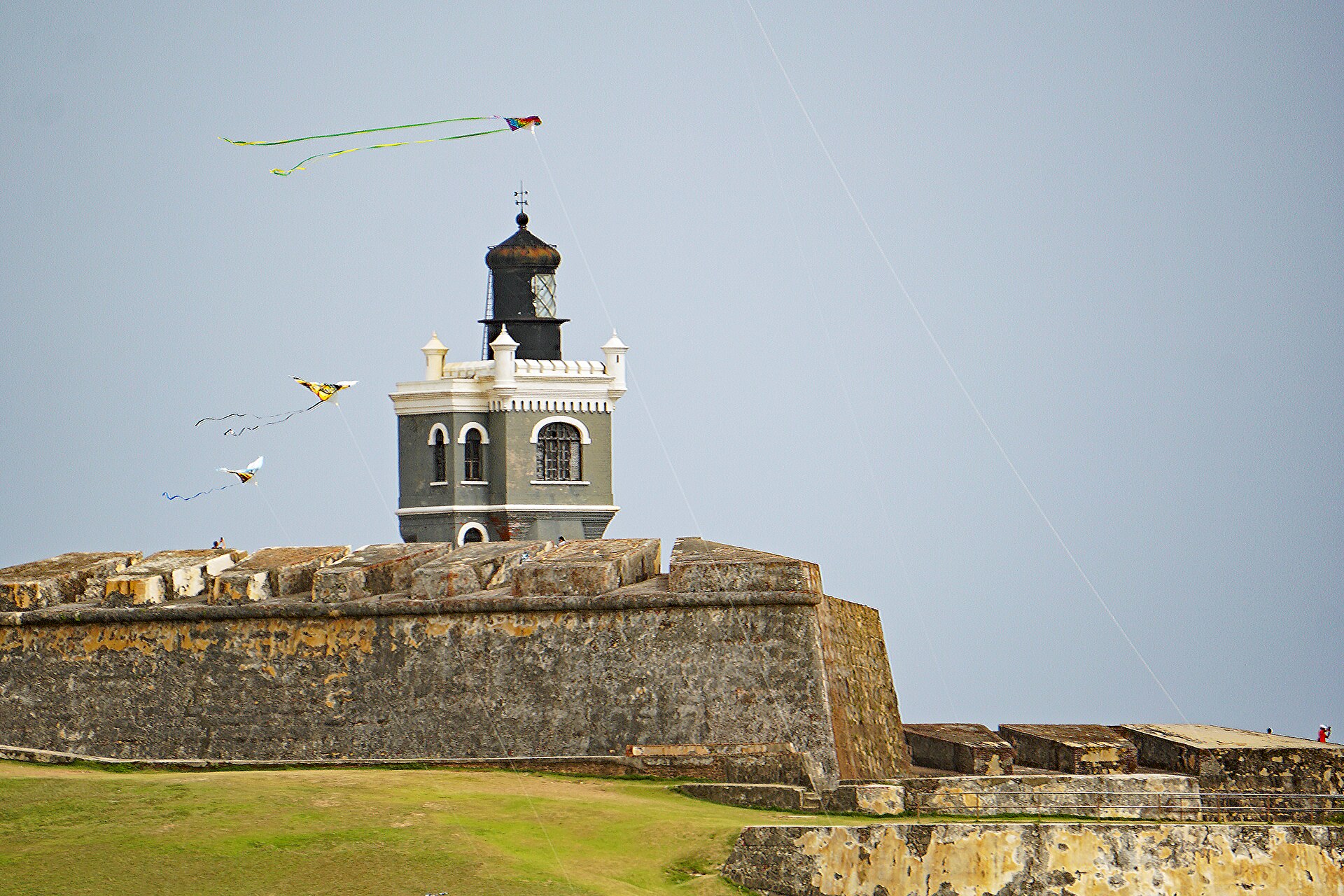
Crowning the highest level of El Morro stands a lighthouse, a reminder that the fortress guarded not only against enemies but also for the safety of the ships that legitimately used the harbour. A light has stood at this commanding spot for a long time, guiding vessels safely past the rocks and into the shelter of San Juan Bay, and the current structure is a well-known landmark.
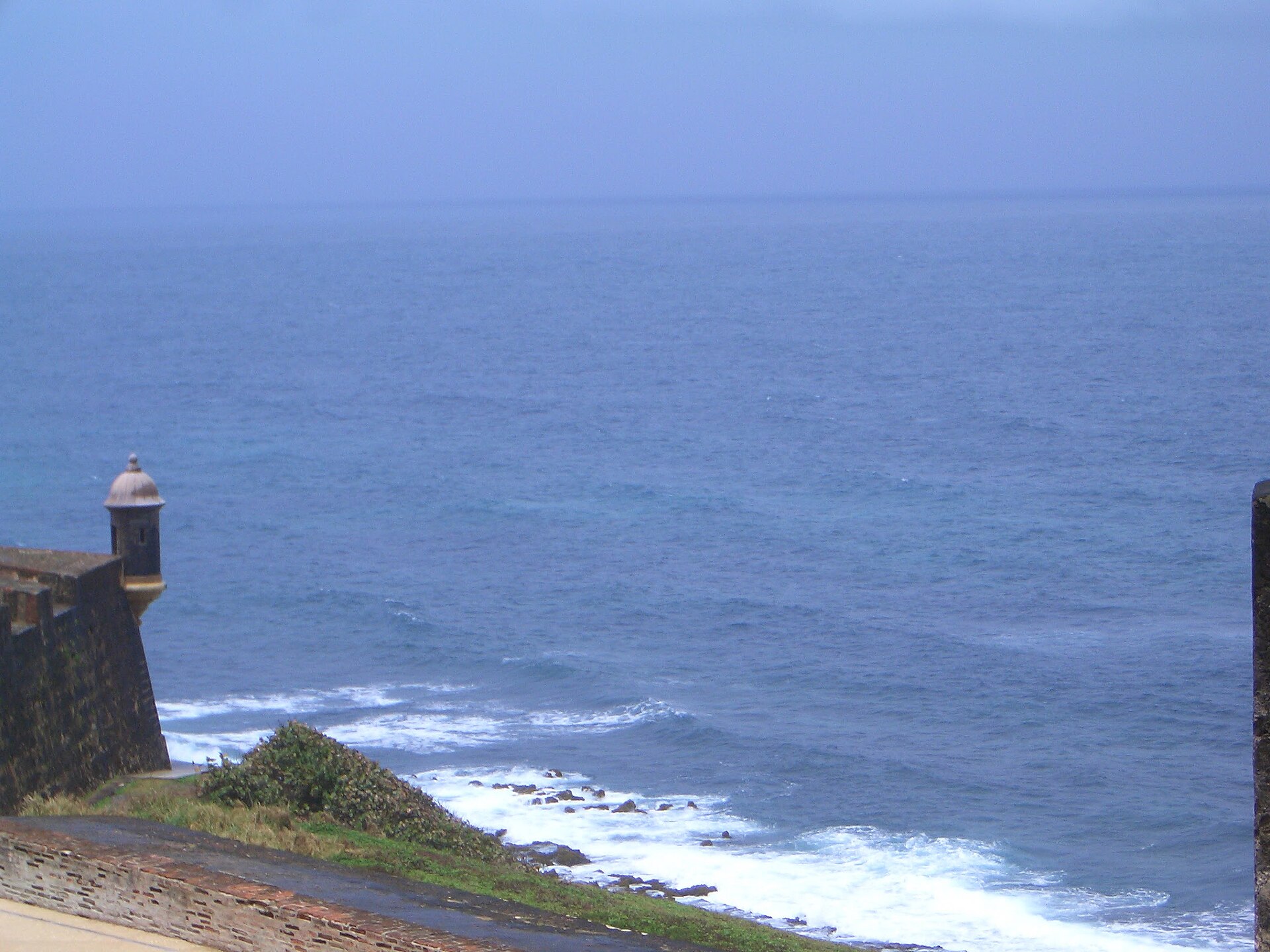
The lighthouse gives the fortress a distinctive silhouette and marks the very apex of the whole towering structure. From beside it, visitors enjoy one of the finest views in the Caribbean, taking in the open Atlantic, the entrance to the bay, the old city behind, and the endless expanse of sea from which so many threats once came. It is the natural climax of a visit to El Morro.
There is something fitting in this combination of the martial and the humane at the summit of the fortress. The same high point that once served to spot incoming enemies now helps guide friendly ships to safety, and the lighthouse stands as a symbol of the port’s enduring role as a gateway between the ocean and the land, in peace as well as in war.
The lighthouse has been rebuilt and modified over the years, its history intertwined with the fortress it crowns, including damage and repair connected to the events of 1898. Its enduring presence at the summit reflects the continuous use of this commanding point across changing eras, from Spanish watchtower to modern navigational aid, always exploiting the same unrivalled command of the harbour approaches.
Life in the Fortress
For the Spanish soldiers who manned El Morro, life was a mixture of tense vigilance and long, hot routine. The garrison had to be ready at any moment to repel an attack, but most days passed in the endless work of maintaining the fortress, drilling, standing watch, and keeping the guns and stores in order, all under the fierce Caribbean sun and far from home.
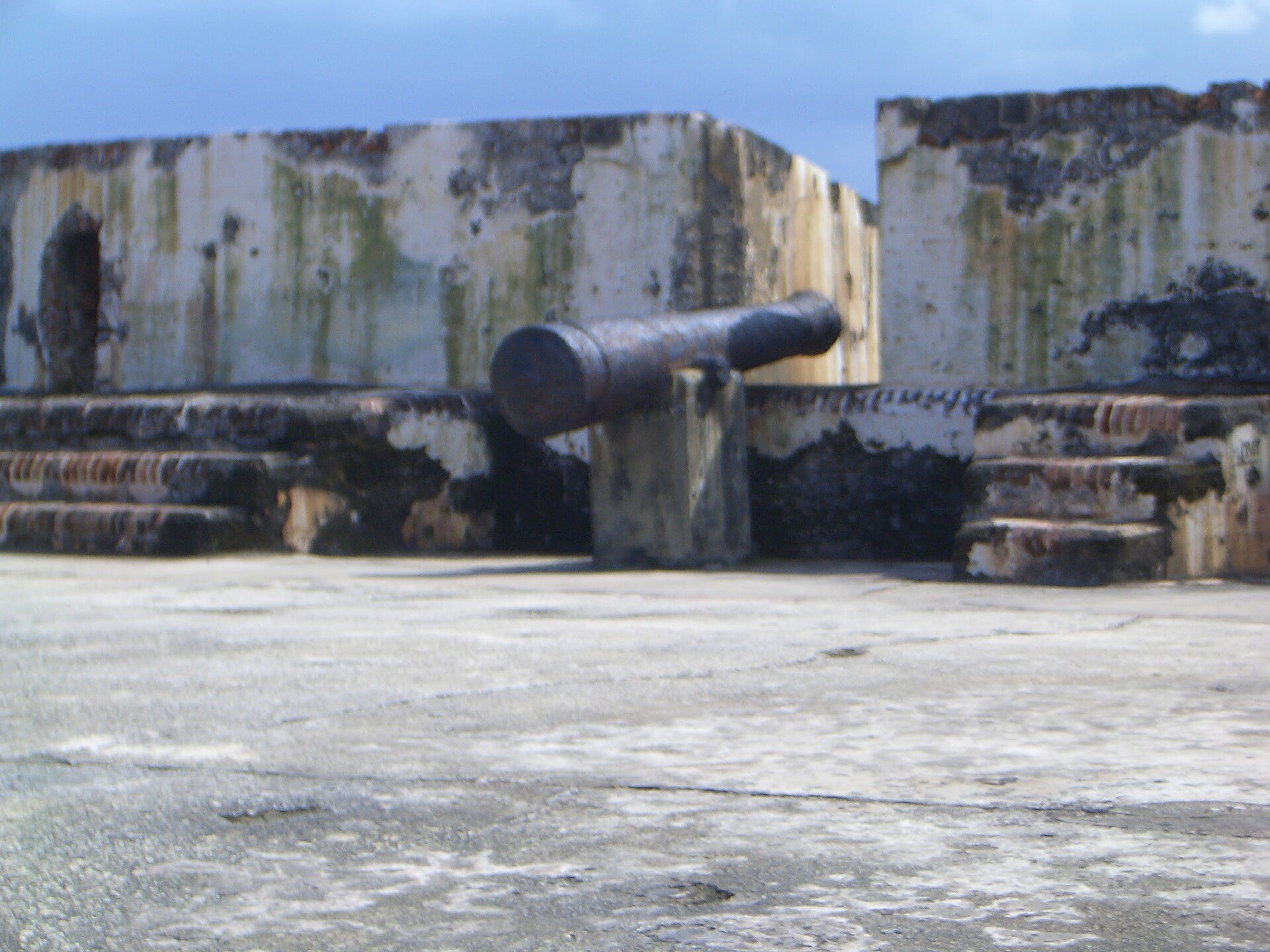
The fortress was designed to sustain its defenders through a prolonged siege, with quarters, kitchens, storerooms, chapels, and cisterns to collect precious rainwater. Deep within the walls, dungeons and secure chambers could hold prisoners or shelter the garrison, and the whole complex was arranged so that its people could live and fight cut off from the outside world for extended periods if necessary.
Behind the grand strategy and the famous sieges, then, lay the daily reality of ordinary men living and working within these walls. Their names are mostly forgotten, but the worn steps, the soot-stained kitchens, and the graffiti scratched into the stone by bored sentries bring their presence surprisingly close, reminding you that this vast machine of war was also, for many, simply a home and a posting.
The isolation of a Caribbean posting weighed heavily on many who served here, cut off by weeks of sea travel from Spain and vulnerable to the tropical diseases that killed more soldiers than enemy action ever did. The famous English overland assault of the late sixteenth century, for instance, was ultimately undone not by the guns of the defenders but by an outbreak of dysentery among the attackers, a reminder of how disease shaped these campaigns.
Water was a particular preoccupation, for a fortress that might be cut off by siege needed to store enough to keep its defenders alive and fighting. The great cisterns built to collect and hold rainwater were therefore as vital to El Morro’s survival as its guns and walls, an unglamorous but essential piece of engineering that underpinned the fortress’s ability to hold out against a determined enemy.
From Spanish to American Hands
For nearly four centuries El Morro flew the flag of Spain, but at the very end of the nineteenth century that came to an abrupt end. In 1898 the Spanish-American War brought the United States Navy to San Juan, and American warships bombarded the fortress and the city as part of the wider conflict that would strip Spain of the last major remnants of its once-vast New World empire.
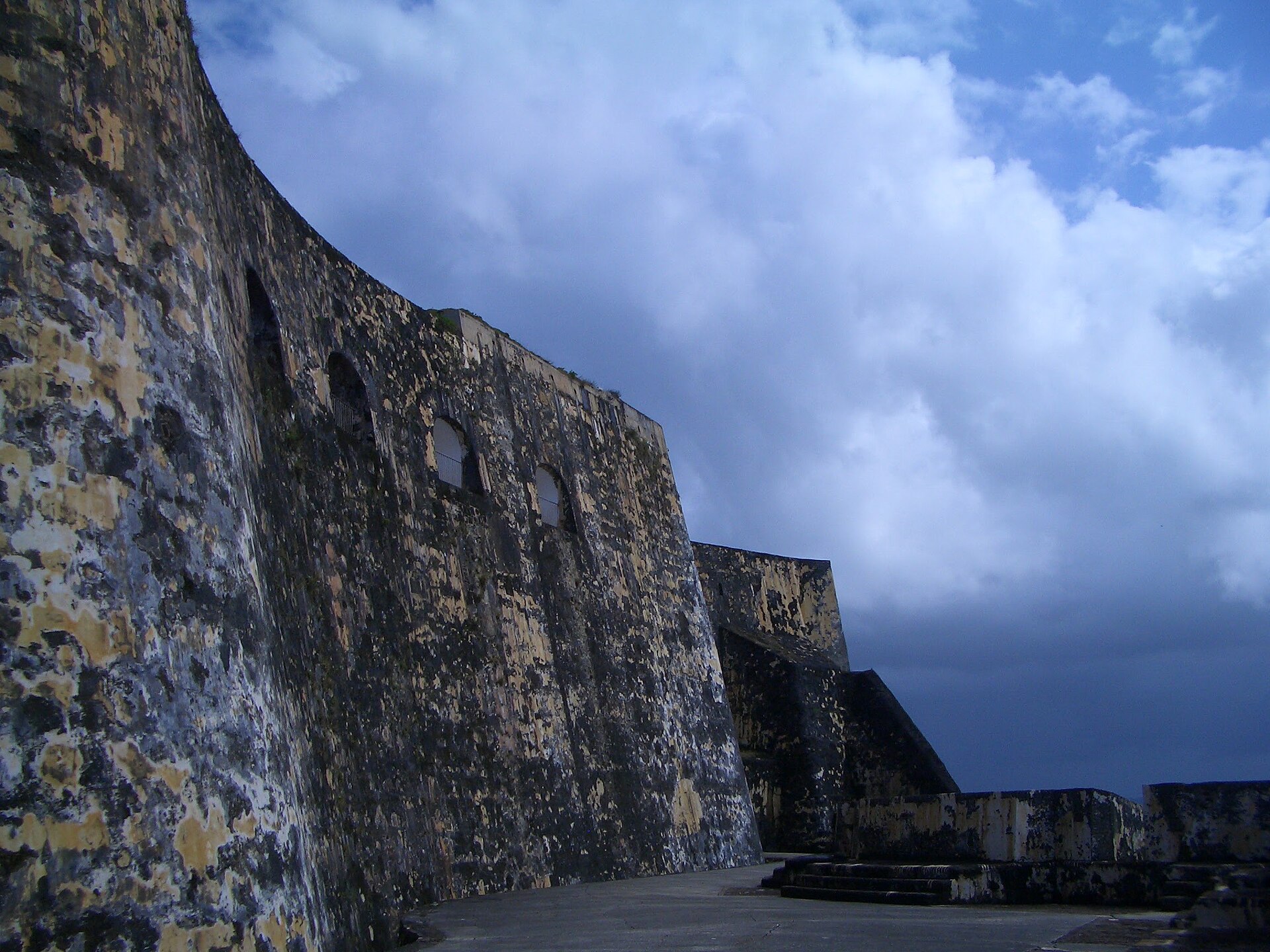
With Spain’s defeat in that war, Puerto Rico passed to the United States, and El Morro passed with it. The fortress that had been built to defend Spanish treasure and Spanish power now found itself in the hands of a rising new power, an extraordinary turn in the long history of a stronghold that had symbolised Spanish dominance in the Caribbean for so long.
The American era brought new roles for the old fortress. It continued to serve military purposes into the twentieth century, and during the Second World War it was pressed back into service as part of the coastal defences of the strategically vital island. For a structure begun in the age of sailing ships and cannon, this adaptation to the era of modern warfare was a remarkable testament to the enduring value of its position.
The transfer of El Morro from Spanish to American control in 1898 marked far more than a change of garrison; it symbolised a global shift of power, the final eclipse of the old Spanish empire and the emergence of the United States as a power in the Caribbean. The old fortress, built to embody Spanish might, thus became a witness to the very end of the empire it had served so long and so well.
Standing on the ramparts today and looking out to sea, it is not hard to imagine the American warships of 1898 appearing on the horizon, the last in a long line of enemies to test these walls. That El Morro survived that final bombardment and endures still, cared for now rather than fought over, is a fitting close to its career as a fortress and the beginning of its new life as a monument to all that history.
From Fortress to Park
After centuries as an active military installation, El Morro eventually laid down its arms. In the twentieth century responsibility for the fortress passed to the United States National Park Service, and it was transformed from a working stronghold into a preserved historic site, cared for and opened to the public rather than garrisoned against enemies.

This transition allowed the fortress to be protected, studied, and interpreted for visitors, ensuring that its long and dramatic history would be preserved for future generations. The wide green grounds that now surround it, once kept clear to give the guns a field of fire, became a beloved public space where families fly kites in the sea breeze in the shadow of the ancient walls.
The change from fortress to park is a happy ending for a structure that saw so much conflict. El Morro today is a place of recreation and wonder rather than war, welcoming millions of visitors a year, yet it has lost none of its power to impress. If anything, its peaceful present makes its warlike past all the more vivid by contrast, as you stand among the old cannon and imagine the battles they once fought.
The reclaiming of the fortress as public parkland also reconnected the people of San Juan with a monument that had long been off-limits as an active military base. Where once only soldiers trod, now schoolchildren, families, and visitors from around the world roam freely, and the fortress has become woven into the everyday life of the city in a way that its builders could never have imagined.
The broad lawns that surround El Morro have become one of the most cherished public spaces in San Juan, a place where the community gathers to relax, celebrate, and simply enjoy the sea air. On a breezy afternoon the sky above the fortress fills with colourful kites, a joyful sight that transforms this former field of fire into a scene of pure delight, and a symbol of the fortress’s peaceful new role.
A World Heritage Fortress
The outstanding importance of El Morro has been recognised at the highest international level. In 1983 the fortress, together with the other historic fortifications of San Juan, was inscribed on the UNESCO World Heritage List, honouring it as a supreme example of the military architecture that the European powers used to defend their colonial empires in the age of sail.
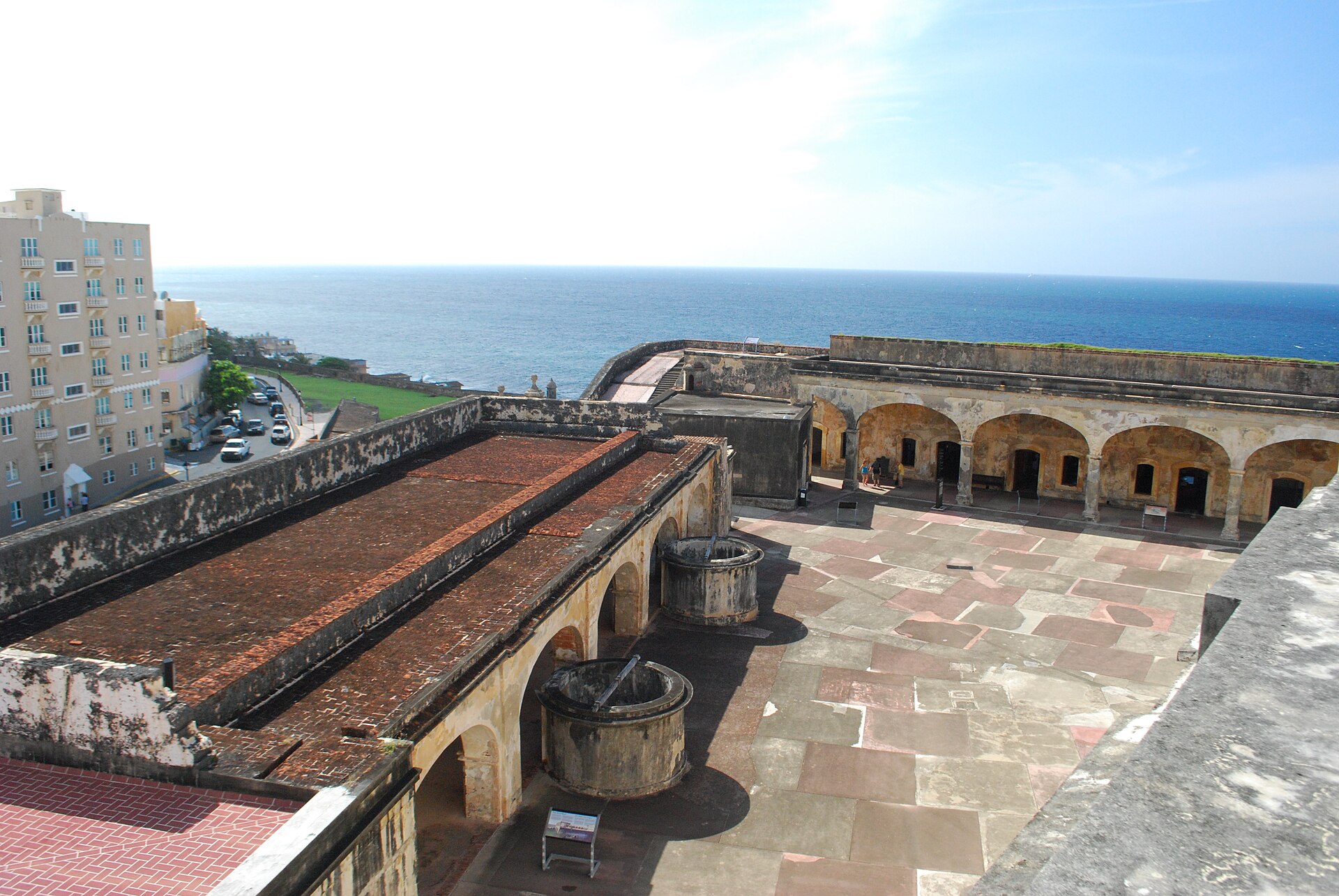
The listing recognised El Morro not in isolation but as part of the whole magnificent defensive system of old San Juan, including the great city walls and the neighbouring fortress of San Cristóbal. Together these works represent one of the most complete and impressive examples of Spanish colonial fortification anywhere in the Americas, a coherent system built to defend a vital imperial port.
For Puerto Rico, the World Heritage status affirms the global significance of this cherished landmark. El Morro is not only a symbol of the island’s Spanish colonial heritage but a monument acknowledged as belonging to the shared history of humanity, a place whose preservation matters far beyond the shores of the Caribbean. That recognition helps ensure it will be cared for and admired for generations to come.
Being part of a World Heritage system also brings a commitment to careful conservation, as the salt air, tropical storms, and sheer volume of visitors all take their toll on the ancient stone. Ongoing preservation work aims to keep El Morro sound and safe while retaining its authenticity, balancing the demands of mass tourism with the responsibility to safeguard a monument of world importance for the future.
Visiting El Morro
Visiting El Morro is one of the great pleasures of a trip to San Juan, and it is wonderfully accessible, standing at the end of the old city and reached by a walk across its broad, grassy esplanade. That approach across the open field, with the fortress growing ever larger ahead of you and kites dancing overhead, is itself a memorable part of the experience.
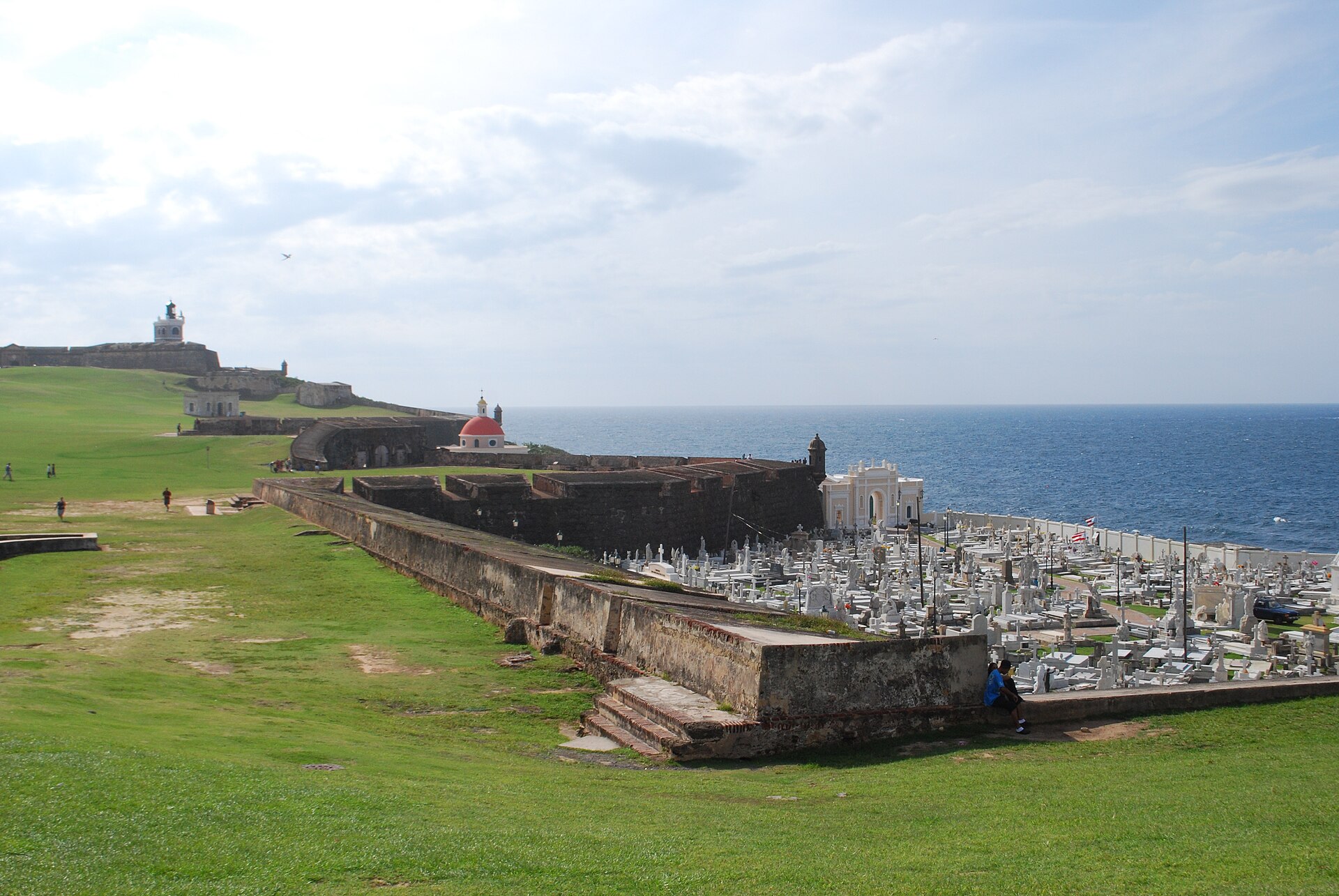
Inside, give yourself time to explore all six levels, from the lofty ramparts by the lighthouse down toward the batteries near the water. Seek out the famous garitas for their views and their photographs, walk the great ramps, peer into the vaulted chambers, and pause often to take in the sweeping vistas of sea and city. A good deal of the fortress is open to wander, and it rewards curiosity.
View 18.4708, -66.1241 on Google Maps
Come prepared for sun and heat, as much of the fortress is open and exposed, and consider timing your visit for the softer light of morning or late afternoon. The site is cared for as part of a national historic park, with interpretation to help you understand what you are seeing. However you plan it, El Morro offers an unforgettable encounter with the age of empire, standing guard as it has for centuries over the bright waters of San Juan Bay.
Pairing a visit to El Morro with the nearby fortress of San Cristóbal and a stroll along the old city walls gives you the full picture of San Juan’s remarkable defences and makes for a rich day of exploration. Together these sites tell the story of how a small island port became one of the most heavily fortified places in the Americas, and El Morro is the unforgettable centrepiece of that whole extraordinary system.
Many visitors find that the emotional highlight of a visit is simply standing at the seaward walls, feeling the trade winds and watching the waves break far below, as sentries did for centuries. In that moment the whole purpose of the place becomes clear, and the fortress stops being a collection of walls and cannon and becomes instead a vivid window into the age of empires, sea power, and the long contest for the Caribbean.
Castles Nearby
You May Like
Fort Ticonderoga: The Star Fort Whose Cannon Helped Win a Revolution


3 thoughts on “Castillo San Felipe del Morro: The Fortress That Guarded Spain’s Caribbean”