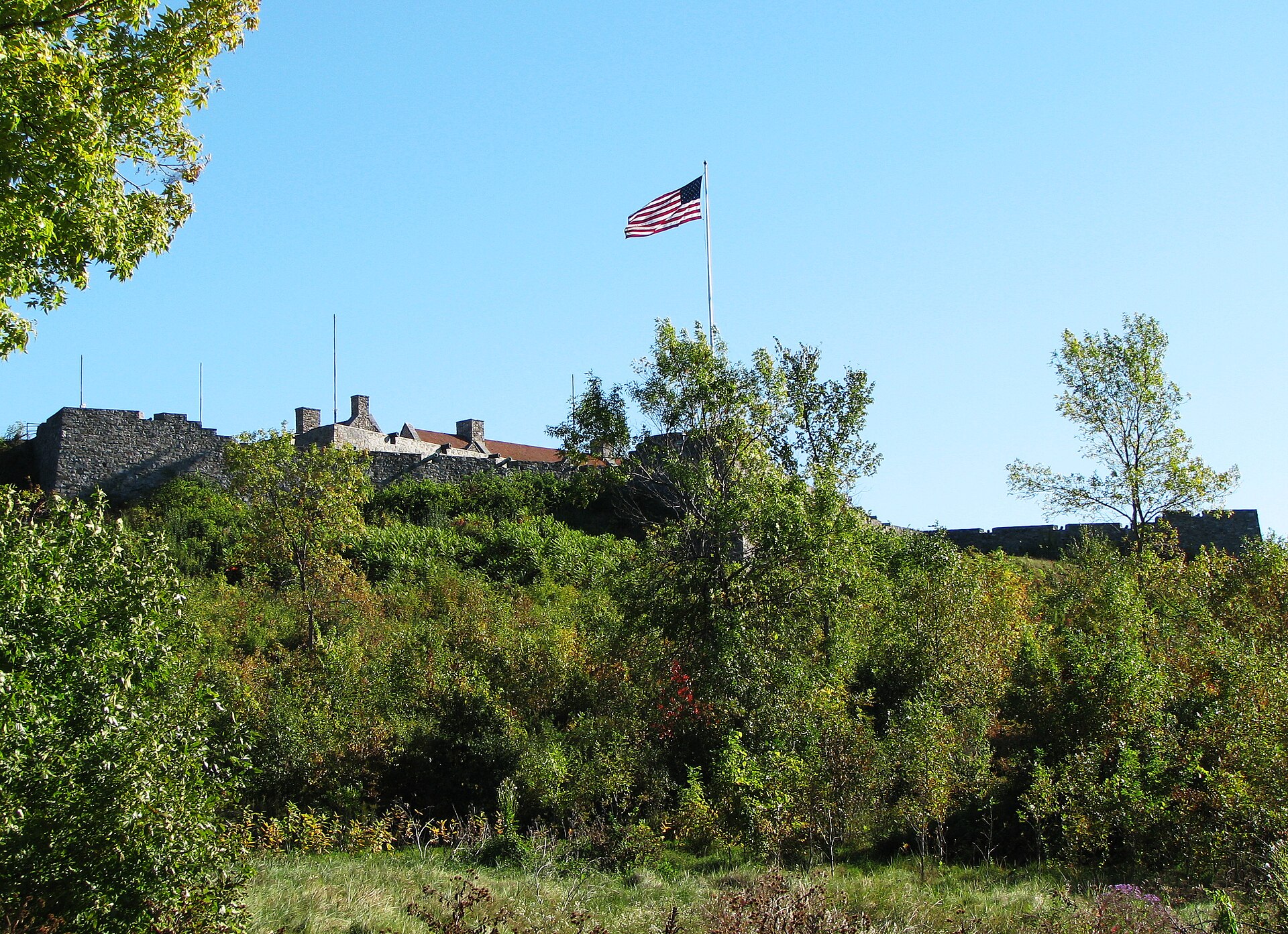
On a narrow neck of land between two great lakes, where the waters of Lake Champlain squeeze toward Lake George, stands a star-shaped stone fortress that played an outsized role in the birth of a nation. Fort Ticonderoga, in upstate New York, guarded one of the most strategically vital waterways in colonial North America, and its capture, defence, and cannon helped shape the outcome of two great wars.
Built by the French and later held by the British, Ticonderoga was fought over again and again, its guns commanding the corridor between Canada and the British colonies to the south. But its most famous moment came at the dawn of the American Revolution, when a band of colonial militia seized it in a bold surprise attack, and its cannon, dragged across the winter landscape to Boston, forced the British to abandon that city.
In this guide you will explore the whole dramatic story of Fort Ticonderoga: why its position was so crucial, the great French victory and later British conquest, its bloodless capture at the start of the Revolution, the epic transport of its guns that changed the course of the war, its decline into ruin, and its restoration as one of the great historic sites of the United States. It is a fortress where American history was forged.
A word before you begin: Fort Ticonderoga is a place where the sweep of North American history comes to a single point. French and British empires, the birth of the United States, and the peoples who lived along these lakes long before any of them, all meet at this narrow neck of land between the waters. Keeping that convergence in mind will deepen your appreciation of a fortress whose story is, in miniature, the story of a continent.
In This Article
- The Key to a Continent
- The French Build Fort Carillon
- The Great Battle of 1758
- The British Take the Fort
- From Carillon to Ticonderoga
- Come Out, You Old Rat!
- The Noble Train of Artillery
- A Fortress in the Revolution
- The Design of the Star Fort
- Decline into Ruin
- Saved and Restored
- A Living Museum
- Visiting Fort Ticonderoga
The Key to a Continent
To understand Fort Ticonderoga, you must understand the geography that made it matter. In the age before railways and highways, the great lakes and rivers of North America were the highways, and the corridor formed by Lake Champlain and Lake George was one of the most important of all. It provided a natural route between the French territory of Canada to the north and the British colonies to the south.
Fort Ticonderoga stood at the very hinge of this corridor, at a narrows where Lake Champlain pinches toward Lake George, controlling the vital portage between the two bodies of water. Any army moving between Canada and the Hudson River valley had to pass this point, and whoever held the fort commanded the whole strategic waterway, the key to the northern approaches to the British colonies.
This is why the fort was fought over so fiercely and so often. Its position gave it a strategic value out of all proportion to its size, making it one of the most contested pieces of ground in colonial North America. To control Ticonderoga was to hold the gateway between two worlds, and the great powers struggling for mastery of the continent understood exactly what was at stake.
The lakes formed part of a broader water route that linked the St. Lawrence River in the north with the Hudson River in the south, effectively connecting Canada with New York and the Atlantic. This made the Champlain corridor a natural invasion route in both directions, and control of the choke point at Ticonderoga was correspondingly prized by every power that contested the northern frontier of colonial America.
So important was this corridor that it would remain strategically significant even into the War of 1812, when Lake Champlain again became a theatre of conflict between the United States and Britain. The enduring military value of the waterway across successive conflicts underscores just how vital the choke point at Ticonderoga had been, and why its control had once seemed worth any sacrifice.
The French Build Fort Carillon
The fortress was originally the work of the French, who built it in the mid-1750s during the great war between France and Britain for control of North America, the conflict known in America as the French and Indian War. The French named their new stronghold Fort Carillon, and they designed it to guard the strategic narrows against British advance from the south.
Fort Carillon was built as a star fort in the European tradition, its design following the principles of the great military engineers of the age, with projecting bastions and angled walls arranged to command every approach. The French intended it to be a formidable barrier, and its construction reflected the importance they placed on holding the vital corridor against their British enemies.
Positioned on its commanding neck of land, the new fort was the northern shield of the French position and the southern spearhead of their line of defence along the lakes. Its very existence was a challenge to the British, and it was clear from the moment of its building that Fort Carillon would become a focus of the war for the continent, a prize both sides would spill blood to control.
The construction of Fort Carillon was a major undertaking in a remote wilderness, requiring the transport of materials and skilled labour to a frontier outpost far from the centres of French Canada. Its completion gave France a powerful anchor for its defensive line along the lakes, and it signalled the French determination to contest the corridor and to block any British thrust toward the heart of New France.
The engineer who designed the fort applied the fashionable principles of European military architecture, but the demands of the wilderness setting and the limits of colonial resources meant that the finished work was not on the grandest scale of contemporary European fortresses. Nonetheless, it was a formidable and well-sited stronghold, more than capable of dominating the vital corridor it was built to guard.
The Great Battle of 1758
Fort Carillon’s first great trial came in 1758, and it produced one of the most remarkable French victories of the entire war. A massive British army, vastly outnumbering the French defenders, advanced on the fort determined to sweep it aside. The French commander, the Marquis de Montcalm, had only a fraction of the enemy’s numbers with which to defend the position.
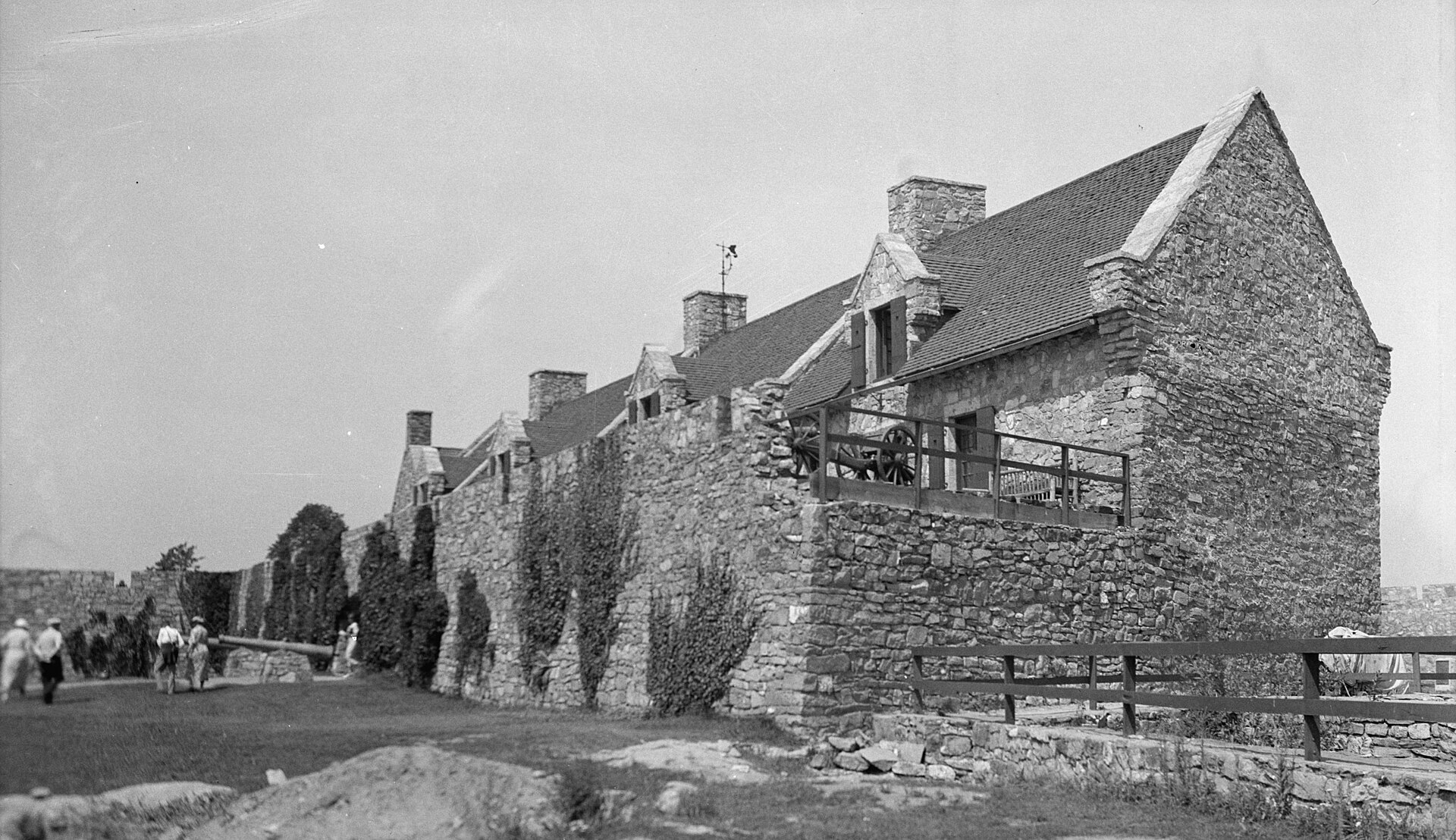
Rather than rely solely on the fort’s walls, Montcalm’s men built a formidable line of entrenchments and felled trees on the high ground before the fort, creating a deadly obstacle. When the British launched their assault, they threw themselves against these defences in a series of frontal attacks, and they were cut down in appalling numbers by the well-positioned French defenders.
The battle was a catastrophe for the British, who suffered thousands of casualties and were ultimately forced to retreat, defeated by a far smaller force. It was a stunning triumph for Montcalm and gave Fort Carillon a great reputation for impregnability. The victory was one of the high points of French fortunes in the war, a dramatic demonstration of what a well-led defence could achieve against the odds.
The reputation for impregnability that Fort Carillon gained from the 1758 victory would prove somewhat misleading, for the triumph owed as much to Montcalm’s skilful field fortifications and the British commander’s rash tactics as to the strength of the fort itself. Nonetheless, the memory of that bloody repulse lingered, and it added to the aura of the great fortress at the narrows.
The 1758 battle also entered the annals of military history as a textbook example of the folly of frontal assaults against prepared defences, a lesson that would be relearned in bloodier form in later centuries. For the French, it was a rare bright moment in a war that was otherwise turning against them, a fleeting triumph before the tide of British power swept over their North American empire.
The British Take the Fort
The French triumph of 1758 proved to be the fort’s high-water mark, for the tide of the war was turning against France. The following year, in 1759, the British returned, this time under a different and more careful commander, and with overwhelming force. They advanced once more on the great fortress, determined to succeed where they had failed so bloodily the year before.
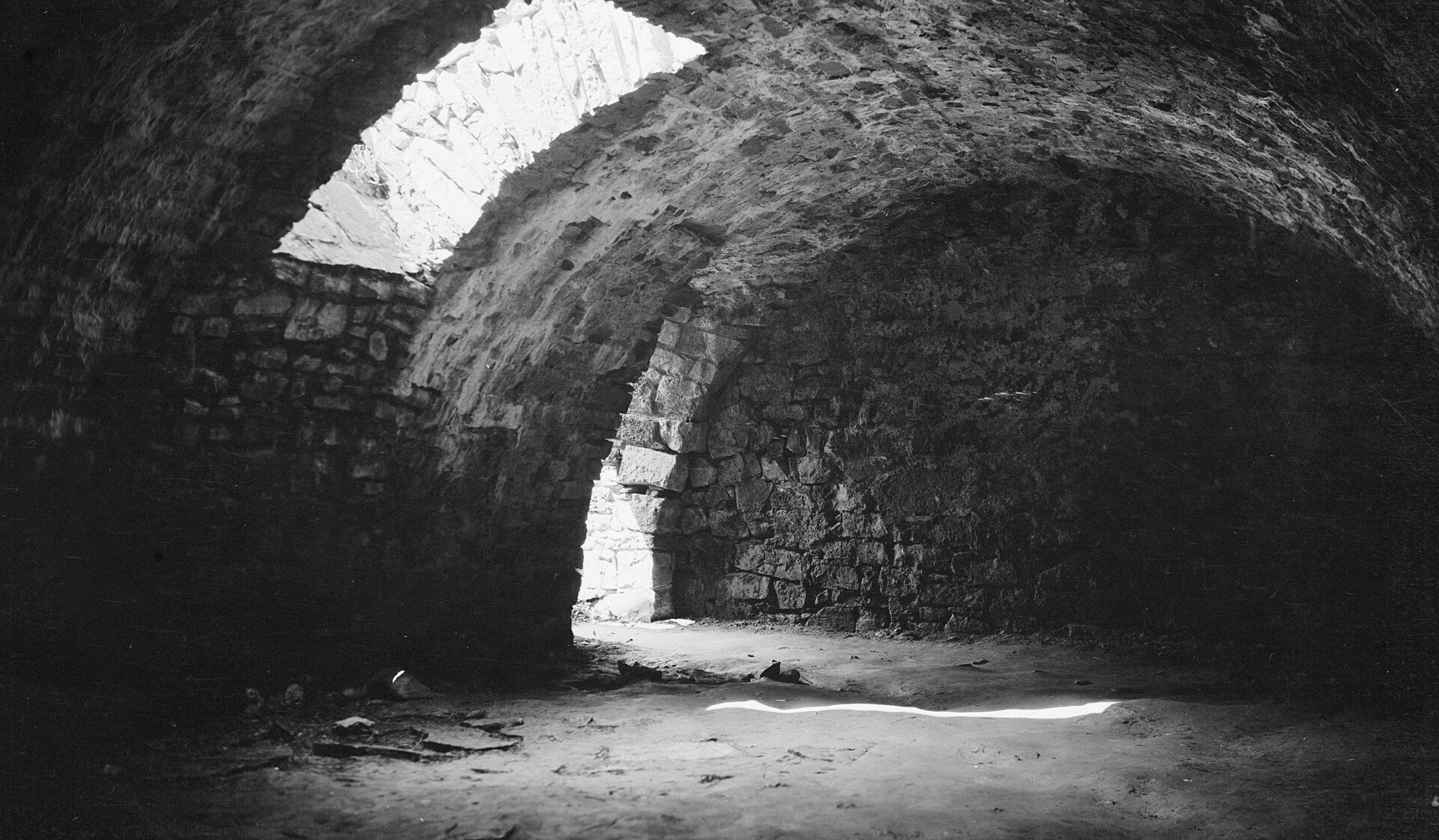
This time there would be no reckless frontal assault. The British brought up their artillery and prepared for a methodical siege, and the French, recognising that they could not hold the fort against such a force, chose to withdraw rather than be trapped. Before leaving, they did what they could to destroy the fortifications, and the British took possession of the battered stronghold.
With the fall of the fort, now renamed Ticonderoga, the British secured the vital corridor and removed a major obstacle to their conquest of Canada. The capture was part of the great British triumph of that year, which saw the fall of Quebec and the effective collapse of French power in North America. Ticonderoga had passed into British hands, but its most famous days were still to come.
The contrast between the bloody British defeat of 1758 and the almost bloodless capture of 1759 illustrates how much the fortunes of war could turn on leadership and circumstance. Where one British commander had squandered his men in futile assaults, another achieved his object through patience and overwhelming force, and the great fortress that had seemed impregnable fell without a fight.
From Carillon to Ticonderoga
The changing names of the fortress tell the story of its shifting fortunes across the wars for the continent. The French called it Fort Carillon, a name whose origin is variously explained, perhaps evoking the sound of the nearby rapids like the chiming of bells. Under the French, this was its identity through the great battle of 1758 and the years of French control.
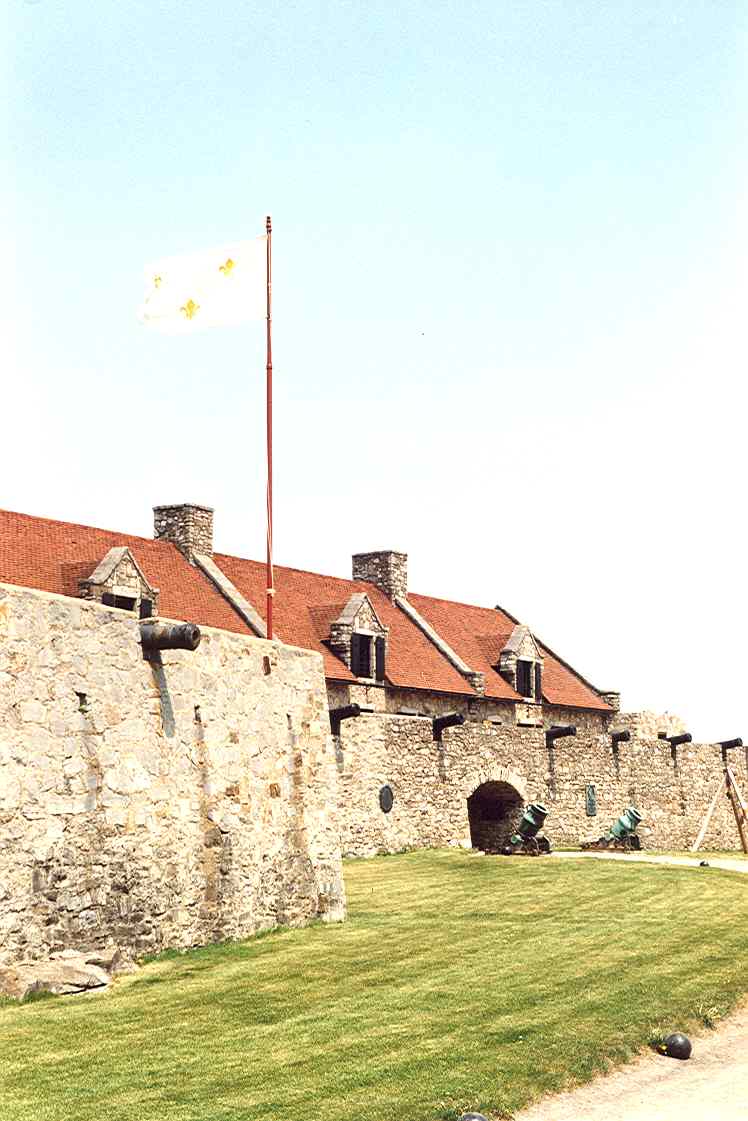
When the British captured the fort in 1759, they gave it the name by which it is best known today, Ticonderoga, derived from a word in the local Indigenous language said to mean something like the place between two waters or the junction of waterways. The name perfectly captures the fort’s defining feature, its position at the meeting point of the great lakes.
This layering of names, French and then British upon an Indigenous root, reflects the complex history of the site and of the region, where French, British, American, and Native peoples all contended for control. To know the fort by both its names is to hold in mind the whole sweep of its dramatic past, from Fort Carillon of the French to the Ticonderoga of American legend.
The Indigenous peoples of the region, for whom the waterways had been vital routes and homelands long before any European arrived, are an essential part of the fort’s story, though too often overlooked. The very name Ticonderoga is a legacy of their presence and their deep knowledge of the landscape, a reminder that the strategic importance the Europeans fought over was rooted in geography the Native peoples had understood for generations.
The three names of the site, in Indigenous, French, and English tongues, form a kind of linguistic archaeology, each layer marking a different chapter in the long contest for the narrows. To pronounce the name Ticonderoga today is to speak a word that carries within it the whole tangled history of the place, from its Native origins through the imperial wars to the birth of the American republic.
Come Out, You Old Rat!
Fort Ticonderoga’s most celebrated moment came at the very dawn of the American Revolution. In the spring of 1775, just weeks after the first shots of the war had been fired, a band of American militia resolved to seize the fort, whose cannon they knew would be invaluable to the patriot cause. The force was led by the fiery Ethan Allen and his Green Mountain Boys, joined by Benedict Arnold.
In the early hours of the morning, the Americans crossed the lake and surprised the small, unsuspecting British garrison, catching them completely off guard. According to the famous story, Ethan Allen demanded the fort’s surrender, and the startled British commander, roused from his bed, gave up the stronghold with barely a shot fired, in one of the most bloodless victories imaginable.
The capture of Fort Ticonderoga was the first significant American offensive victory of the Revolutionary War, an early and morale-boosting success for the fledgling patriot cause. But its true importance lay not in the fort itself but in what the fort contained: a large store of cannon and military supplies, the very artillery that the Americans desperately needed and that would soon change the course of the war.
The audacity of the 1775 capture, undertaken by irregular forces on their own initiative at the very start of the war, captured the imagination of the American public and became one of the founding legends of the Revolution. Ethan Allen’s reported demand for surrender, whatever its exact wording, entered American folklore, and the exploit gave the patriot cause an early hero and a much-needed boost to morale.
The guns and stores seized in the capture were arguably the most valuable prize of the early war, for the Americans were desperately short of heavy artillery, without which they could not hope to drive the British from fortified positions. In this sense the taking of Ticonderoga was not merely a symbolic victory but a practical one of the first importance, setting in motion the events that would liberate Boston.
The Noble Train of Artillery
The capture of Ticonderoga set the stage for one of the most extraordinary feats of the entire Revolution. Far to the east, the American army was besieging the British in Boston, but it lacked the heavy cannon needed to force them out. The guns captured at Ticonderoga were the answer, but they lay hundreds of kilometres away across a wilderness of mountains, forests, and frozen rivers.
The task of bringing the cannon to Boston fell to a young bookseller turned soldier named Henry Knox, who undertook one of the great logistical achievements of the age. Through the depths of winter, Knox and his men hauled tons of cannon and mortars on sledges over snow and ice, across mountains and frozen lakes, in an epic journey that came to be known as the noble train of artillery.
Against all odds, Knox succeeded, delivering the guns to the army outside Boston in the early months of 1776. The cannon were hauled up onto the heights overlooking the city, and their sudden appearance, commanding the British position, made Boston untenable. The British were forced to evacuate the city, a great American triumph made possible by the guns of Fort Ticonderoga and the determination of Henry Knox.
The success of Knox’s expedition depended on ingenuity, determination, and no small amount of luck, as the heavy guns were manhandled across terrain that seemed to defy any such movement. That the whole enterprise succeeded, delivering dozens of cannon intact over hundreds of kilometres in the dead of winter, remains one of the most inspiring logistical feats in American military history.
The story of Henry Knox and his noble train of artillery has become one of the cherished legends of the American Revolution, a tale of ingenuity and perseverance that captures the resourcefulness of the patriot cause. That a former bookseller with no formal military training should have accomplished so daunting a feat only adds to the appeal of a story that still inspires admiration today.
The route of the noble train, across frozen lakes and over the snow-covered mountains of New York and Massachusetts, has become a celebrated episode in its own right, commemorated and retraced by those who marvel at the achievement. It stands as a vivid reminder that the fortunes of war often turn not on the battlefield alone but on the unglamorous, gruelling work of logistics and transport.
A Fortress in the Revolution
Fort Ticonderoga remained a place of strategic importance throughout the early years of the Revolutionary War, changing hands and playing a role in the campaigns for the vital northern corridor. It served as a staging area for the American invasion of Canada, and it stood as a key point in the struggle to control the route between Canada and the rebellious colonies.
In 1777, the fort was at the centre of a major British campaign, when a large British army under General Burgoyne advanced south along the lakes, aiming to split the American colonies. The British managed to place cannon on a height overlooking the fort, rendering it untenable, and the American garrison was forced to abandon Ticonderoga, a serious setback for the patriot cause at the time.
Yet the wider campaign of which this was part ended in disaster for the British, whose army was ultimately defeated and forced to surrender, a turning point of the entire war. In the aftermath, the strategic value of Ticonderoga faded, and the fort was eventually abandoned by the British as the focus of the war shifted elsewhere, ending its career as an active military stronghold.
The loss of Ticonderoga to Burgoyne in 1777 caused dismay in the American ranks and in Congress, for the fort had come to be seen as a bulwark of the northern frontier. Yet the very advance that captured it drew the British army deep into hostile country, where it was eventually trapped and destroyed, so that the temporary loss of the fort was a step on the road to a decisive American victory.
The dramatic episodes at Ticonderoga during the Revolution, the bloodless capture, the departure of the guns, the loss to Burgoyne, made the fort a place of intense symbolic importance to the new nation. It came to embody the daring, the resourcefulness, and the reversals of fortune of the revolutionary struggle, and its name became firmly fixed in the story Americans told of their founding.
The Design of the Star Fort
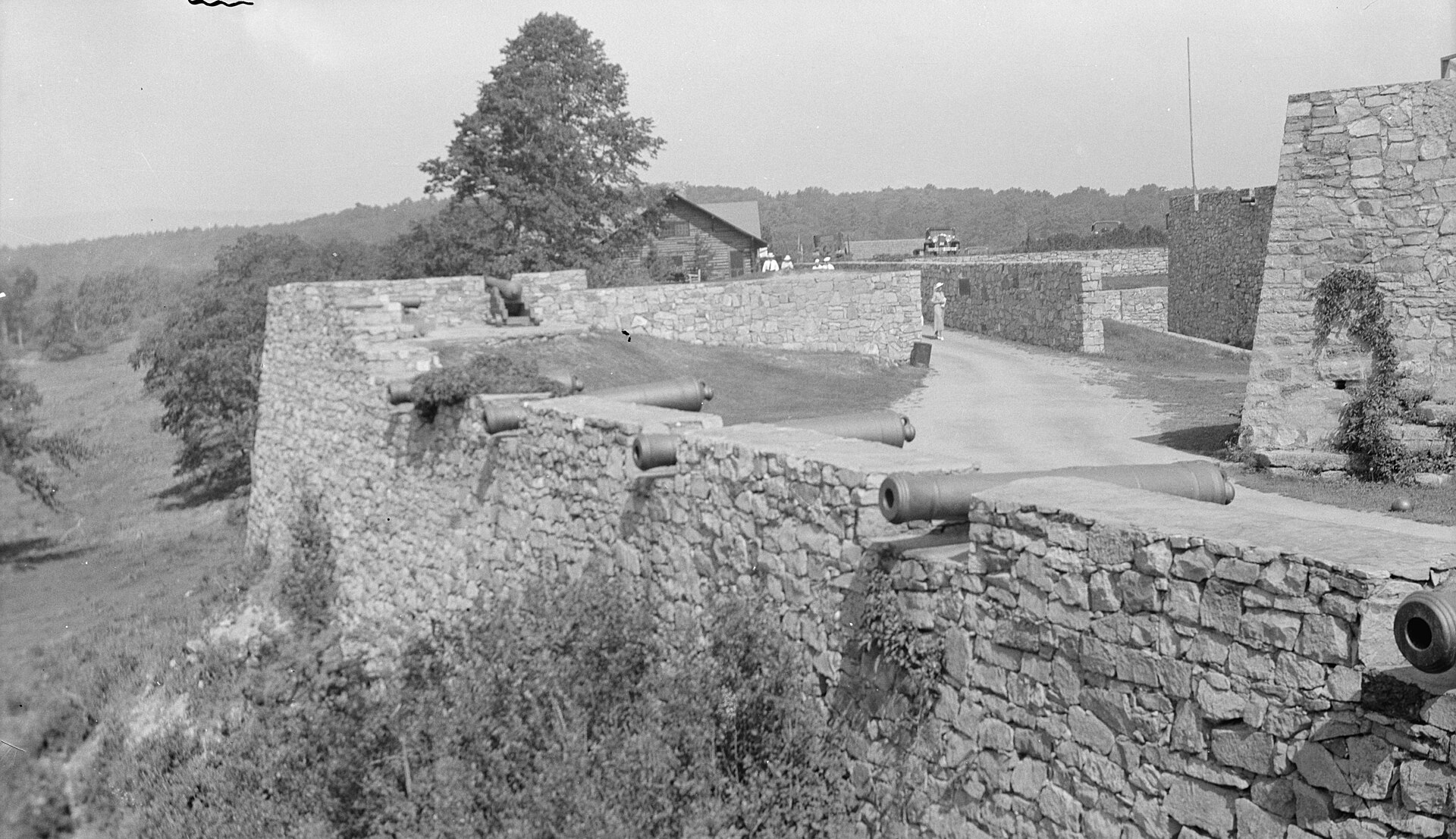
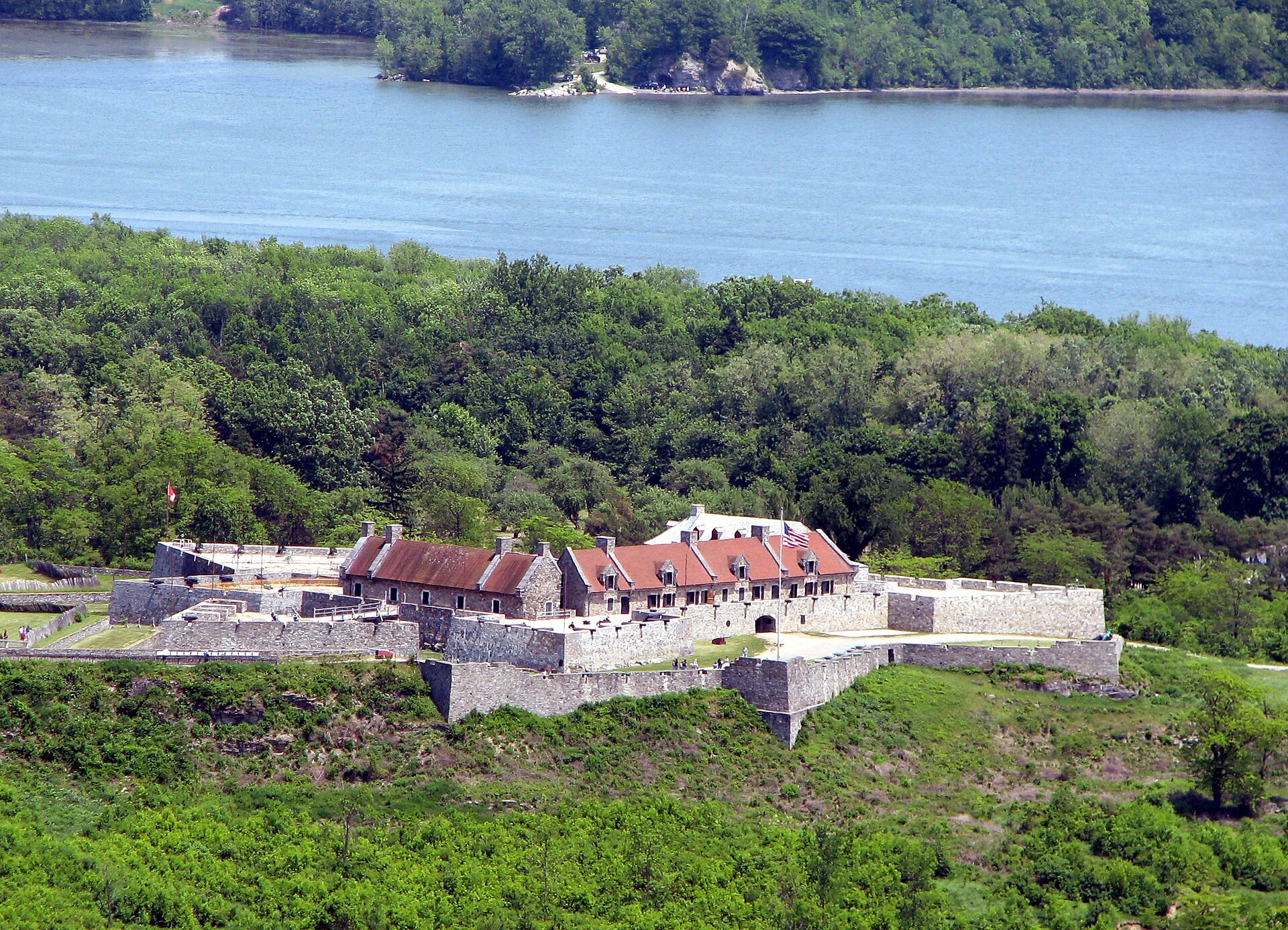
Fort Ticonderoga is a fine example of the star fort, the style of fortification developed in Europe to cope with the power of gunpowder artillery. Built in the tradition associated with the great French engineer Vauban, it features projecting bastions at its corners and connecting walls, arranged so that defenders could sweep every approach with overlapping fire, leaving attackers no safe angle.
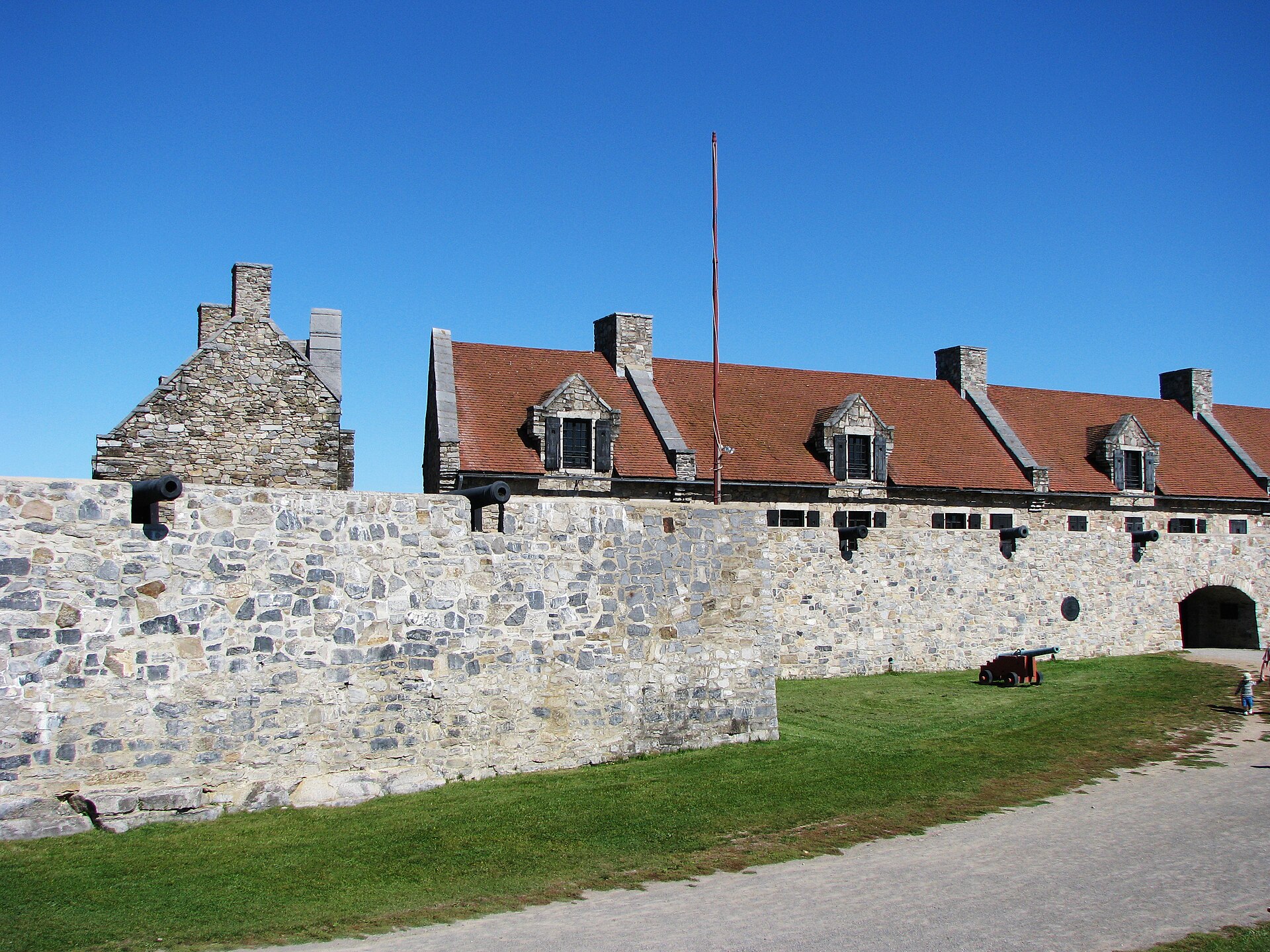
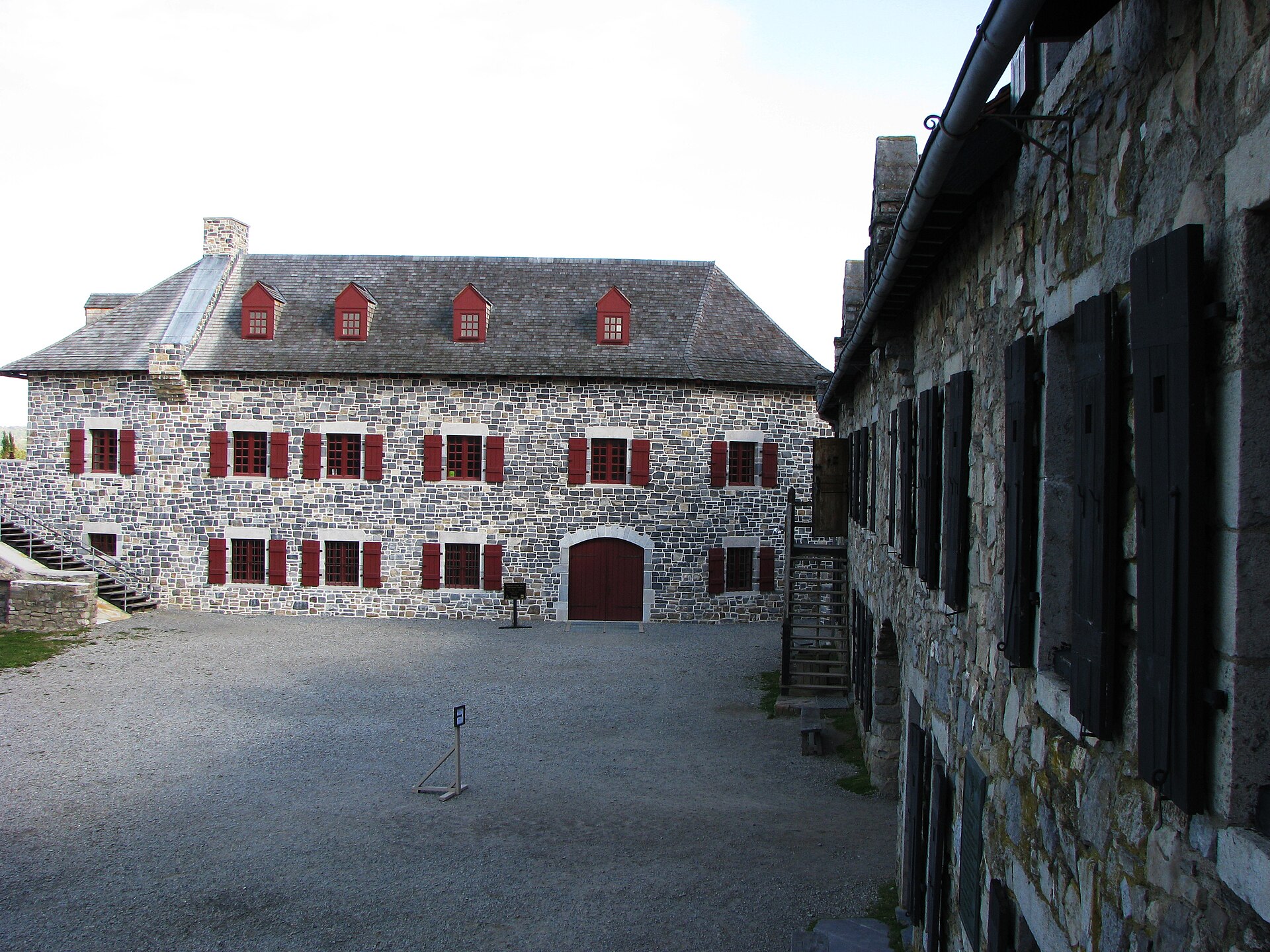
Within the walls, the fort contained the buildings a garrison needed to live and fight: barracks for the soldiers, storerooms and a powder magazine, a bakery, and the other apparatus of a self-contained military post. The whole was designed to function as a stronghold capable of holding out against a determined enemy, sheltering its defenders behind its stout stone walls.
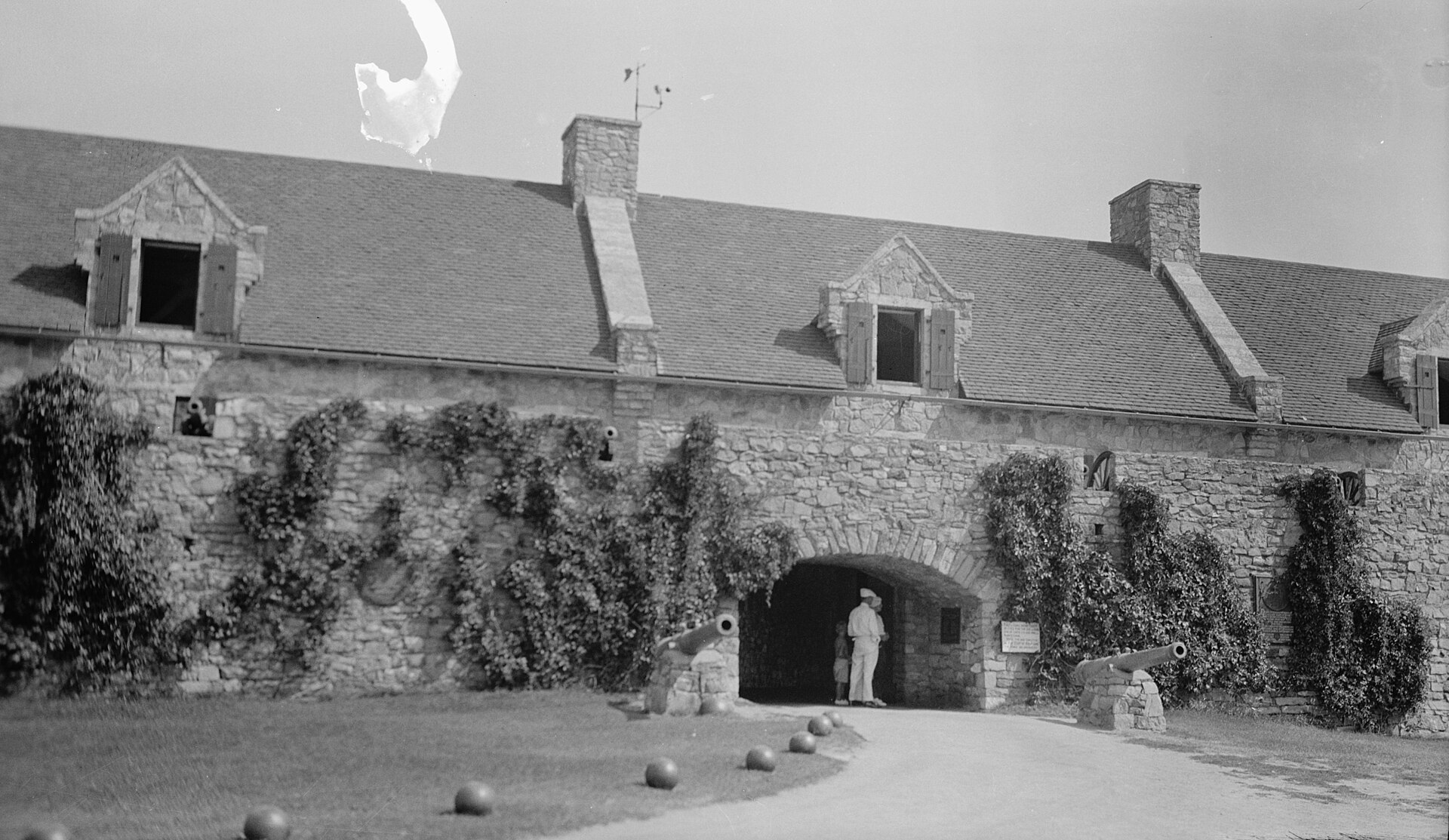
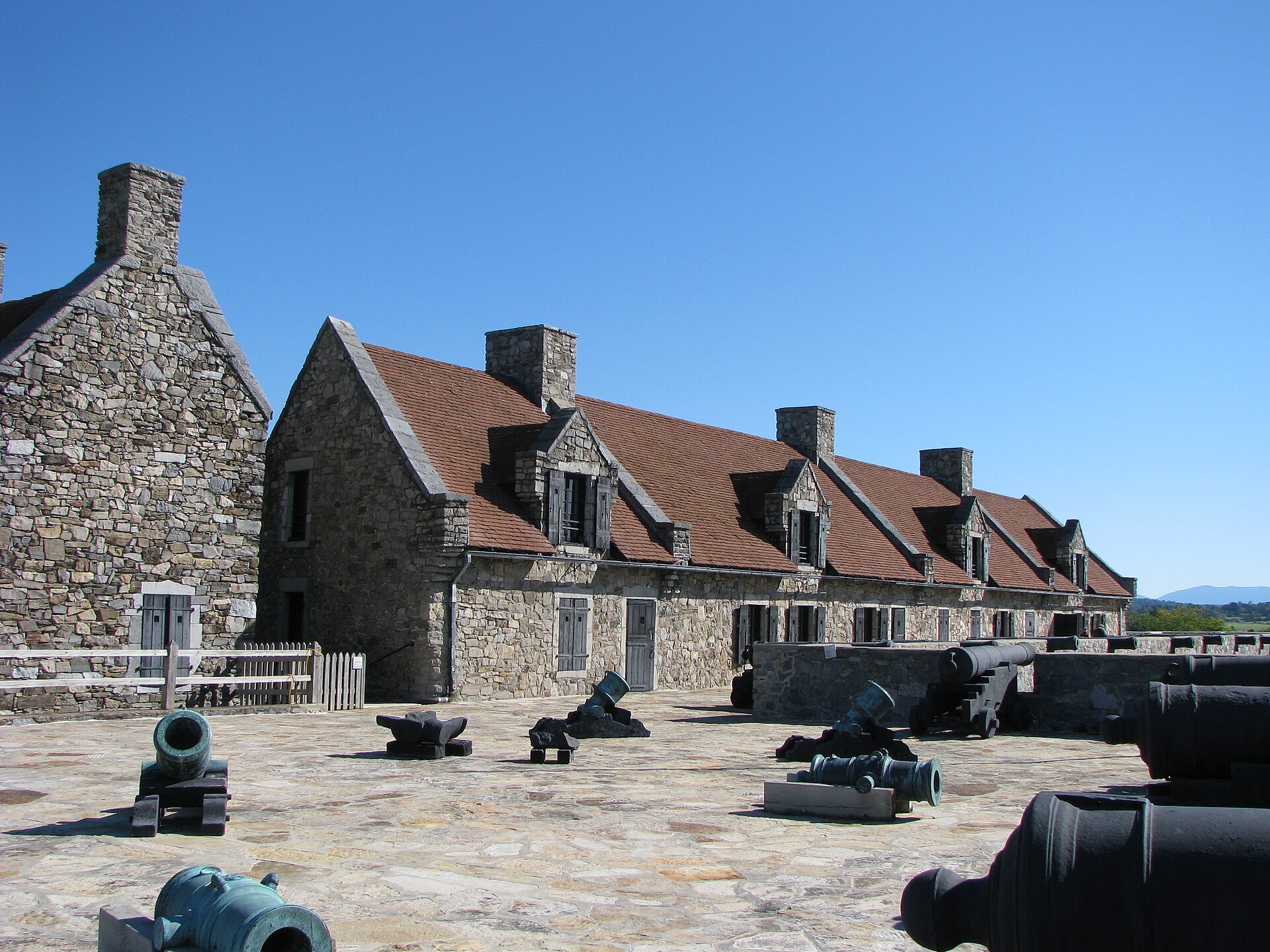
Exploring the reconstructed fort today, you can read this military logic in every feature, from the angled bastions where cannon once commanded the lake to the vaulted storerooms deep within the walls. The design reflects the mature European art of fortification, transplanted to the North American wilderness and adapted to guard one of the continent’s most vital strategic corridors.
The adaptation of European fortification techniques to the North American environment, with its dense forests, harsh winters, and vast distances, was a recurring theme of the colonial wars, and Fort Ticonderoga is a prime example. Its designers applied the geometric principles of Vauban to a wilderness setting, producing a stronghold that married Old World science with the realities of the New World frontier.
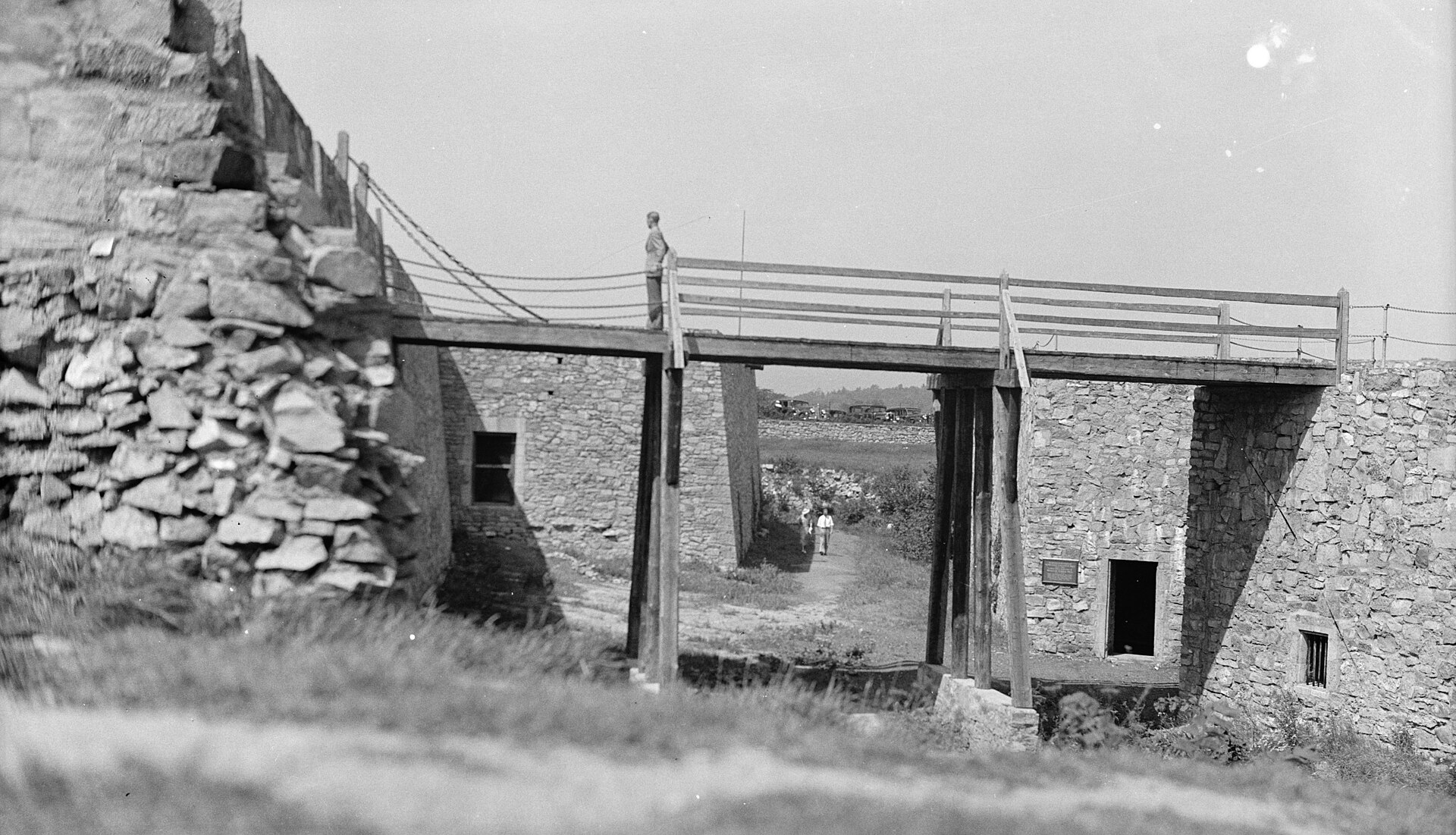
The demilune, the crescent-shaped outwork guarding the approach, and the drawbridge that led to it are among the features that reveal the sophistication of the fort’s defensive design. Each element had its purpose in the layered scheme of defence, and tracing these features as you explore reveals the careful military logic that shaped every part of the great star fort at the narrows.
Decline into Ruin
After the Revolution, Fort Ticonderoga lost its military purpose, for the corridor it guarded was now safely within the borders of the new United States, no longer a contested frontier between rival empires. With no more wars to fight along the lakes, the fort was abandoned to the elements, and it began a long decline into ruin.
Over the following decades, the empty fortress suffered the fate of many disused structures, as local residents carried off its stone and timber to use as building materials for their own homes and farms. The once-formidable walls crumbled, the buildings decayed, and the great strategic stronghold that had shaped the course of wars was reduced to a picturesque ruin overlooking the lake.
For a time it seemed that Fort Ticonderoga might be lost entirely, its stones scattered and its memory fading. But its dramatic history and its beautiful setting drew the interest of those who valued the past, and in the nineteenth century the property passed into the hands of a family who would eventually undertake to save and restore the fort, rescuing it from oblivion.
The stripping of the fort for building materials, common to many abandoned fortifications, is a reminder of how quickly even the mightiest structures can be reclaimed once their purpose is gone. That so much of Ticonderoga was carried away by local residents makes the later restoration all the more remarkable, a deliberate reversal of the process of decay that had reduced the great fort to a shell.
The romantic ruins of Fort Ticonderoga, overlooking the beautiful lake, attracted the attention of nineteenth-century travellers, artists, and writers, who saw in the crumbling walls a poignant emblem of a heroic past. This romantic interest helped keep the memory of the fort alive during its long decline and prepared the way for the preservationist impulse that would eventually rescue it from oblivion.
Saved and Restored
The rescue of Fort Ticonderoga is one of the great early stories of historic preservation in the United States. In the early twentieth century, the family that owned the property undertook an ambitious restoration of the ruined fort, rebuilding the walls and buildings and returning the stronghold to something like its former appearance, guided by historical research.
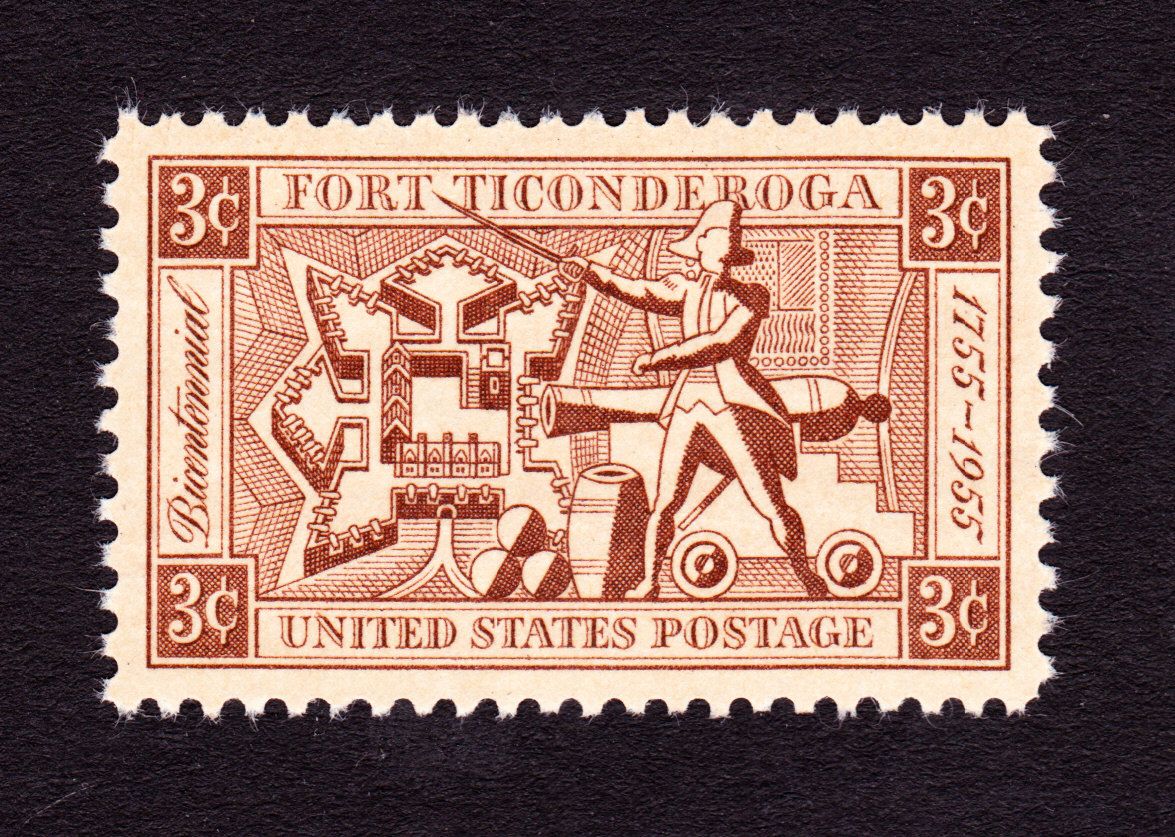
The restored fort was opened to the public, and it became one of the first great historic house and site restorations in the country, a pioneering effort to preserve and present the nation’s history. The reopening was a notable event, and the fort quickly established itself as a place where Americans could connect directly with the dramatic history of their founding.
Today Fort Ticonderoga is operated as a museum and historic site, welcoming visitors who come to explore its restored walls, learn its history, and experience the atmosphere of an eighteenth-century fortress. The careful restoration and ongoing stewardship have ensured that this pivotal site endures, allowing new generations to encounter the fortress where American history was made.
The restoration of Fort Ticonderoga was a labour of love and scholarship, undertaken at a time when the preservation of historic sites was still a novel idea in the United States. As one of the pioneering efforts of its kind, it helped to establish the very idea that such places were worth saving, and it set an example that would inspire the preservation of many other historic sites across the country.
The reopening of the restored fort, marked by a major public celebration, was attended by figures of national prominence, underlining the significance of the achievement. It signalled a growing appreciation among Americans of the value of their historic heritage, and it helped to transform Fort Ticonderoga from a crumbling ruin into a proud symbol of the nation’s revolutionary past.
A Living Museum
Fort Ticonderoga today is far more than a set of restored walls; it is a vibrant museum and educational centre that brings the eighteenth century to life. The site holds important collections of historical artifacts, from weapons and uniforms to documents and everyday objects, offering a rich window into the military and social history of the colonial and revolutionary eras.
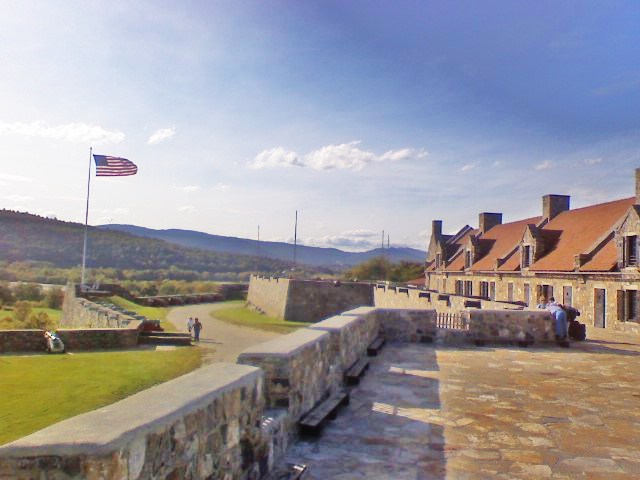
The fort is famous for its living history programs, in which costumed interpreters recreate the life of the garrison, demonstrating military drill, the firing of cannon and muskets, and the daily routines of eighteenth-century soldiers. These vivid presentations allow visitors to experience the past directly, making a visit both educational and thoroughly memorable for people of all ages.
Set against the stunning backdrop of Lake Champlain and the surrounding mountains, the fort offers not only history but also great natural beauty. The combination of dramatic scenery, restored fortifications, rich collections, and living history makes Fort Ticonderoga one of the most rewarding historic sites in the United States, a place where the story of a nation’s founding can be seen, heard, and felt.
The educational mission of the modern fort extends beyond its walls, through research, publications, and programs that deepen public understanding of the pivotal era it represents. In this way Fort Ticonderoga serves not only as a monument to the past but as an active centre of learning, keeping alive the memory of the events that unfolded at the narrows and their significance for the birth of the nation.
The rich collections held at Fort Ticonderoga make it an important resource for scholars as well as a delight for visitors, preserving objects that illuminate the material culture of the eighteenth-century soldier and the wars that shaped the continent. In caring for these treasures and making them accessible, the fort fulfils a role far beyond that of a mere tourist attraction, serving as a genuine centre of historical scholarship.
The setting of the fort within a preserved landscape, including the surrounding grounds and gardens developed by its restorers, adds to the richness of a visit, offering peaceful vistas alongside the martial history. This combination of the beautiful and the historic makes Fort Ticonderoga a place to linger and reflect, as well as to learn, and it is part of what has made the site so beloved by generations of visitors.
Visiting Fort Ticonderoga
Fort Ticonderoga stands in the beautiful lake and mountain country of upstate New York, near the border with Vermont, and it is a highlight of any visit to this scenic region. The fort is easily reached and welcomes visitors during its season, offering a full day of exploration and discovery for anyone interested in the history of America’s founding.
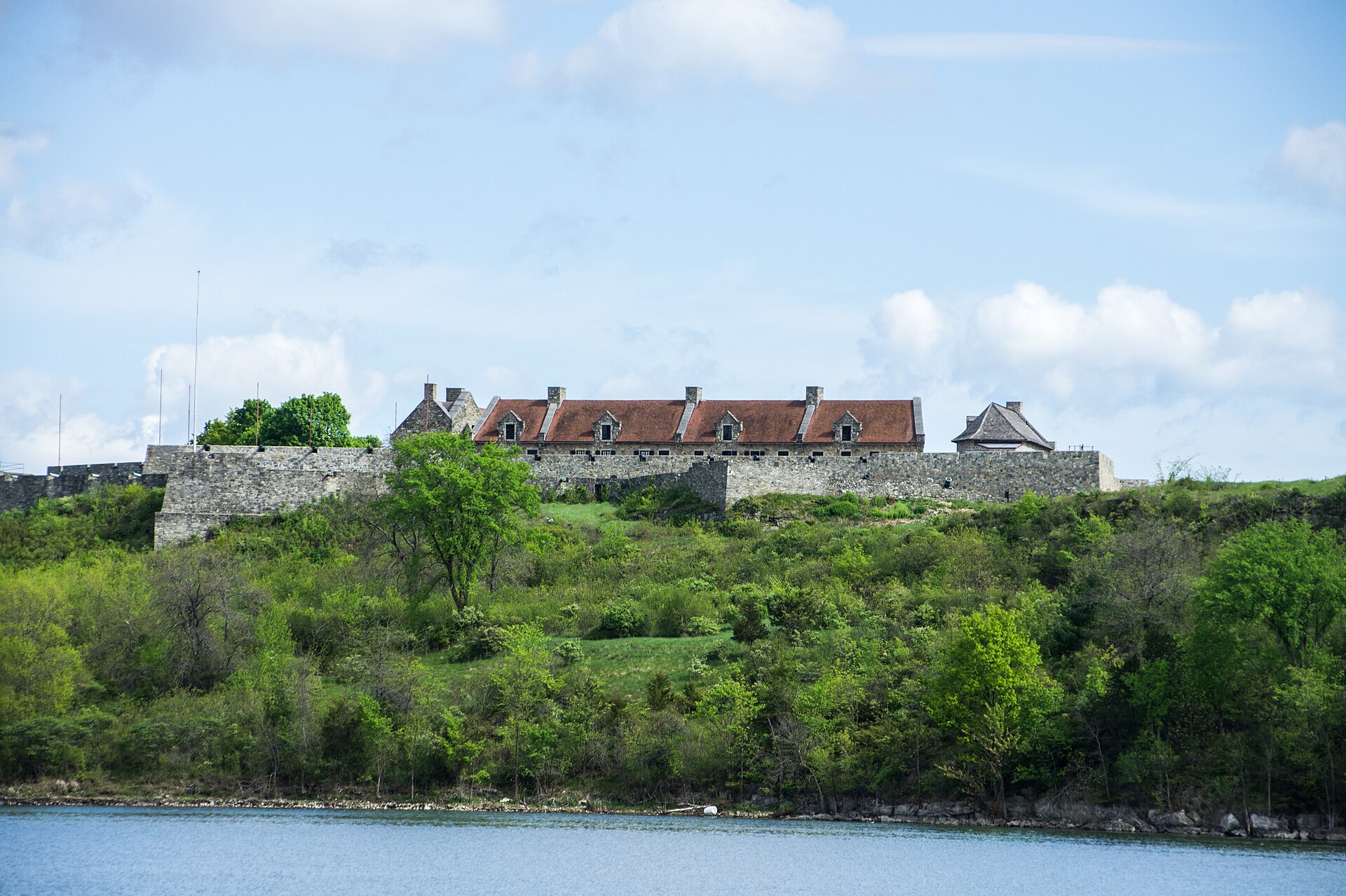
On a visit you can explore the restored fortifications, walk the bastions where cannon once commanded the lake, tour the museum collections, and take in the living history demonstrations that bring the eighteenth century to life. Give yourself time to absorb the strategic setting and to imagine the great events, the battles, the bloodless capture, and the departure of the noble train of artillery, that unfolded here.
View 43.8417, -73.3875 on Google Maps
Combine your visit with the natural attractions of the Lake Champlain region and the many other historic sites of the area to make the most of a trip. Come prepared for the weather, which is glorious in summer and autumn, and give yourself time to enjoy both the history and the scenery. Fort Ticonderoga offers an unforgettable encounter with the fortress that helped shape the birth of the United States.
Many visitors find that the combination of dramatic history and sublime natural beauty makes a visit to Fort Ticonderoga especially memorable, for the fort commands views over the lake and mountains that are among the finest in the region. Standing on the bastions where cannon once guarded the waterway, with the great lake spread out below, one feels the full weight and romance of the fort’s storied past.
For families and school groups, Fort Ticonderoga offers an especially rich experience, turning the abstract facts of history textbooks into something tangible and exciting. Watching the firing of a cannon, walking the walls where soldiers once stood watch, and handling the reality of the eighteenth century brings the era alive in a way that leaves a lasting impression on visitors young and old.
Castles Nearby
You May Like
Tulum: The Walled Maya City on the Cliffs of the Caribbean