On the edge of Vienna, at the end of a long ceremonial approach and surrounded by vast formal gardens rising to a hilltop pavilion, stands one of the greatest palaces in Europe. Schönbrunn was the summer residence of the Habsburg emperors, the rulers whose dynasty dominated the heart of the continent for centuries, and it remains one of the most magnificent and best-loved imperial palaces in the world, a monument to the power and splendour of a vanished empire.
With its endless rooms, its dazzling state apartments, and its enormous gardens crowned by the elegant Gloriette, Schönbrunn was designed to rival the greatest palaces of Europe and to proclaim the glory of the imperial house. It was here that the Habsburgs spent their summers, held their court, and played out the drama of their family across generations, and the palace is saturated with the history of one of the most important dynasties in European history.
Schönbrunn is bound up above all with the memory of a great empress who transformed it into the palace we know today, and whose personality still seems to pervade its yellow walls and richly decorated rooms. But it is also the palace of the emperor who was born and died here, of a child prodigy who played before the court, and of countless other figures whose stories are woven into its history, making Schönbrunn a place where the past comes vividly to life.
In the pages ahead you will explore this magnificent imperial palace, from its origins as a hunting ground to its transformation into a Baroque wonder, through its dazzling interiors and its vast gardens, to the great events and remarkable people whose stories it holds. Schönbrunn is the jewel of imperial Vienna, and it offers one of the most rewarding encounters with the grandeur of European royalty that the world has to offer.

In This Article
- From Hunting Ground to Palace
- A Baroque Vision of Empire
- The Empress Who Made It Her Own
- The Colour of an Empire
- The Dazzling State Rooms
- A Child Prodigy Before the Court
- The Magnificent Gardens
- The Gloriette on the Hill
- Gardens of Wonder
- When Napoleon Came to Schönbrunn
- The Emperor of a Long Twilight
- A Stage for History
- Visiting Schönbrunn Today
From Hunting Ground to Palace
Like so many great palaces, Schönbrunn began not as a grand residence but as a place of the hunt, a stretch of countryside outside Vienna valued for its game and its natural beauty. The imperial family used the area as a hunting ground, and it was here, according to tradition, that a beautiful spring was discovered which would eventually give the palace its name, a name meaning the beautiful spring.
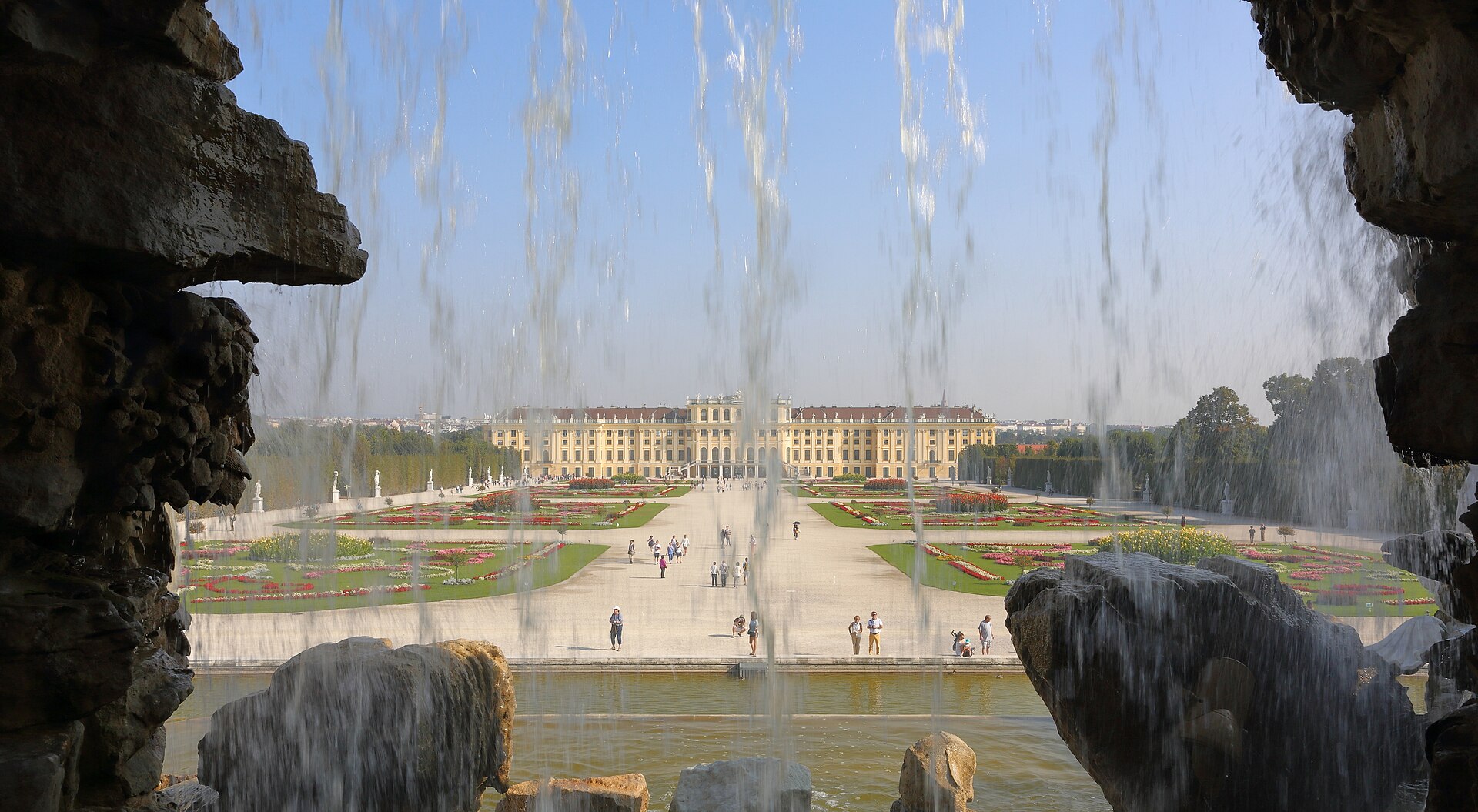
Over time the imperial interest in the site grew, and the idea took hold of building a great residence here to rival the finest palaces of Europe. The rulers of the Habsburg house, conscious of their status as among the mightiest sovereigns of the continent, wished for a summer palace worthy of their dignity, and the beautiful ground outside Vienna was chosen as its setting.
The transformation of the hunting ground into a palace was a project of enormous ambition, involving the finest architects and craftsmen and vast resources. The design evolved over time, growing grander with the changing fortunes and ambitions of the imperial house, until it became the immense and magnificent palace that stands today, one of the largest and most splendid in all of Europe.
This evolution from hunting ground to imperial palace reflects the rising power and confidence of the Habsburg dynasty. As their empire grew and their prestige increased, so did their ambitions for Schönbrunn, until the modest hunting site had become a palace fit for the rulers of a great empire, a statement in stone of their wealth, their power, and their place at the heart of Europe.
The choice of a site so close to Vienna was significant, for it allowed the imperial family to enjoy the pleasures of a country palace within easy reach of the capital and the seat of government. Schönbrunn could thus serve as both a retreat and a working residence, near enough to the city for the business of empire yet set amid gardens and greenery that offered escape from its pressures.
A Baroque Vision of Empire
The design of Schönbrunn belongs to the great age of the Baroque, the style that dominated European architecture in the age of absolute monarchs and expressed their power through grandeur, movement, and magnificence. The palace was conceived as a Baroque masterpiece, a building whose scale and splendour were designed to overwhelm the visitor and to proclaim the greatness of the imperial house.
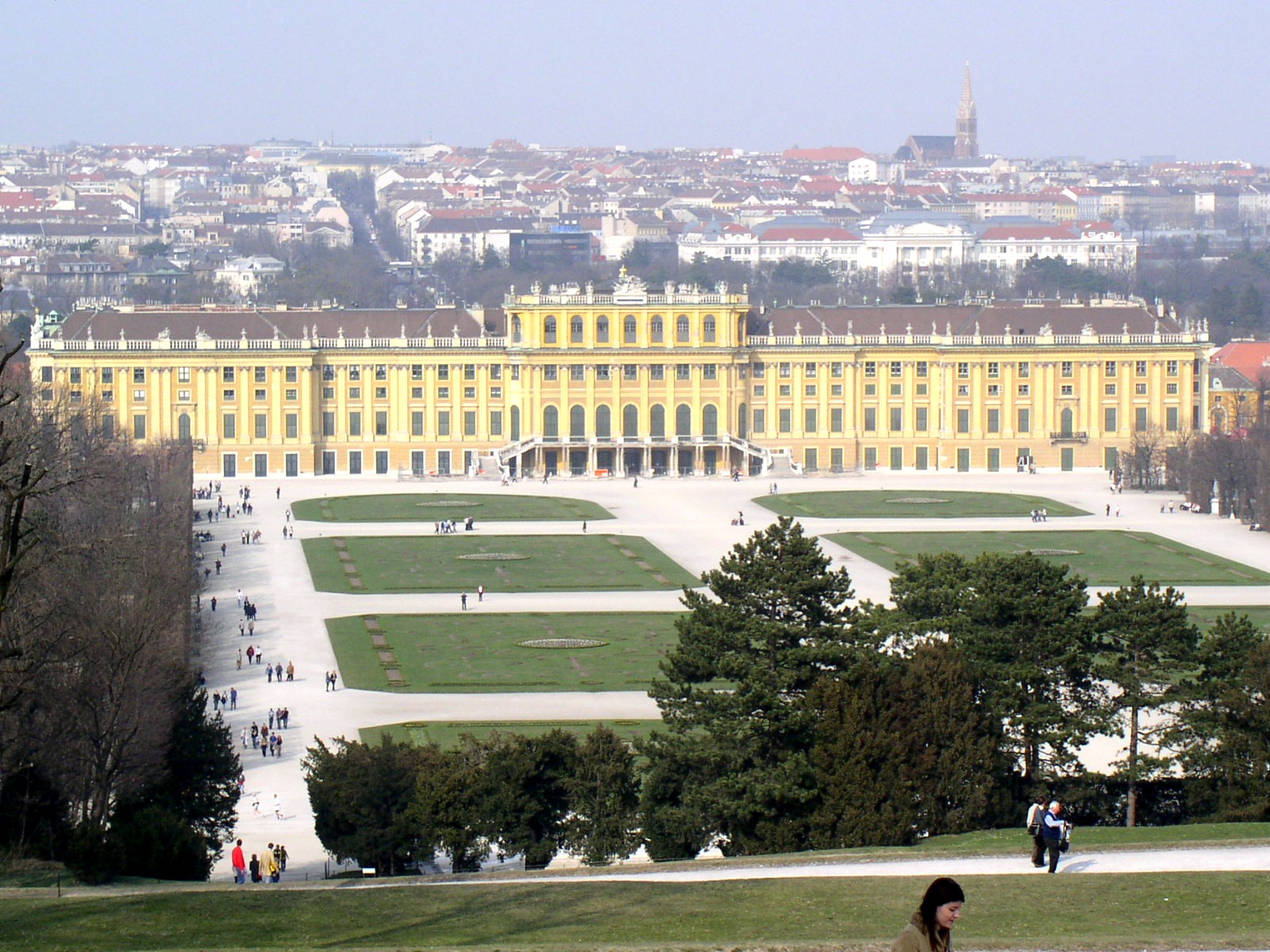
The original vision for Schönbrunn was even more ambitious than what was finally built, with early designs imagining a palace of almost impossible grandeur crowning the hilltop itself. Though these most extravagant schemes were not realised, the ambition behind them shaped the palace that was built, ensuring that Schönbrunn would be a residence of truly imperial magnificence, worthy of the rulers it was meant to house.
The Baroque style of the palace is expressed in its long, sweeping facades, its grand ceremonial approach, and its integration with the vast gardens behind, the whole conceived as a single magnificent composition. Architecture and landscape were designed together to create an overwhelming impression of order, grandeur, and control, the physical embodiment of imperial power and ambition.
In its Baroque splendour, Schönbrunn takes its place among the great palaces raised across Europe in this age to glorify the power of monarchs. It reflects the same impulse that produced the other supreme royal residences of the period, the desire to express the majesty of the crown through architecture on the grandest possible scale, and it stands as one of the finest achievements of this magnificent tradition.
It is worth remembering that a palace on this scale was as much an instrument of politics as a place to live. Every visitor, every ambassador, every rival prince who approached along the great forecourt was meant to feel the might of the house that could command such magnificence, and in this sense Schönbrunn was a carefully constructed argument in stone about the power and permanence of the Habsburg dynasty.
The Empress Who Made It Her Own
The Schönbrunn we know today owes its character above all to a great empress who made the palace her favourite residence and transformed it into the splendid home of the imperial family. Under her direction, the palace was reshaped and richly decorated in the elegant style of her age, and it became the beloved summer seat of the dynasty, filled with the life of her large family and her brilliant court.
This empress was one of the most remarkable rulers of her age, a formidable and capable sovereign who governed a vast empire while raising a large family, and Schönbrunn became the setting for both her public and her private life. The palace reflected her taste and her personality, and it is impossible to walk through its rooms without feeling the presence of the empress who made it her own.
Under her, Schönbrunn reached its full glory, its interiors decorated in a rich and elegant style and its gardens laid out on a magnificent scale. The palace became a place of splendid festivities and important ceremonies, the summer heart of the empire, and it was in these years that it acquired much of the character and appearance that visitors admire today.
The association of Schönbrunn with this great empress is central to its identity, for she left her mark upon every part of it, from the colour of its walls to the arrangement of its rooms and gardens. The palace stands as a monument to her reign and her personality, and to know Schönbrunn is to encounter one of the most extraordinary rulers in the history of Europe.
Her long reign was a turning point for the whole dynasty, and Schönbrunn became closely identified with the reforms, the ceremonies, and the family life of her remarkable era. The palace was filled with her many children, whose marriages would link the imperial house to the other great dynasties of Europe, and it became the setting for a domestic imperial life on the grandest scale.
It is telling that so mighty a palace should be remembered above all in connection with a woman who was at once a ruling sovereign and the mother of a great family. Schönbrunn under her care was not a cold monument to power but a living home, warmed by family life even as it served the highest purposes of state, and this double character is a large part of the affection in which the palace is held.
The Colour of an Empire
One of the most distinctive features of Schönbrunn is its colour, for the palace is painted in a warm golden yellow that has become inseparable from its identity and from the image of the imperial house. This particular shade, so closely associated with the palace, came to be used on imperial buildings across the empire, a colour that proclaimed the presence of the ruling dynasty wherever it appeared.
The warm yellow of Schönbrunn gives the palace a cheerful and inviting appearance quite different from the cold grandeur of some royal residences, an effect that is both magnificent and welcoming. Set against the green of the gardens and the blue of the sky, the golden walls of the palace create an image of imperial splendour that is one of the enduring sights of Vienna.
This colour became so associated with the imperial house that it spread throughout the lands they ruled, appearing on official buildings and residences as a mark of the dynasty’s authority. In this way the golden yellow of Schönbrunn became a colour of empire, a visual signature of Habsburg rule recognised across the vast territories they governed.
The distinctive colour of Schönbrunn is thus more than a decorative choice; it is a symbol of the imperial house and its dominion. The warm golden walls that give the palace so much of its character carry the memory of the empire they once represented, and they remain one of the most recognisable and beloved features of this great imperial residence.
So complete is the identification of this colour with the palace that the shade is known by the name of Schönbrunn itself, a rare honour for a building to lend its name to a colour. Whenever the golden yellow appears, on a country house or an official building far from Vienna, it evokes the imperial house and its most beloved residence, a lasting emblem of Habsburg rule.
The Dazzling State Rooms
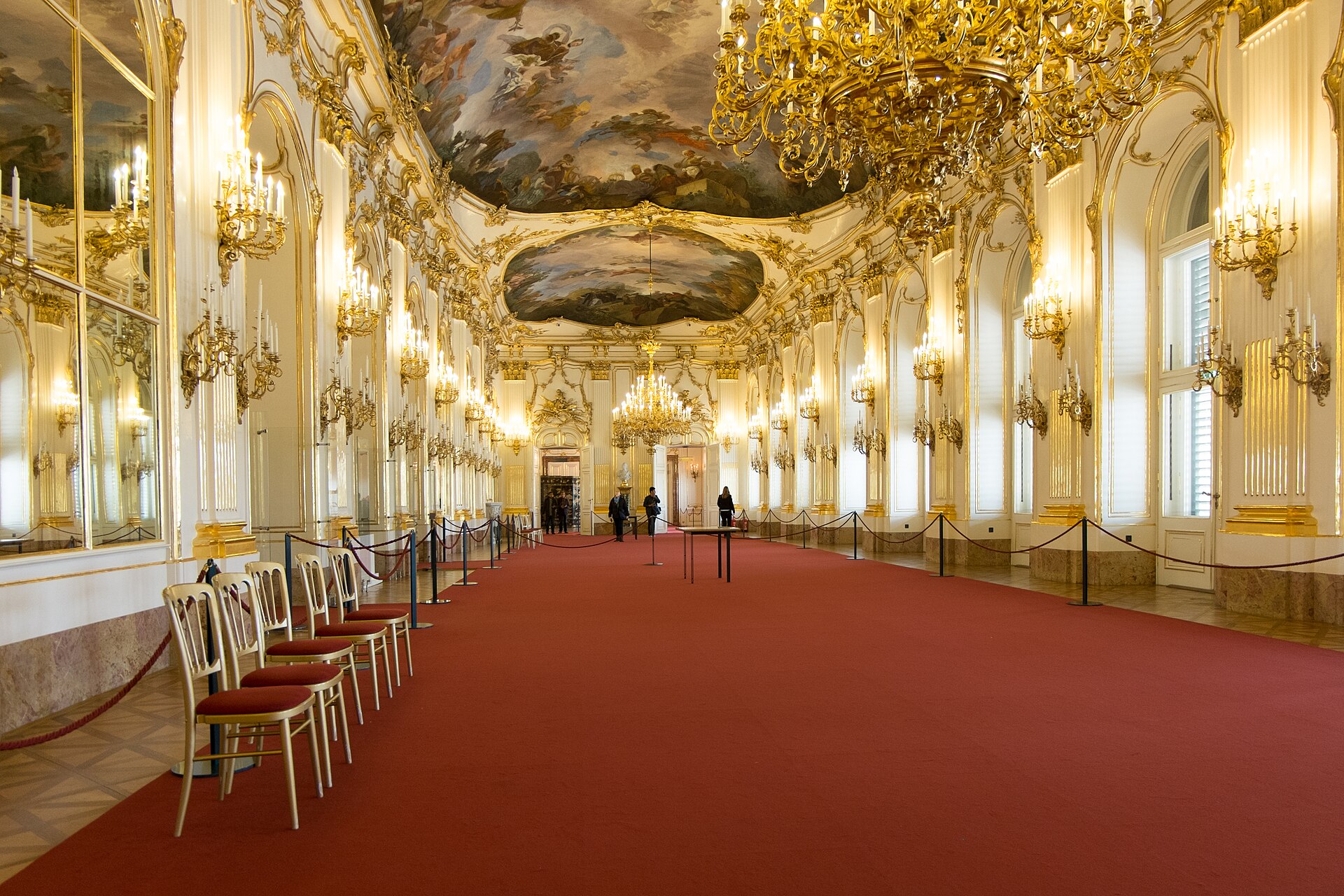
Within its long facades, Schönbrunn contains an immense number of rooms, and among them are state apartments of dazzling splendour that rank among the finest imperial interiors in Europe. These magnificent rooms, richly decorated with gilding, mirrors, paintings, and precious materials, were designed to impress and to serve the elaborate ceremonial life of the imperial court.
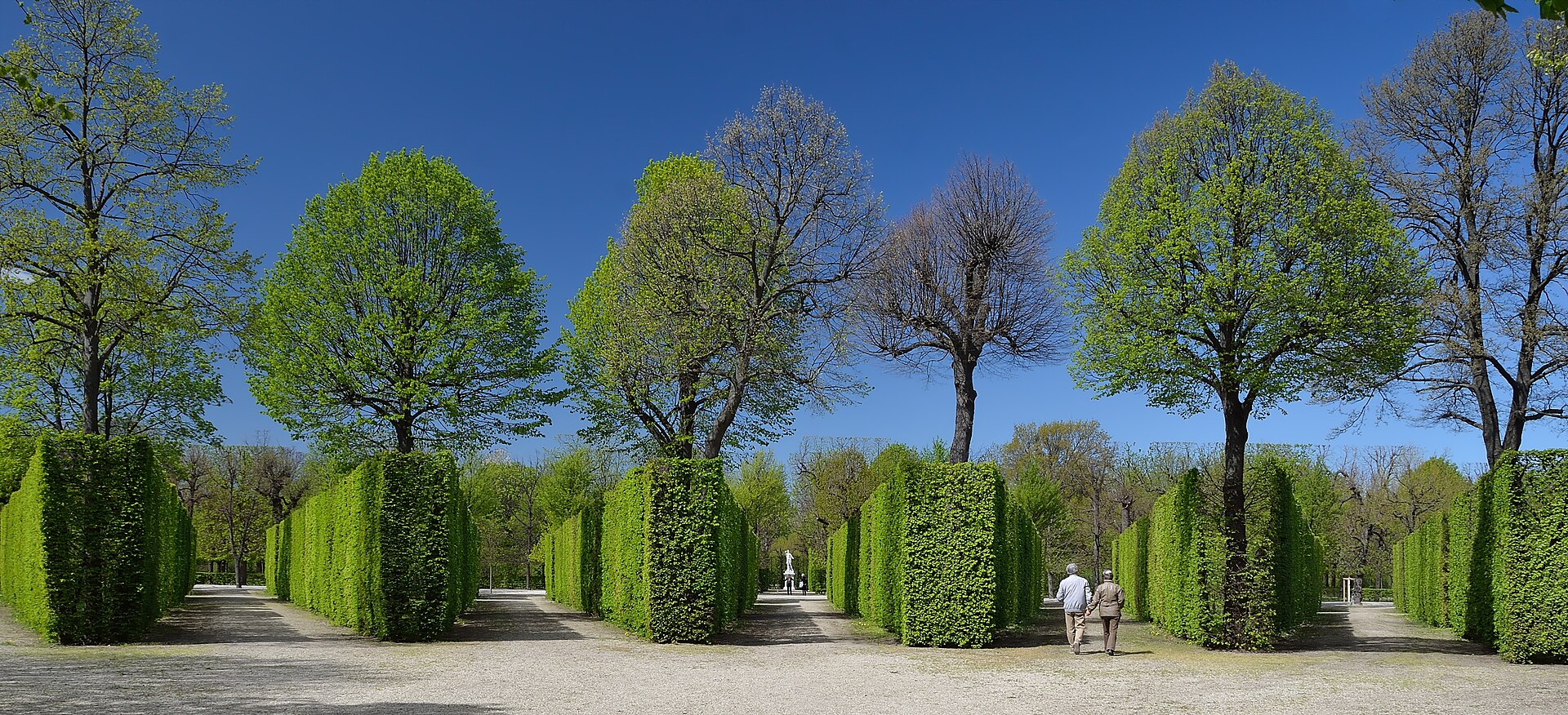
The grandest of these spaces is a great gallery, a magnificent hall used for celebrations, receptions, and grand occasions of state. With its splendid decoration and its glittering array of lights, this gallery was the setting for some of the most important events in the life of the court, a space of overwhelming magnificence designed to display the glory of the imperial house.
Among the many other remarkable rooms are chambers of extraordinary richness, adorned with rare and precious decoration gathered from across the world. These rooms reflect the vast reach and wealth of the empire, their walls adorned with treasures that spoke of the far-flung connections and the immense resources of the Habsburg dynasty at the height of its power.
To pass through these state rooms is to experience the splendour of the imperial court at its most magnificent, a succession of dazzling spaces each more splendid than the last. They preserve the atmosphere of a vanished world of ceremony and display, and they remain among the greatest treasures of Schönbrunn, offering a vivid encounter with the grandeur of the Habsburg empire.
The sheer number of rooms at Schönbrunn is itself astonishing, a vast complex of chambers far exceeding what any family could ever use, arranged to serve every function of a great imperial court. Only a fraction are shown to visitors, yet even these convey the overwhelming scale of the palace and the immense establishment required to sustain the life of the Habsburg court in its full splendour.
A Child Prodigy Before the Court
Among the many famous episodes associated with Schönbrunn, few are more charming than the visit of a child prodigy who performed before the empress and her court within its walls. This small boy, who would grow up to become one of the greatest composers in the history of music, played for the imperial family at Schönbrunn, astonishing all who heard him with his extraordinary gift.
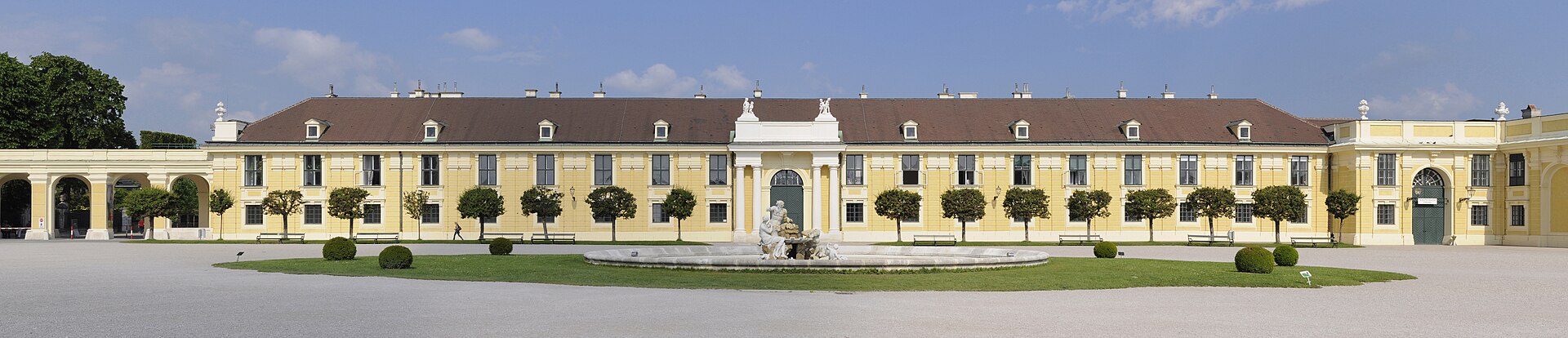
The story of this performance has become one of the most beloved tales of Schönbrunn, a moment when the palace played host to a genius at the very dawn of his career. The image of the child seated at the keyboard before the empress, delighting the court with his precocious talent, captures the role of Schönbrunn as a centre of culture as well as of power.
This episode reflects the importance of Schönbrunn and the imperial court as patrons and centres of the arts, for the Habsburgs surrounded themselves with music, painting, and every kind of cultural splendour. The palace was not only a seat of government but a place where the arts flourished, and the visit of the young prodigy is emblematic of this rich cultural life.
The memory of the child’s performance adds a note of enchantment to the history of Schönbrunn, linking the palace to one of the supreme figures in the history of music. It is one of the many human stories that bring the great palace to life, reminding us that within these magnificent walls unfolded moments of beauty and wonder as well as the grand affairs of state.
Stories like this help to explain the enduring hold that Schönbrunn has on the imagination, for the palace is not only a monument of stone but a place peopled by memorable figures and charming episodes. To walk its rooms is to move among the ghosts of empresses and emperors, prodigies and conquerors, and the accumulated human drama gives the palace a warmth that its grandeur alone could never provide.
The Magnificent Gardens
The gardens of Schönbrunn are among the greatest formal gardens in Europe, an immense composition of parterres, avenues, fountains, and groves that stretches out behind the palace and rises to the hilltop beyond. Laid out on a magnificent scale, these gardens are an essential part of the palace, a landscape of ordered beauty that complements the grandeur of the building itself.
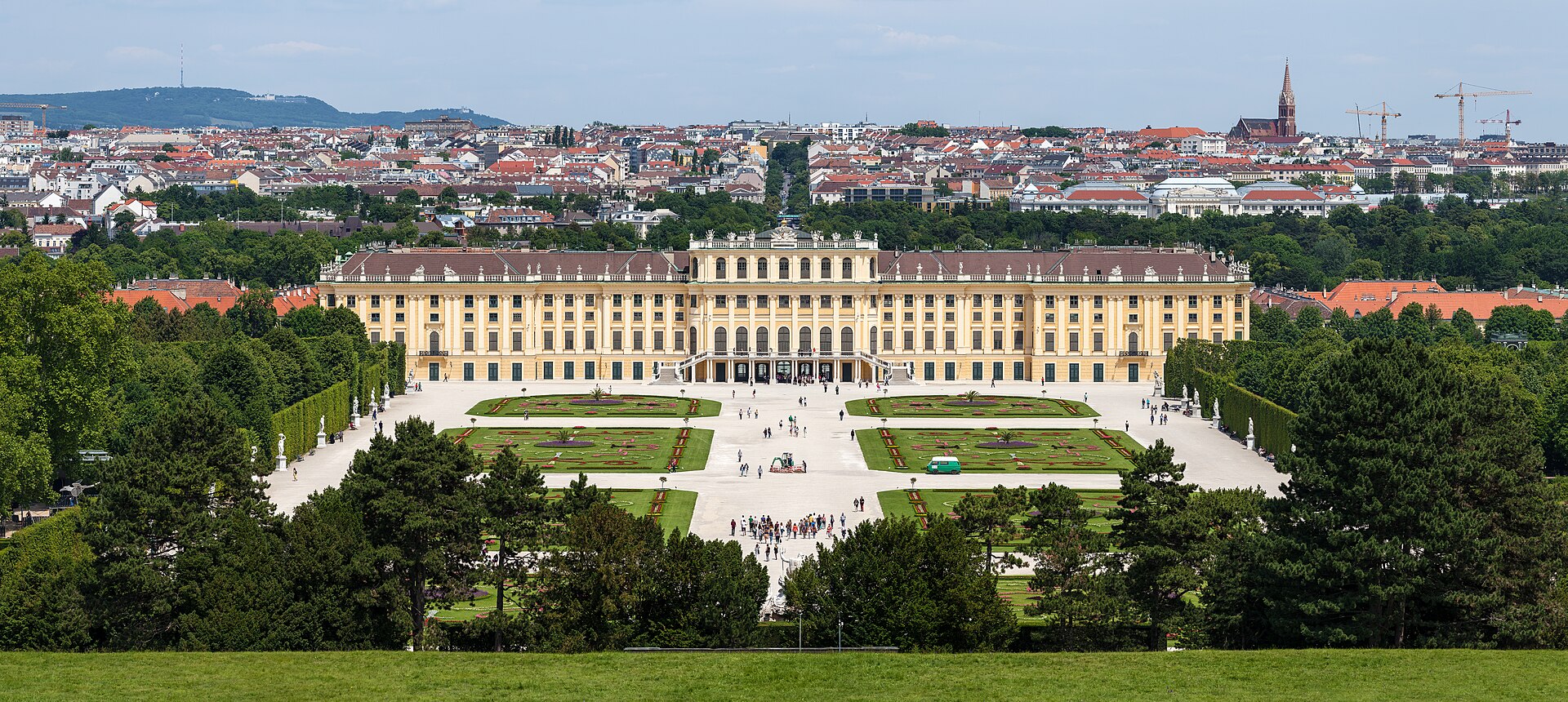
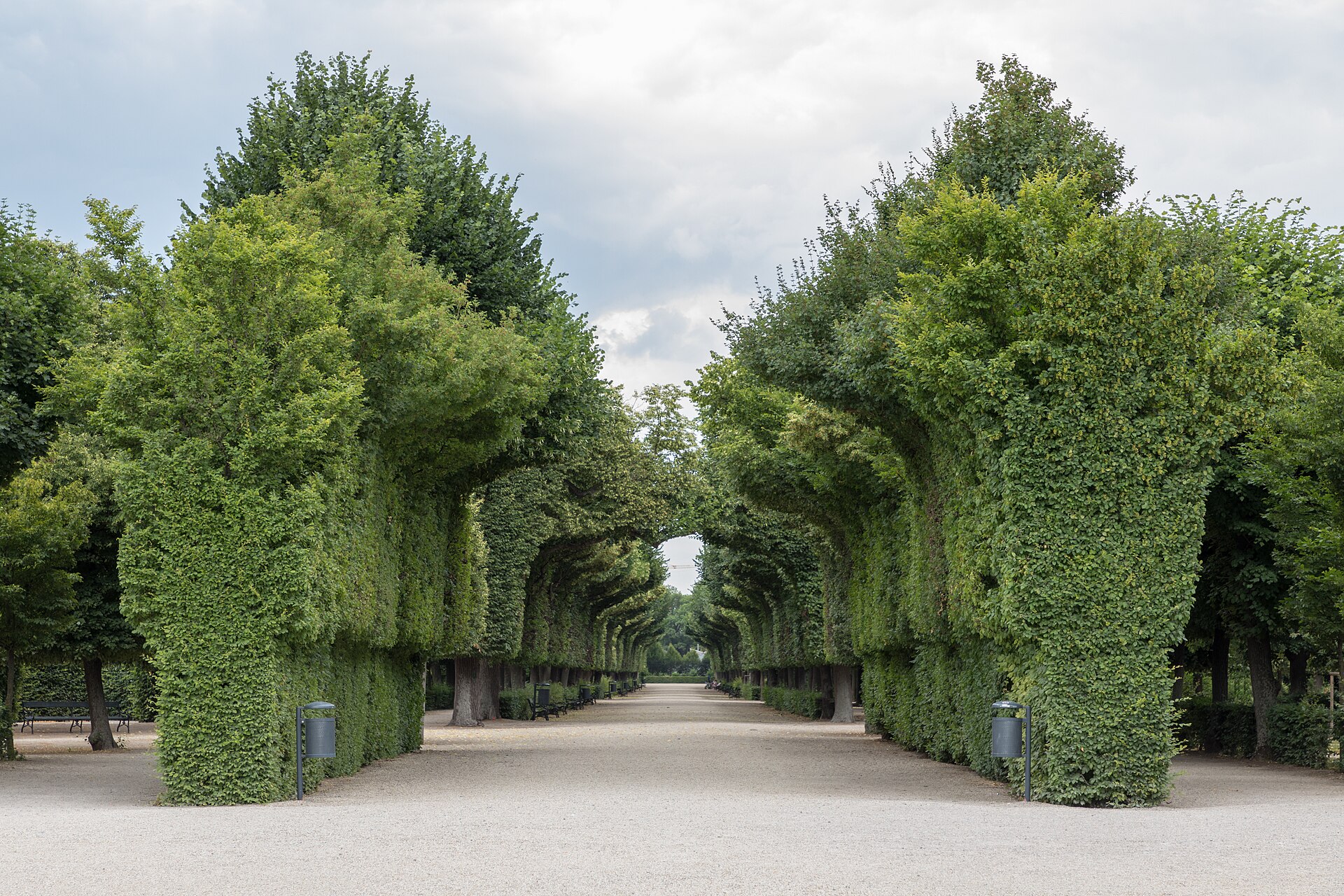
The design of the gardens follows the principles of the formal style, with long straight avenues, geometric parterres, and carefully placed sculpture and fountains creating a landscape of perfect order and symmetry. The great central axis draws the eye from the palace across the gardens and up to the hilltop, a magnificent vista that is one of the finest achievements of the formal garden.
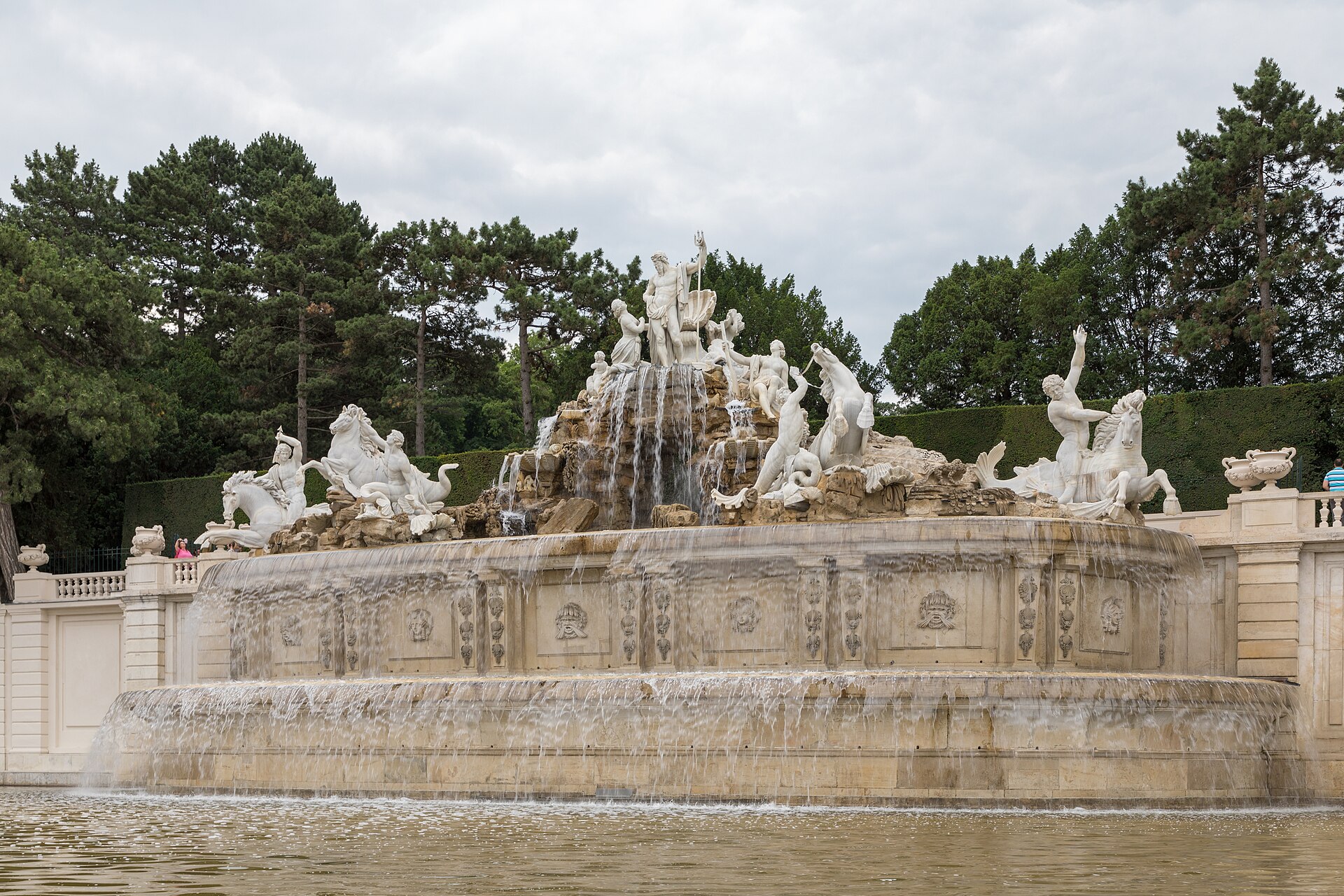
The gardens are adorned with a wealth of ornament, including fountains, statues, and architectural features that add beauty and interest at every turn. Among the most striking is a great fountain depicting the sea god and his companions, a magnificent sculptural composition that forms a focal point in the gardens and adds to their splendour and drama.
These vast gardens were designed for the pleasure and display of the imperial court, a place for promenades, festivities, and the enjoyment of nature ordered by art. They remain one of the great glories of Schönbrunn, a magnificent landscape that draws visitors in enormous numbers and provides a fitting setting for one of the greatest palaces in Europe.
The gardens were also a stage for the display of imperial power, their perfect order a visible expression of the control and authority of the ruling house. To impose such geometry upon nature, to command water into fountains and trees into avenues, was to demonstrate the same mastery that the dynasty sought to exercise over its vast and varied lands, and the gardens carried this message as clearly as the palace itself.
The Gloriette on the Hill
Crowning the gardens of Schönbrunn, on the hilltop that rises behind the palace, stands one of its most distinctive features, an elegant colonnaded pavilion known as the Gloriette. This graceful structure, set at the highest point of the gardens, commands magnificent views over the palace, the grounds, and the city of Vienna beyond, and it forms the crowning ornament of the whole composition.
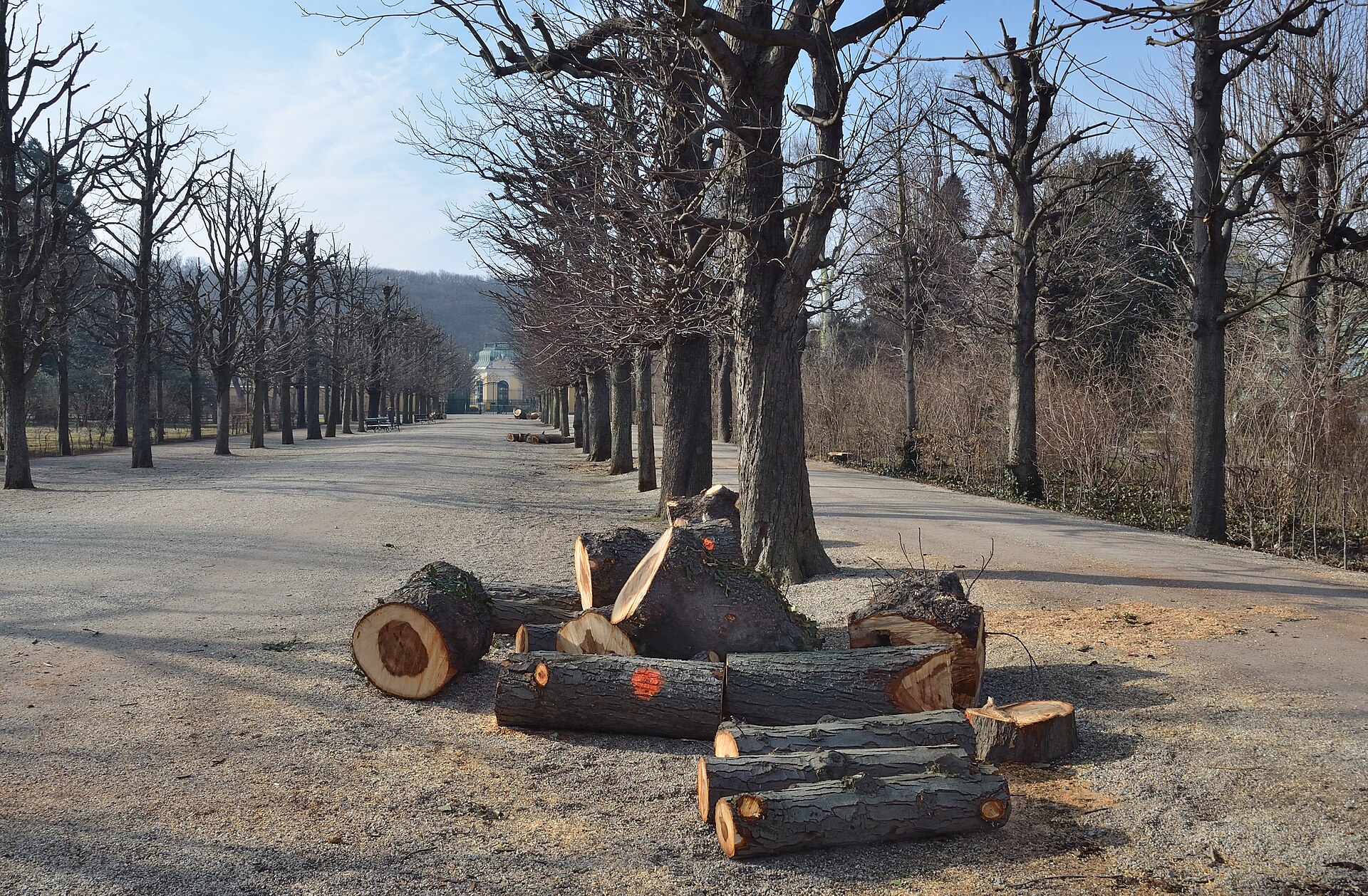
The Gloriette was built as a monument and a garden feature, an architectural focal point at the summit of the great central axis of the gardens. Its elegant colonnades and its commanding position make it one of the most beautiful garden buildings of its kind, a structure that draws the eye from the palace and rewards those who climb to it with unforgettable views.
From the Gloriette, the visitor can look back down over the gardens toward the palace, taking in the full magnificence of the composition laid out below. This great vista, from the hilltop pavilion across the gardens to the golden palace, is one of the finest sights in Vienna and captures the grandeur and ambition of the whole Schönbrunn ensemble in a single sweeping view.
The Gloriette has become one of the emblems of Schönbrunn, an elegant and beloved landmark that completes the picture of the imperial gardens. Standing at the summit of the grounds, it embodies the ambition and refinement of the palace and its setting, and it offers visitors both a beautiful destination and a magnificent vantage point over one of the greatest palaces in Europe.
The Gloriette also served a practical purpose as a place of rest and refreshment for the court during promenades in the gardens, a destination for a walk and a spot from which to enjoy the view. This combination of beauty, function, and commanding position makes it a perfect expression of the art of the great garden, in which every element was designed to delight as well as to impress.
Gardens of Wonder
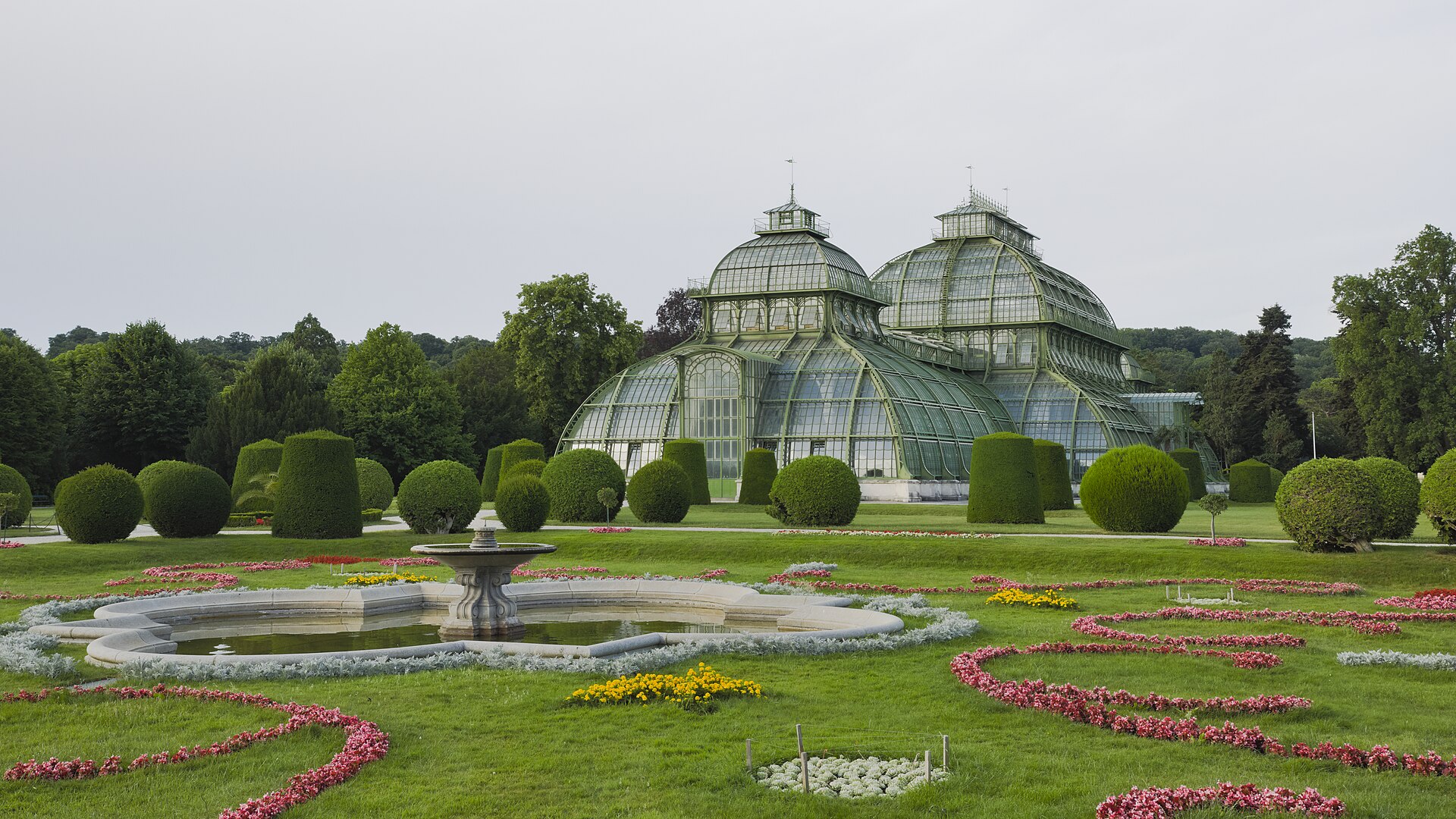
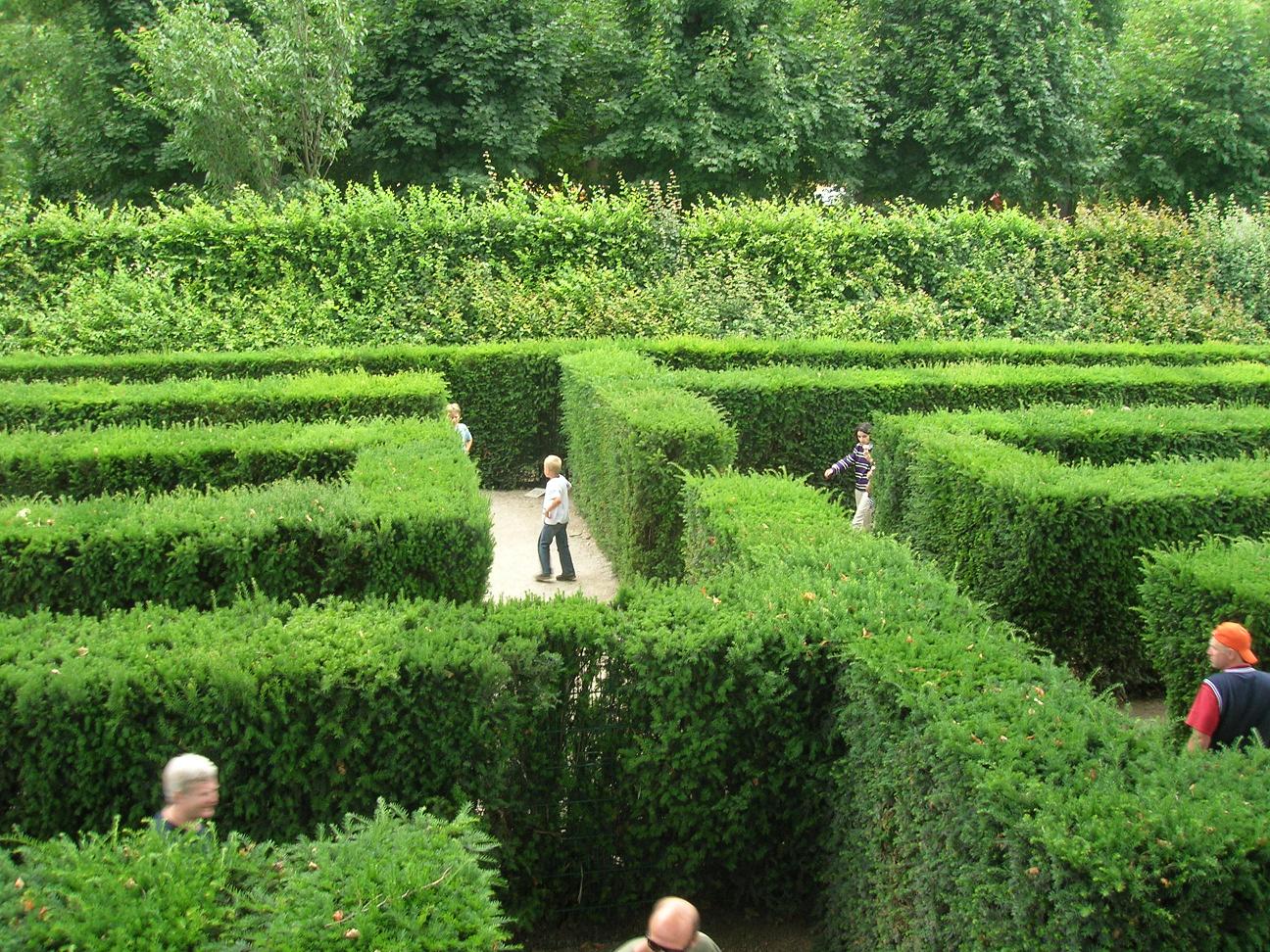
Beyond the formal parterres, the grounds of Schönbrunn hold further wonders, including a magnificent glasshouse and one of the oldest zoos in the world. These attractions, added over the years to the imperial gardens, reflect the curiosity and ambition of the Habsburgs and their interest in the natural world, and they add greatly to the richness and variety of the Schönbrunn grounds.
The great glasshouse is a masterpiece of its kind, an elegant structure of glass and iron sheltering exotic plants from around the world. Such buildings expressed the fascination of the age with botany and the collecting of rare and beautiful plants, and the glasshouse at Schönbrunn remains a magnificent example, a palace of glass amid the imperial gardens.
The zoo at Schönbrunn holds the distinction of being among the oldest in the world, founded in the time of the imperial family as a menagerie for the study and enjoyment of animals. From these origins it has grown into a modern zoo, but its long history gives it a special place, a living link to the curiosity and collecting spirit of the Habsburg court.
These additional attractions make the grounds of Schönbrunn a place of endless variety and delight, offering far more than formal gardens alone. The glasshouse, the zoo, and the many other features of the grounds reflect the breadth of interest and ambition of the imperial house, and they ensure that a visit to Schönbrunn encompasses wonders of nature as well as of art and architecture.
Together these features reflect a distinctive quality of Schönbrunn, its blending of pleasure, learning, and display. The imperial family delighted not only in grandeur but in the wonders of the natural world, and the grounds became a place where science and spectacle met, where rare plants and animals were gathered and shown, embodying the wide-ranging curiosity of an enlightened age.
When Napoleon Came to Schönbrunn
The great palace of the Habsburgs did not always shelter its imperial owners in peace, for in times of war it fell into the hands of their enemies. The French emperor Napoleon, at the height of his power, occupied Vienna and made Schönbrunn his residence, installing himself in the palace of the Habsburgs as a conqueror in the very heart of their empire.
Napoleon’s occupation of Schönbrunn was a humiliation for the imperial house, the palace of their glory taken over by the man who had defeated their armies and dominated Europe. That the great conqueror should reside in Schönbrunn underlined the extent of his power and the depths to which the fortunes of the Habsburgs had temporarily fallen in the face of his triumphs.
The connection between Napoleon and Schönbrunn was deepened by later events, for the palace became associated with the tragic fate of his son, who spent time within its walls. This link between the French emperor’s family and the Habsburg palace added a further poignant chapter to the history of Schönbrunn, binding it to the dramatic story of Napoleon and his dynasty.
These episodes remind us that Schönbrunn, for all its serene beauty, was caught up in the great conflicts of European history. The palace witnessed the triumphs and humiliations of empires, the coming and going of conquerors, and the turning of the fortunes of dynasties, and its walls hold the memory of these dramatic events alongside the splendour of the imperial court.
The occupation left its mark on the palace and on the memory of the imperial house, a reminder that even the mightiest dynasties could be humbled by the fortunes of war. Yet the Habsburgs endured, outlasting Napoleon and recovering their palace, and the episode became one more chapter in the long and eventful history of Schönbrunn, absorbed into the story of a residence that had seen the rise and fall of many powers.
The Emperor of a Long Twilight
Schönbrunn is bound up in a special way with the emperor who reigned over the Habsburg empire in its long final period, a ruler whose extraordinarily long reign spanned the twilight of the dynasty. This emperor was born in the palace and died there many decades later, and Schönbrunn was the setting for much of his long and often tragic life.
During his reign, the emperor made Schönbrunn one of his principal residences, and the palace witnessed both the splendour of his court and the many sorrows that befell his family. His long life was marked by personal tragedy as well as by the gathering troubles of his empire, and the palace holds the memory of these griefs alongside the grandeur of his imperial state.
The emperor’s simple private apartments within the vast palace offer a poignant contrast to the dazzling state rooms, revealing the austere personal habits of a ruler who lived amid overwhelming splendour yet worked with famous diligence and simplicity. These rooms bring the human dimension of the imperial story to life, showing the man behind the majesty of the crown.
The long reign of this emperor, played out in part at Schönbrunn, coincided with the final chapter of the Habsburg empire, which would not long survive his death. The palace thus became associated with the twilight of the dynasty, a place where the last great age of the Habsburgs unfolded and drew toward its close, adding a note of melancholy to its imperial splendour.
That a single life could begin and end within these walls, spanning so much of the dynasty’s final age, gives the palace a peculiar poignancy. Schönbrunn became, in a sense, the frame of his entire existence, and to visit the rooms where he lived and died is to feel the presence of the long imperial twilight over which he presided, and the melancholy grandeur of a world drawing to its close.
A Stage for History
Schönbrunn has been the setting for many great events in the history of Europe, its magnificent halls serving as the stage for meetings, ceremonies, and decisions that shaped the fortunes of nations. As one of the principal palaces of a great empire, it was a natural place for the conduct of high affairs of state, and its rooms have witnessed moments of real historical importance.
The palace played its part in the great gatherings that redrew the map of Europe after periods of war, when rulers and statesmen assembled in Vienna to settle the affairs of the continent. In these and other episodes, Schönbrunn was bound up with the diplomacy and the decisions that determined the course of European history, its grandeur lending weight to the events it hosted.
In more recent times, too, the palace has served as a setting for important meetings between the leaders of powerful nations, its historic splendour providing a fitting backdrop for encounters of global significance. The choice of Schönbrunn for such occasions reflects its enduring prestige, a palace whose magnificence still lends gravity to the great affairs conducted within it.
This role as a stage for history adds a further dimension to the significance of Schönbrunn, binding it not only to the story of the Habsburgs but to the wider history of Europe and the world. The palace has been a witness to and a participant in great events across the centuries, and its walls hold the memory of moments that shaped the fate of nations.
The continued use of Schönbrunn for great occasions long after the fall of the empire testifies to the enduring power of its splendour. A palace built to glorify a dynasty has become a setting for the affairs of a very different age, its magnificence still capable of lending weight and dignity to the events it hosts, and its history still unfolding in the present day.
Visiting Schönbrunn Today
Today Schönbrunn is one of the most visited attractions in Austria and among the most celebrated palaces in the world, drawing enormous numbers of visitors to experience its splendour. Recognised as a site of outstanding heritage value, the palace and its gardens are carefully preserved and presented, offering an unforgettable encounter with the grandeur of the Habsburg empire.
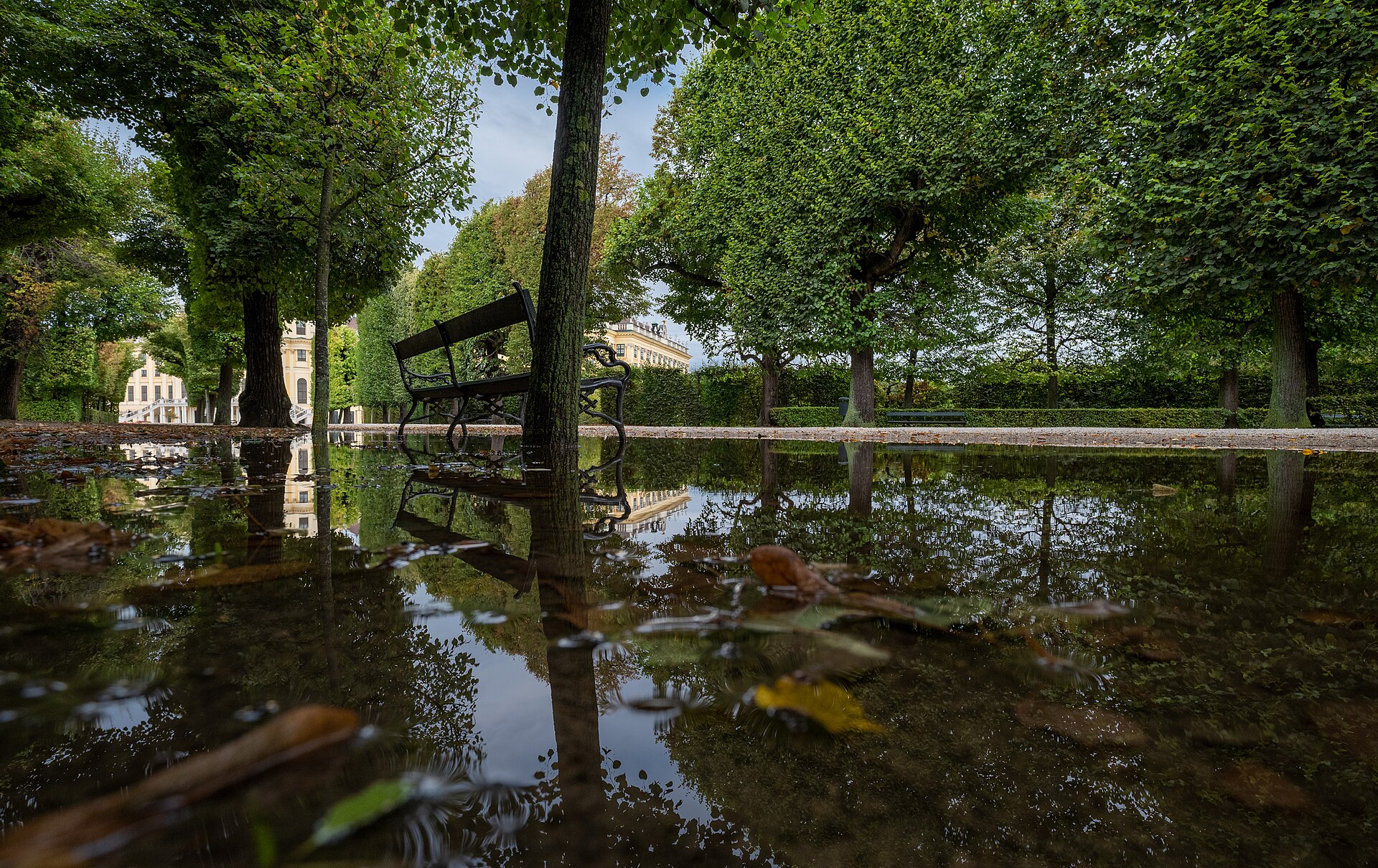
Inside the palace, visitors can tour the magnificent state apartments, from the dazzling great gallery to the richly decorated private rooms, experiencing the splendour of the imperial court and the more intimate world of the emperors and empresses who lived here. The interiors bring the history of the dynasty vividly to life, filled with the treasures and the atmosphere of the imperial age.
The gardens are a destination in their own right, inviting exploration of their parterres, avenues, and fountains, and the climb to the Gloriette for its magnificent views. The glasshouse, the zoo, and the many other attractions of the grounds add to the richness of a visit, so that Schönbrunn can fill a full and rewarding day with wonders of art, history, and nature.
View the exact location on Google Maps
However you experience it, Schönbrunn leaves an overwhelming impression of imperial magnificence, a palace that ranks among the greatest in Europe and offers one of the finest encounters with the grandeur of royalty anywhere in the world. It is the jewel of imperial Vienna, a monument to the Habsburg dynasty and its splendour, and a destination that no visitor to the city should miss.
Because Schönbrunn is so popular, it rewards a little planning, and those who arrive early or linger late are best placed to enjoy the gardens in tranquillity. However busy the palace itself, the vast grounds offer room to wander and to find quieter corners, and a walk up to the Gloriette in the soft light of morning or evening is among the great pleasures that the great imperial residence has to offer.
Palaces Nearby
If Schönbrunn has drawn you into the world of the Habsburgs, the family’s great winter palace stands at the heart of Vienna:
You May Like


2 thoughts on “Schönbrunn Palace: The Golden Summer Home of the Habsburg Emperors”