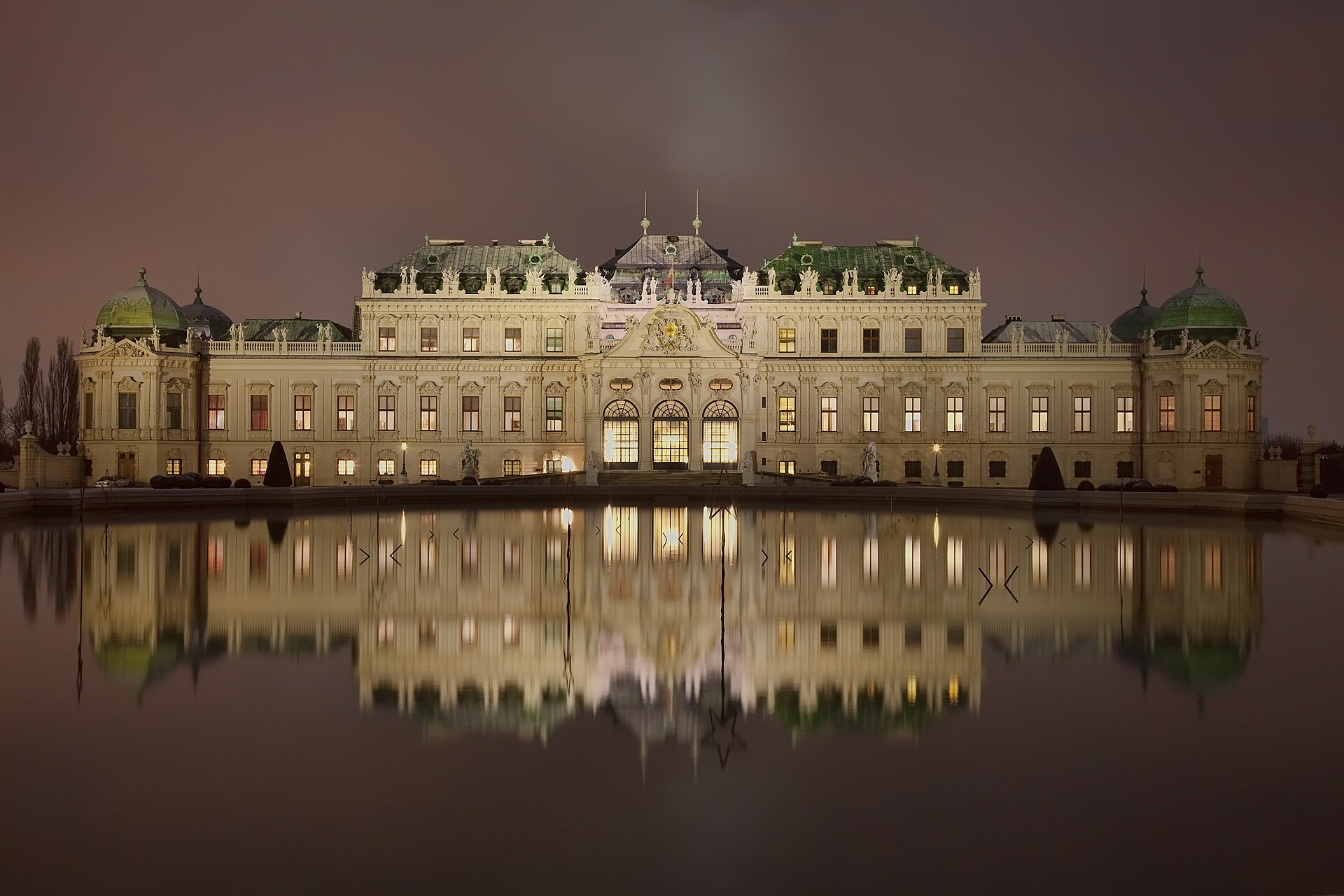
Set upon a gentle slope in Vienna, with one palace at the top of a magnificent tiered garden and another at the bottom, the Belvedere is one of the most beautiful Baroque ensembles in the world. Its golden facades, its cascading gardens adorned with fountains and sphinxes, and its glittering interiors make it a masterpiece of its age, and the view from its heights over the city and the palace below is one of the great sights of Vienna.
The Belvedere was not built by an emperor but by a soldier, the brilliant general who served the Habsburgs and won great victories in their name. With the fortune and the glory he had earned, this remarkable man created a summer palace of dazzling splendour, a fitting monument to his triumphs and his refined taste, and one of the supreme achievements of Baroque architecture and garden design.
Over the centuries the Belvedere passed from the great general to the imperial house and became bound up with the wider history of Austria, serving as a residence, a gallery, and the setting for one of the most important moments in the nation’s modern history. Today it is famous around the world as a museum, home to some of the most beloved paintings ever created, and it draws visitors in vast numbers to admire both its treasures and its beauty.
In the pages ahead you will explore this magnificent palace, from the great general who built it and the Baroque splendour of its architecture and gardens, through its glittering interiors and its role in history, to its life today as one of the world’s great art museums. The Belvedere is a jewel of Vienna, a palace of beauty and triumph, and it rewards the visitor with one of the finest experiences the city has to offer.
In This Article
- A Palace Built by a Soldier
- The Greatest General of His Age
- Two Palaces and a Garden
- A Baroque Masterpiece
- Gardens of Cascades and Sphinxes
- The View That Names the Palace
- The Splendour Within
- From General to Emperor
- The Home of an Heir
- The Birthplace of a Free Austria
- A Home for Great Art
- The Lower Palace and the Orangery
- Visiting the Belvedere Today
A Palace Built by a Soldier
Unlike the great imperial palaces of Vienna, the Belvedere was built not by a reigning monarch but by a soldier, the celebrated general who won fame and fortune in the service of the Habsburgs. This remarkable man, one of the greatest military commanders of his age, used the wealth and glory he had earned on the battlefield to create a summer palace of extraordinary splendour, a monument to his own success.
The general had risen to the heights of power and prestige through his brilliant victories, above all in the wars against the empire’s great rival to the east. Rewarded richly for his services and celebrated throughout Europe, he was a man of immense wealth and refined taste, and he chose to express his greatness through the creation of a magnificent palace and garden on the edge of Vienna.
That so splendid a palace should be the creation of a soldier rather than a king is one of the most striking things about the Belvedere. It reflects the extraordinary position that this great general had attained, a subject whose wealth and glory rivalled those of princes, and whose palace could stand comparison with the residences of the imperial house itself.
The Belvedere is thus a monument to the personal triumph of one remarkable individual, a self-made prince of war who left behind a masterpiece of architecture and art. To understand the palace is to understand the man who built it, and the extraordinary heights to which his talents carried him, and the building stands as a lasting testament to his glory and his taste.
There is a particular satisfaction in the idea of a palace built from the rewards of victory, a monument raised by a man who had earned his glory rather than inherited it. The Belvedere carries something of this spirit of personal triumph, a building that celebrates not the accident of royal birth but the achievement of a remarkable career, and this gives it a character subtly different from the palaces of kings.
The Greatest General of His Age
The man who built the Belvedere was one of the most extraordinary figures of his time, a general whose military genius made him a legend across Europe. Though not born to the house he would serve so brilliantly, he rose through sheer talent and determination to become the foremost commander of the imperial armies, winning a succession of famous victories that shaped the fortunes of the continent.
His greatest fame came from his campaigns against the empire’s most formidable rival, in wars that pushed back a great threat and won vast territories for the Habsburgs. These victories made him a hero throughout Christendom and brought him immense wealth and honour, elevating him to a position of power and prestige that few subjects had ever attained.
Yet the general was far more than a soldier, for he was also a man of culture, learning, and refined taste, a great patron of the arts and a collector of books, paintings, and curiosities. The Belvedere reflects this side of his character as much as his military glory, a palace built by a warrior who was also a connoisseur, uniting the splendour of triumph with the elegance of the arts.
This remarkable combination of the soldier and the patron makes the builder of the Belvedere one of the most fascinating figures of his age, and it is written into the very fabric of his palace. The Belvedere is at once a monument to his victories and a temple to his taste, and to understand it fully is to appreciate the extraordinary man who created it, a general whose glory found expression in one of the most beautiful palaces in Europe.
Two Palaces and a Garden
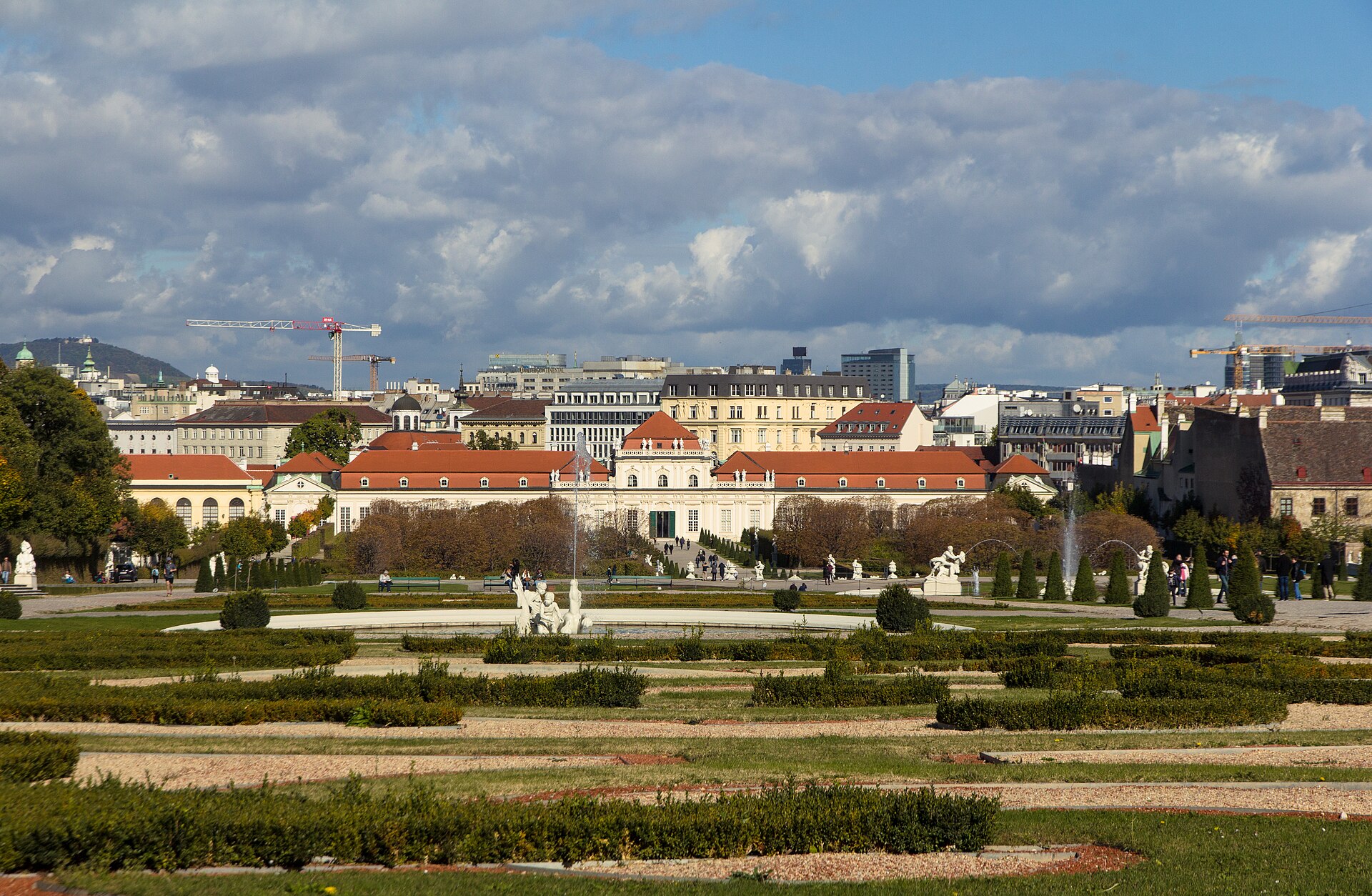
The Belvedere is not a single building but a composition of two palaces linked by a magnificent garden, a design of great beauty and ingenuity. At the top of a gently rising slope stands the grander of the two, a palace built for splendour and display, while at the bottom stands a second, more intimate palace, and between them descends a great tiered garden.
The two palaces served different purposes, the upper one designed for grand receptions and the display of magnificence, the lower one serving as a residence and a place of more private life. Together they formed a single ensemble, the whole conceived as a unified composition in which architecture and garden were designed to work together in perfect harmony.
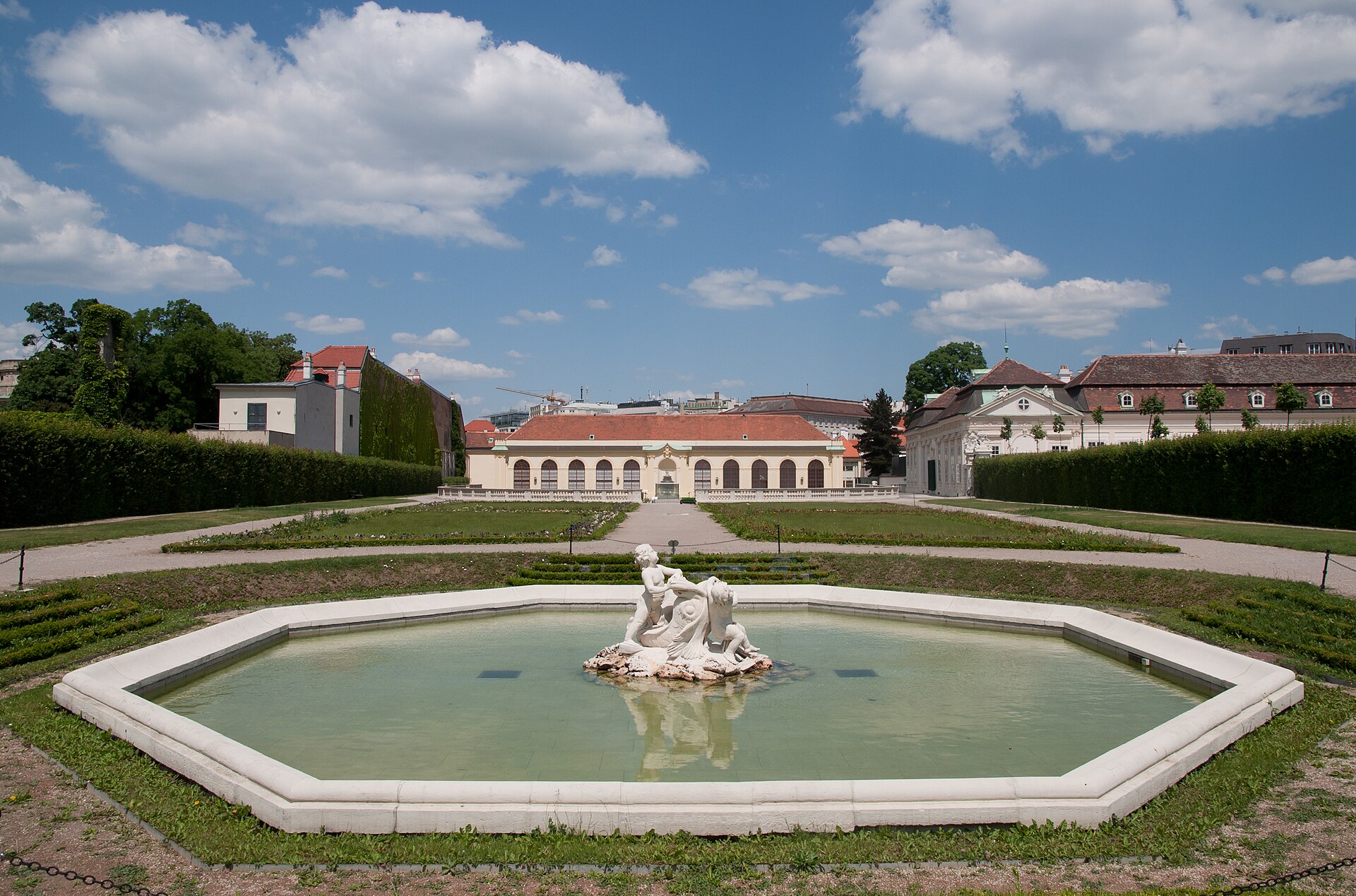
The garden that links the two palaces is one of the glories of the Belvedere, descending in terraces from the upper palace to the lower, adorned with fountains, cascades, and sculpture. This formal garden, laid out in the grand style of the age, is an essential part of the design, drawing the eye between the two palaces and creating a magnificent vista across the whole ensemble.
This arrangement of two palaces and a garden gives the Belvedere its distinctive character and much of its beauty. The interplay between the upper and lower palaces, linked by the descending garden, creates a composition of great elegance and drama, and it represents one of the finest achievements of Baroque design, a masterpiece of the art of uniting building and landscape.
The genius of this arrangement lies in the way it turns a simple slope into a stage for drama and delight. Rather than a single block set on level ground, the Belvedere unfolds as a journey from one palace to another, the garden falling away between them, so that the visitor is drawn through a sequence of changing views and experiences. It is a design of exceptional sophistication, and one of the reasons the ensemble remains so admired.
A Baroque Masterpiece
The Belvedere is one of the supreme achievements of Baroque architecture, a style that delighted in movement, richness, and dramatic effect. Designed by one of the leading architects of the age, the palaces display all the exuberance and elegance of the Baroque at its finest, their facades alive with ornament and their silhouettes crowned with distinctive roofs that give them a lightness and grace.
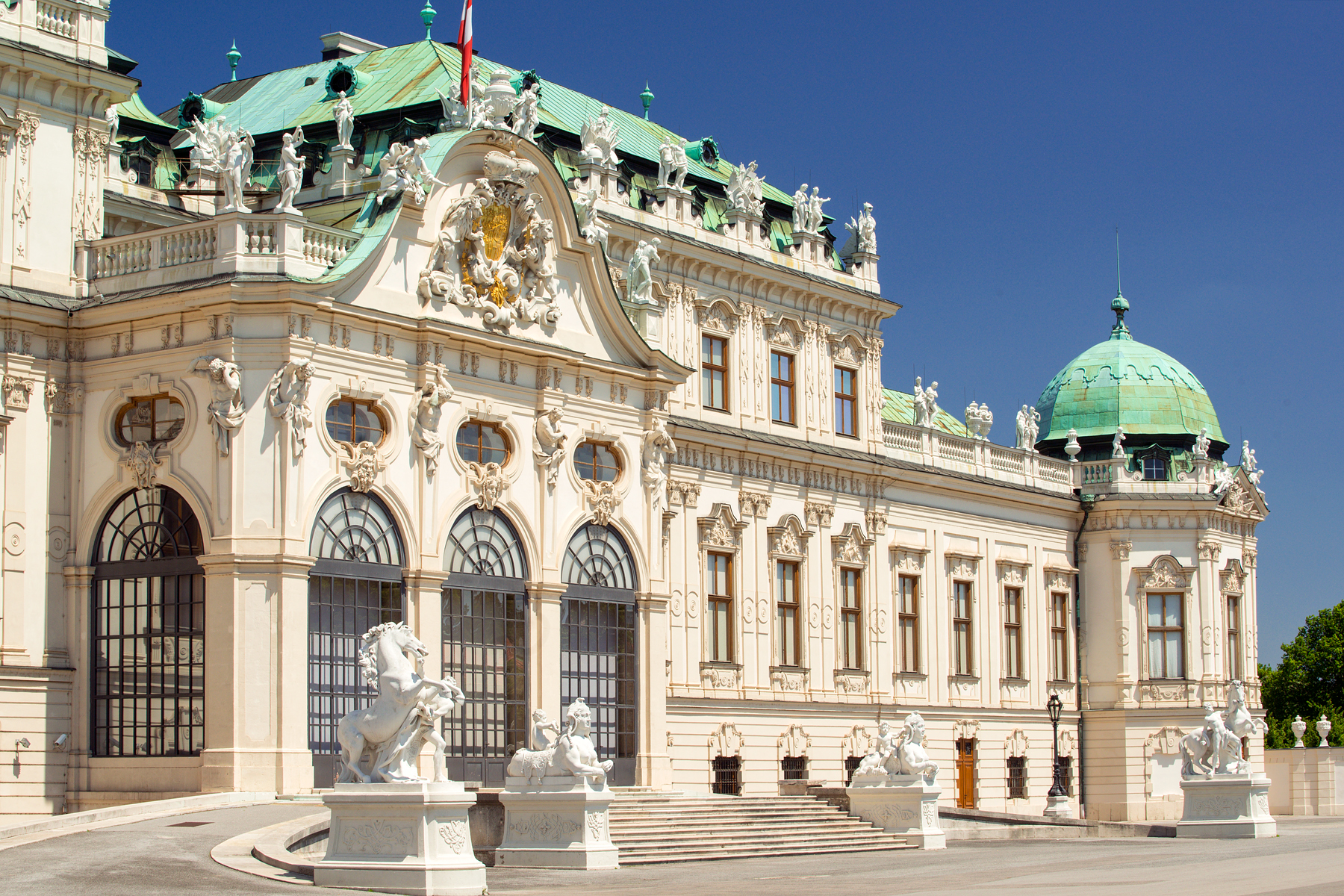
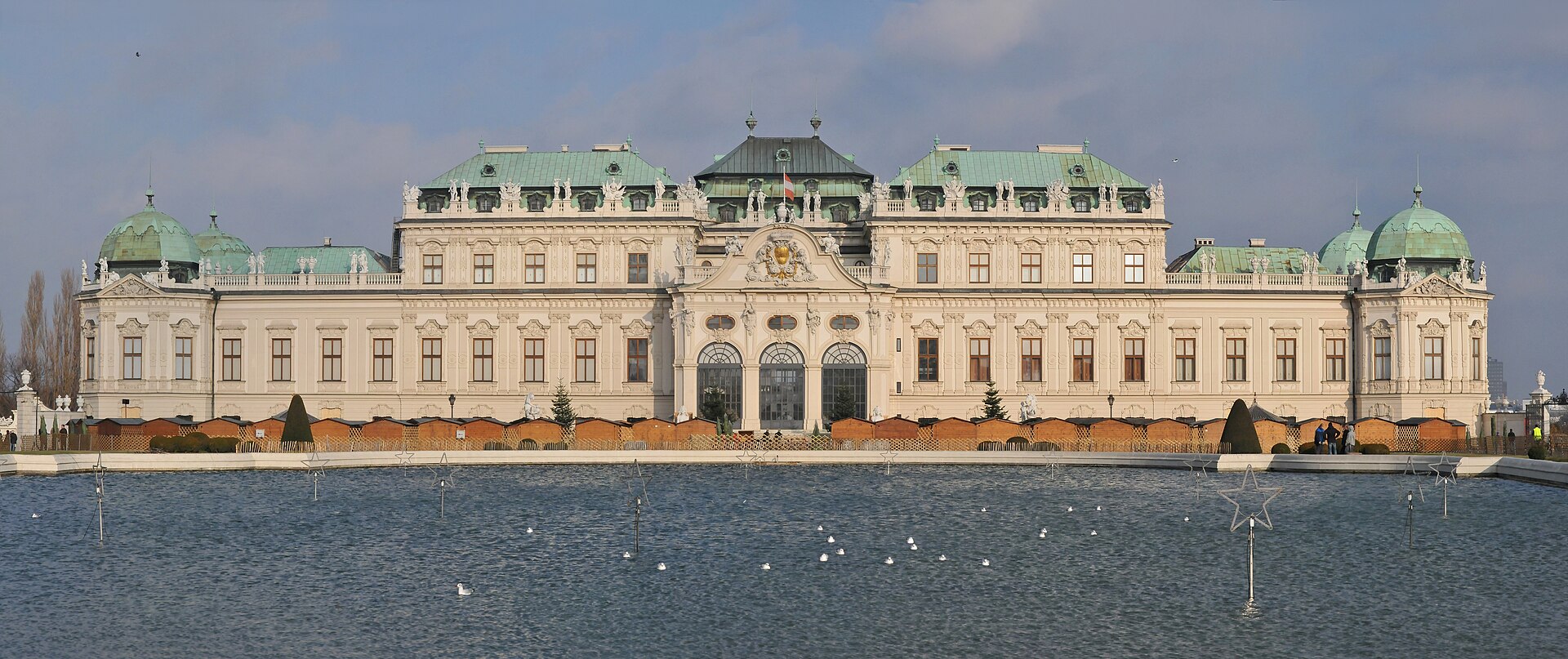
The upper palace in particular is a masterpiece of the style, its long facade animated by pavilions, sculpture, and rich decoration, its roofline crowned with copper roofs that shimmer above the gardens. The whole is designed to delight and to impress, a building of great sophistication that ranks among the finest Baroque palaces anywhere in Europe.
The architecture of the Belvedere reflects the influence of the great Baroque tradition, adapted to the taste and ambitions of the general who built it. Every element, from the proportions of the facades to the details of the ornament, was designed with care to create a harmonious and magnificent whole, and the result is a building of exceptional beauty and refinement.
As a Baroque masterpiece, the Belvedere stands among the greatest palaces of its age, a building that embodies the splendour and the artistic ambition of the era. Its beauty has been admired for centuries, and it remains one of the finest expressions of the Baroque style, a monument to the taste of its builder and the genius of the architect who realised his vision.
The distinctive copper roofs of the palace, curving and swelling above the facades, are among its most memorable features, giving the building a silhouette unlike any other. This inventive roofline, combined with the rich sculptural decoration below, creates an impression of movement and grace that is the very essence of the Baroque, and it marks the Belvedere as a supreme example of the style.
Gardens of Cascades and Sphinxes
The gardens of the Belvedere are among the most beautiful of their kind, a magnificent formal composition descending in terraces between the two palaces. Adorned with fountains, cascades, statues, and the famous sphinxes that guard its levels, the garden is a masterpiece of the formal style, a landscape of ordered beauty that complements the splendour of the palaces.
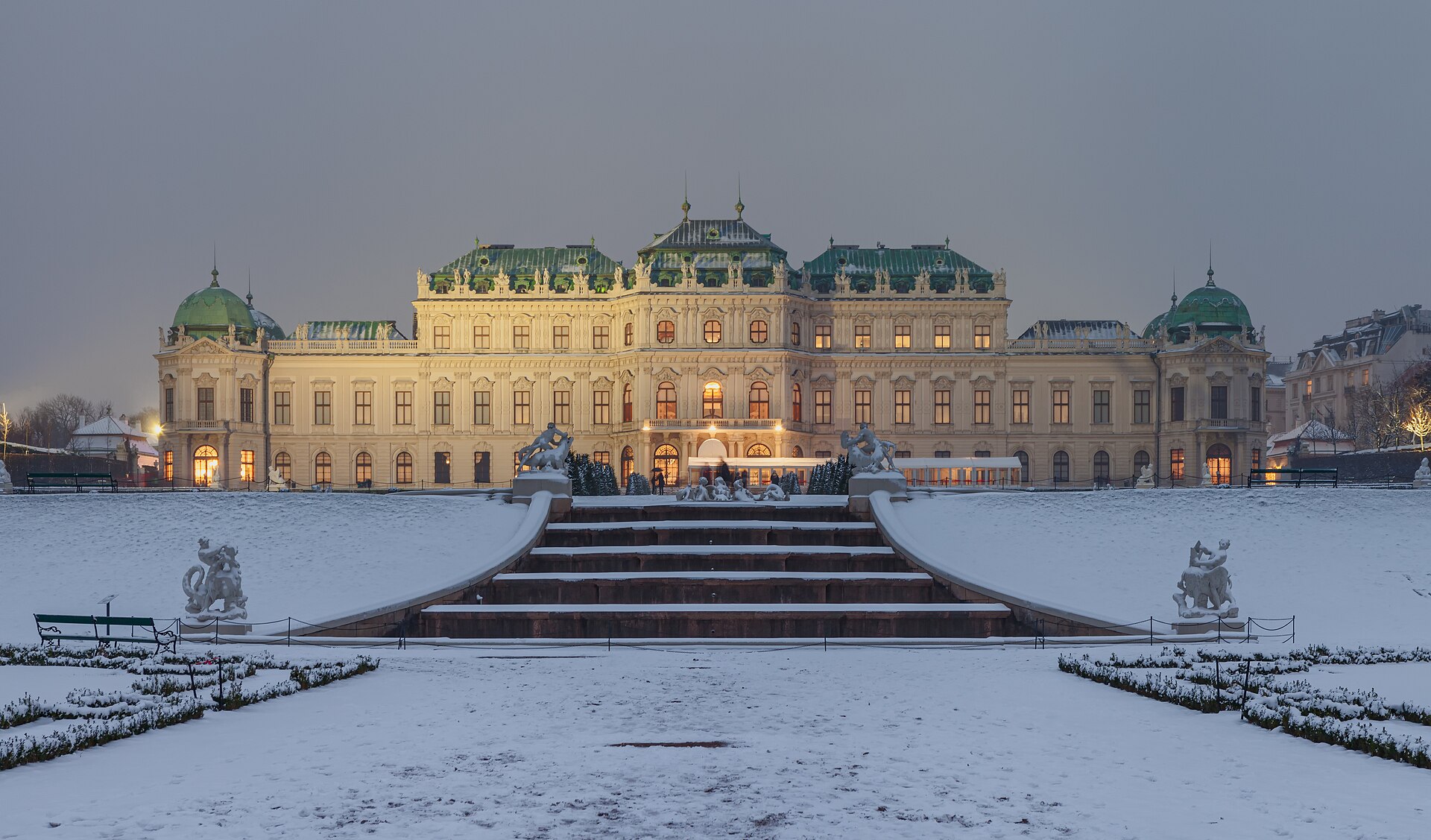
The garden descends from the upper palace to the lower in a series of terraces, linked by steps and cascades that carry water down the slope in a play of movement and sound. This use of the sloping site to create a descending composition is one of the great strengths of the design, giving the garden a drama and interest that a flat site could never provide.
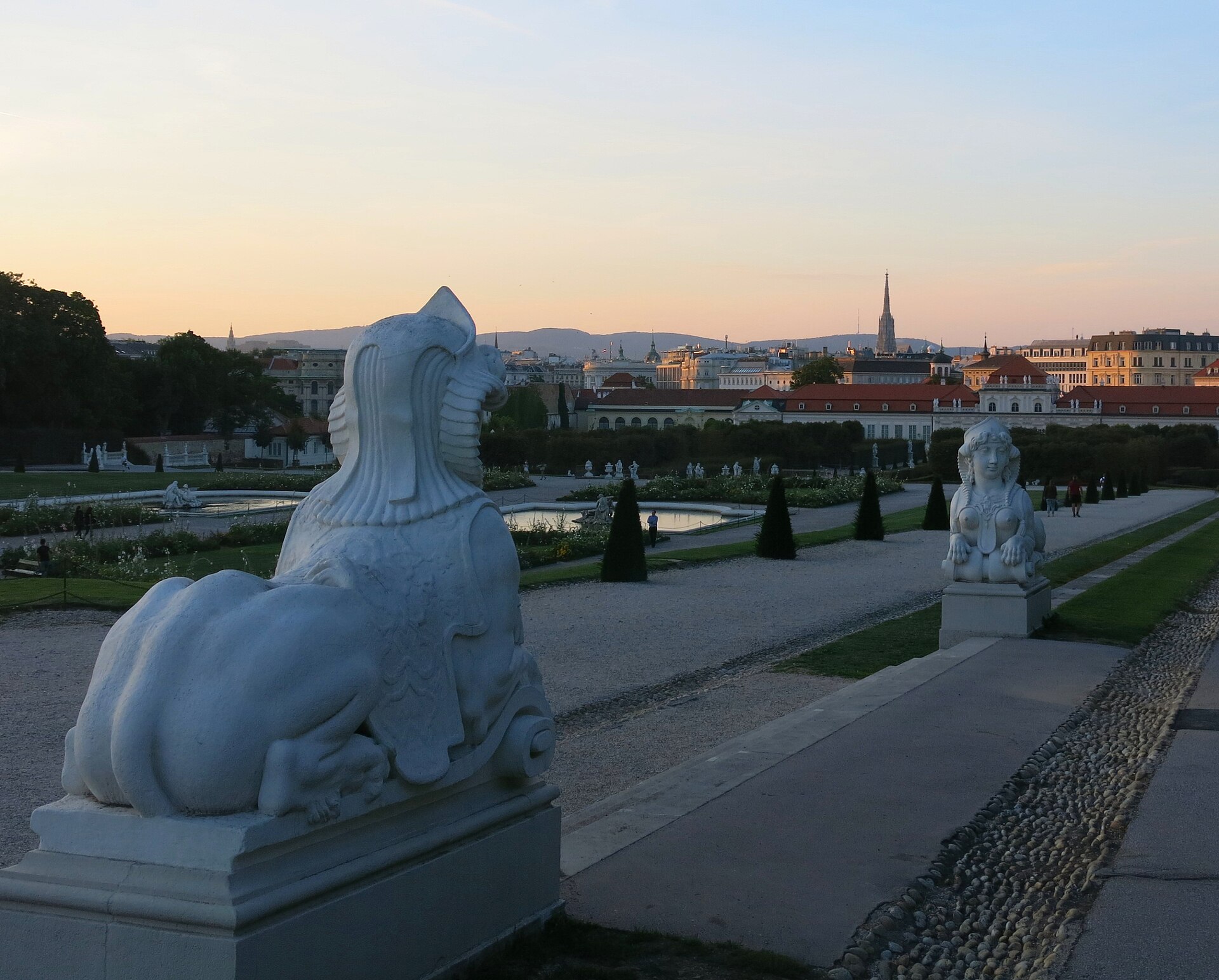
Among the most memorable features of the garden are the sphinxes, mysterious sculpted figures that guard its levels and add a note of exotic enchantment to the formal design. These and the many other statues and fountains that adorn the garden create a landscape of great richness, in which every terrace and pathway offers new beauty and delight.
The gardens are designed to be experienced in relation to the palaces and the views they command, the descending terraces drawing the eye between the upper and lower buildings and out over the city beyond. To walk through them is to appreciate the Belvedere as a total composition of architecture and landscape, one of the finest achievements of the Baroque garden in all of Europe.
The gardens were also a place of pleasure and display, where the general could entertain his guests amid fountains and sculpture, and where the beauty of the design proclaimed his wealth and taste. Even today, stripped of the courtly life they once hosted, they retain their power to delight, and a walk through their terraces remains one of the great pleasures of a visit to the Belvedere.
The View That Names the Palace
The very name of the Belvedere speaks of the beautiful view that is one of its greatest treasures, for from the heights of the upper palace and its gardens the visitor looks out over a magnificent prospect of the city of Vienna. This great view, taking in the descending gardens, the lower palace, and the spires and rooftops of the city beyond, is one of the most celebrated sights in Vienna.
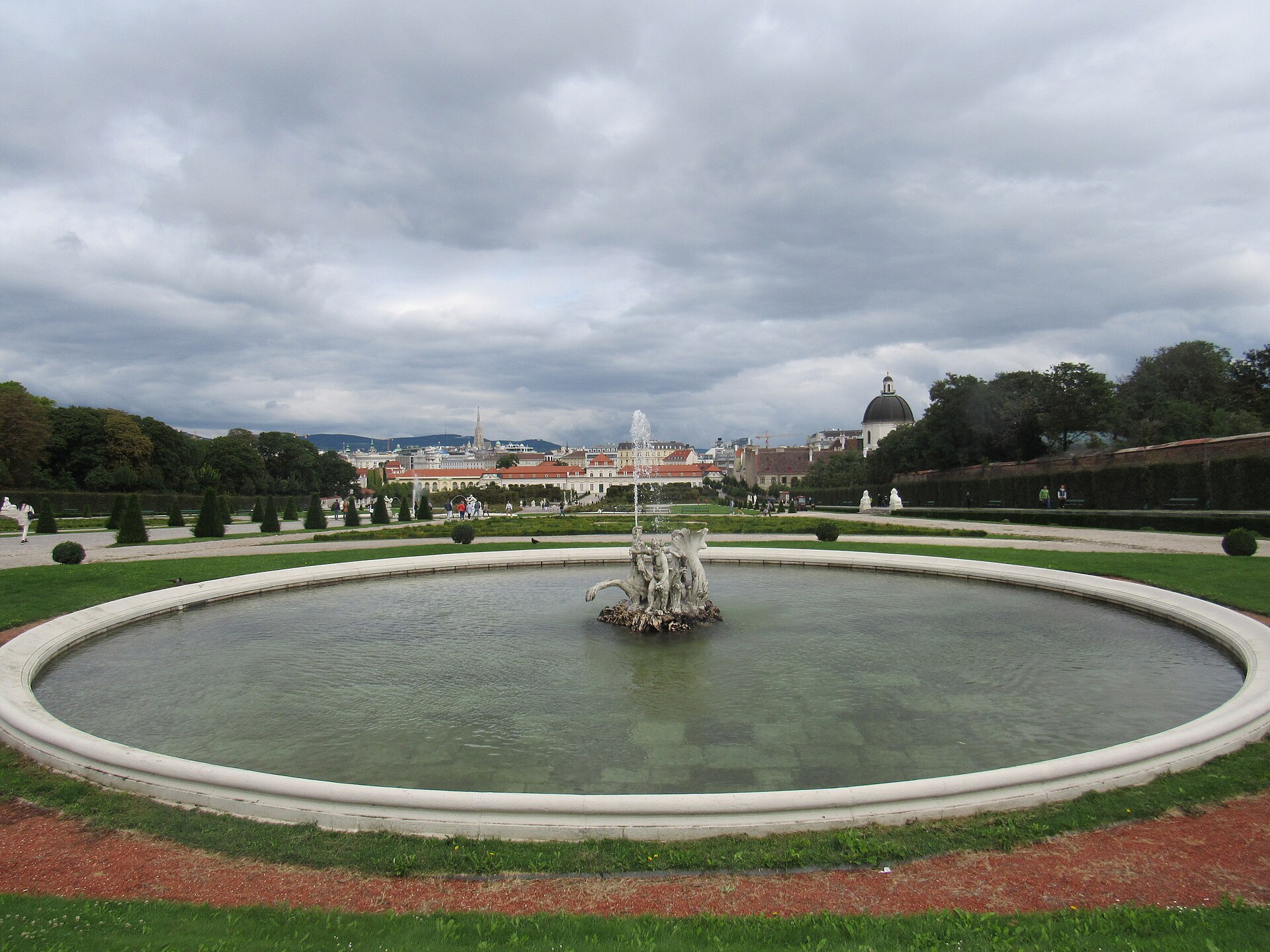
The upper palace was deliberately sited to command this splendid prospect, its position on the rising ground chosen to give the finest possible view over the gardens and the city. The whole composition of the Belvedere is designed around this view, the descending garden framing the vista and drawing the eye down toward the distant city and its landmarks.
This great outlook was one of the chief pleasures the palace offered its builder and his guests, a magnificent panorama to be enjoyed from the terraces and windows of the upper palace. The view gave the Belvedere its name and remains one of its defining features, a reminder that the palace was conceived not only as a building but as a place from which to admire the beauty of Vienna.
For visitors today, the view from the Belvedere remains one of the highlights of a visit, a magnificent prospect that captures the beauty of the palace and the city together. To stand on the terrace of the upper palace and look out over the gardens toward the spires of Vienna is to understand why the Belvedere has been so beloved for so long, and why its very name celebrates the beauty of its outlook.
It is worth remembering that a view of this kind was itself considered a form of luxury and status in the age of the palace’s building. To command such a prospect, to be able to survey the city spread out below from one’s own terrace, was a privilege of the great, and the Belvedere was designed to offer its builder this pleasure in the most magnificent form possible.
The Splendour Within
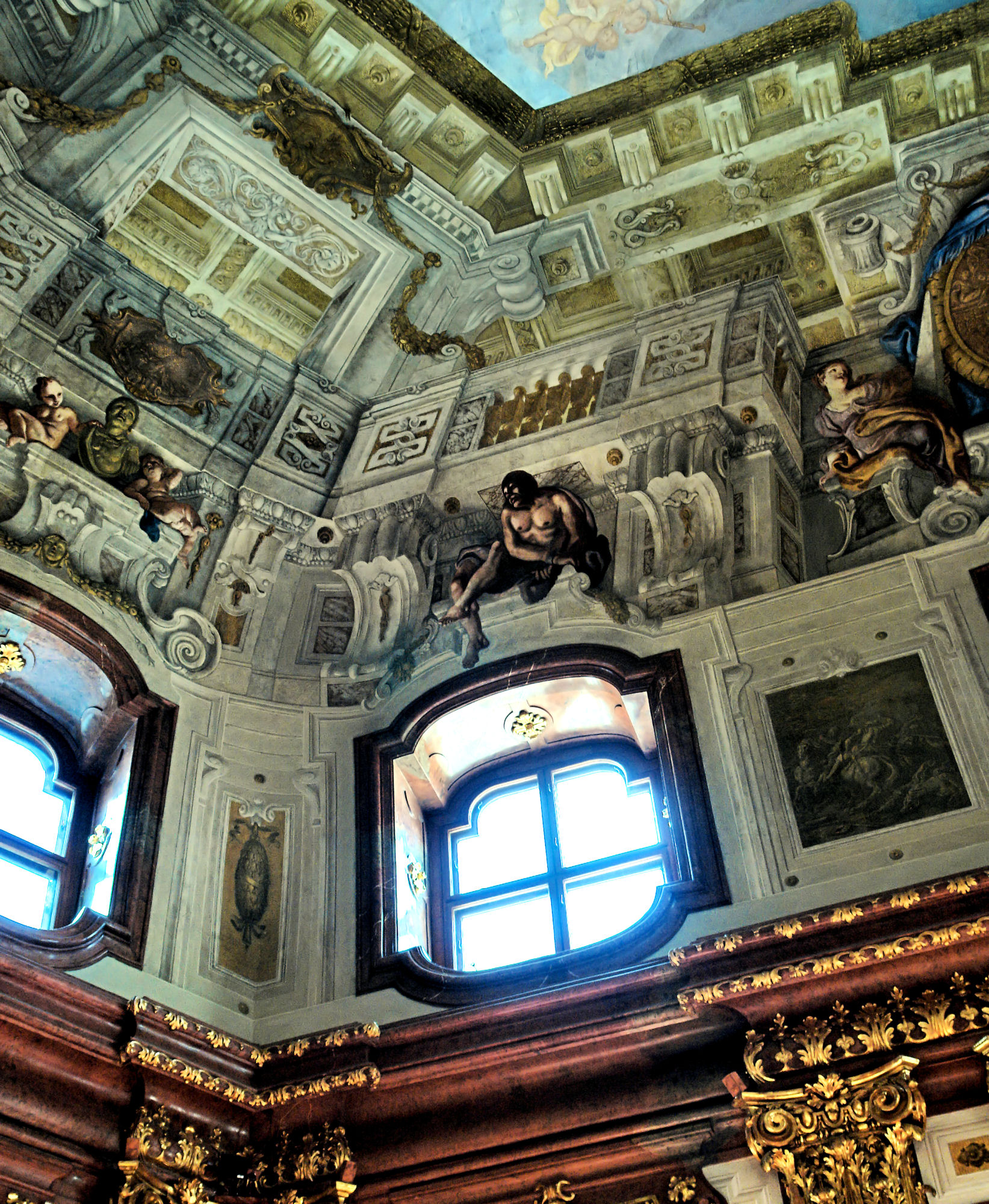
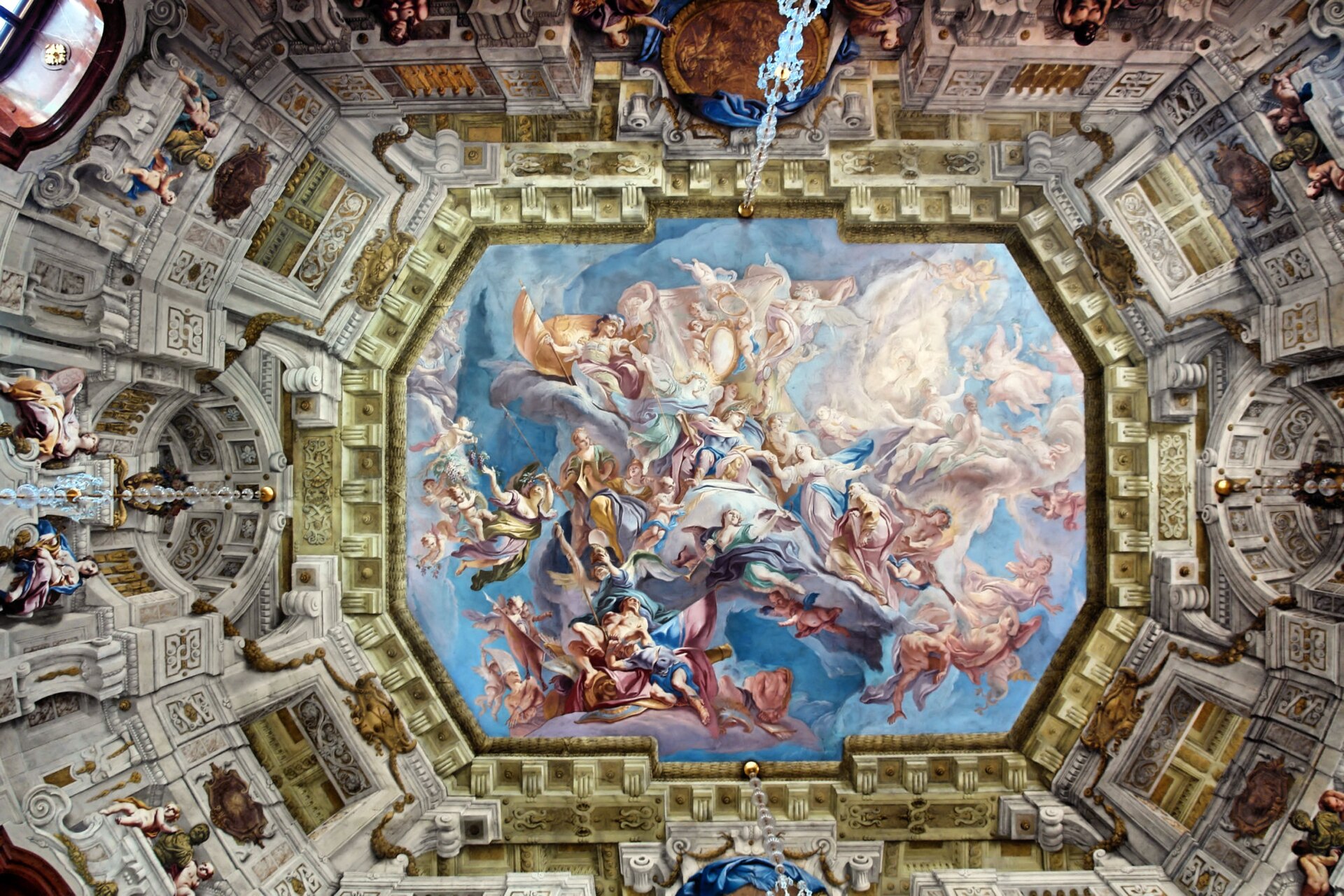
Behind the beautiful facades of the Belvedere lie interiors of great splendour, richly decorated in the exuberant style of the Baroque. Among the most magnificent of these is a great hall of marble, adorned with sculpture and crowned by a magnificent painted ceiling, a room of overwhelming grandeur that was the setting for the most important occasions in the life of the palace.
This great hall, with its rich materials and its dazzling decoration, was designed to impress and to celebrate the glory of the general who built the palace. Its painted ceiling glorifies its builder in the manner of the age, presenting him amid allegorical splendour, and the whole room is a triumph of Baroque decoration, uniting architecture, sculpture, and painting into a single overwhelming effect.
The other interiors of the palace are scarcely less magnificent, richly decorated rooms and halls that reflect the wealth and taste of their builder. From grand ceremonial spaces to more intimate chambers, the interiors of the Belvedere display the full splendour of the Baroque, their decoration designed to create an impression of magnificence worthy of the great man who created the palace.
These splendid interiors are an essential part of the Belvedere, complementing the beauty of the architecture and the gardens with the richness of their decoration. They bring to life the world of the general and his court, and they provide a magnificent setting for the treasures that the palace holds today, uniting the splendour of the Baroque with the beauty of the art now displayed within.
The decision to glorify the builder so openly in the decoration of the hall reflects the confidence and pride of a man who had risen to the summit of fame. Far from false modesty, the room proclaims his triumphs and his taste without reserve, and in doing so it captures the spirit of an age in which the great expressed their glory through the splendour of their surroundings.
From General to Emperor
After the death of the great general who built it, the Belvedere passed in time to the imperial house, becoming part of the vast holdings of the Habsburg dynasty. The palace that had been the creation of a soldier now belonged to the emperors, and it was drawn into the wider history of the imperial family and their capital, taking on new roles in the life of the dynasty.
Under imperial ownership, the Belvedere was put to new uses, and it became associated with the display of art, for the great picture collection of the imperial house was brought here and opened to public view. In this the Belvedere played a pioneering role, becoming one of the earliest places where a great collection of art was made accessible to the public, a forerunner of the modern museum.
The transfer of the palace to the imperial house also bound it more closely to the fortunes of the dynasty and the history of Austria. Over the following centuries, the Belvedere would be associated with important figures and events of the imperial family, its rooms and gardens continuing to play a part in the life of the empire and its capital.
This passage from general to emperor is an important chapter in the history of the Belvedere, marking its transformation from a private monument of personal glory into a possession of the imperial house and a place of public art. It set the palace on the path toward its modern role as a museum, and it wove the creation of the great general ever more deeply into the history of Austria.
This early opening of a great collection to the public marks the Belvedere as a pioneer in the history of the museum, a forerunner of the idea that art should be shared with all rather than hidden away. In this the palace anticipated its own future, for the role it took on under the imperial house would eventually become its permanent identity as one of the great public galleries of the world.
The Home of an Heir
In the later history of the imperial family, the Belvedere became associated with one of the most significant figures of the dynasty, the heir to the throne whose fate would help to plunge the world into war. This archduke made the palace his residence, and it became the centre of his life and his circle in the years before the great catastrophe that his death would help to unleash.
As the residence of the heir, the Belvedere was a place of political as well as domestic importance, a centre where the future of the empire was contemplated and where the heir gathered those who shared his views. The palace thus became bound up with the tensions and hopes of the imperial family in its final years, a stage for the drama of a dynasty approaching its end.
The connection between the Belvedere and this tragic figure adds a note of historical weight to the palace, linking it to the events that would bring about the fall of the empire and reshape the world. The heir whose home this was would meet a violent death that became the spark for a great and terrible war, and the palace holds the memory of the world that was lost in that catastrophe.
This association with the doomed heir is one of the many layers of history that the Belvedere carries, binding the beautiful palace to the fateful events of the twentieth century. It is a reminder that the Belvedere, for all its beauty, was a place where the great dramas of history unfolded, and that its walls witnessed the world of the empire in its last days before the storm.
To walk through the Belvedere with this history in mind is to sense the shadow of the coming catastrophe that would sweep away the world of the palace. The archduke’s residence here places the beautiful building at the very threshold of the events that ended the old European order, and it lends the Belvedere a poignancy that deepens its beauty with the weight of history.
The Birthplace of a Free Austria
The Belvedere holds a place of special importance in the modern history of Austria, for it was here that one of the most significant events in the nation’s recovery took place. In the years after a great war, when Austria sought to regain its full independence, the treaty that restored the nation’s sovereignty was signed within the palace, in its magnificent marble hall.
The signing of this treaty was a moment of profound importance for Austria, marking the end of a difficult period and the restoration of the nation as a free and independent state. That so momentous an event should take place in the Belvedere, in the splendid hall built by the great general, gave the palace a new and powerful significance in the story of modern Austria.
The scene that followed the signing, when the treaty was shown to the crowds gathered outside, became one of the iconic images of the nation’s recovery, a moment of joy and relief celebrated by the Austrian people. The balcony of the palace from which the treaty was presented became a symbol of the nation’s freedom, and the Belvedere took its place at the heart of the story of modern Austrian independence.
This role as the birthplace of a free and independent Austria gives the Belvedere a significance that reaches far beyond its beauty as a palace. It binds the building to the modern identity of the nation, and it ensures that the Belvedere is cherished not only as a masterpiece of art and architecture but as a place of deep meaning in the history of the Austrian people.
The choice of the Belvedere for so momentous an occasion was itself significant, for it linked the rebirth of the nation to one of its most beautiful and historic buildings. In signing the treaty within the splendour of the palace, the participants gave the event a setting worthy of its importance, and they bound the Belvedere forever to the story of Austria’s recovery of its freedom.
A Home for Great Art
Today the Belvedere is famous around the world as a museum, its palaces home to a magnificent collection of art that draws visitors in enormous numbers. The transformation of the palace into a gallery has given it a new life and a new fame, and it has become one of the great art museums of Europe, a place where the beauty of the building is matched by the treasures it contains.
The collection of the Belvedere is celebrated above all for its holdings of art from Austria, including some of the most beloved and famous paintings ever created. Among its treasures are works that have become icons of art, drawing admirers from around the world and making the Belvedere a place of pilgrimage for lovers of painting, its galleries filled with masterpieces of great beauty and importance.
The setting of these treasures within the splendid Baroque palace adds greatly to the experience of viewing them, the beauty of the architecture and the art combining to create a museum of exceptional richness. To see the great paintings amid the magnificent interiors of the Belvedere is to experience art and architecture together, each enhancing the other in a way that few museums can match.
As one of the great art museums of the world, the Belvedere has taken its place among the most important cultural institutions of Austria and of Europe. Its collection of celebrated masterpieces, displayed within the splendour of the historic palace, makes it a destination of the first importance for lovers of art, and it ensures that the beautiful creation of the great general continues to delight and inspire visitors from around the world.
The pairing of world-famous paintings with a magnificent historic palace gives the Belvedere a special place among the museums of the world. Where many great collections are housed in purpose-built galleries, here the art is displayed within a masterpiece of architecture, so that the visit becomes a double pleasure, an encounter with great painting and great building at once, each deepening the appreciation of the other.
The Lower Palace and the Orangery
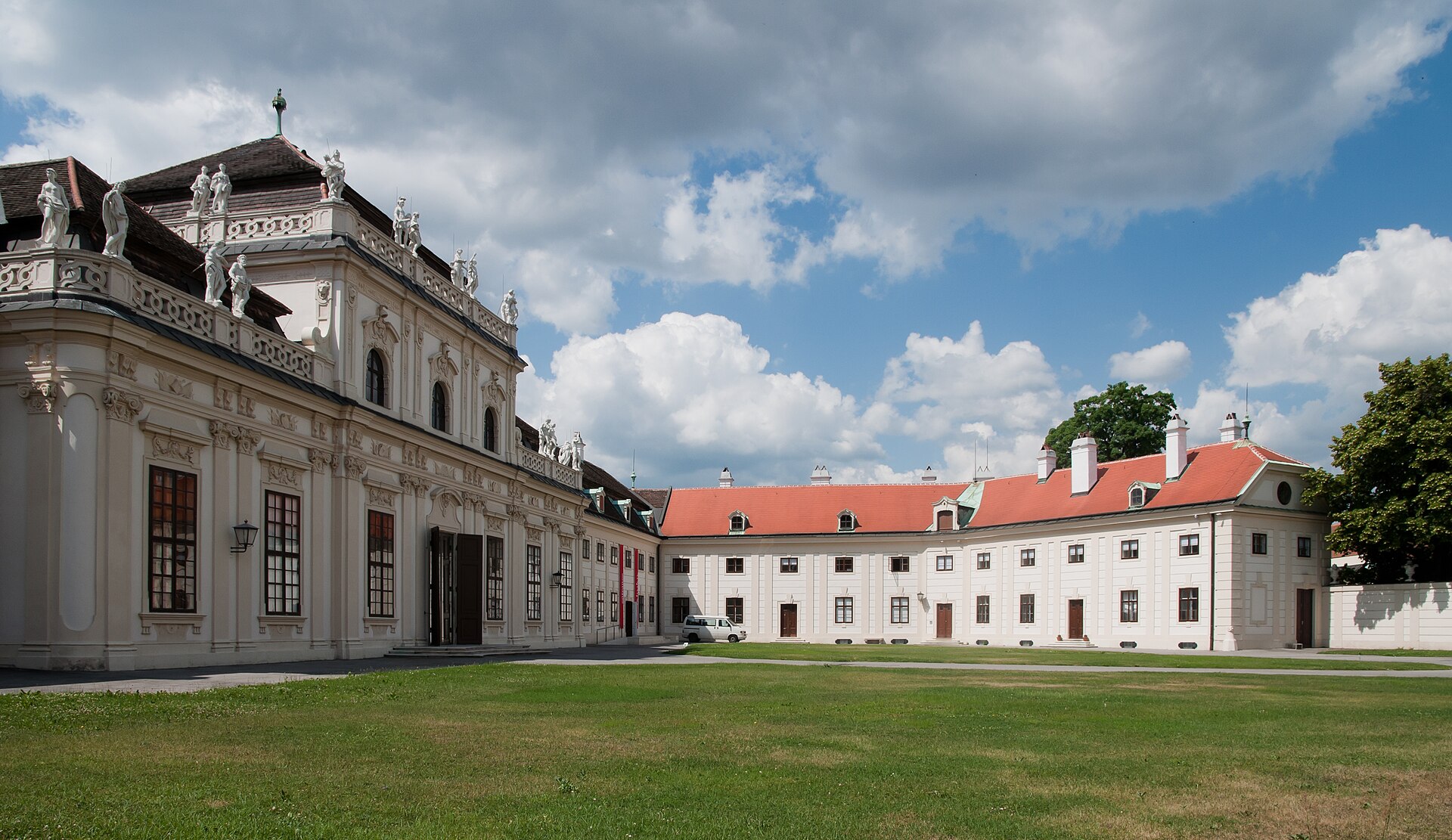
While the upper palace draws the most attention with its grandeur and its famous collection, the lower palace and its surroundings hold their own treasures and their own charm. This more intimate palace, built as the residence of the great general, offers a different and quieter experience, its rooms and spaces reflecting the more private side of life at the Belvedere.
The lower palace and its associated buildings, including an orangery and stables, have been adapted over time to serve as spaces for the display of art and for special exhibitions. These spaces complement the grander galleries of the upper palace, offering settings for a wide range of art and adding to the richness of the Belvedere as a museum and cultural centre.
The lower palace also holds interiors of great beauty in their own right, richly decorated rooms that reflect the same splendour and taste as the grander upper palace. To explore the lower palace is to discover a quieter but no less rewarding side of the Belvedere, a place where the more intimate life of the great general and his household can be imagined.
Together with the upper palace and the garden, the lower palace completes the great ensemble of the Belvedere, ensuring that a visit encompasses the full range of the palace and its treasures. The interplay between the grand upper palace and the more intimate lower one, linked by the beautiful garden, is one of the enduring pleasures of the Belvedere, and it makes the whole ensemble a place of endless interest and delight.
The survival of both palaces, along with the garden that links them, means that the Belvedere can still be experienced today much as its builder conceived it, as a complete and unified ensemble. This wholeness is rare among the great palaces, many of which have lost their gardens or their outbuildings, and it is one of the reasons the Belvedere remains such a satisfying and rewarding place to visit.
Visiting the Belvedere Today
A visit to the Belvedere is one of the great pleasures available to the traveller in Vienna, combining the beauty of a Baroque palace and garden with the delights of a world-class art museum. The palace, the gardens, and the collections together offer an experience of exceptional richness, and it is worth allowing plenty of time to enjoy all that the Belvedere has to offer.
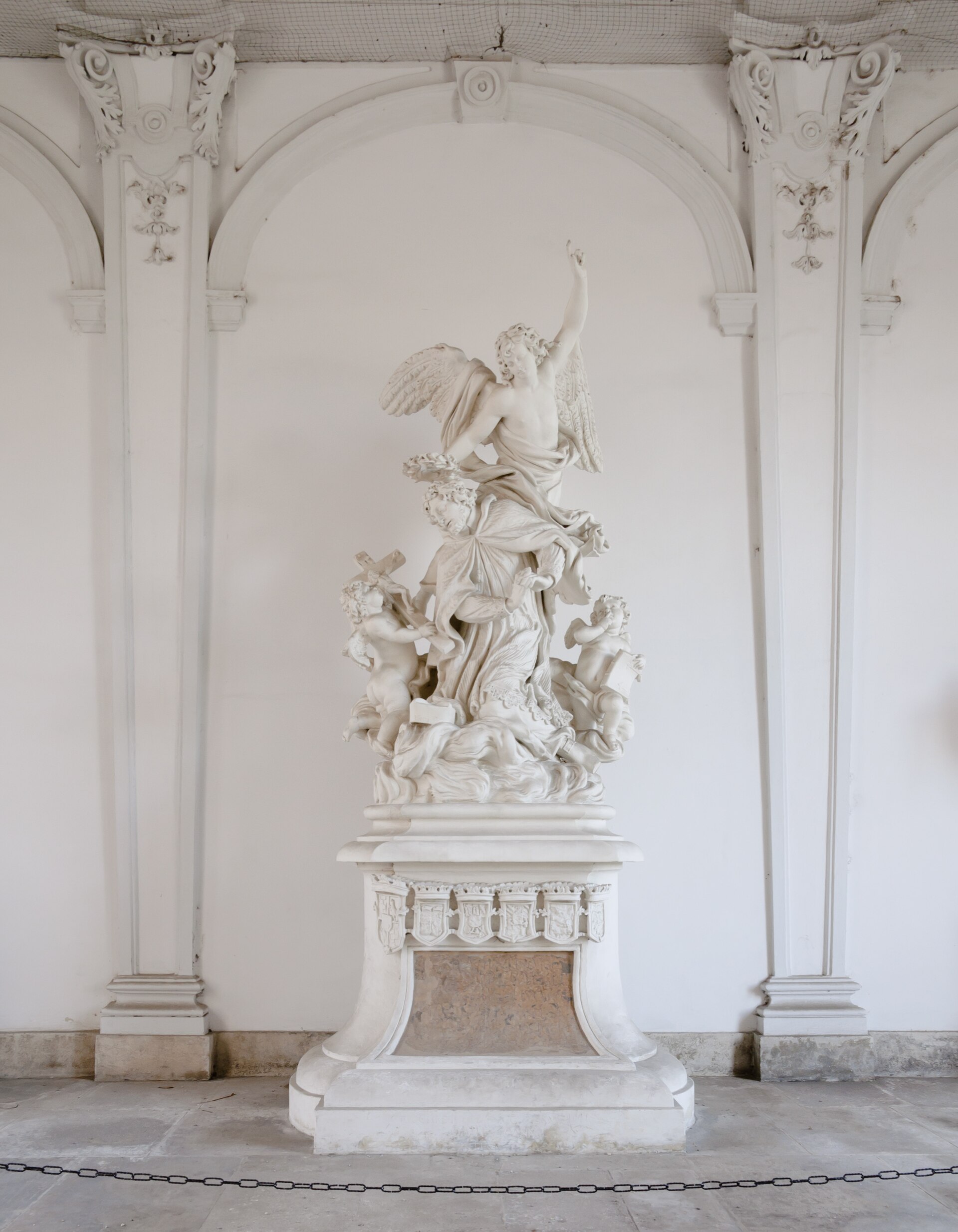
The upper palace is the highlight for most visitors, its magnificent interiors housing the famous collection of art amid the splendour of the Baroque. To view the celebrated masterpieces in such a setting is an unforgettable experience, and the great marble hall and the other splendid rooms add to the pleasure of a visit to the galleries.
The gardens are a delight in their own right, their descending terraces, fountains, and sphinxes inviting exploration and offering magnificent views over the city. To walk from the upper palace down through the gardens to the lower palace is to experience the Belvedere as its builder intended, a total composition of architecture and landscape of great beauty.
View the exact location on Google Maps
However you choose to experience it, the Belvedere offers an unforgettable encounter with the beauty of the Baroque and the treasures of art. It is one of the jewels of Vienna, a palace built by a great general and now home to some of the most beloved art in the world, and it rewards the visitor with one of the richest and most beautiful experiences the city has to offer.
Palaces Nearby
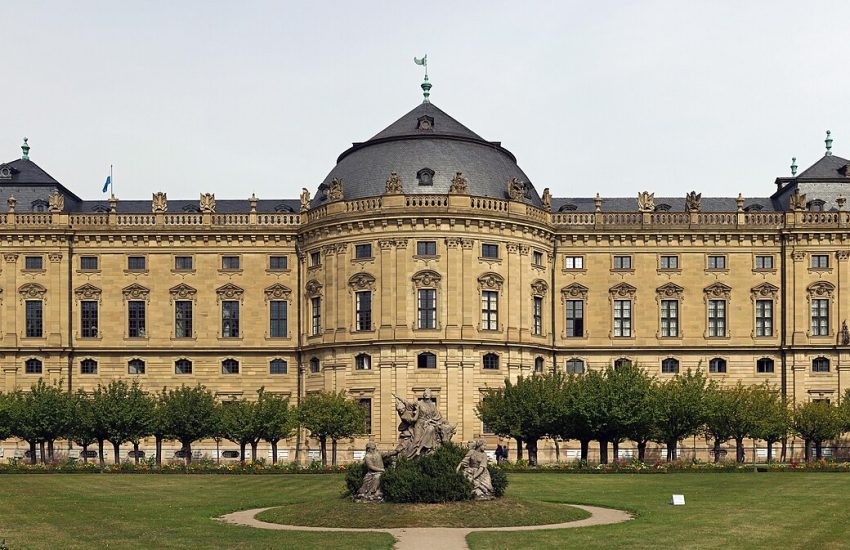
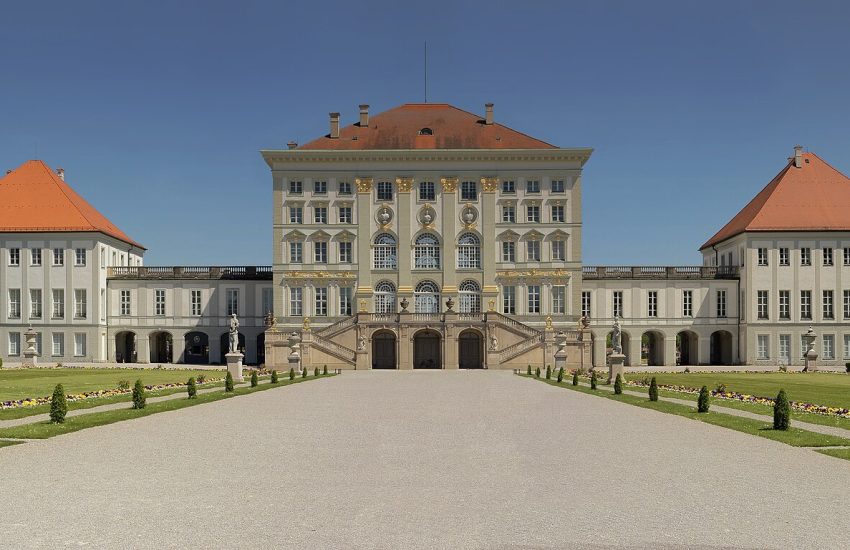
If the Belvedere has drawn you into imperial Vienna, two more great Habsburg palaces await across the city:
You May Like


One thought on “The Belvedere: The Baroque Palace a Great General Built for His Glory”