In the great city of Isfahan, once one of the largest and most magnificent cities in the world, stands a pavilion of extraordinary elegance reflected in a long, still pool. The Chehel Sotoun is a garden palace of the Persian kings, a place of columns, mirrors, and dazzling paintings set within a beautiful garden, and it is one of the finest surviving monuments of the golden age of Persian art. Its name, meaning the Forty Columns, hints at one of its most enchanting features, a play of reflection and illusion.
The Chehel Sotoun was built by the rulers of the Safavid dynasty, under whom Isfahan became the capital of a great empire and one of the most splendid cities on earth. This pavilion, set in its garden, was a place for the king to receive guests, to hold banquets and audiences, and to enjoy the beauty of the garden and the pool. It embodies the refinement and the magnificence of the Persian court at its height.
What makes the Chehel Sotoun so remarkable is its combination of architecture, painting, and landscape into a single harmonious work of art. Its slender columns rise above a graceful porch, its walls glow with great historical paintings and shimmering mirror-work, and its whole composition is completed by the garden and the long reflecting pool before it. It is a masterpiece of the Persian art of the garden pavilion.
In this article you will explore the Chehel Sotoun from the dynasty that built it to its famous columns, pool, and paintings, through its role in the life of the Persian court to its life today as a monument. Along the way you will discover the brilliant art of the Safavid age and understand why this pavilion of the Forty Columns in Isfahan remains one of the great treasures of Iran.
In This Article
- A Pavilion in a Garden
- The Safavid Golden Age
- The Forty Columns
- The Columned Porch
- The Reflecting Pool
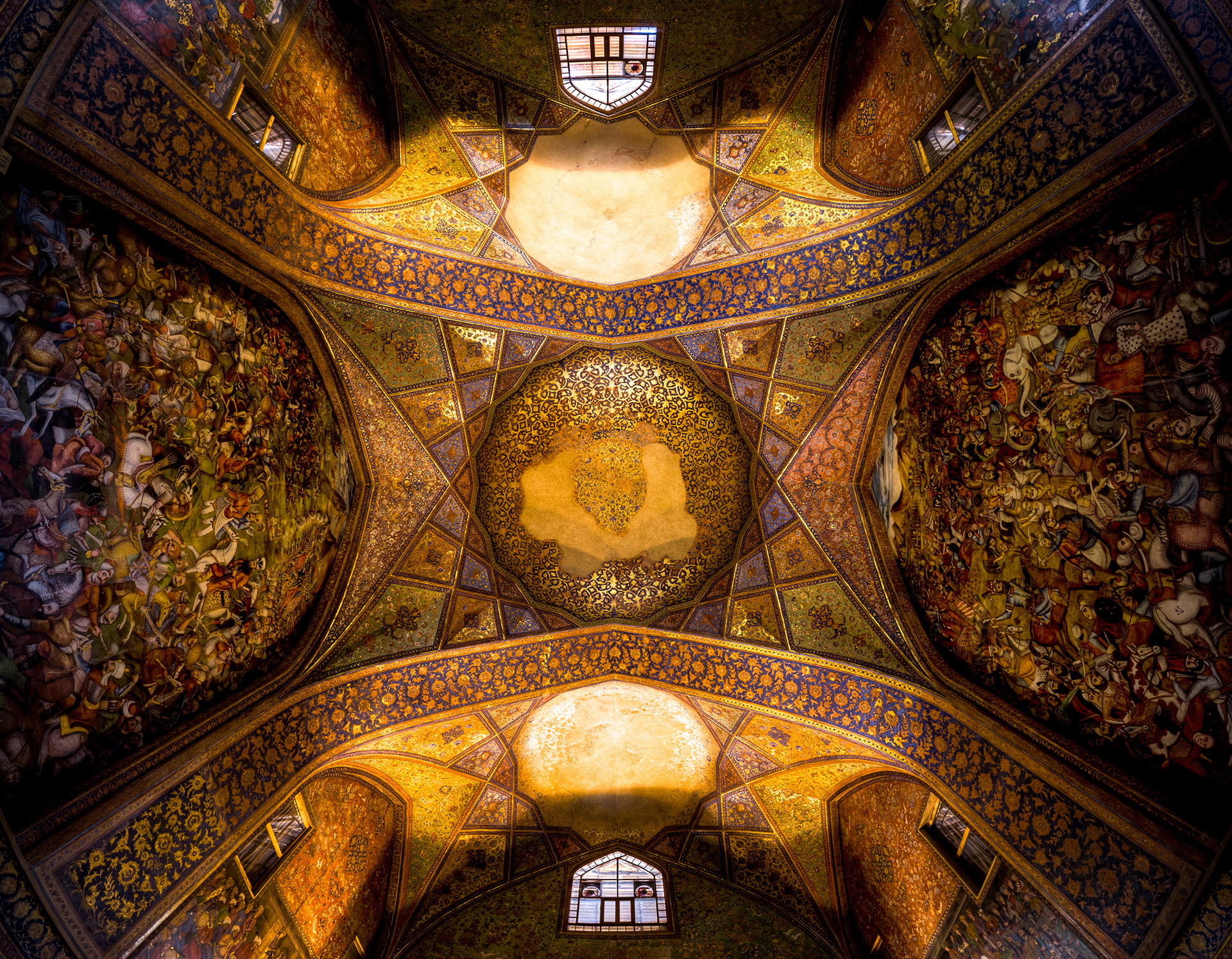
- The Great Paintings
- Mirrors and Ornament
- The Persian Garden
- A Setting for the Court
- Half of the World
- A Meeting of Artistic Worlds
- A Preserved Treasure
- Visiting the Chehel Sotoun Today
A Pavilion in a Garden
The Chehel Sotoun is a pavilion set within a large and beautiful garden in the city of Isfahan, surrounded by trees, pathways, and a long reflecting pool. Rather than a large palace, it is an elegant garden building, designed for pleasure and ceremony, and it embodies the Persian ideal of architecture set within a paradise garden.
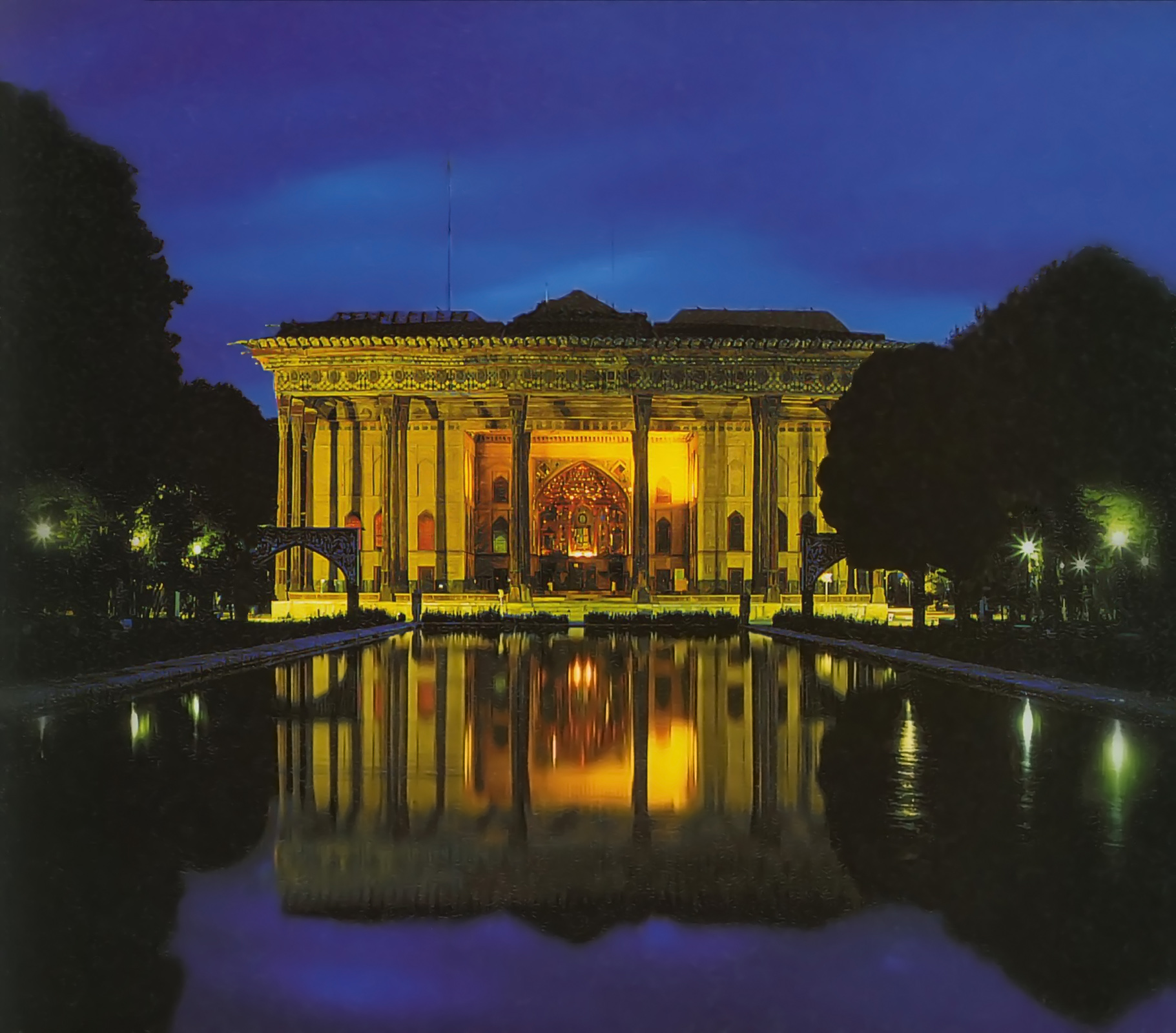
The pavilion is composed of a columned porch, or veranda, opening onto the garden and the pool, behind which lie the halls and rooms of the building. This open, columned form, with its graceful proportions, connects the pavilion to the garden and the water, creating a structure that seems to belong to its beautiful setting.
The building is richly decorated, with wooden columns, mirrored surfaces, and above all great paintings covering its walls. This combination of architecture and decoration, set within the garden, makes the Chehel Sotoun a total work of art, in which building, painting, and landscape come together in perfect harmony.
Set within its garden and reflected in its pool, the Chehel Sotoun is one of the most beautiful and evocative monuments of Isfahan. It embodies the refinement of the Persian court and the art of the garden pavilion, and it stands as a jewel of the golden age of Persian architecture, a place of beauty and delight preserved in the great city.
The pavilion is best approached slowly, along the length of the garden, so that it reveals itself gradually across the reflecting pool. Seen from a distance, mirrored in the water and framed by trees, it appears almost to float, and this carefully composed approach is as much a part of the design as the building itself, an experience of beauty unfolding step by step.
The Safavid Golden Age
The Chehel Sotoun was built by the rulers of the Safavid dynasty, under whom Persia experienced a great golden age of art, architecture, and culture. Making Isfahan their capital, the Safavid kings transformed the city into one of the most magnificent in the world, adorning it with palaces, mosques, gardens, and grand public spaces.
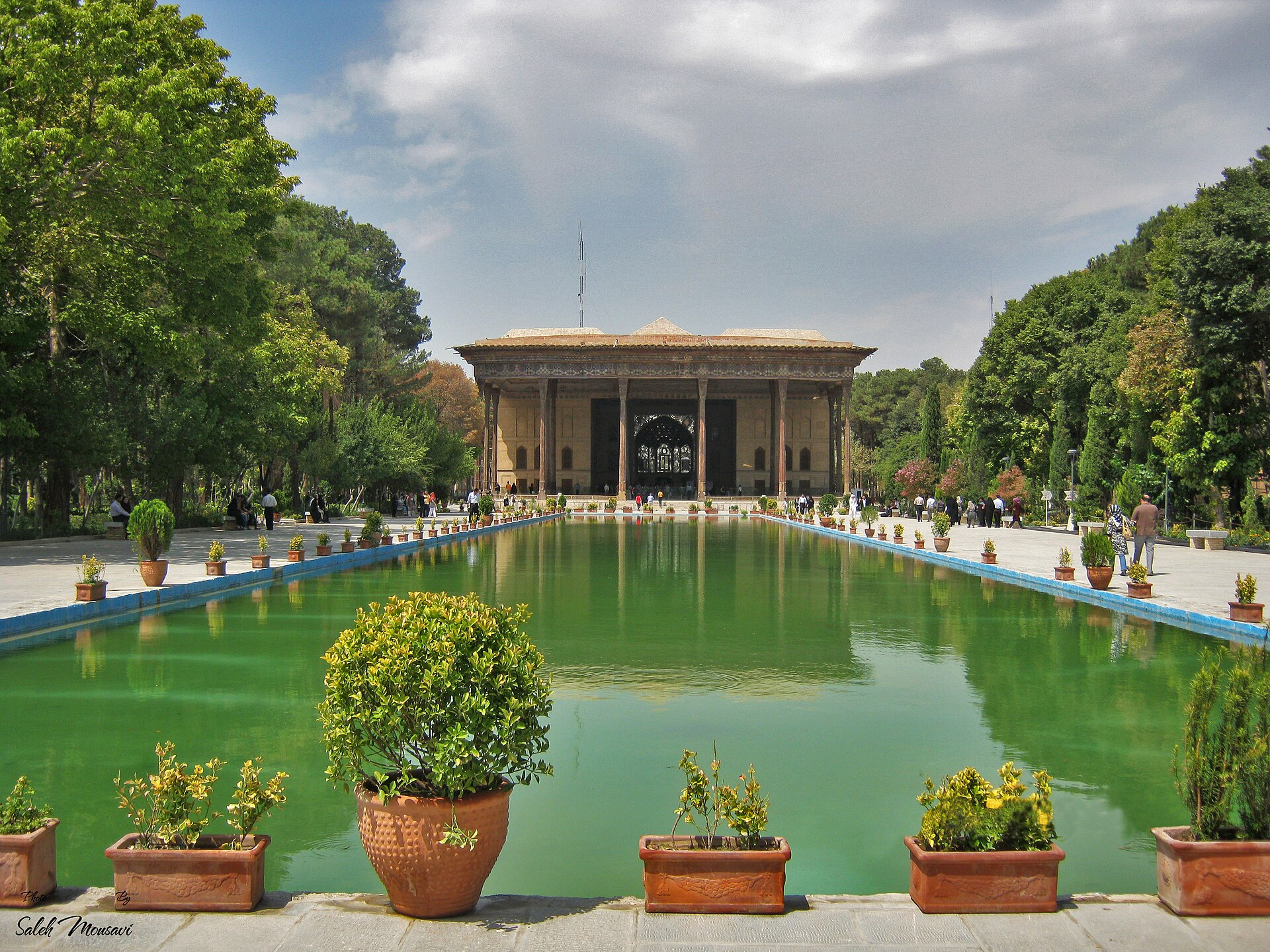
Under Safavid rule, Isfahan became a center of art and commerce of international importance, famed for its beauty and its splendor. The Safavid kings were great patrons of the arts, and their reign produced masterpieces of architecture, painting, textiles, and other arts, marking one of the high points of Persian civilization.
The Chehel Sotoun was part of this great flourishing of art and building, a garden pavilion created for the pleasure and ceremony of the Safavid court. Its construction and decoration reflected the wealth, the taste, and the artistic brilliance of the age, and it stands as one of the finest surviving monuments of the Safavid golden age.
The history of the Chehel Sotoun is thus inseparable from the history of Safavid Isfahan and the golden age it represented. As a creation of the Safavid court, the pavilion embodies the refinement and the splendor of one of the most brilliant periods in the history of Persia, preserved in the beauty of its columns, paintings, and garden.
It was the Safavids who made Persia a great power once more and who gave the country much of the artistic identity it carries to this day. Their capital at Isfahan became a byword for beauty across the world, and the Chehel Sotoun, modest in scale beside the city’s grandest monuments, distills the refinement of that age into a single perfect composition of pavilion, pool, and garden.
The Forty Columns
The name Chehel Sotoun means the Forty Columns, a name that has enchanted visitors for centuries. Yet the pavilion has only twenty columns supporting its porch, and the name arises from a beautiful play of reflection, for when the twenty columns are mirrored in the long pool before the pavilion, they appear to number forty.
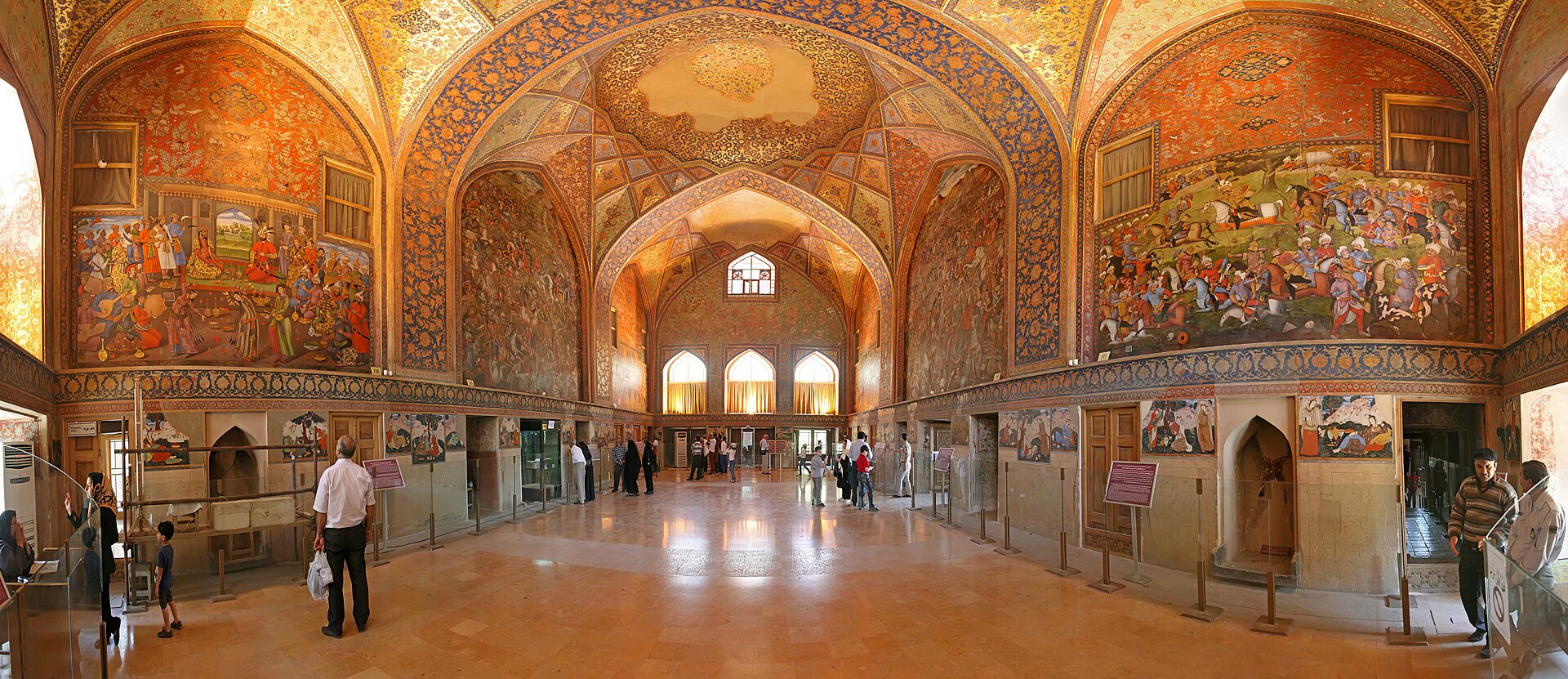
This charming explanation of the name captures the poetic imagination of Persian culture, in which reflection, illusion, and beauty are cherished. The doubling of the columns in the water turns the simple fact of their number into a delight, and it reflects the deep Persian love of the interplay between architecture and the mirror of water.
In Persian, the number forty is also sometimes used to suggest a great many, and the name may carry this sense as well, evoking abundance and magnificence. Whether taken literally as the reflection of the columns or figuratively as an expression of grandeur, the name captures the beauty and the poetry of the pavilion.
The name of the Forty Columns has become inseparable from the pavilion and its enchanting play of reflection. It reflects the character of the Chehel Sotoun as a place where architecture, water, and beauty come together, and it invites the visitor to see the pavilion not merely as a building but as part of a composed and poetic scene of reflection and delight.
There is something deeply characteristic of Persian art in the way the pavilion’s very name depends on illusion and reflection rather than on literal fact. Persian culture has long delighted in the play between reality and its mirror image, in poetry as in architecture, and the Forty Columns, which are truly twenty, capture this love of beautiful ambiguity in a single memorable stroke.
The Columned Porch
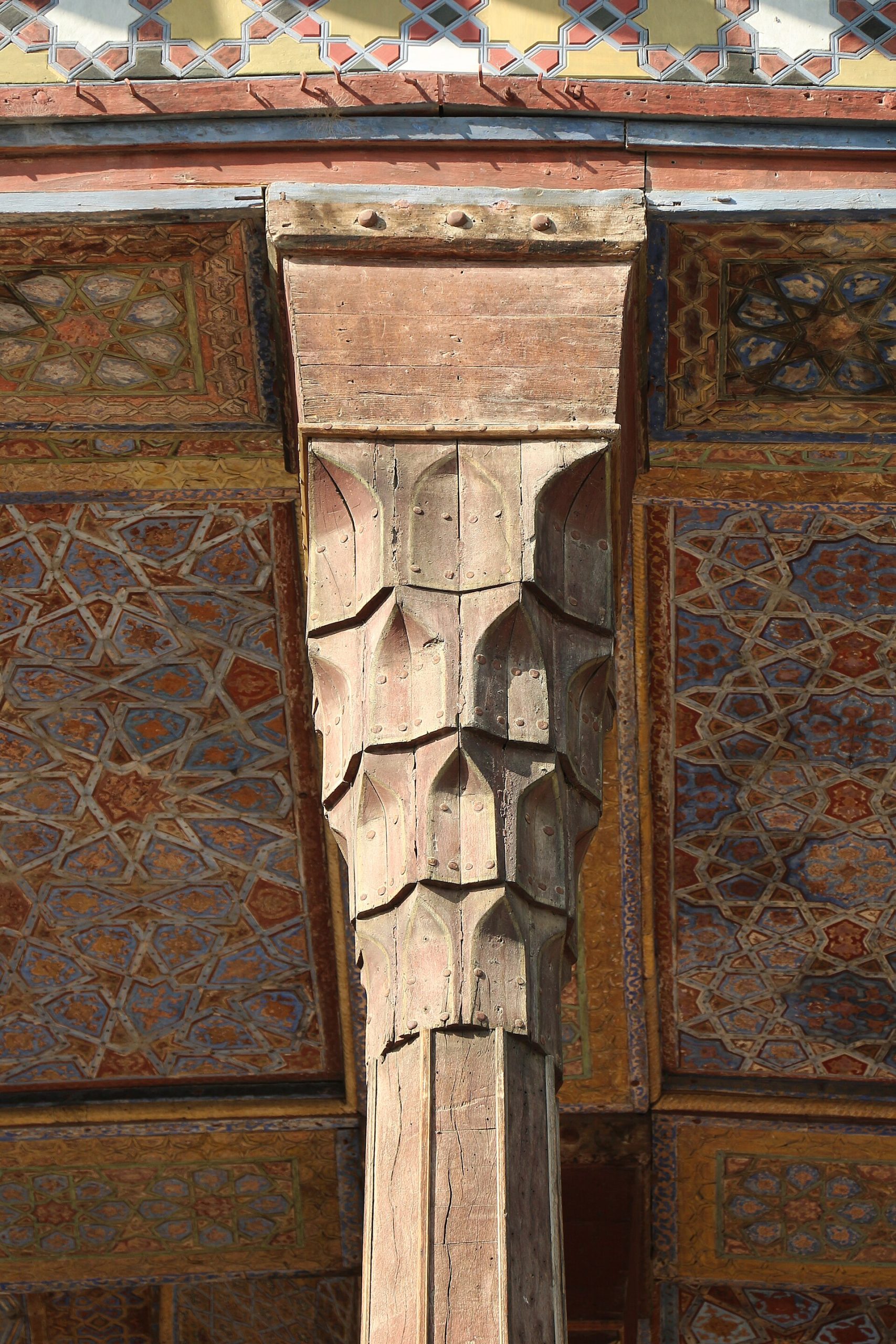
The most distinctive architectural feature of the Chehel Sotoun is its columned porch, or talar, a graceful open veranda supported by slender wooden columns that opens onto the garden and the pool. This columned porch is a characteristic feature of Persian palace architecture, connecting the interior of the pavilion to the beauty of the garden beyond.
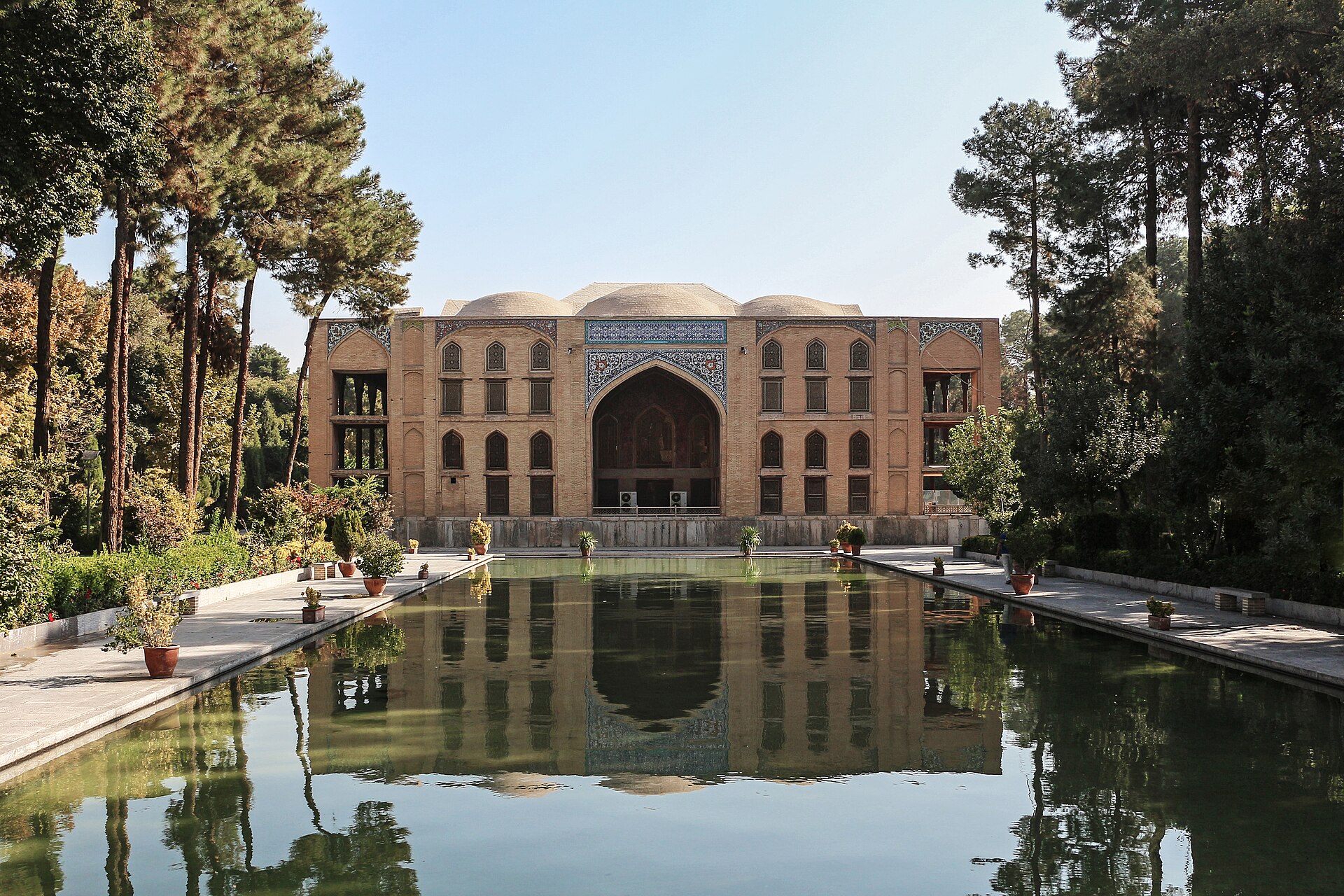
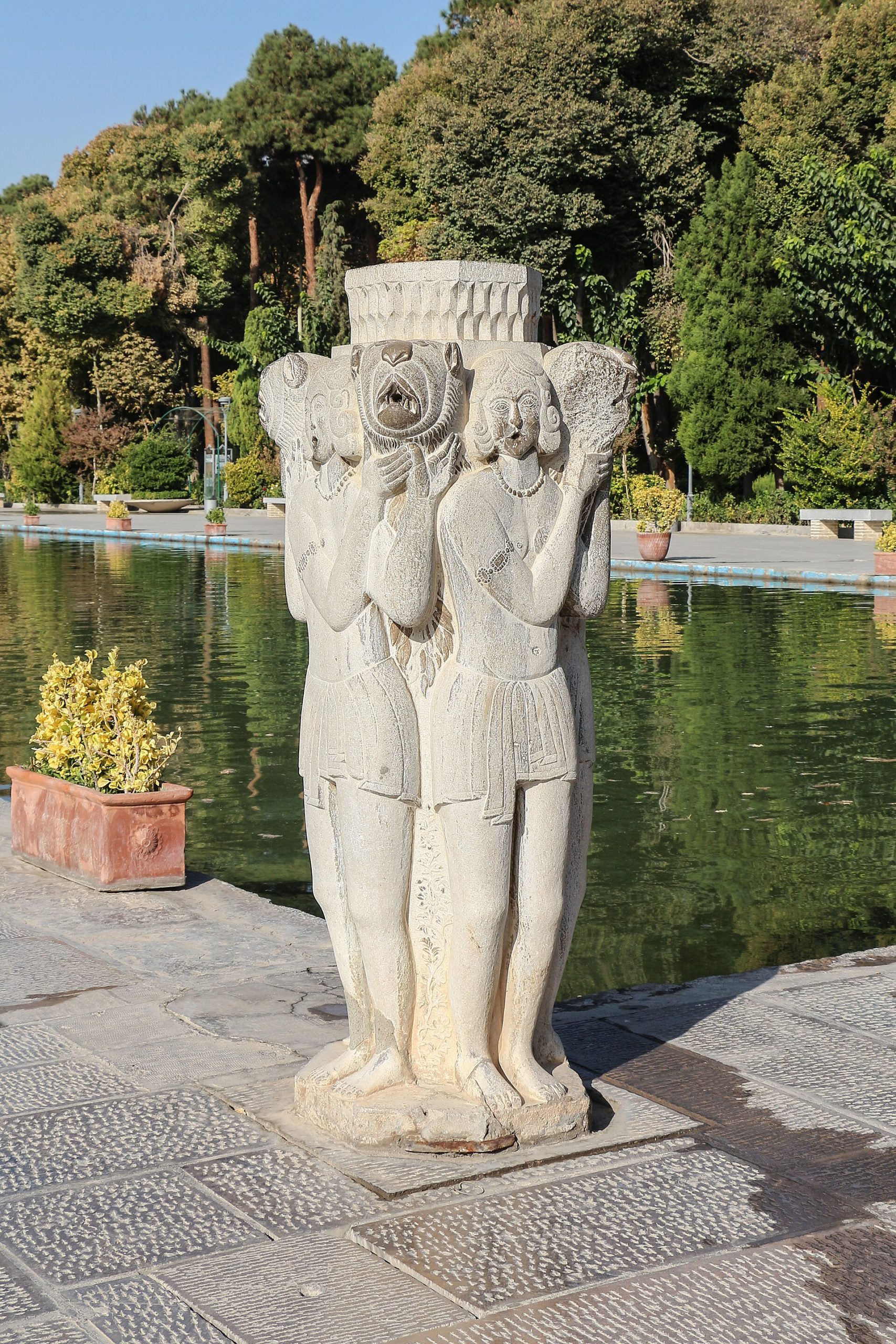
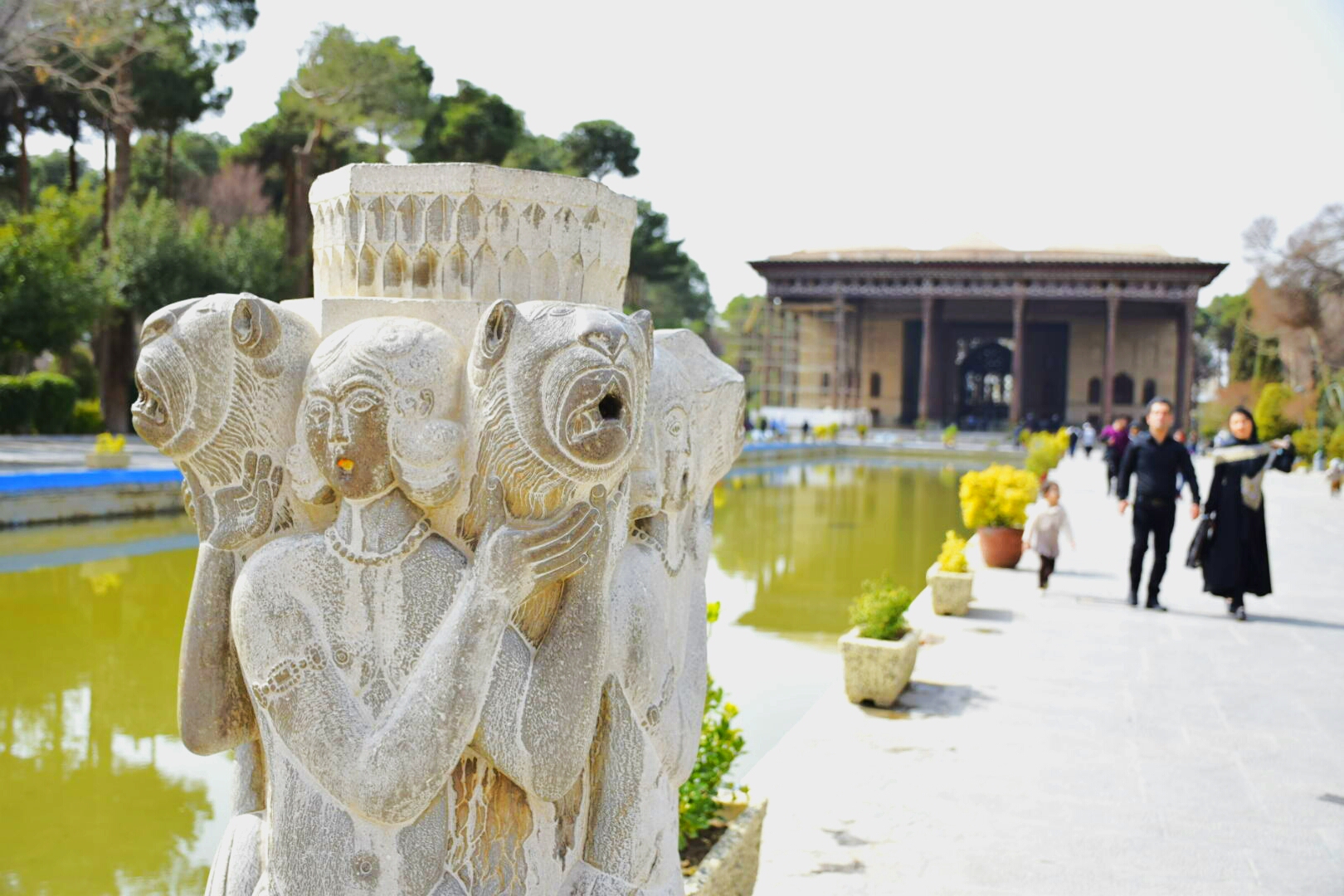
The columns, tall and slender, are made of wood and rise to support the roof of the porch, creating an elegant and airy space open to the garden. Once decorated and originally set on bases in the form of carved figures, the columns give the pavilion its distinctive character and its name, and they frame the views of the garden and the pool.
The columned porch was designed as a place for the king to sit and receive guests, open to the air and the beauty of the surroundings. This tradition of the open, columned audience space reflects the Persian love of gardens and the desire to conduct the ceremonies of the court amid beauty and nature.
The elegance of the columned porch, with its slender columns reflected in the pool, is one of the great beauties of the Chehel Sotoun. It embodies the Persian art of the garden pavilion, in which architecture opens onto and harmonizes with the garden, and it remains the most characteristic and celebrated feature of this beautiful building.
The original figures carved at the bases of the columns, and the mirrored decoration that once adorned them, hint at how much more dazzling the porch appeared in its prime. Even now, worn by the centuries, the slender columns retain a remarkable elegance, and it takes little imagination to picture the shimmering splendor they must have presented to the guests of the Safavid kings.
The Reflecting Pool
Before the columned porch of the Chehel Sotoun stretches a long, rectangular pool of water, which reflects the pavilion and its columns and completes the beauty of the composition. This reflecting pool is essential to the design and the meaning of the pavilion, creating the play of reflection that gives it its name.
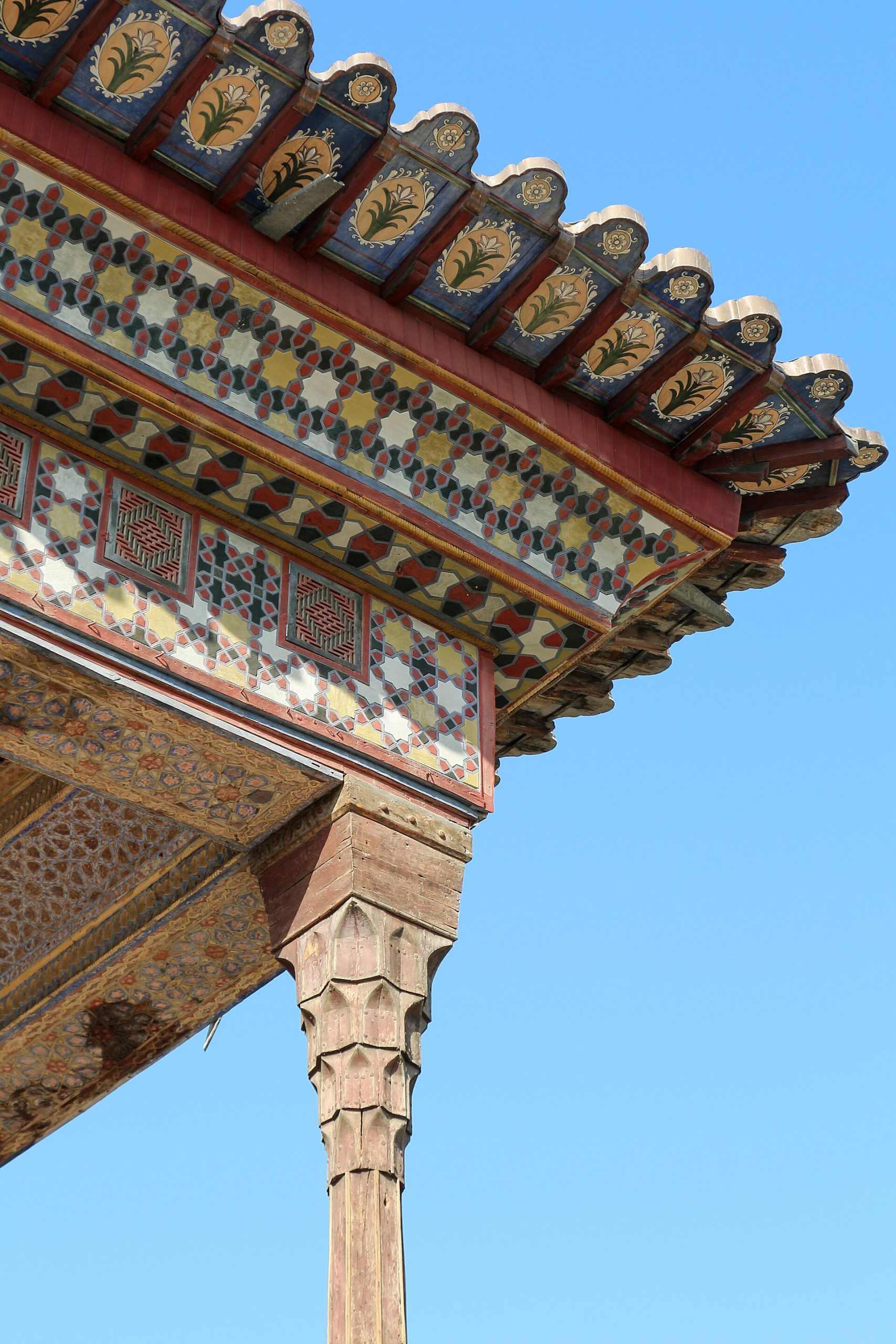
The pool extends the length of the garden before the pavilion, its still water mirroring the columns, the porch, and the sky. In the tradition of the Persian garden, water is a central element, valued both for its beauty and for the reflections it creates, and the pool of the Chehel Sotoun is a masterpiece of this use of water.
The reflection of the pavilion in the pool doubles its beauty and creates the illusion of the forty columns from which the pavilion takes its name. This interplay of architecture and water, of building and reflection, is central to the experience of the Chehel Sotoun and to the Persian art of the garden.
The long pool, mirroring the elegant pavilion and its columns, is one of the most beautiful sights in Isfahan. It transforms the pavilion into part of a composed and poetic scene, in which the building, the garden, and the water come together in perfect harmony, and it remains one of the great glories of the Chehel Sotoun.
Water was never merely decorative in the Persian garden but carried deep meaning, associated with life, purity, and paradise in a land where it was precious. The long pool of the Chehel Sotoun thus does more than mirror the pavilion; it places the whole composition within the symbolic world of the Persian garden, where water, greenery, and architecture together evoke an image of heaven on earth.
The Great Paintings
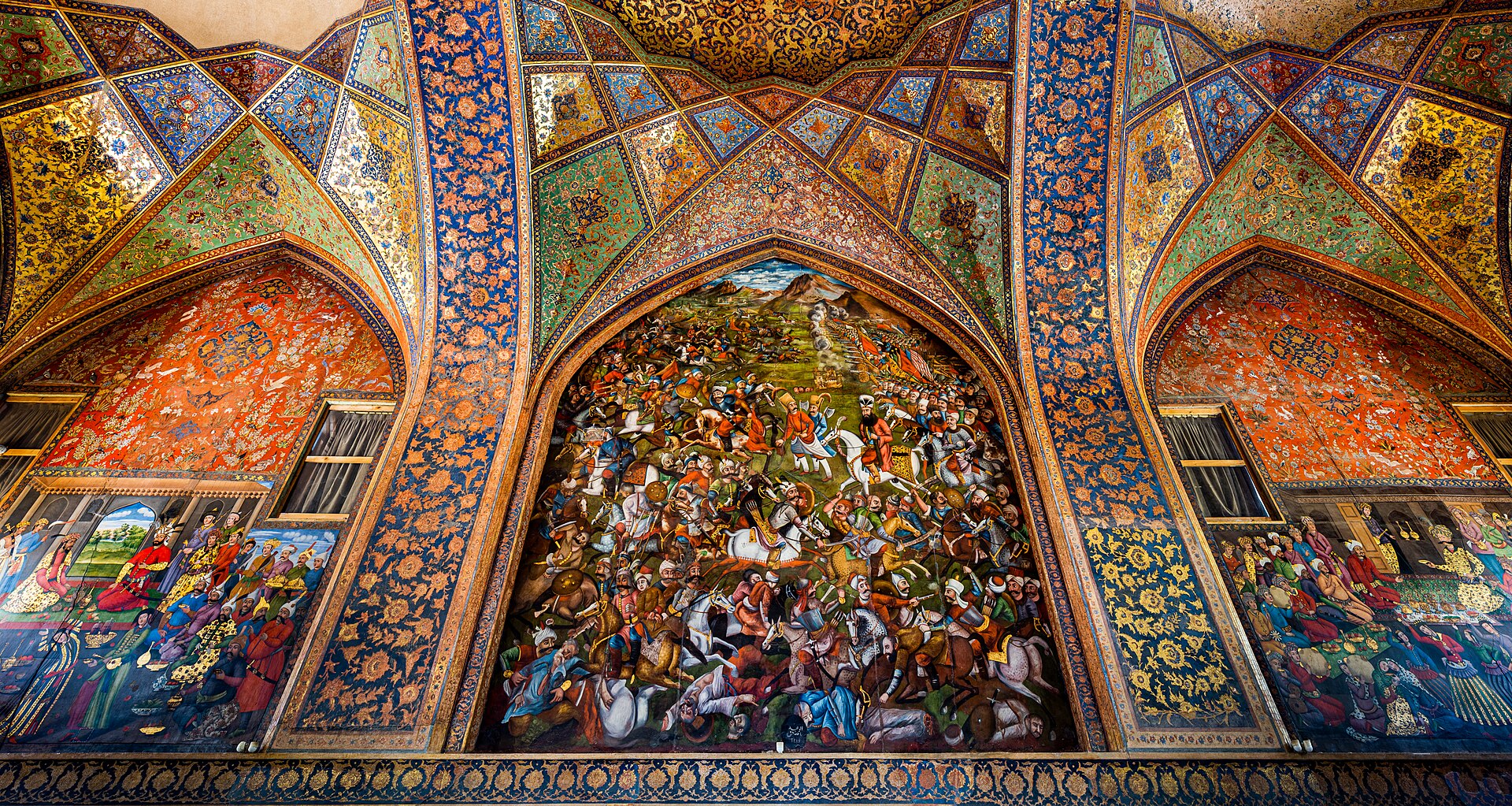
The interior of the Chehel Sotoun is famous for its great paintings, large murals that cover the walls of its main hall and depict historical scenes, court life, and other subjects. These paintings are among the greatest treasures of the pavilion and important works of Persian art, offering a vivid picture of the world of the Safavid court.
The murals depict a range of subjects, including scenes of battles, the reception of foreign guests, banquets, and court life, rendered in rich color and detail. These historical paintings record the events and the ceremonies of the Safavid age, and they are among the most important surviving works of Persian narrative painting.
The paintings served both to decorate the pavilion and to commemorate the achievements and the splendor of the Safavid rulers. Depicting the reception of ambassadors, victories in battle, and the magnificence of the court, they proclaimed the power and the glory of the dynasty, and they preserve a precious record of the age.
These great murals make the Chehel Sotoun a treasure house of Persian painting, offering a unique window into the world of the Safavid court. To see them within the pavilion for which they were created is to experience the full richness of the building, both as a work of architecture and as a gallery of the art and history of Persia.
The scenes of ambassadors being received offer a fascinating glimpse of the diplomacy of the age, showing figures in the dress of many nations gathered before the Persian king. These paintings are not merely decorative but documentary, preserving the appearance, the ceremony, and the cosmopolitan character of the Safavid court in vivid and enduring detail.
Mirrors and Ornament
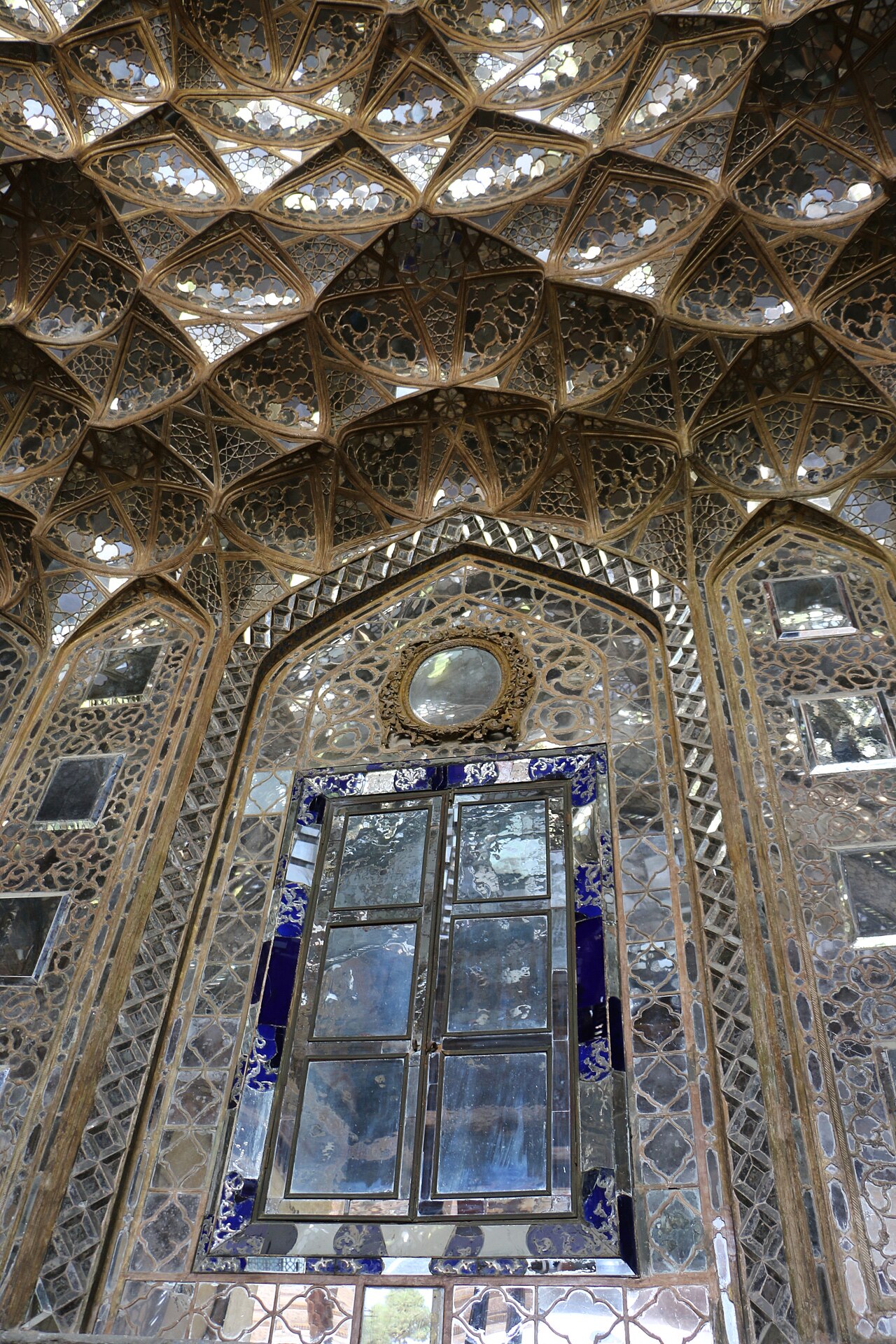
In addition to its great paintings, the Chehel Sotoun is decorated with mirror-work and other ornament, adding to the splendor of its interior. The use of mirror mosaic, a specialty of Persian art, creates surfaces that glitter and sparkle with reflected light, enhancing the magnificence of the pavilion.
The mirror-work, composed of small pieces of mirror set into intricate patterns, was used to decorate parts of the pavilion, especially the entrance and certain interior surfaces. In the light, these mirrored surfaces shimmer and gleam, adding a note of dazzling brilliance to the beauty of the paintings and the architecture.
Together with the paintings and the architecture, the mirror-work and other ornament create interiors of great richness and beauty. The combination of these decorative arts reflects the wealth and the refinement of the Safavid court and the skill of the craftsmen who created the pavilion.
The mirror-work adds to the enchantment of the Chehel Sotoun, complementing the great paintings and the elegant architecture. It reflects the Persian love of light, reflection, and ornament, and it contributes to the overall effect of the pavilion as a place of dazzling beauty, a jewel of the decorative arts of the Safavid age.
The interplay of the glittering mirror-work with the rich colors of the great paintings creates an interior of remarkable depth and variety. Where the mirrors scatter and multiply the light, the murals absorb the eye into their scenes, and the two together give the hall a quality at once dazzling and immersive, drawing the visitor fully into the world of the Safavid court.
The Persian Garden
The Chehel Sotoun is set within a beautiful garden, laid out in the classical Persian style, which is essential to the meaning and the beauty of the pavilion. This garden, with its trees, pathways, and the long reflecting pool, embodies the ancient Persian ideal of the garden as an image of paradise.
The Persian garden, with its geometric layout, its water, and its plantings, is one of the great achievements of Persian culture, and the garden of the Chehel Sotoun is a fine example of the tradition. Designed as a place of beauty, repose, and reflection, it provides the setting for the pavilion and completes its harmony.
The relationship between the pavilion and the garden is central to the design of the Chehel Sotoun. The pavilion opens onto the garden through its columned porch, and the long pool extends the composition into the garden, so that building, water, and greenery form a single, harmonious whole.
The garden of the Chehel Sotoun is recognized as an important example of the Persian garden tradition, and it is part of the reason for the pavilion’s status as a monument of world importance. Set within its paradise garden, the pavilion embodies the Persian ideal of architecture and nature in harmony, and the garden remains one of the great pleasures of a visit.
A Setting for the Court
The Chehel Sotoun was built as a place for the ceremonies and pleasures of the Safavid court, especially the reception of guests and the holding of banquets and audiences. In its columned porch and its painted hall, the king received ambassadors and dignitaries and entertained his guests amid surroundings of great beauty.
The reception of foreign ambassadors and important guests was one of the principal functions of the pavilion, and these occasions were events of great ceremony and splendor. The paintings that adorn the hall depict such receptions, giving a vivid sense of the magnificence of these occasions and the role of the pavilion in the diplomacy of the age.
The pavilion was also a place for banquets and celebrations, where the court gathered amid the beauty of the garden and the pool. These occasions, set in the elegant surroundings of the Chehel Sotoun, expressed the refinement and the pleasure-loving culture of the Safavid court at its height.
As a setting for the reception of guests and the pleasures of the court, the Chehel Sotoun played an important role in the life of Safavid Isfahan. Its beauty and its magnificence made it a fitting place for the display of royal splendor and hospitality, and it remains a monument to the courtly culture of the golden age of Persia.
Half of the World
The Chehel Sotoun cannot be separated from the great city of Isfahan, of which it forms a part. Under the Safavids, Isfahan became so magnificent that it was celebrated in a famous saying that declared the city to be half of the world, a testament to its beauty, its size, and its splendor in the age of its greatness.
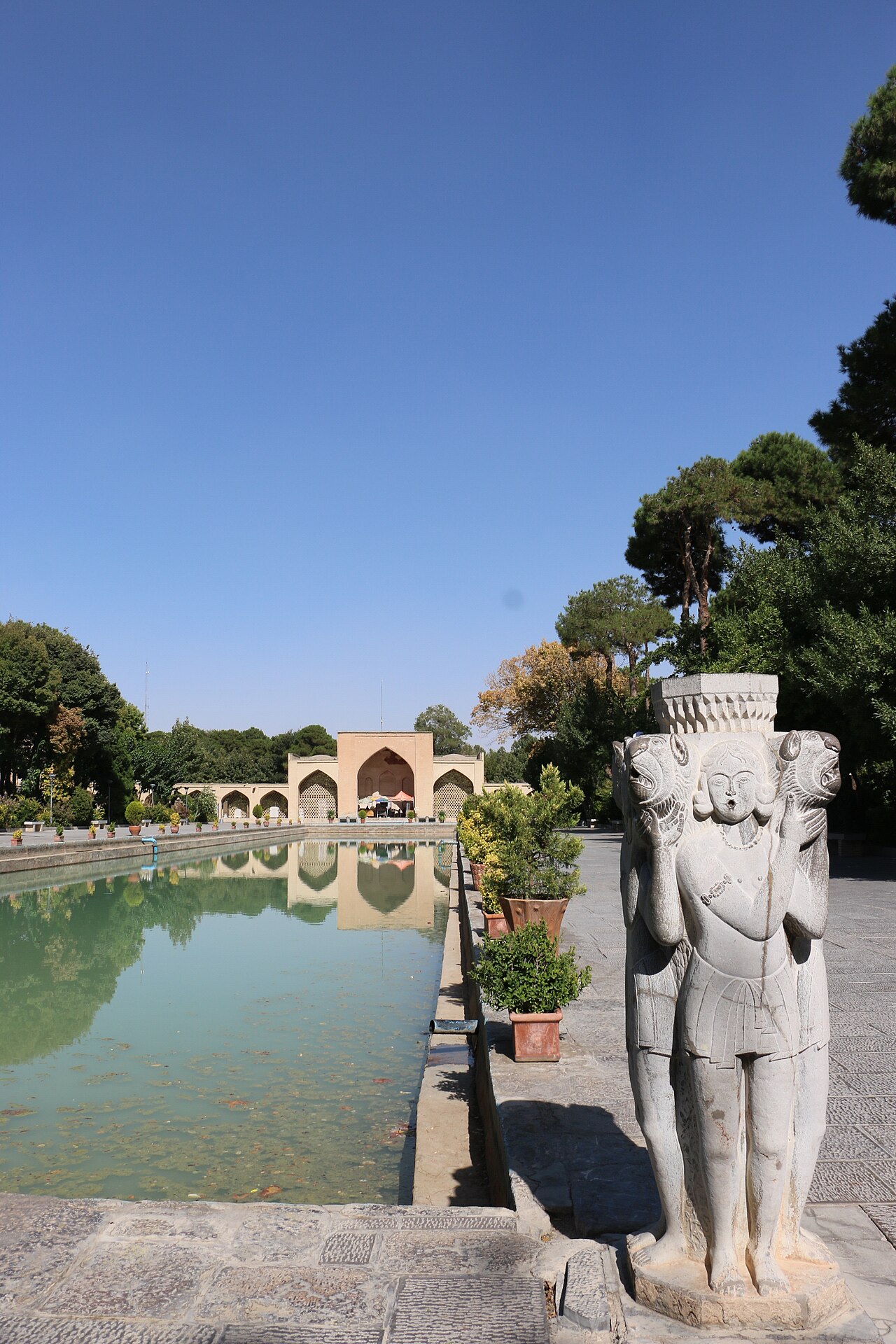
Isfahan under the Safavids was one of the largest and most beautiful cities on earth, adorned with grand squares, magnificent mosques, palaces, gardens, and bridges. Its beauty and its importance as a center of art, commerce, and culture made it one of the wonders of the world, and the Chehel Sotoun was one of its many treasures.
The pavilion was part of a great complex of royal gardens and palaces in the heart of Isfahan, connected to the grand public spaces and monuments of the Safavid capital. It belonged to a city conceived as a whole work of art, in which palaces, gardens, and public spaces were combined in a magnificent and harmonious plan.
To understand the Chehel Sotoun is to understand it as part of the glory of Safavid Isfahan, the city that was called half of the world. The pavilion embodies the beauty and the refinement of this great city at its height, and it survives as one of the most precious relics of the golden age when Isfahan was among the most splendid cities on earth.
The famous saying that Isfahan was half the world was no idle boast in its day, for the city’s scale, wealth, and beauty genuinely astonished the travelers who reached it. The Chehel Sotoun, one jewel among many in that great capital, allows the modern visitor to glimpse the splendor that gave rise to so extraordinary a claim.
A Meeting of Artistic Worlds
The paintings of the Chehel Sotoun reflect not only Persian traditions but also the influence of contact with the wider world, including elements that show an awareness of European art. This blending of influences reflects the cosmopolitan character of Safavid Isfahan, a great center of international trade and diplomacy.
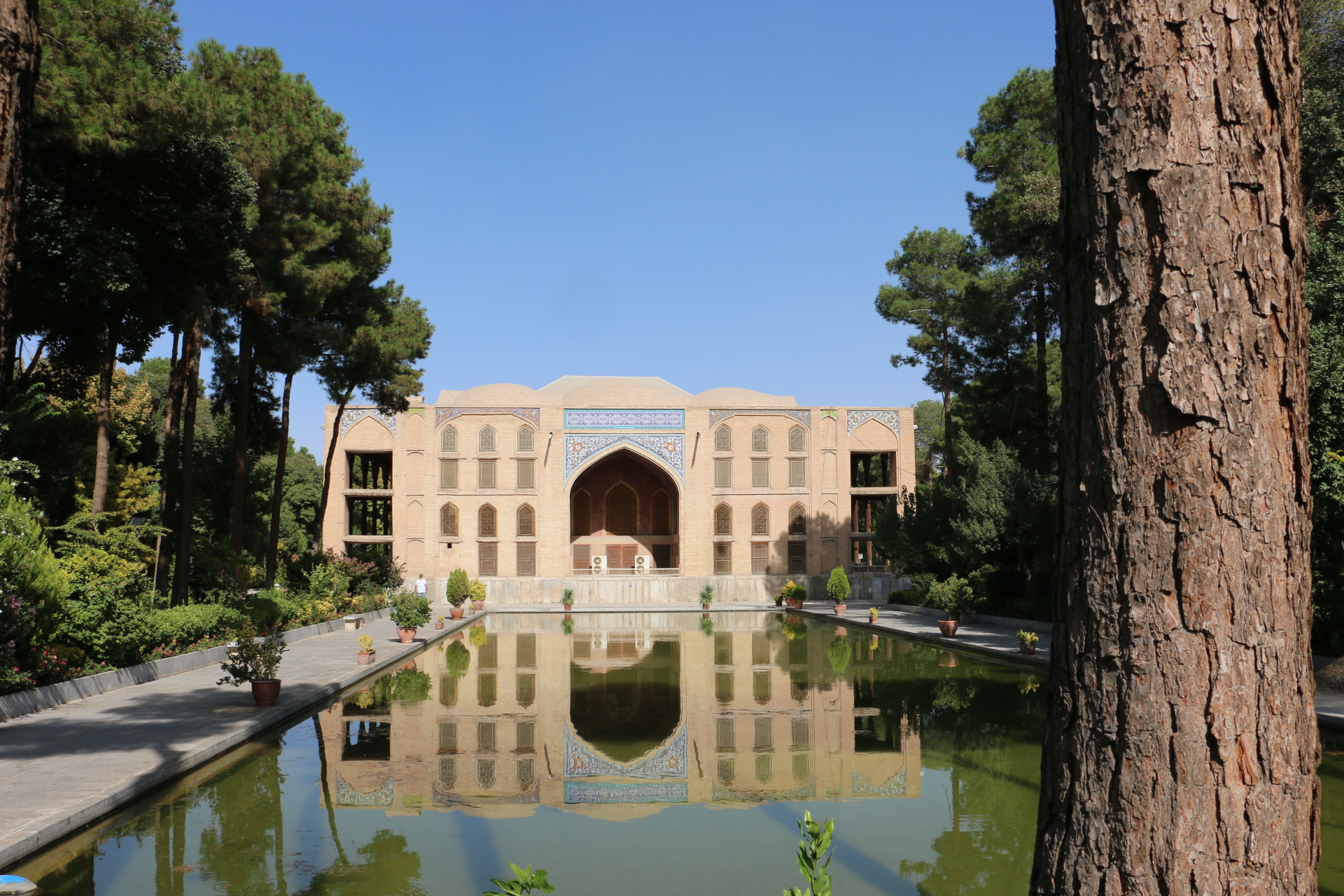
During the Safavid age, Isfahan was visited by merchants, diplomats, and travelers from many lands, including Europe, and this contact influenced the art and culture of the city. The paintings of the Chehel Sotoun, with their occasional European-influenced elements, reflect this exchange, blending Persian and foreign artistic ideas.
This openness to outside influences, while remaining rooted in Persian tradition, gives the art of the pavilion an added richness and interest. It reflects the character of Safavid Isfahan as a meeting point of cultures, where the arts of Persia encountered and absorbed elements from the wider world.
The blending of artistic worlds in the Chehel Sotoun is part of what makes it so fascinating. It reflects a great age of exchange and cosmopolitanism, when Isfahan stood at the crossroads of the world, and the pavilion preserves this encounter in its paintings, a meeting of Persian and other traditions in the heart of the Safavid capital.
A Preserved Treasure
The Chehel Sotoun has been preserved as a monument to the Safavid age and a treasure of Persian art, and its garden is recognized as part of a group of Persian gardens of world importance. This recognition has helped to focus attention and resources on the preservation of the pavilion, its paintings, and its garden.
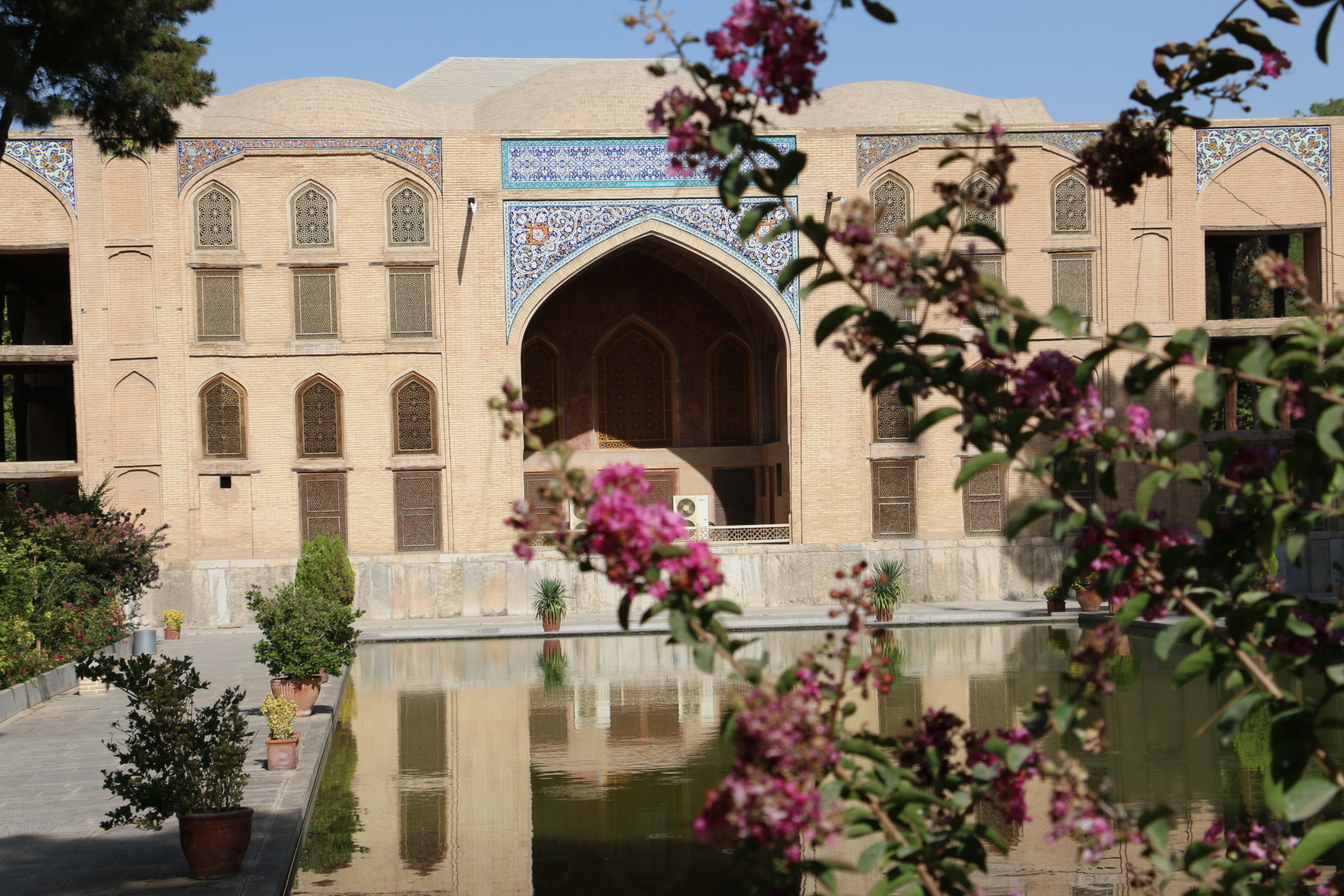
The preservation of the pavilion has involved the careful conservation of its great paintings, its architecture, and its garden, protecting these treasures for future generations. The murals, the columns, the mirror-work, and the garden are all cared for as important elements of one of the great monuments of Persian art.
As a preserved monument and museum, the Chehel Sotoun allows visitors to experience the beauty and the art of the Safavid age. Its careful maintenance ensures that its treasures, from the great paintings to the reflecting pool, are protected and can be admired by visitors from around the world.
Through its preservation, the Chehel Sotoun has been secured as one of the great cultural treasures of Iran and of the world. Its pavilion, paintings, and garden stand as a testament to the brilliant art of the Safavid golden age, preserved in the heart of Isfahan for the admiration of all who come to see it.
The paintings in particular have required careful and continuing attention, for such murals are vulnerable to the passage of time. The work of conserving them is a delicate art in itself, and it reflects the recognition that these images are not merely beautiful but historically precious, a unique visual record of an age that would otherwise survive only in words.
Visiting the Chehel Sotoun Today
Today the Chehel Sotoun is one of the most beloved and important monuments of Isfahan, drawing visitors from around the world to admire its pavilion, its paintings, and its beautiful garden. Set in the historic heart of the city, it forms an essential part of any visit to Isfahan and its many treasures.
View the exact location on Google Maps
A visit leads through the garden to the pavilion, where the visitor can admire the columned porch reflected in the pool, the great paintings within the hall, and the mirror-work and ornament of the interior. The combination of architecture, painting, and garden offers a rich experience of the beauty of the Safavid age.
The garden and the reflecting pool are highlights of any visit, offering beauty and tranquility and the famous play of reflection that gives the pavilion its name. Taking time to walk the garden and to see the pavilion reflected in the water rewards the visitor with one of the most beautiful sights in Isfahan.
Whether you come for the paintings, the architecture, the garden, or the play of reflection, the Chehel Sotoun offers an unforgettable experience. It is one of the great treasures of Isfahan and of Iran, a masterpiece of the Safavid golden age, and a place where the beauty of the Persian garden pavilion is preserved in perfect harmony of art and nature.
Isfahan itself rewards unhurried exploration, and the Chehel Sotoun is best experienced as one part of a city extraordinarily rich in the monuments of the Safavid age. Seen alongside the great square, the mosques, and the bridges of the city, the pavilion takes its place within one of the supreme achievements of Persian urban art and civilization.
Palaces Nearby
The Chehel Sotoun is one of the great royal residences of Iran and the Persian world. To trace the varied splendor of the Persian courts, these nearby palaces make natural companions to a visit here.
You May Like