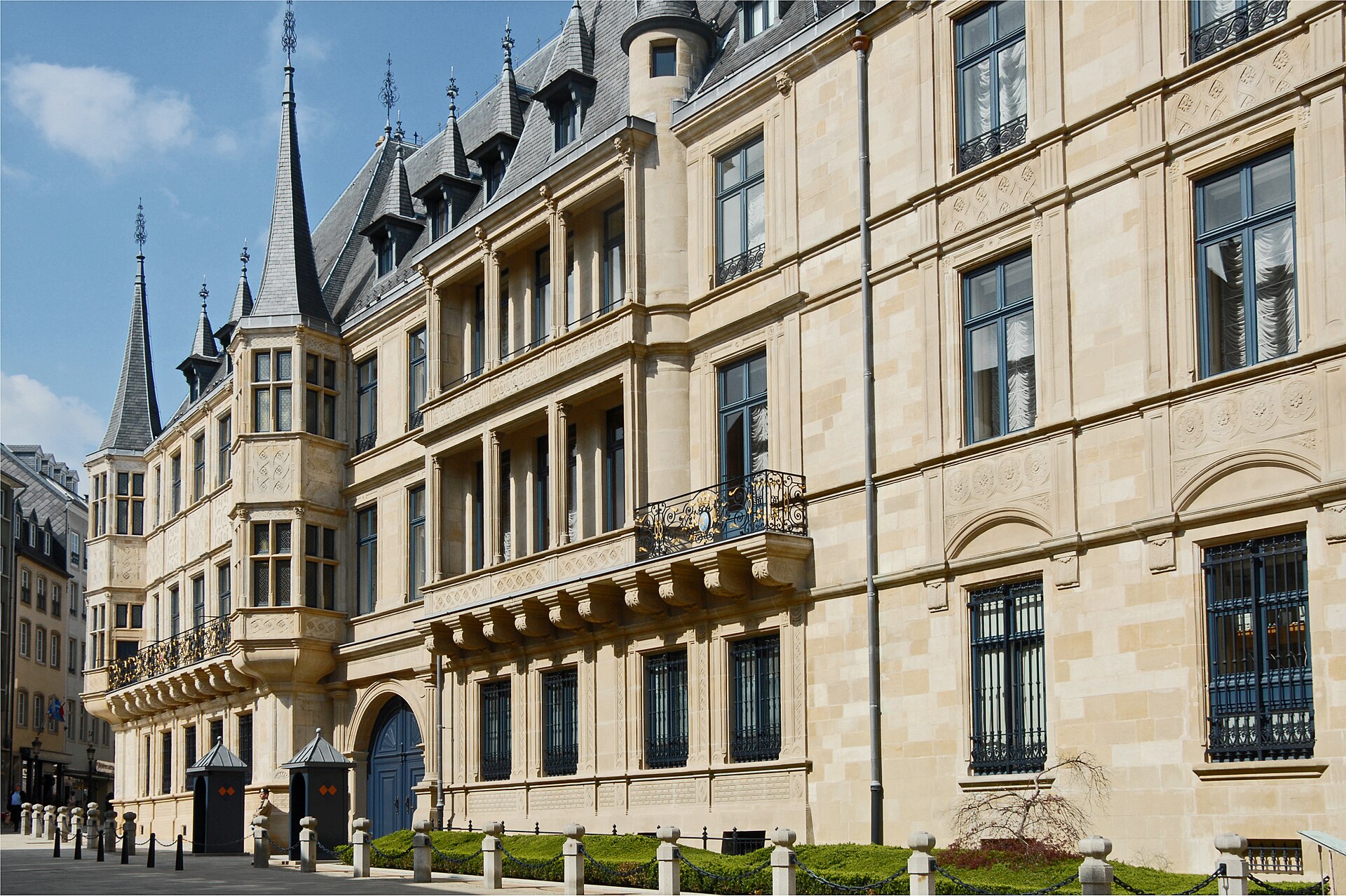
In the heart of the old town of Luxembourg City, on a narrow street lined with historic houses, stands one of the most distinctive royal residences in Europe. The Grand Ducal Palace is the town residence of the Grand Duke of Luxembourg, the sovereign of the only grand duchy in the world. Its ornate facade, richly carved in the Flemish Renaissance style, rises directly from the street with an intimacy and charm quite unlike the grand set-piece palaces of the great monarchies.
Luxembourg is a small nation with a singular status, the last surviving grand duchy on earth, ruled by a grand duke rather than a king. Its palace reflects this distinctive character, a residence of dignity and beauty but of human scale, woven into the fabric of the old city rather than set apart in isolated grandeur. It is the official seat of one of Europe’s most enduring and best-loved dynasties.
Though it serves as the town residence and official seat of the head of state, the palace began life in a different guise, as a civic building of the old city, before it was taken over and transformed into the residence of the sovereign. Its history thus mirrors that of Luxembourg itself, a small state that has navigated the currents of European history to preserve its independence and its unique monarchy into the present day.
In this article you will get to know the Grand Ducal Palace of Luxembourg fully: the unique grand duchy it serves, its origins as a civic building, its beautiful Renaissance architecture, its elegant state rooms, the guards and ceremonies that surround it, its role in the life of the modern nation, and its place today as the cherished symbol of Luxembourg and one of the most charming royal residences in Europe.
In This Article
- The Seat of the Only Grand Duchy
- A Unique European Monarchy
- From Town Hall to Palace
- The Renaissance Facade
- Elegant State Rooms
- The Grand Ducal House
- The Palace Guard and Ceremony
- A Palace Open to Visitors
- The Palace and the Old Town
- Symbol of a Small Nation
- Luxembourg Among Europe’s Monarchies
- The Palace and National Celebration
- The Grand Ducal Palace Today
The Seat of the Only Grand Duchy
The Grand Ducal Palace stands in the old town of Luxembourg City, its ornate facade rising directly from a narrow street in the historic heart of the capital. Unlike the vast palaces set in great parks that serve the larger monarchies, this is a town palace, intimate in scale and woven into the fabric of the city, its beauty lying in the richness of its detail rather than in overwhelming size.
The palace serves the Grand Duke of Luxembourg, the sovereign of a state with a status unique in the world: the last remaining grand duchy, a rank between a kingdom and a principality, ruled by a grand duke rather than a king. This singular position gives Luxembourg and its palace a special place among the monarchies of Europe, the sole survivor of a once more common form of sovereign state.
The palace is the official town residence of the grand duke, the setting for his official duties in the capital, where he receives guests, holds audiences, and conducts the ceremonies of state. It is thus the ceremonial and symbolic heart of the grand duchy, a dignified but human-scaled residence that embodies the enduring monarchy of this small but proud European nation.
The intimate scale of the palace is not a limitation but a virtue, for it perfectly suits the character of the small nation it serves. Where a vast palace might overwhelm, this town residence charms, its beauty concentrated in the richness of its facade and the elegance of its rooms. It is a royal residence built to human proportions, and that is precisely part of its appeal.
Standing before the palace on its narrow street, a visitor is struck by how directly its beauty is offered, without the barrier of a great forecourt or park. The ornate facade rises from the pavement to be admired at close hand, an immediate and intimate encounter with a royal residence that belongs to its city in a way few great palaces do, and that is much the richer for it.
A Unique European Monarchy
Luxembourg holds a distinction unmatched anywhere in the world: it is the only grand duchy still in existence, a sovereign state ruled by a grand duke. This rank, once held by several European states, has vanished everywhere else, leaving Luxembourg as the sole survivor, a living relic of the political map of an earlier Europe, preserved into the modern age.

The grand duchy emerged from the complex reshaping of Europe in the nineteenth century, when Luxembourg was given its distinctive status and its own ruling house. Through the upheavals of the following centuries, including the challenges of two world wars, the small nation preserved its independence and its monarchy, emerging as a prosperous and respected member of the European family of nations.
The monarchy has come to be seen as a symbol of the nation’s independence and identity, a focus of unity and continuity for a small country with a strong sense of itself. The grand ducal family enjoys deep affection among the people, and the palace, as the seat of the dynasty, stands as the enduring emblem of Luxembourg’s unique status and its cherished monarchy.
The survival of the grand duchy into the modern age is a remarkable historical achievement, a testament to the resilience and adaptability of a small nation caught among far larger powers. That Luxembourg should have preserved not only its independence but its distinctive form of monarchy, when all other grand duchies vanished, gives the palace and the crown it serves a special historical significance.
The story of how Luxembourg alone preserved its grand-ducal status, while every other such state was absorbed or transformed, is a fascinating thread in the wider tapestry of European history. It reflects the particular circumstances of the small nation’s survival, and it has left the world with a single living example of a form of monarchy that was once part of the varied political map of the continent.
From Town Hall to Palace
The palace did not begin as a royal residence but as a civic building of the old city, serving the government of the town in earlier centuries. Its beautiful Renaissance facade dates from this civic period, when it was raised as a building of importance in the life of the city, adorned with the rich ornament characteristic of the style of its age.
Over time, as Luxembourg acquired its distinctive status and its own sovereign, the building was taken over and transformed into the residence of the head of state. What had been a civic building became a palace, adapted and enlarged to serve its new royal purpose, its beautiful facade preserved while its function was elevated to serve the sovereign of the grand duchy.
This transformation from civic building to palace gives the residence a history that mirrors that of Luxembourg itself, a nation that rose from a city and territory of shifting fortunes to become an independent grand duchy. The palace thus carries within it the layered history of the state, its civic origins preserved beneath its royal present, a fitting symbol for a nation with so distinctive a past.
The preservation of the beautiful civic facade through the building’s transformation into a palace is a happy accident of history, giving the residence a front of exceptional beauty rooted in the pride of the old city. That a civic building should have become the seat of a sovereign, its ornate facade preserved, gives the palace a layered character that reflects the intertwined civic and royal history of Luxembourg.
The layered history of the building, civic in origin and royal in its later life, gives it a depth that its charming exterior scarcely hints at. To understand the palace is to trace this history, from its beginnings as a proud building of the old city to its elevation as the seat of a sovereign, a transformation that mirrors the wider story of Luxembourg’s rise to independent statehood.
The Renaissance Facade
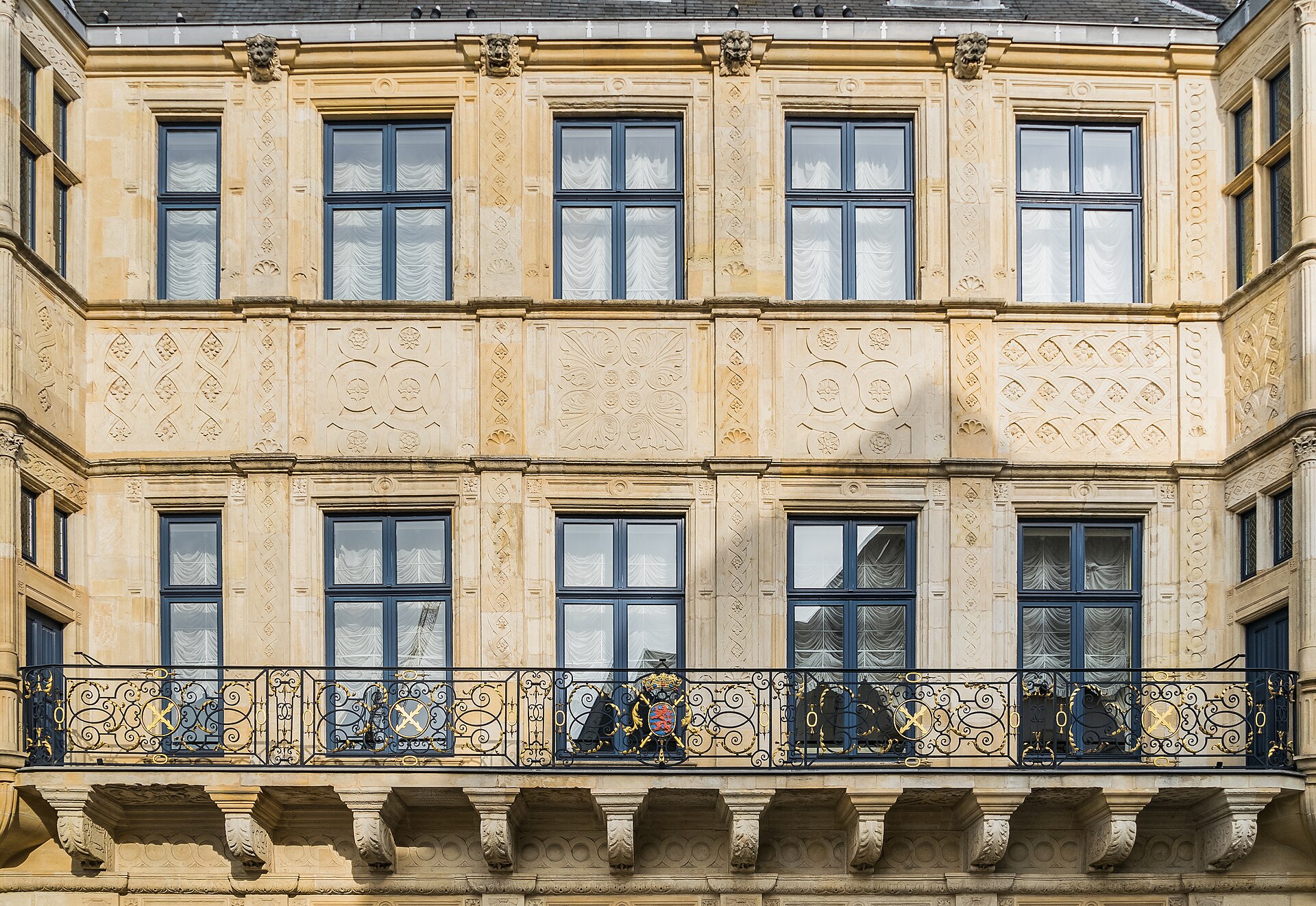
The great glory of the palace is its facade, a masterpiece of the Flemish Renaissance style, richly carved and ornamented, rising directly from the street in the heart of the old town. Its intricate stonework, with its patterns, mouldings, and decorative detail, makes it one of the most beautiful building fronts in Luxembourg and a treasured landmark of the capital.
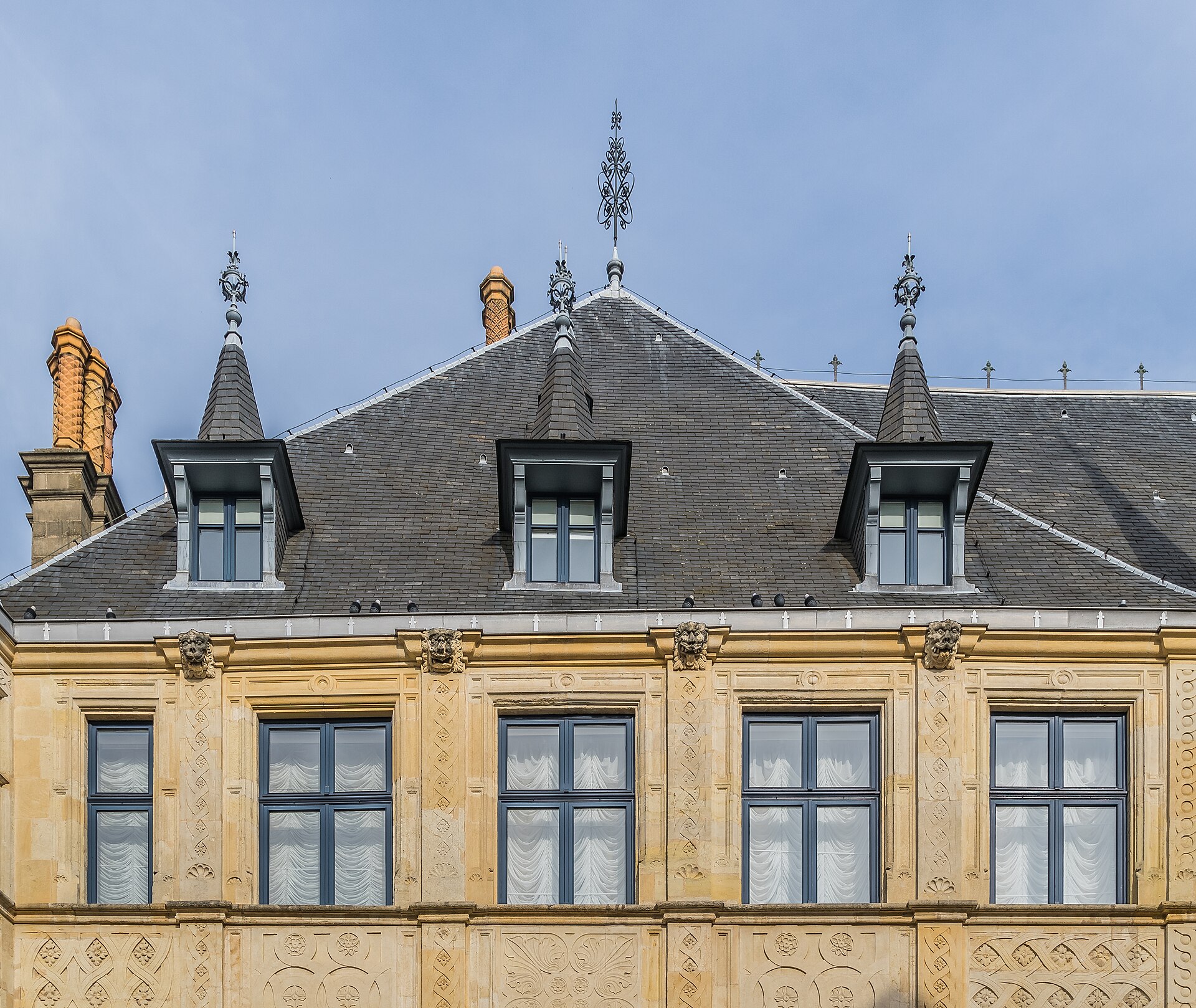
The facade dates from the building’s civic origins, and its elaborate ornament reflects the wealth and pride of the city that raised it. The Flemish Renaissance style, with its love of rich surface decoration and intricate stonework, gives the facade a jewel-like quality, a wealth of detail that rewards close attention and delights all who pass along the street before it.
Rising directly from the pavement, without the setback of a great courtyard or park, the facade presents its beauty intimately to the passer-by, an ornate and dignified front woven into the streetscape of the old town. This intimacy is part of the palace’s charm, and the beautiful facade has become one of the most beloved and photographed sights in Luxembourg City.
The intricate stonework of the facade rewards the patient observer, revealing a wealth of decorative detail in its patterns, mouldings, and ornament. This richness of surface, characteristic of the Flemish Renaissance style, gives the facade its jewel-like quality, and it explains why the front of the palace is counted among the most beautiful in Luxembourg and a treasured landmark of the capital.
Photographs of the palace almost always feature its facade, for it is the building’s crowning glory and one of the defining images of Luxembourg City. Rising in the heart of the old town, its rich ornament glowing in the light, the facade captures the charm and dignity of the grand duchy’s palace, and it draws admiring visitors along the street before it throughout the year.
Elegant State Rooms
Within, the palace unfolds a sequence of elegant state rooms used for the official functions of the grand duke. Though smaller in scale than the state apartments of the great monarchies, these rooms are richly and tastefully decorated, providing a setting of refined dignity for the receptions, audiences, and ceremonies of the head of state.

The state rooms include reception halls, salons, and dining rooms, each decorated with fine furnishings, tapestries, chandeliers, and works of art appropriate to their ceremonial purpose. The decoration reflects the taste and history of the grand ducal house, and the rooms create an atmosphere of elegant grandeur suited to the dignity of the sovereign and the occasions conducted within them.
These interiors are the working ceremonial heart of the palace, the settings in which the official life of the grand duchy is conducted. Their refined elegance, rather than overwhelming grandeur, suits the character of Luxembourg and its monarchy, and during the summer openings visitors can admire these beautiful rooms and the treasures they contain, gaining a glimpse of the ceremonial life of the grand ducal court.
The refined elegance of the state rooms, rather than overwhelming grandeur, perfectly expresses the character of Luxembourg’s monarchy, dignified but unpretentious. During the summer openings, visitors can admire these beautiful interiors and the treasures they contain, gaining a rare glimpse of the ceremonial life of the grand ducal court and the tasteful splendour with which it surrounds itself.
The Grand Ducal House
The palace is the seat of the grand ducal house, the dynasty that has reigned over Luxembourg and given the nation its sovereigns. The family enjoys deep and genuine affection among the people of Luxembourg, and the events of its life, from marriages to accessions, are celebrated as occasions of national importance, uniting the nation in shared joy.
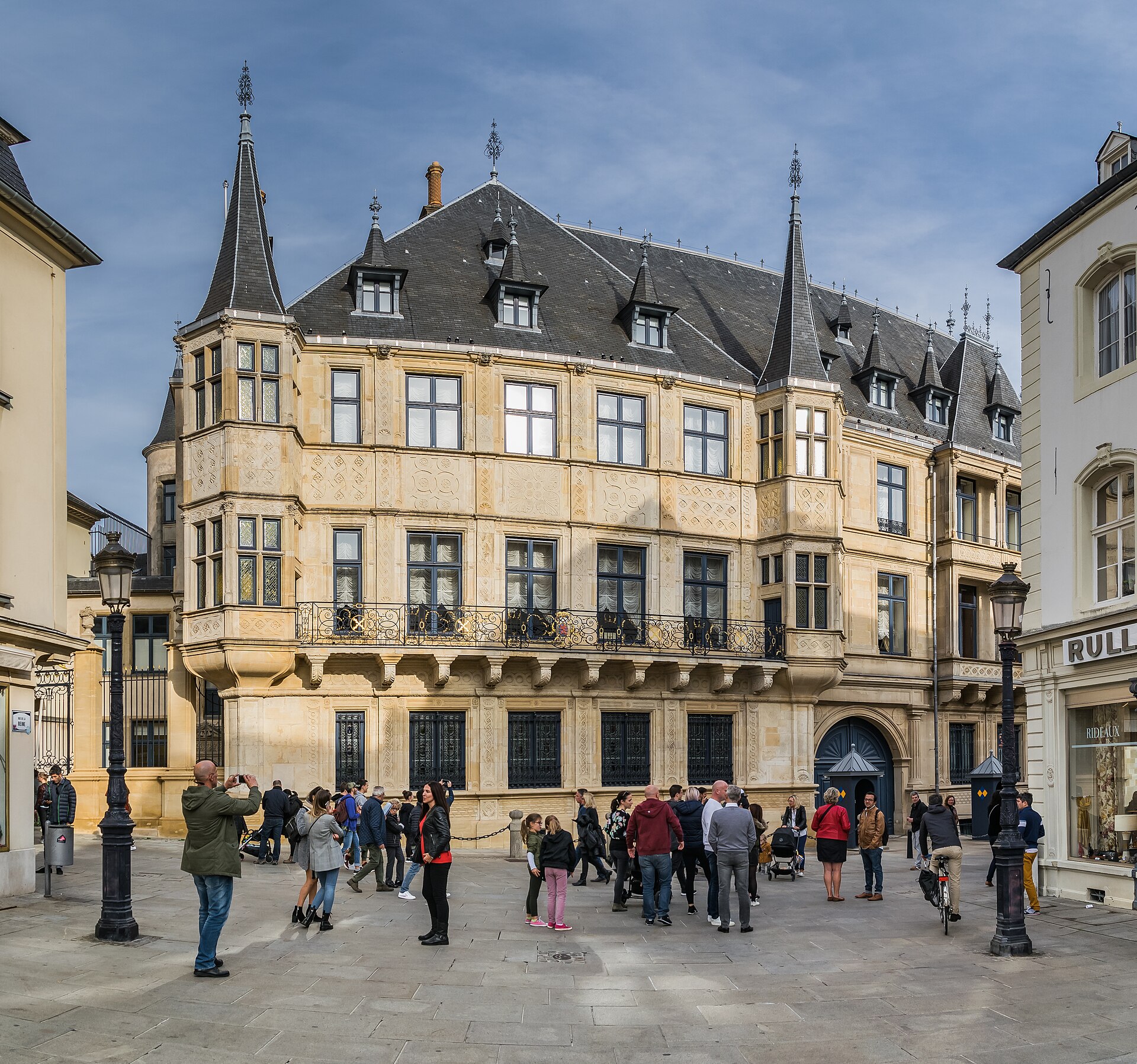
The grand ducal family plays an active role in the life of the nation, representing Luxembourg at home and abroad, supporting charitable and cultural causes, and embodying the unity and identity of the state. The palace, as the family’s official seat in the capital, is the ceremonial centre of this royal life, the setting for the great occasions of the dynasty and the nation.
The close relationship between the grand ducal house and the people is one of the distinctive features of Luxembourg’s monarchy, and it reflects the intimate scale of the nation itself. The palace, dignified but human in scale, embodies this closeness, a royal residence woven into the life of the city and the nation, the cherished seat of a beloved dynasty.
The genuine affection in which the grand ducal family is held reflects the intimate scale of the nation and the closeness of the bond between the crown and the people. In a small country, the monarchy is not a distant institution but a familiar and cherished presence, and the events of the family’s life are followed and celebrated with a warmth that speaks to the special character of Luxembourg’s monarchy.
The active role played by the grand ducal family in the life of the nation, from charitable work to the representation of Luxembourg abroad, keeps the monarchy closely engaged with the people and the modern world. The palace, as the family’s official seat, is the ceremonial base for this engagement, a working royal residence at the service of a small but vibrant and outward-looking nation.
The Palace Guard and Ceremony
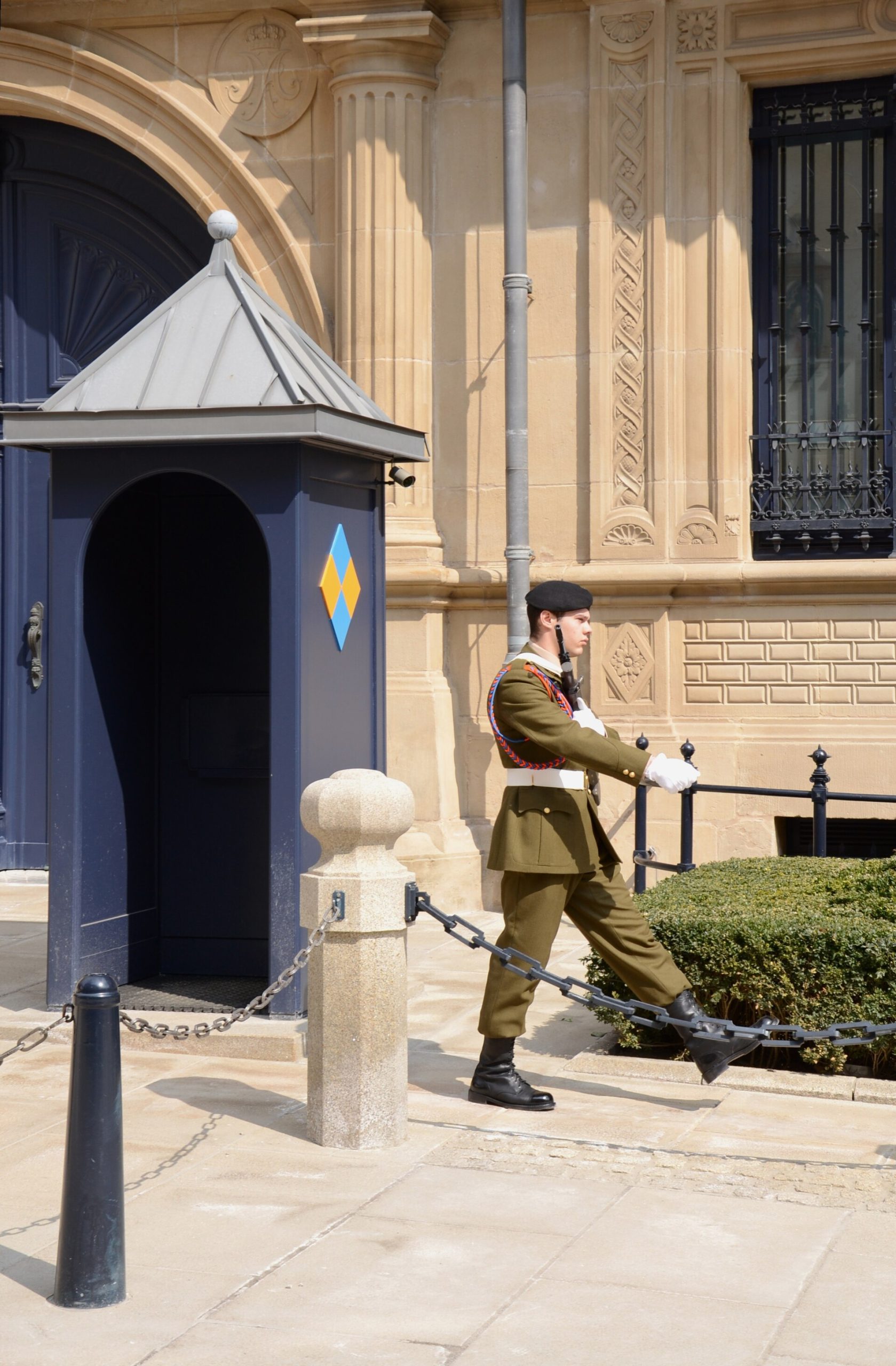
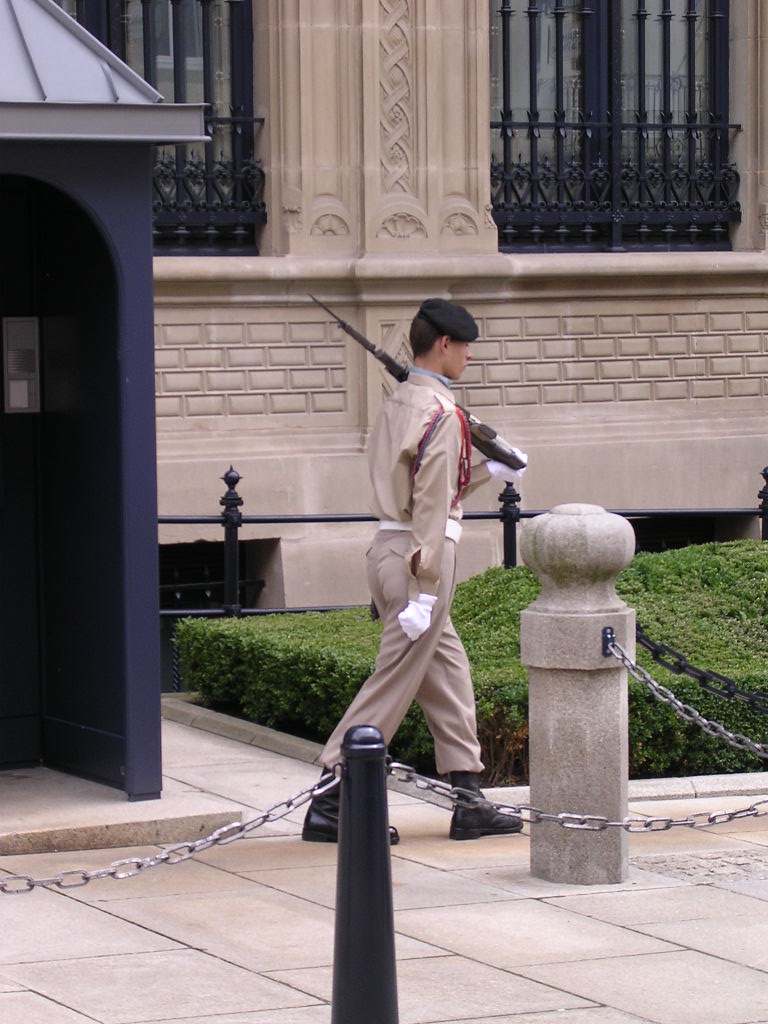
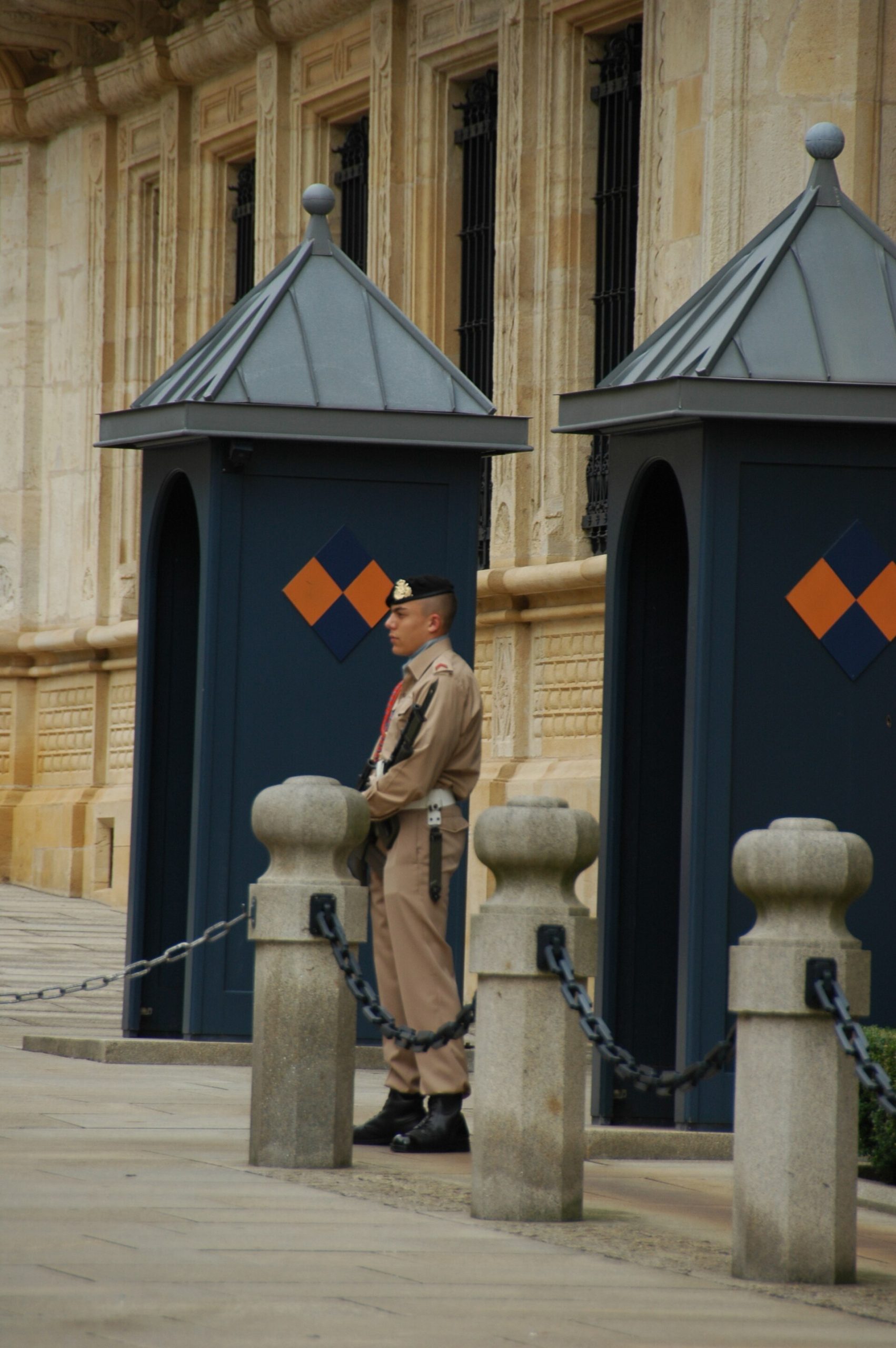
Before the palace stands a soldier of the guard, and the changing of the guard is one of the popular sights of the capital, a modest but colourful ceremony performed in the intimate setting of the old town street. The guard, in uniform, keeps watch before the ornate facade, adding a note of ceremony and tradition to the everyday life of the city.
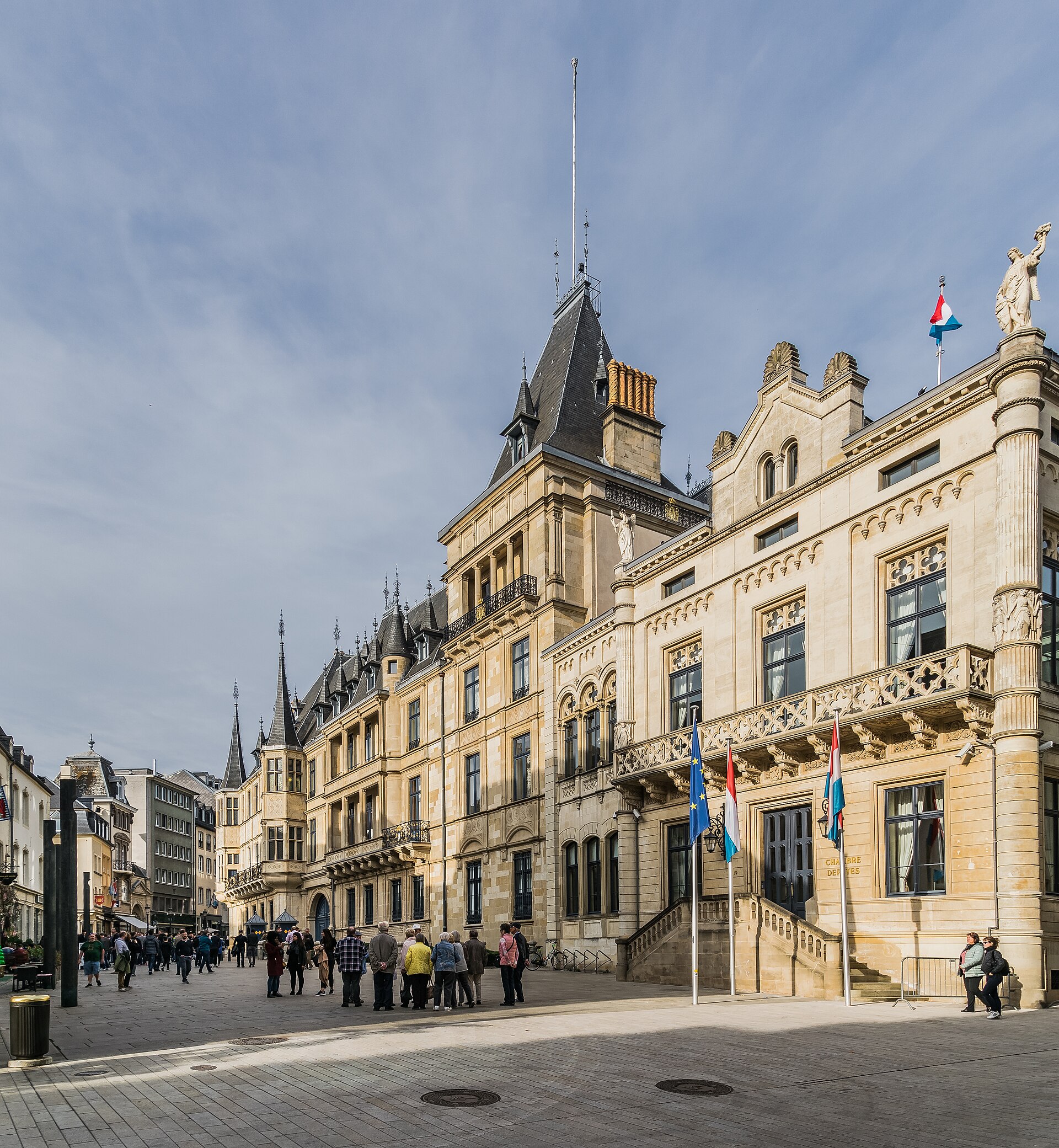
The presence of the guard links the palace to the living institutions of the grand duchy, a reminder that this beautiful building is the working seat of a sovereign head of state. The ceremony, staged in the narrow street before the facade rather than in a grand forecourt, has an intimacy that suits the character of Luxembourg, and it draws visitors eager to witness the ceremonial life of the palace.
These ceremonies, modest in scale but rich in tradition, reflect the character of the grand duchy and its monarchy, dignified and enduring but human and approachable. The sight of the guard before the ornate Renaissance facade, in the heart of the old town, is one of the classic images of Luxembourg City and a beloved feature of the ceremonial life of the capital.
The staging of the guard ceremony in the narrow street before the facade, rather than in a grand forecourt, gives it a charm and intimacy quite different from the grand spectacles of the larger monarchies. It is a ceremony on a human scale, suited to the character of the grand duchy, and the sight of the guard before the ornate Renaissance front is one of the most beloved images of the capital.
A Palace Open to Visitors
Each summer, when the grand duke’s official duties allow, the palace opens its doors to the public, offering guided tours of its state rooms and a glimpse of the ceremonial heart of the grand duchy. This annual opening is a cherished occasion, allowing citizens and visitors to enter the beautiful interiors of the palace and to learn its history and its role.
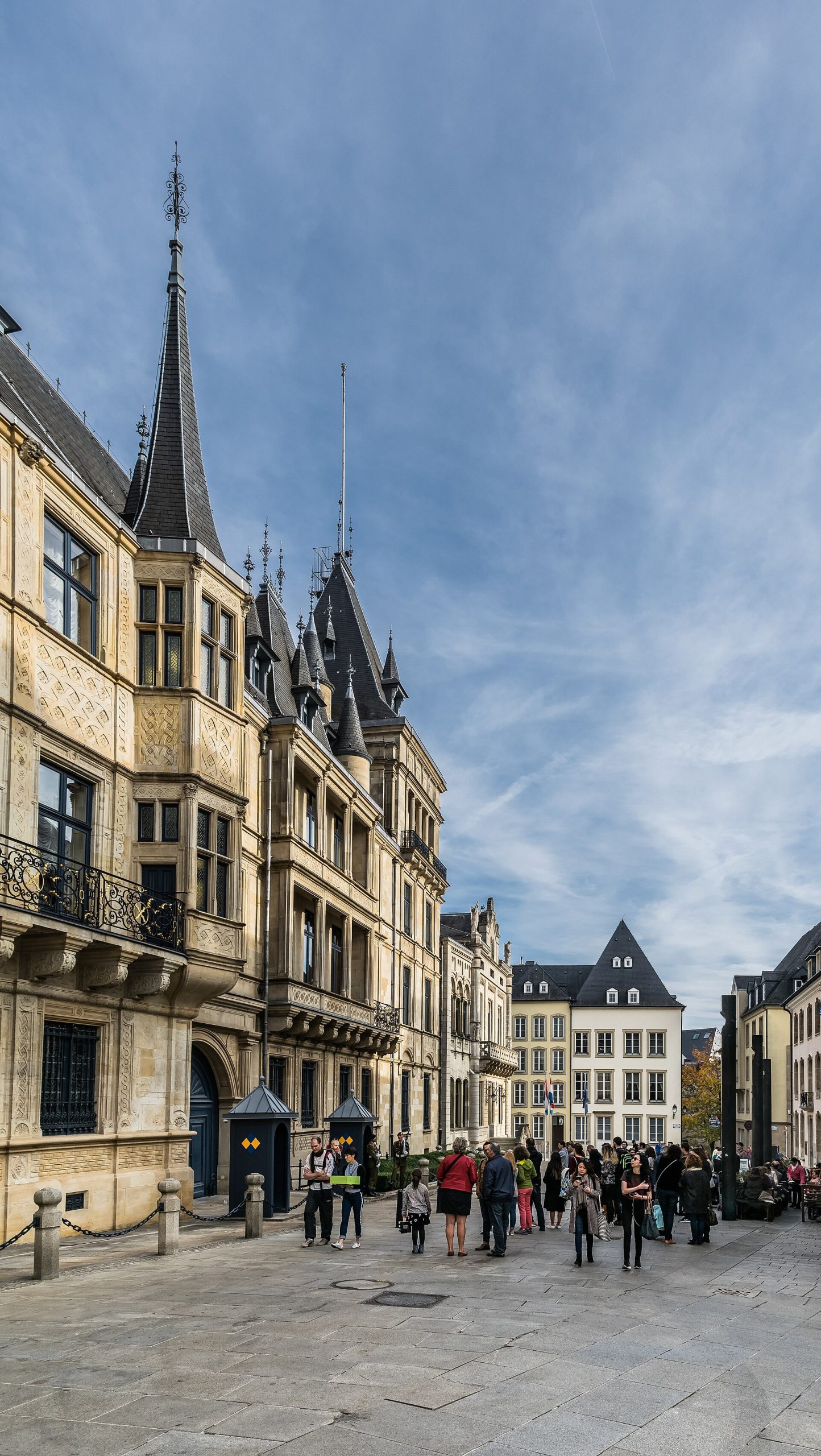
The guided tours reveal the elegant state rooms, the fine furnishings and works of art, and the history of the palace and the grand ducal house. This opening of the palace reflects the accessible character of Luxembourg’s monarchy, sharing the beauty and heritage of the royal residence with the people, and it draws many visitors during the summer season.
The summer opening embodies the relationship between the grand ducal house and the people of Luxembourg, offering the public a share in the heritage and dignity of the monarchy. For the visitor, it is a rare chance to see inside one of the most charming royal residences in Europe, and to experience the ceremonial heart of the world’s only grand duchy at first hand.
The summer openings are eagerly anticipated each year, offering a rare opportunity to enter the ceremonial heart of the grand duchy. The guided tours, revealing the elegant state rooms and the history of the palace and the dynasty, embody the accessible spirit of Luxembourg’s monarchy, and they draw many visitors keen to experience one of the most charming royal residences in Europe.
The Palace and the Old Town
The Grand Ducal Palace is woven into the fabric of the old town of Luxembourg City, standing on a historic street among the houses and monuments of the ancient capital. Unlike palaces set apart in great parks, it belongs intimately to the city, its ornate facade forming part of the streetscape of one of the most beautiful and historic old towns in Europe.

The old town of Luxembourg, with its ancient fortifications, winding streets, and dramatic setting above deep river valleys, is a place of great beauty and historic interest, recognised as a site of universal value. The palace, at its heart, is one of the treasures of this remarkable townscape, its beauty complementing the rich heritage of the surrounding streets and squares.
This intimate relationship between the palace and the old town is one of the defining features of the residence. The grand duke’s palace is not remote from the life of the city but part of it, and to encounter it is to experience the charm of a royal residence woven into the fabric of a beautiful historic capital, a fitting seat for the monarchy of a small and singular nation.
The dramatic setting of Luxembourg City, perched above deep river valleys and ringed by ancient fortifications, gives the old town a beauty and grandeur out of all proportion to its size, and the palace is one of its treasures. To encounter the residence amid this remarkable townscape is to appreciate how perfectly it belongs to its city, a royal seat woven into one of the most beautiful historic capitals in Europe.
That the old town of Luxembourg is recognised as a site of universal value reflects the exceptional beauty and historic importance of the city, and the palace is among its treasures. To explore the winding streets and ancient fortifications of the capital, with the grand ducal palace at their heart, is to experience one of the most remarkable and beautiful historic townscapes in all of Europe.
Symbol of a Small Nation
For the people of Luxembourg, the Grand Ducal Palace is far more than a beautiful building; it is a symbol of their nation, their independence, and their unique identity. As the seat of the world’s only grand duchy and the cherished dynasty that reigns over it, the palace embodies the survival and success of a small nation that has preserved its sovereignty against great odds.

The monarchy has come to represent the unity and continuity of Luxembourg, a focus of national feeling and pride for a small country with a strong sense of itself. The palace, as the seat of the crown, stands as the enduring emblem of this identity, a symbol of a nation that has navigated the currents of European history to preserve its independence and its distinctive monarchy.
In its beauty and its dignity, and in its intimate scale, the palace captures the character of Luxembourg itself, a small nation of great charm and resilience. It stands as a symbol of the endurance of the grand duchy and its people, a cherished landmark that embodies the unique place of Luxembourg among the nations and monarchies of Europe.
For a small nation surrounded by far larger neighbours, the monarchy and its palace serve as powerful symbols of independence and identity, focuses of national pride that affirm Luxembourg’s distinctive place among the nations of Europe. The palace embodies the survival and success of a small state that has preserved its sovereignty and its unique crown against considerable odds.
In its intimate scale and its enduring beauty, the palace mirrors the character of Luxembourg itself, small in size but great in charm and resilience. It stands as a symbol of the survival and success of a nation that has preserved its independence and its unique monarchy, a cherished landmark that embodies the distinctive place of the grand duchy among the states of Europe.
Luxembourg Among Europe’s Monarchies
The Grand Ducal Palace takes its place among the royal and princely residences of Europe, representing the smallest and most distinctive of the continent’s surviving monarchies. As the seat of the only grand duchy, it holds a special position, a reminder of the diversity of forms that European monarchy has taken and of the survival of this unique rank into the modern age.
Luxembourg’s monarchy shares with its neighbours the character of a modern constitutional crown, its sovereign reigning as head of state within a framework of parliamentary democracy, representing the unity and continuity of the nation. Yet its distinctive status as a grand duchy sets it apart, and the palace embodies this unique position among the crowns of Europe.
For the visitor exploring the royal heritage of Europe, the Grand Ducal Palace offers a distinctive and charming addition to the picture, the seat of a monarchy unlike any other. Its beauty, its intimate scale, and its unique status make it a memorable and rewarding place to visit, and it completes the picture of the varied and enduring monarchies of the continent.
Among the varied monarchies of Europe, Luxembourg’s grand duchy holds a place all its own, the sole survivor of a once more common rank. Its palace, the seat of this unique crown, offers a distinctive addition to the royal heritage of the continent, a reminder of the diversity of forms that European monarchy has taken and of the endurance of this singular state into the modern age.
The Palace and National Celebration
The Grand Ducal Palace stands at the centre of Luxembourg’s great national celebrations, above all the festivities of the national day, when the small nation marks the birthday of its sovereign with joyful ceremony. On such occasions the palace becomes the focus of national feeling, the setting for the ceremonies through which the grand duchy celebrates its identity and its monarchy.
During these celebrations the grand ducal family appears before the people, and the capital fills with festivity, uniting the nation in shared joy and pride. The palace, as the seat of the crown, is at the heart of these occasions, its ornate facade forming the dignified backdrop to the celebrations of a nation that cherishes its sovereign and its unique status among the states of Europe.
These national celebrations reveal the deep bond between the grand ducal house and the people of Luxembourg. Far from being a remote institution, the monarchy is woven into the emotional life of the nation, and its great occasions are moments of genuine popular rejoicing. The palace, at the centre of it all, is not merely a historic building but a living symbol of national unity and pride.
For visitors fortunate enough to witness them, these celebrations offer a vivid glimpse of the warmth and intimacy of Luxembourg’s monarchy, a small nation gathered around its sovereign in shared joy. The palace, dignified and beautiful in the heart of the old town, is the fitting focus of these occasions, embodying the identity and the enduring monarchy of the grand duchy.
The joy and warmth of Luxembourg’s national celebrations, centred on the palace, reveal a monarchy deeply woven into the life and affections of the nation. These occasions, in which the grand ducal family appears before a rejoicing people, capture the intimate and cherished character of the grand duchy’s crown, and they make the palace, for these great days, the beating heart of the nation.
The birthday of the sovereign, celebrated as the national day, is among the most joyful occasions in the Luxembourg calendar, and the palace stands at its heart. On such days the bond between crown and people is renewed and affirmed, and the beautiful residence in the old town becomes the focus of a nation’s shared pride in its independence, its identity, and its cherished monarchy.
The Grand Ducal Palace Today
Today the Grand Ducal Palace remains the official town residence and seat of the Grand Duke of Luxembourg, the ceremonial heart of the world’s only grand duchy. As a working palace of state, it continues to serve its purpose in the heart of the capital, while its summer openings allow the public to share in its beauty and history.

A visit, during the summer season, reveals the elegant state rooms, the fine furnishings and works of art, and the history of the palace and the grand ducal house, all within a residence of great charm woven into the beautiful old town of Luxembourg City. Set on its historic street, with its ornate Renaissance facade and its ceremonial guard, the palace offers a rewarding encounter with a unique European monarchy.
To experience the Grand Ducal Palace of Luxembourg is to encounter the seat of the world’s only grand duchy, a beautiful and intimate royal residence that embodies the endurance and identity of a small and singular nation. In its Renaissance facade, its elegant interiors, and its cherished place in the life of the capital, the palace stands as one of the most charming royal residences in Europe and the proud symbol of the grand duchy of Luxembourg.
For the visitor, the Grand Ducal Palace offers a rare and charming encounter with a unique European monarchy, in a residence of great beauty woven into a magnificent historic capital. Whether admired from the street or explored during the summer openings, the palace rewards a visit with both beauty and interest, and it holds a distinctive place among the royal residences of Europe.
Whether one comes to admire the ornate facade from the street, to tour the elegant interiors during the summer season, or simply to encounter the seat of the world’s only grand duchy, a visit to the Grand Ducal Palace is a memorable experience. It offers a charming and distinctive addition to any exploration of Europe’s royal heritage, and it lingers in the memory as one of the continent’s most delightful royal residences.
Palaces Nearby
The Grand Ducal Palace of Luxembourg is one of the royal residences of the Low Countries, and its story finds echoes in the palaces of the neighbouring crowns of the region. Two more of these royal residences make natural companions to a visit here, each embodying the history of its own nation.
- The Royal Palace of Amsterdam – a golden-age town hall turned royal palace on the Dam.
- The Royal Palace of Brussels – the ceremonial crown of the Belgians.
You May Like
Cardiff Castle: Two Thousand Years and a Gothic Dream