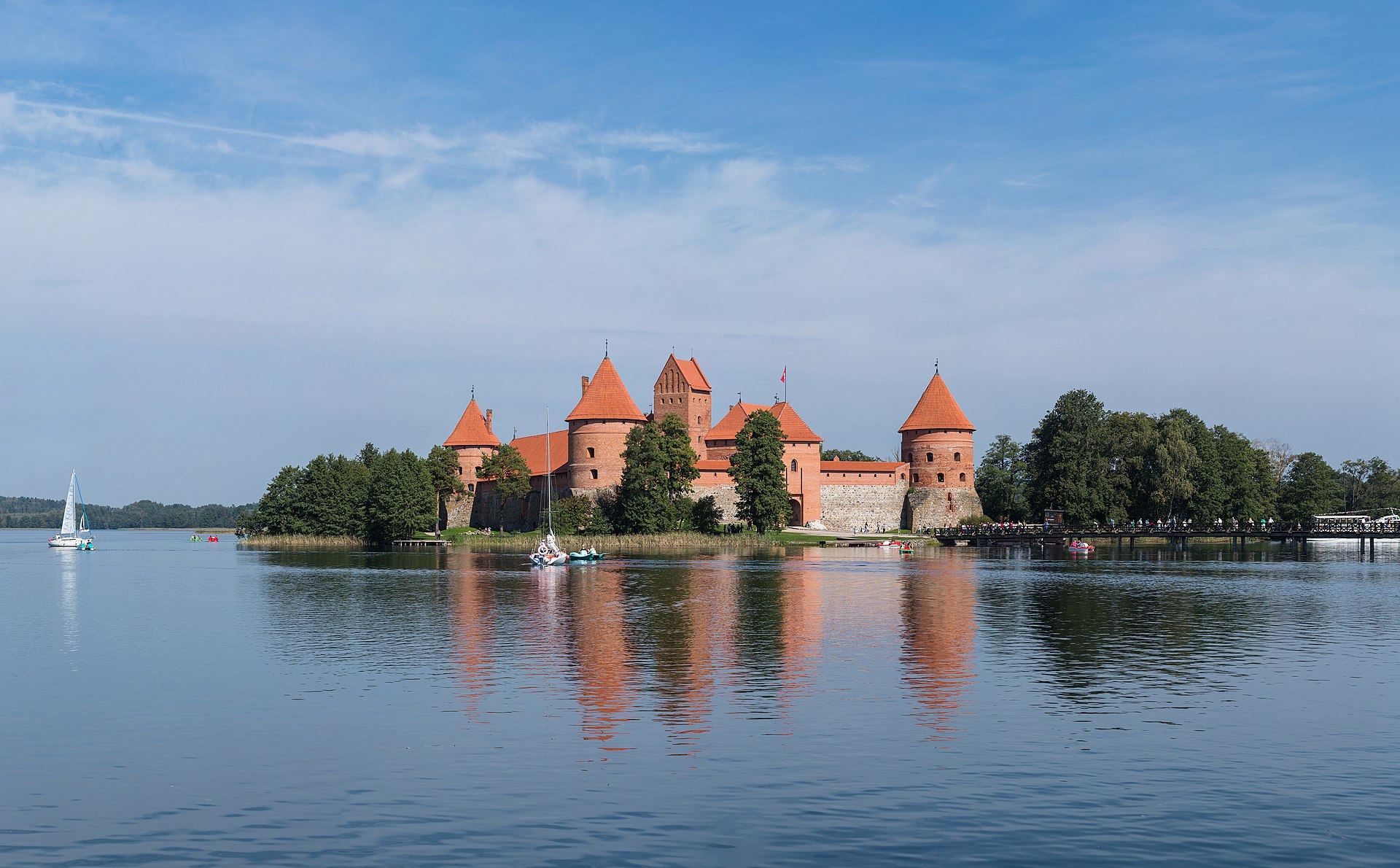
On a small island in a clear blue lake in the heart of Lithuania, ringed by water and reflected in its still surface, stands one of the most romantic castles in all of Europe. Trakai Island Castle, a fortress of red brick with soaring towers and steep roofs, rises from its island like a vision from a medieval legend, its walls mirrored in the waters of the lake that surrounds it. Reached by a footbridge across the water, it is one of the most beautiful and evocative castles on the continent.
Trakai was built in the late medieval period as a stronghold and residence of the rulers of the Grand Duchy of Lithuania, one of the largest and most powerful states in medieval Europe. From this island fortress the grand dukes commanded a realm that stretched across vast territories, and the castle became a symbol of the power and independence of the Lithuanian state at the height of its strength.
The history of the castle, like that of Lithuania, has been eventful, and after its great days as a ducal residence it declined into ruin, only to be reconstructed in the twentieth century and restored to something of its former glory. Today it stands resplendent once more on its island, one of the most beloved and visited sites in Lithuania and a powerful symbol of the nation’s medieval greatness.
In this article you will get to know Trakai Island Castle fully: the Grand Duchy of Lithuania that built it, its dramatic island setting, its red-brick Gothic architecture, its ducal palace and defensive towers, its decline and reconstruction, its role as a symbol of the Lithuanian nation, and its life today as a museum and one of the most romantic and beautiful castles in all of Europe, a jewel of the Lithuanian lakes.
In This Article
- A Castle on an Island
- The Grand Duchy of Lithuania
- The Age of the Great Grand Duke
- Red-Brick Gothic Architecture
- The Ducal Palace
- Towers and Defences
- Decline and Ruin
- Reconstruction and Revival
- A Museum of Lithuanian History
- The Lake and the Setting
- A Symbol of the Lithuanian Nation
- The Karaites of Trakai
- Trakai Island Castle Today
A Castle on an Island
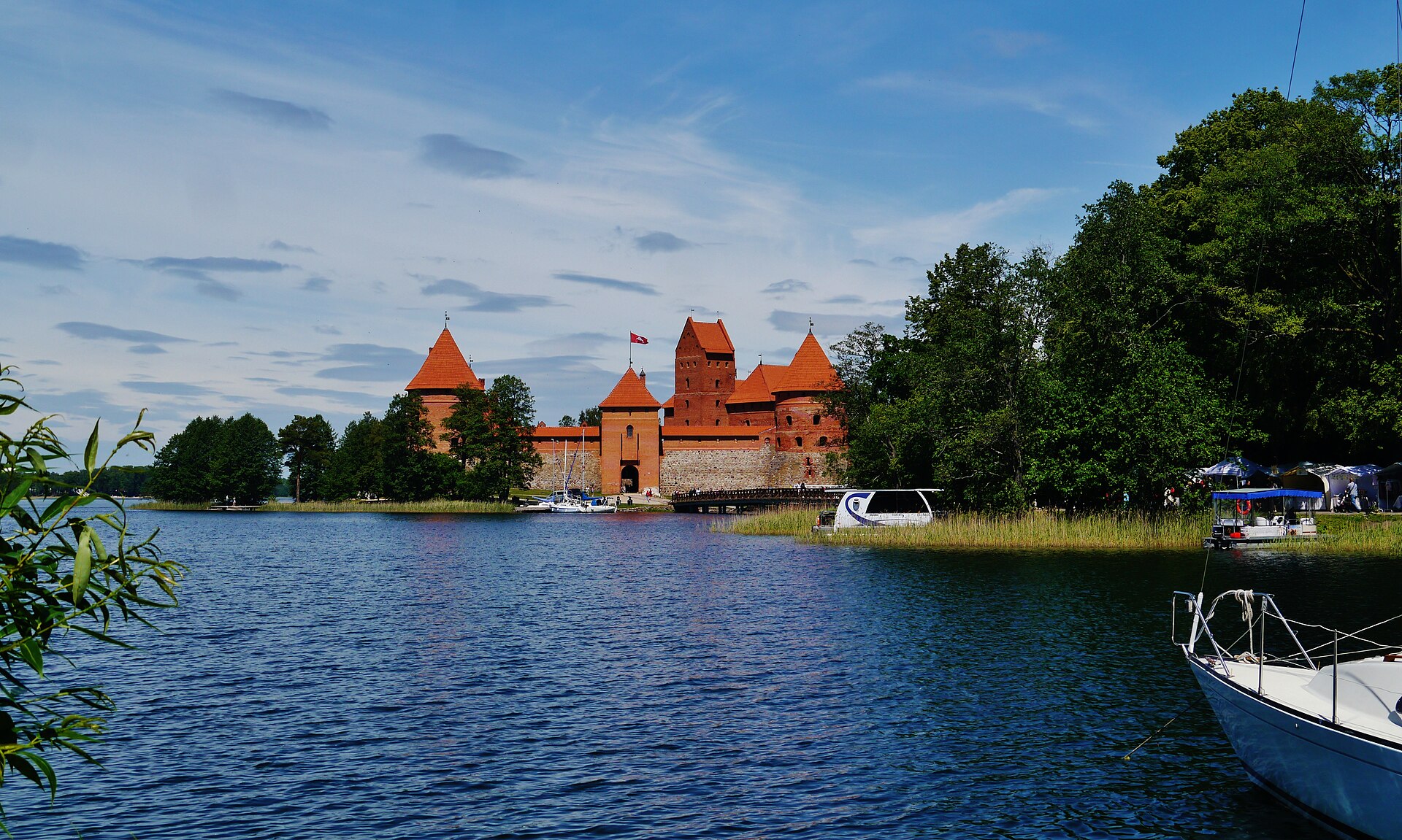
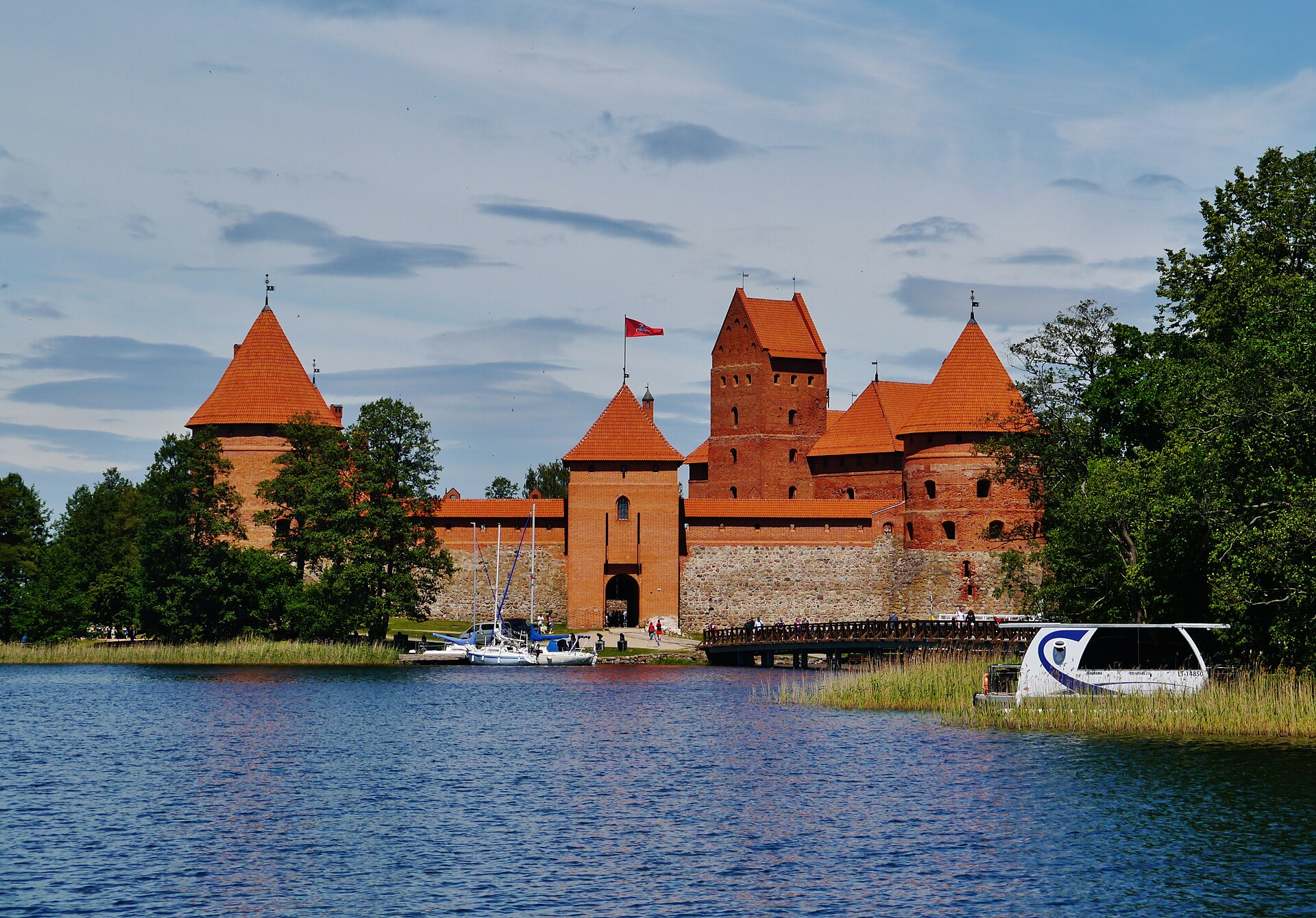
Trakai Island Castle occupies one of the most beautiful settings of any castle in Europe, standing on a small island in a clear blue lake, surrounded entirely by water. Its red-brick walls and towers rise directly from the island, reflected in the still surface of the lake, and it is reached by a footbridge across the water, an approach that heightens the sense of entering a place apart.
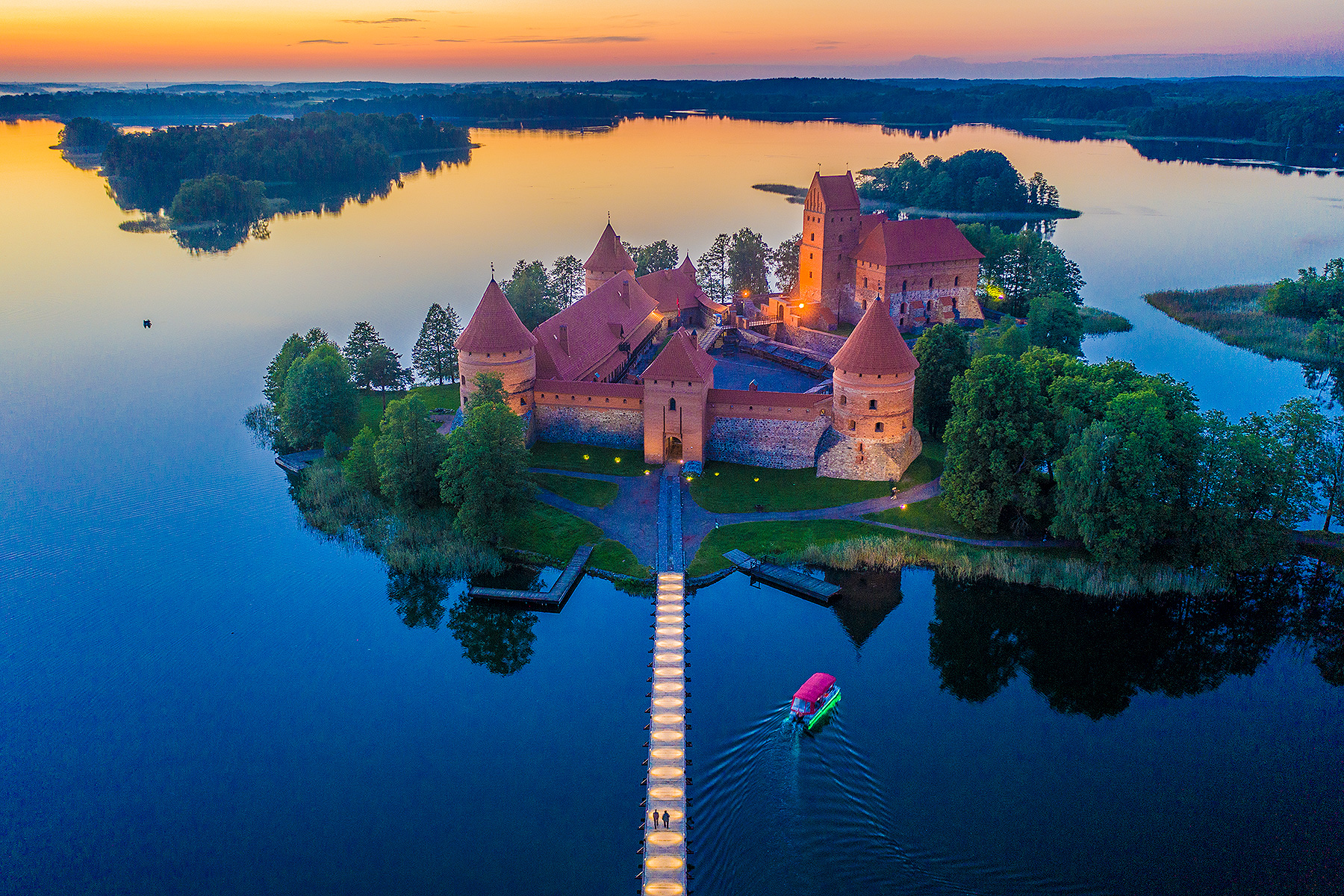
The castle was built as a stronghold and residence of the rulers of the Grand Duchy of Lithuania, its island setting chosen for both its defensive strength and its beauty. Surrounded by water, the castle was a formidable fortress, difficult to attack, and its position on the lake gave it a romantic beauty that has enchanted visitors for generations.
The combination of the red-brick Gothic castle and its island setting, mirrored in the blue waters of the lake, makes Trakai one of the most romantic and beautiful castles in Europe. Its beauty, its history, and its dramatic setting have made it one of the most beloved and visited sites in Lithuania, a jewel of the nation’s lakes and a symbol of its medieval greatness.
The approach across the footbridge, with the castle growing steadily before you and the water on every side, is one of the most memorable of any castle in Europe. By the time you reach the gate, the sense of entering a place set apart from the ordinary world is complete, and this dramatic arrival is part of what makes a visit to Trakai so unforgettable.
There is a reason Trakai appears on so many images of Lithuania, for few castles anywhere unite architecture and setting so perfectly. The red-brick fortress on its island, mirrored in the blue lake and reached by its footbridge, seems almost too romantic to be real, and it has become one of the defining images of the nation and one of the most photographed castles in the region.
The Grand Duchy of Lithuania
Trakai was built by the rulers of the Grand Duchy of Lithuania, one of the largest and most powerful states in medieval Europe. At its height, the grand duchy stretched across vast territories, and its grand dukes commanded a realm of great extent and power, playing a central role in the history of the region.
The grand duchy reached the summit of its power under a great ruler who expanded its territories and strengthened its institutions, and it was during this era that Trakai flourished as a ducal residence. The castle became one of the principal seats of the grand dukes, a stronghold and residence from which the vast realm was governed and defended.
The history of the grand duchy, like that of the castle, was one of both greatness and eventual decline, as the Lithuanian state was drawn into union with its neighbours and its independence gradually diminished. Yet at its height it was one of the great powers of Europe, and Trakai stands as a monument to this era of Lithuanian greatness, the island seat of a powerful medieval state.
At its height the grand duchy was one of the largest states in Europe, stretching far across the plains and forests of the east, and Trakai was one of the strongholds from which this vast realm was governed. To stand in the castle is to be at the heart of a medieval power whose extent and importance are too often forgotten, a great state whose golden age Trakai embodies.
The eventual union of Lithuania with its neighbour, forming one of the largest states in Europe, drew the grand duchy into a shared destiny that would shape the region for centuries. Yet even as its independence gradually diminished, the memory of its golden age endured, and Trakai remained a symbol of the era when Lithuania stood as a great power in its own right.
The Age of the Great Grand Duke
The greatest age of Trakai came under the rule of the grand duke remembered as the greatest of Lithuania’s medieval rulers, a monarch who expanded the realm to its greatest extent and made it one of the foremost powers of Europe. Under his rule the castle flourished as a ducal residence, and it is with his reign that Trakai is most closely associated.
This great grand duke made Trakai one of his principal seats, and the castle became a centre of power and a symbol of the strength of the Lithuanian state at its height. His reign marked the summit of the grand duchy’s power, and the castle, as one of his residences, shared in the glory of this golden age of Lithuanian history.
The memory of this great ruler is inseparable from Trakai, and the castle stands as a monument to his reign and to the era of Lithuanian greatness he embodied. For Lithuanians, the castle is bound up with the memory of their medieval golden age and the great grand duke who presided over it, making Trakai a powerful symbol of national history and pride.
The reign of the great grand duke is remembered as the summit of Lithuanian power, a time when the realm reached its greatest extent and its ruler stood among the foremost monarchs of Europe. Trakai, as one of his principal residences, shared in the glory of this age, and the castle remains inseparable from the memory of the ruler and the era he embodied.
Under this great ruler, Lithuania reached from the Baltic toward the Black Sea, one of the largest realms in Europe, and Trakai was among the strongholds from which such a domain was governed. The castle thus stands not only as a beautiful monument but as a witness to the era when Lithuania was a great power, and its association with the golden age gives it a special place in the national memory.
Red-Brick Gothic Architecture
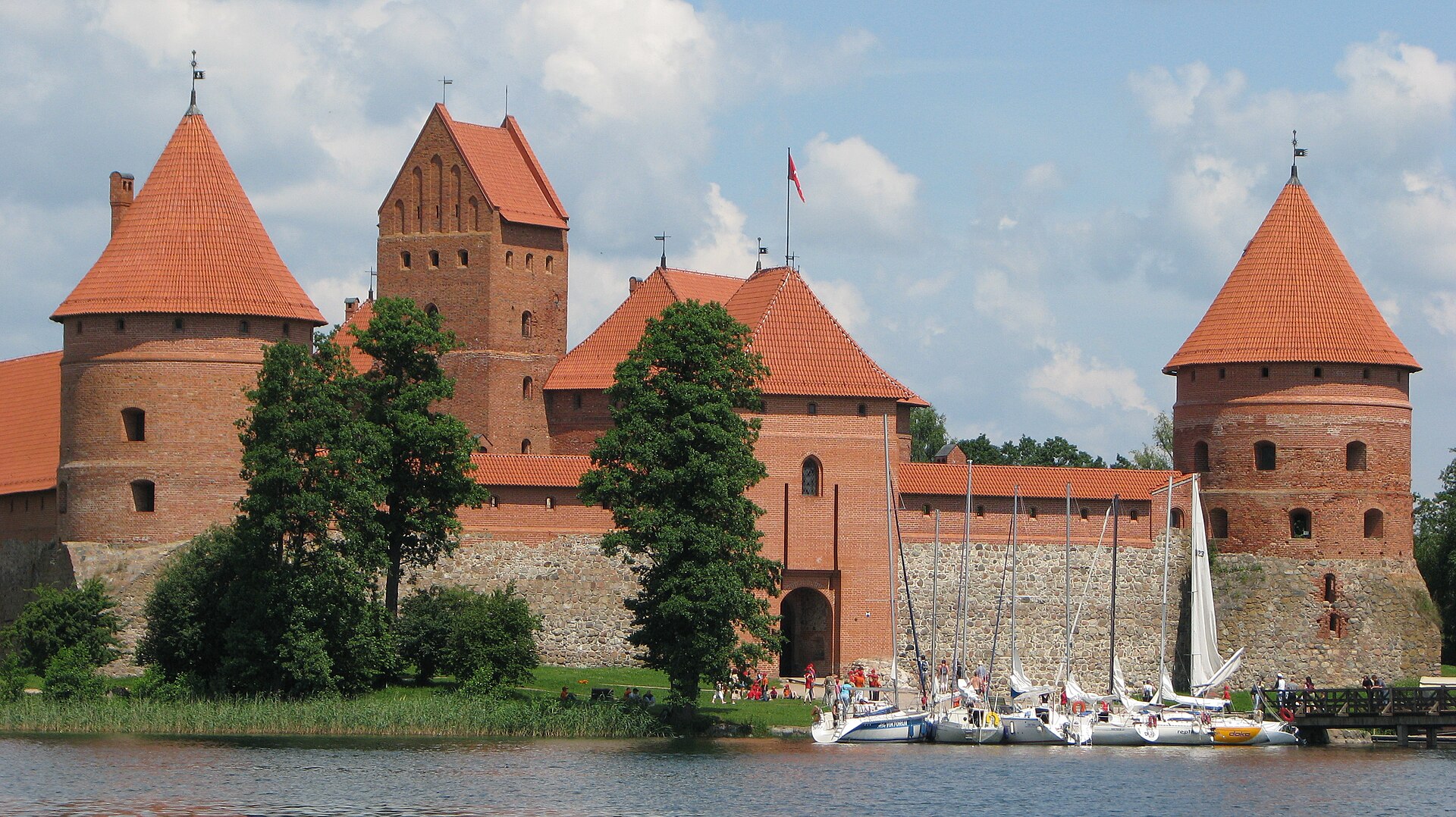
The architecture of Trakai is a fine example of the brick Gothic style that flourished in the region, its red-brick walls and towers rising from the island in a composition of great strength and beauty. The castle combines the functions of a fortress and a residence, uniting formidable defences with the accommodation appropriate to a ducal seat.
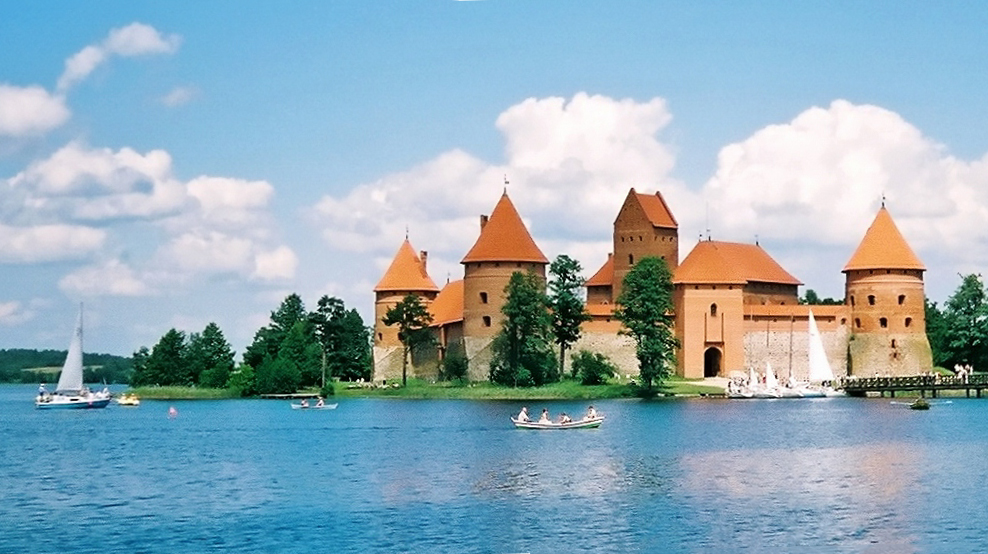
The castle consists of a ducal palace, protected by walls and towers, and a forecastle with additional defences, the whole surrounded by water. The red brick, characteristic of the region, gives the castle its distinctive colour and character, and its Gothic forms, with their steep roofs and soaring towers, create a striking and romantic silhouette against the lake.
The design of the castle reflects both its defensive purpose and its role as a ducal residence, combining the strength of a fortress with the dignity of a princely seat. Its red-brick Gothic architecture, rising from the island and mirrored in the lake, makes Trakai one of the most beautiful and distinctive castles in the region, a masterpiece of medieval military and residential architecture.
The brick Gothic style of the castle, with its warm red walls and steep roofs, is characteristic of the medieval architecture of the region, and it gives Trakai its distinctive colour and character. Rising from the water and reflected in the lake, the red-brick castle presents one of the most beautiful and romantic silhouettes of any fortress in Europe.
The combination of a fortified palace, a defended forecastle, and the surrounding water made Trakai both a formidable stronghold and a dignified ducal residence, uniting the functions of fortress and palace. This dual character is written into its architecture, and it reflects the needs of an age when even a ruler’s residence had to be a place of strength, ready to withstand the attacks of powerful enemies.
The Ducal Palace
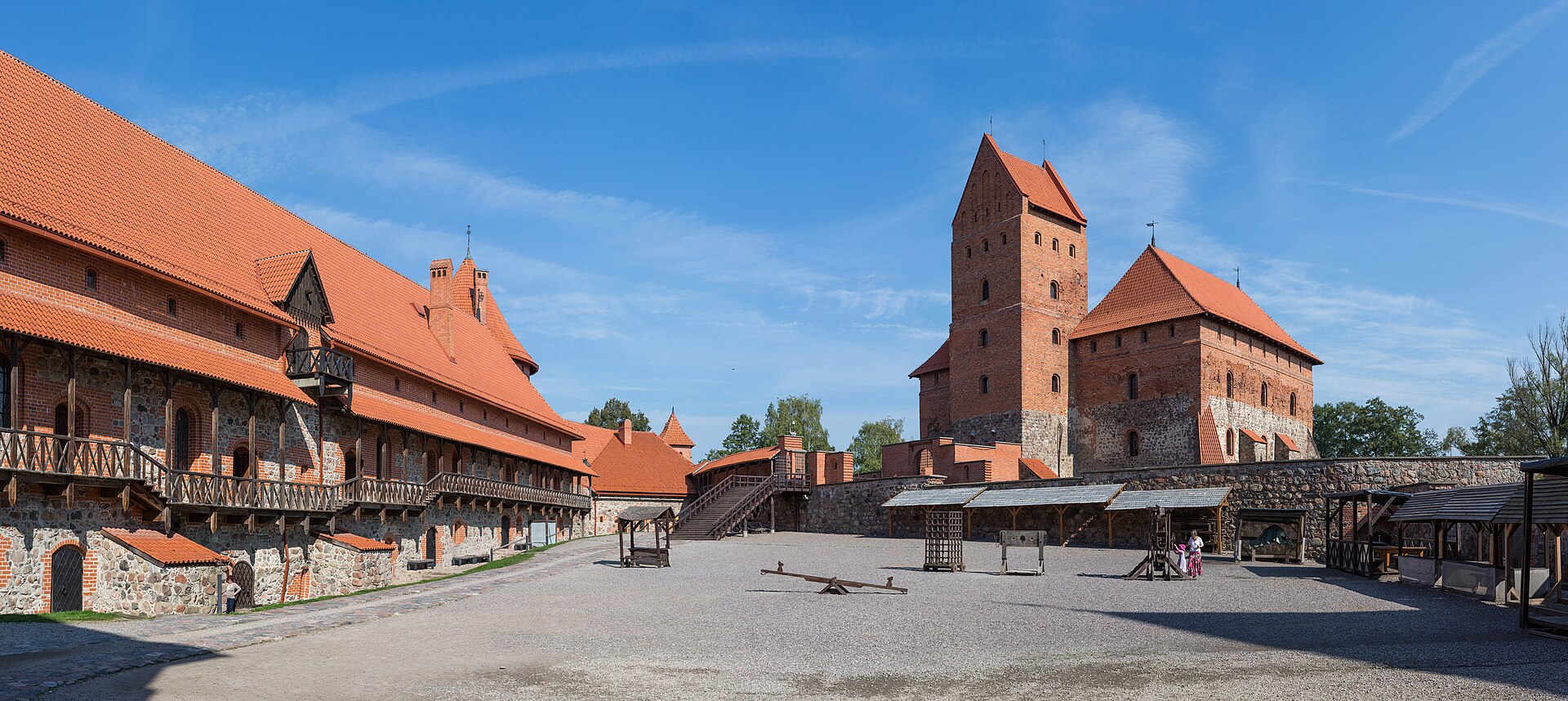
At the heart of the castle stands the ducal palace, the residence of the grand dukes, a substantial building protected by the walls and towers of the fortress. The palace provided the living quarters and ceremonial spaces of the ducal court, and it was here that the grand dukes held court and conducted the business of their realm when residing at Trakai.
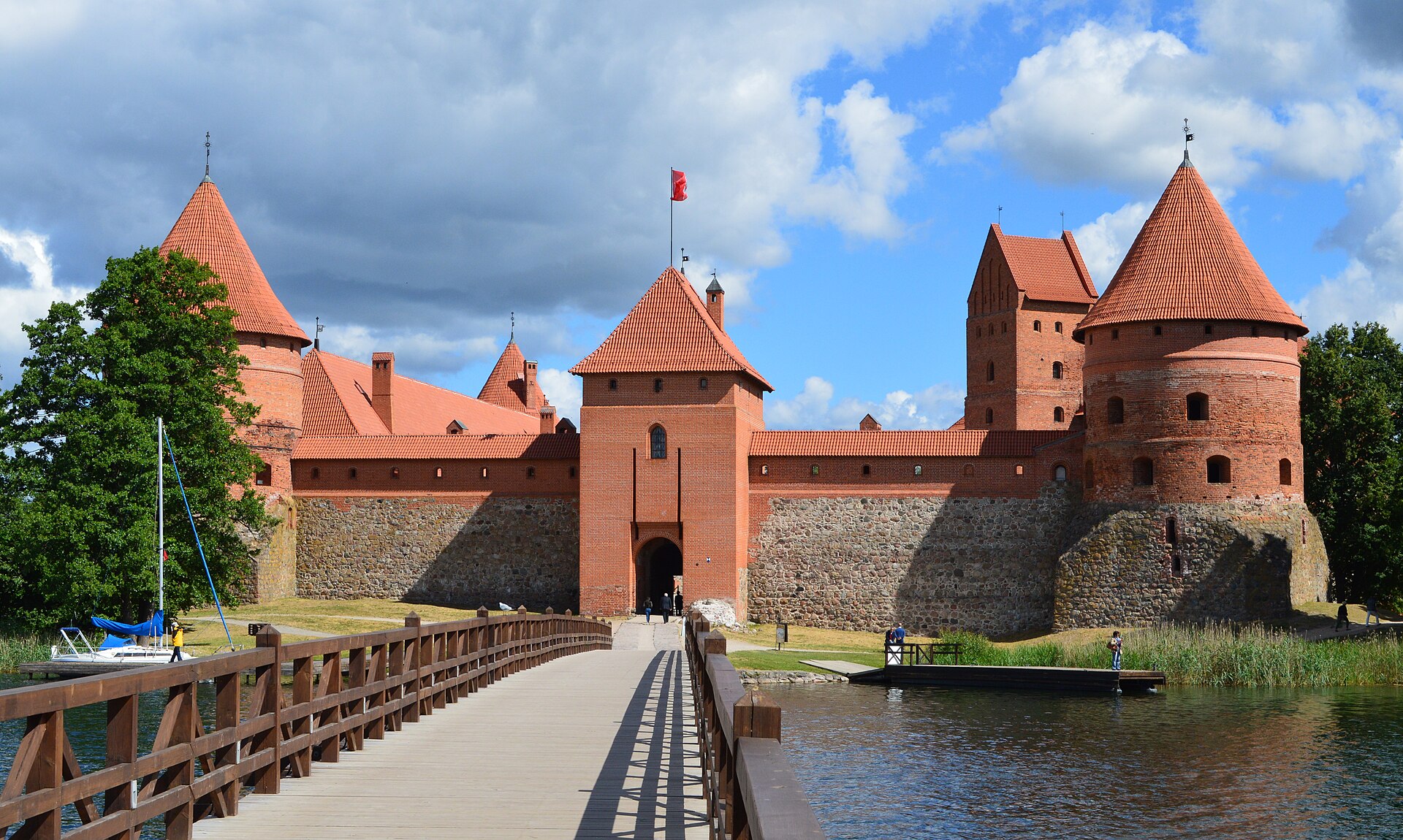
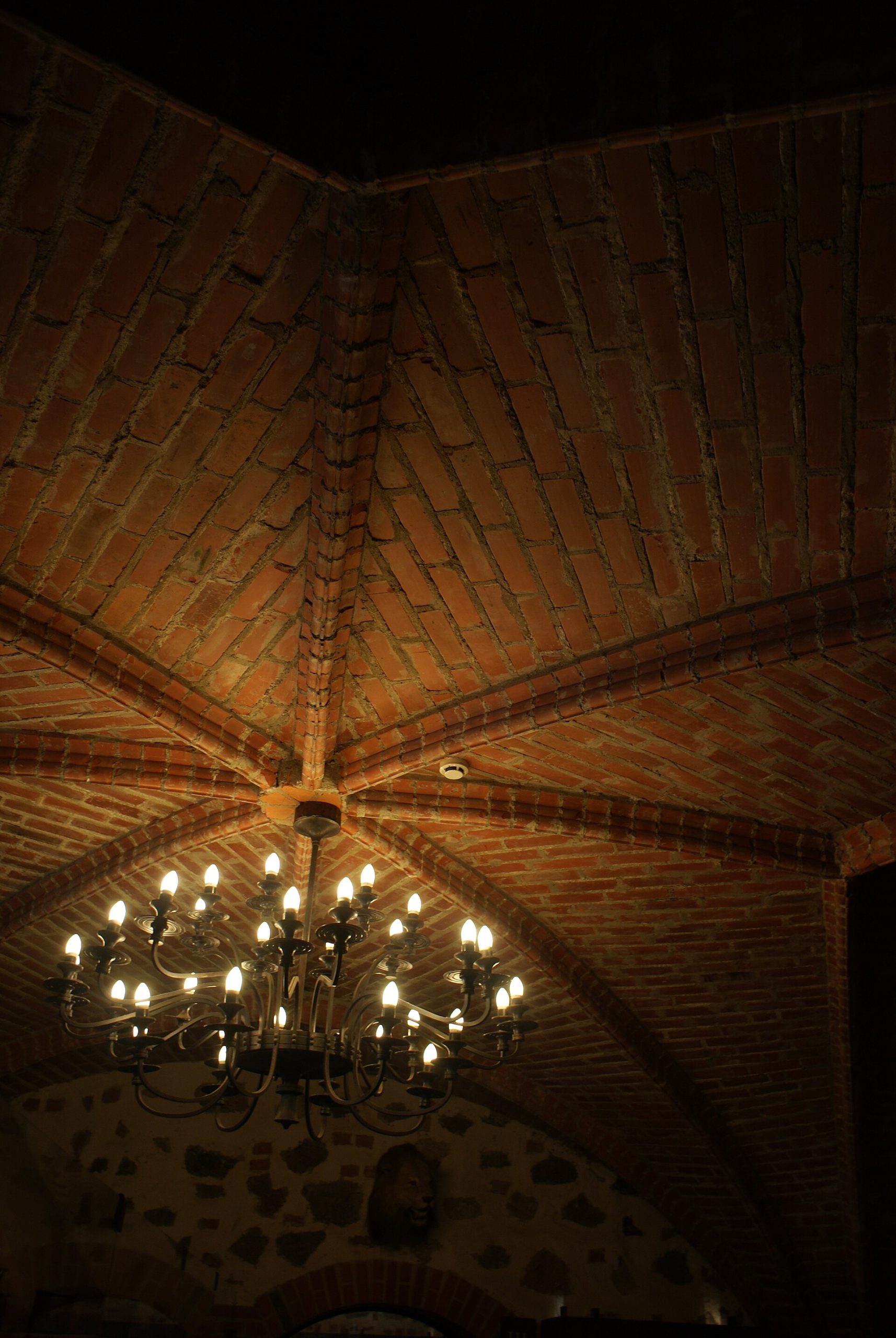
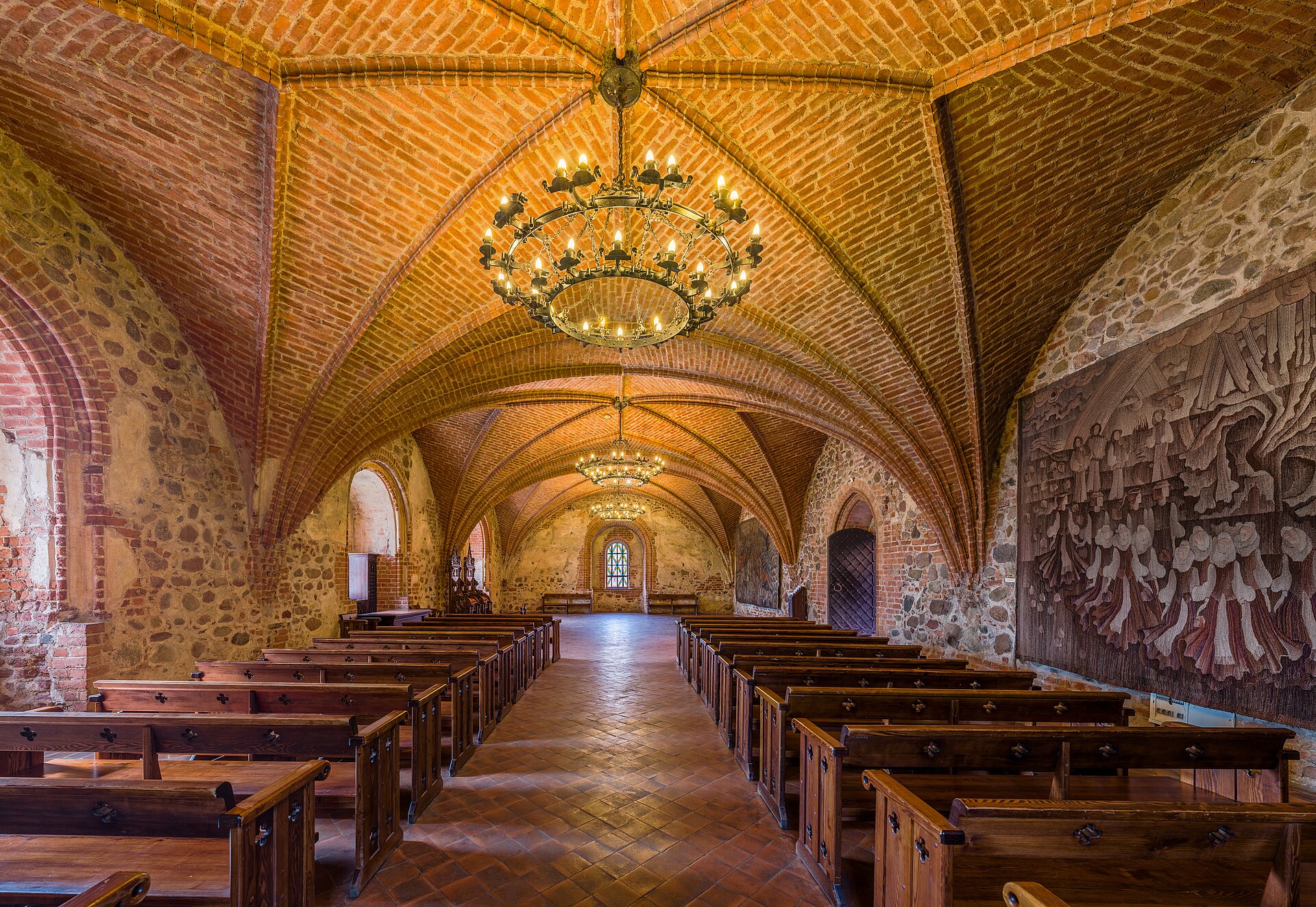
The palace is arranged around a courtyard, with residential and ceremonial rooms rising through several storeys, connected by galleries and stairs. Among its notable features are the halls used for ceremony and audience, and the castle preserves, in its reconstructed form, a sense of the residential grandeur of a medieval ducal seat.
The ducal palace, protected within the fortress and surrounded by water, was both a stronghold and a princely residence, a place of both defence and courtly life. Its rooms, reconstructed and now housing displays, allow visitors to sense the life of the ducal court that once filled the castle, and they form the residential heart of this island fortress of the grand dukes.
The reconstructed halls of the ducal palace, arranged around their courtyard, allow visitors to sense the residential grandeur of a medieval ducal seat, a place of both defence and courtly life. To move through these rooms is to imagine the life of the grand ducal court that once filled them, and they form the residential heart of the island fortress.
The galleries and stairs that connect the rooms of the ducal palace, arranged around the courtyard, create a sense of the complex life of a medieval court, with its blend of ceremony, defence, and daily living. The reconstruction has recovered this residential character, allowing visitors to move through the palace as the court once did and to sense the life that filled the island fortress.
Towers and Defences
Trakai was a formidable fortress, its defences designed to make full use of its island setting and to withstand the attacks of the enemies who threatened the grand duchy. Massive towers, thick walls, and the surrounding water combined to make the castle a stronghold of great strength, difficult to approach and harder still to take.
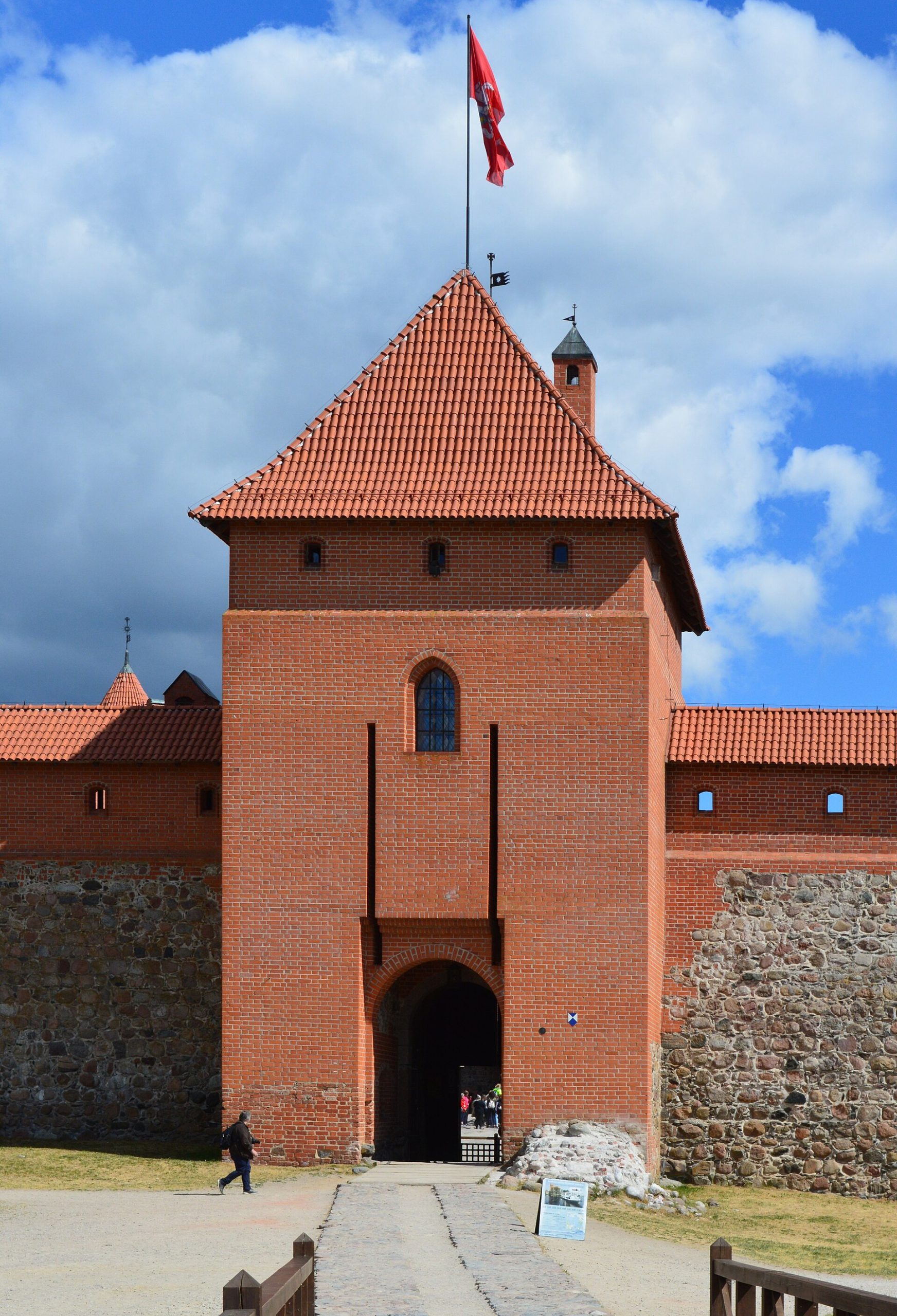
The castle’s defences included a great keep and a series of towers, linked by walls and protected by the lake, as well as a forecastle providing an additional line of defence. These formidable fortifications reflected the dangers of the age and the importance of the castle as a stronghold of the grand duchy, guarding the realm against its enemies.
The towers and walls of Trakai, rising from the water, are among its most striking features, giving the castle its powerful and romantic silhouette. Though the castle’s days as a working fortress are long past, its defences remain impressive, a reminder of the age when Trakai stood as a stronghold of the Lithuanian state, guarding the realm from its island in the lake.
The great keep and the towers of the castle, rising from the water, were the heart of its formidable defences, and they remain among its most striking features. Their massive forms, combined with the surrounding lake, made Trakai a stronghold of great strength, and today they give the castle its powerful and romantic presence on the island.
Seen from the shore or from a boat on the lake, the towers of Trakai rising from the water present one of the most romantic images of any castle in Europe. Their reflection in the still surface of the lake doubles their beauty, and they have made the castle one of the most beloved and recognisable landmarks in Lithuania, an emblem of the nation’s medieval past.
Decline and Ruin
After its great days as a ducal residence, Trakai gradually declined in importance, as the centre of Lithuanian power shifted and the castle lost its role as a principal seat of the grand dukes. With the passing of the age that had built it, the castle fell into disuse, and over the centuries it slowly decayed.
At various times the castle served lesser purposes, including use as a prison, far removed from its original grandeur, and as its military and residential functions faded it fell into ruin. Wars and the passage of time took their toll, and by later centuries the once-great fortress of the grand dukes had become a picturesque ruin on its island in the lake.
For long years the castle stood as a romantic ruin, its walls and towers crumbling, its former glory a distant memory. Yet even in ruin it retained its beauty and its power to evoke the medieval greatness of Lithuania, and its dramatic island setting ensured that it remained a place of fascination, awaiting the restoration that would eventually bring it back to life.
The use of the once-great castle as a prison, far removed from its ducal splendour, marks the depth of its decline in the centuries after its golden age. That so magnificent a fortress should have fallen to such uses reflects the changing fortunes of Lithuania, and it makes the castle’s eventual reconstruction all the more remarkable and moving.
Even as a ruin, the castle never lost its hold on the imagination, its crumbling walls and towers rising from the lake a romantic reminder of Lithuania’s medieval greatness. Artists and travellers were drawn to its picturesque decay, and the memory of its former glory helped inspire the eventual campaign to raise it from ruin and restore it to the nation.
Reconstruction and Revival
The revival of Trakai came through a major campaign of reconstruction in the twentieth century, one of the most ambitious projects of its kind in the region. Over many years, the ruined castle was painstakingly rebuilt, its walls, towers, and palace restored to something of their medieval appearance, bringing the great fortress back to life.
The reconstruction was a work of considerable scholarship and effort, based on study of the castle’s history and remains, and it recovered the castle from its state of ruin, restoring its red-brick walls and towers and its ducal palace. The project, carried out over decades, transformed the picturesque ruin back into a great castle, resplendent once more on its island.
This reconstruction gave Trakai a new life and made it once more one of the great monuments of Lithuania. Though the rebuilding was not without controversy, as such reconstructions often are, it recovered for the nation one of its most important historic sites, and the castle stands today restored to its former glory, a triumph of reconstruction and a source of national pride.
The reconstruction of the castle, carried out over many years and based on careful study of its history, recovered one of the great monuments of Lithuania from its state of ruin. Though such reconstructions are often debated, the rebuilding gave the nation back one of its most important historic sites, restored to something of its medieval glory on its island in the lake.
Walking through the reconstructed castle today, it is hard to imagine the ruin it once was, so thoroughly has its medieval appearance been recovered. The reconstruction, whatever debates it has occasioned, has given the nation back one of its greatest monuments, and it allows visitors to experience the island fortress much as it might have appeared in the age of its ducal greatness.
A Museum of Lithuanian History
Today Trakai houses a history museum, its reconstructed rooms displaying collections that tell the story of the castle, the grand duchy, and the wider history of Lithuania. Visitors can explore the ducal palace, the towers, and the defences, and view the exhibitions that fill the castle, encountering the medieval greatness of the Lithuanian state.
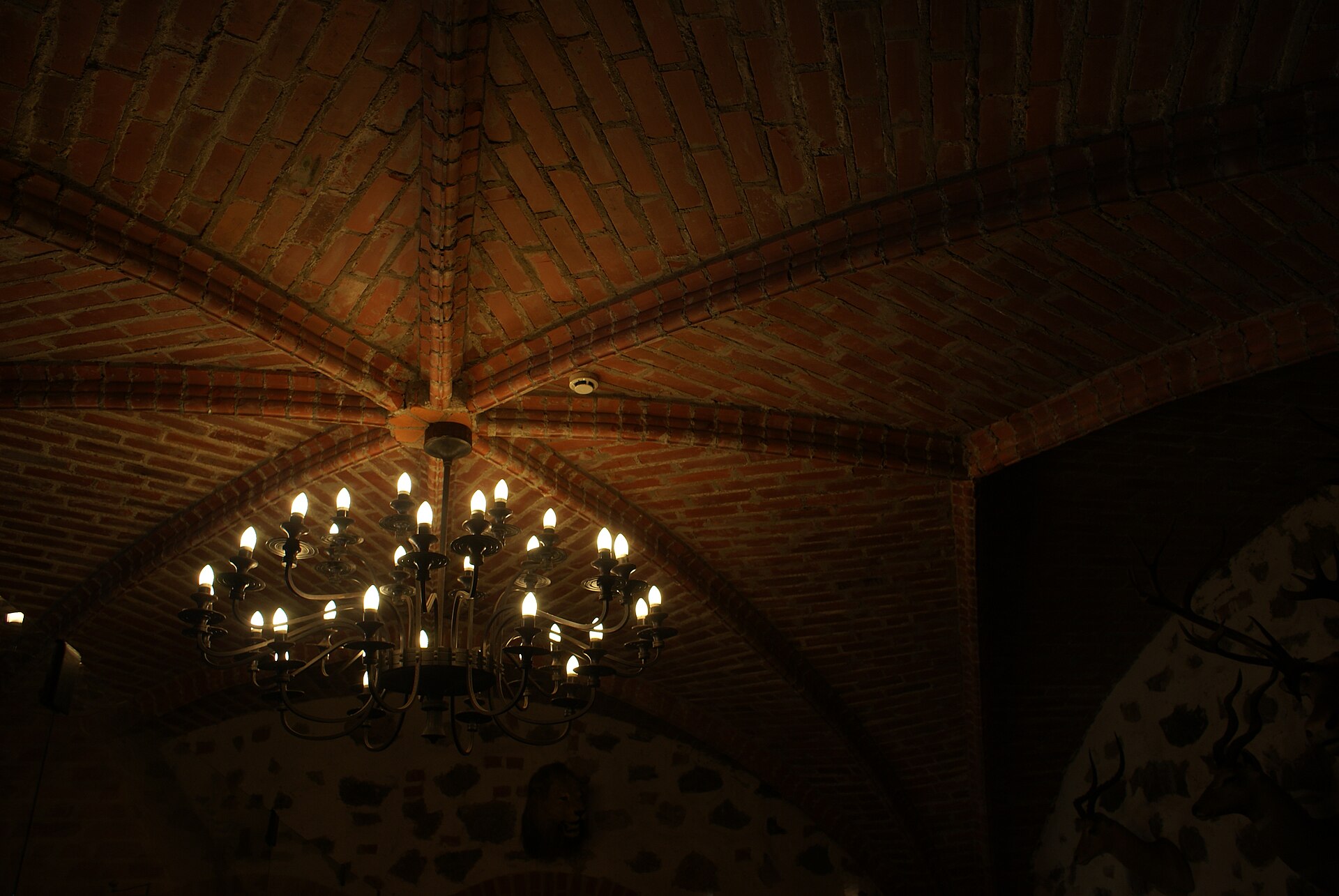
The museum’s collections include arms and armour, decorative objects, coins, and other treasures that illuminate the history of the castle and the grand duchy. Displayed within the reconstructed rooms of the ducal palace, they bring to life the world of the medieval Lithuanian court and the era of the castle’s greatness, adding to the interest of a visit.
As a museum, the castle preserves and displays the history of Lithuania and its medieval golden age, from the era of the great grand dukes to the decline and revival of the castle itself. It offers visitors a vivid encounter with the nation’s medieval past, all within the walls of one of the most beautiful and romantic castles in Europe, on its island in the lake.
The collections of the museum, displayed within the reconstructed rooms, bring to life the history of the castle and the grand duchy, from arms and armour to decorative treasures. They add greatly to the interest of a visit, illuminating the medieval greatness of Lithuania and the world of the ducal court that once filled the island fortress.
The Lake and the Setting
The setting of Trakai on its island in the lake is inseparable from its beauty and its appeal. The castle is surrounded by the clear blue waters of the lake, which reflect its red-brick walls and towers and set off its romantic silhouette. The surrounding region, with its lakes, forests, and the historic town of Trakai, forms a landscape of great beauty.
The lake was central to the castle’s defensive strength, surrounding it with water and making it difficult to attack, but it is also central to its beauty, providing the mirror in which the castle is reflected and the setting that gives it its romantic character. In every season the lake and the castle together create a scene of extraordinary beauty.
The town of Trakai, on the shores near the castle, adds to the interest of the setting, with its historic buildings and its community of Karaites, a distinctive people who settled here in the medieval period. Together the castle, the lake, the town, and the surrounding landscape form one of the most beautiful and historic regions in Lithuania, with the island castle as its jewel.
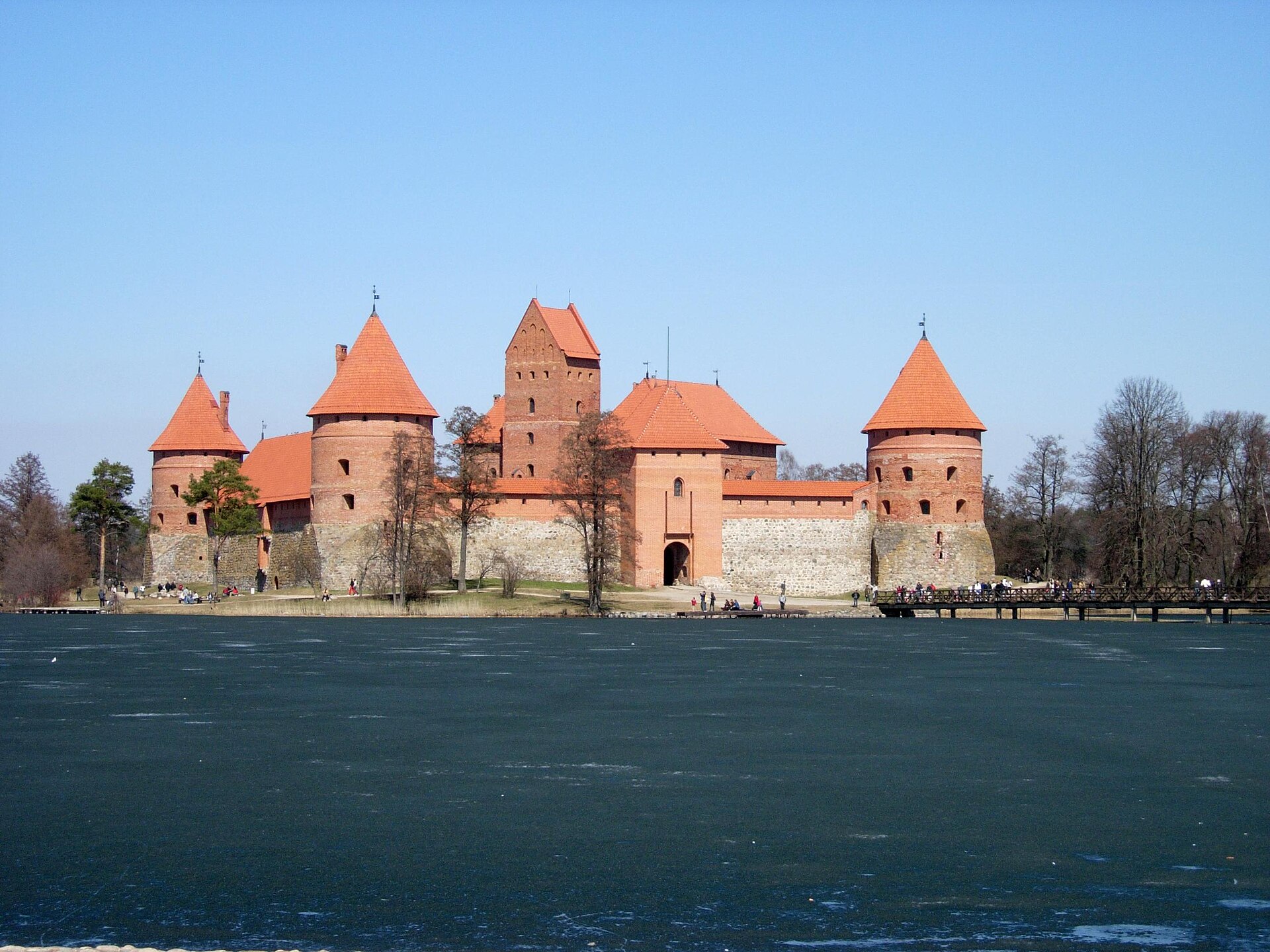
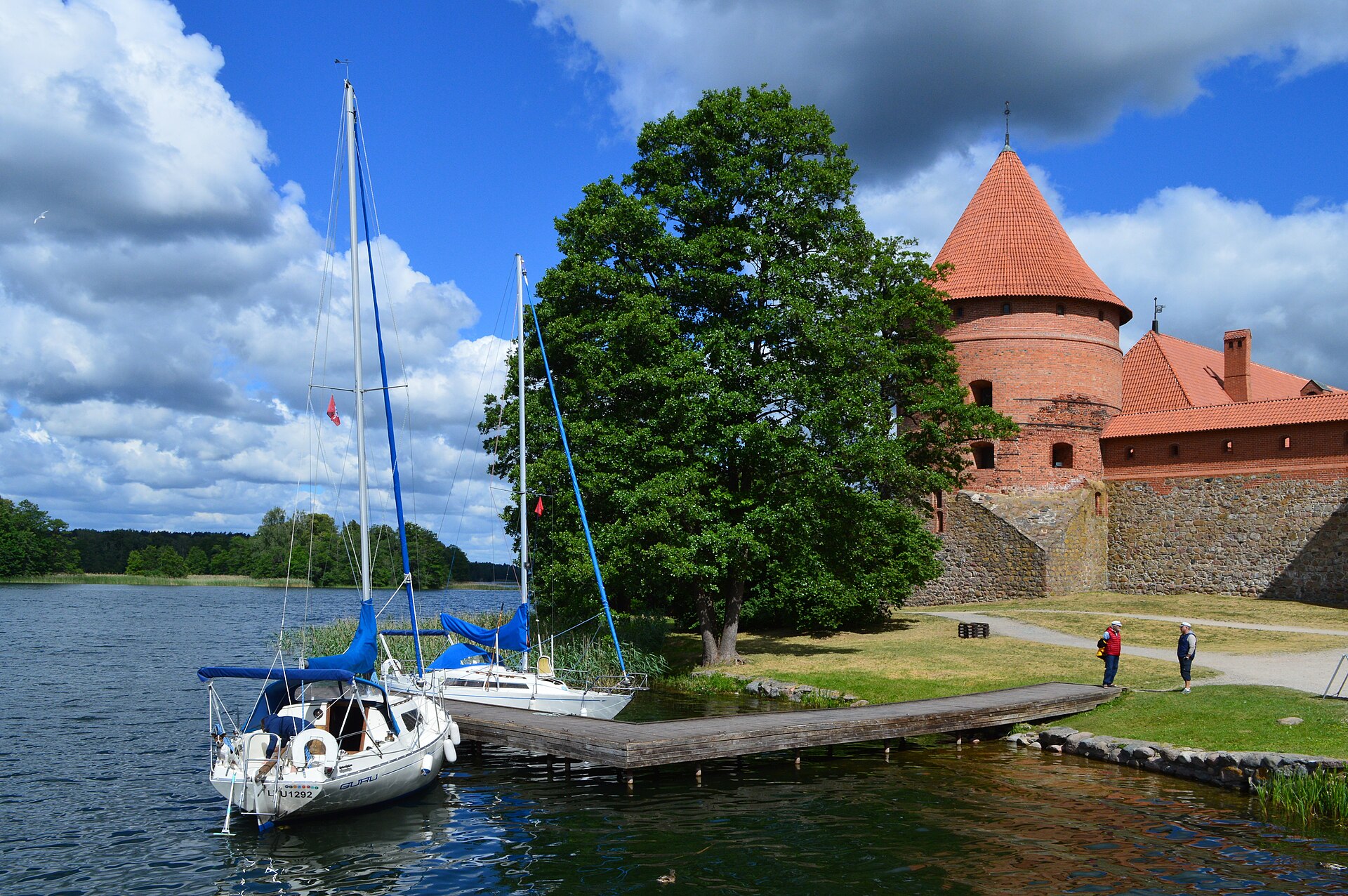
The clear blue waters of the lake, reflecting the red-brick castle, create a scene of extraordinary beauty that changes with the seasons and the light. In summer the lake is alive with boats, in winter it may freeze, and in every season the castle and its reflection form one of the most beautiful and romantic images in all of Lithuania.
The historic town of Trakai, on the shores near the castle, adds greatly to the charm of the setting, with its wooden houses, its lakeside situation, and its distinctive communities. A visit to the castle is enriched by exploring the town and its surroundings, and together they form one of the most beautiful and historic regions in Lithuania, with the island castle as its crowning jewel.
A Symbol of the Lithuanian Nation
Trakai holds a special place in the heart of the Lithuanian nation, bound up with the memory of the medieval greatness of the grand duchy and the great rulers who made it one of the foremost powers of Europe. As the island seat of the grand dukes, the castle is a powerful symbol of national history and pride, embodying the era of Lithuanian greatness.
Through the centuries of decline, foreign rule, and struggle for independence, the castle remained a symbol of the nation’s medieval golden age and its former power and independence. Its reconstruction in the modern era was itself an assertion of national identity, recovering for Lithuania one of the great monuments of its history.
For Lithuanians, Trakai is thus far more than a beautiful castle; it is a symbol of their nation, their history, and their identity, a monument to the era when Lithuania was one of the great powers of Europe. Its beauty and its historic significance make it one of the most beloved and important sites in the country, a treasure of the Lithuanian nation.
The reconstruction of Trakai in the modern era was itself an assertion of Lithuanian national identity, recovering one of the great monuments of the nation’s history. For a people who had endured centuries of foreign rule and struggle for independence, the restoration of the island castle was a powerful symbol of national revival and pride.
Today the castle appears on countless images of the nation and draws visitors from across the world, a proud emblem of Lithuania and its history. In its beauty and its endurance, Trakai embodies the spirit of a nation that has preserved its identity through centuries of change, and it stands as one of the most cherished symbols of the Lithuanian people.
The Karaites of Trakai
One of the most distinctive features of the Trakai region is its historic community of Karaites, a people who settled here in the medieval period, brought to Lithuania by the grand dukes to serve as a guard and a community loyal to the crown. This small but distinctive community has preserved its traditions, its faith, and its culture in Trakai for centuries, and it remains one of the most fascinating aspects of the town.
The Karaites brought with them their own religion, language, and customs, and they established a community in Trakai that has endured to the present day, one of the oldest of its kind in the region. Their distinctive wooden houses, their house of worship, and their traditions, including a famous local cuisine, add a unique cultural dimension to the historic town by the castle.
The presence of the Karaite community reflects the diversity and tolerance of the medieval grand duchy, which welcomed peoples of different faiths and cultures into its realm. Their long history in Trakai, alongside the great castle, adds to the rich cultural heritage of the town and the region, and it is one of the distinctive features that make Trakai so fascinating a place to visit.
The famous cuisine of the Karaites, including their celebrated stuffed pastries, has become one of the attractions of the town, drawing visitors to sample the distinctive dishes preserved by the community for centuries. This living culinary tradition, alongside their houses and their house of worship, adds a rich and distinctive flavour to the historic town by the castle.
The endurance of the Karaite community in Trakai for so many centuries, preserving its distinctive faith, language, and customs, is a remarkable testament to the tolerance of the medieval grand duchy and the resilience of the community itself. Their continued presence adds a unique and precious cultural dimension to the historic town, and it is one of the features that make Trakai so fascinating a place to visit.
Trakai Island Castle Today
Today Trakai Island Castle is one of the most visited and beloved sites in Lithuania, drawing visitors from around the world to admire its red-brick Gothic architecture, its dramatic island setting, and its beautiful reflection in the lake. As a museum and a monument, it offers an experience of extraordinary beauty and historic interest.
A visit reveals the castle reached by its footbridge across the water, the ducal palace and its courtyard, the towers and defences, and the museum collections that tell the story of Lithuania’s medieval greatness. Set on its island amid the beautiful lakes and forests of the region, the castle offers one of the most romantic and memorable experiences in the country.
To experience Trakai Island Castle is to encounter the medieval greatness of the Grand Duchy of Lithuania, a red-brick fortress and ducal residence rising from its island in the lake, recovered from ruin through a great work of reconstruction. A symbol of the Lithuanian nation and one of the most romantic castles in Europe, Trakai stands as a jewel of the Lithuanian lakes and a treasure of the nation’s heritage.
For the visitor to Lithuania, Trakai is among the essential experiences of the country, offering an encounter with one of the most beautiful and romantic castles in Europe in a setting of extraordinary natural beauty. Whether drawn by the architecture, the history, or the beauty of the lake, visitors come away enchanted by the island castle of the grand dukes.
A visit to Trakai rewards those who take the time to explore both the castle and its beautiful surroundings, for the fortress and its setting together form a single romantic whole. Whether admired from the shore, reached across the footbridge, or explored room by room, the island castle lingers in the memory as one of the most beautiful and evocative castles in all of Europe.
Palaces Nearby
Trakai Island Castle is one of the great royal and princely residences of the Baltic region, and its story finds echoes in the palaces and castles of the neighbouring Baltic nations. Two more of these seats make natural companions to a visit here, each embodying the history of its own nation.
- Rundale Palace – a baroque jewel of the Baltic in the Latvian countryside.
- Kadriorg Palace – the tsar’s Baltic retreat in the valley of Catherine, Tallinn.
You May Like
A Marrakesh Vizier and the Palace He Named Brilliance


One thought on “Trakai Island Castle: The Fortress of the Lithuanian Grand Dukes”