Amid the flat green farmland of southern Latvia, far from any great city, rises one of the most magnificent baroque palaces in all of northern Europe. Rundale Palace, a vast and sumptuous residence surrounded by formal gardens, seems almost to have descended from another world into the quiet Latvian countryside. Built by the same brilliant architect who created the imperial palaces of Russia, it is a masterpiece of baroque and rococo art, a jewel of the age of absolutism set amid the fields of the Baltic.
Rundale was built in the eighteenth century as the summer residence of a powerful duke, the ruler of a small but wealthy Baltic duchy who commanded the resources and the connections to summon the finest artists of the age. The result was a palace of imperial splendour, its architecture and its interiors the work of masters, a residence that could hold its own among the great palaces of Europe despite its remote location.
The history of the palace, like that of the Baltic lands, has been turbulent, and Rundale passed through centuries of changing fortunes, neglect, and even use as a granary and a school, before it was rescued and painstakingly restored to its former glory. Today it stands resplendent once more, its interiors and gardens recovered, a triumph of restoration and one of the great cultural treasures of Latvia.
In this article you will get to know Rundale Palace fully: the duke who built it and the great architect who designed it, its magnificent baroque architecture, its sumptuous rococo interiors, its beautiful French gardens, its turbulent history and remarkable restoration, and its life today as a museum and one of the most magnificent baroque palaces in all of northern Europe, a jewel of the Latvian countryside.
In This Article
- A Baroque Jewel in the Latvian Countryside
- The Duke of Courland
- The Great Architect
- Baroque Splendour
- The Gold Hall and the State Rooms
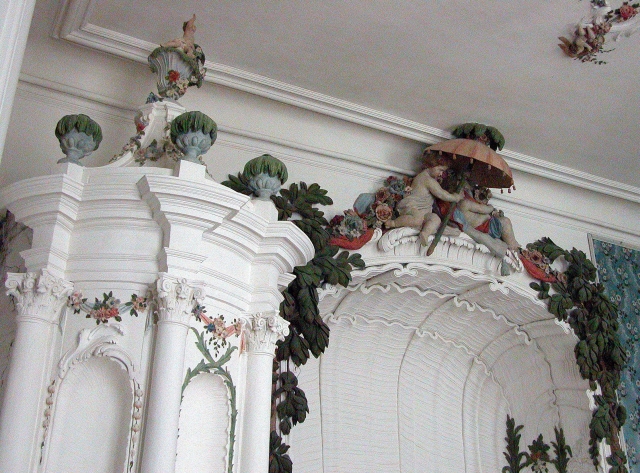
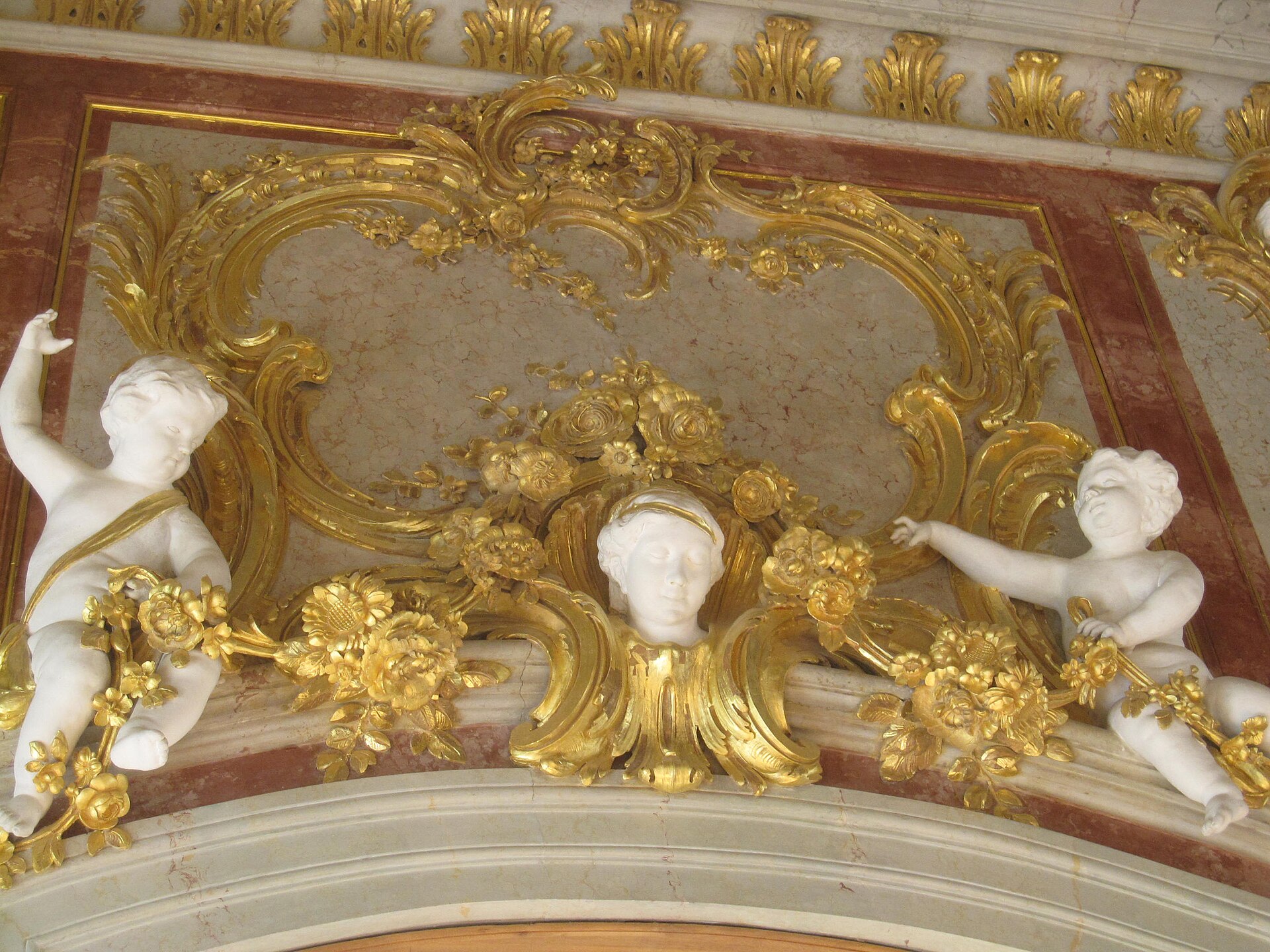
- Rococo Decoration and Craftsmanship
- The Ducal Apartments
- The French Gardens
- Turbulent Fortunes
- A Triumph of Restoration
- A Museum of Baroque Splendour
- Rundale and the Baltic Lands
- Rundale Palace Today
A Baroque Jewel in the Latvian Countryside
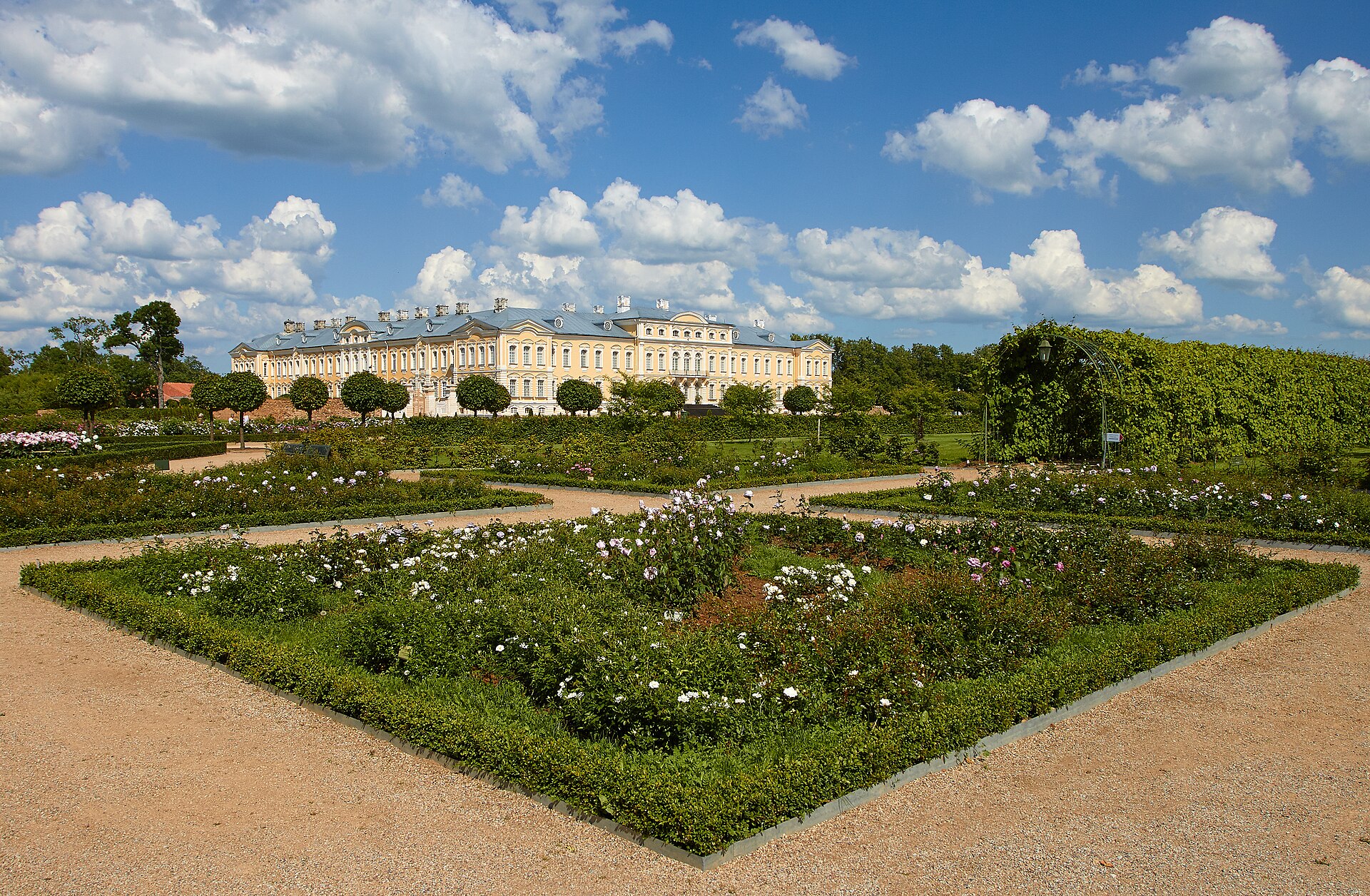
Rundale Palace rises unexpectedly from the flat farmland of southern Latvia, a vast baroque residence of yellow and white surrounded by formal gardens, seemingly transported from the courts of the great powers to the quiet Baltic countryside. Its scale and splendour astonish visitors who come upon it amid the fields, a masterpiece of imperial art in an unlikely setting.
The palace was built as the summer residence of a powerful duke, and it was designed to rival the great palaces of Europe, its architecture and interiors the work of the finest masters of the age. Despite its remote location, Rundale is a palace of the first rank, a supreme achievement of baroque and rococo art in northern Europe.
The combination of the magnificent palace, its sumptuous interiors, and its beautiful formal gardens makes Rundale one of the great cultural treasures of Latvia and one of the finest baroque palaces in the region. Its splendour, set amid the tranquil Latvian countryside, gives it a special magic, a jewel of imperial art in the heart of the Baltic lands.
The surprise of coming upon so grand a palace amid the quiet farmland is part of the magic of Rundale. There is no great city here, no bustling capital, only the flat green fields of southern Latvia, and yet from them rises a residence fit for an emperor. This contrast between the imperial splendour of the palace and the rural simplicity of its setting gives Rundale a character all its own.
The palace rewards the journey out from the city, for its splendour is all the more striking for the quiet of its surroundings. Visitors who make their way through the Latvian countryside to Rundale are rewarded with one of the great baroque experiences of northern Europe, a palace and gardens of imperial magnificence set amid the peaceful fields of the Baltic.
For all its imperial grandeur, the palace sits in harmony with the gentle Latvian landscape, its formal gardens giving way to the open fields beyond. This union of the magnificent and the pastoral is part of what makes Rundale so memorable, a great baroque residence that has become one with the quiet countryside around it.
The Duke of Courland
Rundale was built as the summer residence of the ruler of a small but wealthy Baltic duchy, a duke who rose to great power and fortune through his connections to the imperial court of Russia. A favourite of the Russian empress, he commanded immense resources, and he used them to build palaces worthy of his ambitions, of which Rundale was the most beautiful.
The duke’s rise to power was as dramatic as it was rapid, and his fortunes were tied closely to the shifting politics of the imperial court. At the height of his power he was among the most influential men in the region, and the building of Rundale as his summer residence was an expression of his wealth, his ambitions, and his connection to the imperial world of Russia.
The duke’s career, like his palace, reflected the entangled history of the Baltic lands and the great powers that surrounded them. His fortunes rose and fell with the politics of the imperial court, and Rundale, built at the height of his power, stands as a monument to his ambitions and to the wealth and connections that made possible so magnificent a palace in the Baltic countryside.
The dramatic rise and fall of the duke’s fortunes, tied so closely to the shifting politics of the imperial court, reads almost like a novel, and Rundale stands as the monument to his years of greatness. That a Baltic duke could summon the resources and the talent to build so magnificent a palace speaks to the wealth and the connections he commanded at the height of his extraordinary career.
The palace was one of two great residences the duke commissioned from the same architect, a measure of his wealth and his ambitions at the height of his power. That his fortunes later collapsed with the shifting politics of the imperial court only adds poignancy to the splendour of Rundale, a monument to a career of dramatic rise and equally dramatic fall.
The Great Architect
The palace was designed by one of the greatest architects of the age, the brilliant master who created the imperial palaces of Russia, including the great Winter Palace of the tsars. That so celebrated an architect should design a palace for a Baltic duke reflects the duke’s imperial connections and his ability to summon the finest talent of the age.
The architect brought to Rundale the full splendour of the imperial baroque, designing a palace of grand proportions and magnificent decoration worthy of his imperial commissions. His genius shaped every aspect of the palace, from the sweeping facades and the great courtyard to the sumptuous interiors, creating a residence that rivalled the great palaces he designed for the Russian crown.
The involvement of so great an architect gives Rundale a special place among the palaces of the region, for it is the work of the same master who created some of the most magnificent palaces in Europe. His genius is evident throughout the palace, and Rundale stands as one of his finest achievements, a masterpiece of the imperial baroque set in the Baltic countryside.
That the architect of the tsars’ own Winter Palace should have designed Rundale places the palace in the very first rank of baroque architecture, and it reflects the imperial connections of its ducal builder. To recognise the hand of so great a master in the Latvian countryside is one of the delights of a visit, and it explains the imperial splendour of a palace built far from any imperial capital.
The genius of the architect is evident not only in the grand set-pieces of the palace but in the harmony of the whole composition, from the sweep of the facades to the proportions of the rooms. His mastery of the baroque, honed in the service of the Russian crown, is fully displayed at Rundale, and the palace stands as one of the finest works of one of the greatest architects of his age.
Baroque Splendour
The architecture of Rundale is a masterpiece of the baroque, its grand facades and sweeping proportions expressing the power and magnificence of the age of absolutism. Arranged around a great courtyard, the palace presents an imposing and harmonious composition, its long ranges and central block creating an effect of grandeur and order.
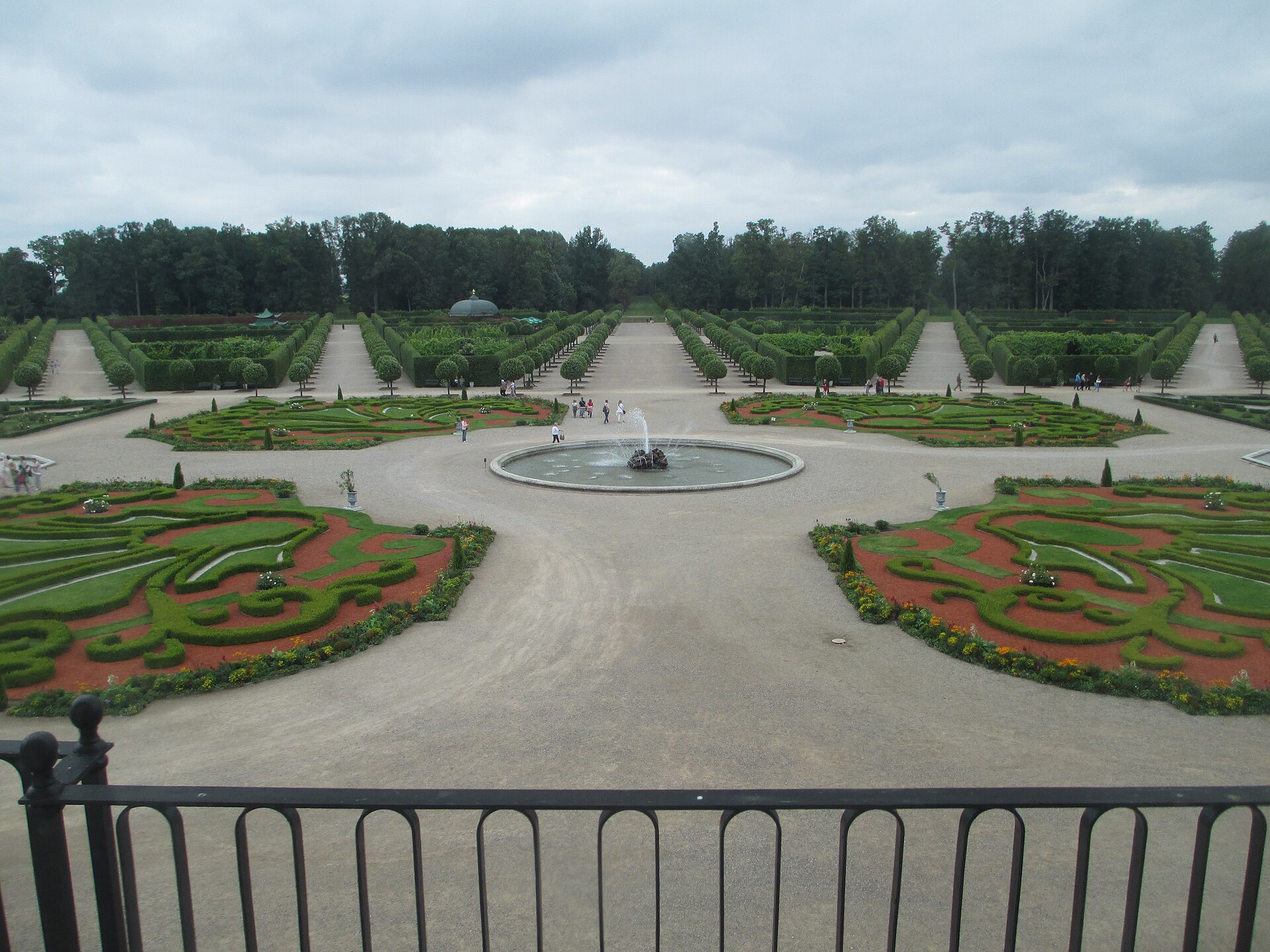
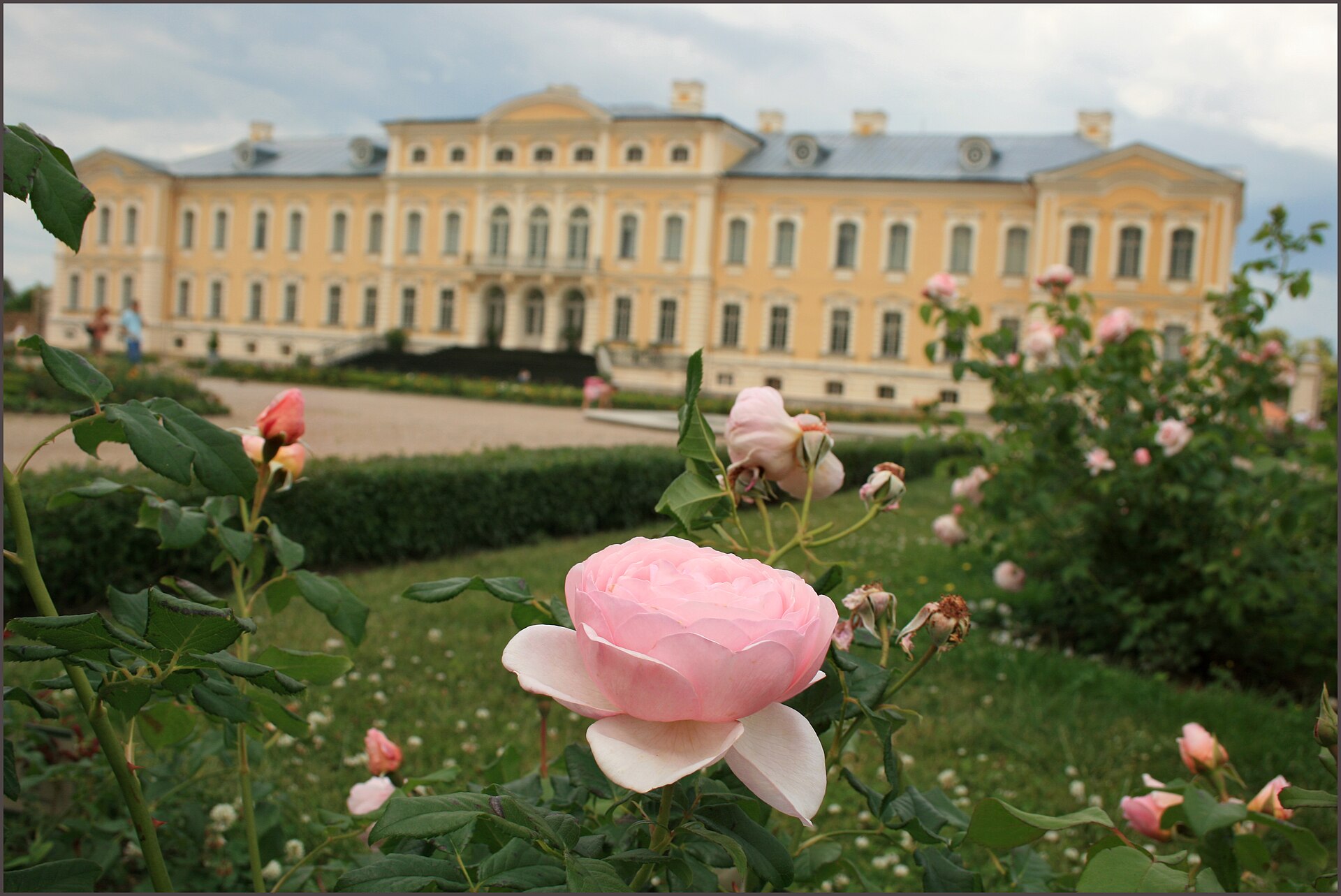
The exterior, in warm colours with white detailing, combines grandeur with elegance, its baroque forms enlivened with ornament and rhythm. The palace was designed to impress, to express the wealth and status of the duke and to rival the great residences of Europe, and its architecture achieves this with the full confidence of the imperial baroque.
The scale and splendour of the architecture, set amid the flat countryside, make Rundale all the more striking, a great baroque palace rising from the fields. Its design, the work of a master architect, ranks among the finest baroque architecture in northern Europe, and it gives the palace its imposing and magnificent presence in the Latvian landscape.
The warm colours of the facades, set off with white detailing, give the palace an elegance that tempers its grandeur, and the harmonious composition around the great courtyard reflects the confident order of the baroque age. Set against the flat countryside, the palace achieves a striking presence, its scale and splendour all the more impressive for the simplicity of its rural setting.
The great courtyard, enclosed by the ranges of the palace, forms a grand ceremonial approach, drawing the visitor toward the central block with its imposing facade. This orchestration of space and architecture, characteristic of the baroque, gives arrivals at the palace a sense of drama and grandeur, preparing the visitor for the splendours within.
The Gold Hall and the State Rooms
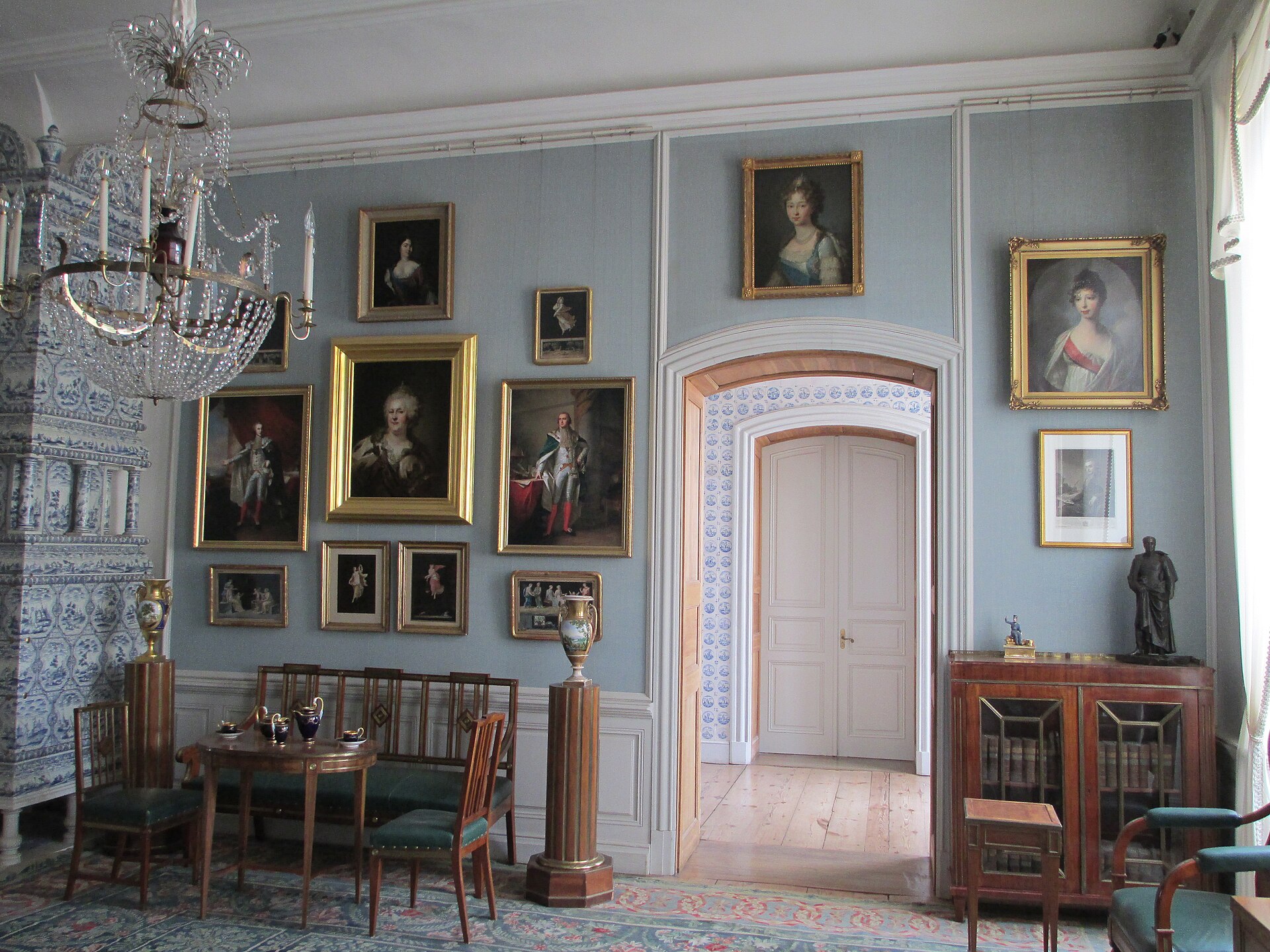
The interiors of Rundale are among the most sumptuous in northern Europe, a sequence of state rooms of astonishing richness, decorated in the baroque and rococo styles by the finest craftsmen of the age. From the grand ceremonial halls to the intimate private apartments, the palace unfolds in a series of interiors of overwhelming beauty.
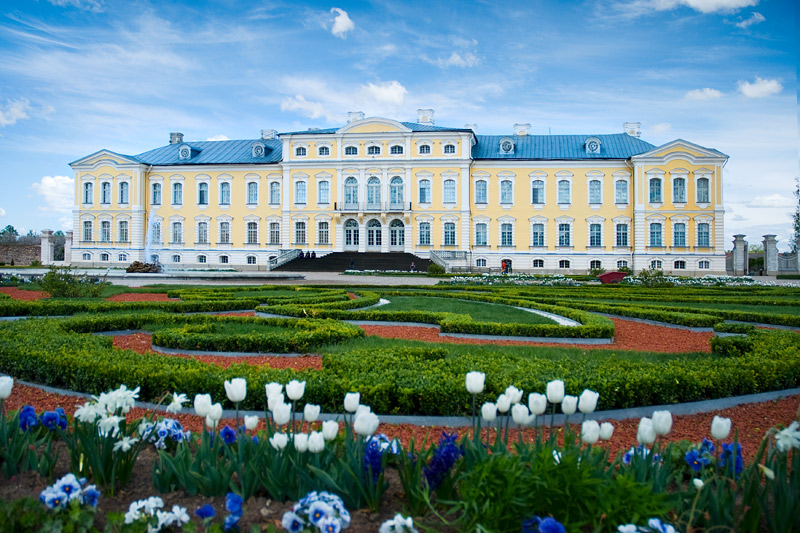
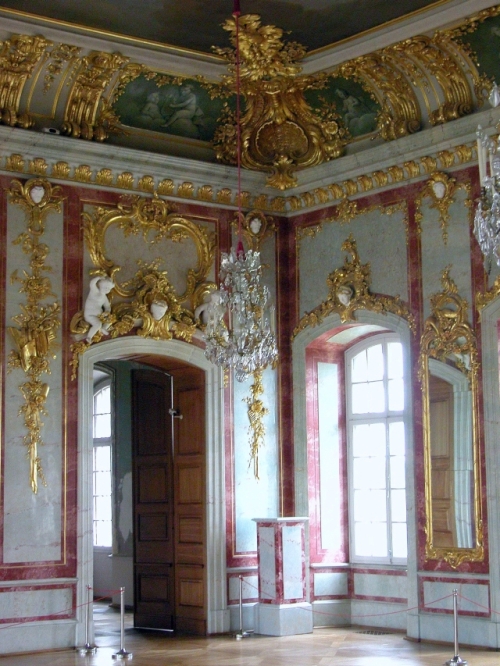
The grandest of the rooms is the Gold Hall, the throne room of the palace, a space of dazzling richness adorned with gilded stucco, painted ceilings, and magnificent decoration. This great hall, the ceremonial heart of the palace, was designed to overwhelm visitors with the splendour and power of the duke, and it remains one of the most magnificent interiors in the region.
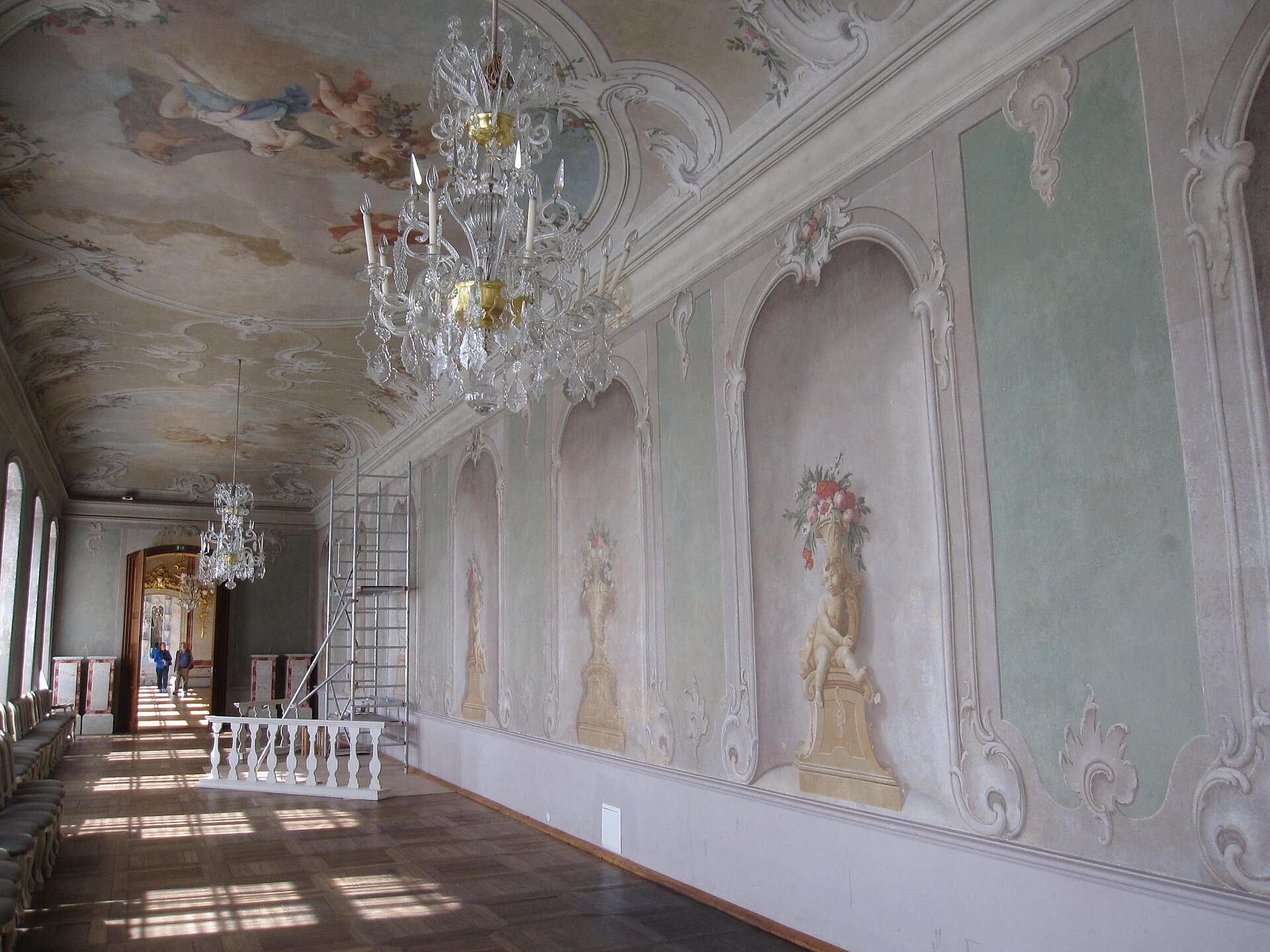
Alongside the Gold Hall are other great state rooms, including a grand ballroom and a long gallery, each decorated with the finest stucco, painting, and ornament. Together these interiors form one of the supreme achievements of baroque and rococo decorative art in northern Europe, a treasure house of beauty created by masters at the height of their powers.
The Gold Hall, the throne room of the palace, is the climax of any visit, its walls and ceiling alive with gilded stucco and painting, a space designed to overwhelm with the splendour of the duke. To stand within it is to experience the full magnificence of the imperial baroque, and it ranks among the most dazzling interiors to be found anywhere in northern Europe.
Beyond the Gold Hall, the grand ballroom and the long gallery offer their own splendours, each a masterpiece of baroque and rococo decoration. Together these great state rooms form a sequence of interiors of overwhelming beauty, and to pass through them is to experience the full magnificence of a princely residence created by masters at the height of their powers.
Rococo Decoration and Craftsmanship
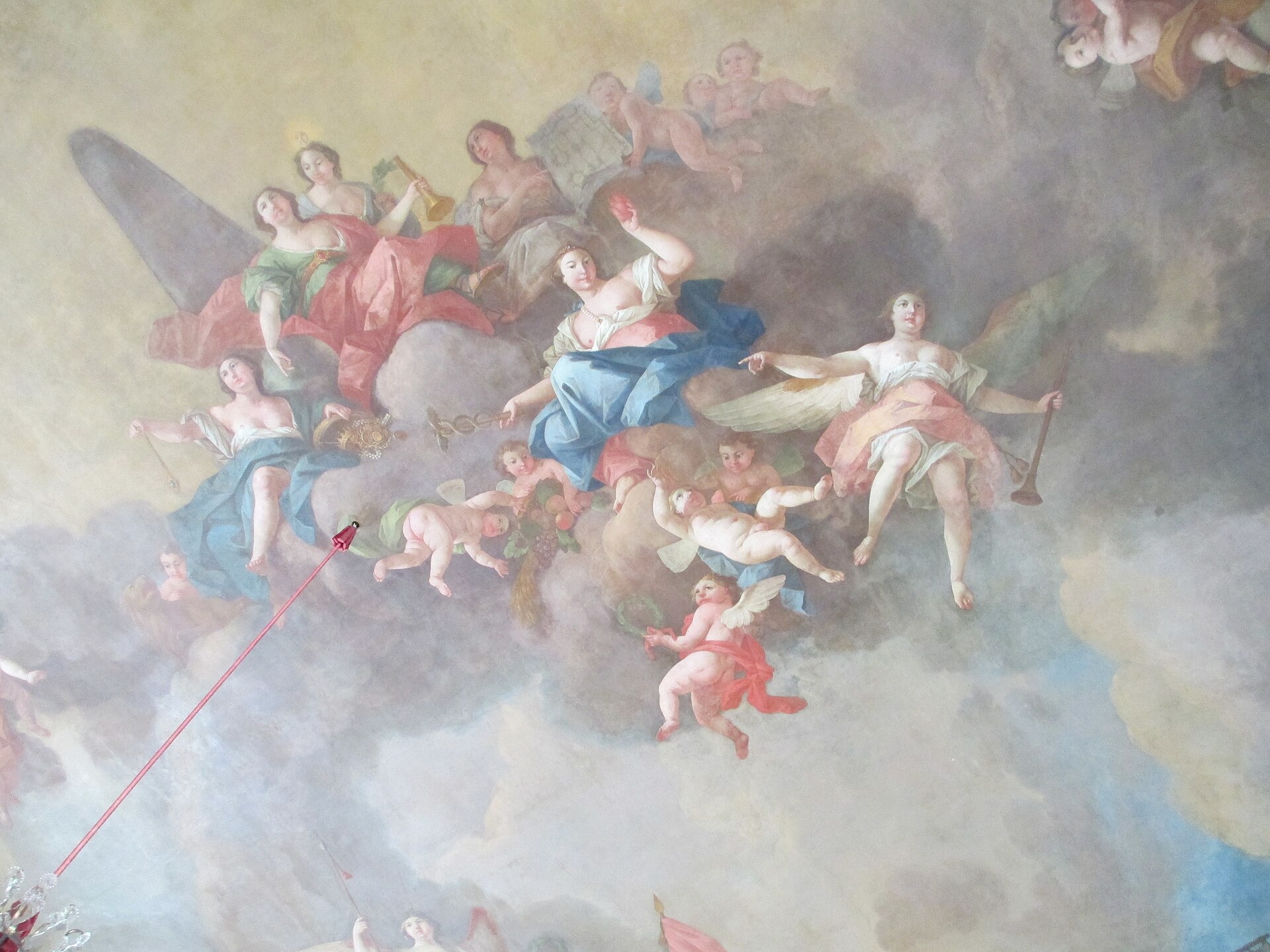
The decoration of Rundale’s interiors represents the finest achievements of baroque and rococo craftsmanship, executed by masters summoned from across Europe. Elaborate stucco work, painted ceilings, gilded ornament, and fine furnishings fill the rooms, creating interiors of extraordinary richness and beauty.
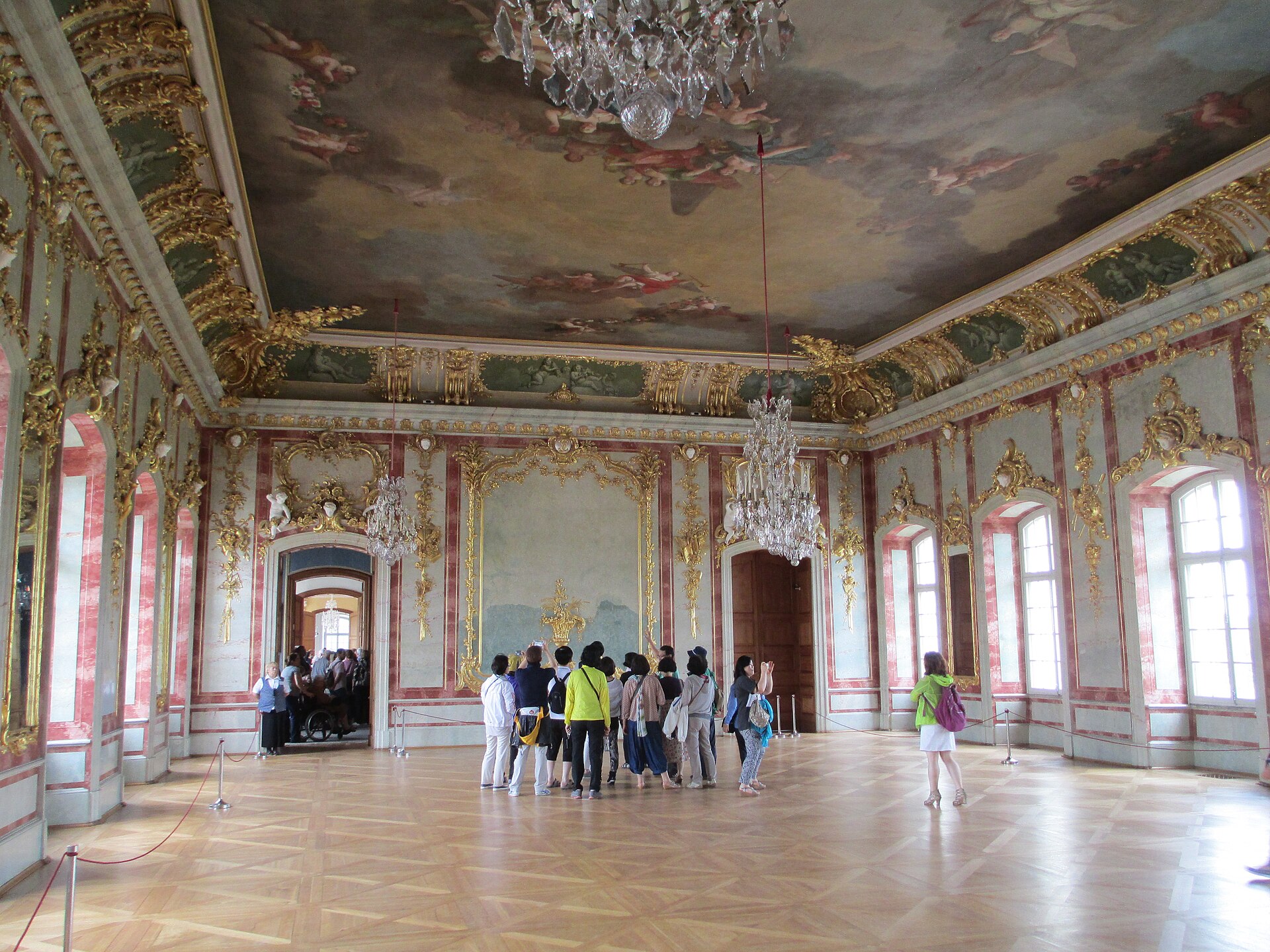
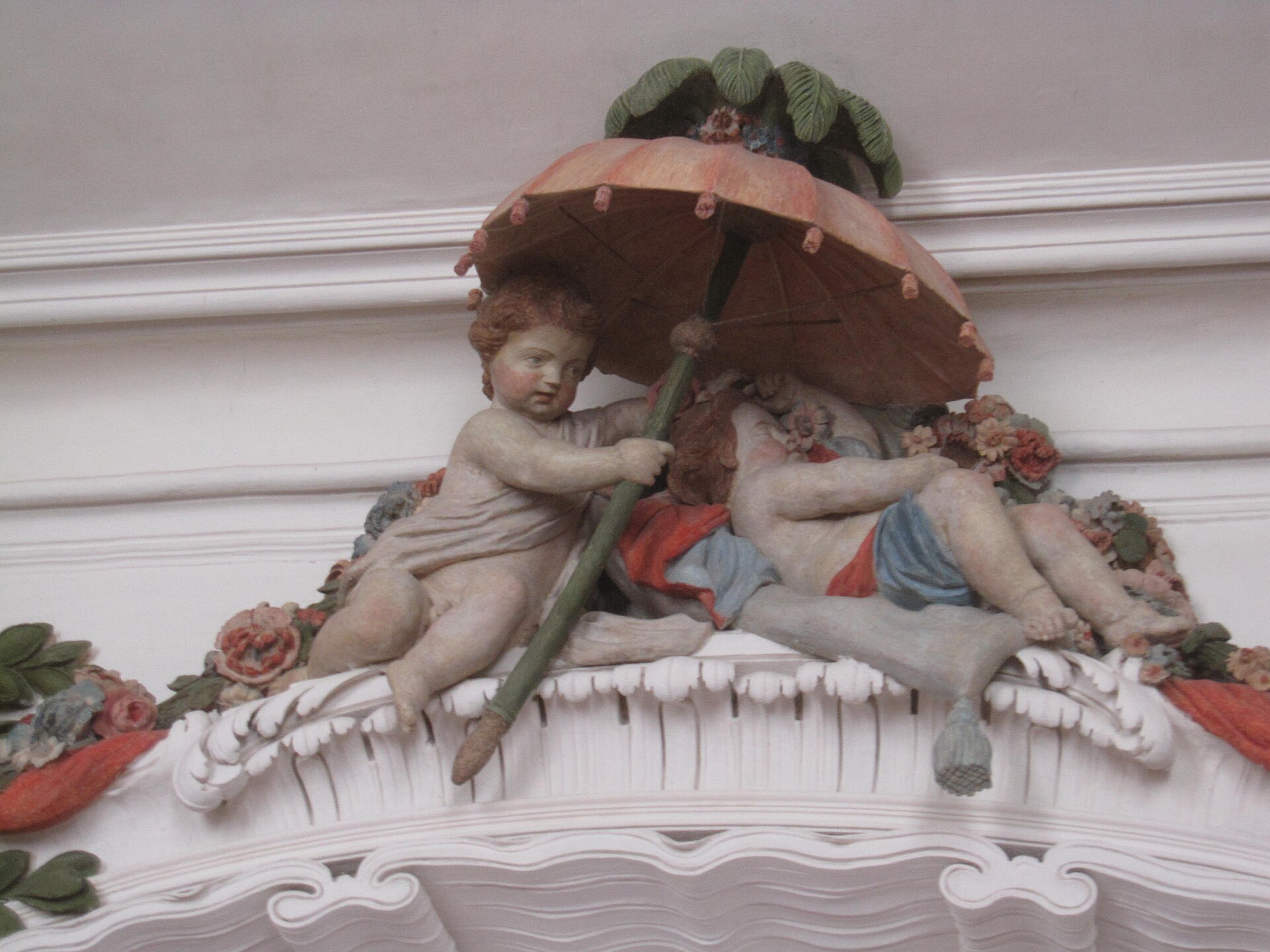
The stucco decoration in particular is among the glories of the palace, its intricate and delicate ornament covering walls and ceilings in a profusion of rococo detail. Created by master craftsmen, this decoration transforms the rooms into works of art, their every surface alive with beauty and invention, a testament to the skill of the artists who created them.
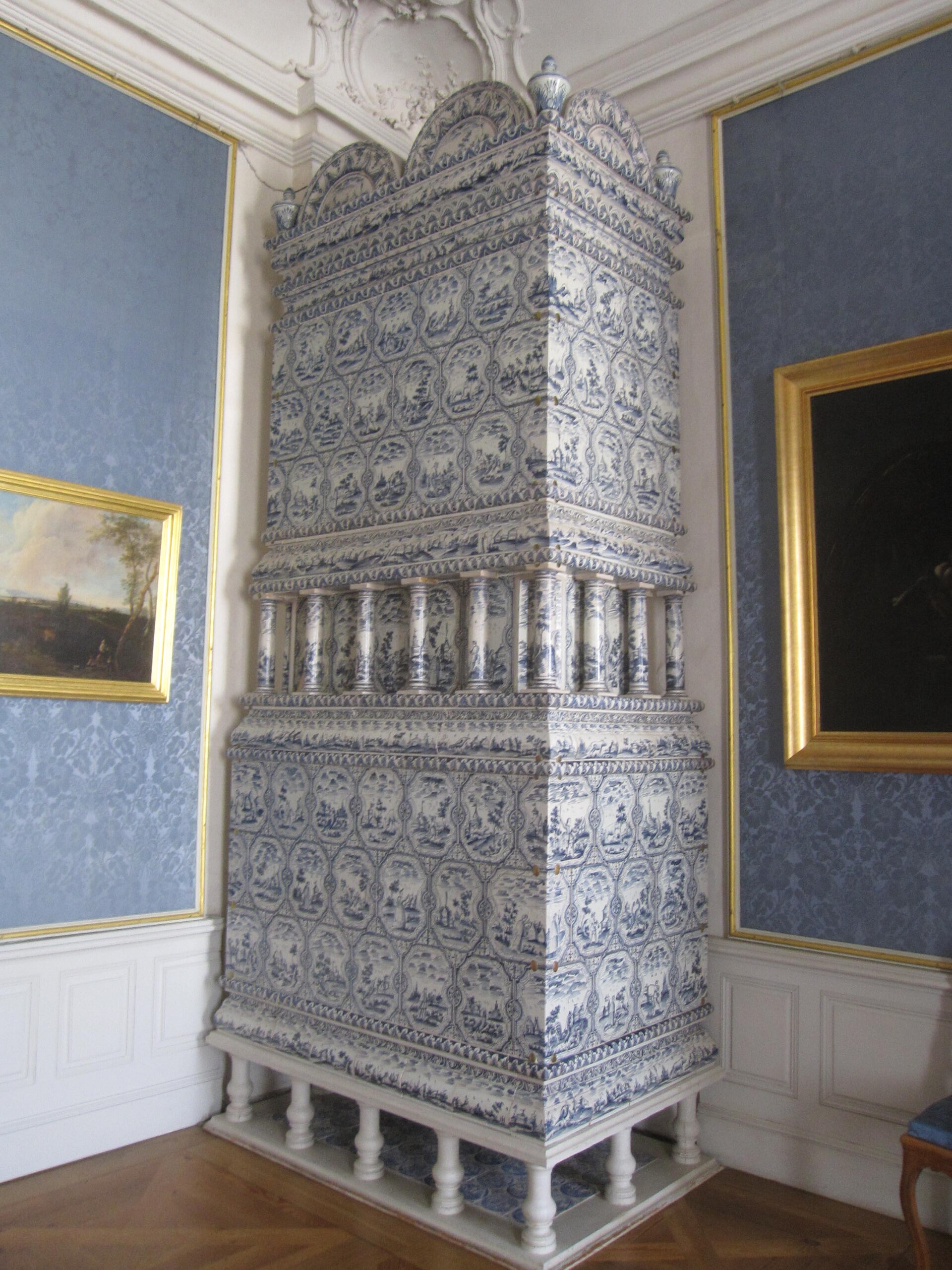
The painted ceilings, the gilded stucco, the fine tiled stoves, and the rich furnishings together create interiors of overwhelming splendour, among the finest of their kind in the region. The craftsmanship of Rundale, drawing on the finest talent of the age, makes the palace a treasure house of baroque and rococo decorative art, a jewel of the imperial baroque in the Baltic.
The intricate stucco decoration that covers the walls and ceilings of the palace is among its greatest treasures, its delicate rococo ornament the work of master craftsmen at the height of their skill. Every surface rewards close attention, alive with invention and beauty, and the quality of this craftsmanship places Rundale among the finest achievements of decorative art in the region.
The fine tiled stoves that heat the rooms are among the charming details of the interiors, their decorated surfaces adding to the beauty of the rooms while serving the practical needs of a northern palace. Such details, combining beauty with function, reflect the care lavished on every aspect of the palace, and they add to the richness and interest of the sumptuous interiors.
The Ducal Apartments
Beyond the grand state rooms, the palace contains the private apartments of the duke and duchess, more intimate spaces decorated with the same care and richness as the ceremonial rooms. These apartments, from bedchambers and studies to smaller salons, reveal the domestic life of the ducal court amid the splendour of the palace.
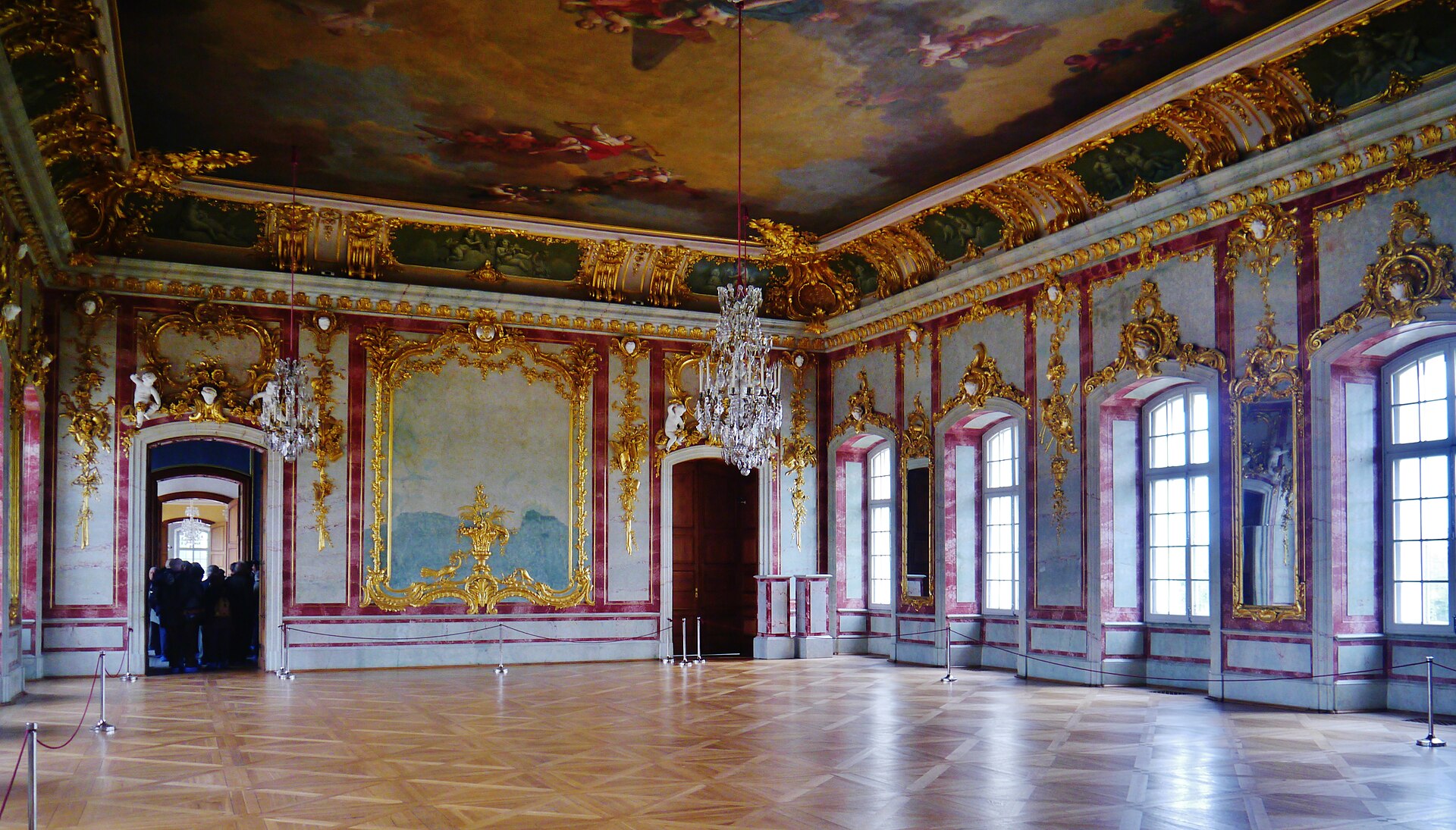
The apartments are decorated in a variety of styles, reflecting the tastes of the age and the different functions of the rooms, and they are filled with fine furnishings, paintings, and decorative objects. From the duke’s rooms to the more delicate apartments of the duchess, these spaces reveal the private world of the court behind the grandeur of the state rooms.
These private apartments complete the picture of Rundale as a complete princely residence, a place of both ceremony and domestic life. Their beauty and refinement, matching that of the grand state rooms, reflect the wealth and taste of the ducal court, and they add greatly to the richness and interest of the palace, revealing the intimate life of its inhabitants.
The private apartments of the duke and duchess offer a more intimate glimpse of the life of the court, their decoration as fine as that of the state rooms but on a more human scale. To move through these rooms is to sense the domestic life that unfolded behind the grandeur of the ceremonial spaces, and they add greatly to the richness and interest of a visit to the palace.
The French Gardens
Rundale is set amid magnificent formal gardens, laid out in the French style with geometric parterres, clipped hedges, avenues, and ornamental features. These gardens, extending from the palace across the flat countryside, provide a beautiful and elegant setting for the great baroque residence, a green extension of its architectural splendour.
The gardens are among the finest of their kind in the region, laid out in the grand French manner that was the height of fashion in the age of absolutism. Parterres of intricate design, fountains, sculptures, and long avenues create a landscape of order and beauty, and a great rose garden adds colour and fragrance to the formal design.
The formal gardens are an essential part of the beauty of Rundale, complementing the splendour of the palace and providing a magnificent setting for the residence. Their geometric elegance, their parterres and fountains, and their beautiful plantings make them one of the finest baroque gardens in northern Europe, a green masterpiece to match the palace they surround.
The great rose garden, with its thousands of plants, adds colour and fragrance to the formal design of the gardens, and it has become one of the most beloved features of Rundale. In summer the roses transform the gardens into a place of extraordinary beauty, complementing the geometric elegance of the parterres and adding a note of sensory delight to the splendour of the palace and its grounds.
The recreation of the formal gardens, lost through decades of neglect, was among the great achievements of the restoration, bringing back the full splendour of the palace and its setting. Laid out once more in their original geometric design, with parterres, fountains, and the great rose garden, the gardens now provide a magnificent setting for the palace, a green masterpiece of the baroque age.
Turbulent Fortunes
The history of Rundale, like that of the Baltic lands, has been turbulent, and the palace passed through centuries of changing fortunes after the age of its ducal builders. As the duchy lost its independence and the region passed under the rule of the great powers, the palace changed hands and its fortunes declined, its ducal splendour fading with the passing of the age that created it.
Through the changing rule of empires and the upheavals of war and revolution, the palace suffered neglect and misuse, its interiors damaged and its gardens overgrown. At various times the palace served purposes far removed from its original grandeur, and by the twentieth century it had fallen into a state of serious decline, its splendour a distant memory.
During the twentieth century, under Soviet rule, the palace was put to uses that reflected how far it had fallen from its ducal glory, serving at various times as a store and a school. The magnificent interiors were damaged and neglected, the gardens lost, and the palace that had been built to rival the great residences of Europe was reduced to a shadow of its former self, its future uncertain.
The long decline of the palace, from ducal splendour to use as a granary and a school, is a sobering chapter in its history, reflecting the turbulent fortunes of the Baltic lands. That so magnificent a residence could fall so far speaks to the upheavals the region endured, and it makes the palace’s eventual recovery all the more remarkable and moving.
A Triumph of Restoration
The salvation of Rundale came through a long and painstaking campaign of restoration, one of the great achievements of its kind in the region. Beginning in the later twentieth century and continuing over many years, the restoration recovered the palace from its state of decline, bringing back its interiors, its decoration, and its gardens to their former glory.
The restoration was a work of remarkable dedication and skill, as craftsmen painstakingly recovered the sumptuous interiors, restoring the stucco, the painting, and the gilding, and refurnishing the rooms with fine pieces. The formal gardens, lost through neglect, were recreated according to their original design, restoring the full splendour of the palace and its setting.
This triumph of restoration has brought Rundale back to life, recovering one of the great baroque palaces of northern Europe from the brink of ruin. The dedication and skill of those who restored it have given the palace a second life, and it stands today resplendent once more, a testament to the value of preserving the treasures of the past and a source of national pride for Latvia.
The decades of painstaking restoration that recovered Rundale from the brink of ruin represent one of the great achievements of heritage preservation in the region. The dedication and skill of the craftsmen who restored the interiors and recreated the gardens gave the palace a second life, and their work stands as a model of how the treasures of the past can be recovered and preserved for the future.
The story of Rundale’s restoration is itself one of the most inspiring aspects of the palace, a testament to the dedication of those who refused to let so great a treasure be lost. Their painstaking work, carried out over many years, recovered not only the fabric of the palace but its very soul, and it stands as a model of heritage preservation and a source of pride for the nation.
A Museum of Baroque Splendour
Today Rundale is a museum, its magnificent interiors, gardens, and collections open to the public as one of the great cultural attractions of Latvia. Visitors can tour the sumptuous state rooms and private apartments, admire the beauty of the restored interiors, and stroll through the magnificent French gardens.
As a museum, the palace preserves and displays the splendour of the baroque and rococo age, from the grandeur of the Gold Hall to the delicate beauty of the rococo decoration. It offers visitors a vivid encounter with the world of the ducal court and with one of the supreme achievements of baroque art in northern Europe, all recovered through the great work of restoration.
The transformation of the palace into a museum has ensured that its beauty is shared with the people of Latvia and with visitors from around the world. Rundale has become one of the most visited and beloved sites in the country, a source of national pride and a monument to the beauty and splendour of the baroque age, recovered and preserved in the Latvian countryside.
As a museum, Rundale allows visitors to experience the full splendour of the baroque and rococo age, recovered through the great work of restoration. Its interiors, gardens, and collections offer a vivid encounter with the world of the ducal court, and the palace has become one of the most visited and beloved cultural sites in Latvia, a source of national pride.
The palace also hosts exhibitions and cultural events, adding to its role as a living centre of art and heritage, and the surrounding gardens draw visitors throughout the warmer months. In this way Rundale is not merely a preserved monument but an active cultural institution, its splendour placed at the service of the nation and shared with all who come to admire it.
Rundale and the Baltic Lands
Rundale stands as a monument to the entangled history of the Baltic lands, a region long contested by the great powers and shaped by the interplay of local rulers, German nobility, and the empires that surrounded it. The palace, built by a Baltic duke with imperial connections and designed by a great imperial architect, embodies this complex history in its very fabric.
The history of the palace reflects the broader history of Latvia and the Baltic region, from the age of the duchies through the rule of empires to the achievement of independence in the modern era. Rundale, recovered and restored, has become a symbol of Latvian heritage and a treasure of the nation, embodying the rich and complex history of the Baltic lands.
As one of the greatest historic sites in Latvia, Rundale holds a special place in the heritage of the nation. Its splendour and its remarkable restoration make it a source of pride and a symbol of the cultural riches of the Baltic lands, and it stands as one of the finest baroque palaces in the region, a jewel of Latvian and European heritage.
The history of Rundale, built by a Baltic duke with imperial connections and shaped by the rule of successive empires, embodies the complex and entangled history of the Baltic lands. Recovered and restored in the era of Latvian independence, the palace has become a symbol of the nation’s heritage and a treasure of its cultural life, embodying the rich history of the region.
That the palace has been recovered and restored in the era of Latvian independence gives it a special significance as a symbol of the nation’s heritage and its recovery of its own history. Rundale stands not only as a masterpiece of baroque art but as a monument to the endurance of Latvian culture through the upheavals of history, a treasure reclaimed by a nation reclaiming its past.
Rundale Palace Today
Today Rundale Palace is one of the most beautiful and beloved historic sites in Latvia, drawing visitors from around the world to admire its baroque architecture, its sumptuous interiors, and its magnificent French gardens. As a museum, it offers an experience of extraordinary richness, uniting art, history, and beauty in a single splendid site.
A visit reveals the imposing baroque facades, the dazzling Gold Hall and grand state rooms, the delicate rococo decoration, the private ducal apartments, and the beautiful formal gardens with their parterres and roses. Few palaces in the region gather so much beauty and splendour into a single site, recovered through the great work of restoration.
To experience Rundale Palace is to encounter one of the supreme achievements of baroque and rococo art in northern Europe, a magnificent residence built by a Baltic duke and designed by a great imperial architect, recovered from decline through a triumph of restoration. Set amid the tranquil Latvian countryside, Rundale stands as one of the most magnificent baroque palaces in the Baltic and a treasure of the Latvian nation.
For the visitor to Latvia, Rundale is among the essential experiences of the country, offering an encounter with one of the most magnificent baroque palaces in northern Europe. Whether drawn by the architecture, the sumptuous interiors, or the beautiful gardens, visitors come away enchanted by the imperial splendour of the palace amid the tranquil Latvian countryside.
A visit to Rundale rewards those who take the time to explore both the sumptuous interiors and the beautiful gardens, for the palace and its setting together form a single magnificent whole. Whether admired for its architecture, its decoration, or its gardens, Rundale lingers in the memory as one of the most beautiful and splendid baroque palaces in all of northern Europe.
Palaces Nearby
Rundale Palace is one of the great royal and princely residences of the Baltic region, and its story finds echoes in the palaces and castles of the neighbouring Baltic nations. Two more of these seats make natural companions to a visit here, each embodying the history of its own nation.
- Trakai Island Castle – the fortress of the Lithuanian grand dukes on its lake.
- Kadriorg Palace – the tsar’s Baltic retreat in the valley of Catherine, Tallinn.
You May Like
The Bardo, a Palace of the Beys Filled With Roman Mosaics


2 thoughts on “Rundale Palace: A Baroque Jewel of the Baltic”