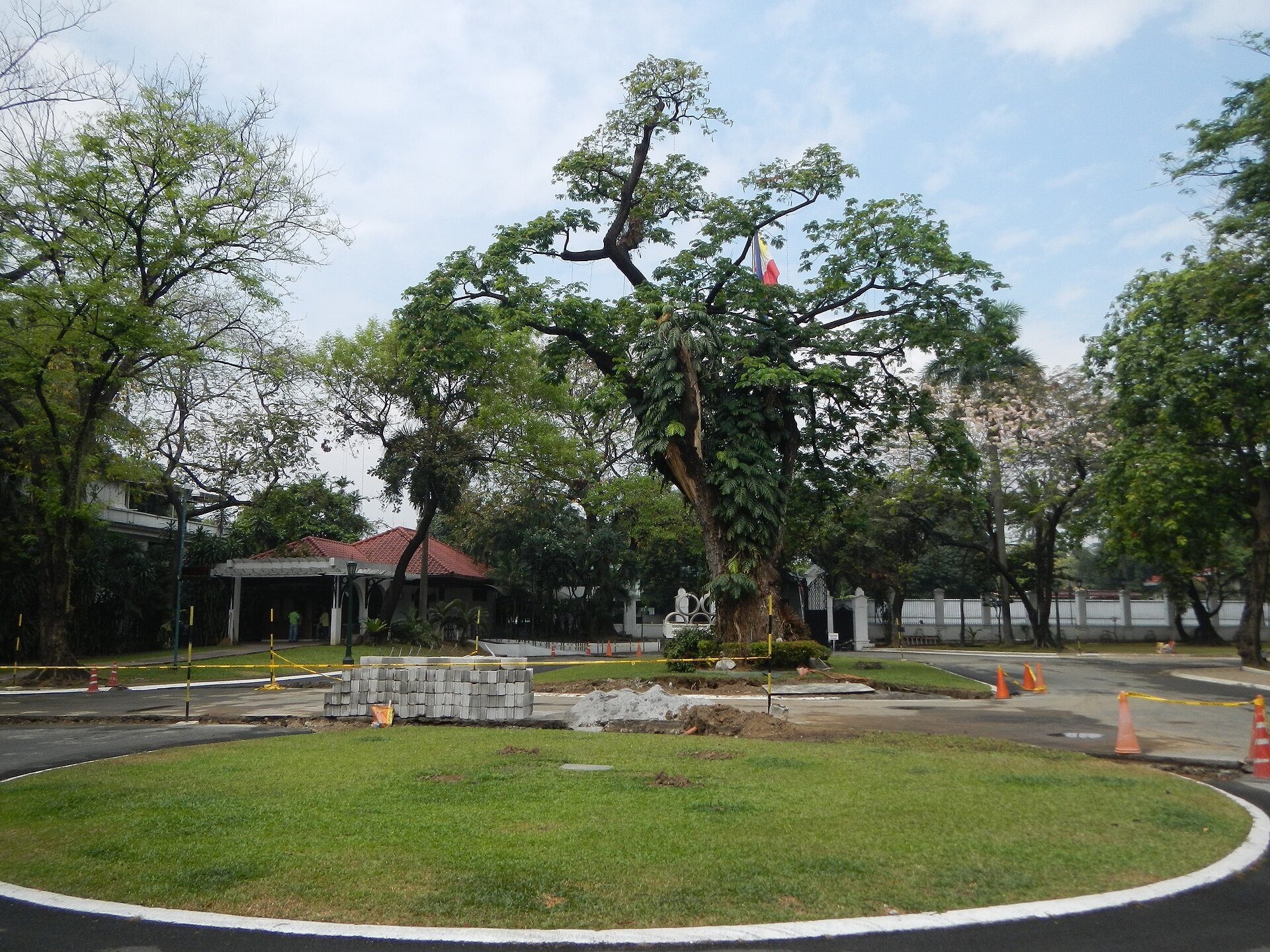
Stand on the north bank of the Pasig River as it winds through Manila, and you will find a rambling white building screened by acacia and mahogany trees, its wide verandas and capiz-shell windows facing the slow brown water. This is Malacanang Palace, the official residence and principal workplace of the President of the Philippines, and one of the oldest seats of government still in continuous use anywhere in Southeast Asia. It has watched Spanish governors-general, American colonial administrators, and Filipino presidents come and go, and its rooms hold the memory of nearly every turning point in the modern life of the nation.
You may be surprised to learn that the palace began as a private riverside country house. In the 1750s a Spanish aristocrat built a stone rest house here to escape the crowding of the walled city of Intramuros downstream, and over the following century the modest villa was enlarged, rebuilt after earthquakes, and gradually pressed into official service until it became the residence of the highest authority in the islands. What started as a place to catch the river breeze became the place where the fate of the archipelago was decided.
The name itself carries the flavor of that riverside origin. Most accounts trace Malacanang to a Tagalog phrase meaning something like there is a nobleman here, or a reference to fishermen who once worked this stretch of the Pasig, and the word has become so bound up with power that Filipinos use it the way others might say the White House or Number Ten, a single word standing in for the presidency and everything it commands. To say a decision came from Malacanang is to say it came from the very top.
Over the next several thousand words you will walk the whole story of this place, from the eighteenth-century villa on the river to the ceremonial halls where presidents are sworn in today. You will meet the governors and presidents who shaped it, step into Kalayaan Hall and the reception rooms, learn how the palace survived earthquakes and revolutions, and discover how a working seat of government also functions as a museum of the nation’s past. Settle in, because the house on the Pasig has a great deal to tell you.

In This Article
- A Rest House on the River
- The Governors-General and the Spanish Century
- The American Colonial Residence
- War, Occupation, and Survival
- The Marcos Years and the People Power Revolution
- A Palace Reclaimed and Restored
- Architecture: A House Shaped by the Tropics
- Inside the State Rooms and Kalayaan Hall
- The Grounds, the River, and the Complex
- Malacanang as a Symbol of the Nation
- The Presidential Museum and Library
- See the Palace for Yourself
- Visiting Malacanang Today
A Rest House on the River
To understand Malacanang you have to picture eighteenth-century Manila, a city hemmed inside the massive stone walls of Intramuros where the Spanish colonial elite lived crowded together behind gates and moats. It was a place of prestige but also of heat, disease, and confinement, and those who could afford it looked for somewhere to breathe. The banks of the Pasig River, just upstream from the walled city, offered exactly that, a green corridor of gardens and country estates where the wealthy could build summer houses cooled by the water and the trees.

It was here, around 1750, that a Spanish nobleman named Luis Rocha built a stone house as a private retreat. The property passed through several hands over the following decades, and in 1802 the Spanish colonial government purchased it, sensing that a riverside residence away from the congestion of Intramuros might serve official purposes. At this stage it was still essentially a large country villa, comfortable but not grand, a place to escape rather than to rule.
The building’s promotion to the center of colonial power came almost by accident. In 1863 a devastating earthquake wrecked the governor-general’s official palace inside Intramuros, leaving the head of the Spanish administration without a suitable residence. Rather than rebuild in the damaged walled city, the authorities moved the seat of the governor-general to the riverside house at Malacanang, intending it as a temporary measure. As so often happens, the temporary arrangement became permanent, and the villa on the Pasig found itself the official home of the most powerful man in the Philippines.
From that point on, the fortunes of the building and the fortunes of the country were bound together. Every enlargement, every renovation, every change of style reflected the ambitions and anxieties of whoever held power, and the modest rest house began its long transformation into a true palace of state.
It is worth pausing on how ordinary the building’s beginnings were. There was no grand founding vision, no architect commissioned to raise a monument to empire, simply a wealthy man wanting a cool house by the water. That accidental, incremental quality never entirely left the palace, and it explains why Malacanang feels less like a designed showpiece than like a home that grew, room by room and wing by wing, into the residence of a nation’s leaders.
The Governors-General and the Spanish Century
For the last decades of Spanish rule, Malacanang was the residence of the governor-general, the crown’s supreme representative in the islands, who combined the roles of head of government, commander of the armed forces, and vice-royal patron of the church. The house was steadily enlarged and dignified to match the office, with new wings, formal reception rooms, and gardens laid out to impress the visitors and petitioners who came seeking favor.
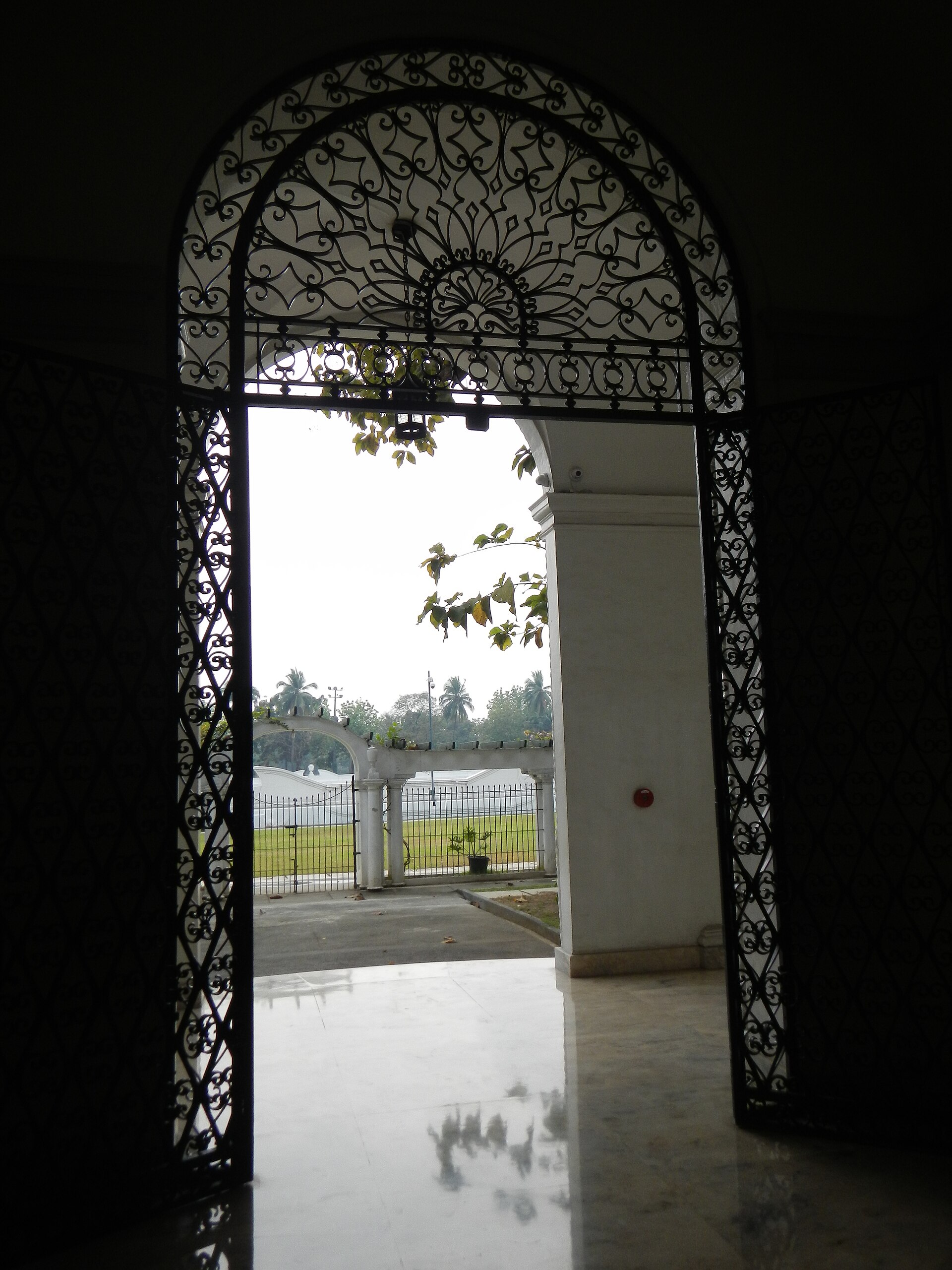
Life at the palace in this era mixed colonial formality with tropical improvisation. Grand balls and receptions were held in halls cooled only by the river air and the movement of servants, and the sliding capiz-shell windows, made from translucent oyster shells set in wooden frames, filtered the harsh light into a soft glow that became a signature of Philippine domestic architecture. The building was less a European palace transplanted whole than a hybrid, Spanish in ceremony but shaped by the climate and materials of the archipelago.
The palace also witnessed the mounting tensions of the late nineteenth century, as calls for reform and then for independence grew louder across the islands. Governors-general received news here of the propaganda movement, of unrest in the provinces, and finally of the revolution that broke out in 1896. The corridors that had hosted balls became the setting for anxious councils of war as Spanish authority in the Philippines entered its final crisis.
When Spain ceded the Philippines to the United States after the war of 1898, the last Spanish governor-general departed and a new colonial power took possession of the house on the river. Malacanang had outlasted the empire that made it the seat of government, and it would now serve a very different master.
The American Colonial Residence
Under American rule, which lasted from 1901 until the Second World War, Malacanang became the residence of the American governor-general, the senior United States official in the islands. The new administrators inherited the palace much as the Spanish had left it, and they set about adapting it to their own tastes and needs, adding modern conveniences, reworking interiors, and expanding the ceremonial spaces to suit an era of parades, receptions, and official entertaining.

This period gave the palace much of its present character. Ambitious renovation programs in the 1920s reshaped the state entrance and the grand reception halls, introducing the broad ceremonial staircase and the sequence of formal rooms that visitors still pass through today. The Americans were conscious of Malacanang as a symbol, a stage on which the dignity of the colonial government could be performed, and they invested accordingly in its grandeur.
Yet the American decades were also a time of gradual Filipinization. As the United States committed itself to eventual independence, Filipino officials took on more and more responsibility, and the palace increasingly hosted Filipino leaders alongside American ones. When the Commonwealth of the Philippines was established in 1935 as a transitional self-governing entity, Malacanang finally became the home of a Filipino head of state, President Manuel Quezon, even though ultimate sovereignty still rested with Washington.
Quezon’s occupancy marked a profound shift. For the first time the palace on the Pasig housed a president chosen by the Filipino people, and the building that had served two foreign empires began its life as the seat of a national government finding its own feet.
War, Occupation, and Survival
The Second World War brought catastrophe to the Philippines and tested Malacanang as never before. When Japanese forces invaded in late 1941, President Quezon left the palace and eventually the country, establishing a government in exile, while the occupying power installed a puppet administration that used Malacanang for its own ceremonies. The palace thus found itself, uncomfortably, at the center of a collaborationist regime during the darkest years of the occupation.

Manila suffered terribly in the war, and the battle to retake the city in 1945 was one of the most destructive urban campaigns of the entire conflict. Much of the capital, including the ancient walled city of Intramuros, was reduced to rubble in weeks of house-to-house fighting and artillery bombardment. Against the odds, Malacanang survived comparatively intact, spared the total devastation that flattened so much of the old city just downstream.
With liberation and then full independence in 1946, the palace resumed its role as the seat of the Republic of the Philippines, now a fully sovereign nation. The building that had endured Spanish decline, American colonialism, and Japanese occupation emerged as the unambiguous home of Filipino self-government, its survival a quiet symbol of national continuity through the worst of times.
The postwar presidents inherited a palace scarred by history but rich in meaning, and they set about making it their own, each leaving some mark on the rooms and gardens as the young republic found its way.
For Filipinos, the palace’s survival amid the ruin of Manila took on an almost providential significance. In a city where so much of the tangible past was obliterated, this one great house endured, carrying the thread of memory across the rupture of the war and giving the reborn republic a seat of government with roots reaching back nearly two centuries.
The Marcos Years and the People Power Revolution
No chapter in the palace’s modern history looms larger than the long presidency of Ferdinand Marcos, who occupied Malacanang from 1965 until 1986. Under Marcos, and especially after he declared martial law in 1972, the palace became the nerve center of an increasingly authoritarian regime, a place associated in the public mind with concentrated power, surveillance, and the accumulation of wealth by the ruling family.

The Marcos family’s occupancy left a deep imprint, both physical and symbolic. They undertook extensive renovations and lived on a scale that, when it was finally exposed, shocked a nation weary of hardship. The image of the palace shifted from a working seat of government to a fortress of privilege, cut off from the people it was supposed to serve, and that perception would prove politically fatal.
In February 1986 the People Power Revolution, a largely peaceful uprising of millions of Filipinos, brought the Marcos era to an end. As crowds massed and the military split, the Marcos family fled Malacanang, and the palace was opened to the public in the days that followed. Ordinary Filipinos walked through the rooms that had been closed to them, and the sight of the abandoned luxury left behind became one of the defining images of the revolution.
The events of 1986 transformed the meaning of the palace. Malacanang had been the seat of a dictatorship and then the prize of a democratic revolution, and the presidents who came after inherited not just a residence but a powerful lesson about the distance between rulers and the ruled.
A Palace Reclaimed and Restored
After 1986 the new government faced a delicate question of what to do with a palace so heavily identified with the fallen regime. President Corazon Aquino, who led the country out of the Marcos years, famously chose not to live in the main residential palace itself, working instead from an adjacent building and using the grand halls only for official functions. It was a deliberate gesture, a way of signaling a break with the imperial style of her predecessor.
In the years that followed, the palace complex was gradually rehabilitated and reinterpreted. Parts of it were opened as a museum so that the public could understand the history bound up in its rooms, and successive administrations balanced the practical needs of a working presidency with the desire to keep Malacanang accessible and accountable rather than remote and forbidding.
Conservation of the historic fabric became a serious concern. The palace is not a single building of one date but an accretion of two and a half centuries, and caring for it means preserving Spanish-era stonework, American-era ceremonial rooms, and later additions all at once. Skilled restorers have worked to stabilize the structure against the earthquakes and floods that periodically threaten low-lying Manila, and to conserve the furnishings, chandeliers, and artworks that fill the state rooms.
The result is a palace that functions simultaneously as a living office of government and as a guardian of national memory, a place where the daily business of the republic is conducted amid the accumulated symbols of its long and turbulent past.
Architecture: A House Shaped by the Tropics
Architecturally, Malacanang is best understood not as a single grand design but as a layered organism that grew over generations. Its bones are those of a Spanish colonial house adapted to the tropics, with thick masonry lower walls, timber upper storeys, and wide roofs designed to shed monsoon rain and shade the interiors from the fierce sun. Over this frame later builders added ceremonial grandeur, but the underlying logic remains that of a building designed to live with heat, humidity, and earthquakes.
The most distinctive local features are the galleries and the windows. Long verandas and covered walkways wrap the building, allowing air to circulate and giving occupants shaded space to move about and gather. The famous capiz-shell windows, panels of translucent shell that slide in wooden grids, admit soft light while keeping out glare and rain, and their pale glow is one of the most evocative sensations of stepping inside a historic Philippine house.
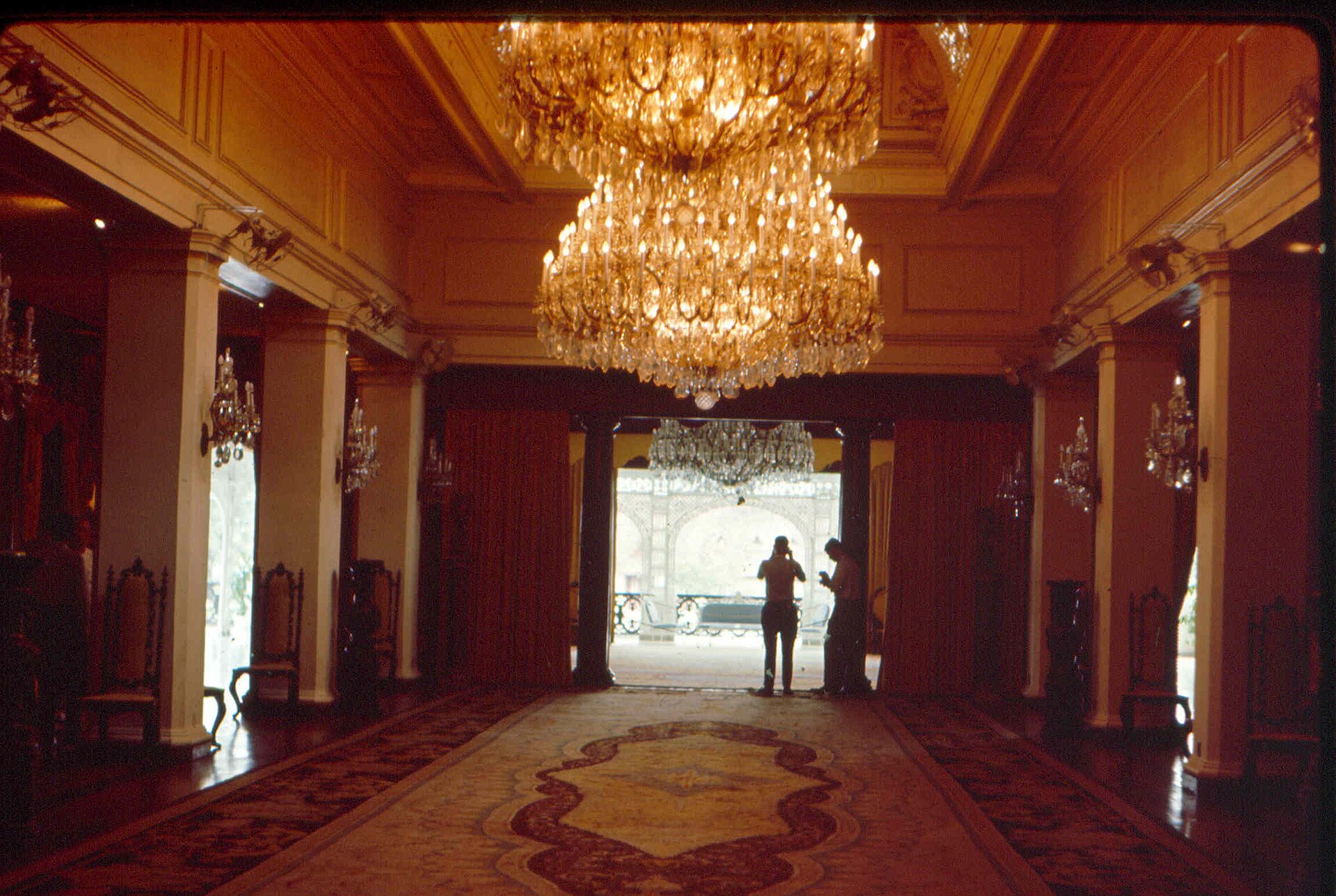
The ceremonial heart of the palace, largely shaped in the American era, is more overtly formal. A grand staircase rises to the principal floor, leading to a sequence of reception and state rooms hung with chandeliers and lined with polished hardwood. These spaces borrow the vocabulary of Western palatial architecture, columns, moldings, and symmetrical planning, but they are executed in local materials and set within the airy, veranda-wrapped structure that keeps the whole thing recognizably Filipino.
Set within its riverside grounds, planted with mature trees and looking out over the Pasig, the palace achieves a particular kind of tropical dignity, grand without being cold, monumental yet still bound to the river and the climate that gave it birth.
Inside the State Rooms and Kalayaan Hall
The interior sequence of Malacanang is designed to carry a visitor, or a foreign dignitary, through rising levels of ceremony. From the grand entrance and staircase, one moves into a series of reception and state rooms, each with its own character and function, from intimate parlors for private meetings to expansive halls capable of hosting hundreds at a state banquet or a presidential inauguration.

Among the most important spaces is Kalayaan Hall, whose name means freedom, a building within the complex that has served over time as the executive offices and now houses part of the presidential museum. Its dignified rooms, with their high ceilings and formal proportions, have witnessed countless cabinet meetings, signings, and ceremonies, and they preserve the atmosphere of the American-era palace at its most stately.
The state dining and reception rooms are hung with grand chandeliers and furnished with polished hardwood pieces, many crafted from the rich tropical timbers of the islands. Portraits of past presidents line the walls in places, turning the corridors into a gallery of national leadership, while carefully chosen artworks and antiques give the rooms the layered richness of a house that has been continuously inhabited and enriched for centuries.
For a foreign visitor received in these halls, the effect is calculated and complete, a sequence of spaces that speaks of continuity, sovereignty, and the long history of a nation that has governed itself from this house on the river through every kind of weather.
The Grounds, the River, and the Complex
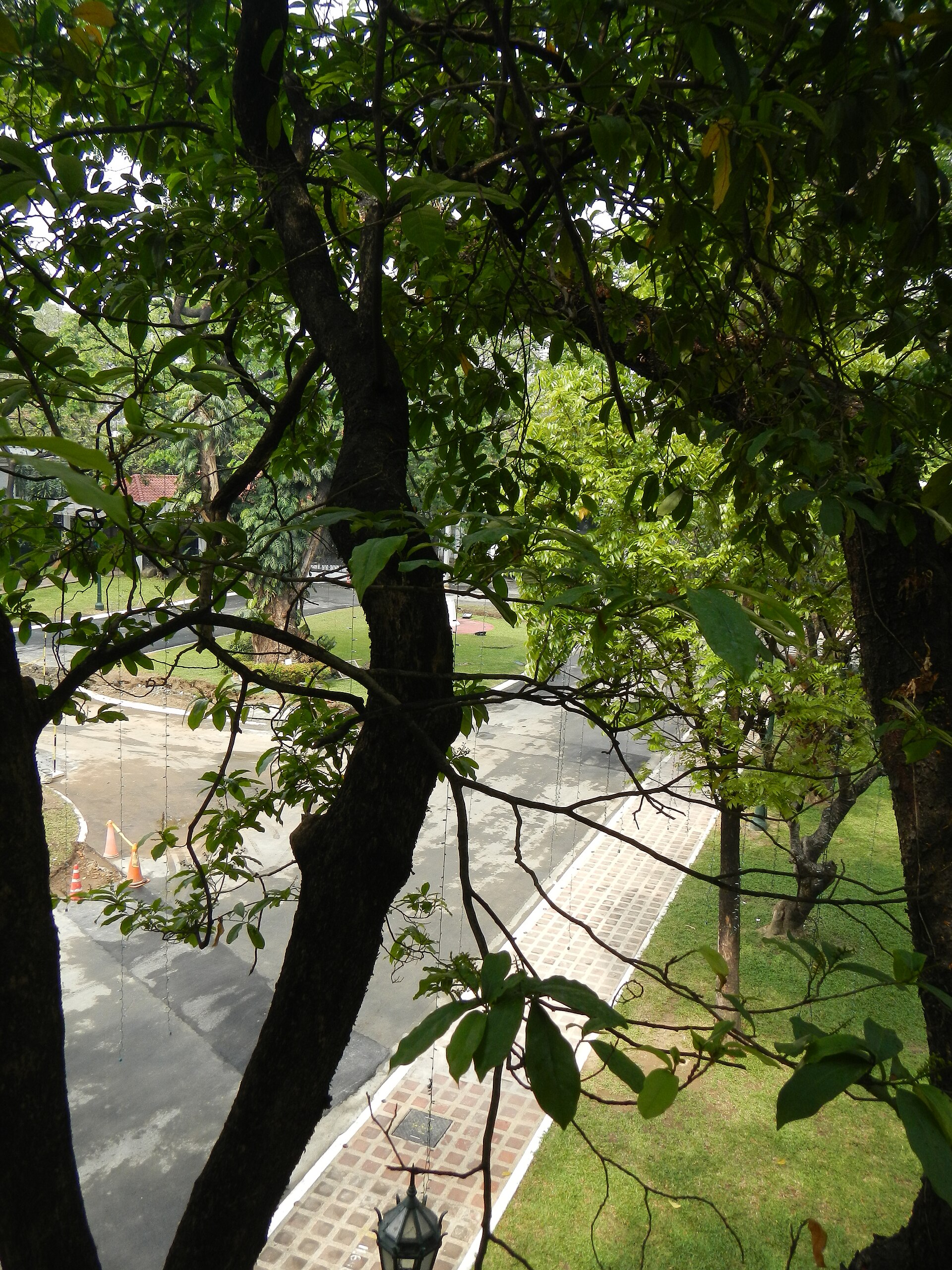
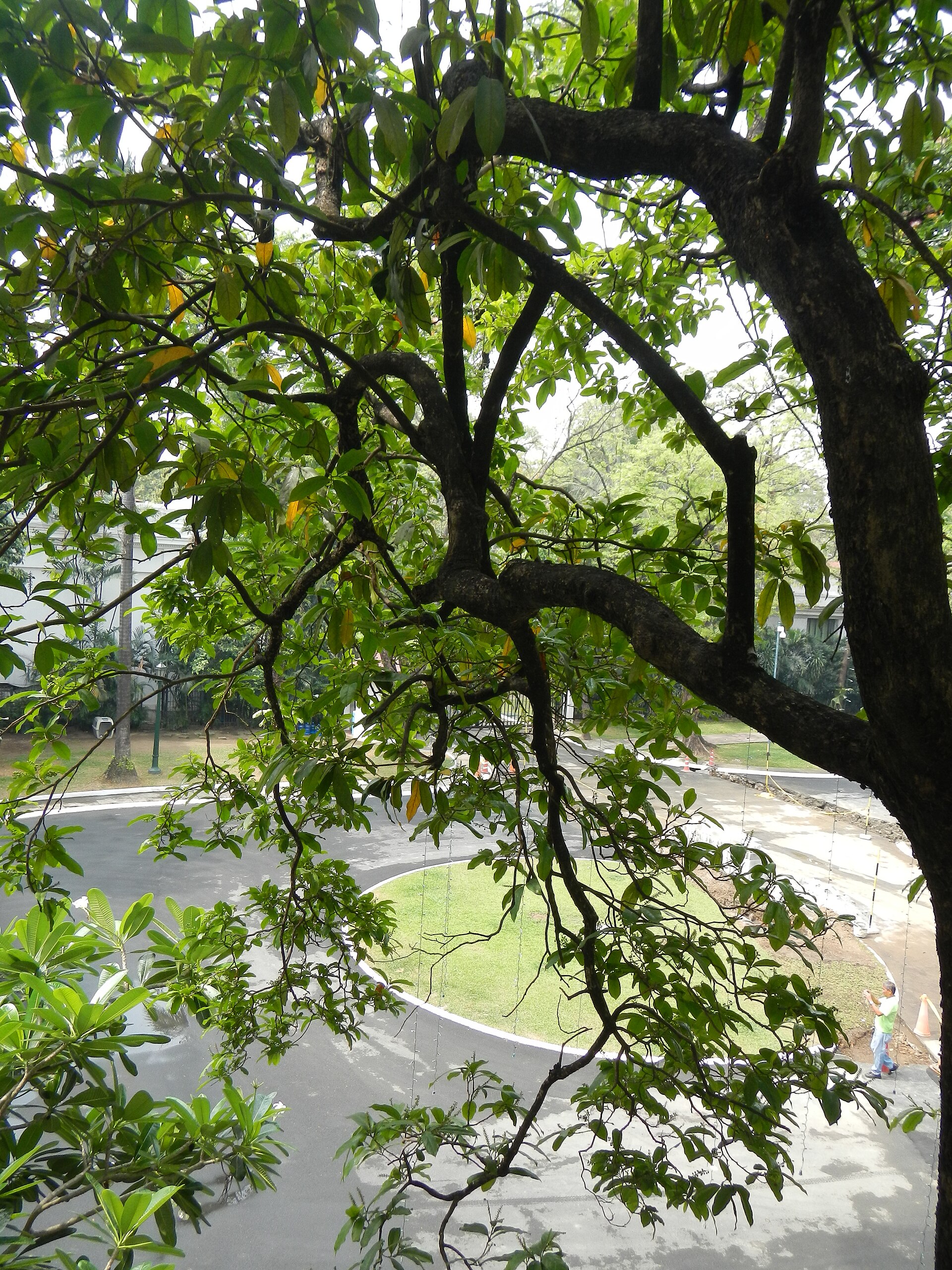
Malacanang is not a single building but a walled compound, a green enclave of palaces, offices, gardens, and service buildings spread along the north bank of the Pasig. Within the grounds are the main palace, executive office buildings, guest houses, and the various structures needed to run a modern presidency, all set among lawns and mature trees that soften the institutional character of the place.

The river is central to the palace’s identity. For much of its history the Pasig was the main artery of Manila, and dignitaries once arrived at Malacanang by water, stepping from boats onto the palace landing. Even today the river frontage gives the complex its orientation and its name’s flavor, and the sight of the slow brown water sliding past the trees is inseparable from the experience of the place.
The gardens and open spaces serve both practical and symbolic purposes. They provide the setting for outdoor ceremonies, receptions, and the daily comings and goings of officials and guests, and they offer the greenery and air that the original eighteenth-century builders came here to enjoy. In a dense and often chaotic megacity, the palace grounds are a rare pocket of calm and order.
Security, inevitably, shapes the modern compound. As the seat of government the palace is heavily guarded and access is controlled, but efforts to open parts of the complex as a museum have sought to keep some connection between the people and the house that governs in their name, so that Malacanang is not entirely sealed away behind its walls.
Malacanang as a Symbol of the Nation
Few buildings carry as much symbolic weight in the Philippines as Malacanang. To say that a policy comes from Malacanang, or that someone has the ear of Malacanang, is instantly understood by every Filipino as a statement about the highest level of power. The word has become a synonym for the presidency itself, shorthand for the executive branch and everything it decides.

This symbolic power cuts both ways. The palace is a source of national pride, a tangible link to the long story of Filipino self-government and the endurance of the republic through colonialism, war, and dictatorship. Presidential inaugurations, state visits, and moments of national mourning or celebration all play out here, and the images of the palace circulate constantly in the media as the visual embodiment of the state.
At the same time, Malacanang has at moments symbolized the gulf between rulers and ruled. The memory of the Marcos era, when the palace stood for privilege and repression, has never entirely faded, and Filipinos remain alert to any sign that a president is retreating into imperial isolation behind the palace walls. The building thus serves as a kind of national conscience, a reminder that power exercised from this house must ultimately answer to the people outside it.
That doubled meaning, pride and warning at once, is precisely what makes the palace so potent a symbol. It is not merely a beautiful old house on a river but a mirror in which the nation reads its own hopes and fears about the people it entrusts with power.
This is why every incoming president is watched so closely for how they choose to inhabit the palace. The decisions of where to live and work within the complex, how much of it to open, and how visibly to connect with ordinary citizens are read as signals about the kind of leadership the country can expect, turning the building itself into a language of political intent.
The Presidential Museum and Library
Woven into the working palace is a museum dedicated to the history of the Philippine presidency, housed principally in Kalayaan Hall. Here the story told throughout this article is presented to visitors through carefully arranged galleries, displaying the artifacts, documents, portraits, and personal effects of the men and women who have held the highest office in the land.
The collections bring the abstract history of the republic down to human scale. Visitors can see gifts of state presented by foreign governments, the pens used to sign historic laws, the furnishings of past administrations, and objects associated with individual presidents, each item a small window into a particular moment in the national story. Walking the galleries is a way of walking through Philippine history itself, from the Commonwealth period to the present.
The museum also serves an educational mission, helping Filipinos, and especially young people, understand how their government works and how it came to be. By opening at least part of the palace complex to the public, the museum keeps alive the principle that Malacanang belongs, in some fundamental sense, to the nation rather than to whoever happens to occupy it at any given moment.
For the traveler, a visit to the museum is the closest most people will come to entering the working heart of the Philippine state, a chance to stand in rooms where history was made and to see, up close, the objects and images that tell the long story of the house on the Pasig.
See the Palace for Yourself
Reading about Malacanang can only take you so far, because so much of its character lies in things that are hard to capture in words, the quality of the light through the capiz-shell windows, the scale of the ceremonial staircase, the way the verandas open onto the green river frontage. Seeing the palace in motion, even on a screen, brings home the atmosphere in a way that description cannot.
The short video below offers a concise introduction to Malacanang, explaining what the palace is, how it came to be the seat of Philippine government, and why the word itself has become synonymous with presidential power. It is a helpful visual companion to everything you have read here, tying the history and the architecture together in a few minutes.
As you watch, notice the interplay between the Spanish and American layers of the building, the tropical galleries and windows alongside the formal ceremonial rooms, and imagine the centuries of governors, presidents, and revolutions that these walls have witnessed. Then, when you visit Manila, you will recognize the house on the river as more than a landmark, as the living center of a nation’s political life.
Visiting Malacanang Today
For the modern traveler, Malacanang remains first and foremost a working seat of government, so a visit is not quite like touring an ordinary palace museum. Because it is the residence and office of the sitting president, access to the complex is controlled and security is tight, and the main palace itself is generally not open for casual sightseeing in the way that former royal residences elsewhere might be.

What most visitors can experience is the presidential museum in Kalayaan Hall, when it is open, which offers a rich introduction to the history of the palace and the presidency. Arrangements for public access have varied over time and from one administration to another, so it is well worth checking the current situation before you plan a visit, as opening hours, booking requirements, and the areas accessible to the public can change.
The palace sits on the Pasig River in the San Miguel district of Manila, within easy reach of the city’s other great historical sites, above all the walled city of Intramuros downstream, with its churches, fortifications, and museums. A day that combines Intramuros with a visit to, or at least a view of, Malacanang gives you a remarkably complete picture of the long arc of Manila’s history, from Spanish fortress city to modern presidential capital.
However you encounter it, whether inside the museum galleries or simply glimpsing the white walls and trees from across the river, Malacanang rewards the visitor who understands its story. This is not just an old building but the beating political heart of a nation, a house that has watched empires fall and a republic rise, and that continues, day after day, to shape the life of the Philippines.
Palaces Nearby
If the house on the Pasig has whetted your appetite for the great seats of power in Southeast Asia, two more royal residences in the region are worth your attention, each telling a very different story of monarchy and statehood.
- Istana Negara, Kuala Lumpur — the official residence of the King of Malaysia, a modern royal palace crowning the Malaysian monarchy.
- Istana Maimun, Medan — the golden palace of the Deli Sultanate in North Sumatra, a dazzling monument of the Sumatran tobacco boom.
You May Like
A Marrakesh Vizier and the Palace He Named Brilliance


2 thoughts on “Malacanang Palace: The House on the Pasig and the Seat of Philippine Power”