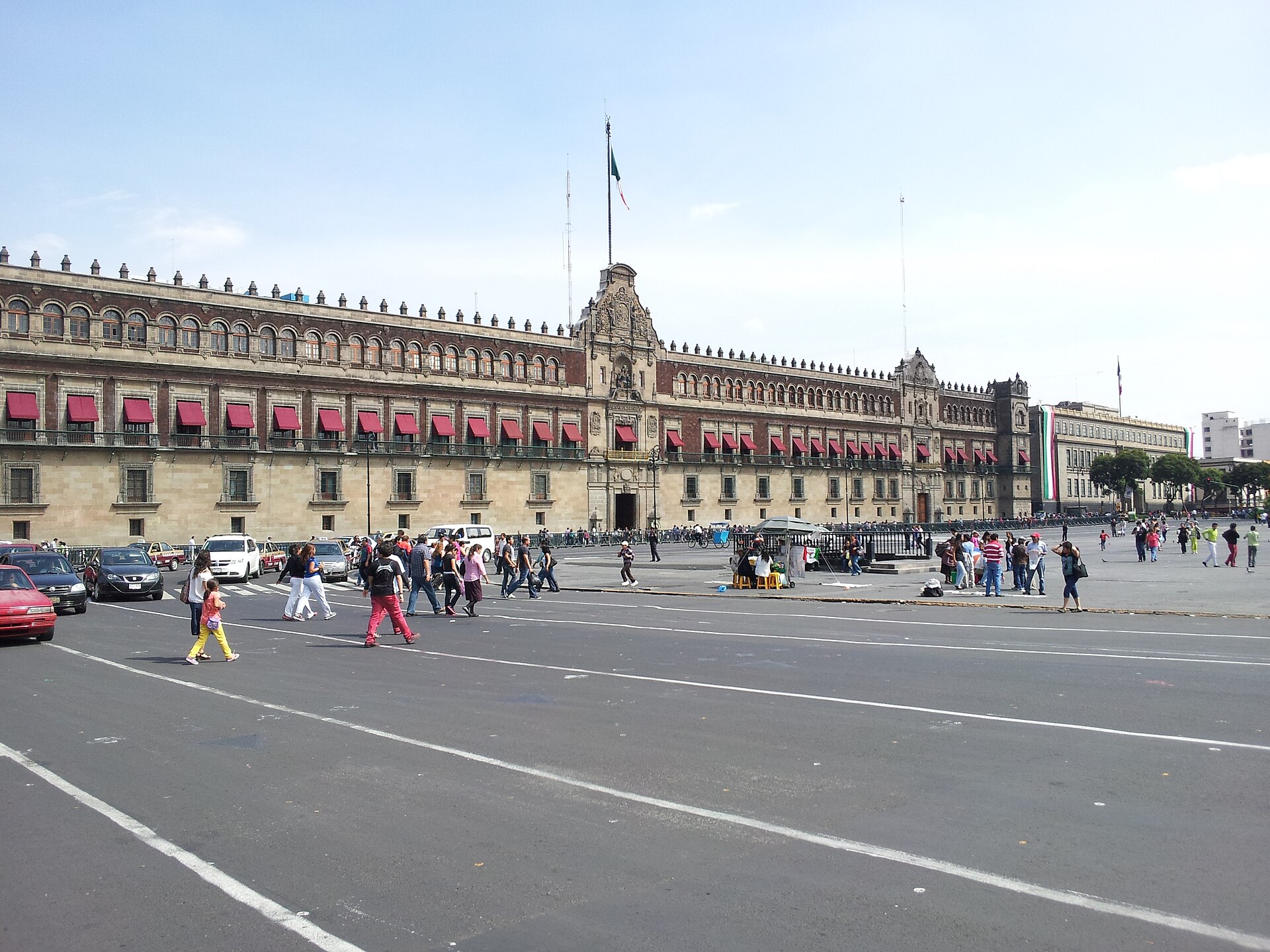
On the eastern side of the great central square of Mexico City, the vast plaza known as the Zocalo, stretches a long facade of reddish stone that has stood at the center of Mexican power for five centuries. This is the Palacio Nacional, the National Palace, the seat of the executive power of Mexico and one of the most historically resonant buildings in all of the Americas. To stand before it is to stand at the very heart of the Mexican nation, on ground that has been the center of authority since long before the Spanish came.
The palace occupies a site of extraordinary continuity, for it stands where the palace of the Aztec emperor Moctezuma once rose, at the center of the great city of Tenochtitlan. After the Spanish conquest, the conquistador Hernan Cortes built his own residence here, and the site passed to the Spanish crown to become the palace of the viceroys who ruled New Spain for three centuries, before serving the independent Mexican republic that followed.
Layered into this one building, then, is the whole sweep of Mexican history, from the Aztec empire through the Spanish colony to the modern nation. And on its walls, in the famous murals of Diego Rivera, that history is told again in paint, in one of the greatest cycles of public art created anywhere in the twentieth century, a visual epic of the Mexican people from ancient times to the artist’s own day.
Over the following pages you will explore the whole story of this remarkable place, from its Aztec and colonial origins through its role in the life of the independent nation, to Rivera’s murals and its function today as a working seat of government and a place of memory. Come and discover the palace at the heart of Mexico.
In This Article
- On the Site of Moctezuma’s Palace
- From Cortes to the Viceroys
- Seat of an Independent Nation
- The Bell and the Cry of Independence
- The Architecture of the Palace
- Diego Rivera’s Epic of Mexico
- The Muralist and His Vision
- Courtyards, Halls, and Gardens
- History Preserved in the Palace
- A Living Seat of Government
- The Heart of the Nation
- See the Palacio Nacional for Yourself
- Visiting the Palacio Nacional Today
On the Site of Moctezuma’s Palace
The story of the Palacio Nacional begins long before the Spanish arrived, on this same ground in the heart of what was then Tenochtitlan, the magnificent capital of the Aztec empire. Here stood the palace of Moctezuma, the emperor who ruled the Aztec world at the height of its power, a complex of great size and splendor at the center of one of the largest cities on earth.
When the Spanish conquistadors arrived in the early sixteenth century, they were astonished by the scale and sophistication of Tenochtitlan, a city built on an island in a lake, laced with canals and causeways, and dominated by great temples and palaces. Moctezuma’s palace, with its many rooms, courtyards, gardens, and even a zoo, was among the wonders that met their eyes.
The conquest brought catastrophe to Tenochtitlan, which was besieged, captured, and largely destroyed, and upon its ruins the Spanish began to build their own city, Mexico City, the capital of the new colony of New Spain. The site of the imperial palace, at the very center of power, was a natural place for the conquerors to establish their own authority.
This continuity of the site, from Aztec palace to Spanish and then Mexican seat of power, gives the Palacio Nacional a symbolic depth possessed by few buildings anywhere. To rule from this spot was, and is, to rule from the immemorial center of Mexico, a place where authority has resided for more than five hundred years.
The deliberate choice to build on this exact spot was itself an act of political meaning. By raising their own seat of power on the ruins of the Aztec palace, the Spanish sought to claim the mantle of the rulers they had overthrown, appropriating the ancient center of authority and its aura of legitimacy for the new colonial order they were imposing.
From Cortes to the Viceroys
After the conquest, the site passed into the hands of Hernan Cortes, the leader of the Spanish expedition, who built a residence here using the ruins and materials of the Aztec structures that had stood on the spot. This first colonial building established the site as the seat of the new Spanish power in Mexico.
In time, the Spanish crown acquired the property, and it became the official palace of the viceroys, the representatives of the king of Spain who governed New Spain in his name. For three centuries, from this palace, the viceroys ruled a vast colonial territory that stretched far beyond modern Mexico, one of the richest and most important possessions of the Spanish empire.
The viceregal palace was rebuilt and expanded over the centuries, taking on much of the form and character that can still be seen today. It was the center of colonial government, the residence of the viceroy, and the setting for the ceremonial life of the colony, a symbol of Spanish authority at the heart of the capital.
Through these long colonial centuries, the palace witnessed the whole life of New Spain, from the consolidation of Spanish rule to the gradual emergence of a distinct Mexican identity, until at last the colonial order was swept away by the movement for independence that would transform the palace once again.
The transformation of the site from Aztec palace to Spanish residence to viceregal seat was not a clean break but a layered accumulation, in which each new power built upon what came before. Beneath and within the present palace lie traces of these earlier structures, so that the building is in a sense an archaeological record of the successive regimes that have ruled from this place.
Seat of an Independent Nation
With Mexican independence in the early nineteenth century, the palace of the viceroys became the seat of the government of the new nation, and it took on its role as the Palacio Nacional, the National Palace of Mexico. The building that had symbolized Spanish colonial power now became the symbol of Mexican sovereignty.
The nineteenth century was a turbulent time for Mexico, marked by political instability, foreign invasions, and internal conflict, and the palace was at the center of these dramas. It served the succession of governments, emperors, and presidents who held power during this tumultuous period, witnessing coups, celebrations, and crises as the young nation struggled to find its footing.
Through all these upheavals, the palace remained the seat of executive power, the place from which Mexico was governed. Its halls saw the making and unmaking of governments, the reception of foreign envoys, and the great ceremonial occasions of the state, as the building continued its ancient role as the center of authority.
The palace thus became bound up with the whole history of independent Mexico, a witness to and a stage for the nation’s long and often painful journey toward stability and modernity, its walls absorbing the memory of generations of struggle and achievement.
The very continuity of the palace through these changes of regime carried a message of its own. Whatever the form of government, empire or republic, whoever held power ruled from this same building, so that the palace came to embody the abstract idea of the Mexican state itself, enduring beneath the changing fortunes of those who occupied it.
The Bell and the Cry of Independence
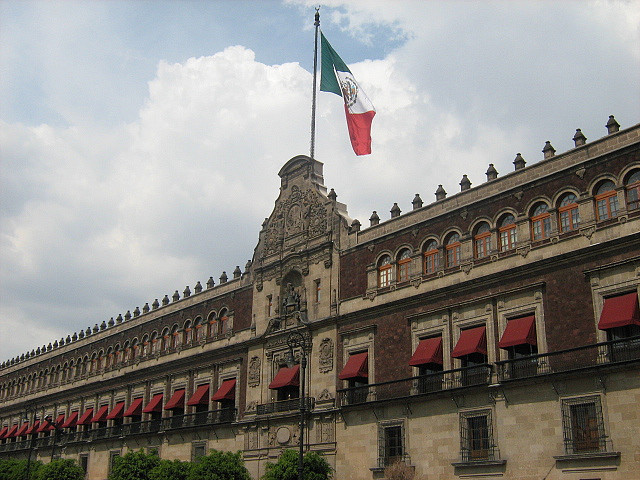
One of the most cherished features of the Palacio Nacional is a bell that hangs above its central doorway, a bell of deep symbolic importance to the Mexican nation. This is associated with the famous cry for independence, the Grito de Dolores, with which a parish priest is said to have launched the Mexican struggle for freedom from Spain.
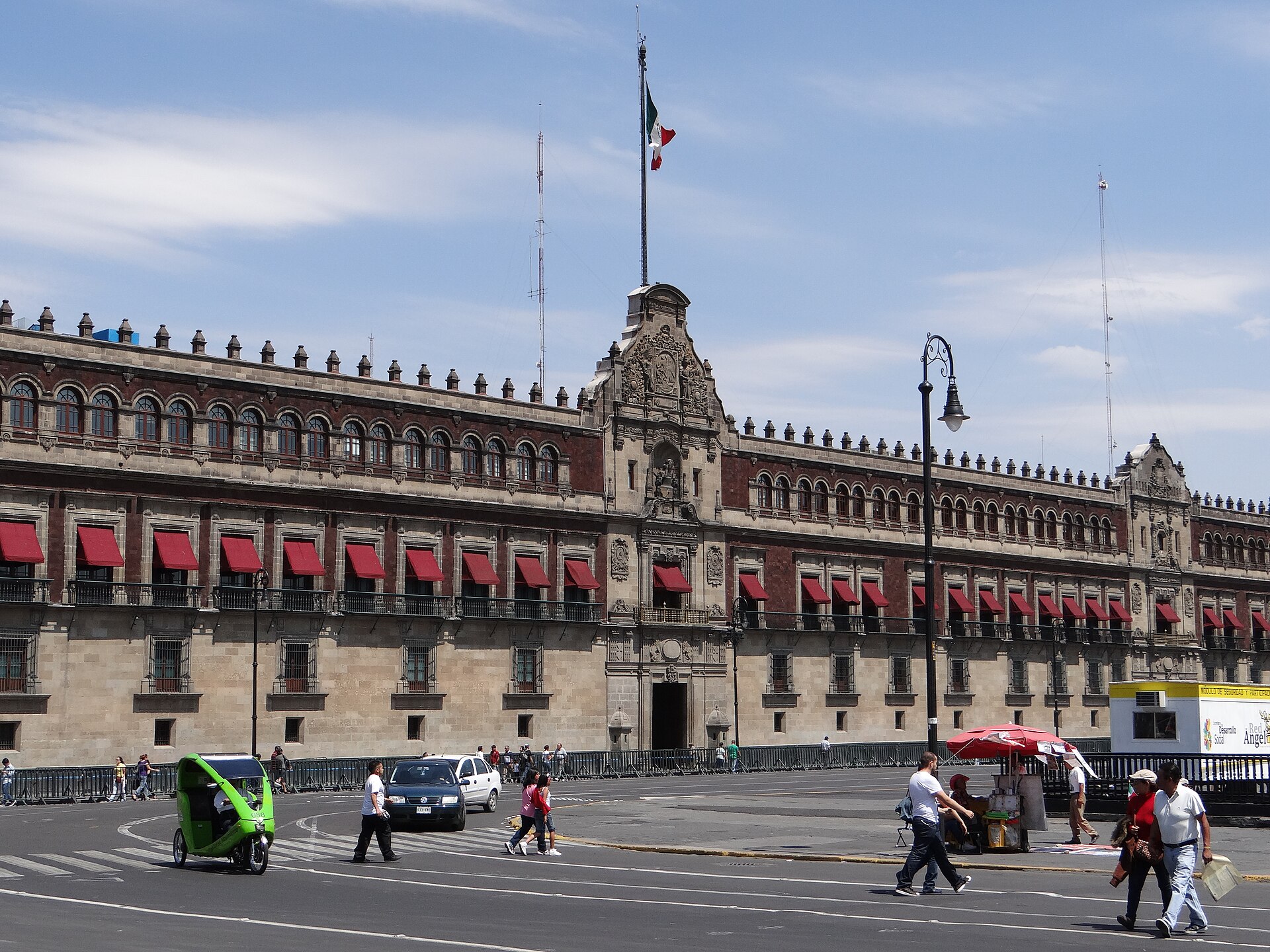
Each year, on the anniversary of that call to arms, the president of Mexico appears at the balcony of the palace above the central door and rings the bell, reenacting the historic cry before enormous crowds gathered in the Zocalo below. This ceremony, one of the most important in the Mexican calendar, binds the palace to the founding moment of the nation.
The reenactment of the Grito from the balcony of the Palacio Nacional is a powerful expression of national identity, connecting the modern state to the origins of its independence and gathering the people together in a shared act of remembrance and celebration. It makes the palace not merely a seat of government but a focus of patriotic feeling.
Through this annual ceremony, the palace plays an active role in the ritual life of the nation, its balcony and bell serving as the setting for one of the most emotionally charged moments in the Mexican year, when the whole country is symbolically united in the memory of its birth as an independent nation.
The emotional power of this annual rite is hard to overstate. As midnight approaches and the vast crowd fills the Zocalo, the president rings the historic bell and calls out the names of the heroes of independence, and the whole assembled multitude responds, in a moment of collective feeling that reaffirms, year after year, the bond between the Mexican people and the nation they share.
The Architecture of the Palace
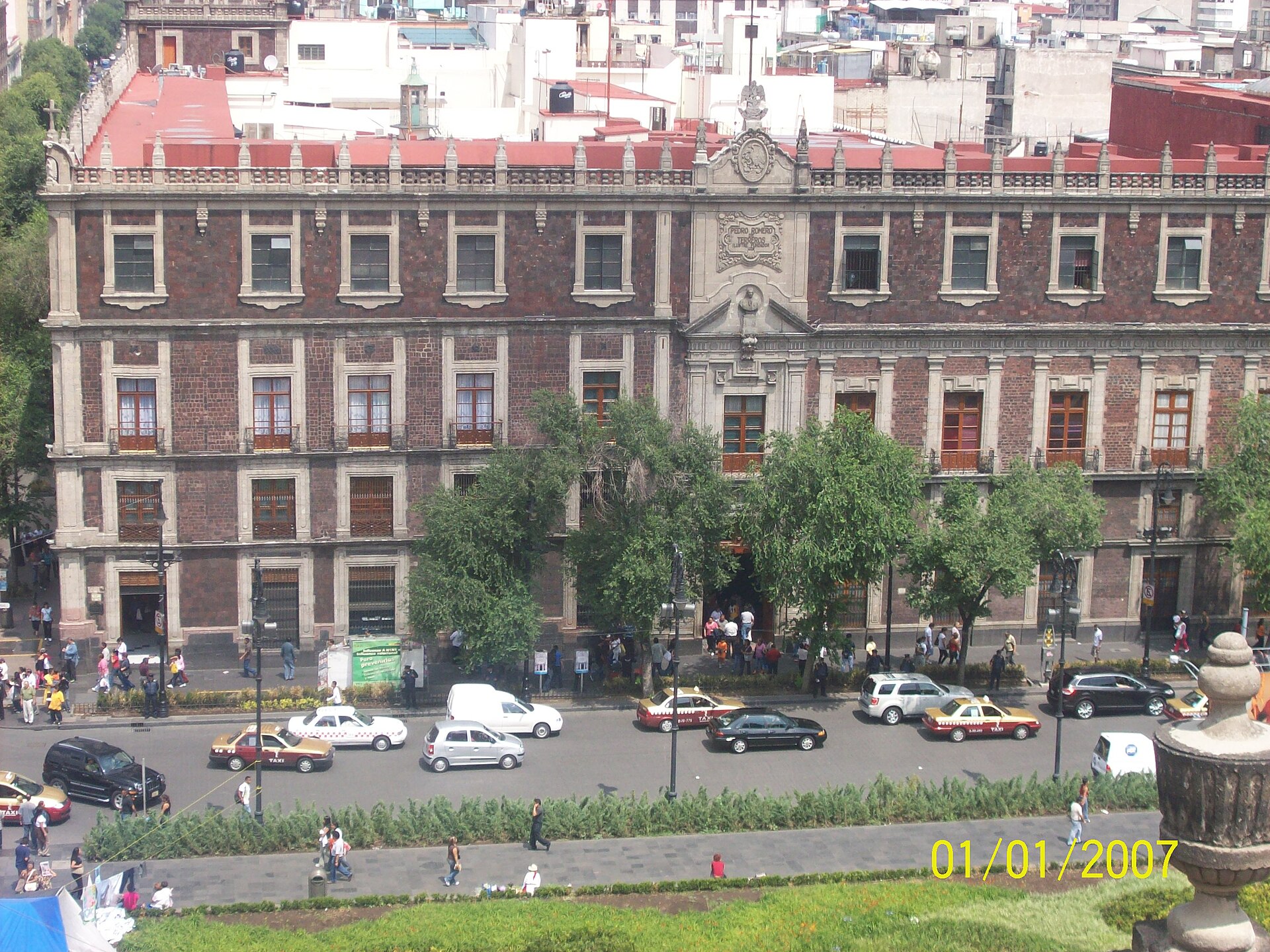
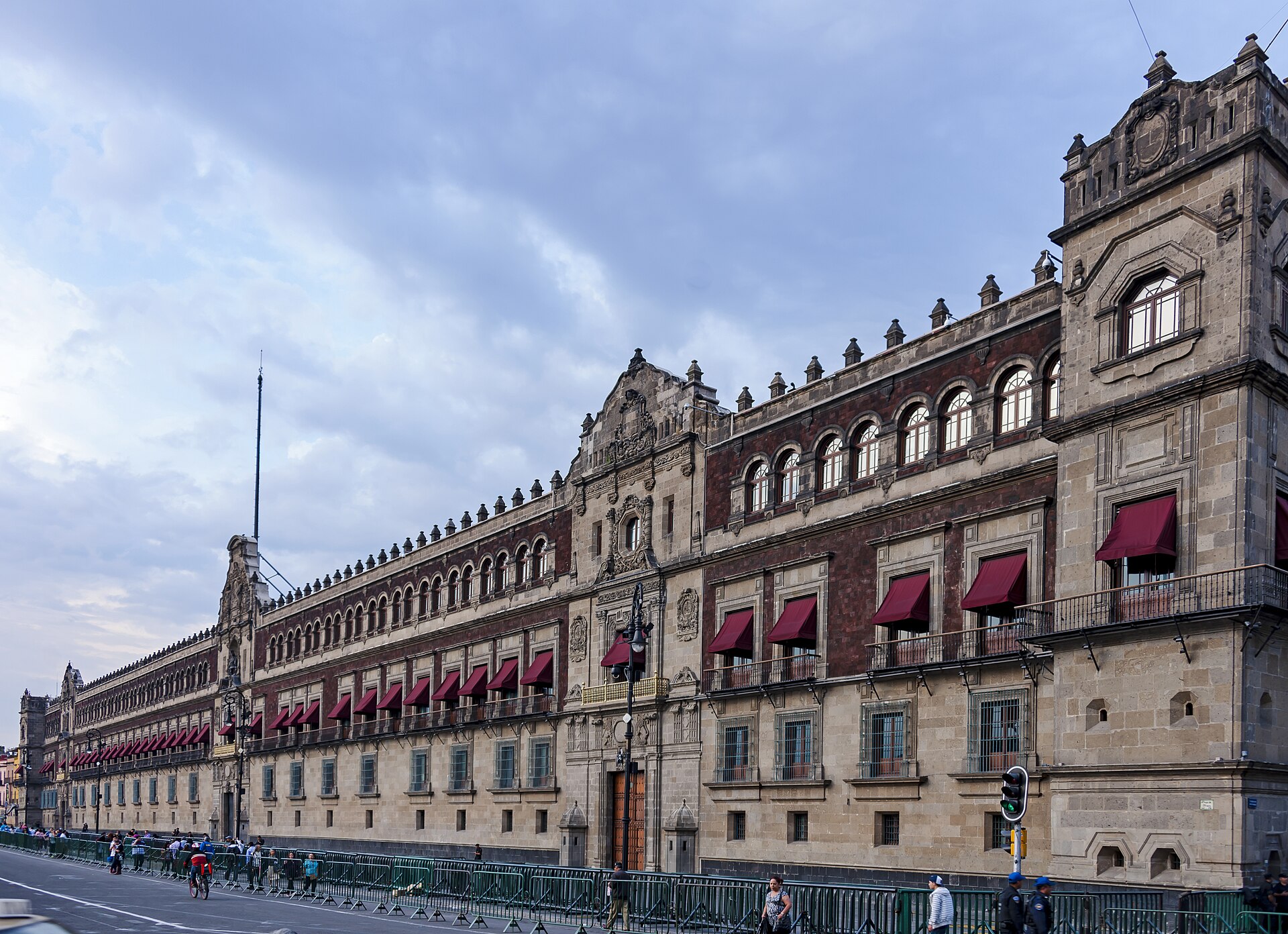
The Palacio Nacional as it stands today is a vast building, its long facade of reddish volcanic stone stretching along the entire eastern side of the Zocalo. The building is the product of centuries of construction and rebuilding, and its architecture reflects the many phases of its history, from the colonial period to modern additions.
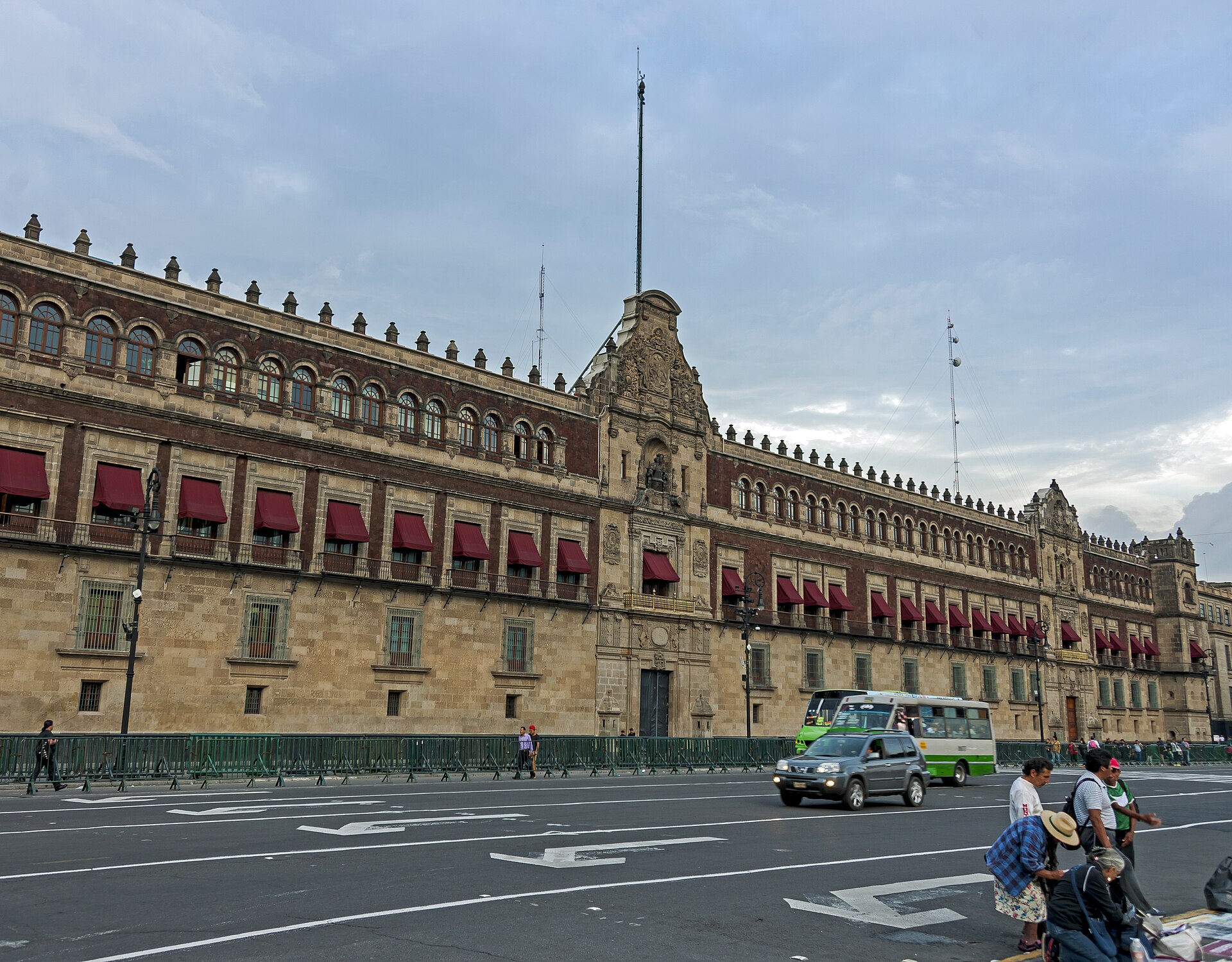
The facade is punctuated by three main doorways and marked by a restrained, dignified classicism, its long horizontal sweep conveying the scale and importance of the building. Above the central doorway is the balcony from which the Grito is proclaimed, and the bell associated with independence, giving the facade its symbolic focus.
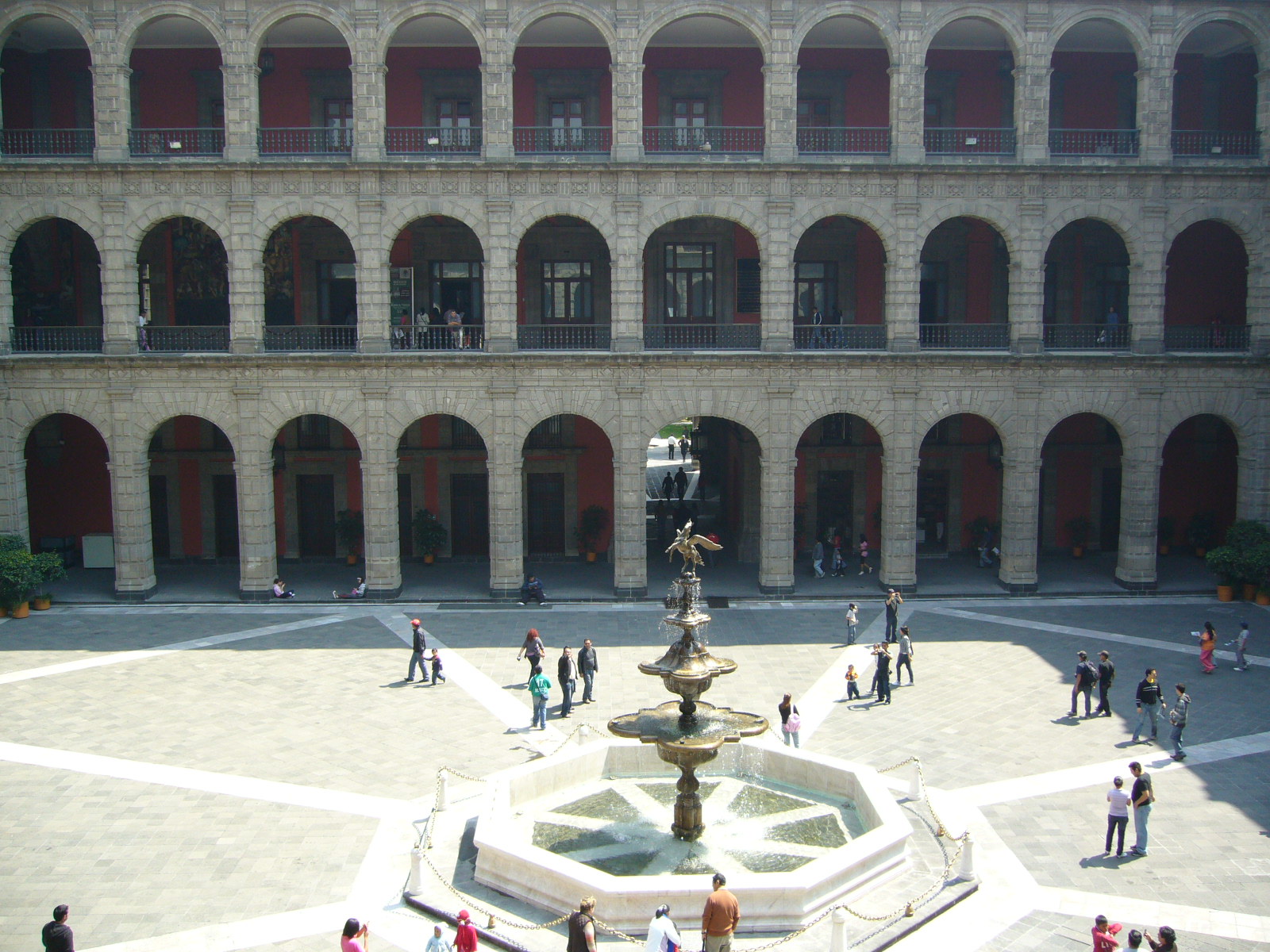
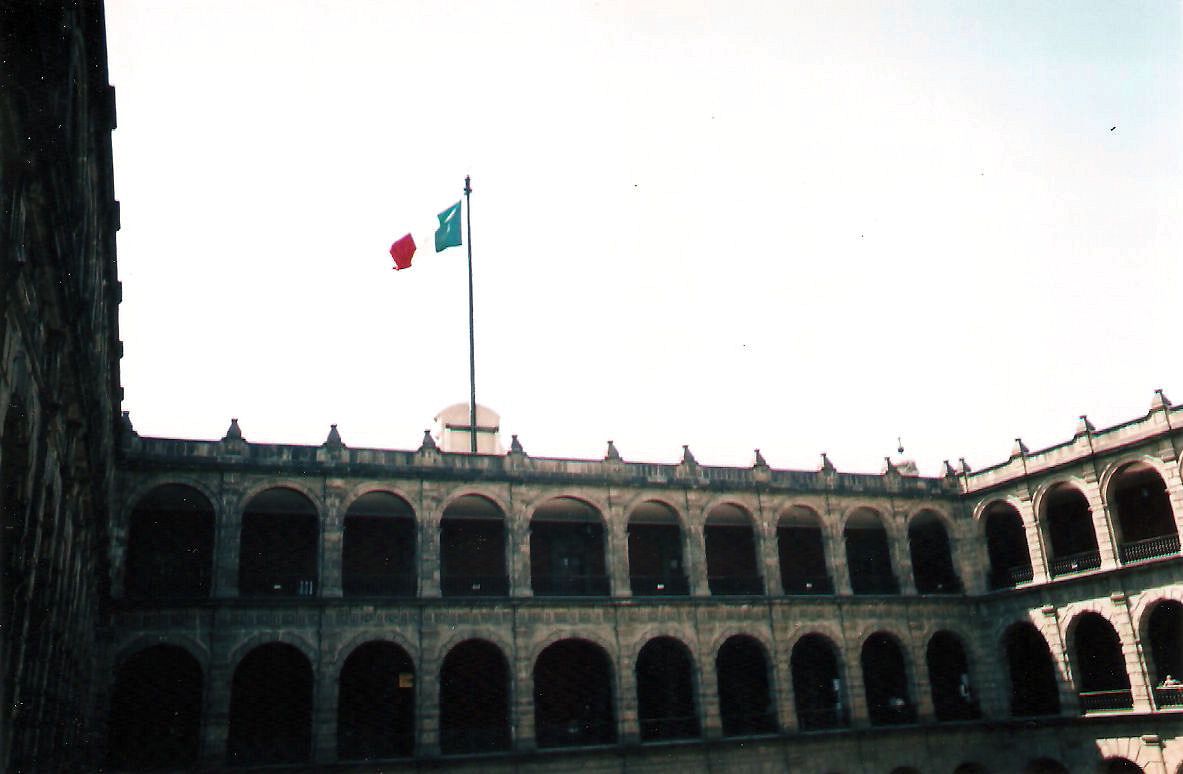
Within, the palace is organized around a series of large courtyards, in the manner of the great colonial buildings of Spanish America, with rooms and galleries arranged around these open spaces. The courtyards bring light and air into the vast building and provide the setting for the grand staircases and halls that lie within.
The overall impression is one of solidity, dignity, and historical weight, a building that has grown and changed over five centuries yet retains a coherent character, expressing through its architecture the continuity and authority of the Mexican state and the depth of the history embodied in its walls.
The reddish volcanic stone known as tezontle, used widely in the building, is itself deeply Mexican, the same material the Aztecs had used in their own constructions, and its warm color gives the palace and many other buildings of the historic center their distinctive character. In this way even the fabric of the palace ties it to the deep history of the valley of Mexico.
Diego Rivera’s Epic of Mexico
The single most famous feature of the Palacio Nacional, and one of the great treasures of Mexican art, is the cycle of murals painted by Diego Rivera on the walls of the palace’s main staircase and galleries. These murals, created over many years, form one of the greatest achievements of the Mexican muralist movement and a visual epic of the history of Mexico.
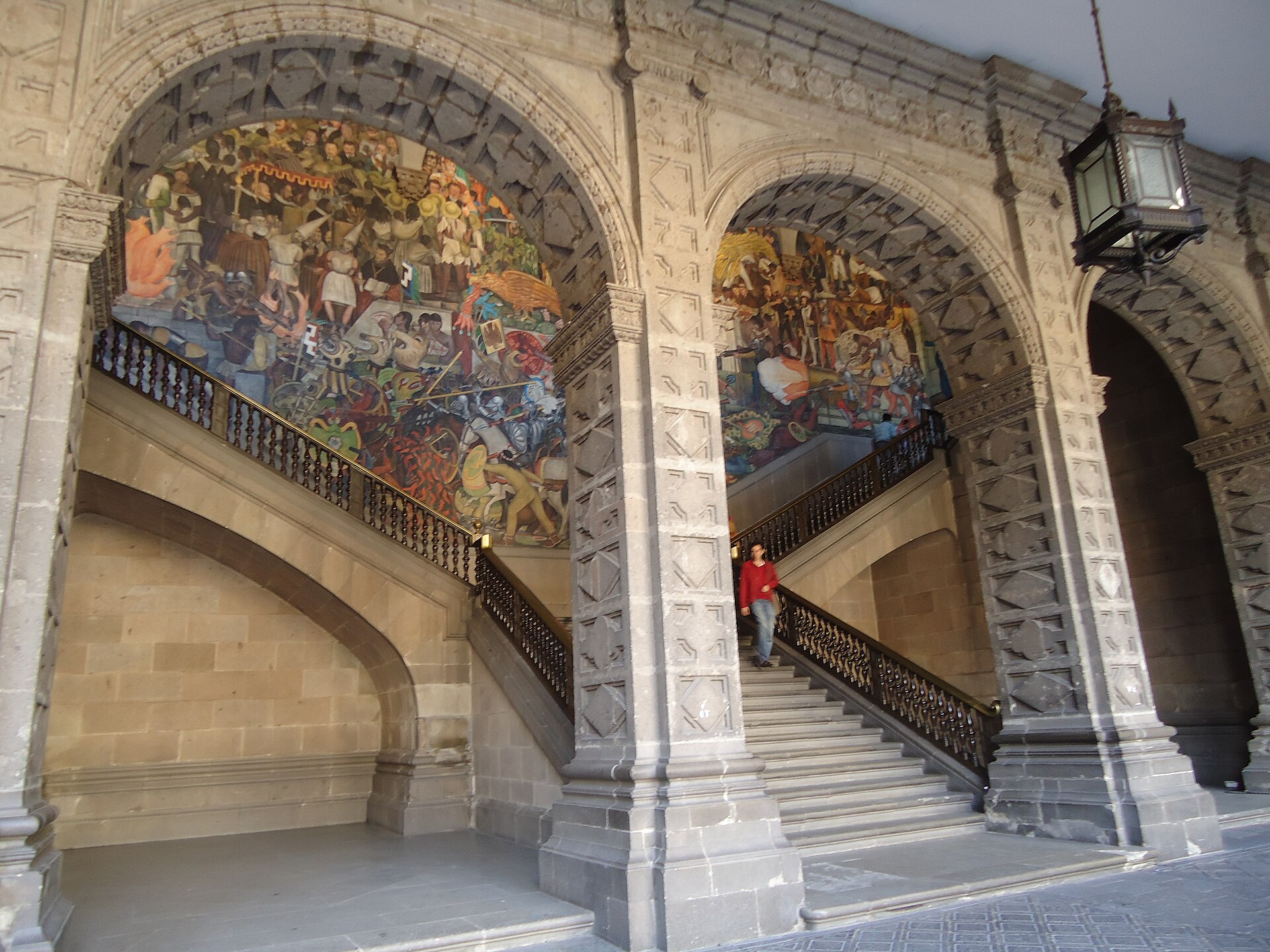
On the great staircase, Rivera painted a sweeping panorama of Mexican history, from the ancient civilizations before the conquest, through the Spanish colonial period, to the revolution and the artist’s own vision of the future. The murals teem with figures and incidents, presenting a passionate and politically charged interpretation of the national story.
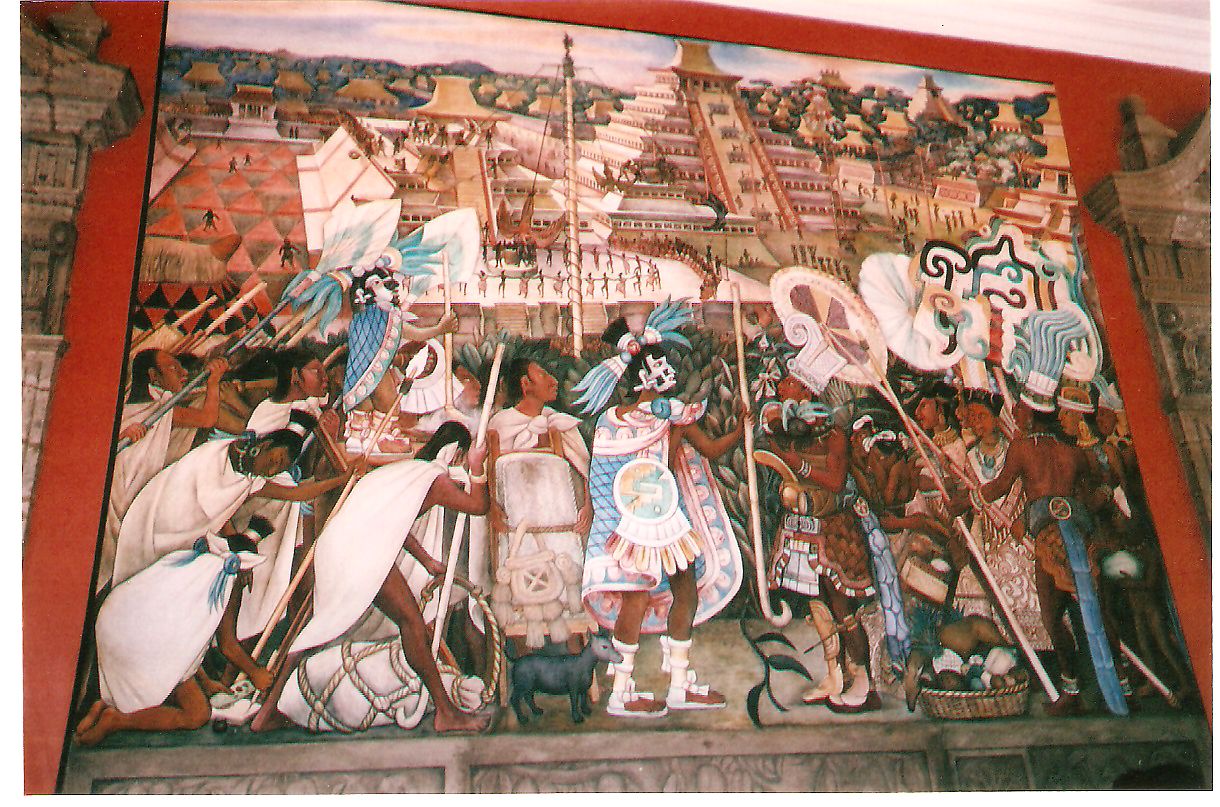
In the galleries surrounding one of the courtyards, Rivera painted further murals depicting the life and culture of Mexico before the Spanish conquest, richly detailed scenes of the indigenous civilizations that offer an idealized and loving portrait of the pre-Columbian world. These panels are among the most beautiful and evocative that the artist ever created.
Together these murals transform the palace into a monument of modern art as well as of history, and they draw visitors from around the world who come to see Rivera’s masterpiece in the very building whose history it depicts. To climb the great staircase beneath these paintings is to move through the whole story of Mexico as one artist saw it.
Rivera worked on these murals over a long period, returning to them across years, and the resulting cycle is vast in scope and ambition. To take it all in requires time and attention, for the paintings are dense with figures, symbols, and incidents, each panel repaying close study as it unfolds the artist’s passionate reading of the Mexican past.
The Muralist and His Vision
Diego Rivera was the most famous of the Mexican muralists, a group of artists who, in the aftermath of the Mexican Revolution, sought to create a new public art that would tell the story of the Mexican people and express the ideals of the new society. Rivera’s murals in the Palacio Nacional are among the supreme achievements of this movement.
Rivera’s vision of Mexican history was shaped by his political convictions and by his passionate identification with the indigenous and popular roots of Mexican culture. His murals celebrate the achievements of the pre-Columbian civilizations, condemn the brutality of the conquest and colonial exploitation, and look forward to a future of justice and progress.
The murals are not neutral records but powerful interpretations, works of art with a clear point of view, and they have played an important part in shaping how Mexicans understand their own history. Rivera’s images have become iconic, reproduced countless times and embedded in the national imagination.
That such a monumental and politically charged cycle of art should adorn the very seat of government is remarkable, and it reflects the particular circumstances of post-revolutionary Mexico, when the state embraced the muralists and their vision as part of the project of building a new national identity rooted in the history and culture of the Mexican people.
The embrace of the muralists by the post-revolutionary state was a bold cultural gamble, a decision to make the walls of public buildings into instruments of education and national self-definition. In the Palacio Nacional above all, that gamble produced results of enduring power, turning the seat of government into a gallery that teaches the nation its own story.
Courtyards, Halls, and Gardens
Beyond the staircase with its murals, the Palacio Nacional contains a wealth of spaces that reflect its long history and its role as a seat of government. The great courtyards around which the building is organized are among its most impressive features, grand open spaces that bring order and light to the vast complex.
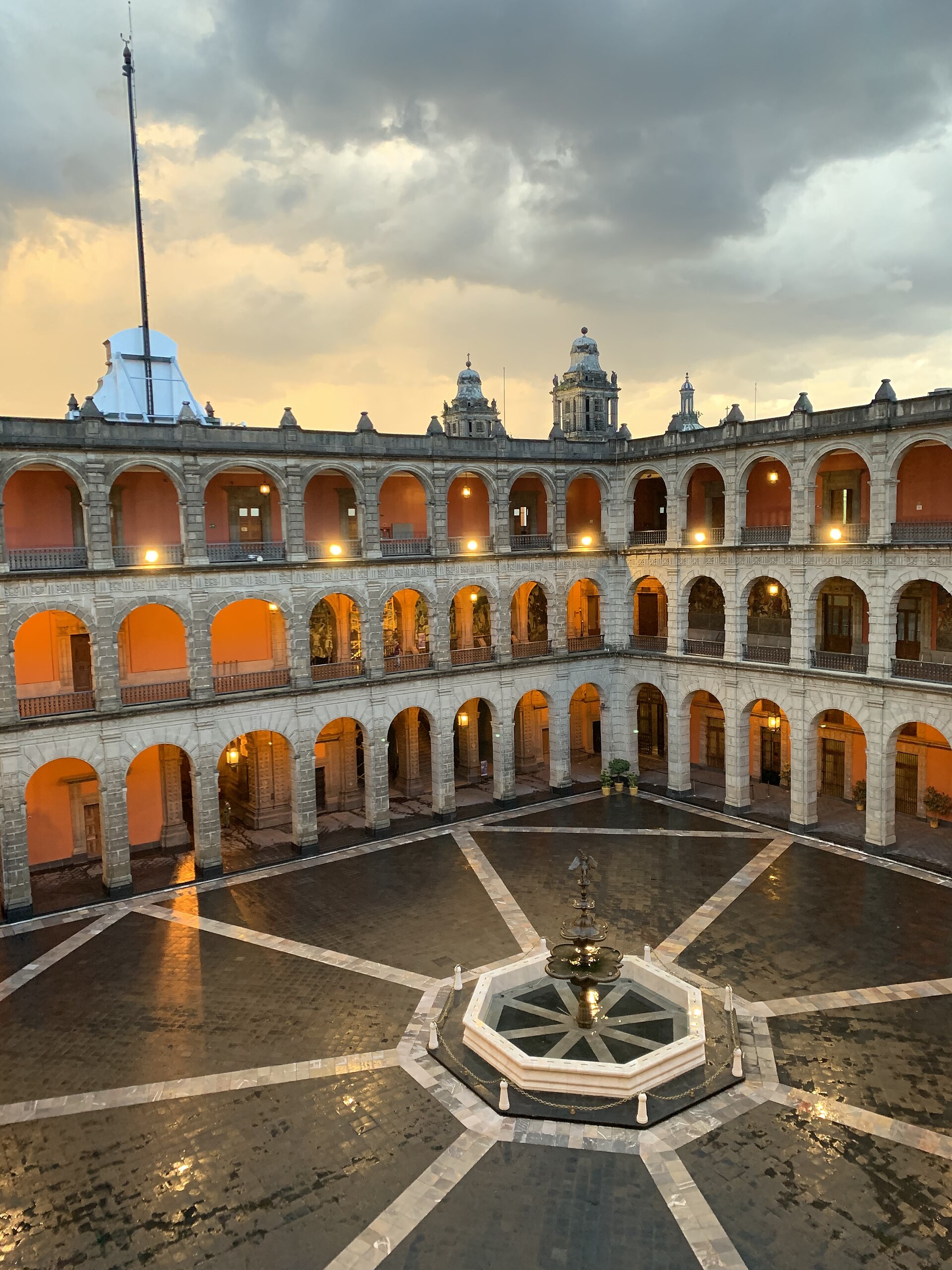
Within the palace are numerous halls and rooms used for the ceremonial and governmental functions of the state, some of them richly decorated and furnished, reflecting the dignity of the offices they serve. These spaces have witnessed countless official occasions over the centuries and continue to serve the working life of the government.
The palace also contains gardens and green spaces, including a botanical area, providing moments of tranquility within the great building. These gardens, like those of many great palaces, offer respite and beauty, and they connect the building to the tradition of the palace garden as a place of repose.
Together these spaces make the Palacio Nacional a world in itself, a vast complex that combines the functions of government with the treasures of art and history, and that rewards exploration with a succession of impressive and evocative spaces, each bearing witness to some aspect of the palace’s long and storied past.
Wandering these courtyards, a visitor can sense the layered rhythms of the building’s life, the ceremonial grandeur of the great occasions, the daily business of government, and the quiet of the gardens, all contained within the same ancient walls. Few buildings hold so many functions and so much history in a single architectural whole.
History Preserved in the Palace
The Palacio Nacional preserves within its walls not only Rivera’s murals but a wealth of historical memory, and parts of the building are given over to the commemoration and display of the Mexican past. The palace functions, in part, as a museum of the nation’s history, alongside its role as a seat of government.
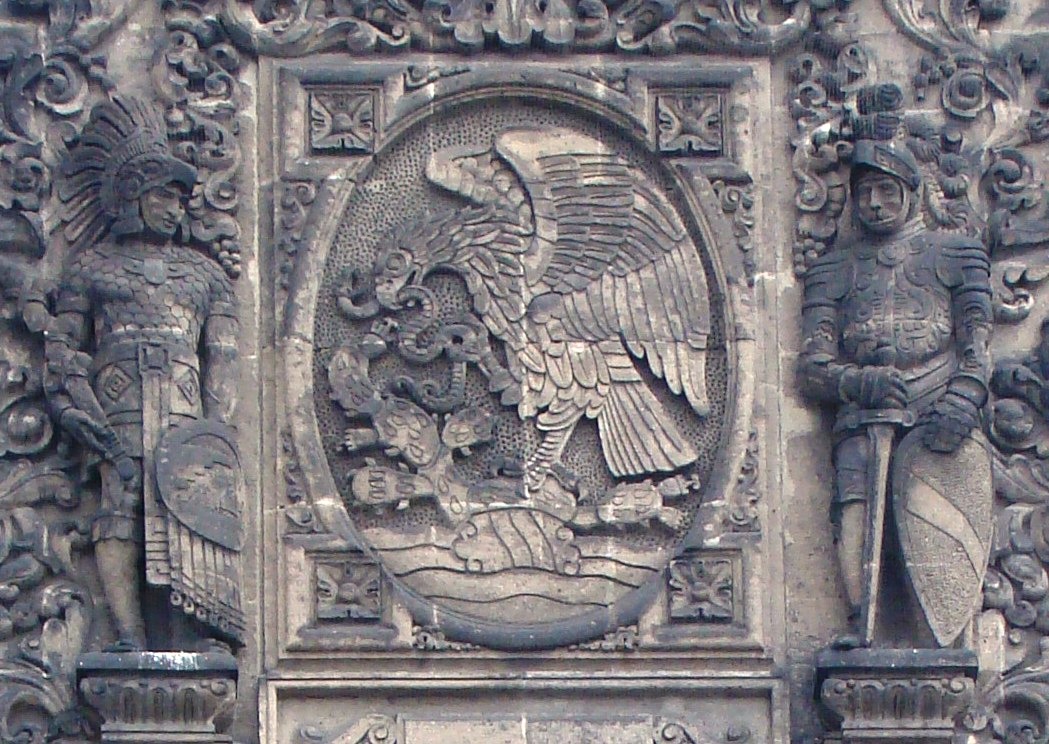
Among the historical features of the palace are rooms and spaces associated with important figures and events in Mexican history, including areas dedicated to the heroes of independence and other national figures. These spaces allow visitors to connect with the people and moments that shaped the nation.
The palace also preserves elements of its own long history, from its colonial origins to its role in the independent nation, so that the building itself becomes a document of the Mexican past. To move through its spaces is to move through the layers of history embedded in this ancient center of power.
This preservation and display of history within the working seat of government reflects the deep Mexican consciousness of the past and the desire to keep the memory of the nation’s journey alive at its very center, so that those who govern, and those who visit, are constantly reminded of the long history of which they are a part.
For Mexican schoolchildren and families, a visit to the palace is often a rite of passage, a chance to stand before Rivera’s murals and to encounter the story of their nation in the very place where so much of it unfolded. The building thus plays a role in the education and the identity of each new generation of Mexicans.
A Living Seat of Government
For all its history and its treasures of art, the Palacio Nacional remains a working seat of government, and this living function is central to its identity. The palace houses offices of the executive branch, and in recent times it has again become closely associated with the daily work of the presidency, reaffirming its ancient role as the center of Mexican power.
This dual character, as both a historic monument and a functioning seat of government, gives the palace a special vitality. It is not a dead relic but a living building, where the business of governing Mexico is conducted amid the accumulated history and art of centuries, connecting the present government to the long line of authority that has resided on this spot.
The continuing use of the palace for the highest functions of the state ensures that it remains at the center of national life, the setting for important announcements, ceremonies, and decisions. Its balcony, its halls, and its courtyards continue to serve the purposes for which the building has always existed.
In this way the Palacio Nacional embodies the continuity of Mexican power across five centuries, a building that has been the seat of authority through empire, colony, and republic, and that remains, to this day, the beating heart of the Mexican state, alive with the work of governing the nation.
The return of the palace to a central place in the daily life of the presidency in recent years has given fresh meaning to its ancient role, a reminder that this is not a museum frozen in the past but a building that continues to serve the living state, its history and its present function inseparably intertwined.
The Heart of the Nation
Few buildings anywhere carry the symbolic weight that the Palacio Nacional holds for Mexico. As the seat of power on the site of Moctezuma’s palace, at the center of the capital, adorned with Rivera’s epic of Mexican history, and associated with the founding cry of independence, it concentrates in itself the whole identity of the nation.
The palace stands at the center of the Zocalo, one of the largest public squares in the world, which has been the ceremonial heart of Mexico City since Aztec times. Facing the cathedral across the square, the palace forms part of an ensemble that expresses the union of the two great pillars of colonial and national authority, church and state.
For Mexicans, the palace is a source of pride and a focus of national feeling, the place where the great moments of the nation are marked and where the history of the country is written in stone and paint. It is a building that belongs to the whole nation, a symbol of Mexican identity and continuity.
In all these ways, the Palacio Nacional is far more than a government building. It is the heart of the Mexican nation, a place where the deep past and the living present meet, and where the long story of Mexico, from the Aztecs to the modern republic, is gathered together and made visible to all.
The pairing of palace and cathedral across the Zocalo is one of the most eloquent expressions in stone of the forces that have shaped Mexico. Church and state, the two great pillars of authority through the colonial centuries, face one another across the immense square, and between them they frame the ceremonial heart of the nation.
To grasp the Palacio Nacional is, in the end, to grasp something essential about Mexico itself, a nation that has never turned its back on its layered past but has instead built its present directly upon it, ruling still from the ground where emperors, viceroys, and presidents have ruled in unbroken succession for half a millennium.
See the Palacio Nacional for Yourself
The scale and richness of the Palacio Nacional, and above all the splendor of Rivera’s murals, are best appreciated by seeing the building for yourself, climbing the great staircase beneath the paintings and taking in the history embodied in its walls. A video tour conveys the atmosphere of the palace in a way that words and still images cannot fully capture.
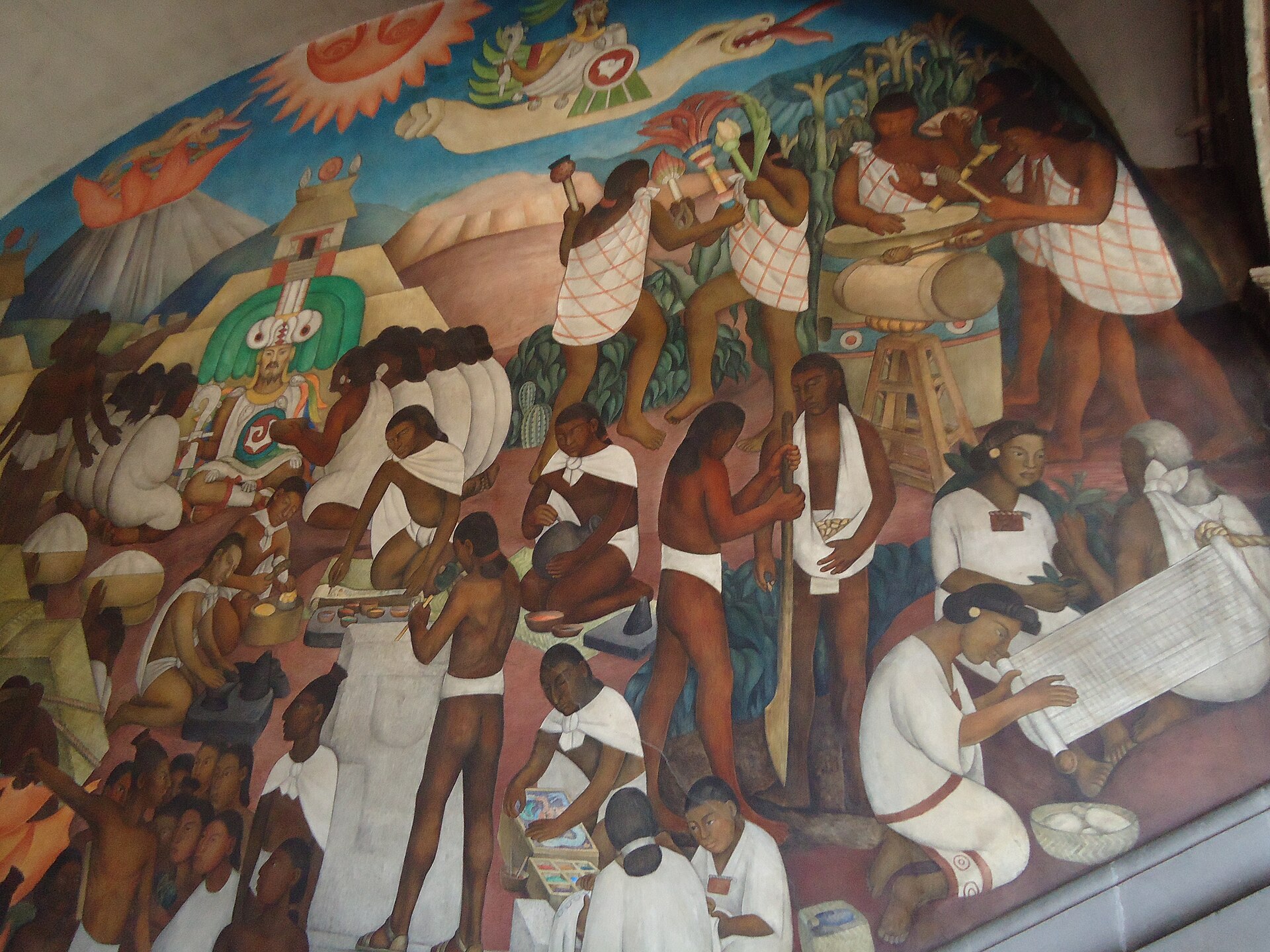
The short video below offers a tour of Rivera’s murals in the National Palace, taking in the great cycle of Mexican history that adorns the staircase and galleries. It is an ideal companion to everything you have read here, giving you a feel for the power and beauty of this masterpiece of public art before you visit in person.
As you watch, consider the sweep of history that Rivera captured on these walls, from the ancient civilizations to the artist’s own time, and the depth of the past embodied in the building itself, on the site of Moctezuma’s palace. Then, when you visit Mexico City, you will recognize the Palacio Nacional not just as a government building but as the living heart of the Mexican nation.
Visiting the Palacio Nacional Today
For the modern traveler, the Palacio Nacional is one of the essential sights of Mexico City, a place where the whole history of the nation is gathered in a single building. Located on the Zocalo, in the heart of the historic center, the palace is easily reached and forms a natural part of any exploration of the old city.
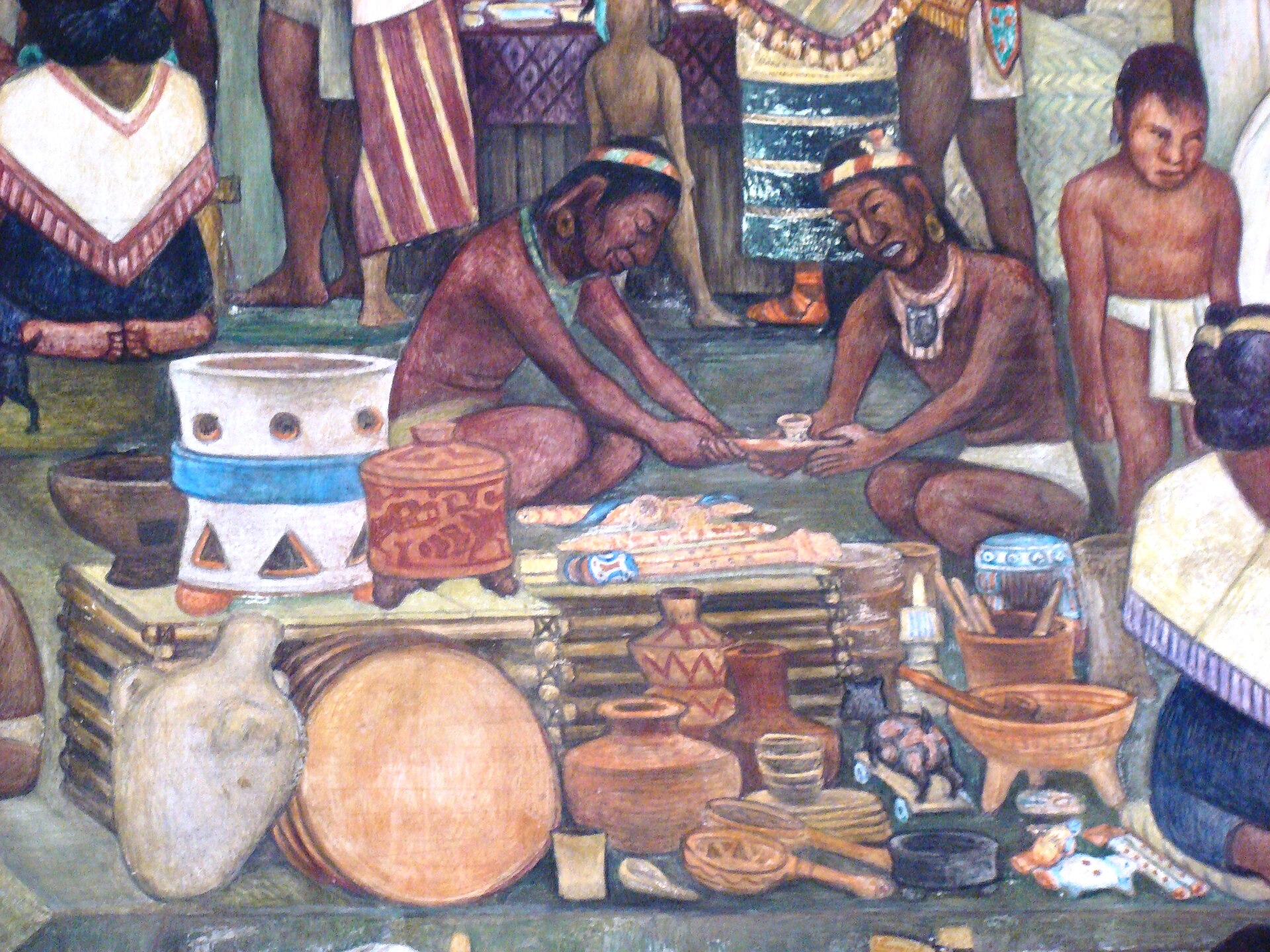
Visitors can, depending on current arrangements, enter the palace to see Rivera’s magnificent murals, the great courtyards, and the historical spaces within. The murals in particular are the highlight, and the chance to see this masterpiece of Mexican art in its original setting is one of the great experiences the city has to offer.
The palace faces the vast Zocalo, with the great cathedral alongside and the ruins of the Aztec Templo Mayor nearby, so that a visit to the palace can be combined with the other great monuments that cluster at the historic heart of the city. As always, it is worth checking current opening arrangements, as access to a working seat of government may vary.
However you approach it, the Palacio Nacional rewards the visitor who understands its story. This is not merely a government building but the center of Mexican power for five centuries, the site of Moctezuma’s palace, the home of Rivera’s epic, and the heart of the nation, a place where the long and dramatic history of Mexico is made visible to all who come.
A practical note for the visitor: because the palace is an active seat of government, access can depend on the political calendar and on security considerations, and it is wise to confirm before you go. When it is open, entry to see the murals is one of the great free cultural experiences of Mexico City, and it should not be missed.
Palaces Nearby
If the seat of Mexican power has drawn you into the world of Latin American palaces, two more great houses of state make natural companions to a visit here, each standing at the heart of its own nation’s history.
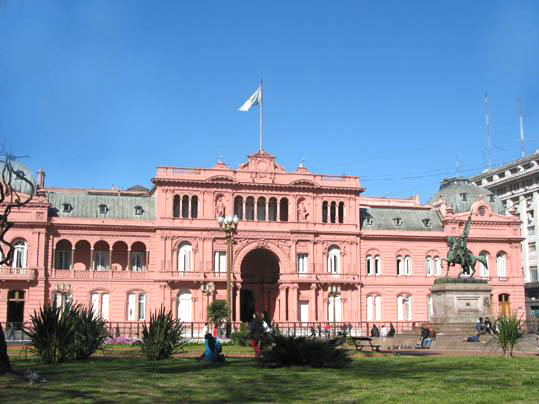
- The Casa Rosada in Buenos Aires — the rose-colored seat of the Argentine presidency, whose balcony has witnessed the great dramas of the nation.
- The Palacio de La Moneda in Santiago — the neoclassical seat of the Chilean presidency, a former mint that became the stage for the nation’s greatest drama.
You May Like
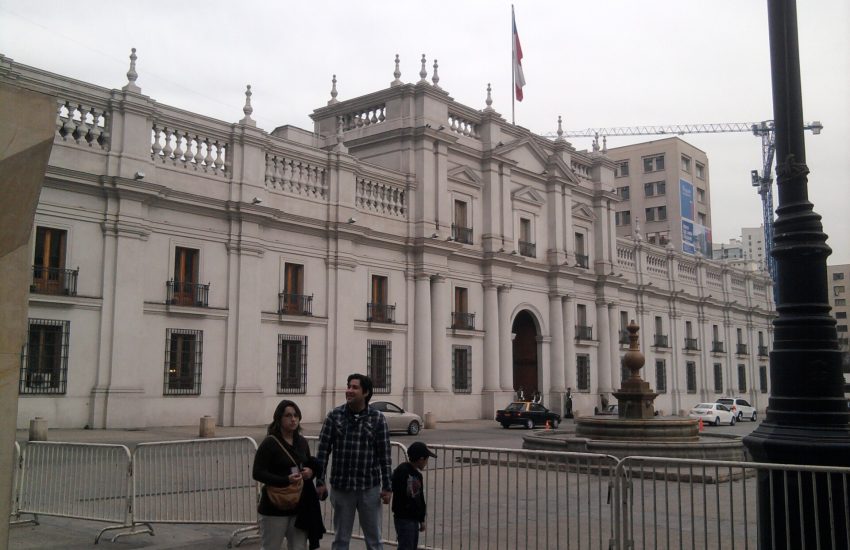
The Chilean Mint That Became a Palace and a Battleground


2 thoughts on “Five Centuries of Power on the Ground of Moctezuma’s Palace”