On the banks of the Bhagirathi River in the old Bengali city of Murshidabad stands a vast neoclassical palace with a thousand doors, a building that recalls the days when this quiet town was the richest and most powerful capital in India. Hazarduari Palace, the Palace of a Thousand Doors, was the seat of the Nawabs of Bengal, raised in the grand European manner at the twilight of their dominion over one of the wealthiest realms on earth.
You come to Hazarduari to step into the world of the Bengal nawabs, rulers whose court once dazzled the subcontinent and whose fateful struggles helped decide the course of Indian history. The palace, with its colonnaded facade, its grand staircase and its famous doors, both real and false, is the most splendid monument of a vanished age of riverine power and intrigue.
In this guide you will get to know Hazarduari beyond its remarkable name. We will trace the history of Murshidabad and its nawabs, explore the palace’s European-inspired architecture and its legendary thousand doors, step into its grand halls and collections, and understand why this riverside palace remains one of the great treasures of Bengal. By the end you will see why Hazarduari rewards every visitor who seeks it out.

In This Article
- Arriving at Hazarduari Palace
- The Richest Capital in India
- The Nawabs of Bengal
- The Palace of a Thousand Doors
- A Grand European Design
- The Grand Staircase and Halls
- A Treasury of Nawabi Heritage
- The Nizamat Fort Campus
- A Palace on the Bhagirathi
- Echoes of a Fateful History
- The Great Cannon and the Imambara
- A Closer Look on Film
- Hazarduari Palace Today
Arriving at Hazarduari Palace
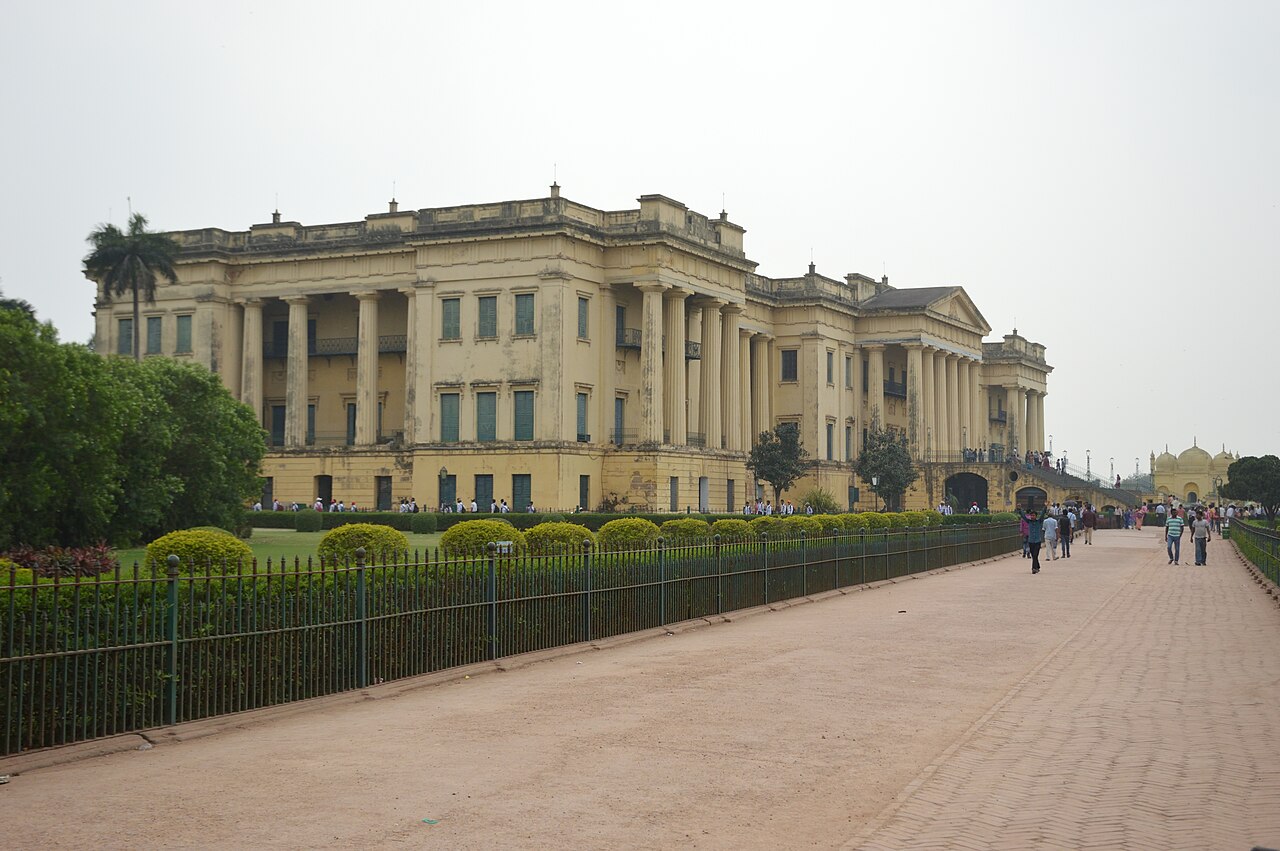
Your first sight of Hazarduari is of an immense, dignified building of pale stucco, its long colonnaded facade stretching grandly along the riverbank. Three storeys tall and crowned with classical detailing, it presents a face of calm European grandeur amid the gentle landscapes of rural Bengal.
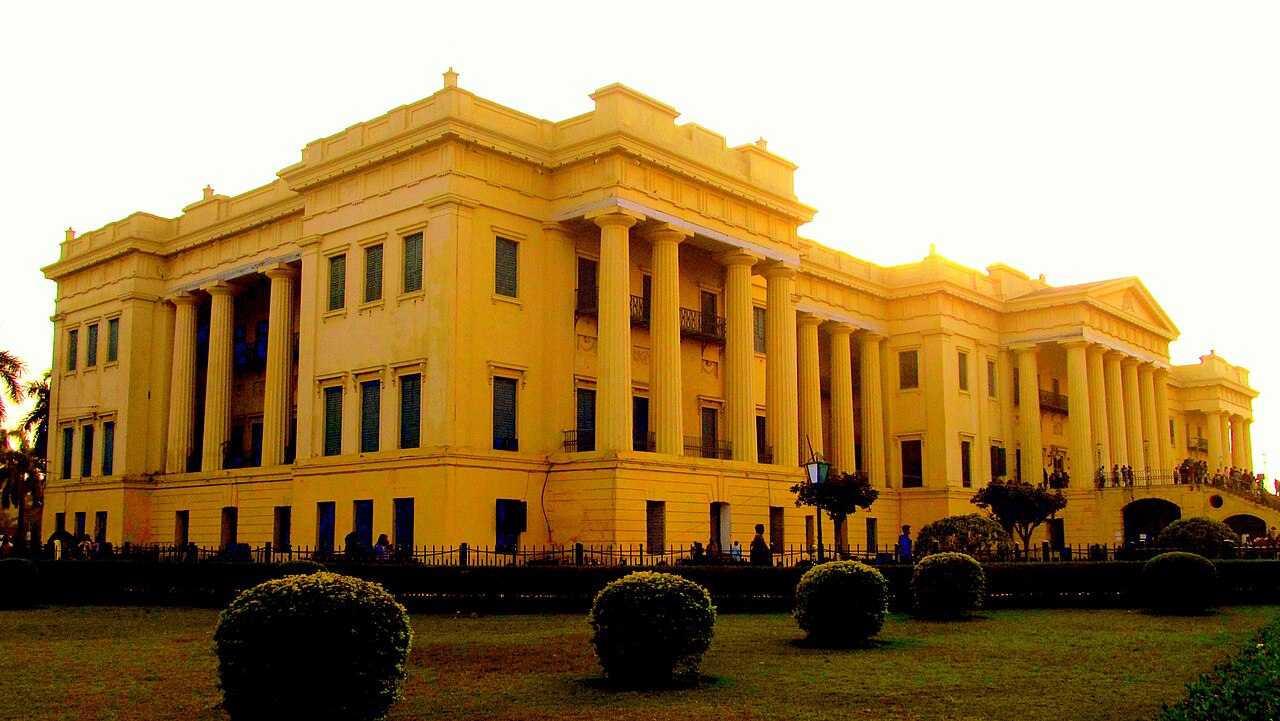
The palace stands within a walled campus near the river, surrounded by lawns and historic buildings that recall the days when this was the heart of a great capital. The scale of the building alone announces the wealth and power of the nawabs who raised it.
As a protected monument and museum, the palace welcomes those who come to explore its history and treasures. Climbing its grand steps and passing beneath its columns, you feel yourself entering a world of nineteenth-century splendor and intrigue.
Take a moment to appreciate the building’s proportions and its riverside setting before going in. The long classical facade, mirrored in the waters of the Bhagirathi, is one of the most memorable sights in Bengal, and it rewards an unhurried, appreciative gaze.
The approach along the riverbank, with the palace growing ever larger before you, builds a real sense of anticipation.
First-time visitors are often astonished by the sheer scale of the building, so grand and so unexpected in this quiet corner of Bengal.
It is a place that invites you to slow down and take in its grandeur, each view of the long facade more impressive than the last.
However you come to it, the palace makes an unforgettable first impression, setting the tone for a visit rich in history and grandeur.
The riverside lawns offer the finest vantage points, from which the full sweep of the colonnaded facade can be admired.
There is a quiet grandeur to Hazarduari that no single photograph captures, and it is best appreciated in person, standing before its endless colonnade.
The Richest Capital in India
To understand Hazarduari, you must understand Murshidabad. In its heyday, this city was the capital of the Nawabs of Bengal and one of the wealthiest and most populous places in the world, a center of trade, textiles and power whose riches were legendary far beyond India.
The nawabs who ruled from here governed a vast and fertile realm, drawing immense wealth from its fields, its silk and its commerce. Murshidabad’s splendor rivaled, and by some accounts surpassed, that of the great capitals of Europe in the same age.
The palace is the crowning monument of this once-mighty city. Though built after the peak of the nawabs’ independent power, it recalls the grandeur of a capital that once stood at the very center of India’s wealth and politics.
Keeping this in mind transforms a visit. Hazarduari is not merely a handsome building but the splendid memorial of a city that was once among the richest on earth, a place whose fortunes helped shape the destiny of the subcontinent.
At its height the city drew merchants and travelers from across the world, its markets famous for silk and fine textiles.
The decline of Murshidabad from this dazzling peak is one of the great reversals of fortune in Indian history, and the palace stands as its most eloquent reminder.
The very quietness of Murshidabad today only heightens the poignancy of its former greatness, preserved in monuments like Hazarduari.
To visit is to glimpse what was once one of the great cities of the world, now preserved in the quiet dignity of its monuments.
The silk and textiles of the region were prized across continents, and the wealth they generated funded a court of remarkable splendor.
Travelers’ accounts from the era marveled at the riches on display, and Hazarduari preserves an echo of that lost abundance.
For modern visitors, the contrast between the city’s former glory and its present calm is deeply moving.
In its monuments, the memory of a once-great capital lives on, waiting to be rediscovered by those who seek it.
To wander Murshidabad is to walk through the faded grandeur of an imperial capital, and Hazarduari is the jewel at its heart.
That a place now so tranquil was once among the busiest and richest cities on earth is one of history’s great reversals, and the palace makes it vivid.
Few monuments anywhere so poignantly embody the rise and fall of a great capital.
Hazarduari, more than any other building, lets the modern visitor feel the scale of what was once here.
The Nawabs of Bengal
The palace is inseparable from the Nawabs of Bengal, the rulers who governed this rich province and made Murshidabad their capital. Their court was famous for its wealth and sophistication, and their history is woven into some of the most dramatic events in the story of India.
It was here, in the age of the nawabs, that the fate of Bengal, and with it much of India, was decided through war, intrigue and shifting alliances. The nawabs’ struggles with rising foreign powers form one of the pivotal chapters of the subcontinent’s history.
Though the palace was built in a later, more subdued era of the nawabs’ rule, it stands as the grand successor to that dramatic age, the seat from which the titular rulers continued to preside over their diminished but still dignified court.
Understanding this dynasty deepens a visit. Hazarduari is the monument of a line of rulers whose wealth was legendary and whose history helped shape the modern map of India.
The nawabs presided over a court of great refinement, patrons of art, architecture and learning as well as rulers of a rich province.
Their story, full of ambition, splendor and tragedy, lends the palace a depth of historical resonance that few buildings can match.
The palace remains the most visible and splendid monument to all that the nawabs achieved and endured.
Their patronage shaped the culture of Bengal, leaving a legacy in art, architecture and learning that endures to this day.
The palace gathers this heritage within its walls, a treasury of the nawabi world.
The dignity with which the later nawabs maintained their court, even in reduced circumstances, is itself a poignant part of the story.
In the quiet halls of Hazarduari, the drama of their history still seems to echo for the attentive visitor.
Their legacy, preserved in this palace, ensures that the nawabs of Bengal are not forgotten by the generations that follow.
The Palace of a Thousand Doors
The most famous feature of Hazarduari, and the source of its evocative name, is its extraordinary profusion of doors. The palace is said to contain a thousand doors, a remarkable number that gives the building its name, the Palace of a Thousand Doors.

Yet there is a fascinating twist to the tale. Many of these doors are said to be false, cleverly painted or constructed to confuse and deceive. The story goes that these decoy doors were designed to foil intruders, who might flee through a false door only to find themselves trapped.
Whether or not every detail of the legend is true, the sheer number of doors, real and false, is genuinely striking, and it has captured the imagination of visitors for generations. It is a feature unlike anything in other palaces of the age.
For the visitor, the thousand doors are an irresistible curiosity, a playful and ingenious touch that sets Hazarduari apart. They are the perfect symbol of a palace full of surprises and stories.
Counting the doors has become a favorite pastime of visitors, part of the playful mystique that surrounds the palace.
Whatever the exact number, the profusion of doors remains one of the most memorable features of any Indian palace.
The legend of the false doors, designed to trap intruders, adds a delicious air of mystery to the whole building.
It is this feature, more than any other, that has made the palace famous, lending its very name a sense of wonder.
The interplay of real and false doors turns a simple walk through the palace into a kind of gentle puzzle.
No other feature so perfectly captures the blend of grandeur and ingenuity that defines the palace.
It is a feature that children and scholars alike find endlessly fascinating, a touch of genius in a building full of them.
A Grand European Design
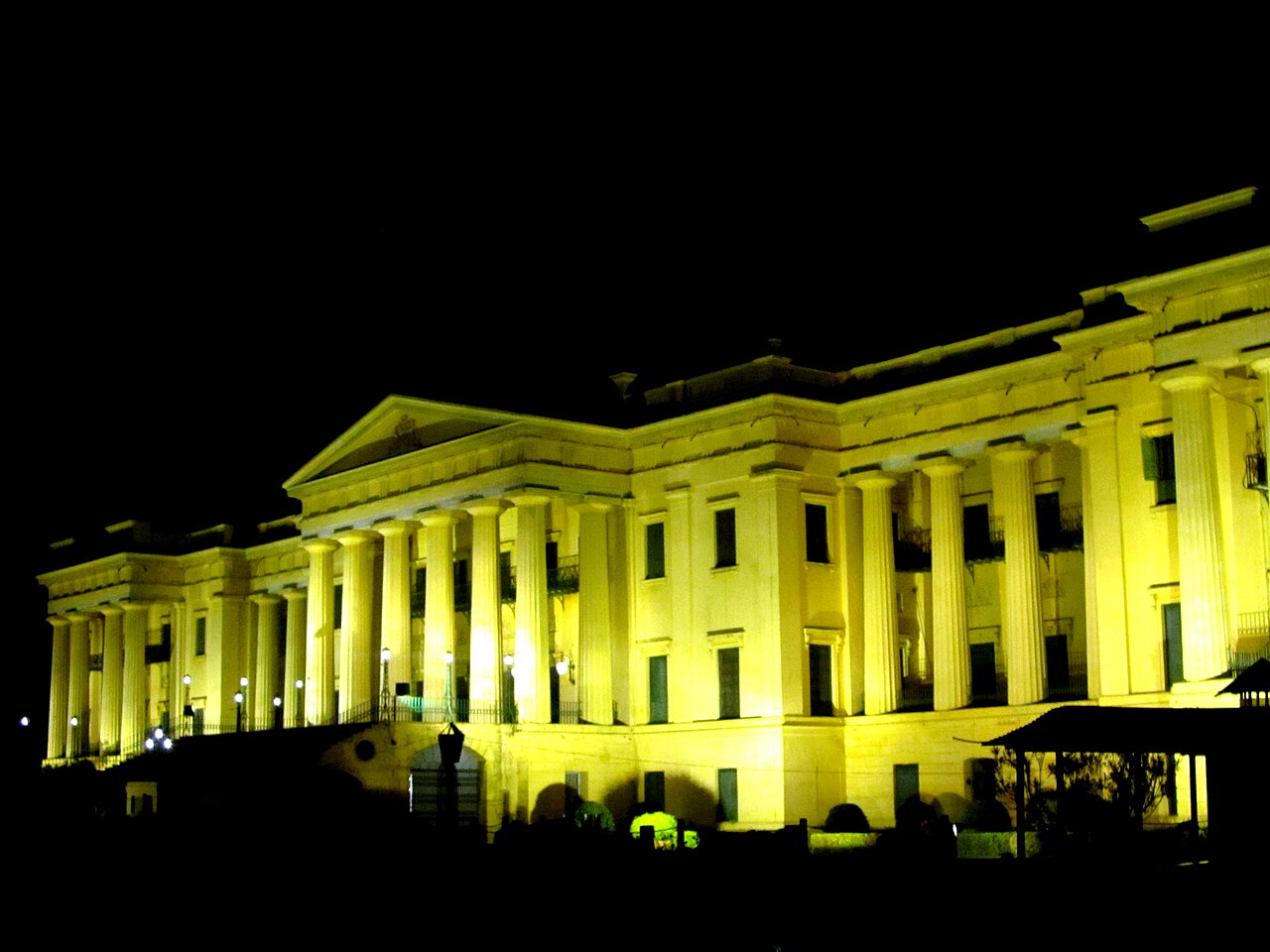
The architecture of Hazarduari is a confident expression of the European neoclassical style, designed by a British engineer in the early nineteenth century. Its long colonnaded facade, classical columns and dignified proportions give it the air of a great public building of Europe transplanted to Bengal.

The building rises three storeys high, its design organized around grand halls and a magnificent staircase. Every element reflects the fashion of the age for European classicism, adopted by the nawabs as a mark of modernity and sophistication.
This choice of style reflected the cosmopolitan outlook of the court and the influence of the age in which the palace was built. The result is a building that would not look out of place in a European capital, yet remains the seat of a Bengali nawab.
Exploring the building, you appreciate how thoroughly the European language of architecture was embraced here. Hazarduari is a monument to an age when the rulers of Bengal built in the grand classical manner of the wider world.
The symmetry and restraint of the design give the palace a dignified calm, quite different from the exuberance of many princely residences.
Yet its scale ensures that it never fails to impress, a building of real monumental presence.
Architectural historians admire Hazarduari as a fine example of colonial-era neoclassicism adapted to an Indian setting.
The long rows of columns along the facade create a powerful rhythm, lending the building a stately, almost temple-like dignity.
Inside, the grand proportions continue, a sequence of lofty spaces designed to impress and to awe.
Seen as a whole, the palace is a masterclass in dignified neoclassical design, grand without being gaudy.
The classical columns marching along the front give the building a rhythm that is both grand and serene, a hallmark of its style.
To encounter so European a building in this setting is one of the quiet surprises of travel in Bengal, and part of its lasting fascination.
In its scale and dignity, the palace remains one of the grandest colonial-era buildings anywhere in eastern India.
The Grand Staircase and Halls
Among the glories of Hazarduari is its grand staircase, a sweeping architectural centerpiece that rises through the heart of the palace. Designed to impress, it carries visitors upward in appropriate state, a fitting introduction to the splendor of the building.
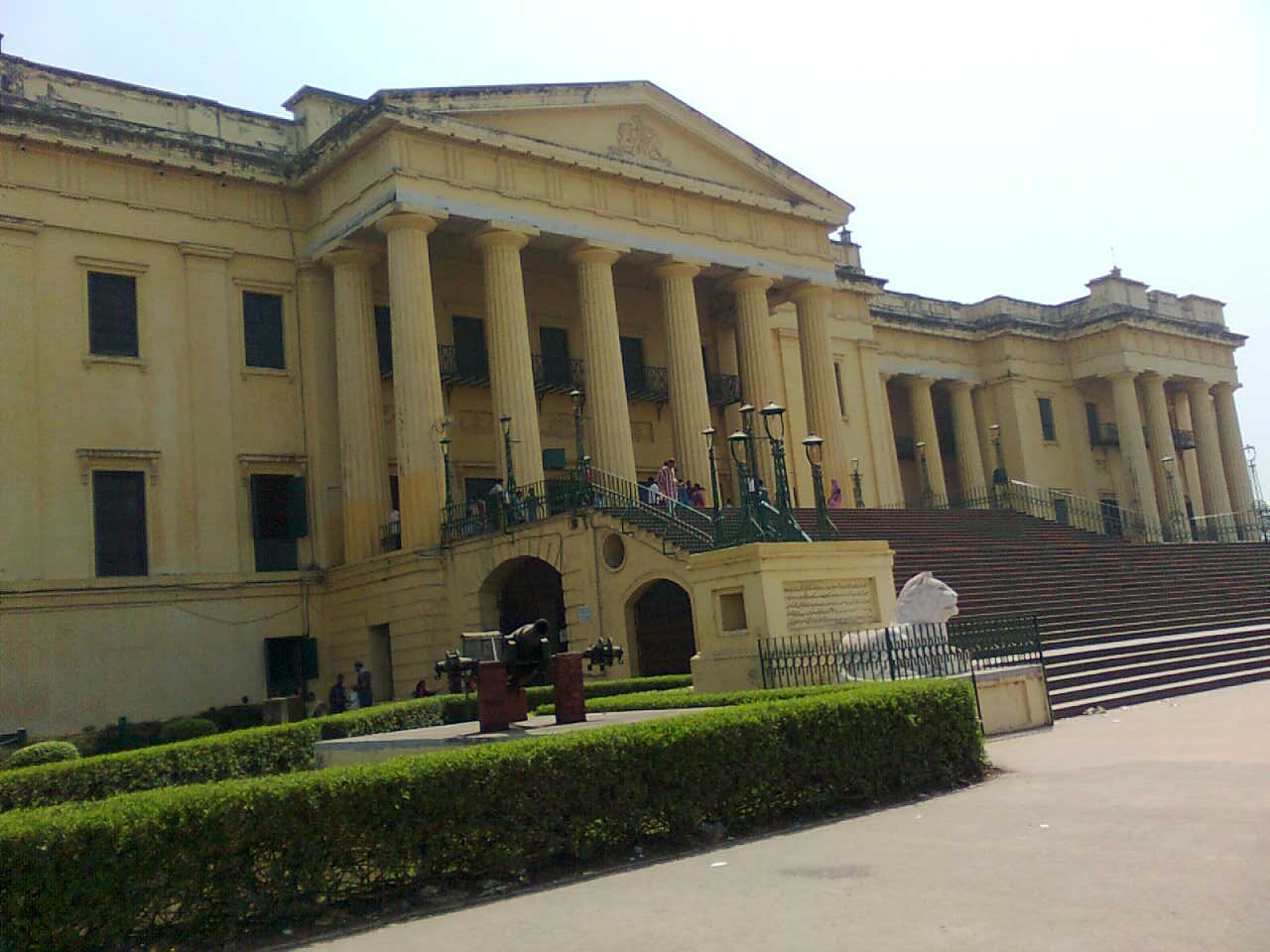
The great halls of the palace open off its central spaces, grand rooms designed for the ceremonies, receptions and durbars of the nawabi court. Their scale and dignity convey the importance of the occasions once held within them.
These spaces were conceived to project the authority and refinement of the nawabs, and they retain much of their grandeur today. Walking through them, you sense the formal, ceremonial life that once filled the palace.
Take your time in these great halls and on the famous staircase. They are the architectural heart of Hazarduari, where the building’s grandeur is felt most powerfully.
The staircase in particular has become one of the most photographed features of the palace, a masterpiece of grand design.
Ascending it, visitors feel something of the ceremony that once attended every formal occasion at the nawabi court.
The great halls, with their lofty ceilings and dignified proportions, retain the atmosphere of the formal court they were built to serve.
To stand at the foot of the staircase and look up is to grasp at once the ambition of the whole design.
It is in these soaring interior spaces that the ambition of the nawabs who built the palace is felt most powerfully.
Few staircases in India are as celebrated, and it remains one of the defining images of the palace.
A Treasury of Nawabi Heritage
Today Hazarduari functions as a museum, and its rooms are filled with the accumulated treasures of the Bengal nawabs. Paintings, weapons, furnishings, manuscripts and countless precious objects together tell the story of the dynasty and its world.
Among the collections are fine European and Indian paintings, an impressive armoury of historic weapons, and objects that recall the great events and personalities of Murshidabad’s history. The breadth of the collection reflects the wealth and connections of the nawabi court.
Some of the most compelling items connect the palace to the dramatic history of Bengal, including relics and mementoes of the fateful struggles that decided the fate of the province. These objects lend the museum a powerful historical resonance.
For those who explore the palace, the collections bring its history vividly to life. Each room reveals new treasures, rewarding the curious visitor with glimpses into the splendor and drama of the nawabi age.
The armoury is a particular highlight, its historic weapons recalling the martial power that once underpinned the nawabs’ authority.
The paintings, both European and Indian, offer windows onto the tastes and connections of a cosmopolitan court.
Together the collections make the palace a treasury of memory, preserving the heritage of one of India’s richest dynasties.
For the visitor, lingering over these treasures is the surest way to feel the presence of the nawabs and their world.
Documents and manuscripts preserved here shed light on the governance and culture of the nawabi state, a precious record for historians.
For the ordinary visitor, meanwhile, the sheer variety of the treasures ensures that every room holds some new delight.
Together, the collections transform the palace from a grand shell into a living record of the nawabi age.
The treasures gathered here rank among the finest holdings of any palace-museum in eastern India.
A slow, attentive tour of the galleries is the best way to appreciate the depth and richness of the nawabi heritage.
Among the holdings are objects of real historical weight, connecting the palace directly to the great events of the eighteenth century.
For many, the museum is the highlight of a journey into the heart of old Bengal, a treasure house without equal in the region.
The Nizamat Fort Campus
Hazarduari does not stand alone but within a larger complex known as the Nizamat Fort campus, the historic citadel of the nawabs. Around the palace cluster other important buildings, together forming the ceremonial and administrative heart of the old capital.
Nearby rises a great imambara, one of the largest of its kind, along with mosques, gateways and other structures that recall the religious and courtly life of the nawabs. The campus as a whole conveys the scale and ambition of the nawabi capital.
This wider setting is essential to understanding Hazarduari. The palace was the centerpiece of a complete royal and religious complex, not an isolated building, and exploring its surroundings reveals the full grandeur of the nawabs’ seat.
For the visitor, the campus rewards exploration. The palace, the imambara and the other historic buildings together tell the story of Murshidabad far more completely than any single structure could.
Walking from building to building within the campus, you trace the full extent of the nawabs’ ceremonial and religious world.
The scale of the complex is a vivid reminder of how important Murshidabad once was.
Few sites in Bengal offer so complete a picture of a vanished capital.
The campus rewards a full day’s exploration, each building adding another chapter to the story of the capital.
It is the completeness of the campus that makes Murshidabad so rewarding, a whole capital preserved for the curious traveler.
The sheer extent of the complex is a reminder of how much was once concentrated here, at the heart of a mighty province.
A Palace on the Bhagirathi
The setting of Hazarduari beside the Bhagirathi River is central to its character and its history. The river was the lifeline of Murshidabad, carrying the trade and wealth that made the city great, and the palace was placed to command and celebrate that vital waterway.
From the palace grounds the eye is drawn to the river, along whose banks the life of the old capital once flowed. The waterway connected Murshidabad to the wider world of Bengal and beyond, bringing both prosperity and the ambitions of distant powers.
The riverside location lends the palace a serene beauty, its grand facade reflected in the waters that once bore the boats and barges of a bustling capital. It is a setting both tranquil and evocative of a grander past.
Standing before the palace with the river beyond, you feel the deep connection between the nawabs’ capital and its waterway. Hazarduari is a palace of the river, its fortunes bound to the Bhagirathi that flows beside it.
The Bhagirathi has shaped the life of the region for centuries, and the palace’s riverside setting is inseparable from its story.
At dawn and dusk especially, the light on the water lends the scene a serene and timeless beauty.
The palace and the river together form one of the most evocative scenes in all of Bengal.
The waterway that made the city rich now lends its palace a tranquil beauty, a fitting setting for so storied a monument.
It is easy, gazing at the river, to imagine the busy traffic of boats that once sustained the capital.
The palace remains inseparable from its river, the two together forming the enduring image of old Murshidabad.
To watch the sun set over the Bhagirathi from the palace grounds is to experience Murshidabad at its most magical.
Echoes of a Fateful History
The history of Murshidabad and its nawabs is forever linked to one of the most consequential episodes in the story of India, the struggle for control of Bengal that culminated in a famous battle not far from the capital. The outcome of that struggle changed the course of the subcontinent’s history.

Though Hazarduari was built after these dramatic events, it stands as the grand monument of the dynasty whose fortunes they transformed. The palace and its collections preserve the memory of this pivotal age, lending the building a profound historical weight.
To walk the halls of Hazarduari is to feel the echoes of this history, the rise and fall of a great power and the shifting of an empire. Few palaces carry so direct a connection to events that shaped the modern world.
Understanding this dimension enriches a visit. Hazarduari is not only a building of grand architecture but a monument to a history that helped decide the fate of India itself.
The events of that age reshaped not only Bengal but the entire subcontinent, and the palace stands as their most splendid memorial.
To stand here is to feel the weight of a history whose consequences are still felt today.
Few places so vividly embody the drama of a pivotal moment in world history.
The palace, built in the long aftermath of those events, stands as a dignified coda to a dramatic and consequential age.
The palace thus serves as a bridge between the dramatic past and the reflective present, a monument to lessons of history.
Visitors who know the history cannot walk these halls without reflecting on how much turned on the events of that distant age.
The Great Cannon and the Imambara
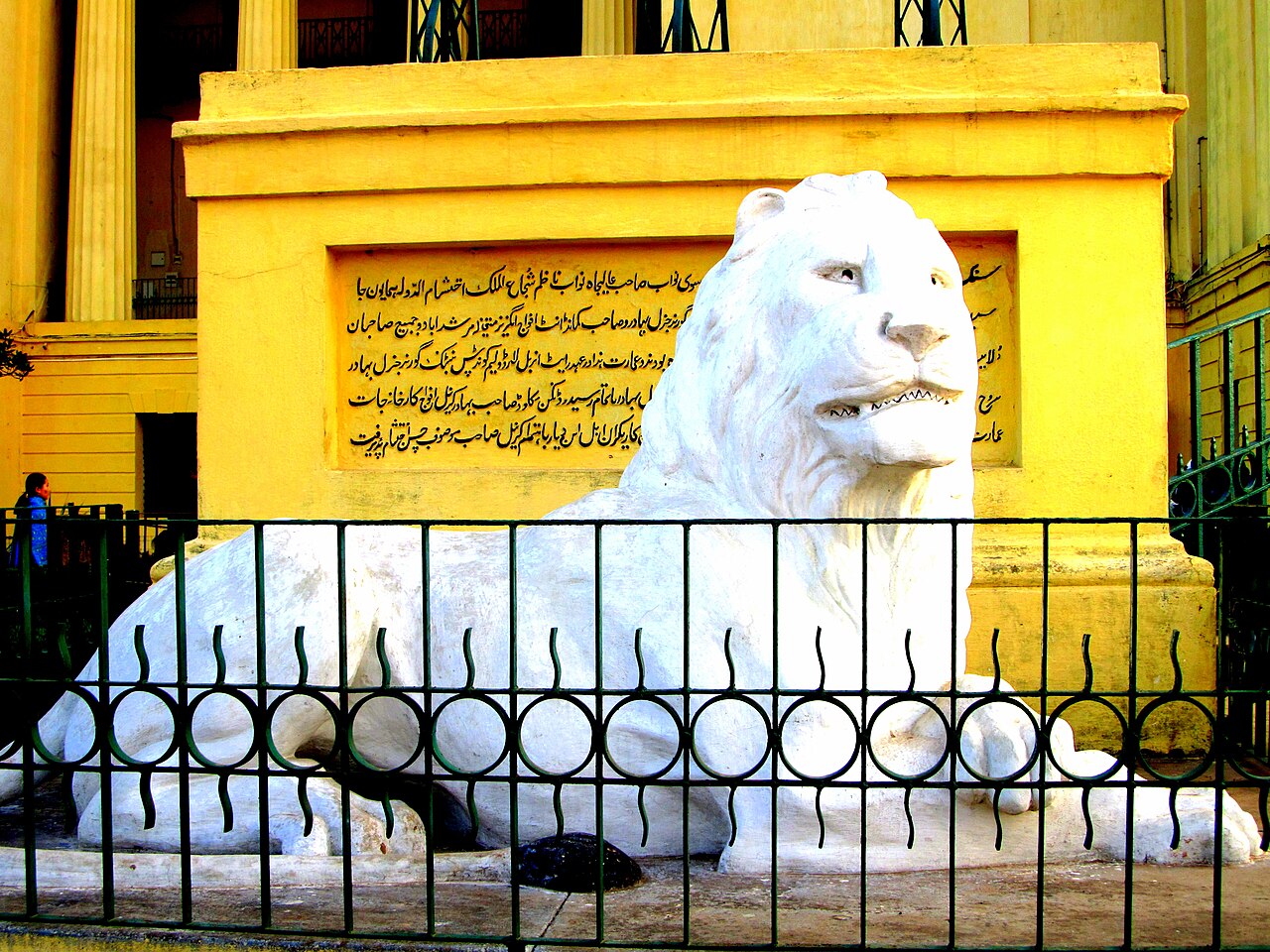
Among the many wonders of the Hazarduari campus are some remarkable landmarks that draw visitors almost as much as the palace itself. Chief among them is a colossal historic cannon, a massive piece of ordnance that testifies to the military might of the age of the nawabs.

Nearby stands a vast imambara, a great hall of congregation for the religious observances of the Shia nawabs, counted among the largest structures of its kind. Its scale matches the ambition of the palace, and together they define the grandeur of the campus.
These landmarks enrich any visit, adding to the sense of a complete royal and religious world gathered along the riverbank. The cannon speaks of power, the imambara of faith, and the palace of splendor, three facets of the nawabi capital.
The relationship between these structures reveals much about the nawabs, rulers who combined wealth and military strength with deep religious devotion. The campus as a whole expresses the fullness of their world.
For the visitor, exploring these landmarks alongside the palace offers a richer understanding of Murshidabad, and of the many-sided greatness of the nawabs who ruled from here.
The great cannon in particular draws crowds of curious visitors, a tangible reminder of the military age in which the nawabs ruled.
Together, palace, cannon and imambara make Hazarduari one of the richest heritage sites in eastern India.
The imambara, vast and solemn, speaks of the deep faith that animated the nawabi court alongside its worldly splendor.
Taken together, these monuments make a visit to the campus a rich and unforgettable experience.
To see the cannon and the imambara alongside the palace is to understand the full scope of nawabi power and devotion.
For the visitor, these extra wonders turn a palace visit into an exploration of a whole royal world.
A Closer Look on Film
To appreciate the full grandeur of Hazarduari, from its colonnaded facade to its grand staircase and treasures, film offers a fine complement to a visit. The short video below helps bring the palace and its history to life.

Watching it, you can better sense the scale of the architecture, the richness of the collections and the atmosphere of the old capital, details that reward a closer look. It makes an ideal companion to understanding this remarkable palace.
Hazarduari Palace Today
Today Hazarduari Palace endures as one of the great historical treasures of Bengal, a magnificent museum and a vivid link to the age of the nawabs. Its thousand doors, its grand halls and its collections continue to fascinate all who visit.

For travelers, the palace offers a rewarding encounter with a lesser-known but profoundly important chapter of India’s history. To stand before its grand facade, in the quiet town that was once the richest capital in India, is to feel the pull of a vanished age of splendor.
There is a lesson in the endurance of Hazarduari. It shows how the heritage of a great capital can be preserved and shared, kept alive as a monument and museum for future generations to explore.
When you finally turn to leave, glance back at the long colonnaded facade above the river. You will carry with you the memory of a palace of a thousand doors, and a vivid sense of the wealth, power and drama of the Nawabs of Bengal.
Long after leaving, travelers find the image of the thousand-doored palace returning to mind, a lasting symbol of the lost grandeur of Murshidabad.
It remains a place of pilgrimage for all who wish to understand the true history of Bengal.
For anyone drawn to the deeper currents of Indian history, the palace is an essential and rewarding destination.
Whatever route brings you here, Hazarduari rewards the journey with a vivid encounter with the age of the nawabs.
It endures, in the end, as proof that the grandeur of Bengal’s nawabs can still be felt by all who come to see it.
In its thousand doors and grand halls, the lost world of the Bengal nawabs lives on for all who come to explore it.
For the traveler willing to venture into rural Bengal, the reward is one of the most atmospheric heritage experiences in all of India.
And so Hazarduari endures, its thousand doors open to a new age of visitors, keeping alive the memory of Bengal’s golden capital.
It stands as a proud reminder that the history of India was shaped not only in Delhi and Agra but here, on the banks of the Bhagirathi.
Few destinations reward the curious traveler so richly, or leave so lasting an impression of a vanished grandeur.
View the location on Google Maps
Palaces Nearby
If the thousand doors of Hazarduari have deepened your love of India’s royal palaces, two more princely residences of the subcontinent make fitting companions to this one.
- Lalgarh Palace in Bikaner, a masterpiece of carved red sandstone built by a great desert maharaja.
- Vijay Vilas Palace near Mandvi, the seaside summer retreat of the rulers of Kutch in Gujarat.
You May Like
Konopiste the Bohemian Castle of a Doomed Archduke


One thought on “Hazarduari, the Palace of a Thousand Doors on the Banks of the Bhagirathi”