On the southern edge of Moravia, close to the Austrian border, the little town of Valtice is dominated by a vast baroque chateau that was for centuries the main seat of one of the most remarkable dynasties in Europe, the princes of Liechtenstein. Long before their name became attached to a tiny Alpine principality, the Liechtensteins ruled huge estates in Moravia and Austria, and Valtice was the heart of their world.
The chateau is grand in every sense: a sprawling complex of wings and courtyards, richly decorated apartments, a chapel, a baroque theatre and wine cellars that now house the national wine salon of the Czech Republic. Around it stretches the Lednice Valtice Cultural Landscape, one of the largest designed landscapes in Europe and a UNESCO World Heritage Site.
In this article we will explore Valtice from its medieval origins to its baroque splendour, through its apartments, chapel and cellars, and out into the extraordinary landscape the princes created, before finishing with tips for your own visit.
In This Article
- A Princely Seat on the Moravian Border
- Six Centuries of the House of Liechtenstein
- Rebuilt in Baroque Splendour
- Gates, Courtyards and Facades
- The Red Salon and the State Apartments
- Corridors of a Princely Household
- Dining with the Princes
- Stoves, Craftsmanship and Fine Details
- The Chapel of the Princes
- Private Rooms and a Baroque Theatre
- Cellars and the National Wine Salon
- Take the Full Tour on Video
- The Lednice Valtice Landscape and Your Visit
A Princely Seat on the Moravian Border
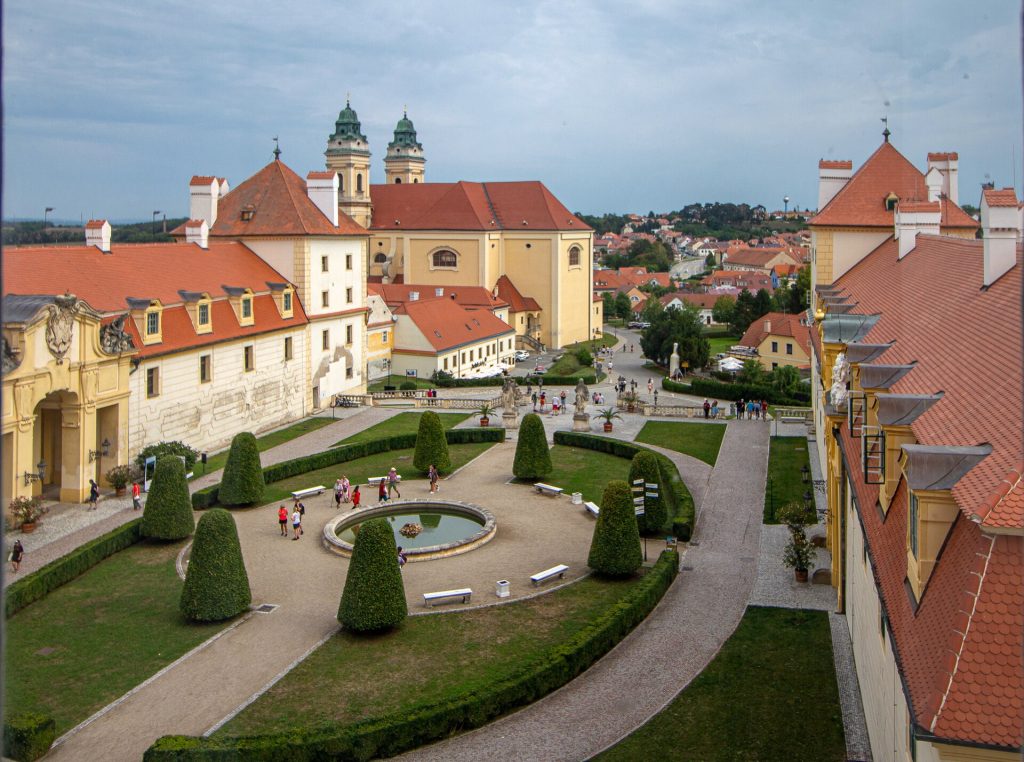
Arriving in Valtice, you cannot miss the chateau. Its long facades rise above the town square, next to the twin towered parish church, and its scale seems almost too large for such a small place. That contrast says everything about the power of the family who built it.
The approach through the gate leads into a great courtyard surrounded by baroque wings, their facades decorated with sculpture and ornament. The whole complex was designed to impress visitors with the wealth and prestige of the Liechtensteins, and it still does.
Valtice sits in a gentle landscape of vineyards, ponds and woods, close to the town of Mikulov and the Pavlov Hills. It is a wine region through and through, and the chateau is closely linked with the culture of wine that has shaped the area for centuries.
What makes Valtice special is the way the chateau, the town and the landscape belong together. The princes did not simply build a palace; they shaped an entire region around it.
The town itself is small and friendly, with wine bars, cafes and family run wineries tucked into its streets. Walking from the square to the chateau gate, you pass houses that once belonged to officials and craftsmen who served the princely court.
In autumn, during the grape harvest, the whole area comes alive with wine festivals, and the chateau courtyard often fills with music, stalls and visitors tasting the new vintage.
The view of the chateau from the gardens or from the hills around the town is especially impressive, showing how its long wings spread across the landscape.
Six Centuries of the House of Liechtenstein
The story of Valtice begins with a medieval castle that guarded this part of the border between Moravia and Austria. In 1395 the estate came into the hands of the Liechtenstein family, and from then on, for more than five centuries, it remained one of their most important possessions.
The Liechtensteins rose steadily in wealth and influence. They served the Habsburg emperors as courtiers, soldiers and administrators, and in the early seventeenth century Karl of Liechtenstein was raised to the rank of prince. Valtice became the main seat of the princely family, the centre from which they managed their vast estates.
It is worth remembering that the Principality of Liechtenstein, the small country between Switzerland and Austria, was acquired by the family only in the early eighteenth century, largely to give them a seat in the imperial diet. For a long time the princes rarely visited it; their real home was here, in Moravia and in Vienna.
This long connection lasted until 1945, when the estates of the family in Czechoslovakia were confiscated after the Second World War. Since then the chateau has been owned by the state, but the memory of the Liechtensteins is everywhere in its rooms and in the surrounding landscape.
The family’s influence extended far beyond Moravia. Princes of Liechtenstein served as ambassadors, generals and patrons of the arts, and their art collection, built up over centuries, is still one of the finest private collections in the world.
For the people of Valtice and the surrounding villages, the princes were landlords, employers and patrons, and their presence shaped the economy and culture of the region for generations.
The family also built and supported churches, hospitals and schools across their lands, leaving a lasting imprint on the towns and villages of South Moravia. Many of these buildings still stand today.
After 1945, the confiscation of the Liechtenstein estates became a subject of long diplomatic disagreement between the principality and Czechoslovakia, and later the Czech Republic. Relations have since improved, and joint historical research has helped tell the story of the family in Moravia.
Rebuilt in Baroque Splendour
In the second half of the seventeenth century, the princes decided to transform the old castle into a modern baroque residence fit for one of the leading families of the Habsburg monarchy. The work continued for decades and involved some of the most celebrated architects of the age.
Among them were Giovanni Giacomo Tencalla, Johann Bernhard Fischer von Erlach, who designed many of the greatest buildings of baroque Vienna, and Domenico Martinelli, an Italian architect who worked extensively for the Liechtensteins. Later, Anton Johann Ospel completed much of the building in the early eighteenth century.
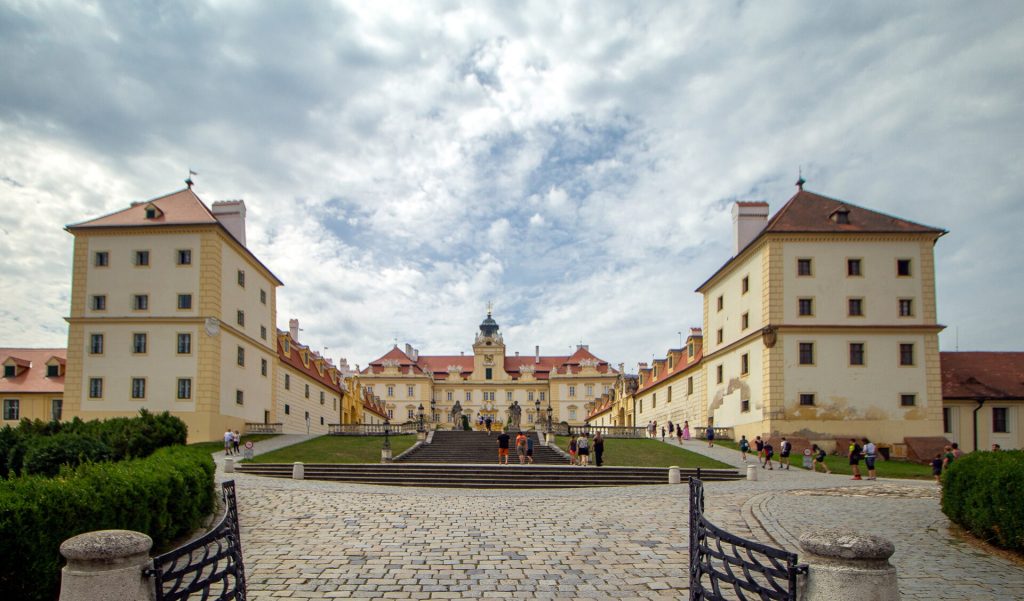
The result was a vast complex of wings arranged around courtyards, with grand staircases, state apartments, a chapel and service buildings. The facades are rhythmic and dignified, enlivened by sculpture and decorative details that reflect the ambition of their patrons.
Walking around the chateau, you can sense the scale of the undertaking. This was not a country house but a princely residence designed to rival the palaces of Vienna, and it remains one of the most important baroque buildings in the Czech Republic.
Fischer von Erlach in particular brought to Valtice the grand architectural language he would later use in Vienna, including at Schonbrunn and the Karlskirche. His involvement places Valtice among the important works of central European baroque.
The rebuilding also included a riding school, stables and other service buildings, reflecting the princely passion for horses. The Liechtensteins bred fine horses, and their stables were famous across the Habsburg lands.
Inside, the main staircase and the sequence of state rooms were arranged to create a grand processional route, leading visitors from the entrance to the most important reception rooms. This careful planning was a hallmark of baroque palace design.
The decoration of the interiors continued well into the eighteenth century, with later generations adding rococo and classical touches. As a result, the chateau today offers a fascinating overview of changing tastes over more than a hundred years.
The chateau survived wars and changes of regime largely intact, and today it stands as one of the best preserved baroque residences in the region.
Gates, Courtyards and Facades
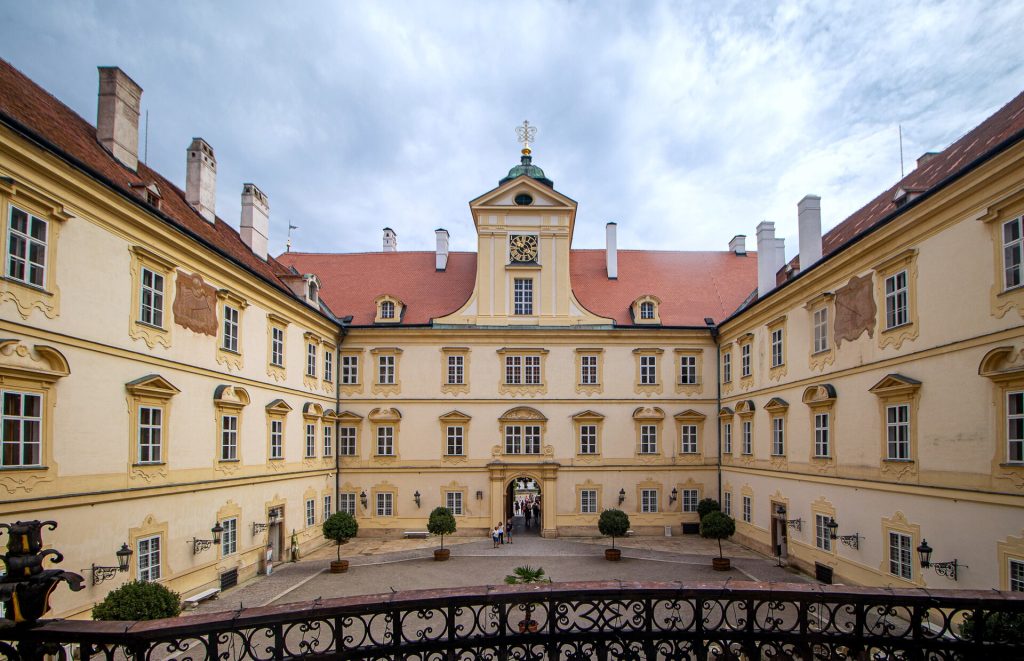
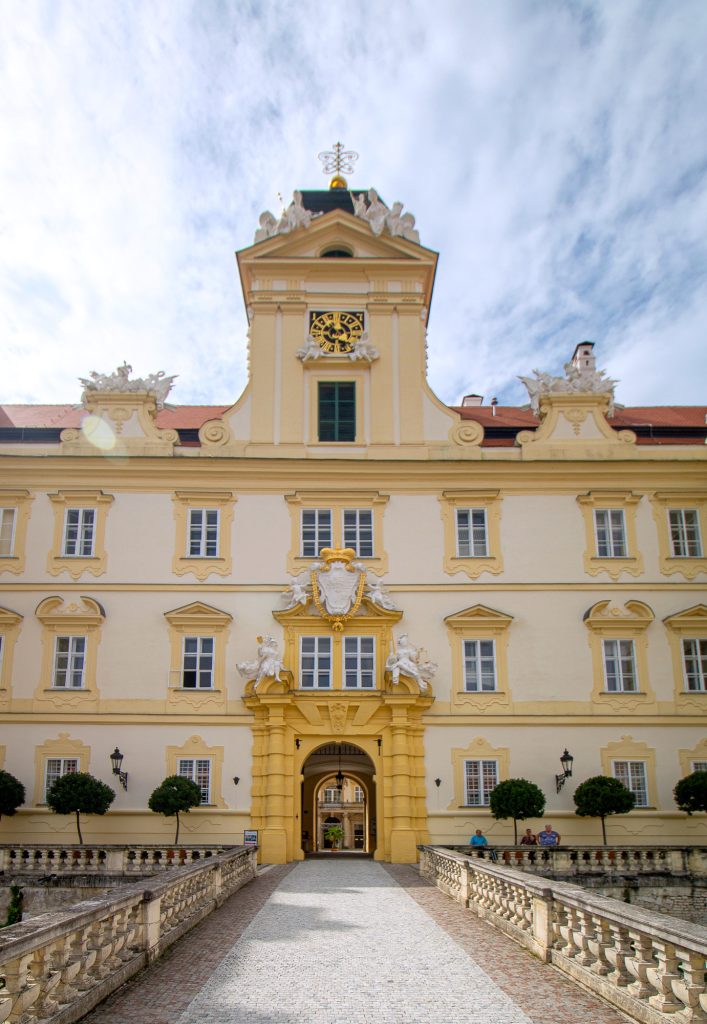
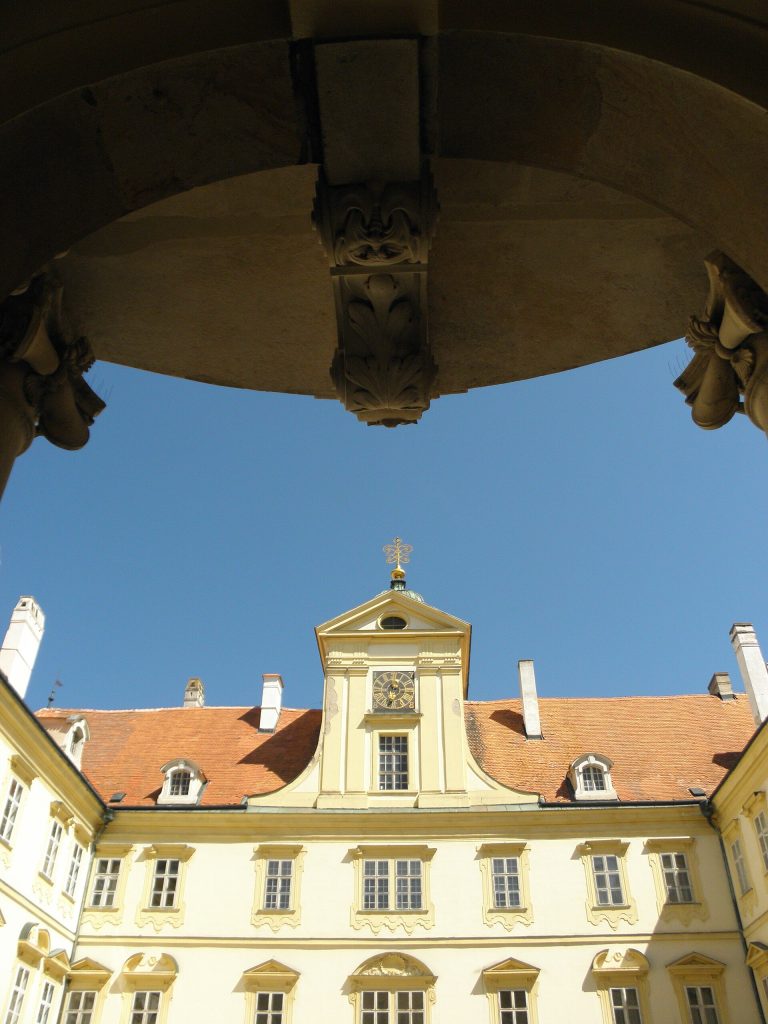
You enter the chateau through a monumental gateway, decorated with sculpture and the arms of the princely family. Beyond it lies the main courtyard, a vast open space framed by baroque wings. Its scale is impressive, and it was designed to accommodate carriages, horses and the comings and goings of a large princely household.
The facades around the courtyard are rhythmically divided by pilasters and windows, with richer decoration around the main entrances. Statues and vases along the rooflines add movement against the sky, a typical baroque touch that brings the architecture to life.
Smaller courtyards and passages connect the different parts of the complex, and exploring them gives you a sense of how the chateau functioned as a small town, with kitchens, stables, offices and workshops all serving the needs of the princes.
On a sunny day the pale facades glow warmly, and the courtyard becomes a pleasant place to pause before or after your tour of the interiors. In summer it often hosts concerts, wine events and festivals.
Look out for the statues on the gateway and along the facades, many representing allegorical figures and virtues. They were meant to remind visitors of the qualities expected of a great ruling family.
From the courtyard you can also see the twin towers of the parish church rising beside the chateau, a reminder of how closely the princely residence and the town were bound together.
The scale of the courtyard makes it a natural venue for public events, and in the summer months it often hosts open air concerts, theatre performances and the celebrated wine festivals of the region.
The service courtyards behind the main buildings were once full of activity, with grooms tending horses, carts delivering supplies and craftsmen at work. Some of these buildings now house exhibitions, shops and a hotel.
The Red Salon and the State Apartments
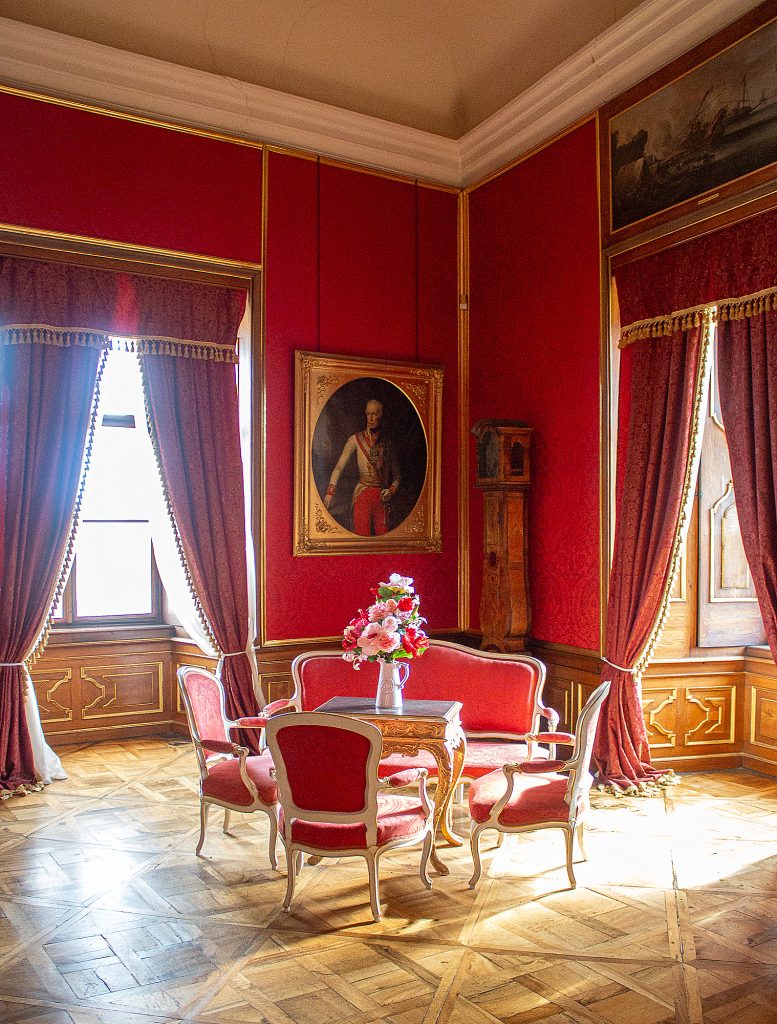
The interiors of Valtice are among the most richly decorated in the Czech Republic. A guided tour leads you through a sequence of state rooms and private apartments, each furnished with period furniture, paintings, stoves and decorative objects.
The Red Salon is one of the highlights, its walls covered in rich red fabric and hung with paintings in gilded frames. Elegant furniture, mirrors and chandeliers complete the room, creating an atmosphere of luxurious comfort typical of an aristocratic residence in the eighteenth and nineteenth centuries.
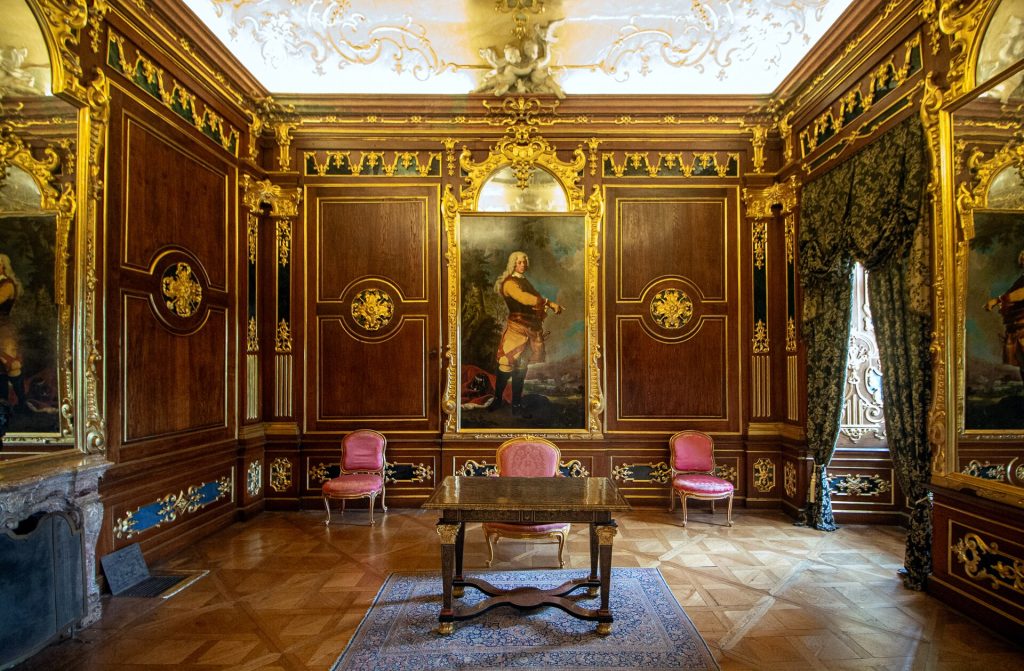
Other rooms are decorated with stucco ceilings, painted panels and carved woodwork. Many of the furnishings date from the period when the Liechtensteins still lived here, giving the apartments an authentic feel.
As you move from room to room, notice the long corridors linking the apartments, lined with paintings and decorative objects. They were the arteries of the chateau, through which servants, guests and family members moved throughout the day.
Several rooms preserve original wall coverings and textiles, which have been carefully restored. Their colours, from deep reds to soft greens and blues, give each room a distinct personality and show how much attention the princes paid to interior design.
Paintings throughout the apartments include works by Austrian, Italian and Dutch artists, as well as portraits of the family. Although the most valuable parts of the Liechtenstein collection were taken to Vienna and Vaduz, enough remains to give a strong sense of princely taste.
Mirrors placed opposite windows were a favourite baroque device, multiplying the light and making the rooms seem larger and more brilliant. You will see this effect in several of the salons at Valtice.
Guided tours usually last about an hour, and different routes are available, so check which rooms each one includes before booking. Some tours also include the theatre or the chapel.
Corridors of a Princely Household
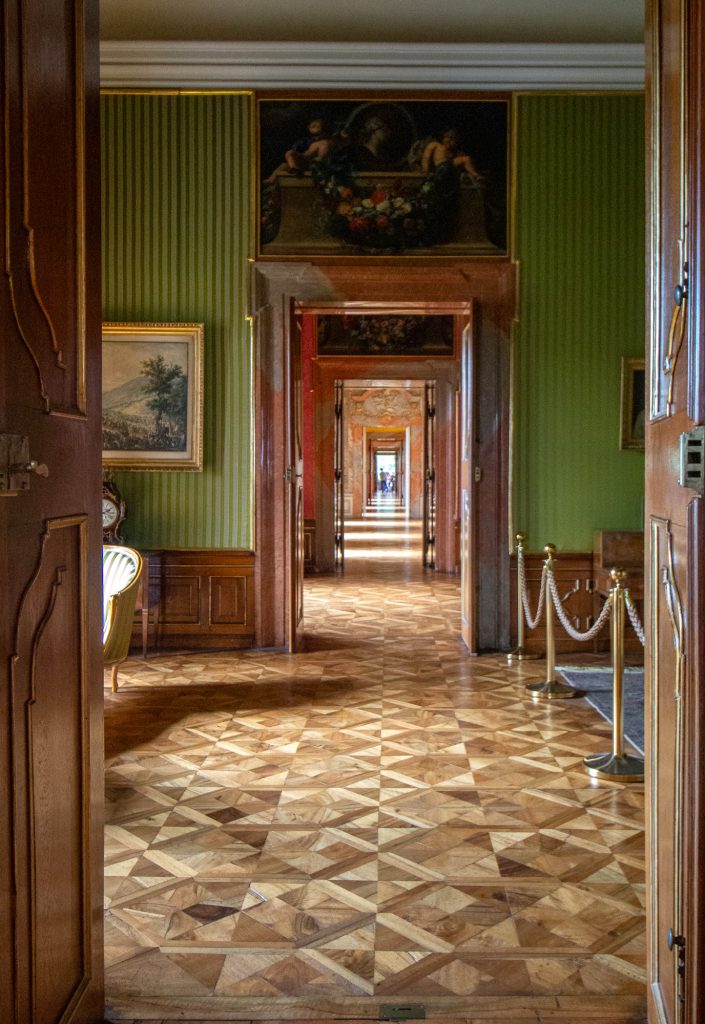
The long corridors of Valtice are an attraction in their own right. Lined with paintings, furniture and sculptures, they connect the various wings of the chateau and offer glimpses through windows into the courtyards and gardens.
In a residence of this size, corridors were essential for the smooth running of daily life. Servants used them to move discreetly between rooms, while guests and family members passed along them on their way to meals, receptions and chapel.
Many of the paintings hanging here are portraits of members of the Liechtenstein family and their relatives, as well as landscapes and hunting scenes. Together they form a kind of gallery that introduces you to the world of the princes.
Walking these corridors today, you can imagine the quiet bustle of a great household, with footsteps echoing on the floors and doors opening and closing as the business of the day went on.
Some corridors also display hunting trophies and scenes, reflecting the importance of hunting in aristocratic life. The surrounding forests and wetlands were rich in game, and the princes organised great hunts for their guests.
The views from the corridor windows over the courtyards and gardens change with the light, and they offer welcome pauses between the richly decorated rooms.
Large windows along the corridors let in plenty of light, which plays across the parquet floors and the gilded frames of the paintings, creating an atmosphere that changes throughout the day.
If you look closely at some of the portraits, you can trace family resemblances across generations, a reminder of how dynasties preserved their identity over centuries.
Dining with the Princes
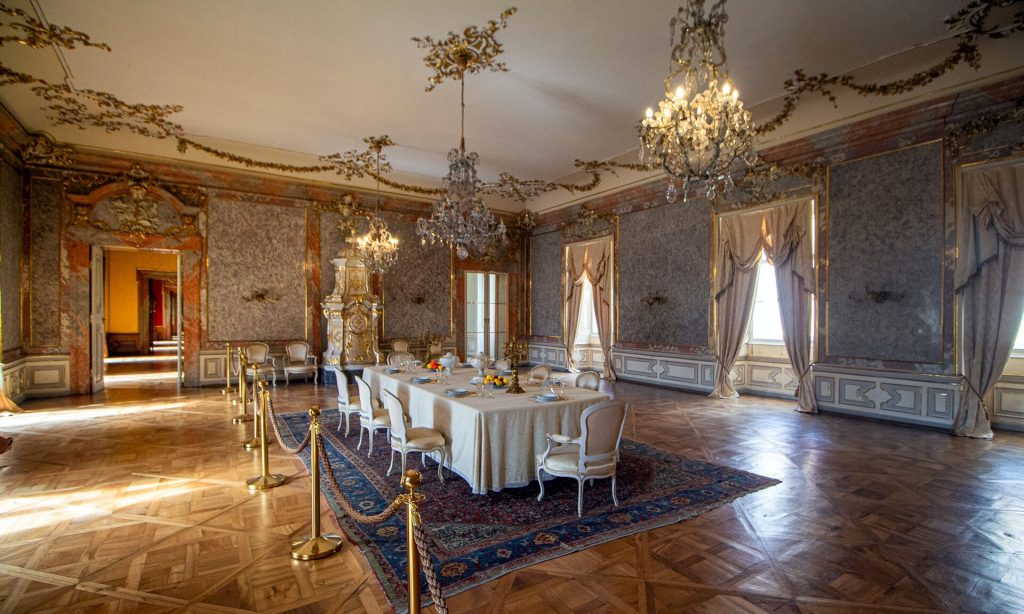
The dining room at Valtice gives a vivid idea of how the princes entertained. A long table set with fine porcelain, glass and silver stands at its centre, surrounded by elegant chairs, while sideboards display further tableware.
Formal meals were important occasions in aristocratic life, bringing together family, guests and officials. They could last for hours, with many courses served by liveried footmen, and the dining room was designed to make these events as impressive as possible.
The decoration of the room, with its paintings, stucco and lighting, adds to the sense of occasion. It is easy to imagine the clink of glasses and the murmur of conversation under the soft light of chandeliers.
Given the location of Valtice in the heart of Moravian wine country, it is no surprise that wine played a central role at the princely table. The estates produced wine for centuries, and the tradition continues today in the cellars beneath the chateau.
The table settings on display include porcelain from famous European manufacturers, some decorated with the princely arms, showing how even everyday objects expressed the family identity.
After dinner, guests would often move to a salon for coffee, cards or music, continuing the evening in a more relaxed setting.
The kitchens that served this room were located in a separate part of the complex, to keep smells and noise away from the elegant apartments. Food was carried along corridors and staircases by a small army of servants, kept warm in covered dishes.
Stoves, Craftsmanship and Fine Details
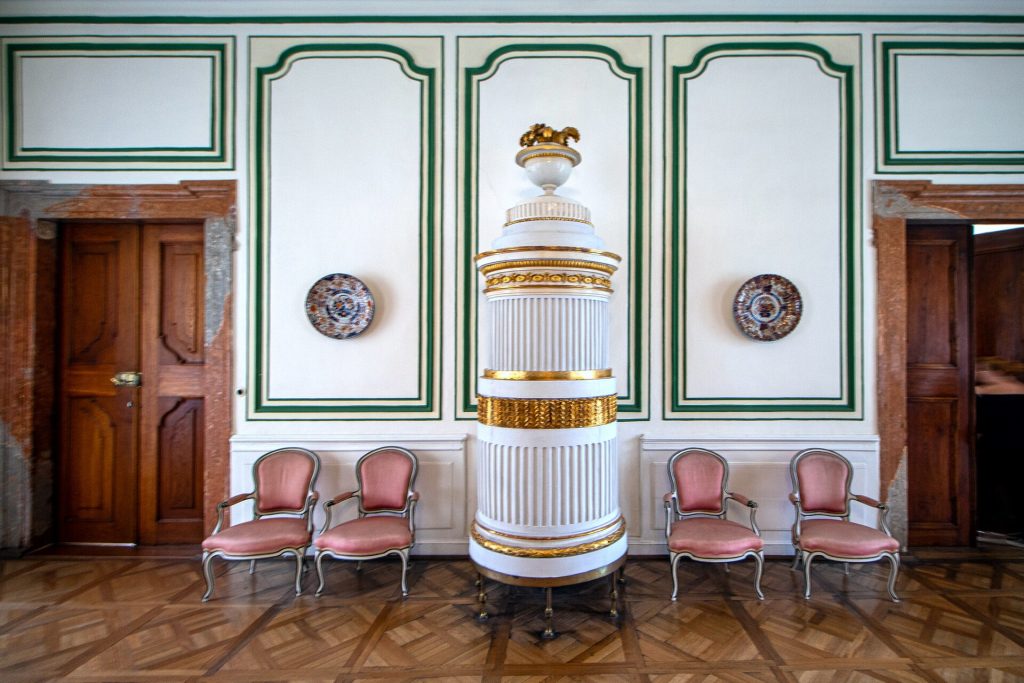
One of the pleasures of visiting Valtice is noticing the details. The tiled stoves that heated the rooms are beautiful objects in their own right, decorated with glazed tiles in elegant colours and patterns. In the cold Moravian winters they were essential, and the princes made sure they were as handsome as they were practical.
Look out too for the parquet floors, carved doors, gilded frames and delicate stucco work. Many of these details were created by skilled craftsmen from Moravia, Austria and Italy who worked on the chateau over many decades.
The furniture ranges from heavy baroque pieces to lighter rococo and classical designs, reflecting changing fashions over the centuries. Some items were made specially for the chateau, others brought from family residences elsewhere.
These details make the interiors feel rich and layered, and they reward visitors who take the time to look closely rather than rushing from room to room.
Some of the stoves are crowned with decorative tops shaped like urns or architectural ornaments, turning a simple heating device into a sculptural feature. They are among the most photographed objects in the chateau.
Restorers have worked for years to preserve these details, and their careful work allows today’s visitors to enjoy the interiors almost exactly as the princes knew them.
Clocks, candelabra and porcelain figurines add further sparkle to the rooms. Many of these objects were made in Vienna, Meissen or Paris, and they show how closely the princes followed the fashions of the leading European courts.
The doors, with their carved panels and original hardware, are also worth a look. Each one marks the passage from one room to the next and adds to the sense of ceremony that defined life in a baroque palace.
The Chapel of the Princes
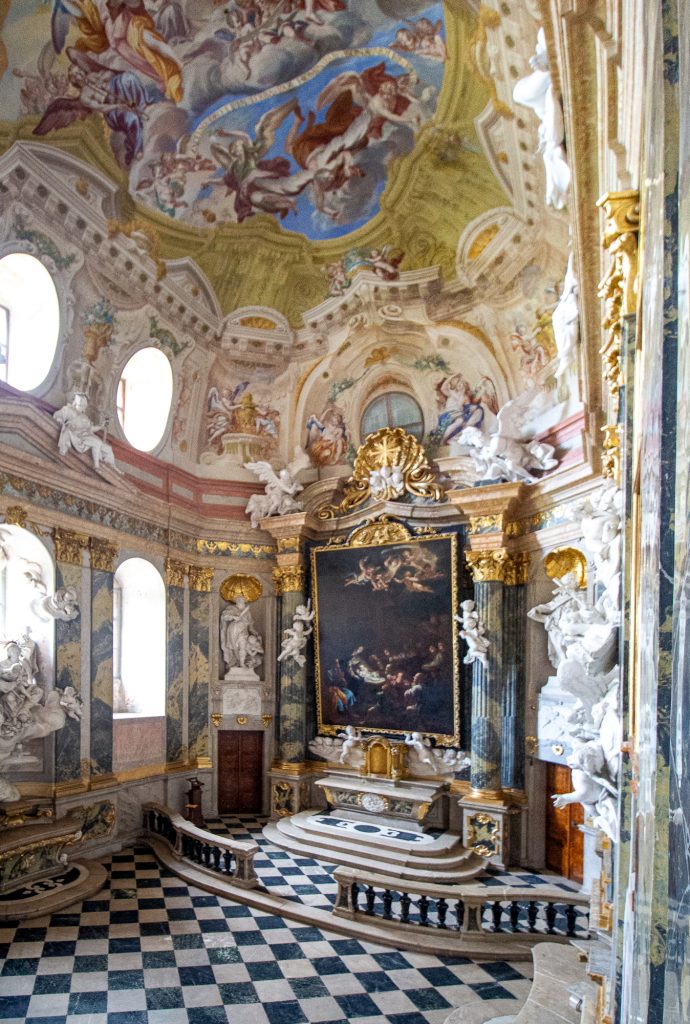
Within the chateau lies a splendid chapel, one of the highlights of any visit. Decorated in the baroque style, it features a richly ornamented altar, paintings and stucco, and it reflects the deep Catholic faith of the Liechtenstein family.
The chapel served the daily devotions of the household and hosted important family ceremonies such as baptisms and weddings. Its decoration was designed to inspire awe and devotion, with gold, marble effects and painted imagery drawing the eye upward.
The chateau stands next to the parish church of the Assumption, also built under Liechtenstein patronage, and together they show how closely religion, power and art were intertwined in the baroque world.
Even if you are not usually drawn to religious buildings, the chapel at Valtice is worth seeing for its artistry and atmosphere.
The altar painting and the surrounding sculpture form a powerful focal point, and the play of light through the windows makes the gilded surfaces shimmer. During services, music and candlelight would have added to the effect.
The parish church next door is worth a visit too. Its twin towers dominate the skyline of Valtice, and its interior, with its fine altars and paintings, is one of the most impressive baroque church interiors in South Moravia.
The chapel also contains memorials and inscriptions linked to the family, adding a personal dimension to its devotional beauty.
Concerts are sometimes held in the chapel, and its acoustics make it a lovely place to hear sacred music in an authentic baroque setting.
Private Rooms and a Baroque Theatre
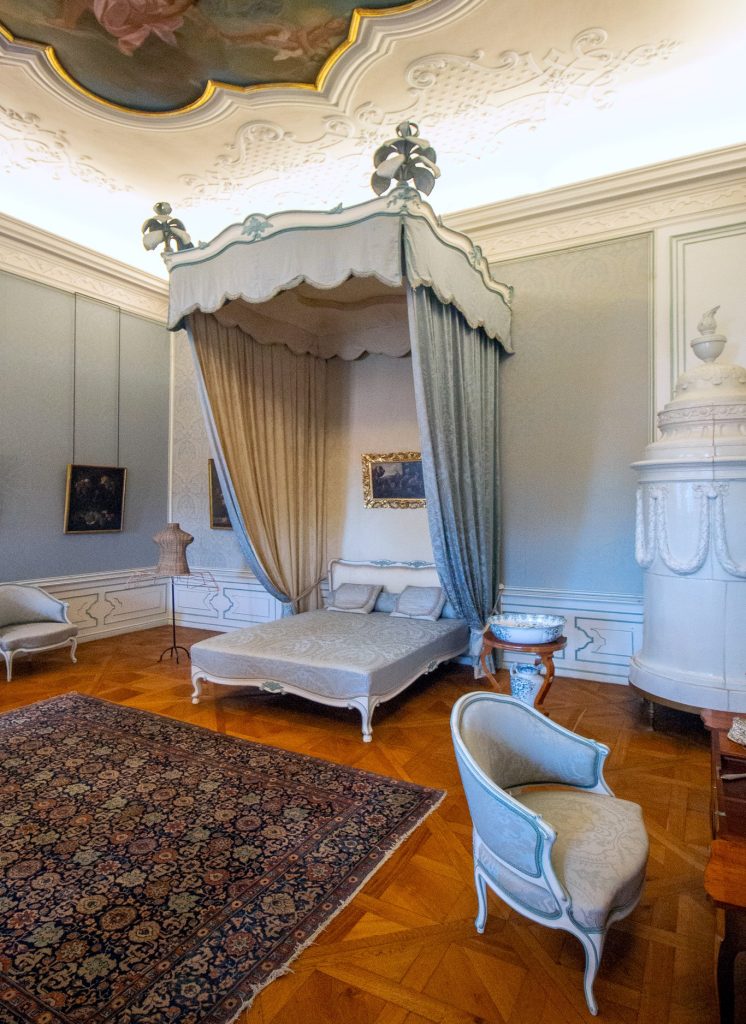
Beyond the state rooms lie the private apartments, including bedrooms, studies and dressing rooms. These spaces are more intimate, furnished with comfortable beds, writing desks, cabinets and personal objects that bring the daily life of the princes closer.
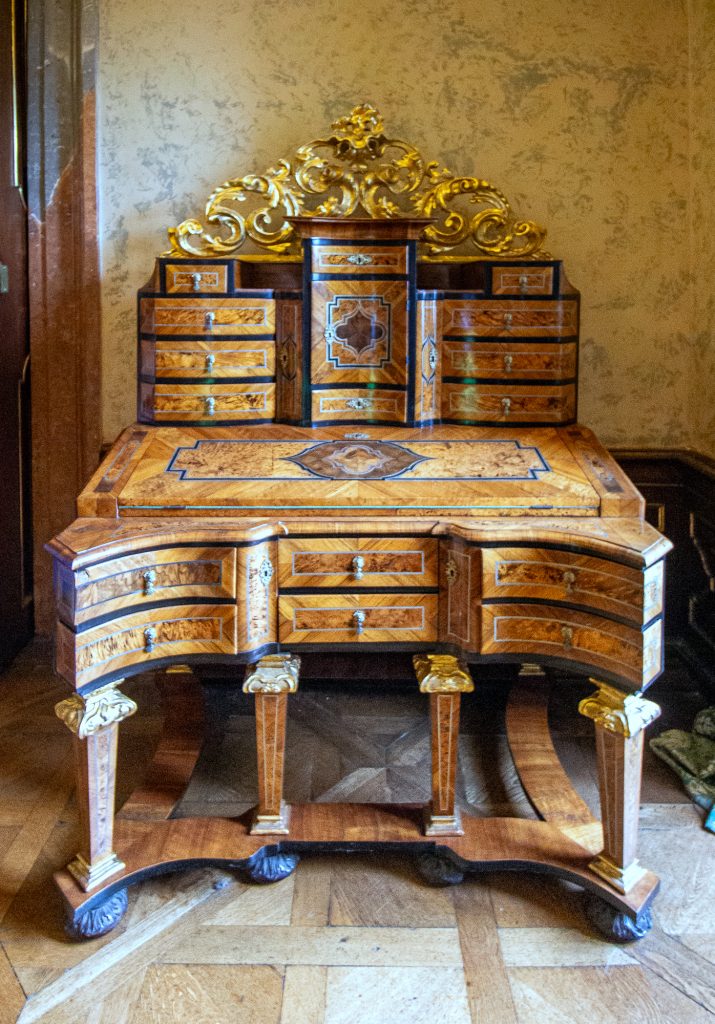
One of the most charming pieces is an elaborate writing cabinet, a masterpiece of the cabinetmaker’s art, with drawers and compartments for papers, letters and small treasures. Such pieces were both practical and a sign of refinement.
The chateau also contains a baroque theatre, one of the few of its kind to survive in central Europe. Built in the late eighteenth century, it hosted performances for the princely family and their guests, and today it is once again used for theatre and music.
Seeing the private rooms and the theatre side by side reminds you that the chateau was a place of both work and pleasure, where the princes managed their affairs during the day and enjoyed music and drama in the evening.
The theatre is small and intimate, with a stage and seating for a select audience. Performances were an important part of court life, and the princes enjoyed operas, plays and concerts in the comfort of their own home.
In recent years the theatre has been restored and brought back into use, so if your visit coincides with a performance, it is a rare chance to experience baroque entertainment in its original setting.
The bedrooms are furnished with canopied beds, dressing tables and washstands, giving a sense of the routines of aristocratic life. In an age without central heating or running water, comfort depended on servants, stoves and careful planning.
The study, with its desk and shelves, was where the princes or their officials dealt with correspondence, accounts and estate business. Managing such vast properties required constant attention.
The writing cabinet is a superb example of marquetry, with patterns created from different woods fitted together with remarkable precision. It shows the luxury that surrounded the princes even in their most private moments.
Cellars and the National Wine Salon
Beneath the chateau stretch extensive vaulted cellars, once used to store the wines produced on the princely estates. Today they house the National Wine Salon of the Czech Republic, an exhibition of the best wines selected each year in a national competition.
Visitors can join a tasting in the cellars, sampling a range of wines from Moravia and Bohemia. It is a wonderful way to experience the local culture and to understand why this region has been famous for its wine for centuries.
The Liechtensteins played an important role in the development of viticulture in South Moravia, and their estates were among the leading wine producers in the region. That legacy lives on in the vineyards that surround Valtice today.
Whether you are a wine expert or just curious, a visit to the cellars adds a delicious dimension to your time at the chateau.
The cellars are vast, with long vaulted passages that stay cool all year round. Walking through them with a glass in hand, surrounded by bottles of the best Czech wines, is one of the most memorable experiences in Valtice.
The tasting programmes range from short introductions to longer sessions where you can try dozens of wines. The staff are knowledgeable and happy to explain the grape varieties and wine regions of the country.
Local varieties such as Welschriesling, Gruner Veltliner, Pinot Blanc and Moravian reds like Frankovka are well represented, and many visitors leave with a bottle or two as a souvenir.
The princes encouraged new grape varieties and modern winemaking techniques on their estates, and the region’s reputation for quality wines owes much to their investment over the centuries.
If you prefer to explore further, wine trails lead from Valtice through the surrounding villages, where small family cellars welcome visitors for tastings in a relaxed, friendly atmosphere.
Each year the national competition selects around one hundred wines for the salon, so the selection changes regularly and repeat visitors always find something new to taste.
Take the Full Tour on Video
Before you visit, or if you simply want to see more, the video below offers a full tour of Valtice Chateau, from its courtyards to its state rooms and chapel.
Watch for the Red Salon, the long corridors and the richly decorated chapel, and notice how the interiors combine baroque grandeur with comfortable domestic touches.
Seeing the chateau in motion also helps you appreciate the size of the complex, which is difficult to grasp from photographs alone.
If the video has whetted your appetite, the final section covers the wider landscape and practical tips for your trip.
The Lednice Valtice Landscape and Your Visit
Valtice is the southern anchor of the Lednice Valtice Cultural Landscape, a vast designed landscape covering some 280 square kilometres. Over the eighteenth and nineteenth centuries the Liechtensteins transformed the area between their two great residences into a park scattered with follies, temples, colonnades, hunting lodges and ponds, all linked by avenues and views. It was declared a UNESCO World Heritage Site in 1996.
Near Valtice, look out for the Colonnade on the Reistna hill, built in the early nineteenth century, which offers sweeping views over the town and the vineyards, and the Belvedere, a small summer pavilion in the woods. Further north lie the romantic neo Gothic chateau of Lednice and dozens of smaller buildings that make the landscape one of the most remarkable in Europe.
Valtice is easy to reach by train or car from Brno, about an hour away, and from Vienna, which is roughly an hour and a half by car. The chateau interiors can be visited on guided tours, mainly from spring to autumn, and the wine salon has its own opening hours and tastings.
Plan at least a full day if you want to see the chateau, taste some wine and explore part of the landscape on foot or by bicycle. Many visitors stay overnight in Valtice or nearby Mikulov to enjoy the area at a slower pace.
The landscape is best explored by bicycle, with well marked trails linking the chateaux, follies and villages. You can rent bikes in Valtice or Lednice and spend a day cycling between ponds, woods and vineyards, stopping at the monuments along the way.
Other highlights of the landscape include the Temple of the Three Graces, the Rendezvous hunting lodge styled as a Roman triumphal arch, and the minaret in the park at Lednice, one of the most surprising buildings in the region.
Whenever you visit, Valtice offers a rich blend of history, art, wine and landscape. It is a place to linger, to taste and to explore, and it reveals a side of the Liechtenstein story that few visitors to the tiny Alpine principality ever see.
In recent years the chateau and its surroundings have become popular for weddings, conferences and cultural events, giving new life to the old princely residence while keeping its heritage intact.
Mikulov, just a few kilometres away, is another must see, with its own chateau on a rock, a historic Jewish quarter and views over the Pavlov Hills. Combining Mikulov, Valtice and Lednice makes a perfect long weekend in South Moravia.
View the location on Google Maps
Palaces Nearby
If Valtice has captured your imagination, the world of the Liechtenstein princes holds more remarkable residences. Here are two more well worth adding to your journey:
- Lednice Chateau – the fairy tale neo Gothic palace at the northern end of the Lednice Valtice landscape.
- Vaduz Castle – the hilltop home of the reigning princes of Liechtenstein above their Alpine capital.
You May Like
Rogalin Palace and the Ancient Oaks of the Raczynski Family