High on a wooded hill above Innsbruck, with the peaks of the Tyrolean Alps rising all around, stands a castle that is unlike any other in Austria. Ambras looks at first like a graceful white Renaissance residence surrounded by a park, but behind its walls lies one of the most extraordinary collections ever assembled by a European prince: suits of armour worn by famous heroes, a chamber of art and wonders filled with rare and bizarre objects, and a gallery of hundreds of Habsburg portraits.
It was all the work of one remarkable man, Archduke Ferdinand II of Tyrol, a passionate collector who also made Ambras the home of the woman he loved, a merchant daughter he had married in secret against all the rules of his dynasty. Their story, and the treasures he gathered, make Ambras one of the most fascinating places to visit anywhere in the Alps.
In this article we will explore Ambras from its medieval origins to its golden age under Ferdinand, from the magnificent Spanish Hall to the armouries and the cabinet of curiosities, and we will finish with practical tips for planning your visit. So come along, because this castle has some wonderful stories to tell.
In This Article
- A White Castle Above Innsbruck
- Archduke Ferdinand II, Prince and Collector
- A Secret Marriage and a Castle for Love
- The Upper Castle and Its Inner Yard
- Painted Walls in Shades of Grey
- The Magnificent Spanish Hall
- A Ceiling of Wood and Light
- Faces of the Tyrolean Princes
- The Lower Castle and the Armoury of Heroes
- A Chamber of Art and Wonders
- A Chapel and a Remarkable Bath
- Explore Ambras on Video
- Planning Your Visit to Ambras Castle
A White Castle Above Innsbruck
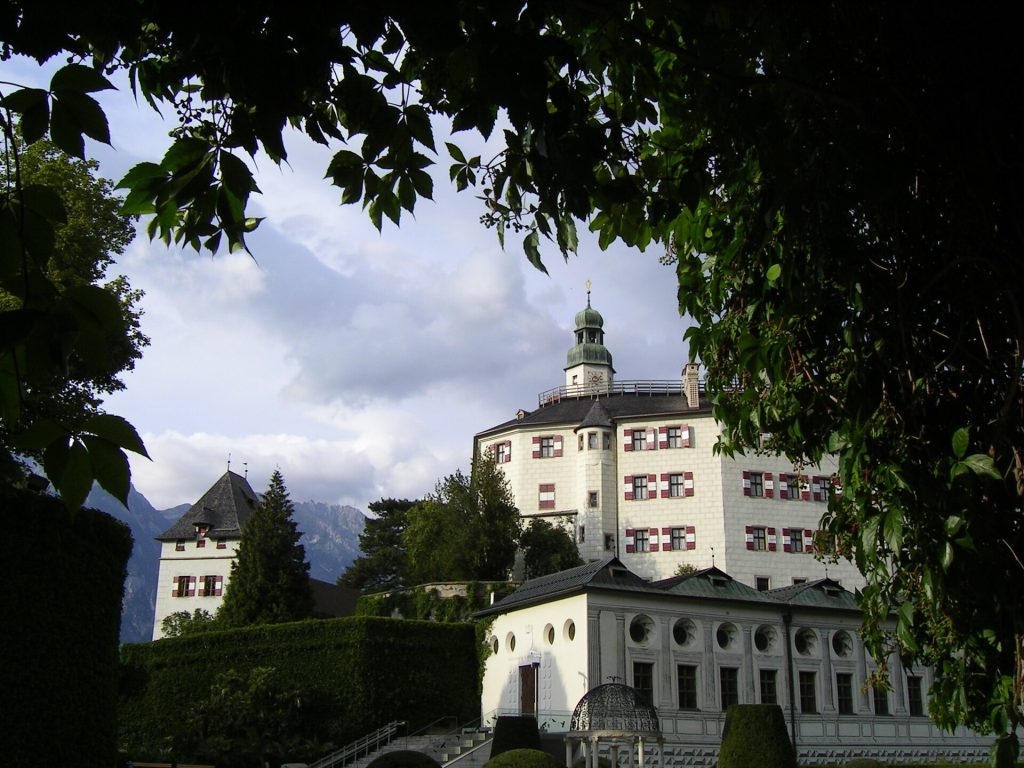
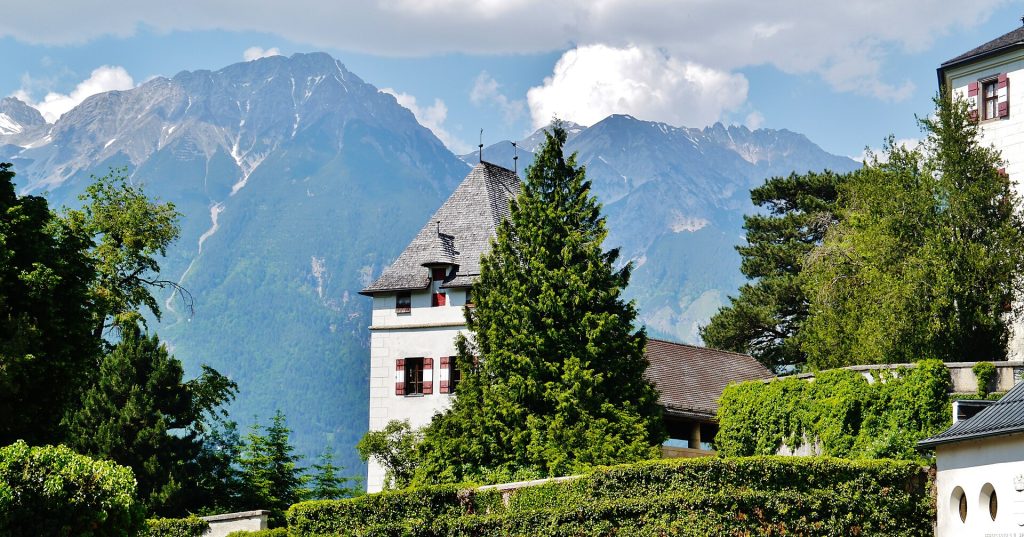
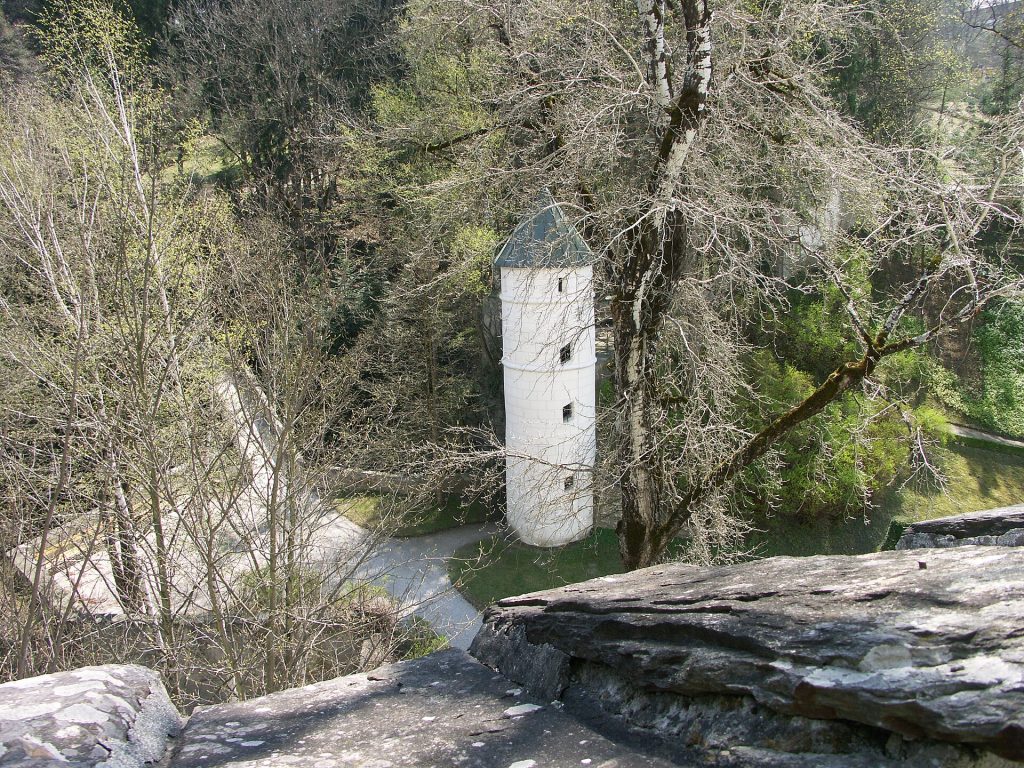
Ambras sits on the southeastern edge of Innsbruck, on a terrace above the Inn valley, with the forested slopes of the mountains behind it. As you approach through the park, the castle appears among the trees, its white walls and red roofs glowing against the green. It is a romantic picture, and on a clear day the mountain backdrop makes it look almost unreal.
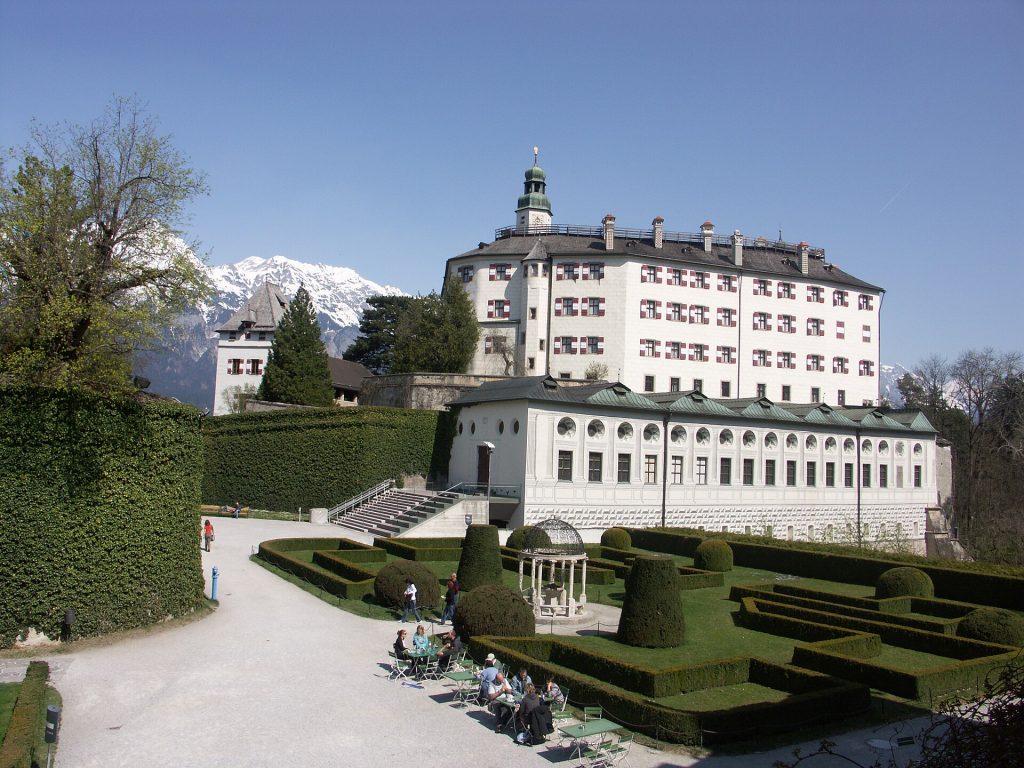
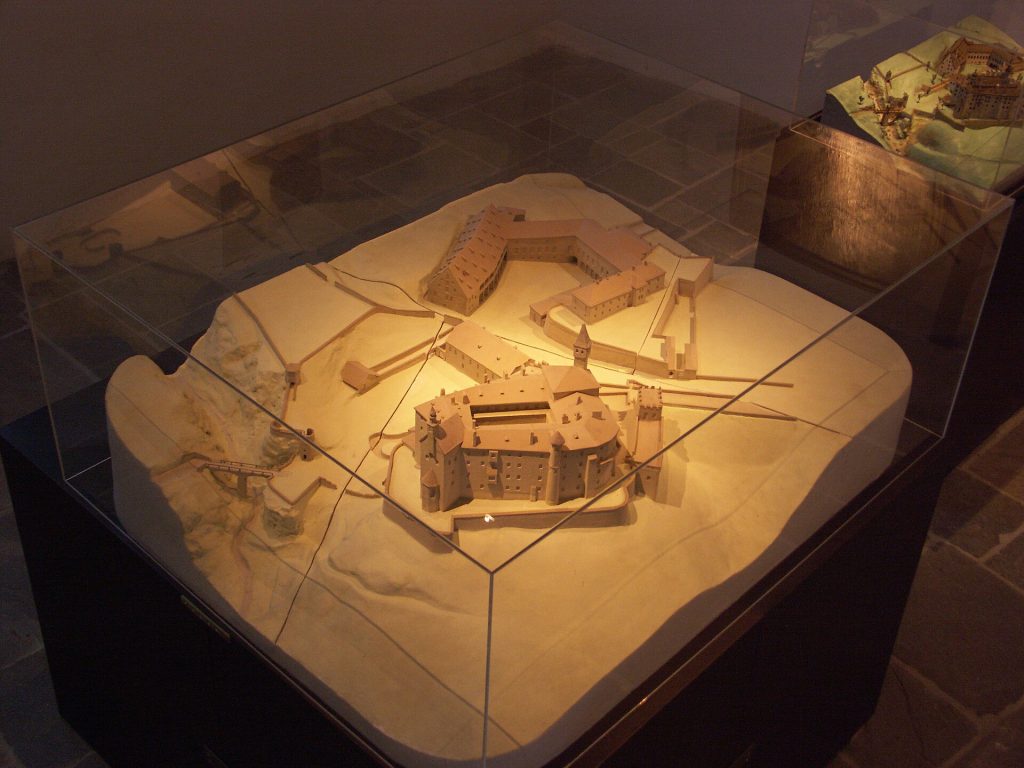
The castle is made up of two main parts. Higher up stands the Upper Castle, the old residential core, built on the foundations of a medieval fortress. Lower down lies the Lower Castle, a set of buildings created specially to house the collections. Between them stretches the great Spanish Hall, and around everything spreads a large park with gardens, woods and paths.
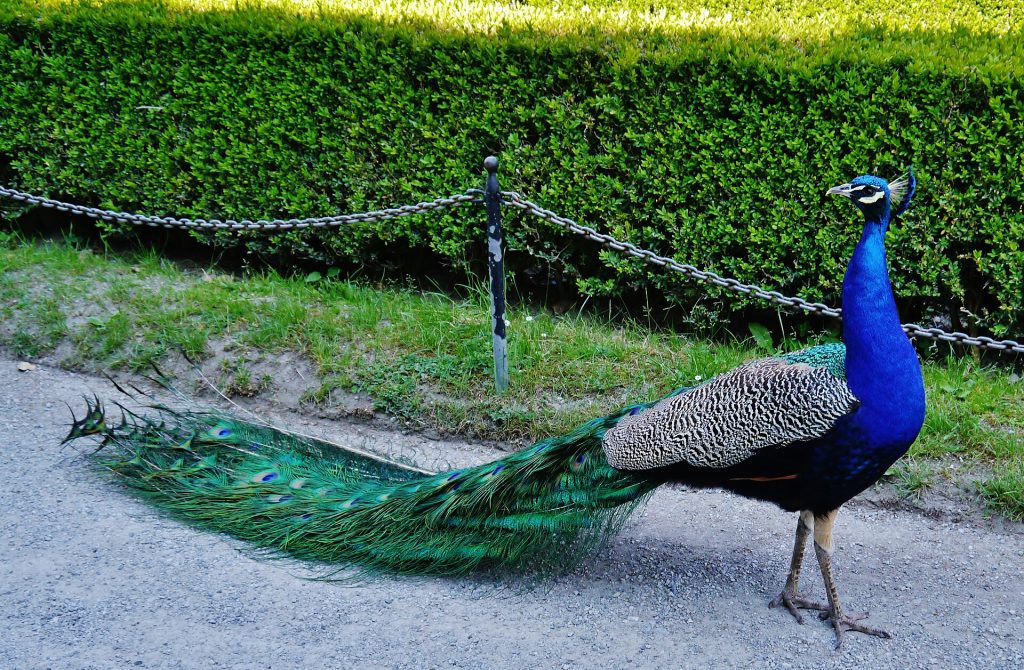
Ambras is only a short ride from the old town of Innsbruck, yet it feels wonderfully peaceful. Peacocks wander across the lawns, the air is fresh with the scent of the mountains, and the noise of the city seems very far away.
What makes Ambras so special is the combination of setting, architecture and collections. It is a place where you can admire Renaissance art, marvel at armour and curiosities, stroll in a beautiful park and enjoy alpine views, all in a single visit.
The name Ambras goes back to a much older settlement on this spot, and there was a castle here long before the Habsburgs arrived. Over the centuries it passed through various hands, served as a fortress and an administrative seat, and slowly declined, until Ferdinand transformed it into one of the great Renaissance residences of Europe.
Innsbruck itself is a wonderful city to explore, with its Golden Roof, its imperial palace and its colourful old town set against the mountains. Ambras makes a perfect complement to a visit to the city, offering a quieter and more personal glimpse of the Habsburg world.
Archduke Ferdinand II, Prince and Collector
The man behind Ambras was Archduke Ferdinand II, born in 1529 as the second son of Emperor Ferdinand I. He grew up at the heart of the Habsburg dynasty, received an excellent education and spent many years as governor of Bohemia in Prague, where he developed a love of art, architecture and collecting that would shape the rest of his life.
In 1564, after the death of his father, the Habsburg lands were divided among his sons, and Ferdinand received Tyrol and the territories of Further Austria. He chose Innsbruck as his residence and soon acquired the castle of Ambras, which he transformed into a magnificent Renaissance seat.
Ferdinand was one of the great collectors of his age. He gathered armour, weapons, paintings, sculptures, scientific instruments, natural curiosities and precious objects from all over the world, and he displayed them in specially designed rooms at Ambras. His aim was not only to show off his wealth, but to create a kind of encyclopedia of the world, a collection that would reflect the variety and wonder of creation.
He was also a patron of music, theatre and festivals, and his court at Innsbruck was one of the liveliest in the Habsburg lands. Ambras was the stage for many of these celebrations, and its rooms and gardens still echo with the spirit of his remarkable reign.
His years in Prague were especially important. There he met artists, scholars and craftsmen from all over Europe, and he saw the collections of other princes. When he moved to Innsbruck, he brought this cosmopolitan culture with him, turning the Tyrolean capital into a centre of art and learning.
Ferdinand was also a capable ruler who worked hard to govern his lands, strengthen the Catholic Church and develop the economy of Tyrol, which was rich in silver and salt mines. These resources helped fund his ambitious building projects and his collecting.
After his death in 1595, Ferdinand left his collections to his son Karl, and later they were purchased by Emperor Rudolf II, himself a great collector. Some objects were taken to Vienna over the following centuries, but a remarkable part of the collection remained at Ambras, where it can still be seen today.
A Secret Marriage and a Castle for Love
Ambras is closely linked to one of the great love stories of the Renaissance. As a young man, Ferdinand fell in love with Philippine Welser, the beautiful daughter of a wealthy merchant family from Augsburg. She was not of royal or high noble birth, and a marriage between a Habsburg archduke and a commoner was considered quite impossible.
Ferdinand married her anyway, in secret, in 1557. When his father eventually learned of the marriage, he accepted it on the condition that it remain secret and that any children would have no right to inherit the Habsburg throne. It was a hard bargain, but Ferdinand and Philippine remained devoted to each other for the rest of her life.
When Ferdinand acquired Ambras, he gave it to Philippine, and the castle became their family home. Here she lived with their sons, managed the household and pursued her own interests, which included medicine and herbal remedies. She collected recipes and was known for her care of the sick.
Philippine died in 1580, and Ferdinand was deeply grieved. Her memory is still very much alive at Ambras, and many visitors find her story the most touching part of the castle’s history.
Their two surviving sons were given titles and lands, and one of them, Andreas, later became a cardinal. Although they could not succeed to the throne, they lived honoured lives, a reflection of the respect that Philippine and her family earned over time.
After Philippine’s death, Ferdinand married again, this time to his niece Anna Caterina Gonzaga, a match more in keeping with Habsburg traditions. But it is Philippine whose spirit seems to linger at Ambras, and her portrait is one of the most popular in the castle.
Her story has inspired novels, plays and films over the centuries, and in Tyrol she remains a beloved figure, remembered as the commoner who won the heart of an archduke and became the mistress of one of the most beautiful castles in the land.
The Upper Castle and Its Inner Yard
The Upper Castle stands on the site of a medieval stronghold that guarded this spot for centuries before Ferdinand arrived. He rebuilt it as a comfortable Renaissance residence for Philippine and their household, keeping the compact layout of the old castle but filling it with elegant rooms and decoration.
At its heart lies an inner courtyard, a quiet enclosed space surrounded by the walls of the residence. Standing here, you are in the oldest part of Ambras, and you can sense how the castle grew from a defensive fortress into a princely home.
Inside the Upper Castle, visitors can see living rooms, private chambers and the famous bathroom of Philippine Welser, one of the earliest surviving bathing rooms of its kind. The rooms help you imagine daily life in a Renaissance household, from the warmth of the tiled stoves to the furnishings and decorations of the period.
The Upper Castle also houses the Habsburg Portrait Gallery, a remarkable collection of portraits of members of the dynasty and other European rulers spanning several centuries. Walking through it is like flipping through a family album of the most powerful dynasty in European history.
The rooms of the Upper Castle are relatively intimate compared with the grand halls of later baroque palaces. This gives them a homely atmosphere, and it is easy to imagine Philippine and her sons living here, surrounded by servants, friends and the bustle of a Renaissance household.
The Portrait Gallery is arranged chronologically and genealogically, so you can follow the dynasty from generation to generation. You will recognise famous figures such as Emperor Maximilian I, Charles V and Maria Theresa, alongside many lesser known archdukes and princesses whose faces tell their own stories.
Many of the portraits were painted to be exchanged between courts as diplomatic gifts or as part of marriage negotiations. Looking at them today, you can sense the hopes, alliances and rivalries that shaped the fate of Europe.
Painted Walls in Shades of Grey
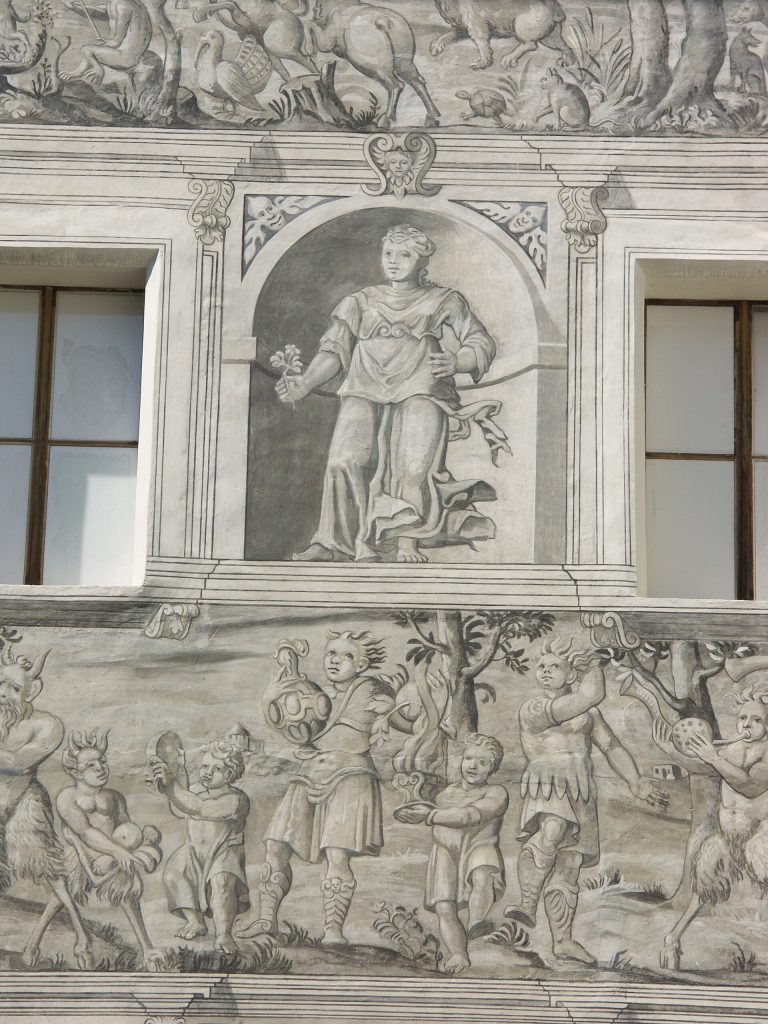
One of the most striking features of the Upper Castle is the decoration of its courtyard walls. They are covered with paintings in grisaille, a technique that uses shades of grey to imitate sculpture and relief. The paintings depict figures, scenes and ornament, transforming the plain walls into a kind of open air gallery.
The effect is elegant and subtle, and it shows how Renaissance patrons liked to surround themselves with art even in practical spaces. Courtyards were places where people passed by every day, and the paintings would have delighted residents and visitors alike.
Many of the scenes draw on classical mythology and moral allegory, reflecting the humanist education of the court. Others celebrate virtues that a good ruler was supposed to embody, such as courage, wisdom and justice.
Take your time to look closely at the details. Some of the painted figures are remarkably lively, and the play of light across the grey tones changes throughout the day, giving the walls a subtle, ever changing beauty.
Restoration work has revealed and preserved much of this decoration, which had faded over the centuries. Today the courtyard is one of the best places in Austria to see Renaissance wall painting of this kind.
In the sixteenth century such painted decoration was common on castles and town houses across central Europe, but most of it has since been lost to weather, rebuilding and changing tastes. At Ambras, enough survives to give a real sense of how colourful, or rather how richly patterned, a Renaissance residence once looked.
The Magnificent Spanish Hall
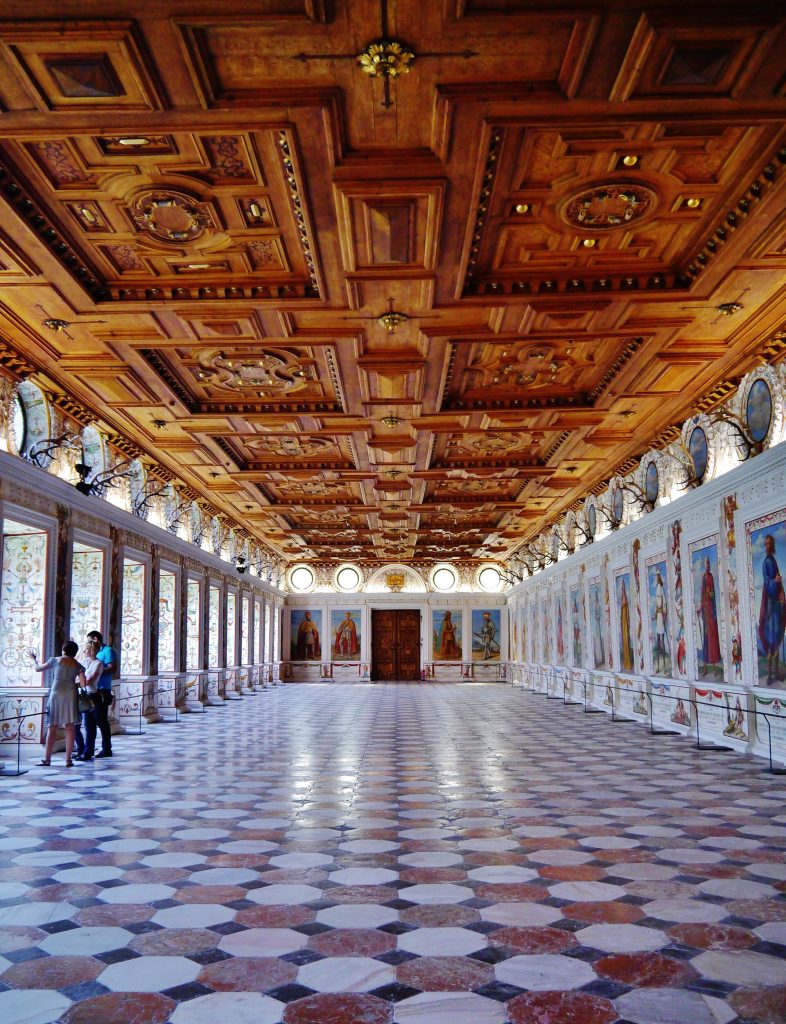
The architectural highlight of Ambras is the Spanish Hall, built between 1569 and 1572 as a grand banqueting and festival hall. It is one of the most important freestanding halls of the German Renaissance, a long and lofty room designed for celebrations, dances and receptions on a princely scale.
The name probably comes from the Spanish fashions that were popular at the Habsburg courts at the time, when Spain was the most powerful monarchy in Europe and its culture set the tone for aristocratic life. Whatever the reason for the name, the hall is a masterpiece of Renaissance design.
The walls are decorated with painted ornament and a series of full length portraits, while the windows fill the room with light. The proportions are long and harmonious, and standing at one end you can look down the whole length of the hall toward the far wall, an impressive sight that would have awed Ferdinand’s guests.
Today the Spanish Hall is still used for concerts, especially during the summer, when the Ambras Castle Concerts and the Innsbruck Festival of Early Music bring the sounds of the Renaissance and baroque back to life. Hearing music here is a wonderful experience.
The hall also served as a link between the Upper and Lower parts of the castle complex, and its position on the slope offers fine views over the park. In Ferdinand’s time, guests could step outside between dances to enjoy the fresh air and the alpine scenery.
Festivals at the court of Ferdinand were famous for their splendour. There were tournaments, masquerades, theatrical performances and banquets, often lasting several days. The Spanish Hall was the perfect setting for the indoor parts of these celebrations.
It is worth comparing the Spanish Hall with the great halls of other castles and palaces you may have visited. Its combination of size, light and decoration makes it one of the finest Renaissance interiors north of the Alps, and many visitors find it the most memorable room at Ambras.
A Ceiling of Wood and Light
Look up in the Spanish Hall and you will see one of its greatest treasures, a magnificent wooden coffered ceiling. It is made of carefully crafted panels, decorated with inlaid work and ornament, creating a rich pattern that runs the full length of the room.
The ceiling is a triumph of Renaissance craftsmanship. Joiners and carvers worked for years to create it, fitting together different woods to form intricate designs. The warm tones of the wood contrast beautifully with the lighter walls and the bright windows, giving the hall its distinctive atmosphere.
Such ceilings were very fashionable in the sixteenth century, and they can also be found in other great residences of central Europe. But few are as large or as well preserved as the one at Ambras, and it remains one of the most admired features of the castle.
If you visit during a concert, take a moment between pieces to look up. The combination of music, candlelight and the glowing wooden ceiling is one of the most memorable experiences Ambras can offer.
Some of the panels contain geometric patterns, others floral and decorative motifs, and together they create a sense of rhythm that draws the eye along the hall. It is a fine example of how Renaissance craftsmen combined technical skill with a strong sense of design.
The ceiling has survived thanks to careful maintenance and restoration over the centuries. Wood is vulnerable to damp, insects and fire, so its excellent condition today is a testament to the care that generations of custodians have given to the castle.
Faces of the Tyrolean Princes
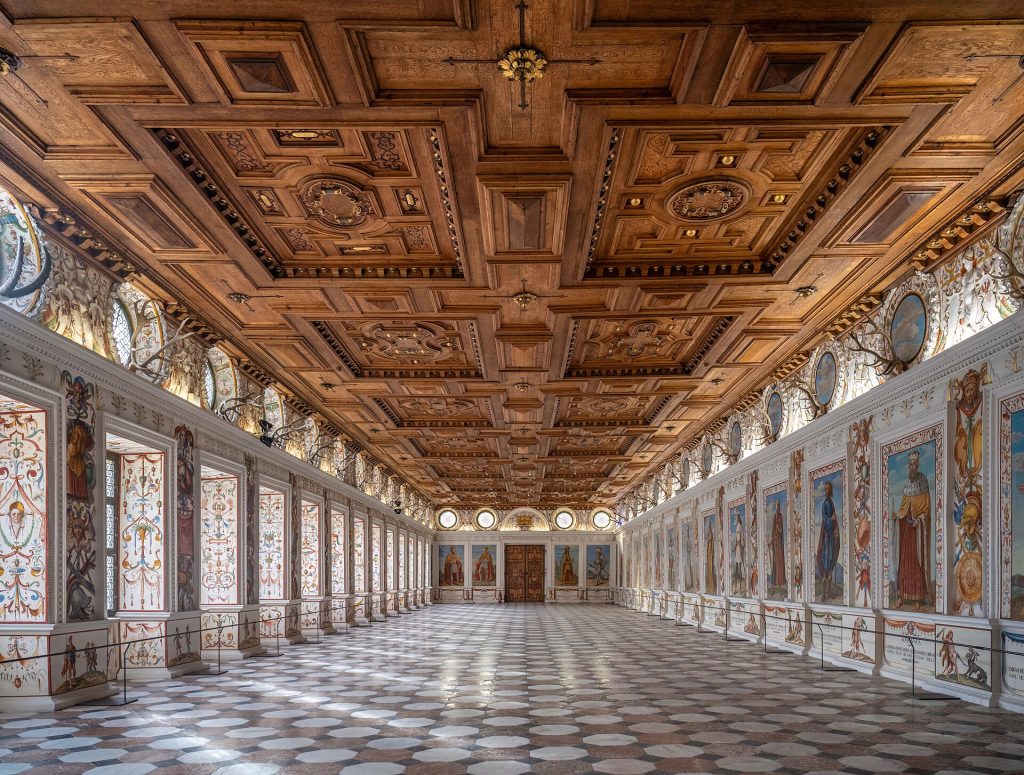
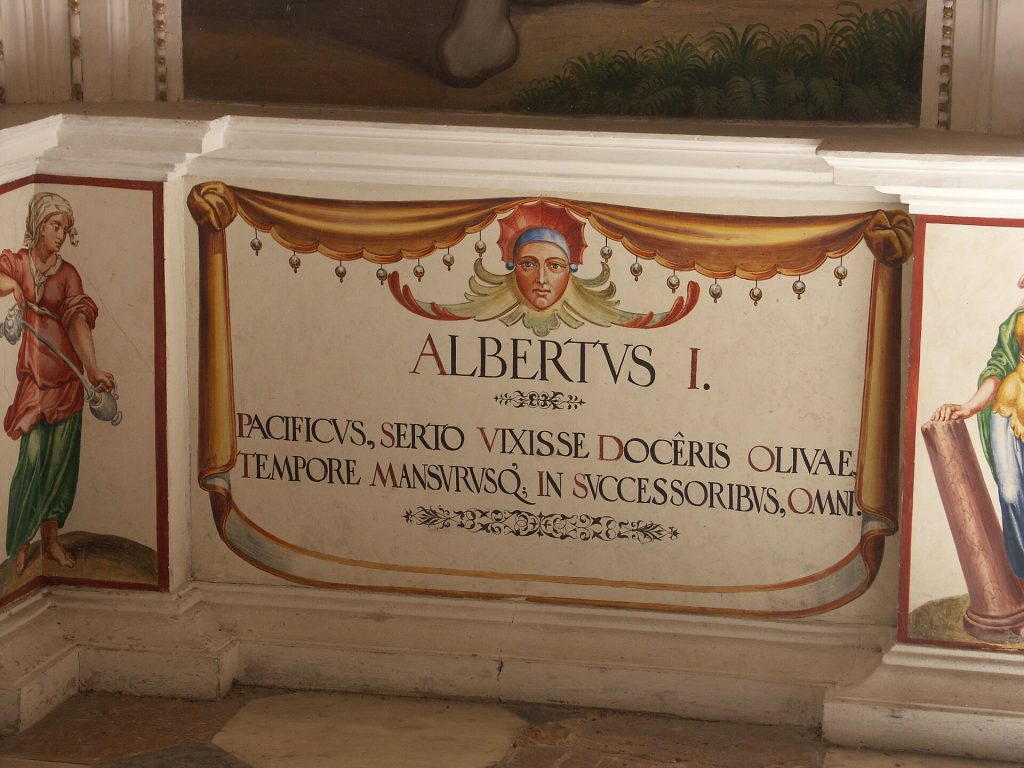
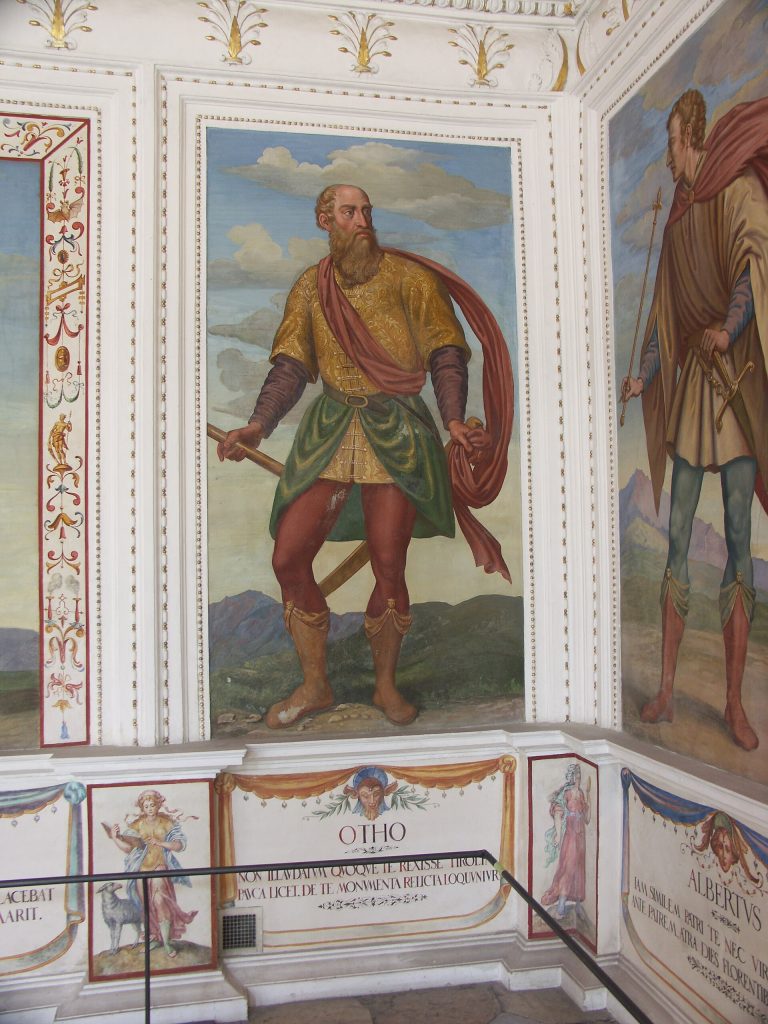
Along the walls of the Spanish Hall hang full length portraits of the princes who ruled Tyrol over the centuries. They form a kind of painted genealogy, connecting Ferdinand with the long line of rulers who had governed this alpine land before him.
For Ferdinand, these portraits were a statement of legitimacy and continuity. By placing himself at the end of this line, he showed that his rule was rooted in history and tradition. Visitors who dined beneath these painted princes would have been left in no doubt about the dignity of their host.
The portraits also give us a fascinating overview of changing fashions, from medieval armour to Renaissance robes. Each figure is shown in a commanding pose, framed by painted architecture and ornament that ties the whole series together.
Looking at them today, you can appreciate how art was used to tell political stories. The Spanish Hall was not only a beautiful room but also a carefully planned piece of propaganda, celebrating the power and heritage of its creator.
Beyond the Spanish Hall, the Habsburg Portrait Gallery in the Upper Castle continues this theme on a much larger scale. With paintings by artists such as Titian, Velazquez and Van Dyck, among others, it offers an extraordinary journey through the faces of European royalty from the fifteenth to the eighteenth centuries.
Some of the portraits show figures from the distant medieval past, imagined by the painters of Ferdinand’s time rather than drawn from life. This mixture of history and legend was typical of the era, when princes liked to trace their lineage back as far as possible, sometimes into myth.
The series is one of the most complete sets of ruler portraits from the Renaissance, and it remains an important source for historians studying how rulers presented themselves to the world.
The Lower Castle and the Armoury of Heroes
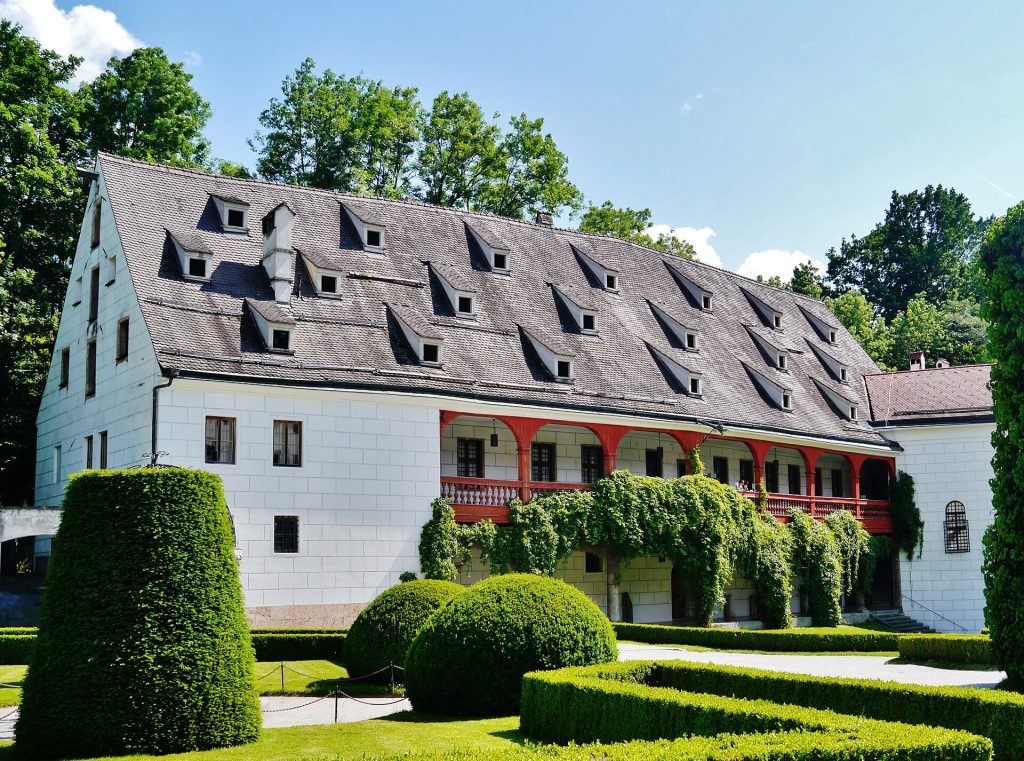
The Lower Castle was built by Ferdinand specifically to house his collections, which makes it one of the earliest purpose built museum buildings in the world. Here he arranged his treasures in a series of rooms, each devoted to a particular type of object, so that visitors could move through them in an orderly way.
The most famous part is the Armoury of Heroes. Ferdinand set out to collect the armour of famous commanders and rulers of his own and earlier times, writing to princes and generals across Europe and asking for their armour or that of their ancestors. The result is an astonishing gallery of suits of armour, each linked to a real historical figure.
Walking through these rooms, you come face to face with the armour of emperors, kings and celebrated warriors, displayed as if the heroes themselves were standing before you. Ferdinand even had a book of illustrated portraits made to accompany the collection, one of the earliest illustrated museum catalogues.
Alongside the armour you will find weapons, tournament equipment and military trophies, including objects captured from Ottoman armies. Together they give a vivid picture of the world of war, chivalry and display that fascinated Renaissance princes.
The armour collection also includes pieces made for Ferdinand himself, beautifully decorated with etching and gilding. Some of these suits were designed for tournaments and parades rather than battle, and they show how armour had become a form of art and display by the sixteenth century.
Even if you are not usually interested in military history, the craftsmanship of these pieces is breathtaking. Many were made by the finest armourers of Innsbruck, Augsburg, Milan and Nuremberg, and they represent some of the highest achievements of European metalwork.
Ferdinand’s approach was revolutionary in its own way. Instead of simply piling up treasures, he organised them, documented them and presented them to visitors in a structured way. Historians often see Ambras as one of the ancestors of the modern museum, and its influence can be felt in collections across Europe.
A Chamber of Art and Wonders
Perhaps the most enchanting part of Ambras is the Chamber of Art and Curiosities, known in German as the Kunst und Wunderkammer. It is one of the oldest cabinets of curiosities to survive in its original location, and it gives a unique insight into how people of the Renaissance tried to understand the world.
The cabinets are filled with an astonishing variety of objects: coral sculptures, carved ivory, glass, clocks, automata, scientific instruments, exotic natural specimens and strange curiosities. There are portraits of people with unusual physical features, works of art made from rare materials and objects that seemed almost magical to the people of the time.
For Ferdinand, the aim was to gather the wonders of nature and the marvels of human skill in one place, creating a microcosm of the universe. Visitors would move from case to case, marvelling at the rare, the beautiful and the bizarre, and discussing the mysteries of creation.
Today the chamber still has that sense of wonder. Even in an age of museums and the internet, it is hard not to be fascinated by the sheer variety and strangeness of the objects on display.
One of the most famous objects associated with the collection is a portrait of a man covered in hair, a member of the Gonsalvus family, whose condition fascinated European courts at the time. Such images may seem uncomfortable today, but they reflect the curiosity of an age that sought to understand the extraordinary variety of human life.
Other highlights include exquisite works in coral from the Mediterranean, glass from Venice and Innsbruck, and intricate turned ivory pieces that seem almost impossible to have been made by hand. Every case holds something to make you stop and wonder.
The original arrangement of the cabinets, with objects grouped by material, has been carefully recreated, so you see the collection much as Ferdinand’s guests would have seen it. That makes Ambras a rare and precious survival, a window into the mind of a Renaissance collector.
A Chapel and a Remarkable Bath
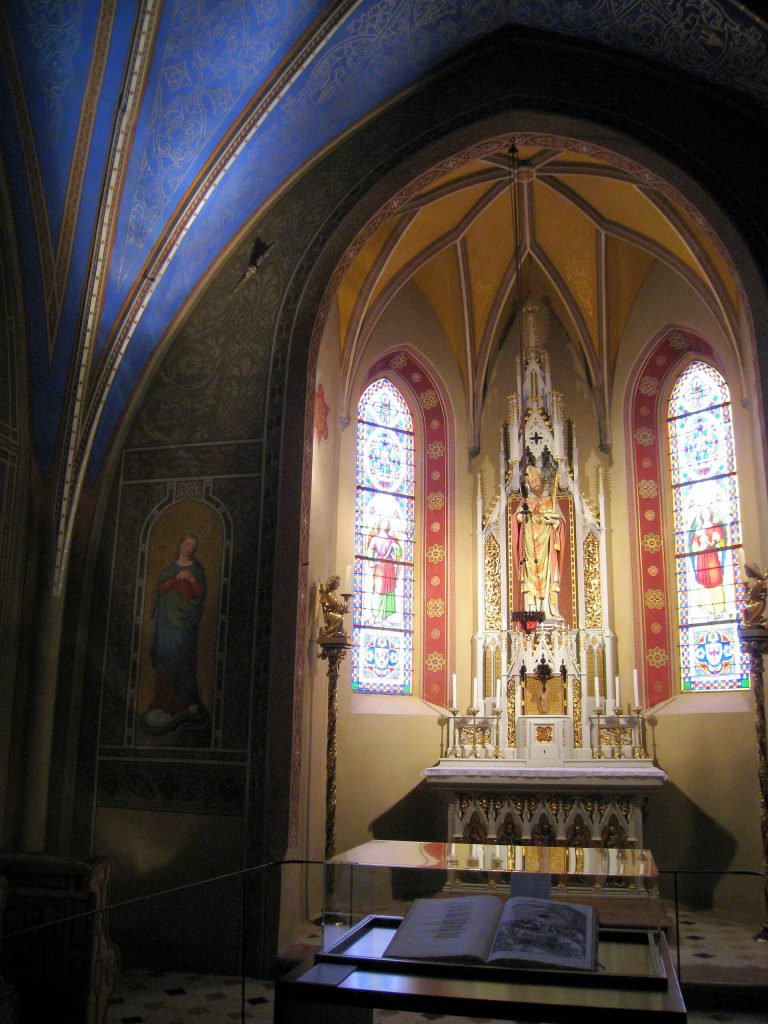
Like every princely residence, Ambras has its own chapel, the Chapel of Saint Nicholas, which served the spiritual needs of the household. Its decoration has been renewed over time, but it remains a calm and dignified space within the busy world of the castle.
Nearby you can see one of the most unusual rooms at Ambras, the bath of Philippine Welser. It is a sunken copper tub surrounded by a wooden room, with a system for heating water, and it is one of the few surviving bathrooms from the sixteenth century. It reflects Philippine’s interest in health and wellbeing, and it is a charming reminder of daily life in the castle.
Philippine’s book of medical recipes and her interest in healing herbs have also been preserved, and they show her to have been a practical and caring woman. In her day she was known for helping the sick and the poor, and this aspect of her life adds warmth to her story.
The chapel and the bath together show the different sides of life at Ambras, from faith and devotion to comfort and care, all within the walls of a Renaissance home.
Before you leave the Upper Castle, it is worth looking out of the windows toward the mountains. The views over the Inn valley and the surrounding peaks are magnificent and remind you that this was a home with one of the finest settings any Renaissance princess could have wished for.
The chapel has been used for worship for centuries, and its quiet atmosphere offers a moment of rest amid the wealth of sights at Ambras. If you visit on a weekday morning, you may have it almost to yourself.
Explore Ambras on Video
To get a sense of the castle before you visit, the video below offers a tour of Ambras, from its setting above Innsbruck to the Spanish Hall and its remarkable collections of art and armour.
Watch for the long Spanish Hall, the gleaming suits of armour and the treasures of the chamber of wonders.
If the video has whetted your appetite, read on for practical tips on planning your visit.
Planning Your Visit to Ambras Castle
Ambras lies on the southeastern edge of Innsbruck, about three kilometres from the old town. It is easy to reach by public transport, and in the season there is often a shuttle bus from the city centre. If you prefer to walk, the route through the suburbs and up to the castle park takes about an hour.
The castle is part of the Kunsthistorisches Museum Vienna, one of the great museums of the world, and it is open for most of the year, with a short winter break in some years. Plan at least half a day to see the Upper and Lower Castles, the Spanish Hall and the Habsburg Portrait Gallery at a comfortable pace.
Leave time for the park, which is beautiful in every season. You can stroll through the gardens, explore the woodland paths, see the artificial waterfall and grotto and watch the peacocks that roam freely across the grounds.
In summer, check the programme of the Ambras Castle Concerts and the Innsbruck Festival of Early Music, as an evening concert in the Spanish Hall is a truly unforgettable way to experience the castle.
There is a cafe in the castle grounds where you can rest after your visit, and the park offers plenty of benches and quiet corners for a picnic. In autumn, the colours of the trees against the white castle walls are especially beautiful.
Whatever time of year you choose, Ambras is a place that rewards curiosity and patience. Take your time, let the stories of Ferdinand and Philippine guide you, and enjoy one of the most remarkable castles in the Alps.
Combined tickets and audio guides are available, and the staff are helpful in recommending a route through the different parts of the castle. Families will find special activities for children during the holidays, and the armour collection is always a favourite with younger visitors.
View the location on Google Maps
Palaces Nearby
If Ambras has captivated you, Austria holds more princely residences full of stories. Here are two more remarkable palaces well worth adding to your journey:
- Hellbrunn Palace – the playful summer palace of a Salzburg prince archbishop, famous for its centuries old trick fountains.
- Eggenberg Palace – a baroque palace in Graz built as a calendar of the cosmos, crowned by its painted Planetary Hall.
You May Like
Eggenberg Palace in Graz and Its Secret Calendar of the Cosmos