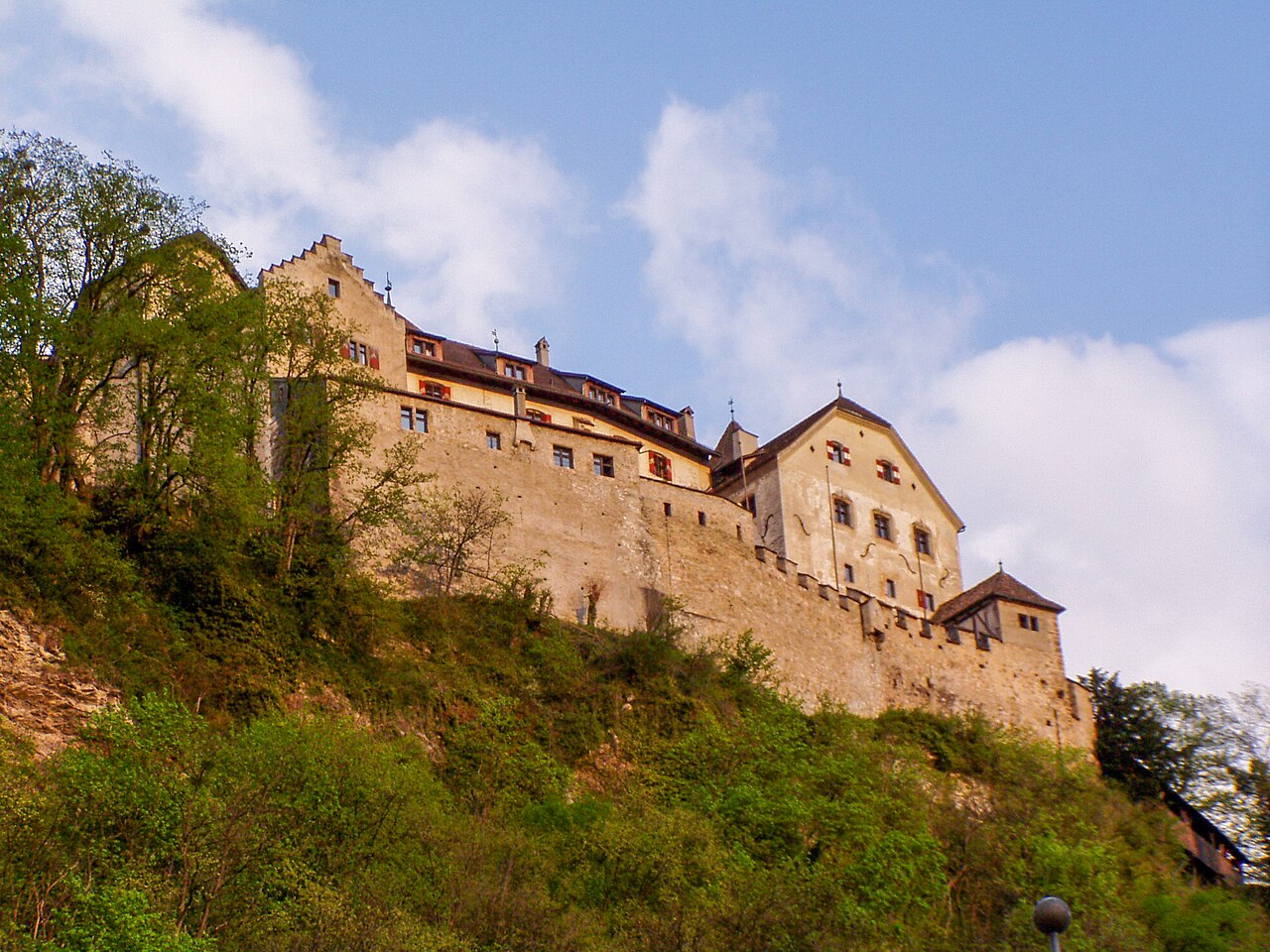
Perched on a wooded hillside above the little capital of one of the world’s smallest countries, Vaduz Castle looks down over the town of Vaduz and the Rhine valley like something from a fairy tale. This medieval fortress, its keep and towers rising among the trees, is the home of the reigning Prince of Liechtenstein, and it is one of the very few castles in Europe that remain the private residence of a family that still actually rules.
Liechtenstein is a tiny, mountainous, German-speaking principality wedged between Switzerland and Austria, one of only a handful of countries in the world that touch no sea and are surrounded entirely by other landlocked states. It is ruled by the House of Liechtenstein, one of the oldest noble families of Central Europe, whose prince, unusually for modern Europe, still wields real political power. The castle on the hill is the seat and symbol of that family and that unusual little state.
Yet for much of its history the princes of Liechtenstein never lived in their own principality at all, ruling it from afar while residing in grand palaces elsewhere, and it was only in the twentieth century that a prince finally made the castle his home. Private, closed to the public, and still lived in by the ruling family, Vaduz Castle is a working royal residence in the truest sense. In the sections that follow you will get to know the castle, the family, and the remarkable little country they rule.

In This Article
- A Castle Above the Capital
- The Little Principality in the Mountains
- The House of Liechtenstein
- Medieval Origins on the Hill
- How a Family Made a Principality
- The Princes Who Never Came
- The Prince Who Finally Moved In
- Keep, Chapel, and Courtyards
- A Home, Not a Museum
- A Prince With Real Power
- When the Prince Opens His Gates
- The Castle and Its Country on Film
- Seeing Vaduz Castle Today
A Castle Above the Capital
Vaduz Castle stands on a hill directly above the town of Vaduz, the capital of Liechtenstein, so that from almost anywhere in the small city one can look up and see the castle presiding over the valley. Its position, high on the hillside against a backdrop of mountains, gives it a commanding and picturesque presence, and it has become the emblem of the principality itself.

The castle is a genuine medieval fortress in form, with a massive keep, towers, and walls, later extended and adapted, its silhouette of battlements and roofs rising among the trees. Below it, the modern town of Vaduz spreads across the valley floor toward the Rhine, so that the ancient castle and the small modern capital are always in view of one another, the old seat of power watching over the present-day state.
For visitors to Liechtenstein, the sight of the castle above the town is one of the defining images of the country. A footpath leads up the hillside toward it, offering fine views over Vaduz and the valley, though the castle itself, as the private home of the reigning prince, is not open to the public, and visitors admire it from the outside and from the surrounding paths.
To behold Vaduz Castle is thus to behold the living heart of one of Europe’s most unusual states. This is not a museum or a ruin but the actual residence of a reigning prince, a medieval castle still serving as a family home and a symbol of sovereignty, high on its hill above the tiny capital of the principality it represents.
No visitor to Vaduz can miss it, and few leave without a photograph of the castle on its hill.
The Little Principality in the Mountains
To understand the castle, one must understand Liechtenstein, the small country over which it presides. Wedged between Switzerland and Austria in the high valley of the Rhine, Liechtenstein is one of the smallest states in the world, a mountainous, German-speaking principality of modest size but considerable prosperity, and one of the very few doubly landlocked countries on earth.

Despite its small size, Liechtenstein is a fully sovereign state, with its own government, its own traditions, and a distinctive constitutional arrangement in which the reigning prince plays an unusually active role. The country is wealthy, known for its stability, its financial sector, and its high standard of living, and it maintains close ties with its larger neighbours while guarding its independence.
The principality takes its very name from the ruling family, the House of Liechtenstein, an unusual case in which a country is named after its rulers rather than the other way around. This reflects the way the state came into being, assembled by the family and raised to the status of a principality, so that the identity of the country and the dynasty are bound together from the start.
The castle above Vaduz is the seat and symbol of this little state, the residence of its reigning prince and the emblem that appears on countless images of the country. To understand Liechtenstein is to understand a place where an ancient noble family and a modern microstate are inseparable, and the castle is the point where that unusual union is most vividly expressed.
It is a country one can drive across in minutes, yet it maintains all the apparatus of a sovereign state, from its own government to its national day, and it has prospered mightily, a reminder that in the modern world smallness is no barrier to success. The castle presiding over it all is the symbol of that improbable independence.
Everything about the place is on an intimate scale, which only makes its full sovereignty the more remarkable.
The House of Liechtenstein
The castle is the home of the House of Liechtenstein, one of the oldest and most distinguished noble families of Central Europe. The family rose to prominence over the centuries as powerful nobles in the lands of the Holy Roman Empire, above all in and around Austria, accumulating vast estates, wealth, and influence long before they gave their name to the principality.
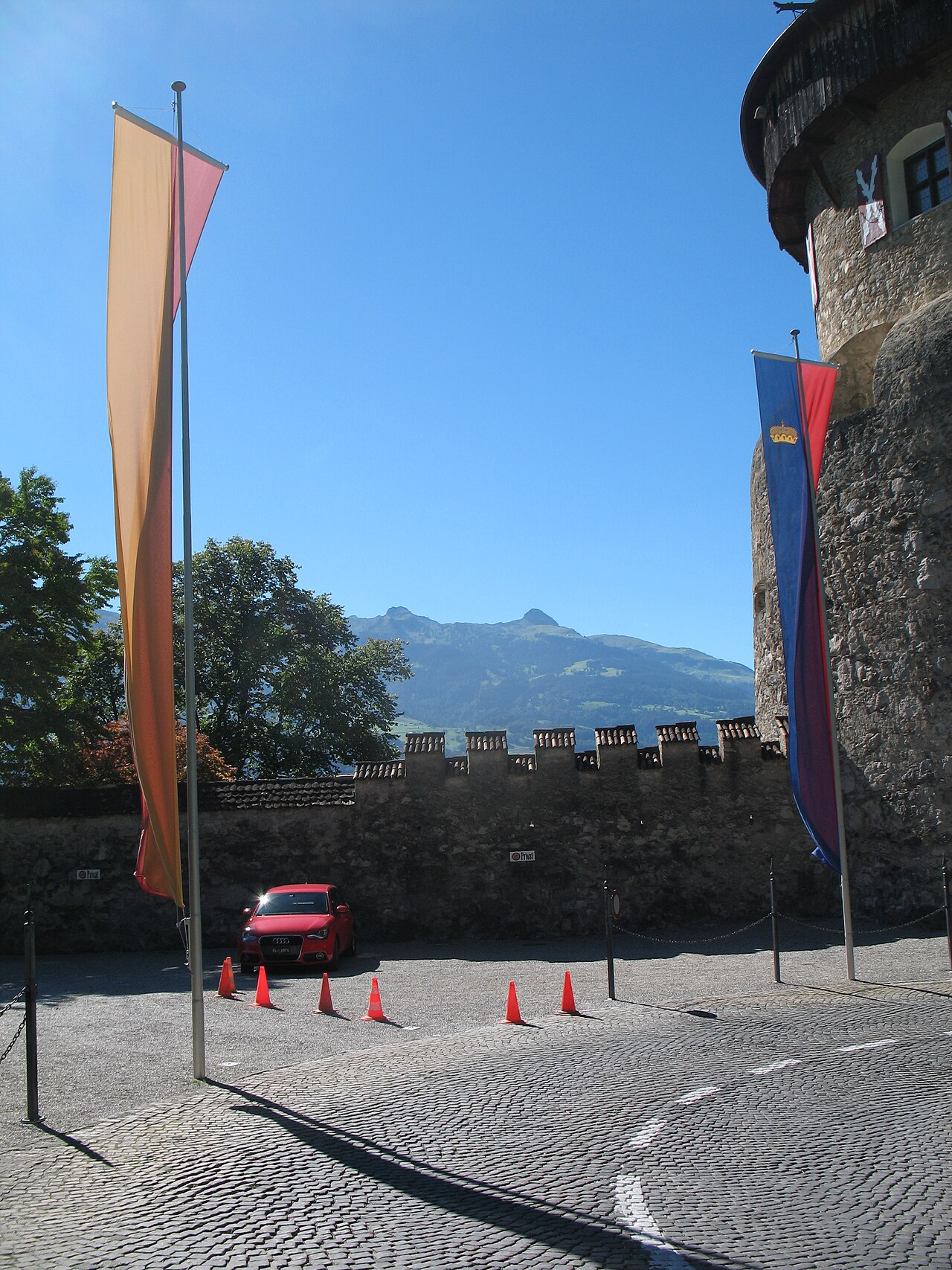
For generations the Liechtensteins were among the great aristocratic families of the Habsburg world, serving the emperors, amassing enormous landholdings, and building one of the most magnificent art collections in private hands. Their wealth and status were founded not on the little territory that now bears their name but on their extensive estates elsewhere in Central Europe.
The family’s great ambition was to obtain territory that would give them a seat and a vote among the princes of the Holy Roman Empire, and it was to this end that they eventually acquired the lands that would become Liechtenstein. The creation of the principality was thus, in part, a matter of prestige and rank within the imperial system, a way for the family to secure its standing among the highest nobility.
The House of Liechtenstein endures today as the ruling family of the principality, one of the few reigning dynasties in Europe and among the wealthiest, its fortune still founded on its long-accumulated estates and its famous art collections. The castle above Vaduz is the seat of this ancient and remarkable family, the visible sign of a dynasty whose history reaches back deep into the European past.
Their art collection alone, built up over centuries, ranks among the greatest ever assembled in private hands, a reminder that behind the small principality lies one of the truly wealthy and cultivated dynasties of Europe. The modest scale of the country belies the grandeur of the family that rules it.
The castle is the visible anchor of all that inheritance.
Medieval Origins on the Hill
The castle itself is far older than the principality, its origins reaching back into the Middle Ages, long before the Liechtenstein family had any connection with the place. The oldest parts of the structure, including the massive keep, date from the medieval period, when the castle was built as a fortress to command the valley and its routes.
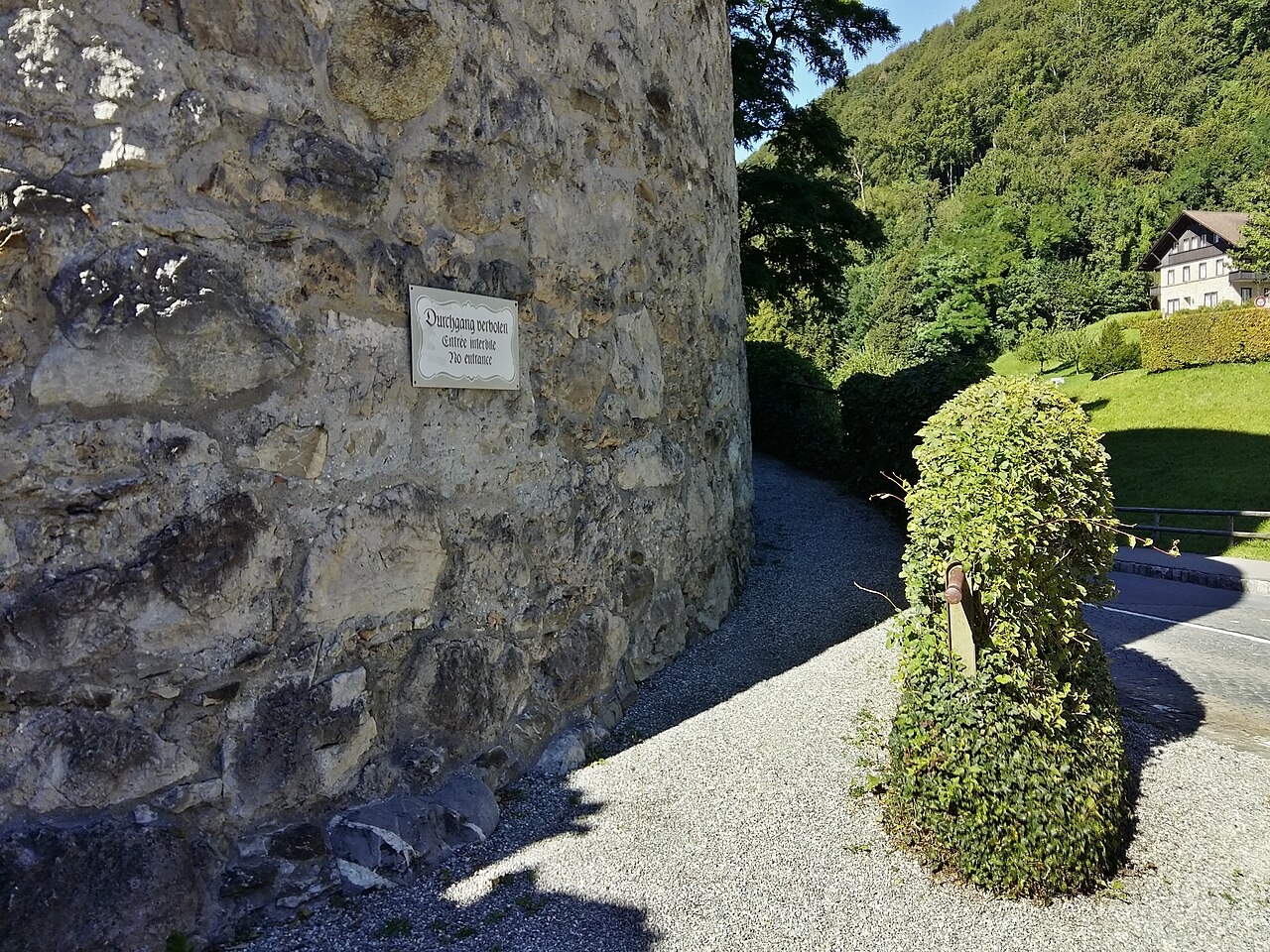
Over the centuries the castle passed through the hands of various lords and was extended, altered, and adapted, as such strongholds usually were, its buildings growing around the original keep. It shared in the turbulent history of the region, and like many medieval castles it saw periods of prosperity and neglect, of building and of damage, through the long centuries before it became a princely seat.
By the time the Liechtenstein family acquired the lordship of Vaduz, the castle was already ancient, a medieval fortress with a long history of its own. The family thus inherited not a new building but a venerable stronghold, which they would in time restore and make their home, adding their own chapter to a story that had already been unfolding for centuries.
This deep medieval origin gives the castle much of its character. Beneath the later additions and restorations lies a genuine medieval fortress, and its keep and older walls carry the weight of a history far longer than that of the principality itself. Vaduz Castle is thus a building of two great strands, an ancient fortress and a modern princely residence, woven together on its hill above the valley.
Standing on the paths below, one can still read the fortress in the building’s bones, the blunt strength of the keep speaking of an age when this hillside guarded a frontier rather than sheltered a prince.
The centuries have only deepened its air of permanence.
How a Family Made a Principality
The creation of Liechtenstein as a state was a deliberate act by the family whose name it bears. In the years around the turn of the eighteenth century, the Liechtensteins acquired the lordship of Vaduz and the neighbouring domain of Schellenberg, two small territories in the Rhine valley, precisely because these lands were held directly of the Holy Roman Emperor and could confer the coveted rank the family sought.

In the early eighteenth century the emperor united these territories and raised them to the status of a principality, the Principality of Liechtenstein, named after the family that now held it. This act gave the Liechtensteins the sovereign standing they had long desired, a seat among the princes of the empire, and it brought into being the small state that survives, independent, to this day.
It is a striking origin for a country: a principality created essentially to satisfy a great family’s desire for rank, assembled from two small lordships and named after its owners. The little state that resulted, tucked away in its mountain valley, would go on to outlast the very empire that created it, surviving into the modern world as a sovereign nation.
The castle above Vaduz became, in time, the symbol and seat of this principality, though the connection between the family and their new state would remain, for a long period, curiously distant. The story of how Liechtenstein came to be, through the ambitions of a noble family and the grant of an emperor, is essential to understanding both the country and the castle that crowns it.
Few countries can point to so precise a birth: a stroke of the imperial pen uniting two small lordships into a principality that still flies its flag three centuries later.
The Princes Who Never Came
One of the most surprising facts about Liechtenstein is that, for most of its history, its ruling princes never actually lived in the principality at all. Having created the state to secure their rank, the Liechtensteins continued to reside in their grand palaces elsewhere, above all in Vienna and on their vast estates in the Habsburg lands, ruling their little Alpine principality from afar.
For a long period the princes rarely, if ever, set foot in Liechtenstein, governing it through officials while they lived amid the splendour of their far greater possessions elsewhere. The principality was, in a sense, the least of their domains, valuable chiefly for the sovereign status it conferred, and the castle above Vaduz went for long stretches without a princely resident.
This absence lasted for a remarkably long time, and it shaped the early history of the state, which was administered on behalf of distant rulers rather than governed from within. It is one of the curiosities of Liechtenstein’s story that the family which gave the country its name, and ruled it as sovereigns, treated their own principality for so long as a distant and secondary concern.
All of this would change only in the twentieth century, when the fortunes of the family and the turmoil of the age at last brought a prince to live permanently in the principality. Until then, the castle above Vaduz stood as the seat of a state whose rulers lived elsewhere, a striking symbol of a principality that existed, for much of its life, at arm’s length from the dynasty whose name it bore.
There is a certain irony in it that visitors enjoy: the family gave its name to a country it barely visited, ruling from Vienna a state it treated almost as an afterthought. The little principality, valued mainly for the rank it conferred, quietly went on existing until, centuries later, history made it the family’s refuge and finally its home.
The paradox sits at the heart of the country’s story.
The Prince Who Finally Moved In
The great turning point in the story of Vaduz Castle came in the twentieth century, when a reigning prince at last made it his permanent home. As the political landscape of Central Europe was transformed and the family’s position in its traditional heartlands became uncertain, the prince of the day moved to take up residence in the principality itself, settling in the castle above Vaduz.
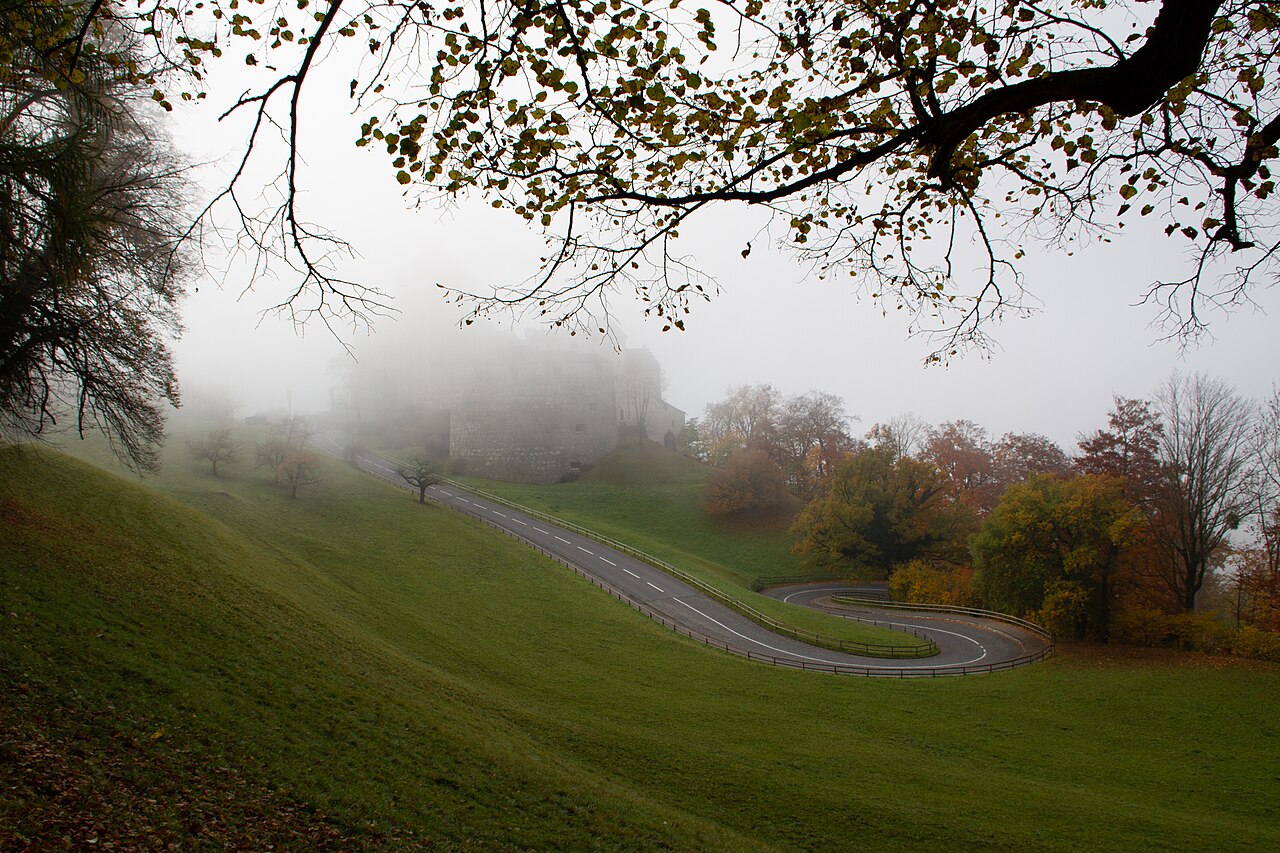
This move, made against the darkening backdrop of the era, marked the first time that a reigning Prince of Liechtenstein made the principality his primary home, ending the long centuries of rule from afar. From that point on, the prince lived among his people in the little state, and the castle became, for the first time, a genuine princely residence rather than a distant symbol.
The change was of great significance for the principality. The permanent presence of the prince strengthened the bond between the ruler and the country, and it came at a time when Liechtenstein needed to assert and preserve its independence amid the upheavals of the mid-twentieth century. The prince living in Vaduz became a symbol of the state’s identity and survival.
Since that time, the castle has remained the home of the reigning prince and his family, a working royal residence at the heart of the principality. What had been, for so long, the seat of absent rulers became the living home of a present one, and the story of the prince who finally moved in is a central chapter in the modern history of both the castle and the country.
The timing was no accident. As the old order of Central Europe collapsed and the family’s estates elsewhere fell under threat, the small, neutral principality became a place of safety, and the castle above Vaduz was transformed from a distant possession into a refuge and a home at the very moment the family most needed one.
His long reign came to be seen as the making of the modern principality.
Keep, Chapel, and Courtyards
Architecturally, Vaduz Castle is a medieval fortress that has been extended and restored over the centuries into a comfortable princely residence, while retaining its ancient character. Its most venerable feature is the great keep, the oldest part of the structure, around which the other buildings are grouped, along with towers, walls, and ranges of rooms added in later periods.
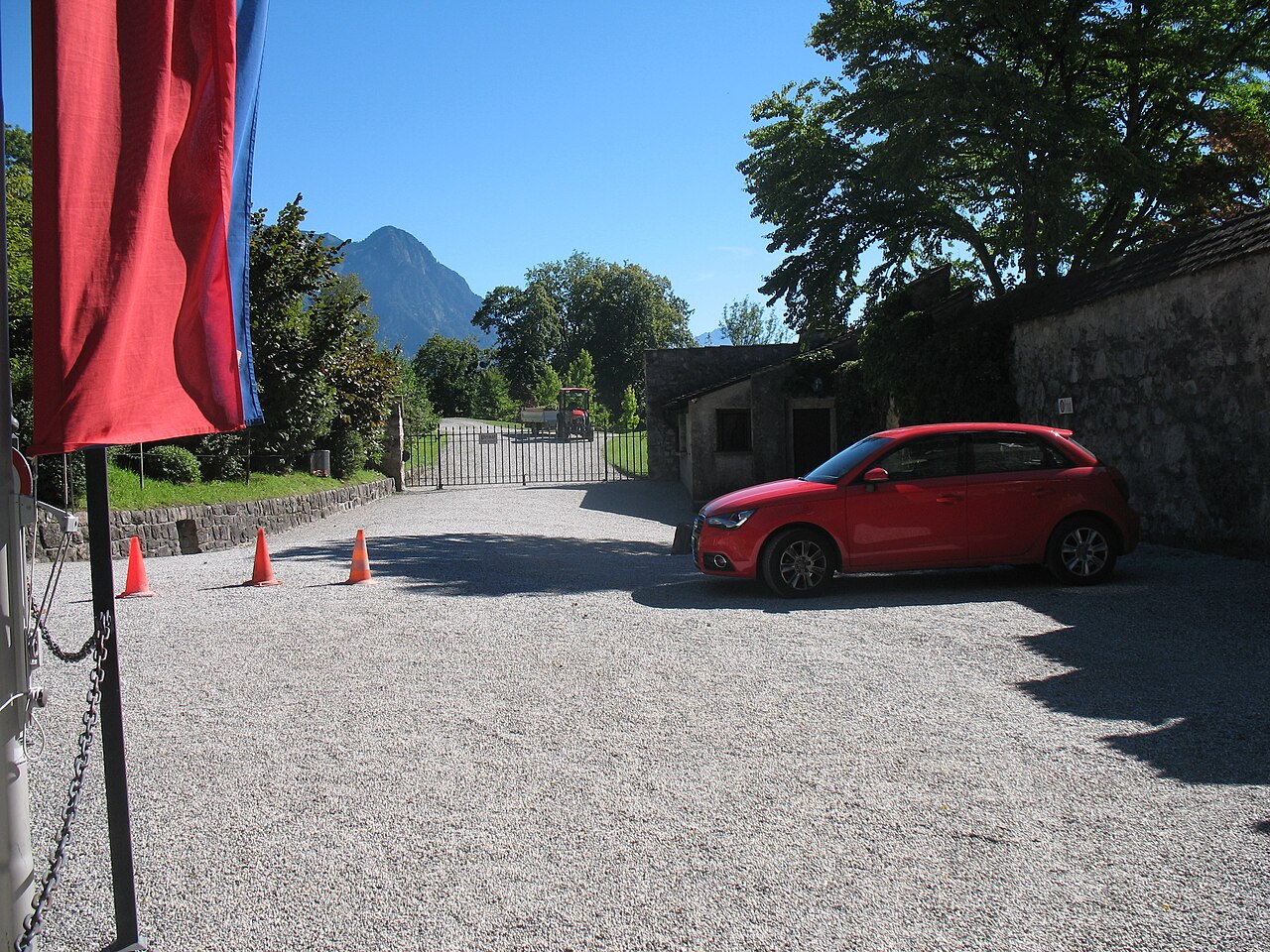
The castle also contains a chapel and various courtyards and buildings that reflect its long development, from its medieval core to later additions. Its form is that of a true hilltop castle, adapted for residence, with the defensive elements of the fortress softened and supplemented by the requirements of a family home, so that the building unites the martial and the domestic.
In the earlier twentieth century the castle underwent significant restoration, which repaired and adapted the ancient structure and prepared it to serve as the permanent residence of the prince. This work preserved the historic character of the castle while making it suitable for modern habitation, ensuring that the medieval fortress could serve as a comfortable home.
The result is a castle that looks, from the outside, every inch the medieval stronghold, its keep and towers rising among the trees, while within it functions as the private residence of a reigning family. Because it is not open to the public, its interiors remain private, but its exterior, admired from the town and the surrounding paths, is one of the most picturesque and evocative sights in the principality.
Seen in the changing light of the seasons, snow-dusted in winter, framed by vineyards in autumn, the castle offers a different picture at every visit, which is part of why it appears on so many images of the country.
A Home, Not a Museum
Unlike most famous royal castles and palaces, Vaduz Castle is not open to the public. It remains the private residence of the reigning Prince of Liechtenstein and his family, a working home rather than a museum or a tourist attraction, and its interiors are kept private, seen only by the family, their guests, and those on official business.
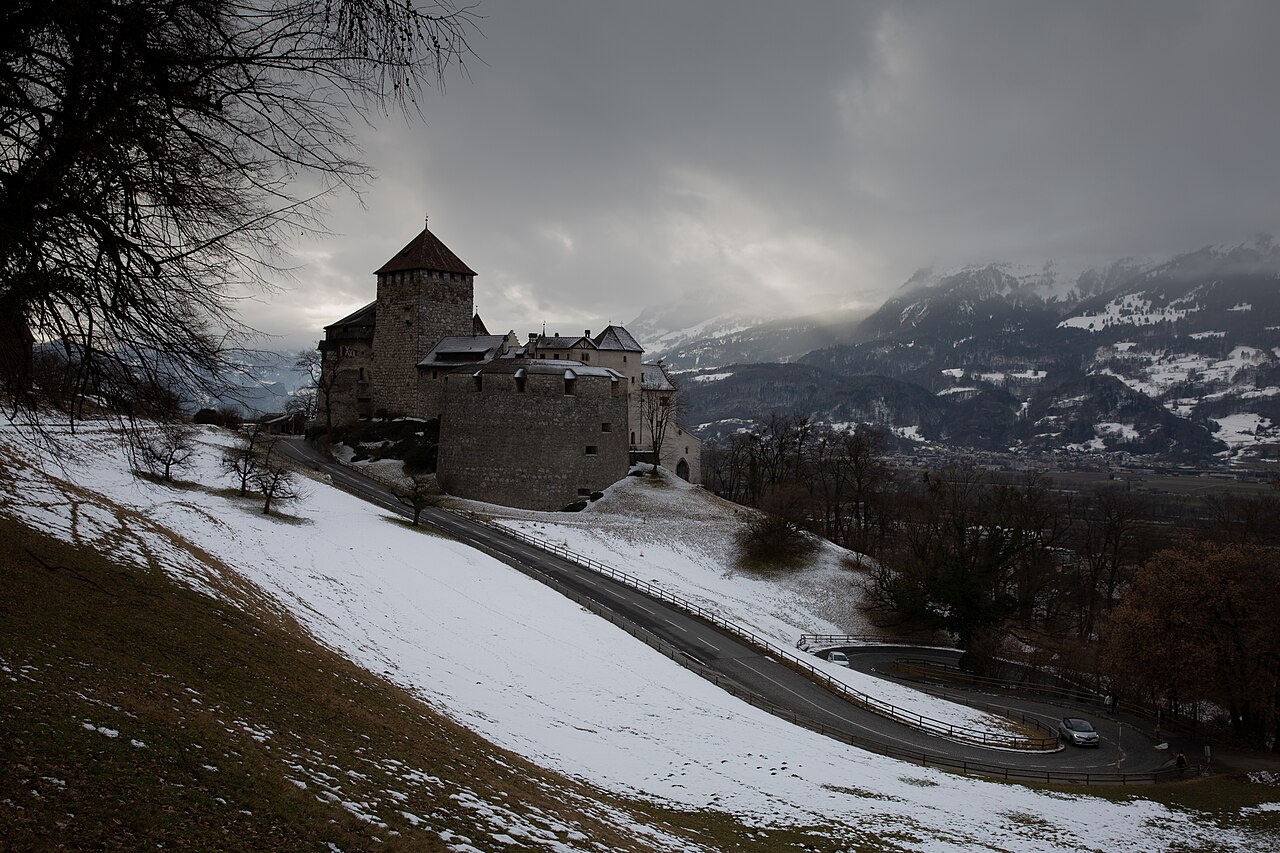
This private character sets Vaduz apart from the great palaces that have become museums, and it reflects the living nature of the Liechtenstein monarchy. The castle is genuinely lived in, the everyday home of the ruling family, and its closure to visitors is simply a consequence of its being a real residence rather than a preserved monument.
Visitors to Liechtenstein can walk up the hill toward the castle and admire it from the outside, enjoying the views over Vaduz and the valley, but they cannot enter, and the family’s privacy is respected. This is a rare thing in modern Europe, where so many royal residences have been opened up, and it lends the castle an air of mystery and dignity.
The fact that the castle remains a private family home is central to its identity. Vaduz Castle is not a relic to be toured but the living seat of a reigning dynasty, and its closed doors are a reminder that, behind the picturesque medieval walls, a real princely family goes about its life, ruling one of Europe’s most unusual little states from a genuine ancestral home.
This restraint is itself part of the country’s charm. In an age when so much is opened, photographed, and monetised, Liechtenstein’s quiet insistence that the prince’s home is simply his home strikes many visitors as dignified, even refreshing.
A Prince With Real Power
One of the most remarkable things about the Prince of Liechtenstein is that, unlike most modern European monarchs, he wields genuine political power. Far from being a purely ceremonial figurehead, the reigning prince holds substantial constitutional authority within the principality, making Liechtenstein an unusual case in contemporary Europe of a monarch with real influence over government.
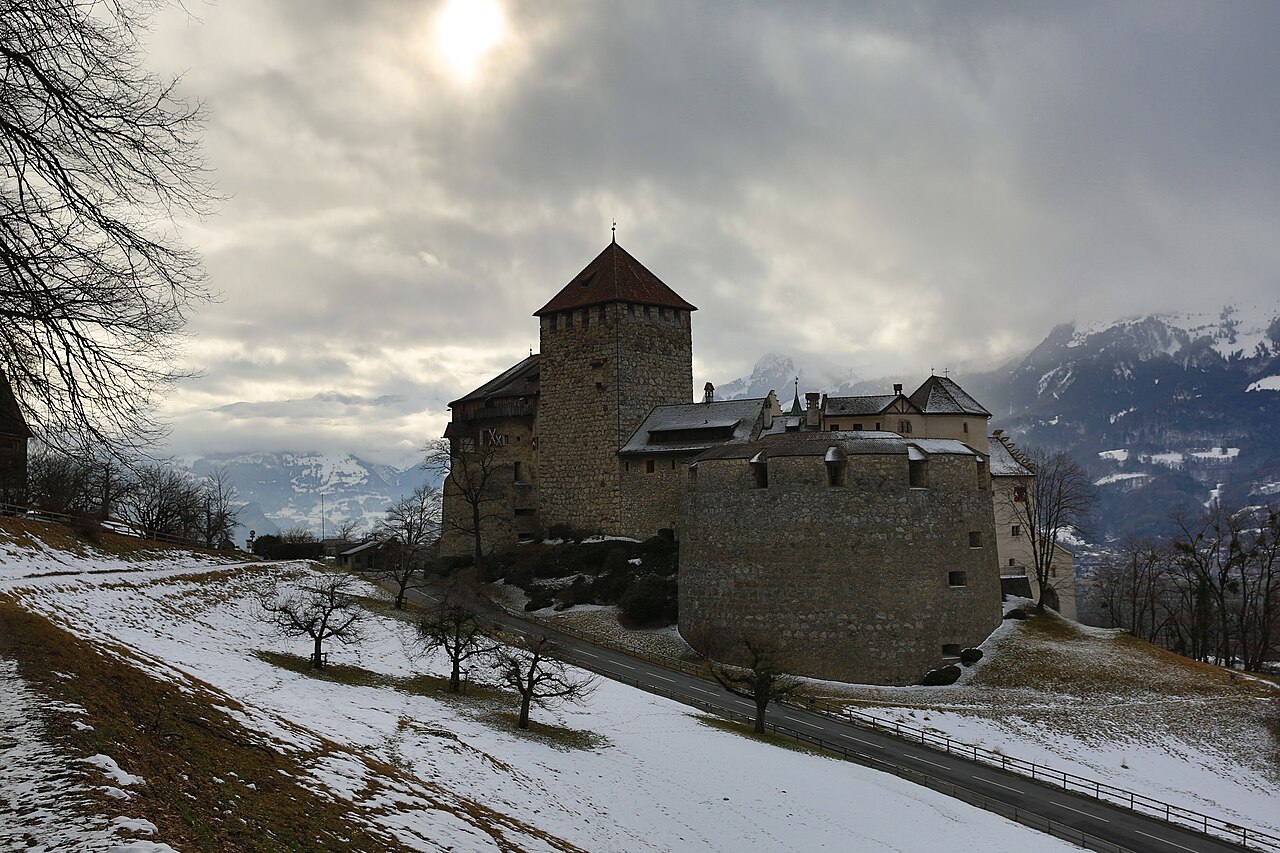
The constitutional arrangements of the principality give the prince significant powers, and the relationship between the monarchy and the democratic institutions of the state has been the subject of debate and adjustment over the years. The result is a system in which the prince is an active participant in government, not merely a symbol, an arrangement that distinguishes Liechtenstein from its neighbours.
In recent times the reigning prince has shared or delegated the exercise of his functions within the family while remaining head of state, and the family continues to play a central and active role in the affairs of the principality. This living political role gives the monarchy, and the castle that symbolises it, a significance beyond the ceremonial.
The castle above Vaduz is thus the seat not of a decorative monarchy but of a functioning one, the home of a prince who genuinely rules as well as reigns. This makes Vaduz Castle one of the few royal residences in Europe that is the home of a monarch with real power, a living centre of government as well as a family home, and a symbol of the unusual constitutional character of the little principality.
This has occasionally put the monarchy at the centre of genuine political debate, in a way unheard of for the ceremonial crowns of larger nations. The prince has been willing to use his influence, and even to speak of leaving the country if his role were curtailed, so that in Liechtenstein the question of royal power is a live one rather than a historical relic.
In this the little principality quietly stands apart from every crowned neighbour around it.
When the Prince Opens His Gates
Though the castle is closed to visitors for most of the year, there is one great occasion when the prince and his family open their home to the people: the national day of the principality. On this day, the whole country is invited, in a sense, to celebrate together, and the princely family plays host in a gesture that binds the ruler to his people.

On the national day, the prince traditionally invites the population to the grounds of the castle for a celebration, offering hospitality and greeting the people, in a warm and informal expression of the close relationship between the small state and its ruling family. It is a rare chance for the people of Liechtenstein to gather at the castle and to celebrate their nationhood in the presence of the prince.
The occasion combines official ceremony with popular festivity, uniting the formal and the familial in a way that suits the intimate scale of the principality. In a country so small, the bond between the monarch and the people can be genuinely personal, and the national day at the castle is one of the clearest expressions of that closeness.
This annual opening of the castle grounds is one of the most distinctive customs of the principality, transforming the private residence, for a day, into a place of national gathering. It reflects the unusual character of Liechtenstein, where a reigning prince with real power is also, in a sense, a neighbour to his people, and where the castle on the hill is both a seat of sovereignty and a family home opened, once a year, to the whole nation.
For a state whose entire population could gather in a single field, this personal bond between ruler and ruled is not mere sentiment but a lived reality, and the sight of the prince greeting his people in the castle grounds captures the intimate scale of the principality better than any statistic could.
It is a custom found almost nowhere else, and it captures the singular spirit of the place.
The Castle and Its Country on Film
The setting and character of Vaduz Castle, its position above the town, its medieval walls, and the unusual little principality it symbolises, are well conveyed in film, and the short feature below offers a look at the castle, the country, and its reigning family. Watching it alongside this article helps bring the story of Liechtenstein and its prince to life.

Because the castle is a private residence closed to the public, film and photographs are among the few ways to appreciate it beyond the exterior views available to visitors. A video also helps explain the remarkable constitutional and historical situation of Liechtenstein, a microstate with a genuinely reigning prince, that makes the castle so much more than a picturesque landmark.
And if a visit to this corner of the Alps lies beyond your plans for now, the film lets you encounter Liechtenstein and its castle from afar. Let it play, and picture the fortress of Vaduz on its hillside above the little capital, the home of one of the last truly reigning princes in Europe, in one of the smallest and most unusual countries in the world.
Seeing Vaduz Castle Today
For travellers to Liechtenstein, Vaduz Castle is the great landmark of the principality, though experiencing it means admiring it from the outside, since it remains the private residence of the reigning prince and is not open to the public. A footpath leads up the hill from the town toward the castle, offering fine views of its walls and of Vaduz and the valley below.
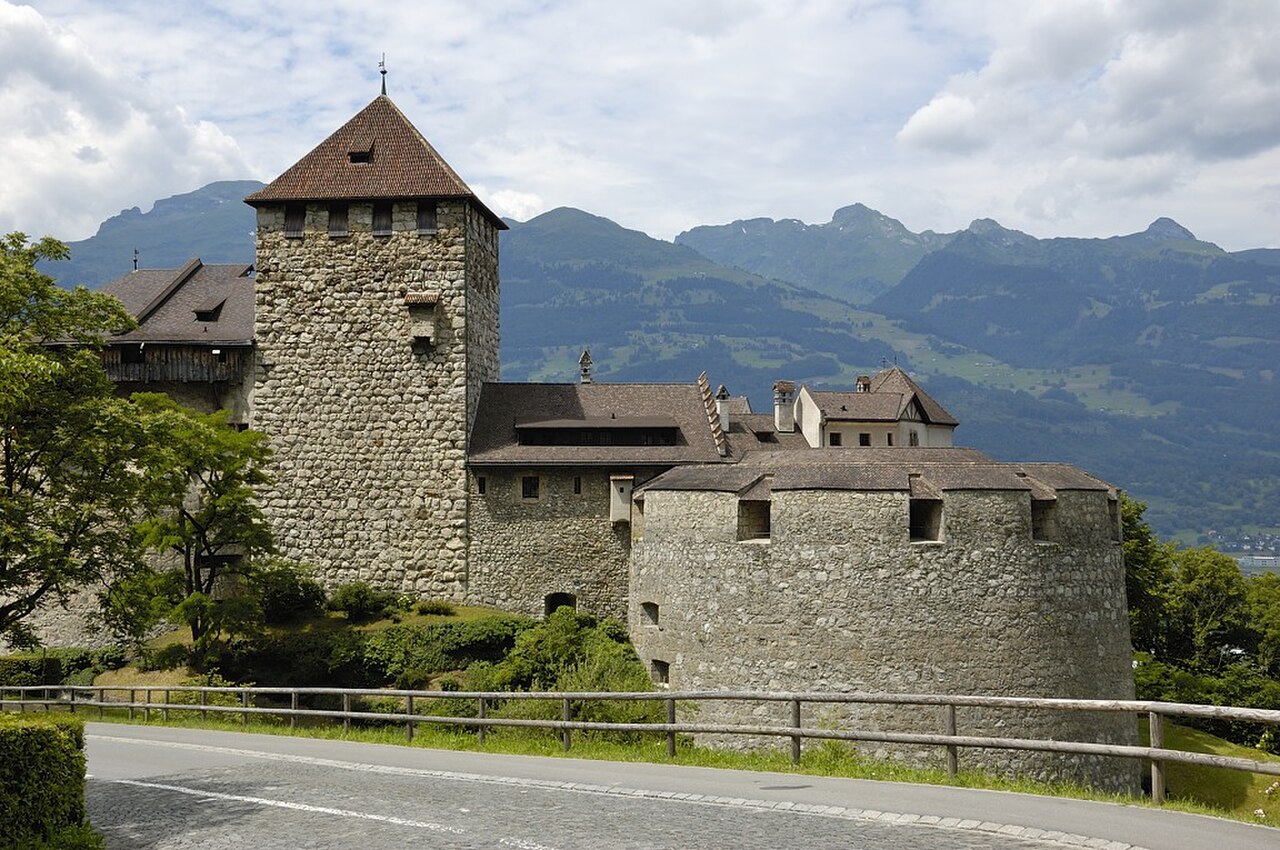
The walk up to the castle is a rewarding part of any visit to Vaduz, and the viewpoints along the way and near the castle provide splendid vistas over the little capital, the Rhine valley, and the surrounding mountains. While the interior is off-limits, the exterior and the setting are more than enough to make the visit worthwhile, and the castle is the emblematic sight of the country.
The town of Vaduz below offers its own attractions, including the museums that house parts of the famous princely art collections, the cathedral, and the compact modern centre of the principality, all easily explored on foot. The castle on its hill presides over it all, the historic heart of the state and the private home of its prince.
However you come to it, Vaduz Castle offers a rare glimpse of a living European monarchy of unusual character. To look up at the medieval fortress above the town, knowing that within its walls a reigning prince with real power makes his home, is to encounter one of the last of Europe’s truly private royal castles, high on its hill above the tiny, remarkable principality of Liechtenstein.
Sturdy shoes and a little time for the uphill walk are all that is needed to enjoy the finest views in the capital.
Palaces Nearby
If the tiny principality of Liechtenstein has charmed you, these two other seats of small reigning monarchies make a natural next stop.
- Istana Nurul Iman, the Largest Royal Palace in the World — the golden-domed seat of the Sultan of Brunei.
- The Prince’s Palace of Monaco and Seven Centuries of the Grimaldi — the fortress-palace of the reigning Grimaldi princes.
You May Like
The Prince’s Palace of Monaco and Seven Centuries of the Grimaldi