On a rise above the river outside Bandar Seri Begawan, the capital of the tiny, oil-rich sultanate of Brunei, sprawls a palace so vast that it holds the record as the largest residential palace in the world. Istana Nurul Iman, the Palace of the Light of Faith, is the home of the Sultan of Brunei and the seat of his government, a golden-domed complex of well over a thousand rooms that ranks among the most extraordinary royal residences ever built.
Brunei is one of the last absolute monarchies on earth, a small but immensely wealthy nation on the island of Borneo whose sultan, enriched by oil and gas, is among the richest monarchs in the world. The palace is the expression of that wealth and that power, a modern residence built on a scale almost beyond comprehension, blending the traditions of Malay and Islamic architecture with the ambitions of a twentieth-century state.
Yet for all its size and splendour, the palace opens its doors to ordinary people once a year, during the great festival at the end of the fasting month, when tens of thousands file through its halls to greet the sultan in person. In the sections that follow you will get to know this astonishing palace, the sultanate it serves, and the unique way of life it embodies, at once one of the most private and, for a few days each year, one of the most welcoming royal homes in the world.

In This Article
- The Largest Palace in the World
- The Oil-Rich Sultanate of Brunei
- The Palace of the Light of Faith
- Building a Modern Wonder
- A Palace of a Thousand Rooms
- Golden Domes and Malay-Islamic Design
- The Throne Room and the Great Banquet Hall
- A Mosque Within the Palace
- The Wealth of a Sultan
- The Seat of an Absolute Monarchy
- When the Palace Opens Its Doors
- Inside the Palace on Film
- Seeing Istana Nurul Iman
The Largest Palace in the World
Istana Nurul Iman is difficult to grasp at first sight, simply because of its scale. Spreading across a low hill above the Brunei River, its long ranges of buildings crowned with sweeping golden domes and vaulted roofs stretch far into the distance, more a small golden city than a single house. It is officially recognised as the largest residential palace in the world, and the claim is easy to believe.

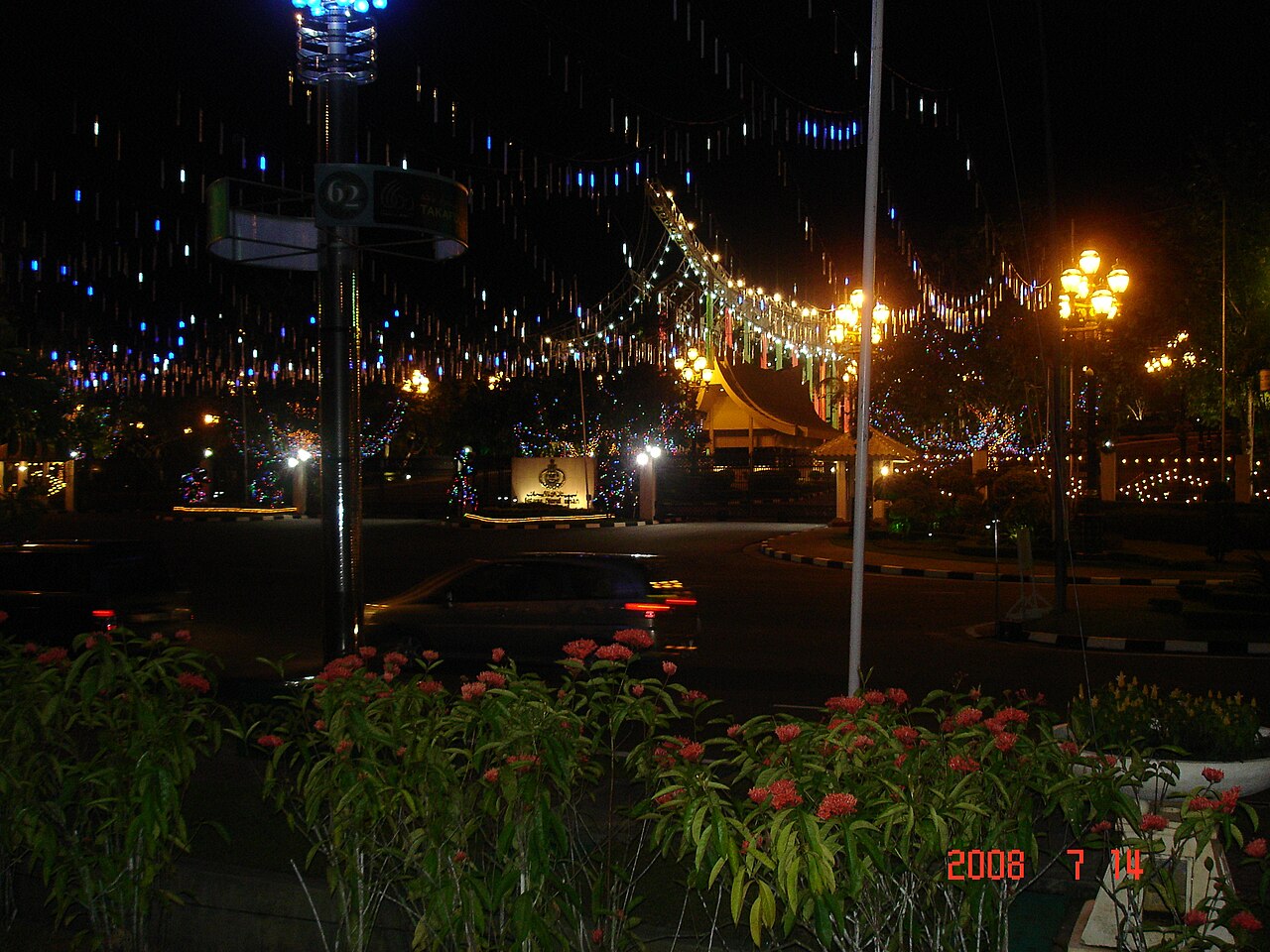
The palace glows, especially at night when it is lit, its golden domes and pale walls shining above the river and the surrounding greenery. Its architecture blends the forms of Malay and Islamic tradition, the domes, arches, and vaulted roofs of the region’s heritage, with the clean lines and vast scale of modern design, producing a building that is unmistakably both contemporary and rooted in its culture.
For most of the year the palace is a private world, the closely guarded residence of the sultan and the seat of his government, glimpsed by outsiders only from a distance or across the river. Its sheer size, and the wealth it represents, make it one of the wonders of the modern royal world, a residence on a scale that recalls the greatest palaces of history yet built entirely within living memory.
To behold Istana Nurul Iman, even from afar, is to understand something of the extraordinary nature of Brunei and its ruler. This is the home of one of the world’s wealthiest monarchs, the seat of a small but immensely rich nation, and a statement, in gold and stone, of the power and faith around which the sultanate is built. Few buildings anywhere make so vivid an impression of concentrated wealth and royal splendour.
Seen mirrored in the river at dusk, it is one of the most extraordinary sights in Southeast Asia.
The Oil-Rich Sultanate of Brunei
To understand the palace, one must understand Brunei, the small sultanate on the northern coast of the island of Borneo that is its home. Though modest in size, Brunei is a nation of great wealth, its fortune founded on abundant reserves of oil and natural gas, which have made it one of the richest countries per person in the world and its ruler one of the wealthiest monarchs anywhere.

Brunei is one of the last absolute monarchies on earth, a state in which the sultan holds sweeping power as head of state and government, ruling in accordance with a distinctive national philosophy that combines Malay culture, Islamic faith, and monarchy. The sultan is not a ceremonial figurehead but the active centre of the nation’s political and religious life, and the palace is the seat of that authority.
The sultanate has a long history, having once been a considerable maritime power in the region before shrinking, over the centuries, to its present modest extent, and later becoming a British protectorate before regaining full independence in the later twentieth century. The dynasty that rules Brunei is among the oldest continuously reigning royal houses in the world, giving the modern, oil-rich state a deep historical lineage.
It is this combination, of great wealth, absolute monarchy, deep tradition, and Islamic faith, that the palace expresses. Istana Nurul Iman is the residence of a ruler who is at once one of the richest men in the world and the guardian of an ancient throne and a devout faith, and its scale and splendour are the outward sign of the unique nature of the sultanate over which he reigns.
There is a striking contrast between the modest size of the country and the grandeur of its palace. Brunei could be crossed in a matter of hours, yet its ruler commands a residence larger than those of empires many times its size, a reminder that in the modern world wealth, more than territory, is the measure of a monarch’s magnificence.
The Palace of the Light of Faith
The palace’s name, Istana Nurul Iman, is usually translated as the Palace of the Light of Faith, a title that captures the deeply Islamic character of the Bruneian state and monarchy. The name reflects the central place of faith in the identity of the sultanate, where Islam is not only the religion of the people but a pillar of the national philosophy that underpins the monarchy itself.

The palace was built in the years around Brunei’s return to full independence in the later twentieth century, and it is closely associated with that moment of national fulfilment. As the country stepped out from under British protection to become a fully sovereign state, the new palace rose as a fitting seat for the independent sultanate, a symbol of the nation’s arrival as a wealthy and self-governing kingdom.
The timing gave the palace a special significance beyond its role as a royal residence. It was, in effect, a monument to Brunei’s independence and to the wealth that oil had brought, a grand statement that the small sultanate had taken its place among the sovereign nations of the world, with a palace to rival or surpass those of far larger states.
The name and the moment of its building together set the tone for the whole palace. It is a residence conceived as an expression of faith, wealth, and national pride, raised at a defining moment in the country’s history. Everything about Istana Nurul Iman, from its Islamic architectural forms to its vast scale, flows from this founding vision of a devout, wealthy, and newly independent sultanate.
For a nation stepping onto the world stage as a sovereign state, the palace served as a kind of declaration in stone, announcing that Brunei intended to be taken seriously, and that its monarchy would be housed in a manner second to none.
Building a Modern Wonder
The palace was built in the early 1980s, rising in a remarkably short time to become one of the largest buildings of its kind in the world. Its design was entrusted to a distinguished architect from the region, and its interiors to noted designers, bringing together the finest talent to realise a residence of unprecedented scale and luxury for the sultan and his government.
The construction was an enormous undertaking, employing vast resources to raise a complex of well over a thousand rooms, complete with halls, mosques, garages, and every facility a modern royal household and government could require. The cost was correspondingly immense, running to a sum that made it one of the most expensive residences ever built, a reflection of the wealth of the sultanate.
The design set out to blend tradition and modernity, using the domes, arches, and decorative forms of Malay and Islamic architecture within a thoroughly modern building of concrete, marble, and gold. The result was a palace that honoured the cultural and religious heritage of Brunei while embracing the scale and technology of the late twentieth century, a distinctively Bruneian monument.
When it was completed, Istana Nurul Iman stood as a wonder of the modern age, a palace built not over centuries but in a few short years, on a scale that recalled the greatest royal residences of history. It gave Brunei a seat of monarchy and government worthy of its wealth and its ambitions, and it remains one of the most remarkable buildings raised anywhere in the modern era.
The involvement of leading architects and designers from the region gave the palace a coherence remarkable in so vast a project, so that despite its size it reads as a single considered work rather than a sprawling accumulation.
A Palace of a Thousand Rooms
The statistics of Istana Nurul Iman are staggering, and they are the reason it holds its record as the largest residential palace in the world. The palace is said to contain well over a thousand rooms, along with hundreds of bathrooms, a scale of interior space that dwarfs even the great historic palaces of Europe and Asia, and that is almost impossible to imagine.

Among its facilities are a banquet hall able to seat thousands of guests, a mosque for well over a thousand worshippers, a vast garage housing a huge collection of vehicles, swimming pools, and even air-conditioned stables for the sultan’s polo ponies. The palace is, in effect, a self-contained world, providing for every conceivable need of the royal household, the government, and the ceremonial life of the state.
These numbers are not mere extravagance but reflect the palace’s multiple functions. It is at once the private residence of the sultan and his family, the seat of the government with its offices, and the ceremonial centre of the state, hosting the great banquets, religious observances, and receptions of the kingdom. Its vast scale is what allows it to serve all these purposes under one golden roof.
For the outside world, the sheer size of the palace has become legendary, a byword for royal wealth and ambition. Whether or not every figure is precisely known, the overall impression is unmistakable: this is a residence of a scale seen nowhere else, a modern palace that has claimed a place in the record books and in the popular imagination as the largest home of any monarch on earth.
It is worth pausing on how recent all of this is. Where the great palaces of the past accumulated their rooms over centuries, Istana Nurul Iman reached its vast size in a single burst of building, a whole royal city conjured up within a few years by the wealth of oil. That speed is part of what makes it so astonishing: it is less the product of a long dynasty’s slow gathering of splendour than of a modern fortune spent all at once.
Golden Domes and Malay-Islamic Design
The architecture of Istana Nurul Iman is a deliberate fusion of the traditional and the modern, rooted in the Malay and Islamic heritage of Brunei. Its most striking features are its great golden domes, which crown the principal buildings and gleam above the complex, drawing on the dome forms of Islamic architecture and finished in gold to express the wealth and devotion of the sultanate.
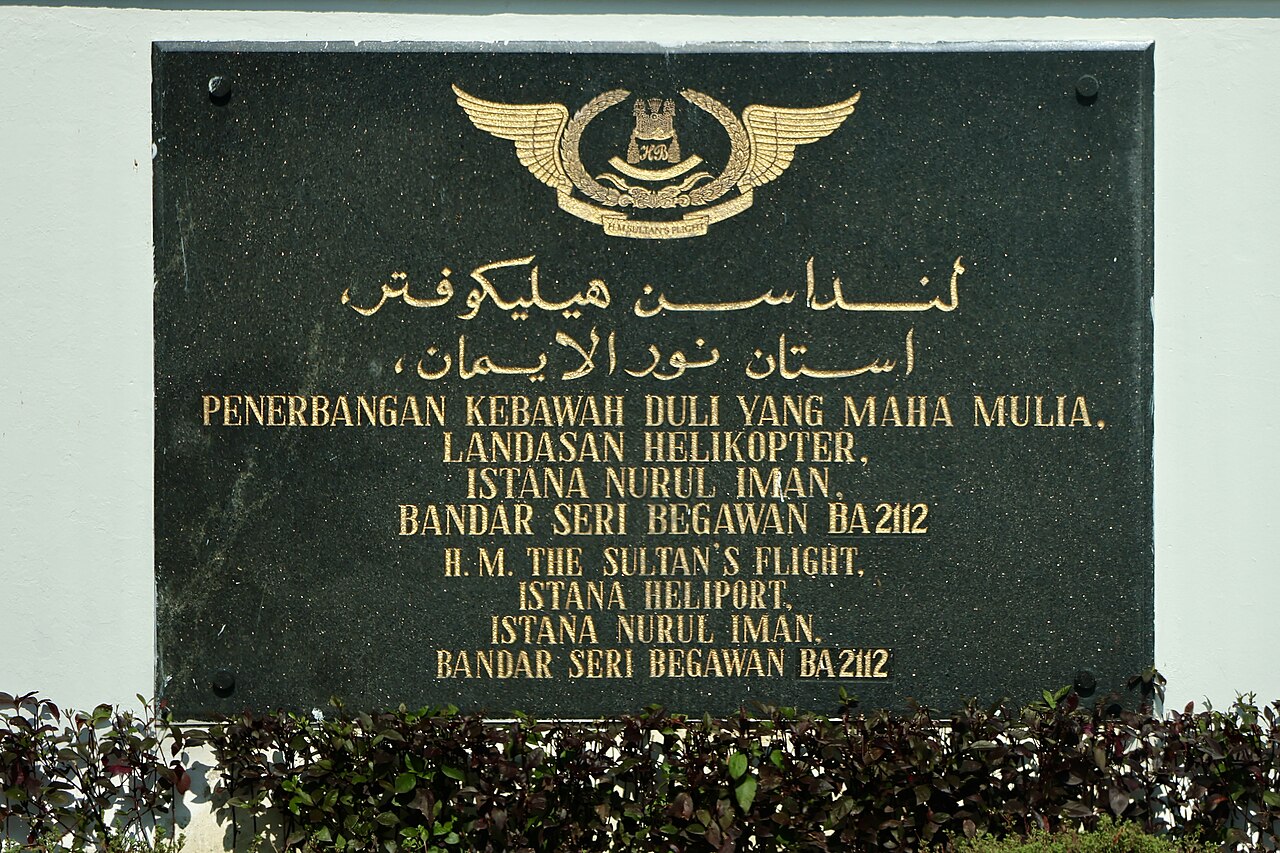
Beneath and around the domes, the palace employs the arches, vaulted roofs, and decorative motifs of Malay and Islamic tradition, adapted to the vast scale of the modern building. The sweeping roofs echo traditional forms, while the decoration draws on the geometric and calligraphic ornament of Islamic art, so that the palace, for all its modernity, is unmistakably an expression of its culture and faith.
The materials are of the finest, with marble, gold, and rich furnishings used throughout the interiors, and the design lavishes attention on the grand ceremonial spaces in particular. The blend of traditional forms with modern scale and luxury creates an architecture that is both familiar and overwhelming, honouring the past while proclaiming the wealth and ambition of the present.
This architectural approach reflects the philosophy of the Bruneian state itself, which seeks to combine Malay tradition, Islamic faith, and the monarchy within a modern nation. The palace embodies that synthesis in built form, its golden domes and traditional motifs married to its vast modern structure, making it a fitting seat for a sultanate that presents itself as at once deeply traditional and thoroughly modern.
The choice to crown the palace with domes of gold rather than tile was itself a statement, aligning the building with the great tradition of Islamic sacred architecture while announcing, unmistakably, the wealth that made such extravagance possible.
The Throne Room and the Great Banquet Hall
At the ceremonial heart of the palace are its grand halls, above all the throne room and the enormous banquet hall. The throne room is the setting for the most important state occasions of the sultanate, where the sultan appears in full majesty, and it is designed with all the splendour appropriate to the seat of one of the world’s wealthiest monarchs.

The banquet hall is one of the palace’s most astonishing spaces, built to seat thousands of guests at a single sitting. Such vast dining capacity reflects the scale of Bruneian royal hospitality, above all during the great annual open house, when enormous numbers of people are welcomed and fed, but also for the state banquets and receptions that mark the sultanate’s important occasions.
These grand spaces are richly decorated, with gold, marble, crystal chandeliers, and fine furnishings, creating settings of overwhelming splendour for the ceremonies of the state. The throne room and banquet hall are where the wealth and dignity of the sultanate are most fully displayed, stages for the pageantry of a monarchy that spares no expense in its ceremonial life.
Together these halls express the dual character of the palace as both a seat of power and a centre of hospitality. In the throne room the authority of the sultan is enacted; in the banquet hall the generosity of the crown is displayed on a scale matched almost nowhere else. They are the ceremonial climax of a palace built to impress and to welcome, and to proclaim the greatness of the sultanate.
The kitchens behind the banquet hall are on an industrial scale to match, capable of preparing food for the multitudes who pass through during the great open house.
A Mosque Within the Palace
In keeping with the deeply Islamic character of Brunei and its monarchy, the palace contains its own mosque, a place of worship able to accommodate well over a thousand people. The presence of so substantial a mosque within the residence reflects the central place of faith in the life of the sultanate and of the royal family, for whom religious observance is a fundamental part of daily life and of the monarchy itself.
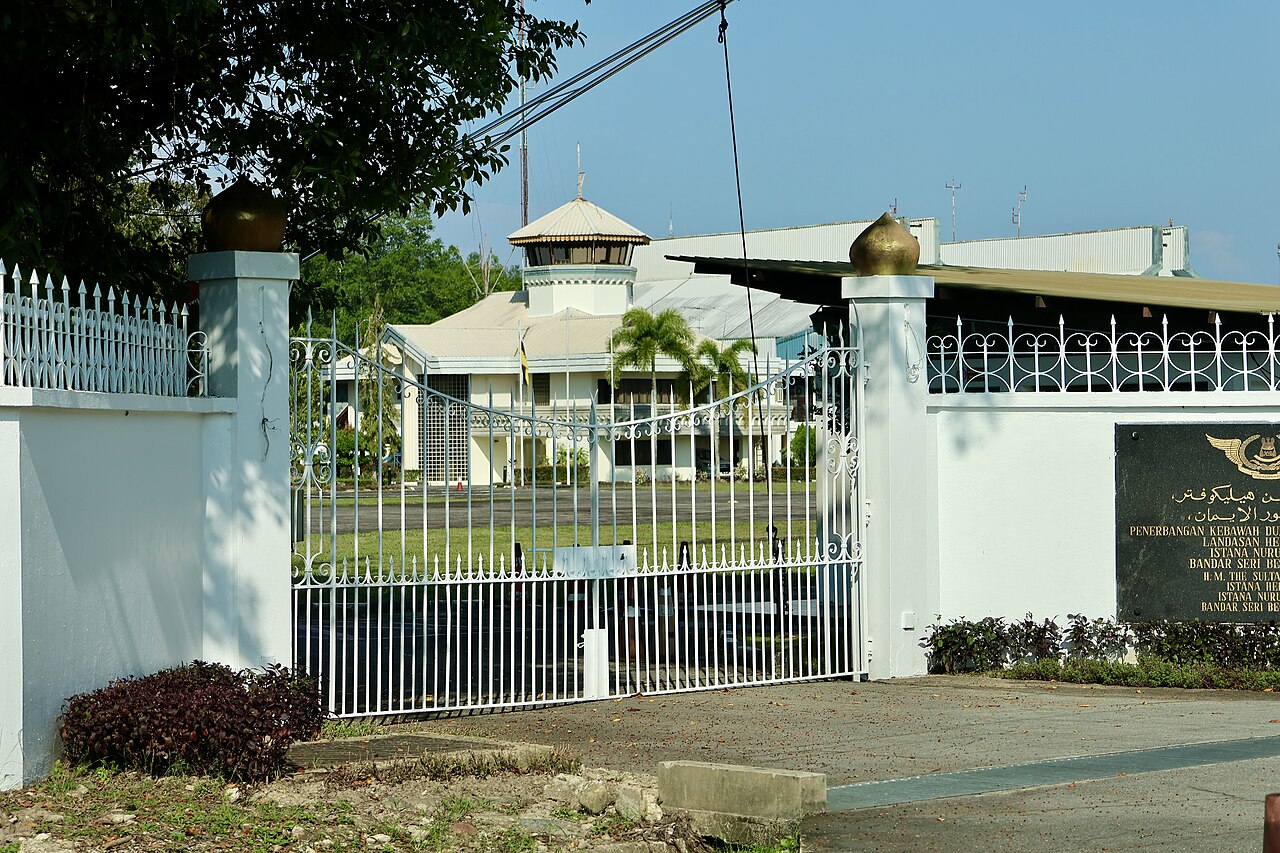
The mosque, like the rest of the palace, is richly built and decorated, a fitting place of worship for a devout ruler and his household. Its inclusion within the palace complex underlines the way that, in Brunei, the religious and the royal are inseparable, the sultan being not only the head of state but a defender and patron of the faith, and the palace serving as a centre of worship as well as of government.
The golden domes that crown the palace are themselves expressions of this faith, echoing the domes of great mosques and proclaiming the Islamic identity of the building and the state. Faith is written into the very architecture of Istana Nurul Iman, from its mosque to its domes to its calligraphic and geometric ornament, so that the palace is as much a religious statement as a royal one.
This integration of the sacred and the royal is central to the meaning of the palace. Istana Nurul Iman is not merely the luxurious home of a wealthy monarch but the seat of a ruler who governs in the name of his faith, and its mosque and its domes remind every observer that the Palace of the Light of Faith is exactly what its name proclaims, a residence where wealth and power are dedicated, at least in principle, to the service of religion.
In this the palace mirrors the country beyond its walls, where grand mosques are among the proudest monuments of the state.
The Wealth of a Sultan
Istana Nurul Iman is, above all, an expression of the extraordinary wealth of the Sultan of Brunei, who ranks among the richest monarchs in the world. The fortune of the sultanate, built on its oil and gas, has allowed the ruler to build and maintain a palace of unmatched scale and to live in a style of legendary luxury, and the palace is the most visible symbol of that wealth.

The stories of the sultan’s riches are famous the world over, from his vast collection of luxury cars, housed in the palace’s enormous garages, to the air-conditioned stables for his polo ponies, to the sheer scale of his residences and possessions. Whether or not every tale is precisely accurate, the underlying reality is one of wealth on a scale few individuals in history have ever commanded.
This wealth flows from the good fortune of a small nation sitting atop large reserves of oil and gas, whose revenues, concentrated in a state ruled by an absolute monarch, have made the sultan and his country enormously rich. The palace, built and furnished without regard to cost, is the natural expression of this fortune, a residence limited only by imagination rather than by budget.
For the outside world, the sultan’s wealth and the palace that embodies it have become symbols of a particular kind of modern royal splendour, the fabulous riches of an oil monarchy made visible in gold and marble. Istana Nurul Iman stands as perhaps the supreme monument to that wealth, a palace whose scale and luxury make it one of the wonders of the contemporary world.
Yet the wealth is not only personal display. Its revenues also fund a generous welfare state for Brunei’s citizens, from subsidised living to free healthcare and education, so that the fortune concentrated in the palace is bound up, in the sultanate’s own account of itself, with the wellbeing of the people.
The Seat of an Absolute Monarchy
Beyond its role as a residence, Istana Nurul Iman is the seat of the government of Brunei, the working centre of one of the world’s last absolute monarchies. The palace houses the offices of the state, and it is from here that the sultan, who holds sweeping powers as head of state and government, presides over the affairs of the nation.

Brunei is governed according to a distinctive national philosophy that combines Malay culture, Islamic faith, and the institution of monarchy into a single guiding ideology. Under this philosophy, the sultan stands at the centre of national life, embodying the unity of race, religion, and royalty, and the palace is the physical seat of this system of government, where the authority of the crown is concentrated.
This concentration of power in the palace gives Istana Nurul Iman a significance beyond its scale and luxury. It is not only the grandest of homes but the command centre of a state, the place where the decisions that govern Brunei are made and where the sultan performs his role as absolute ruler. The palace is thus at once a residence, a religious centre, and a seat of government.
In this it differs from the many royal palaces that have become museums or ceremonial relics. Istana Nurul Iman remains fully alive as the working seat of a reigning and ruling monarch, the centre of a functioning absolute monarchy in the modern world. To understand the palace is to understand the nature of the Bruneian state, in which wealth, faith, and royal power are united in the person of the sultan and in his extraordinary residence.
Visitors and observers sometimes find it striking that so modern and outwardly cosmopolitan a state should retain so traditional a form of government, but in Brunei the two are not seen as in conflict. The palace, modern in scale yet traditional in form and function, is the very image of that reconciliation.
When the Palace Opens Its Doors
For most of the year Istana Nurul Iman is a closed and private world, but once a year, during the great festival that marks the end of the Islamic fasting month, the palace throws open its doors to the public in one of the most remarkable royal customs anywhere. During this open house, tens of thousands of people are welcomed into the palace to greet the sultan and the royal family in person.

The scale of this event is extraordinary. Over the course of several days, enormous numbers of visitors, from Bruneians of all walks of life to foreign guests, file through the palace, are received by the sultan and his family, and are treated to food and hospitality on a vast scale. It is for occasions like this that the palace’s enormous banquet hall and kitchens were built.
The open house reflects a tradition of accessibility and generosity that tempers the grandeur and exclusivity of the monarchy. For a few days, the ordinary people of Brunei can enter the largest palace in the world, shake the hand of their ruler, and share in the hospitality of the crown, in a gesture that binds the sultan to his people and celebrates the festival together.
This annual opening is one of the most distinctive features of the palace and of Bruneian royal life. It transforms Istana Nurul Iman, for a brief period, from one of the most private residences on earth into one of the most welcoming, and it offers the rare spectacle of a fabulously wealthy absolute monarch personally greeting tens of thousands of his subjects within the golden halls of his own home.
Photographs of the sultan personally shaking thousands of hands, and of families streaming through gilded halls that are off-limits for the rest of the year, are among the most striking images to come out of Brunei. The custom softens what might otherwise seem a remote and absolute institution, turning the palace, for a few days, into a shared national living room.
Inside the Palace on Film
The scale and splendour of Istana Nurul Iman, its golden domes, its vast halls, its legendary luxury, are difficult to convey in words or still images, and the short film below offers a sense of the palace and the sultanate it serves. Watching it alongside this article helps bring the astonishing size and richness of the largest palace in the world to life.

Because the palace is so private for most of the year, film and photographs, especially those taken during the annual open house or of the exterior and grounds, are among the few ways for outsiders to glimpse its interior. A video is thus a valuable window onto a residence that few will ever enter, and onto the wealth and ceremony of the Bruneian monarchy.
And for those curious about this remarkable building and the sultanate it embodies, the film offers a tour of a world of almost unimaginable royal luxury. Let it play, and picture the golden domes of Istana Nurul Iman rising above the Brunei River, the seat of one of the last absolute monarchies and the largest royal residence on earth.
Seeing Istana Nurul Iman
For travellers to Brunei, Istana Nurul Iman is the great landmark of the country, though experiencing it is bound up with the special nature of the palace. For most of the year it is not open to the public, and visitors admire it from a distance, from viewpoints across the river or from the surrounding roads, especially at times when it is beautifully lit.

The great exception is the annual open house at the end of the fasting month, when the palace welcomes the public and visitors, including foreigners, may have the extraordinary opportunity to enter the palace and greet the sultan. Anyone hoping to see the interior should plan around this event, which is one of the most remarkable royal experiences available anywhere in the world.
At other times, a visit to Brunei still allows one to appreciate the palace from afar and to explore the wider capital, with its grand mosques, its water village, and its other expressions of the sultanate’s wealth and faith. The palace, glimpsed across the river, remains the crowning sight, a golden vision of royal splendour above the water.
However you come to it, Istana Nurul Iman offers a rare encounter with a living absolute monarchy and the largest royal residence on earth. Whether admired from across the river or, during the great festival, entered in person, the palace stands as an unforgettable monument to the wealth, faith, and power of the sultanate of Brunei, and to a scale of royal splendour that the modern world has produced nowhere else.
Palaces Nearby
If the palace of Brunei has drawn you in, these two other seats of small reigning monarchies make a natural next stop.
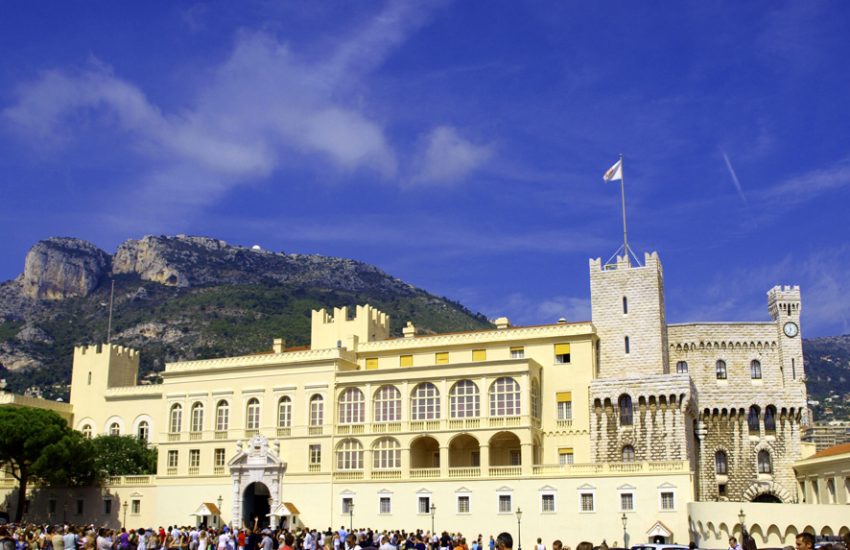
- The Prince’s Palace of Monaco and Seven Centuries of the Grimaldi — the fortress-palace of the reigning Grimaldi princes.
- Vaduz Castle, the Hilltop Home of Liechtenstein’s Reigning Prince — the private castle of the Prince of Liechtenstein.
You May Like

Vaduz Castle, the Hilltop Home of Liechtenstein’s Reigning Prince