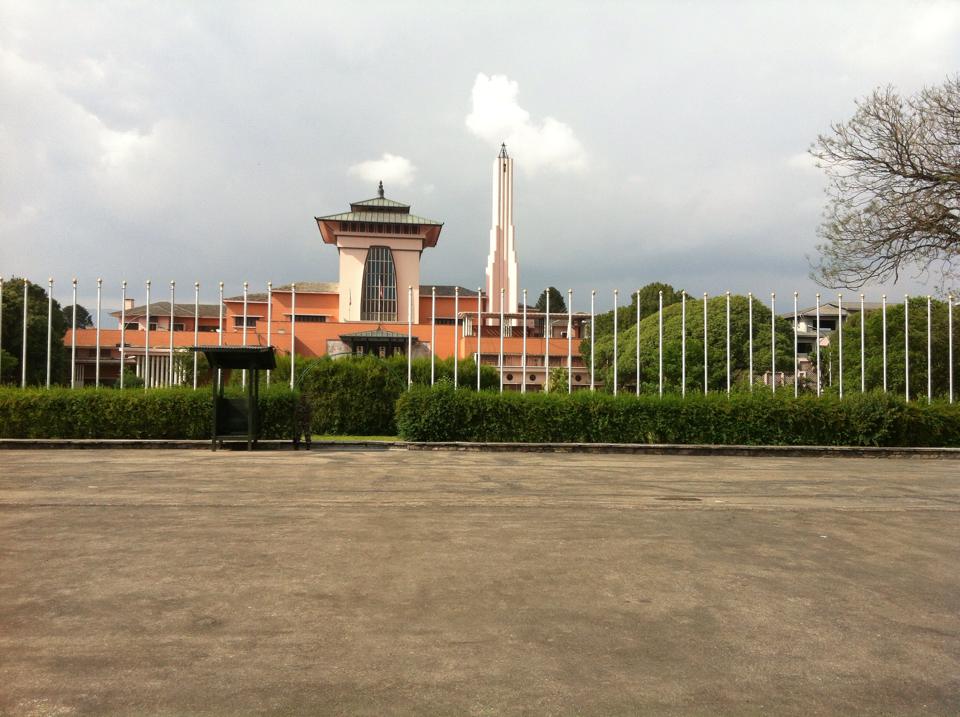
In the middle of Kathmandu, behind long walls on one of the Nepalese capital’s grandest avenues, stands a pink palace that was, until recently, the seat of a Himalayan monarchy. Narayanhiti Palace was the home and principal workplace of the kings of Nepal, the centre of a royal world that endured for centuries and then, within a single generation, was struck by tragedy and swept away. Today it is a museum, and to walk its halls is to walk through the last chapter of a vanished kingdom.
The palace as it stands is a creation of the twentieth century, a modernist royal residence built in the 1960s, its pale rose walls and distinctive tower rising amid gardens in the heart of the city. Within, its throne room, state halls, and royal apartments preserve the setting of Nepalese monarchy at its height, when the king was revered by many as a figure of near-divine significance in a Hindu kingdom set among the highest mountains on earth.
But Narayanhiti is also bound up with one of the darkest events in Nepal’s modern history, a royal tragedy that shook the nation and helped set in motion the end of the monarchy itself. To understand the palace is to understand both the grandeur and the sorrow of the Nepalese crown. In the sections that follow you will get to know the palace, the dynasty it served, the tragedy it witnessed, and its transformation into a museum of a fallen throne.

In This Article
- A Royal Palace in the Heart of Kathmandu
- The Kings of Nepal
- The Meaning of the Name
- Building a Modern Royal Palace
- Pink Walls and a Distinctive Tower
- The Throne Room and the Halls of State
- The Private World of the Royal Family
- A Night of Tragedy
- The Fall of the Monarchy
- From Palace to Public Museum
- A Palace of Memory
- Inside the Palace on Film
- Visiting Narayanhiti Today
A Royal Palace in the Heart of Kathmandu
Narayanhiti Palace occupies a large walled compound in the centre of Kathmandu, at the head of one of the city’s most prominent avenues. For decades it was the most important address in Nepal, the residence of the reigning king and the stage for the ceremonies and business of the monarchy, hidden from ordinary view behind its gates and guarded walls.

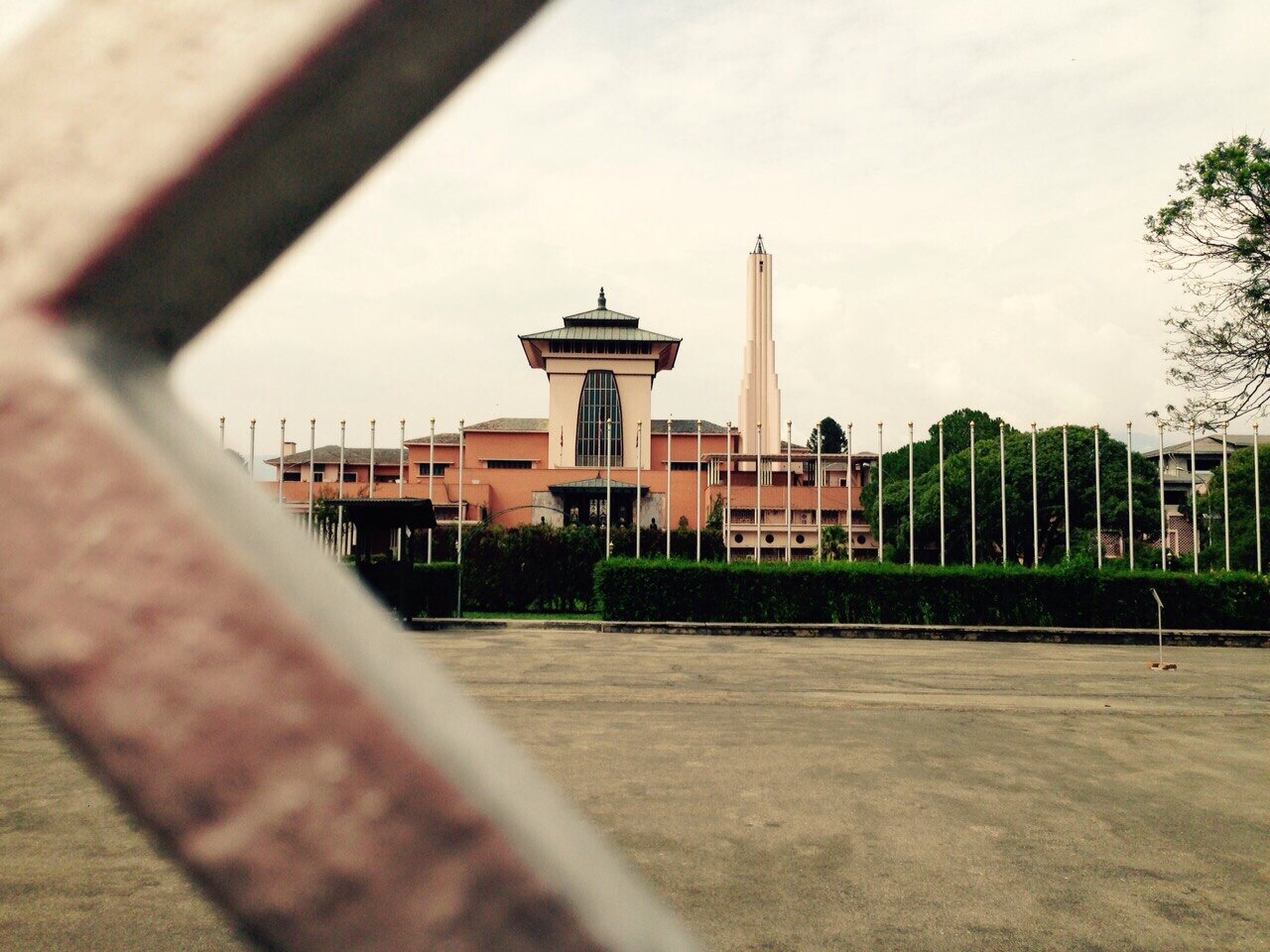
The palace itself is a substantial modern building of pale, rose-tinged walls, set amid gardens and subsidiary structures, its most distinctive feature a tall tower rising above the complex. It is grand without being ancient, a royal residence of the twentieth century rather than a medieval fortress or a centuries-old palace, reflecting the era in which it was built.
Since the fall of the monarchy, the palace has been opened to the public as a museum, and what was once the closely guarded heart of the kingdom is now a place that ordinary Nepalese and foreign visitors alike can enter. Passing through the gates that were for so long forbidden, visitors can explore the state rooms and royal apartments and see for themselves the world of the vanished crown.
To arrive at Narayanhiti today is thus to enter a place charged with history and with a certain melancholy. This was the centre of a monarchy that ended in tragedy and abolition, and its halls, now quiet and open to all, carry the memory of the kings who lived and ruled here, and of the dramatic events that brought their long story to a close.
The pink tower, once a symbol of the crown, now presides over a museum, its meaning quietly transformed.
The Kings of Nepal
Narayanhiti was the seat of the Shah dynasty, the line of kings who unified and ruled Nepal. The dynasty rose in the eighteenth century, when a king from the house of Gorkha conquered and united the many small states of the Kathmandu valley and beyond into a single kingdom, founding the Nepal that would endure, in one form or another, for well over two centuries.
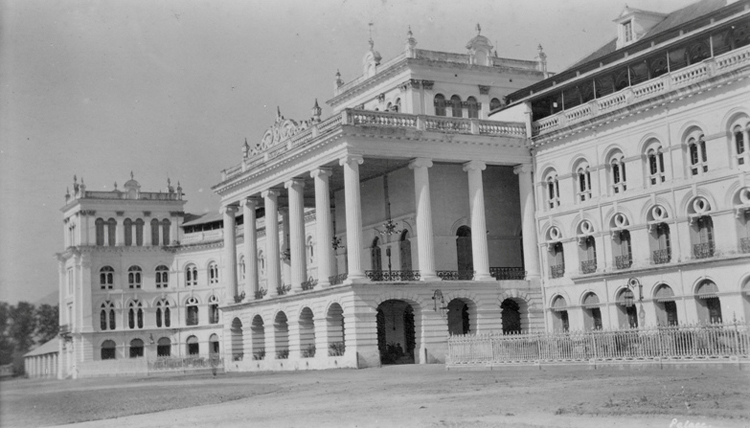
For much of that history the kings reigned as revered sovereigns of a Hindu kingdom, regarded by many of their subjects with deep respect and even as figures of religious significance. Nepal was for a long period the world’s only Hindu kingdom, and its monarchy was bound up with the religious as well as the political identity of the nation, giving the crown a special aura.
The power of the kings was not, however, always absolute. For a long stretch of the nineteenth and early twentieth centuries, real authority was held by hereditary prime ministers of the Rana family, who reduced the kings to figureheads, until a change in the middle of the twentieth century restored power to the throne. The palace and the monarchy thus passed through many phases of fortune.
By the later twentieth century the Shah kings again reigned as powerful monarchs, and Narayanhiti was the centre of their rule. It was here that the kings of this era lived, governed, and performed the ceremonies of the crown, and the palace is inseparable from the story of the dynasty in its final decades, a story that would end in tragedy and the abolition of the monarchy itself.
The founder of the dynasty is remembered as one of the great figures of the region’s history, a ruler whose campaigns knit together a patchwork of hill states into a single mountain kingdom. That act of unification gave Nepal its shape, and the monarchy that grew from it carried, for its people, the memory of the nation’s very creation.
That founding memory is part of why the monarchy’s end was felt so deeply, even by those who welcomed the republic.
The Meaning of the Name
The name Narayanhiti is rich with meaning drawn from the site itself. It combines the name of Narayan, a form of the god Vishnu, whose temple stands nearby, with a word for a water spout or conduit, referring to a historic water source on the grounds. The palace thus takes its name from the sacred and the practical together, the temple of the god and the flowing water beside it.
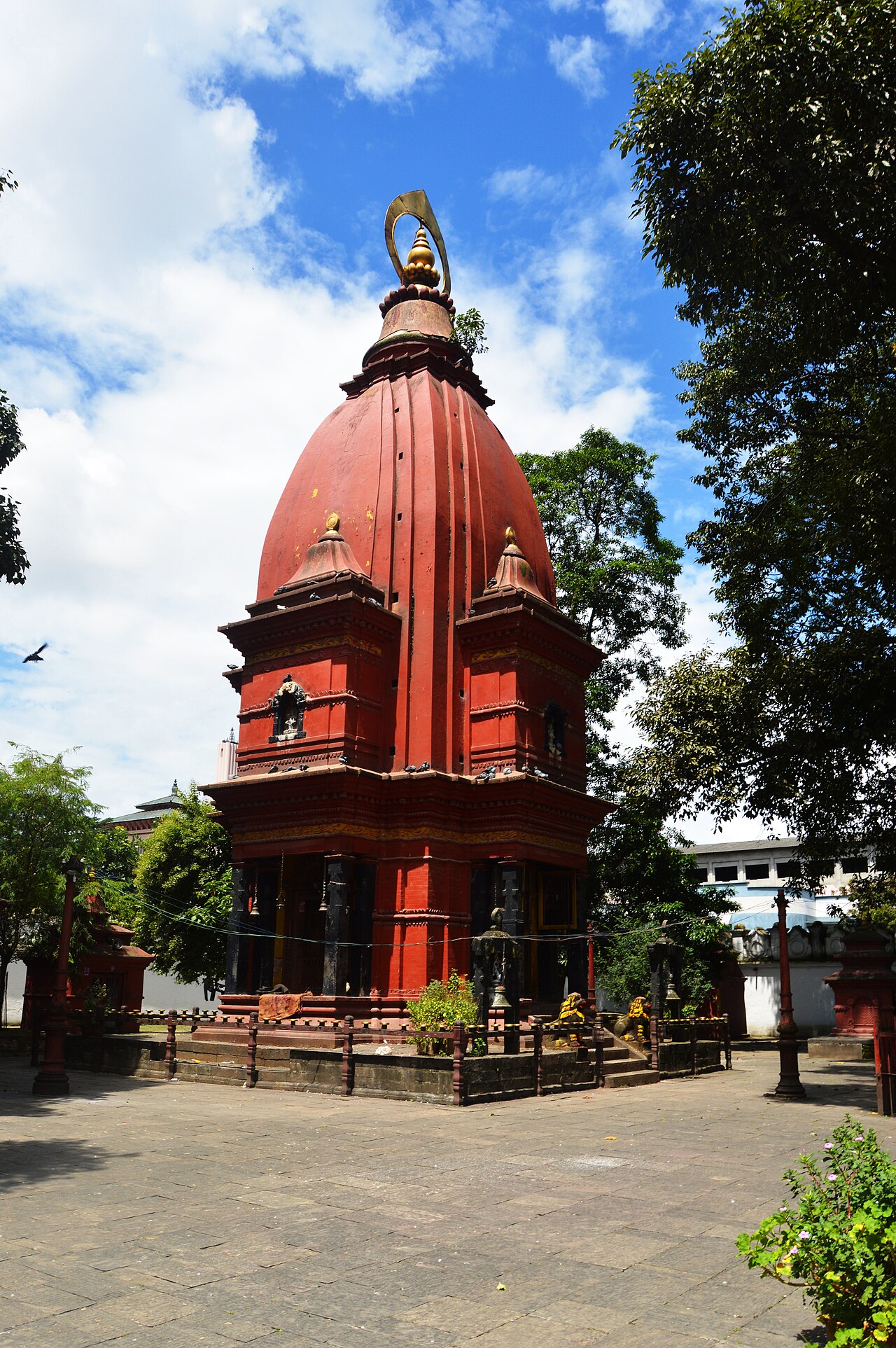
This connection to the temple of Narayan gives the palace a link to the religious landscape of Kathmandu, a city famed for its multitude of temples and shrines. The presence of the god’s temple by the royal residence reflects the close relationship between the monarchy and the Hindu faith, the king ruling in a landscape saturated with the sacred.
The present palace is not the first royal building on or near the site, for the location had royal associations before the modern palace was raised. Earlier structures stood here, from the era when the kings and the powerful Rana prime ministers built their grand residences across Kathmandu, and the modern palace replaced or joined these older buildings as the seat of the crown.
Understanding the name and the site helps set the palace in its context, as a royal residence rooted in the sacred geography of Kathmandu and in the long history of the monarchy. Narayanhiti was not built on empty ground but on a spot already charged with royal and religious meaning, and its very name carries that heritage, binding the palace to the god, the water, and the long story of the Nepalese crown.
The nearby temple and the historic water source are reminders that, long before the modern palace rose, this was already a place where the sacred and the royal met, a fitting ground on which to build the seat of a Hindu kingdom’s crown.
Building a Modern Royal Palace
The palace that stands today was built in the 1960s, during the reign of a king who set out to create a modern royal residence worthy of his dynasty. The construction was famously connected with a great royal occasion, the wedding of the crown prince, for which the new palace was to provide a fitting setting, and it replaced older buildings on the site with a thoroughly contemporary design.

The design was entrusted to a foreign architect, and the result was a building in the modernist idiom of its age, quite different from the traditional temple and palace architecture of Kathmandu. Rather than imitating the past, the new Narayanhiti embraced the forms and materials of twentieth-century architecture, while incorporating elements and motifs that gave it a distinctly Nepalese character.
The building was conceived on a grand scale, with state rooms for ceremony and reception, private apartments for the royal family, and all the facilities required for the residence and workplace of a reigning monarch. Its most striking external feature, the tall central tower, became a landmark of the complex, rising above the surrounding city as a symbol of the crown.
In building so modern a palace, the king made a statement about the monarchy’s place in the contemporary world, presenting the crown as forward-looking as well as ancient. The new Narayanhiti was to be the seat of a modern Nepal under its traditional kings, and for the decades that followed it served exactly that role, the centre of the monarchy through its final and most dramatic era.
The choice to build anew, rather than simply restore what stood before, was itself telling. A monarchy confident of its future builds for the future, and the new palace was meant to serve generations of kings to come, a purpose that history, in the end, would cut short far sooner than anyone imagined.
Pink Walls and a Distinctive Tower
Architecturally, Narayanhiti is a product of its mid-twentieth-century moment, a modernist palace rather than a historicist one. Its walls, in a pale rose or pink tone, and its clean, contemporary lines set it apart from the ancient temples and older palaces of Kathmandu, marking it clearly as a building of the modern era, even as it served the most traditional of institutions.

Yet the palace is not without local character. Its design incorporates elements and motifs drawn from Nepalese tradition, and its tall tower, in particular, echoes in its own way the tiered forms of the region’s temple architecture, so that the modern building nods to the heritage of the land it served. The result is a distinctive style, neither purely Western nor purely traditional.
The interiors continue this blend of the modern and the ceremonial. The state rooms are arranged for the formal life of the court, with throne room and reception halls fitted out to impress, while the private apartments provided a modern home for the royal family. Throughout, the palace reflects the tastes of its era, combining contemporary design with the grandeur expected of a royal residence.
For visitors today, the architecture is part of the fascination of the palace. It is a rare example of a modern royal residence, built for a still-reigning monarchy in the second half of the twentieth century, and its pink walls and distinctive tower have become emblematic of the Nepalese crown in its final decades, a modern face for an ancient throne.
There is a poignancy in the modernity of the place. Where most fallen monarchies leave behind ancient palaces softened by centuries, Nepal’s crown left a building still recognisably of the recent past, its mid-century lines and fittings a reminder that this monarchy did not fade slowly into history but ended abruptly, within living memory, in a palace many of its former subjects can remember being built.
The Throne Room and the Halls of State
At the ceremonial heart of the palace are its state rooms, above all the throne room and the great halls used for receptions, audiences, and the formal occasions of the monarchy. These are the grandest spaces in Narayanhiti, designed to stage the majesty of the crown and to receive the guests and dignitaries of the kingdom in appropriate splendour.

The throne room was the setting for the most important ceremonies of the reign, where the king would appear in state and where the rituals surrounding the monarchy were performed. Fitted out with the symbols and furnishings of royalty, it concentrated the dignity of the crown in a single space, the focus of the ceremonial life of the palace.
The reception and banquet halls, meanwhile, were used to entertain guests and to host the many formal gatherings that filled the calendar of a working monarchy. Grand in scale and richly appointed, they reflected the standing of the kingdom and provided the setting for the diplomacy and hospitality of the court, from state banquets to the reception of foreign visitors.
For visitors to the museum, these state rooms are among the highlights, offering a direct experience of the formal world of the Nepalese monarchy. To stand in the throne room, or in the great halls where kings once received their guests, is to grasp the ceremony and grandeur that surrounded the crown, and to sense the world that existed here until so recently.
The furnishings and gifts displayed in these halls, accumulated over the reigns, also tell of Nepal’s place in the wider world, of the foreign dignitaries received here and the diplomacy conducted beneath these ceilings. A small kingdom set among great powers, Nepal used the ceremony of its court to assert its dignity and independence, and the state rooms were where that assertion was staged.
The Private World of the Royal Family
Beyond the halls of state, Narayanhiti was also a home, the private residence of the royal family, and the museum preserves something of this more intimate side of palace life. The private apartments and family rooms, now opened to visitors, offer a glimpse of the daily existence of the kings and their relatives behind the ceremonial facade of the monarchy.
These rooms convey the domestic reality of a modern royal family, furnished for living rather than for ceremony, and they humanise the grand institution of the crown. Here the royal family passed their private hours, away from the formal demands of state, and the preserved apartments allow visitors to imagine the ordinary life that went on within the extraordinary setting of the palace.
The contrast between the grand state rooms and the more private apartments is part of what makes the museum compelling. It reminds visitors that the palace was home to real people, a family whose members lived, worked, and relaxed here, and whose fate would become one of the great tragedies of the nation’s history.
This blend of the ceremonial and the domestic gives Narayanhiti its particular poignancy. The palace was at once the seat of a monarchy and the home of a family, and to move through its rooms is to encounter both the public grandeur of the crown and the private world of those who bore it, a world that would be shattered by the events for which the palace is, sadly, most widely known.
It is in these quieter rooms, more than in the grand halls, that the human weight of the palace’s later history is felt most keenly, for it was the members of this family, who lived in these very apartments, who would be lost in the tragedy to come.
A Night of Tragedy
Narayanhiti is inseparably associated with one of the most shocking events in Nepal’s modern history: the royal massacre of 2001, in which the reigning king, the queen, and many members of the royal family were killed within the palace itself. In a single terrible night, much of the ruling family was wiped out, an event that stunned Nepal and the world and plunged the country into grief and turmoil.

According to the official account of the tragedy, the killings were carried out by the crown prince, who then turned a weapon on himself, dying of his wounds shortly afterward. The event, unfolding at a family gathering within the palace, remains the subject of enduring national trauma, and it robbed Nepal of its king and much of its royal family in an instant.
The tragedy sent shockwaves through the nation. The king who died had been widely respected, and the sudden loss of so many members of the royal family, in such violent and bewildering circumstances, left the country in mourning and confusion. It was a wound to the monarchy from which, many would argue, the institution never fully recovered.
The building in which the killings took place was later pulled down, and the site within the palace grounds is marked, so that visitors to the museum can learn of the tragedy where it occurred. It is a sombre part of any visit, a reminder that this palace, for all its grandeur, was the scene of a devastating loss, and that its story is one of sorrow as well as splendour.
Out of respect for the gravity of the event, it is best approached at the museum, as it was in life, with sobriety rather than sensation. What matters is not the lurid detail but the scale of the loss: a family, and in a sense a nation’s sense of continuity, broken in a single evening, with consequences that would reshape the country within a decade.
The demolition of the building where it happened, and the marking of the spot, was itself a way for the nation to acknowledge the wound without dwelling on its horror.
The Fall of the Monarchy
The royal tragedy was followed, within a few years, by the end of the monarchy itself. In the aftermath of the massacre a new king took the throne, but his reign unfolded amid deep political crisis, including a long-running insurgency and mounting demands for democratic change, and the standing of the monarchy, already shaken, continued to decline.

Nepal was in the midst of a profound political transformation. A powerful movement for change, combined with the exhaustion of years of conflict, led to sweeping demands to abolish the monarchy and establish a republic. In the end, the institution that had endured for centuries was brought to a close, and Nepal was declared a federal republic, ending the reign of the Shah kings.
With the abolition of the monarchy, the last king left Narayanhiti, and the palace that had been the seat of the crown for its final decades passed into the hands of the new republican state. The departure of the king from the palace marked the definitive end of an era, the moment when the long story of the Nepalese monarchy reached its conclusion.
The fall of the monarchy transformed the meaning of Narayanhiti. No longer the residence of a reigning king, it became a symbol of a vanished institution, its future to be decided by the republic that had replaced the crown. The decision to open it as a museum ensured that the palace, and the history it embodied, would be preserved and made accessible to the people of the new Nepal.
The transformation was, by the standards of such upheavals, remarkably peaceful in its final act. There was no storming of the palace, no violent overthrow of the last king, but rather a decision, taken through the institutions of the new politics, that the age of kings was over. The king simply left, and a republic began.
From Palace to Public Museum
Following the abolition of the monarchy, Narayanhiti was converted into a public museum, and the once-forbidden royal compound was opened to the people. This transformation was rich in symbolism, turning the private seat of the kings into a place that belonged, in effect, to the nation, where ordinary citizens could walk the halls that had been closed to them for so long.
As a museum, the palace preserves the state rooms, royal apartments, and other spaces much as they were in the days of the monarchy, allowing visitors to experience the world of the crown directly. The throne room, the reception halls, the private quarters, and the grounds are all part of the visitor experience, offering an intimate encounter with the recent royal past.
The museum also confronts the tragedy that befell the royal family, with the site of the massacre marked within the grounds, so that visitors learn not only of the grandeur of the monarchy but of the sorrow that helped bring it to an end. This honesty gives the museum a depth and seriousness beyond that of a mere display of royal splendour.
In opening the palace to all, the new republic made a powerful statement about the change that had taken place. What had been the exclusive world of the kings became a shared national heritage, and the museum stands as a place where Nepalese and visitors alike can reflect on the monarchy, its achievements, its tragedy, and its end, within the very walls where that history unfolded.
There is a quiet drama simply in the act of walking through gates that were, for a lifetime, an absolute boundary between the people and their king. For older Nepalese especially, to enter Narayanhiti at all is to feel how completely the world has changed.
A Palace of Memory
Narayanhiti today is a palace of memory, a place where the recent and dramatic history of Nepal is concentrated within a single compound. It holds the memory of a monarchy that shaped the nation for centuries, of a modern royal family and their way of life, and of a tragedy that helped bring the whole institution to an end. Few buildings carry so much recent history so vividly.

For many Nepalese, the palace evokes complex feelings, bound up with their views of the monarchy and its passing. It is at once a symbol of a proud royal heritage, a reminder of a national tragedy, and a monument to the great political transformation that turned a kingdom into a republic. The museum allows these memories and reflections to be gathered in one place.
The palace also stands as a record of a particular moment in the nation’s story, the final decades of the Nepalese monarchy, preserved in the setting the kings themselves created. In this sense Narayanhiti is a time capsule of the recent past, offering future generations a direct link to an era that is now closed, but whose effects continue to shape the country.
Whatever one’s view of the monarchy, the preservation of Narayanhiti as a museum ensures that this crucial chapter of Nepal’s history will not be forgotten. The palace remains, quiet and open, at the heart of Kathmandu, a place where the nation can encounter its own recent past, and where the long, grand, and ultimately tragic story of the kings of Nepal is kept in memory.
For visitors from abroad, the palace offers something rarer still: the chance to witness, in one place, how a monarchy that lasted for centuries can end within a generation, and how a nation chooses to remember what it has decided to leave behind.
It endures as both a monument and a question, inviting each visitor to reflect on what was lost and what was gained.
Inside the Palace on Film
So much of Narayanhiti’s atmosphere lies in the experience of walking its halls, the throne room, the state apartments, the private quarters, and the grounds, and the short film below offers a tour that conveys this in a way that still images alone cannot. Watching it alongside this article helps bring the palace and its history to life.

If you are planning a visit to Kathmandu, a video like this is a fine way to prepare, helping you recognise the main rooms and understand the history of the monarchy and the events that unfolded within the palace. Arriving with that background lets you appreciate the museum more fully, and to approach its sombre aspects with due understanding.
And if a visit lies beyond your plans for now, the film lets you explore the former royal palace of Nepal from afar. Let it play, and picture yourself walking through the halls of Narayanhiti, in the heart of Kathmandu, where the kings of Nepal lived and ruled until the very end of their long dynasty.
Visiting Narayanhiti Today
For travellers to Kathmandu, the Narayanhiti Palace Museum is one of the most significant and moving sights of the city, offering a direct encounter with the recent royal history of Nepal. The museum is open to visitors, and touring its state rooms, royal apartments, and grounds provides a vivid sense of the world of the monarchy in its final decades.

A visit rewards a thoughtful and respectful frame of mind, for the palace is bound up not only with grandeur but with tragedy. Alongside the throne room and the halls of state, visitors encounter the site of the royal massacre, and the museum as a whole tells the story of the monarchy’s rise, its final era, and its fall, a history still keenly felt in Nepal.
As at any museum housed in a place of such significance, visitors should follow the guidance about which areas may be entered and photographed, and treat the palace and its history with the seriousness they deserve. Taking the time to understand the story behind the rooms greatly enriches the experience, turning a tour of grand spaces into an encounter with a nation’s recent past.
However you come to it, Narayanhiti offers a rare and powerful experience: the chance to walk through the seat of a monarchy that ended within living memory, in tragedy and transformation. To stand in its throne room and before the site of its greatest sorrow is to touch the last chapter of the kings of Nepal, preserved at the heart of Kathmandu for the reflection of all who come.
Photography is often restricted inside the palace buildings, so it is best to check the current rules on arrival and to be prepared simply to look and remember rather than to photograph.
Palaces Nearby
If the story of Nepal’s crown has moved you, these two other Himalayan royal seats make a natural next stop.
- Tashichho Dzong, the Fortress That Holds the Heart of Bhutan — the living seat of Bhutan’s king, government, and faith.
- Ujjayanta, the Lakeside Palace of Tripura’s Ancient Kings — the domed palace of the ancient Manikya dynasty.
You May Like

Vaduz Castle, the Hilltop Home of Liechtenstein’s Reigning Prince