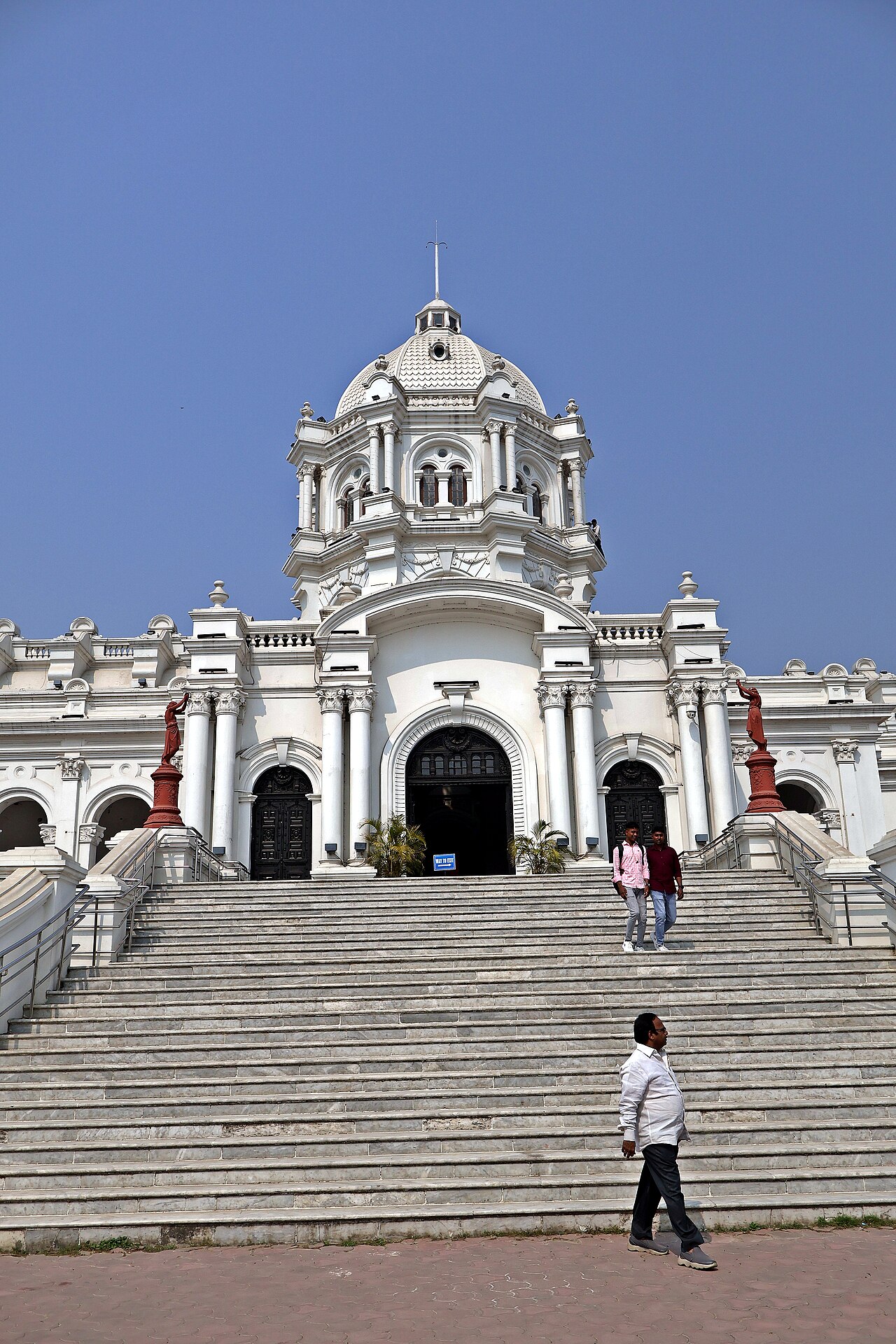
In the far northeast of India, in the small state of Tripura, a great white palace stands mirrored in the still water of two ornamental lakes. Ujjayanta Palace, built at the turn of the twentieth century for the maharajas of Tripura, is one of the finest royal buildings of the region, its domes and long facade rising above landscaped gardens in the heart of the city of Agartala. It is a palace with a distinguished history, a famous name, and a remarkable afterlife.
The palace was raised by one of the oldest ruling dynasties in India, the Manikya kings of Tripura, whose line stretched back through many centuries of rule in this corner of the eastern hills. Built in an elegant blend of Indian and European styles, complete with a throne room, a great durbar hall, and richly decorated chambers, it was the seat of a kingdom proud of its ancient lineage and its cultivated court.
Ujjayanta is also bound up with one of the greatest names in the culture of the region, for it was the celebrated poet Rabindranath Tagore, a friend and guest of the Tripura royal family, who gave the palace its name. After the age of the maharajas, the palace served as the seat of the state legislature, and today it houses a museum of the cultures of northeast India. In the sections that follow you will get to know the palace, the dynasty that built it, and its many lives across more than a century.
In This Article
- A Palace Mirrored in Water
- One of India’s Oldest Dynasties
- The King Who Rebuilt After the Earthquake
- The Poet Who Named the Palace
- Building a Grand New Seat
- Domes, Marble, and Elegant Halls
- The Throne Room and the Halls of State
- Mughal Gardens and Reflecting Lakes
- When the Palace Became a Parliament
- A Museum of the Northeast
- The Pride of Tripura
- The Palace on Film
- Visiting Ujjayanta Today
A Palace Mirrored in Water
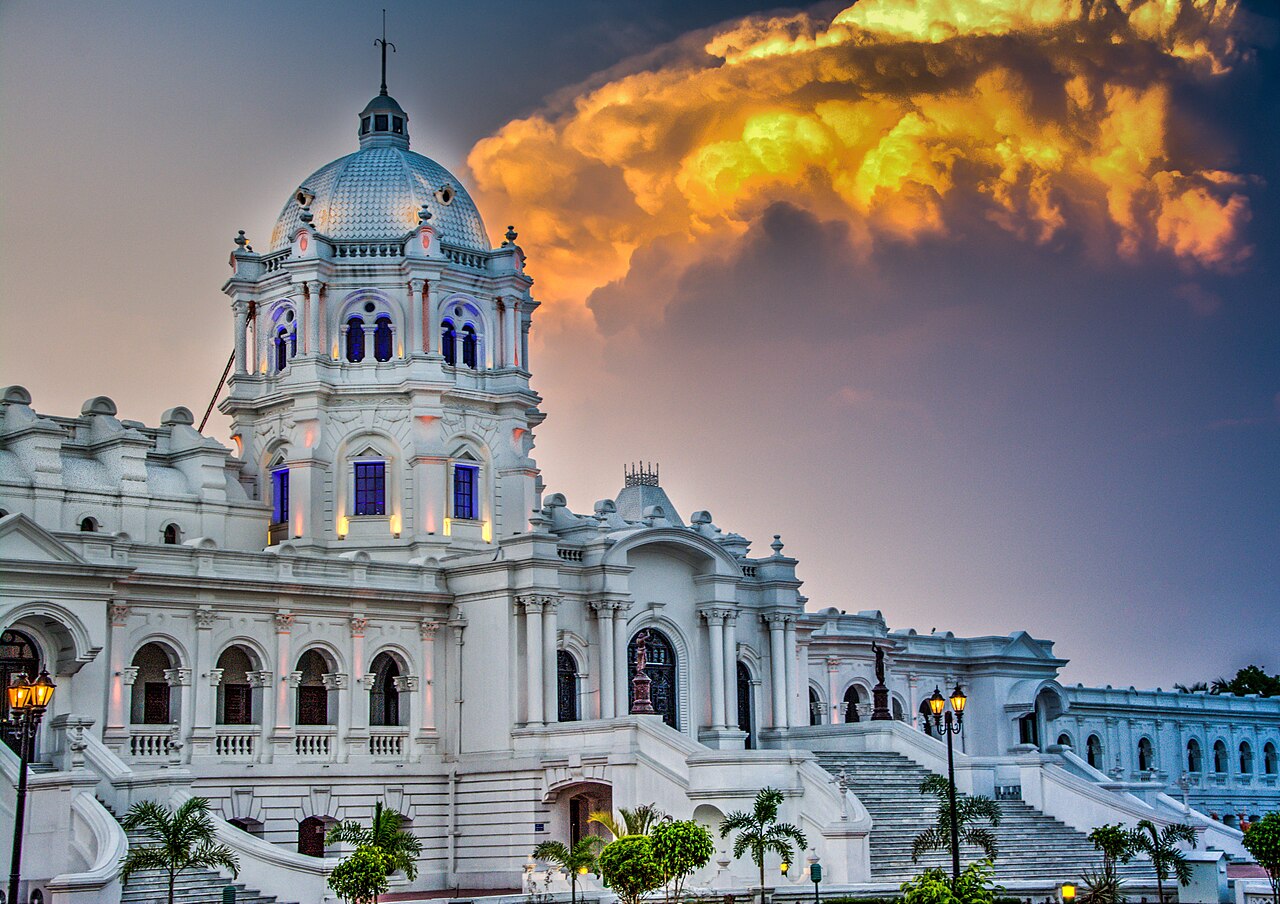
Ujjayanta Palace stands at the centre of Agartala, the capital of Tripura, its long white facade and cluster of domes rising above landscaped grounds and, most memorably, above two ornamental lakes that lie before it. The reflection of the palace in the still water of these lakes is one of the loveliest sights of the city, and it gives Ujjayanta a serene, almost dreamlike beauty.
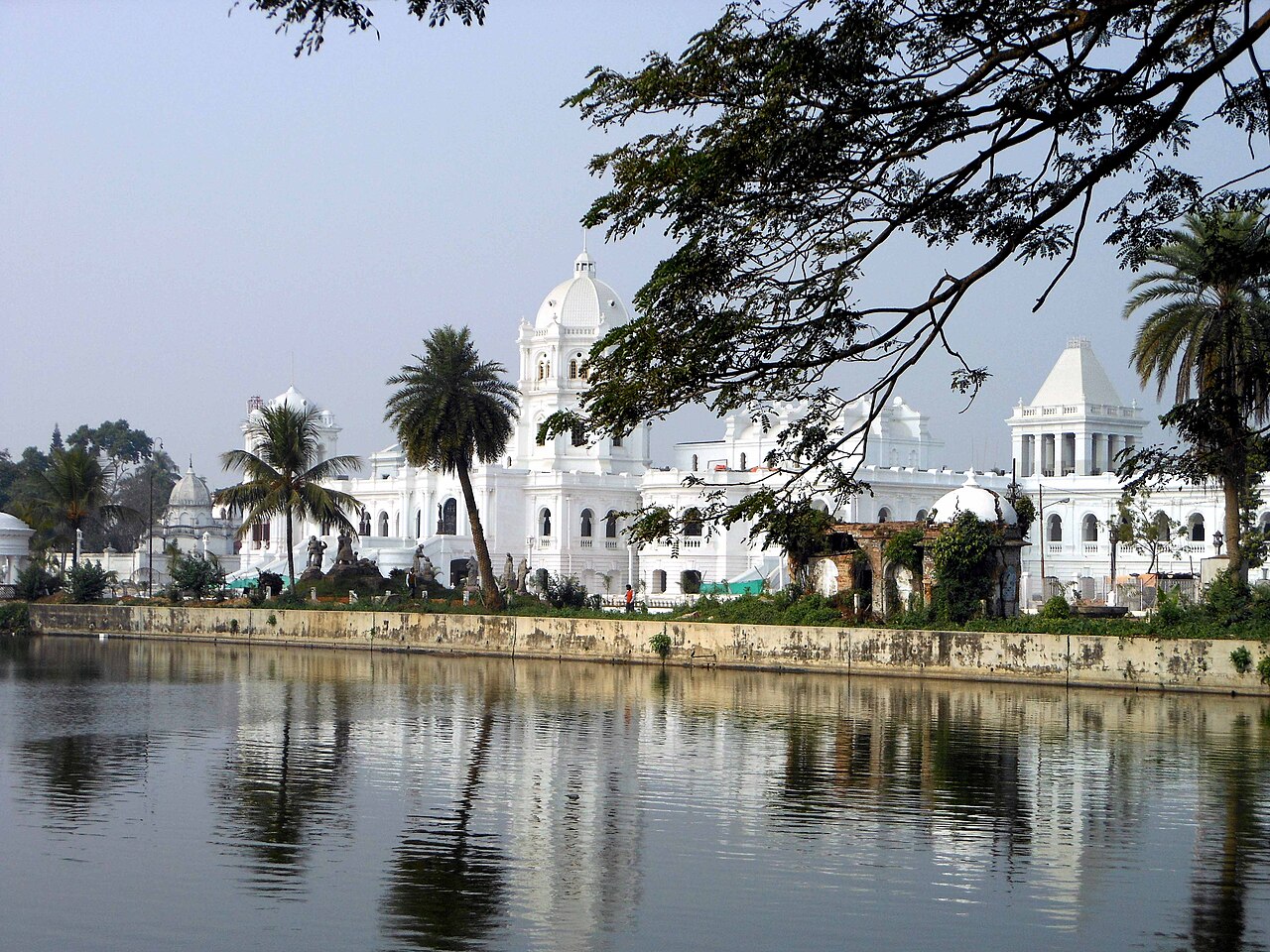
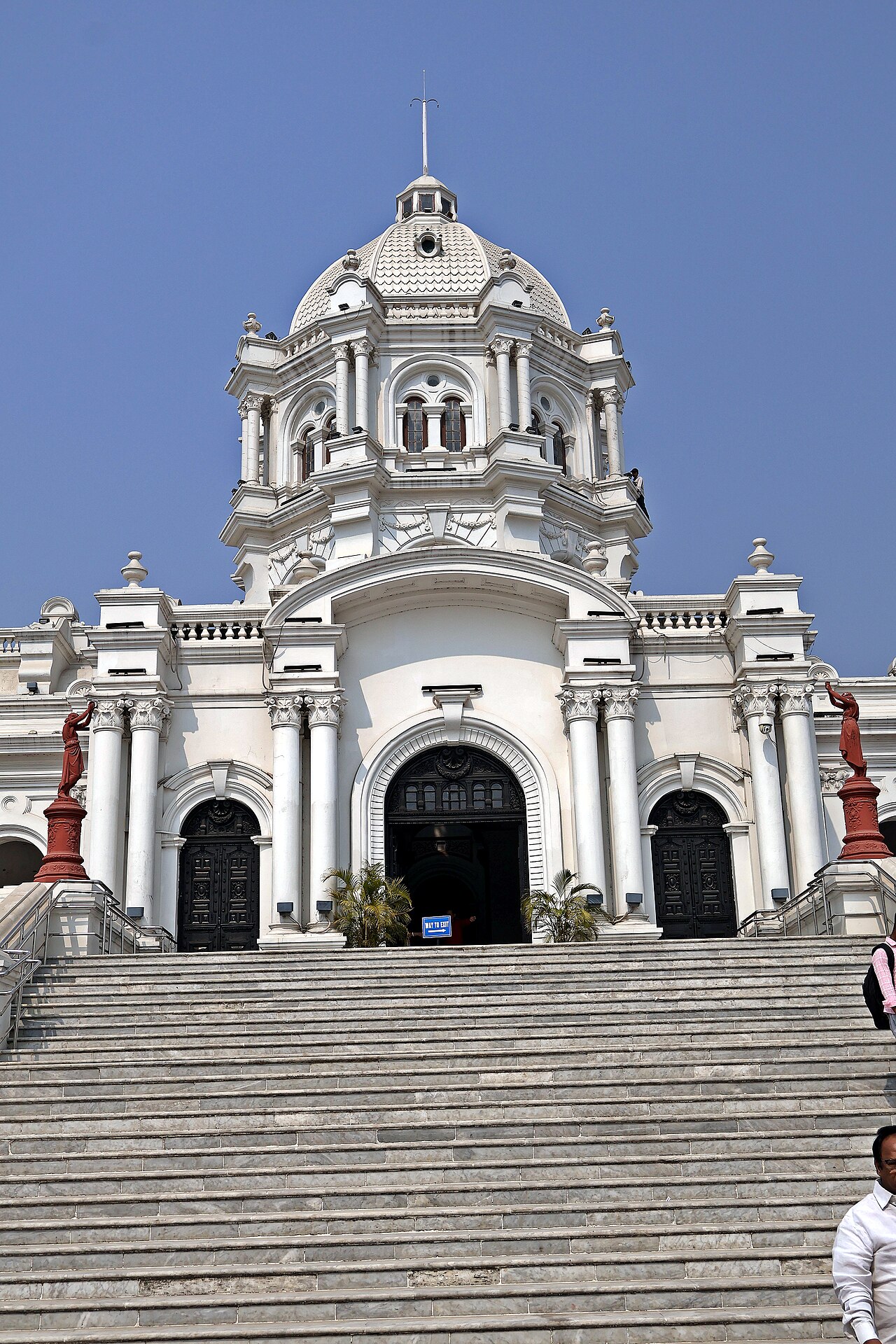
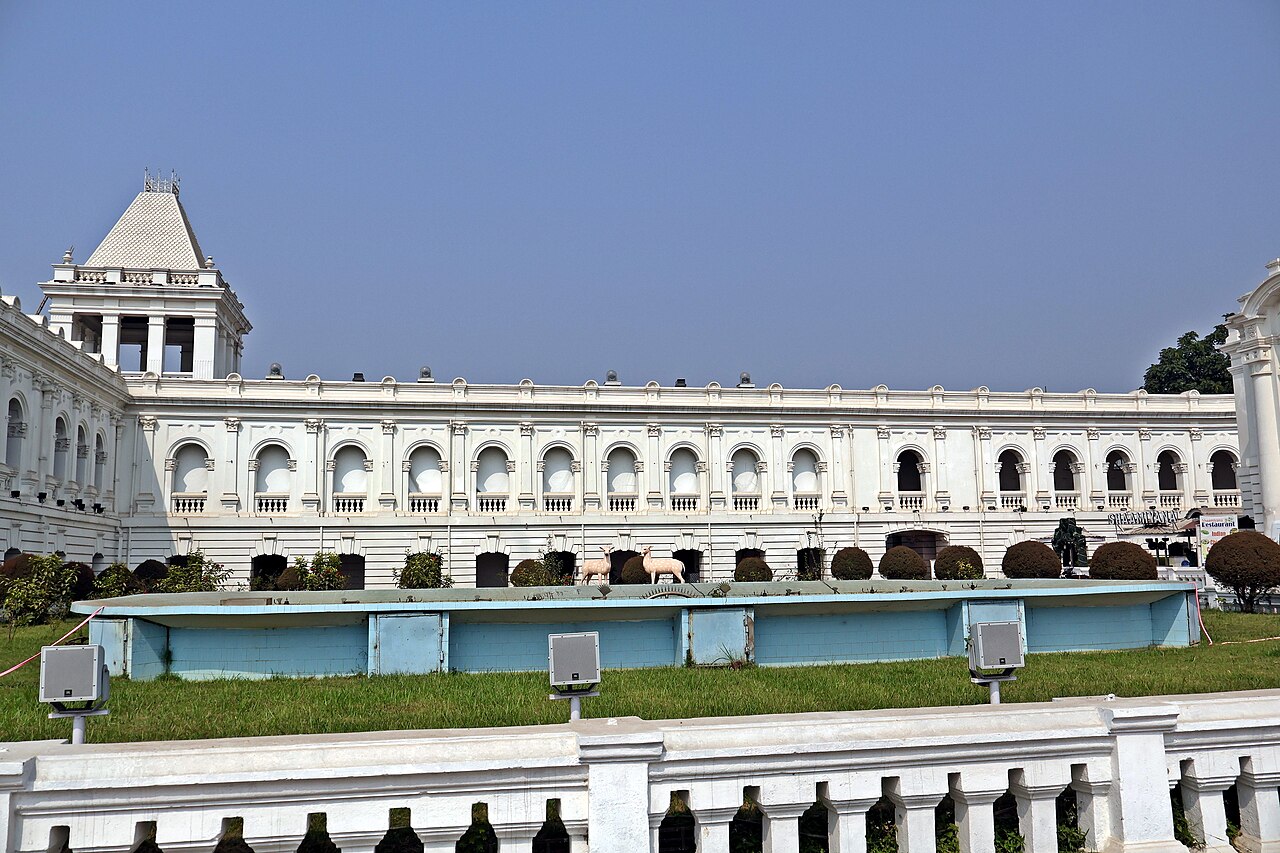
The palace is a substantial and elegant building, its central block crowned with domes and flanked by long wings, presenting a broad and dignified face to the gardens and lakes before it. Built in a graceful blend of Indian and European architectural styles, it has the air of a great Indo-Saracenic palace of its era, refined rather than overwhelming, and beautifully suited to its setting.
Around the palace are laid out gardens in the Mughal manner, with lawns, pools, and formal planting, extending the elegance of the building into the surrounding grounds. The whole ensemble, palace, gardens, and lakes, forms a composed and harmonious landscape at the heart of Agartala, a green and watered setting for the former seat of the Tripura kings.
To arrive at Ujjayanta is to encounter one of the finest royal monuments of northeast India, a region less famous for its palaces than the great princely centres of the north and south, but rich in its own distinctive heritage. The palace stands as the proud symbol of Tripura and its ancient dynasty, and its beauty, mirrored in the lakes, is among the enduring images of the state.
It is a place that rewards lingering, especially in the soft light of early morning or evening.
One of India’s Oldest Dynasties
The palace was the seat of the Manikya dynasty, the rulers of Tripura, whose line is among the oldest ruling dynasties in the history of India. The Manikya kings governed Tripura through many centuries, their rule reaching back deep into the past, so that the dynasty could claim an antiquity and a continuity that few royal houses anywhere could match.
Tripura, set in the hills of the northeast, developed its own distinctive culture and history under the long rule of the Manikyas, blending the traditions of the region with wider Indian influences. The kingdom maintained its own court, its own chronicles, and its own royal traditions, and the dynasty’s long history gave it a deep sense of identity and pride.
By the time Ujjayanta Palace was built, the Manikya kings ruled as a princely state within the wider framework of British India, retaining their thrones and their courts while acknowledging the paramount power. The dynasty remained an important and cultivated royal house, and the building of the new palace was an expression of its enduring status and its ambitions.
The great age of the dynasty gives the palace a particular resonance. Ujjayanta was not the seat of a newly risen family but of a royal line of extraordinary antiquity, and the palace, though built at the turn of the twentieth century, was the latest expression of a monarchy reaching back through the centuries. To understand the palace is to understand something of the long and distinctive history of Tripura and its ancient kings.
The dynasty’s chronicles trace the line back through a long succession of kings, weaving history and legend together in the manner of many ancient royal houses. Whatever the exact reckoning, the sense of deep continuity is real, and it gave the Manikya kings a standing rooted less in wealth or conquest than in sheer endurance, the prestige of a house that had simply lasted, generation after generation, in its corner of the eastern hills.
Few thrones in India could claim so unbroken a descent.
The King Who Rebuilt After the Earthquake
The palace as it stands was built by a particular maharaja of the Manikya dynasty at the turn of the twentieth century, and its construction was prompted by disaster. A powerful earthquake struck the region in the late nineteenth century, damaging the earlier royal palace, and the maharaja resolved to build a grand new residence in its place, worthy of his dynasty and his kingdom.
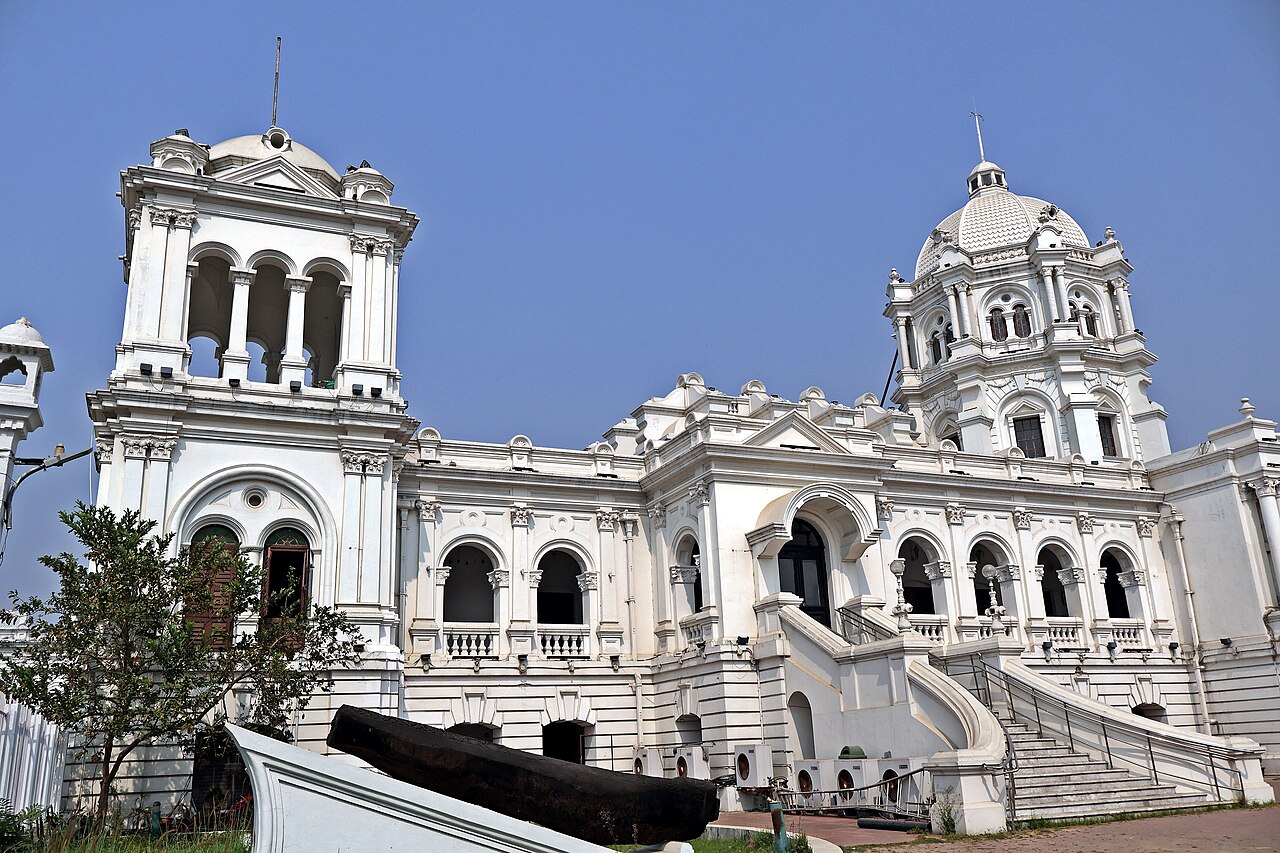
The result of this resolve was Ujjayanta Palace, raised over a few years around the turn of the century as the new seat of the Tripura kings. Built to replace what the earthquake had ruined, it was conceived on a grand scale and in the fashionable styles of the age, a modern palace for an ancient dynasty, combining the latest architectural tastes with the dignity expected of the Manikya court.
The maharaja who built it was a cultivated ruler, remembered among other things for his patronage of the arts and his connections with the leading cultural figures of the wider region. His reign saw the creation not only of the palace but of the refined court life it was designed to house, and Ujjayanta stands as the great monument of his time.
In building Ujjayanta, the maharaja gave Tripura a palace that would outlast his dynasty’s rule and become the enduring symbol of the state. What began as a response to the destruction of an earthquake became one of the finest royal buildings of the northeast, a testament to the resilience and ambition of a king determined to raise, from the ruins of the old, a new seat worthy of his ancient line.
There is a quiet heroism in the response to the earthquake. Rather than patch the ruined palace or retreat to something smaller, the maharaja chose to build grandly anew, treating catastrophe as an occasion for renewal. The Ujjayanta that resulted is, in that sense, a monument to resilience as much as to royalty.
His reign is remembered as a high point of the dynasty’s cultural life.
The Poet Who Named the Palace
One of the most celebrated facts about Ujjayanta is the origin of its name, for it was given by none other than Rabindranath Tagore, the great poet and thinker who became the first person from the region to win the Nobel Prize in Literature. Tagore was a friend and honoured guest of the Tripura royal family, and it was he who bestowed upon the palace the name by which it is known.
The relationship between Tagore and the Manikya kings was a deep and important one. The poet visited Tripura many times, enjoyed the patronage and friendship of its rulers, and drew on the history and setting of the kingdom in his own creative work, so that Tripura and its court occupy a place in the story of one of the greatest figures of modern literature.
That so famous a poet should have named the palace gives Ujjayanta a special cultural distinction. The name links the building forever to Tagore and to the rich cultural life of the court that welcomed him, and it reflects the character of the Manikya kings as patrons of art and letters, whose court was a place of culture as well as of power.
This connection is a source of pride in Tripura and adds a literary dimension to the palace’s significance. Ujjayanta is not only a royal residence and a fine building but a place bound up with the memory of a great poet and the cultivated court that hosted him, so that its very name carries the echo of one of the most celebrated names in the culture of the subcontinent.
Tripura returns the compliment to this day, cherishing its Tagore connection as one of the jewels of its heritage. That a kingdom in the far northeast should hold so central a place in the life of the subcontinent’s greatest modern poet is a source of quiet pride, and Ujjayanta, the palace he named, is the most visible token of that bond.
The name he chose has outlived the monarchy itself, carried now by a museum that welcomes all.
Building a Grand New Seat
The construction of Ujjayanta at the turn of the twentieth century was a major undertaking, producing a large and elegant palace in the fashionable styles of the era. Built to replace the earthquake-damaged residence, it was designed to serve as the principal seat of the Manikya kings, with grand public rooms for ceremony and reception as well as the private quarters of the royal family.
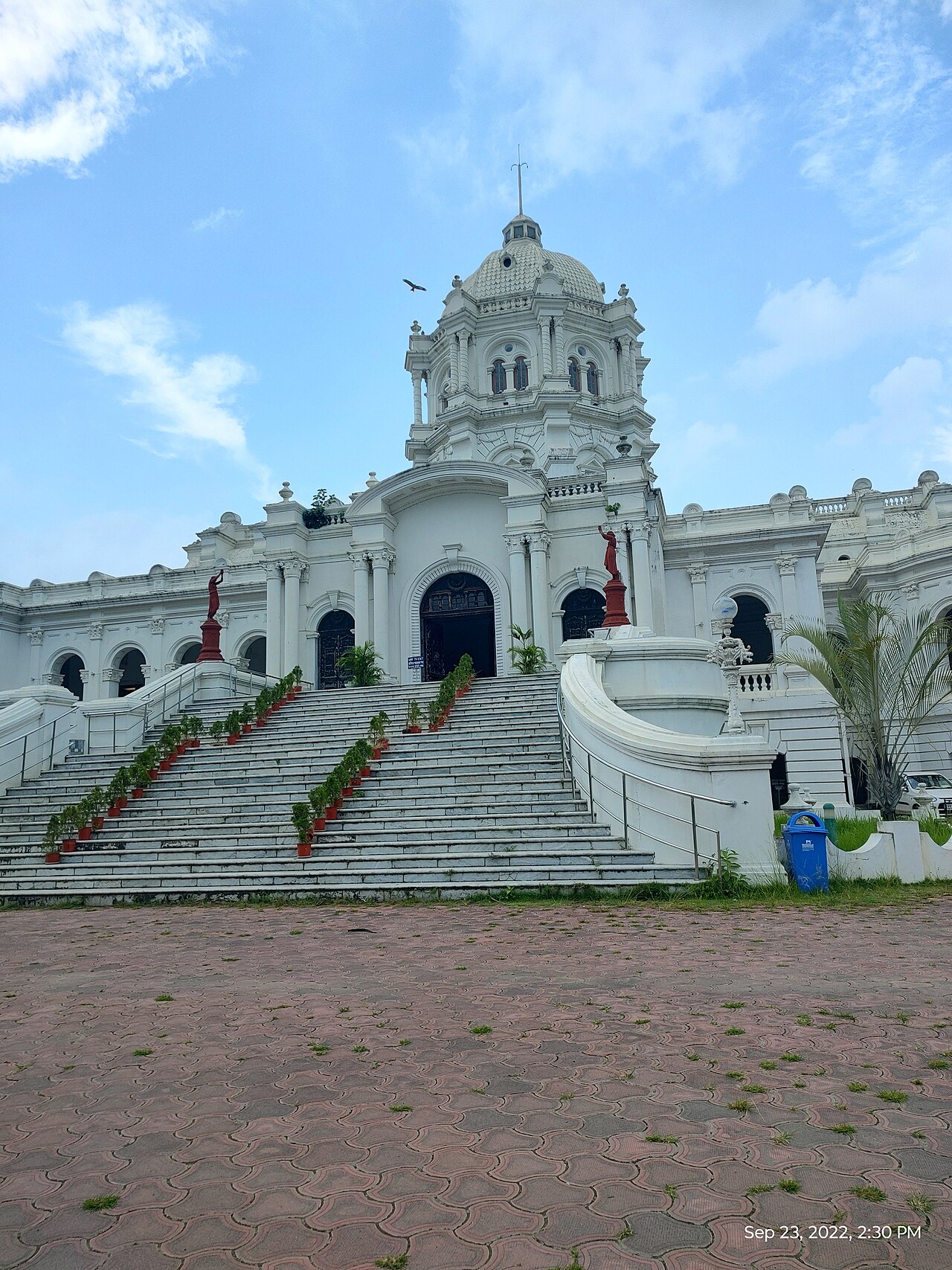
The palace was raised in an Indo-Saracenic and mixed style characteristic of the period, combining Indian architectural elements with European forms and details, and drawing on the finest materials and craftsmanship available. The result was a building both grand and refined, its long facade, domes, and richly decorated interiors expressing the status and taste of the dynasty.
The scale of the palace reflected the ambitions of the maharaja and the standing of his ancient house. With its throne room, durbar hall, reception rooms, and decorated chambers, along with its gardens and lakes, Ujjayanta was conceived as a complete royal setting, a residence and ceremonial centre worthy of a kingdom proud of its long history.
When it was complete, the palace became the heart of the Tripura court, the setting for its ceremonies and its cultural life through the final decades of the monarchy. Built in response to disaster and completed at the dawn of a new century, Ujjayanta stood as a confident statement of the endurance and refinement of the Manikya dynasty, a grand new seat for an ancient throne.
Its completion at the dawn of the twentieth century placed it among the last great palaces raised by India’s princely houses, built just as the age that produced such buildings was beginning to draw toward its close.
Domes, Marble, and Elegant Halls
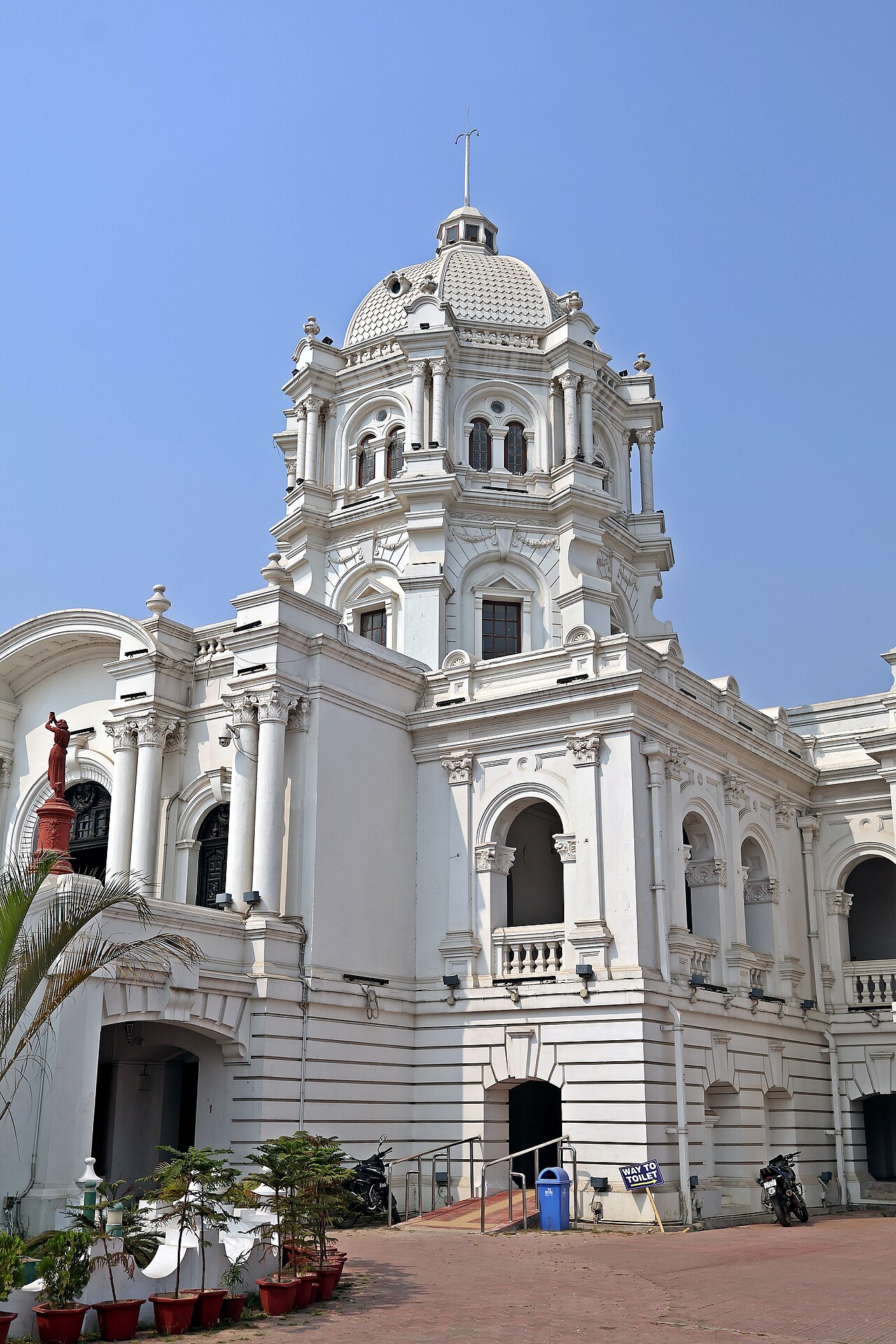
Architecturally, Ujjayanta is a graceful example of the eclectic royal architecture of its era, blending Indian and European elements into a harmonious whole. Its central block is crowned with domes, and its long, symmetrical facade, with ranks of windows and fine detailing, presents an elegant and dignified face to the gardens and lakes before it.
The interiors match the grandeur of the exterior. The palace is known for its finely finished rooms, with floors of imported marble, decorated ceilings, and richly appointed halls, reflecting the cultivated taste of the Manikya court and its contacts with the wider world. The public rooms in particular were designed to impress, providing splendid settings for the ceremonies and receptions of the kingdom.
The blend of styles is characteristic of the age, when Indian rulers embraced the fashionable architecture of the period while retaining their own traditions and identity. At Ujjayanta this synthesis produced a building that is unmistakably a royal palace of its time, combining the domes and forms of Indo-Saracenic design with the comforts and finishes of a modern residence.
For the visitor, the architecture and interiors are among the chief attractions of the palace. The elegant facade reflected in the lakes, the domes rising above the gardens, and the fine rooms within all convey the refinement of the Manikya court, and make Ujjayanta one of the most beautiful and distinguished buildings of the entire northeastern region of India.
The palace repays a slow circuit of its grounds, for each angle offers a different composition of dome, wing, and reflection. Seen from across the lakes the building seems to float; seen close to, the eye is drawn to the detail of its windows and mouldings. It is architecture designed to be enjoyed from near and far alike.
Few buildings in the region combine grandeur and grace so successfully.
The Throne Room and the Halls of State
At the ceremonial heart of Ujjayanta are its grand public rooms, including the throne room and the great durbar hall, where the maharajas held court and conducted the formal business and ceremonies of the kingdom. These were the most splendid spaces in the palace, designed to stage the majesty of the Manikya dynasty and to receive its guests in appropriate style.
The palace was also known for a number of distinctively decorated chambers, reflecting the cosmopolitan tastes of the court and its contacts with wider artistic traditions. Rooms finished in particular styles, along with reception halls and other fine chambers, gave the palace a variety and richness of interior that matched the elegance of its architecture.
These state rooms were the setting for the ceremonial life of the kingdom, from the holding of court to the reception of important visitors and the observances of the royal calendar. In them the dignity and cultivation of the Manikya court were displayed, and the grandeur of the rooms reflected the standing of one of India’s oldest ruling houses.
For visitors to the palace today, these grand interiors are among the highlights, offering a sense of the ceremonial world of the maharajas. To move through the throne room and the great halls, richly finished and elegantly proportioned, is to encounter the splendour of the Tripura court at its height, preserved within the palace that was its proud creation.
The care lavished on these rooms reflected the Manikya kings’ sense of themselves as heirs to an ancient and dignified throne, for whom ceremony was not vanity but the proper expression of a long inheritance.
They remain the ceremonial heart of the building today.
Mughal Gardens and Reflecting Lakes
The setting of Ujjayanta is as much a part of its beauty as the building itself, for the palace is surrounded by landscaped gardens and set before two ornamental lakes. The gardens, laid out in the Mughal manner with lawns, pools, and formal planting, provide an elegant green foreground to the palace and a place of beauty and repose within the grounds.
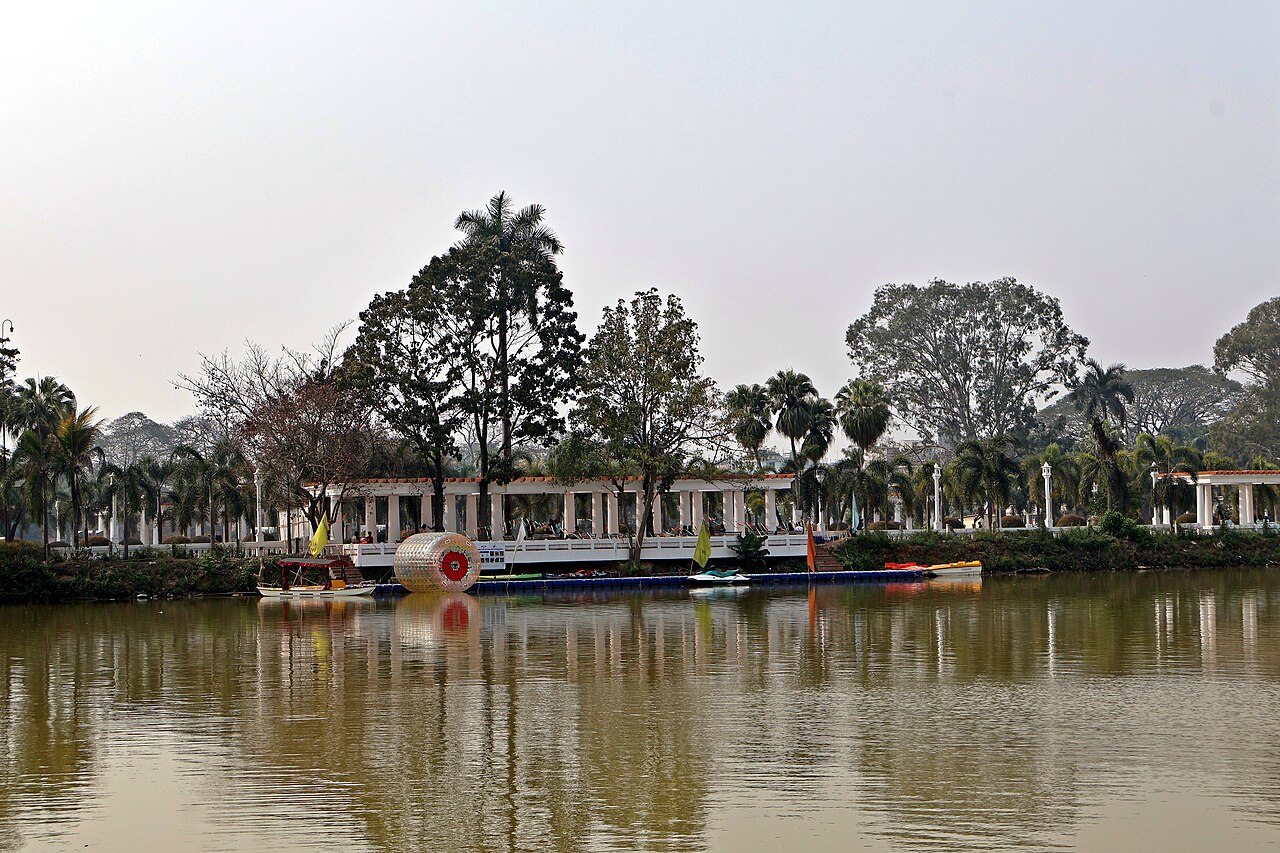
The lakes before the palace are among its most celebrated features. Their still water reflects the white facade and domes of the building, creating the mirrored image that is one of the signature sights of Agartala, and lending the whole ensemble a serene and picturesque quality. The interplay of palace, garden, and water is central to the charm of Ujjayanta.
This combination of building and designed landscape reflects a long tradition in Indian royal architecture, in which the garden and the reflecting pool are essential companions to the palace. At Ujjayanta the tradition is realised with particular grace, the formal gardens and the broad lakes together framing the palace and enhancing its beauty from every angle.
For visitors, the gardens and lakes greatly enrich the experience of the palace. To walk the grounds, to see the palace reflected in the water, and to enjoy the calm of the landscaped setting is part of the pleasure of a visit, and it is this harmonious relationship between the building and its surroundings that makes Ujjayanta so memorable a place.
At dusk, when the lights come on and the palace glows against the darkening sky, its reflection doubled in the water, the scene is among the most beautiful in the whole northeast, and it is little wonder that the image has become the emblem of Agartala itself.
Boating and evening strolls along the lakes remain a favourite pastime of the people of Agartala.
When the Palace Became a Parliament
The history of Ujjayanta took a remarkable turn after the age of the maharajas came to an end. When Tripura, like the other princely states, was integrated into independent India around the middle of the twentieth century, the monarchy’s political role ceased, and the palace found a new and striking purpose: it became the seat of the state’s legislature.
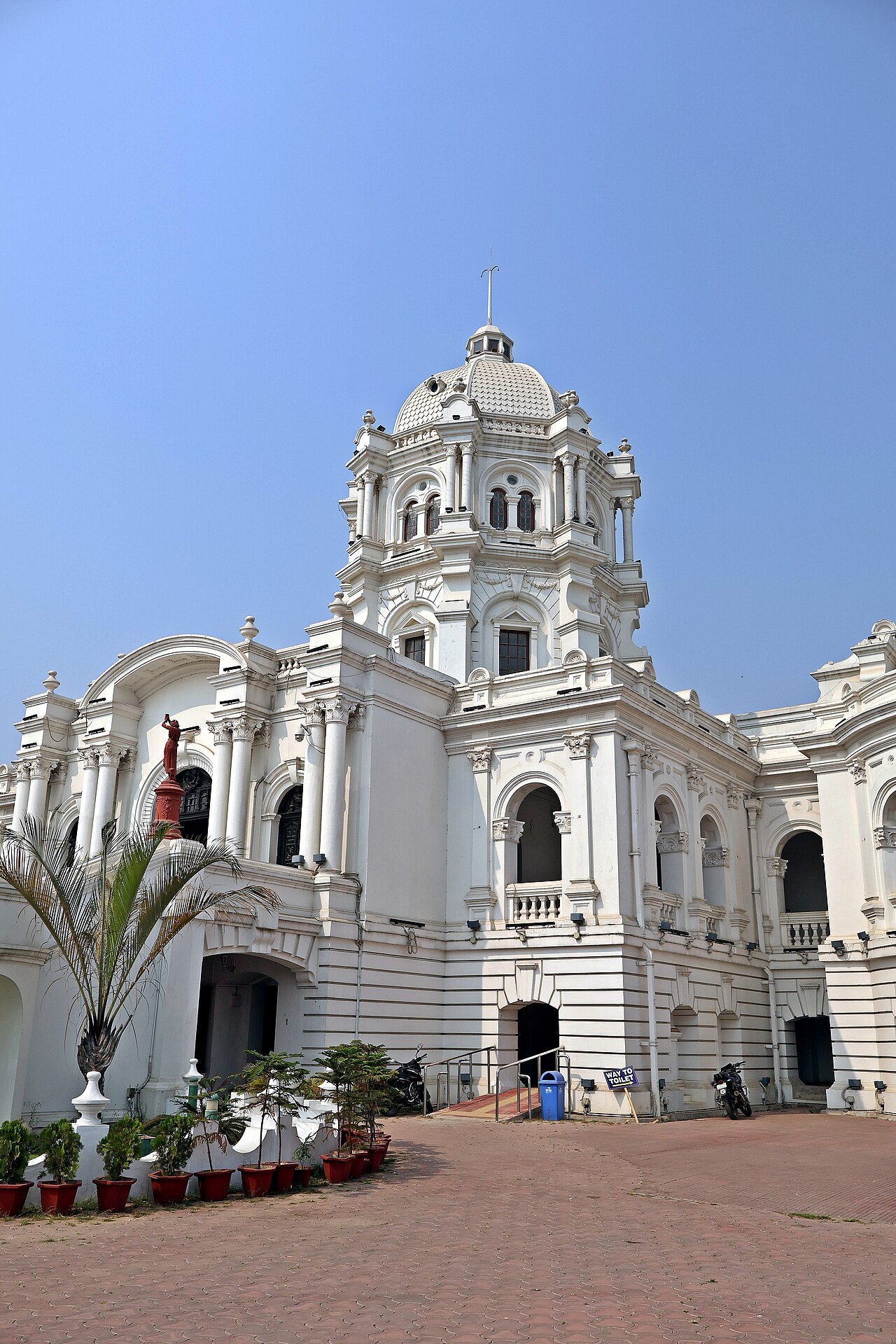
For many decades, the grand halls that had once housed the court of the Manikya kings served as the meeting place of the elected representatives of Tripura, the chambers of a royal palace transformed into the setting for democratic government. It was a fitting and symbolic reuse, the seat of the old monarchy becoming the home of the new democracy in the same building.
This role gave the palace a continuing central place in the life of the state, no longer as a royal residence but as the centre of its government. The transformation of the palace into a legislature is a striking example of how the grand buildings of the princely era found new uses in independent India, preserving them by giving them a living function.
In time, the legislature moved to a new, purpose-built home, and the palace was freed for another transformation. But the decades during which Ujjayanta served as the seat of Tripura’s parliament are an important chapter in its history, a period when the palace of the maharajas became, quite literally, the house of the people, bridging the old world of the monarchy and the new world of the republic.
For visitors who know the story, there is a particular pleasure in standing in a hall and realising that the same space served, in turn, a king holding court and an assembly of elected members debating the affairs of the state. Few buildings so neatly embody the great transition from monarchy to democracy that reshaped India in the twentieth century.
It is a reuse that honoured the building even as it repurposed it.
A Museum of the Northeast
After the legislature moved to its new premises, Ujjayanta Palace was given yet another life, being converted into a museum. Today it houses a major museum dedicated to the culture, history, and heritage of Tripura and the wider northeastern region of India, using the grand halls of the palace to display the rich traditions of this distinctive part of the country.
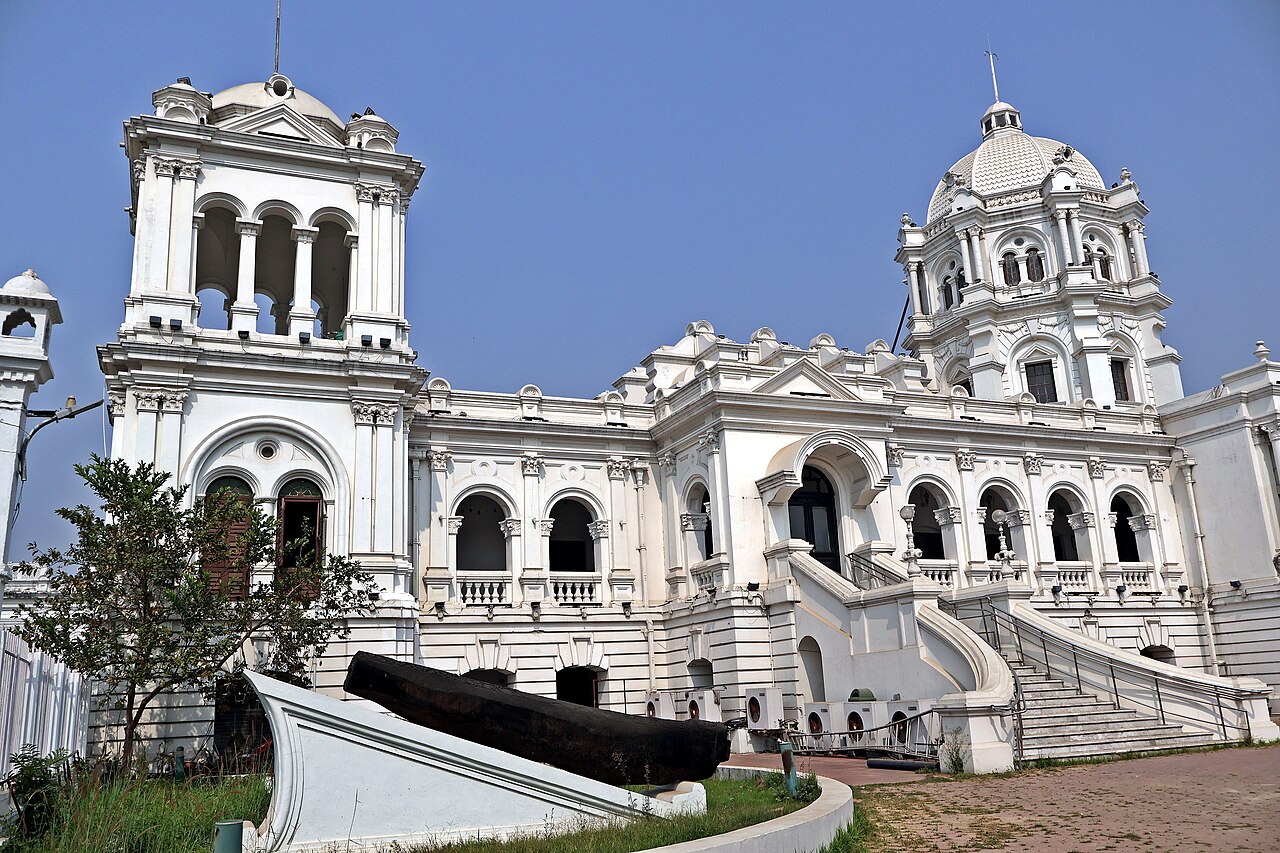
The museum’s collections reflect the cultural diversity of the northeast, a region of many peoples, languages, and traditions, along with the history of Tripura and its Manikya dynasty. Exhibits on the art, crafts, customs, and history of the region turn the palace into a place of learning and cultural celebration, introducing visitors to a part of India less familiar than the great centres of the north and south.
Housing the museum in the former royal palace is especially fitting, for it allows the building itself, with its grand rooms and elegant setting, to be part of the visitor experience, while its collections illuminate the wider culture of the region the Manikya kings once ruled. The palace and the museum thus reinforce one another, the building’s history and the region’s heritage displayed together.
In this way Ujjayanta continues to serve the people of Tripura and its visitors, no longer as a royal residence or a parliament but as a keeper and celebrator of the region’s heritage. The transformation of the palace into a museum has ensured its preservation and given it a meaningful role in the cultural life of the state, the latest chapter in the long and varied history of this remarkable building.
For many visitors from other parts of India, the museum is a revelation, introducing them to a region whose peoples and traditions are too often overlooked. In this the palace performs a valuable service, turning the seat of one small kingdom into a window onto the whole rich mosaic of the northeast.
The building and its collections together make a full day’s visit rewarding.
The Pride of Tripura
Through all its transformations, Ujjayanta Palace has remained the great symbol of Tripura, the building most closely associated with the identity and heritage of the state. As the seat of an ancient dynasty, a work of fine architecture, a parliament, and now a museum, it has stood at the centre of Tripura’s life for more than a century, and it embodies the history and pride of the region.
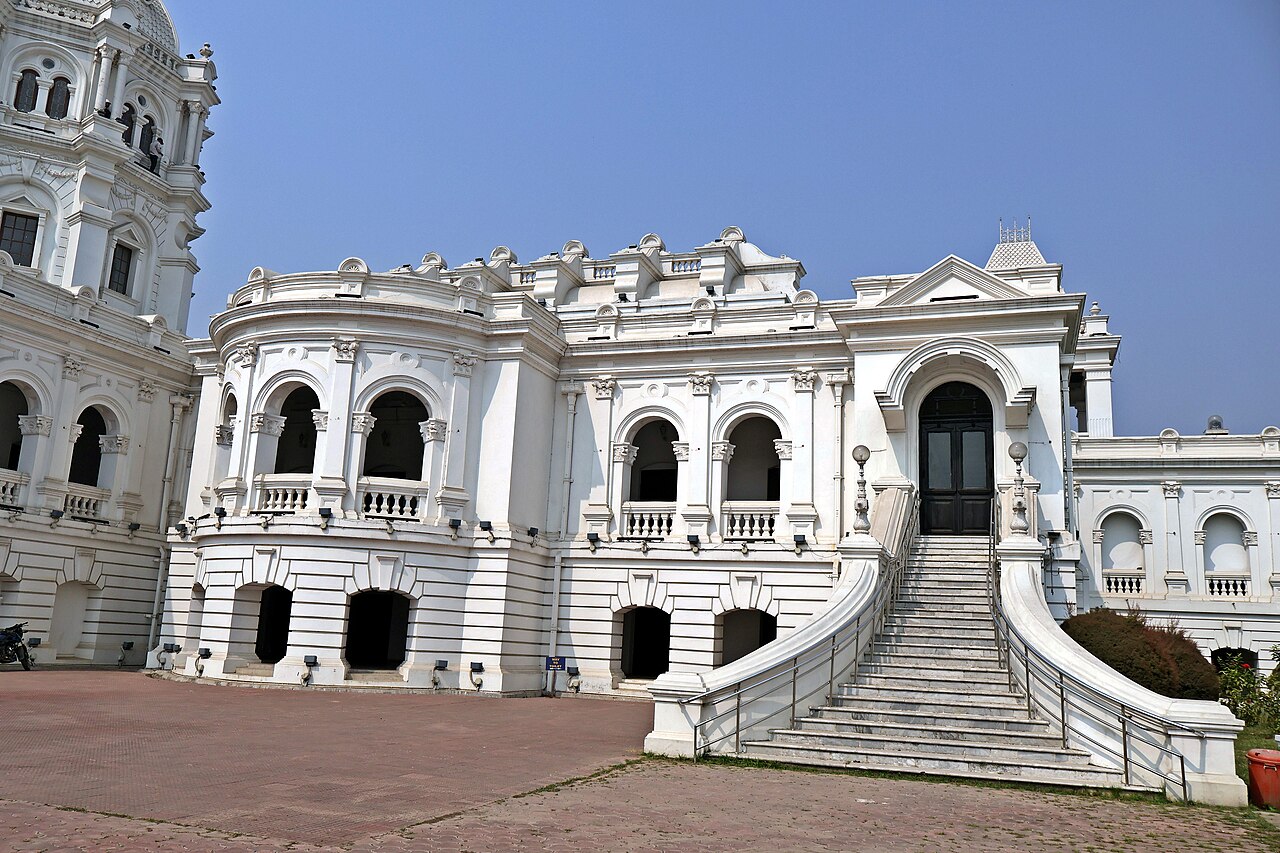
The palace connects the modern state to its long royal past, a tangible link to the Manikya dynasty and the centuries of rule that preceded independence. In a region whose distinctive history is not always widely known, Ujjayanta stands as a proud reminder of Tripura’s ancient monarchy and cultivated court, and of its place in the wider story of India.
Its association with Tagore adds a further layer of significance, linking the palace to the cultural heritage of the subcontinent and to one of its greatest figures. The palace named by the poet, home to a dynasty of great antiquity, and now a museum of the region’s cultures, gathers in itself many strands of Tripura’s identity and history.
For the people of Tripura and for visitors alike, Ujjayanta is thus far more than a beautiful building. It is a monument to the endurance of an ancient dynasty, a symbol of the state, and a keeper of its heritage, standing serene beside its lakes at the heart of Agartala. Its long and varied history makes it one of the most fascinating of India’s royal palaces, and its beauty makes it one of the most beloved.
In its serene endurance beside the lakes, Ujjayanta seems to hold the whole story of Tripura in a single view, ancient kingship, cultural flowering, democratic transformation, and living heritage, all gathered under one set of white domes.
It remains, quite simply, the building by which Tripura is known.
The Palace on Film
The beauty of Ujjayanta, its white domes reflected in the lakes, its elegant halls, its gardens, is best appreciated in motion, and the short film below offers a tour that conveys the grace of the palace and something of its history. Watching it alongside the images in this article helps bring the seat of the Manikya kings to life.
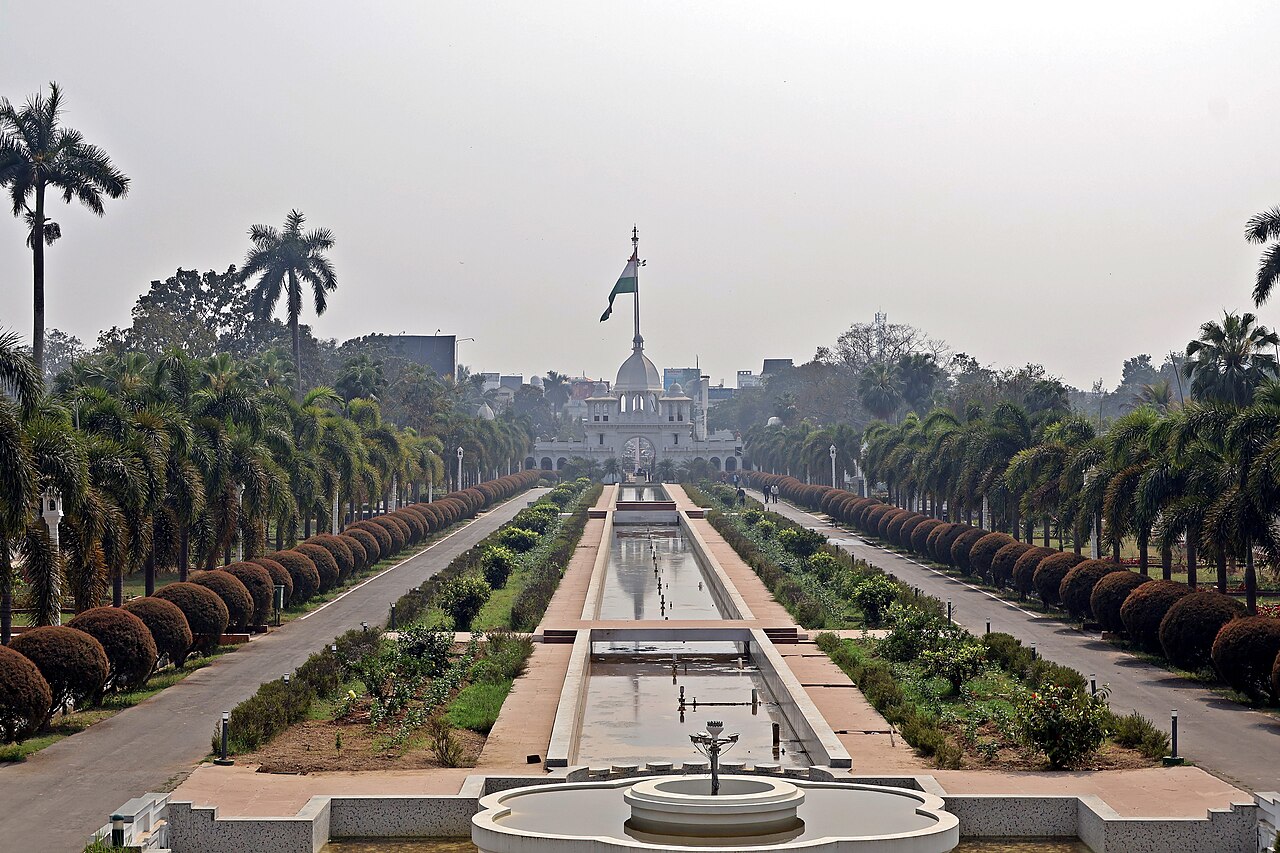
If you are planning a visit to Tripura, a video like this is a fine way to prepare, helping you recognise the palace’s features and understand its remarkable history, from the ancient dynasty that built it to its lives as parliament and museum. It also introduces the distinctive character of the northeast, a region rich in its own heritage.
And if a visit to this corner of India lies beyond your plans for now, the film lets you enjoy the palace from afar. Let it play, and picture yourself before the white facade of Ujjayanta, mirrored in the still water of its lakes, at the heart of Agartala and of the ancient kingdom of Tripura.
Visiting Ujjayanta Today
For travellers to the northeast of India, Ujjayanta Palace is the great sight of Agartala and one of the finest royal buildings of the region. The palace, now housing the state museum, is open to visitors, and exploring its grand halls, its collections, and its beautiful grounds and lakes is a memorable experience, offering an encounter with both the royal past and the wider culture of Tripura.
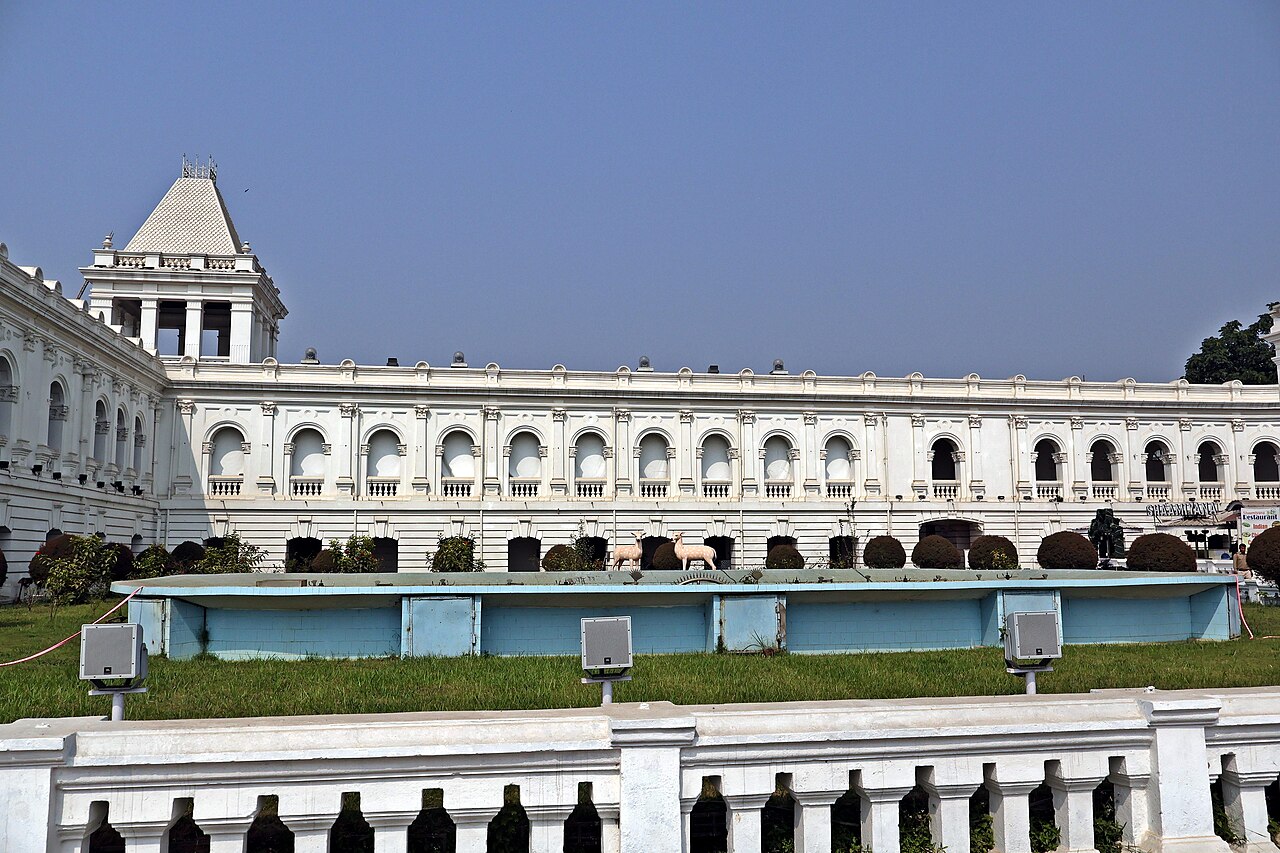
A visit rewards attention to the palace’s architecture and setting, the domes and elegant facade, the fine interiors, and above all the lovely view of the building reflected in its lakes, as well as to the museum’s displays on the history and cultures of the northeast. Together these offer a rich and rounded experience, combining the beauty of the palace with the learning of the museum.
As at any historic palace and museum, visitors should treat the building and its contents with care and follow the guidance about access and photography. Taking the time to learn the palace’s remarkable story, from ancient dynasty to parliament to museum, and its connection with the poet who named it, greatly enriches a visit.
However you come to it, Ujjayanta offers a rare encounter with the heritage of one of India’s oldest dynasties and one of its less-visited regions. To stand before its white domes, mirrored in the lakes at the heart of Agartala, is to touch the long history of the Manikya kings of Tripura, and to discover one of the most beautiful and fascinating royal palaces of the Indian northeast.
Allow time simply to sit by the water and take in the view, which is among the finest the city offers.
However brief your visit, the palace and its lakes will linger in memory.
Palaces Nearby
If the heritage of Tripura has drawn you in, these two other Himalayan royal seats make a natural next stop.
- Narayanhiti, the Palace Where the Kings of Nepal Reigned and Fell — the Kathmandu seat of Nepal’s vanished monarchy.
- Tashichho Dzong, the Fortress That Holds the Heart of Bhutan — the living seat of Bhutan’s king, government, and faith.
You May Like

Vaduz Castle, the Hilltop Home of Liechtenstein’s Reigning Prince