In the south of the Czech Republic, near the Austrian border, lies one of the most enchanting palace landscapes in Europe, where a fairy-tale neo-Gothic chateau sits amid a vast romantic park filled with follies, a soaring minaret, a Roman aqueduct, and one of the grandest greenhouses of its age. This is Lednice, the summer residence of a princely family who turned an entire region into a work of art.
The chateau at Lednice, with its pinnacles, tracery, and storybook silhouette, is the centerpiece of an enormous designed landscape created by the House of Liechtenstein over generations. Combining architecture, gardens, and romantic monuments on an unprecedented scale, it forms one of the largest artificial landscapes in Europe, a masterpiece of the picturesque.
This is the first of three articles on the grand palaces and chateaux of the Czech lands, and Lednice makes an enchanting place to begin. By the end you will understand why this neo-Gothic palace and its extraordinary park, now recognized as a cultural landscape of worldwide importance, are among the most romantic and beautiful places in central Europe.
In This Article
- Arriving at a Fairy-Tale Chateau
- The Princely House of Liechtenstein
- A Neo-Gothic Fantasy
- The Lavish Neo-Gothic Interiors
- The Magnificent Palm House
- One of Europes Greatest Designed Landscapes
- The Romantic Minaret
- Follies, the Aqueduct, and the Hunting Lodge
- The Twin Estate of Valtice
- A World-Recognized Cultural Landscape
- From Princely Retreat to Public Treasure
- Lednice on Film
- Visiting Lednice Today
Arriving at a Fairy-Tale Chateau

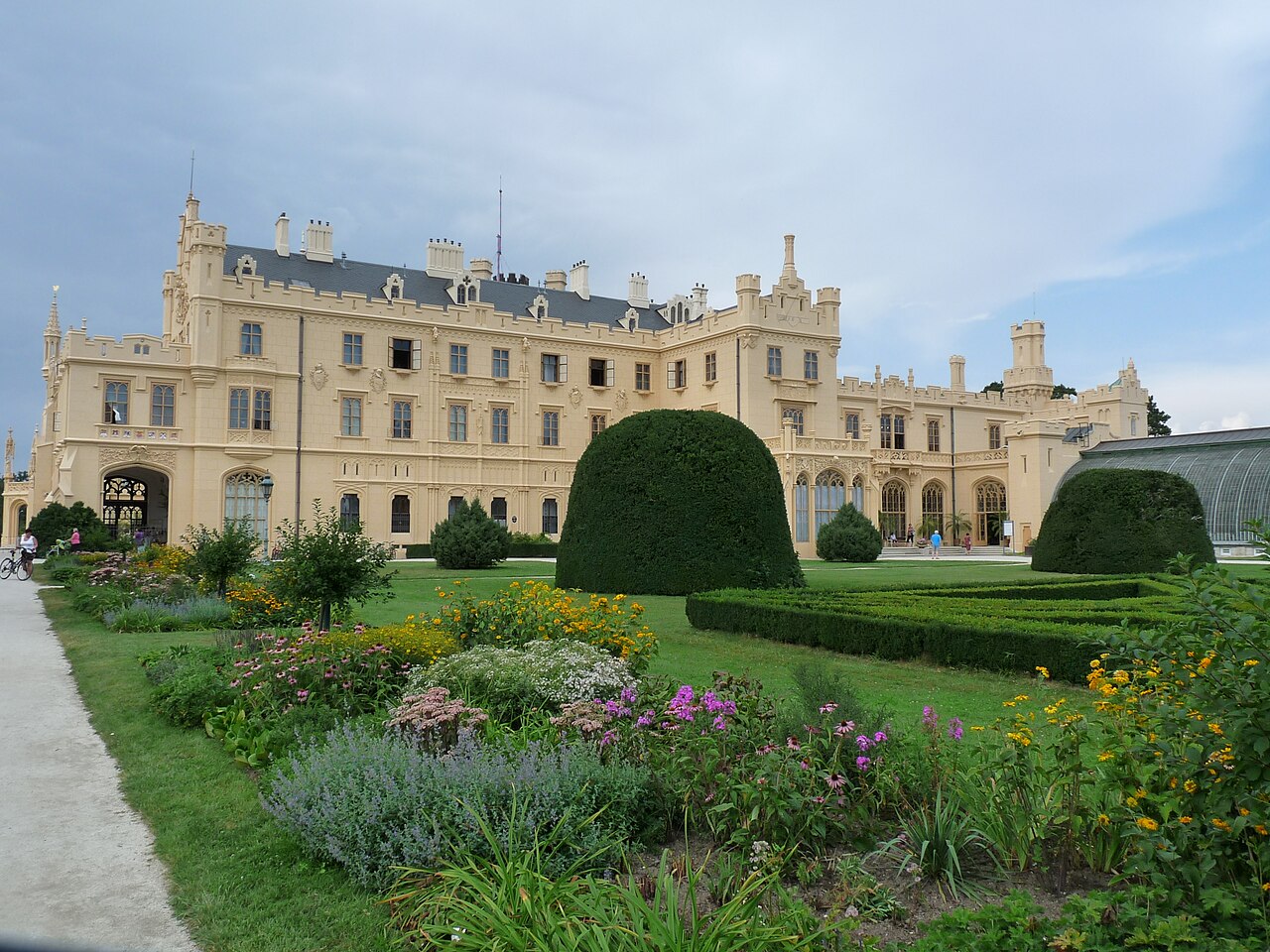
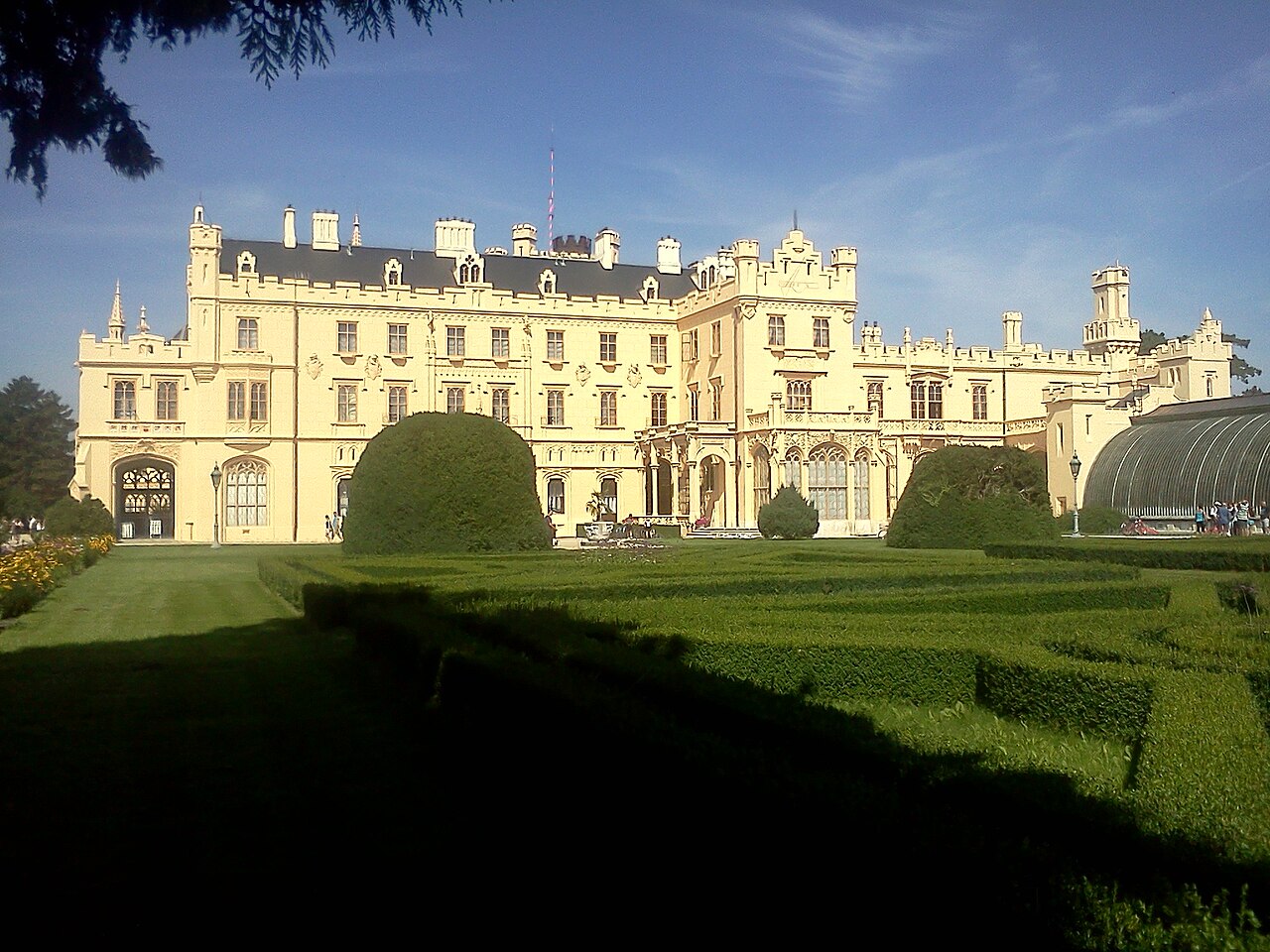
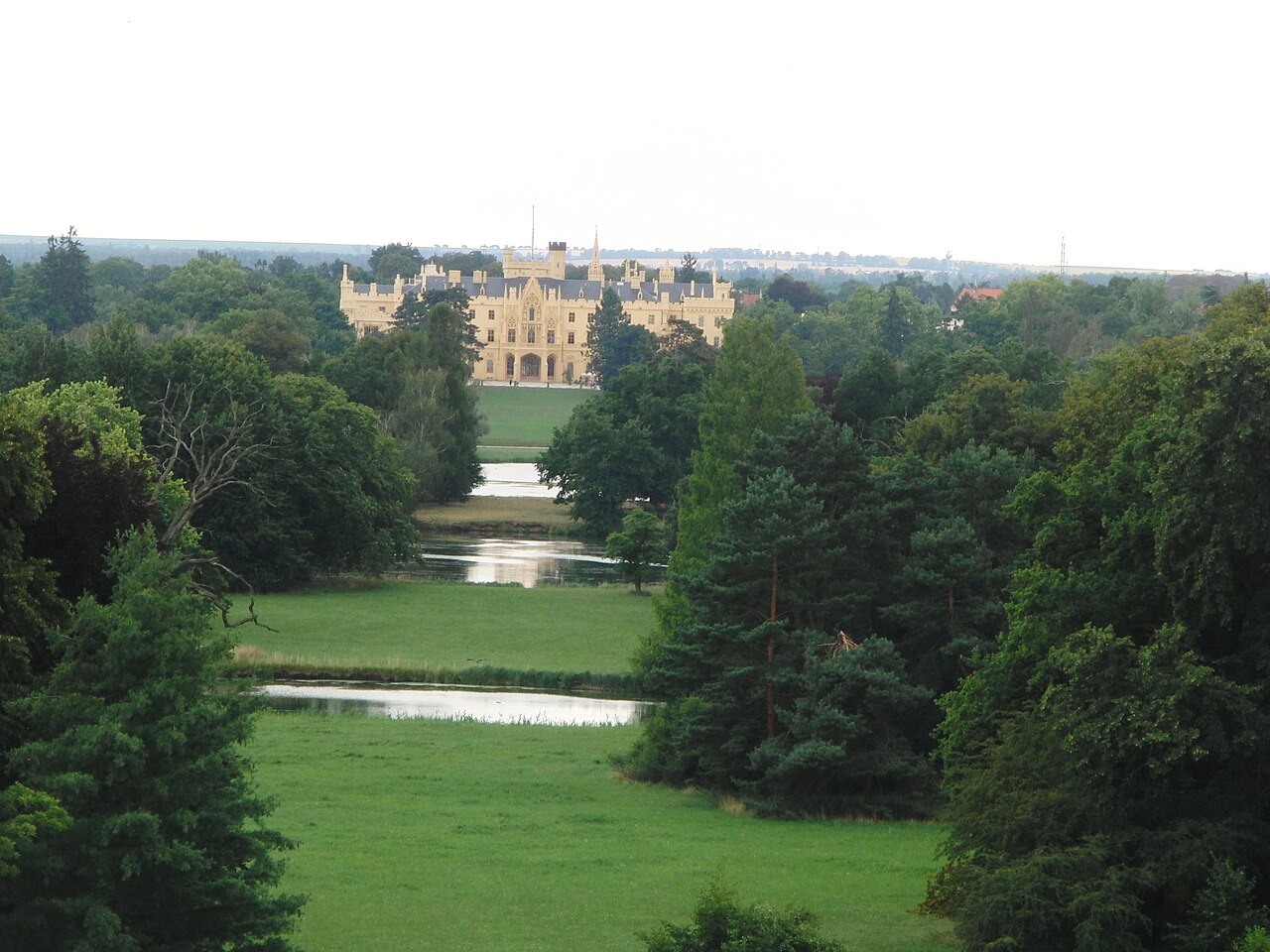
The first sight of Lednice is pure enchantment, a neo-Gothic chateau of pale stone bristling with pinnacles, battlements, and delicate tracery, set amid gardens and reflected in ornamental water. It looks like a palace from a storybook, and its romantic silhouette announces at once the fantasy and ambition that shaped it.
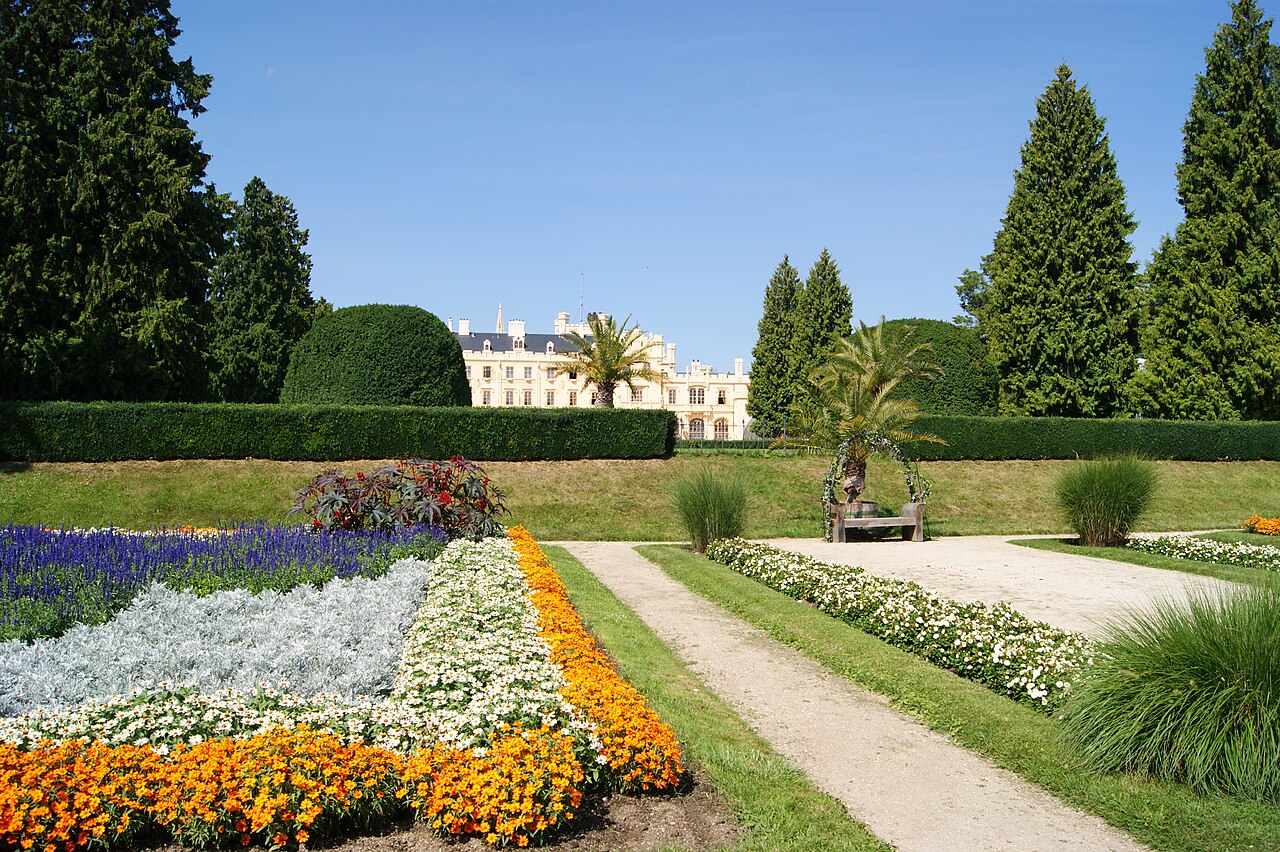
The chateau is the heart of a vast designed landscape, surrounded by formal gardens near the building and a great naturalistic park beyond. The relationship between the palace and its grounds is central to Lednice, which was conceived not as a single building but as a complete romantic environment on an enormous scale.
Approaching through the gardens, you sense that this was a place created for pleasure and beauty, a summer residence where a princely family could enjoy the delights of the countryside amid surroundings of their own making. The fairy-tale architecture sets the tone for the romantic world that unfolds in the park.
As you arrive, take in the storybook chateau and the beautiful gardens around it. Understanding Lednice as the centerpiece of an immense designed landscape, created by a great family as a work of art, prepares you for the wonders of the park and the lavish interiors within.
The effect is heightened by the way the chateau is mirrored in the still water before it, doubling its storybook silhouette. Few first impressions in central Europe are as purely romantic, and visitors often pause simply to take in the fairy-tale scene before exploring further.
The approach also reveals glimpses of the park beyond, hinting at the wonders that await exploration. From the first moment, Lednice announces itself as more than a palace, a whole world of beauty created for pleasure and delight.
The Princely House of Liechtenstein
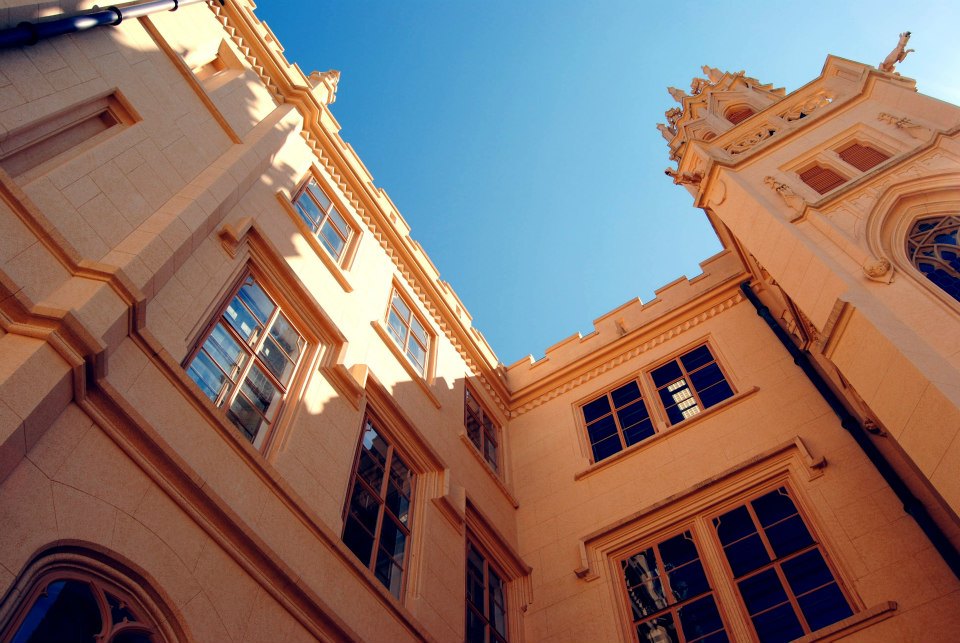
Lednice was for centuries the summer residence of the House of Liechtenstein, one of the great princely families of central Europe, who held vast estates in the region. Over generations the family shaped the chateau and its surroundings, pouring their wealth and vision into creating one of the most remarkable designed landscapes in Europe.
The Liechtensteins were immensely wealthy and powerful, with lands and influence across the region, and Lednice was among their most beloved possessions. They used it as a place of summer retreat and pleasure, and successive generations continued to embellish the chateau and expand the park, leaving an extraordinary legacy.
The family’s long ownership gave Lednice a continuity of vision rare among great estates, as each generation built upon the work of its predecessors. The result was a coherent and ever-more-ambitious landscape, the product of a single family’s sustained devotion to beauty over the course of centuries.
Understanding the Liechtenstein family is key to appreciating Lednice. The chateau and its park are the expression of their wealth, taste, and vision, a princely creation on a grand scale. The estate stands as a monument to one of the great families of central Europe and their love of beauty and the picturesque.
The family’s roots in the region ran deep, and their fortunes rose over the centuries until they ranked among the wealthiest and most influential houses of the empire. Lednice was the jewel of their vast holdings, the place where they lavished their resources on the creation of beauty.
It is worth noting that the family gave its name to the principality that survives today, a reminder of their enduring significance in European history. Their legacy at Lednice, however, is of a different kind, a creation of beauty rather than politics, that continues to delight visitors from around the world.
A Neo-Gothic Fantasy
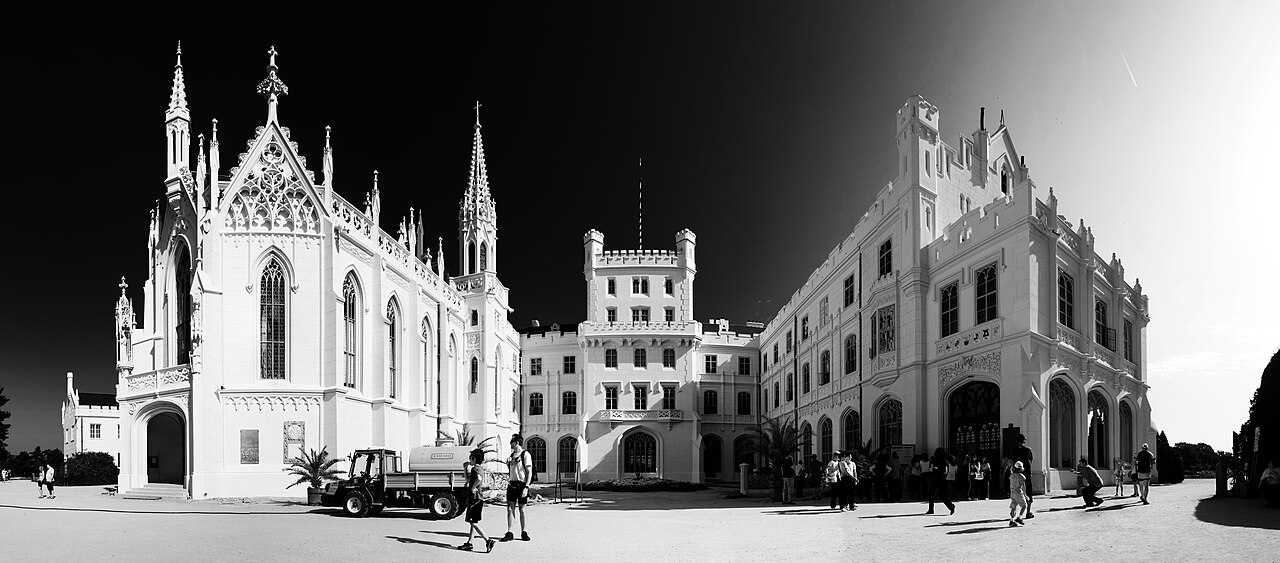
The chateau as it appears today is largely the result of a nineteenth-century rebuilding in the neo-Gothic style, which gave it its fairy-tale character. Inspired by the romantic revival of medieval forms, the architects transformed an earlier building into a storybook palace of pinnacles, tracery, and battlements.
The neo-Gothic style was fashionable among the aristocracy of the age, who admired the romance and picturesque beauty of medieval architecture. At Lednice, this taste was realized with exceptional skill and lavishness, creating one of the finest examples of the style in the region, a palace that seems to belong to a world of chivalry and romance.
The rebuilding reflected the wealth and ambition of the family, who spared no expense in creating a residence of fantasy and beauty. The neo-Gothic exterior, with its intricate detailing and romantic silhouette, perfectly suited the role of Lednice as a summer palace of pleasure amid its enchanting park.
For admirers of architecture, Lednice offers a superb example of the neo-Gothic style at its most accomplished, a romantic fantasy realized on a grand scale. Its storybook appearance is one of its chief charms, setting it apart from more sober palaces and giving it its enduring fairy-tale appeal.
The transformation was carried out by skilled architects who studied medieval models and reinterpreted them with nineteenth-century ambition and craftsmanship. The result captures the romance of the Gothic without its austerity, a confection of towers and tracery designed above all to delight.
The choice of the Gothic style also carried associations of lineage and tradition, evoking an idealized medieval past that flattered the ancient pedigree of the family. In this way the architecture was not only beautiful but meaningful, a statement about the family’s history and standing.
The Lavish Neo-Gothic Interiors
Inside, the chateau reveals interiors as lavish and romantic as its exterior, famous above all for their extraordinary carved woodwork. Craftsmen created elaborate wooden ceilings, staircases, and decoration of exceptional quality, making the interiors of Lednice among the most admired of their kind.
The neo-Gothic style of the interiors continues the romantic medievalism of the exterior, with rich carving, fine materials, and elaborate detailing creating an atmosphere of fantasy and luxury. The rooms were designed for the comfortable and elegant summer life of the princely family and their guests.
The quality of the craftsmanship, especially the carved wood, is exceptional, reflecting the resources and taste of the family. These interiors turned the chateau into a complete work of art, matching the fantasy of the architecture with decoration of equal richness and skill.
Walking through the interiors, you gain a sense of the romantic and luxurious world of the Liechtensteins at their summer retreat. The lavish rooms, especially the famous woodwork, remain among the chief attractions of the chateau and a testament to the extraordinary craftsmanship lavished upon it.
The carved wooden ceiling of the main staircase is often singled out as a masterpiece, its intricacy astonishing all who see it. Such work required the finest craftsmen and enormous expense, and it stands as a testament to the family’s determination to make Lednice a complete work of art inside and out.
The rooms also housed fine furnishings, paintings, and objects reflecting the taste and wealth of the family, complementing the architecture. Together they create interiors of exceptional richness, matching the fantasy of the exterior with equal splendor within.
The Magnificent Palm House

Among the most remarkable features of Lednice is its great palm house, a magnificent glass-and-iron greenhouse of the nineteenth century that shelters exotic plants in a soaring, light-filled interior. One of the finest structures of its kind, it reflects the era’s fascination with engineering, botany, and the exotic.
The palm house was an engineering marvel of its day, using iron and glass to create a vast enclosed space where tropical and subtropical plants could flourish. It allowed the family to enjoy an exotic garden under glass throughout the year, a luxury and a wonder that astonished visitors.
The structure reflects the nineteenth-century love of combining technology with beauty, creating a functional building that is also a work of art. Its elegant form and its lush interior make it a highlight of the estate, a greenhouse of exceptional scale and beauty attached to the fairy-tale chateau.
For visitors, the palm house is a delight, a soaring space filled with greenery that offers a striking contrast to the neo-Gothic chateau. It embodies the ambition and ingenuity of the family and their age, and it remains one of the most impressive and beautiful features of Lednice.
Inside, visitors walk among towering palms and lush tropical foliage, enjoying a pocket of the exotic in the heart of central Europe. The contrast between the warm, green interior and the cool neo-Gothic stone of the chateau nearby is one of the memorable pleasures of a visit to Lednice.
Its construction represented a considerable investment and the latest technology of the day, demonstrating the family’s engagement with the science and engineering of the nineteenth century as well as with art and beauty. It remains one of the most admired historic greenhouses in central Europe.
One of Europes Greatest Designed Landscapes

The chateau at Lednice is set within an enormous landscape park, part of one of the largest designed landscapes in Europe. Created over generations, this vast park combines naturalistic scenery with carefully placed monuments and follies, forming a romantic environment of extraordinary scale and beauty.
The park was laid out in the English landscape style, with winding paths, lakes, woods, and open meadows designed to create a sequence of beautiful and varied scenes. Throughout the park, romantic structures provide focal points and destinations, turning a walk into a journey of discovery through an idealized landscape.
The scale of the landscape is remarkable, extending far beyond the immediate surroundings of the chateau to encompass a whole region shaped by the vision of the family. This immense designed landscape, blending architecture and nature, is one of the greatest achievements of the picturesque movement in Europe.
For visitors, the park is a glory in its own right, offering endless opportunities for exploration and the discovery of its many monuments and follies. The combination of the fairy-tale chateau with its vast romantic park makes Lednice a place of exceptional beauty and a highlight of any visit to the region.
The park was shaped over many decades, with lakes dug, hills raised, and thousands of trees planted to create the desired scenes. This was landscape treated as a vast canvas, and the scale of the undertaking reflects the extraordinary resources and vision of the family who commissioned it.
Water played a central role in the design, with lakes and channels created to reflect the sky and the architecture and to provide settings for the romantic structures. The careful management of water across such a vast area was itself a remarkable feat of engineering and artistry.
The Romantic Minaret
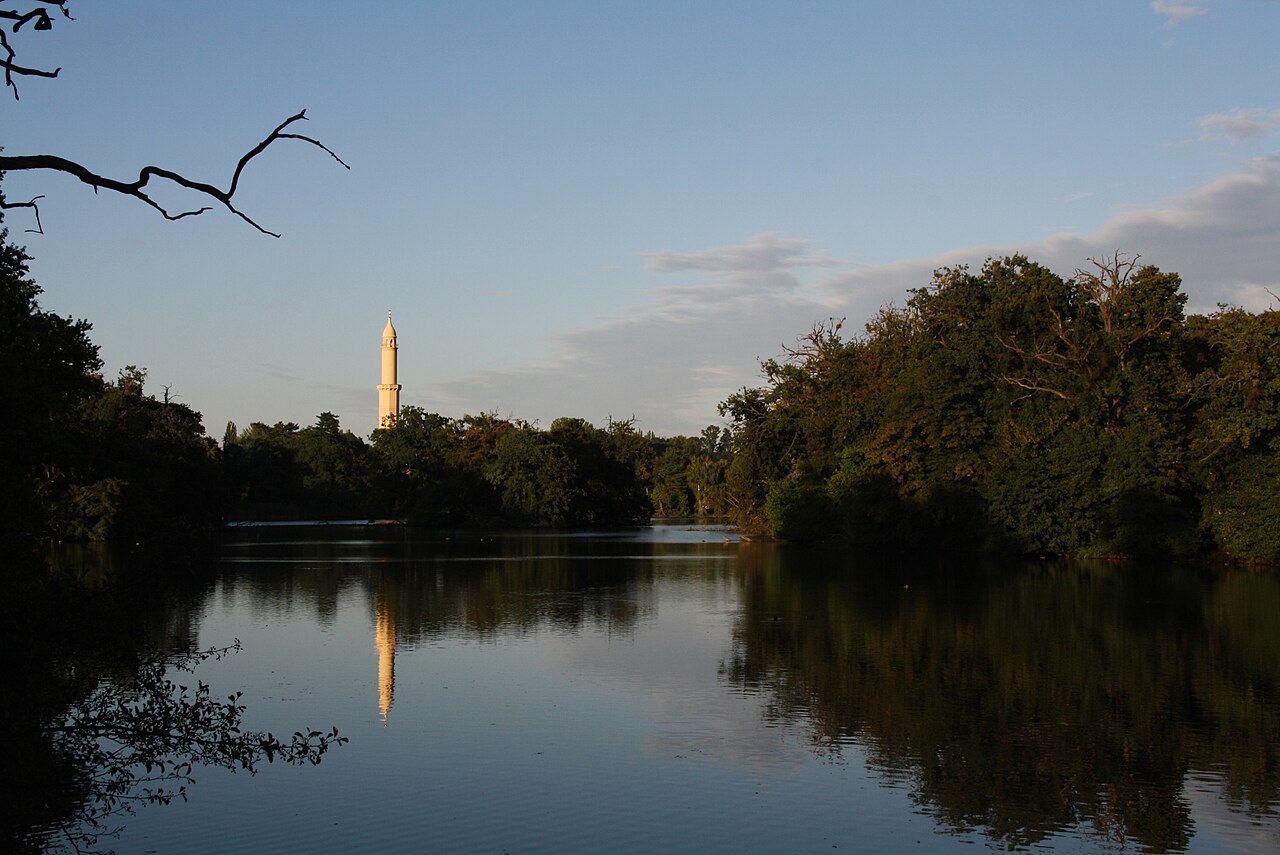
One of the most striking features of the Lednice park is its minaret, a tall and elaborate tower built in an exotic Moorish style, rising above the surrounding landscape. Among the tallest structures of its kind outside the Islamic world, it is a spectacular romantic folly and a landmark of the estate.
The minaret reflects the romantic fascination with the exotic that characterized the age, bringing a touch of the East to the Czech countryside. Built as an ornamental tower and a viewpoint, it offered visitors the pleasure of climbing to the top for sweeping views over the park and the surrounding landscape.
As a folly, the minaret served no practical purpose beyond delight and display, embodying the playful, picturesque spirit of the park. Its exotic form and considerable height make it one of the most memorable structures in the landscape, a surprising and romantic sight amid the central European scenery.
For visitors, the minaret is a highlight, offering both a striking sight and, for those who climb it, magnificent views over the designed landscape. It captures the romantic and exotic imagination that shaped the park, and it remains one of the most beloved features of Lednice.
Climbing the many steps to the top of the minaret rewards visitors with panoramic views over the park, the chateau, and the surrounding countryside. From this height the full scale and artistry of the designed landscape become clear, spread out like a living map below.
That the family chose to crown their park with so exotic a structure speaks to the breadth of their imagination and their desire to astonish. The minaret has become an emblem of Lednice, instantly recognizable and endlessly photographed by the visitors who flock to the park.
Follies, the Aqueduct, and the Hunting Lodge

The park is filled with romantic structures that serve as focal points and destinations, each contributing to the picturesque character of the landscape. Among them are a ruined Roman-style aqueduct, built as a deliberate romantic ruin, and a mock-medieval hunting lodge designed to evoke the chivalric past.
These follies reflect the eighteenth- and nineteenth-century love of creating idealized and evocative structures within landscape parks, from classical ruins to romantic castles. At Lednice, such buildings were scattered throughout the vast park, turning the landscape into a sequence of romantic scenes and surprises.
The artificial ruin of the aqueduct and the storybook hunting lodge are among the most charming of these structures, each designed to evoke a particular mood and to delight the visitor. They demonstrate the care and imagination that went into shaping every part of the designed landscape.
For visitors, discovering these follies is one of the great pleasures of exploring the park, rewarding those who venture beyond the immediate surroundings of the chateau. They embody the romantic vision that created Lednice, transforming the landscape into an idealized world of beauty and imagination.
Each folly was carefully sited to be discovered along the park’s winding paths, creating a sense of surprise and delight as visitors came upon them. This choreographed experience of the landscape, revealing one romantic structure after another, was central to the art of the picturesque park.
The follies also reflected the cultivated interests of the family, from classical antiquity to the exotic and the medieval, each structure evoking a different world. Together they turned the park into a kind of three-dimensional anthology of the romantic imagination.
The Twin Estate of Valtice
Lednice is linked to a neighboring estate, Valtice, which together with it forms a vast unified landscape created by the same princely family. The two chateaux, connected by the great designed park, were conceived as parts of a single grand composition, one of the most ambitious landscape projects ever undertaken.
Valtice, with its own grand chateau, complements Lednice as part of the larger domain, and the two estates are often considered together as a single cultural landscape. The family shaped the whole region between and around them, creating an immense environment of palaces, parks, and monuments.
The connection between the two estates reflects the scale of the family’s vision, which extended far beyond a single palace to encompass an entire region transformed into a work of art. This unified landscape, blending architecture and nature across a vast area, is a unique achievement of the picturesque movement.
For visitors, the link between Lednice and Valtice offers the chance to experience the full scale of the family’s creation, exploring the great landscape that connects the two estates. Together they form one of the most remarkable designed landscapes in the world, a testament to the vision and wealth of their creators.
A grand avenue and a network of paths once linked the two estates, allowing the family and their guests to move through the designed landscape between them. The whole domain was conceived as a single artistic composition, a scale of ambition rarely matched anywhere in Europe.
Exploring both estates reveals the full ambition of the project, which treated an entire landscape as a single canvas for beauty. It is this totality of vision, rather than any single building, that makes the achievement at Lednice so remarkable and so widely admired.
A World-Recognized Cultural Landscape
The extraordinary landscape created around Lednice and its neighboring estate is recognized as a cultural landscape of worldwide importance, honored for its beauty, scale, and significance. This recognition reflects the unique achievement of the family in shaping an entire region into a unified work of art.
The designation acknowledges the landscape as one of the largest and most important of its kind, a masterpiece of landscape design blending architecture, gardens, and romantic monuments on an unprecedented scale. It places Lednice among the great cultural treasures of the world.
This status has helped ensure the protection and preservation of the landscape, safeguarding its monuments, parks, and chateaux for future generations. It recognizes not only the beauty of the individual buildings but the significance of the whole designed environment as a cultural achievement.
For visitors, the recognition of the landscape underscores the importance of what they are seeing, a creation of worldwide significance. It confirms Lednice and its surroundings as one of the great designed landscapes of the world, a place of exceptional beauty and cultural value.
The recognition also celebrates the harmonious blend of human design and natural beauty that defines the landscape, an ideal of the picturesque realized on an immense scale. It marks Lednice as not merely a beautiful palace but a cultural achievement of the first importance.
Visitors today are the beneficiaries of this protection, able to experience the landscape much as its creators intended, preserved in its entirety. Few places offer so complete an encounter with the art of the designed landscape on such a scale.
From Princely Retreat to Public Treasure
After the great era of the princely family, the chateau and its landscape passed into public hands, becoming a museum and a protected cultural site. This transition preserved the estate and opened it to visitors, allowing the beauty created by the family to be enjoyed by all.
The chateau is now open as a museum, its lavish interiors restored and presented to the public, while the vast park and its monuments are open for exploration. Careful stewardship has maintained the estate, ensuring that its beauty and significance are preserved for future generations.
The opening of Lednice to the public has made it one of the most popular and admired destinations in the region, drawing visitors to experience its fairy-tale chateau, its magnificent park, and its many romantic monuments. Its preservation as a cultural treasure is a fitting continuation of its history.
The combination of the restored chateau, the great landscape, and its recognized cultural importance makes Lednice one of the most rewarding destinations in the Czech lands. Its survival and preservation allow visitors to experience a unique creation of beauty and imagination, a princely dream made real and shared with the world.
The transition from private estate to public treasure mirrors the fate of many great aristocratic properties, but few have been preserved so completely or on such a scale. The survival of the entire designed landscape, not just the chateau, makes Lednice an exceptional and precious inheritance.
Lednice on Film
Because Lednice is defined by its fairy-tale chateau and its vast romantic park, a video walkthrough is a fine way to appreciate it. On film you can take in the storybook architecture, move through the lavish interiors, explore the park with its minaret and follies, and admire the magnificent palm house.
As you watch, notice the romantic character of the architecture and the extraordinary scale of the designed landscape. Seeing the chateau and its park in motion conveys the beauty and ambition of the estate in a way that still images cannot fully capture, from the carved interiors to the exotic minaret.
Video also helps convey the relationship between the chateau and its surroundings, the heart of Lednice’s appeal. Following a camera through the estate, you gain a vivid sense of why this neo-Gothic palace and its romantic landscape are considered among the most beautiful and significant in central Europe.
Visiting Lednice Today
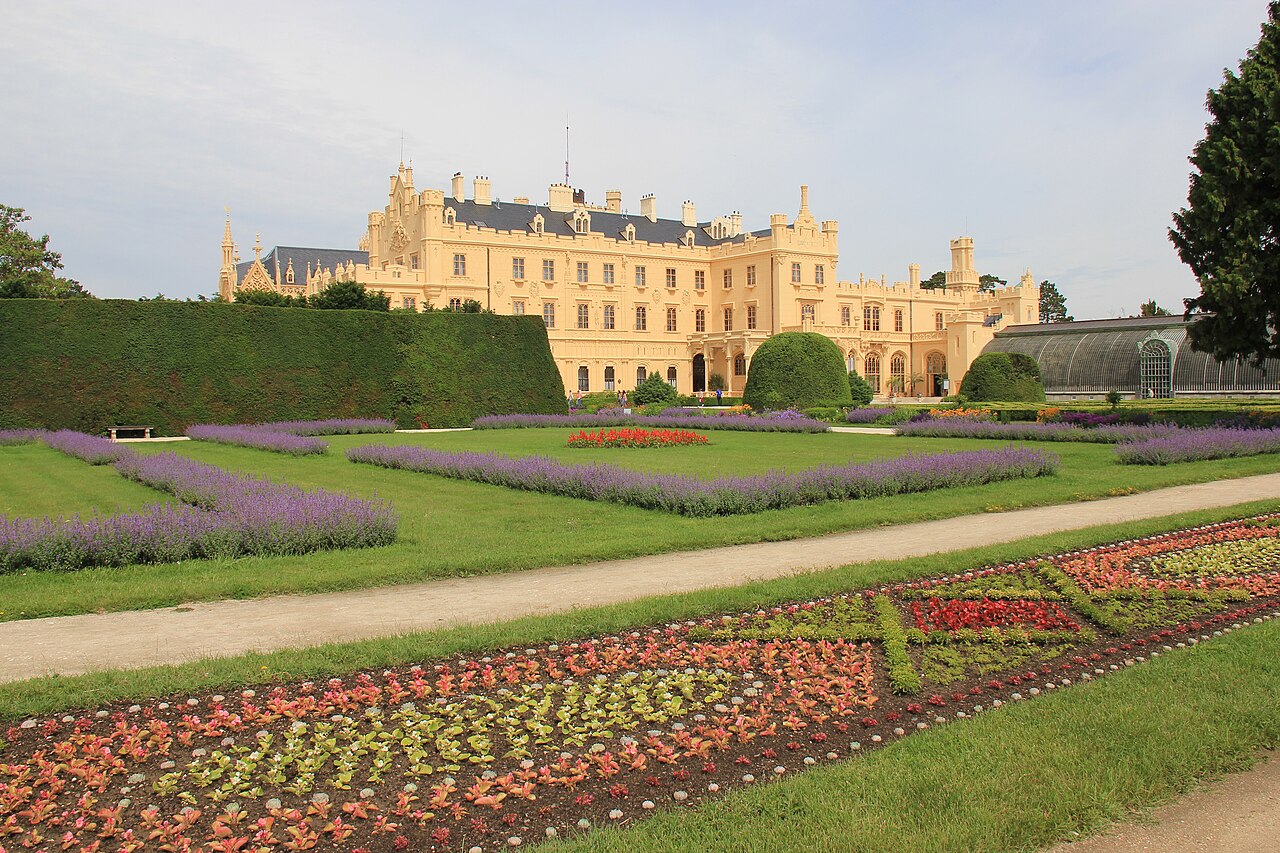
Today Lednice is open to visitors as a museum and a cultural landscape, offering the chance to explore the fairy-tale chateau, its lavish interiors, the magnificent palm house, and the vast romantic park with its minaret and follies. Its combination of beauty, scale, and significance makes it one of the most rewarding destinations in the Czech Republic.
The estate lies in the south of the country near the Austrian border, reached by road and often visited as part of a tour of the region, which includes the neighboring estate and the wider cultural landscape. Its many attractions ensure a varied and engaging visit, with much to interest lovers of architecture, gardens, and the picturesque.
Because the chateau offers guided tours and the park is vast, it is worth checking current arrangements and allowing plenty of time to explore both the building and the grounds. The park alone can fill a day, and the combination of chateau, greenhouse, and monuments rewards an unhurried visit.
You will find Lednice in southern Moravia in the Czech Republic; see the map below to help plan your route: see the map below. Whether you come for the fairy-tale chateau, the lavish interiors, the magnificent palm house, or the vast romantic park with its exotic minaret, Lednice offers one of the most enchanting and beautiful palace experiences in all of central Europe.
Whatever the season, the estate offers its own rewards, from spring blossom and summer greenery to the colours of autumn and the quiet beauty of winter. Many visitors return again and again, finding new delights in the vast park and its monuments each time.
For travellers exploring southern Moravia, Lednice is an essential destination, combining architectural fantasy, horticultural splendor, and the romance of a great designed landscape. A visit lingers in the memory as one of the most beautiful experiences the region has to offer.
View the location on Google Maps
Palaces Nearby
If you are exploring the grand palaces and chateaux of the Czech lands, these two pair naturally with a visit here:
You May Like
Konopiste the Bohemian Castle of a Doomed Archduke


2 thoughts on “Lednice Chateau, the Fairy-Tale Palace and Its Vast Romantic Landscape”