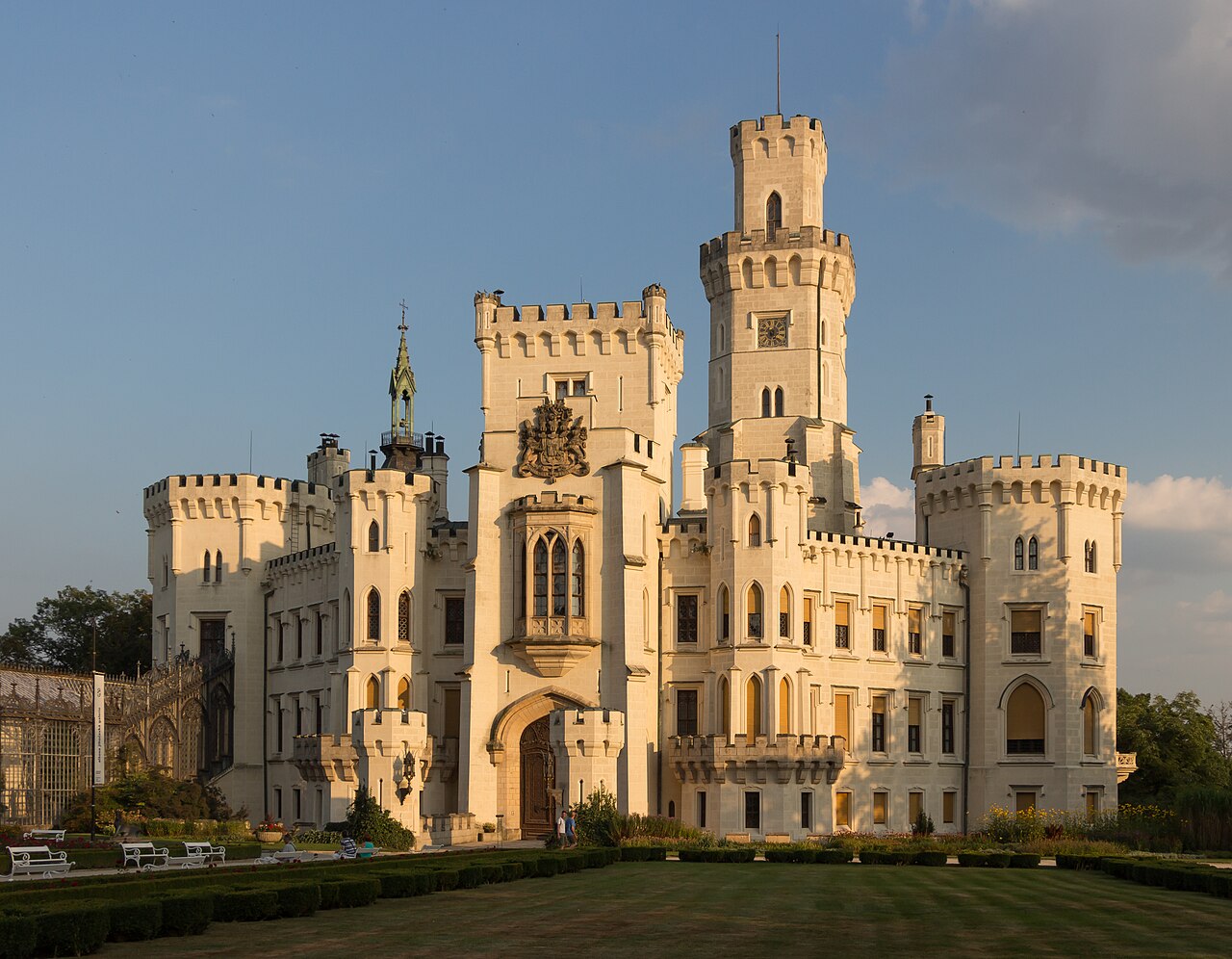
Rising white and gleaming above the River Vltava in South Bohemia stands what many consider the most beautiful castle in the Czech Republic, Hluboka. With its dazzling white walls, soaring towers, and romantic battlements, it looks like a vision from a fairy tale, and indeed it was consciously modeled on one of the most famous royal castles in the world.
Hluboka was transformed in the nineteenth century by the Schwarzenberg family, one of the wealthiest and most powerful noble houses of central Europe, who rebuilt a medieval castle into a romantic neo-Gothic palace inspired by Windsor Castle. The result is one of the loveliest and most photographed castles in the region, surrounded by a beautiful English park.
This is the second of three articles on the grand palaces and chateaux of the Czech lands, following Lednice. Where Lednice enchants with its vast landscape, Hluboka dazzles with the romantic beauty of the castle itself. By the end you will understand why this gleaming white palace above the Vltava is regarded as one of the most beautiful castles in all of central Europe.
In This Article
- Arriving at the White Castle
- Medieval Beginnings
- The Powerful Schwarzenberg Family
- A Castle Inspired by Windsor
- The Dazzling White Palace
- The Lavish Interiors
- The Hunting Hall and Armory
- Art and the South Bohemian Gallery
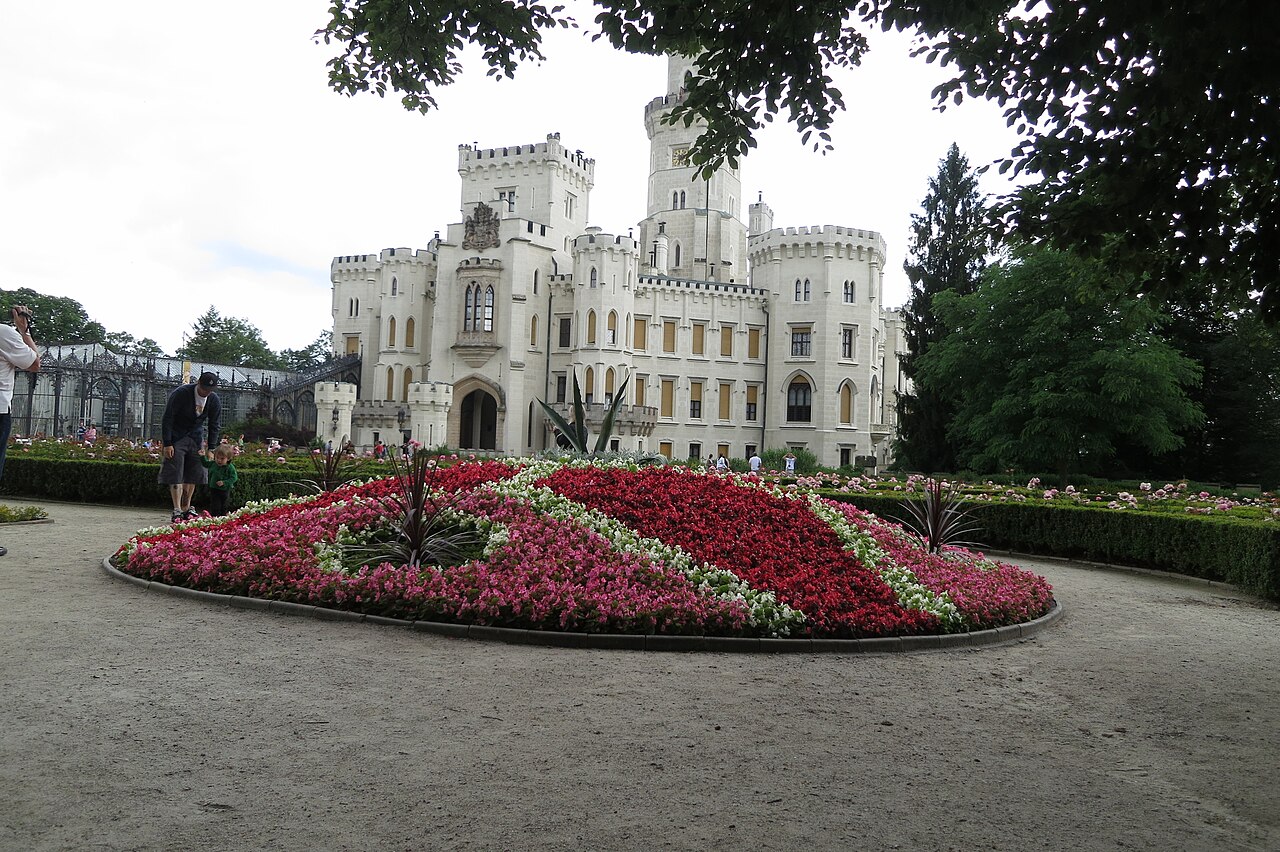
- The English Park
- The Glasshouse and Gardens
- A Castle of Fame and Film
- Hluboka on Film
- Visiting Hluboka Today
Arriving at the White Castle

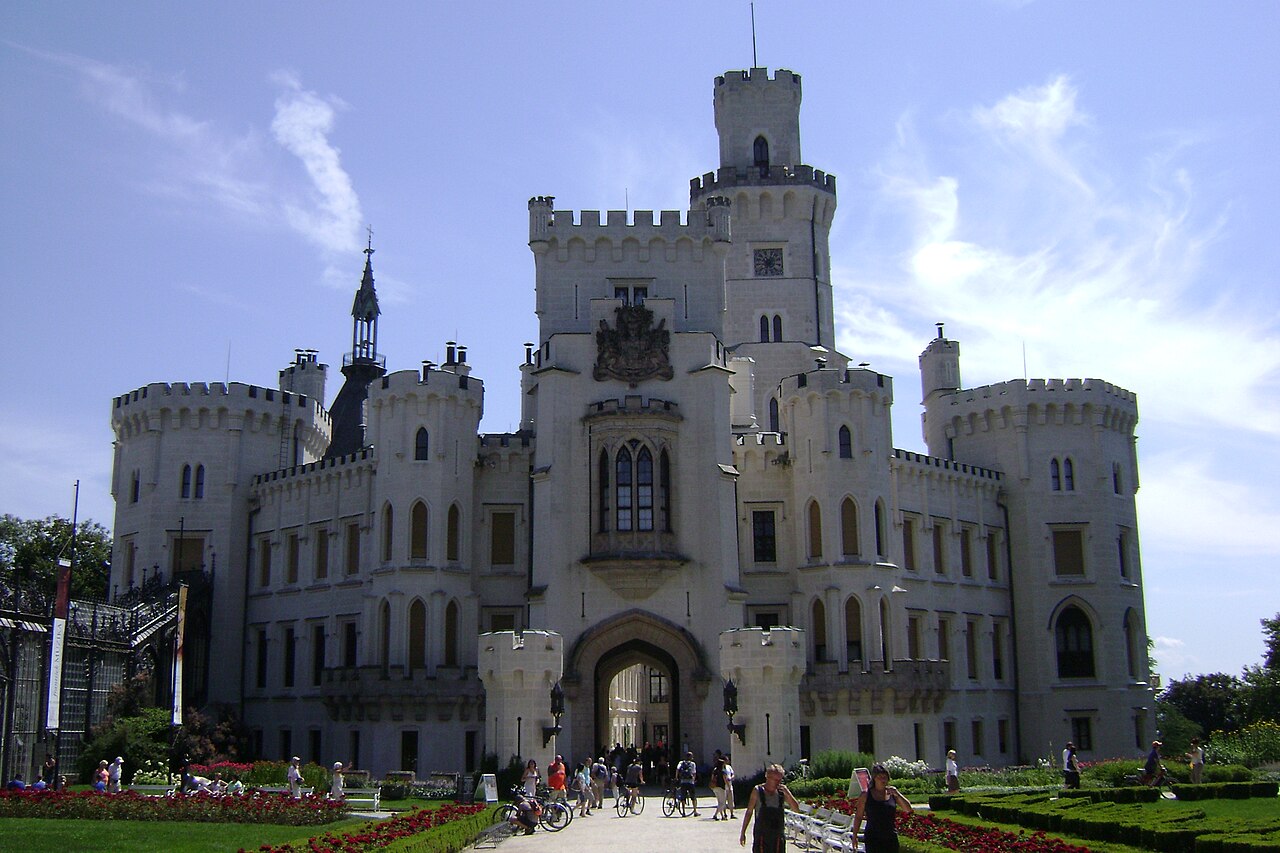
The first sight of Hluboka is breathtaking, a gleaming white castle of towers, pinnacles, and battlements rising above the trees on a hill overlooking the river. Its romantic silhouette and dazzling white walls make an immediate impression, announcing one of the most beautiful castles in the country.
The castle’s position, high above the Vltava amid wooded parkland, enhances its romantic appearance, giving it a commanding and picturesque setting. The combination of the fairy-tale architecture and the beautiful landscape creates a scene of exceptional charm, drawing visitors from near and far.
The neo-Gothic style, with its intricate detailing and romantic forms, gives Hluboka its storybook character, more a palace of fantasy than a stern medieval fortress. The white walls, unusual among castles, add to the effect, making Hluboka instantly recognizable and endlessly photogenic.
As you arrive, take in the gleaming white castle and its beautiful setting above the river. Understanding Hluboka as a medieval castle transformed into a romantic neo-Gothic palace by a great noble family prepares you for the lavish interiors and the beauty of the park that surround it.
There is a reason Hluboka appears on so many lists of the most beautiful castles in Europe. Its combination of dazzling white walls, romantic towers, and a commanding position above the river creates a scene of storybook perfection that few castles can rival, and the first sight of it is one visitors never forget.
The castle rewards viewing from several angles, whether from the park below, the courtyards within, or the surrounding countryside, each offering a different and memorable impression. Photographers in particular find endless inspiration in the white towers against the changing sky.
Medieval Beginnings
Hluboka has a long history reaching back to the Middle Ages, when a castle was first established on this commanding site above the river. For centuries the medieval castle guarded its position, passing through various owners and undergoing changes as the fortunes of the region shifted.
The original castle was a very different building from the white palace of today, a medieval fortress suited to the needs of its age. Over the centuries it was altered and rebuilt in various styles, reflecting the changing tastes and circumstances of its owners, before its final dramatic transformation.
The long history of the site connects Hluboka to the deep past of Bohemia, a region with a rich medieval heritage. The castle’s commanding position above the river made it valuable throughout its history, and the site has been continuously occupied and rebuilt for many centuries.
Understanding these medieval origins helps explain the castle’s situation and significance. Hluboka began as a fortress exploiting a strong natural position, and this long history forms the foundation for its later transformation into one of the most beautiful palaces in the country.
The site changed hands many times over the centuries, reflecting the turbulent history of Bohemia, before coming to the family who would transform it. Each era left some mark on the castle, but all would be subsumed into the grand nineteenth-century vision that gave Hluboka its present form.
Traces of the castle’s earlier incarnations can still be detected by the attentive visitor, hints of the long history beneath the romantic surface. This depth of history adds to the fascination of Hluboka, a castle whose storybook appearance rests on centuries of real and eventful past.
By the time the Schwarzenbergs undertook their great rebuilding, the castle had already seen many centuries of history, which they honoured even as they transformed it. The romantic palace of today is thus the latest chapter in a very long story, built upon foundations laid in the distant past.
The Powerful Schwarzenberg Family
For much of its later history Hluboka belonged to the Schwarzenberg family, one of the wealthiest and most influential noble houses of central Europe. Over generations the family held vast estates in the region, and Hluboka was among their most beloved and important residences.
The Schwarzenbergs were immensely rich and powerful, playing leading roles in the politics and society of the empire. Their wealth allowed them to maintain grand residences and to undertake ambitious building projects, and it was they who transformed Hluboka into the romantic palace it became.
The family’s long ownership gave the castle continuity and allowed successive generations to shape it according to their tastes and ambitions. Their resources and vision made possible the great nineteenth-century transformation that created the Hluboka of today, one of the finest achievements of the romantic age.
Understanding the Schwarzenberg family is key to appreciating the castle. Hluboka in its present form is their creation, a residence shaped by their wealth and taste, and the castle stands as a monument to one of the great noble families of central Europe and their love of romantic beauty.
The wealth of the Schwarzenberg family was based on their vast estates, forests, and enterprises across the region, making them one of the richest houses in the empire. This fortune funded the great rebuilding of Hluboka and the lavish life led within it, as well as their patronage of the arts.
The family remained prominent in European affairs over the centuries, and their name is still well known today. Their long association with Hluboka, and the beauty they created there, forms one of the most admired legacies of the great noble houses of central Europe.
A Castle Inspired by Windsor

The great transformation of Hluboka came in the nineteenth century, when the Schwarzenberg family rebuilt the castle in the romantic neo-Gothic style, consciously modeling it on one of the most famous royal castles in the world. The result was a palace of towers and battlements evoking the romance of the medieval past.
The inspiration drawn from a great royal castle reflected the family’s admiration for its architecture and, perhaps, their desire to associate themselves with its royal grandeur. The architects studied the model closely, adapting its forms to create a residence of similar romantic character on their Bohemian estate.
This rebuilding transformed Hluboka from a castle of earlier styles into a unified romantic palace, giving it the fairy-tale appearance that makes it so beloved today. The neo-Gothic style, with its pinnacles, tracery, and battlements, perfectly suited the romantic vision of the family.
The decision to model the castle on a famous royal residence gives Hluboka a special interest, connecting it to the wider European fashion for romantic medievalism. The result is one of the finest examples of the style in the region, a palace that captures the romance and grandeur its creators sought.
The rebuilding was a major undertaking, carried out over years and involving the finest craftsmen and materials. It reflected the romantic spirit of the age, which looked to the medieval past for inspiration and sought to recreate its beauty in modern, comfortable form.
The transformation reflected not only the family’s wealth but their cultural aspirations, associating their seat with the grandeur of a great royal residence. In rebuilding Hluboka in this romantic style, they created a lasting symbol of their status and their devotion to beauty.
The success of the rebuilding is evident in the harmony of the finished castle, which reads as a unified romantic vision rather than a patchwork of periods. This coherence is part of what makes Hluboka so satisfying, a complete realization of the fairy-tale ideal.
The Dazzling White Palace
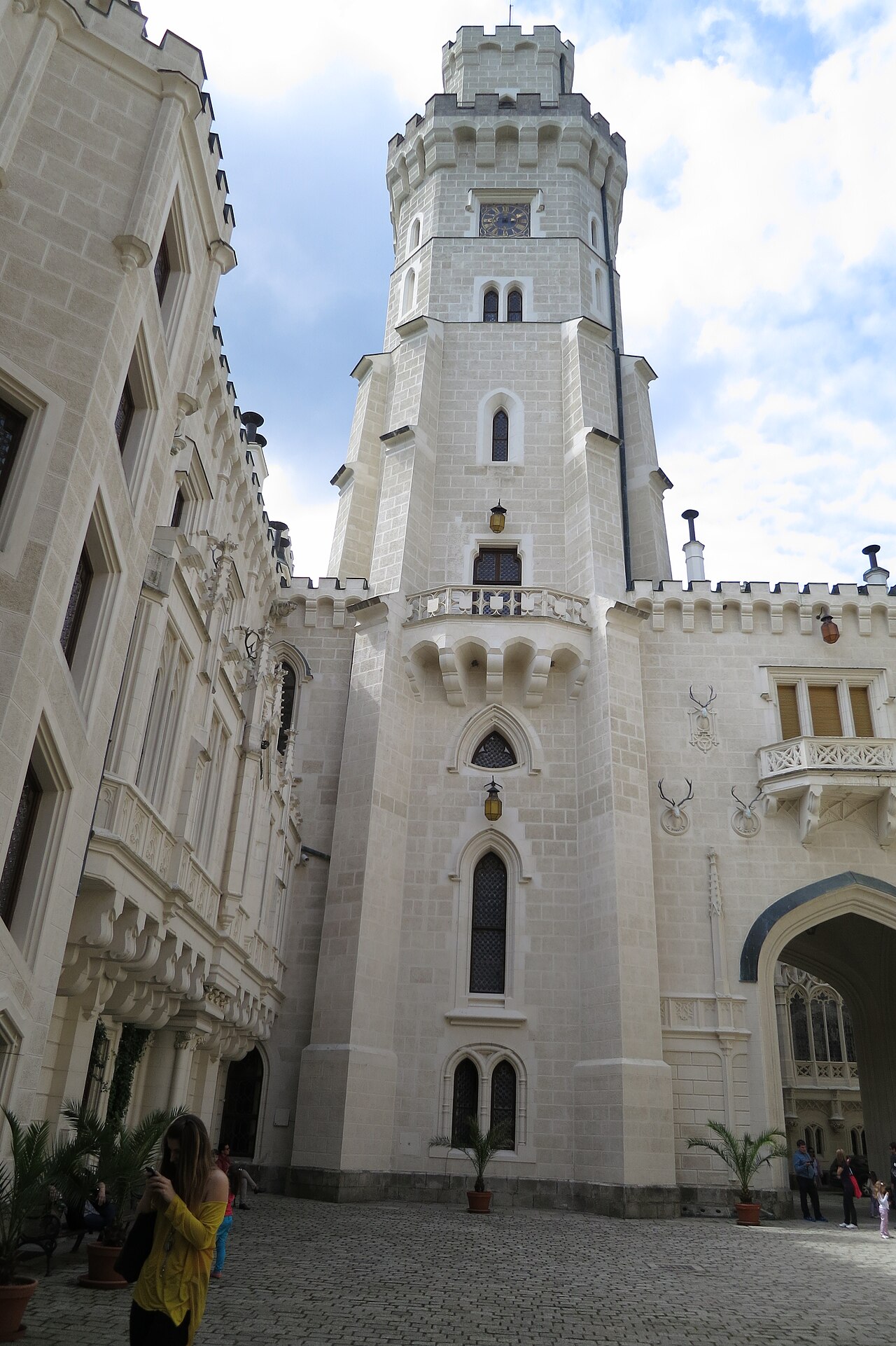
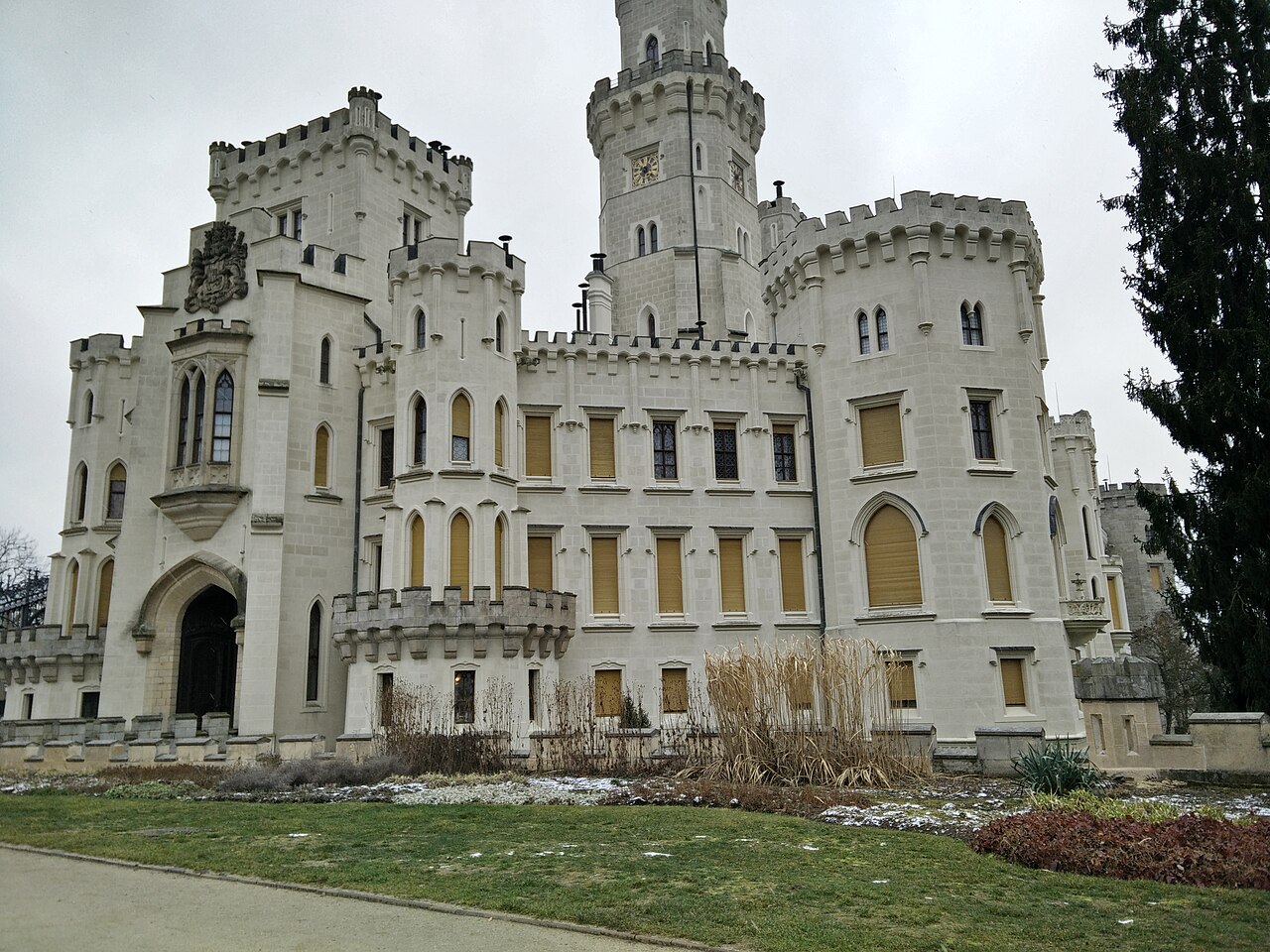
One of the most distinctive features of Hluboka is its brilliant white color, unusual among castles and a key part of its beauty. The white walls, set against the green of the surrounding park and the blue of the sky, give the castle a luminous, almost magical quality that sets it apart.
The whiteness of the castle enhances its fairy-tale appearance, making its towers and battlements seem all the more romantic and otherworldly. This striking color, combined with the intricate neo-Gothic detailing, creates a palace of exceptional beauty, one of the most photogenic in the country.
The white walls catch the light beautifully, and the castle takes on different moods depending on the time of day and the season, from brilliant in bright sunlight to softly glowing at dusk. This changing beauty is part of the castle’s appeal, rewarding visitors who see it in different conditions.
For visitors, the dazzling white of Hluboka is one of its defining characteristics, contributing greatly to its reputation as the most beautiful castle in the country. The combination of the romantic architecture and the luminous white walls makes it an unforgettable sight.
The whiteness is maintained through regular care, a deliberate choice that preserves the castle’s distinctive and beloved appearance. Against the changing backdrop of the seasons, from summer green to winter snow, the white walls remain a constant, luminous presence above the river.
The choice to render the castle in white was itself a romantic gesture, setting it apart from the grey stone of most fortresses and giving it an almost ethereal quality. It is this luminous whiteness, more than any single feature, that has made Hluboka so beloved and so widely admired.
The Lavish Interiors

Inside, Hluboka reveals interiors as lavish and romantic as its exterior, richly decorated in the neo-Gothic style with fine carved woodwork, elaborate ceilings, and beautiful furnishings. The rooms reflect the wealth and taste of the Schwarzenberg family and the romantic vision that shaped the castle.
Among the highlights are the richly carved wooden interiors, including a magnificent library and grand halls, which display craftsmanship of exceptional quality. The neo-Gothic decoration continues the romantic medievalism of the exterior, creating interiors of fantasy and luxury.
The rooms were furnished for the comfortable and elegant life of a great noble family, filled with fine objects, paintings, and treasures. The interiors turned the castle into a complete work of art, matching the beauty of the architecture with decoration of equal richness.
Walking through the interiors, you gain a sense of the romantic and luxurious world of the Schwarzenbergs at Hluboka. The lavish rooms, especially the carved woodwork and the grand library, remain among the chief attractions of the castle and a testament to the craftsmanship lavished upon it.
The grand library, with its carved wooden shelves and thousands of volumes, is among the most admired rooms, a space of beauty and learning at the heart of the castle. Such rooms reflected the cultivated interests of the family as well as their wealth, combining luxury with a devotion to books and knowledge.
The craftsmanship extends throughout the castle, from paneling and ceilings to doors and furnishings, reflecting the insistence on quality that marked the whole rebuilding. The interiors reward slow and careful looking, revealing new details of beauty and skill at every turn.
The Hunting Hall and Armory
Among the most striking interiors is the hunting hall, decorated with trophies and antlers that reflect the family’s passion for the chase, a traditional pursuit of the aristocracy. This dramatic space, lined with the spoils of the hunt, evokes the sporting life of the great noble families.
Hunting was a central activity of aristocratic life, both a sport and a social occasion, and the hunting hall celebrated this tradition. The display of trophies was a mark of status and prowess, and the hall provided a dramatic setting for the social life connected with the hunt.
The castle also houses an armory and collections of weapons and related objects, reflecting the martial traditions and interests of the family. Together with the hunting hall, these spaces evoke the sporting and chivalric side of aristocratic life, complementing the refined luxury of the state rooms.
For visitors, the hunting hall and armory add a distinctive dimension to the castle, a reminder of the pursuits and traditions of the aristocracy. They are among the most memorable interiors of Hluboka, evoking a vanished world of hunting, sport, and noble display.
The scale of the trophy displays is remarkable, covering the walls with antlers and reflecting generations of the family’s passion for hunting across their vast forested estates. The hall is one of the most atmospheric spaces in the castle, evoking the sporting traditions of the aristocracy.
Beyond the hunting hall, the castle’s collections of arms and armor further evoke the martial and sporting traditions of the aristocracy. Together these spaces present a vivid picture of a way of life centered on the hunt and the chase, deeply rooted in the culture of the nobility.
For visitors, these martial and sporting spaces offer a vivid contrast to the refined luxury elsewhere in the castle, rounding out the picture of aristocratic life in all its variety.
Art and the South Bohemian Gallery
Hluboka is also associated with art, with the castle and its grounds housing fine collections. A notable gallery of South Bohemian art is connected with the estate, displaying paintings and sculpture and adding a cultural dimension to a visit to the castle.
The family were patrons and collectors, and the castle contained art reflecting their taste and wealth. The connection with a regional art gallery has enhanced the cultural role of the estate, making it a center for the display and appreciation of art as well as a historic residence.
The collections add to the richness of a visit, offering treasures to admire alongside the lavish interiors and the beauty of the castle itself. They reflect the role of Hluboka as a center of culture as well as a grand residence, a place where beauty was cherished and displayed.
For visitors with an interest in art, the collections provide another reason to visit, complementing the romantic architecture and interiors. They enrich the experience of Hluboka, adding cultural depth to the beauty of the castle and its setting.
The quality and range of the art reflect the cultivated taste of the family and their role as patrons over the generations. Displayed within the romantic setting of the castle and its grounds, the collections add a further layer of cultural richness to an already rewarding visit.
The presence of a significant art collection connected with the castle underscores its role as a cultural center, drawing visitors interested in painting and sculpture as well as architecture. It adds yet another dimension to a destination already rich in beauty and interest.
The English Park

Hluboka is surrounded by a beautiful English-style landscape park, laid out to complement the romantic castle. With winding paths, lawns, trees, and lovely views, the park provides a fitting setting for the palace and a place for pleasant walks and the enjoyment of nature.
The park was designed in the naturalistic style fashionable in the nineteenth century, creating a romantic landscape around the castle. Its design enhanced the beauty of the setting and provided the family and their guests with grounds for recreation and the appreciation of the picturesque.
The relationship between the castle and its park is central to the beauty of Hluboka, the gleaming white palace rising from its green surroundings. The park frames the castle and offers changing views of it from different angles, adding to the pleasure of a visit.
Today the park remains a beautiful setting for the castle and a lovely place to walk, enhancing the experience of a visit. It extends the romance of the palace into the landscape and provides a green and tranquil complement to the beauty of the castle itself.
The park was designed to offer a sequence of beautiful views of the castle from different vantage points, each framing the white palace amid the greenery. Walking its paths, visitors discover ever-changing perspectives on the romantic architecture, a carefully composed experience of beauty.
In every season the park offers its own beauty, from spring blossom and summer greenery to autumn colours and winter snow against the white walls. This changing beauty draws visitors back again and again, each visit revealing a different mood of the romantic castle and its grounds.
The Glasshouse and Gardens

Among the features of the estate is a historic glasshouse, where exotic plants were sheltered, reflecting the nineteenth-century love of botany and the exotic. Together with the formal gardens near the castle, it added to the beauty and completeness of the grounds.
The glasshouse allowed the family to enjoy exotic plants throughout the year, a luxury typical of great estates of the era. Its elegant structure complemented the romantic architecture of the castle, adding another dimension to the designed landscape of the grounds.
The gardens, combining formal elements near the castle with the naturalistic park beyond, provided a varied and beautiful environment. They reflected the tastes of the age and the resources of the family, contributing to the overall splendor of the estate.
For visitors, the glasshouse and gardens add to the pleasures of a visit, offering beauty and interest beyond the castle itself. They help complete the picture of Hluboka as a complete aristocratic estate, combining romantic architecture with the beauty of designed landscape and horticulture.
The combination of formal gardens, glasshouse, and naturalistic park created a varied and beautiful landscape around the castle, reflecting the full range of nineteenth-century garden design. Together they formed a fitting setting for one of the most beautiful palaces in the region.
The gardens, carefully maintained to this day, continue to delight visitors with their beauty and their harmony with the castle. They are an integral part of the Hluboka experience, offering tranquil spaces to enjoy the romantic setting of the white palace.
A Castle of Fame and Film

The romantic beauty of Hluboka has made it famous far beyond the region, and its fairy-tale appearance has made it a popular setting for films and photography. Its dazzling white towers and picturesque setting have attracted filmmakers seeking a storybook castle, adding to its wide renown.
The castle’s photogenic qualities have made it one of the most recognized and admired in the country, appearing in countless images and productions. Its beauty has given it a cultural fame that draws visitors eager to see the famous white castle for themselves.
This fame reflects the exceptional beauty of Hluboka, which captures the romantic ideal of a fairy-tale castle. Its appearance in films and photographs has spread its reputation widely, making it one of the best-known castles in central Europe.
For visitors, the castle’s fame adds to the appeal of a visit, the chance to see in person a place familiar from images and films. It confirms Hluboka’s status as one of the most beautiful and beloved castles in the country, a romantic vision made real.
Its appearances on screen have introduced the castle to audiences who may never have heard of it otherwise, spreading its fame internationally. For many visitors, seeing the famous white castle in person fulfills an image long admired from afar.
The castle’s beauty has also made it a popular venue for events and celebrations, adding to its living role in the cultural life of the region. Its fame as a setting for romance and spectacle continues to grow, drawing ever more admirers to its gates.
Hluboka on Film

Because Hluboka is defined by its romantic beauty, a video walkthrough is a fine way to appreciate it. On film you can take in the gleaming white castle and its towers, move through the lavish interiors, admire the hunting hall and library, and see the beautiful park that surrounds the palace.
As you watch, notice the fairy-tale character of the architecture and the striking white walls that make Hluboka so distinctive. Seeing the castle in motion conveys its romantic beauty in a way that still images cannot fully capture, from the exterior to the richly decorated interiors.
Video also helps convey the relationship between the castle and its setting above the river and amid the park. Following a camera through the castle and grounds, you gain a vivid sense of why Hluboka is regarded as the most beautiful castle in the Czech Republic.
Visiting Hluboka Today

Today Hluboka Castle is open to visitors as a museum, offering the chance to explore its lavish interiors, its hunting hall and library, its art collections, and its beautiful park. Its romantic beauty and its reputation as the loveliest castle in the country make it one of the most popular destinations in the Czech Republic.
The castle lies in South Bohemia, reached by road and often visited as part of a tour of the region, which is rich in castles and historic towns. Its fairy-tale beauty and varied attractions ensure a rewarding visit, with much to interest lovers of architecture, art, and the romantic.
Because the castle offers guided tours of its interiors and the park is open for exploration, it is worth checking current arrangements and allowing time to enjoy both. The castle and its setting reward an unhurried visit, especially for those who wish to photograph the famous white palace.
You will find Hluboka Castle in South Bohemia in the Czech Republic; see the map below to help plan your route: see the map below. Whether you come for the dazzling white architecture, the lavish interiors, the hunting hall, or the beauty of the park, Hluboka offers one of the most romantic and beautiful castle experiences in all of central Europe.
For travellers exploring South Bohemia, a region rich in castles, historic towns, and natural beauty, Hluboka is an essential and unforgettable destination. Its combination of romantic architecture, lavish interiors, and beautiful setting makes it a highlight of any visit to the Czech lands.
View the location on Google Maps
Palaces Nearby
If you are exploring the grand palaces and chateaux of the Czech lands, these two pair naturally with a visit here:
You May Like
Konopiste the Bohemian Castle of a Doomed Archduke


One thought on “Hluboka Castle, the Gleaming White Palace Inspired by Windsor”