Köthen is a small town in the flat farmland of Anhalt, between Dessau and Halle, with a market square, a brewery and a palace that most travellers on the Berlin to Leipzig line never notice. Yet for six years, from 1717 to 1723, this palace was the workplace of Johann Sebastian Bach. He came here as Kapellmeister to a young prince who loved music more than almost anything, and in these rooms and this town he wrote the Brandenburg Concertos, the first book of the Well-Tempered Clavier, the sonatas and partitas for solo violin and, most probably, the cello suites. If you care about music, Köthen is a place of pilgrimage, and the palace knows it.
Bach is not the only reason to come. A century earlier the palace had been the seat of Prince Ludwig I, who founded here the Fruitbearing Society, the first German language academy, in 1617. A century later the physician Samuel Hahnemann, inventor of homeopathy, lived and practised in the town under the prince’s protection. The palace itself is a layered building, Renaissance at its core, Baroque in its best wing, with a mirror hall where Bach’s music is still played, a fine natural history museum and a Bach exhibition that takes the composer’s years here seriously.
Let me take you through the courtyard and the halls, with the prince, the composer and the doctor in order. The contents are below.
In This Article
- Anhalt, a Land of Small Princes
- The Renaissance Palace of the Sixteenth Century
- Prince Ludwig and the Fruitbearing Society
- Prince Leopold, the Music-Loving Calvinist
- Bach Arrives: 1717
- The Brandenburg Concertos and the Court Orchestra
- The Mirror Hall
- Why Bach Left
- Ludwigsbau, Ferdinandsbau and the Baroque Wing
- Hahnemann and the Birth of Homeopathy
- Naumann and the Birds of Central Europe
- From Ducal Seat to Museum
- The Bach Festival and the Palace Today
- Kothen on Video
- Visiting Kothen Palace Today
- Palaces Nearby
Anhalt, a Land of Small Princes
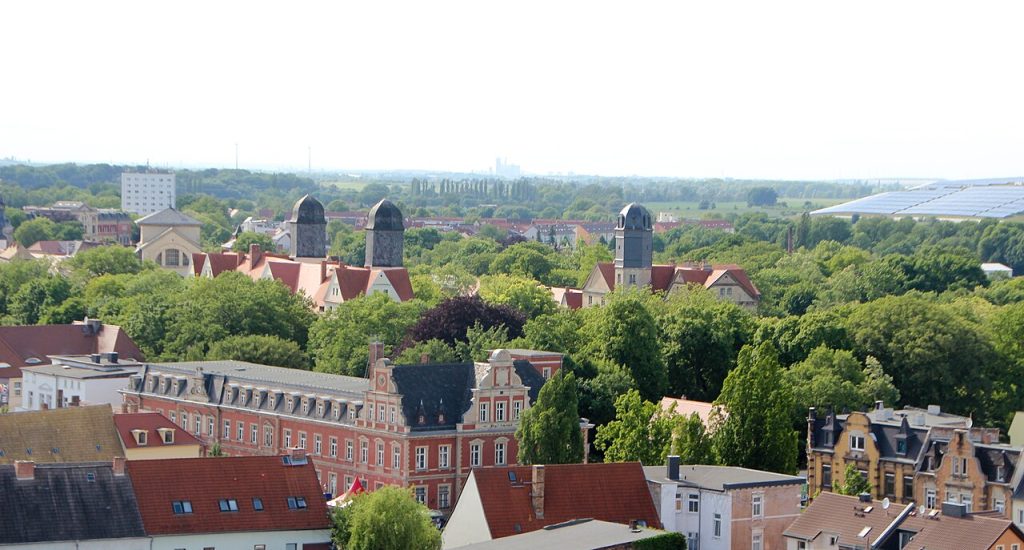
The House of Anhalt, one of the oldest princely families in Germany, descended from the mediaeval Ascanians, and it had the Ascanian habit of dividing its lands among sons. From the seventeenth century there were four or five Anhalt principalities side by side, at Dessau, Bernburg, Zerbst, Köthen and for a time Plötzkau, each with its own court, chapel and orchestra, each too small to matter politically and each capable, now and then, of something remarkable. Dessau produced the Garden Realm; Zerbst produced Catherine the Great; Köthen produced six years of Bach.
Now, stop here in the palace courtyard and take in the scale. This was a court of a few hundred people in a town of a few thousand, with an income that would not have paid for one wing of Dresden. The music that came out of it is the best evidence that genius does not require a large budget, only a patron who listens.
The Renaissance Palace of the Sixteenth Century
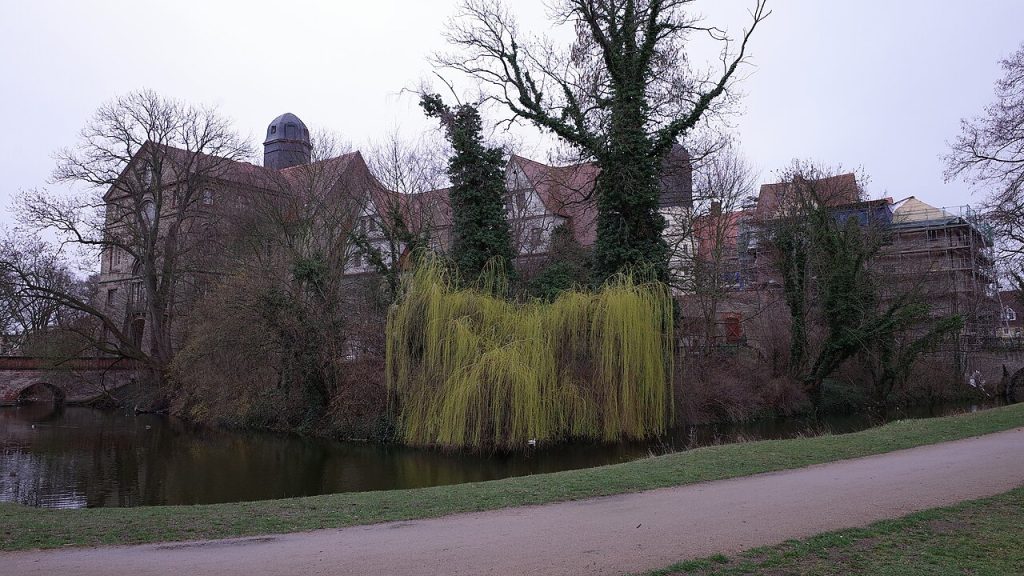
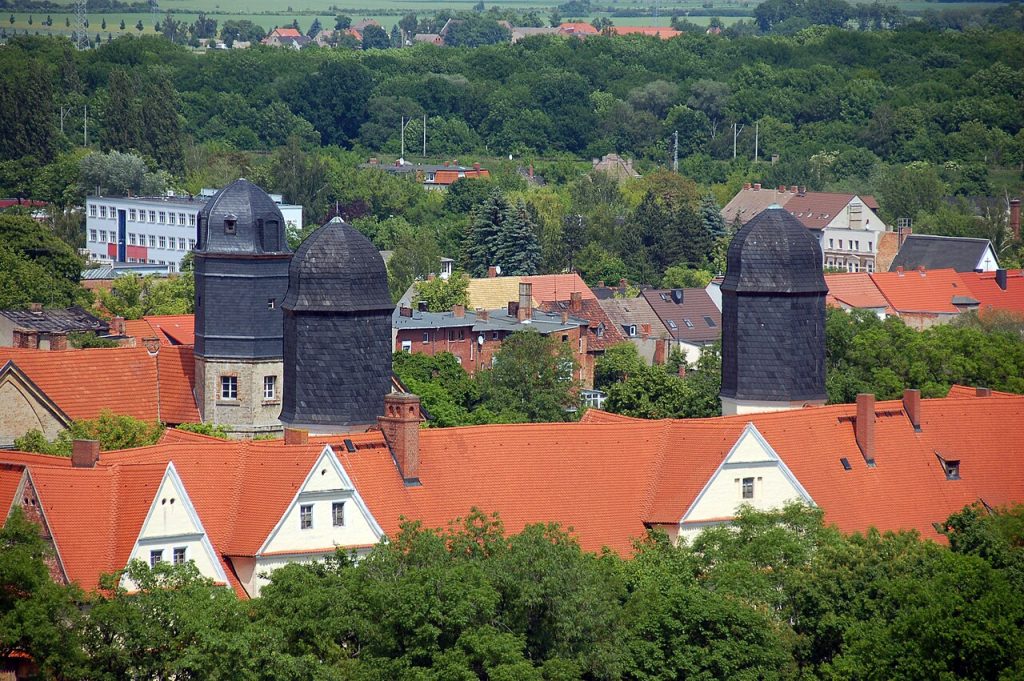
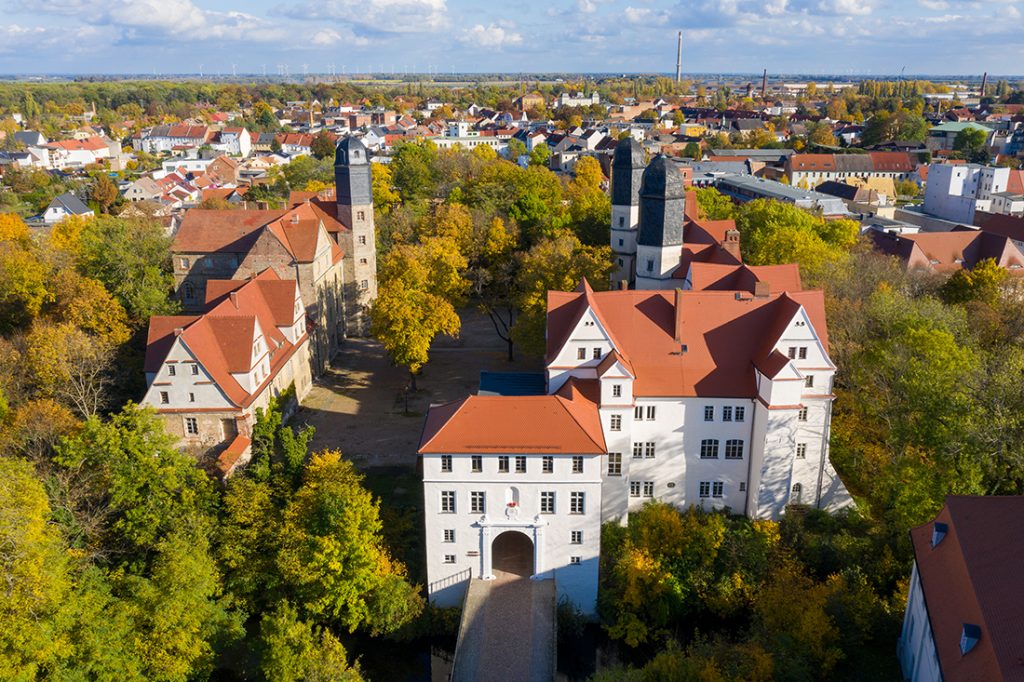
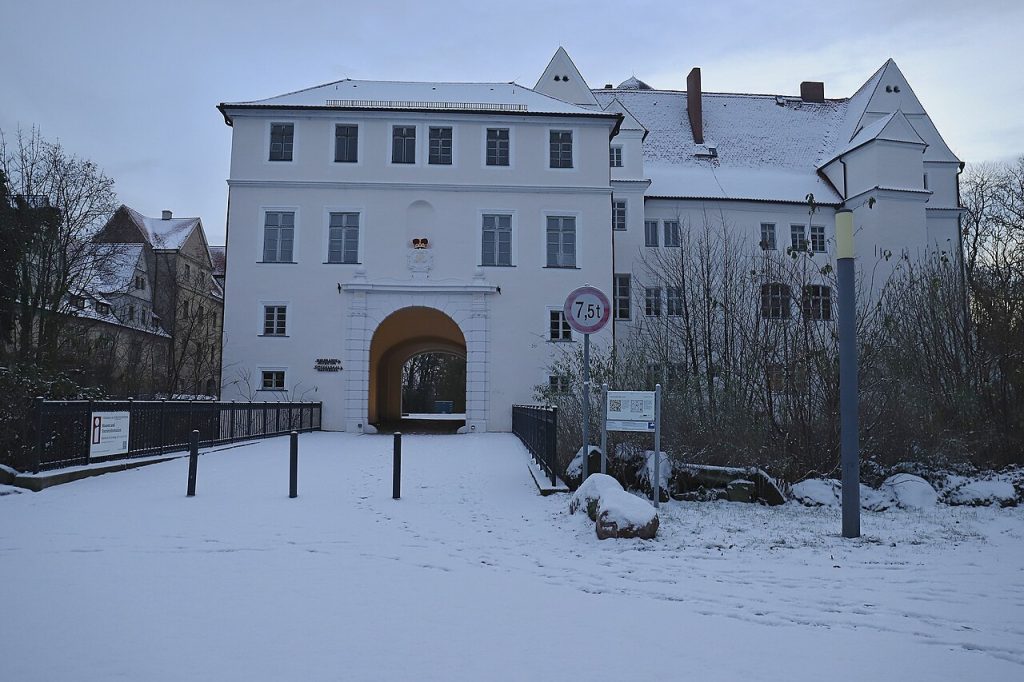
The palace stands on the site of a mediaeval castle of the Anhalt princes, and its oldest surviving parts date from a rebuilding in the second half of the sixteenth century, when Köthen became a permanent residence. The Renaissance builders left a long wing with stepped gables, a stair tower and vaulted ground-floor rooms, and the courtyard they enclosed is still the heart of the complex. A fire in 1599 and the Thirty Years’ War, in which Anhalt suffered badly, left the palace damaged and half empty for decades.
Walk the courtyard and look for the Renaissance details: the gables, the carved doorframes, the tower with its spiral stair. They are modest compared with the Baroque wing across the yard, but they are the bones of the building, and Bach knew them well.
Prince Ludwig and the Fruitbearing Society
Here is Köthen’s first claim to fame. In 1617 Prince Ludwig I of Anhalt-Köthen, a widely travelled man who had been a member of an Italian academy in Florence, founded with a group of noblemen the Fruchtbringende Gesellschaft, the Fruitbearing Society, dedicated to cultivating the German language as a vehicle for literature and learning at a time when Latin and French dominated. It was the first German language society, the ancestor of every later academy, and its emblem was a palm tree.
The society met at Köthen, published grammars and translations and enrolled hundreds of members across the German lands over the next century. Ludwig also ran a model school on the principles of the reformer Wolfgang Ratke and built up a library and a printing press. The palace has a room devoted to the society, and the palm tree appears in the decoration of the Baroque wing.
Prince Leopold, the Music-Loving Calvinist
Prince Leopold came of age in 1715 at twenty-one, a Calvinist prince who had studied in Berlin and travelled in Italy and who played the violin, the viola da gamba and the harpsichord well enough to join his own orchestra. He inherited a small, debt-laden state and spent a disproportionate share of its revenue on music, hiring players from the dissolved court orchestra of Berlin and building up an ensemble of about eighteen musicians that was among the best in Germany.
What he needed was a director worthy of it. In 1717 he found one in the service of the Duke of Weimar, a thirty-two-year-old organist and composer with a reputation for brilliance and for quarrelling with his employers. Leopold offered him the title of Kapellmeister, a salary double what Weimar paid and the freedom to write instrumental music for a prince who would actually listen.
Bach Arrives: 1717
Bach accepted, and the Duke of Weimar responded by putting him in prison for a month for seeking to leave without permission. Released in December 1717, he arrived at Köthen with his wife Maria Barbara and their children and took up a post that was, by his own later account, the happiest of his career. Because the court was Calvinist, there was little church music to write; Bach’s job was to compose and perform instrumental and chamber music for the prince’s pleasure, and he did so with extraordinary productivity.
The family lived in a house in the town, since demolished, and Bach worked in the palace, where the orchestra rehearsed and performed. Now, stop here in the courtyard and imagine the sound: a small orchestra in a mirror-lined hall, the prince playing among them, and the Kapellmeister at the harpsichord trying out music that nobody had heard before.
The Brandenburg Concertos and the Court Orchestra
The works of the Köthen years are a roll-call of masterpieces. The six concertos for various instruments, written for the Köthen players and dedicated in 1721 to the Margrave of Brandenburg in the hope of a post that never came, are the Brandenburg Concertos. The first book of the Well-Tempered Clavier, dated 1722, was compiled here. The sonatas and partitas for solo violin, the six cello suites, the orchestral suites, the violin concertos and much of the keyboard music for Bach’s children and pupils all belong to Köthen.
The palace’s Bach exhibition sets this music in its context, with the court’s instrument inventories, the pay lists naming the players and facsimiles of the manuscripts. Look for the entry recording Bach’s salary and for the list of musicians, several of whom were virtuosi on instruments that the concertos show off. The exhibition also tells the sad story of Maria Barbara Bach, who died in 1720 while her husband was away with the prince at Carlsbad, and of his second marriage in 1721 to the singer Anna Magdalena, a member of the court.
The Mirror Hall
The Spiegelsaal, the Mirror Hall, in the Baroque wing is the room every visitor wants to see. A long hall with mirrors and gilded stucco, it was the court’s festival and concert room in Leopold’s time and is the space most closely associated with Bach’s performances, though scholars note that some of the music was played in smaller rooms and in the prince’s apartments. It was redecorated in the classical taste around 1820, so the mirrors and stucco you see are later than Bach, but the proportions and the acoustic are those he knew.
The hall is still used for concerts, above all during the Köthen Bach Festival, and hearing a Brandenburg Concerto here with the court’s own history on the walls is an experience that larger concert halls cannot offer. Now, stop here in the centre of the hall and clap once: the acoustic is bright and quick, made for small ensembles.
Why Bach Left
The golden years ended for ordinary reasons. In 1721 Prince Leopold married a princess of Anhalt-Bernburg whom Bach later described as an amusa, a woman without interest in music, and the court’s enthusiasm cooled. The prince’s finances, strained by Prussian demands for troops, forced cuts to the orchestra. Bach, with growing sons to educate, looked for a post in a university town, and in 1723 he accepted the cantorship of St Thomas in Leipzig, where he spent the rest of his life.
He kept the title of Köthen Kapellmeister by courtesy, returned to perform for the prince and, when Leopold died in 1728, came back to direct the funeral music. The affection seems to have been real on both sides, and Köthen was, by Bach’s own account, the place where he had been most free to write what he wanted.
Ludwigsbau, Ferdinandsbau and the Baroque Wing
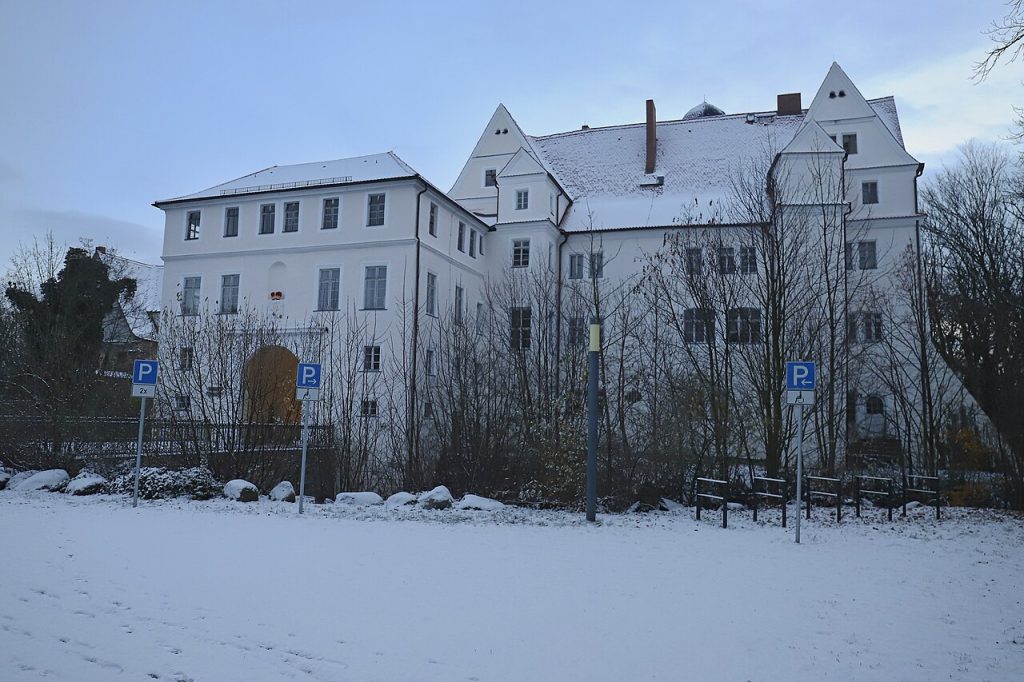
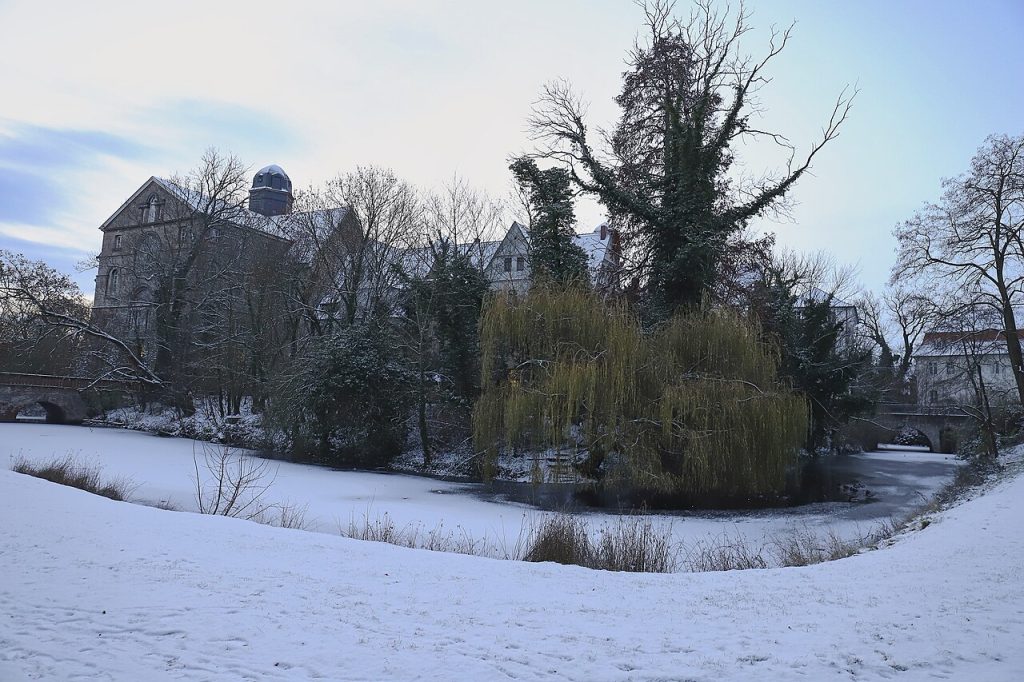
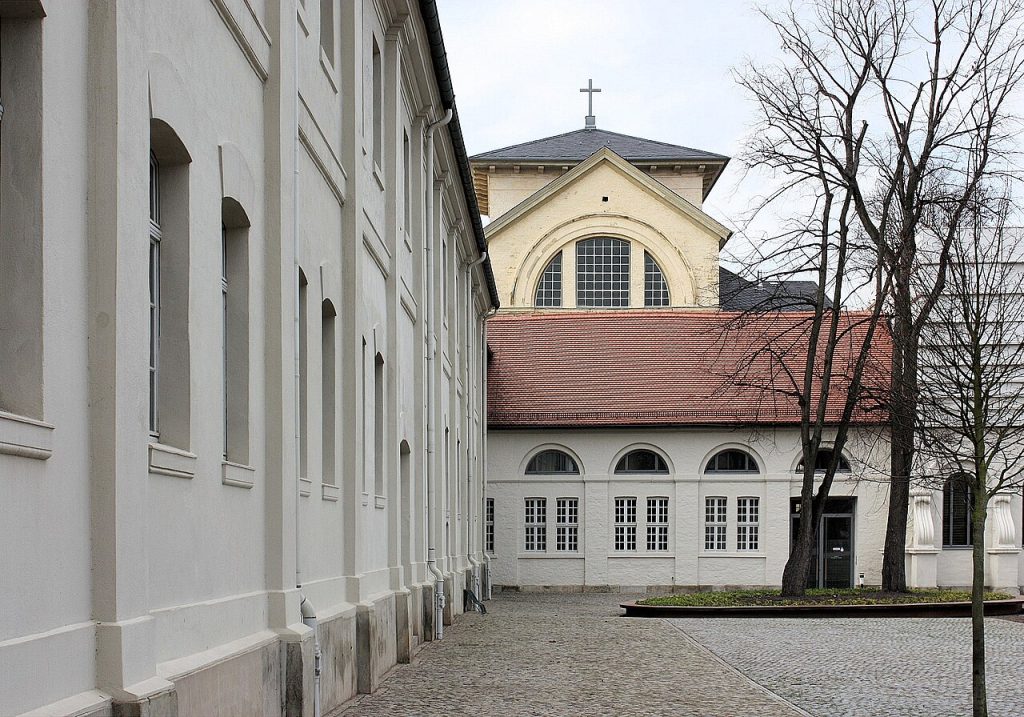
The palace complex grew by wings. The Ludwigsbau, named after the founder of the Fruitbearing Society, is the Renaissance and early Baroque core; the Johann-Georg-Bau holds the mirror hall and the state rooms, rebuilt in the eighteenth century; the Ferdinandsbau, a classical wing of the 1820s, was added by Duke Ferdinand, who had converted to Catholicism and whose chapel is one of the few Catholic court chapels in Protestant Anhalt. Around the courtyard are the stables, the orangery and a park laid out in the nineteenth century.
Walk the circuit of the wings and you read two and a half centuries of Anhalt taste, from stepped gables to Ionic columns. None of it is grand, all of it is well proportioned, and the courtyard ties it together.
Hahnemann and the Birth of Homeopathy
A century after Bach, Köthen sheltered another controversial figure. Samuel Hahnemann, the physician who had developed the system of homeopathy and had been driven out of Leipzig by the apothecaries’ guild for dispensing his own remedies, was invited to Köthen in 1821 by Duke Ferdinand, who became his patient and gave him the title of court councillor and the right to practise freely. Hahnemann lived in a house on the Wallstrasse for fourteen years, wrote his major works here and received patients from across Europe before moving to Paris in 1835.
The house is now a Hahnemann museum, and the town calls itself the cradle of homeopathy, with an annual congress. Whatever one thinks of the medicine, the episode says something about Köthen’s princes: small-state rulers who protected unconventional talent, from language reformers to composers to doctors.
Naumann and the Birds of Central Europe
The palace’s other great treasure is a museum of birds. Johann Friedrich Naumann, a farmer’s son from a village near Köthen, became the founder of scientific ornithology in Germany with his multi-volume Natural History of the Birds of Germany, illustrated with his own engravings, and the duke bought his collection of mounted birds in 1835 and installed it in the palace. The Naumann Museum survives in its original nineteenth-century cases, one of the oldest unaltered natural history displays in Europe, with more than a thousand specimens arranged as Naumann left them.
It is a museum of a museum, and it is fascinating: the cases, the handwritten labels and the birds themselves preserve the moment when natural history became a science. Allow half an hour, and do not skip it for the sake of Bach.
From Ducal Seat to Museum
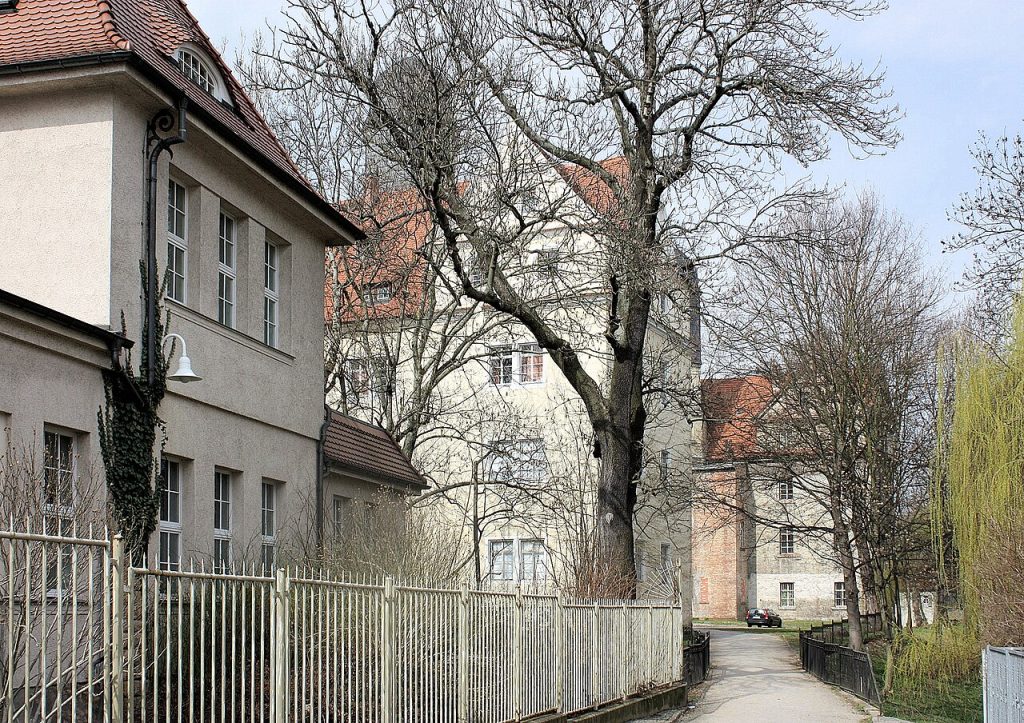
The Köthen line of Anhalt died out in 1847, and the principality was absorbed into a united Duchy of Anhalt ruled from Dessau. The palace lost its court and became an administrative building, a museum and a school, with the mirror hall used for concerts and civic events. After 1918 and again after 1945 it passed to the state, and under the GDR it housed the town’s museums, a music school and offices, which preserved the building if not its splendour.
Restoration since 1990 has repaired the wings, conserved the mirror hall and the Catholic chapel, modernised the museums and created the Bach exhibition. The palace is now run by the town’s cultural foundation, and it has become the centre of Köthen’s identity as a Bach town.
The Bach Festival and the Palace Today
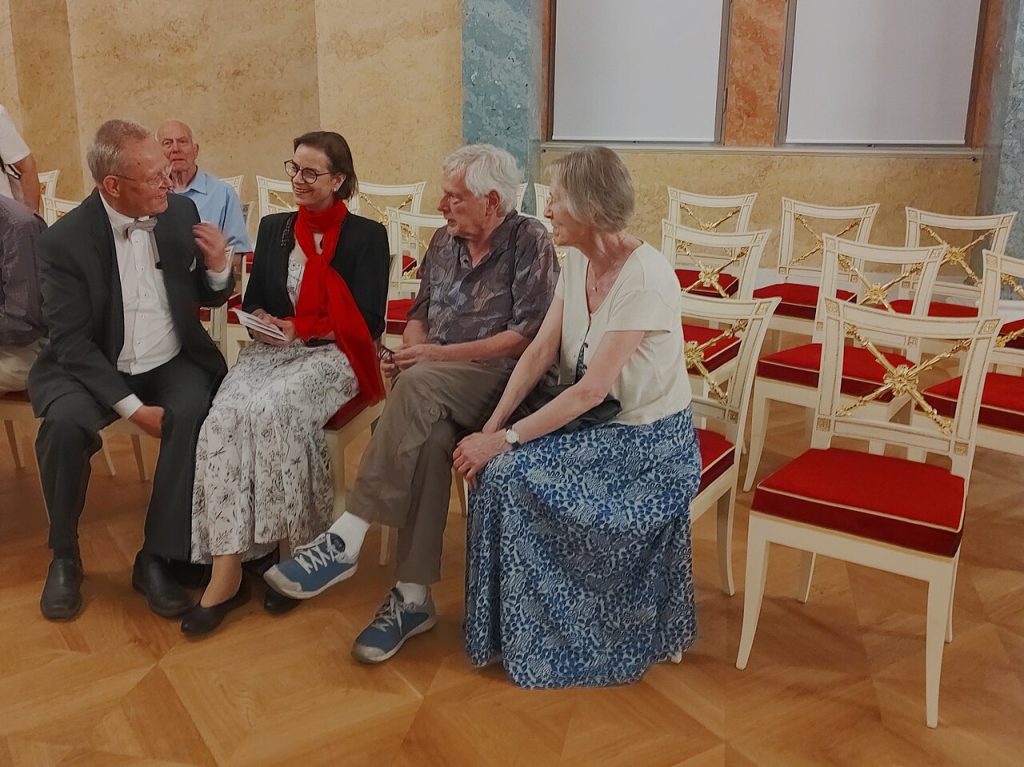
Every two years the Köthener Bachfesttage fill the palace and the town’s churches with period-instrument ensembles playing the music of the Köthen years, and the mirror hall hears the Brandenburg Concertos in the room for which, or near which, they were written. Between festivals the palace hosts concerts, lectures and the Bach exhibition, and the town has laid out a Bach trail connecting the palace, the site of his house and the church where his children were baptised.
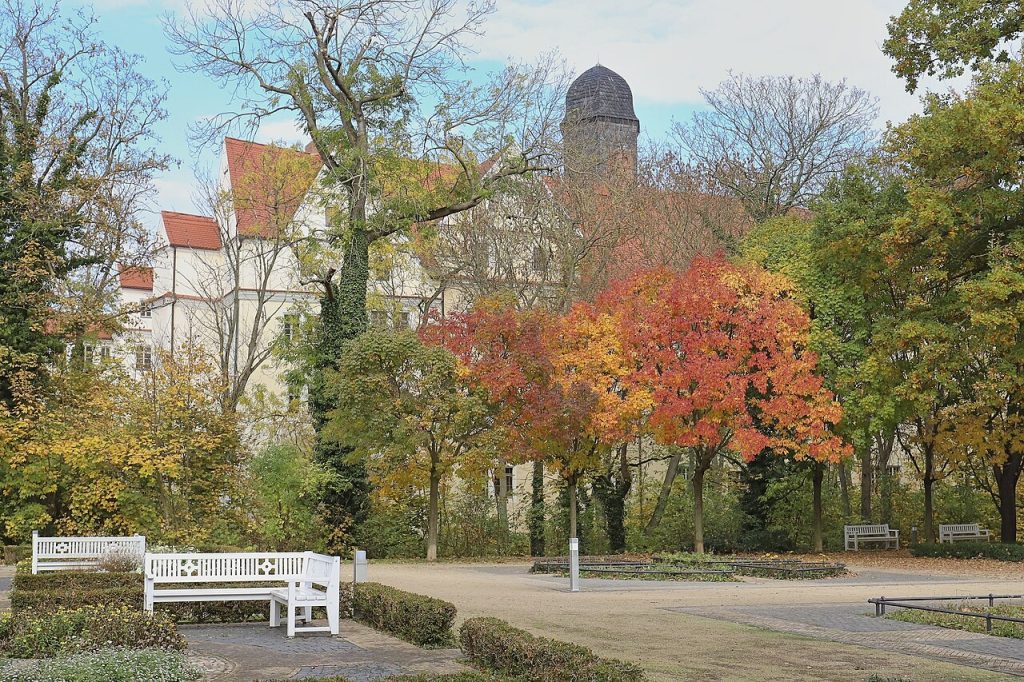
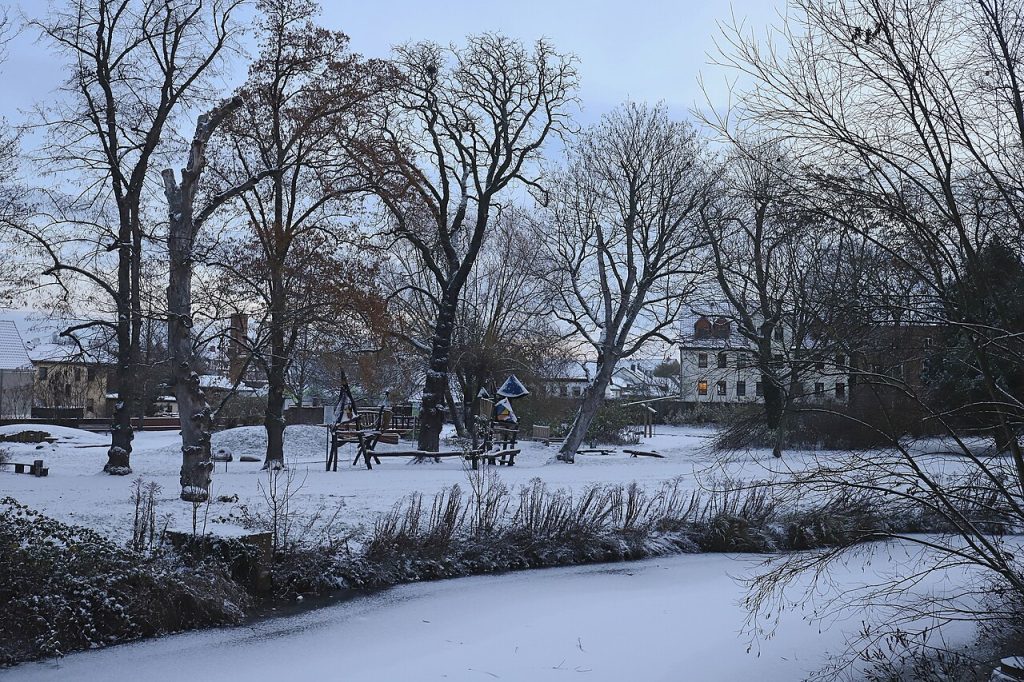
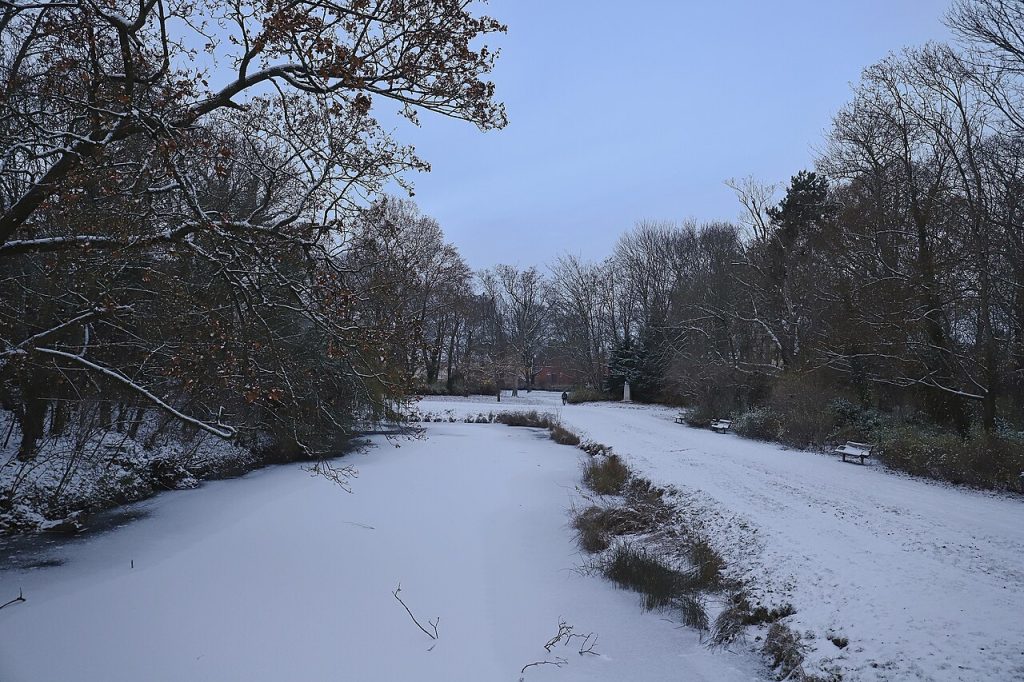
Now, stop here at the Bach memorial in the park and consider the arithmetic: six years, a small orchestra, a prince who listened, and a body of music that the world has not stopped playing for three hundred years. Köthen’s palace is modest. What happened in it was not.
Kothen on Video
Before you plan your trip, take a few minutes to see Kothen Palace in motion. The video below gives a good sense of the setting, the scale of the buildings and the atmosphere of the grounds.
Visiting Kothen Palace Today
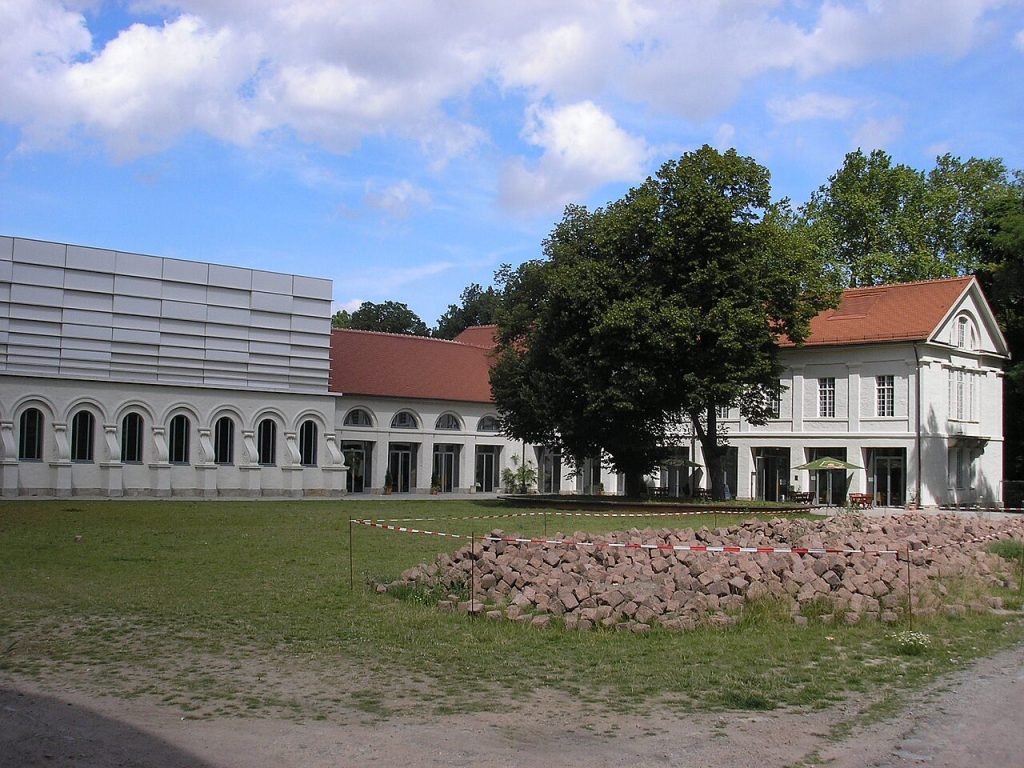
Köthen Palace is open year-round, usually Tuesday to Sunday, with one ticket covering the Bach exhibition, the historical rooms including the mirror hall and chapel, and the Naumann Museum; guided tours are available and concerts are listed on the palace’s programme. Allow two hours, plus half an hour for the Hahnemann house and the Bach sites in the town. The Bach Festival takes place in alternate years in late summer, and tickets for mirror hall concerts sell out early.
Köthen is on the main railway line between Berlin and Leipzig via Dessau, about fifteen minutes from Dessau and under two hours from Berlin; the palace is a ten-minute walk from the station. Luisium and the Garden Realm lie twenty minutes to the north-east, Bernburg thirty minutes to the west. Here is the exact spot: Kothen Palace on Google Maps.
Palaces Nearby
If you have enjoyed this palace, the region holds more remarkable residences. Here are two more well worth adding to your journey: