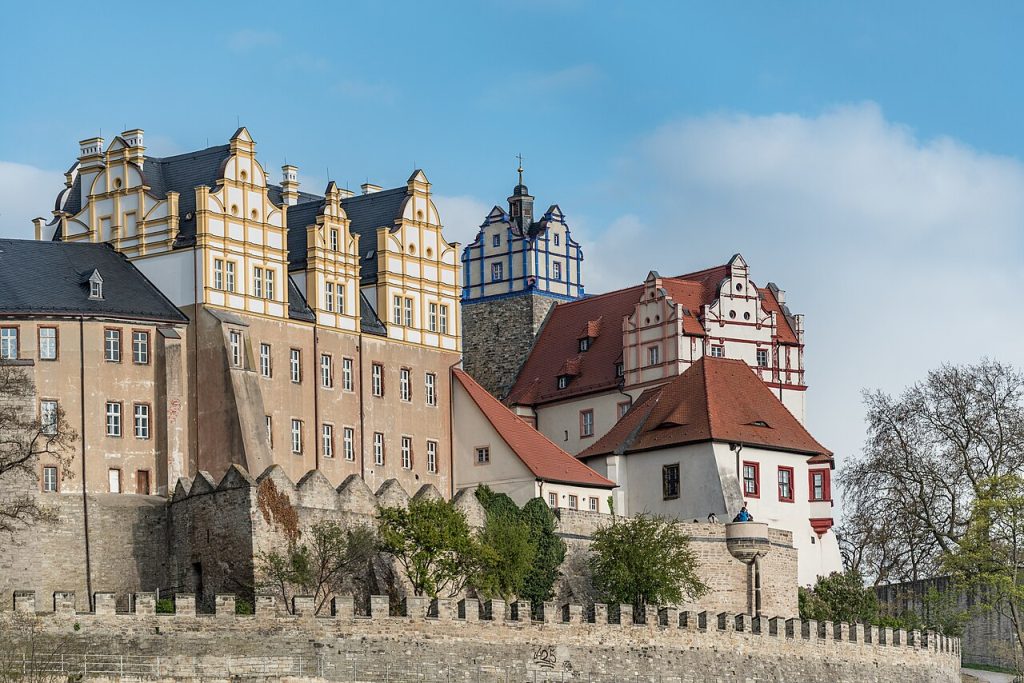
Most of the Anhalt residences sit politely in parks on the flat land of the Elbe and the Saale. Bernburg does not. It stands on a sandstone cliff thirty metres above the river, a long cluster of Renaissance buildings with towers, gables and a great round keep, and from the bridge in the lower town it looks like a crown set on the rock. The people of Anhalt have called it exactly that, the Crown of Anhalt, for four hundred years.
The castle was the seat of the princes and later dukes of Anhalt-Bernburg from the seventeenth century until the Anhalt lines were united in 1863, and before that of the mediaeval counts who held the Saale crossing. It was rebuilt in the sixteenth century by the same Renaissance masons who worked on the great castles of Saxony, and it kept its form through fire, war and the twentieth century. Today it holds the museum of the town and the region, a bear pit in the moat where bears have lived since the 1860s, a keep associated with the trickster Till Eulenspiegel and views along the Saale that are the best in Anhalt.
Walk with me up from the river, through the gate and around the courtyard, with the counts, the dukes, the bears and the fool in order. The contents are below.
In This Article
- A Cliff Above the Saale
- Counts, Ascanians and the Mediaeval Castle
- The Renaissance Rebuilding of 1538 to 1570
- Why They Call It the Crown of Anhalt
- The Keep and Till Eulenspiegel
- The Courtyard and the Gables
- The Princes of Anhalt-Bernburg
- Dukes, a Mad Duke and the End of the Line
- The Bear Pit
- The Museum in the Ducal Rooms
- The Chapel and the Crypt
- The Twentieth Century on the Rock
- Restoration and the Castle Today
- Bernburg on Video
- Visiting Bernburg Castle Today
- Palaces Nearby
A Cliff Above the Saale
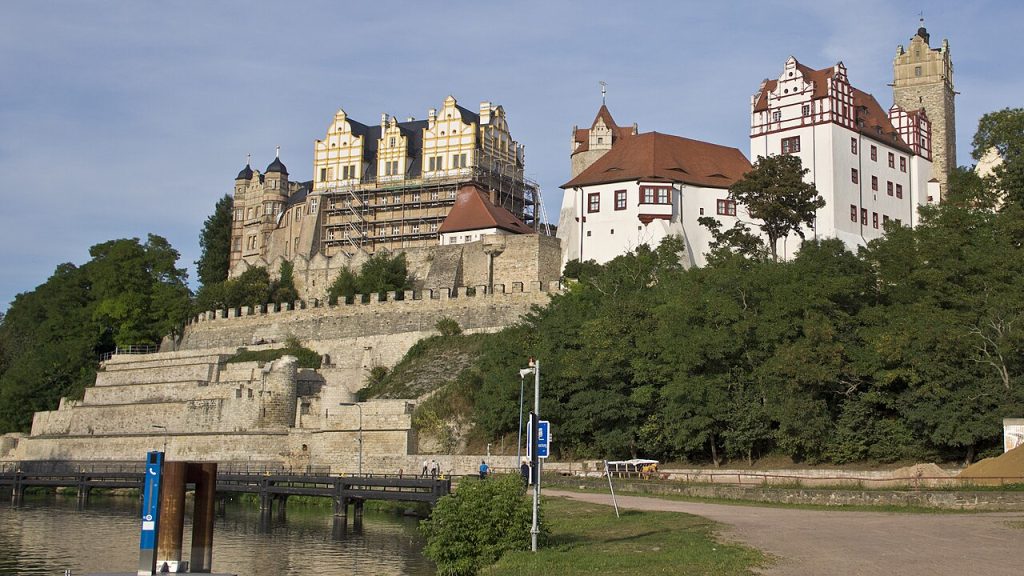
Bernburg is two towns. The Talstadt, the valley town, lies on the river with its mills, its bridge and its old streets; the Bergstadt, the hill town, sits on the cliff above with the castle at its edge. The Saale, which rises in Bavaria and flows into the Elbe below Magdeburg, was the great route of this region, and whoever held the crossing at Bernburg controlled trade and troops between Saxony and the north. The castle was built to hold it.
Now, stop here on the Saale bridge and look up. The rock rises almost sheer, with the castle’s long wings along its crest and the round keep at the highest point. In the evening, when the sun is behind you, the sandstone turns gold and the river reflects it. This is the view that gave the castle its nickname, and it has not changed since the Renaissance.
Counts, Ascanians and the Mediaeval Castle
A castle stood on the rock by the tenth century, and from the twelfth it belonged to the Ascanians, the family of Albert the Bear who conquered Brandenburg and whose descendants ruled Anhalt until 1918. Bernburg was one of their chief seats, a stronghold of towers and walls that was besieged, burned and rebuilt more than once in the feuds of the Middle Ages. The round keep at the top of the rock is the oldest surviving part, mediaeval in its lower courses, and the line of the walls follows the old enclosure.
The counts of Anhalt divided and reunited their lands repeatedly, and Bernburg passed among the branches until, in the sixteenth century, it became the preferred residence of Prince Wolfgang, the Reformation prince of Anhalt, who had the means and the ambition to rebuild it in the new style.
The Renaissance Rebuilding of 1538 to 1570
Between 1538 and 1570 the mediaeval castle was transformed into a Renaissance residence. The master builder Andreas Günther, who had worked on the Saxon castles at Dresden and Torgau, directed the first phase, and the result is one of the most important early Renaissance ensembles in central Germany: long wings with rows of large windows, stair towers with spiral stairs, richly carved portals and the curved and stepped gables that are the signature of the Saxon Renaissance. Later princes added the Christianbau and the Langhaus, continuing the style into the seventeenth century.
What makes Bernburg special is the survival of this work. The castle was never rebuilt in the Baroque, as most Anhalt residences were, because the Bernburg princes had other houses and limited money, and the Renaissance fabric stayed. Look at the window frames, the portals and the gables: they are the real thing, not a nineteenth-century restoration.
Why They Call It the Crown of Anhalt
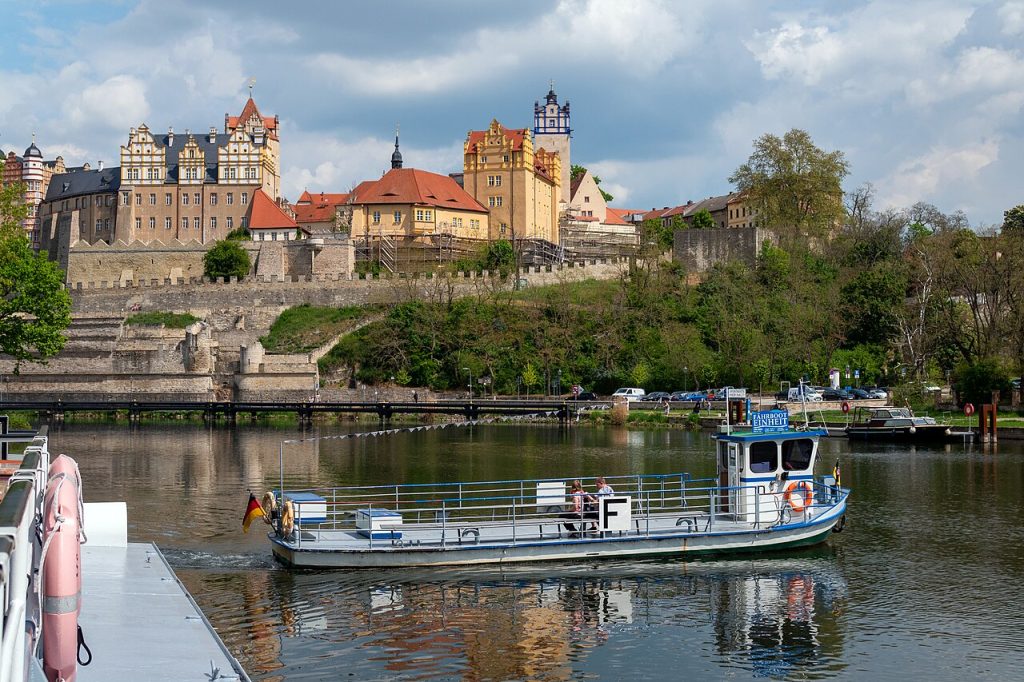
The nickname Krone Anhalts, the Crown of Anhalt, comes from the silhouette. Seen from the river or from the plain to the south, the castle’s towers, gables and the keep rise above the rock like the points of a crown, and poets and travellers of the seventeenth century used the image until it stuck. It also expressed a political truth: of all the Anhalt residences, Bernburg was the one that looked like the seat of a sovereign rather than a country house.
Walk up the hill from the bridge by the old path, and the silhouette changes at every turn, the keep appearing and disappearing behind the gables. Now, stop here at the point where the path turns under the walls and look straight up at the keep. The crown is best seen from below.
The Keep and Till Eulenspiegel
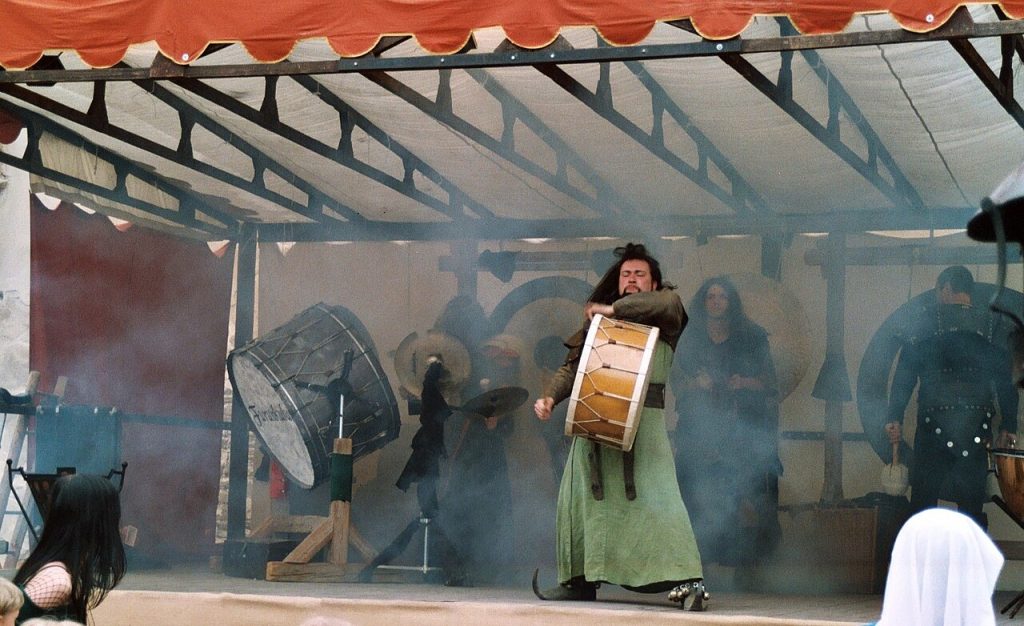
The round keep is called the Eulenspiegelturm, and here is why. In the sixteenth-century chapbook of Till Eulenspiegel, the wandering trickster of German folklore, one of the tales has Till serving the count of Anhalt as a tower watchman at Bernburg. Ordered to blow his horn when enemies appeared, he blew it when there were none, so that the count’s men rode out for nothing, and kept silent when real raiders came, having been left without food. The tale is fiction, but the tower is real, and the town has adopted the fool as its own, with a statue and a festival.
Climb the keep if it is open. The view from the top takes in the Saale valley, the lower town, the fields of the Magdeburg Börde and, on clear days, the Harz hills. The mediaeval masonry at the base and the Renaissance cap above tell the castle’s story in one tower.
The Courtyard and the Gables
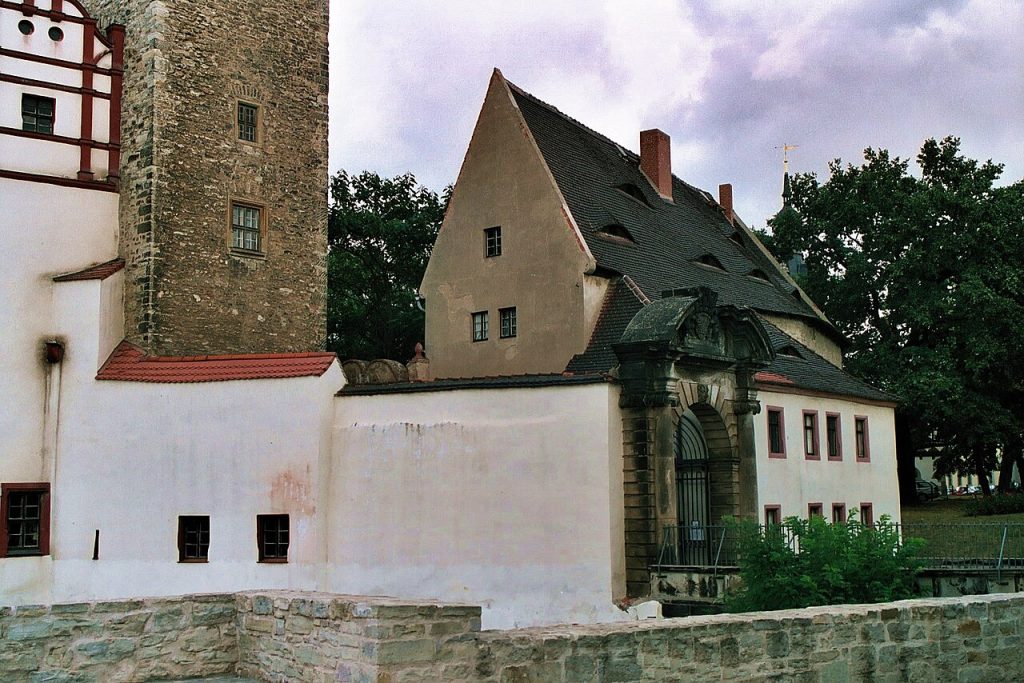
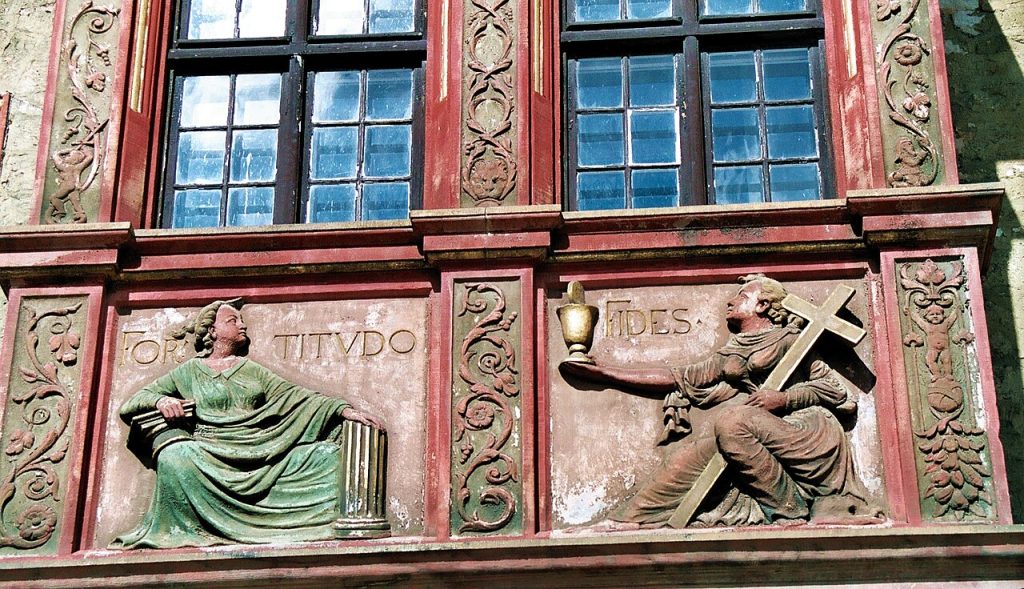
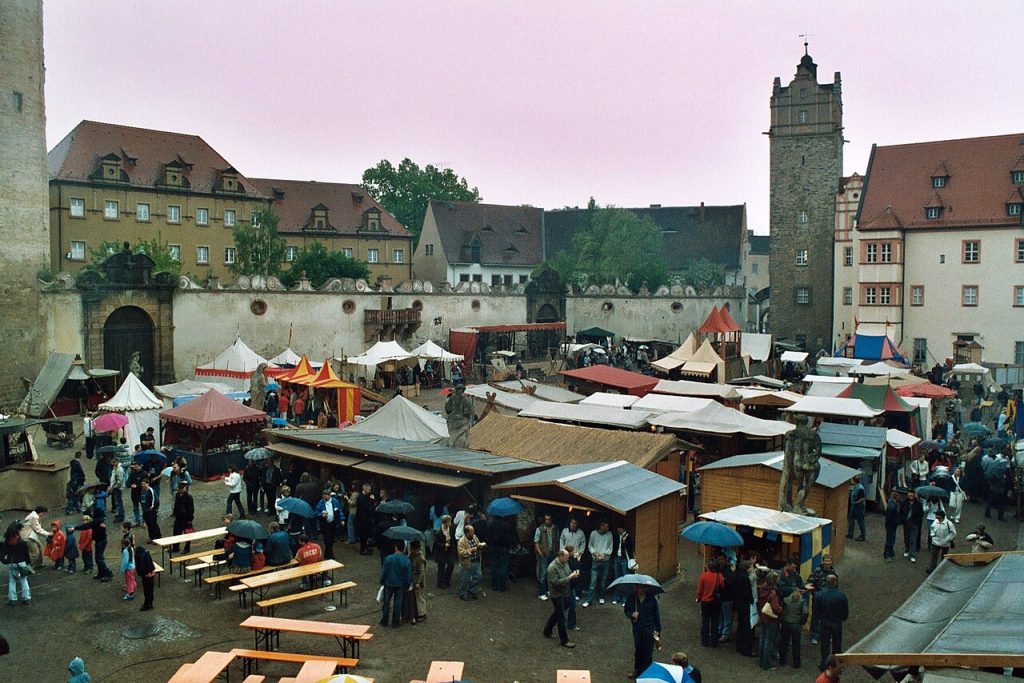
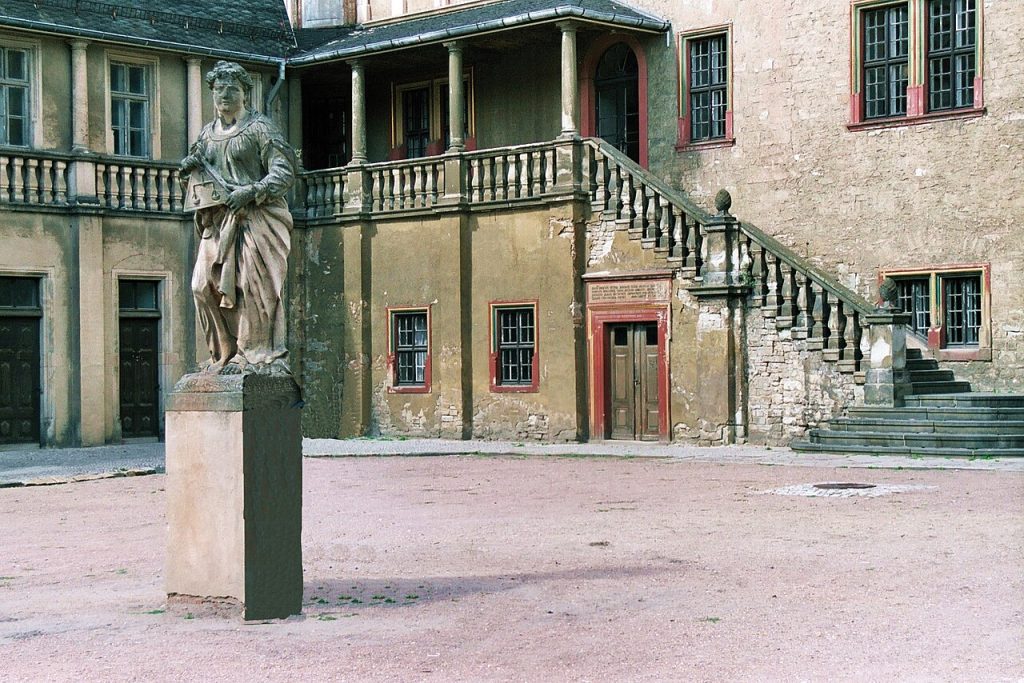
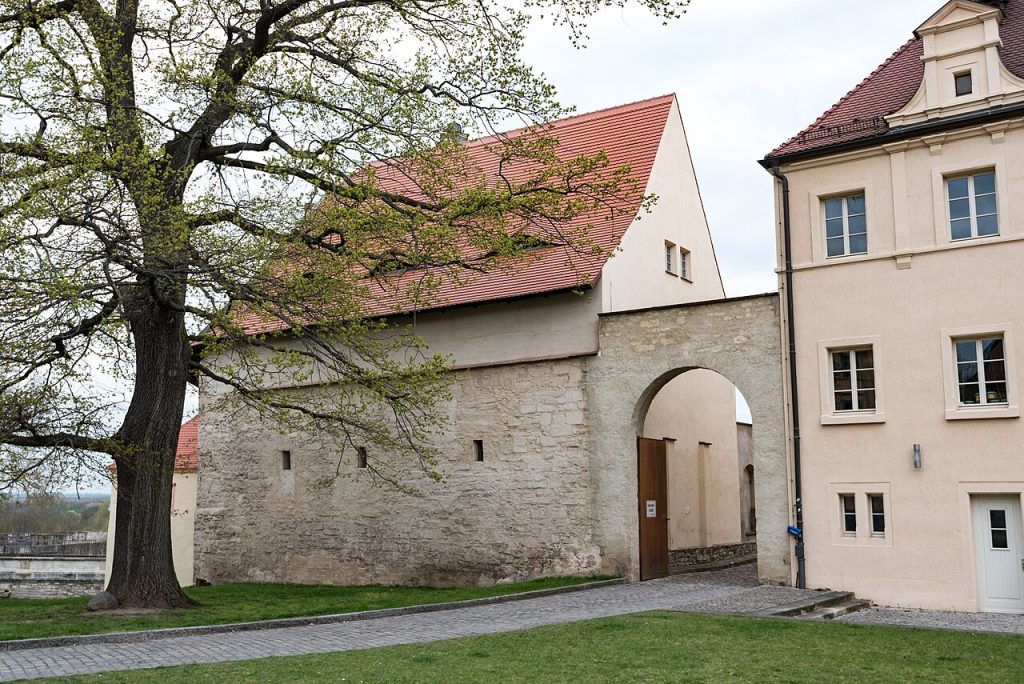
Pass through the gate into the courtyard, which is the best place to see the Renaissance work. The wings enclose an irregular space with stair towers at the corners, carved portals with the arms of the princes and dates of building, and gables that rise in steps and curves above the roofline. The Christianbau on one side, named after Prince Christian I, has the finest facade, with sgraffito decoration partly recovered in the restoration.
Look for the dates carved over the doors, which run from the 1540s to the 1620s, and for the well in the centre of the yard. The courtyard was the stage of the court’s public life, where the prince received petitioners and where, on feast days, the town was admitted to watch.
The Princes of Anhalt-Bernburg
In 1603 the Anhalt lands were divided among the sons of Prince Joachim Ernst, and Christian I received Bernburg, founding the line of Anhalt-Bernburg. He was an ambitious man who became the leading minister of the Elector Palatine and the architect of the Protestant Union; it was his policy that put the Winter King on the Bohemian throne in 1619 and so helped start the Thirty Years’ War, and he spent the rest of his life trying to repair the damage. His descendants were quieter, ruling a small territory around Bernburg and in the Harz with a court that was dignified but never rich.
The museum’s portrait gallery follows the line through the seventeenth and eighteenth centuries: Christian I in his armour, his successors in their wigs, the princesses who married into the courts of Germany and Scandinavia. One of them, as we saw at Köthen, became the music-indifferent wife of Bach’s prince.
Dukes, a Mad Duke and the End of the Line
In 1806 the princes of Anhalt-Bernburg were raised to dukes by Napoleon’s rearrangement of Germany, and they ruled their small duchy through the nineteenth century from Bernburg and from a newer residence at Ballenstedt in the Harz. The last duke, Alexander Carl, suffered from a mental illness that left him unable to govern, and his duchess Friederike ruled in his name for twenty years with considerable skill, founding schools and hospitals and keeping the castle in repair. When he died in 1863 without children, Anhalt-Bernburg passed to the Dessau line, and the duchies were united under a single Duke of Anhalt.
Bernburg lost its court and became a provincial town with a very large castle. Parts of the building were turned over to the district administration and the courts; the ducal rooms were kept as a residence for visiting members of the family; and the town began to think of the castle as a monument rather than a seat of power.
The Bear Pit
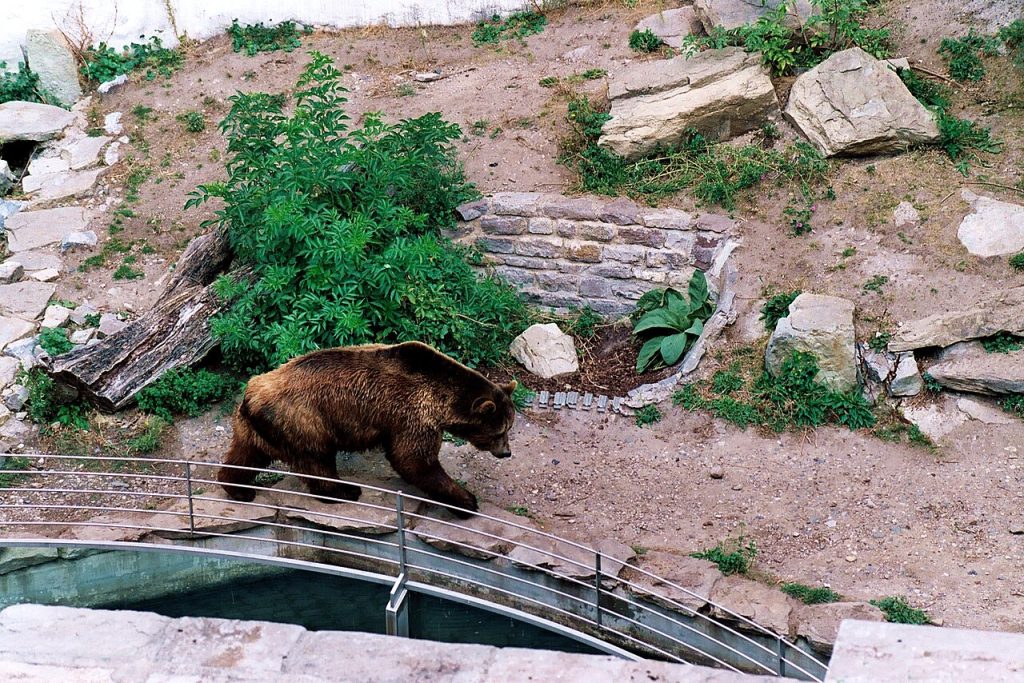
Walk round to the moat and you will meet the castle’s most popular residents. Since 1864 the dry moat below the walls has held a bear enclosure, the Bärenzwinger, established in honour of Albert the Bear, the Ascanian founder of the dynasty, whose name and arms the house of Anhalt carried. Brown bears have lived here, with interruptions, ever since, and the modern enclosure, enlarged and redesigned in the 2000s on animal welfare grounds, is one of the oldest continuously kept bear pits in Germany.
Now, stop here at the railing and look from the bears up to the gables. The combination of Renaissance castle and live bears is odd, and children love it, and the bears have become the town’s unofficial emblem alongside the fool in the tower.
The Museum in the Ducal Rooms
The Museum Schloss Bernburg occupies the former ducal rooms and several wings, with displays on the history of the castle and the Ascanian dynasty, the town and its industries, including the salt and soda works that made Bernburg prosperous in the nineteenth century, regional archaeology and a collection of mill models that recalls the Saale’s water mills. The ducal apartments keep some of their nineteenth-century decoration, and the Renaissance rooms with their vaults and beamed ceilings are exhibits in themselves.
Look for the Eulenspiegel room, with editions of the chapbook from the sixteenth century onward, and for the models of the castle at various dates that show how the silhouette evolved. Allow an hour and a half; the building is large and the route long.
The Chapel and the Crypt
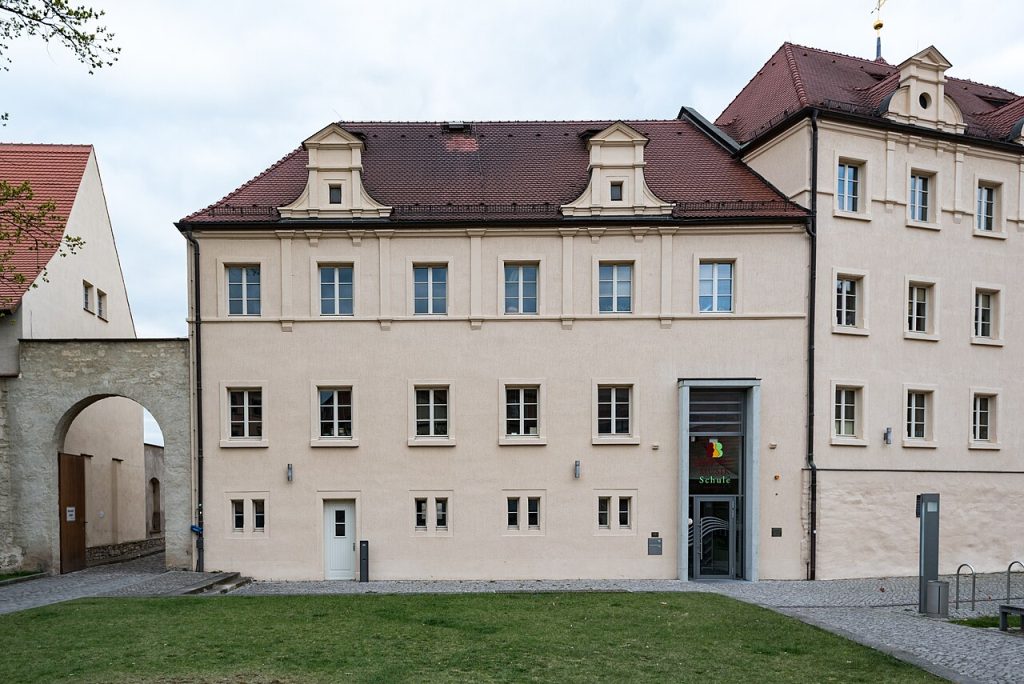
The castle chapel was rebuilt in the early seventeenth century for the Calvinist court of Christian I, who had followed the Reformed confession like several Anhalt princes, and it is a plain hall with galleries and a princely box, in keeping with Calvinist taste. Memorials to the princes line the walls, and beneath the chapel lies the crypt where members of the Bernburg line were buried until the nineteenth century. The chapel is used for concerts and occasional services and can be seen on the museum route.
It is worth pausing here to consider the religious geography of Anhalt: Calvinist princes at Bernburg and Köthen, Lutheran subjects, a Catholic duke at Köthen in the nineteenth century, all in a territory the size of an English county. The princes’ tolerance, born of necessity, was one of the region’s quiet virtues.
The Twentieth Century on the Rock
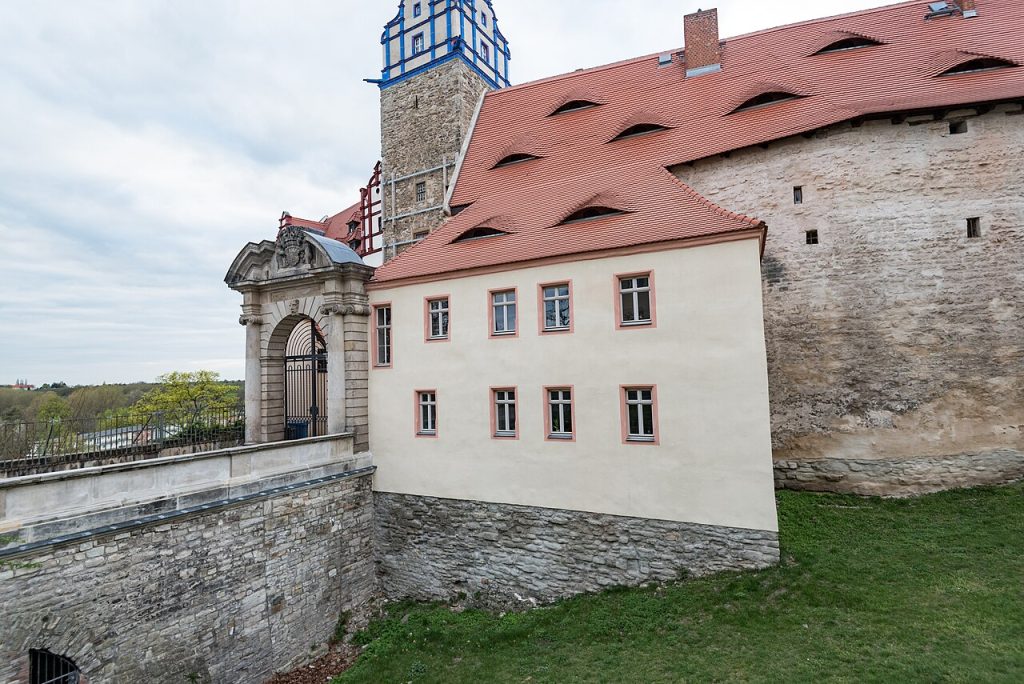
After the abdication of the Duke of Anhalt in 1918 the castle passed to the Free State of Anhalt and then, after 1945, to the GDR, which kept the museum, installed offices and a school in the wings and let the fabric decay slowly. Bernburg’s name acquired a dark association in these years: the psychiatric hospital in the town, not the castle, was one of the sites of the Nazi murder of disabled people, and a memorial there records it. The castle itself survived the war undamaged and the GDR shabby but whole.
By 1990 the Renaissance wings needed urgent work on roofs, gables and stonework, and the museum was tired. The state of Saxony-Anhalt and the town have since restored the castle in stages, and the work continues.
Restoration and the Castle Today
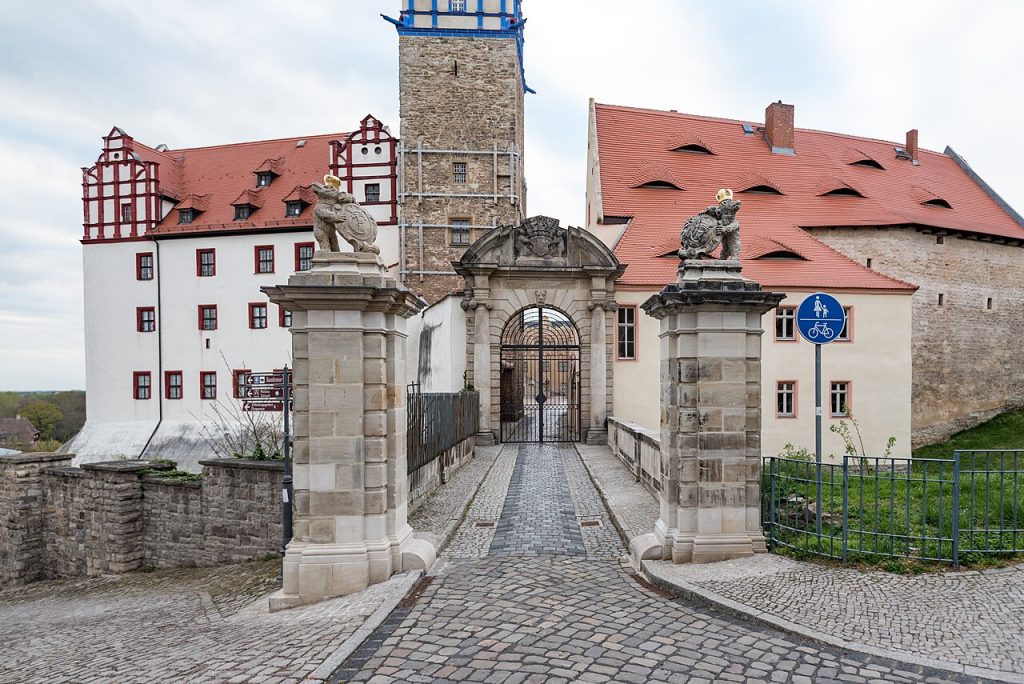
The restoration has renewed the roofs and gables, cleaned and consolidated the sandstone, recovered the sgraffito decoration on the Christianbau, repaired the keep and rebuilt the bear enclosure. The museum has been modernised, the chapel conserved and the courtyard relaid. Bernburg is now one of the showpieces of the Saale valley, with concerts in the courtyard, a mediaeval festival with the fool as master of ceremonies and a steady stream of visitors who come for the bears and stay for the Renaissance.
Now, stop here one last time on the terrace below the keep and look along the river. The Saale winds away toward the Elbe, the lower town lies at your feet and the crown of Anhalt stands behind you, five centuries old and in good repair.
Bernburg on Video
Before you plan your trip, take a few minutes to see Bernburg Castle in motion. The video below gives a good sense of the setting, the scale of the buildings and the atmosphere of the grounds.
Visiting Bernburg Castle Today
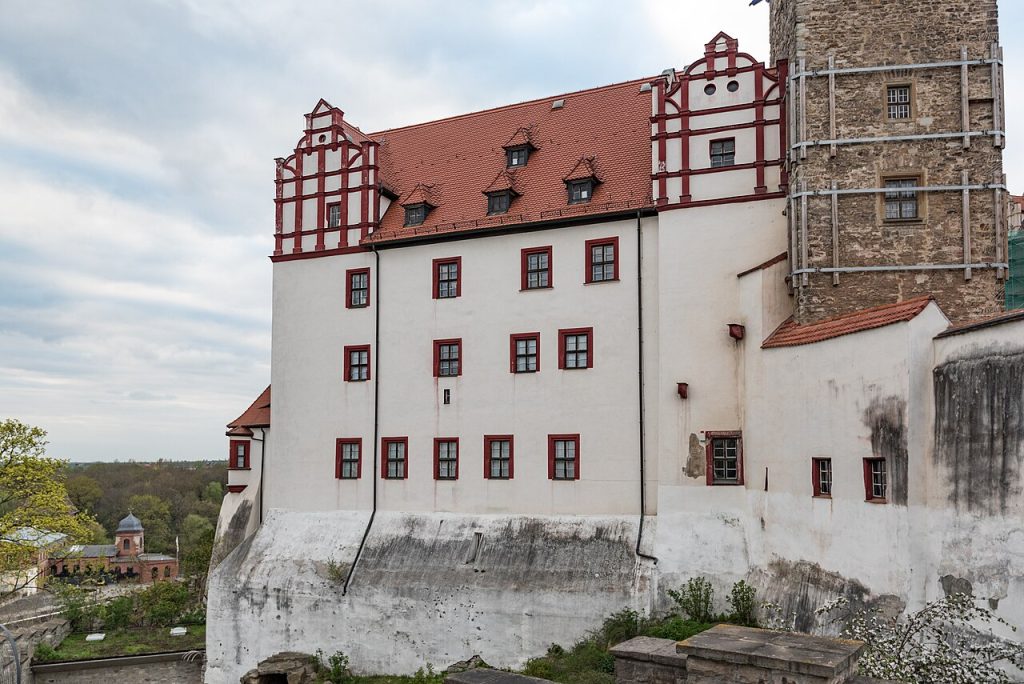
Bernburg Castle is open year-round, usually Tuesday to Sunday, with the museum, the chapel and, in season, the keep included in one ticket; the courtyard, the terraces and the bear enclosure are freely accessible during the day. Allow ninety minutes for the museum and keep and another half hour for the bears and the walk down to the bridge for the classic view. Check the programme for courtyard concerts and the Eulenspiegel festival in summer.
Bernburg lies on the railway between Magdeburg and Halle, about forty-five minutes from each; the castle is a fifteen-minute walk uphill from the station. Köthen is thirty minutes to the east and Luisium at Dessau an hour. Here is the exact spot: Bernburg Castle on Google Maps.
Palaces Nearby
If you have enjoyed this palace, the region holds more remarkable residences. Here are two more well worth adding to your journey:
You May Like