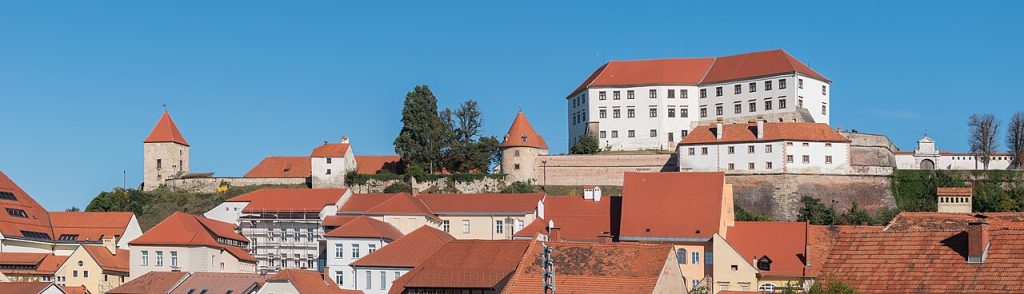
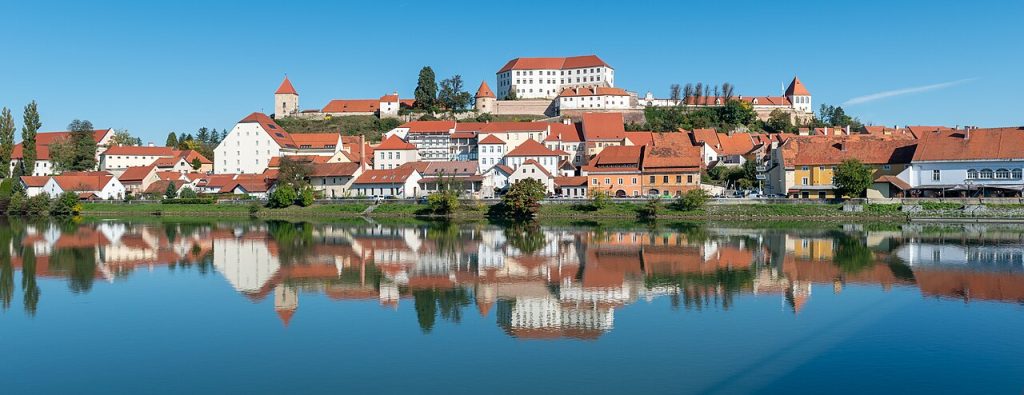
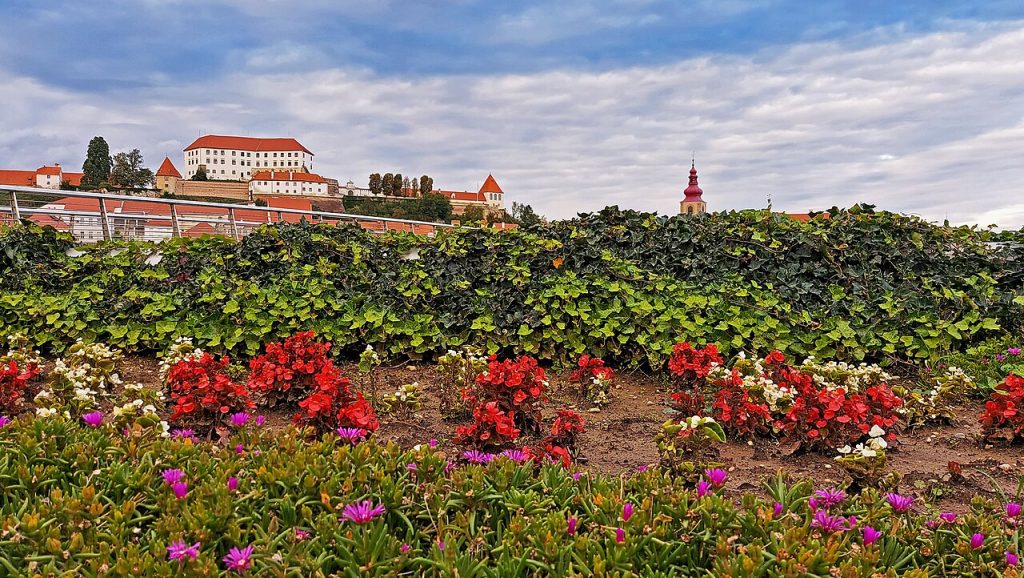
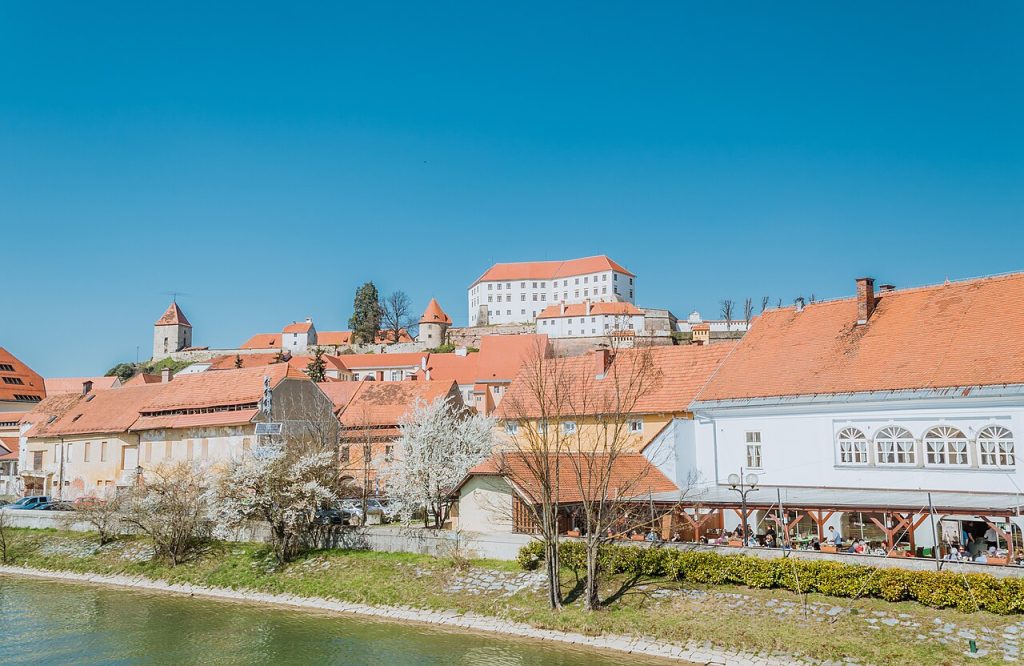
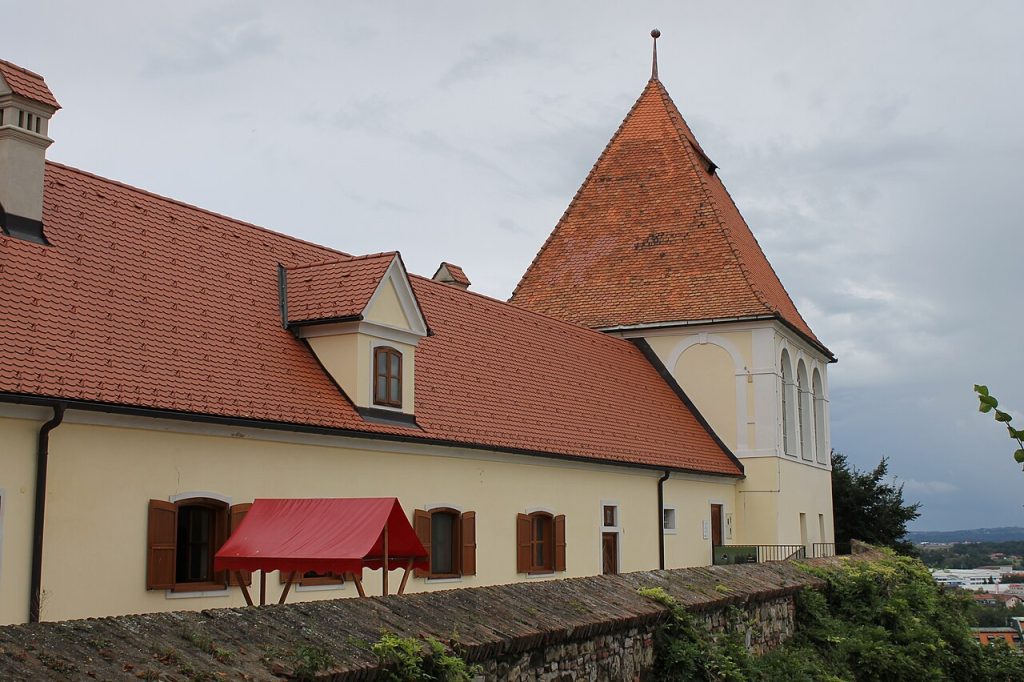
Ptuj is the oldest town in Slovenia, a Roman legionary base called Poetovio on the river Drava where the road from Italy to Pannonia crossed the water, and its castle sits on the hill that the Romans fortified two thousand years ago. From the town’s riverside promenade the castle is a long white building with a round tower and red roofs above the red roofs of the old town, and it looks gentle. It is not. It was held by the archbishops of Salzburg and the Lords of Ptuj against the Hungarians, rebuilt against the Turks, and then, in 1656, bought by a Scottish soldier of fortune named Walter Leslie who had made his career by helping to murder the most powerful general in Europe.
The Leslies and after them the Herbersteins filled the castle with the collections that make it one of the best museums in Slovenia: Flemish tapestries of the voyages of Odysseus, a gallery of Ottoman portraits painted for a family that had fought the Turks for generations, one of the largest collections of historical musical instruments in central Europe, Baroque apartments and, in the cellars, the horned, feathered, bell-hung masks of the Kurent, the carnival demon of eastern Slovenia who drives out winter every February. It is a castle where the history of a frontier and the folklore of a region meet.
Walk with me up from the river, through the gate and the courtyards, and into the rooms of the field marshal. The contents are below.
In This Article
- The Oldest Town in Slovenia
- Salzburg’s Castle on the Drava
- The Lords of Ptuj
- Rebuilding Against the Turks
- Walter Leslie, the Scot Who Killed Wallenstein
- The Leslie Rebuilding and the Baroque Castle
- The Herbersteins and the Last Owners
- The Tapestries of Odysseus
- The Turkish Portraits
- The Musical Instruments
- The Feudal Apartments
- The Kurent and the Carnival Masks
- Nationalisation and the Regional Museum
- Ptuj on Video
- Visiting Ptuj Castle Today
- Palaces Nearby
The Oldest Town in Slovenia
Ptuj lies in the flat wine country of eastern Slovenia, on the Drava between Maribor and the Croatian border, and it has been a town since the first century, when the Romans planted a legion on the river crossing and the settlement of Poetovio grew to forty thousand people, the largest in what is now Slovenia. The Roman town lay on both banks; the mediaeval town grew on the north bank below the hill, and its streets, churches and the Orpheus monument in the square, a Roman tombstone used as a pillory, are the oldest urban fabric in the country.
Now, stop here on the bridge over the Drava and look at the composition: the river, the red roofs, the tower of the town church and above them the castle’s long white front. The hill was a Roman shrine of Mithras and a mediaeval fortress before it was a residence, and every layer is still there.
Salzburg’s Castle on the Drava
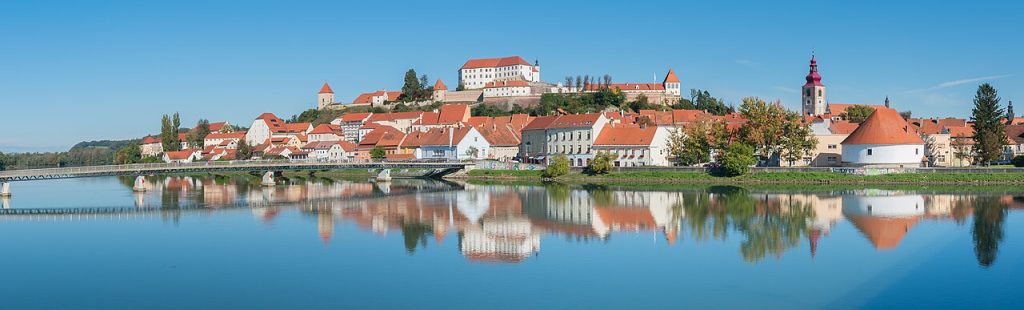
After the collapse of Roman rule and the migrations, the hill passed in the tenth century to the archbishops of Salzburg, who received the territory from the German kings as a bulwark against the Hungarians raiding up the Drava. The archbishops built a castle on the summit in the eleventh and twelfth centuries, of which the round western tower and parts of the walls survive, and they held it as feudal lords until the eighteenth century, even when the men who lived in it were their vassals rather than their officials.
Salzburg’s rule explains why Ptuj, deep in Styria, was ecclesiastical property for so long, and why the archbishops’ arms appear on the oldest parts of the castle. The real power on the ground, however, was a family that took its name from the town.
The Lords of Ptuj
The Lords of Ptuj were ministerials of Salzburg, unfree knights who rose to be among the most powerful nobles of Styria, and from the twelfth century until 1438 they held the castle as the archbishops’ vassals and ruled the town and its hinterland. They fought the Hungarians, married into the great houses of the region, founded the Dominican and Minorite monasteries in the town and were buried in them under carved tombstones that are among the finest Gothic sculpture in Slovenia.
When the last Lord of Ptuj died in 1438 the castle reverted to Salzburg, which leased it to a series of noble tenants, and the fifteenth century brought a new threat from the south-east that would change the castle’s shape.
Rebuilding Against the Turks
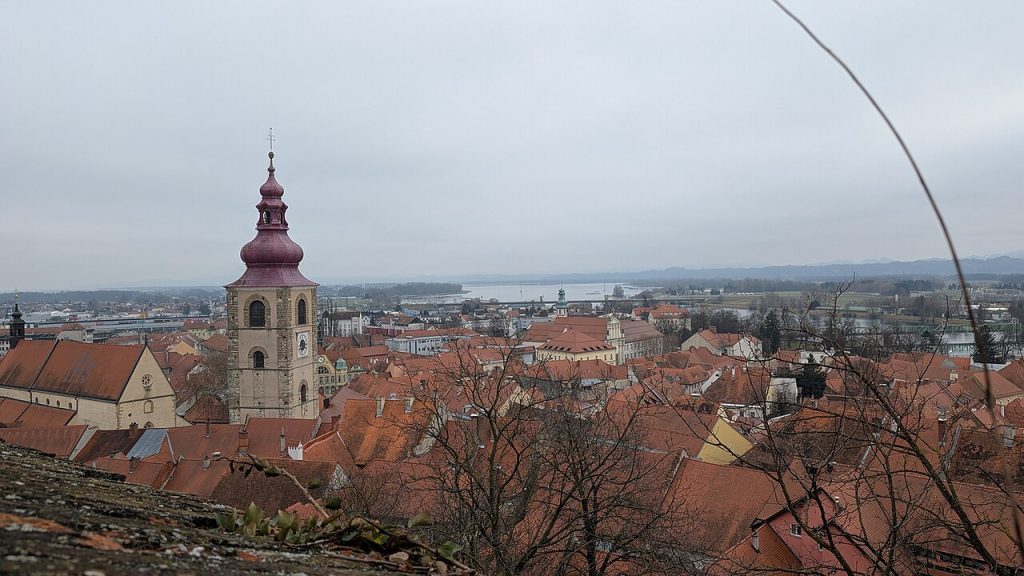
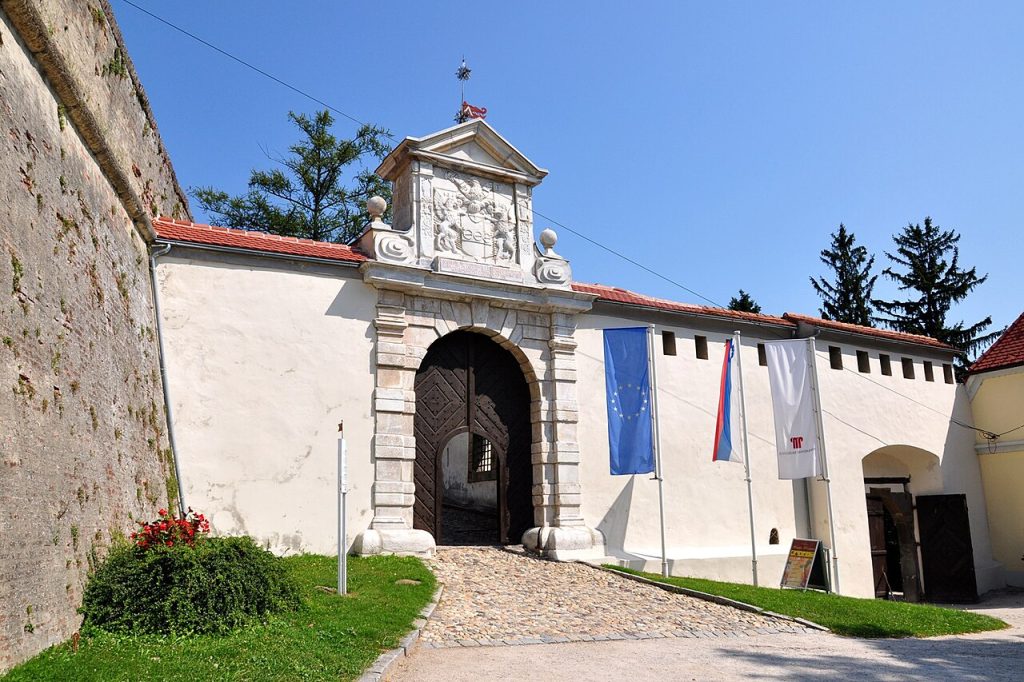
From the 1470s Ottoman raiders crossed into Styria almost yearly, and Ptuj, on the main route from Hungary, was in the front line. The castle was refortified in the sixteenth century with new walls, bastions and a gatehouse, and the town’s walls were strengthened; a Turkish attack in 1532, when Suleiman’s army passed nearby on its way back from the siege of Vienna, was beaten off. The fortifications were paid for by the Habsburgs and the Styrian estates, and the castle remained a garrisoned fortress into the seventeenth century.
Walk the outer walls and look at the bastions, which are Renaissance in form and built for artillery. The Turkish wars left Ptuj with a military character that the later owners softened but never erased, and they also left the region with the memory that the Turkish portrait gallery, which we will reach, preserves.
Walter Leslie, the Scot Who Killed Wallenstein
Here is the story that makes Ptuj unusual. Walter Leslie was a Scottish Catholic from Aberdeenshire who went to the continent as a soldier of fortune and rose in the Imperial army during the Thirty Years’ War. In February 1634 he was one of the officers at Eger who, on the emperor’s secret orders, murdered the generalissimo Albrecht von Wallenstein, the most powerful commander in Europe, who was suspected of treason. Leslie personally organised the killing of Wallenstein’s companions at dinner and then led the party that broke into the general’s bedroom.
The emperor rewarded him with Wallenstein’s confiscated estates, a title of count, the rank of field marshal and, later, an embassy to Constantinople. In 1656 Leslie bought the castle of Ptuj from Salzburg’s tenants, and the Scottish family held it for a century and a half, until 1802. Now, stop here in front of his portrait and consider that this handsome Baroque castle was built on the proceeds of one of the most famous assassinations in European history.
The Leslie Rebuilding and the Baroque Castle
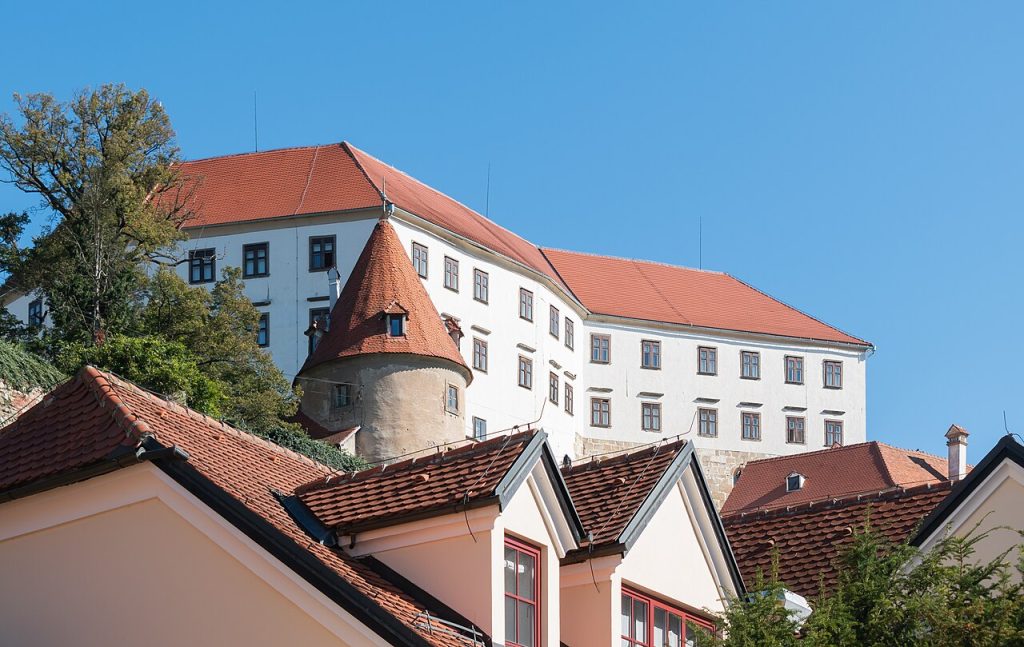
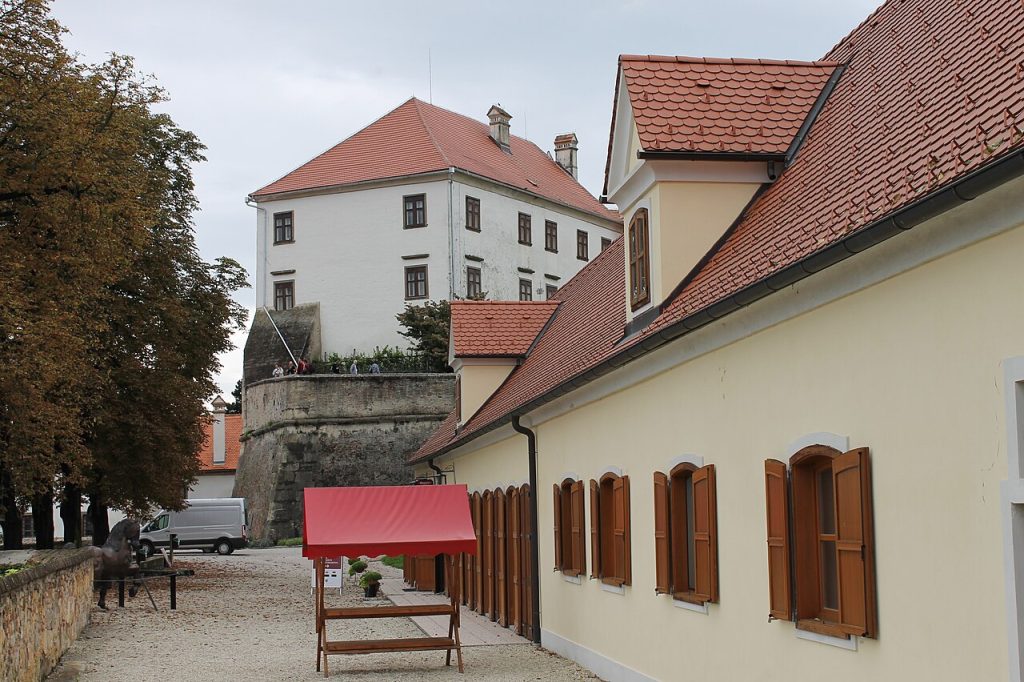
The Leslies turned the fortress into a residence. In the late seventeenth century they built the long south wing with its regular facade toward the town, added arcades to the inner courtyard, refitted the apartments in the Baroque taste and laid out a formal garden. The round tower and the old walls were kept, so the castle today is a layered building, mediaeval at the core, Renaissance in its defences and Baroque in its face.
The Leslies also brought the collections. As Imperial diplomats and soldiers they travelled to Constantinople, Rome and the Netherlands, and they furnished the castle with tapestries, paintings and furniture that remained when the family died out in 1802 and the castle passed by inheritance to the Dietrichsteins and then, in 1873, to the counts of Herberstein.
The Herbersteins and the Last Owners
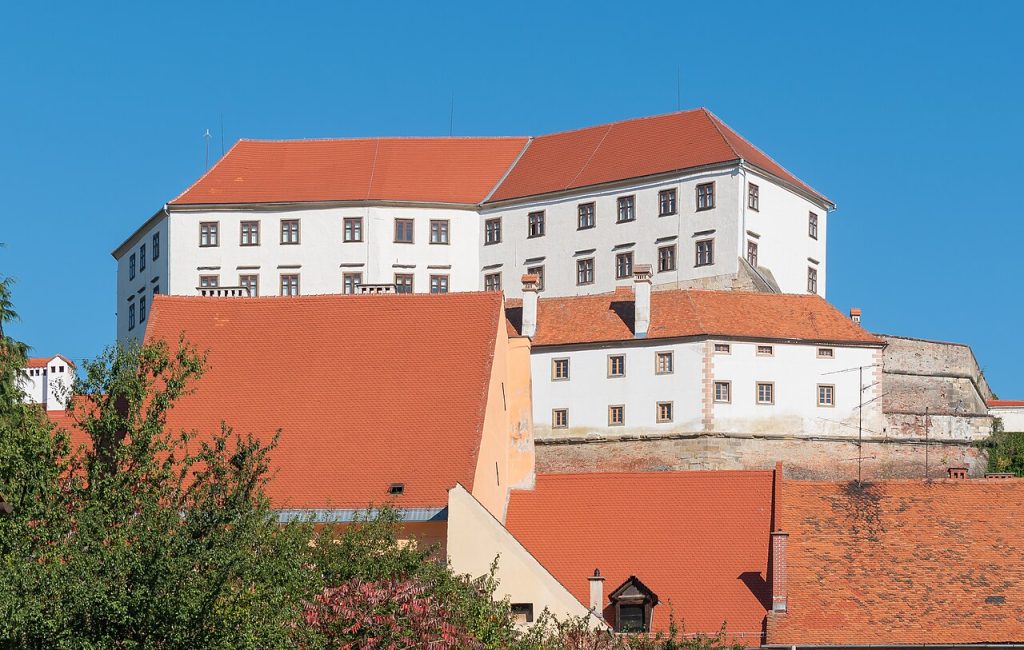
The Herbersteins, an old Styrian family best known for the sixteenth-century diplomat Sigismund von Herberstein who wrote the first Western description of Russia, held Ptuj from 1873 until 1945. They lived in the castle, kept the collections, added their own family portraits and furniture and ran the estates in the wine country around the town. The castle in their time was a comfortable aristocratic home with a museum’s worth of contents, and photographs from the 1920s show rooms that are recognisably those on today’s tour.
In 1945 the family was expropriated by the Yugoslav state and the castle was taken over, with its contents, by the regional museum. That transfer, unusual in its completeness, is why Ptuj has kept so much of what the Leslies and Herbersteins gathered.
The Tapestries of Odysseus
The first great treasure inside is a set of Flemish tapestries of the voyages of Odysseus, woven in Brussels or Oudenaarde in the seventeenth century and hung in the castle’s main rooms. They show Odysseus with Circe, with the Cyclops, with Nausicaa and at home in Ithaca, in the rich colours and borders of the Baroque weavers, and they are among the finest tapestries in Slovenia. The Leslies acquired them, probably in the Netherlands, and they have hung in the castle for three centuries.
Look at the borders, with their fruit and flowers, and at the faces of the figures, which show the weavers’ skill at its best. Tapestries this large and this complete rarely survive outside royal collections, and finding them in a provincial Styrian castle is one of Ptuj’s surprises.
The Turkish Portraits
The second treasure is stranger: a gallery of some forty portraits of Ottoman and Oriental figures, sultans, viziers, janissaries, Persians, Armenians and Greeks, painted around 1700 in a style between document and fantasy. They are known as the Turqueries, and they were commissioned by the Leslies, whose ambassador Walter Leslie had seen the Ottoman court at first hand, as a record of the enemy that Styria had fought for two hundred years and, by 1700, was beginning to find exotic rather than terrifying.
The series is one of the largest of its kind in Europe, and it hangs in its own gallery. Now, stop here and look at the faces: they are curious, respectful, occasionally caricatured, and they show a frontier society starting to turn its old fear into a taste for the East.
The Musical Instruments
The castle also holds the regional museum’s collection of musical instruments, one of the largest in central Europe, ranging from Roman bone flutes found at Poetovio, including a double pipe or tibia that is among the best preserved in the world, through mediaeval and Renaissance instruments to the wind and string instruments of Baroque and nineteenth-century town bands. The display is arranged by type and period, with recordings, and it fills several rooms of the Baroque wing.
The Roman tibia alone justifies the visit for anyone interested in ancient music; it was found in a grave in the town and is nearly two thousand years old. The Baroque instruments recall the castle’s own musical life, when the Leslies and Herbersteins kept musicians for their entertainments.
The Feudal Apartments
The feudal apartments present the castle’s living rooms as they were furnished across four centuries: Renaissance and Baroque bedrooms with canopied beds and tiled stoves, a Chinese salon with painted wallpaper, a Rococo drawing room, a nineteenth-century dining room and a chapel, all with furniture, paintings and ceramics from the castle’s own collections and from other Styrian houses. The route runs through the main wing and gives a sense of how the Leslies and Herbersteins actually lived.
Look especially for the painted ceilings in the Baroque rooms and for the portraits of the Leslie counts in their Imperial uniforms, with the Scottish thistle in their arms. The family never forgot where it came from, and the castle’s Scottish connection is still celebrated by visitors from Aberdeenshire.
The Kurent and the Carnival Masks
Descend to the cellars for the castle’s most popular display: the masks and costumes of the Kurentovanje, the carnival of Ptuj and the surrounding villages, in which hundreds of men dressed as Kurents, in sheepskin suits, horned leather masks with long red tongues and belts of cowbells, parade through the town to drive out winter and summon spring. The custom, probably pre-Christian in origin, is on UNESCO’s list of intangible heritage, and the carnival in February is the biggest event of the year in eastern Slovenia.
The museum shows the Kurents alongside the other carnival figures of the region, the ploughmen, the bears, the fairies and the devils, with masks going back to the nineteenth century and films of the parades. Now, stop here among the horned heads and the bells and imagine them moving through the streets below the castle in the cold of a February afternoon.
Nationalisation and the Regional Museum
The Ptuj regional museum, founded in 1893 in the town’s Dominican monastery, moved into the castle after the nationalisation of 1945 and has run it since, restoring the buildings in stages, conserving the tapestries and portraits and adding the archaeological, ethnographic and musical collections of the region. The result is a castle that is also the museum of eastern Slovenia, with the Roman town, the mediaeval lords, the Baroque counts and the carnival all under one roof.
Restoration since Slovenian independence has renewed the roofs and facades, reopened the courtyards and improved the displays, and the castle is now the most visited museum outside Ljubljana and Bled. It deserves the visitors, and it rewards those who stay for more than the view.
Ptuj on Video
Before you plan your trip, take a few minutes to see Ptuj Castle in motion. The video below gives a good sense of the setting, the scale of the buildings and the atmosphere of the grounds.
Visiting Ptuj Castle Today
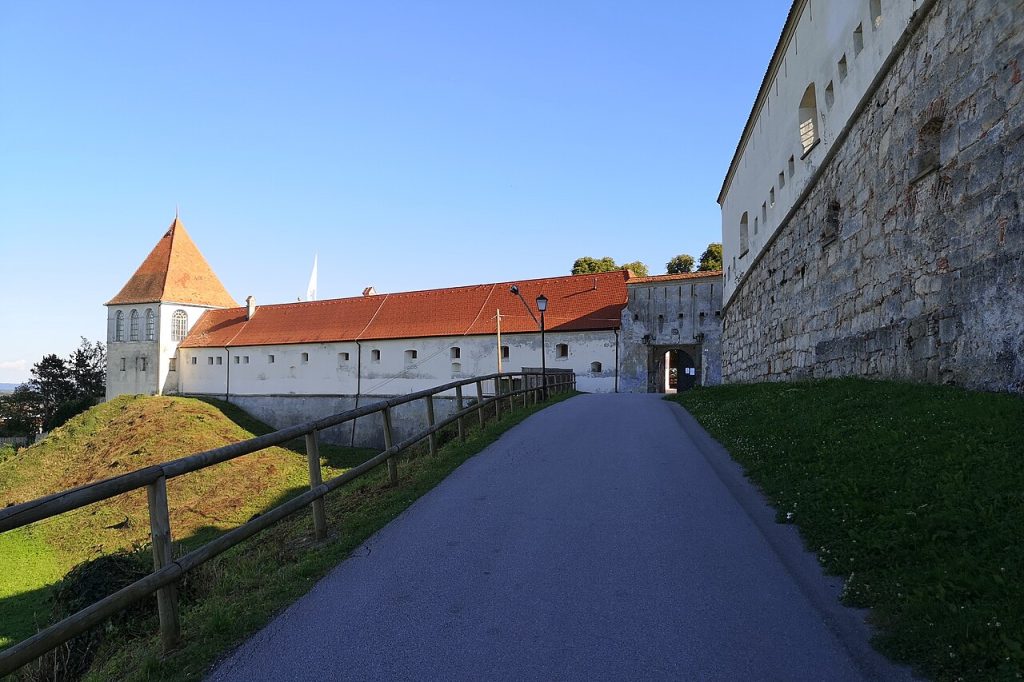
Ptuj Castle is open daily year-round, with longer hours in summer, and one ticket covers the feudal apartments, the tapestries, the Turkish gallery, the musical instruments and the carnival masks; guided tours in English can be booked. Allow two to three hours for the castle and another two for the old town, with its Roman monuments, monasteries and the wine cellar of the Ptuj winery, the oldest in Slovenia. The Kurentovanje carnival runs for ten days before Lent in February and fills every hotel in the region.
Ptuj is thirty minutes from Maribor by train or bus and two hours from Ljubljana; the castle is a ten-minute walk uphill from the town centre. Ljubljana Castle lies to the west and Bled beyond it; the Croatian border and Varaždin are half an hour to the south. Here is the exact spot: Ptuj Castle on Google Maps.
Palaces Nearby
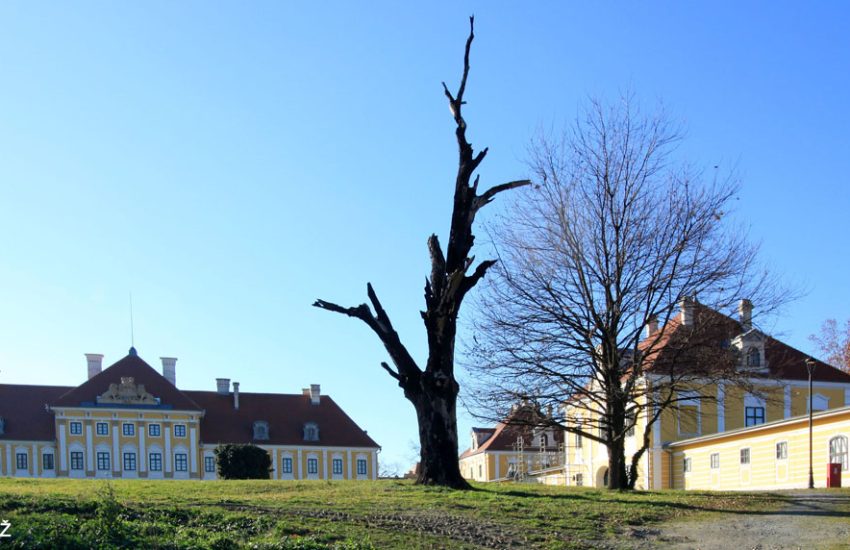
If you have enjoyed this palace, the region holds more remarkable residences. Here are two more well worth adding to your journey:
You May Like
Pejačević Palace in Našice and the Composer Who Grew Up Inside It