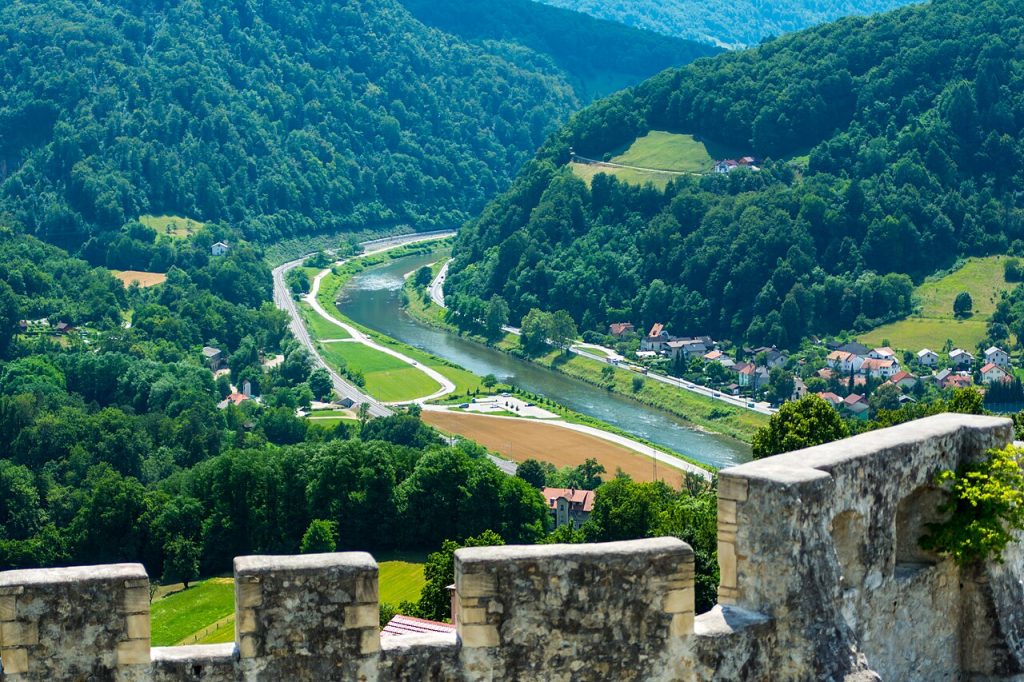
On a wooded hill above the town of Celje, where the Savinja river comes out of the Alps into the Styrian plain, stands the largest castle in Slovenia, a long ruin of grey walls, a great square tower and a ring of ramparts that has been partly rebuilt and partly left to the wind. It was the seat of the counts of Celje, the only noble dynasty to rise from Slovenian soil to the first rank of European power, and their story, which runs from a small Styrian knightly family through imperial favour, royal marriages and a famous love affair to a murder in Belgrade, is the story that every Slovenian schoolchild knows. The three gold stars on the Slovenian flag are the stars of Celje.
The castle grew with the family. It began as a Romanesque fort on the hill in the twelfth century, was enlarged into a great Gothic residence as the counts rose in the fourteenth and fifteenth, and was abandoned after the dynasty died out in 1456, becoming a quarry for the town below and a romantic ruin by the nineteenth century. Restoration since the 1990s has stabilised the walls, rebuilt the tower where Frederick II was imprisoned for loving Veronika of Desenice and turned the courtyard into a stage for mediaeval festivals. It is the natural companion to Veliki Tabor across the border, where Veronika’s legend is told, and to Varaždin, which the Celje also held.
Climb with me from the town, through the gate and up Frederick’s tower, with the counts, their marriages and their murder in order. The contents are below.
In This Article
- A Hill Above the Savinja
- From Roman Celeia to the First Castle
- Heunburgs and the Lords of Sanneck
- 1341: The Lords Become Counts
- Hermann II, the Kingmaker
- Marriages Into Every Royal House
- Frederick II, Veronika and the Tower
- Ulrich II and the Sword in Belgrade
- The Gothic Castle at Its Height
- Abandonment and the Town’s Quarry
- The Romantic Ruin and the First Repairs
- Rebuilding Frederick’s Tower
- Festivals, Views and the Stars on the Flag
- Celje on Video
- Visiting Celje Old Castle Today
- Palaces Nearby
A Hill Above the Savinja
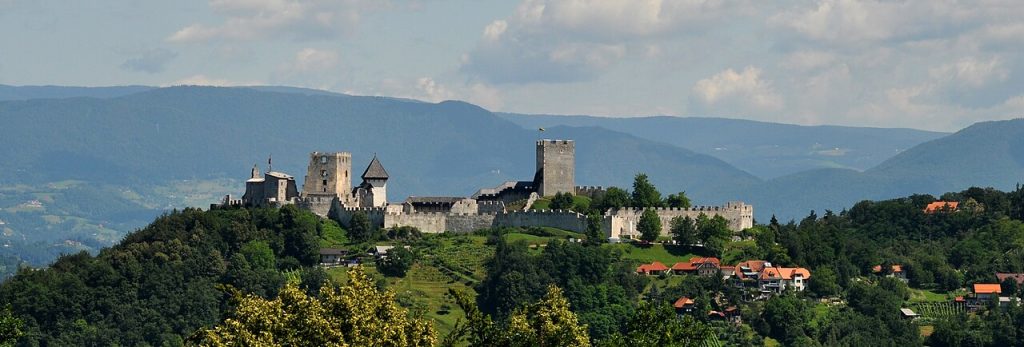
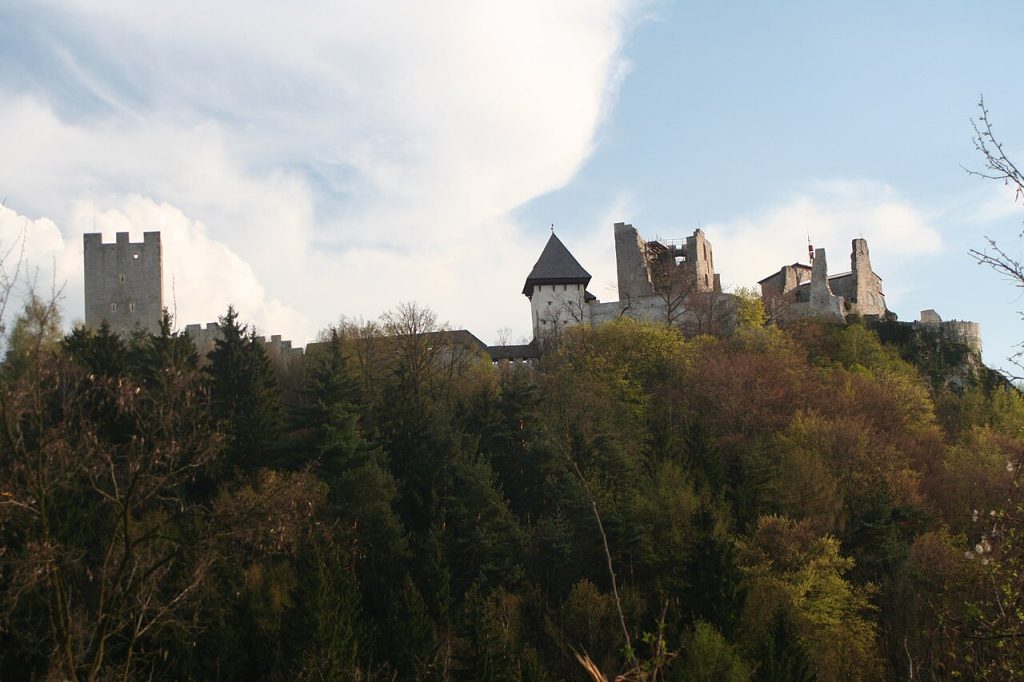
Celje is the third town of Slovenia, a place of Roman foundations, mediaeval streets and nineteenth-century industry on the Savinja, forty minutes east of Ljubljana on the road to Maribor. The castle hill rises south-east of the town across the river, a steep wooded cone with the ruins strung along its summit for more than a hundred metres, and from the town the great tower is visible above the trees. A road and several paths climb to the gate; the walk from the river takes half an hour.
Now, stop here on the bridge over the Savinja and look up. The castle’s outer walls follow the ridge, the tower rises at the eastern end and the whole mass is far larger than any other castle in the country. This was not a fort but a princely residence, and its size tells you what the counts of Celje thought of themselves.
From Roman Celeia to the First Castle
The valley below was Roman Celeia, a prosperous town on the road from Aquileia to Pannonia whose remains fill the regional museum, and the hill above it may have carried a Roman watchtower. The castle proper was built in the first half of the twelfth century as a Romanesque fort, a tower and a walled enclosure at the eastern end of the ridge, by the lords who held the Savinja valley for the dukes of Carinthia. Its oldest walls survive in the core of the ruin, with the small stones and rough masonry of the period.
The castle passed in the thirteenth century to the counts of Heunburg, a Carinthian family, and from them, by marriage and purchase, to the family that would make it famous. Their rise is the castle’s story.
Heunburgs and the Lords of Sanneck
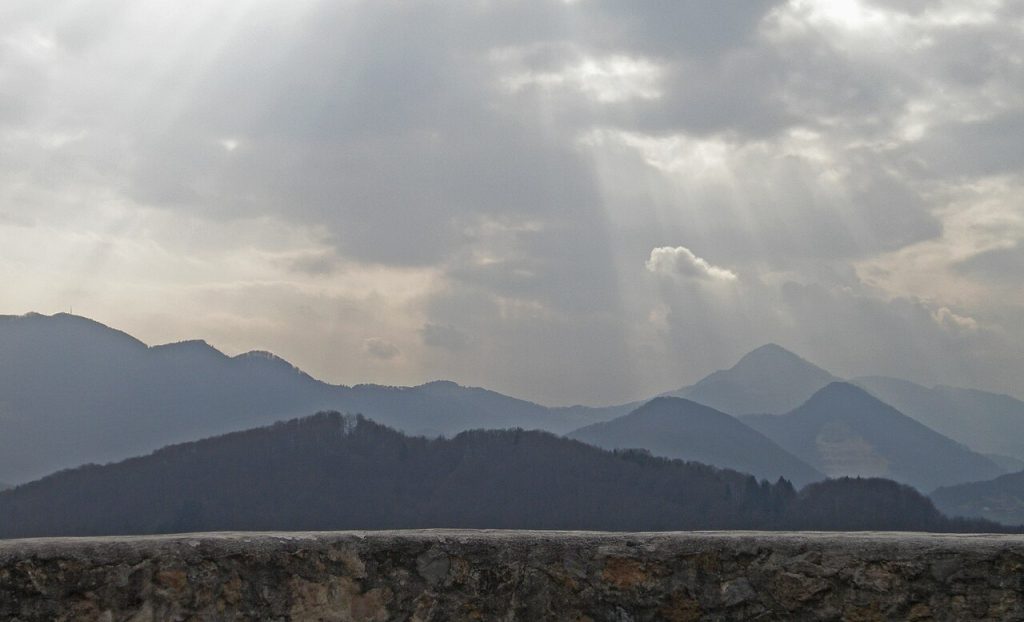
The Lords of Sanneck, Žovnek in Slovenian, were a knightly family from a small castle in the Savinja valley who served the Habsburgs, married well and in 1333 acquired Celje from the Heunburg heirs. Frederick of Sanneck was a loyal supporter of the Habsburg dukes in their wars with Bavaria and Bohemia, and he was rewarded in 1341 when Emperor Louis IV raised him to the rank of count, with Celje as the seat of his new county. From that moment the family called itself the counts of Celje, and the castle on the hill became a residence to match.
The Sanneck origins are a reminder of how fast a mediaeval family could rise: within three generations the knights of a small valley castle were counts, within five they were princes of the empire, and within six they were gone.
1341: The Lords Become Counts
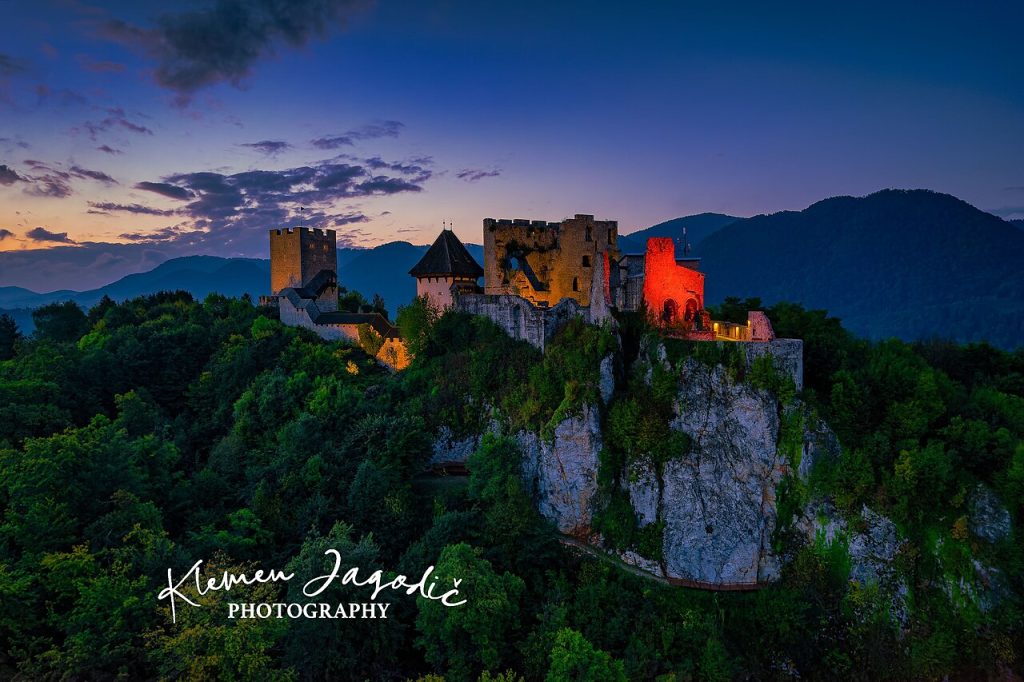
With the title came building. In the second half of the fourteenth century the counts enlarged the castle westward along the ridge, adding a new residential wing with a great hall, a chapel, kitchens and a second courtyard, and surrounding the whole with a ring of walls and towers. The Gothic castle that resulted was the largest in the Slovenian lands, with room for a court of several hundred, and it was the centre of a growing territory that stretched from Carinthia to the Croatian Zagorje.
Walk the length of the ruin from the tower to the western wall and you cover the whole development: Romanesque at the east, Gothic in the middle, fifteenth-century at the west. The counts built for show as much as for defence, and the size of the hall, which can still be measured from its foundations, was meant to impress visiting princes.
Hermann II, the Kingmaker
The family’s greatest figure was Hermann II, who ruled from 1385 to 1435. At the battle of Nicopolis in 1396, where the crusading army of King Sigismund of Hungary was destroyed by the Ottomans, Hermann saved the king’s life and carried him to safety on the Danube, and Sigismund never forgot it. He showered Hermann with lands in Croatia and Slavonia, made him Ban of Croatia and Dalmatia, and in 1405 married his daughter Barbara, who became Queen of Hungary and, when Sigismund was elected emperor, Holy Roman Empress.
Hermann was now the father-in-law of the emperor and the richest lord in the kingdom of Hungary, with Varaždin, Veliki Tabor and dozens of other castles added to Celje. He was ruthless, able and ambitious, and he ran his domains from this hill with the apparatus of a small state. Now, stop here in the great courtyard and imagine the court of a man who had the emperor’s ear and a daughter on the throne.
Marriages Into Every Royal House
The Celje married as well as they fought. Barbara became empress; her sister Anna married the King of Poland; another Anna, Hermann’s granddaughter, married King Władysław II Jagiełło of Poland; a Celje daughter married the Count of Gorizia, another the Duke of Teck; and Ulrich II, Hermann’s grandson, married Catherine Branković, daughter of the Despot of Serbia, which gave the family a claim to the Bosnian and Serbian inheritance. In 1436 Emperor Sigismund raised the counts to princes of the empire, an honour that the Habsburgs, their nominal overlords, bitterly resented.
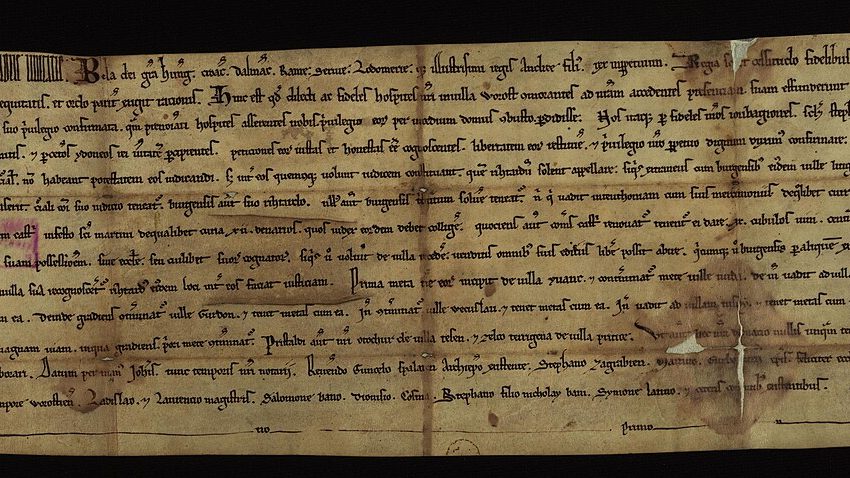
The family arms, three gold six-pointed stars on a blue field, inherited from the Sanneck, were by then known at every court in Europe. In 1991 the new Republic of Slovenia put the three stars on its flag and coat of arms, so that the dynasty that died in 1456 is still, in a sense, the state’s emblem.
Frederick II, Veronika and the Tower
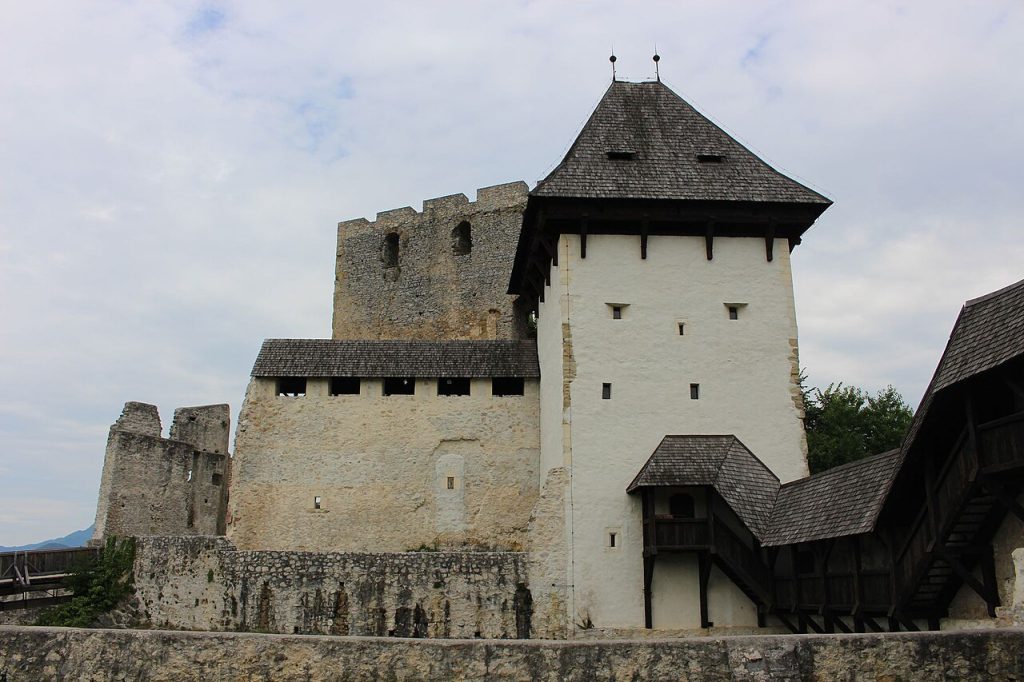
Here is the castle’s most famous story. Hermann’s son Frederick II was married to Elizabeth Frankopan, a Croatian heiress, in a dynastic match arranged by his father, but he fell in love with Veronika of Desenice, a girl of lesser or no nobility from the Croatian Zagorje. In 1422 Elizabeth was found dead at Krapina, Frederick was suspected of her murder, and he fled with Veronika and married her. Hermann, furious at the scandal and the loss of the Frankopan alliance, had his son arrested and imprisoned in the tower at Celje that still bears his name, and had Veronika tried for witchcraft. The court acquitted her; Hermann had her drowned at Ojstrica castle in 1425.
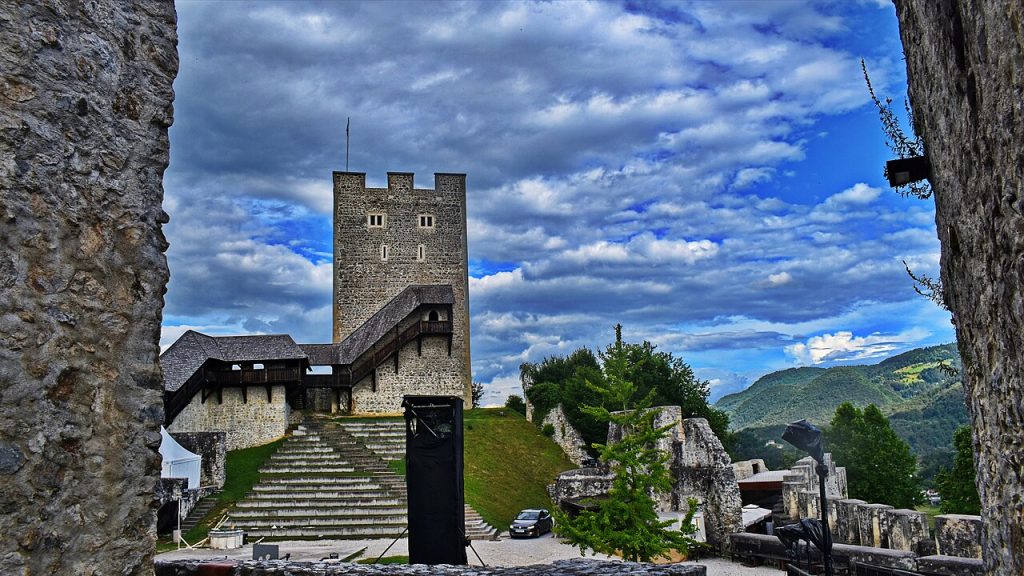
Frederick was eventually released and succeeded his father, and he built a chapel for Veronika at Braslovče, where she was buried. The tower where he sat is the best-preserved part of the castle, rebuilt in the restoration, and you can climb it. Now, stop here at the top and look west toward the Zagorje, where Veliki Tabor tells its own version of the tale.
Ulrich II and the Sword in Belgrade
Frederick’s son Ulrich II was the last and most ambitious of the Celje. Married to a Serbian princess, guardian of the boy king Ladislaus of Hungary, Ban of Croatia and effective ruler of Hungary in the 1450s, he was the rival of the Hunyadi family, whose head, John Hunyadi, was the hero of the Turkish wars. In November 1456, a few months after Hunyadi’s death, Ulrich went to Belgrade to take command of the fortress and was cut down in a brawl with Hunyadi’s son Ladislaus and his men. He left no children, and the dynasty that had risen in a century was extinguished in an afternoon.
The Celje inheritance was fought over by the Habsburgs, the Hunyadi and Ulrich’s widow, and in the end the Habsburgs took Celje and the Slovenian lands. The castle on the hill lost its court, and within a generation it was no longer anyone’s home.
The Gothic Castle at Its Height
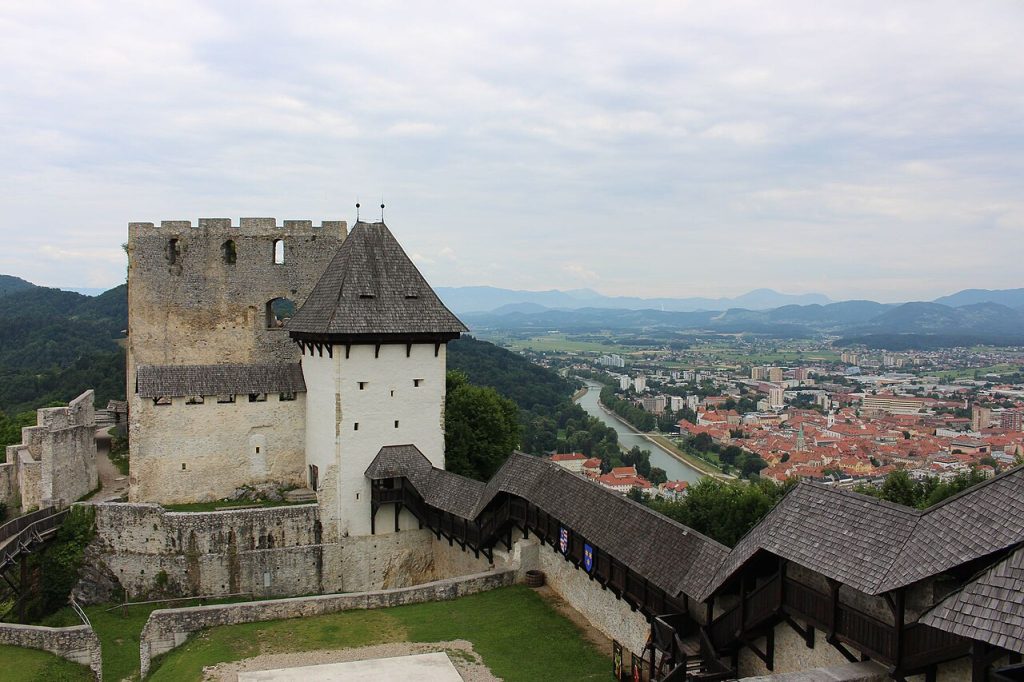
At its height around 1450 the castle covered the whole ridge: an outer ring of walls with towers and a gate at the west, an outer courtyard with stables and workshops, the inner castle with Frederick’s tower, the great hall, the chapel and the counts’ apartments, and cisterns and storerooms cut into the rock. The museum’s model and the panels on the site show the layout, and the foundations of the hall, the chapel and the kitchens have been excavated and marked.
It was a residence rather than a fortress in its last phase, with large windows, fireplaces and painted rooms, and the counts kept a court here of chaplains, clerks, knights and servants that rivalled those of the Austrian dukes. Nothing of the interiors survives, but the scale is legible, and that is enough to understand the family’s ambition.
Abandonment and the Town’s Quarry
The Habsburgs had no use for a princely residence on a hill above a provincial town, and they installed a governor, then a steward, then nobody. The castle was leased to local nobles, used as a prison and a store, and from the eighteenth century it was quarried: the town below needed stone, and the counts’ walls were the nearest source. The roofs fell, the hall collapsed, and by 1800 the castle was a ruin with trees growing in the courtyards.
The quarrying stopped only when the Romantic movement discovered the ruin, and the castle entered the nineteenth century as a picturesque excursion for the townspeople of Celje and a subject for painters.
The Romantic Ruin and the First Repairs
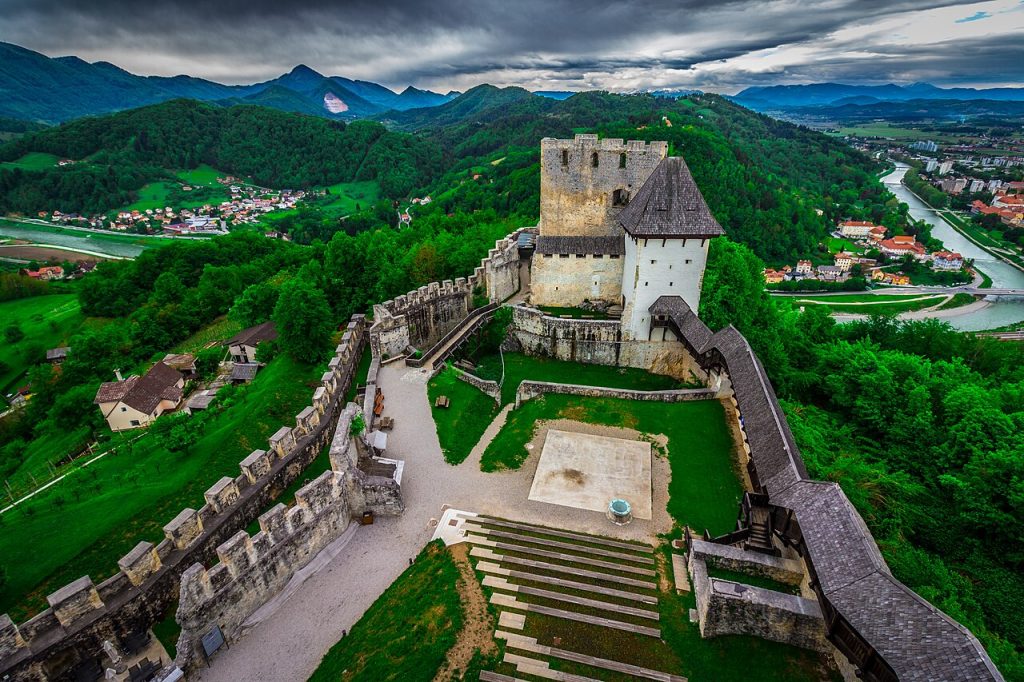
In the nineteenth century the ruin became a symbol: for the German-speaking townspeople of Celje a romantic monument of the Middle Ages, for the Slovenian national movement the seat of the only Slovenian dynasty. Both sides claimed it, the town bought it in 1846, a society for its preservation was founded and the first repairs, mostly to stop the walls falling on visitors, were made. A path was built, a tavern opened in the outer courtyard, and the castle became the place where Celje went on Sundays.
Between the wars and under Yugoslavia the ruin was consolidated piece by piece, and after Slovenian independence the three stars of Celje on the new flag gave the castle a national significance that brought money for a serious restoration.
Rebuilding Frederick’s Tower
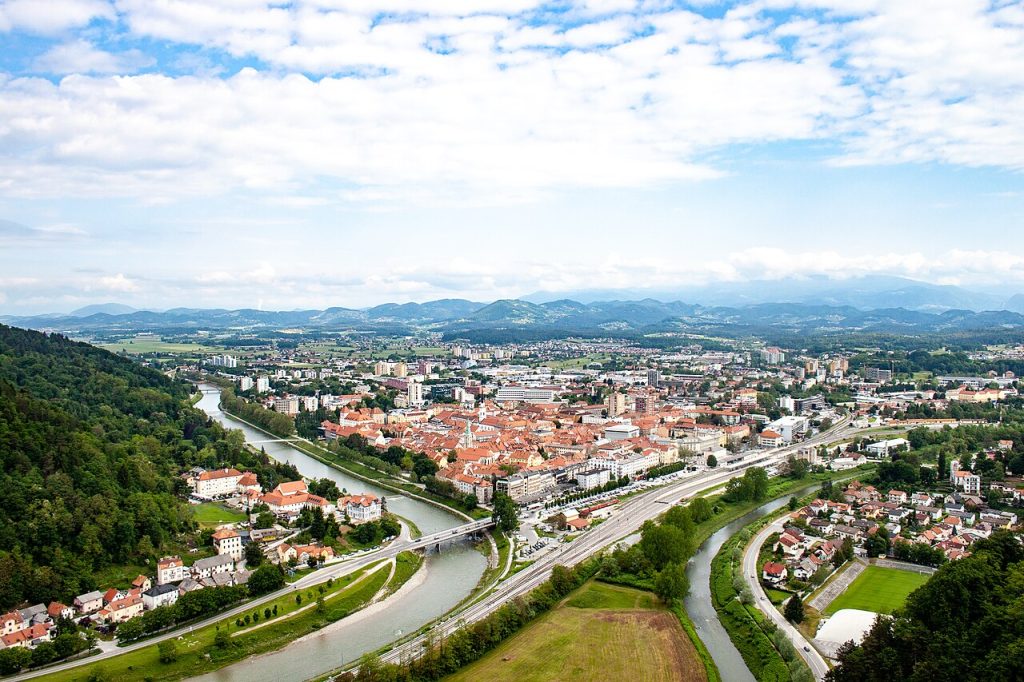
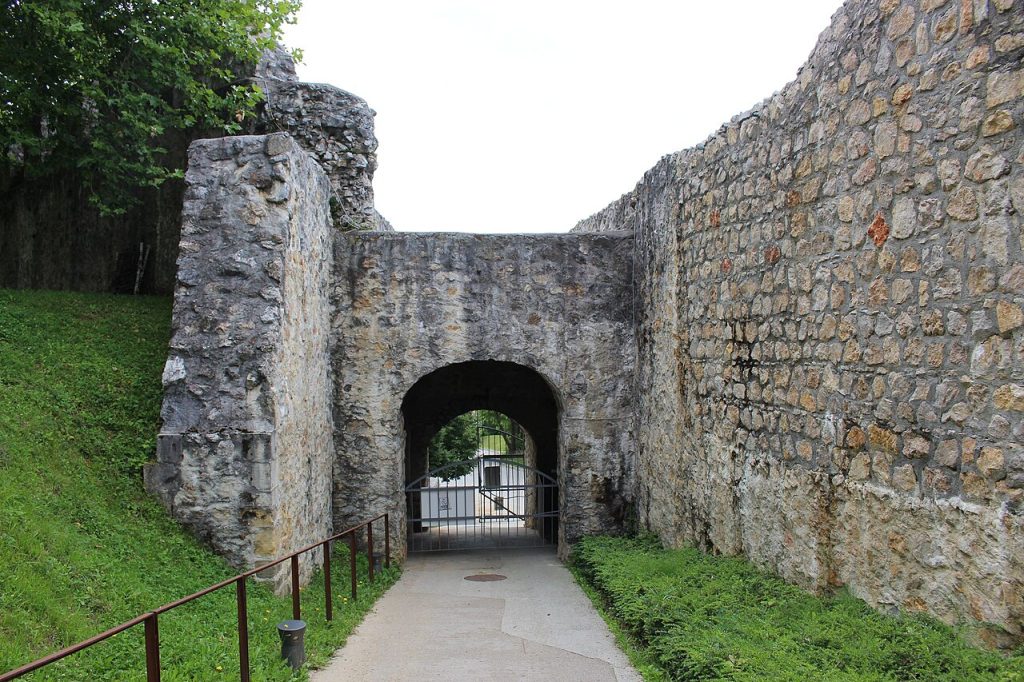
The restoration since the 1990s has been extensive. Frederick’s tower was rebuilt to its full height with a roof and viewing platform, the outer walls and the gate were consolidated, the great hall’s foundations were excavated and laid out, a visitor centre and café were installed in the outer courtyard and the whole site was made safe for the hundreds of thousands who now climb the hill each year. The philosophy was to stabilise the ruin rather than to rebuild the castle, with the tower as the one exception, and the result is a site that is both evocative and legible.
Archaeological work continues, and finds from the castle, including the counts’ seals, coins and the tombstones from their burial church in the town, are in the regional museum below, which also holds the famous skulls of the counts, recovered from their tombs and displayed with a frankness that surprises visitors.
Festivals, Views and the Stars on the Flag
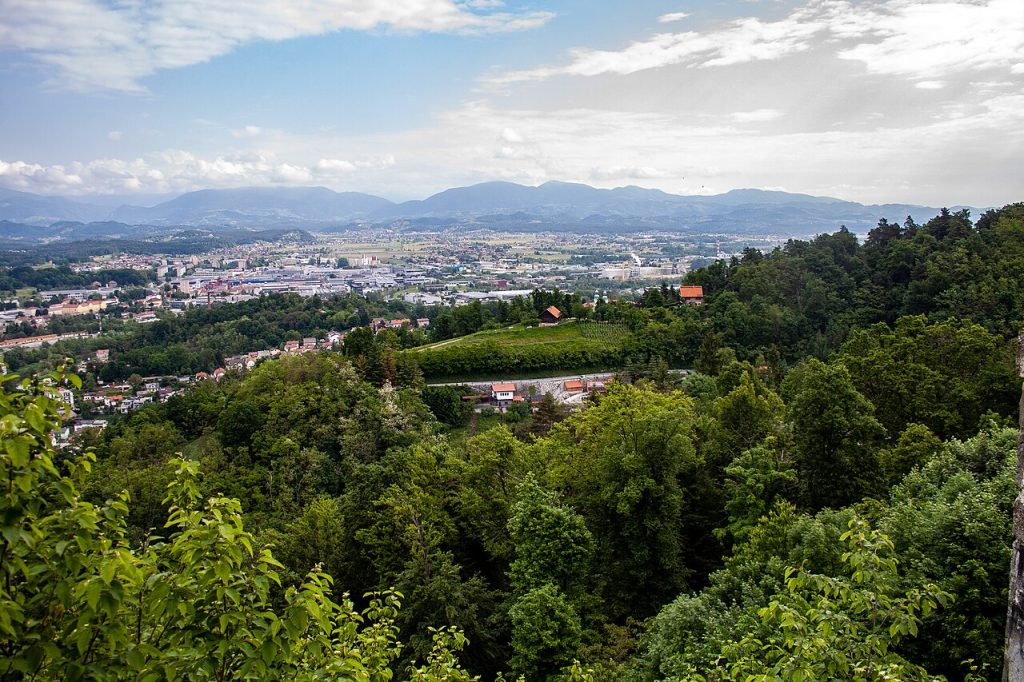
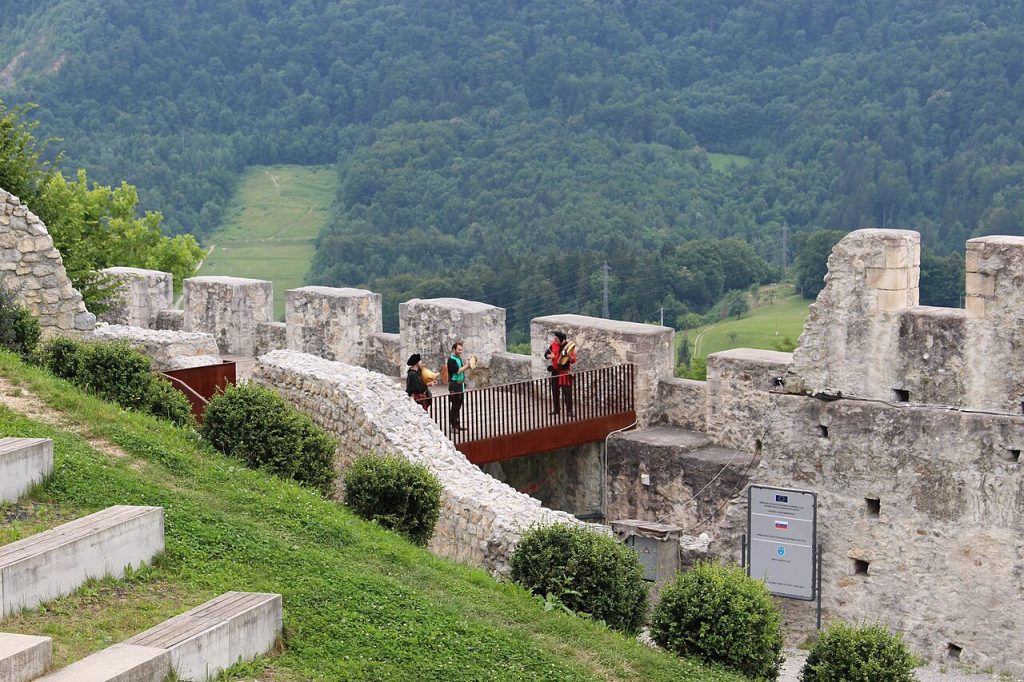
Celje today celebrates its counts. The castle hosts a mediaeval festival every summer with jousting, markets and costumed re-enactors, as well as concerts, theatre and a Christmas event; the town holds a Celje Counts festival in September with a procession and a re-enactment of the murder in Belgrade; and the three stars appear everywhere from the flag to the local beer. The view from Frederick’s tower takes in the town, the Savinja valley and, on clear days, the Kamnik Alps to the north-west.
Now, stop here on the ramparts and consider the arc: a knight’s family from a small valley castle that in a hundred years married an empress, two queens of Poland and a Serbian princess, ruled Hungary and was wiped out by a sword in a fortress on the Danube. The ruin is the right memorial; it is as large and as empty as the ambition.
Celje on Video
Before you plan your trip, take a few minutes to see Celje Old Castle in motion. The video below gives a good sense of the setting, the scale of the buildings and the atmosphere of the grounds.
Visiting Celje Old Castle Today
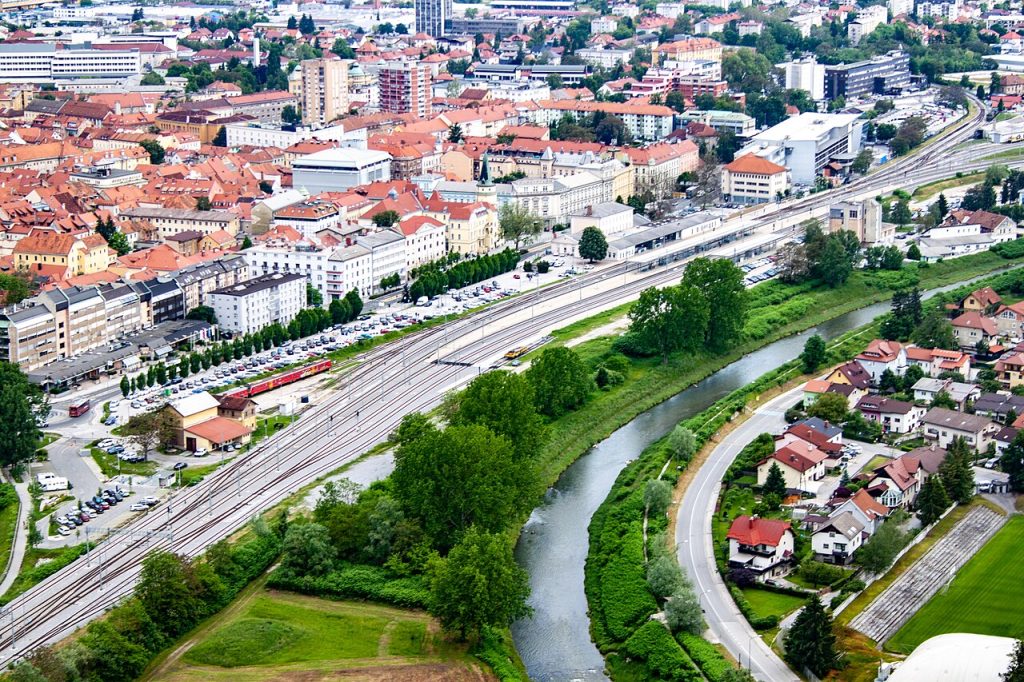
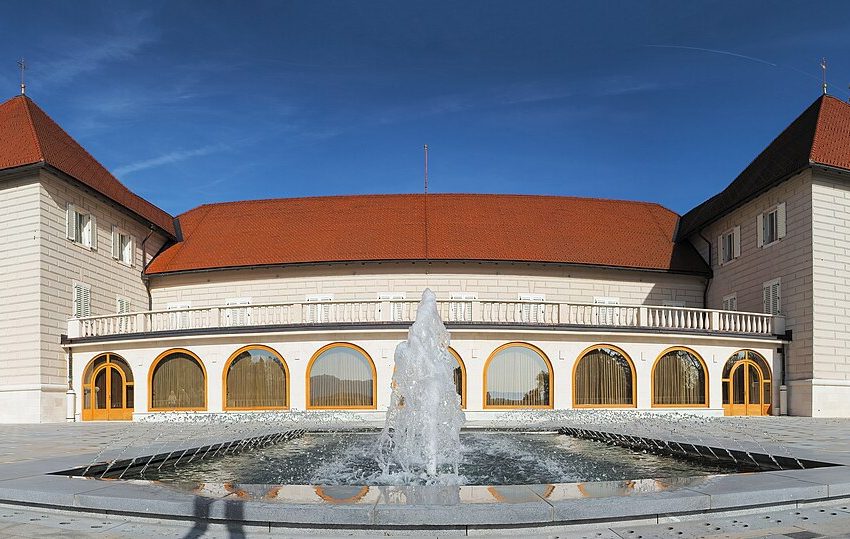
Celje Old Castle is open daily year-round, with longer hours in summer, and the ticket covers the ruins, Frederick’s tower and the exhibitions in the visitor centre; the café in the outer courtyard serves meals in season. Allow ninety minutes for the castle and the tower, and combine it with the Celje Regional Museum in the town, which holds the Roman finds, the counts’ tombstones and the skulls, and with the Princely Palace, the counts’ town residence. The mediaeval festival is in late summer.
Celje is forty minutes from Ljubljana by train or motorway and an hour from Maribor; the castle is a thirty-minute walk uphill from the station or a short drive to the car park below the gate. Veliki Tabor in Croatia is an hour to the south-east, Varaždin an hour and a half. Here is the exact spot: Celje Old Castle on Google Maps.
Palaces Nearby
If you have enjoyed this palace, the region holds more remarkable residences. Here are two more well worth adding to your journey:
You May Like