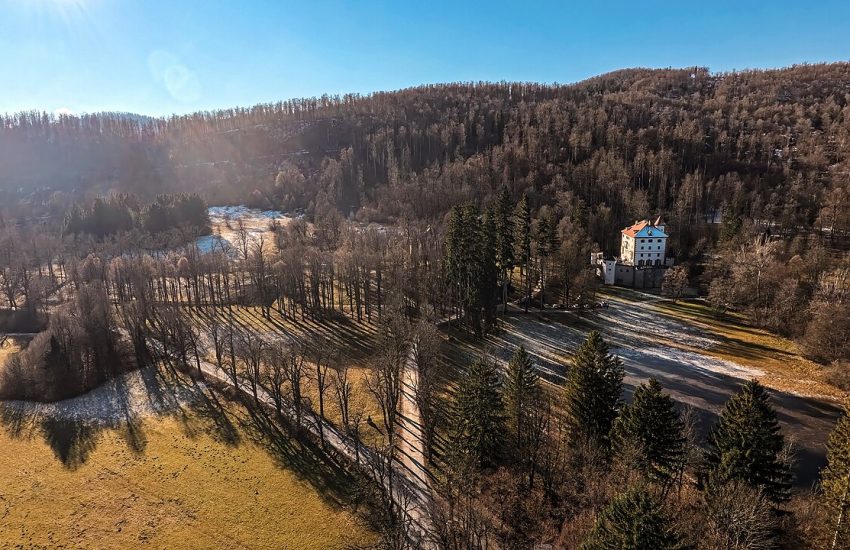
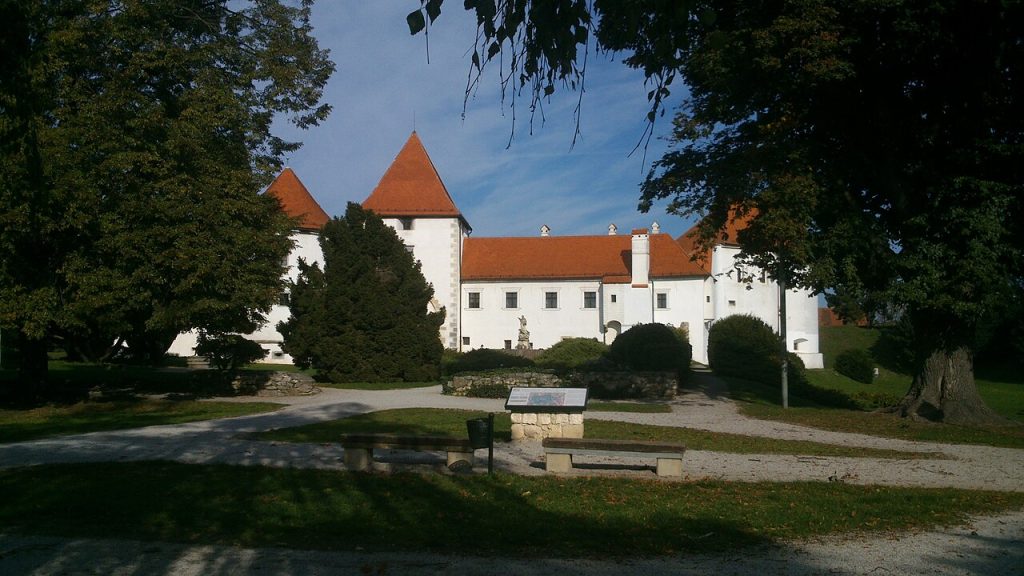
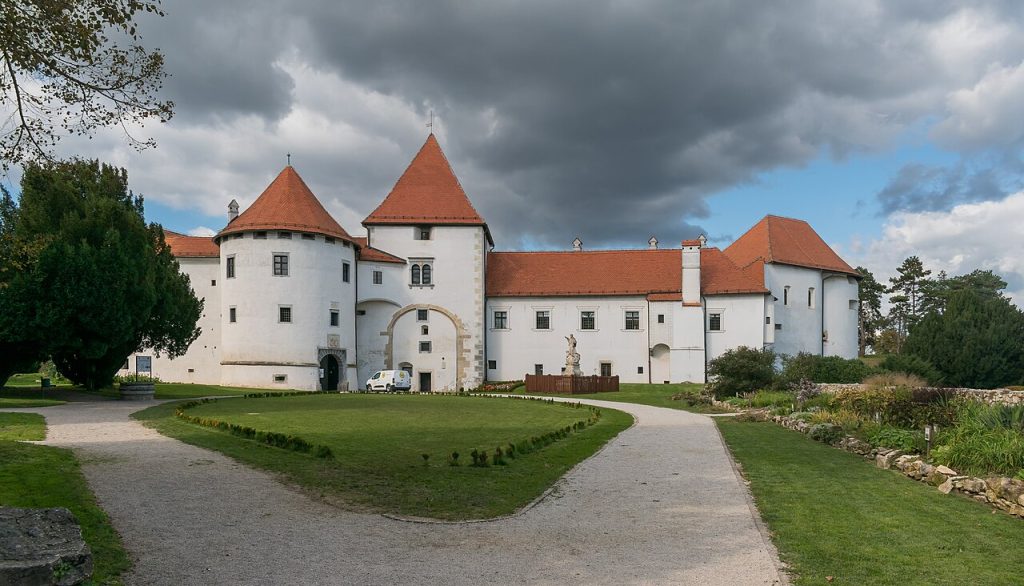
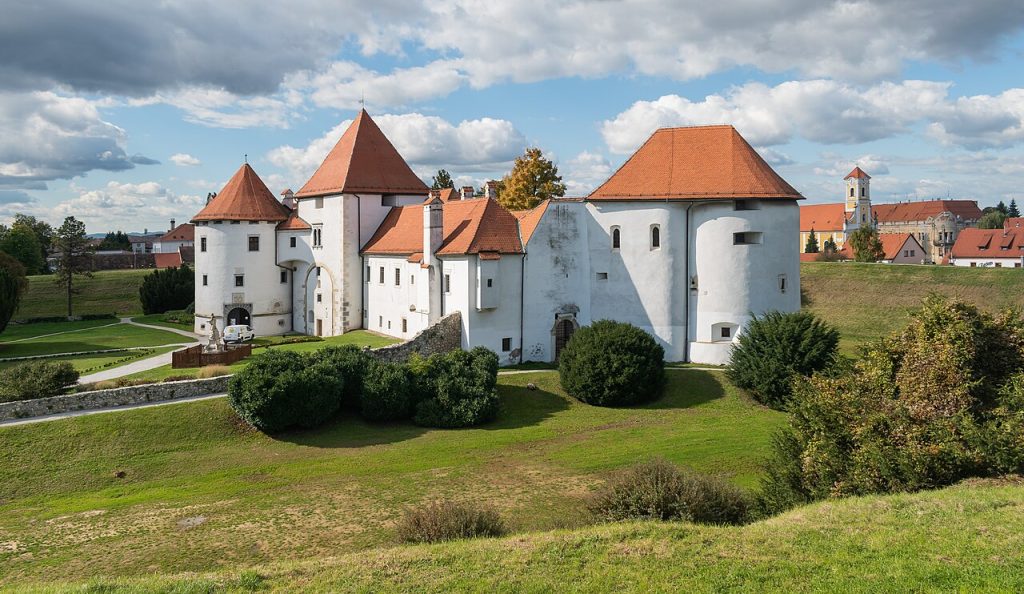
Varaždin is the Baroque capital of Croatia, a town of palaces, churches and painted facades on the Drava near the Hungarian border, and at the edge of its old town, across a dry moat with earthworks and a drawbridge, stands the building that made the town: the Stari grad, the Old Castle, a white Renaissance fortress with a great round tower and arcaded courtyards. It was the seat of the Erdődy counts for three hundred and forty years, the strongest fortress on the Croatian border with Hungary in the Turkish wars, and since 1925 the city museum.
The town around it has its own remarkable story. For twenty years, from 1756 to 1776, Varaždin was the capital of Croatia, the seat of the Ban and the Croatian Royal Council, and its nobles built palaces that still line the streets. Then, on an April day in 1776, a fire that legend blames on a boy who dropped a pipe in a barn, or a cow that kicked over a lantern, burned most of the town, and the government moved to Zagreb for good. Varaždin rebuilt itself in the Baroque it already loved and settled into provincial elegance, with the castle at its side.
Walk with me across the moat, through the gate and into the arcaded courtyards, with the knights, the engineer, the counts and the fire in order. The contents are below.
In This Article
- A Town on the Drava Road
- The Mediaeval Castle and the Free Royal Town
- Counts of Celje and Ungnad Barons
- Domenico dell’Allio and the Fortress Against the Turks
- The Round Tower and the Earthworks
- The Erdody Counts: 1585 to 1925
- The Arcaded Courtyards
- 1756: Varazdin Becomes the Capital
- The Fire of 1776 and the Cow
- The Baroque Town Around the Castle
- The City Museum Since 1925
- Weapons, Furniture and the Guild Rooms
- Spancirfest, Baroque Evenings and the Castle Today
- Varazdin on Video
- Visiting Varazdin Old Castle Today
- Palaces Nearby
A Town on the Drava Road
Varaždin lies in the flat valley of the Drava where the river leaves Slovenia and turns east toward Hungary, on the ancient road from Vienna and Graz to the Pannonian plain. The town grew up at a river crossing and a customs post, received its charter as a free royal town in 1209, one of the first in Croatia, and prospered on trade, crafts and the presence of the nobility. The castle stood on the north-western edge, between the town and the river, controlling both.
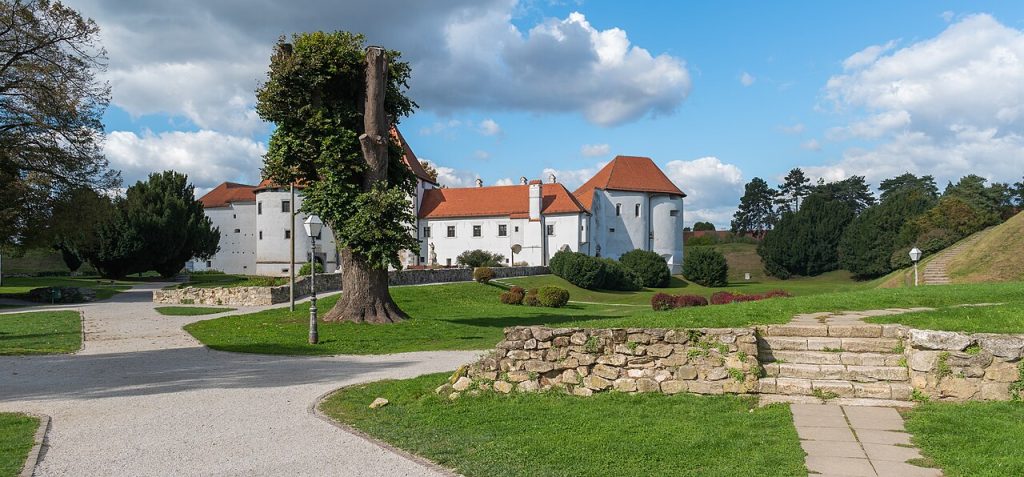
Now, stop here on the bridge over the moat and look at the castle. It is white, low and broad, with a great round tower at one corner, steep roofs and small windows, surrounded by grass-covered earthworks that were once bastions. The town’s Baroque spires rise behind you; ahead the castle sits in its own green space, a fortress that has become a park.
The Mediaeval Castle and the Free Royal Town
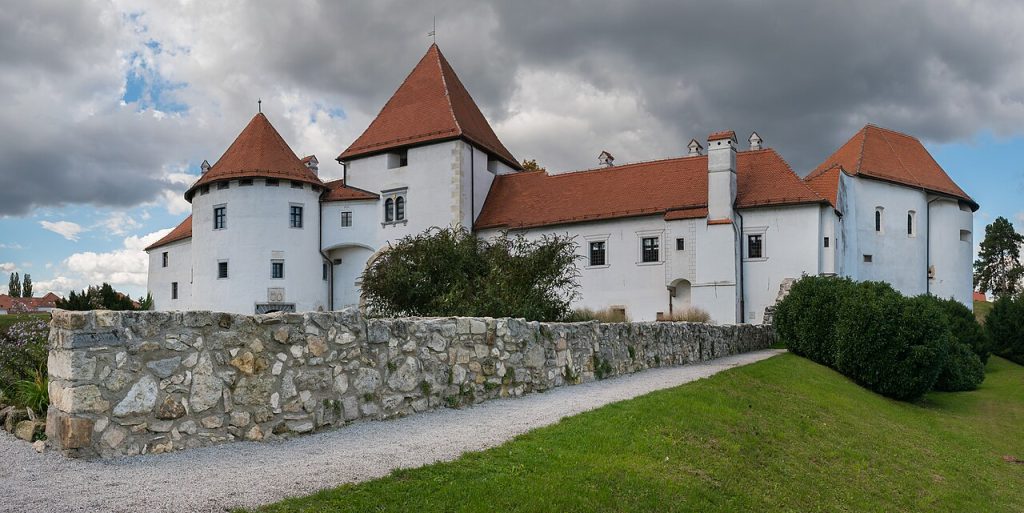
A royal castle stood here by the twelfth century, guarding the Drava crossing for the kings of Hungary and Croatia, and in 1209 King Andrew II granted Varaždin the privileges of a free royal town, the first in Croatia, as a reward for the townspeople’s help when he had been imprisoned in the castle by his brother. The mediaeval castle was a tower and a walled enclosure, rebuilt in the fourteenth and fifteenth centuries, and parts of its walls survive in the core of the present building.
The castle and the town were separate jurisdictions, the castle belonging to whoever held it from the king and the town to its own council, and the relationship was often quarrelsome. The castle’s lords tried to tax the townspeople, the townspeople appealed to the king, and the dispute lasted centuries.
Counts of Celje and Ungnad Barons
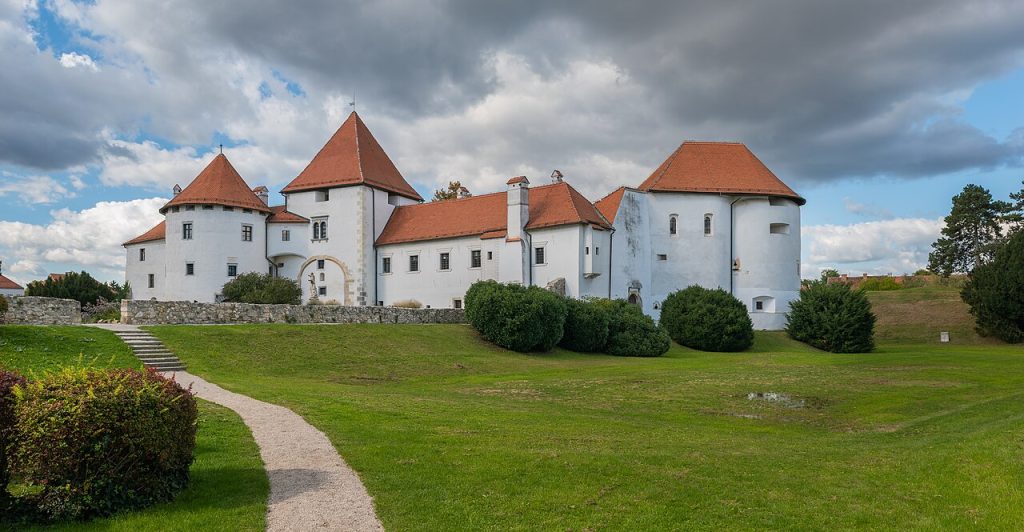
In the fifteenth century the castle belonged to the counts of Celje, the same dynasty whose heir loved Veronika of Desinić, and after their extinction in 1456 it passed to a succession of Hungarian and Croatian magnates until, in 1543, King Ferdinand I pledged it to the Ungnad family, barons from Styria who were among the leading Protestant nobles of the Habsburg lands. Hans Ungnad, the most famous of them, was a patron of the Slovenian Reformation and financed the printing of Protestant books in Slovenian and Croatian at Urach in Germany.
It was under the Ungnads, in the middle decades of the sixteenth century, that the castle was transformed from a mediaeval fort into the Renaissance fortress you see, because the Ottoman frontier had reached the Drava and Varaždin was now the key to Croatia’s northern defences.
Domenico dell’Allio and the Fortress Against the Turks
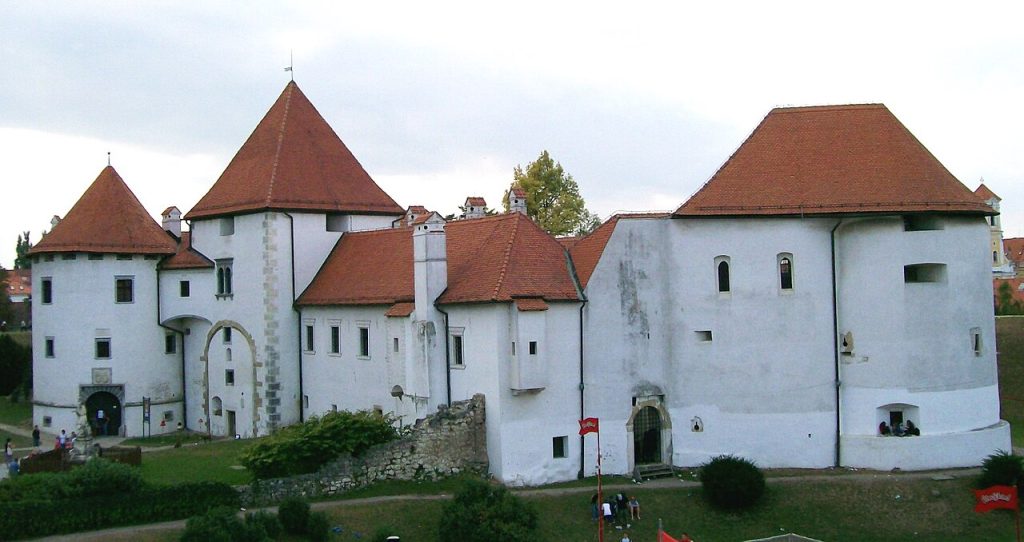
After the fall of Hungary to the Ottomans in 1526 and the Turkish conquest of most of Croatia in the following decades, Varaždin became a frontier fortress of the Habsburg military border, and the court sent its best engineer to rebuild it. Domenico dell’Allio, an Italian from Lugano who had fortified Graz and other Habsburg towns, redesigned the castle between the 1540s and 1550s as a Renaissance artillery fort: the mediaeval walls were thickened and lowered, the great round tower was built to carry cannon, and the whole was surrounded by earthen bastions and a wide moat filled from the Drava.
The work made Varaždin the strongest fortress in northern Croatia, and the Turks, who raided the region repeatedly, never attempted a siege. Walk the earthworks, now grassed and planted with trees, and look at the round tower: this is sixteenth-century military engineering at its most advanced, and it is still legible under the park.
The Round Tower and the Earthworks
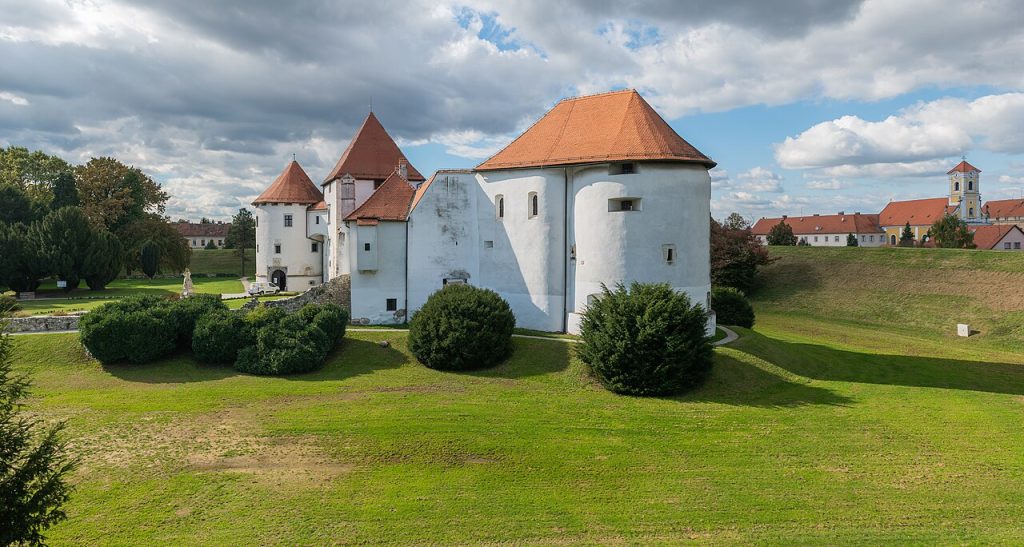
The round tower is the castle’s symbol: a squat, immensely thick cylinder of masonry with gun embrasures at several levels and a conical roof, standing at the corner where the castle faces the open country toward the river. It was designed to mount artillery and to withstand it, and its walls are several metres thick at the base. Beside it the entrance gatehouse, with its drawbridge over the moat, controlled the only way in.
The earthworks around the castle were once higher and sharper, true bastions in the Italian manner, and they were levelled into their present gentle shape in the nineteenth century when the castle ceased to be military. Now, stop here on the top of the earthwork and look at the tower against the sky; from this angle, with the moat below, you see what the Ottoman scouts saw and decided to leave alone.
The Erdody Counts: 1585 to 1925
In 1585 Emperor Rudolf II granted the castle to Toma Erdődy, Ban of Croatia and the victor over the Turks at the battle of Sisak in 1593, as hereditary property together with the office of commander of the Varaždin fortress. The Erdődy, a Hungarian-Croatian magnate family, held the castle for the next three hundred and forty years, through the Turkish wars, the Baroque age, the Napoleonic period and the Habsburg monarchy, until they sold it to the city in 1925.
The Erdődy were bans, bishops, generals and courtiers, among the greatest families of the kingdom, and they made the castle their residence as well as their fortress, adding the arcaded courtyards, the chapel and the Baroque apartments. The museum’s portrait gallery follows them across the centuries, and their arms are over every door.
The Arcaded Courtyards
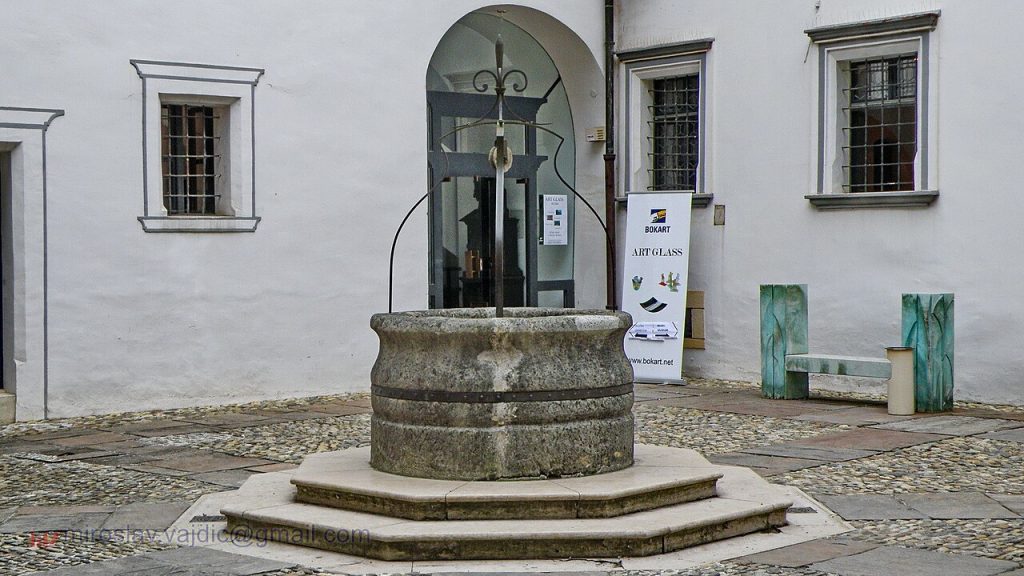
Pass through the gatehouse and the fortress reveals its other face. The buildings around the courtyards carry arcaded galleries on three levels, with round arches on stone columns, built in the late sixteenth and seventeenth centuries to connect the rooms and to give the Erdődy a residence worthy of their rank. The arcades are the castle’s finest feature and the model for the smaller ones at Veliki Tabor and elsewhere in the Zagorje, and they are now the setting for the museum’s displays and for summer concerts.
Now, stop here in the main courtyard and look up at the galleries. The exterior is all walls and gun loops; the interior is a Renaissance palace. The combination is the signature of the Croatian frontier castle, built by families who fought the Turks and lived like Italians.
1756: Varazdin Becomes the Capital
In 1756 Ban Franjo Nádasdy moved the seat of the Croatian government from Zagreb to Varaždin, and for twenty years the town was the capital of Croatia, home to the Ban, the Croatian Royal Council created by Maria Theresa in 1767, the parliament’s sessions and the nobility who followed the court. The nobles built or rebuilt palaces in the town in the Baroque and Rococo taste, the Drašković, Patačić, Sermage and Keglević palaces among them, and the town acquired the elegance it still has.
The castle in these years was the Erdődy residence and the fortress’s headquarters rather than the seat of government, which sat in the palaces of the town, but the capital’s society filled its courtyards. Varaždin in the 1760s was the most fashionable town in Croatia, and its carnival and theatre were famous.
The Fire of 1776 and the Cow
On 25 April 1776 a fire broke out in the town and, driven by wind, destroyed most of Varaždin within hours: hundreds of houses, churches, the palaces and the government offices. Legend blames a boy smoking a pipe in a barn or a cow that kicked over a lantern; the records blame carelessness and the wind. The Croatian Royal Council moved to Zagreb, which has been the capital ever since, and Varaždin’s two decades of glory were over.
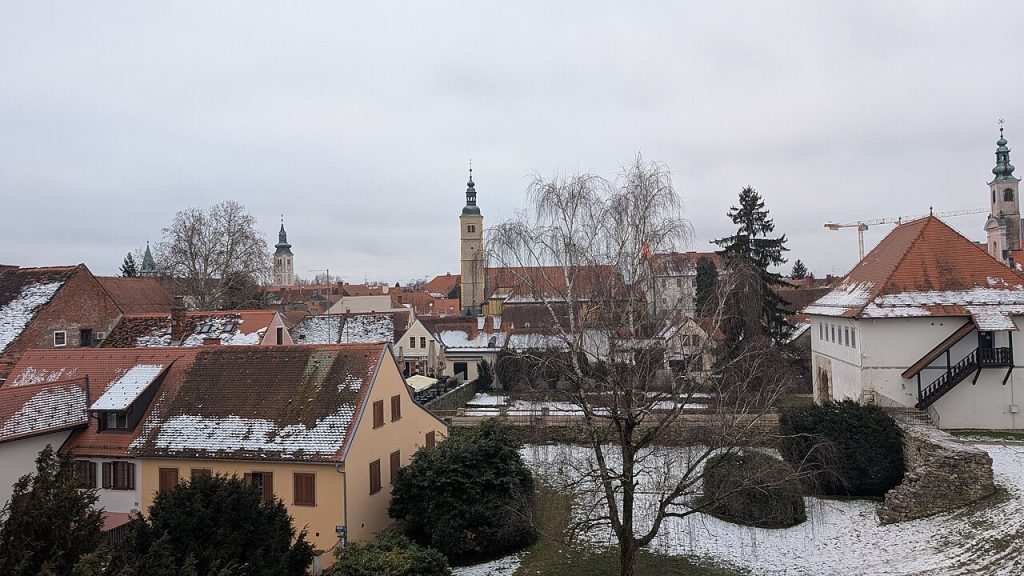
The town rebuilt itself, in Baroque and early classicism, with the same families in the same palaces, and the rebuilding is why Varaždin is so coherent today. The castle, outside the dense town and protected by its moat, escaped the fire. Now, stop here on the main square and look at the facades: almost everything you see was built or refaced after 1776.
The Baroque Town Around the Castle
Leave the castle for an hour and walk the town. Varaždin’s old town is the finest Baroque ensemble in Croatia, with a dozen noble palaces, the cathedral and the Franciscan, Ursuline and Capuchin churches, the town hall with its sixteenth-century tower and the painted facades of the main square. The Sermage palace holds the gallery of old masters, the Herzer palace an entomological museum, and the streets between them are lined with cafés.
The town’s cemetery, laid out around 1905 as a park of clipped trees and hedges, is one of the most beautiful in Europe and a short walk from the castle. The whole ensemble, castle, town and cemetery, is on Croatia’s list for UNESCO nomination.
The City Museum Since 1925
In 1925 the Erdődy sold the castle to the city of Varaždin, which installed the city museum, founded in 1923, in its rooms. The museum has occupied the castle ever since, surviving the Second World War and the Yugoslav period, and it has restored the building in stages: the roofs and arcades between the wars, the tower and walls after 1945, the interiors and the earthworks since Croatian independence. The castle is now one of the best-kept historic buildings in the country.
The museum’s remit is the history of the town and the region, and its displays run from the castle’s own archaeology through the Erdődy centuries to the Baroque capital and the nineteenth-century town, with the arcades and the chapel as period rooms.
Weapons, Furniture and the Guild Rooms
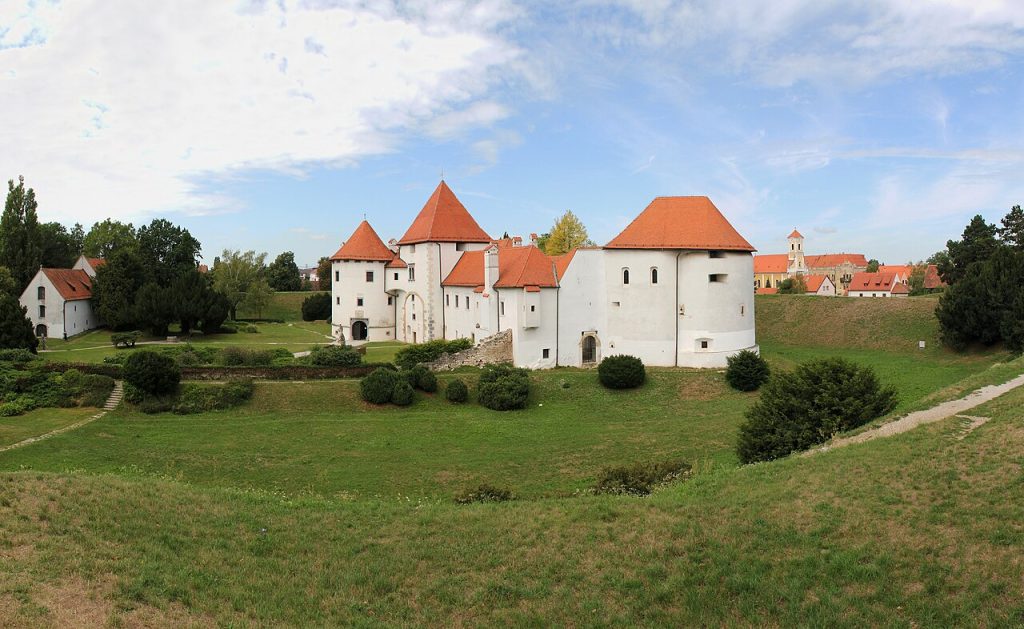
The collections are rich. The weapons rooms hold arms and armour from the Turkish wars, including Ottoman trophies and the equipment of the Varaždin garrison; the furniture rooms show the interiors of the nobility from the Renaissance to the Biedermeier, with tiled stoves, clocks and portraits; the guild rooms recall the town’s craftsmen, with the chests, seals and banners of the guilds that ran Varaždin’s economy; and the chapel, with its Baroque altar, is the castle’s most complete interior.
Look for the Erdődy portraits, the Turkish standards and the model of the castle at the height of its fortifications, which shows how much of dell’Allio’s work has been softened by time. Allow two hours; the castle is larger inside than it looks.
Spancirfest, Baroque Evenings and the Castle Today
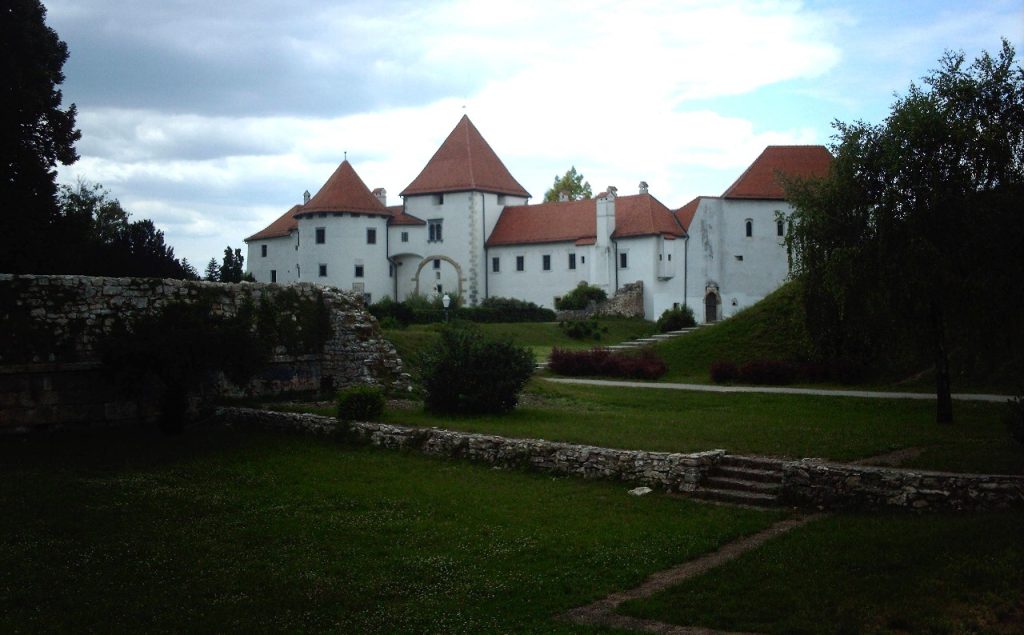
Varaždin today is a festival town. Every late August the Špancirfest, a ten-day street festival of music, theatre and crafts, fills the old town and the castle grounds with hundreds of thousands of visitors, and every autumn the Varaždin Baroque Evenings bring period-instrument ensembles to the churches and the castle’s courtyard for one of the leading early-music festivals in Europe. The castle is the backdrop to both, with concerts under the arcades and the earthworks as an open-air stage.
Now, stop here on the earthworks on a festival evening, with the castle lit and the town’s spires behind, and consider that this fortress, built against the Turks and held by one family for three centuries, is now the most relaxed place in the town. The Erdődy sold it to the city; the city gave it to everyone.
Varazdin on Video
Before you plan your trip, take a few minutes to see Varazdin Old Castle in motion. The video below gives a good sense of the setting, the scale of the buildings and the atmosphere of the grounds.
Visiting Varazdin Old Castle Today
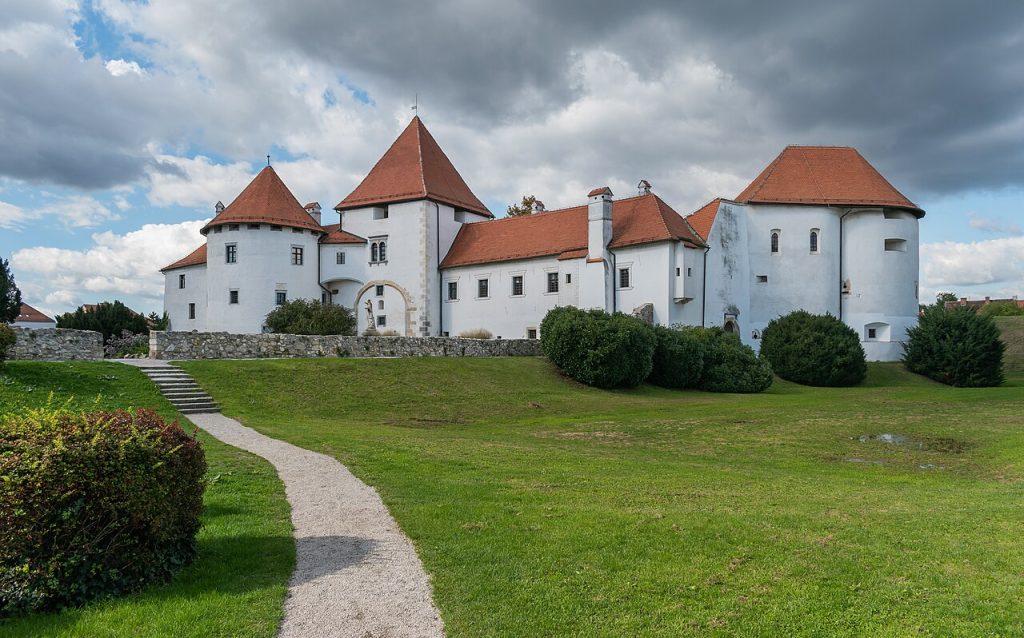
The Varaždin City Museum in the Old Castle is open year-round, usually Tuesday to Sunday, with the historical collections, the chapel and the tower on one ticket; the earthworks and moat park are free and open at all times. Allow two hours for the castle and half a day for the old town, the Sermage gallery and the cemetery. Špancirfest runs in late August and the Baroque Evenings from late September into October; both fill the town’s hotels.
Varaždin is an hour and a quarter from Zagreb by motorway or two hours by train, and thirty minutes from the Slovenian border at Maribor; the castle is a five-minute walk from the main square. Veliki Tabor lies forty minutes to the west, Trakošćan half an hour, and Celje in Slovenia an hour and a half. Here is the exact spot: Varazdin Old Castle on Google Maps.
Palaces Nearby
If you have enjoyed this palace, the region holds more remarkable residences. Here are two more well worth adding to your journey:
You May Like
Veliki Tabor Castle and the Legend of Veronika Walled Up for Love