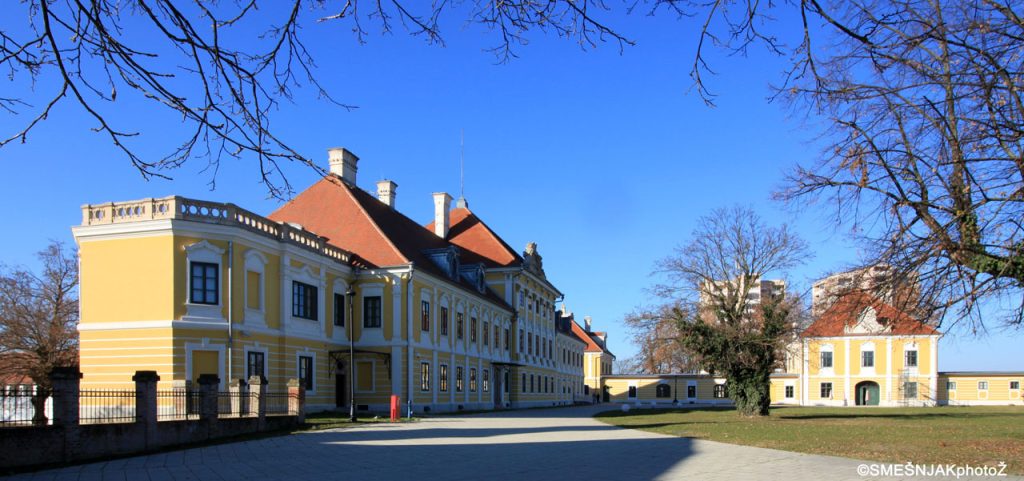
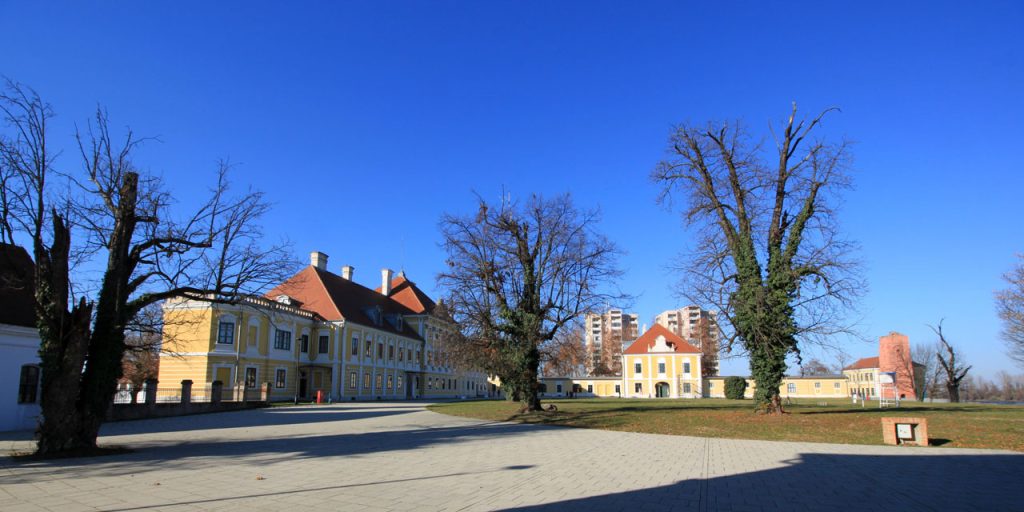
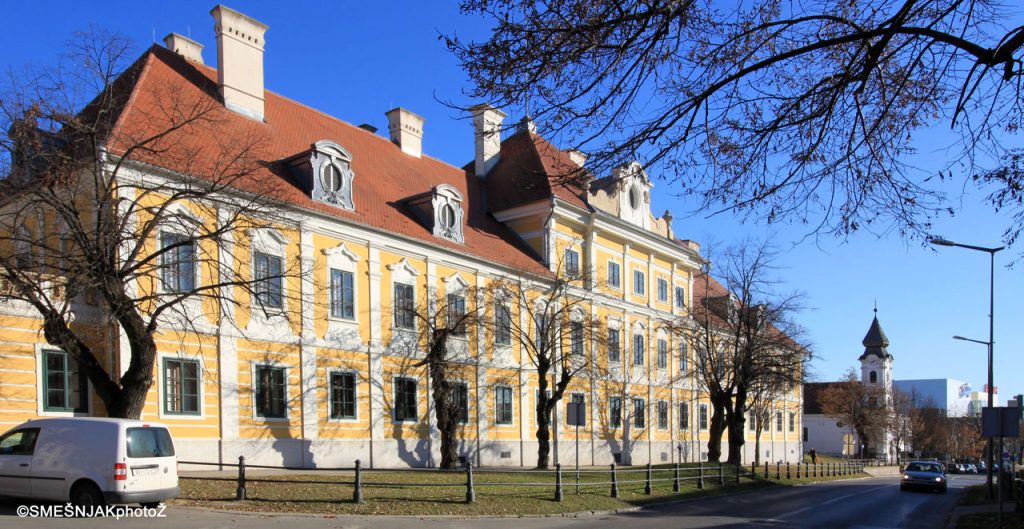
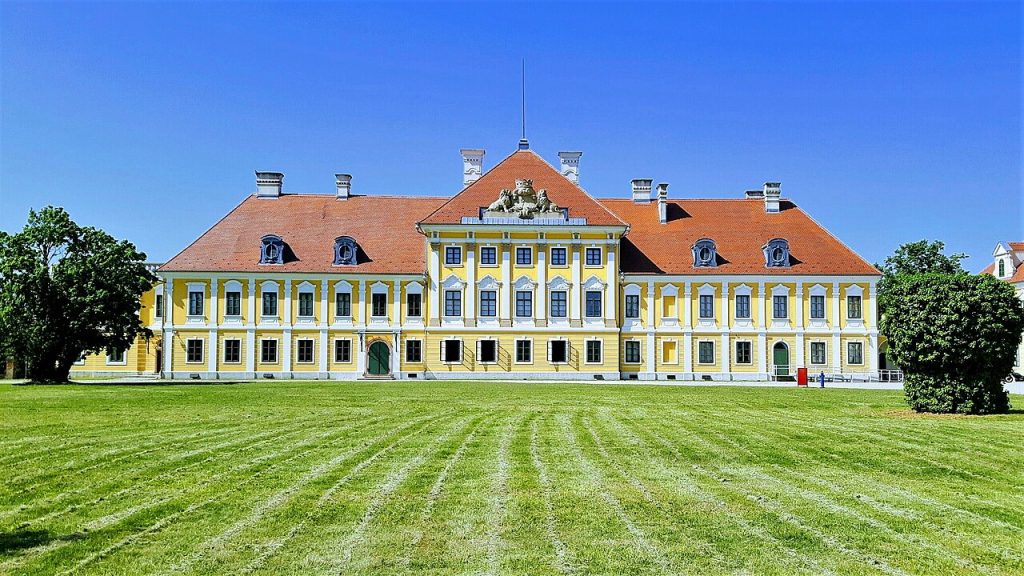
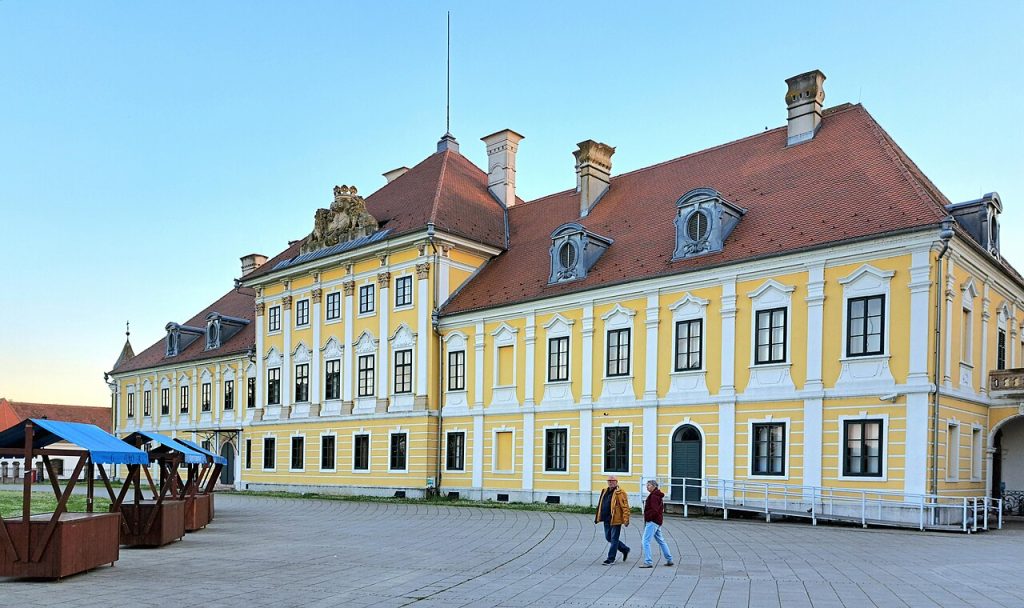
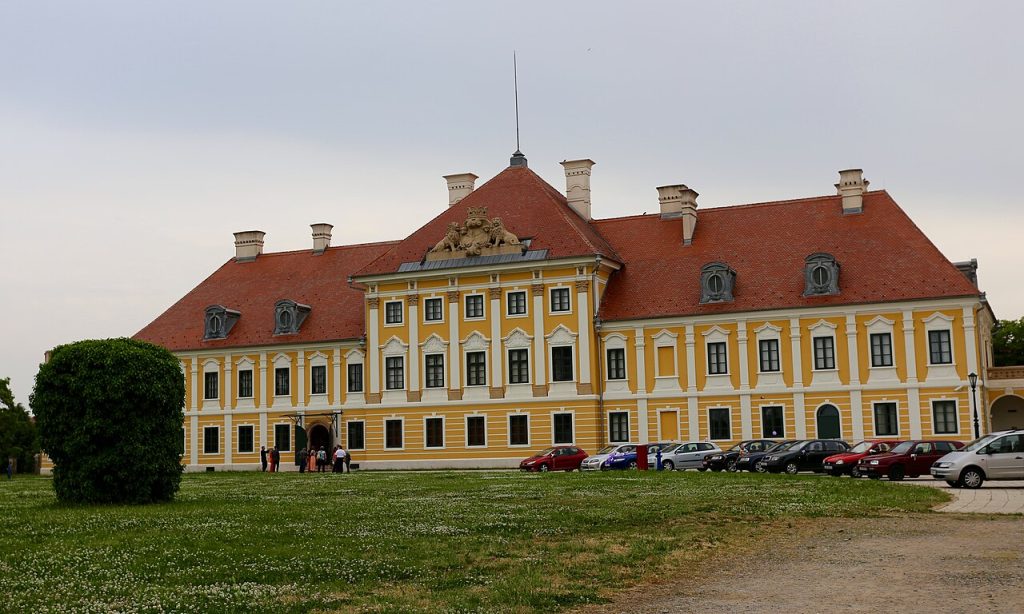
On the bank of the Danube at Vukovar, where the river is wide and slow and Serbia lies on the far shore, stands a long Baroque palace of pale yellow and white, with a central block, two wings, a mansard roof and a garden running down to the water. It is Eltz Manor, Dvorac Eltz, the seat from 1736 to 1945 of the Counts Eltz, a Rhineland family who held one of the largest estates in Slavonia, and since 1968 the home of the Vukovar Municipal Museum. In the autumn of 1991 it was shelled for three months by the Yugoslav army and Serbian paramilitaries besieging the town, and when Vukovar fell in November it was a roofless, burned-out shell with its collections looted.
What you see today is a reconstruction, carried out between 2008 and 2011 with Croatian government money and reopened as the most complete museum in eastern Croatia, with the returned collections, the famous Vučedol Dove and a floor devoted to the siege. The palace is the symbol of Vukovar’s rebirth, and the story of its destruction and resurrection is as much a part of the visit as the Baroque rooms. It is the first of the three Slavonian houses in this series, with the Pejačević palace at Našice and the Odescalchi castle at Ilok to follow.
Walk with me from the Danube quay to the garden front, through the museum and up to the room of the siege, with the Eltz, the war and the rebuilding in order. The contents are below.
In This Article
- A Palace on the Danube
- The Counts Eltz Come to Slavonia
- 1749: A Baroque Palace Rises
- The Vukovar Estate and Its Wealth
- Enlargement and the Nineteenth Century
- The Last Counts and 1945
- A Town Museum in a Palace
- 1991: Eighty-Seven Days Under Fire
- A Roofless Shell and a Looted Collection
- The Collections Come Home
- 2008 to 2011: Rebuilding Stone by Stone
- The Vučedol Dove and the Prehistoric Floor
- A Symbol of a Town Reborn
- Vukovar on Video
- Visiting Eltz Manor Today
- Palaces Nearby
A Palace on the Danube
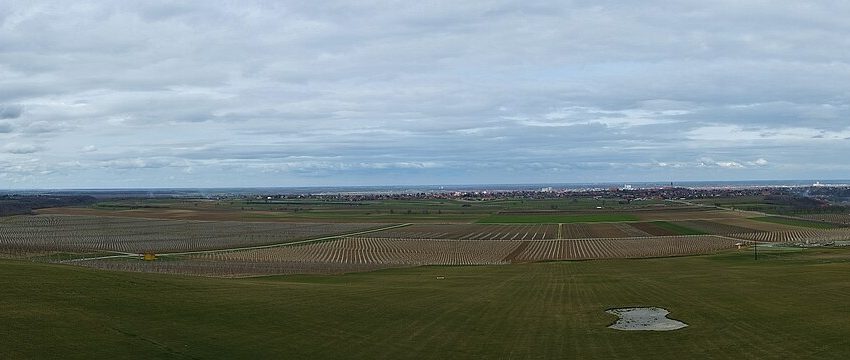
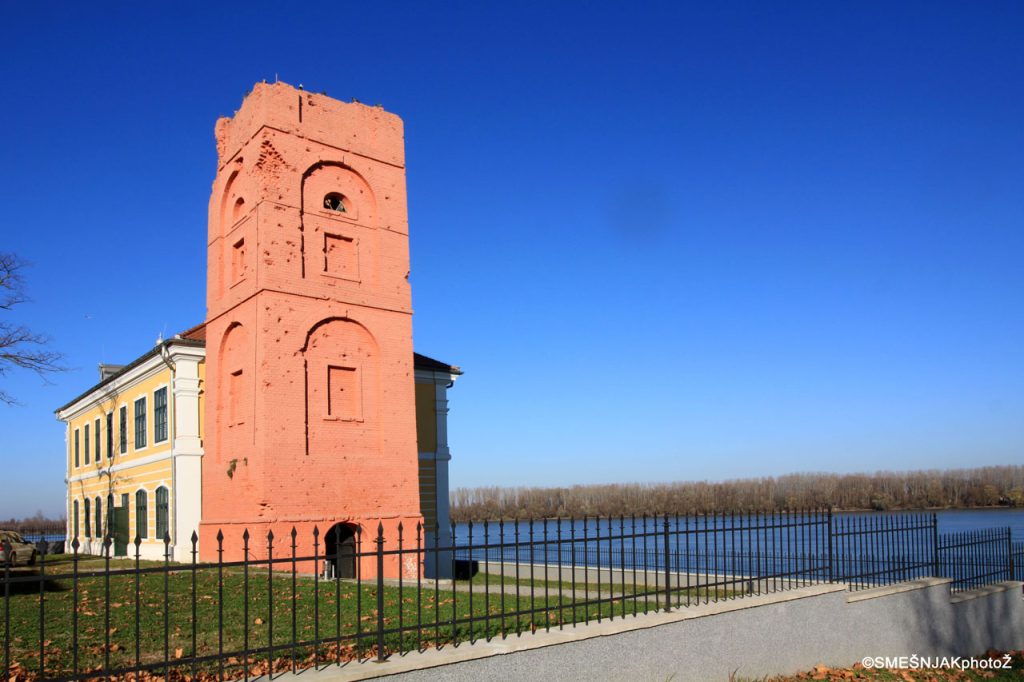
Vukovar lies where the little river Vuka joins the Danube, in the flat, fertile country of eastern Slavonia and Syrmia, three hours east of Zagreb and an hour from Osijek. The palace stands on a low terrace above the Danube at the northern edge of the old town, with its garden front to the river and its main front to the street, and from the quay you see the whole length of the building above the trees, with the water tower that became the symbol of the siege a little way downstream.
Now, stop here on the quay and look at the facade. It is pale and complete, with every window glazed and every cornice sharp, and that is the first thing to understand: twenty years ago there was nothing here but blackened walls. The Danube flows past as it did when the Eltz built, and the far bank is another country.
The Counts Eltz Come to Slavonia
The Eltz were a Rhineland family of ancient nobility, famous for the fairy-tale Burg Eltz on the Moselle, who rose in the eighteenth century through the Church and the imperial service: Philipp Karl von Eltz was Archbishop-Elector of Mainz, and it was he who in 1736 bought the Vukovar estate from the imperial treasury for his family. Slavonia had been recovered from the Ottomans in 1699, and the Habsburgs were selling or granting its vast, depopulated lands to loyal nobles who would settle and develop them. The Eltz bought thirty-five villages and the town of Vukovar, and they came east to see what they had.
They found a land of marsh, forest and ruined villages, and they set about making it pay. Within a generation the Vukovar estate was one of the richest in the kingdom of Croatia-Slavonia, and the family needed a house to match.
1749: A Baroque Palace Rises
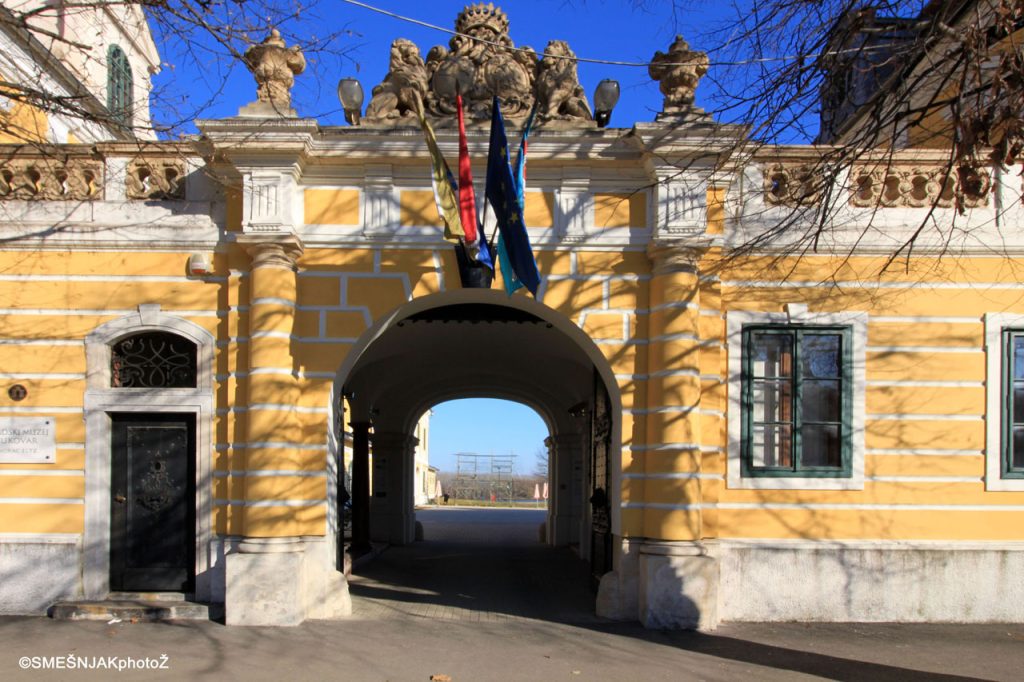
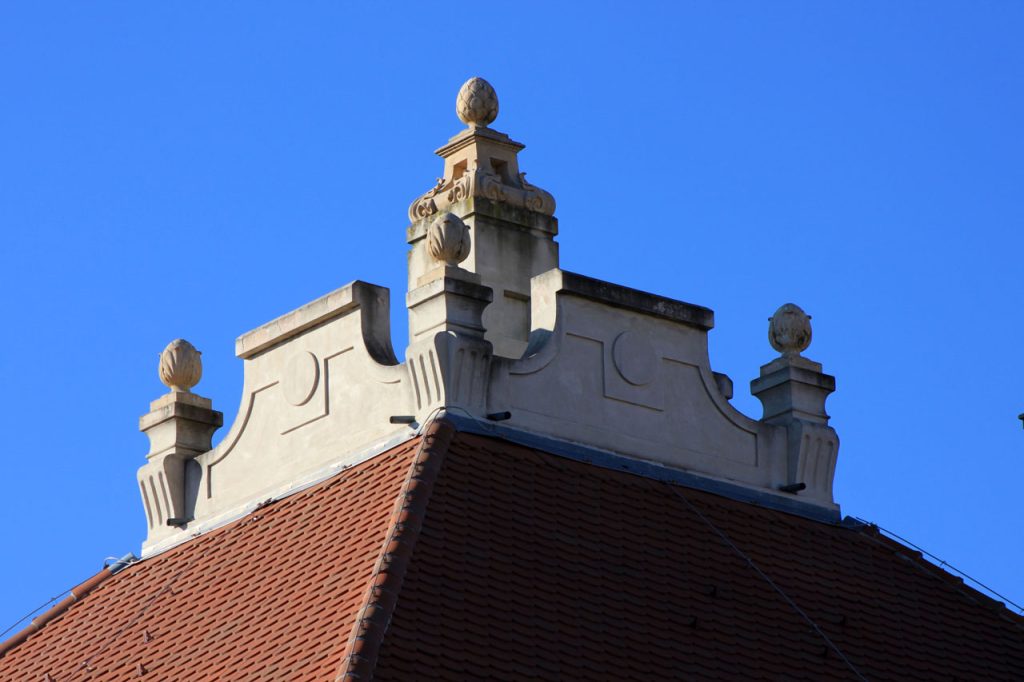
The palace was built between 1749 and 1751 by Count Anselm Kasimir von Eltz as a single-storey Baroque house with a central block and two wings around a court of honour open to the street, in the manner of the Austrian country houses of the period, with a mansard roof, a central portal under a balcony and a chapel in one wing. The garden front faced the Danube across a terraced garden. The architect is not recorded, but the design is in the Viennese manner, and the building was the finest house in Slavonia when it was finished.
The palace was the administrative heart of the estate as well as the family’s residence: the estate offices, the archive and the steward’s rooms were in the wings, and the courtyard was where the villages’ representatives came to pay their dues. It was a working house, and it remained one for two centuries.
The Vukovar Estate and Its Wealth
The Eltz estate at its height covered more than thirty thousand hectares of wheat, maize, vineyards and forest, with the town of Vukovar, its Danube port and its market, and villages of Croats, Serbs, Germans, Hungarians and Ruthenians settled by the counts to work the land. The estate exported grain down the Danube, bred horses and cattle, ran mills and brickworks and later a sugar factory, and the counts were among the richest landowners in the Hungarian half of the empire. Vukovar grew from a village into a Baroque market town under them, with the Franciscan monastery, the parish church and the merchants’ houses that still line the main street.
The estate’s wealth paid for the palace’s enlargement, for the family’s houses in Vienna and for the collections of furniture, pictures and porcelain that filled the rooms until 1945.
Enlargement and the Nineteenth Century
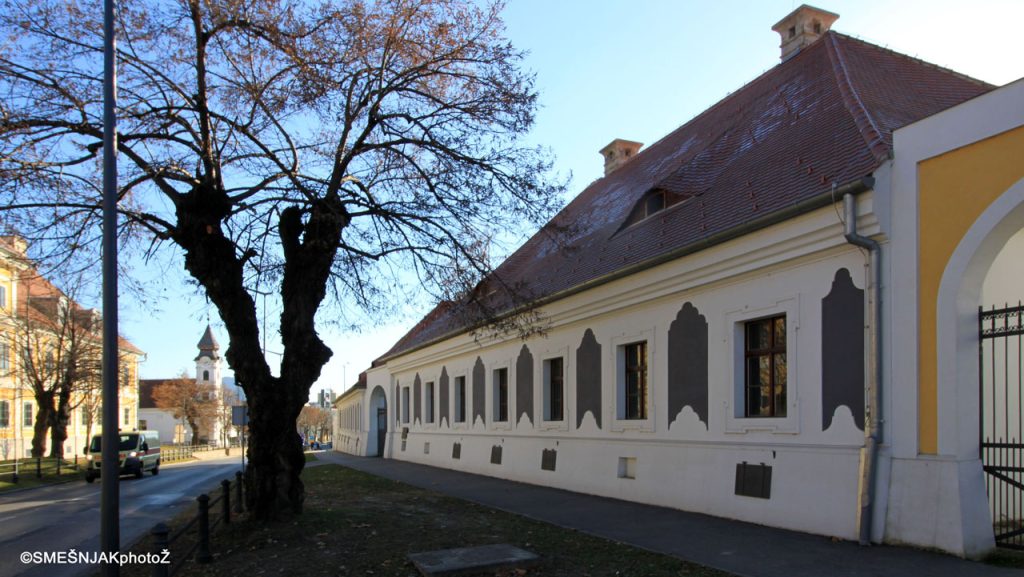
In the nineteenth century the palace was enlarged several times: an upper floor was added to the central block, the wings were extended, a new entrance and staircase were built and the garden was replanted as a landscape park with exotic trees and a riverside promenade. The interiors were redone in the Neoclassical and then the Historicist manner, and the family’s collections grew. The final enlargement, in 1895 to 1907 under Count Karl von Eltz, gave the palace its present long facade and its large reception rooms, and the result was less a Baroque house than a late-imperial country palace in Baroque dress.
The Eltz were conservative Catholic aristocrats, members of the Croatian parliament and patrons of the town, and Vukovar under them was a prosperous, mixed, multilingual Danube town of the kind the Habsburg monarchy produced and that the twentieth century would destroy.
The Last Counts and 1945
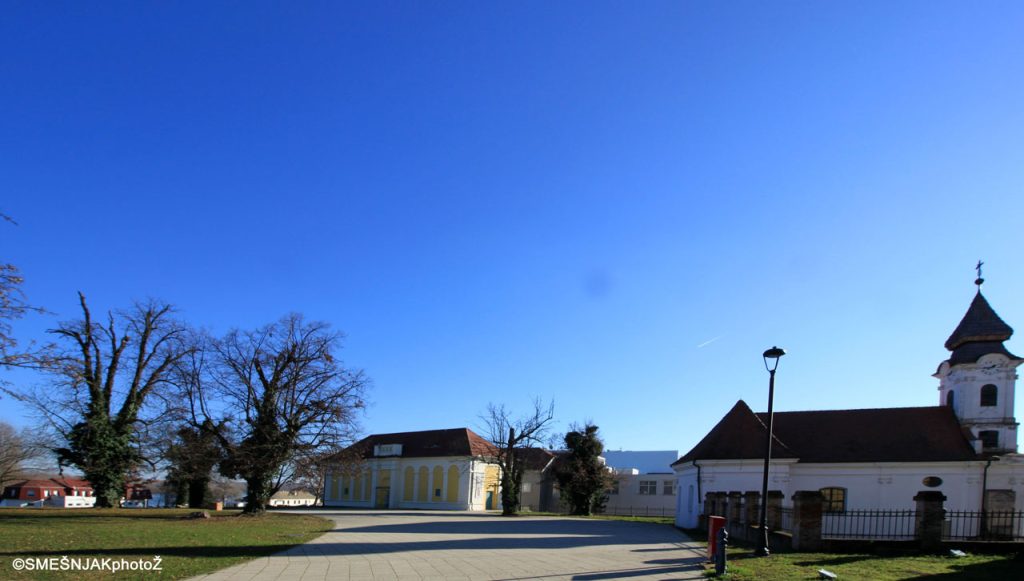
The Eltz survived the fall of the monarchy in 1918 and the land reform of the new Yugoslavia, which took much of their land but left them the palace and a core estate, and Count Karl’s descendants lived at Vukovar through the 1920s and 1930s. The Second World War ended that. In 1944, as the front approached, the family left for Austria and Germany, and in 1945 the communist state confiscated the palace and everything in it. The collections were dispersed, the park was neglected and the house was used for offices and schools.
The Eltz never returned to live at Vukovar, but the family did not forget it. In the 1990s and after, the Eltz, through a foundation and in person, supported the reconstruction of the palace and returned heirlooms to the museum, and the connection between the Rhineland castle and the Danube palace survived the century.
A Town Museum in a Palace
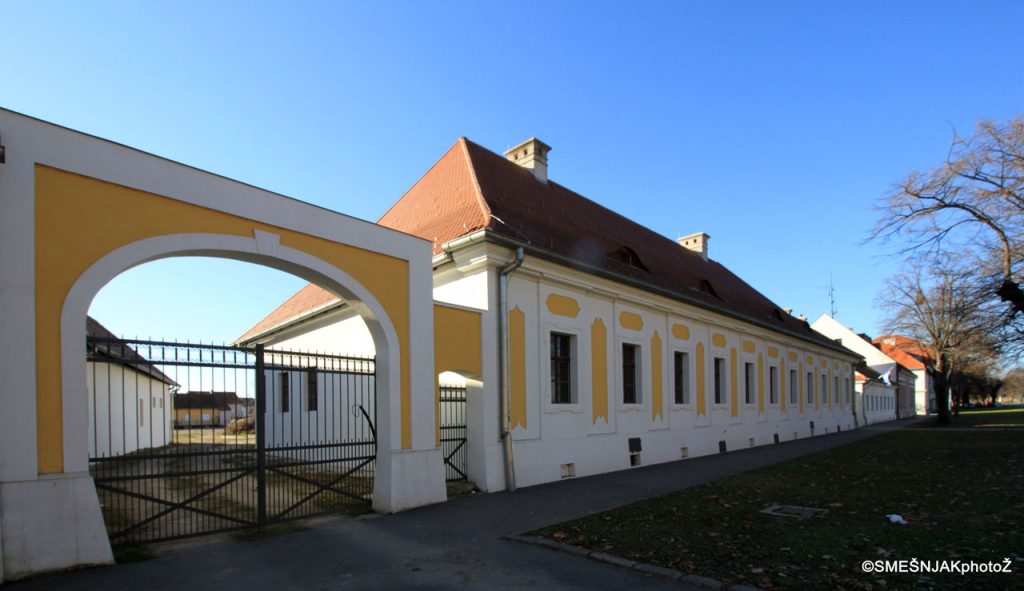
In 1968 the Vukovar Municipal Museum, founded in 1948, moved into the palace, and over the next two decades it built up collections of archaeology from the Vučedol culture and the Roman limes, of the town’s history and crafts, of ethnography and of art, including the Bauer Collection of Croatian modern painting donated by the collector Antun Bauer, a native of Vukovar. The palace was restored for the museum, the park was reopened and the house became the cultural centre of the town.
By 1990 the museum held some fifty thousand objects, was one of the best regional museums in Croatia and occupied the whole palace. Then the war came.
1991: Eighty-Seven Days Under Fire
In August 1991, as Croatia’s war of independence began, the Yugoslav People’s Army and Serbian paramilitary forces surrounded Vukovar, a town of forty-five thousand defended by about two thousand lightly armed Croatian soldiers and volunteers. For eighty-seven days the town was shelled, bombed and assaulted, more heavily than any European town since 1945, and the palace, on the Danube front line, was hit repeatedly: the roof burned, the upper floor collapsed, the facades were pocked with shell holes and the chapel was gutted. The museum staff had moved some of the collection to the cellars before the siege, but much remained in the building when it burned.
Vukovar fell on 18 November 1991. The town was ninety per cent destroyed, hundreds of civilians and wounded were killed after the surrender, including at the Ovčara farm, and the surviving population was expelled. Now, stop here in front of the facade and look at the photographs on the panel: this wall was a ruin, and the town behind it was rubble.
A Roofless Shell and a Looted Collection
After the fall the museum’s collections, including the Vučedol finds and the Bauer paintings, were taken from the ruins and from the cellars by the occupying forces and removed to Novi Sad and Belgrade, where they were held in Serbian museums. The palace stood roofless and open to the weather for the seven years of Serbian occupation, with trees growing in the rooms, and the town around it was a ghost of burned houses and mined fields. Vukovar was returned to Croatian control by peaceful reintegration in January 1998, and the returning Croats found a palace that many thought could not be saved.
The decision to rebuild was political as much as cultural: the palace and the water tower were chosen as the symbols of a town that would be put back together, and the state committed to restoring both.
The Collections Come Home
The return of the collections was one of the first acts of cultural reconciliation between Croatia and Serbia. Under an agreement signed in 2001 and carried out over the following decade, the Serbian museums handed back the Vukovar museum’s holdings: the archaeological collection with the Vučedol objects, the Bauer paintings, the ethnographic and historical material, some fifteen thousand objects in all, though not everything that had been taken was found. The last major return was in 2013. Meanwhile the museum worked from temporary premises, collected the memory of the siege and prepared for the palace’s reopening.
The museum also received gifts from across Croatia and from museums abroad, and the Eltz family returned portraits and furniture from the palace that they had taken in 1944, so that the restored house could be furnished with some of its own things.
2008 to 2011: Rebuilding Stone by Stone
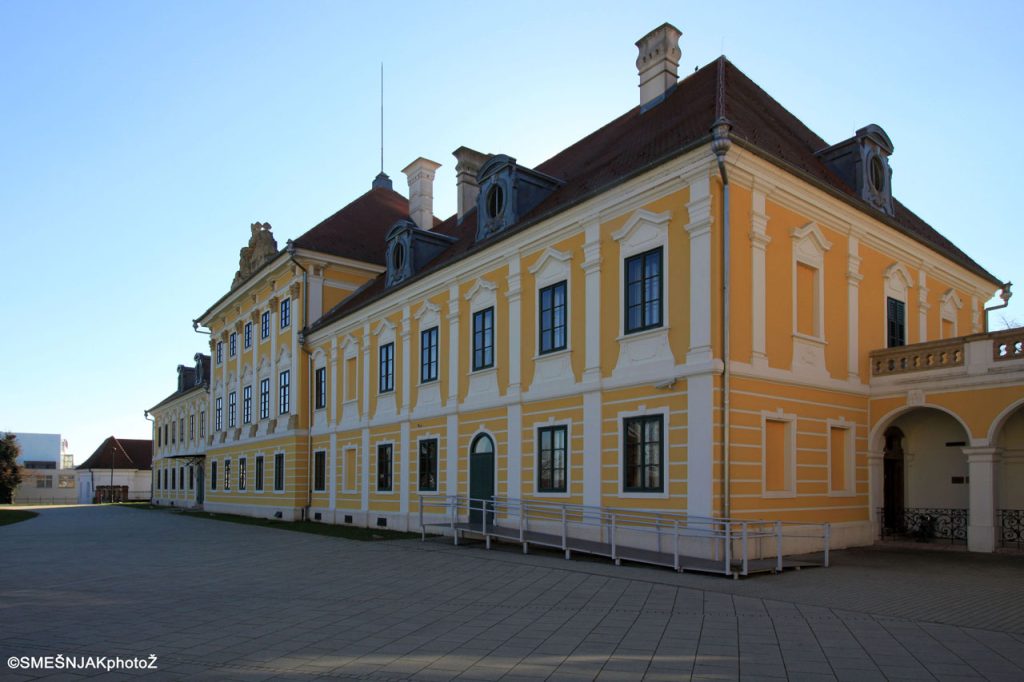
Securing and documenting the ruin began in the late 1990s, and the full reconstruction was carried out between 2008 and 2011, funded by the Croatian government as part of the Vukovar reconstruction programme and designed to return the palace to its appearance of around 1907, the date of its last enlargement. The surviving walls were consolidated, the collapsed floors and the roof were rebuilt, the facades were restored from photographs and the stucco, floors and joinery of the interiors were remade by craftsmen from across Croatia. The chapel was rebuilt and reconsecrated. The project cost about twenty-five million euros, and the palace reopened in October 2011 as the Vukovar Municipal Museum, with new permanent exhibitions.
The reconstruction is faithful on the outside and modern inside, with climate control, lifts and exhibition galleries, and the few original fragments that survived, a Baroque door, some stucco, the stair rail, are shown as what they are. Now, stop here on the stairs and look at the one Baroque newel that survived the fire; everything else around it is twenty years old.
The Vučedol Dove and the Prehistoric Floor
The museum’s most famous object is the Vučedol Dove, a small ceramic vessel in the shape of a bird, about 2800 BC, found in 1938 at the Vučedol site a few kilometres downstream, where a Copper Age culture built a hilltop settlement above the Danube. The dove, which is probably a partridge, is decorated with incised and encrusted patterns and has become a national symbol of Croatia, reproduced on coins and banknotes and, after the siege, adopted as the symbol of Vukovar’s peace. The original is in the Archaeological Museum in Zagreb, but the Vukovar museum shows the Vučedol culture’s pottery, tools and the famous Vučedol Orion, a vessel with what is claimed to be the oldest European calendar.
The archaeological floor also covers the Roman limes, which ran along the Danube here, and the mediaeval and Ottoman town, and the newer Vučedol Culture Museum at the site itself, opened in 2015, is a short drive away.
A Symbol of a Town Reborn
The restored palace is the heart of Vukovar’s cultural life, with the permanent exhibitions, a floor devoted to the siege and the war with photographs, objects and the testimonies of survivors, a gallery for the Bauer Collection, concerts in the courtyard, and the town’s main ceremonies in the garden. Vukovar itself has been rebuilt, its population is about half what it was and divided between Croats and Serbs who live largely apart, and the memorial sites, the water tower, the Ovčara memorial and the hospital, draw hundreds of thousands of Croatian visitors each year, especially on 18 November.
Now, stop here in the garden and look from the palace to the Danube. The Eltz chose this bank because the river was the road to Vienna and the Black Sea; in 1991 it was the front line; today it is a border, a memory and, in the evening light, simply beautiful again.
Vukovar on Video
Before you plan your trip, take a few minutes to see Eltz Manor in motion. The video below gives a good sense of the setting, the scale of the buildings and the atmosphere of the grounds.
Visiting Eltz Manor Today
The Vukovar Municipal Museum in Eltz Manor is open Tuesday to Sunday, with shorter hours in winter, and the ticket covers the permanent exhibitions on archaeology, the town’s history, the Bauer Collection and the siege, with guided tours available in English by arrangement. Allow two hours, and add the Vučedol Culture Museum at the site five kilometres downstream and the water tower memorial in the town. The palace garden on the Danube is open to all, and the quay has cafés and the landing stage for the river cruises that now stop at Vukovar.
Vukovar is three hours east of Zagreb by motorway and bus, an hour from Osijek and half an hour from Ilok; Našice and the Pejačević palace are an hour and a half to the west. Here is the exact spot: Eltz Manor on Google Maps.
Palaces Nearby
If you have enjoyed this palace, the region holds more remarkable residences. Here are two more well worth adding to your journey:
You May Like
The Rector’s Palace in Dubrovnik and the Ruler Who Served One Month