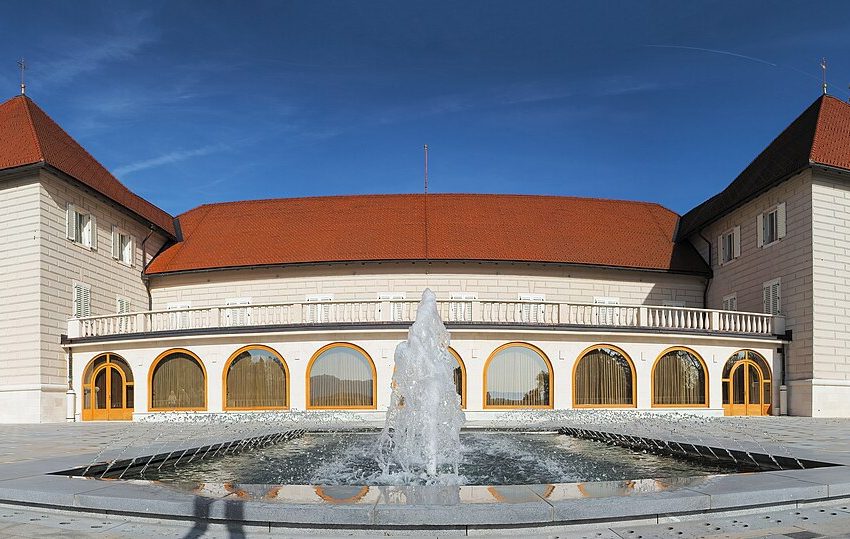
In the small Slavonian town of Našice, at the foot of the wooded Krndija hills between Osijek and Požega, a long white Neoclassical palace with a columned portico stands in a park of old trees, lakes and a chapel. It was built in 1811 and 1812 by the Counts Pejačević, one of the great families of Croatian Slavonia, bans, generals and bishops who held the Našice estate from 1734 to 1945, and it is remembered today above all for one of them: Dora Pejačević, the composer, who was born in Budapest in 1885, grew up in this house, wrote her first songs and chamber works in its rooms and died in Munich in 1923 at thirty-seven, leaving a symphony, a piano concerto and a body of songs that made her the first Croatian woman to compose at a European level.
The palace has been the Našice Local History Museum since 1974, with rooms on the Pejačević family, the town and the region and a permanent exhibition on Dora, whose manuscripts, piano and portraits are its treasures. The park, the smaller second Pejačević palace built for a younger branch in 1907 and the family chapel complete an ensemble that is the quietest and most lyrical of the three Slavonian houses in this series, between the rebuilt Eltz palace at Vukovar and the Odescalchi castle at Ilok.
Walk the park with me from the gate to the portico, through the museum and up to Dora’s room, with the family, the composer and the town in order. The contents are below.
In This Article
- A Palace at the Foot of the Krndija
- The Pejačević and Their Slavonian Rise
- 1734: The Našice Estate
- 1811: A Neoclassical Palace
- Bans, Generals and a Bishop
- Count Ladislav and the Budapest Years
- Dora Pejačević Grows Up at Našice
- The Music Written in These Rooms
- War, Nursing and a Marriage
- The Second Palace of 1907
- 1945 and the Museum
- The Park, the Lake and the Chapel
- Dora’s Memory and the Town Today
- Našice on Video
- Visiting the Pejačević Palace Today
- Palaces Nearby
A Palace at the Foot of the Krndija
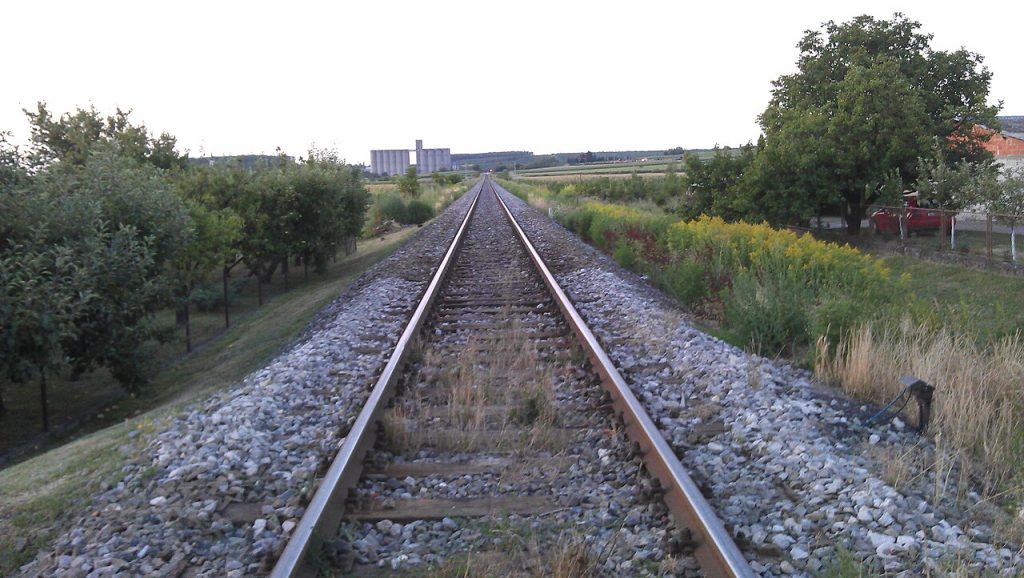
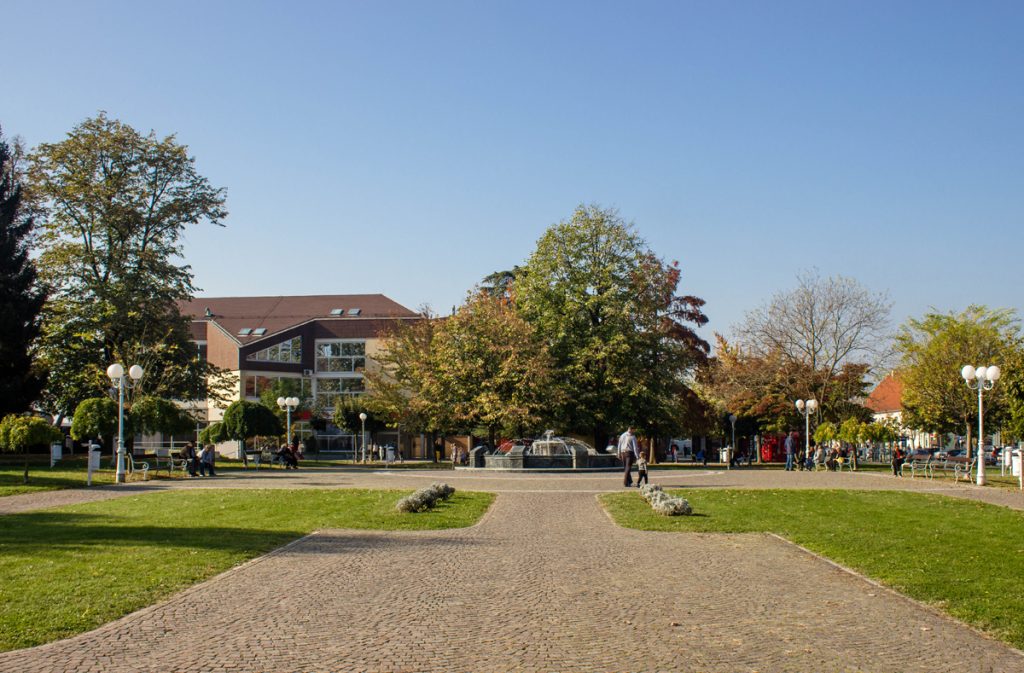
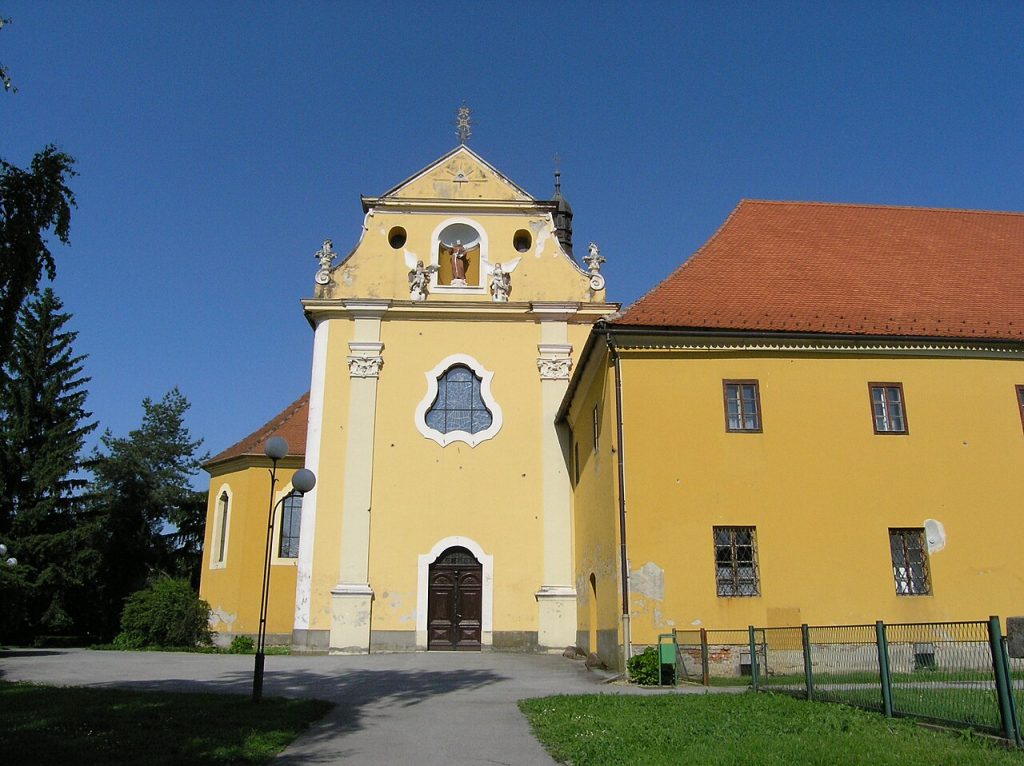
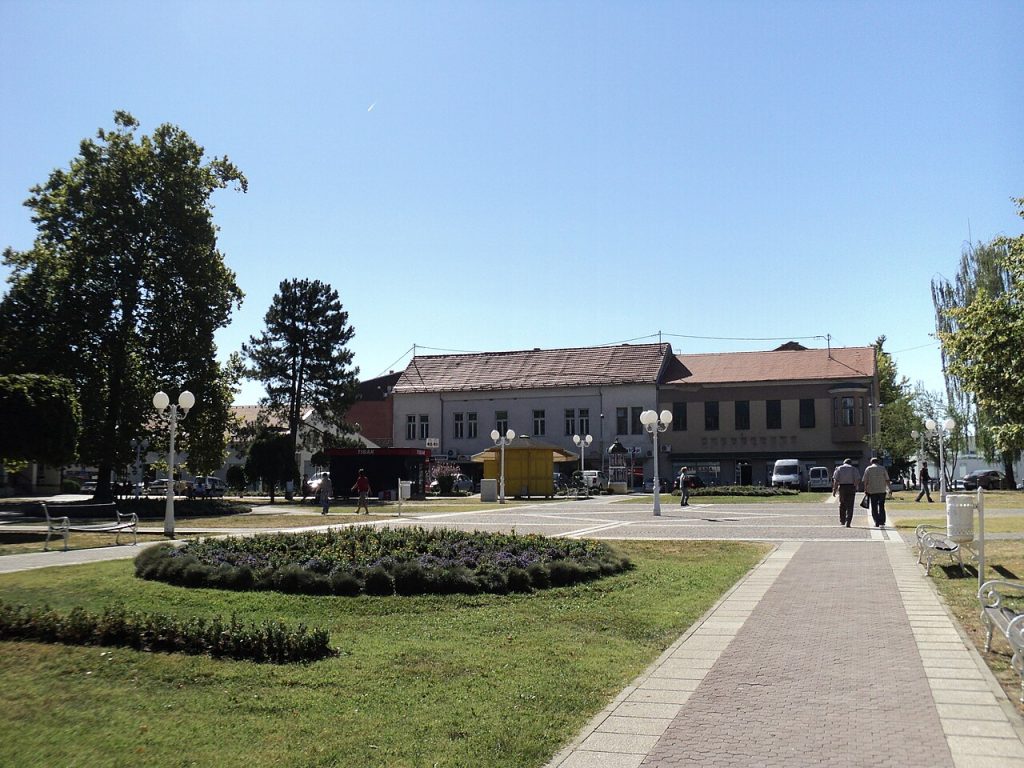
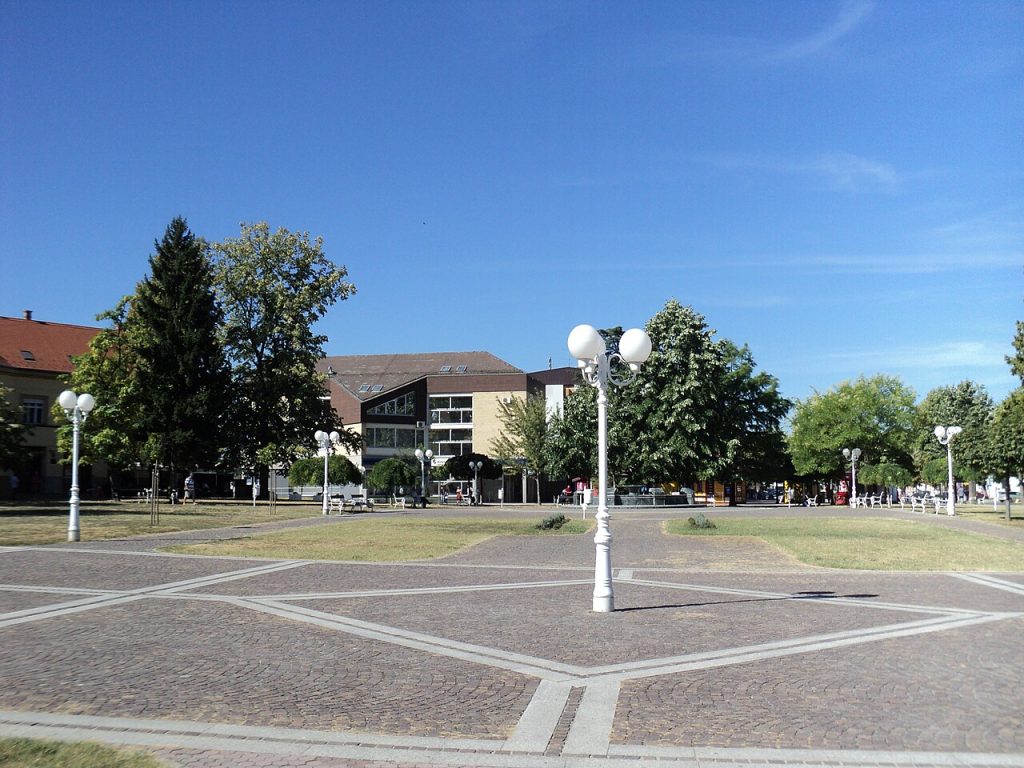
Našice is a town of about fifteen thousand in the middle of Slavonia, half an hour west of Osijek, on the northern edge of the Krndija, the low wooded range that separates the Drava plain from the Požega valley. The palace stands at the western edge of the town centre in a park that runs up toward the hills, with the main front facing a lawn and the town’s Franciscan church visible beyond the trees. The second palace, smaller and in a Historicist style, stands at the other end of the park.
Now, stop here at the park gate and look at the portico. Four Ionic columns, a pediment, a plain white facade with regular windows: this is the restrained Neoclassicism of the Napoleonic years, built by a family that had just been through the French wars and wanted calm. It is the most elegant facade in Slavonia.
The Pejačević and Their Slavonian Rise
The Pejačević traced their origin to the Bulgarian town of Chiprovtsi, whose Catholic merchant families fled north after the failed anti-Ottoman uprising of 1688 and settled in Slavonia and the Banat. In the recovered lands of the early eighteenth century they bought estates, served the Habsburgs as officers and officials, were made barons and then, in 1772, counts, and by 1800 they were among the leading families of the kingdom of Croatia-Slavonia, with estates at Našice, Virovitica, Ruma, Retfala and Podgorač and houses in Osijek, Zagreb and Vienna.
Three Pejačević served as Ban of Croatia, the kingdom’s viceroy: Ladislav in 1880 to 1883, Teodor in 1903 to 1907, and in the other direction the family produced generals, a bishop, members of the Hungarian and Croatian parliaments and, at the end, a composer.
1734: The Našice Estate
The Našice estate came to the Pejačević in 1734, when the imperial treasury sold the former Ottoman lands around the town to Baron Marko Pejačević, and the family ran it as one of their principal properties for two centuries. The estate covered forests on the Krndija, wheat and vineyards in the plain and the market town itself, with its Franciscan monastery, founded in the thirteenth century and refounded after the Turks. The first Pejačević residence was a Baroque manor near the monastery, replaced after 1811 by the present palace.
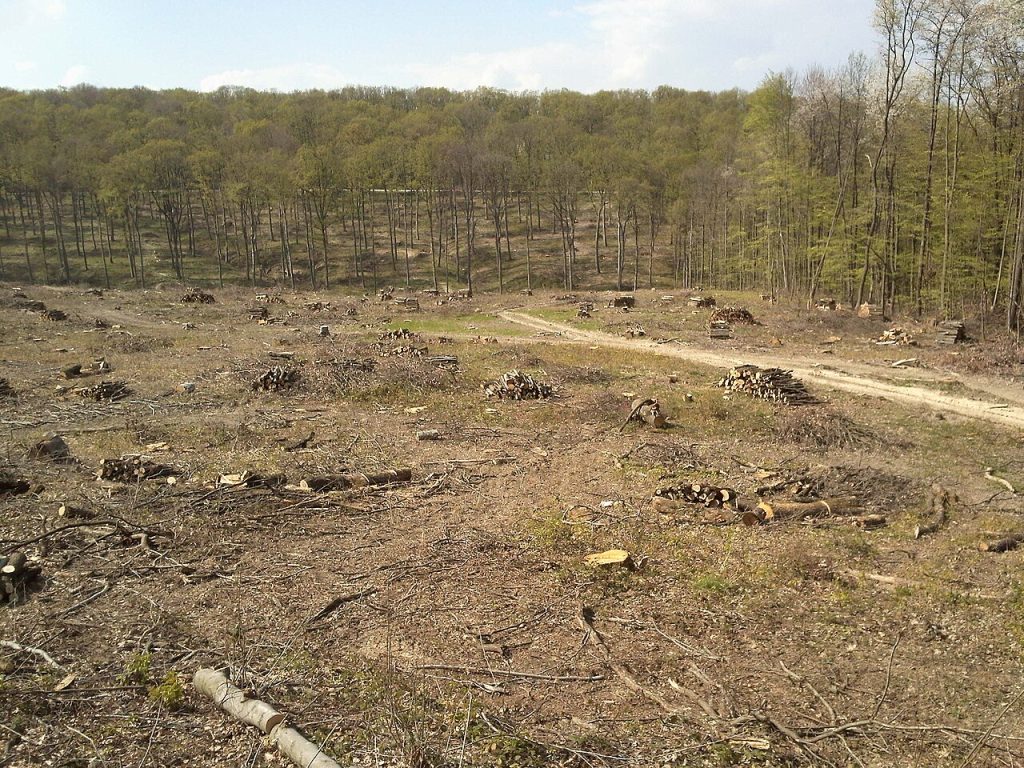
The estate’s forests were its wealth: the Krndija oaks were cut for railway sleepers, barrels and the Danube shipyards, and the Pejačević built a sawmill, a glassworks and later a narrow-gauge railway into the hills. Našice grew into a modest industrial town around them.
1811: A Neoclassical Palace
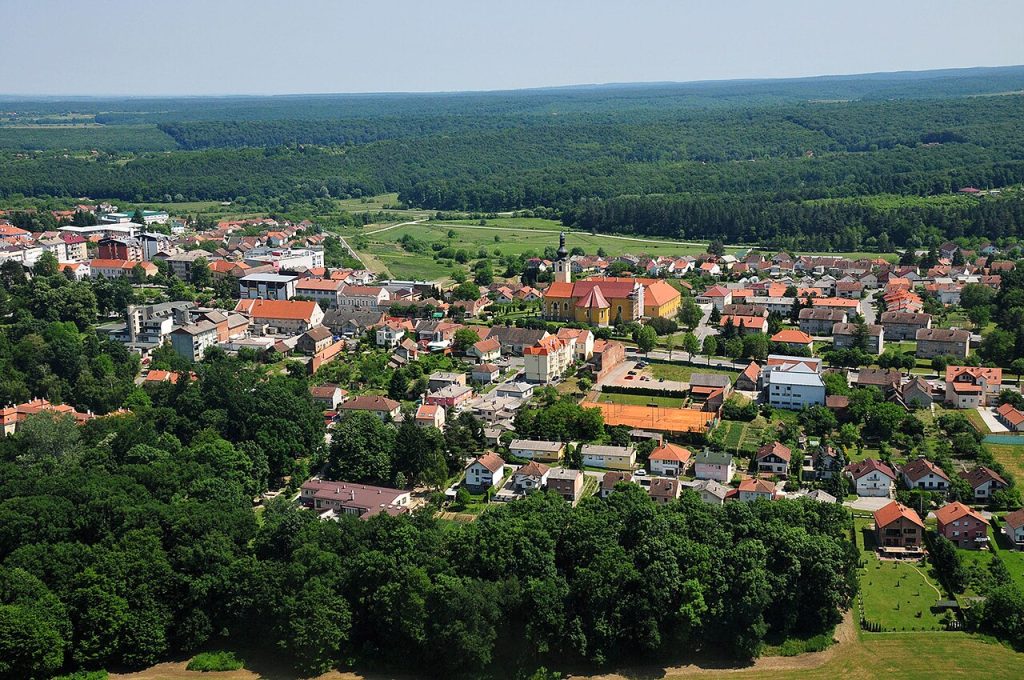
The palace was built in 1811 and 1812 by Count Vincencije Pejačević as a two-storey Neoclassical house with a central portico, a plain, long facade, a courtyard behind and a chapel, surrounded by a landscape park in the English manner with a lake, winding paths and groves of oak and plane. The interiors had a central hall, a staircase, a ballroom and salons on the first floor, with the family’s apartments above and the estate offices below. The style was the Empire manner of the Napoleonic years, lighter and simpler than the Baroque of the Eltz at Vukovar, and the house has kept its character through later changes.
The palace was altered in the later nineteenth century, when a new wing and a tower-like belvedere were added and the interiors were redone, but the portico and the proportions are Vincencije’s, and the restoration of the museum years has returned it to something like its original calm.
Bans, Generals and a Bishop
The nineteenth-century Pejačević were public men. Count Ladislav, Dora’s grandfather, was Ban of Croatia from 1880 to 1883, resigning in protest at the Hungarian government’s violations of Croatian autonomy, a gesture that made him popular at home. His son Teodor, Dora’s father, was Ban from 1903 to 1907 and then Croatian minister in the Hungarian government in Budapest. Other members commanded regiments, sat in the House of Magnates, served as bishops and ran the estates, and the family’s politics were conservative, loyal to the Habsburgs and increasingly Croatian in sentiment as the century went on.
Now, stop here in the hall before the portraits and note the uniforms and the sashes. The Pejačević were the Croatian aristocracy at its most public, and their palace was as much a political as a domestic house.
Count Ladislav and the Budapest Years
Count Teodor Pejačević married Baroness Elisabeta Vay de Vaya, a Hungarian aristocrat and an accomplished pianist and singer, and their daughter Maria Theodora Paulina, Dora, was born in Budapest on 10 September 1885, where Teodor was serving in the Hungarian administration. The family divided its time between Budapest, Zagreb, where Teodor’s political career was centred, and Našice, which was home, and Dora grew up between the three, speaking Croatian, German, Hungarian, French and English and absorbing her mother’s music from the nursery.
Elisabeta gave Dora her first piano lessons, and the child began composing at twelve. The palace at Našice, with its salons, its piano and its park, was where she came to write, and it remained her refuge all her life.
Dora Pejačević Grows Up at Našice
Dora was educated privately, as aristocratic girls were, with music lessons in Zagreb, Dresden and Munich from teachers including Percy Sherwood and Walter Courvoisier, but she was essentially self-taught as a composer, learning from scores and from the musical life of the European capitals she visited with her family. She was tall, reserved, intellectually hungry and impatient with the social round of her class; she read Nietzsche, Rilke and Karl Kraus, corresponded with Kraus and the writer Annette Kolb and preferred the company of artists and thinkers to that of other counts. At Našice she rode, walked in the Krndija woods and composed in a room on the first floor overlooking the park.
Her early works, songs and piano pieces in the late-Romantic manner, were performed in Zagreb and Budapest before she was twenty, and by 1910 she was writing chamber music and orchestral works that put her in the first rank of Croatian composers of any sex.
The Music Written in These Rooms
Dora Pejačević wrote fifty-eight works: songs on German and Croatian texts, piano miniatures, a piano quintet, string quartets, a violin sonata, a cello sonata, a Piano Concerto in G minor of 1913, the first by a Croatian composer, and the Symphony in F sharp minor of 1917 to 1920, a forty-minute work in four movements that is the first full symphony in Croatian music and the one by which she is best known. Her style moved from Brahmsian late Romanticism toward the harmonic world of Strauss, Reger and early Schoenberg, and her songs, especially the settings of Nietzsche and Rilke, are her most personal music.
Much of this was written at Našice, and the museum’s exhibition shows her piano, manuscripts, letters and photographs, with recordings of the music playing in the rooms where it was composed. Now, stop here in Dora’s room and listen: the slow movement of the symphony, written during the war in this house, is the sound of Slavonia in 1918.
War, Nursing and a Marriage
The First World War changed Dora. She nursed wounded soldiers in the hospital set up in Našice, saw the suffering of the peasant conscripts of Slavonia and turned against the world of her class; her letters of the war years are bitter about the aristocracy’s indifference, and the symphony, with its dark first movement and its hard-won ending, was her response. In 1921, against her family’s expectations, she married Ottomar von Lumbe, an Austrian officer of modest background, and moved with him to Munich, where she continued to compose and performed her works.
In January 1923 she gave birth to a son, Theo, and died a few weeks later of kidney failure, on 5 March 1923, aged thirty-seven. At her own request she was buried not in the Pejačević family vault but in the public cemetery at Našice, under a plain stone, and her grave is there today.
The Second Palace of 1907
At the other end of the park stands the second Pejačević palace, a smaller two-storey house in the Historicist manner with a tower, built in 1907 for a younger branch of the family, Count Marko and his descendants, who could no longer share the main house. It has its own garden, a conservatory and a more domestic, late-Habsburg character, and it survived 1945 as a school and offices. It has been restored and now houses the town’s library and cultural offices, and it completes the park’s composition with the chapel and the lake.
The two palaces together are a small lesson in a century of taste: the austere Empire style of 1811 and the comfortable eclecticism of 1907, both the work of the same family on the same lawn.
1945 and the Museum
The Pejačević left Našice in 1945, when the new Yugoslavia confiscated their estates and the palace, and the family scattered to Austria, Germany and the Americas. The palace was used as a school, a cultural centre and offices, lost most of its furnishings and fell into disrepair, until in 1974 the Našice Local History Museum was founded and moved into the ground floor. The museum gradually took over the whole building, restored the rooms and assembled collections on the Pejačević family, Dora, the town’s crafts and industry, the Franciscan monastery and the archaeology of the Krndija.
The 1990s war largely spared Našice, though refugees filled the town, and since 2000 the palace has been comprehensively restored with Croatian and European funding, the park replanted and the exhibitions renewed. The Dora Pejačević rooms were redesigned for the centenary of her death in 2023.
The Park, the Lake and the Chapel
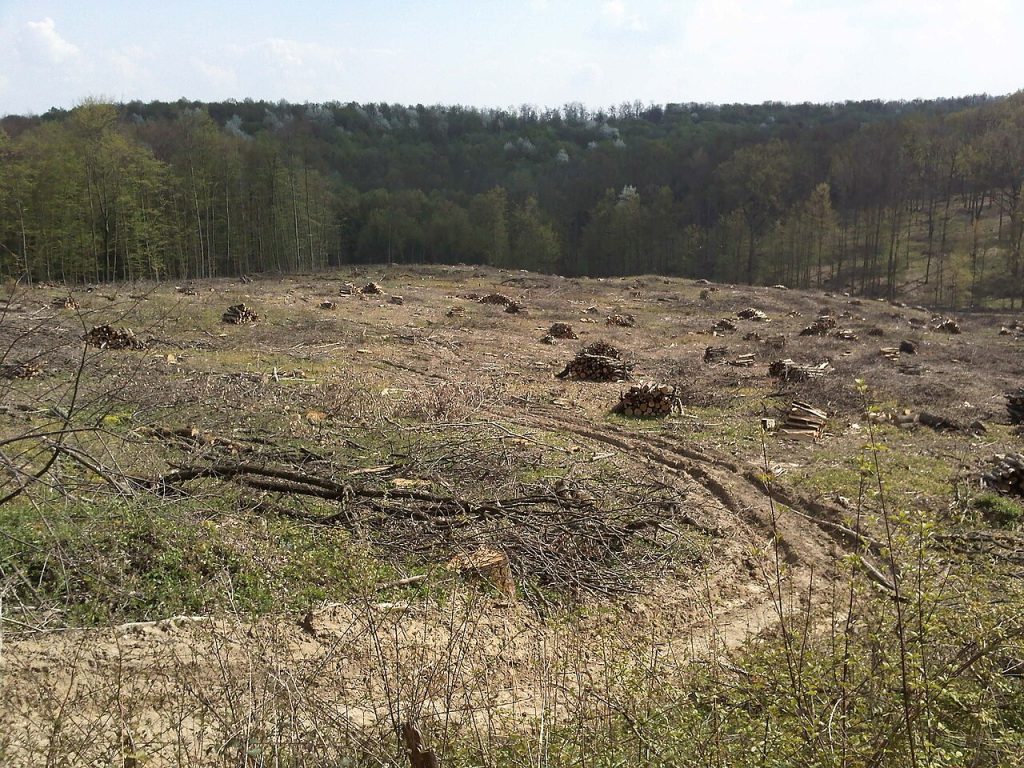
The park is a protected monument of garden design, laid out with the palace in 1811 and enlarged in the nineteenth century, with a lake fed by a stream from the Krndija, groups of plane, oak, beech and exotic trees, winding paths and a bridge. The Pejačević chapel, a small Neoclassical building near the main palace, holds the family vault where the bans and generals lie; Dora, by her own wish, is not among them. The park runs up toward the hills, and a path leads from it into the Krndija forest, where Dora walked.
The park is open to the town and is used for concerts, especially during the Dora Pejačević Memorial, the music festival held each year in her name, when her chamber music is played in the salons and on the lawn.
Dora’s Memory and the Town Today
Dora Pejačević was half-forgotten for decades after her death, a countess who had written German songs and a symphony that was rarely played, but since the 1980s her music has been recorded, published and performed across Europe, her symphony is in the repertoire, her piano concerto is a favourite of Croatian pianists and she is recognised as the founding figure of Croatian modern music. Našice has made her its symbol, with the festival, a bust in the park, the museum rooms, the preserved grave and the music school named after her.
Now, stop here at the portico as the light goes and think of the girl who looked out from the first floor at this park and wrote a symphony while the empire she belonged to fell. The palace is her monument more than the family’s, and the museum knows it.
Našice on Video
Before you plan your trip, take a few minutes to see Pejačević Palace in motion. The video below gives a good sense of the setting, the scale of the buildings and the atmosphere of the grounds.
Visiting the Pejačević Palace Today
The Našice Local History Museum in the Pejačević Palace is open Tuesday to Saturday and on Sunday mornings, with a modest ticket covering the Pejačević rooms, the Dora Pejačević exhibition, the town history and ethnography displays and temporary shows; guided tours in English can be arranged in advance. Allow ninety minutes for the museum and another hour for the park, the chapel, the second palace and Dora’s grave in the town cemetery. The Dora Pejačević Memorial festival is held in the autumn.
Našice is half an hour west of Osijek by car or train and two and a half hours east of Zagreb; Vukovar and the Eltz palace are an hour and a half to the east, Ilok two hours. Here is the exact spot: Pejačević Palace on Google Maps.
Palaces Nearby
If you have enjoyed this palace, the region holds more remarkable residences. Here are two more well worth adding to your journey:
You May Like
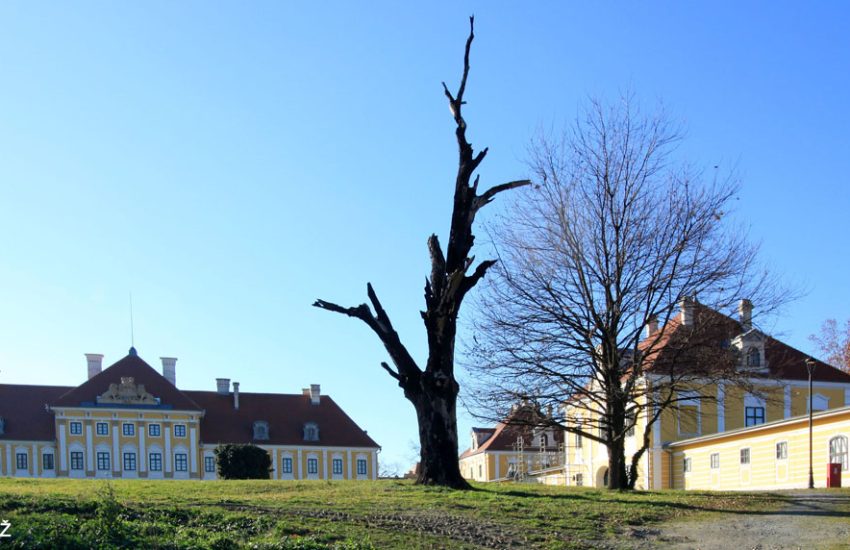
Eltz Manor in Vukovar and the Palace That Rose From the Rubble