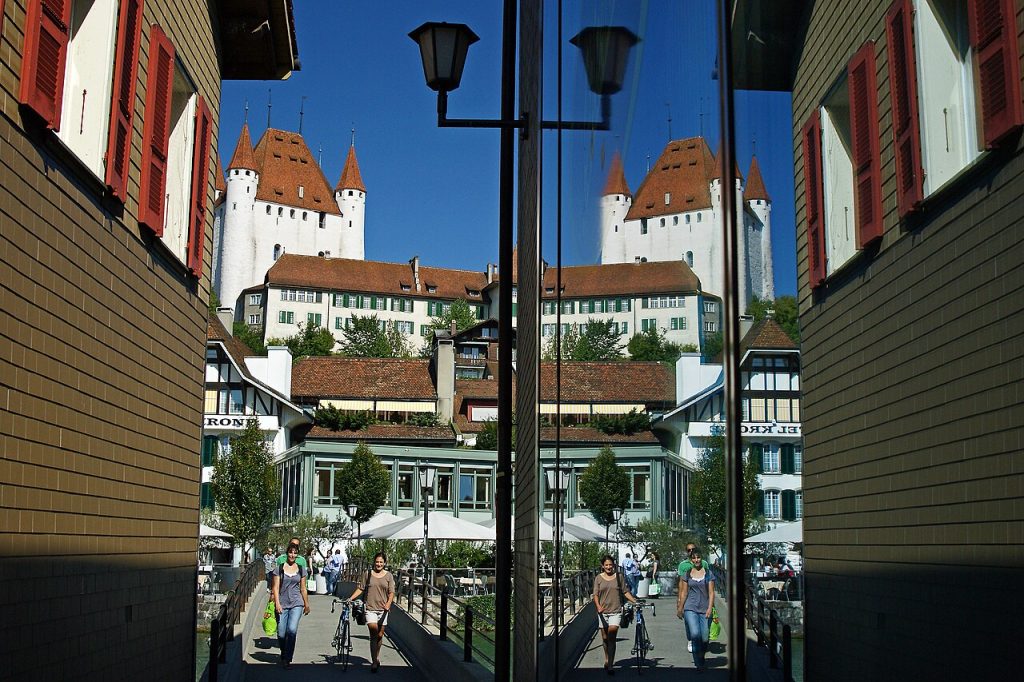
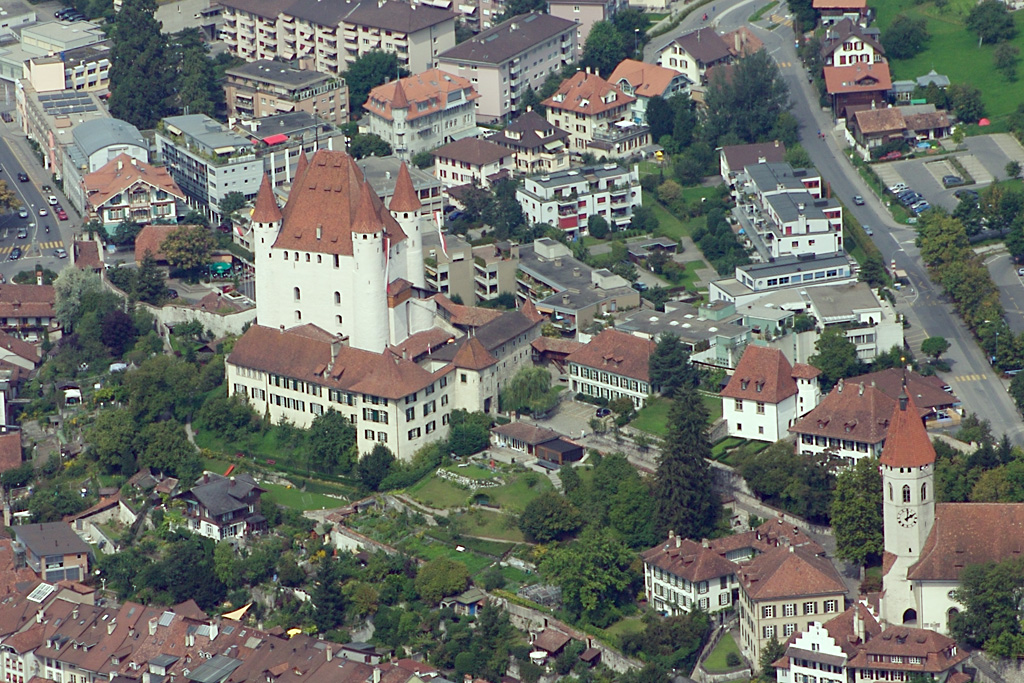
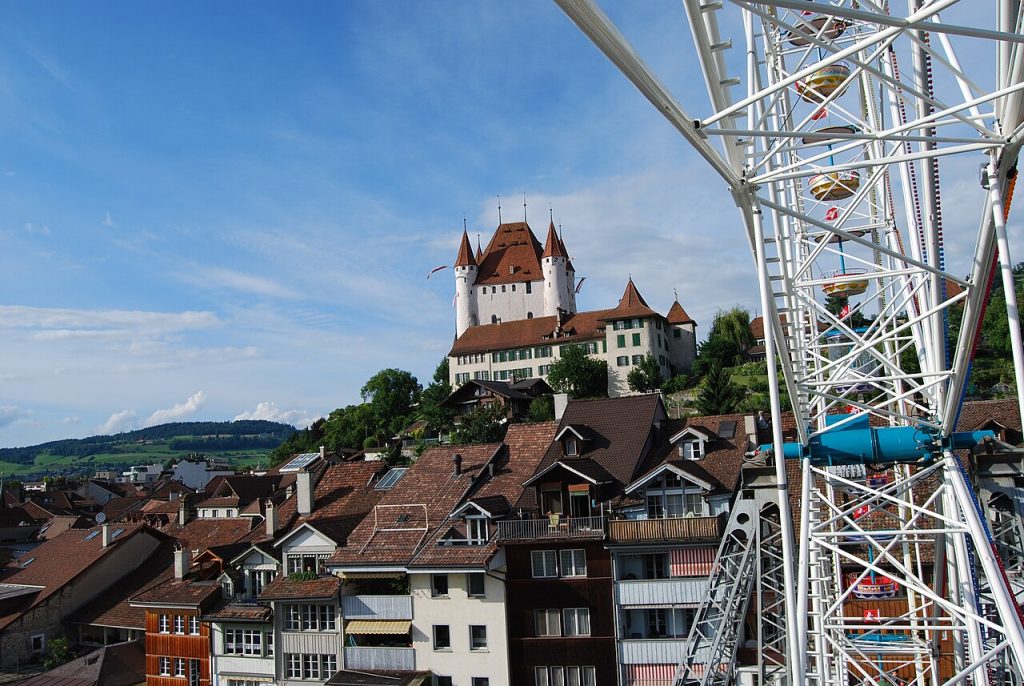
Above the old town of Thun, where the river Aare leaves Lake Thun and runs north toward Bern, a square keep of pale stone with a steep roof and four round corner towers stands on a hill, visible from everywhere in the town and from far down the lake. It is Schloss Thun, built around 1190 by Duke Berchtold V of Zähringen, the last of the dukes who founded Bern, Fribourg and Freiburg im Breisgau, as the stronghold of his Burgundian lands and the seat of the town he was founding below it. It passed to the counts of Kyburg, who added the hall and lived here as the greatest lords of the region, and in 1384 to the city of Bern, whose bailiffs governed the Oberland from the castle for four hundred years.
The keep holds the largest surviving Romanesque hall in Switzerland, the Knights’ Hall, where the Kyburgs held court and the Bernese bailiffs their assizes, and above it four floors of museum and the corner towers with their views; below it the Bernese built a bailiff’s residence in the eighteenth century that is now a hotel, and the hill carries the town church and the terraces of the old town. The castle was a prison until 1886 and a museum since 1888, and it is the third of the three Swiss houses in this series, after Chillon on Lake Geneva and its neighbour Oberhofen on the lake below.
Climb with me from the river through the arcaded streets of the old town to the castle hill, into the Knights’ Hall and up the towers, with the duke, the counts, the bailiffs and the town in order. The contents are below.
In This Article
- Where the Aare Leaves the Lake
- Berchtold V and the Zähringen Dukes
- 1190: A Keep With Four Towers
- The Counts of Kyburg and the Knights’ Hall
- The Largest Romanesque Hall in Switzerland
- 1384: Bern Buys Thun
- Four Centuries of Bernese Bailiffs
- The Town With Streets on Two Levels
- The Bailiff’s New Residence of 1429 and 1740
- A Prison Until 1886
- 1888: The Castle Museum
- Armour, Tapestries and the Thun Majolica
- Towers, Views and the Lake
- Thun on Video
- Visiting Thun Castle Today
- Palaces Nearby
Where the Aare Leaves the Lake
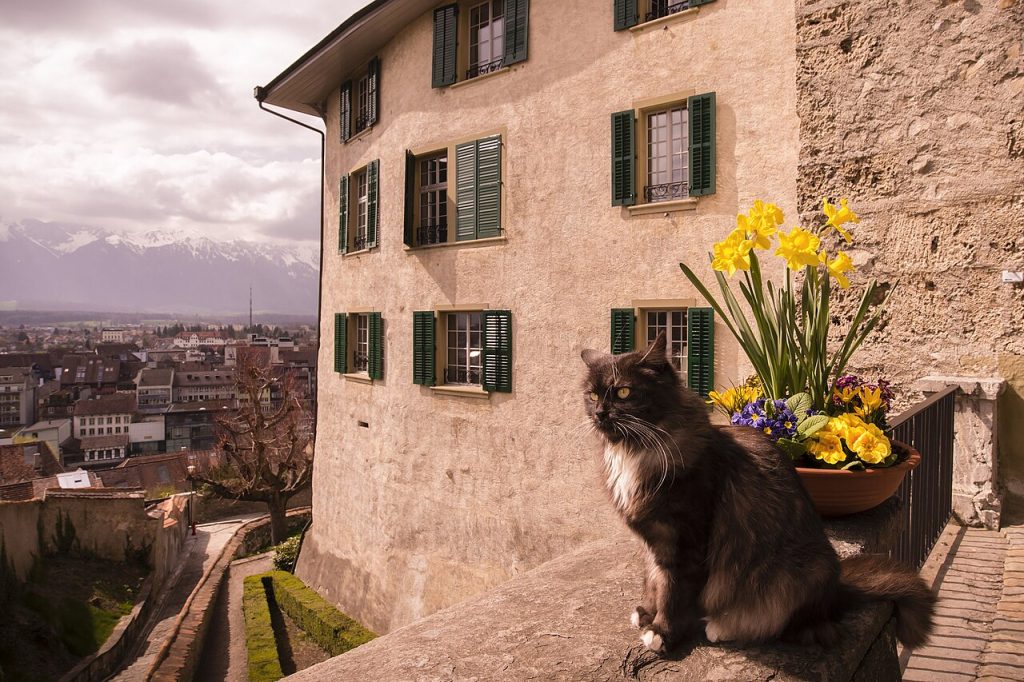
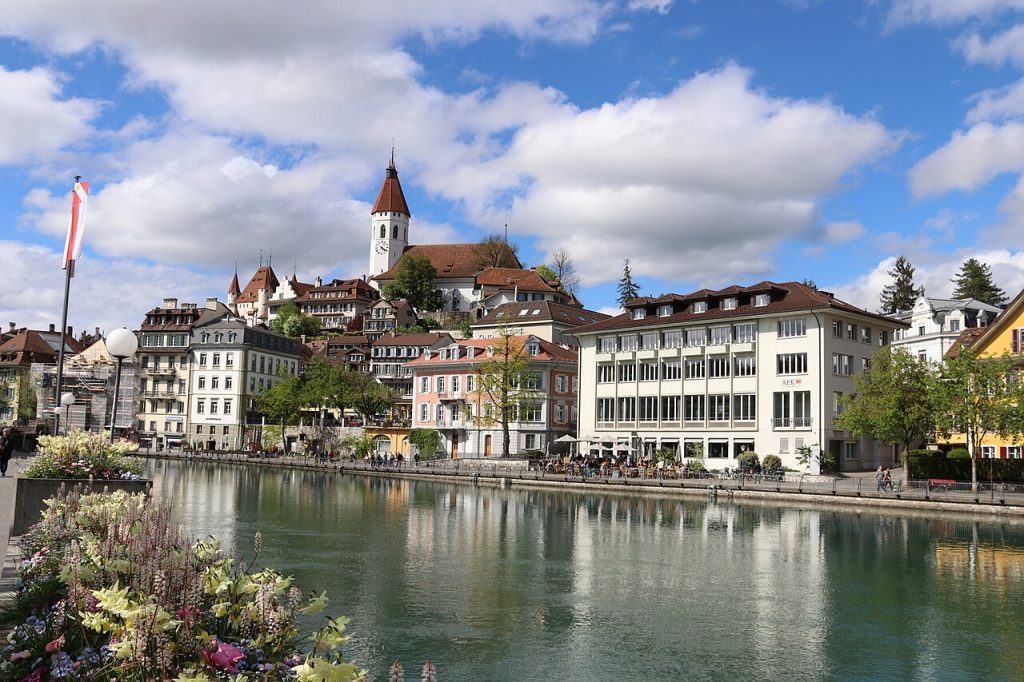
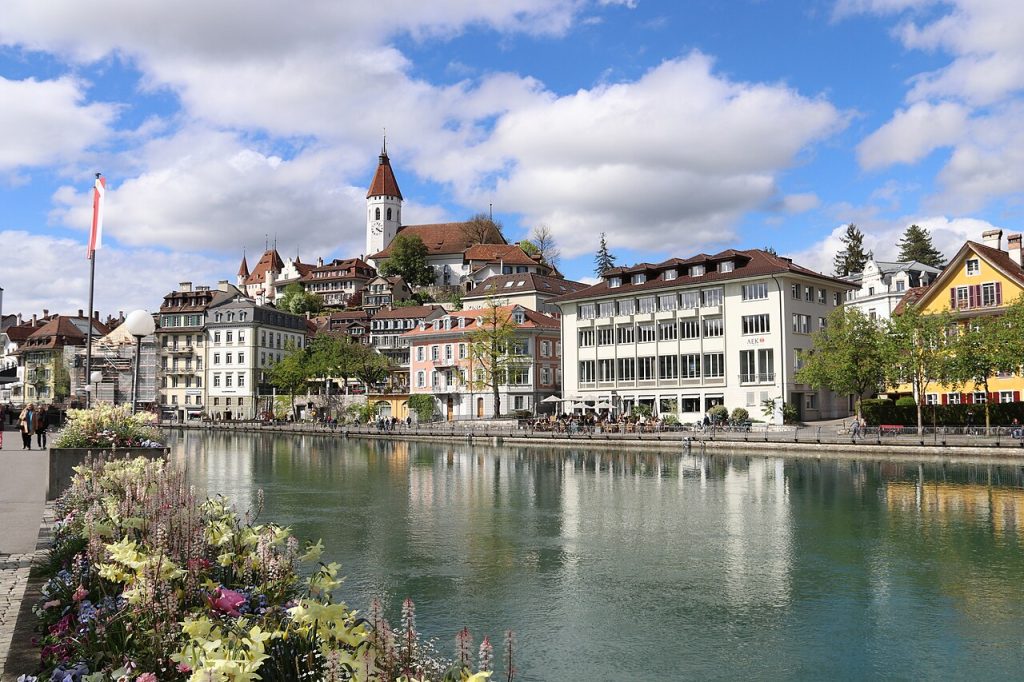
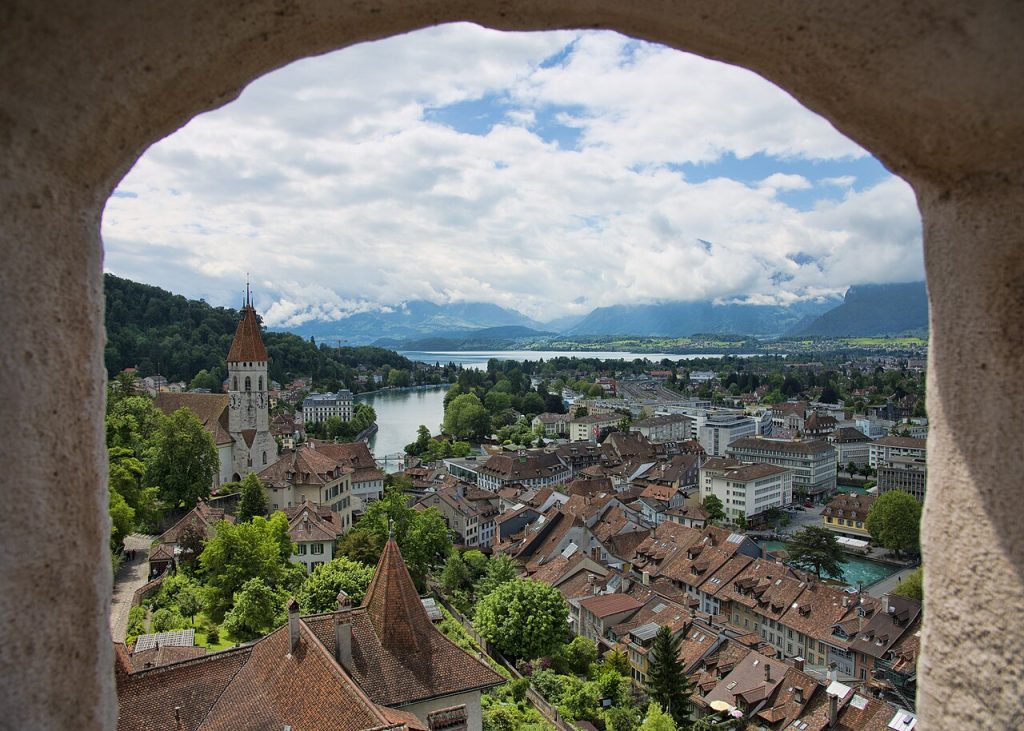
Thun stands at the outlet of Lake Thun, where the Aare, which has filled the lake from the glaciers of the Oberland, flows out between two arms around an island and runs north toward Bern. The old town lies on the island and the right bank, a grid of mediaeval streets below a steep hill, and the castle crowns the hill with the town church beside it, so that from the covered bridges over the Aare the whole composition rises in tiers: river, arcaded streets, church, castle, and behind them the lake and the Niesen, the Stockhorn and, on clear days, the Jungfrau. The hill was the natural site for a fortress commanding the river crossing and the road to the Oberland passes.
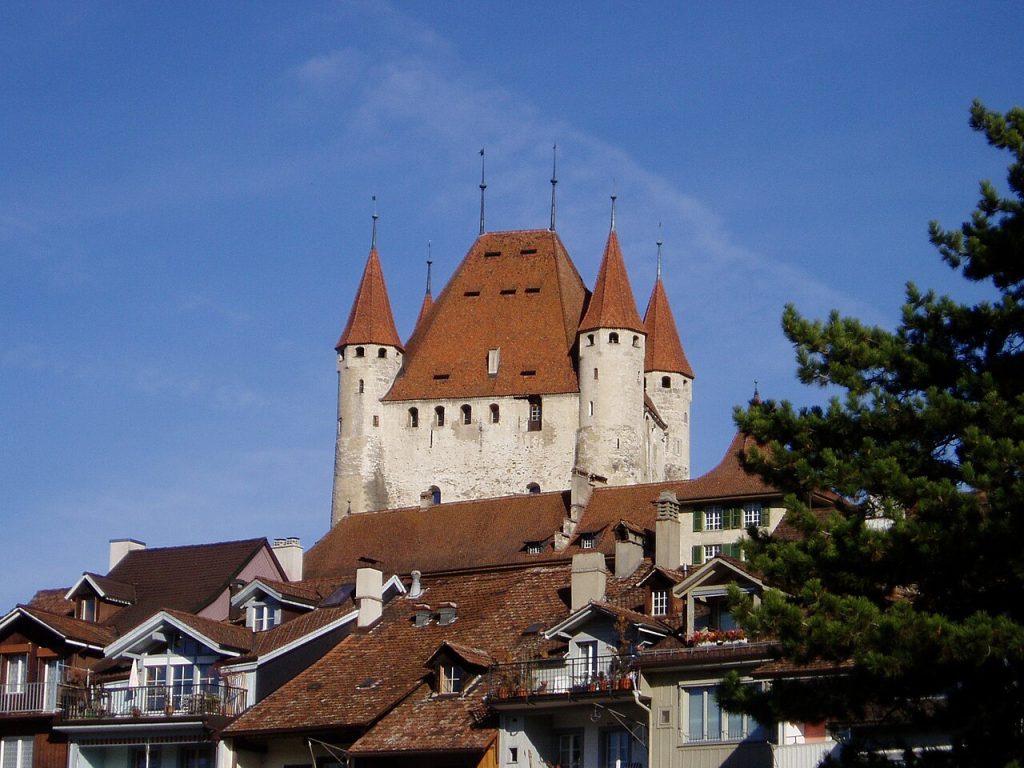
Now, stop here on the Sinnebrücke, the wooden bridge over the sluices, and look up. The castle is a single mass with four identical towers, as plain and as powerful as a child’s drawing, and it has looked like this for more than eight hundred years.
Berchtold V and the Zähringen Dukes
The dukes of Zähringen were a Swabian family who held the title of rector of Burgundy from the emperor and governed the lands between the Jura and the Alps in the twelfth century, founding towns to hold them: Freiburg im Breisgau, Fribourg, Burgdorf, Murten, Rheinfelden and, in 1191, Bern. Berchtold V, the last duke, fought the Burgundian nobility for control of the region, won at Grindelwald in 1191 and consolidated his hold with castles and towns, and Thun, at the strategic outlet of the lake, received both: the castle on the hill around 1190 and the town below it, laid out in the Zähringen manner with a broad main street and arcades. Berchtold died without heirs in 1218 and his lands were divided among his relatives.
His keep at Thun is the best preserved of all the Zähringen castles, and the model of the ducal stronghold: a great square tower with corner turrets, a hall, a chapel and little else.
1190: A Keep With Four Towers
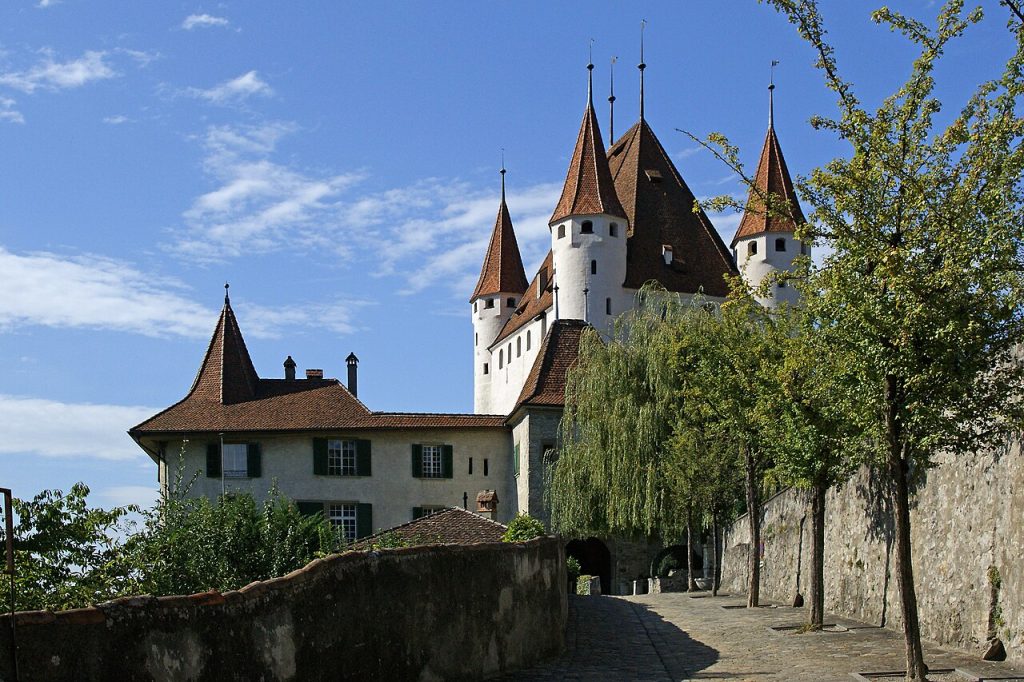
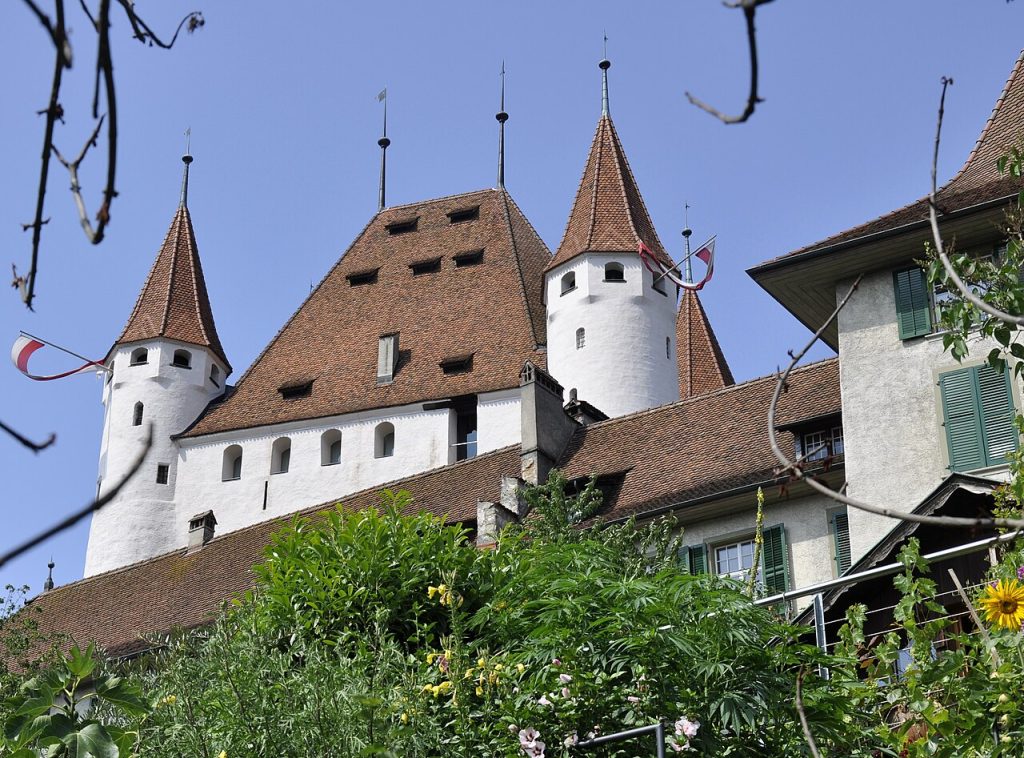
The keep is a square of about twenty metres a side and five storeys high, with walls up to three metres thick at the base, built of local tufa and sandstone, with a round tower at each corner rising above the steep hipped roof that was added in the fifteenth century. The entrance was on the first floor, reached by a stair, and the ground floor was a store; above were the hall, the lord’s chamber and the chapel, with the towers holding stairs, latrines and lookouts. The design, a residential tower-palace rather than a mere donjon, came from the Staufen castles of Swabia and was copied in the Zähringen castles at Burgdorf and Fribourg, but only Thun survives complete.
The four towers, which make the castle’s silhouette, were originally lower and were raised with their conical roofs in the fifteenth century under Bern; the body of the keep is Berchtold’s.
The Counts of Kyburg and the Knights’ Hall
On Berchtold’s death in 1218 Thun passed to his sister’s family, the counts of Kyburg, the most powerful lords in eastern Switzerland, who made the castle one of their principal seats and completed its hall and its residential floors. The Kyburgs died out in 1264 and their lands were divided between the Habsburgs and a cadet line, the Neu-Kyburg, who kept Thun and Burgdorf and lived here as lords of the Oberland, in growing debt and growing conflict with the rising city of Bern. In 1322 Count Eberhard II of Neu-Kyburg murdered his brother Hartmann in the castle in a quarrel over the inheritance, a crime that became a legend of the town and weakened the family further.
Now, stop here in the Knights’ Hall and look at the length of it: this was the court of the Kyburgs, the greatest hall in the Swiss lands in 1250, and the fratricide happened in the rooms above.
The Largest Romanesque Hall in Switzerland
The Knights’ Hall, the Rittersaal, occupies the entire first floor of the keep, about twenty metres by sixteen, with a high wooden ceiling on massive beams, small Romanesque windows in deep embrasures, a great fireplace and a floor of flagstones, and it is the largest surviving Romanesque secular hall in Switzerland and one of the finest in the German-speaking lands. The Kyburgs held court here, the Bernese bailiffs held their assizes and received the town’s homage, and the hall was later a store, a barracks and a prison workshop before the museum restored it in the 1880s. It is now hung with tapestries and arms and used for concerts and ceremonies.
Look at the ceiling, which is mediaeval in its structure, and at the window embrasures with their stone seats, where the ladies of the Kyburg court sat in the only daylight the hall had.
1384: Bern Buys Thun
By the 1380s the Neu-Kyburgs were bankrupt and at war with Bern, which they had attacked in the Burgdorf War of 1383 and lost, and in 1384 Count Rudolf sold Thun and its castle, with Burgdorf, to the city of Bern for a large sum that paid his debts and ended his family’s independence. Thun became a Bernese town with its own council and privileges, the castle became the seat of the Bernese bailiff, the Schultheiss, who governed the town and the surrounding district for the city, and the Bernese bear replaced the Kyburg lions over the gate. The Kyburgs died out in 1417 and the Oberland was Bern’s for the next four centuries.
Bern raised the keep’s towers and roof in the fifteenth century and built the first bailiff’s house against it, and the castle took the form the town has looked up at ever since.
Four Centuries of Bernese Bailiffs
The Bernese bailiff of Thun was one of the most important offices in the patrician republic, a four-year post for a member of the governing families that brought income, prestige and the castle as a residence, and the list of Schultheissen from 1384 to 1798 is a roll of the Bernese patriciate: Erlach, Wattenwyl, Diesbach, Steiger, May and the rest. The bailiff administered justice, collected taxes and tolls, commanded the militia of the district and represented Bern to the town’s council, which jealously guarded its own privileges, and the castle was his court, his residence and his prison. The keep’s hall served for assizes and the towers for prisoners, and the bailiff’s family lived in the house below.
The bailiffs also oversaw the Oberland’s trade and the passes, and under them Thun became a market town for the mountain valleys and a garrison town for Bern’s army, which it remains.
The Town With Streets on Two Levels
Thun’s old town, below the castle, is one of the most unusual in Switzerland: the main street, the Obere Hauptgasse, has shops at street level and above them, on the roofs of the shops, raised pavements with their own shopfronts, so that the street has two levels of commerce and pedestrians walk above the traffic along the first floors. The arrangement grew in the seventeenth and eighteenth centuries from the Zähringen plan and is unique. The street climbs from the Aare to the castle hill, where the Kirchtreppe, a covered wooden stair, leads up to the town church and the castle; the town hall square, the covered bridges and the quays on the Aare complete the old town, which is small enough to walk in an hour.
Now, stop here on the upper pavement of the Hauptgasse and look up the street to the castle. The town was laid out to look at it, and it still does.
The Bailiff’s New Residence of 1429 and 1740
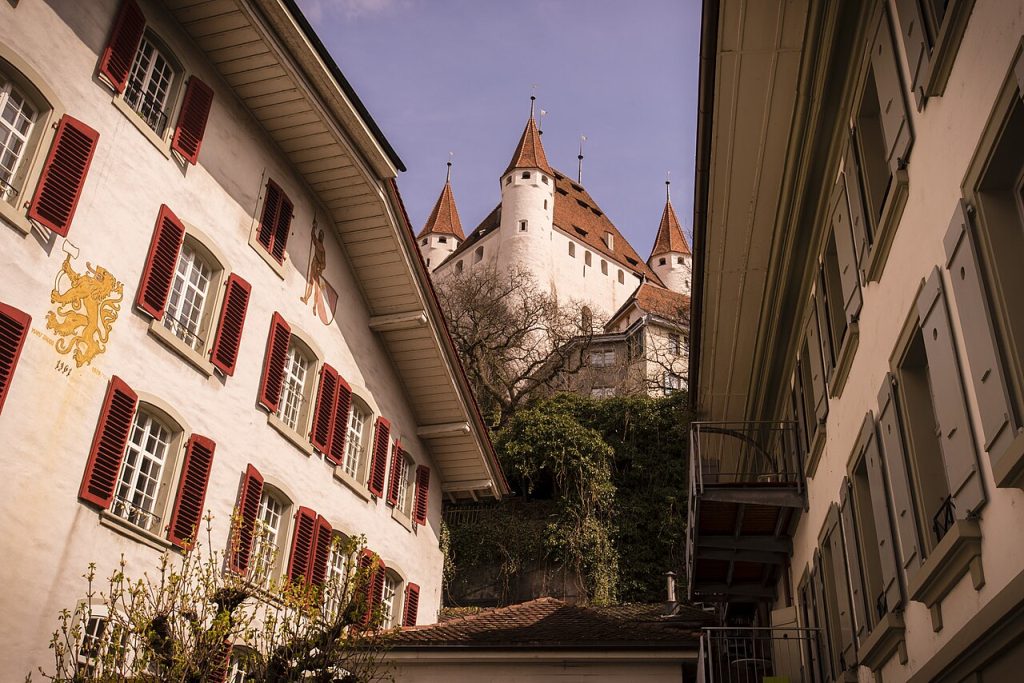
The keep was too austere for the Bernese bailiffs, who built a residence against its north side in 1429 and rebuilt it in the Baroque manner in 1740 as a comfortable patrician house with a courtyard, a garden and a view over the lake, where the bailiff lived with his family and held his receptions while the keep served for justice and prison. The residence, the Neues Schloss, was the seat of the district governor after 1798 and the district court until 2010, and it has since been converted into a boutique hotel, so that it is possible to sleep in the Bernese bailiff’s house below the Zähringen keep.
The castle’s forecourt between the keep and the residence has the well, the old gate and the terrace from which the town below and the lake are seen, and it is open day and night.
A Prison Until 1886
The keep’s towers held prisoners from the Kyburg period, and under Bern and then the canton the whole keep became the district prison, with cells in the towers and the upper floors, a workshop in the hall and the keeper in the residence. The prison closed in 1886 when a new one was built in the town, and the keep stood empty for two years while Thun’s citizens, led by the town’s historical society, argued for a museum. The cells, with their doors and the prisoners’ graffiti, survive on the upper floors and are part of the visit, and the view from their windows over the lake was the only consolation of four centuries of inmates.
The castle’s dungeon beneath the keep was never a prison; the legend that it was comes from Chillon, and the guides correct it.
1888: The Castle Museum
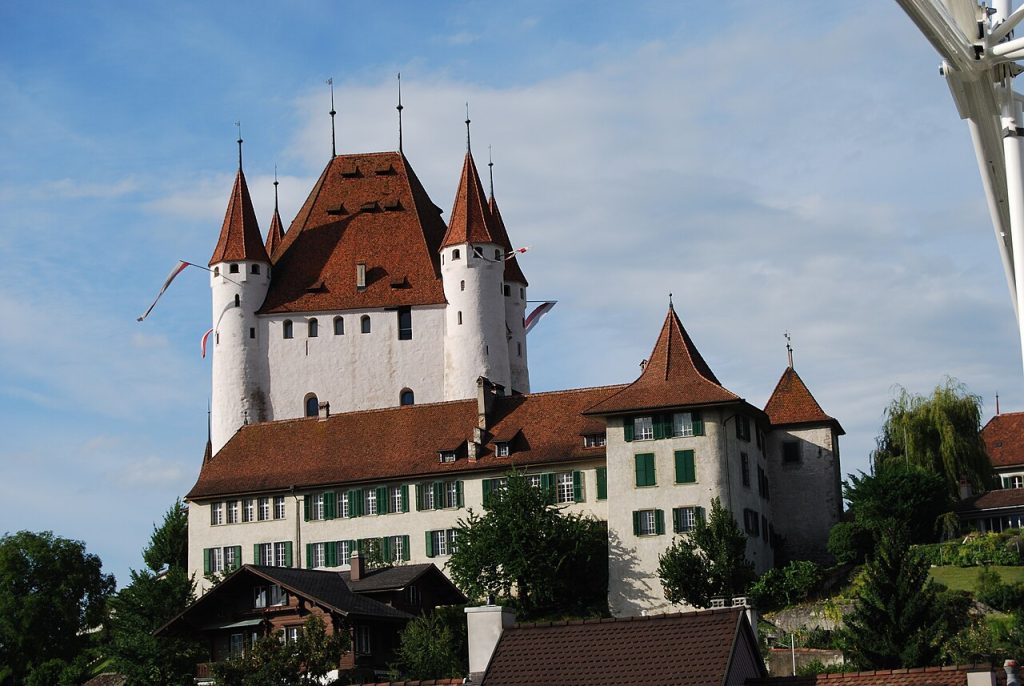
The castle museum opened in 1888 in the keep, one of the first regional museums in Switzerland, with collections of weapons, furniture, ceramics, textiles and archaeology given by the town’s families and the historical society, and it has occupied the five floors of the keep ever since, restored in the 1990s and redisplayed in the 2010s with rooms on the Zähringen and the Kyburgs, the Bernese bailiffs, the town’s crafts and trades, the Swiss army at Thun, which has been a garrison and training town since the nineteenth century, and the lake’s tourism. The Knights’ Hall is the museum’s centrepiece and the towers its finale, and a route leads from the ground floor up through the collections to the roof.
The museum is run by a foundation of the town and the canton, and it receives about fifty thousand visitors a year, most of them Swiss, which makes it a quieter castle than Chillon or Oberhofen.
Armour, Tapestries and the Thun Majolica
The collections are regional and good. The Knights’ Hall holds Bernese tapestries of the fifteenth and sixteenth centuries, including fragments of the Burgundian booty of 1476, and arms and armour from the Swiss wars; the floors above show Bernese furniture, stoves and glass, the costumes and household objects of the Oberland, the archaeology of the lake’s prehistoric settlements and, most distinctively, the Thun majolica, the brightly painted ceramics with edelweiss, alpine scenes and the Thun arms that the town’s potteries made for tourists from the 1870s to the 1920s and that are now collected across the world. A room on the Swiss army’s Thun barracks and firing ranges completes the local story.
Look for the tapestries, for the fifteenth-century chests and for the majolica, which is the Oberland’s gift to the souvenir shelves of three continents.
Towers, Views and the Lake
The climb through the museum ends in the towers, and the view is the reason most visitors come: from the four corner towers the old town lies below with its two-level streets and its covered bridges, the Aare runs north toward Bern, the lake stretches south to Spiez and Interlaken with Oberhofen’s castle on its shore and the Alps rise beyond, the Niesen’s pyramid, the Stockhorn, the Blüemlisalp and, on clear days, the Eiger, Mönch and Jungfrau. The castle’s hill also carries the town church with its octagonal tower and the terraces of the old cemetery, and the whole hill is a park above the town.
Now, stop here in the south-east tower and look down the lake. Berchtold of Zähringen built his keep to hold this view against the Burgundian lords, the Kyburgs lived in it, the Bernese governed from it and imprisoned in it, and the town has kept it as its emblem. It is the plainest castle in this series and, in its setting, one of the most beautiful.
Thun on Video
Visiting Thun Castle Today
Thun Castle Museum is open daily from April to October and on afternoons in winter, with a ticket covering the keep’s five floors, the Knights’ Hall and the four towers; audio guides in English are available and the castle hosts concerts and events in the hall. Allow ninety minutes for the castle and an hour for the old town, with its two-level main street, the town hall square and the covered bridges over the Aare; the castle forecourt and the church terrace are open free at all hours and are the best viewpoints over the town. The hotel in the former bailiff’s residence has a restaurant.
Thun is twenty minutes from Bern and two hours from Zurich by train, and the castle is a ten-minute walk up from the station through the old town and the covered Kirchtreppe stair; Oberhofen is twenty minutes along the lake by bus or forty by steamer from the quay below the castle. Chillon on Lake Geneva is two hours away via Bern. Here is the exact spot: Thun Castle on Google Maps.
Palaces Nearby
You May Like