At the eastern end of Lake Geneva, where the lake narrows toward the Rhône and the mountains of the Valais close the view, a castle stands on a rock a few metres from the shore, its walls rising straight out of the water, its towers and roofs reflected in the lake and the Dents du Midi behind. It is the Château de Chillon, the castle of the counts of Savoy who held the road between Burgundy and Italy, a toll house, a residence, a fortress and a prison that has stood on this rock in some form for a thousand years and in its present form since the thirteenth century. It is the most visited historic monument in Switzerland, and it owes much of its fame to a poem.
In 1816 Lord Byron sailed round the lake with Shelley, visited the castle, saw the dungeon where the Genevan prior François Bonivard had been chained to a pillar for four years by the Duke of Savoy, carved his name on the pillar and wrote The Prisoner of Chillon, which made the castle a place of pilgrimage for the whole Romantic century. Rousseau had already set a scene of La Nouvelle Héloïse here, Victor Hugo, Dumas, Flaubert and Dickens came after Byron, and the painters of Switzerland, Courbet above all, made the castle on its rock one of the most recognisable images in Europe. The castle is also the first of three Swiss houses in this series, with Oberhofen and Thun on Lake Thun to follow.
Cross the wooden bridge with me from the shore to the gate, down into the vaults and up through the halls to the keep, with the Savoy, the Bernese, the prisoner and the poet in order. The contents are below.
In This Article
- A Rock in the Lake
- The Road to the Great St Bernard
- The Counts of Savoy Build a Castle
- Peter II, the Little Charlemagne
- The Painted Halls and the Count’s Chamber
- The Vaults and the Dungeon
- Bonivard, Four Years at the Pillar
- 1536: The Bernese Take Chillon
- Two Centuries as a Bernese Arsenal
- 1816: Byron Carves His Name
- The Romantics and the Painters
- Naef and the Restoration of 1890
- Switzerland’s Most Visited Castle
- Chillon on Video
- Visiting Chillon Castle Today
- Palaces Nearby
A Rock in the Lake
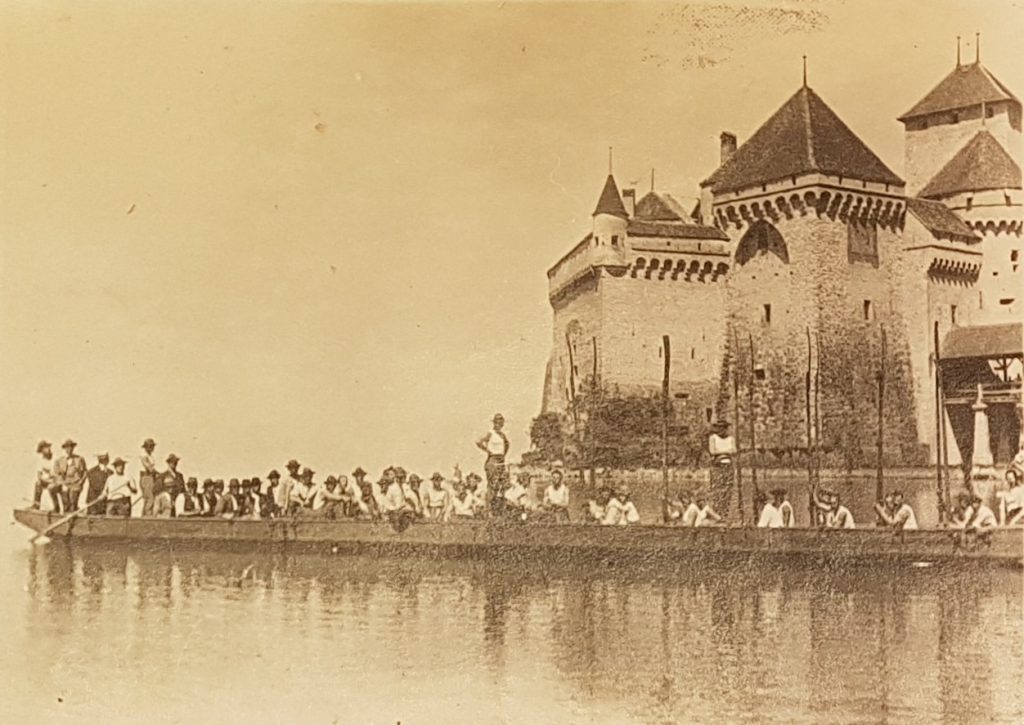
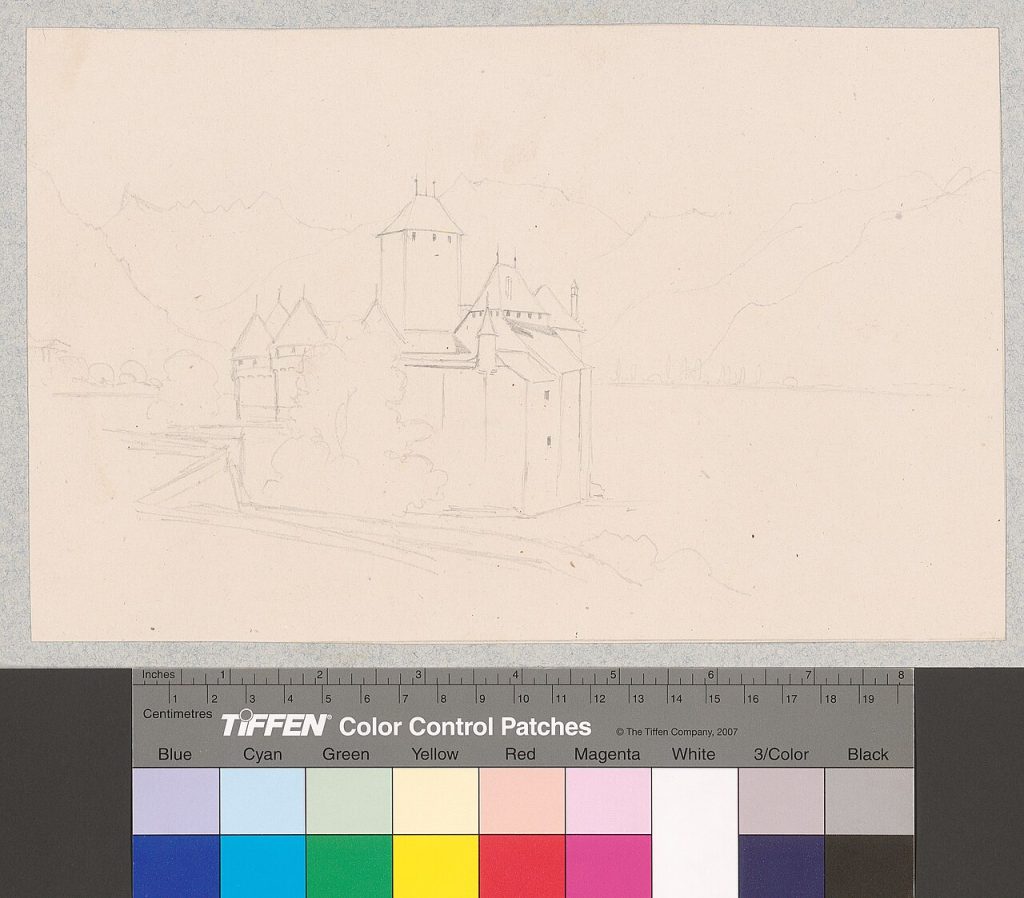
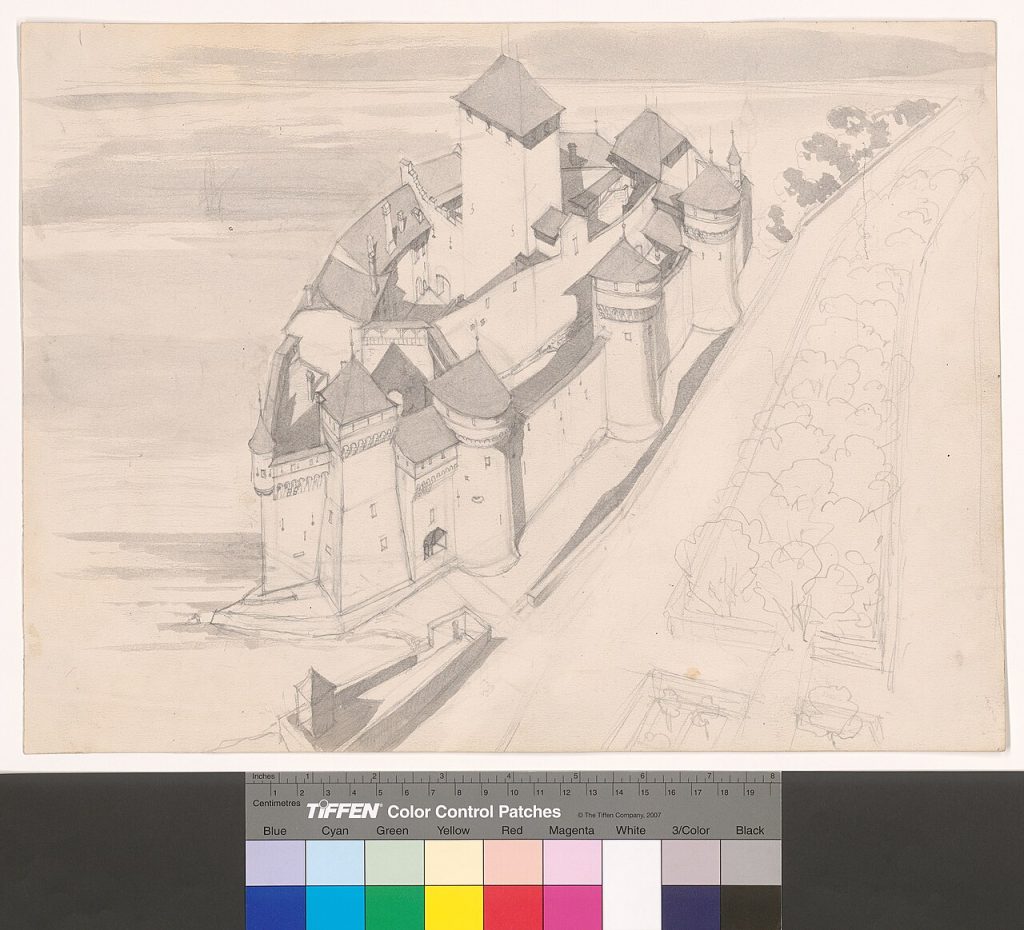
The castle occupies an oval limestone rock about a hundred metres long, separated from the shore by a narrow channel of the lake, three kilometres south of Montreux on the road to Villeneuve and the Rhône. The rock drops steeply into deep water on the lake side, which made the castle unassailable from the water, and on the land side the narrow strip between the mountain and the lake carried the only road, so that whoever held the rock held the road. The castle covers the whole rock, with its walls following the shoreline, its courtyards inside and its keep rising at the centre, and from the lake it looks like a ship at anchor.
Now, stop here on the shore path and look across the channel. The castle has two faces: the lake side is a residence, with large windows, balconies and painted shutters, because no enemy could come from the water; the land side is a fortress, with blank walls, towers and a moat, because the road was where the danger came from.
The Road to the Great St Bernard
The road along the north shore of Lake Geneva and up the Rhône valley to the Great St Bernard pass was one of the great routes from northern Europe to Italy in the Middle Ages, used by pilgrims to Rome, merchants to the Lombard fairs and armies in both directions, and at Chillon it passed between the lake and the cliff on a strip a few metres wide. A toll post stood here by the eleventh century, held by the bishops of Sion and then by the counts of Savoy, and the castle grew around it. The tolls on goods and travellers paid for the castle and made it one of the richest posts in the Savoyard domains.
The road is still there, now the lakeside highway and the railway, and the castle still sits astride it, with the trains passing a few metres from its moat.
The Counts of Savoy Build a Castle
The House of Savoy, counts of a mountain territory straddling the Alps between Burgundy, Lombardy and the Rhône, acquired Chillon in the twelfth century and made it the administrative centre of their lands north of the lake, the Pays de Vaud, which they conquered piece by piece over the thirteenth century. The castle was enlarged in stages: the keep and the first walls in the twelfth century, the great halls, the chapel and the lakeside residence in the thirteenth, the outer defences and the towers on the land side in the fourteenth and fifteenth. The counts’ bailiff of Chillon governed the Vaud from here, collected the tolls, held court and kept the prison.
The castle’s plan is twenty-five buildings around three courtyards on the rock, a town in miniature, and the complexity is the result of three centuries of additions by a dynasty that never had a master plan.
Peter II, the Little Charlemagne
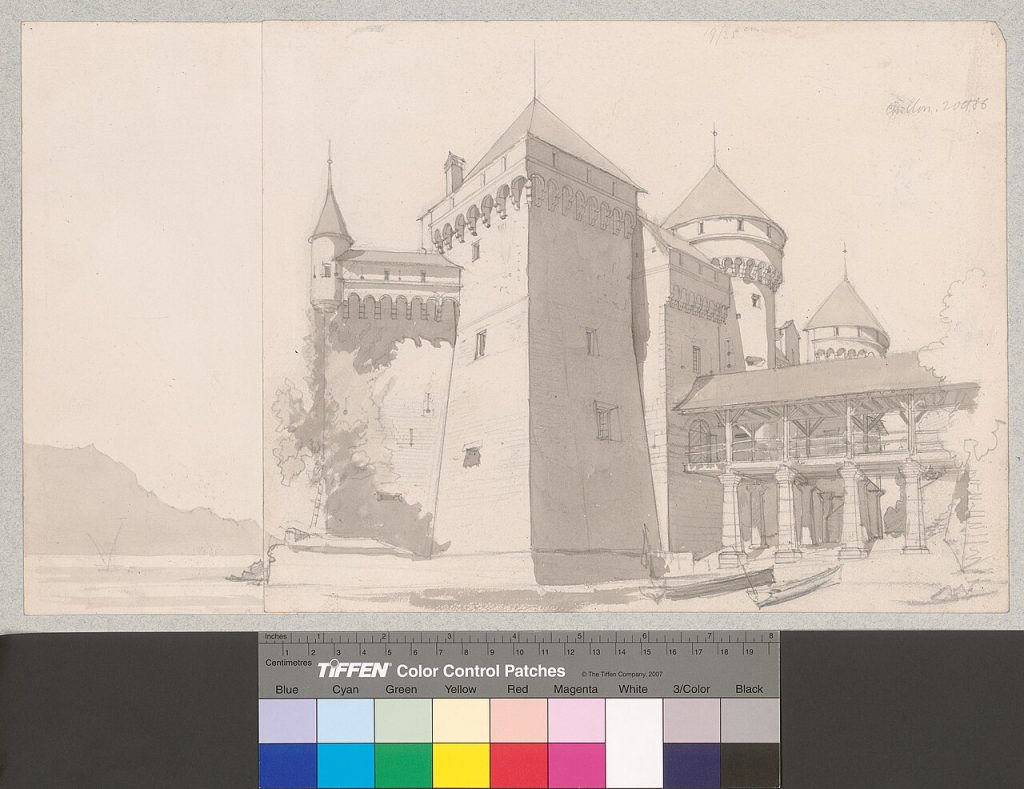
The castle’s great builder was Peter II of Savoy, count from 1263 to 1268 and before that the uncle of Queen Eleanor of England, who gave him the Savoy estate in London on which the hotel now stands and made him Earl of Richmond. Peter, called the Little Charlemagne for his conquests in the Vaud and his energy, rebuilt Chillon in the 1250s and 1260s with his master mason Pierre Mainier as a princely residence: the great hall on the lake with its windows over the water, the count’s chamber, the chapel with its painted vaults, the domus clericorum for the clerks and the new towers on the land side. The castle as it stands is essentially his.
Now, stop here in the Great Hall and look at the windows. They were opened in the thirteenth century to the lake, which no castle on a frontier would have dared facing an enemy, and they tell you that the Savoy counted the lake as their own.
The Painted Halls and the Count’s Chamber
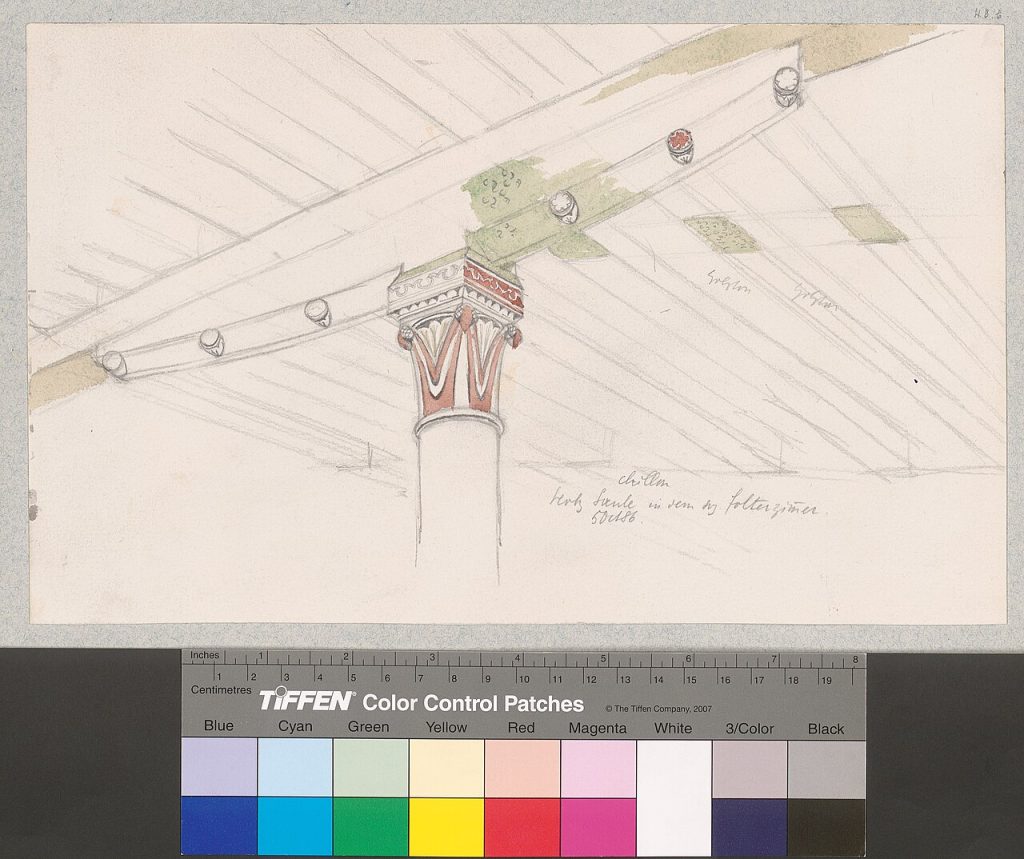
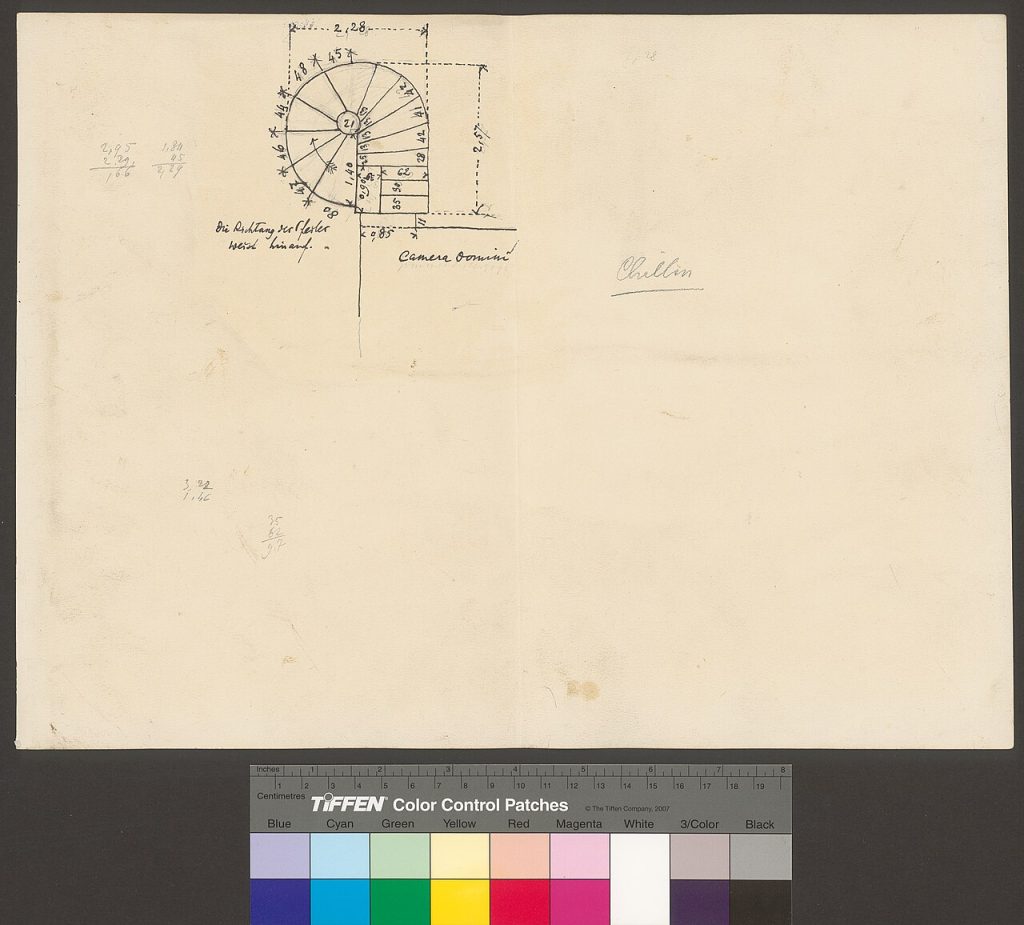
The residential rooms on the lake side are the castle’s glory. The Great Hall of the count, the Aula Magna, has a wooden ceiling, a fireplace and windows over the lake; the Camera Domini, the count’s chamber, keeps its wall paintings of about 1340, a frieze of animals, birds and foliage on a white ground that is among the best mediaeval secular painting in Switzerland; the chapel of St George has painted vaults of the same period; and the Hall of the Bailiff, the Hall of Arms and the Bernese rooms upstairs are furnished with chests, armour and the arms of the bailiffs. The rooms are linked by wooden galleries and stairs around the courtyards, and the whole upper castle is a labyrinth.
Look for the painted chamber, for the chapel’s vaults and for the ceiling of the Aula Nova with its carved beams, and then go down.
The Vaults and the Dungeon
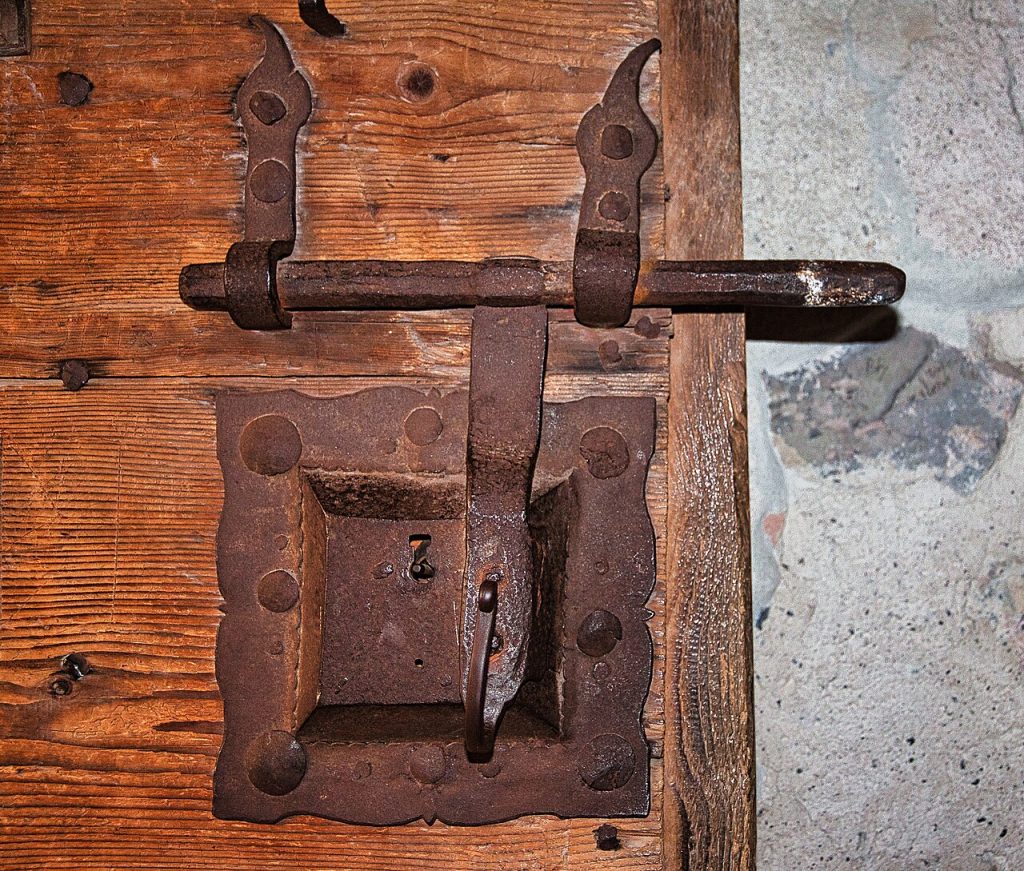
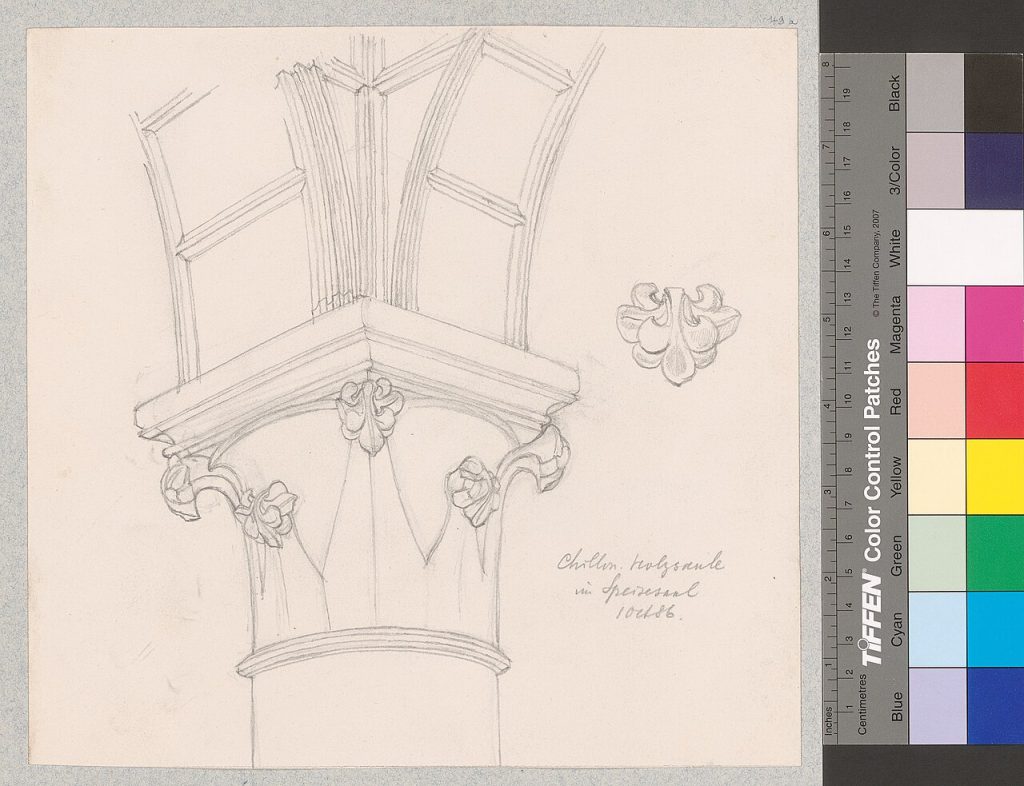
Beneath the lake side of the castle, cut into the living rock, run four great vaulted halls, built in the thirteenth century with Gothic ribs springing from the rock and from pillars, lit by openings onto the water: a store, a cellar, the arsenal of the Bernese and, at the end, the prison. The vaults are the castle’s most famous spaces because of what happened in the last one, and their beauty, the pale ribs rising from rough rock with the lake lapping outside, is the reason Byron’s poem works: the prisoner was chained in a cathedral.
Now, stop here in the last vault at the row of pillars. The third pillar carries, cut into the stone, the name BYRON, and the pillar beside it is the one to which the prisoner was chained.
Bonivard, Four Years at the Pillar
François Bonivard was the prior of the monastery of Saint-Victor in Geneva, a scholar and a partisan of the city’s independence against the Duke of Savoy, who wanted Geneva for himself. The duke imprisoned him once in 1519 and released him; in 1530 Bonivard was captured by the duke’s men and brought to Chillon, where he was held for six years, the last four of them, from 1532 to 1536, chained to a pillar in the vault by an iron ring that is still in the stone, able to walk only the length of his chain, which wore a groove in the rock floor. He was freed when the Bernese took the castle in March 1536, returned to Geneva a hero of the Reformation and lived to write the city’s chronicles and marry four times.
Bonivard’s own account is laconic; Byron’s is not, and the poem’s prisoner, who watches his brothers die beside him and goes grey before his time, is largely invented. The ring and the groove are real.
1536: The Bernese Take Chillon
In 1536 the city of Bern, newly Protestant and expanding, marched into the Vaud to relieve Geneva from the Duke of Savoy and conquered the whole province in a few weeks; Chillon, held by a Savoyard garrison, was besieged by land and by Genevan boats on the lake and surrendered on 29 March 1536. Bonivard and the other prisoners were released, the Savoy left the Vaud for ever and the castle became the seat of the Bernese bailiff of Vevey, who governed the region from here for the next two hundred and sixty years. The Bernese bear replaced the Savoy cross over the gate, the chapel was stripped of its images and the count’s halls became the bailiff’s offices and apartments.
Bern governed the Vaud as a subject territory, in German, from a castle built by French-speaking princes, and the Vaudois never quite forgave it.
Two Centuries as a Bernese Arsenal
Under Bern the castle was a residence, an arsenal and a prison. The bailiffs refitted the upper rooms with panelling, tiled stoves and painted ceilings in the Bernese manner, stored the cantonal artillery and gunpowder in the vaults, held witch trials and executions here in the seventeenth century and used the dungeon for ordinary criminals. The castle was not modernised as a fortress because the Vaud was at peace, and so it kept its mediaeval form while the castles of the rest of Europe were being turned into palaces or forts. In January 1798 the Vaud rose against Bern with French encouragement, the bailiff left Chillon and the castle passed to the new canton of Léman and then, in 1803, to the canton of Vaud.
The canton used it as an arsenal, a prison and a store until the 1830s, and then began to wonder what to do with a mediaeval castle that visitors were starting to ask to see.
1816: Byron Carves His Name
In June 1816 Lord Byron, in exile from England after the collapse of his marriage, and Percy Bysshe Shelley, with whom he had just become friends at Geneva, sailed round the lake in a hired boat, were nearly wrecked in a storm off Meillerie and landed at Chillon, where the castle’s keeper showed them the vaults and told them Bonivard’s story. Byron, by his own account, carved his name on the third pillar, and within days, at Ouchy, he wrote The Prisoner of Chillon, a dramatic monologue of fourteen stanzas in the voice of a man chained for years in the dungeon while his brothers die beside him, which was published that autumn and became one of the most popular poems of the century.
The carving is genuine, probably; the keepers had it protected under glass in the nineteenth century, and it is the most photographed graffito in Switzerland. Now, stop here before it and read the opening of the poem, which every nineteenth-century visitor knew by heart: the hair grey but not with years.
The Romantics and the Painters
Byron made Chillon a place of pilgrimage. Rousseau had already placed a scene of La Nouvelle Héloïse at the castle in 1761, and after 1816 the writers came in procession: Shelley, who wrote of the dungeon’s horror, Victor Hugo, Alexandre Dumas, Flaubert, Dickens, Mark Twain, Tolstoy, Henry James and Hans Christian Andersen, who set a tale here. The painters came too: Turner sketched the castle from the lake in the 1830s and 1840s, Courbet, in exile at La Tour-de-Peilz in the 1870s, painted it dozens of times from the shore, and the prints, postcards and chocolate boxes of Switzerland made the castle on its rock with the Dents du Midi behind the image of the country.
The tourists followed the artists, by steamer from Geneva and Lausanne, by railway after 1861 and by the trains of the Montreux hotels, and by 1900 Chillon was receiving a hundred thousand visitors a year.
Naef and the Restoration of 1890
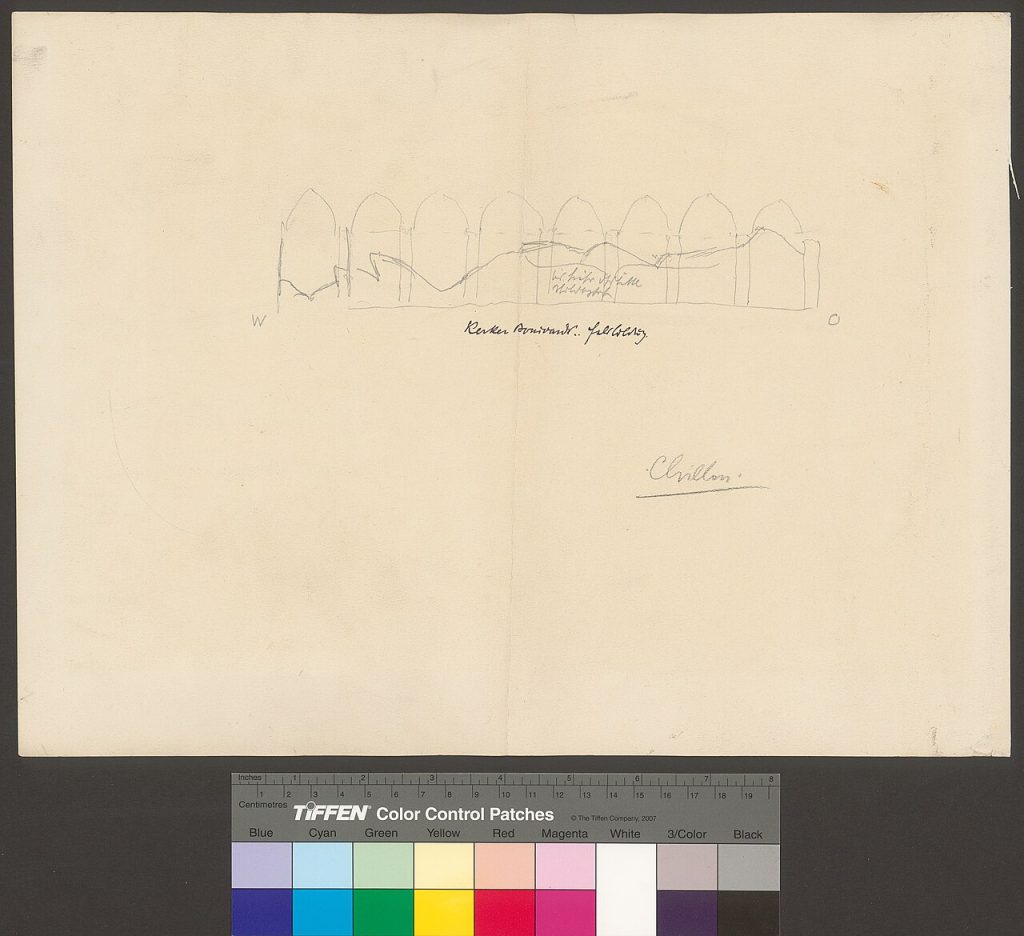
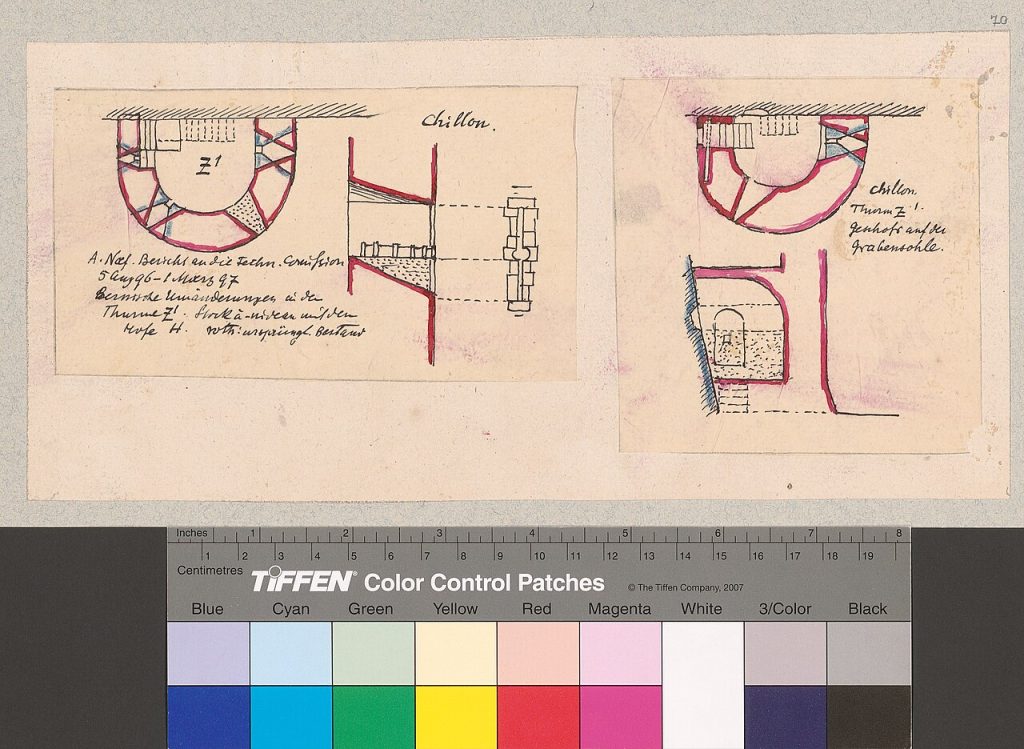
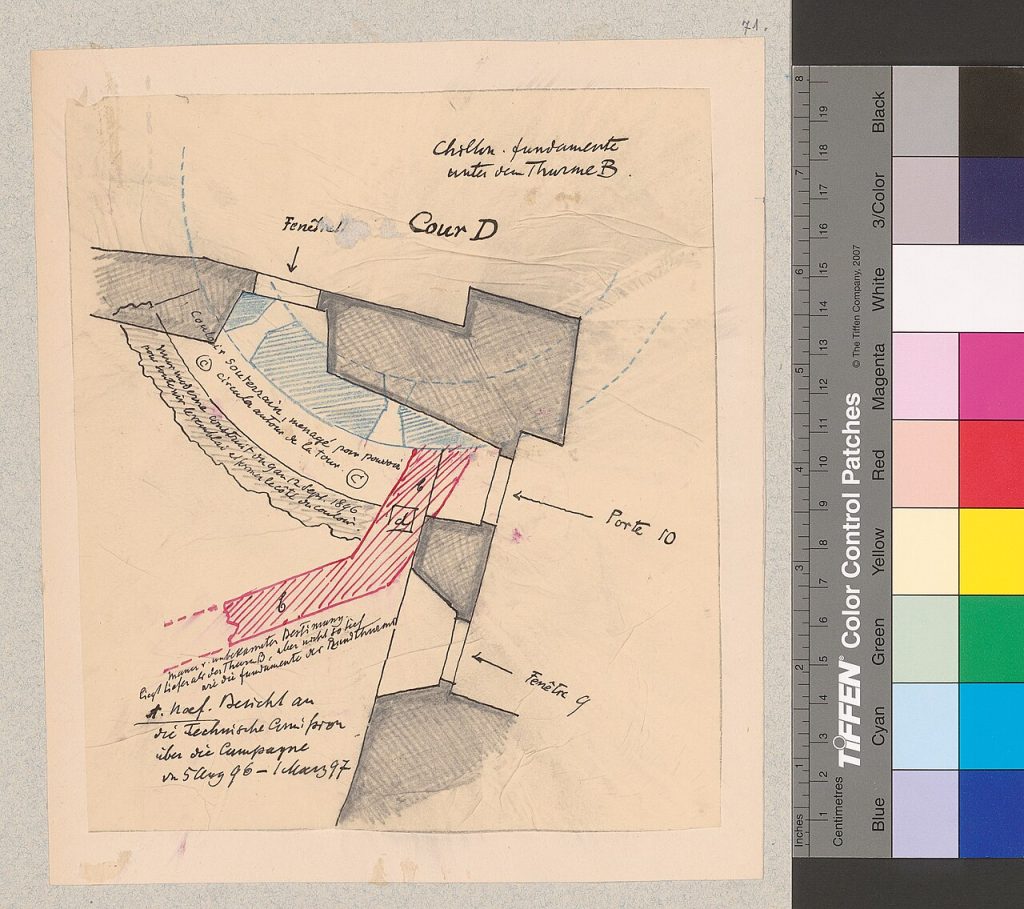
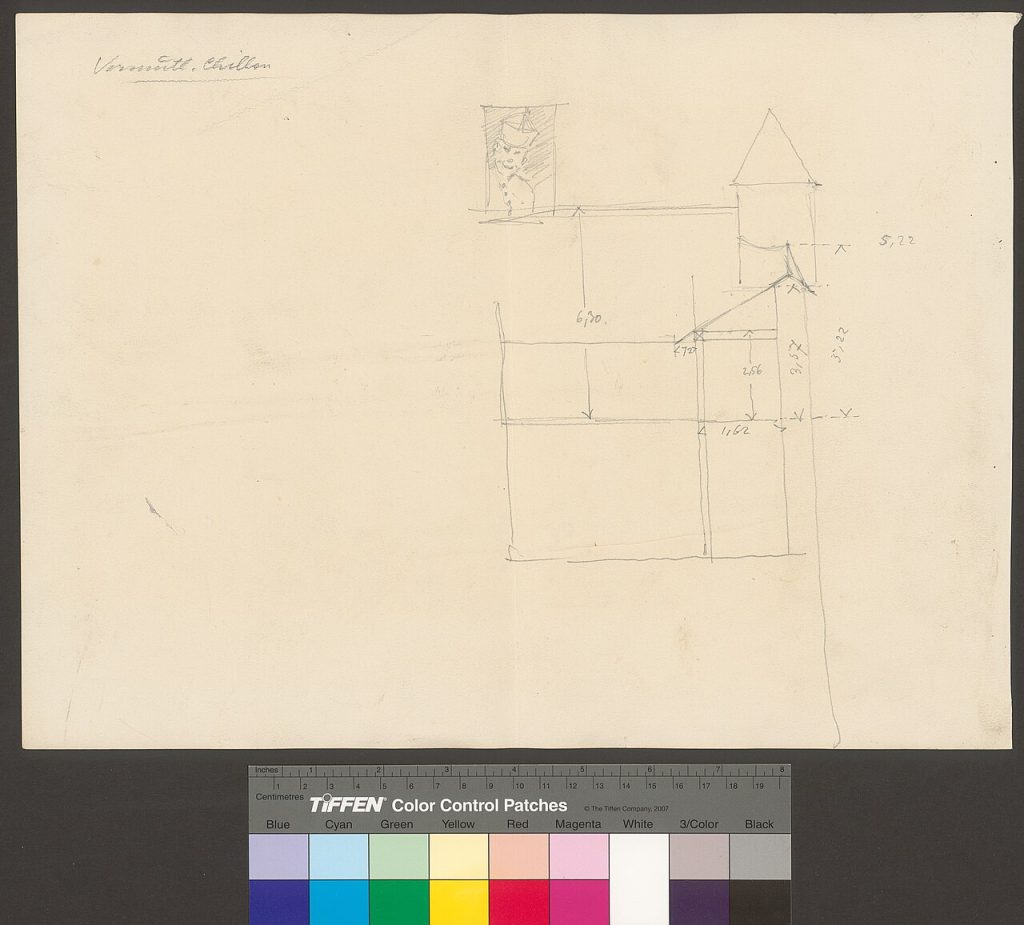
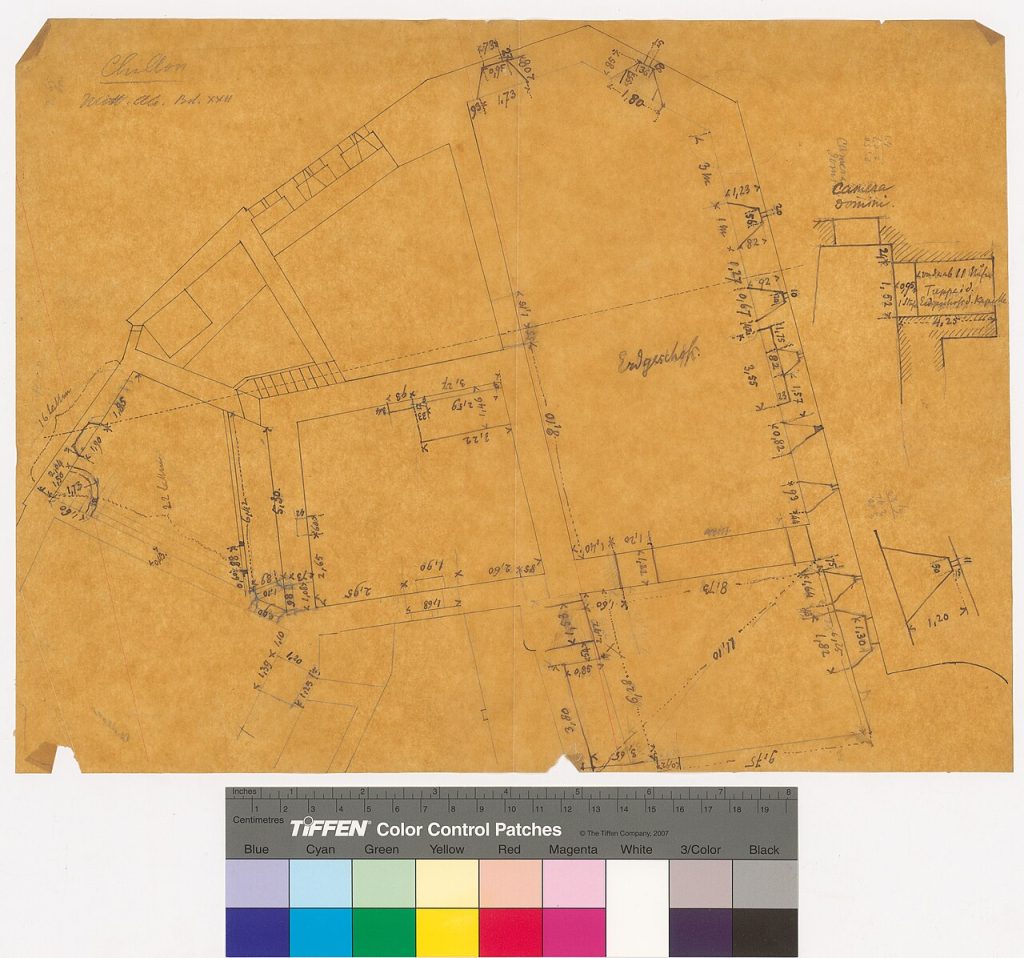
The canton of Vaud began repairs in the 1830s and in 1887 set up the Association for the Restoration of Chillon, which in 1896 appointed the architect and archaeologist Albert Naef to direct a restoration that lasted until his death in 1936. Naef’s method was new: he excavated, measured and documented every wall before touching it, restored only what the evidence supported, removed the Bernese additions that hid the mediaeval fabric where he could prove the original and left the rest, and published his findings in volumes that are still the basis of the castle’s history. The Chillon restoration became a model for Europe, and the castle’s state today, mediaeval in its bones and Bernese in its furnishings, is Naef’s.
The castle has been run since 2002 by a foundation, which has continued the conservation, excavated the courtyards and the rock, and installed the exhibitions and the wine cellar, where the castle’s own Clos de Chillon is sold.
Switzerland’s Most Visited Castle
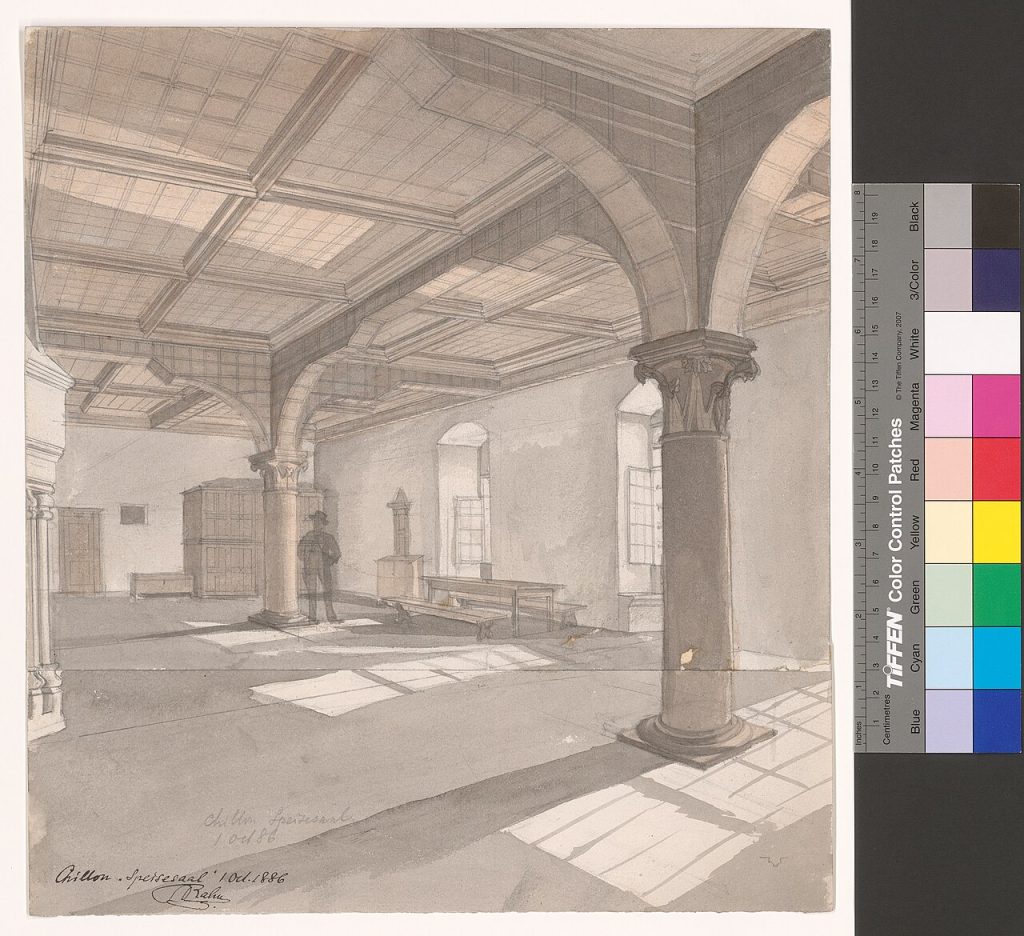
Chillon receives about four hundred thousand visitors a year, more than any other historic monument in Switzerland, from every country in the world, and it has learned to handle them: the visit follows a numbered route through the courtyards, the vaults, the halls and the keep, with audio guides in a dozen languages, exhibitions on the Savoy, the Bernese and Byron, a children’s trail and, in the vaults, a wine cellar for the castle’s own vintage. The castle also hosts concerts, a Christmas market, mediaeval festivals and the Montreux Jazz Festival’s chamber concerts, and it has appeared in films from Disney to Bollywood.
Now, stop here on the top of the keep and look at the lake. The Savoy built on this rock to tax a road, the Bernese kept it as a prison and a store, a poet made it famous and the Vaud has made it a shrine. The view, which none of them was looking at, is the one thing that has not changed.
Chillon on Video
Visiting Chillon Castle Today
Chillon Castle is open daily year-round, with longer hours from April to October, and the ticket covers the whole castle with an audio guide or the free app; guided tours in English run in summer and can be booked for groups. Allow two hours, and come at opening or after four in summer, when the coaches and the cruise passengers have gone; the dungeon and the keep are the bottlenecks. The castle has a café and a wine cellar, and the lakeside path to Montreux, forty minutes along the shore past the Freddie Mercury statue, is the best approach or departure.
Chillon is reached from Montreux by the lakeside bus 201, by train to Veytaux-Chillon station three minutes’ walk away, by lake steamer to the castle’s own landing stage in summer or on foot along the shore; Montreux is an hour from Geneva and twenty minutes from Lausanne by train. Oberhofen and Thun on Lake Thun are two hours away by train via Bern or over the Alps by car. Here is the exact spot: Chillon Castle on Google Maps.
Palaces Nearby
You May Like
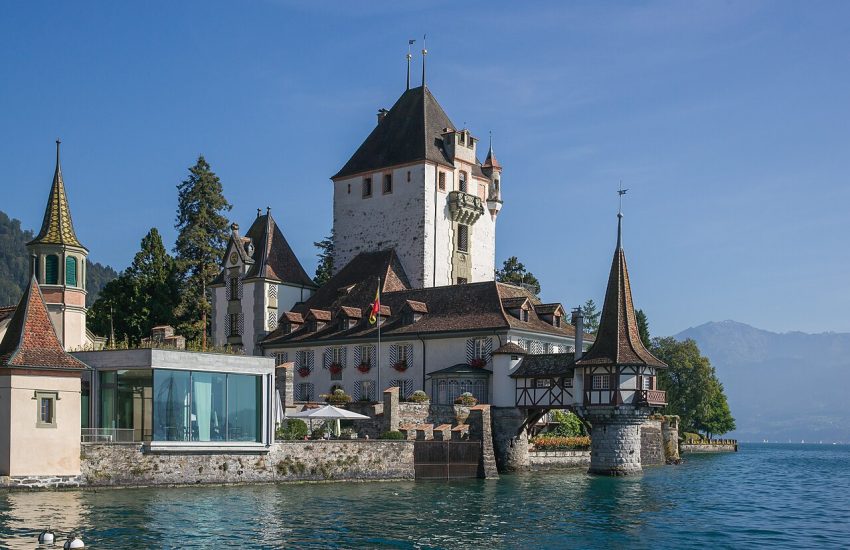
Oberhofen Castle and the Lakeside Dream of a Prussian Count