In the centre of Valletta, on the square that was the parade ground of the Order of St John, stands a long two-storey palace of honey-coloured Maltese limestone with two carved doorways, enclosed wooden balconies and a facade that runs the length of a city block. It is the Grandmaster’s Palace, built from 1571 as the residence and seat of government of the Grand Masters of the Knights Hospitaller, the crusading order that ruled Malta from 1530 to 1798, and it has been the seat of whoever governed Malta ever since: Napoleon’s generals for two years, the British governors for a century and a half, the parliament of independent Malta from 1921 to 2015 and, today, the President of the Republic.
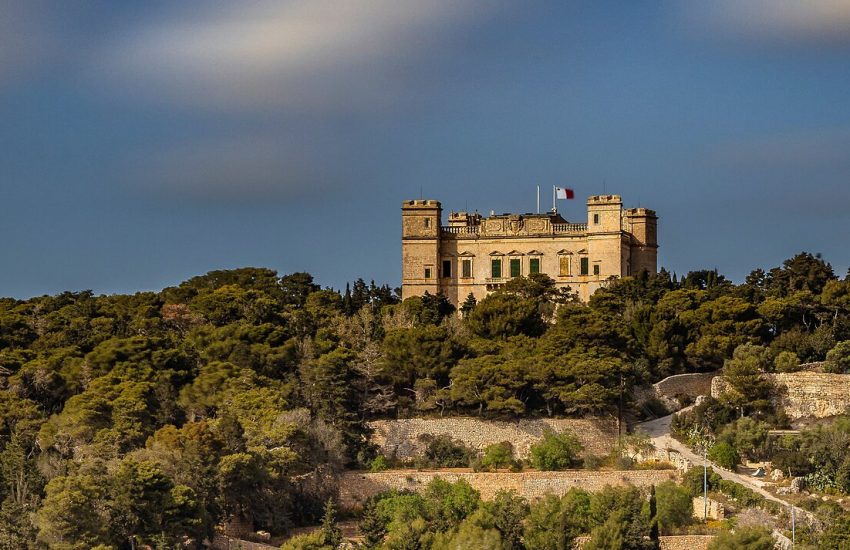
Inside are the state rooms where the Grand Masters held council under frescoes of the Great Siege of 1565, the corridors painted with the arms of the order’s langues, the tapestries that Grand Master Perellos ordered from the Gobelins in 1710 and the Palace Armoury, the largest collection of arms and armour in Europe still in the building for which it was assembled, with the suits of the Grand Masters and the weapons of the Turks they fought. The palace was restored between 2019 and 2024 and reopened as a museum of the order’s rule, and it is the natural companion to the Grand Masters’ two country palaces, Verdala and San Anton, in the next article of this series.
Walk with me across St George’s Square, through the courtyards and up to the state rooms and the armoury, with the knights, the siege, the British and the republic in order. The contents are below.
In This Article
- St George’s Square and the Facade
- The Order of St John Comes to Malta
- 1565: The Great Siege
- A City Built by Gentlemen for Gentlemen
- 1571 to 1600: Cassar’s Palace
- Neptune’s Courtyard and the Prince Alfred Courtyard
- The Painted Corridors and the Langues
- The Council Chamber and the Perellos Tapestries
- The Throne Room and the Siege Frescoes
- The Palace Armoury
- 1798: Napoleon Takes the Palace
- The British Governors and the Parliament
- The President’s Palace and the Restoration of 2024
- Valletta on Video
- Visiting the Grandmaster’s Palace Today
- Palaces Nearby
St George’s Square and the Facade
St George’s Square, Misraħ San Ġorġ, is the heart of Valletta, a paved rectangle on Republic Street halfway down the peninsula, with the Main Guard, the old guardhouse of the order and the British, on its west side and the palace’s facade filling the east. The facade is 97 metres long, two storeys of rusticated limestone with regular windows, two monumental doorways, one for the Grand Master and one for the public, and at the two corners the enclosed timber balconies, gallariji, that are the signature of Maltese streets and that here are the longest on the island. The square was the parade ground of the knights and is now a place of fountains and cafés.
Now, stop here in the middle of the square and look at the facade. It is plain for a sovereign’s palace, severe, military and golden, and the order that built it was a military religious brotherhood that had just survived the greatest siege of the sixteenth century. The palace is a fortress officer’s idea of grandeur.
The Order of St John Comes to Malta
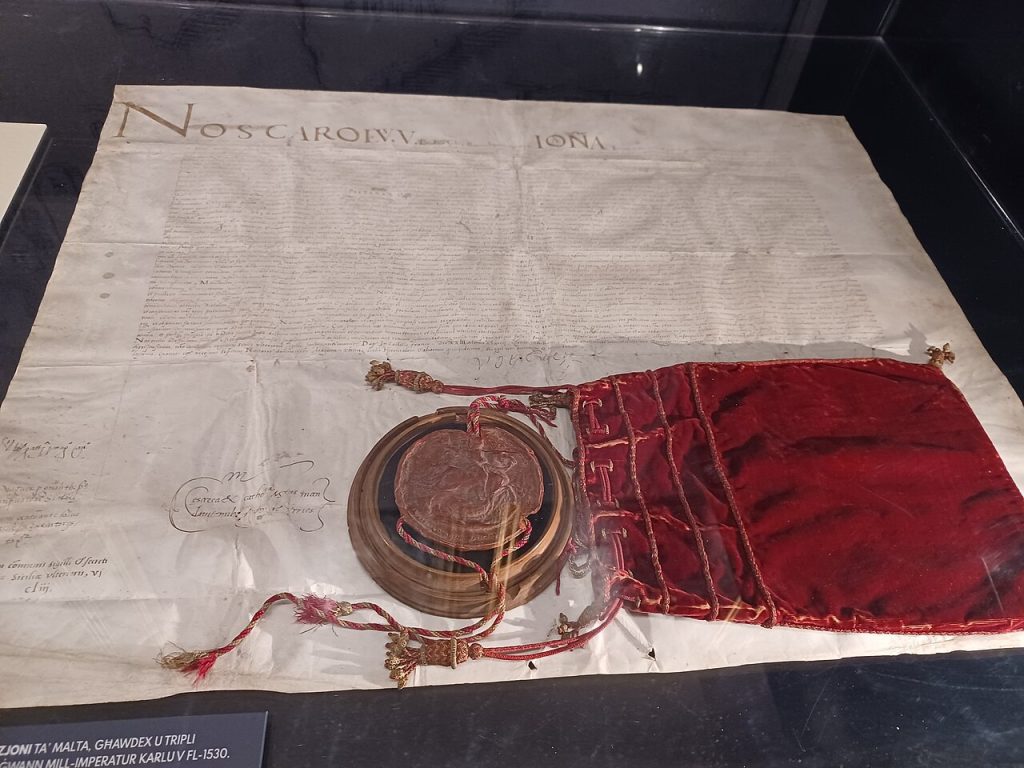
The Order of St John of Jerusalem was founded in the eleventh century to run a hospital for pilgrims in Jerusalem, became a military order in the crusades, held Rhodes from 1310 until Suleiman the Magnificent drove them out in 1522 and wandered for eight years until Emperor Charles V gave them Malta, Gozo and Tripoli in 1530, for the annual rent of a Maltese falcon. The knights, drawn from the Catholic nobility of Europe and organised in eight langues by nation, were monks, soldiers and sailors, and their galleys fought the Ottomans and the Barbary corsairs across the Mediterranean from their new base in the Grand Harbour. The Grand Master, elected for life, was a sovereign prince, and his palace was a court.
For thirty-five years the order lived in the old town of Birgu on the harbour, and it was there that the Turks found them in 1565.
1565: The Great Siege
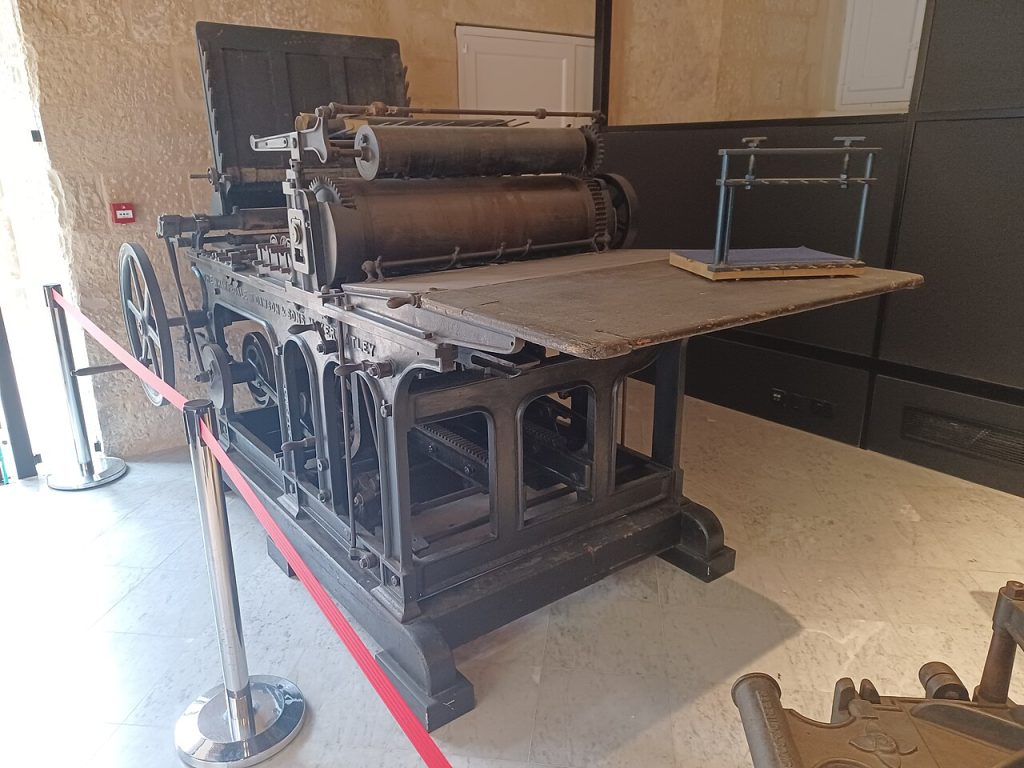
In May 1565 an Ottoman armada of some two hundred ships and forty thousand men landed on Malta to destroy the order, and for four months Grand Master Jean de Valette, with about six hundred knights and several thousand Maltese militia and Spanish soldiers, held the forts of St Elmo, St Angelo and St Michael against assault after assault. St Elmo fell in June with all its defenders dead; the knights beheaded their prisoners and fired the heads into the Turkish camp; the Turks crucified the bodies of the knights and floated them across the harbour. In September a relief force from Sicily landed and the Ottomans, decimated by disease and casualties, sailed away. The siege was celebrated across Christian Europe as the turning of the tide, and it made the order and its Grand Master heroes.
Valette decided that the order would never again be caught in the old town, and on the empty peninsula of Sciberras across the harbour he laid out a new fortress city. Now, stop here in the throne room beneath Perez d’Aleccio’s frescoes and follow the siege from landing to relief, scene by scene.
A City Built by Gentlemen for Gentlemen
The first stone of Valletta was laid on 28 March 1566, and the city was planned by Francesco Laparelli, a military engineer lent by the pope, as a grid of straight streets on the peninsula between the two harbours, surrounded by the most formidable bastions in Europe, with a cathedral, the auberges of the eight langues, the hospital, the palace and the houses of the knights in the centre. Laparelli’s assistant, the Maltese architect Girolamo Cassar, built most of the buildings after Laparelli left in 1570, and the city was substantially complete by 1600. It was, as a later visitor said, a city built by gentlemen for gentlemen, and its uniform limestone, its straight streets and its palaces make it one of the most coherent Renaissance cities in the world.
The palace’s site, two blocks of the grid in the centre of the city on the highest ground, was reserved from the start for the Grand Master.
1571 to 1600: Cassar’s Palace
The palace began in 1571 as a house built by the nephew of Grand Master del Monte on the corner of the block, which the order bought and which Cassar enlarged over the following decades into a palace around two courtyards, with the Grand Master’s apartments and the council chamber on the first floor, the armoury, stables and offices below and a chapel. The building was plain, in Cassar’s Mannerist manner, with the rustication and the long facade that remain, and it was enlarged and redecorated by successive Grand Masters through the seventeenth and eighteenth centuries, who added the frescoes, the tapestries, the Baroque doorways and the balconies.
The palace was the seat of the order’s government, the council, the treasury and the courts, as well as the Grand Master’s residence, and its two courtyards divided the public business from the sovereign’s household.
Neptune’s Courtyard and the Prince Alfred Courtyard
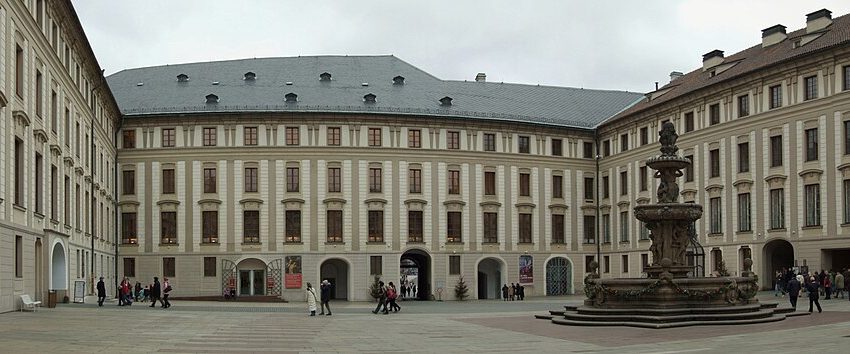
The two courtyards are the palace’s lungs. Neptune’s Courtyard, the larger, is named for the bronze statue of Neptune, cast in 1615 for the fish market and moved here by the British in 1861, which stands among the orange trees and the palms before a wall fountain with the arms of Grand Master Perellos, and its arcades are the way to the main staircase. The Prince Alfred Courtyard, named for Queen Victoria’s son who visited in 1858, is smaller, with a clock tower of 1745 built by Grand Master Pinto whose bronze Moorish figures strike the hours, and it gives access to the armoury. Both are planted, shaded and cool, which in Valletta’s summer is the palace’s greatest luxury.
Now, stop here under Pinto’s clock as it strikes and look up at the four bronze slaves with their hammers. The order’s galleys were rowed by Muslim slaves, and the clock is a reminder of what the knights’ Mediterranean war was.
The Painted Corridors and the Langues
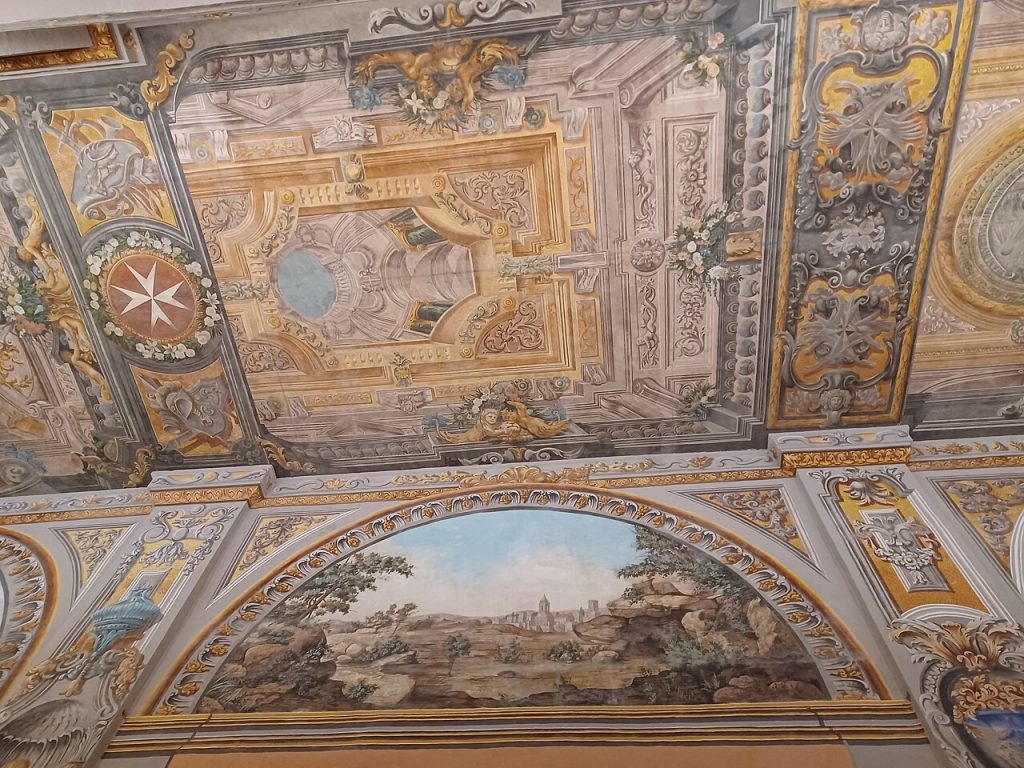
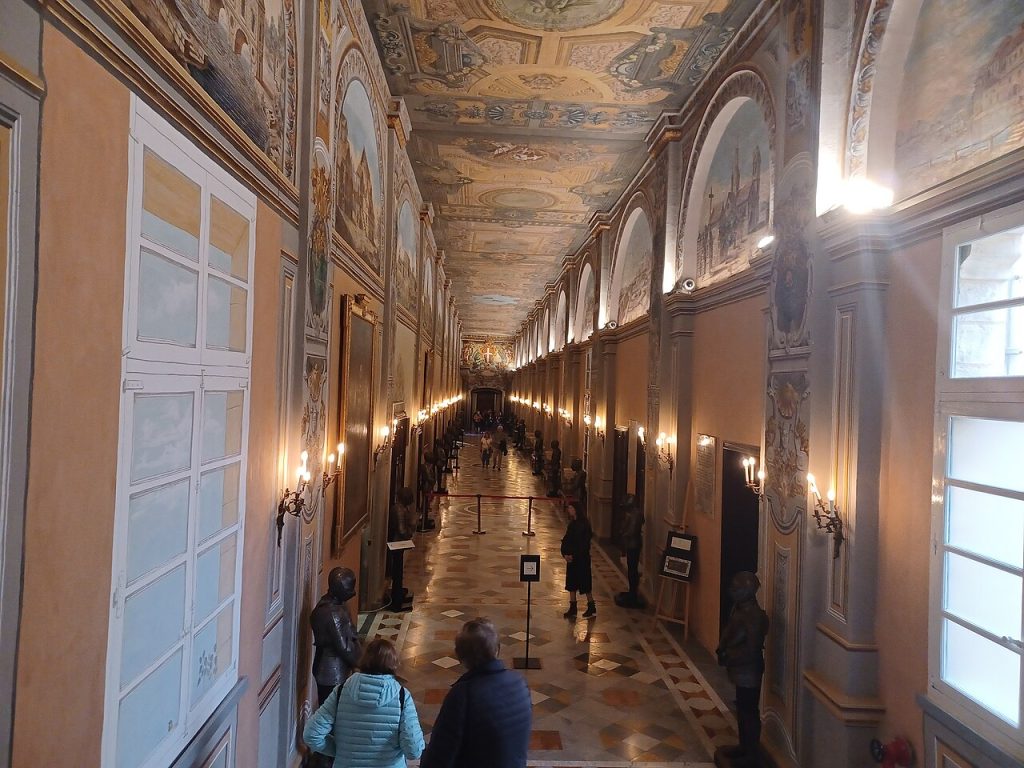
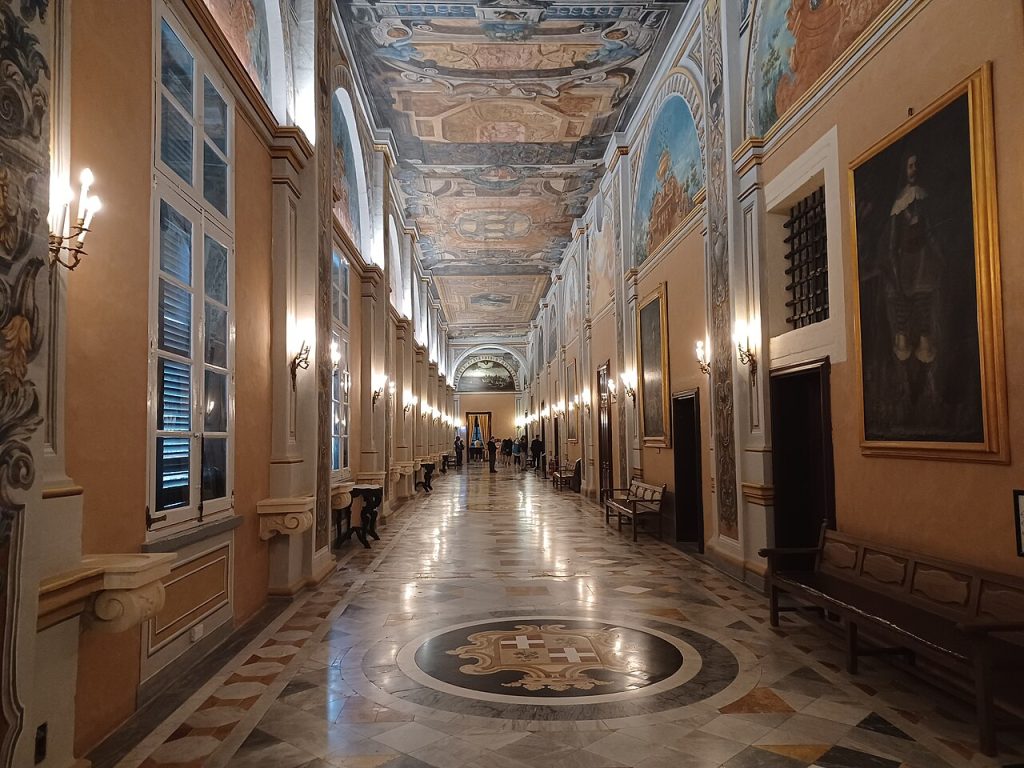
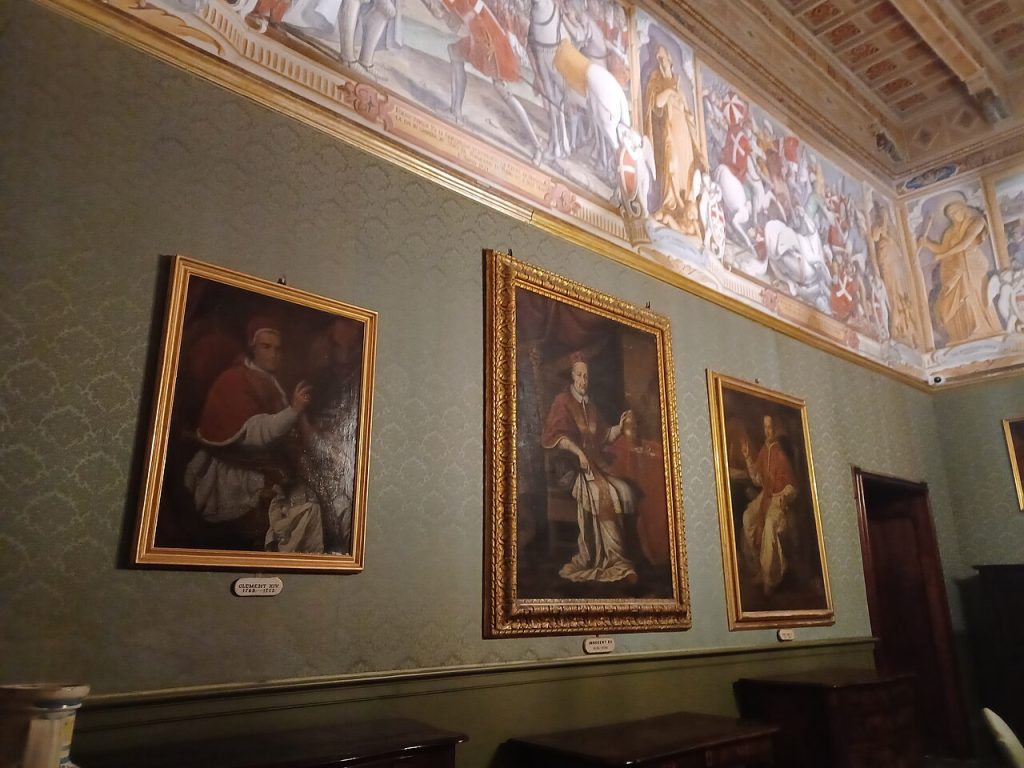
The first floor is reached by a broad staircase and laid out as a square of corridors around the courtyards, the Armoury Corridor, the Prince of Wales Corridor and the Entrance Corridor, with marble floors, ceilings painted in the seventeenth century by Nicolau Nasoni with trophies, grotesques and the arms of the Grand Masters, and lunettes above the doors showing the order’s galleys, its forts and its sieges. Along the walls stand portraits of the Grand Masters from Valette to Hompesch, and the doors lead to the state rooms. The corridors are the most Maltese spaces in the palace, with the light from the courtyards and the gilded ceilings, and they have been restored to their painted brilliance.
Look for the lunettes of the Battle of Lepanto of 1571, in which the order’s galleys fought, and of the fall of Rhodes, which the knights never forgot.
The Council Chamber and the Perellos Tapestries
The Council Chamber, where the order’s council met under the Grand Master and where the Maltese parliament sat from 1921 to 1976, is hung with the finest tapestries in Malta: the series of the Indies, Les Tenture des Indes, woven at the Gobelins in Paris and presented by Grand Master Ramon Perellos y Roccaful in 1710, showing the animals, plants and peoples of Brazil and Africa from the paintings of Albert Eckhout and Frans Post, with elephants, rhinoceroses, zebras, Indians and a pineapple, in colours still fresh after three centuries. The frieze above shows the order’s naval battles, and the Grand Master’s chair stands at the head of the table.
The tapestries were conserved over a decade and returned to the chamber in the 2024 reopening; they are the only complete set of the Indies series still hanging in the room for which they were bought. Now, stop here before the rhinoceros and consider a French king’s manufactory weaving Brazil for a Spanish Grand Master on a Maltese wall.
The Throne Room and the Siege Frescoes
The Throne Room, the Supreme Council Hall of the order and the hall of the British governors, is the palace’s grandest space: a long room with a coffered wooden ceiling, a minstrels’ gallery carved, by tradition, from the stern of the carrack that brought the order from Rhodes, and a frieze of twelve frescoes painted between 1576 and 1581 by Matteo Perez d’Aleccio, a pupil of Michelangelo, showing the Great Siege from the Ottoman landing to the departure of the fleet, with the harbour, the forts and the armies in meticulous detail. The Grand Masters received here, the British governors held their levees and the presidents of Malta are inaugurated under the same frescoes.
The frescoes are the most important historical paintings in Malta and the best contemporary record of a sixteenth-century siege anywhere, and their restoration between 2019 and 2023 recovered colours that had been dark for a century.
The Palace Armoury
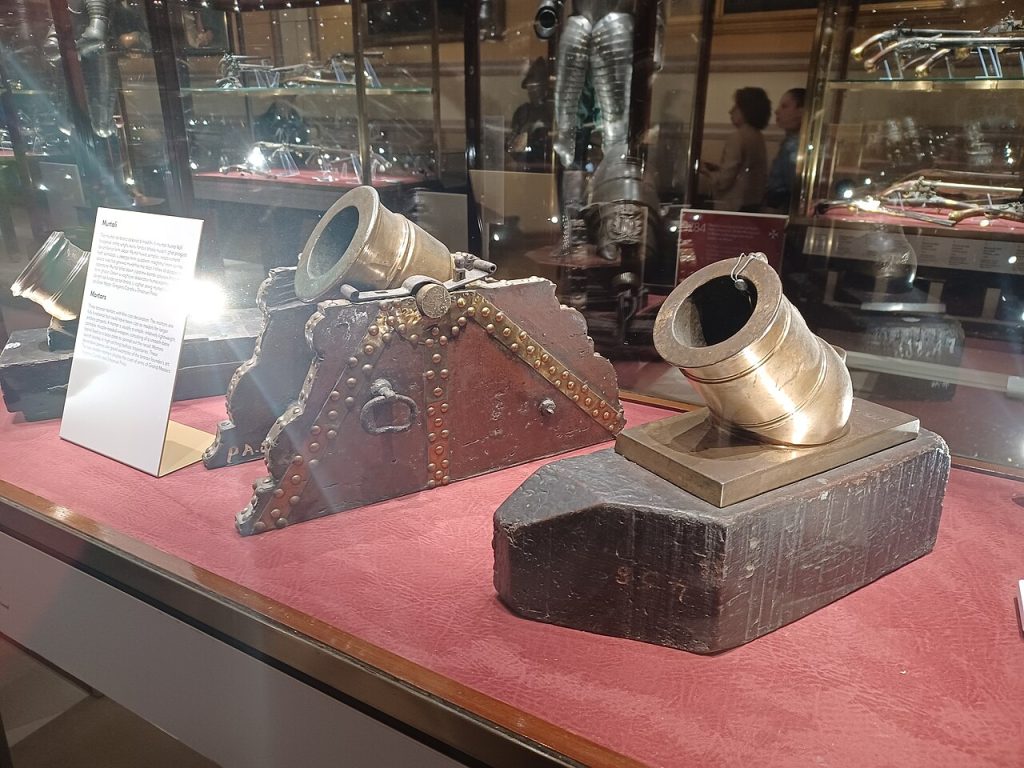
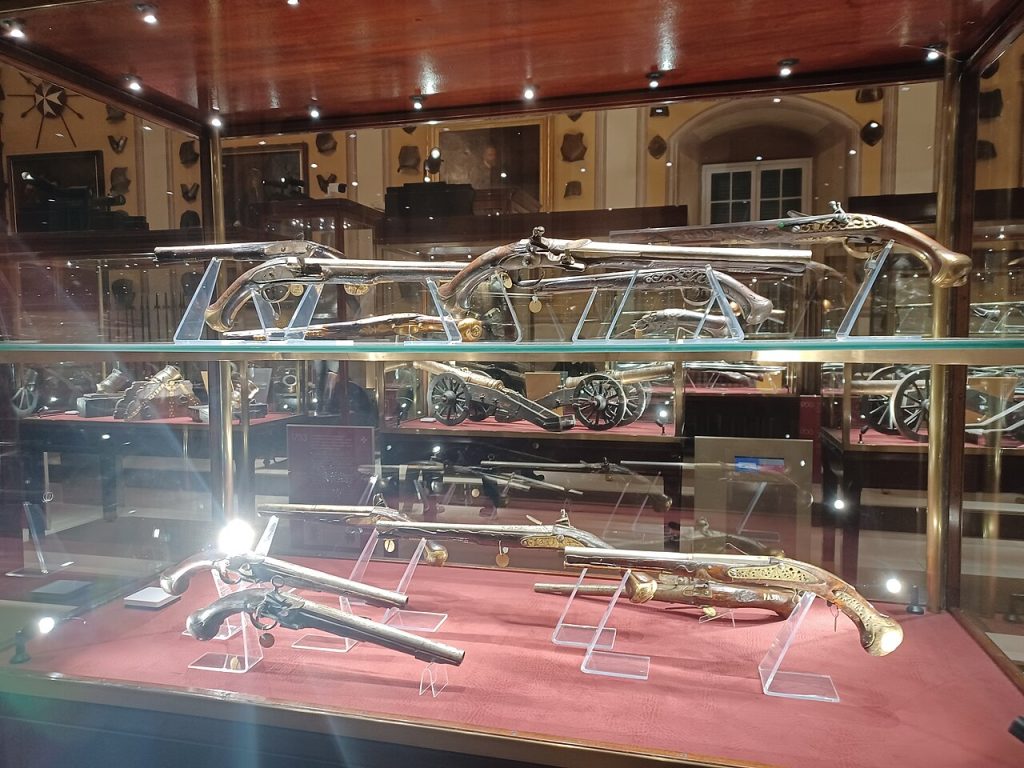
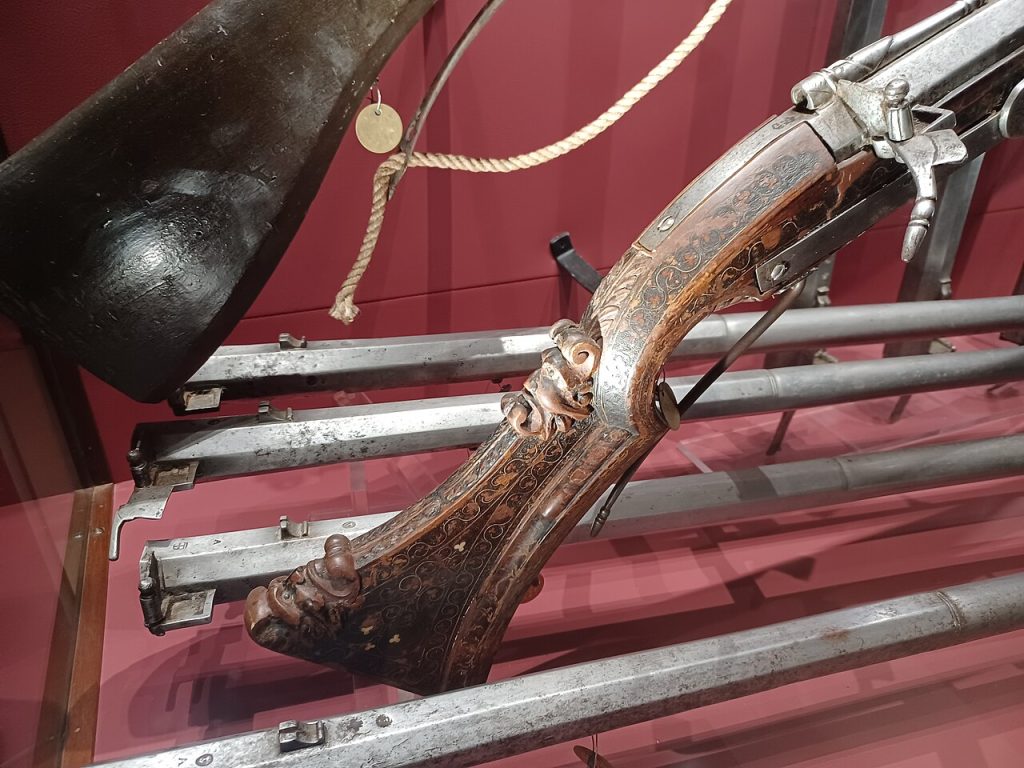
The Palace Armoury was the order’s arsenal, kept on the first floor in the knights’ time and moved by the British to the ground floor, and it is the largest collection of arms and armour in Europe that is still in the building for which it was assembled: some five thousand pieces, out of an original twenty-five thousand, with the parade armour of the Grand Masters, including the gilded and etched Milanese suit of Alof de Wignacourt of about 1610, the armour and weapons of the knights, the equipment of the Maltese militia, crossbows, muskets, cannon and the trophies of the Turkish wars, Ottoman helmets, shields and scimitars taken at the siege and at Lepanto. The collection is displayed in the former stables and the old armoury halls, and a new display opened with the 2024 restoration.
Look for Wignacourt’s suit, for the armour made for a knight seven feet tall and for the Turkish shields. Now, stop here before the Great Siege weapons and remember that the men who used them are in the frescoes upstairs.
1798: Napoleon Takes the Palace
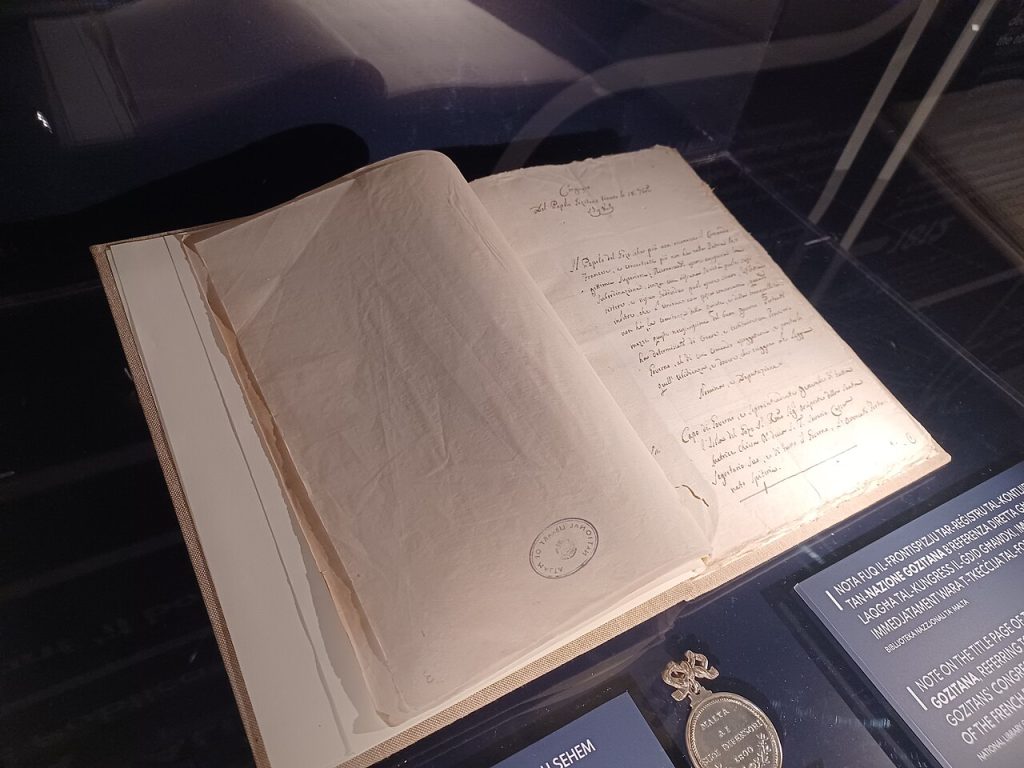
By the eighteenth century the order was rich, idle and divided, the French Revolution had confiscated its French estates and the last Grand Master, Ferdinand von Hompesch, a German, was weak. On 9 June 1798 Napoleon’s fleet, bound for Egypt, appeared off Malta, demanded water, was refused and landed; the knights surrendered within two days, and Napoleon spent six days in the palace reorganising Malta as a French department, abolishing the nobility, looting the churches and the order’s treasury and expelling the knights, who sailed away with Hompesch to Trieste and never returned as rulers. The French garrison was besieged by the Maltese and the British within three months and surrendered in September 1800, and Malta became British.
The order survived, reconstituted in Rome as a sovereign charitable body, the Sovereign Military Order of Malta, and its Grand Master still bears the title, without the island.
The British Governors and the Parliament
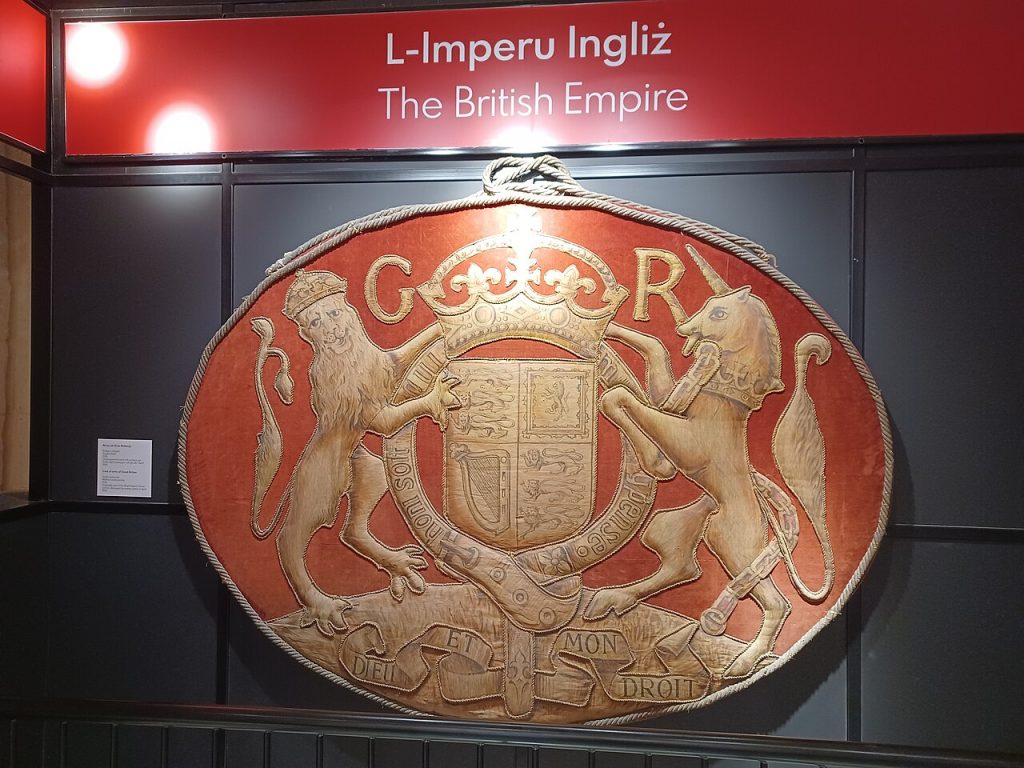
The British governors of Malta lived and governed in the palace from 1800 to 1964, holding their levees in the Throne Room, adding the Neptune statue, the corridor’s portraits and the Victorian furniture, and in 1921, when Malta received self-government, the Legislative Assembly and then the parliament sat in the Council Chamber and later in the Armoury’s old hall. Malta became independent in 1964 and a republic in 1974, the governor-general and then the president took the Grand Master’s apartments, and the parliament remained in the palace until 2015, when it moved to Renzo Piano’s new building at the city gate. The palace was then given over wholly to the presidency and to the museum.
The British also made the palace the setting of the island’s great occasions, from the award of the George Cross to Malta in 1942, after the siege of the Second World War, to the visits of Queen Elizabeth, who had lived in Malta as a naval officer’s wife in the 1950s.
The President’s Palace and the Restoration of 2024
The Grandmaster’s Palace is the official seat of the President of Malta, who has an office and reception rooms here, and since the parliament’s departure it has been restored in the largest heritage project in Malta’s history, between 2019 and 2024, funded by the European Union and the state and managed by Heritage Malta: the frescoes, the corridors, the tapestries, the ceilings and the courtyards were conserved, the armoury was redisplayed, new visitor routes and lifts were installed and the palace reopened in 2024 as a museum of the order’s rule with the state rooms, the corridors, the armoury and the courtyards open to the public, while the president continues to use the state rooms for ceremonies.
Now, stop here on the staircase at the end of the visit and look back through the corridors. The order that built this palace was a mediaeval brotherhood of noble monks who fought a holy war with galleys and slaves; the republic that keeps it is a small European democracy. The building has served both without changing its face.
Valletta on Video
Visiting the Grandmaster’s Palace Today
The Grandmaster’s Palace is open daily, with the state rooms, the painted corridors, the Council Chamber with the tapestries, the Throne Room and the Palace Armoury on a single Heritage Malta ticket; timed entry can be booked online, and parts of the state rooms close during presidential functions, which are announced on the Heritage Malta site. Allow two hours, and combine the palace with St John’s Co-Cathedral, the order’s church with Caravaggio’s Beheading of St John, two minutes away, the Auberge de Castille, the Upper Barrakka Gardens and the Fort St Elmo war museum at the end of the peninsula. Valletta is small and all of it is on foot.
Valletta is twenty minutes from Malta airport by bus or taxi, and the palace is in the middle of Republic Street, the main street, a ten-minute walk from the city gate and the bus terminus. Verdala Palace and San Anton Palace, the Grand Masters’ country houses, are half an hour away by car in the centre of the island. Here is the exact spot: Grandmaster’s Palace on Google Maps.
Palaces Nearby
You May Like