Behind the National Garden of Athens, on the quiet, tree-lined Herodou Attikou Street that runs between the garden and the Panathenaic Stadium, stands a Neoclassical palace of ochre and white with an Ionic portico, a balustraded roof and a garden of palms and cypresses behind a railing, guarded day and night by two Evzones in white kilts and pompommed shoes. It is the Presidential Mansion, Proedrikó Mégaro, the residence and office of the President of the Hellenic Republic, and it was built between 1891 and 1897 as the Crown Prince’s Palace for Constantine, the heir of King George I, by Ernst Ziller, the architect of half of Neoclassical Athens.
Constantine moved in as crown prince, became king in 1913 and made it the royal palace in place of the old palace on Syntagma Square, which is now the parliament, and it was the seat of the Greek monarchy through its exiles and restorations until 1974, when the republic took it over as the residence of its president. It is smaller and more domestic than most royal palaces, a prince’s house rather than a king’s, and that scale has suited a republic that wanted a dignified home for its head of state without a throne room. It is open to the public only on rare occasions, but the facade, the garden railings and the Evzones are among the most photographed sights in Athens.
Walk with me from Syntagma through the National Garden to Herodou Attikou, past the guards and into the palace, with the prince, the kings and the presidents in order. The contents are below.
In This Article
- Herodou Attikou, the Quietest Street in Athens
- The Old Palace and the Need for a New One
- Ernst Ziller, Architect of Royal Athens
- 1891 to 1897: A Palace for the Crown Prince
- Constantine and Sophia Move In
- 1913: The Crown Prince’s Palace Becomes the Royal Palace
- Exiles, Returns and the National Schism
- Occupation and Civil War
- King Paul, Queen Frederica and the Postwar Court
- 1967 to 1974: The Regent’s House
- The Presidential Mansion
- The Rooms and the Garden
- The Evzones at the Gate
- Athens on Video
- Visiting the Presidential Mansion Today
- Palaces Nearby
Herodou Attikou, the Quietest Street in Athens
Herodou Attikou is a short street of a few hundred metres on the eastern edge of the National Garden, lined with plane trees, embassies and the grandest houses in Athens, running from Vasilissis Sofias Avenue to the Panathenaic Stadium, the white marble stadium rebuilt for the first modern Olympics in 1896. The Presidential Mansion occupies the middle of the street’s eastern side, with the Maximos Mansion, the prime minister’s office, next door, and the garden behind it rises toward the Lycabettus slope. The traffic of the city is a block away and inaudible; the street is a corridor of state, and the Evzones’ boots on the pavement are its loudest sound.
Now, stop here on the pavement opposite and look at the facade. It is Ziller’s Neoclassicism at its most assured: a two-storey block of warm ochre stucco with white stone dressings, an Ionic portico of four columns with a balcony above, a cornice and a balustrade, and wings set back behind the garden wall. It is a palace that could be a large villa, and that was the brief.
The Old Palace and the Need for a New One
The first royal palace of Athens was the huge Bavarian box on Syntagma Square built for King Otto, the Wittelsbach prince who was Greece’s first king, between 1836 and 1843, by Friedrich von Gärtner: a grim, hot, badly planned building that Otto’s successor George I disliked and that burned in 1909. By the 1880s George had a large family and his eldest son Constantine, born in 1868, was approaching marriage, and the king decided to build a separate palace for the heir, on land east of the royal garden, with the Greek state paying and Ziller designing.
The decision also reflected the growing Athens: the city of 1890 was spreading east and north from the old centre, the Kolonaki and the Lycabettus slopes were becoming the fashionable quarter and the new palace was to anchor the new district.
Ernst Ziller, Architect of Royal Athens
Ernst Ziller came to Greece from Saxony in 1861 as assistant to the Danish architect Theophil Hansen on the Academy of Athens, stayed, married a Greek and over fifty years designed more than five hundred buildings in Greece: the National Theatre, the National Archaeological Museum’s facade, the Zappeion’s completion, Schliemann’s house, the Stathatos mansion, the Royal Palace at Tatoi, the municipal theatres of Athens and Patras and dozens of villas and schools. He was the architect of the Greek bourgeois and royal Neoclassicism, lighter and more decorated than the German founders’ version, with colour, Renaissance detail and Pompeian interiors, and he was King George’s favourite.
The Crown Prince’s Palace was his most important royal commission in the city and the building that defined the late Neoclassical style of Athens.
1891 to 1897: A Palace for the Crown Prince
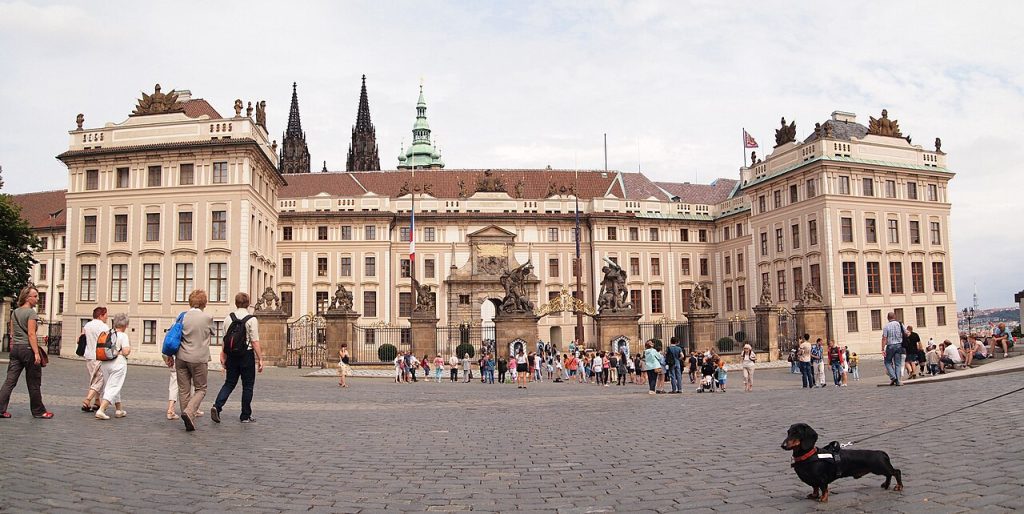
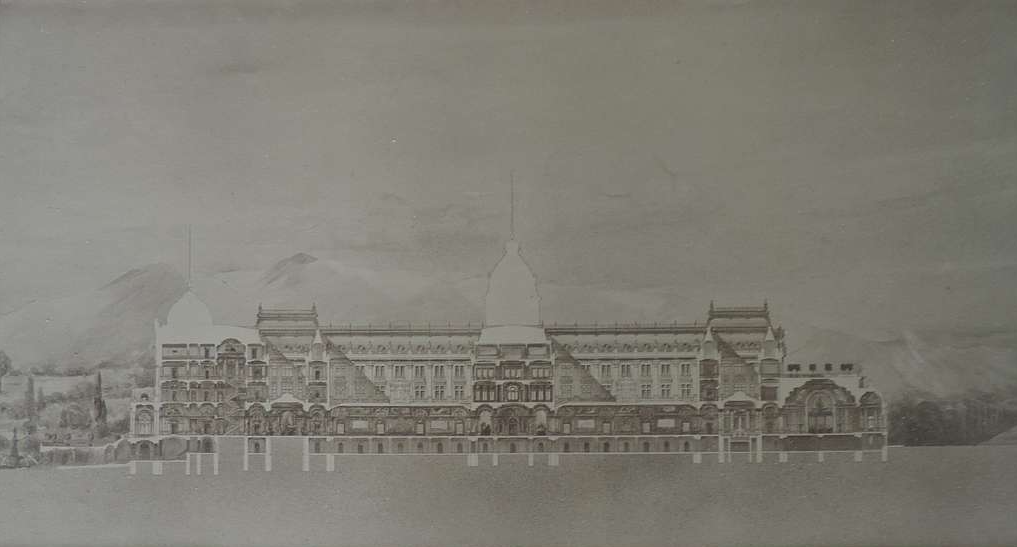
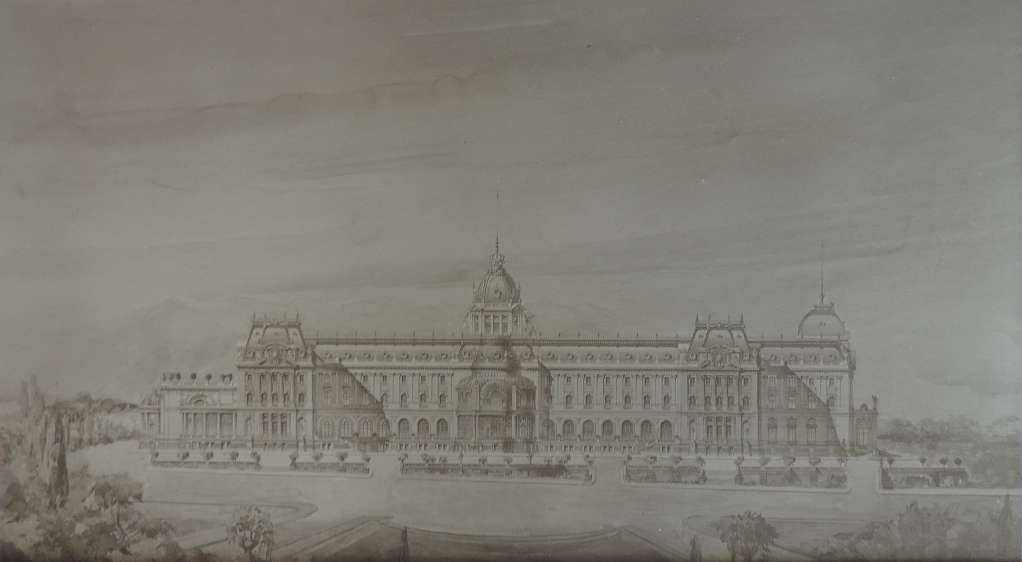
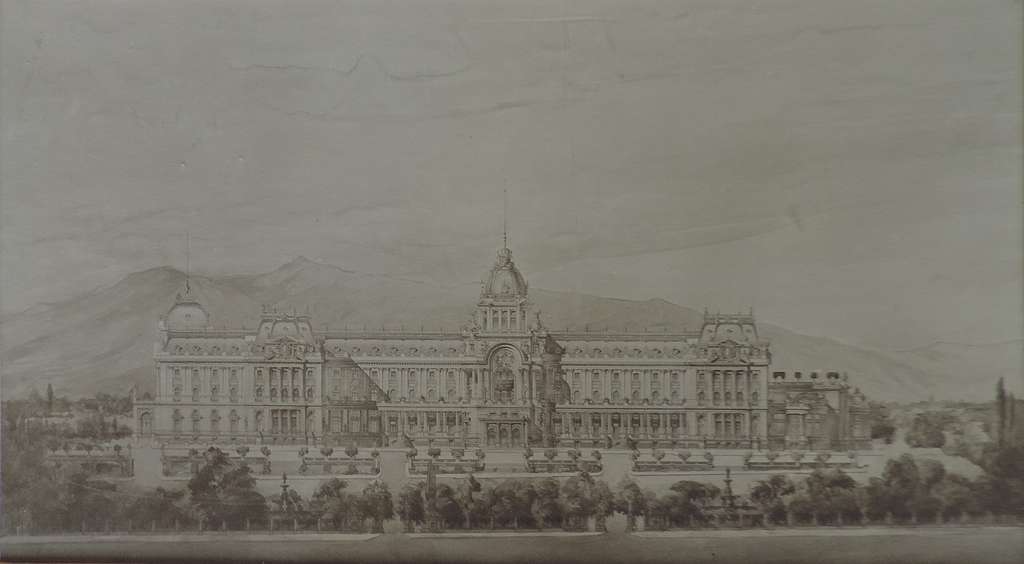
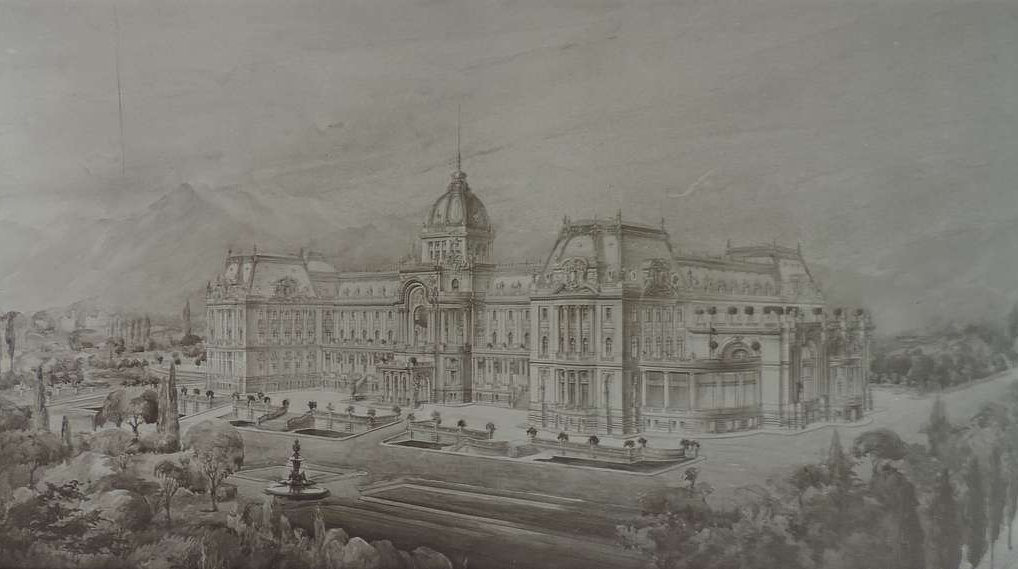
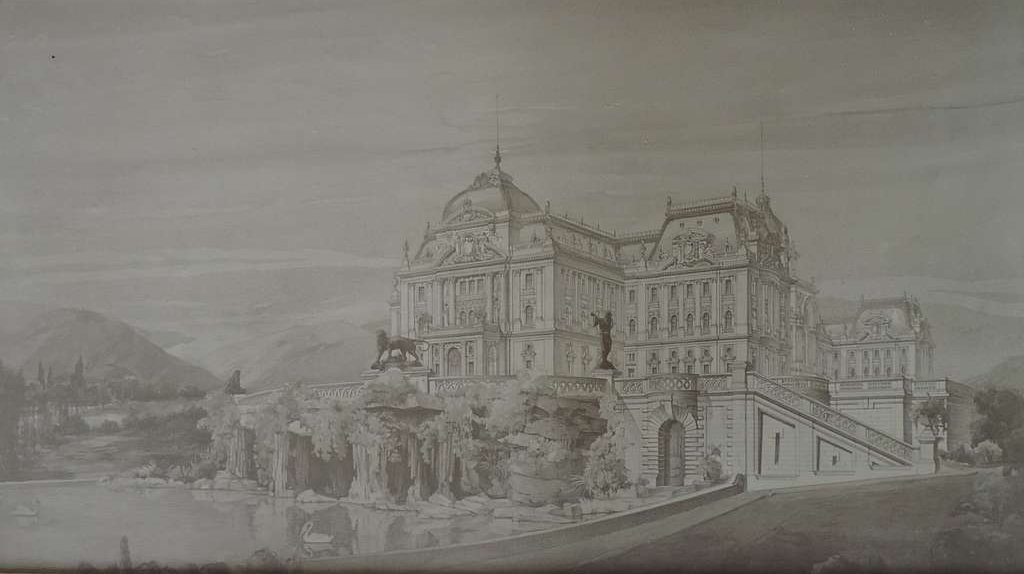
The palace was built between 1891 and 1897 as a two-storey rectangular block with a central portico, a grand staircase, a sequence of state rooms on the ground floor, the ballroom, the dining room, the reception rooms and the chapel, and the private apartments of the prince and princess above, with service wings and stables behind and a large garden planted with palms, cypresses, pines and orange trees around a fountain. The interiors were decorated by Ziller in the Pompeian and Renaissance manners with painted ceilings, marble floors and chandeliers from Vienna, and the furniture came from Germany, since the bride was a German princess.
The building cost far more than the state had voted, as Ziller’s buildings did, and the parliament complained; the result is the best-built royal residence in Greece, which has needed less repair in a century than the old palace did in fifty years.
Constantine and Sophia Move In
Constantine had married in October 1889 Princess Sophia of Prussia, the daughter of Emperor Frederick III of Germany and Queen Victoria’s daughter Vicky, and the Kaiser’s sister, in a double Orthodox and Lutheran ceremony in Athens that was the social event of the Greek nineteenth century. The couple lived in a rented house and then in the old palace until the new one was ready in 1897, and they moved in that year with their first three children, George, Alexander and Helen; three more, Paul, Irene and Katherine, were born in the house. Sophia, who was clever, reserved and unpopular with the Greeks for her German connections, made the palace an orderly German household; Constantine, a soldier, used it as his headquarters in the disastrous war with Turkey of 1897 and the victorious Balkan Wars of 1912 and 1913.
Now, stop here in the garden and look at the orange trees that Sophia planted; the Greeks called her the Prussian and the orange trees are still called hers.
1913: The Crown Prince’s Palace Becomes the Royal Palace
On 18 March 1913 King George I was shot dead in Thessaloniki, newly conquered in the Balkan War, by a deranged Greek, and Constantine, the victor of the war and at the height of his popularity, became king. The old palace on Syntagma had been damaged by fire in 1909 and the new king simply stayed in his own house, which became the Royal Palace of Greece and remained so for sixty years; the old palace was given to the parliament in the 1930s. The Crown Prince’s Palace was enlarged with a wing and its state rooms adapted for a sovereign, but it never acquired a throne room on the scale of other capitals, and the monarchy’s ceremonies were held in the cathedral and the parliament rather than at home.
Constantine’s reign began in glory and ended, four years later, in the catastrophe of the National Schism.
Exiles, Returns and the National Schism
Constantine’s neutrality in the First World War, against the pro-Allied prime minister Venizelos, split Greece in two, brought Allied troops to Athens and in June 1917 forced him into exile without abdicating; his second son Alexander reigned in the palace for three years and died in October 1920 of a monkey bite received in the Tatoi gardens, and a plebiscite recalled Constantine, who was driven out again in September 1922 by the military revolt after the Asia Minor disaster. George II, his eldest son, reigned eighteen months, left in December 1923 and was deposed by the republic of 1924, when the palace became state property and was used for offices. In 1935 another coup and plebiscite restored George II and the palace was reopened as the royal residence, now under the Metaxas dictatorship.
In twenty years the house had been a crown prince’s home, a king’s palace, an empty building and a palace again, and the Greek monarchy had learned that it could never count on staying.
Occupation and Civil War
In April 1941 Germany invaded Greece, George II and his government left for Crete, Egypt and London, and the palace was taken over by the German command and the collaborationist government; its furniture was looted and its rooms used as offices and billets. When the Germans left in October 1944 the palace was occupied by the British, and in December 1944 the fighting between the communist resistance and the British and Greek government forces, the Dekemvriana, raged in the streets around it; Churchill held his Christmas conference in the Grande Bretagne hotel a few hundred metres away. The king returned in September 1946 after a plebiscite, and died in the palace in April 1947.
His brother Paul succeeded him in the middle of the civil war, and the palace in the late 1940s was the headquarters of a monarchy fighting for its existence against a communist insurgency in the mountains.
King Paul, Queen Frederica and the Postwar Court
King Paul and Queen Frederica preferred Tatoi and used the Athens palace for state occasions, receptions, the New Year’s ball, the presentation of credentials and the visits of foreign heads of state, from Tito to Eisenhower, who came in the 1950s as Greece joined NATO and the court became an instrument of the Cold War alliance. Frederica redecorated the state rooms in the 1950s, filled the palace with the pictures and furniture recovered after the war and made it, for the first time, elegant; the engagement of Princess Sophia to Juan Carlos of Spain was announced here in 1961 and the wedding of Constantine II and Anne-Marie of Denmark in 1964 filled the house with the royal families of Europe.
Now, stop here at the top of the staircase and imagine the ballroom in September 1964, the last great royal wedding in Athens, with the young king and queen and a monarchy that had three years left.
1967 to 1974: The Regent’s House
After Constantine II’s flight in December 1967 the colonels installed a regent, General Zoitakis, in the palace, then in 1972 the dictator Papadopoulos himself as regent, and in June 1973 abolished the monarchy and made Papadopoulos president, in the royal palace. The junta fell in July 1974 after the Cyprus disaster, Konstantinos Karamanlis returned from Paris to restore democracy, and the referendum of 8 December 1974 abolished the monarchy by sixty-nine per cent. The royal palace became, by decree, the Presidential Mansion, and the first president of the Third Hellenic Republic, Michail Stasinopoulos, moved in that month.
The crown was removed from the gate, the royal monograms from the rooms and the royal portraits were sent to store; the building itself needed no change, because it had never been built for a throne.
The Presidential Mansion
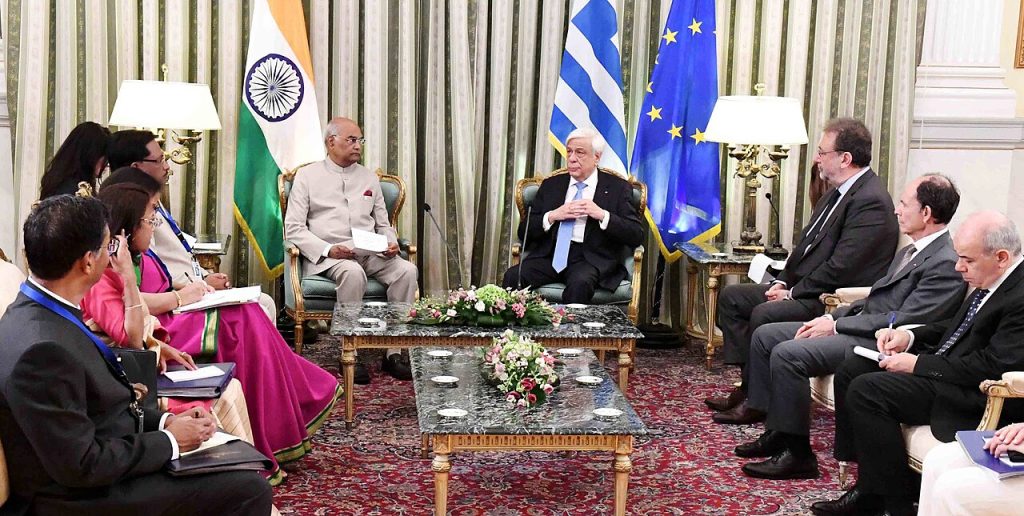
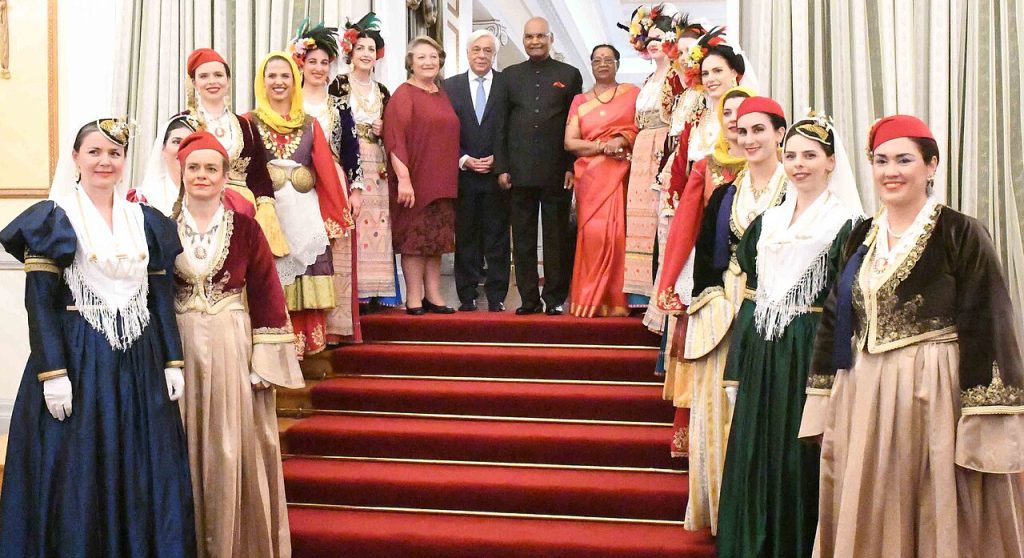
The Presidential Mansion is the office and official residence of the President of the Hellenic Republic, a largely ceremonial head of state elected by parliament, and it is where the president receives the credentials of ambassadors, swears in governments, hosts state dinners and the annual receptions for the Restoration of Democracy on 24 July, and meets foreign heads of state. Presidents from Karamanlis to the present have lived and worked here, and the mansion’s staff, guard and gardens are run by the presidency. The building was comprehensively restored in the 1990s and 2000s, with the state rooms returned to Ziller’s decoration.
The mansion opens to the public on a few days each year, usually around the July anniversary and on European Heritage Days, when queues form along Herodou Attikou for the chance to see the rooms that Greeks have paid for since 1891 and rarely entered.
The Rooms and the Garden
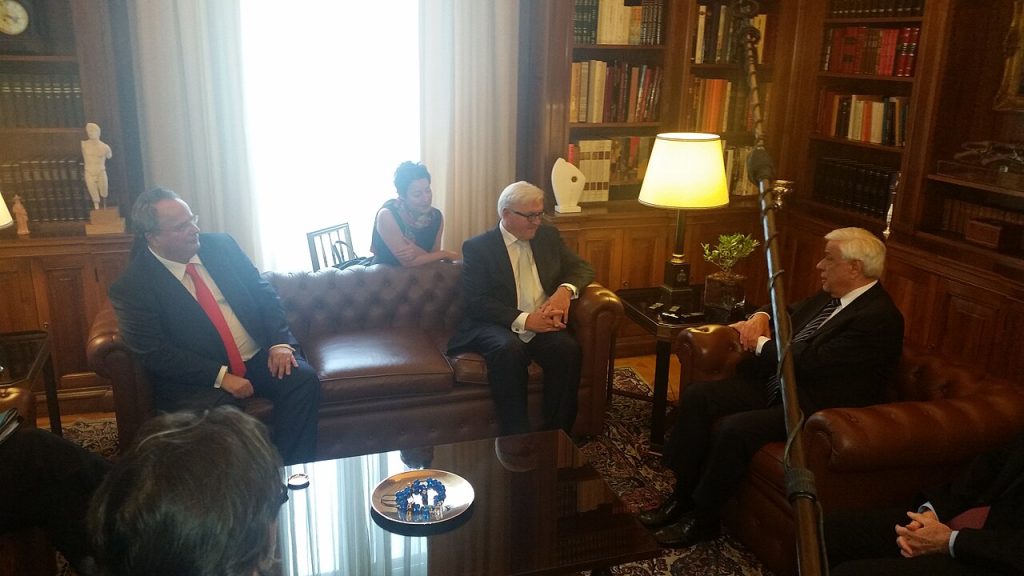
The state rooms on the ground floor are Ziller’s: the entrance hall with its marble stair, the ballroom with painted ceiling and Viennese chandeliers, the dining room for state dinners, the reception rooms in which the president receives, with a collection of nineteenth- and twentieth-century Greek painting, Gyzis, Lytras, Parthenis and the Thirties generation, that the presidency has assembled from the national collections, and the chapel. The first floor holds the president’s office and apartment. The garden, about two and a half hectares, is one of the finest in the city, with mature palms, cypresses, pines, Sophia’s orange trees, a pergola and a fountain, and it is used for the summer receptions.
The decoration is restrained, Greek rather than royal, and the portraits on the walls are of presidents and prime ministers; the kings are in the National Historical Museum.
The Evzones at the Gate
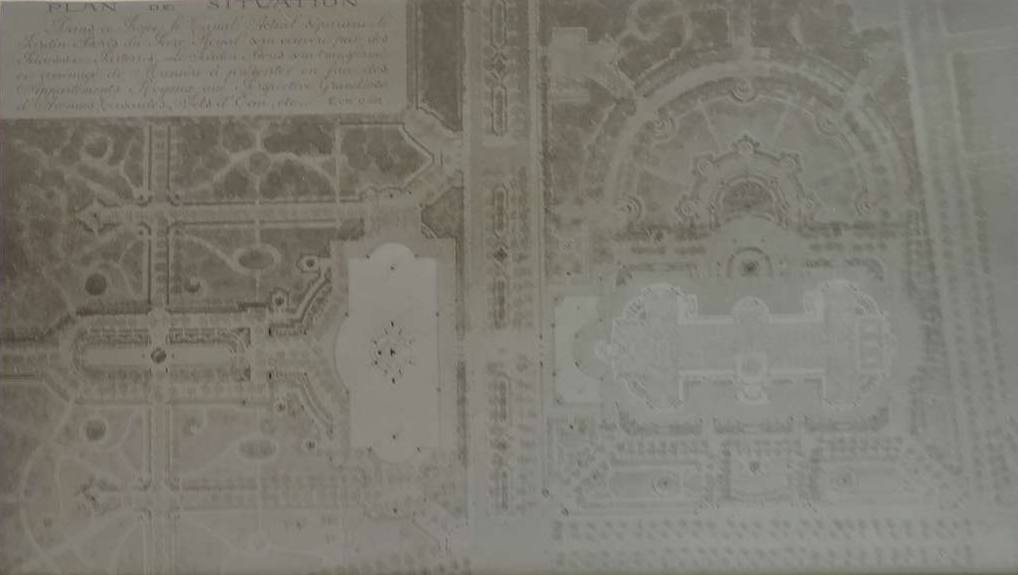
The Presidential Guard, the Evzones, in their white fustanella kilts, red caps and tsarouchia shoes with pompoms, mount guard at the mansion’s gate around the clock, as they do at the Tomb of the Unknown Soldier on Syntagma, and the changing of the guard on Herodou Attikou, less crowded than the one on the square, is the best place to see the slow, high-stepping ceremony. The guard was founded in 1868 as the royal guard and became the presidential guard in 1974; its uniform is that of the klephts and the fighters of the War of Independence, and its barracks are behind the mansion.
Now, stop here at the gate as the guard changes and look past the Evzones at the portico. The monarchy’s guards keep the republic’s door, in the kilts of the revolution against the Turks, outside a palace built by a Saxon for a Dane’s son married to a Prussian. It is the Greek state in one picture.
Athens on Video
Visiting the Presidential Mansion Today
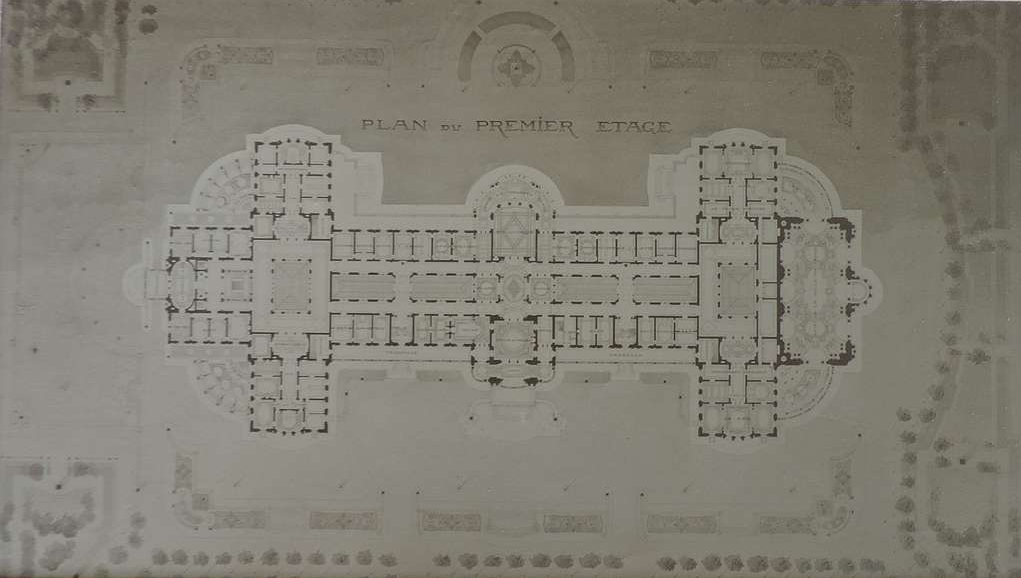
The Presidential Mansion is not open to the public on a regular basis; it opens on a few announced days each year, around 24 July and on heritage days, for free guided visits of the state rooms and garden that must be booked through the presidency’s website, and it can occasionally be visited by groups by arrangement. The facade, the gate and the Evzones can be seen at any time from Herodou Attikou, and the changing of the guard takes place on the hour; the National Garden beside it is open from dawn to dusk and the Panathenaic Stadium and the Zappeion are a few minutes’ walk. Allow an hour for the street, the guard and the garden, and add the former Old Palace on Syntagma, now the parliament, and the National Historical Museum for the monarchy’s collections.
The mansion is ten minutes’ walk from Syntagma metro through the National Garden, or three minutes from Evangelismos metro; Tatoi is forty minutes north by car, and Corfu’s Mon Repos an hour’s flight. Here is the exact spot: Presidential Mansion on Google Maps.
Palaces Nearby
You May Like
Verdala Palace and San Anton as the Summer Houses of Malta’s Rulers