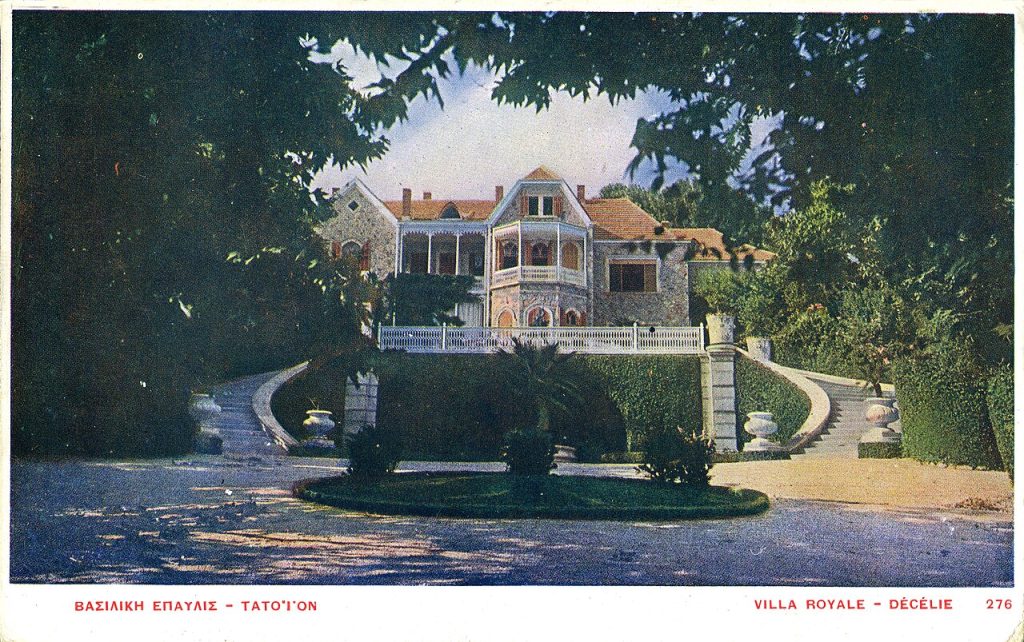
Twenty-five kilometres north of Athens, on the pine-covered southern slopes of Mount Parnitha, a road climbs through a forest to a group of buildings that look like a Danish country estate transplanted to Attica: a long two-storey house of grey stone with steep roofs and a tower, stables, a dairy, a winery, cottages for the staff and, on a hill above, a small Byzantine chapel surrounded by the graves of a dynasty. It is Tatoi, the private estate of the Greek royal family from 1872 to 1967, the place where the Glücksburg kings were most at home and where six of them lie buried.
When King Constantine II fled in December 1967 the family left everything behind, the furniture, the clothes, the cars in the garage, the papers in the desks, and the estate stood locked and decaying for more than fifty years while the state and the former king disputed its ownership. The buildings fell into ruin, the forest burned twice around them and the cemetery on the hill became a place of pilgrimage for royalists and curiosity for everyone else. Since 2020 the Greek state has been restoring Tatoi as a museum of the monarchy and a public park, and in January 2023 Constantine II was buried here beside his parents, closing the circle.
Walk the estate with me from the gate through the forest to the house, the farm and the cemetery, with the kings, their summers and the long abandonment in order. The contents are below.
In This Article
- A Forest on Parnitha
- 1872: King George Buys a Farm
- A Danish Estate in Attica
- The Main House of 1884 to 1886
- The Model Farm and the Tatoi Wine
- The Fire of 1916
- Constantine, George II, Paul and Frederica
- The Royal Cemetery on the Hill
- The Last Royal Childhood
- December 1967: Leaving Everything Behind
- Fifty Years of Decay
- The Restoration Since 2020
- 2023: The Last King Comes Home
- Tatoi on Video
- Visiting Tatoi Today
- Palaces Nearby
A Forest on Parnitha
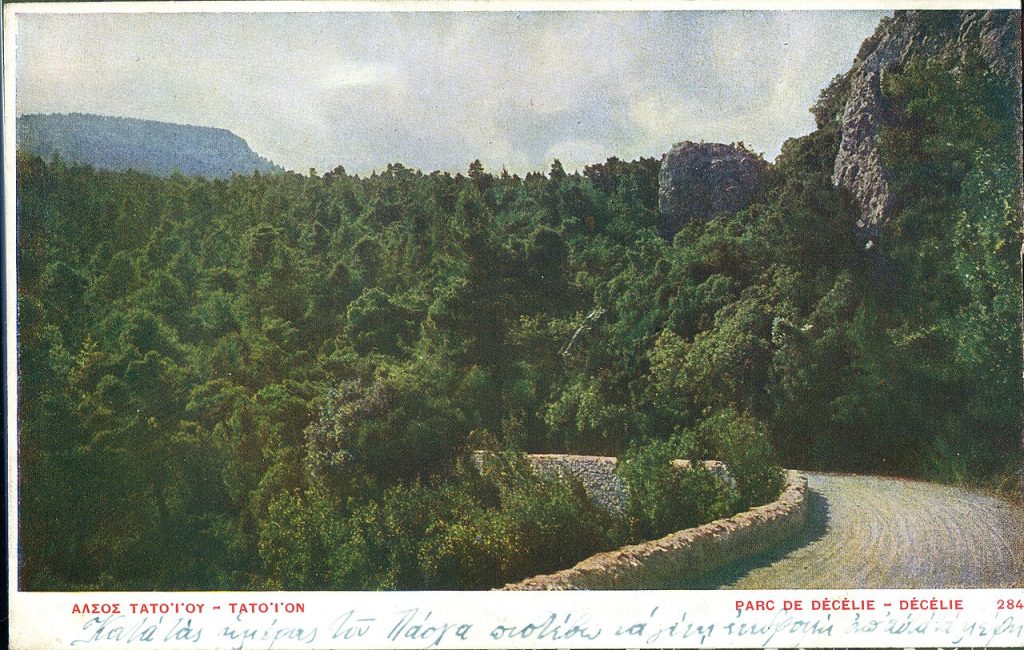
Mount Parnitha is the highest of the mountains that ring Athens, a limestone mass of 1,400 metres covered in Aleppo pine and Greek fir, and its southern slopes, cool, wooded and watered by springs, were the summer refuge of the city from antiquity. The Tatoi estate covers more than four thousand hectares of this forest between the villages of Varibobi and Dekeleia, the ancient Spartan fort whose name the royal family used for their estate in official documents, and the house stands in a clearing at about five hundred metres, with the plain of Attica and the city below and the mountain behind.
Now, stop here on the road through the forest and listen. The city is twenty-five minutes away and there is nothing to hear but the pines. This was the point: the Greek kings had a palace in Athens for the state, and they came here to get away from it.
1872: King George Buys a Farm
King George I, the Danish prince who had been made King of the Hellenes in 1863 at seventeen, bought the first land at Tatoi in 1872 with his own money and added to it over the following decades until the estate was the largest private property in Attica. He wanted a country house in the Danish manner, a farm that paid, a forest to hunt in and a place where his growing family could live without Athens, and he found all four on Parnitha. The purchase was private, which would matter a century later: Tatoi belonged to the king, not the crown, and his heirs would claim it as family property.
George came every summer and every autumn, farmed, planted, built and, as the years went on, spent more time here than in the royal palace in Athens, which he found hot, formal and politically exhausting.
A Danish Estate in Attica
Tatoi was built as a Danish estate. George’s model was Bernstorff and the royal farms of Zealand, and the buildings he put up, the stables, the dairy, the cowsheds, the bakery, the staff cottages, the gatehouses and the small hotel for guests, have steep roofs, half-timbering and dormer windows that look strange among the pines. The first main house, built in 1874, was a modest villa; the estate was run by Danish and Greek managers, planted with vines and fruit trees, stocked with cattle and deer and provided with a telegraph, a road and, in 1884, a larger residence.
The estate also had a church, a school for the workers’ children, a hospital and a small village, and the royal family’s relations with the people of Tatoi, who were their tenants, employees and neighbours, were the warmest the dynasty had with any Greeks. Now, stop here at the dairy and look at the roof: this is Denmark, in a Greek pine forest.
The Main House of 1884 to 1886
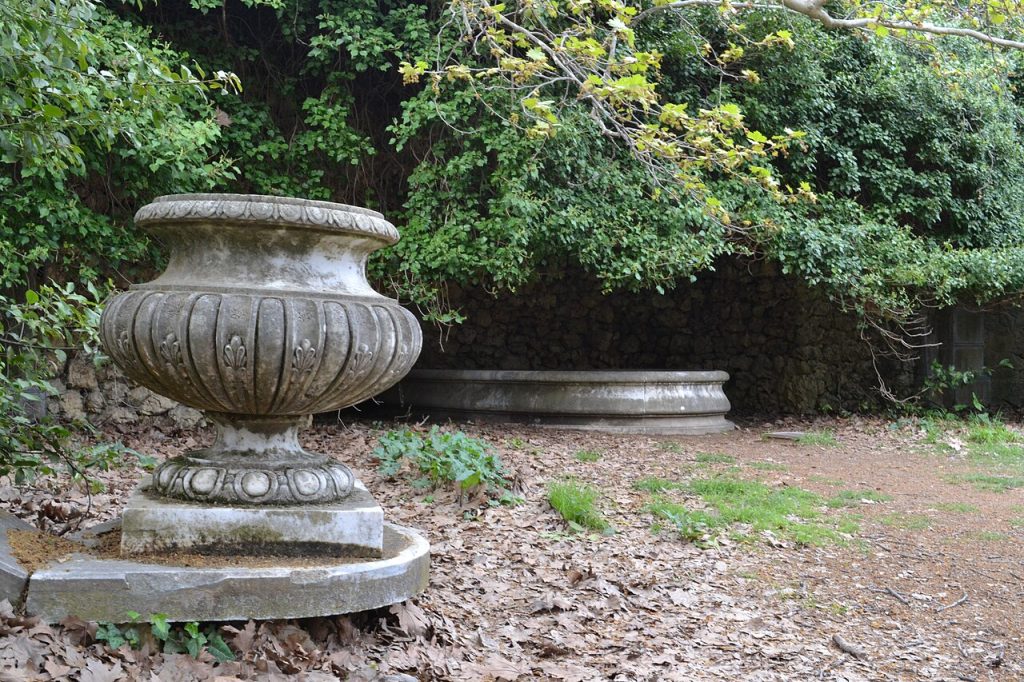
The main house was built between 1884 and 1886 to designs by Ernst Ziller, the Saxon architect of Neoclassical Athens, as a long two-storey house of grey Parnitha stone with a hipped roof, a square tower, a veranda along the south front and about fifty rooms, modelled on the summer palace of Peterhof’s farm wing where Queen Olga, a Russian grand duchess, had spent her childhood. It was a family house, not a palace: a hall, a dining room, a drawing room and a library on the ground floor, bedrooms above, nurseries in the tower, with the king’s study looking over the forest. Later kings added bathrooms, a lift and a cinema, and after the fire of 1916 the house was repaired and enlarged.
The interiors, which survived the abandonment better than anyone expected, are comfortable, English and Danish in taste, with chintz, family photographs, hunting trophies and the plain furniture of a family that liked the country.
The Model Farm and the Tatoi Wine
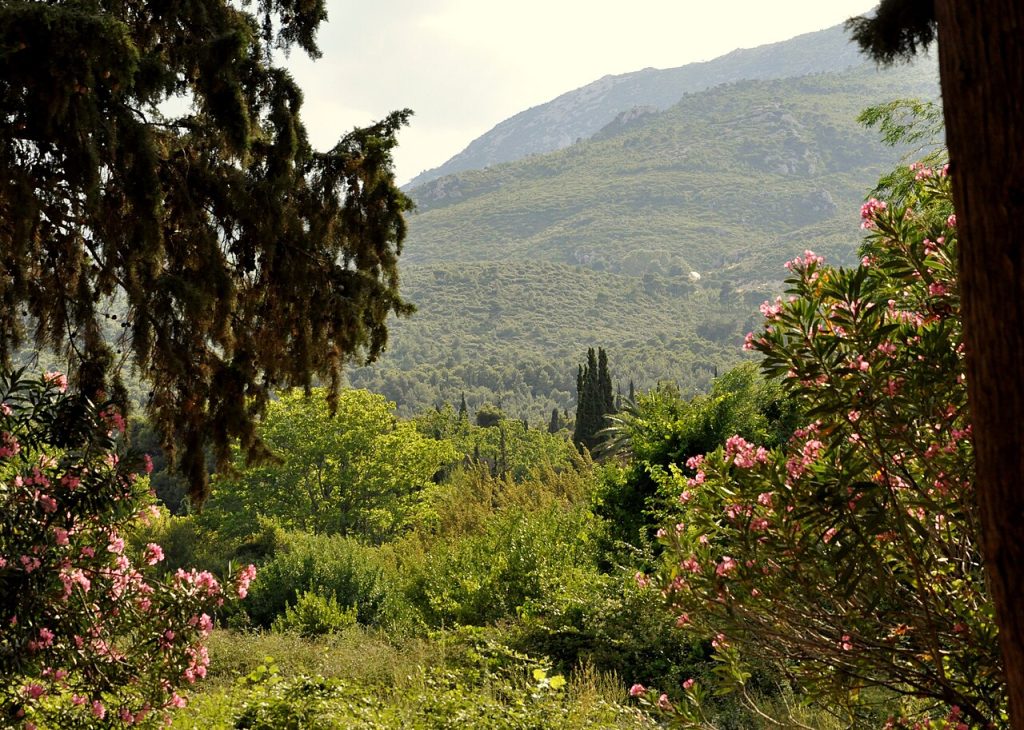
Tatoi paid its way. The estate’s vineyards produced the Tatoi wines, a red, a white and a retsina that were sold in Athens from the 1890s and were the first branded Greek wines; the dairy supplied the capital with butter and milk; the forest yielded timber and resin; the orchards fruit; and the deer and game fed the royal table and the guests’ hunting. The winery, with its presses, its barrels and its cellars, survives among the estate buildings, and the Tatoi label, with the royal crown, is a collector’s item. The estate employed several hundred people, and its village had its own identity for a century.
The farm’s independence was part of the dynasty’s idea of itself: a royal family that lived, as King Paul said, like good farmers, and that did not depend entirely on the civil list voted by a parliament that often disliked it.
The Fire of 1916
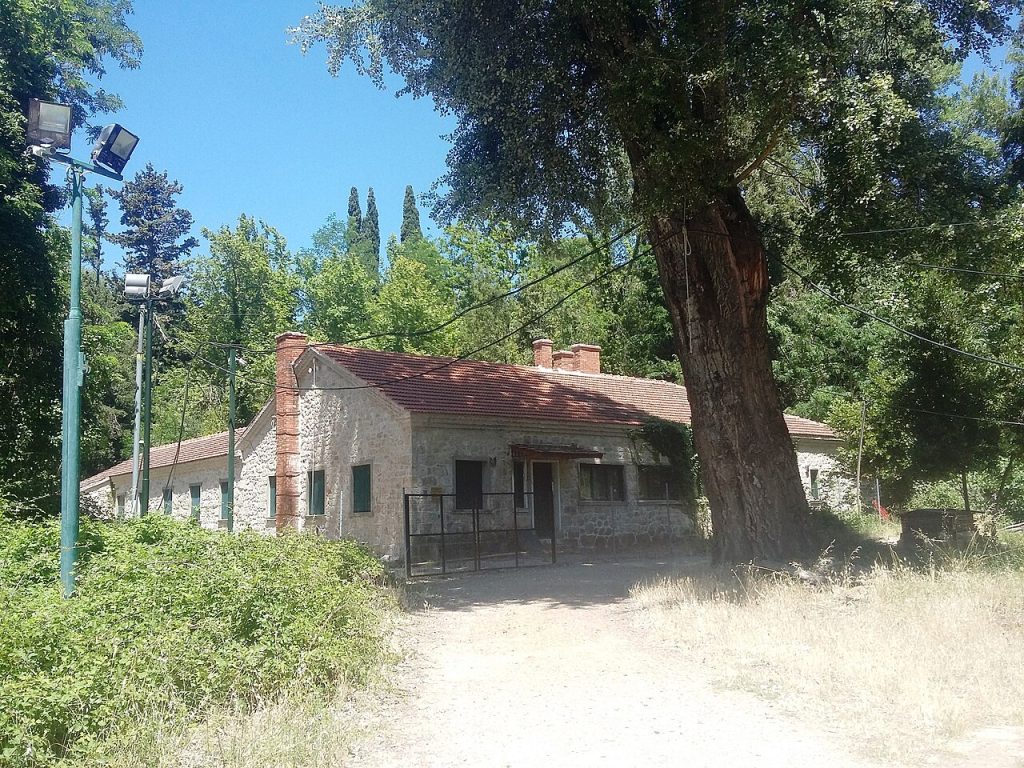
On 14 July 1916, at the height of the National Schism between King Constantine I and the prime minister Venizelos over Greece’s entry into the First World War, a fire broke out in the forest on a day of gale-force wind and swept the estate in an hour. Sixteen people were killed, estate workers and soldiers of the guard, the main house was gutted, the king and queen escaped on foot carrying their youngest child and the queen’s hair was singed. Constantine and his supporters believed the fire was arson by the Allies or the Venizelists, who were pressing the king to abandon his neutrality; the cause was never established. Constantine was forced into exile a year later.
The house was rebuilt in the 1920s by King George II and the family returned, but the fire was remembered at Tatoi as the moment when the estate’s peace and the dynasty’s security both ended.
Constantine, George II, Paul and Frederica
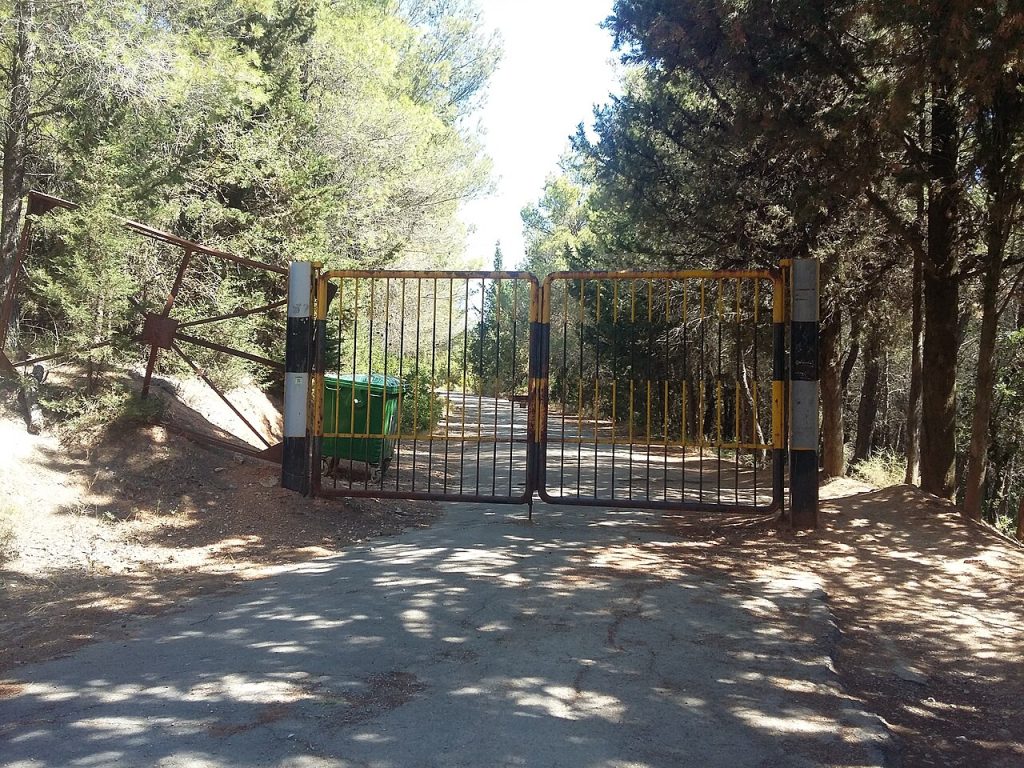
Tatoi belonged to five kings. George I was assassinated in 1913; Constantine I was exiled in 1917, restored in 1920 and exiled again in 1922 after the Asia Minor disaster; George II reigned, was exiled by the republic of 1924, restored in 1935, exiled again by the German invasion of 1941 and restored in 1946; Paul, his brother, reigned from 1947 to 1964 through the civil war and the reconstruction; and Constantine II, Paul’s son, from 1964 until the colonels’ coup of 1967. Through all of it Tatoi was the constant: the kings left for exile from here and returned here, and King Paul and Queen Frederica, a Hanoverian princess of strong opinions, lived at Tatoi rather than in Athens and raised their children here.
Paul farmed, Frederica gardened and entertained, the Athenian establishment came for weekends, and the house in the 1950s was, by the accounts of its guests, the happiest royal household in Europe. Now, stop here on the veranda and look at the view that King Paul saw every morning; he said that he could govern Greece better from this chair than from any office in Athens.
The Royal Cemetery on the Hill
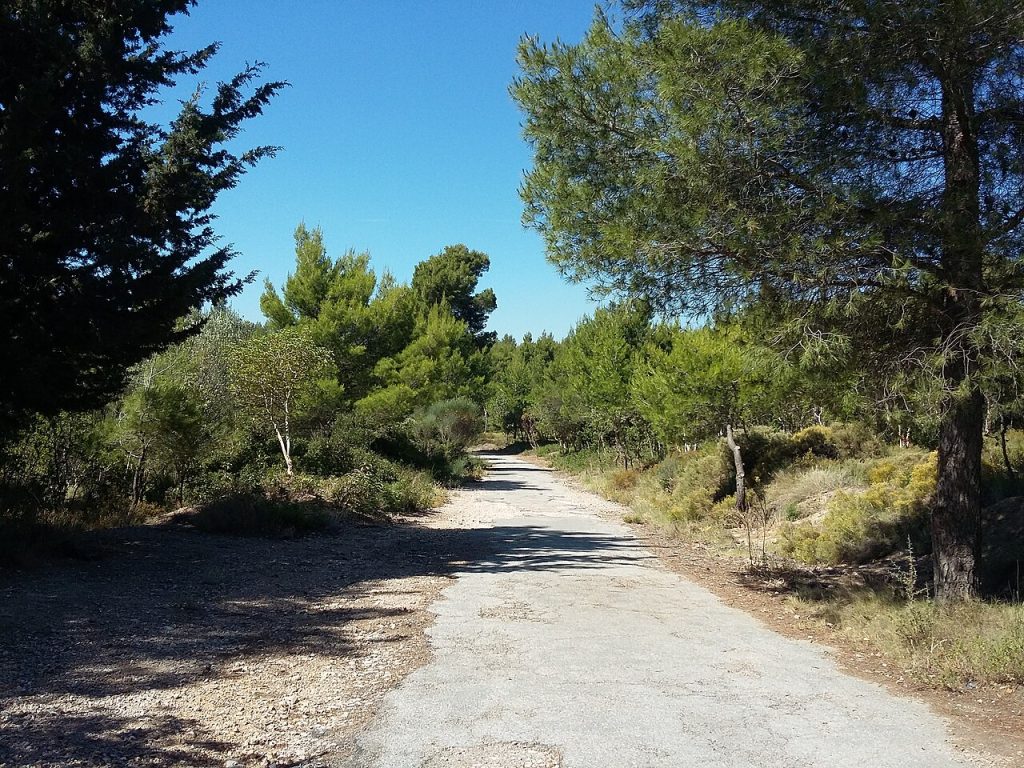
On the hill of Palaiokastro above the house, beside a small church built in 1899 in the Byzantine manner, lies the cemetery of the Greek royal family: the sarcophagus of King George I, assassinated in 1913; Constantine I, who died in exile in Palermo in 1923 and was brought home in 1936 with his mother Olga and his wife Sophia; Alexander, who reigned for three years and died in 1920 of a monkey bite; George II, who died in 1947; Paul, who died in 1964; and, since 2023, Constantine II. Around them are princes and princesses, Prince Andrew of Corfu among them, and the family’s dogs have their own graves below. The cemetery was the one part of the estate the family was allowed to visit during the long dispute, and it was kept by the villagers.
The hill looks over the whole estate and the plain to Athens, and it is the most moving place at Tatoi: a dynasty of Danes, Russians, Germans and Britons who became, in death, the only Greeks they were allowed to be.
The Last Royal Childhood
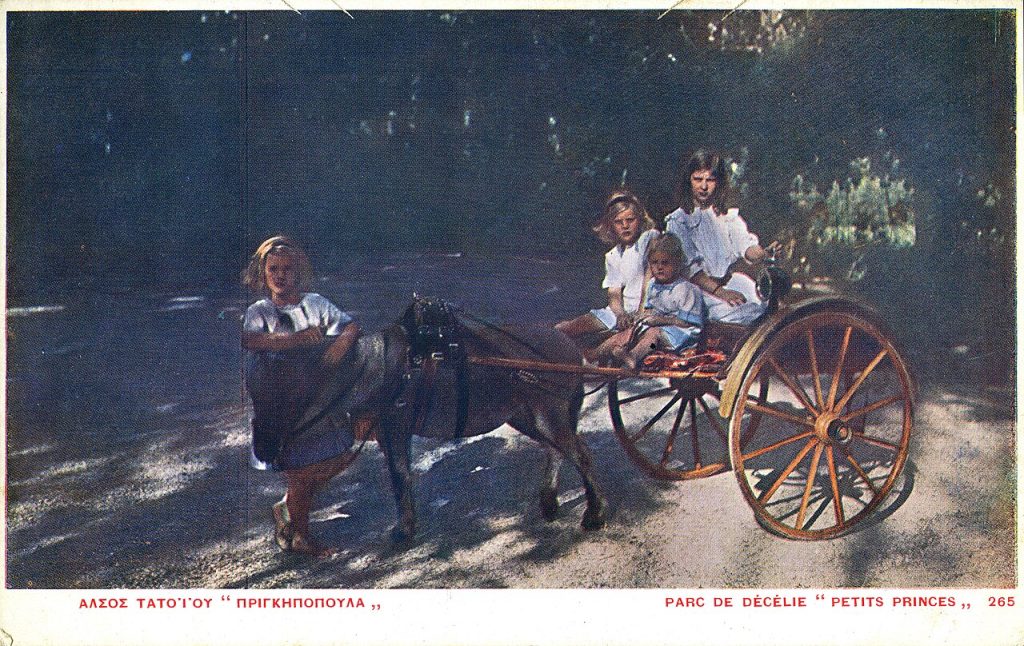
King Paul’s children, Sophia, born in 1938, Constantine, born in 1940, and Irene, born in 1942, grew up at Tatoi after the family’s return from wartime exile in South Africa and Egypt in 1946. They rode, sailed at the estate’s lake, went to school in the house with tutors and then in Athens, and Constantine trained for the Olympic sailing gold he won at Rome in 1960 on the estate’s roads and in its gymnasium. Sophia married Juan Carlos of Spain in 1962 and became Queen of Spain in 1975; Constantine married Anne-Marie of Denmark in 1964, months after he became king at twenty-three on his father’s death; and their first two children, Alexia and Pavlos, spent their first summers at Tatoi.
The photographs of these years, a young king with his children on the lawn, fill the restoration’s displays, because they were the last.
December 1967: Leaving Everything Behind
On 21 April 1967 a group of colonels seized power in Athens, and the young king, who had not been consulted and had sworn in their government under duress, spent eight months planning a counter-coup. On 13 December 1967 he flew to Kavala in the north to rally loyal units; the plan collapsed within hours, and that night he, Anne-Marie, their children and his mother Frederica flew from Kavala to Rome on the royal aircraft. They took almost nothing. Tatoi was left with the beds made, the clothes in the wardrobes, the cars in the garages, the papers in the study and the dogs with the staff, and the family expected to return within weeks. The junta sealed the estate, and in 1973 abolished the monarchy; the referendum of December 1974, after the junta fell, confirmed the republic by two to one.
Constantine lived in London for forty years and returned to Greece to live only in 2013; he was allowed to visit Tatoi’s cemetery for his mother’s burial in 1981, under guard, for a few hours.
Fifty Years of Decay
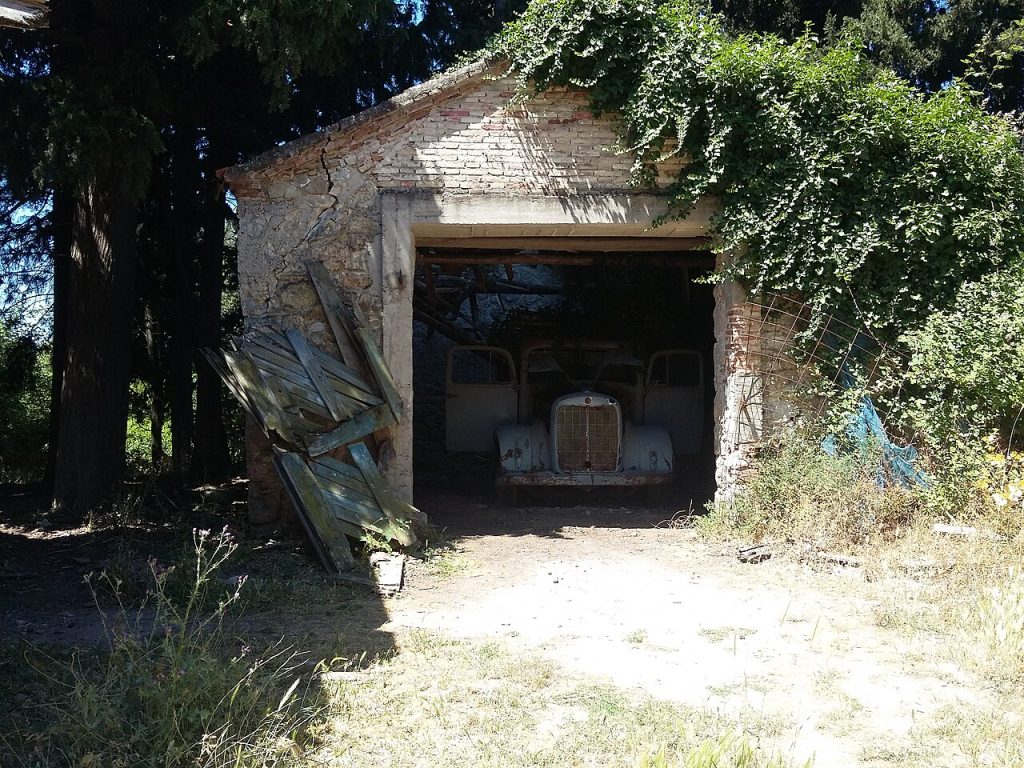
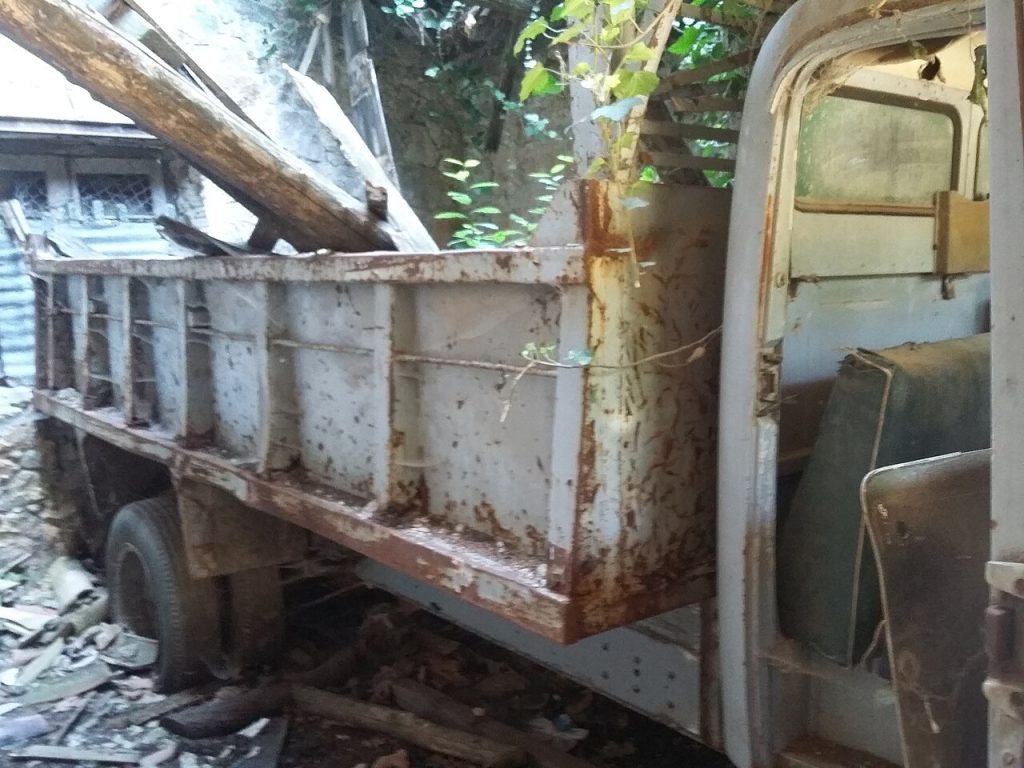
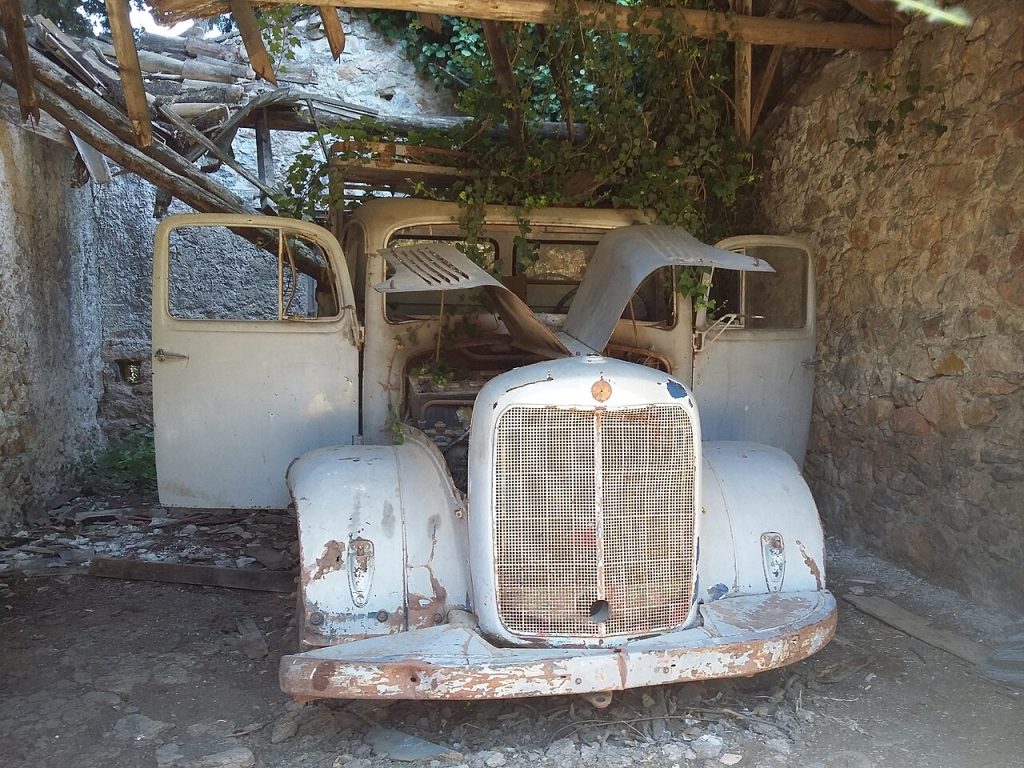
The republic claimed Tatoi as state property in 1994 and the former king sued; the European Court of Human Rights ruled in 2000 that the estate had been private property and awarded compensation, which was paid in 2002, and Tatoi became the Greek state’s. Meanwhile the house decayed: the roof leaked, the floors rotted, the furniture mildewed, the royal cars rusted in the garages, the estate buildings collapsed and the forest fires of 2007 and 2021 came to the edge of the house and burned the surrounding hills. The contents were inventoried in the 2010s, more than forty thousand objects from state portraits to toothbrushes, and found to be a complete time capsule of a royal household of the 1960s.
Successive governments announced plans for Tatoi and did nothing, and the estate became a symbol of Greek bureaucratic paralysis, visited by hikers who walked past the ruined house and the cemetery on the hill. Now, stop here at the garage and look at the photographs of what was found inside: a Lincoln, a Rolls-Royce and the king’s Mercedes under fifty years of dust.
The Restoration Since 2020
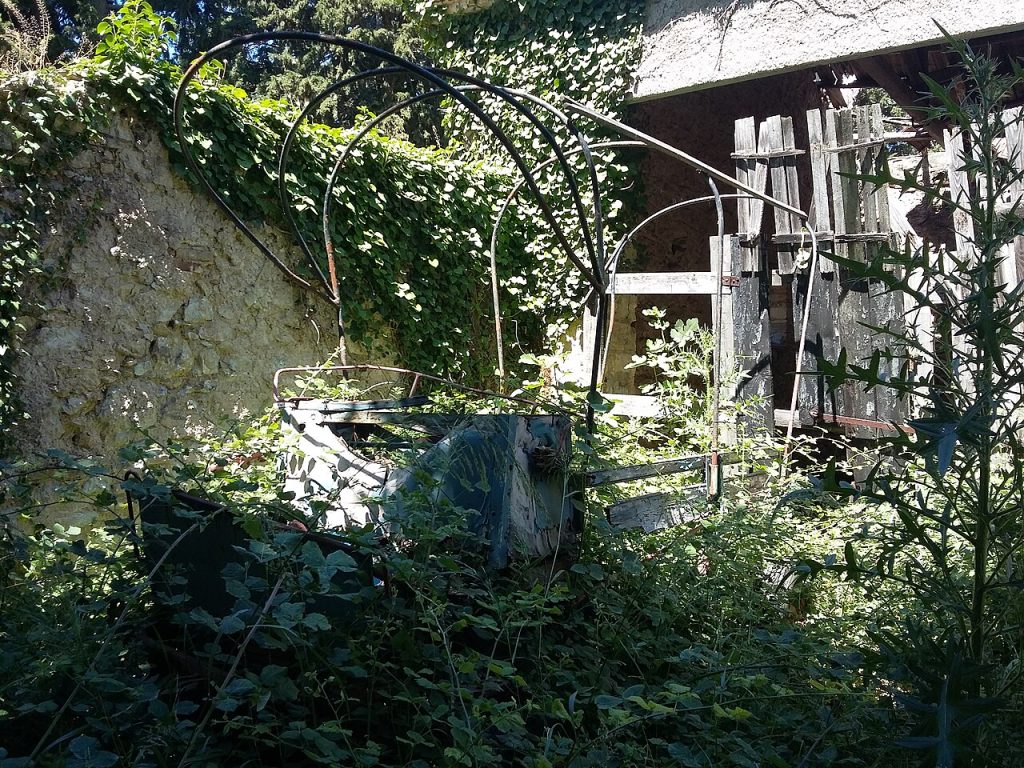
In 2020 the Ministry of Culture finally began the restoration of Tatoi, with funding from the European recovery programme and private donors, under a plan that turns the main house into a museum of the Greek monarchy with the original furniture and objects, the farm buildings into a visitor centre, a hotel and exhibition spaces, the winery into a working winery again and the forest into a public park with trails. The contents were removed, conserved in warehouses and catalogued, the main house was stabilised and reroofed and the first restored buildings opened in 2024; the full museum is planned for the later 2020s. The royal cars have been restored and are a star exhibit.
The project is the largest heritage restoration in Greece and the first time the republic has treated its monarchy as history rather than politics, which is itself a measure of time.
2023: The Last King Comes Home
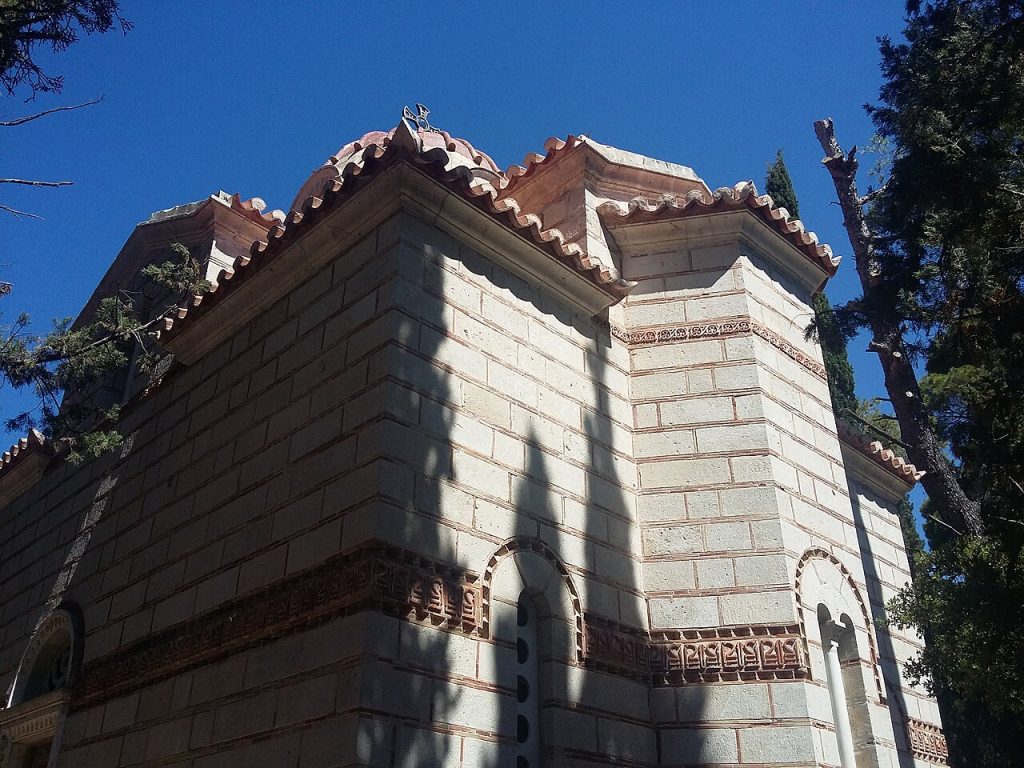
Constantine II died in Athens on 10 January 2023, at eighty-two, and was buried six days later in the cemetery at Tatoi after a funeral at the Athens cathedral attended by the royal families of Europe, his sister Queen Sofia of Spain among them, and by a Greek government that gave him the honours of a private citizen. The burial, beside King Paul and Queen Frederica, was the first royal funeral at Tatoi since 1964 and brought thousands of Greeks to the hill, royalists and the merely curious, and it closed the estate’s story as a family home: the last king who had lived here now lies here.
Now, stop here at the cemetery gate and look down through the pines at the house. The restoration will make it a museum, and the museum will be good; but the estate’s real exhibit is the hill, where a foreign dynasty that was never quite accepted in life is, in death, simply at home.
Tatoi on Video
Visiting Tatoi Today
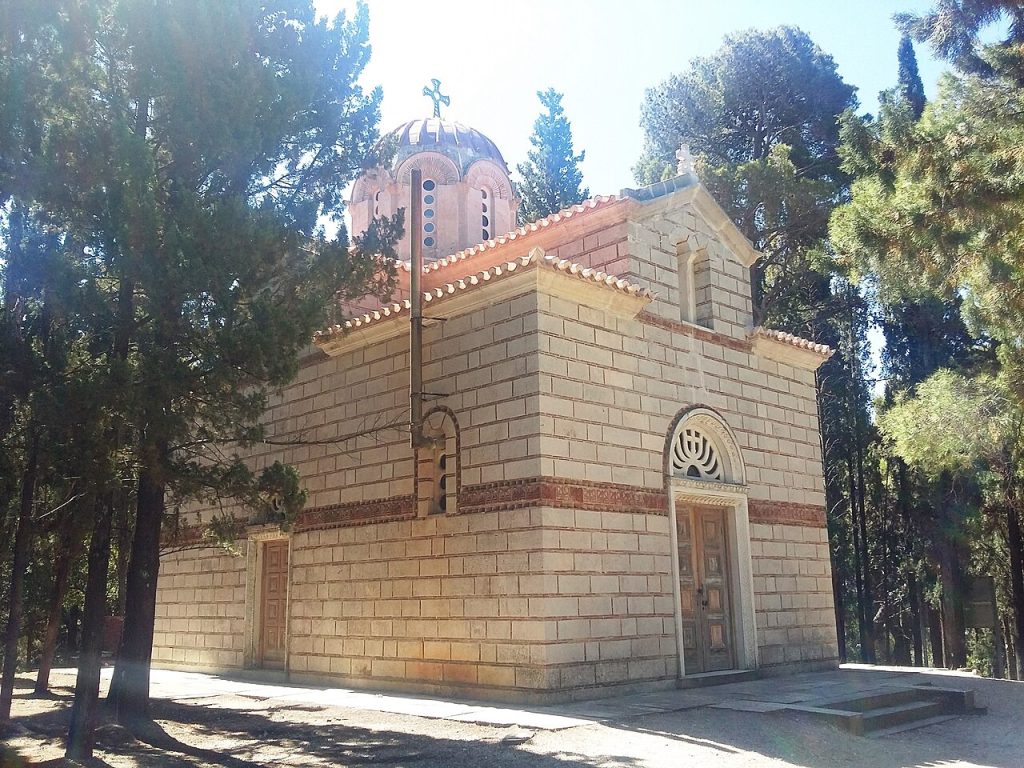
The Tatoi estate is open to walkers daily from dawn to dusk, with marked trails through the forest, past the estate buildings and up to the royal cemetery and the church, which can be visited; the main house and the museum buildings open in stages as restoration is completed, with guided tours on announced days, and the visitor centre in the restored farm buildings has displays on the estate and the restoration. Check the Ministry of Culture’s Tatoi site for current openings. Allow half a day for the estate and the cemetery, and combine it with the Parnitha national park above it, which has further trails and the Bafi refuge.
Tatoi is twenty-five kilometres north of central Athens, forty minutes by car via the national road and Varibobi, or by suburban railway to Dekeleia and taxi; the Presidential Mansion and the former royal palaces in the city are an hour away. Here is the exact spot: Tatoi Palace on Google Maps.
Palaces Nearby
You May Like
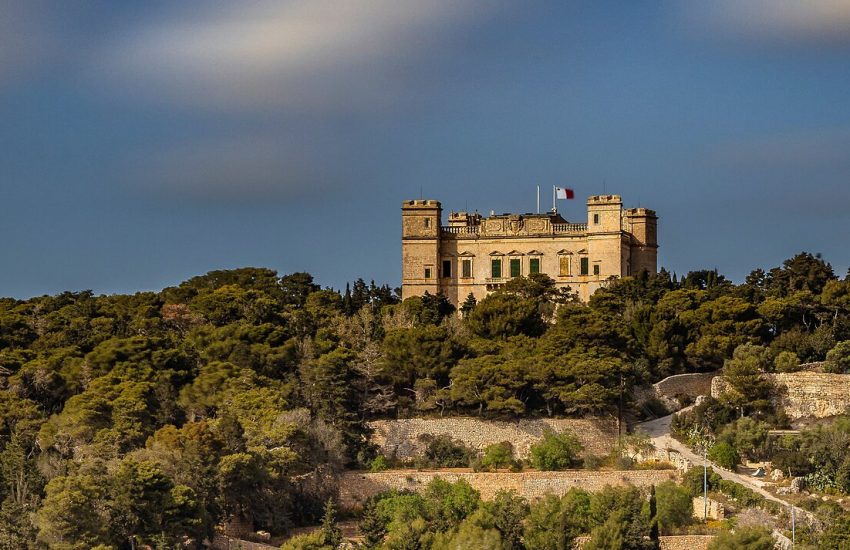
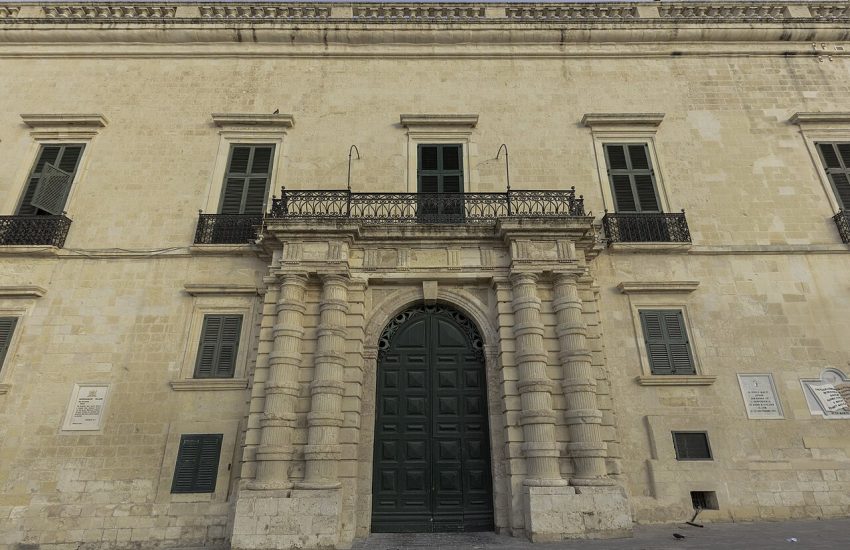
Verdala Palace and San Anton as the Summer Houses of Malta’s Rulers