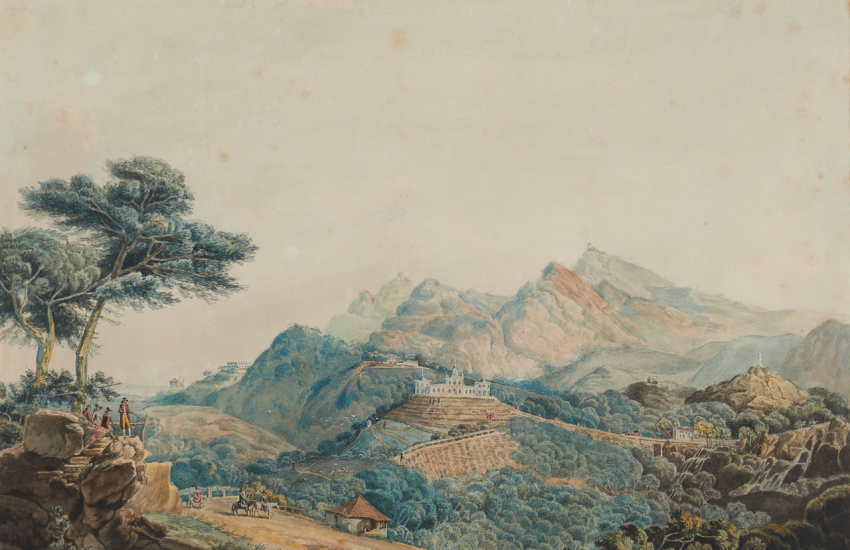
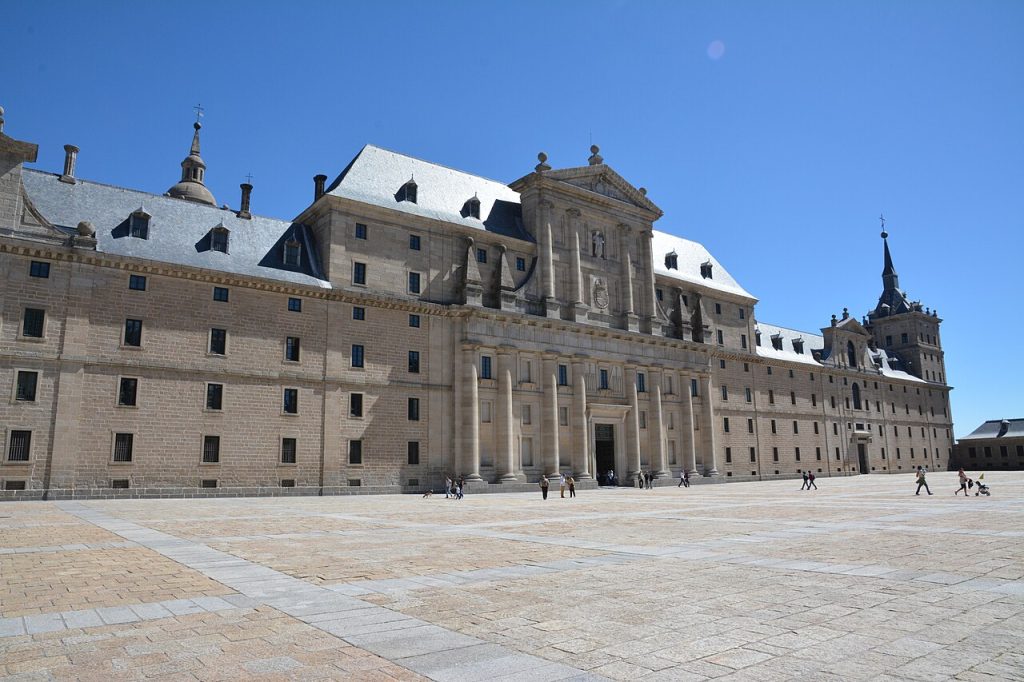
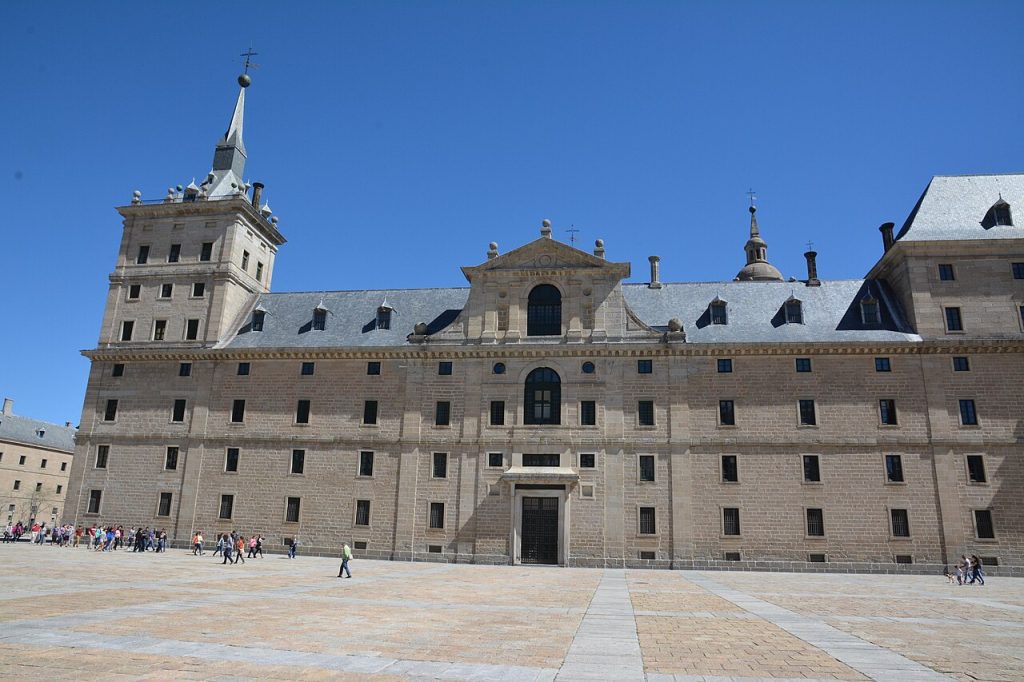
Fifty kilometres north-west of Madrid, on the southern slope of the Guadarrama mountains at over a thousand metres, a rectangle of grey granite two hundred metres long, with towers at its corners, a dome and two spires rising from its centre and nearly three thousand windows in its walls, faces the plain of Castile like a fortress of God. It is El Escorial, properly the Royal Site of San Lorenzo de El Escorial, built between 1563 and 1584 for Philip II, the king of Spain, Naples, Sicily, Milan, the Netherlands, Portugal and the Americas, and it is at once a monastery for a hundred monks, a basilica, a royal palace, a library, a school, a seminary and the tomb of the Spanish kings. Philip called it a palace for God and a hovel for the king, and he governed the largest empire the world had seen from a small room beside its altar.
El Escorial is the most serious building in Europe. It was built to commemorate a battle, to house a dynasty’s dead, to hold a collection of holy relics that became the largest in Christendom and to proclaim, in granite stripped of nearly all ornament, the faith of the Counter-Reformation’s champion; its architect Juan de Herrera gave his name to the style, estilo herreriano, that Spain carried to its colonies, and its gridiron plan remembers Saint Lawrence, roasted on a grill, on whose feast day Philip’s army beat the French at Saint-Quentin in 1557. The building held the greatest library and one of the greatest picture collections of its age, and it opens this series’s Iberian chapter, which will take us from Castile to Mallorca, Barcelona and the hills of Portugal.
Walk with me across the great esplanade, through the Courtyard of the Kings into the basilica, down into the Pantheon of the Kings, along the library’s frescoed vault and into the small apartment where an empire was ruled by paperwork. The contents are below.
In This Article
- A Granite Rectangle Under the Mountains
- Philip II, the King of Paper
- Saint-Quentin and the Gridiron Plan
- Juan Bautista, Juan de Herrera and Twenty-One Years
- The Courtyard of the Kings
- The Basilica and Its Dome
- The King’s Cell Beside the Altar
- The Pantheon of the Kings
- The Library of a Thousand Lights
- Titian, Bosch and the Picture Collection
- 1598: The Death of the King
- The Bourbons, the Casitas and the Decline
- The Eighth Wonder Today
- El Escorial on Video
- Visiting El Escorial Today
- Palaces Nearby
A Granite Rectangle Under the Mountains
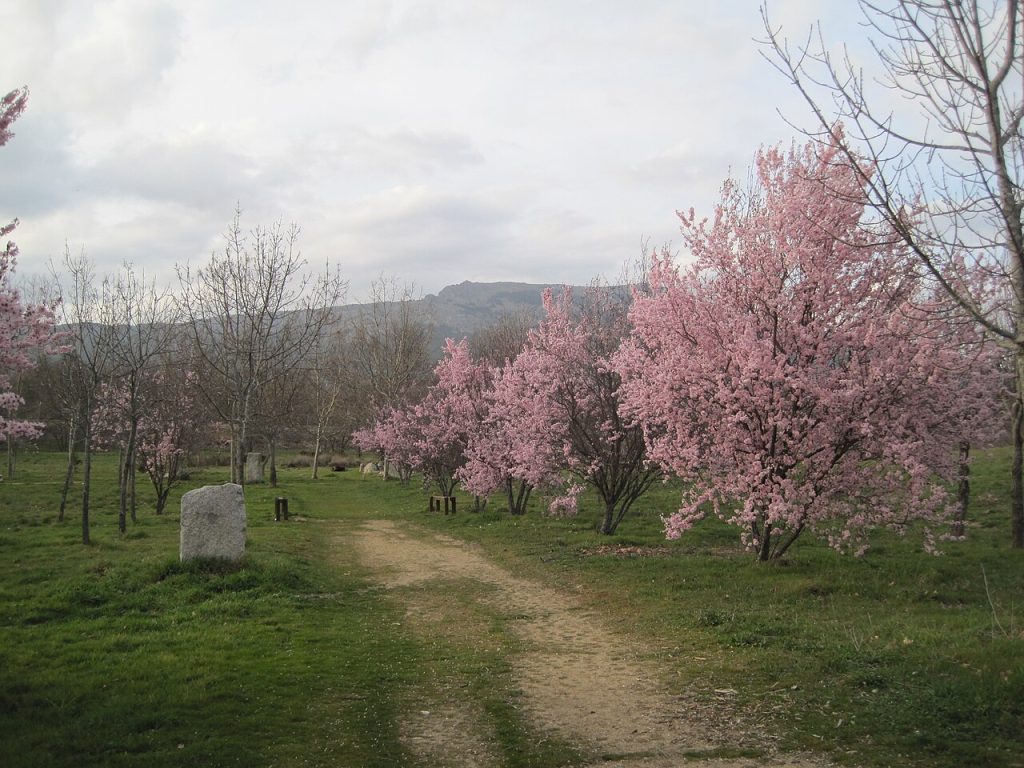
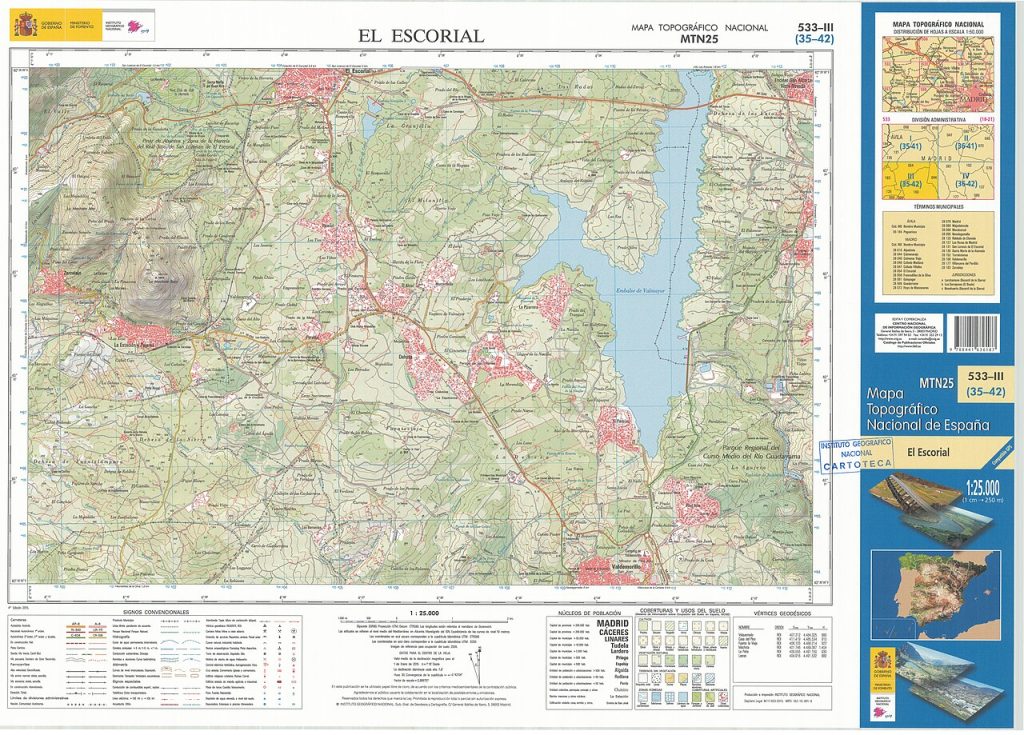
El Escorial stands at 1,028 metres on the flank of Mount Abantos, chosen by Philip’s doctors and astrologers for its air and water after a search of two years, with the forest and the royal hunting grounds behind it and the whole plain of Castile, on a clear day as far as Madrid, in front. The building is a rectangle of 207 by 161 metres of local grey granite, with four corner towers, the basilica’s dome and spires at the centre, a long western facade with three doors and, around two sides, the lonja, the paved esplanade from which the mountain and the plain are both in view. The numbers are the guidebooks’ favourites: some 2,600 windows, 1,200 doors, 16 courtyards, 86 staircases and 73 fountains, under roofs of slate that were among the first in Spain.
Now, stop here on the lonja at the north-west corner and look down the two facades. There is almost no ornament anywhere: no columns on the long fronts, no statues except over the doors, nothing but granite, windows and proportion, and the effect, after the first shock of plainness, is of overwhelming power. That was the intention.
Philip II, the King of Paper
Philip II, born in 1527, the son of the Emperor Charles V, became king of Spain in 1556 when his father, worn out by forty years of ruling and travelling, abdicated and retired to a monastery at Yuste; the son learned the lesson and reversed it, ruling from one place and bringing the world to him on paper. He was the hardest-working monarch in European history, reading and annotating hundreds of documents a day in his small neat hand, distrusting his ministers, deciding everything from the movements of armadas to the wording of prayers, and his empire, with Portugal and its colonies added in 1580, was the first on which the sun never set. He was also the Counter-Reformation’s sword, fighting the Turks at Lepanto, the Protestants in the Netherlands and England with the Armada of 1588, and his piety was as methodical as his paperwork.
Philip built El Escorial as the summary of his life: a monastery because his deepest wish was monastic quiet, a palace because he was a king, a tomb because his father had asked for a worthy burial, and a library and school because he was, for all his severity, a Renaissance prince who collected books, paintings, maps and relics with a connoisseur’s eye.
Saint-Quentin and the Gridiron Plan
On 10 August 1557, the feast of Saint Lawrence, Philip’s army crushed the French at Saint-Quentin in Picardy, and the king vowed a foundation to the saint in thanks; Lawrence, a Spanish deacon of Rome martyred in 258 by being roasted on a gridiron, gave the building its name, San Lorenzo, and, by tradition, its plan, a grid of courtyards within a rectangle that the eye of faith reads as the saint’s grill, with the projecting royal apartment as its handle. Scholars argue about whether the gridiron was intended or found afterwards, and point instead to descriptions of the Temple of Solomon, whose builder-king Philip consciously imitated; the statues of six kings of Judah, David and Solomon at their centre, stand over the basilica’s entrance to make the point.
Either way the plan is a theology: monastery, palace and college arranged around a church, with the king’s rooms wrapped behind the altar, so that the whole empire’s head lay, in plan, at the foot of God.
Juan Bautista, Juan de Herrera and Twenty-One Years
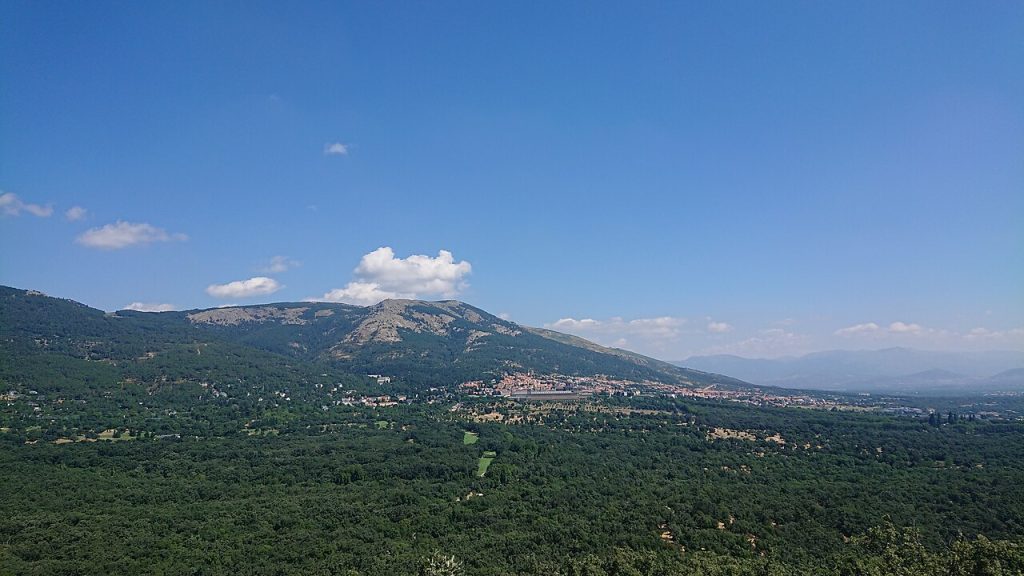
The first architect was Juan Bautista de Toledo, who had worked under Michelangelo on St Peter’s in Rome and whom Philip summoned home in 1559; he drew the general plan and began the work in 1563, and when he died in 1567 his assistant Juan de Herrera, a soldier-mathematician from the mountains of Santander, took over and ran the site for seventeen years, simplifying, enlarging and stripping the design until the building became the manifesto of his own style, the estilo herreriano, in which ornament is abolished and architecture is reduced to granite, geometry and scale. Herrera organised the work like a modern engineer, with prefabricated elements, standardised measurements and machines of his own design, and the last stone was laid on 13 September 1584, twenty-one years after the first.
Philip followed every detail from a wooden seat cut into a rock on the hillside, the Silla de Felipe II, which is still there, an hour’s walk away, with the best distant view of his building; go up to it if you have the afternoon.
The Courtyard of the Kings
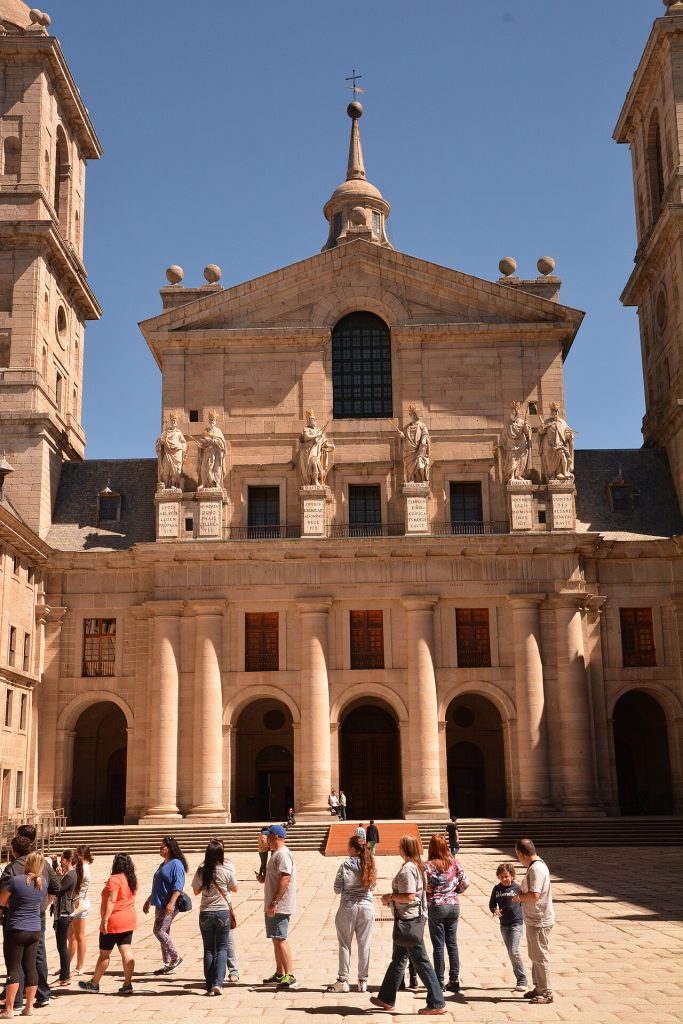
The main door in the west facade leads into the Patio de los Reyes, the Courtyard of the Kings, a severe granite court the size of a plaza, closed at its far end by the facade of the basilica with its two towers and, on the gallery above the entrance, the six colossal statues of the kings of Judah by Juan Bautista Monegro, each with gilded bronze crown and attribute, David with his harp and Solomon with his book in the centre, the Old Testament builders whom Philip claimed as ancestors in spirit. To the left of the court lies the college and seminary, to the right the convent, and the courtyard was the route of the great processions when relics, royal bodies or new prelates entered the church.
Now, stop here in the middle of the courtyard and look up at the kings of Judah. Philip is telling you, in statuary, that El Escorial is the new Temple and Spain the new Israel; the sixteenth century read the message fluently.
The Basilica and Its Dome
The basilica is the building’s heart, a Greek cross of granite piers under a dome that rises ninety-two metres over the crossing, modelled on St Peter’s and finished before it, with flat vaults by Herrera that were an engineering wonder and frescoes added later by Luca Giordano. The retable of the high altar, designed by Herrera, climbs thirty metres in jasper, marble and gilded bronze, with paintings by Tibaldi and Zuccaro and bronze sculptures by the Leoni family of Milan; and on either side of the altar, in gilded bronze, kneel the two royal funeral groups, Charles V with his wife, daughter and sisters on the left, Philip II with three of his wives and his son Don Carlos on the right, facing the altar forever. Below the altar steps lies the entrance to the royal crypt.
Mass has been sung here every day since 1586, first by the Hieronymites and since 1885 by Augustinian friars, and the basilica is still a working monastery church rather than a museum hall; come during the morning offices and you will hear it doing what it was built for.
The King’s Cell Beside the Altar
The royal palace of the Habsburgs at El Escorial is not a palace at all but a modest apartment of whitewashed rooms with tiled floors and plain furniture, wrapped around the back of the basilica’s sanctuary in the handle of the gridiron, and the king’s bedroom has a small interior window opening directly onto the high altar, so that Philip could follow mass from his bed when gout kept him there. The rooms hold his sedan chair, the desk where he worked, his German clocks, maps and devotional paintings, and the austerity is not poverty, for the king owned the richest collection in Europe, but a choice: the master of the world slept in a room a village priest might have had.
Now, stop here at the little window by the bed and look through it at the altar. From this spot the Armada was ordered, the Netherlands were fought and half the planet was governed, by a man in black who wanted, above everything, to be able to see the mass from his pillow.
The Pantheon of the Kings
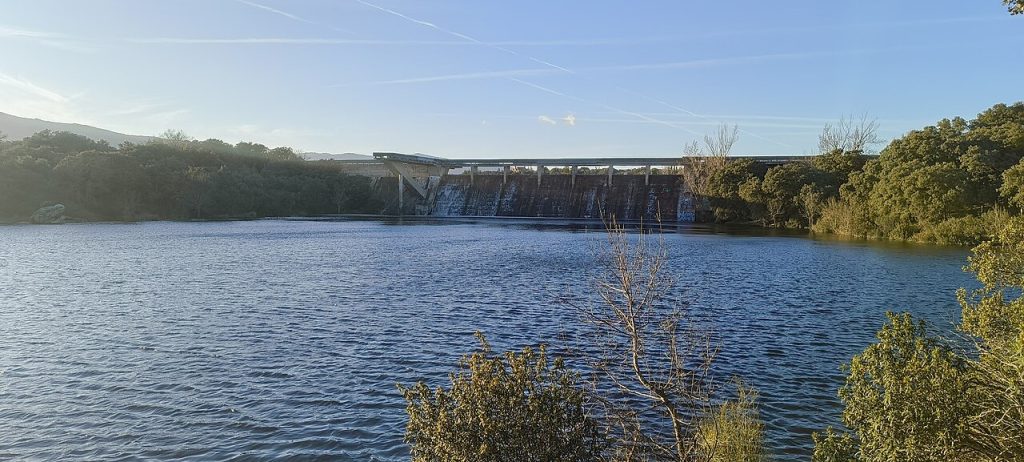
Beneath the high altar, reached by a staircase of coloured marble, the Panteón de los Reyes is an octagonal chamber of dark Toledo marble and gilded bronze, begun under Philip III and finished in 1654, in which the kings of Spain and the queens who bore kings lie in identical gilded sarcophagi stacked four high in the walls, Charles V and Philip II on the altar’s right, and the latest arrivals on the left; twenty-six of the niches are filled, and the bodies of more recent royals wait their turn in the pudridero, the drying chamber, which only the monks may enter. Beside it the Panteón de los Infantes, added in the nineteenth century, holds the princes, princesses and queens without crowned issue, including the white marble wedding-cake tomb of Don Juan of Austria, the victor of Lepanto.
Nearly every Spanish sovereign from Charles V to Alfonso XIII is here, in one small room; no other dynasty in Europe kept its dead so completely in one place, and the visit is the strangest and most impressive ten minutes in Spain.
The Library of a Thousand Lights
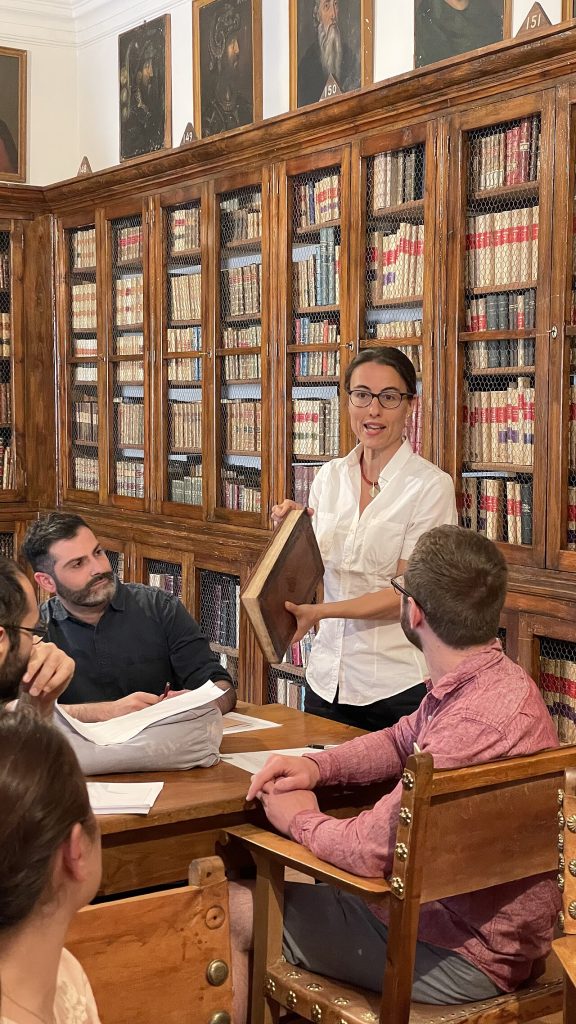
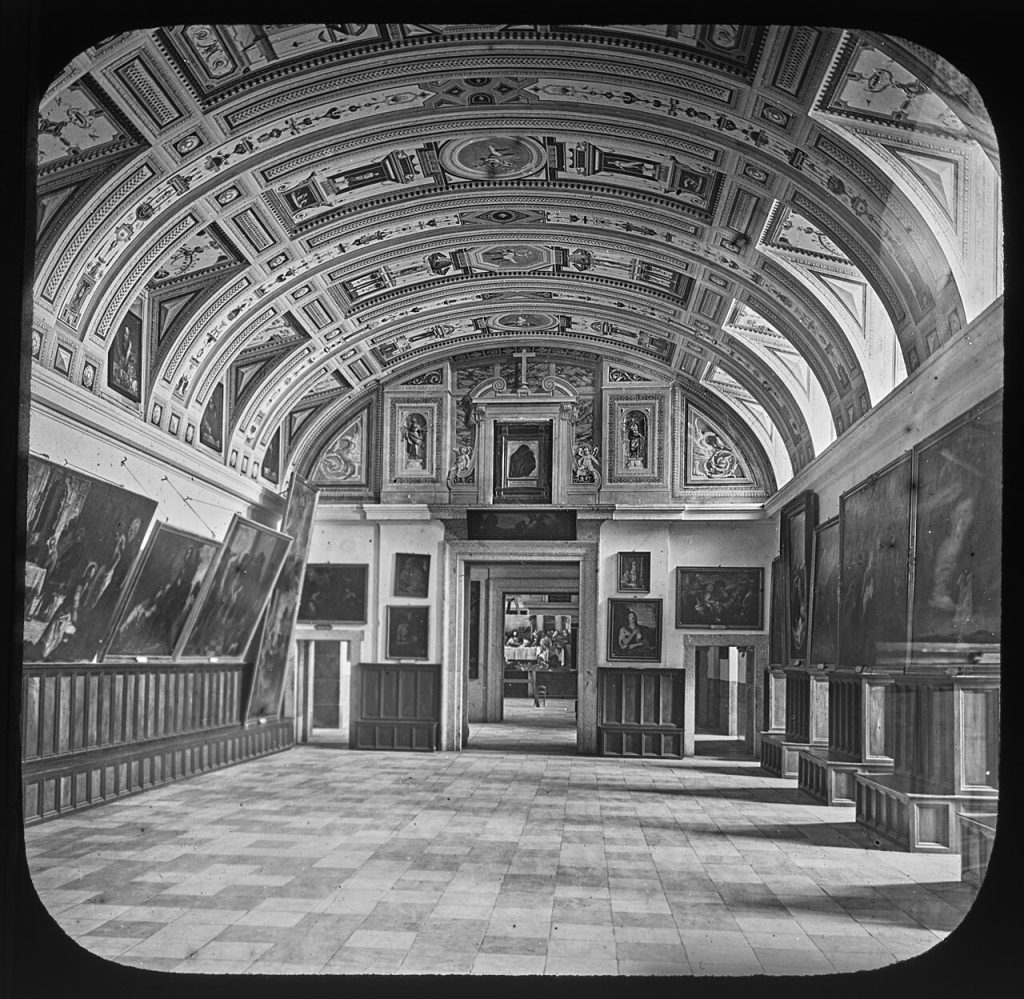
Above the main entrance, running the length of the west facade, the library is a hall fifty-four metres long under a barrel vault frescoed by Pellegrino Tibaldi with the seven liberal arts, Philosophy at one end and Theology at the other, over shelves of precious woods designed by Herrera that hold some forty thousand volumes shelved, uniquely, with their gilded fore-edges outward, both to preserve the leather and to fill the room with gold. Philip founded it with his own books and bought whole libraries to fill it; its treasures include the gold-lettered codex of the councils, Arabic manuscripts from the sultan of Morocco’s captured library, Teresa of Ávila’s autographs and the Cantigas of Alfonso the Wise, and it was the first library in Europe built as a single great ornamented hall, the model for all the Baroque libraries after it.
Look down the vault from Philosophy to Theology: the programme says that all human learning leads to God, and the gilded books say that the king who owned learning owned the world. The sphere of the heavens in the middle of the room still shows the sun going around the earth.
Titian, Bosch and the Picture Collection
Philip was the greatest collector of his century. He brought to El Escorial more than a thousand paintings: Titians by the dozen, for the old Venetian was his father’s painter and his own, the strange and wonderful Garden of Earthly Delights and Haywain of Hieronymus Bosch, whose moralising fantasies the severe king loved and defended against whispers of heresy, Rogier van der Weyden’s great Calvary, Dürer, Veronese, Tintoretto, and, commissioned and then set aside, El Greco’s Martyrdom of Saint Maurice, too strange for the basilica and now one of the treasures of the chapter houses. Much went to the Prado in the nineteenth century, including the best Bosch panels, but the chapter houses, the sacristy and the picture galleries of the palace still hang Titian, Bosch’s Crowning with Thorns, Velázquez and Zurbarán in the rooms they were collected for.
The collection came with eight thousand relics in gold and silver reliquaries, the largest hoard in Christendom, gathered so that, as Philip said, no saint should lack a lamp in his house; they fill the reliquary altars of the basilica still.
1598: The Death of the King
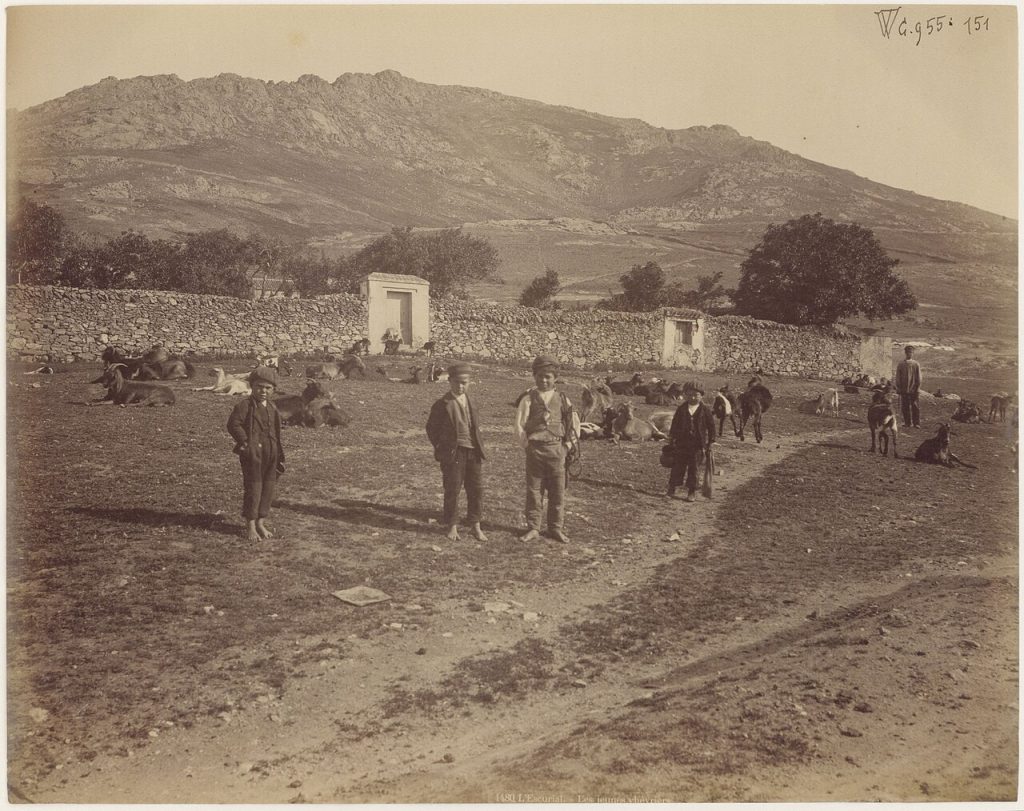
In June 1598 Philip, seventy-one and consumed by gout and fever, had himself carried from Madrid to El Escorial in a litter, a journey of six days, to die in his monastery. He lay for fifty-three days in his small bedroom in constant pain, unable to be moved or washed, his bed opened to the altar window so he could follow the offices, ordering the details of his own funeral, having his father’s crucifix brought to his hands, and instructing his son, the future Philip III, to look upon the end of kings; he died at dawn on 13 September 1598, as the boys’ choir sang the morning mass below, and was buried the same day in the crypt he had built. The empire he left was the largest in the world and already, in its finances and its wars, beginning its long decline.
The room is as it was, and the visit passes the very bed; few places in Europe hold a death so completely.
The Bourbons, the Casitas and the Decline
The Bourbon kings of the eighteenth century, who preferred their French comforts, used El Escorial for the autumn hunting season and built within the granite shell the Palacio de los Borbones, a suite of apartments hung with tapestries woven from cartoons by Goya and Bayeu; Charles III’s architect Juan de Villanueva added in the grounds the two Casitas, the Casita del Príncipe below the town and the Casita del Infante above it, small neoclassical pleasure pavilions filled with porcelain and marbles. After the Peninsular War the court came rarely; the Hieronymite monks were expelled by the liberal confiscations of 1837, the building passed to the state, and in 1854 and again in 1963 fires and restorations swept it; the Augustinians arrived in 1885 and keep the monastery, school and seminary working today.
The little town of San Lorenzo that grew at the walls, with its eighteenth-century theatre, the oldest working in Spain, is now a cool summer resort for Madrid, wrapped around the building that made it.
The Eighth Wonder Today
El Escorial was listed as a World Heritage site in 1984, in the first Spanish group, and is run by Patrimonio Nacional, the agency of the royal sites, as a working monastery, basilica, school and library as well as a museum of about half a million visitors a year; Spaniards of Philip’s time already called it the eighth wonder of the world, and the phrase has never gone away. Restoration is continuous, the gardens of the monks on the south terraces have been replanted as the king knew them, with box parterres above the huerta and the great retaining wall of niches, and the fiesta of Saint Lawrence still fills the town every tenth of August.
Now, stop here at sunset on the south terrace, with the gardens below, the plain going blue toward Madrid and the granite turning amber behind you. Philip II built the most serious building in Europe as a machine for governing, praying and dying; four and a half centuries later it is still doing all three, and the mountain air still smells of box and stone.
El Escorial on Video
Visiting El Escorial Today
The Royal Site of San Lorenzo de El Escorial is open Tuesday to Sunday, with a ticket covering the palace apartments of the Habsburgs and Bourbons, the Pantheons of the Kings and Infantes, the chapter houses, the basilica, the library and the new museums of architecture and painting; audio guides and guided tours run in English, and the Casitas in the grounds open seasonally. Allow four hours, start with the basilica and pantheon before the groups arrive, end in the library, and leave time for the gardens and the lonja; the town’s restaurants around Plaza de la Constitución do a proper Castilian lunch, and the walk up to the Silla de Felipe II takes about an hour each way.
San Lorenzo de El Escorial is an hour from Madrid by Cercanías train from Atocha or Chamartín to El Escorial and a shuttle bus or fifteen-minute uphill walk, or by bus 661/664 from Moncloa; La Granja de San Ildefonso is an hour away by car over the mountains, and Segovia forty minutes beyond it. Here is the exact spot: El Escorial on Google Maps.
Palaces Nearby
You May Like
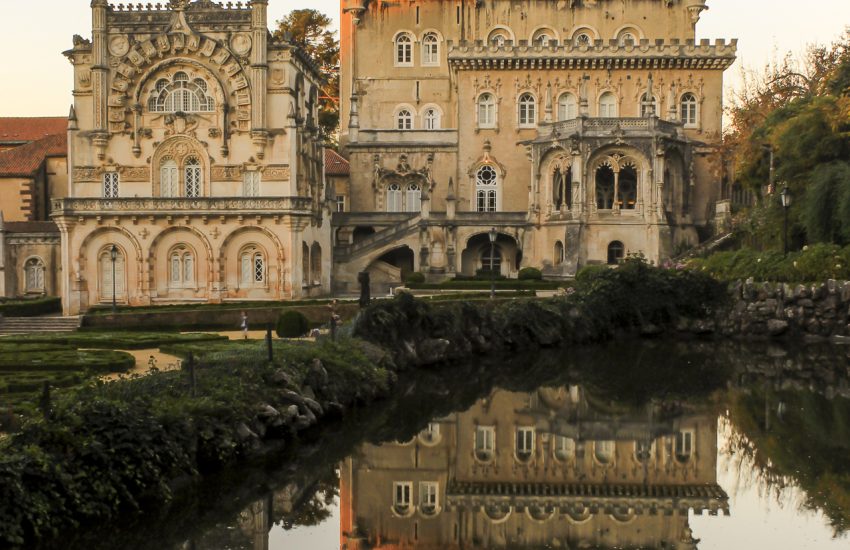
Bussaco Palace and the Hunting Lodge That Became a Hotel