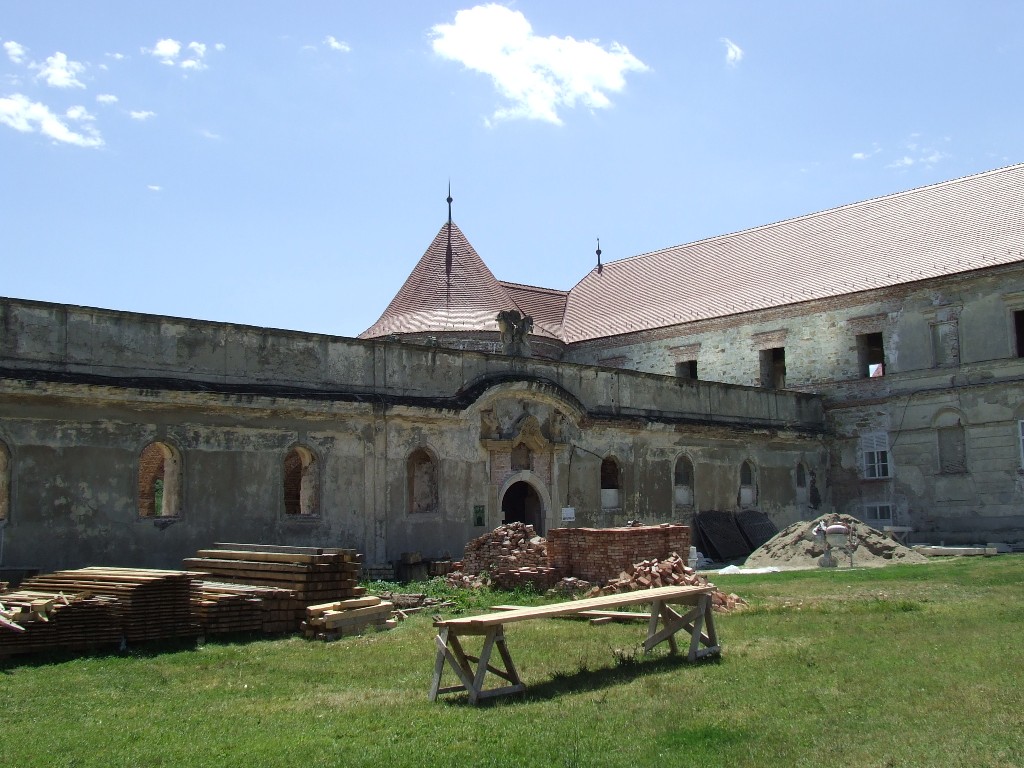
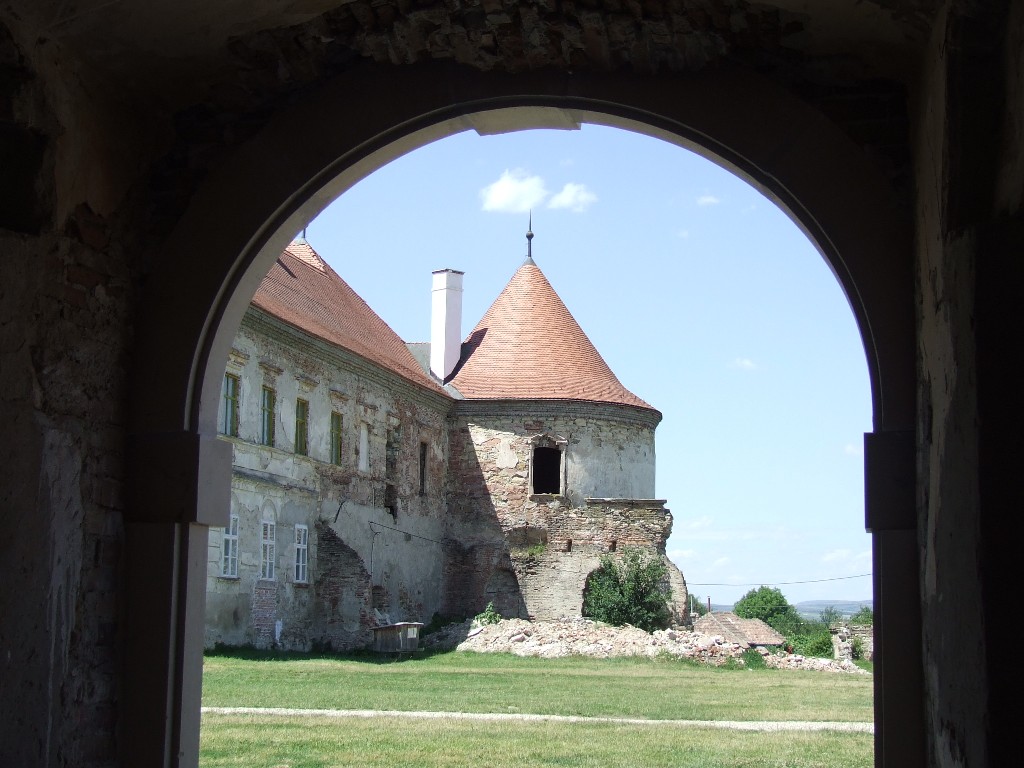
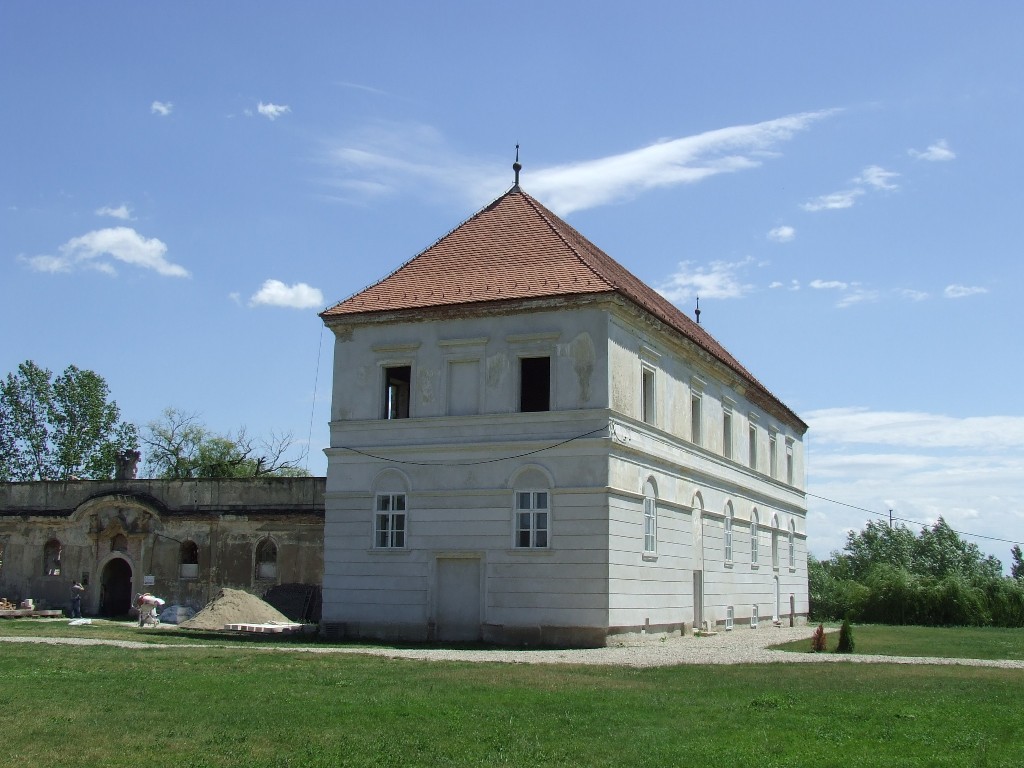
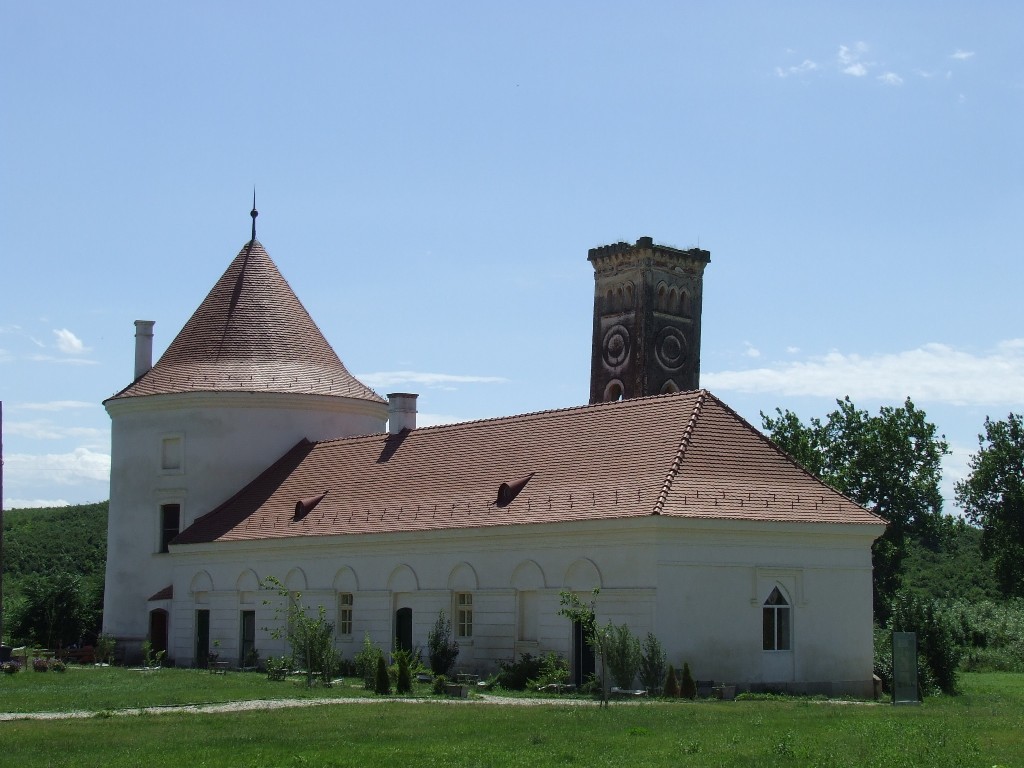
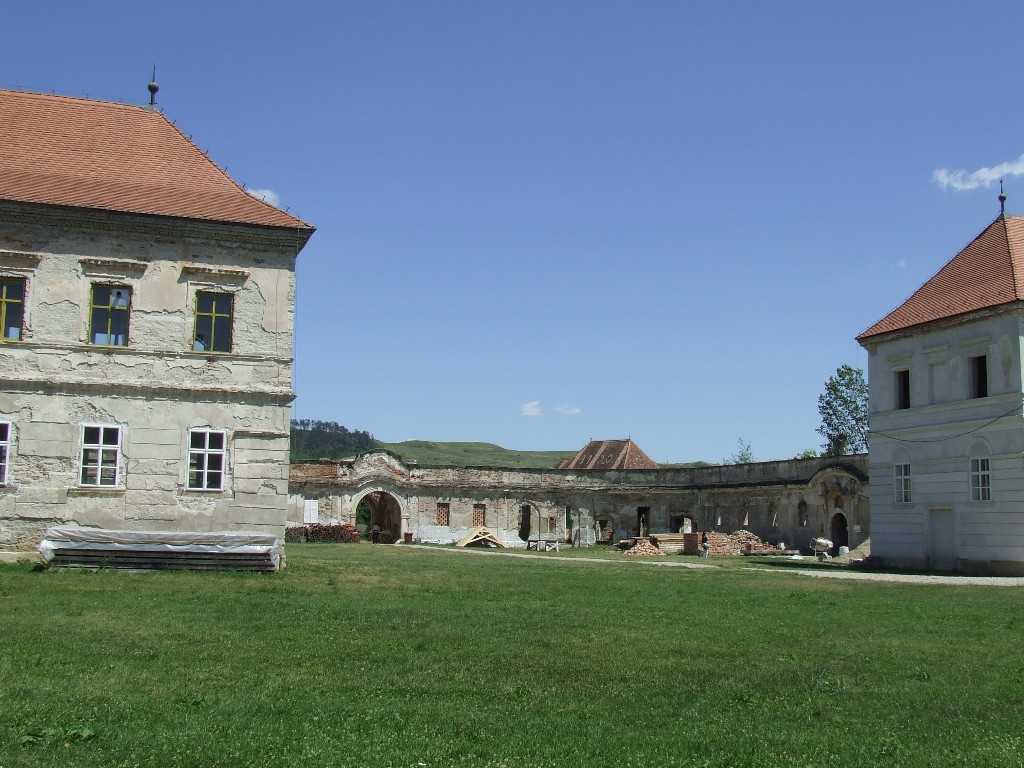
Now, stop in the main courtyard and look at the two halves of the building, because they tell the whole story. On one side, restored walls, new roofs, clean stone, working windows. On the other, roofless shells with trees growing out of them and sky where ceilings were.
Banffy Castle was one of the great baroque houses of central Europe, called the Versailles of Transylvania by people who had seen both. In October 1944 retreating German troops burned it, and for fifty years nobody repaired anything.
What has happened since is one of the most interesting heritage stories in Europe, and it involves craftsmen, volunteers, a Hungarian foundation, a British prince and an electronic music festival.
- Transylvania and Its Hungarian Nobility
- The Banffy Family
- The Renaissance Core
- The Baroque Transformation
- The Stables and the Miklos Gate
- Miklos Banffy, Writer and Minister
- October 1944
- Collective Farm and Ruin
- The Rescue Begins
- A School for Building Crafts
- Electric Castle
- Restoring Without Erasing
- What to Expect on a Visit
Transylvania and Its Hungarian Nobility
Transylvania spent centuries as a distinct political unit: part of the Hungarian kingdom, then an autonomous principality under Ottoman suzerainty, then a Habsburg territory, then part of Hungary, and since 1920 part of Romania.
Its population has long been mixed: Romanian, Hungarian, German Saxon, Roma, Jewish and Armenian communities living in the same valleys with different languages, churches and architectures.
The Hungarian aristocracy built the castles. Understanding that is essential to understanding what happened to them in the twentieth century.
The Banffy Family
The Banffys were one of the oldest noble families in Transylvania, holding high office under the princes and later under the Habsburgs: governors, chancellors, generals and, in the twentieth century, a prime minister and a foreign minister.
Bontida, about thirty kilometres northeast of Cluj, was their principal seat, held from the fifteenth century until 1944.
The family’s long tenure means the building records five centuries of changing taste in one complex.
The Renaissance Core
The earliest substantial building is sixteenth-century, a Renaissance manor with corner towers built when Transylvania was an independent principality balancing between the Ottomans and the Habsburgs.
Italian masons worked across the region in this period, and Transylvanian Renaissance architecture has a distinctive flavour: Italian proportion, local stone, defensive elements retained.
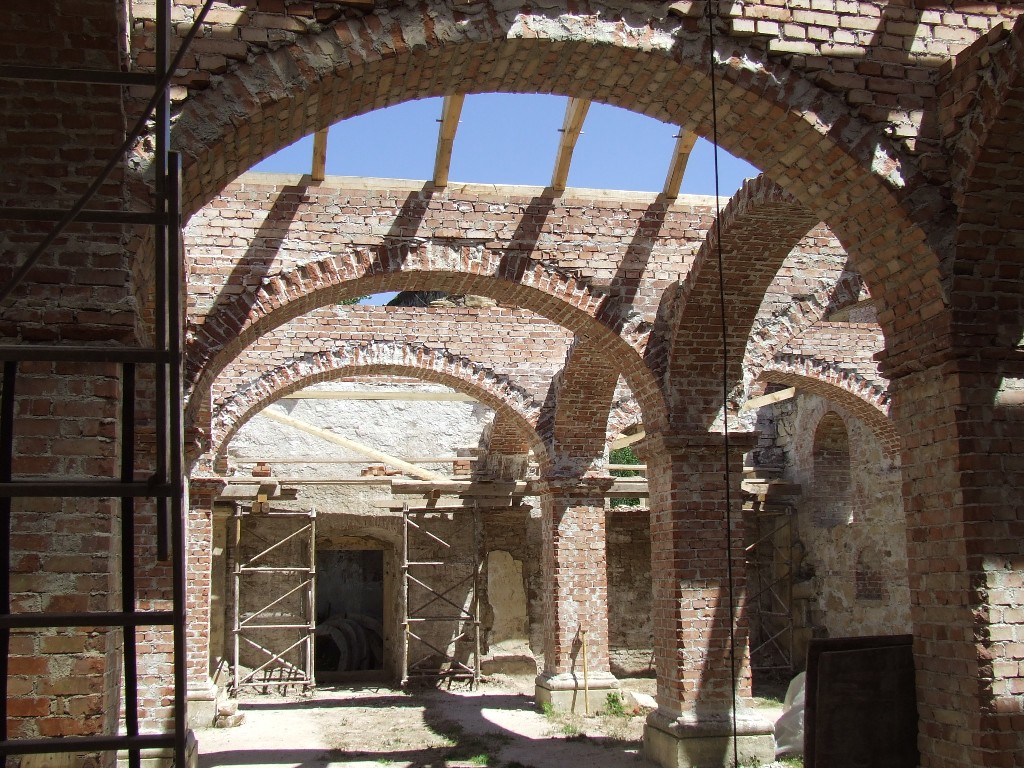
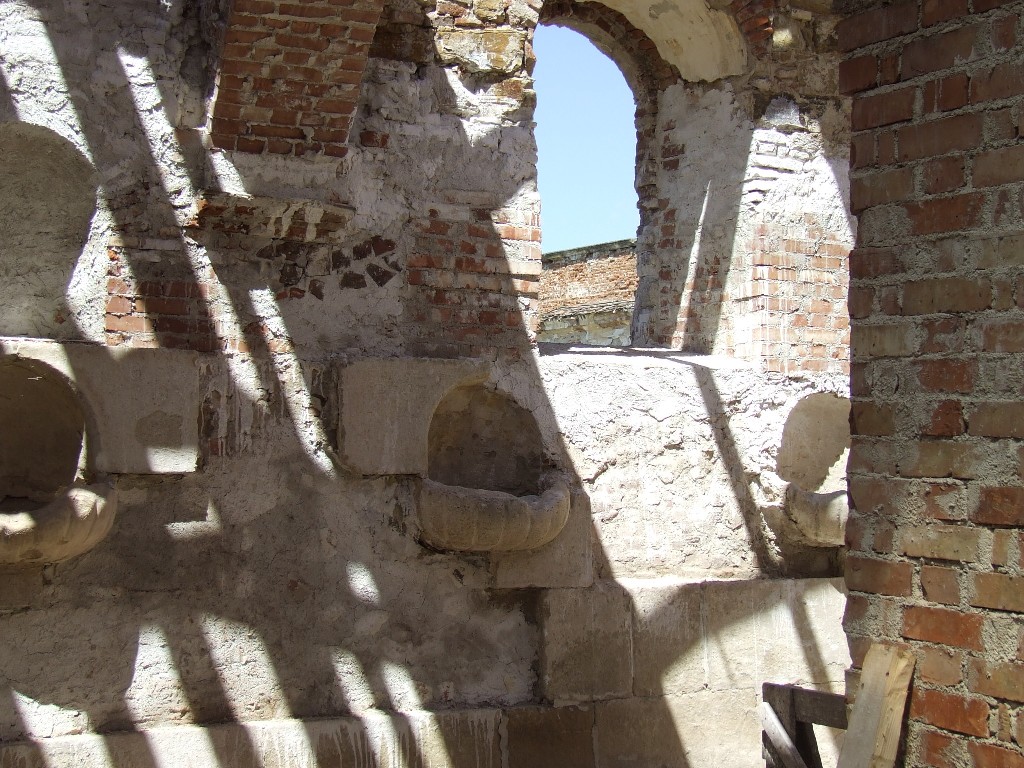
Parts of this phase survive inside the later ranges, visible where the baroque skin has fallen away.
The Baroque Transformation
In the eighteenth century Count Dionisie Banffy rebuilt the complex in baroque style, employing the architect Johann Eberhard Blaumann and craftsmen from Vienna and central Europe.
The result was a quadrangle of ranges around a courtyard, with a monumental gateway, stables, a riding hall, a chapel, gardens laid out in the French manner and a landscape park beyond.
Visitors in the nineteenth century compared it to the great houses of Austria and Bohemia, which is where the Versailles of Transylvania description comes from.
The Stables and the Miklos Gate
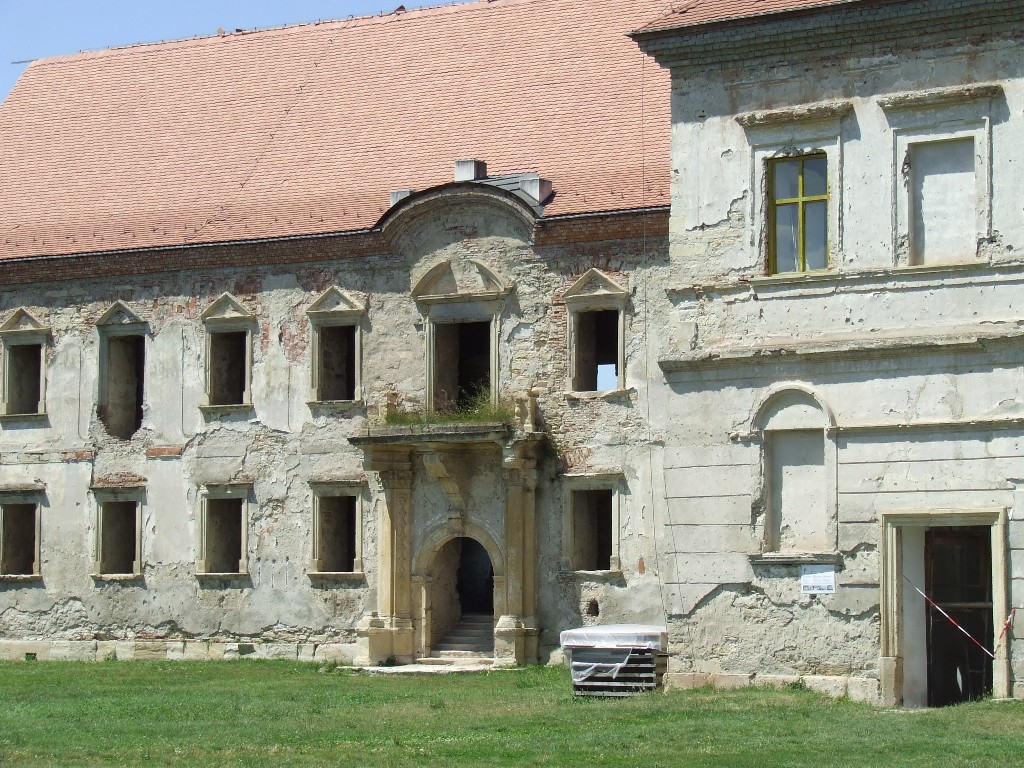
The baroque stables are among the most impressive surviving elements, a long range with vaulted interiors designed for horses that cost more than most houses in the surrounding villages.
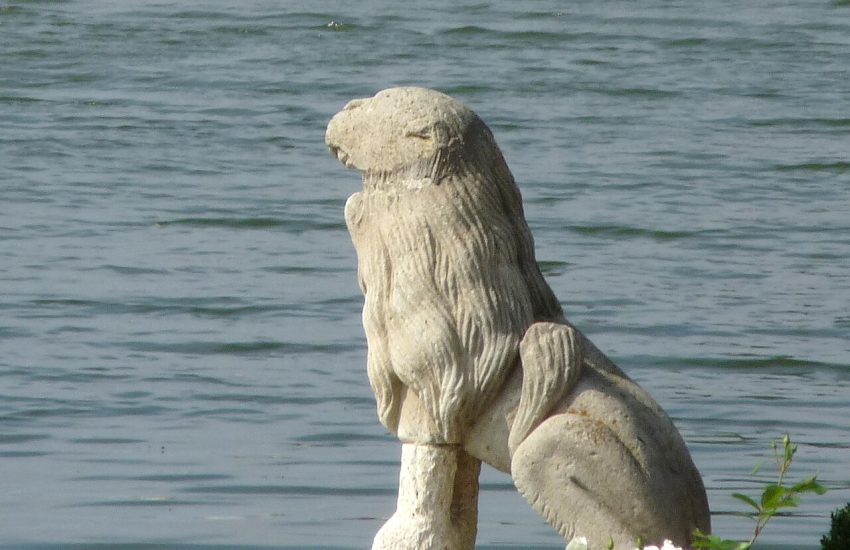
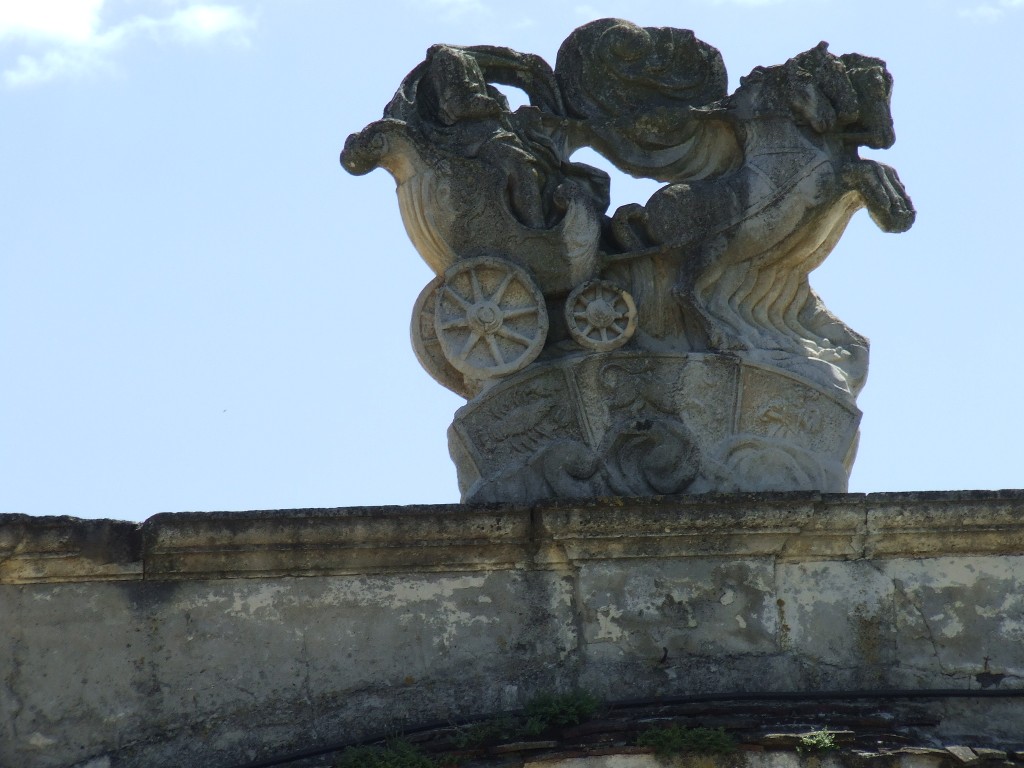
The gateway, with its carved figures, was the ceremonial entrance to the whole complex and is one of the first restored pieces.
Horses mattered enormously in this society. A Transylvanian magnate’s stable was a statement of military capacity as much as of wealth.
Miklos Banffy, Writer and Minister
The most famous family member is Miklos Banffy, born 1873: Hungarian foreign minister in the early 1920s, theatre director, graphic artist and author of the Transylvanian Trilogy, a vast novel sequence about the aristocracy sleepwalking toward the First World War.
The trilogy, translated into English in the 1990s, is now regarded as one of the great central European novels, and it is partly set in houses like this one.
He lived to see the castle burned and died in Budapest in 1950, having lost everything his family had accumulated in five centuries.
October 1944
In October 1944 the front reached Transylvania. German troops retreating before the Soviet advance set fire to the castle, reportedly in retaliation for Miklos Banffy’s efforts to negotiate Romania and Hungary out of the war.
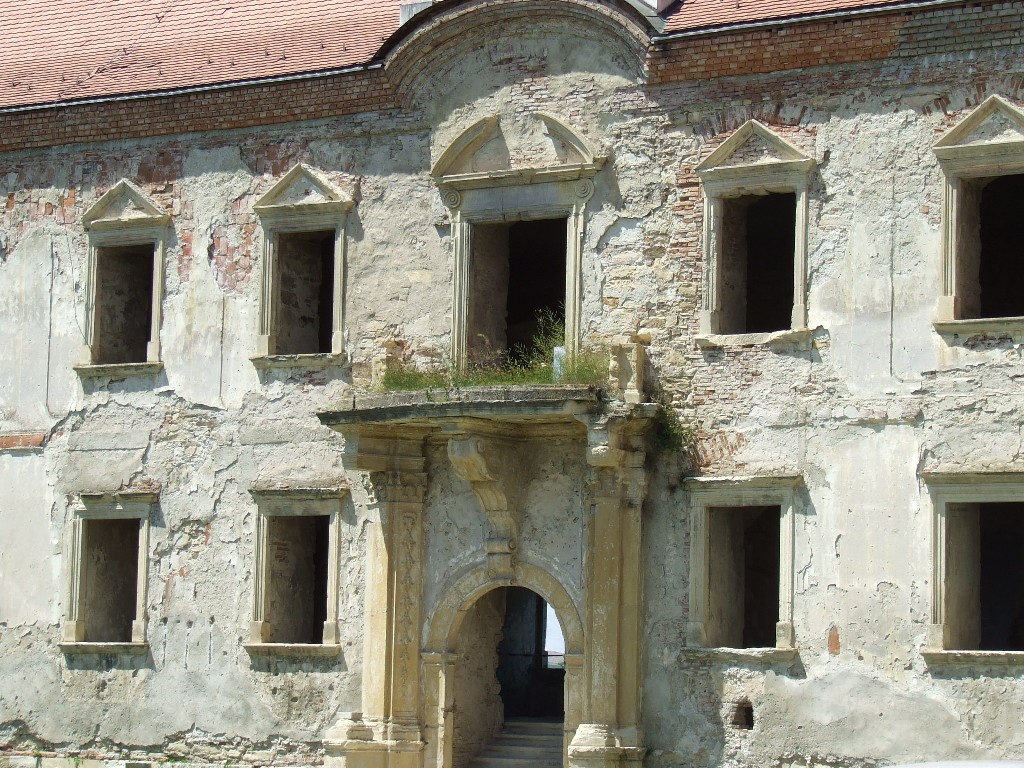
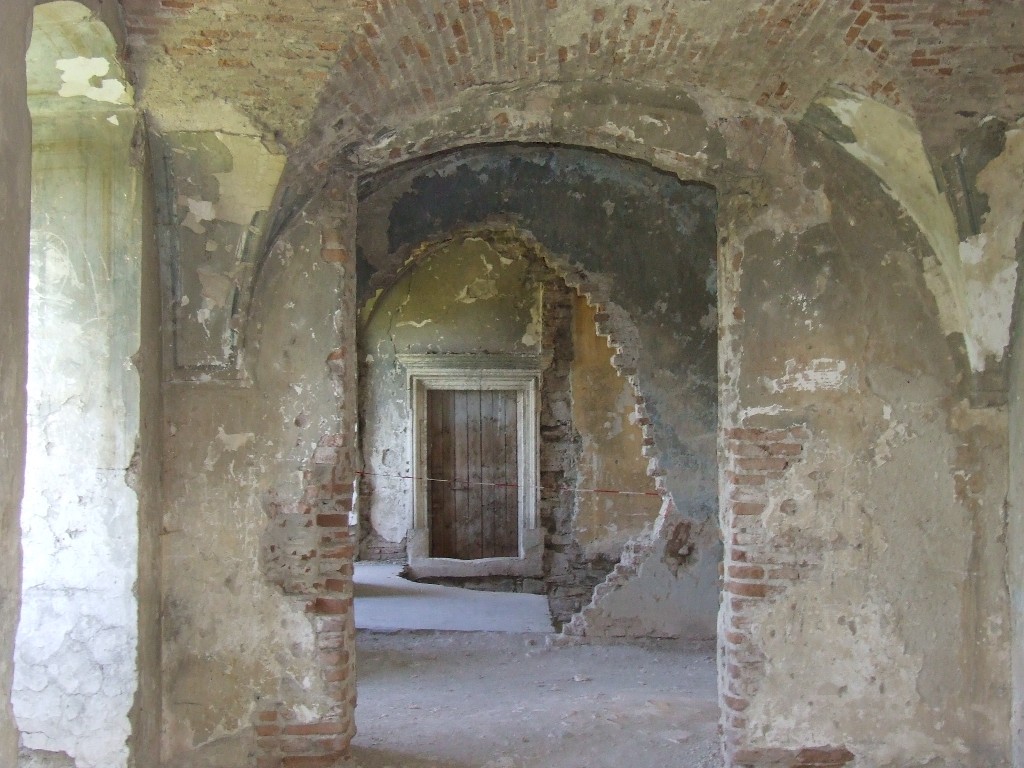
The library burned, the archives burned, the furniture and paintings burned. Roofs collapsed. What had taken five hundred years to assemble was gone in days.
Across Transylvania the same autumn, dozens of comparable houses were burned, looted or emptied. The aristocratic world the trilogy described ended within a single season.
Collective Farm and Ruin
After 1945 the communist state confiscated the estate. The ruined castle was used as a collective farm: tractors in the courtyard, grain in the vaults, pigs in the stables, and doors, tiles, beams and carved stone removed for reuse.
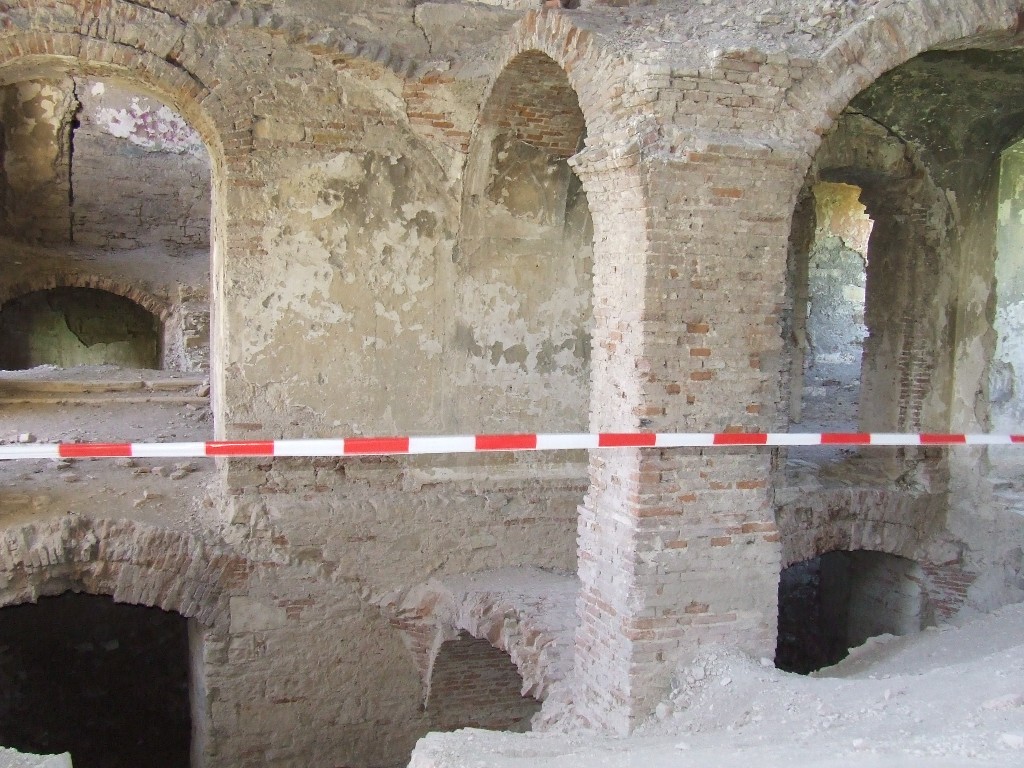
By 1989 the complex was a shell, partly collapsed, with vegetation growing through the walls. Nobody expected it to survive.
The nearby village had been poor throughout, and the castle’s decline brought no benefit to anyone.
The Rescue Begins
In the 1990s the Transylvania Trust, a Romanian-Hungarian heritage foundation, began working at Bontida with partners including the Institute of Historic Building Conservation in the United Kingdom.
The Prince of Wales, now King Charles III, has been a long-standing supporter of Transylvanian heritage and visited the project, which brought international attention and funding.
Ownership was restored to the Banffy heirs and then transferred, through agreements, to arrangements that allow public use and long-term conservation.
A School for Building Crafts
The central idea was clever: rather than hiring contractors, the project became a training school. Students and craftsmen learn traditional carpentry, lime mortar, stone carving, roofing and joinery by practising on the building.
Thousands of people from dozens of countries have worked here. The castle is repaired slowly, by hand, and the skills needed to maintain other historic buildings across the region are reproduced in the process.
It is one of the few conservation projects in Europe where the method matters as much as the result.
Electric Castle
Since 2013 the grounds have hosted Electric Castle, a large music festival that brings tens of thousands of people to the estate each summer, with stages among the ruins and the park.
The festival pays for part of the conservation work and has introduced the castle to a generation of Romanians who would never have visited a baroque ruin otherwise.
Purists objected at first. The argument that won was simple: a building with an income survives, and a building without one does not.
Restoring Without Erasing
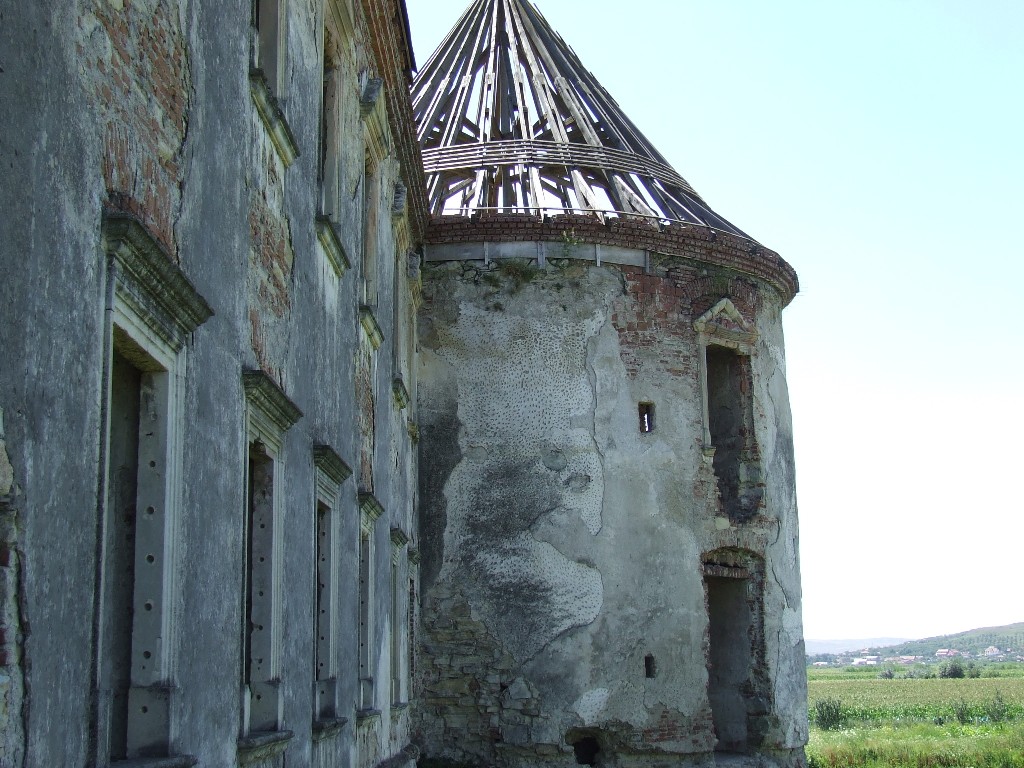
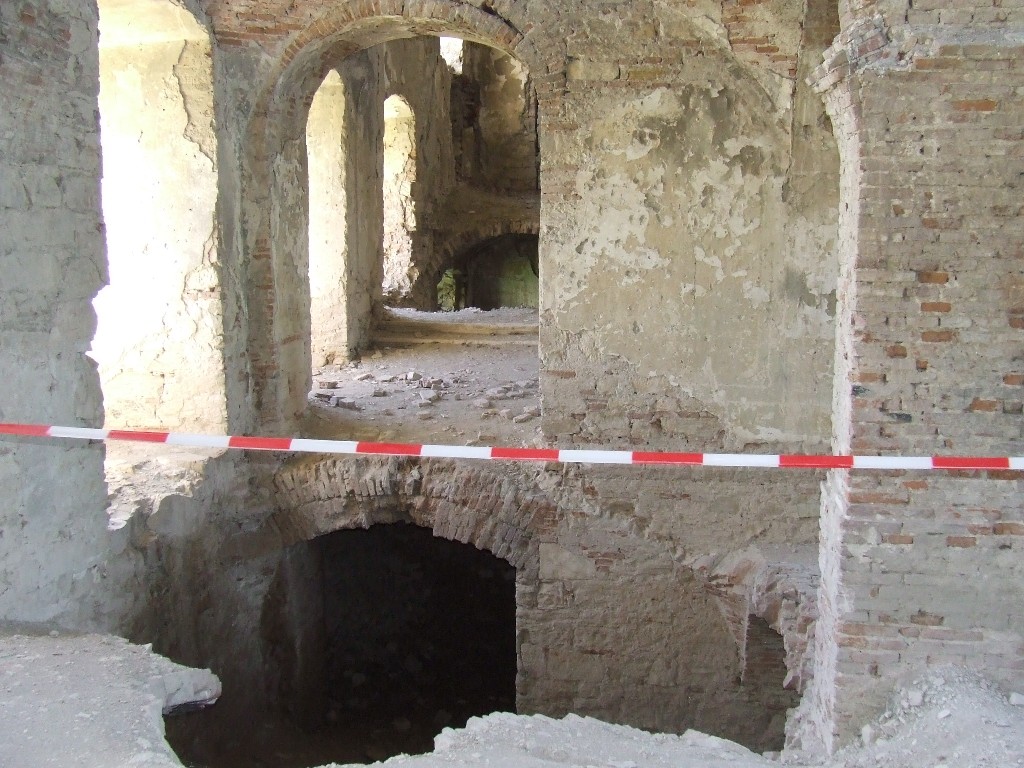
The project does not aim to return the castle to 1900. Some ranges are fully restored and in use; others are stabilised as ruins, with their walls consolidated and their roofs left off.
That choice preserves the evidence of 1944 rather than erasing it. Visitors can see both the building that was and the destruction that happened, which is more honest than a seamless reconstruction.
It also matches the money available. Full restoration would cost many times what has been raised in thirty years.
What to Expect on a Visit
Expect a working site rather than a polished museum. There is an exhibition, restored rooms, information panels, and a great deal of roofless masonry with grass growing in it.
Go in spring or early autumn when the light is good and the festival is not running. Allow a couple of hours, and read a volume of the Transylvanian Trilogy before or after if you want the full effect.
Cluj-Napoca, half an hour away, is one of the most enjoyable cities in Romania and makes the obvious base.
Watch the Castle on Film
Visiting Banffy Castle Today
Banffy Castle stands in the village of Bontida, about thirty kilometres northeast of Cluj-Napoca in Transylvania. Local trains and buses serve the village, and driving takes around forty minutes.
The site opens to visitors with ticketed entry, usually daily in the warmer months and with reduced hours in winter; parts may be closed during works or festival preparation. Check before travelling, especially around Electric Castle in summer.
Allow two hours, wear decent shoes for uneven ground, and base yourself in Cluj. Find it here: https://www.google.com/maps?q=46.9231,23.8103
Palaces Nearby
You May Like
Cotroceni Palace and the Making of Modern Romania