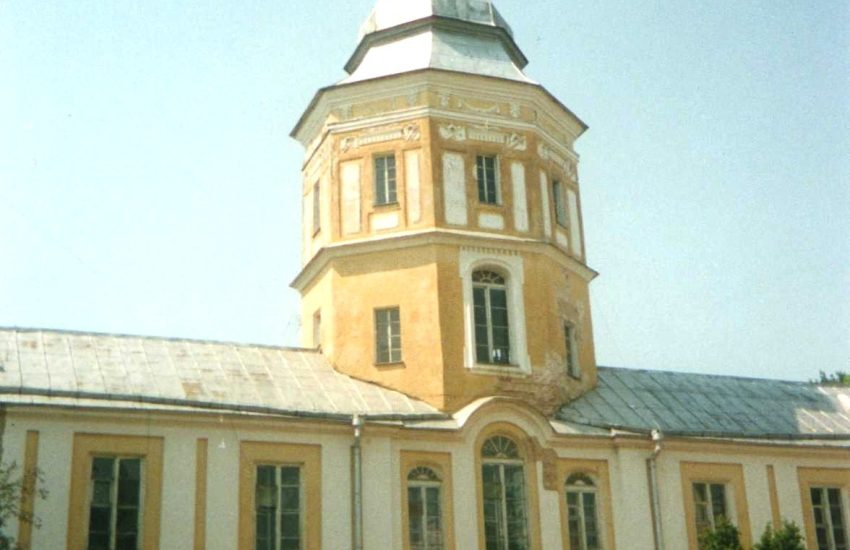
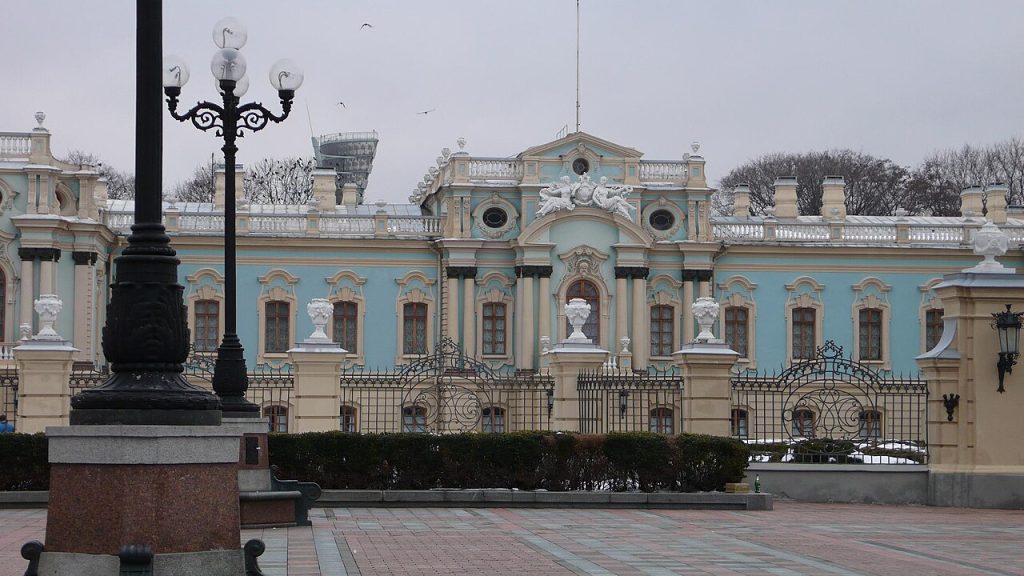
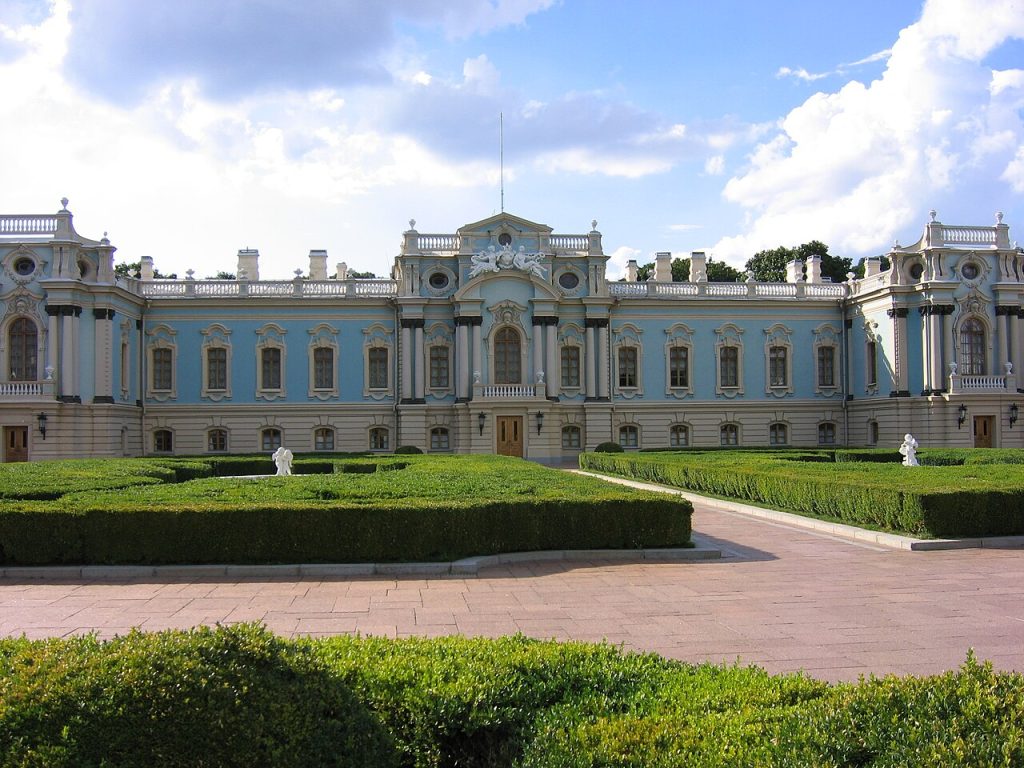
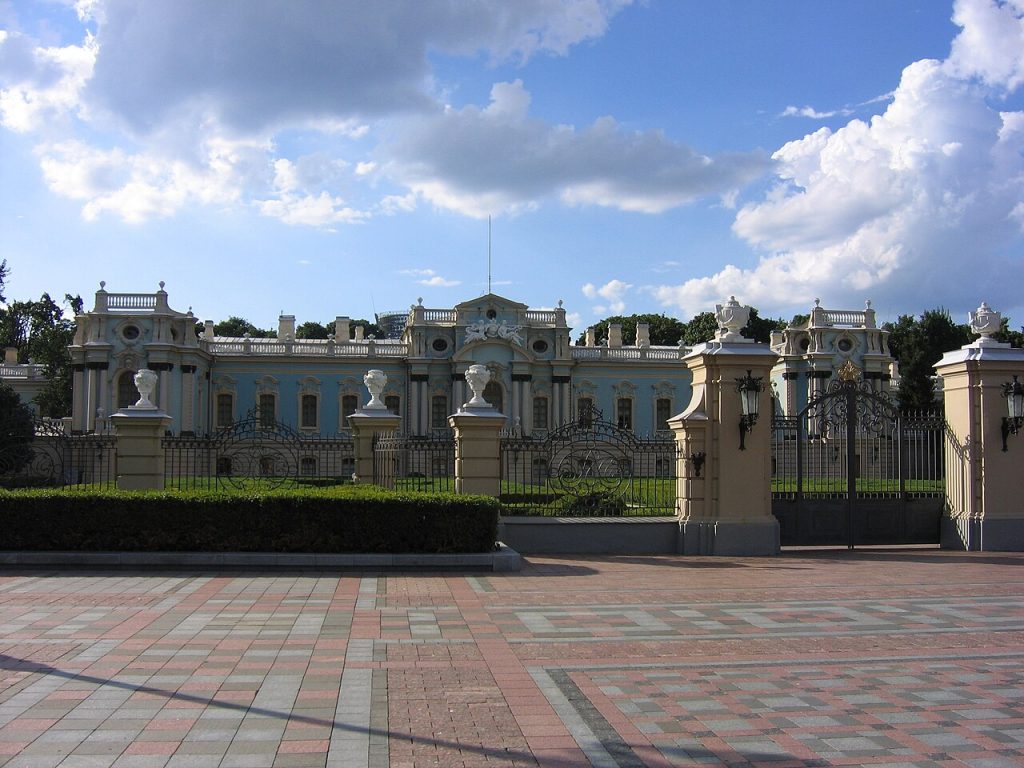
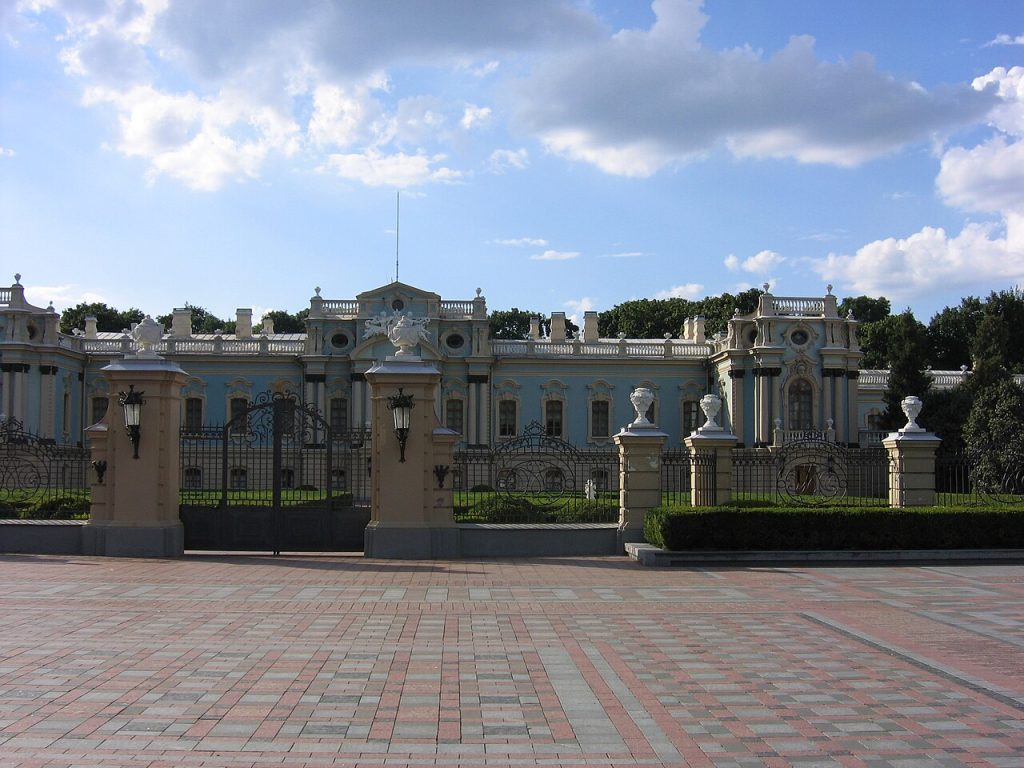
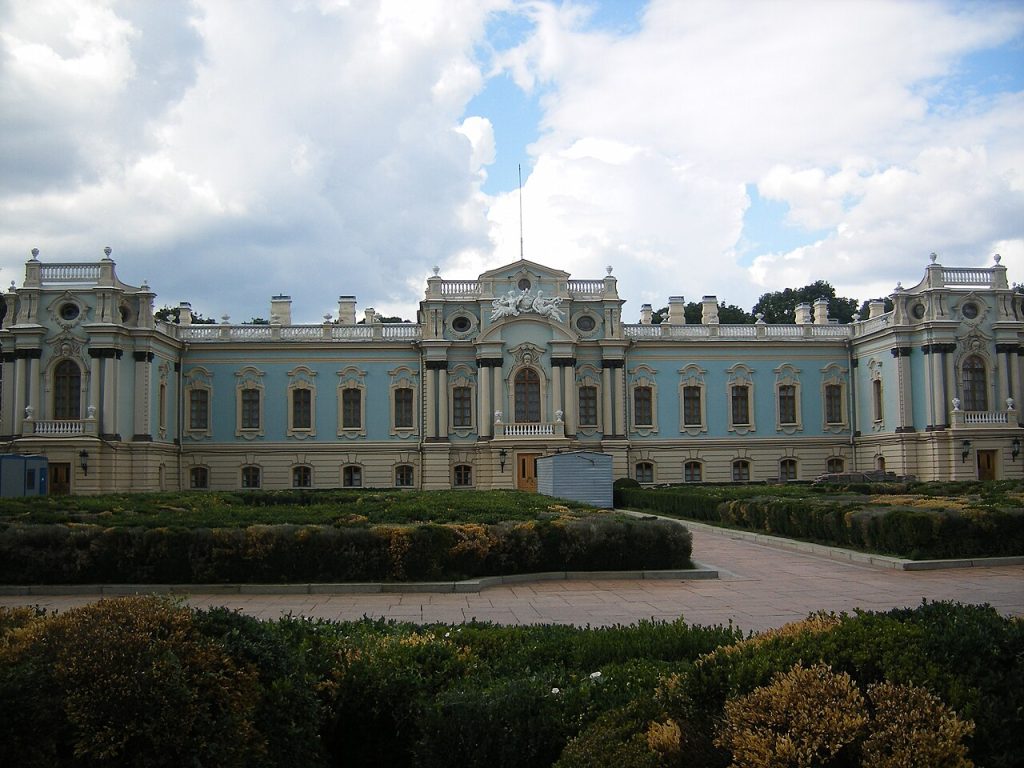
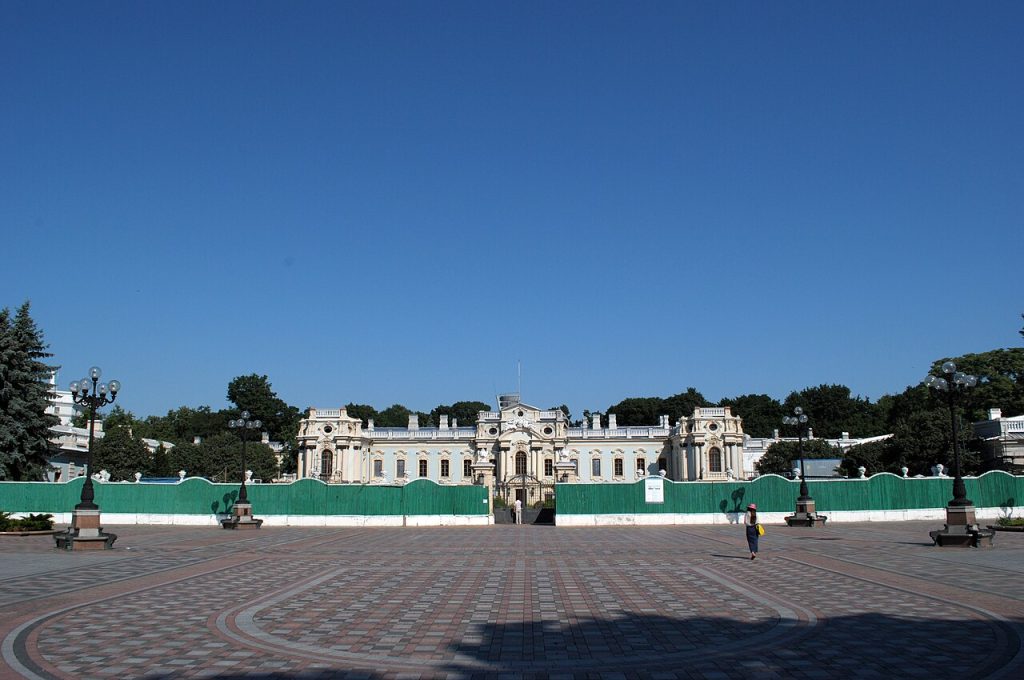
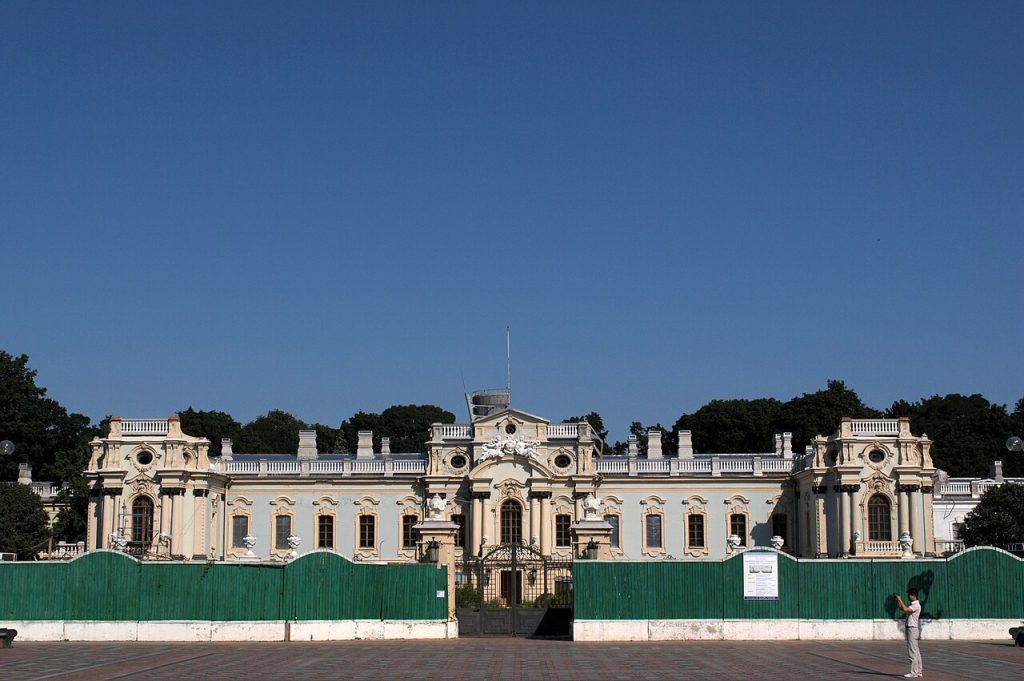
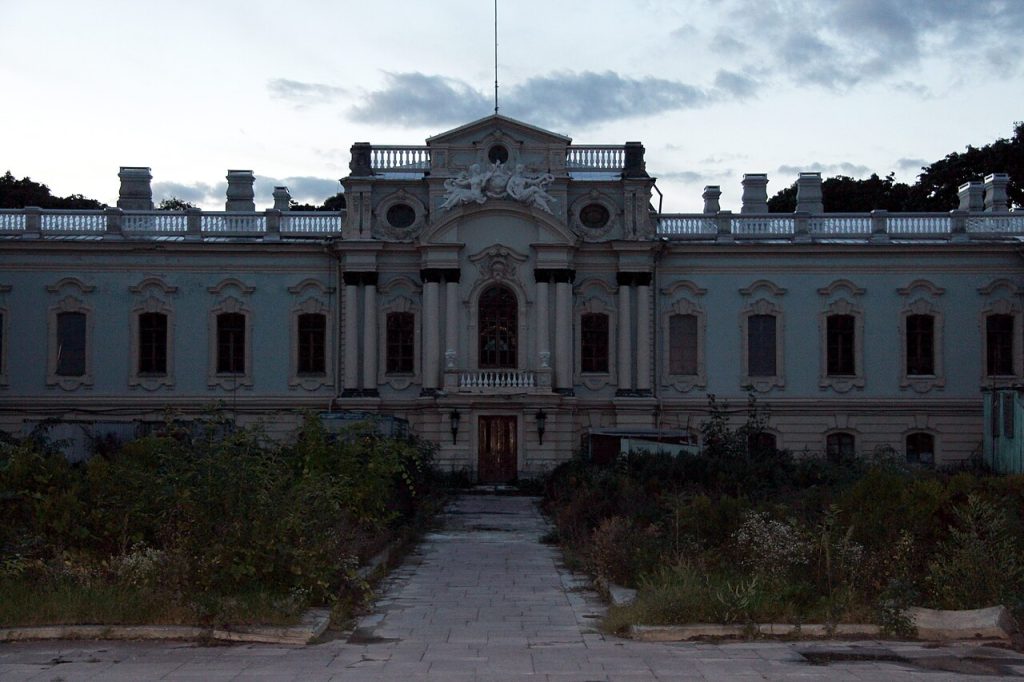
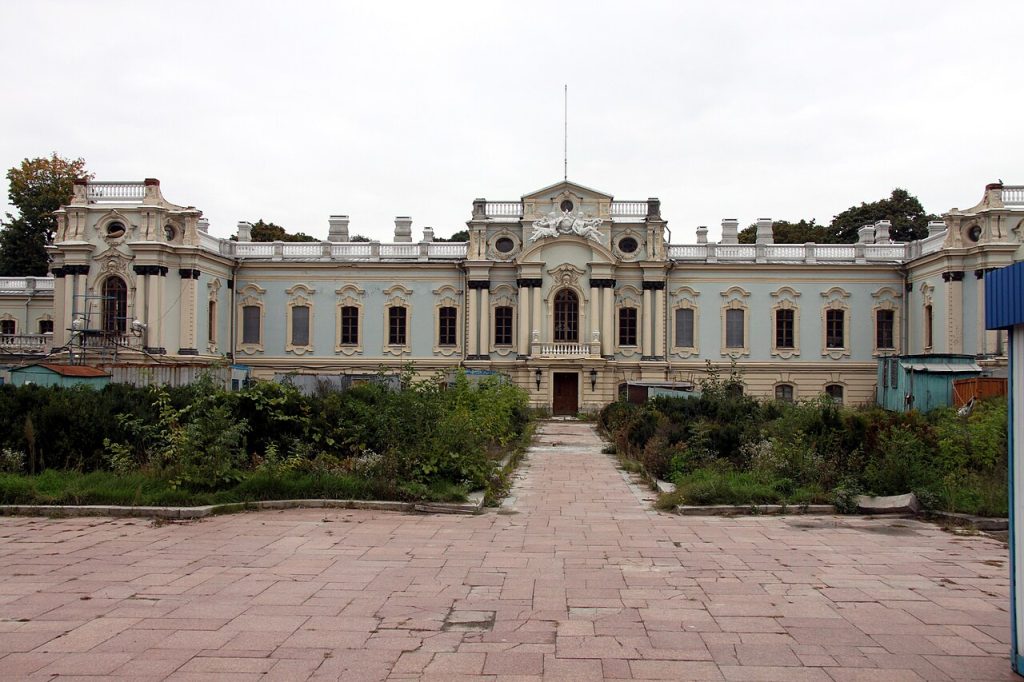
Now, stop on the terrace above the Dnipro and look back at the facade. Turquoise walls, white columns, gold detail, a long low front with a park behind it. Mariinsky Palace is the most cheerful-looking seat of government in Europe, and it has survived a sequence of disasters that would have ended most buildings.
It was designed for an empress who never came, destroyed by fire, rebuilt for an empress who did, used by governors-general, shelled in a revolution, bombed in a world war, restored twice and renovated for a decade.
Today it is the ceremonial residence of the president of Ukraine, where foreign leaders are received and treaties are signed, and it stands on a hill that has been the stage of Kyiv’s political life for three centuries.
- Elizabeth of Russia and an Order from the North
- Rastrelli and the Baroque of the Empire
- The Hill Above the River
- Fire and the Long Ruin
- Maria Alexandrovna and the New Name
- Governors, Guests and Imperial Visits
- Revolution and Civil War
- Soviet Kyiv and the Second World War
- Independence and the Presidency
- The Decade-Long Renovation
- Mariinsky Park and the Rada
- A Palace in Wartime
- Seeing the Palace
Elizabeth of Russia and an Order from the North
The palace was commissioned by Empress Elizabeth of Russia, daughter of Peter the Great, who ordered a residence built in Kyiv in 1744 after visiting the city and admiring it.
Construction ran from 1750 to 1755. Elizabeth never returned to see it finished, which is a recurring pattern in imperial building: the order is given, the money spent, and the sovereign moves on.
The building was intended to assert imperial presence in a city with its own long history, older than Moscow and central to the religious identity of the eastern Slavs.
Rastrelli and the Baroque of the Empire
The design came from Bartolomeo Rastrelli, the Italian-born architect who created the Winter Palace, Catherine Palace at Tsarskoye Selo and Smolny Cathedral, and who defined what imperial Russian baroque looks like.
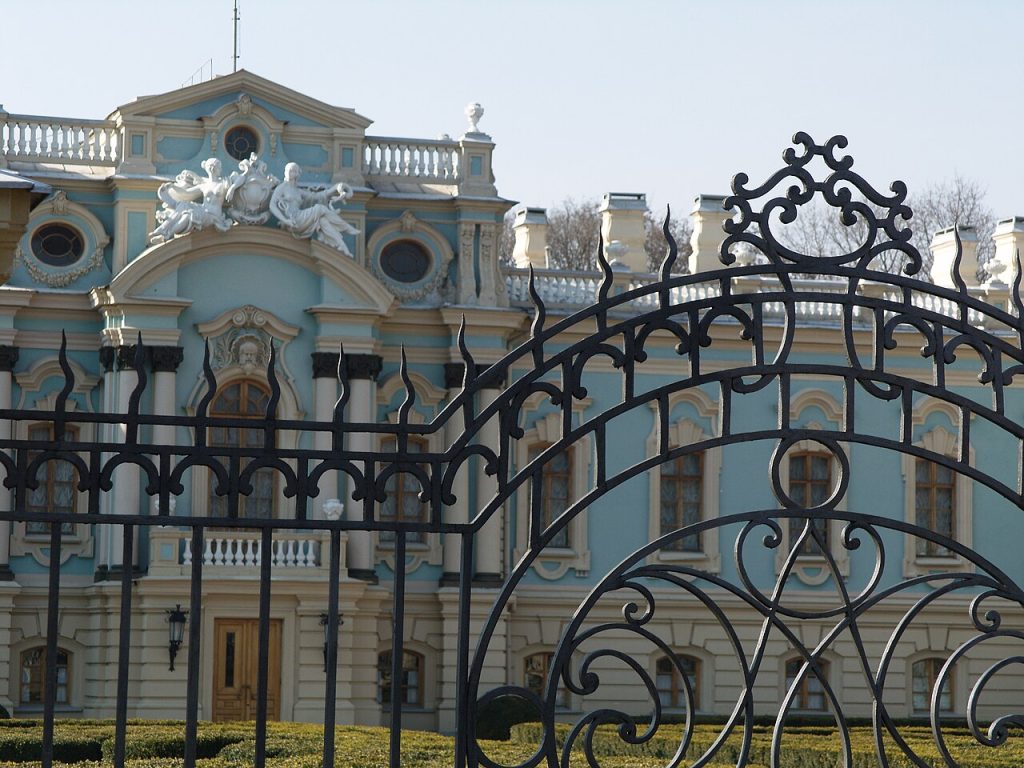
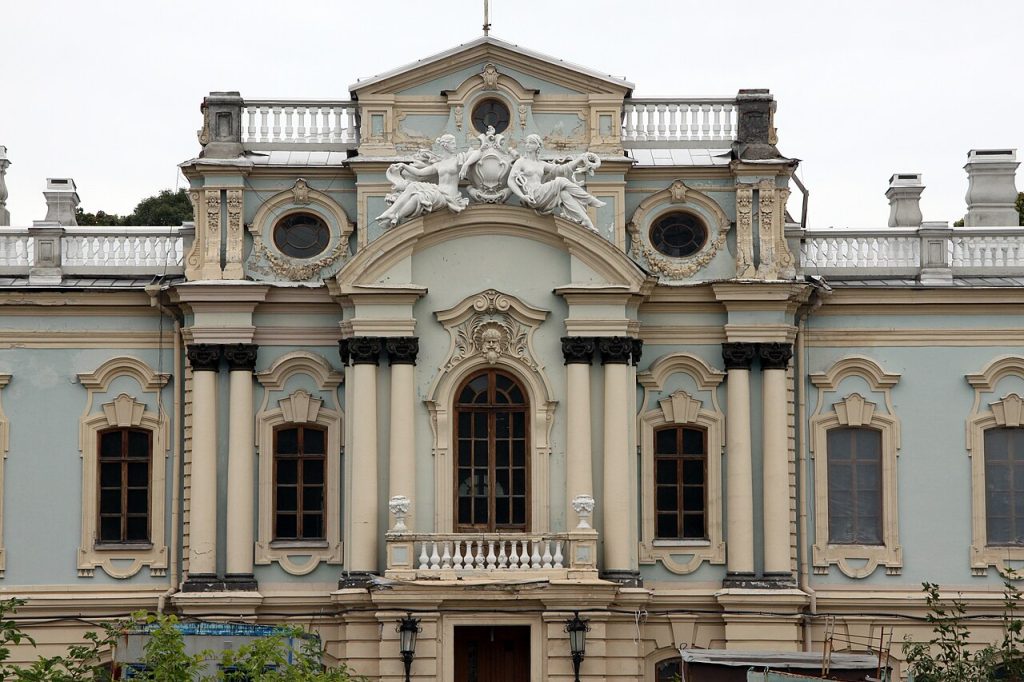
His signature is here: strong colour, white pilasters, gilded detail, a long horizontal emphasis and a theatrical relationship with the landscape. Construction was supervised on site by Ivan Michurin.
Rastrelli also designed St Andrew’s Church in Kyiv, a few kilometres away, which is the other essential stop for anyone interested in his work in Ukraine.
The Hill Above the River
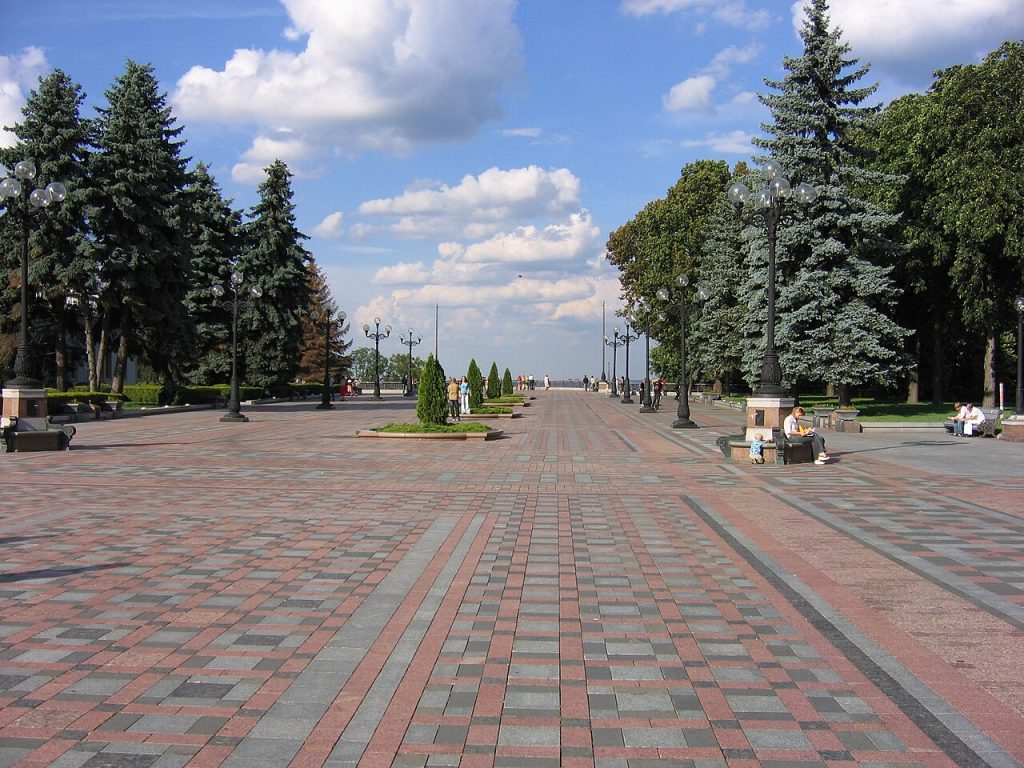
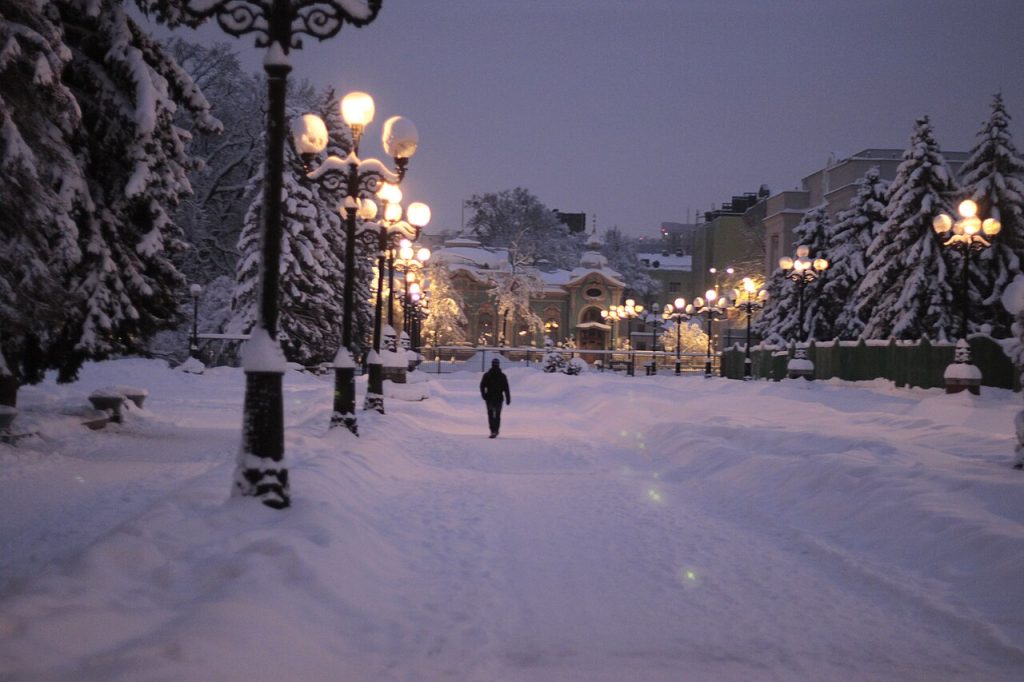
The site is spectacular and was chosen for that reason. The palace sits on the high right bank of the Dnipro, with the river and the vast flat left bank spread out below, and the park falling away toward the water.
Kyiv’s topography is unusual: a dense green city of hills and ravines on one bank, endless plain on the other. Every major building in old Kyiv uses the slope for effect.
Walk to the terrace at the back. The view explains the siting in a way no photograph manages.
Fire and the Long Ruin
In 1819 fire destroyed the upper floor and much of the interior, and the palace was left damaged for decades. Imperial attention had moved elsewhere, and Kyiv was a provincial city in a very large empire.
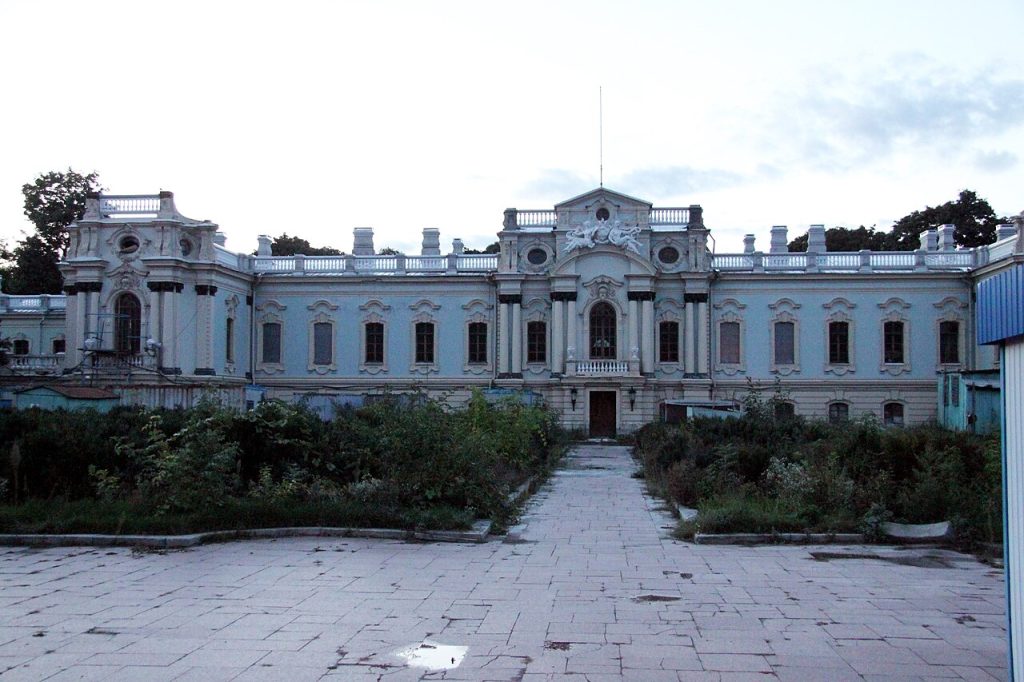
For most of the first half of the nineteenth century the building stood partly ruined, used irregularly, its park neglected. Nothing is more vulnerable than a palace nobody needs.
What saved it was a change in imperial policy that made Kyiv administratively important again, and a visit by a sympathetic empress.
Maria Alexandrovna and the New Name
In the 1860s and 1870s the palace was rebuilt for Empress Maria Alexandrovna, wife of Alexander II, under the architect Konstantin Mayevsky, reproducing Rastrelli’s design with a new upper storey and modern interiors.
The palace was renamed Mariinsky in her honour, and the park below was laid out at the same period. The present building therefore looks eighteenth century and is substantially nineteenth century, which is true of a surprising number of baroque palaces.
Maria Alexandrovna, incidentally, is the empress after whom Marie biscuits are reputedly named, which is the kind of fact that sticks in the memory better than reign dates.
Governors, Guests and Imperial Visits
From then until 1917 the palace served as the residence of the governor-general of Kyiv and as the place where the imperial family stayed when visiting. State dinners, receptions and official ceremonies filled its calendar.
Kyiv in this period was growing fast: sugar money, railways, a university, a thriving merchant class and some of the finest art nouveau architecture in eastern Europe going up in the streets nearby.
The palace sat at the head of that society, with the governor-general representing an empire that was increasingly nervous about Ukrainian national feeling.
Revolution and Civil War
Between 1917 and 1921 Kyiv changed hands more than a dozen times. The Central Rada, the Hetmanate, the Directorate, the Bolsheviks, the Whites, the Poles: governments followed one another through the city, and several used this hill.
The palace was damaged by shelling and used variously as a headquarters, a barracks and an administrative building. Its contents largely disappeared in these years.
Ukraine’s brief independence ended with incorporation into the Soviet Union, and Kharkiv became the capital of Soviet Ukraine until 1934, when the capital returned to Kyiv.
Soviet Kyiv and the Second World War
With the capital restored to Kyiv, a government quarter was built around the palace, including the parliament building, the Verkhovna Rada, completed in 1939 directly opposite.
The Second World War devastated the city. Kyiv was occupied from 1941 to 1943, the centre was destroyed by mines and fire, Babyn Yar became the site of one of the largest single massacres of the Holocaust, and the palace was badly damaged by bombing.
Restoration in the 1940s and 1950s brought it back, and it resumed a ceremonial role in Soviet Ukraine.
Independence and the Presidency
Ukraine declared independence in 1991, and Mariinsky Palace became the ceremonial residence of the president. It is not where the president works day to day, but it is where foreign heads of state are received, credentials accepted and agreements signed.
It has also been the backdrop to Ukraine’s political turbulence: the Orange Revolution of 2004 and the Maidan protests of 2013 and 2014 both played out in the streets and squares around this hill.
Few buildings have witnessed so much modern political change from such a short distance.
The Decade-Long Renovation
By the early 2000s the building was in poor condition. A comprehensive restoration began in 2007 and ran until 2018, dealing with structure, foundations, services and the complete redecoration of the interiors.
The work restored the nineteenth-century schemes: parquet floors, stucco, the white and gold of the ceremonial halls, chandeliers, and the colour of the exterior, which was returned to its historic turquoise.
The palace reopened in 2018 and immediately resumed its ceremonial function. Photographs of that reopening show a building in better condition than at any time in a century.
Mariinsky Park and the Rada
Behind the palace lies Mariinsky Park, laid out in the 1870s on the slope above the river, with mature trees, paths and viewpoints. It is a working city park, used by families and by office workers from the government quarter.
Opposite stands the Verkhovna Rada, Ukraine’s parliament, a severe 1930s building with a glass dome, and around them cluster ministries, the cabinet building and the diplomatic quarter.
The whole hill is the administrative centre of the country, and it is unusually green for a government district.
A Palace in Wartime
Since February 2022 Ukraine has been at war, and Kyiv has been under missile and drone attack. The government quarter has operated under conditions no European capital has faced since 1945.
The palace has continued to host visiting leaders, with photographs of those visits appearing worldwide. A ceremonial building takes on a different weight when the ceremonies themselves are acts of political solidarity.
Any practical advice about visiting has to begin with that reality, and travel to Ukraine carries risks that change from month to month.
Seeing the Palace
In peacetime the palace opened for occasional public tours, and the park and exterior were always accessible. The combination of Rastrelli’s facade, the park, the parliament opposite and the river below makes this one of Kyiv’s essential places.
Kyiv itself deserves far more attention than it usually gets from visitors to Europe: Saint Sophia’s Cathedral with its eleventh-century mosaics, the Lavra caves, the art nouveau streets, the museums.
Stand once at the edge of the park and look east across the Dnipro. That view has been the measure of Kyiv’s history for a thousand years, and the turquoise palace behind you is a recent arrival on it.
Watch the Palace on Film
Visiting Mariinsky Palace Today
Mariinsky Palace stands on Hrushevskoho Street in the government quarter of Kyiv, a short walk from Arsenalna metro station and from the Dnipro embankment, with Mariinsky Park directly behind it.
The palace is a working state building. Public access has always been limited to occasional tours and open days, and current conditions in Ukraine make visits dependent on the security situation. Check official guidance before any travel.
The park and the exterior view are the realistic goal for visitors, best combined with the Verkhovna Rada building, the Lavra and the river embankment. Find it here: https://www.google.com/maps?q=50.4487,30.5376
Palaces Nearby
You May Like
Mir Castle and the Fortress of Four Styles