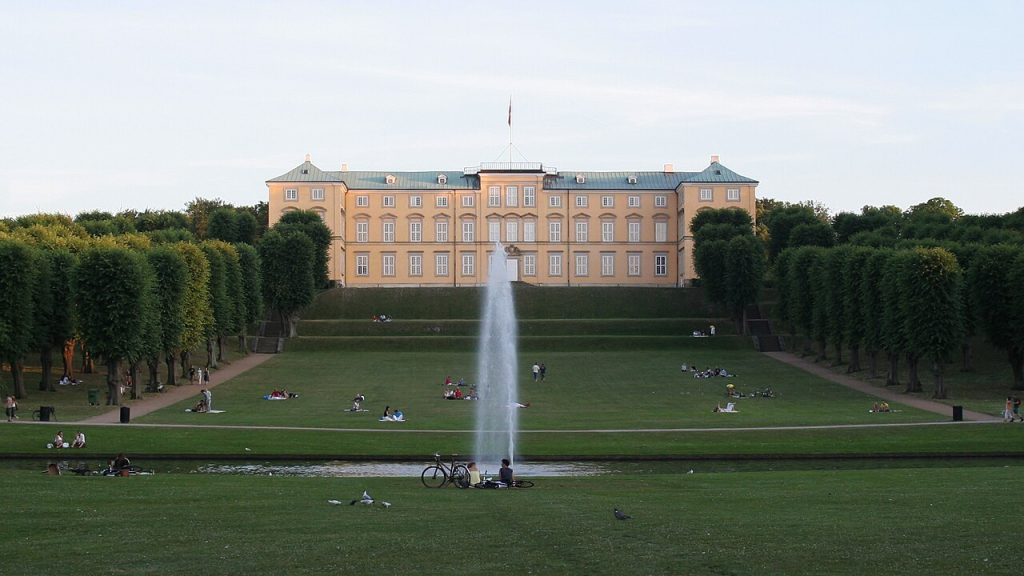
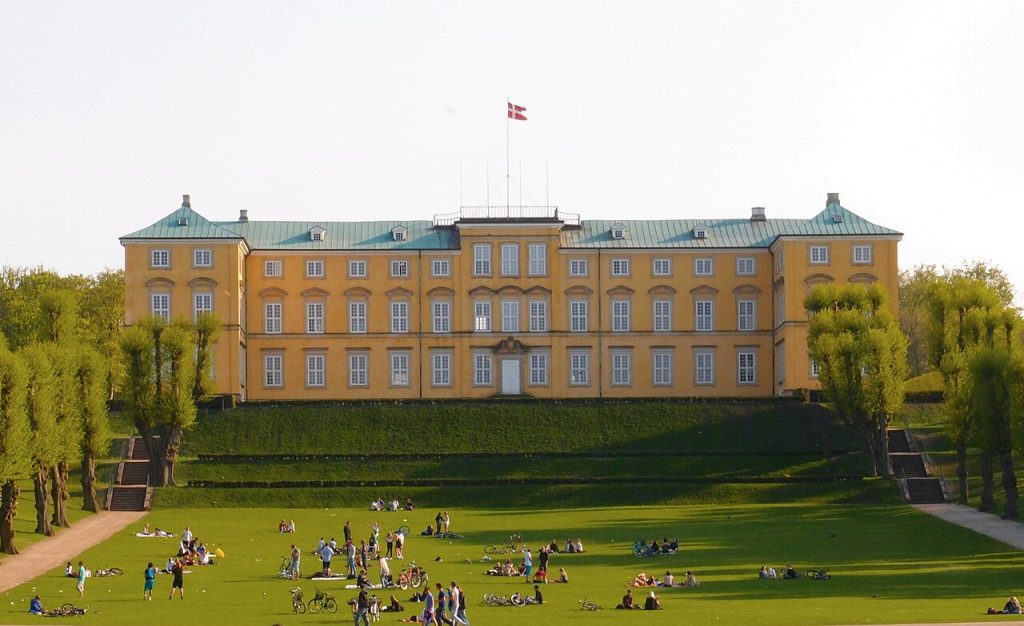
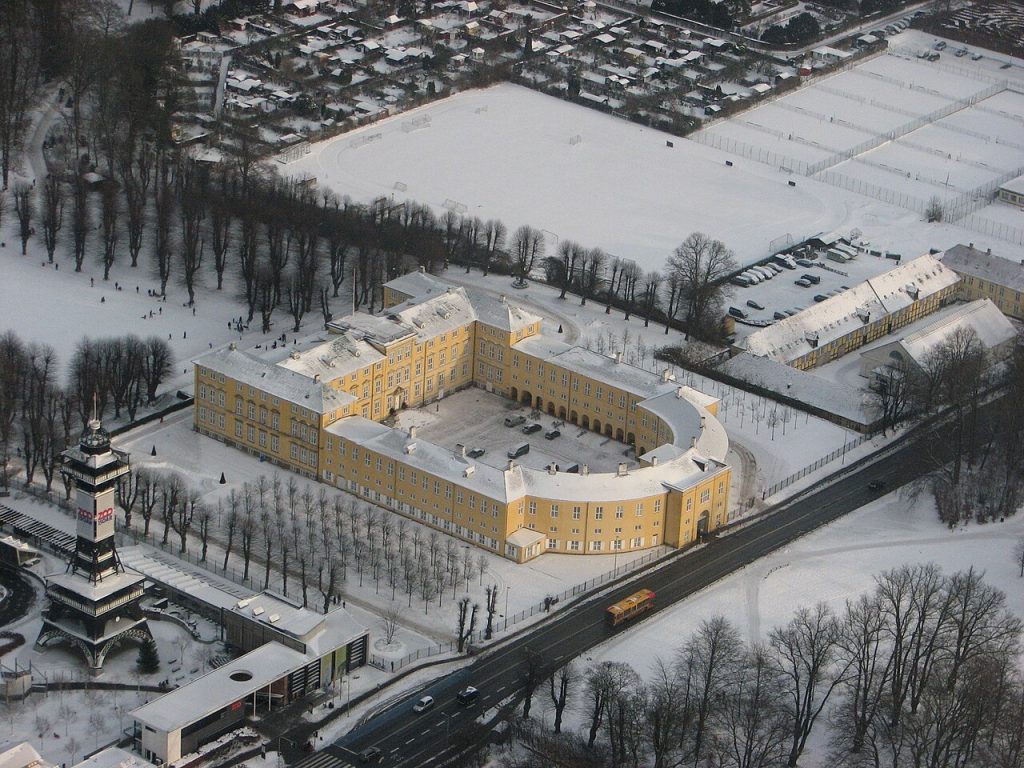
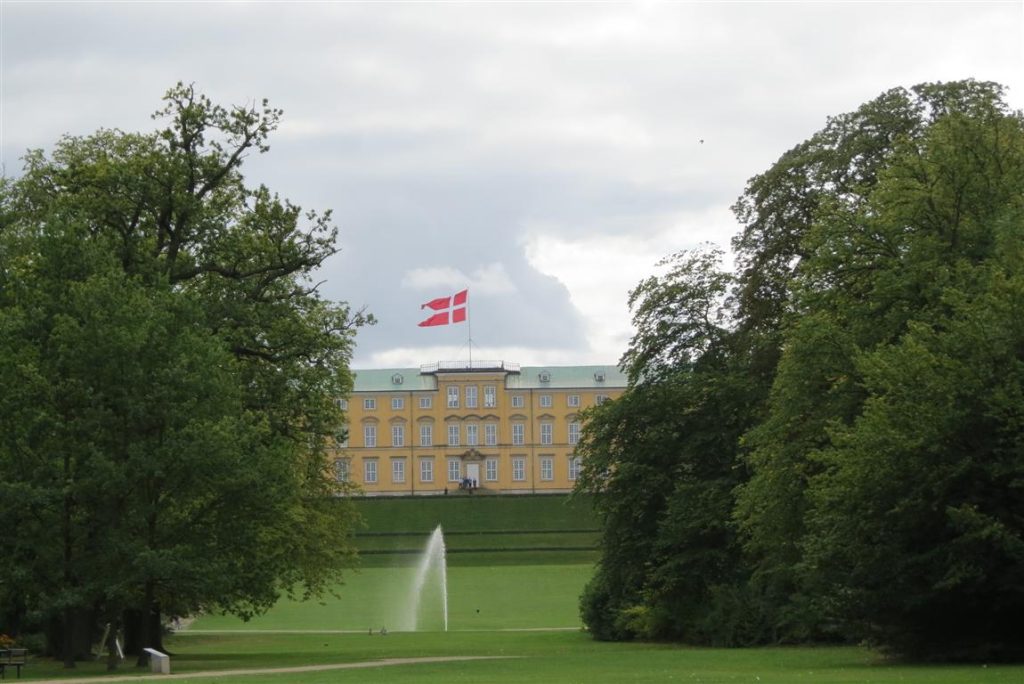
Now, stop at the bottom of the hill and look up. A yellow palace sits on the only real elevation in this part of Copenhagen, and below it a park spreads out with canals, lawns, willows and, on any decent afternoon, a large proportion of the city’s population.
That combination is the story. Frederiksberg was built as a royal summer palace with an Italian garden, and it ended as the most-loved public park in Denmark with a military academy inside the palace walls.
Very few royal buildings have been absorbed into their cities so completely. Copenhageners do not visit Frederiksberg Have. They use it, daily, the way other cities use a high street.
- Frederik IV and the Italian Journey
- Building on the Hill
- Why It Looks Italian
- The Canals and the Royal Boats
- From Baroque Garden to Romantic Park
- The Chinese Pavilion and the Summer Theatre
- The Kings Who Lived Here
- The Elephants Next Door
- The Palace Becomes an Academy
- The Park as Public Space
- Seasons in Frederiksberg Have
- The Town That Stayed Separate
- Seeing the Palace Itself
Frederik IV and the Italian Journey
Frederik IV travelled to Italy twice, in 1692 and 1708, and came back with ideas. Venice, Rome and the villas of the Veneto made an impression on a northern king who ruled a cold, flat, maritime country.
Frederiksberg is one result. Fredensborg, which we looked at earlier in this series, is another. Both buildings show a Danish king trying to import a Mediterranean idea of pleasure architecture into Zealand.
It works better than it should. Yellow render, red tiles and a hill do a surprising amount of Italian work under a Danish sky.
Building on the Hill
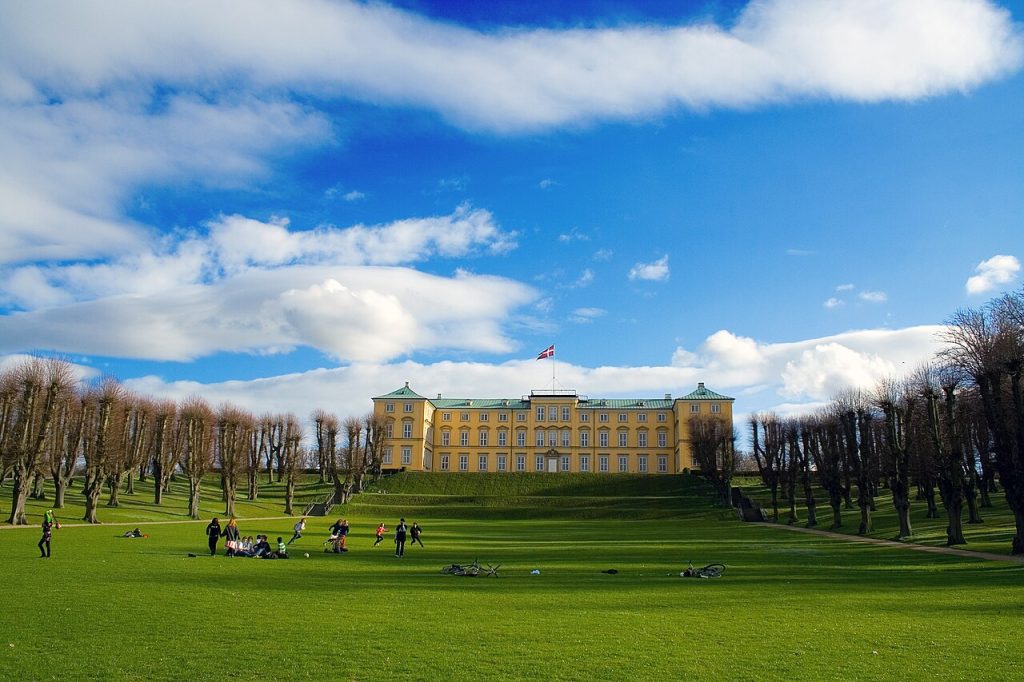
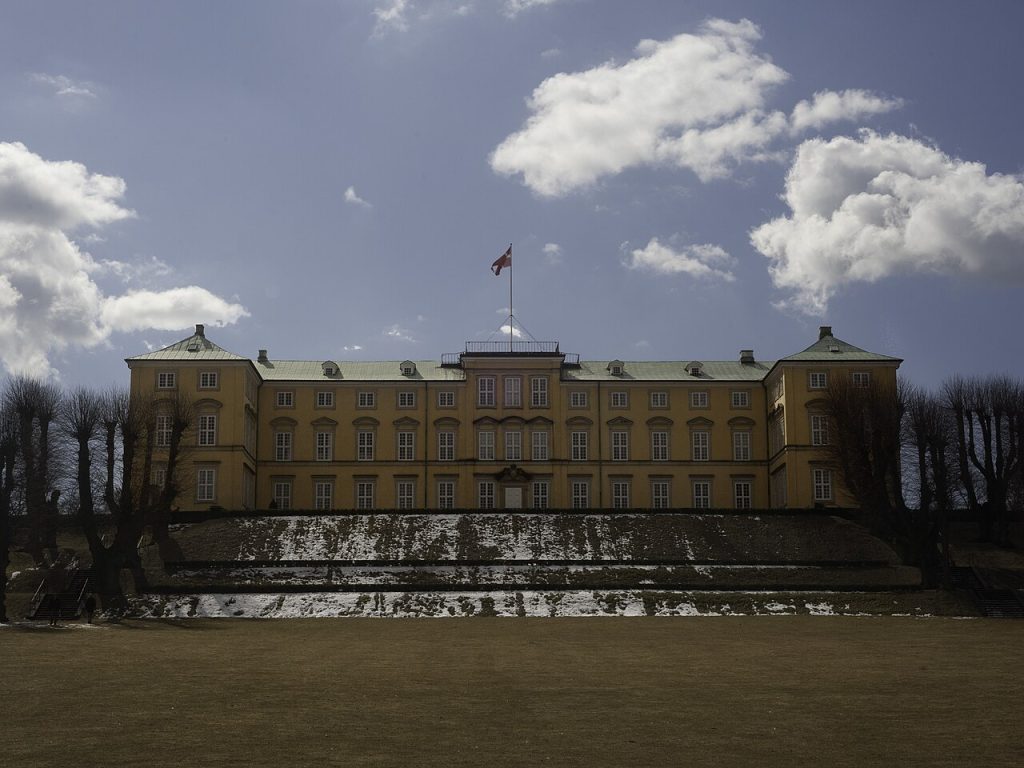
The first house was built in 1699 to 1703 on Valby Hill, then outside Copenhagen, and it was extended repeatedly over the following decades until it reached its present H-shaped plan with wings and a central block.
Several architects were involved, including Ernst Brandenburger and later Lauritz de Thurah, and the building grew piecemeal, which explains some of its irregularities.
The hill mattered because Denmark is flat. Any elevation is a resource, and putting a palace on one gives you a view over the city, the sound and the countryside at once.
Why It Looks Italian
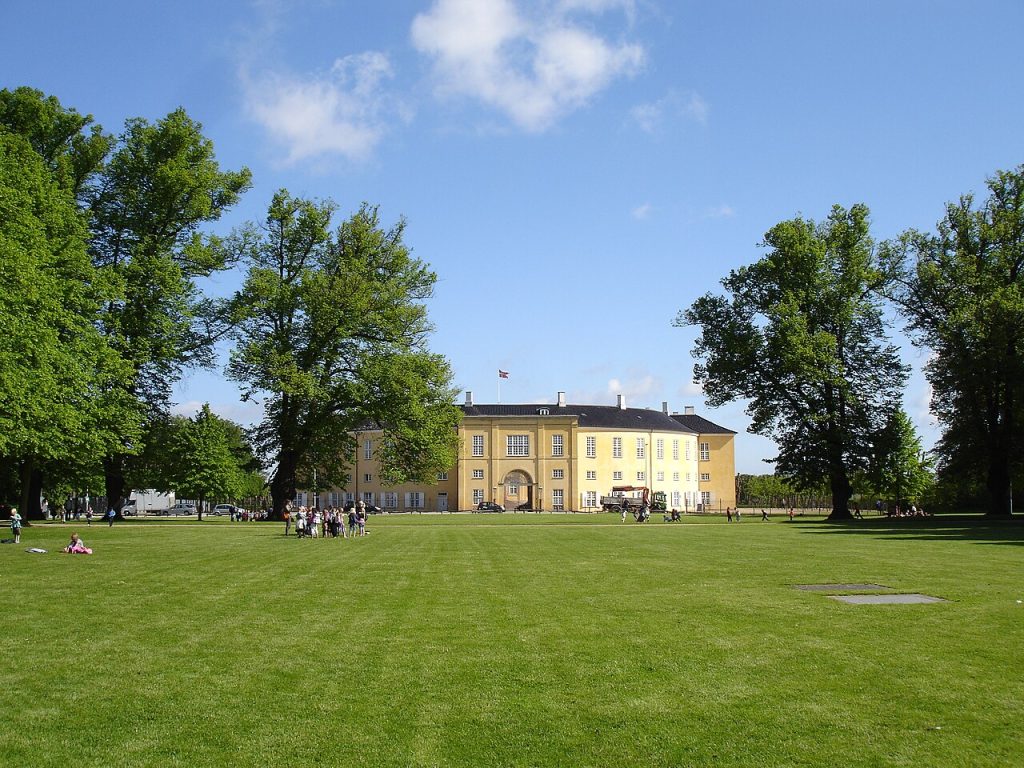
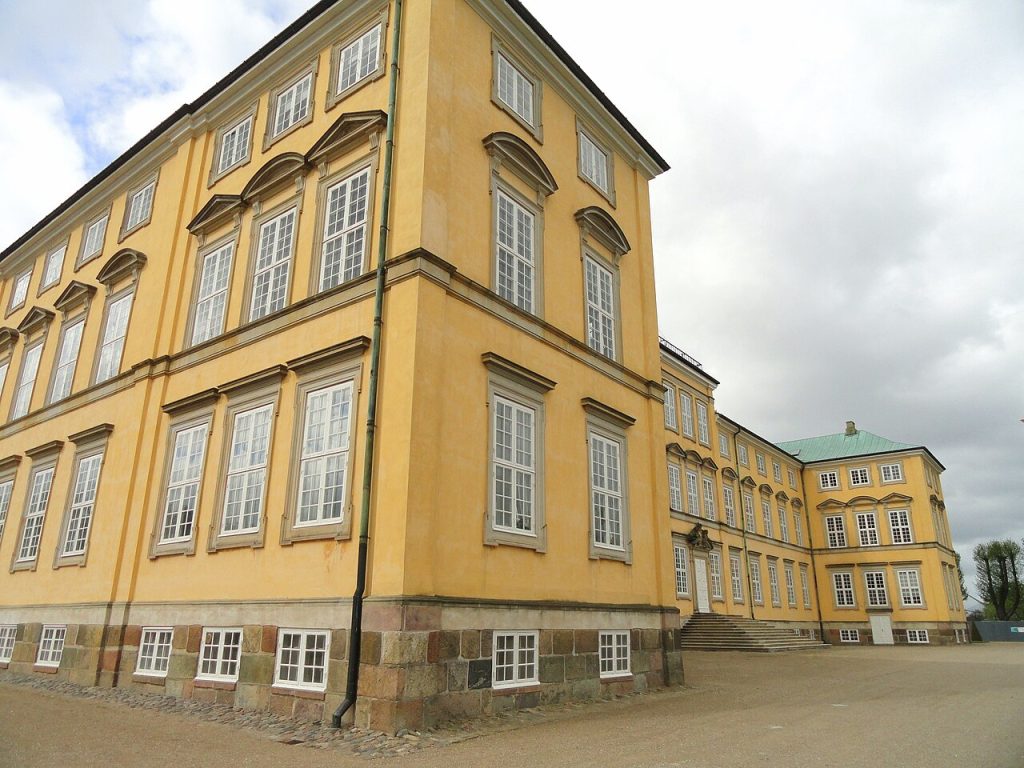
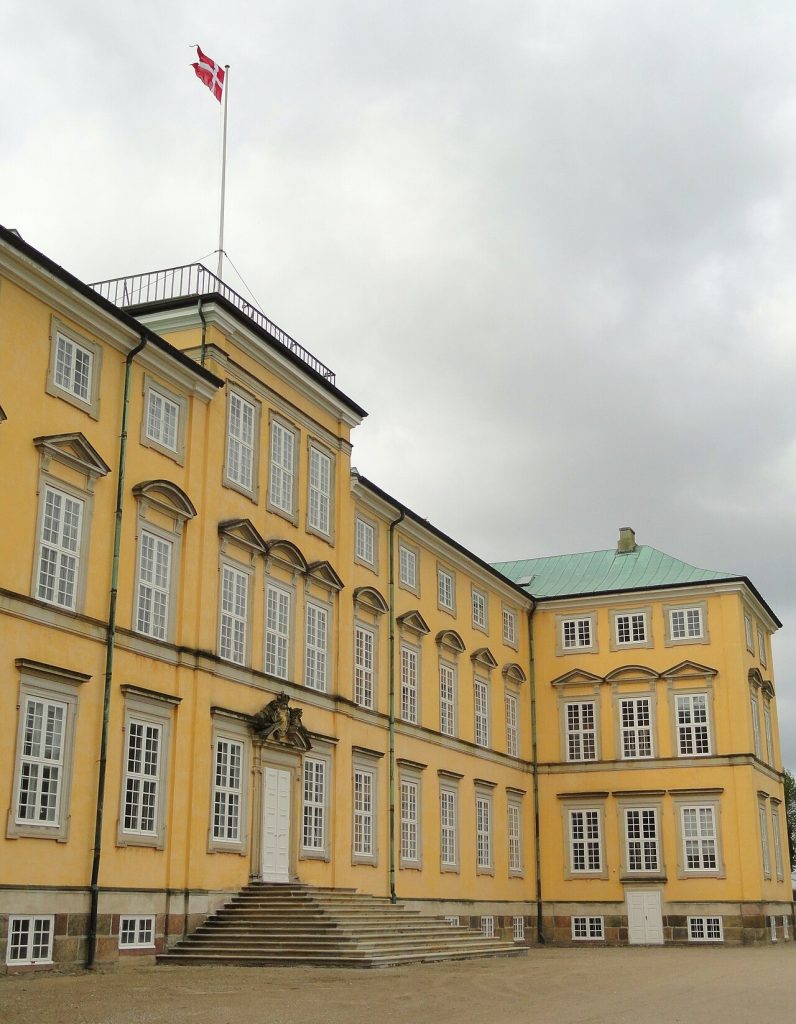
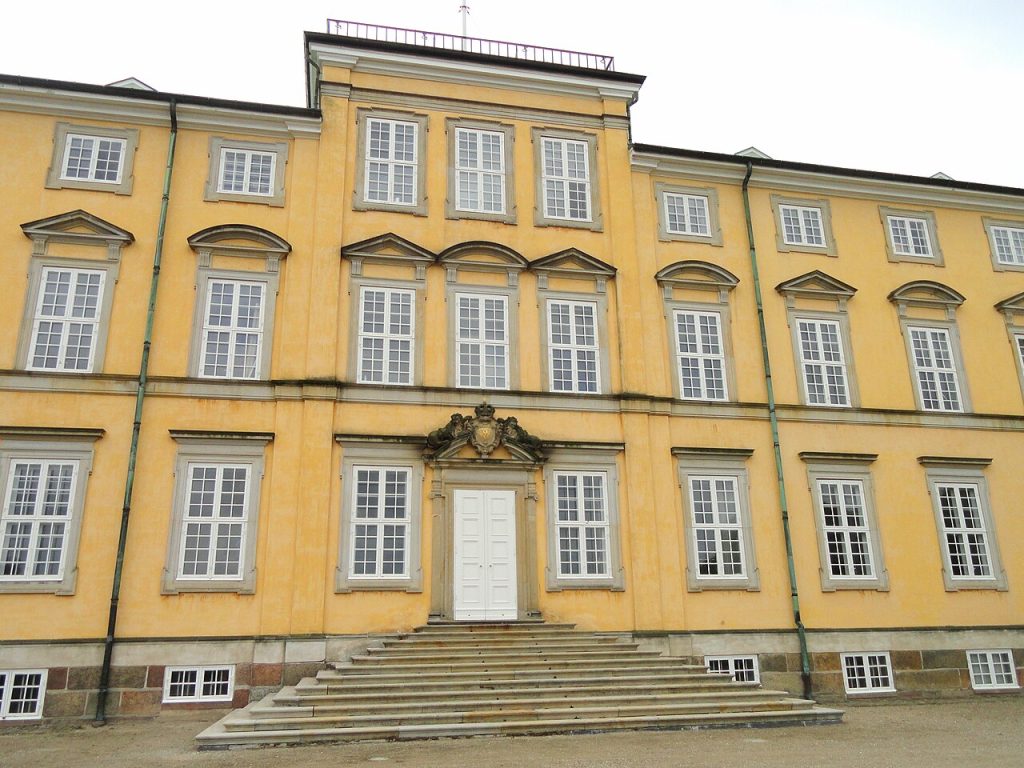
The design borrows the baroque villa vocabulary of the Veneto: a long low mass, a central emphasis, arcaded elements, rendered walls in warm colour, and a relationship to the garden in which the building sits above and looks down.
Danish practicality intervenes in the details. Roofs are steeper than in Italy, windows larger to catch northern light, and the materials are local.
The result is a hybrid that reads as cheerful rather than imitative, and it set a fashion. Yellow render became a Copenhagen signature and you can see its descendants across the city.
The Canals and the Royal Boats
The garden was laid out with a system of canals and small lakes, and the royal family used them. Court parties travelled by boat through the park, between islands, under bridges, in a miniature version of a Venetian excursion.
The boats were elaborate, the routes planned, and the whole performance was a pleasure of the kind that a formal court could organise and ordinary people could watch from the edges.
The canals survive. Today you can take a boat trip through them in summer, which is one of the more charming small experiences in Copenhagen.
From Baroque Garden to Romantic Park
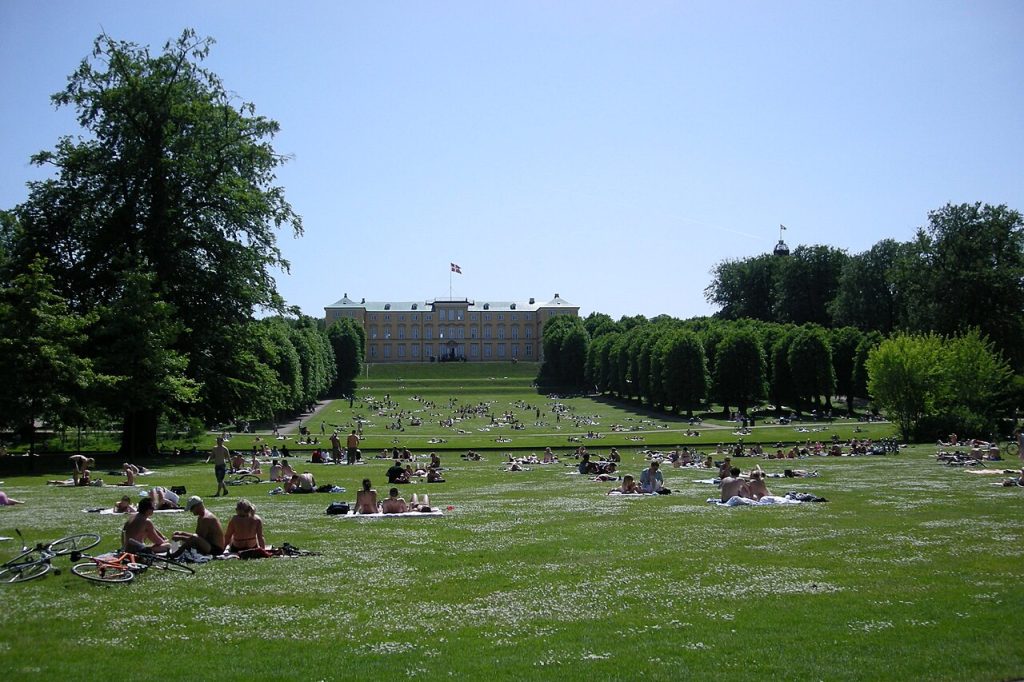
The original garden was baroque: straight lines, parterres, clipped hedges, symmetry. Between 1798 and 1804 it was reworked into an English landscape garden, with winding paths, irregular planting and carefully composed views.
That conversion is the single most important event in the park’s history, because an English garden can absorb public use in a way a baroque parterre cannot. Lawns tolerate picnics. Parterres do not.
By the nineteenth century the park was effectively a public amenity, and the city grew around it rather than over it.
The Chinese Pavilion and the Summer Theatre
Among the park’s buildings is the Chinese Pavilion, built in 1799 on an island in the canal system, part of the European fashion for chinoiserie that produced pagodas and tea houses in gardens from Kew to Potsdam.
Nearby stood an open-air theatre, and the park has a long tradition of summer performance that continues today in various forms.
Look also for the Swiss House and the other small structures scattered through the grounds. Landscape gardens needed incidents, and these are them.
The Kings Who Lived Here
Frederiksberg served as the royal summer residence through much of the eighteenth century and into the nineteenth. Frederik VI in particular made it his favourite, spending summers here and sailing the canals with his family.
The court’s presence drew the aristocracy, who built villas nearby, and the surrounding district developed as a fashionable summer suburb. Several of those villas survive among the apartment blocks.
After Frederik VI died in 1839, royal use declined and the palace entered a long search for a purpose.
The Elephants Next Door
Copenhagen Zoo was founded in 1859 on land adjoining the gardens, and it remains there. From certain paths in Frederiksberg Have you can look across and see elephants, which is a genuinely strange and delightful feature of a city park.
The elephant house, designed by Norman Foster and opened in 2008, is one of the better pieces of modern architecture in Copenhagen, with glass domes that let the animals live under natural light.
Children are usually unimpressed by the baroque palace and extremely impressed by the elephants. This is fair.
The Palace Becomes an Academy
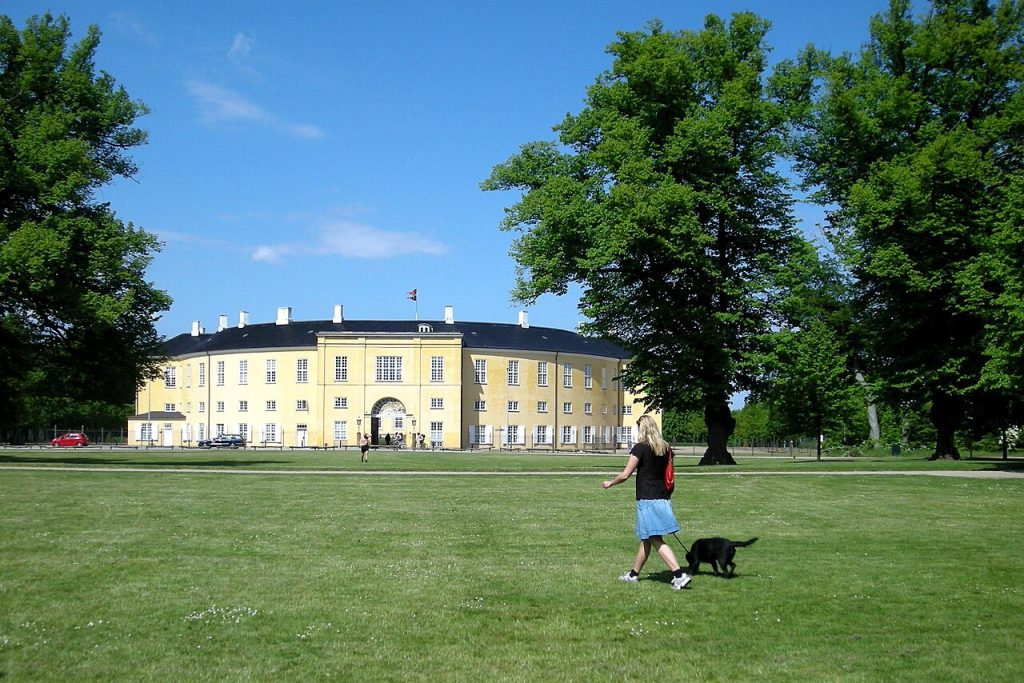
In 1869 the palace was handed to the army, and it became the Royal Danish Military Academy, training officers. It has remained in military use ever since, which is why it is not a museum.
That change saved the building. An unused palace decays; a palace full of cadets gets heated, repaired and maintained because an institution needs it to work.
It also means the interiors are generally closed. Guided tours run occasionally, usually in summer and in Danish, and they are worth catching if your timing is lucky.
The Park as Public Space
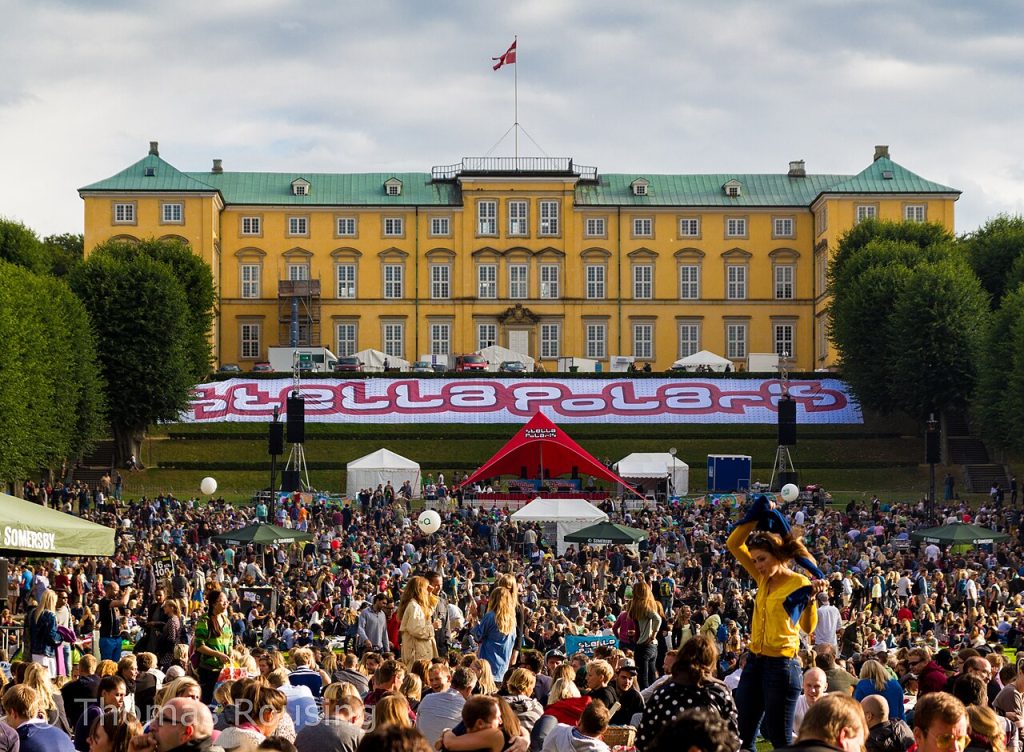
Frederiksberg Have and the adjoining Sondermarken form a large green area in the middle of a dense city, and they are used relentlessly: runners, prams, students, chess players, people eating lunch, people doing nothing at all.
The herons are famous. Grey herons nest in the park and stand around the canals with the confidence of residents who know nobody will bother them.
In Sondermarken, across the road, the Cisternerne exhibition space occupies former underground water reservoirs and hosts contemporary art in dripping darkness. It is an excellent contrast to the sunlit lawns above.
Seasons in Frederiksberg Have
Spring brings blossom and the first warm afternoons, and the park fills instantly, because Danes treat the first sun of the year as a civic obligation. Summer brings long evenings and boat trips on the canals.
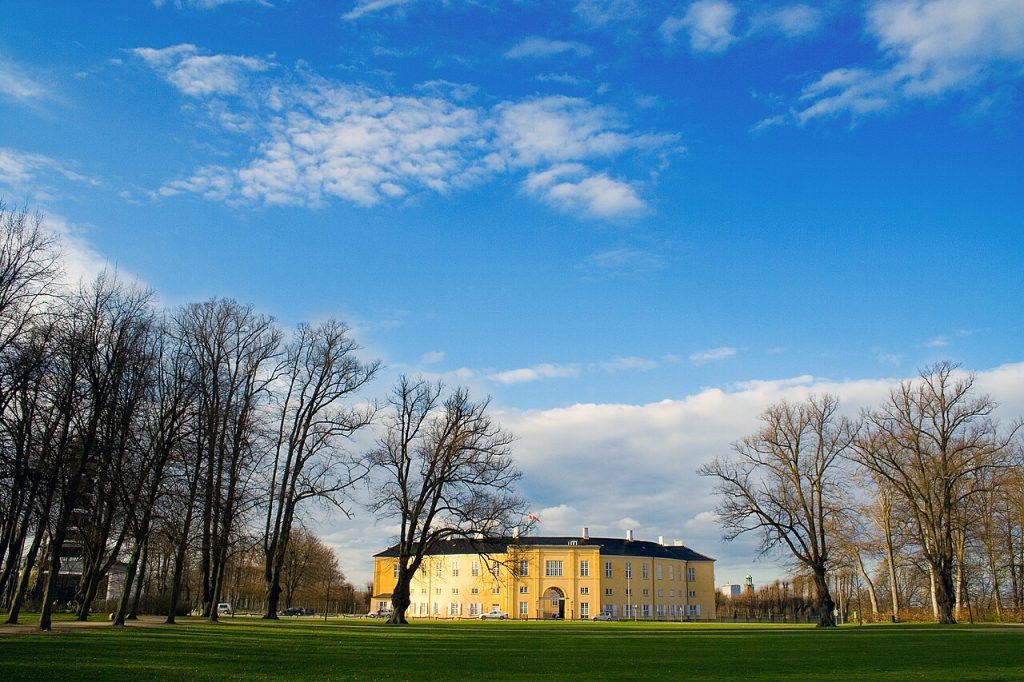
Autumn is the connoisseur’s season: the landscape garden was designed for exactly this, with planting that colours in waves. Winter is quiet, often beautiful, and occasionally the canals freeze.
Any season works. The park is five minutes from a metro station and open at all hours.
The Town That Stayed Separate
Frederiksberg is not part of Copenhagen municipality. It is an independent municipality entirely surrounded by the capital, with its own town hall, administration and identity, and it has resisted amalgamation for well over a century.
The result is a district with slightly different architecture, slightly wider streets and a distinctly bourgeois character, all of it organised around this palace hill.
Walk up Frederiksberg Alle, the tree-lined avenue that runs from the city toward the palace gates. It was laid out as the royal approach road and it still functions as the district’s spine.
Seeing the Palace Itself
Be realistic: this is a working military academy, and most visitors will see the outside only. The reward is the setting, the terrace view over the park and the city, and the walk up the hill.
If a tour is available, take it. The interiors include fine eighteenth-century rooms, a chapel and the staircases of a proper baroque palace.
Otherwise, climb to the terrace, look out over the canals and the willows and the zoo beyond, and consider that a Danish king built all this because he once saw a villa in Italy.
Watch the Palace on Film
Visiting Frederiksberg Palace Today
Frederiksberg Palace stands at the top of Frederiksberg Have, a few minutes from Frederiksberg metro station on the M1 and M2 lines and easily reached on foot or by bicycle from central Copenhagen.
The gardens are open daily and free of charge from early morning until dusk. The palace houses the Royal Danish Military Academy and is not generally open, though guided tours are offered occasionally in summer; check in advance.
Combine the visit with Copenhagen Zoo, the Cisternerne galleries in Sondermarken and a walk along Frederiksberg Alle. Allow two to three hours. Find it here: https://www.google.com/maps?q=55.6719,12.5244
Palaces Nearby
You May Like
Marselisborg Palace and the Royal Summer in Aarhus